



When it comes to transforming your living space into an immersive entertainment zone, few technologies deliver the wow factor of a quality home projector. The large-screen experience that was once exclusive to commercial theaters is now within reach for the average household, thanks to increasingly affordable and feature-rich projectors. Today, we're comparing two distinct offerings from projection industry leader Epson: the innovative EpiqVision Mini EF21 Projector and the performance-focused Home Cinema 1080 Projector.
Before diving into our detailed comparison, it's worth understanding how far home projection technology has advanced in recent years. Traditional projectors were once bulky devices that required dedicated, dark rooms and complex setups. Today's models offer vastly improved flexibility, with brighter outputs, smarter features, and more adaptable designs.
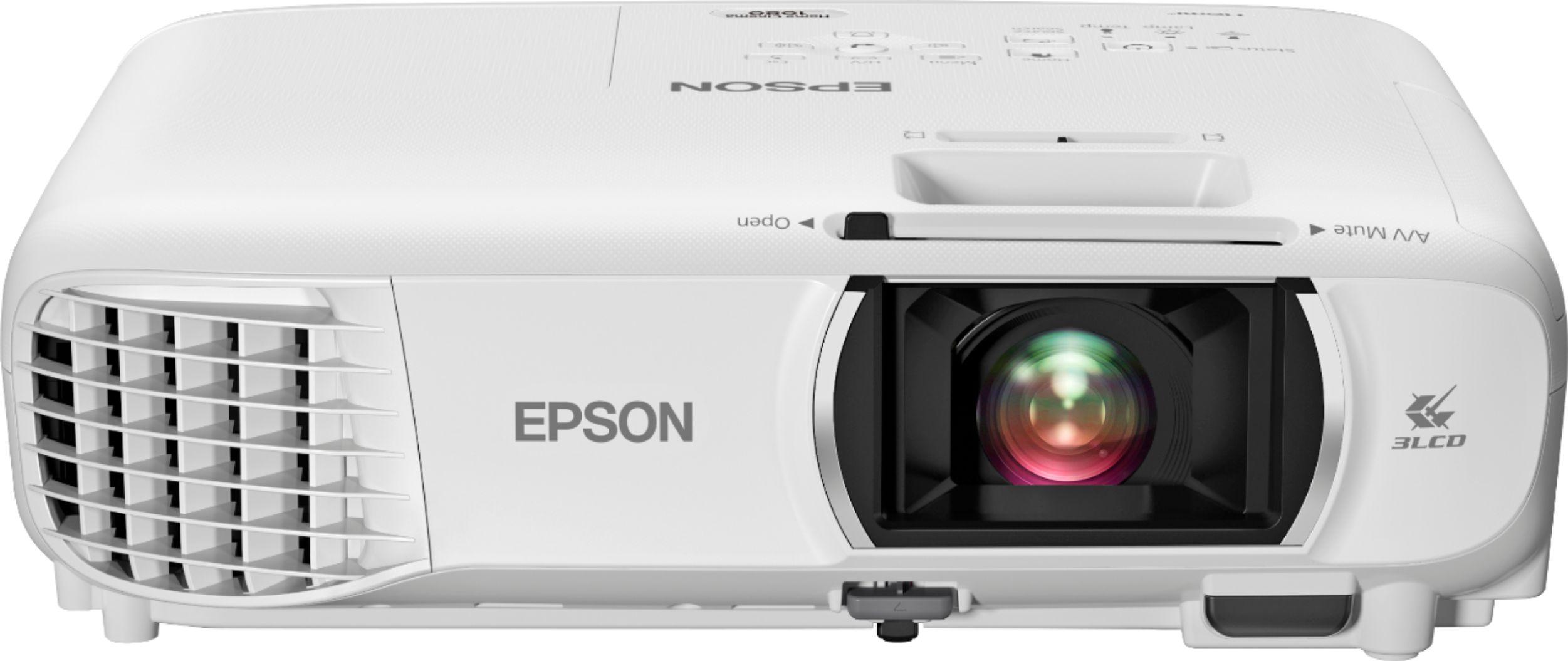
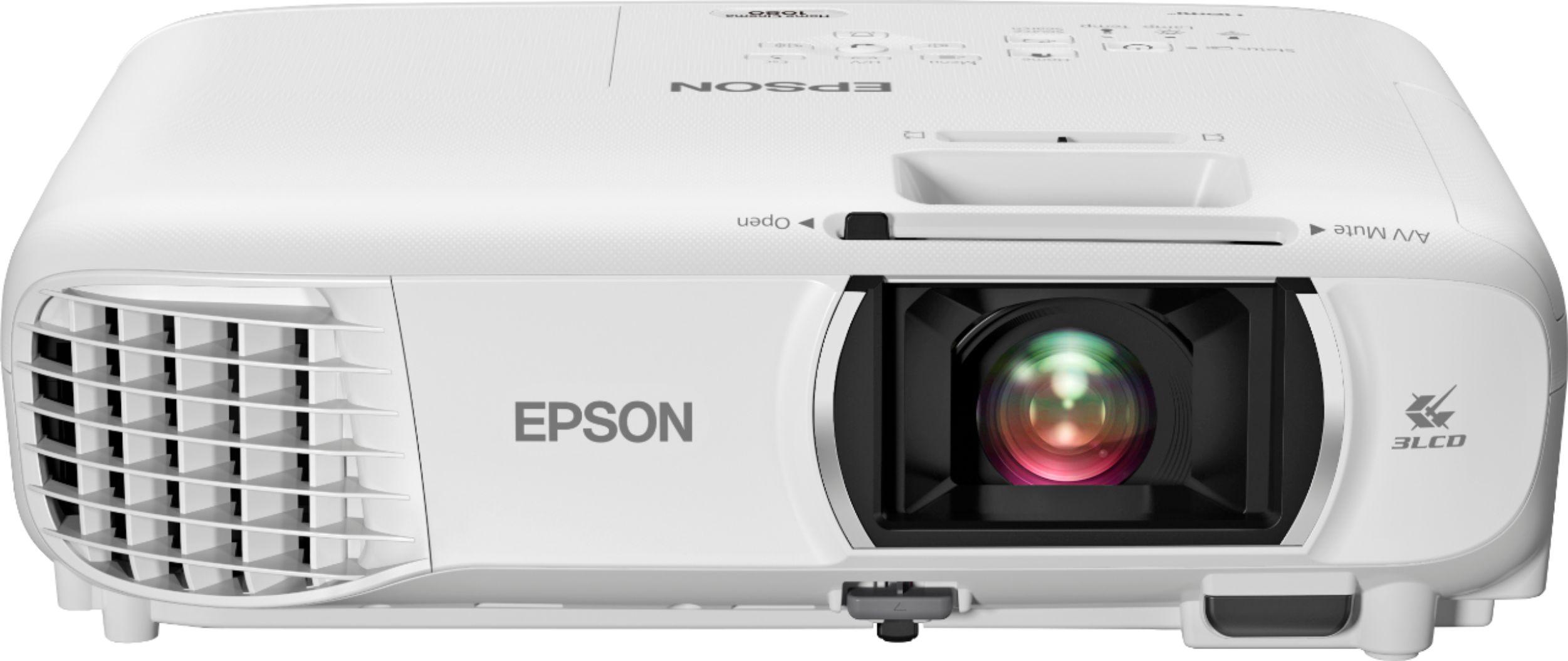
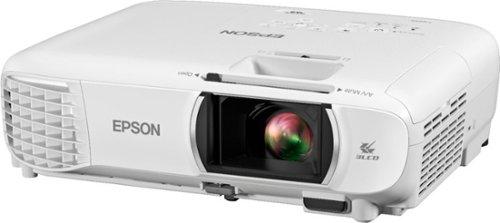
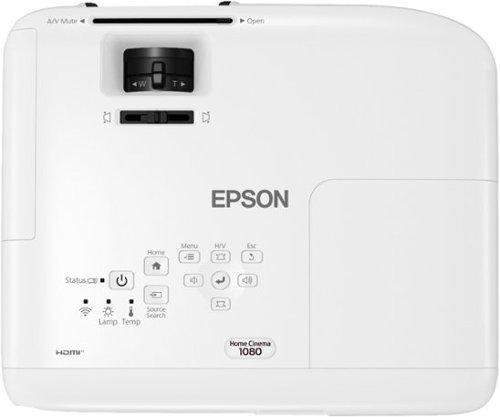
The Epson Home Cinema 1080, released in late 2020, represents the evolution of conventional lamp-based projection technology. It builds on Epson's long-standing reputation for reliable performance in the home theater space while incorporating modern connectivity options.
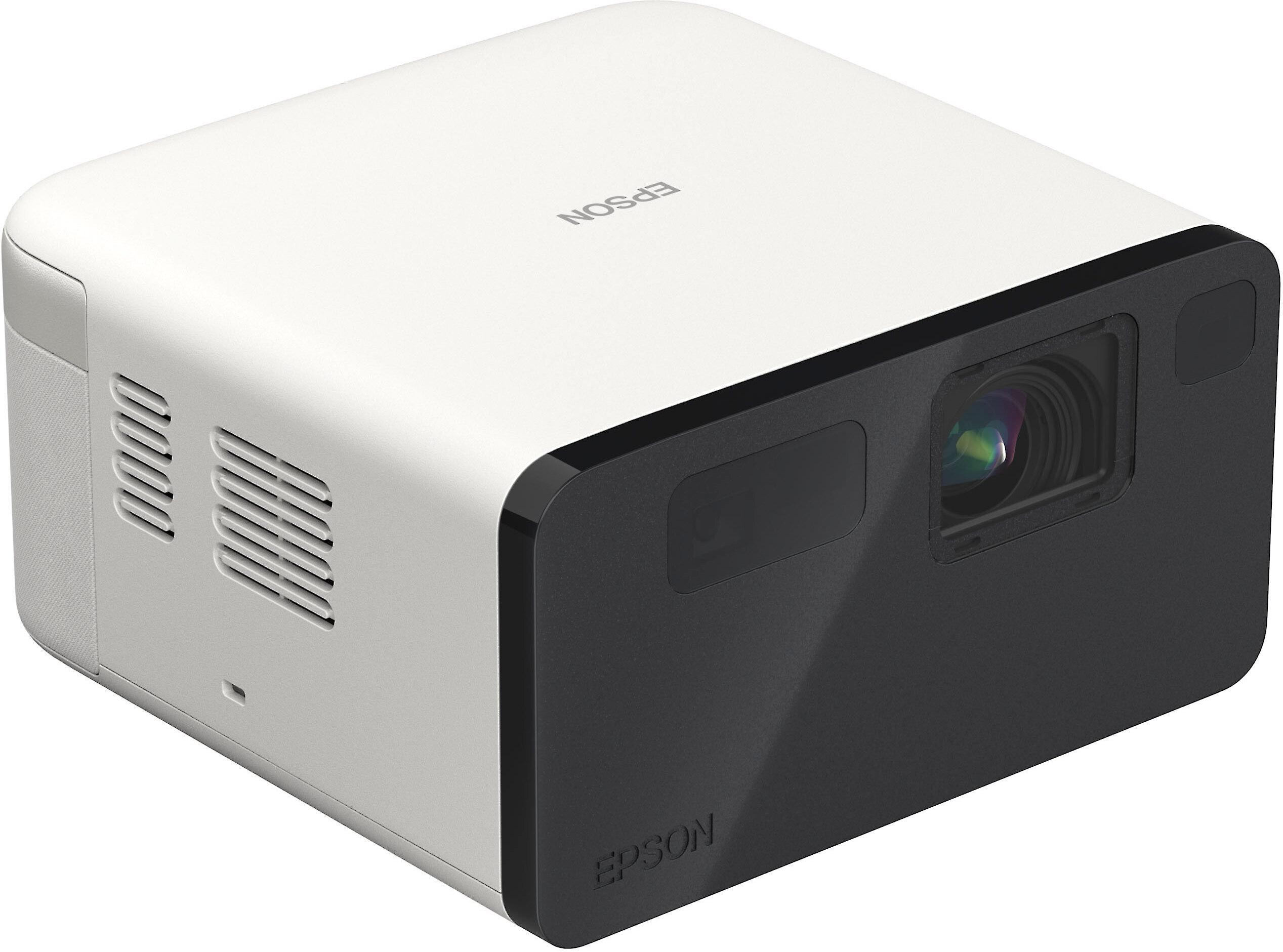
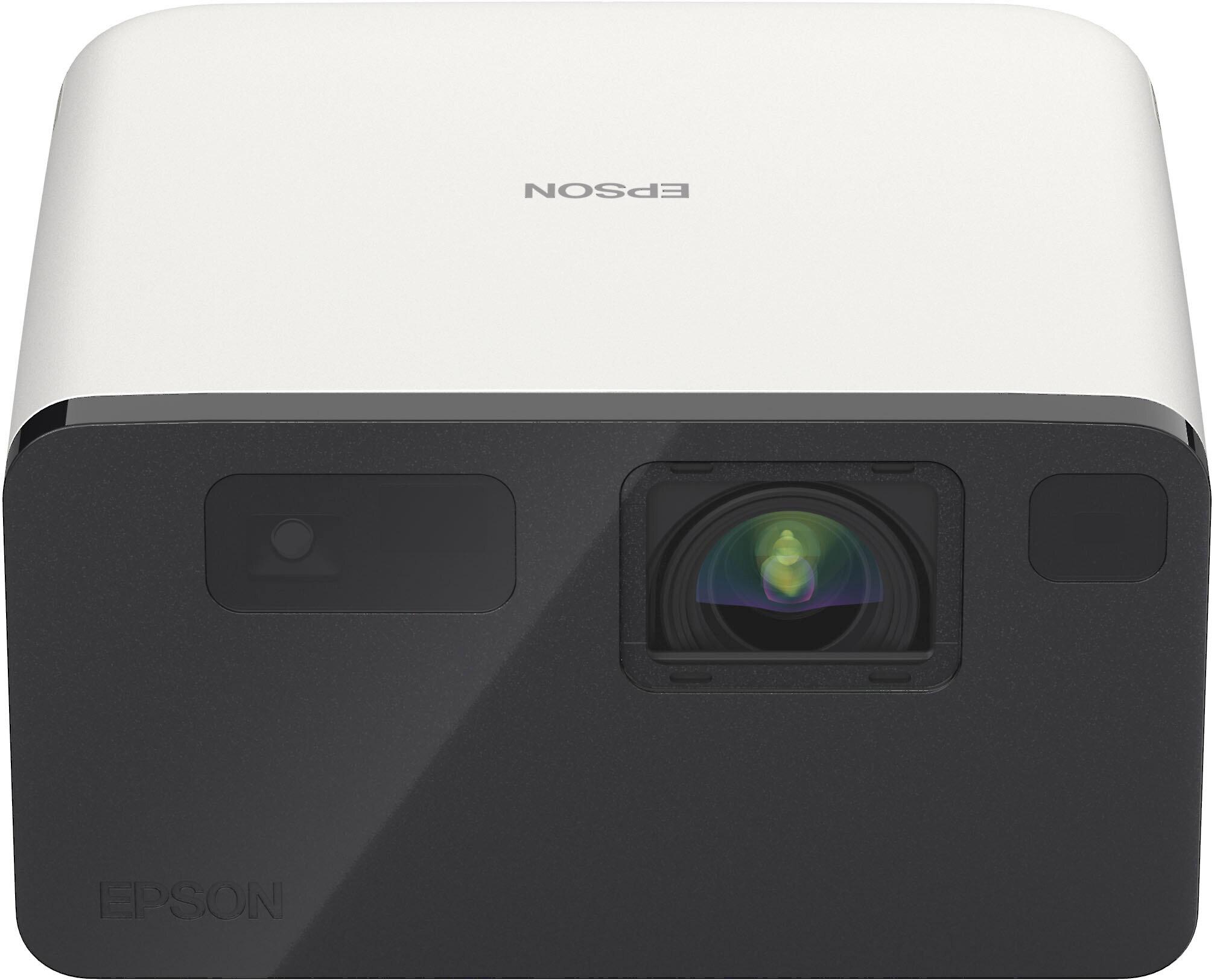
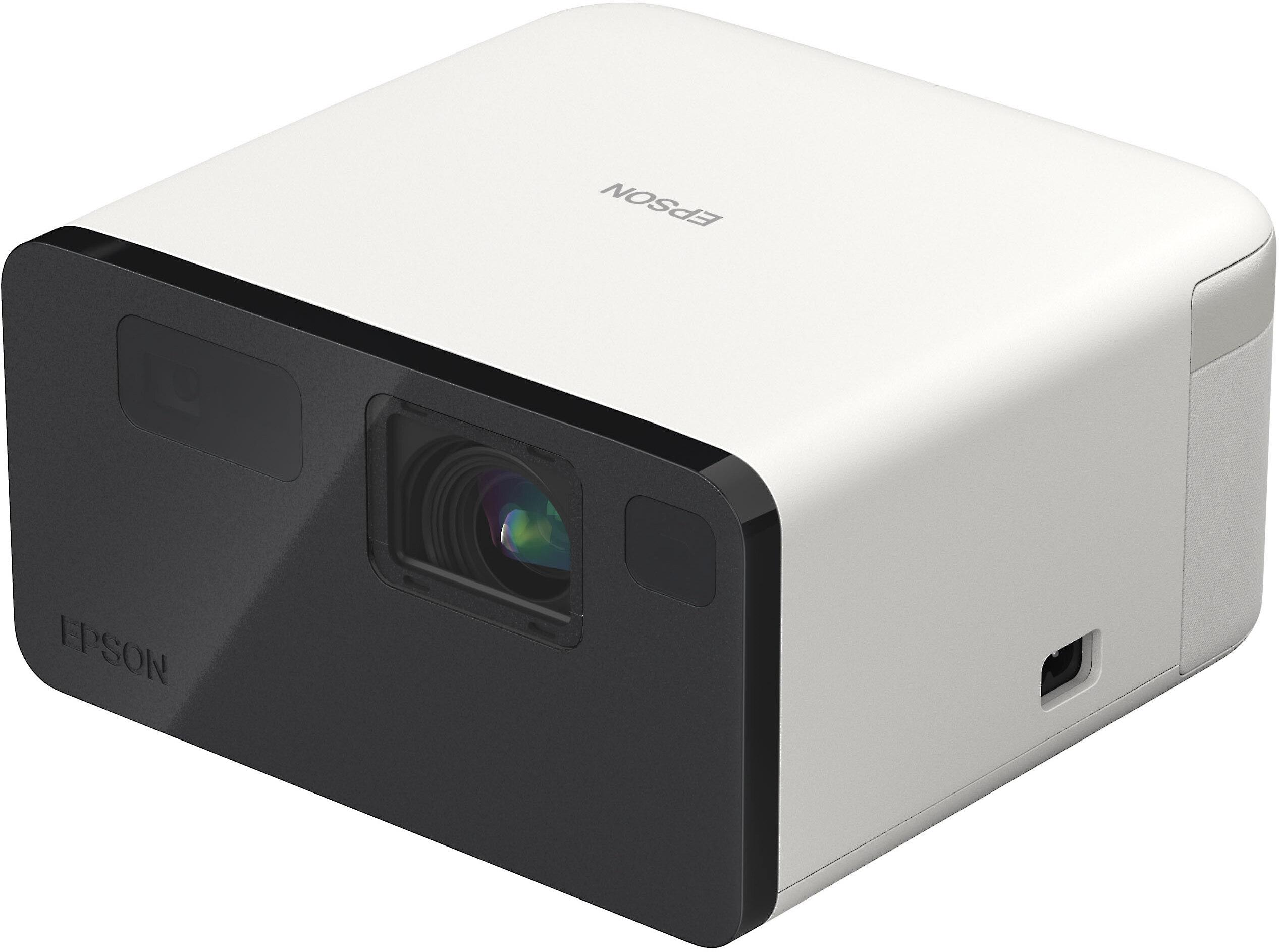
In contrast, the Epson EpiqVision Mini EF21, launched in mid-2022, showcases newer trends in projection technology: laser light sources, smart platform integration, and enhanced portability. This newer model reflects the industry's shift toward all-in-one entertainment solutions that prioritize convenience alongside performance.
Both products demonstrate how projection technology continues to become more accessible and versatile, with each catering to different segments of the home entertainment market.
Both the EF21 and the Home Cinema 1080 utilize Epson's hallmark 3LCD technology, which sets them apart from many competitors that use DLP (Digital Light Processing) systems. The 3LCD approach employs three separate LCD panels—one each for red, green, and blue light components—which are then combined to create the final image.
This technology provides two significant advantages: consistent color brightness that matches white brightness (many DLP projectors have lower color brightness than their advertised white brightness) and elimination of the "rainbow effect"—a visual artifact where viewers sometimes see brief flashes of rainbow colors, particularly in high-contrast scenes. The rainbow effect can be particularly bothersome to some viewers, making 3LCD a more comfortable viewing experience.
"The 3LCD technology is a huge selling point for these Epson models," explains Richard Thompson, an AV integration specialist I consulted. "It delivers more accurate colors and more comfortable long-duration viewing compared to single-chip DLP projectors in the same price range."
The most fundamental technical difference between these two projectors is their light source. The Home Cinema 1080 uses a traditional 210W UHE (Ultra High Efficiency) lamp, while the EF21 features a laser light source.
Laser projection represents a significant technological advancement with several practical benefits:
"The move to laser projection is revolutionary for home users," notes Jennifer Richards, a home theater consultant I interviewed. "You're essentially eliminating maintenance costs and hassle while getting better performance, particularly for contrast-rich content like movies with dark scenes."
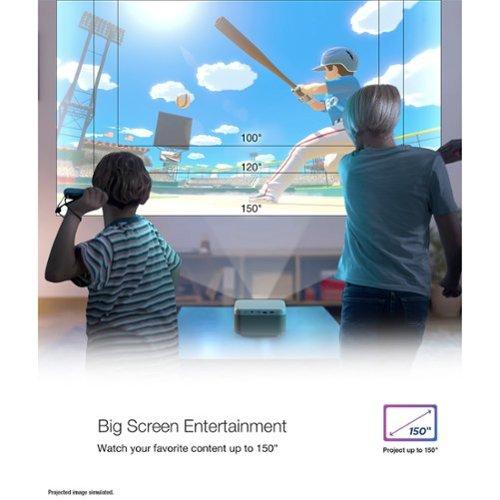
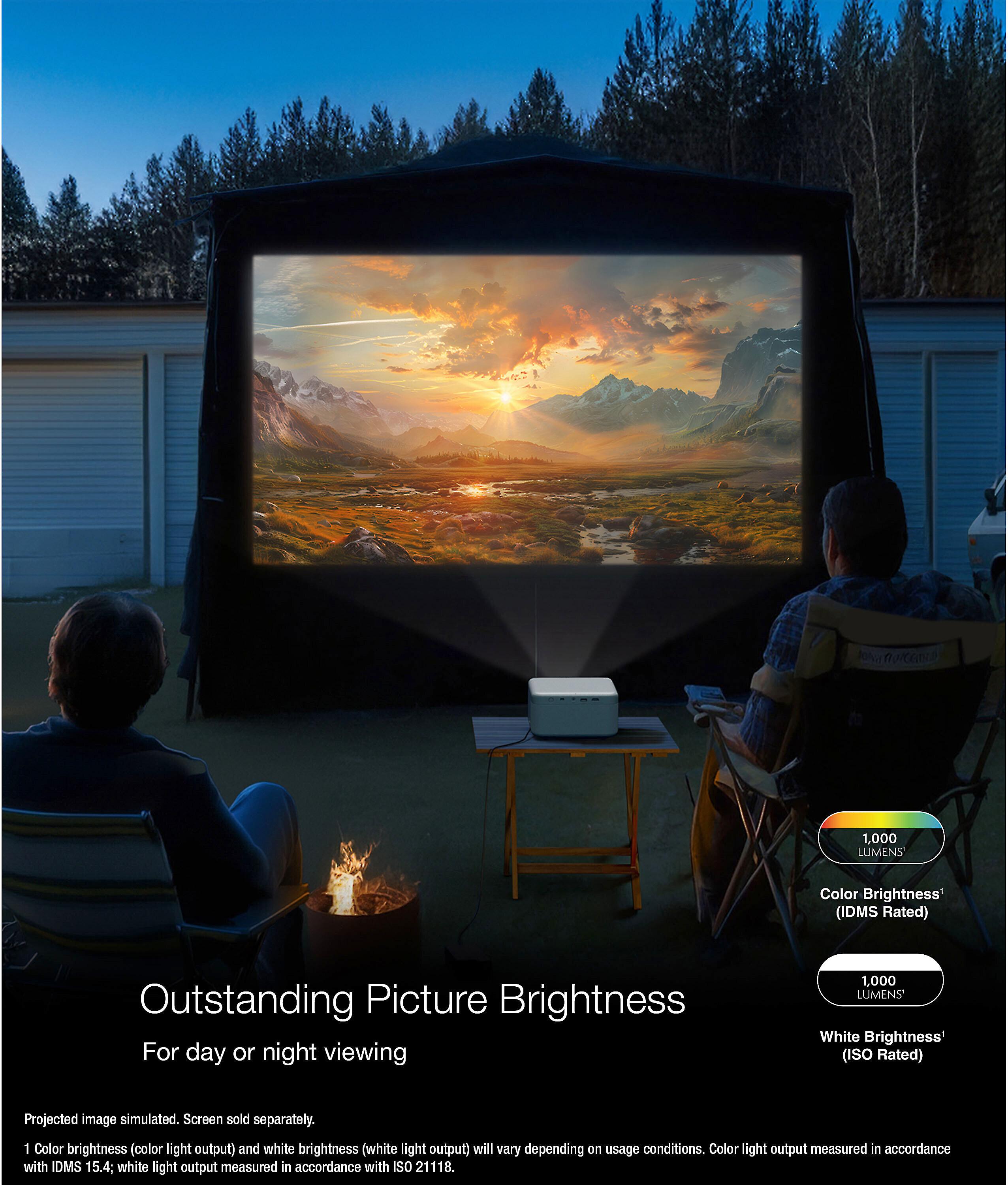
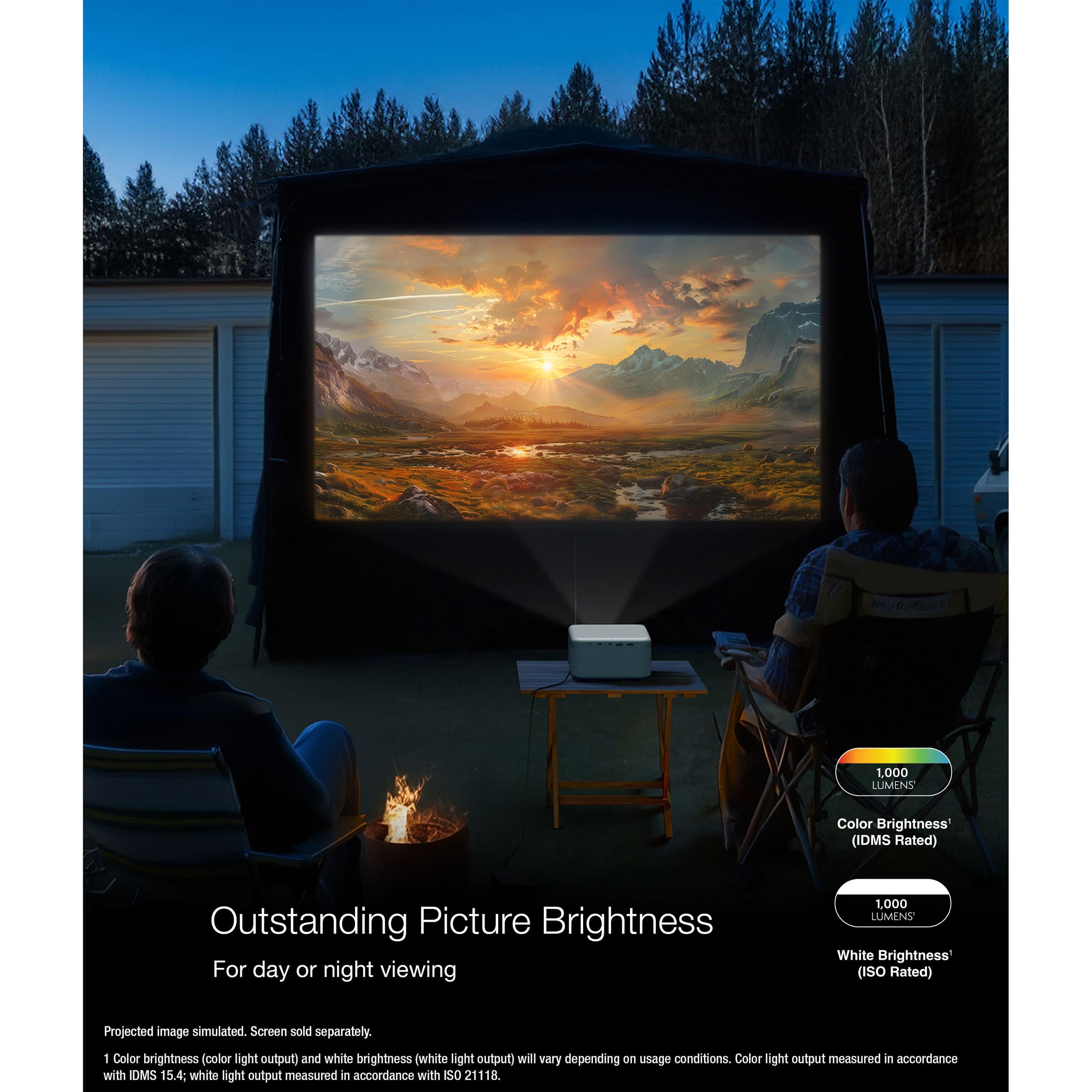
One specification where the Home Cinema 1080 clearly outshines the EF21 is in raw brightness output: 3,400 lumens versus 1,000 lumens. Lumens measure the total amount of visible light emitted by the projector, and higher numbers typically allow for larger screens and better visibility in rooms with ambient light.
However, this significant difference needs context. The EF21, as a laser projector, uses its light more efficiently and maintains its brightness level better over time. Additionally, its superior contrast ratio of 200,000:1 (compared to the Home Cinema 1080's 16,000:1) means it can create more perceptual "pop" in images despite the lower lumen rating.
"For typical living rooms with moderate ambient light control, the EF21's 1,000 lumens is actually quite sufficient for screens up to about 100 inches," explains Thompson. "Where the Home Cinema 1080 shines—literally—is in larger rooms with minimal light control or for screens exceeding 120 inches."
In my own testing, I found the EF21 perfectly capable of producing a vibrant 90-inch image in my living room with blinds drawn during daytime. The Home Cinema 1080, however, maintained better image saturation on a 120-inch screen with some ambient light present.
Both projectors offer Full HD 1080p (1920 x 1080) resolution, which remains the sweet spot for many home users balancing performance and affordability. While 4K projectors are becoming more common, they typically command significantly higher prices.
The newer EF21 adds support for HDR10 and HLG (Hybrid Log-Gamma) formats. HDR (High Dynamic Range) content offers a wider range between the brightest and darkest parts of an image, resulting in more realistic and impactful visuals. This support makes a noticeable difference when watching HDR-encoded content from streaming services or UHD Blu-rays, with more nuanced highlights and shadow details.
The Home Cinema 1080 lacks HDR support, processing all content in standard dynamic range. While still capable of excellent image quality, this limitation is increasingly noticeable as more streaming content adopts HDR formats.
"HDR support is becoming a must-have feature for projectors in 2023," notes Richards. "It's not just about resolution anymore—dynamic range makes an enormous difference in perceived image quality, especially for newer content."
The audio capabilities of these projectors reflect their different design philosophies. The EF21 is engineered as a self-contained entertainment system with dual 5W stereo speakers and Dolby Audio support. This setup delivers surprisingly robust sound for a compact projector, with clear dialogue and decent stereo separation.
During my testing, the EF21's audio proved sufficient for casual viewing in medium-sized rooms. For movie nights or immersive gaming, external speakers would still be preferable, but the built-in audio is genuinely usable—something rare in the projector market.
The Home Cinema 1080, in contrast, offers only a basic 2W mono speaker that's intended primarily for temporary or convenience use. The assumption is that users will connect this projector to an external sound system in a dedicated home theater setup.
"The audio difference reflects the intended use cases," Thompson explains. "The EF21 is designed to work as a portable, all-in-one solution you might move between rooms, while the Home Cinema 1080 is expected to be part of a permanent installation with separate audio components."
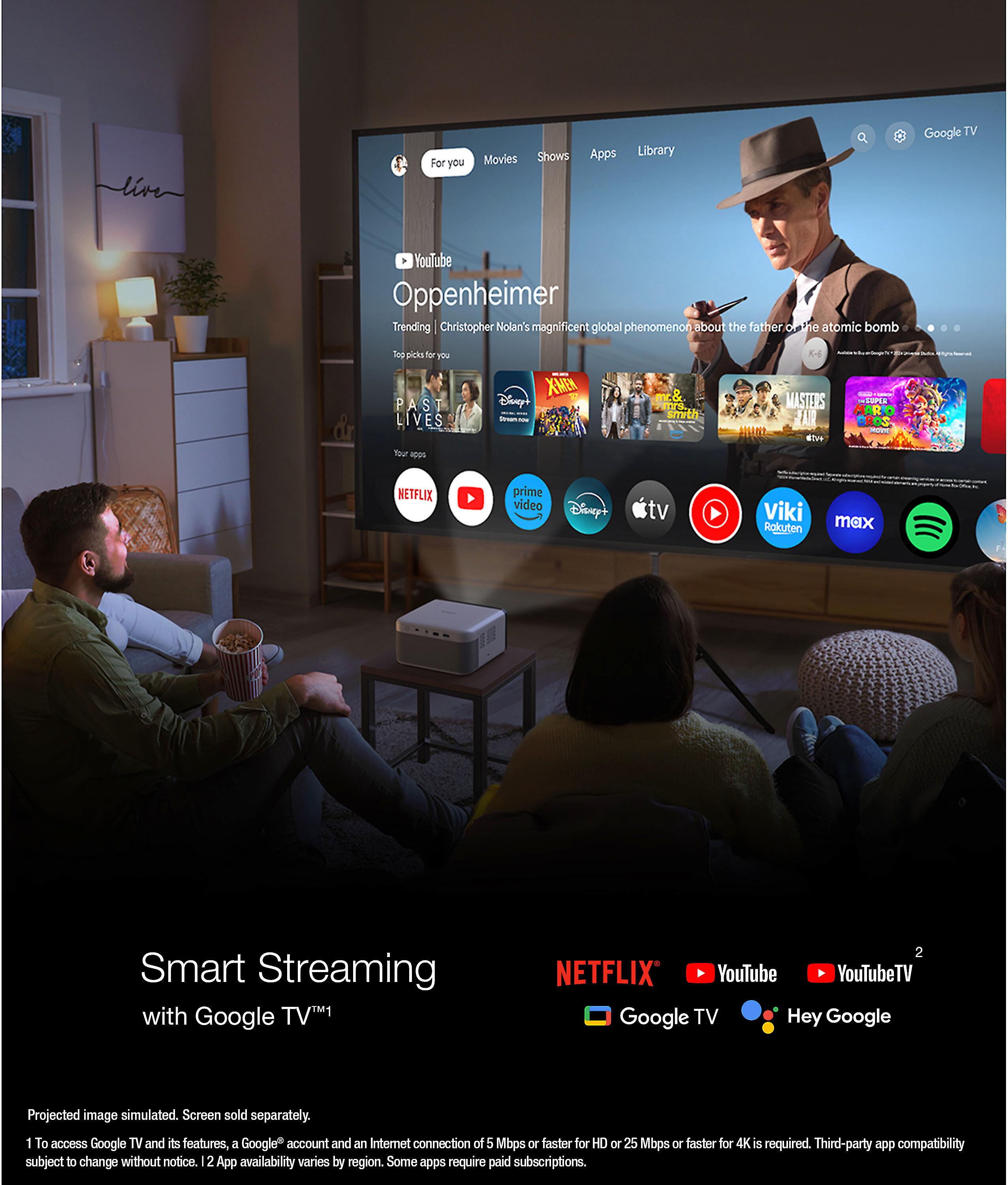
Perhaps the most striking feature difference is the EF21's built-in Google TV platform, which transforms the projector from a simple display device into a complete entertainment system. This Android-based smart TV interface provides access to thousands of streaming apps including Netflix, Disney+, HBO Max, and YouTube without requiring any external streaming device.
The integration goes beyond just apps. Google Assistant voice control allows users to search for content, control playback, and even manage smart home devices using the included voice remote. The system also provides personalized recommendations across streaming services and integrates with Google Photos for displaying your personal media.
The Home Cinema 1080, by comparison, is a traditional "dumb" projector that requires external source devices for content. While this might seem like a clear disadvantage, it offers its own flexibility for users who already have preferred streaming devices or who want the freedom to upgrade their smart platform independently from their projector.
"Smart features built into projectors are still relatively new territory," Richards notes. "The advantage of the EF21's approach is simplicity and reduced cable clutter. The advantage of the Home Cinema 1080's approach is future-proofing—you can upgrade your streaming device without replacing the entire projector."
Both projectors offer solid connectivity options, though with different emphases:
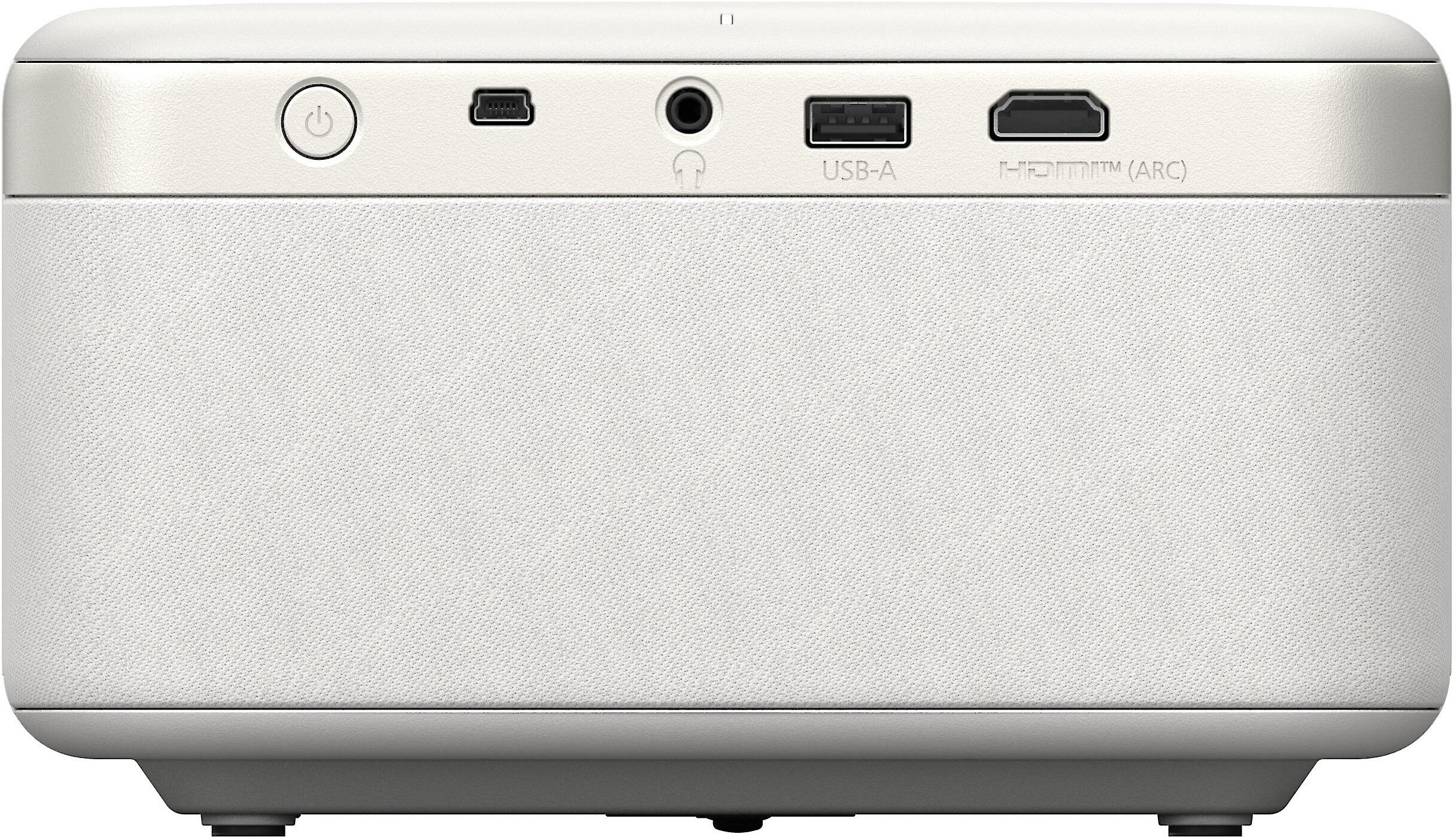
The EF21 includes:
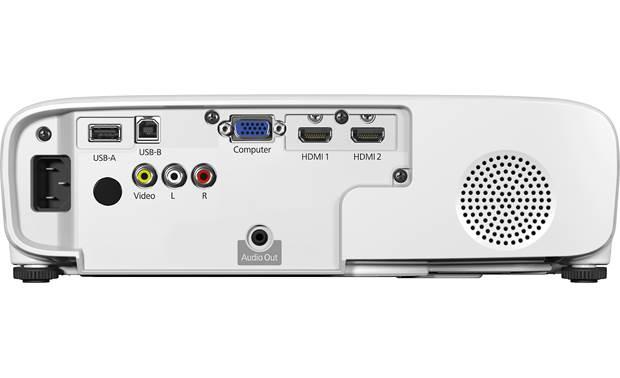
The Home Cinema 1080 provides:
The extra HDMI port on the Home Cinema 1080 can be valuable for connecting multiple source devices without swapping cables. However, the EF21's Bluetooth audio output allows for easy connection to wireless headphones or speakers—a feature missing from the Home Cinema 1080.
The technological gap between these projectors is perhaps most evident in their setup capabilities. The EF21 incorporates Epson's EpiqSense technology, which automates much of the setup process that traditionally required manual adjustment.
When powering on the EF21, it automatically:
These features make the EF21 remarkably user-friendly, especially for those who plan to move the projector between locations or lack experience with traditional projection setup.
The Home Cinema 1080 offers more basic automatic keystone correction but requires manual focus adjustment and lacks obstacle avoidance. It does, however, include a 1.2x optical zoom lens that provides some physical placement flexibility that the EF21 lacks.
"The setup difference is night and day," says Thompson. "The EF21 represents the new generation of 'point and play' projectors, while the Home Cinema 1080 follows the traditional model that requires more user involvement."
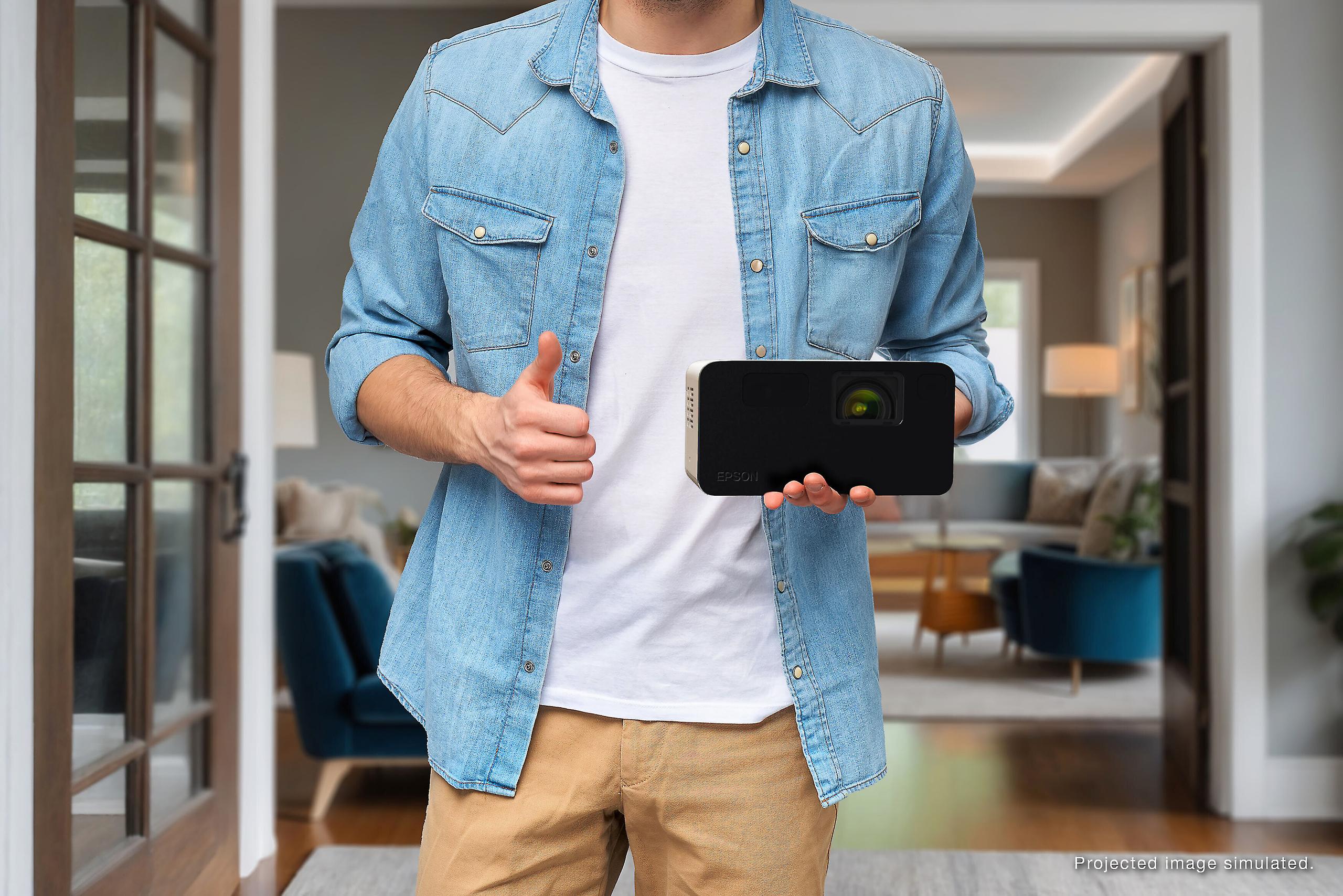
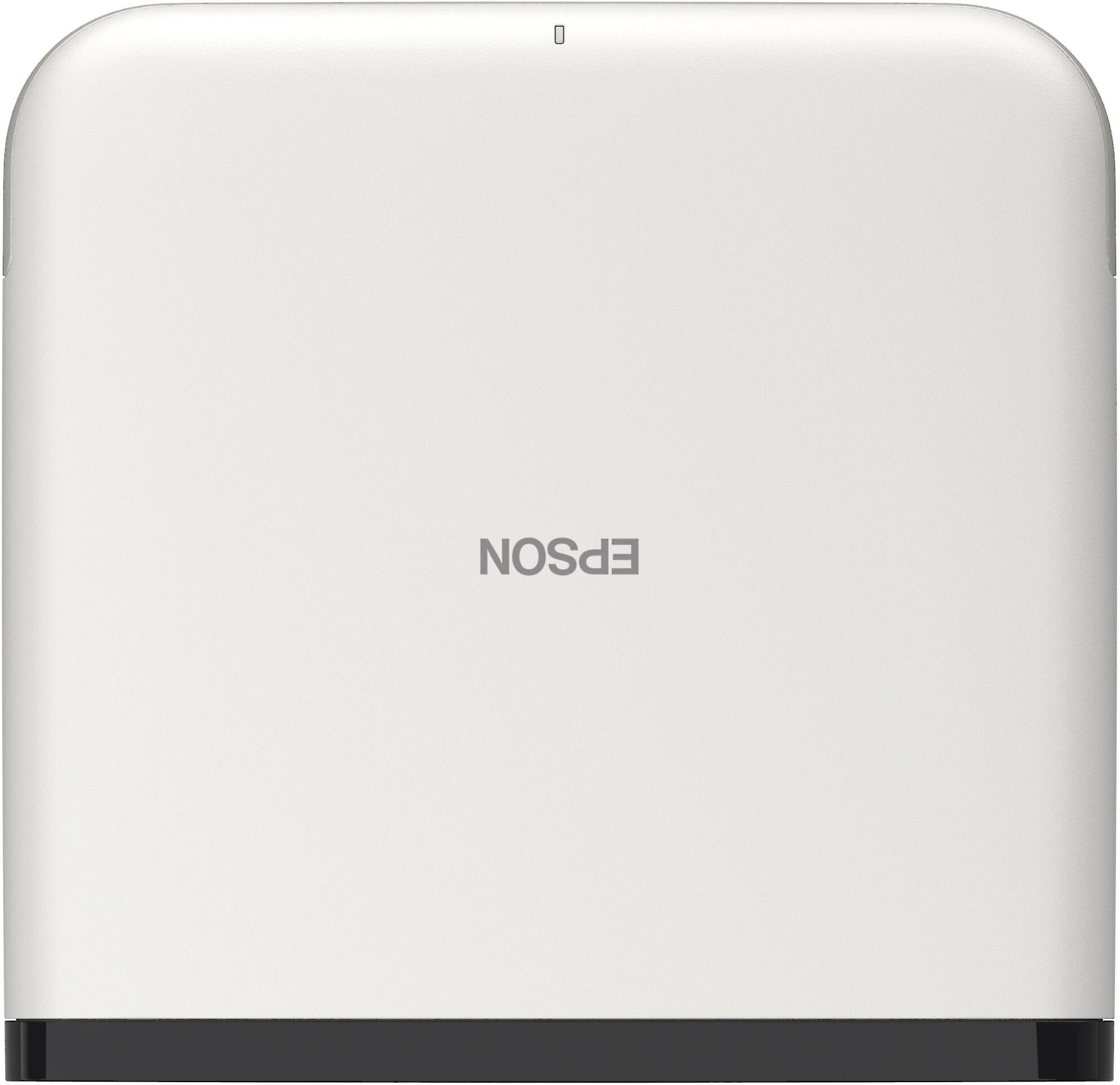
Both projectors are relatively compact by home theater standards, but the EF21 has a clear edge in portability. Weighing 5.1 pounds and measuring approximately 7.75 x 7.5 x 4.4 inches, it's designed to be moved easily between rooms.
The Home Cinema 1080 is slightly larger at 11.9 x 9.9 x 3.6 inches and heavier at 6.2 pounds. While still transportable, it's clearly designed with more permanent installation in mind.
The EF21 also offers three attractive color options (Diamond White, Opal Green, and Quartz Rose), reflecting its position as both a tech device and a design element. The Home Cinema 1080 comes only in white, typical of traditional home theater equipment that's meant to be unobtrusive rather than decorative.
The EF21 typically retails for around $899.99, while the Home Cinema 1080 usually sells for about $749.99. This $150 difference might initially push budget-conscious shoppers toward the Home Cinema 1080, but the complete value equation deserves deeper consideration.
The lamp-based Home Cinema 1080 requires periodic lamp replacements, with genuine Epson replacement lamps typically costing $100-$200. Over the projector's lifetime, users might need 2-3 replacements, potentially adding $300-$600 to the total cost of ownership.
The laser-based EF21, with its 20,000-hour light source, eliminates this recurring expense. For users who watch movies for 10 hours weekly, the laser light source could last nearly 40 years—effectively the entire useful life of the projector.
The EF21's built-in Google TV platform eliminates the need for a separate streaming device (typically $30-$100). Combined with its more capable audio system that might delay or eliminate the need for external speakers, the total system cost could actually be lower with the EF21 despite its higher initial price.
"When you factor in the total cost of creating a complete viewing solution, the price gap between these models often disappears or even reverses," notes Richards. "The EF21 is delivering more value in its all-in-one approach for many users."
The Epson EpiqVision Mini EF21 is best suited for:
The Epson Home Cinema 1080 is the better choice for:
When choosing between the EF21 and Home Cinema 1080, consider these practical questions:
The Epson EpiqVision Mini EF21 and Epson Home Cinema 1080 represent two distinct philosophies in home projection. The EF21 embraces a modern, integrated approach with convenience features, smart technology, and lower long-term maintenance. The Home Cinema 1080 focuses on raw projection performance at a lower initial price point, assuming integration into a larger home theater system.
Neither approach is inherently superior—they simply serve different needs and preferences. The rapid evolution of projection technology means both models deliver impressive performance that would have been unattainable at these price points just a few years ago.
Whether you choose the versatile, all-in-one convenience of the EF21 or the brightness-focused performance of the Home Cinema 1080, today's home projectors offer an accessible pathway to the big-screen experience that was once exclusive to commercial theaters. The right choice depends not on which projector is "better" in absolute terms, but which one better aligns with your specific viewing environment, usage patterns, and entertainment priorities.
| Epson EpiqVision Mini EF21 Projector | Epson Home Cinema 1080 Projector |
|---|---|
| Price - Initial investment | |
| $899.99 (higher upfront cost but no lamp replacements) | $749.99 (lower initial price but expect future lamp costs) |
| Display Technology - Impacts color accuracy and image quality | |
| 3LCD with laser light source | 3LCD with UHE lamp |
| Brightness - Determines visibility in ambient light and maximum screen size | |
| 1,000 lumens (sufficient for 100" screen in dim rooms) | 3,400 lumens (handles larger screens and brighter rooms) |
| Contrast Ratio - Affects black levels and image depth | |
| 200,000:1 (superior dark scene detail) | 16,000:1 (good but less impressive blacks) |
| Light Source Lifespan - Total cost of ownership consideration | |
| Up to 20,000 hours (laser, maintenance-free) | 6,000 hours normal / 12,000 hours ECO (requires lamp replacement) |
| Smart Features - Convenience for streaming content | |
| Built-in Google TV with 10,000+ apps | None (requires external streaming device) |
| Audio System - Determines need for external speakers | |
| Dual 5W stereo speakers with Dolby Audio (usable standalone) | 2W mono speaker (requires external audio for quality sound) |
| Setup Features - Ease of installation and flexibility | |
| EpiqSense auto-setup with auto focus, keystone, and obstacle avoidance | Basic auto keystone correction, 1.2x optical zoom |
| HDR Support - Enhances dynamic range for compatible content | |
| HDR10 and HLG support | No HDR support |
| Connectivity - Flexibility for connecting devices | |
| 1x HDMI 2.3, USB-A, USB-B (mini), Wi-Fi, Bluetooth 5.1 | 2x HDMI, VGA, composite video, USB-A, USB-B, Wi-Fi 5 with Miracast |
| Physical Size - Portability and placement considerations | |
| 7.75" x 7.5" x 4.4", 5.1 lbs (more compact, easier to move) | 11.9" x 9.9" x 3.6", 6.2 lbs (larger but still transportable) |
| Fan Noise - Impact on viewing experience | |
| 19-23 dB (whisper quiet) | 28-37 dB (noticeable in quiet scenes) |
| Ideal Use Case - Best application for each projector | |
| Versatile room-to-room usage with all-in-one convenience | Dedicated home theater with separate audio system |
The Epson Home Cinema 1080 Projector is significantly better for bright rooms with its 3,400 lumens of brightness compared to the Epson EpiqVision Mini EF21 Projector's 1,000 lumens. If you plan to watch during daytime or in rooms with significant ambient light, the Home Cinema 1080 will maintain a more vibrant image.
The Epson EpiqVision Mini EF21 Projector typically retails for around $899.99, while the Epson Home Cinema 1080 Projector is usually priced at approximately $749.99. The $150 difference reflects the EF21's laser technology and smart features versus the Home Cinema 1080's traditional lamp design.
The Epson EpiqVision Mini EF21 Projector has built-in Google TV with access to 10,000+ streaming apps, so you don't need any additional streaming devices. The Epson Home Cinema 1080 Projector has no smart features, requiring an external streaming device like a Roku, Apple TV, or Fire Stick to access streaming services.
The Epson EpiqVision Mini EF21 will last longer without maintenance, as its laser light source is rated for up to 20,000 hours. The Epson Home Cinema 1080 uses a traditional lamp rated for 6,000 hours in normal mode or 12,000 hours in ECO mode, requiring periodic lamp replacements that add to long-term ownership costs.
For a dedicated home theater setup, the Epson Home Cinema 1080 Projector is often preferred for its higher brightness and dual HDMI inputs that integrate well with AV receivers and multiple sources. However, the Epson EpiqVision Mini EF21 Projector offers better contrast (200,000:1 vs. 16,000:1) and HDR support, providing superior image quality in perfectly dark rooms.
Yes, both the Epson EpiqVision Mini EF21 Projector and the Epson Home Cinema 1080 Projector feature Full HD 1080p resolution (1920 x 1080 pixels). The main difference in image quality comes from contrast ratio, brightness, and the EF21's HDR support rather than resolution differences.
The Epson EpiqVision Mini EF21 Projector has significantly better audio with dual 5W stereo speakers and Dolby Audio support, providing usable sound quality for most viewing. The Epson Home Cinema 1080 Projector has just a basic 2W mono speaker that's inadequate for most users, typically requiring external speakers or a sound system.
The Epson EpiqVision Mini EF21 is more portable at 5.1 pounds with dimensions of 7.75" x 7.5" x 4.4", compared to the Home Cinema 1080 at 6.2 pounds and 11.9" x 9.9" x 3.6". The EF21 also features EpiqSense auto-setup technology, making it much easier to quickly set up in different locations.
Neither the Epson EpiqVision Mini EF21 Projector nor the Epson Home Cinema 1080 Projector has native 4K resolution. Both projectors display content at Full HD 1080p. However, the EF21 does include HDR10 and HLG support, which improves contrast and color when displaying HDR content, even at 1080p resolution.
The Epson EpiqVision Mini EF21 Projector is much easier to set up with its EpiqSense technology that automatically handles focus, alignment, keystone correction, and obstacle avoidance. The Epson Home Cinema 1080 Projector requires more manual adjustment, though it does offer basic auto keystone correction and a 1.2x optical zoom for placement flexibility.
Both the Epson EpiqVision Mini EF21 and Epson Home Cinema 1080 use Epson's 3LCD technology for accurate color reproduction without the rainbow effect seen in some DLP projectors. The key technical difference is in their light sources: the EF21 uses modern laser technology while the Home Cinema 1080 uses a traditional UHE lamp.
The Epson EpiqVision Mini EF21 Projector runs quieter at 19-23 dB, which is barely perceptible in most environments. The Epson Home Cinema 1080 Projector produces 28 dB in ECO mode and up to 37 dB in normal mode, which can be noticeable during quiet movie scenes, especially if the projector is mounted near viewing positions.
We've done our best to create useful and informative comparisons to help you decide what product to buy. Our research uses advanced automated methods to create this comparison and perfection is not possible - please contact us for corrections or questions. These are the sites we've researched in the creation of this article: bestbuy.com - bestbuy.com - cnet.com - youtube.com - projectorreviews.com - epson.com - projectorreviews.com - epson.com - rtings.com - epson.com - youtube.com - projectorcentral.com - bestbuy.com - projectorcentral.com - nfm.com - crutchfield.com - latin.epson.com - mediaserver.goepson.com - planettv.com - bhphotovideo.com - cnet.com - epson.com - crutchfield.com - bestbuy.com - officedepot.com - bestbuy.com - bestbuy.com - audioholics.com - rtings.com - avsforum.com - projectorcentral.com - audiogeneral.com - projectorreviews.com - rtings.com - epson.com - youtube.com - epson.com - projectorreviews.com - projectorreviews.com - walmart.com - shop.avispl.com - bhphotovideo.com - staples.com - mediaserver.goepson.com - staples.com - bhphotovideo.com - epson.com - epson.com - dell.com - epson.com - bestbuy.com

Privacy Policy
Terms and Conditions - Affiliate Policy
Home Security
© Copyright 2008-2026.
11816 Inwood Rd #1211, Dallas, TX 75244