



Smart projectors have evolved dramatically over the past few years, transforming from expensive toys for tech enthusiasts into legitimate entertainment options for regular families. The biggest change? Built-in streaming platforms that eliminate the frustrating dance of connecting dongles, finding HDMI ports, and dealing with tangled cables. Now you can literally plug in a projector and start watching Netflix within minutes.
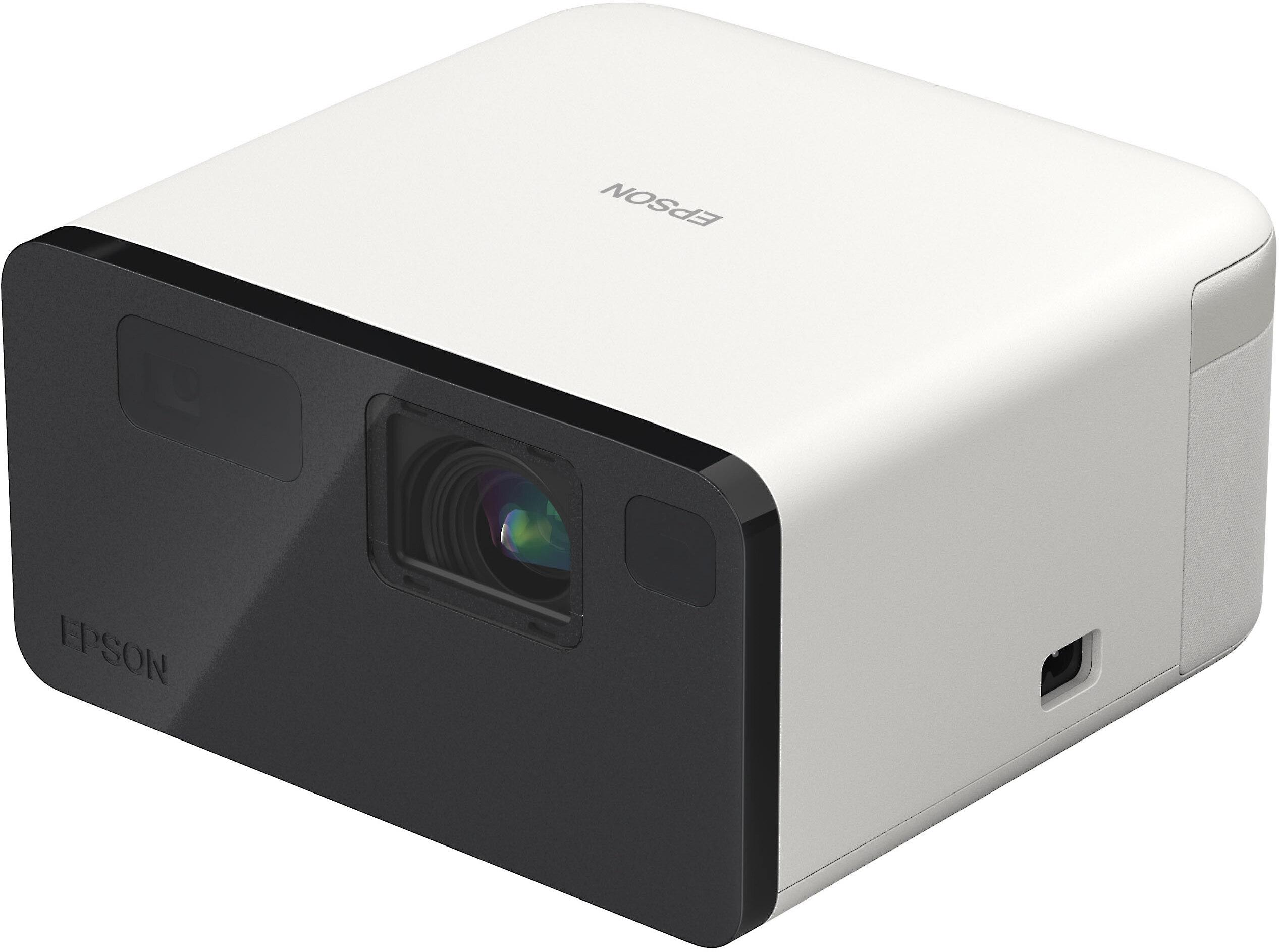
But here's where it gets tricky: the market has split into two distinct camps. On one side, you have budget-friendly options like the HAPPRUN Google TV Smart Projector that promise all the smart features at wallet-friendly prices. On the other side, premium portable projectors like the Epson EpiqVision Mini EF21 deliver professional-grade performance with convenience features that border on magical.
Both projectors launched in 2024, representing the current state of smart projection technology. The timing matters because 2024 brought significant improvements in streaming integration, wireless connectivity, and automated setup features that make these projectors genuinely practical for everyday use.
The fundamental question isn't just about price—it's about understanding what performance compromises you're willing to accept and which features actually matter for your viewing habits.
Before diving into the comparison, let's establish what makes a projector "smart" and why certain technical specs matter more than marketing numbers.
A smart projector combines three key elements: projection hardware, built-in streaming capabilities, and wireless connectivity. The projection hardware determines image quality, brightness, and reliability. The smart platform handles app integration and user interface. Wireless connectivity enables casting from phones and tablets while eliminating cable clutter.
The most critical performance metric for any projector is brightness, measured in ANSI lumens. This standardized measurement tells you how much light the projector can actually put on screen. Here's why this matters: a projector with 300 ANSI lumens works fine in a completely dark room but becomes nearly unusable with even modest ambient light. A projector with 1,000 ANSI lumens maintains image quality in typical living room lighting.
Contrast ratio—the difference between the brightest whites and darkest blacks—determines how "cinematic" the image looks. Higher contrast ratios create more depth and detail, especially in dark scenes. However, manufacturers often inflate these numbers, so real-world performance varies significantly.
Display technology affects color accuracy and potential visual artifacts. Single-chip DLP projectors (common in budget models) can produce rainbow effects—brief flashes of red, green, and blue that some people notice during fast motion. Three-chip 3LCD technology eliminates this issue but typically costs more.
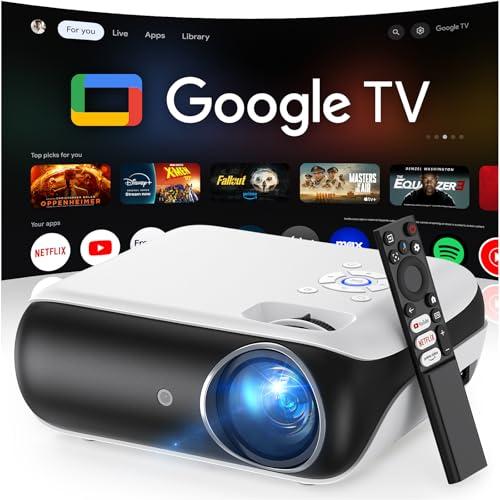
The HAPPRUN Google TV Smart Projector represents the democratization of smart projection technology. Released in 2024, it packages legitimate smart features into an affordable form factor that doesn't require technical expertise or additional purchases to get started.
Display Performance and Limitations
The HAPPRUN delivers native 1080p resolution with 350 ANSI lumens of brightness. In practical terms, this means crisp detail when viewed in dark rooms but significant image washing in anything brighter than dim evening lighting. The projector supports 4K video decoding—meaning it can accept 4K content from streaming apps and downscale it to display at 1080p resolution. This isn't true 4K projection, but it ensures compatibility with modern content.
The 20,000:1 contrast ratio provides adequate depth for movie watching, though you'll notice the difference compared to OLED TVs or premium projectors in dark scene performance. HDR10+ support adds dynamic tone mapping, which adjusts brightness and contrast scene-by-scene rather than applying static settings to entire movies. This creates more realistic lighting in supported content.
From our research into user experiences, the HAPPRUN performs admirably within its brightness limitations. Users consistently report excellent sharpness and color vibrancy when used in properly darkened rooms, with projection sizes between 100-150 inches delivering the best balance of brightness and detail.
Smart Platform Excellence
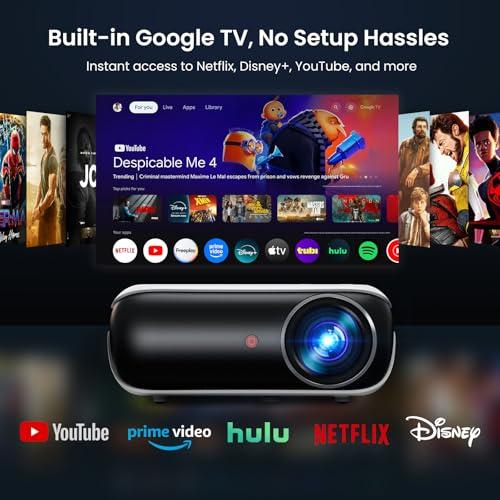
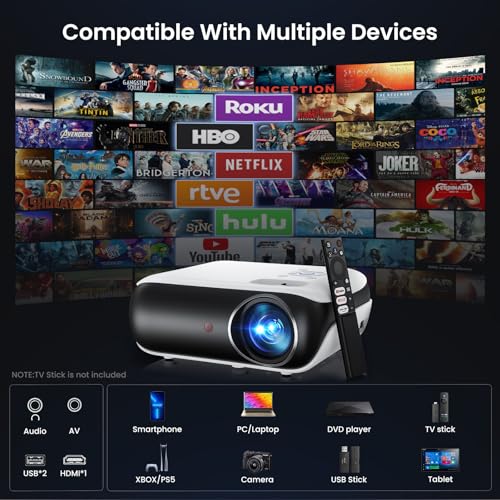
Where the HAPPRUN truly shines is smart platform integration. Built-in Google TV provides direct access to major streaming services, including officially licensed Netflix—a feature that's surprisingly rare in budget projectors. Many competitors require sideloading unofficial Netflix apps or using external streaming devices.
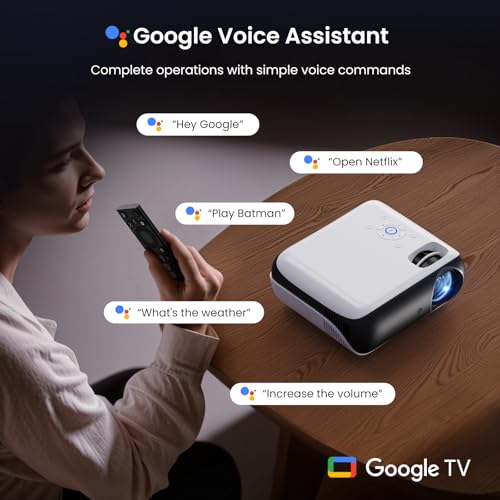
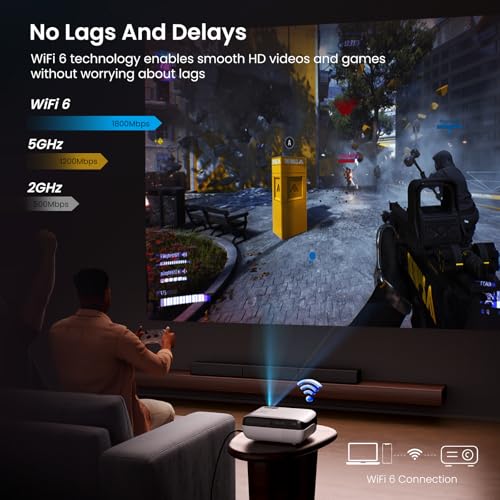
The Google TV interface feels responsive and intuitive, with Google Assistant voice control handling search and basic navigation. Chromecast and AirPlay support enable seamless casting from smartphones and tablets. WiFi 6 compatibility (where available) provides faster streaming and better performance in congested wireless environments.
The connectivity package impresses for the price point: HDMI input, AV input, dual USB ports, and headphone jack cover most connection scenarios. This versatility matters if you're connecting older gaming consoles, laptops, or external storage devices.
Audio and Setup Reality
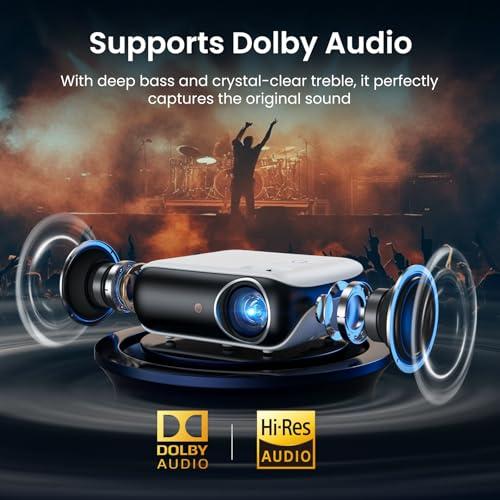
The built-in 8-watt speaker with Dolby processing handles dialogue clearly but lacks the dynamic range for action scenes or music. Based on user feedback, it's adequate for casual viewing but most users upgrade to external speakers or soundbars for improved immersion.
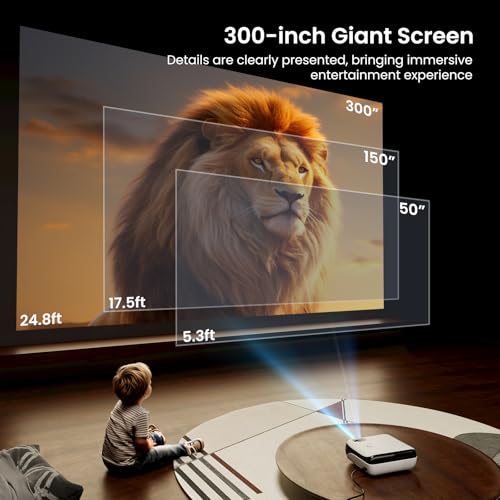
Setup requires manual focus and keystone correction, which takes a few minutes but isn't overly complicated. The projector supports various mounting options and can project images up to 200 inches, though brightness becomes quite dim at maximum size.
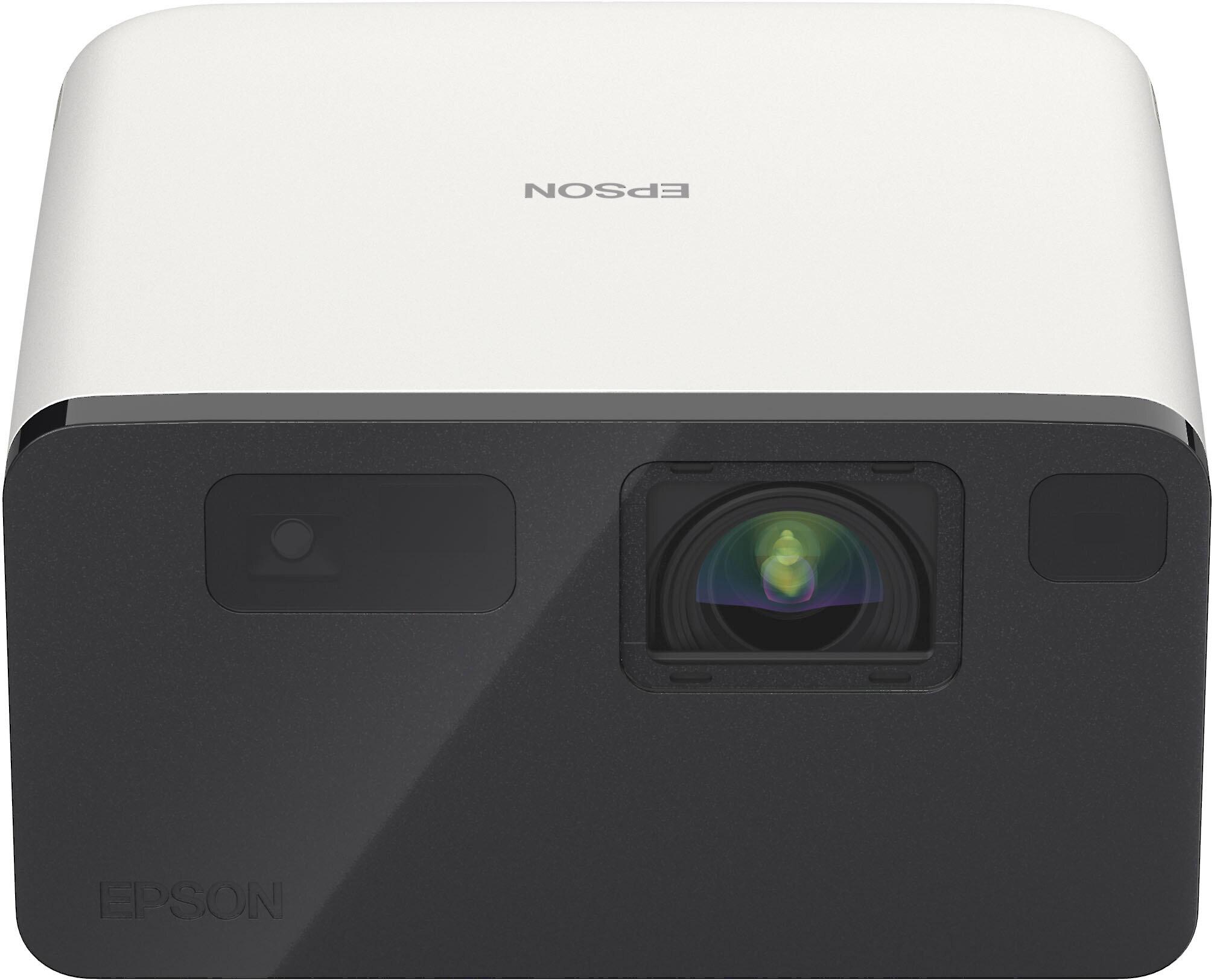
The Epson EpiqVision Mini EF21, also launched in 2024, represents what happens when an established projector manufacturer applies decades of experience to the smart portable category. At roughly three times the price of the HAPPRUN, it needs to justify its premium through meaningful performance improvements.
Superior Display Technology
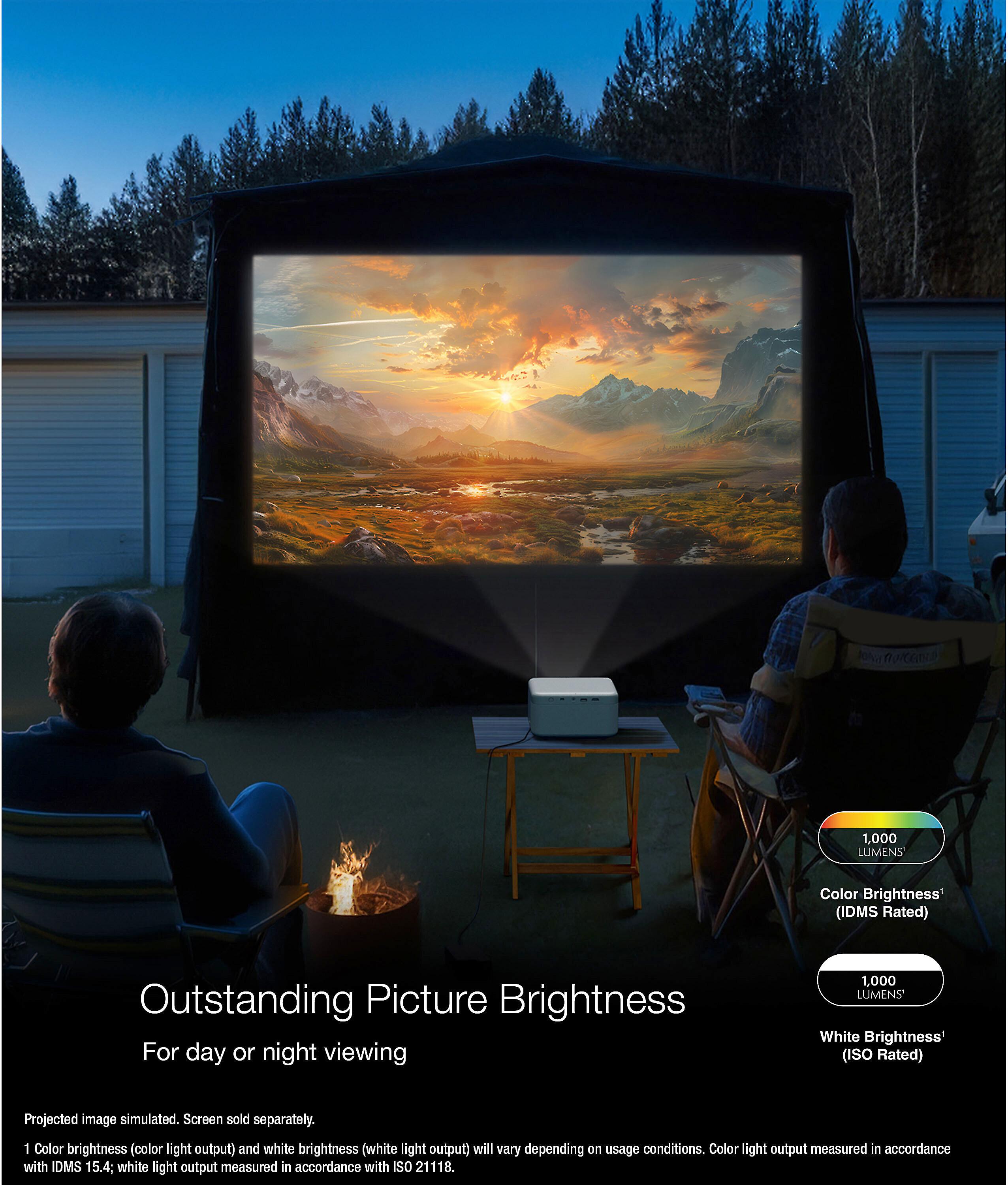
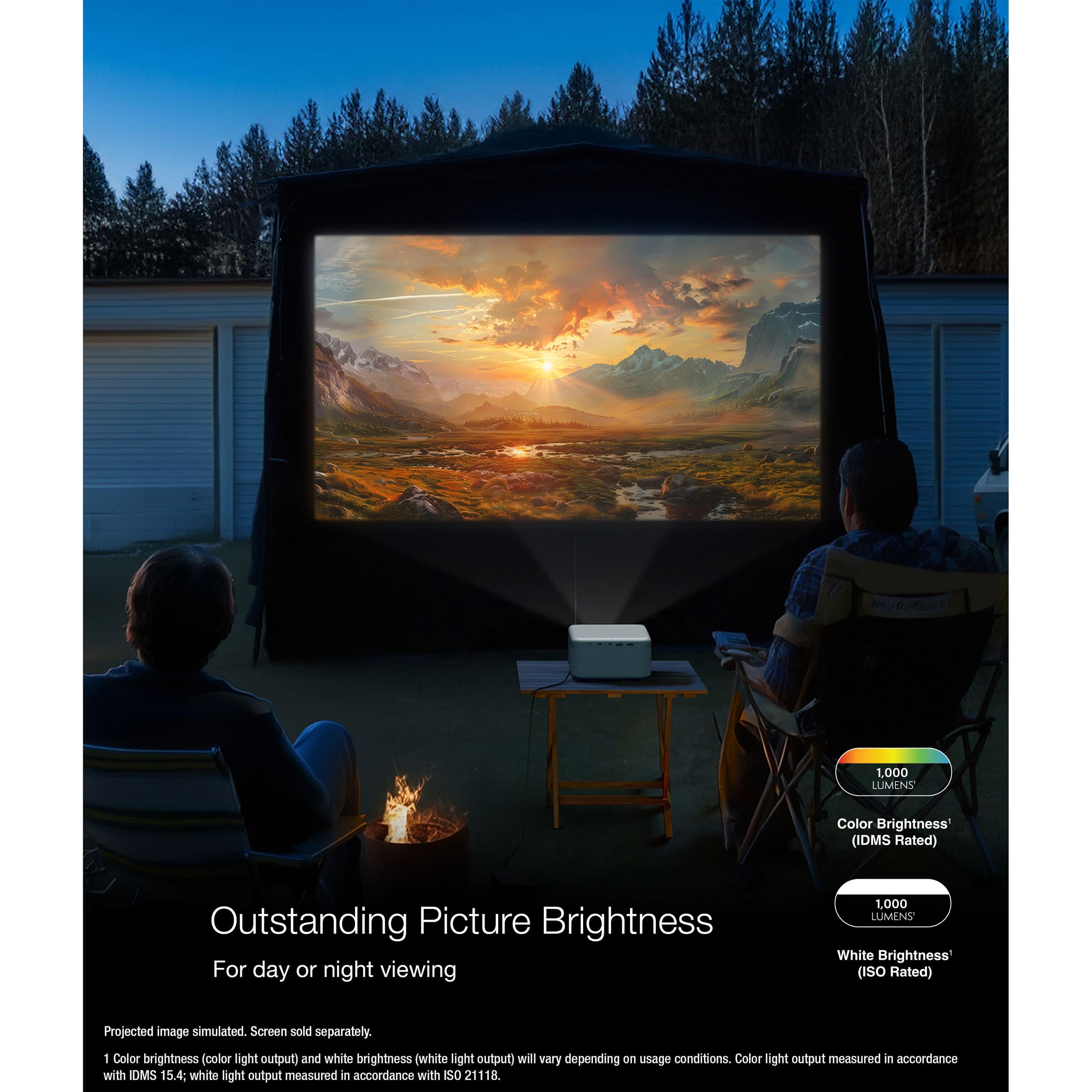
The Epson EF21 immediately distinguishes itself with 1,000 ANSI lumens of brightness—nearly triple the HAPPRUN's output. This isn't just a numbers game; it fundamentally changes where and when you can use the projector. While the HAPPRUN requires darkened rooms, the Epson maintains image quality in typical living room lighting with lamps on and curtains open.
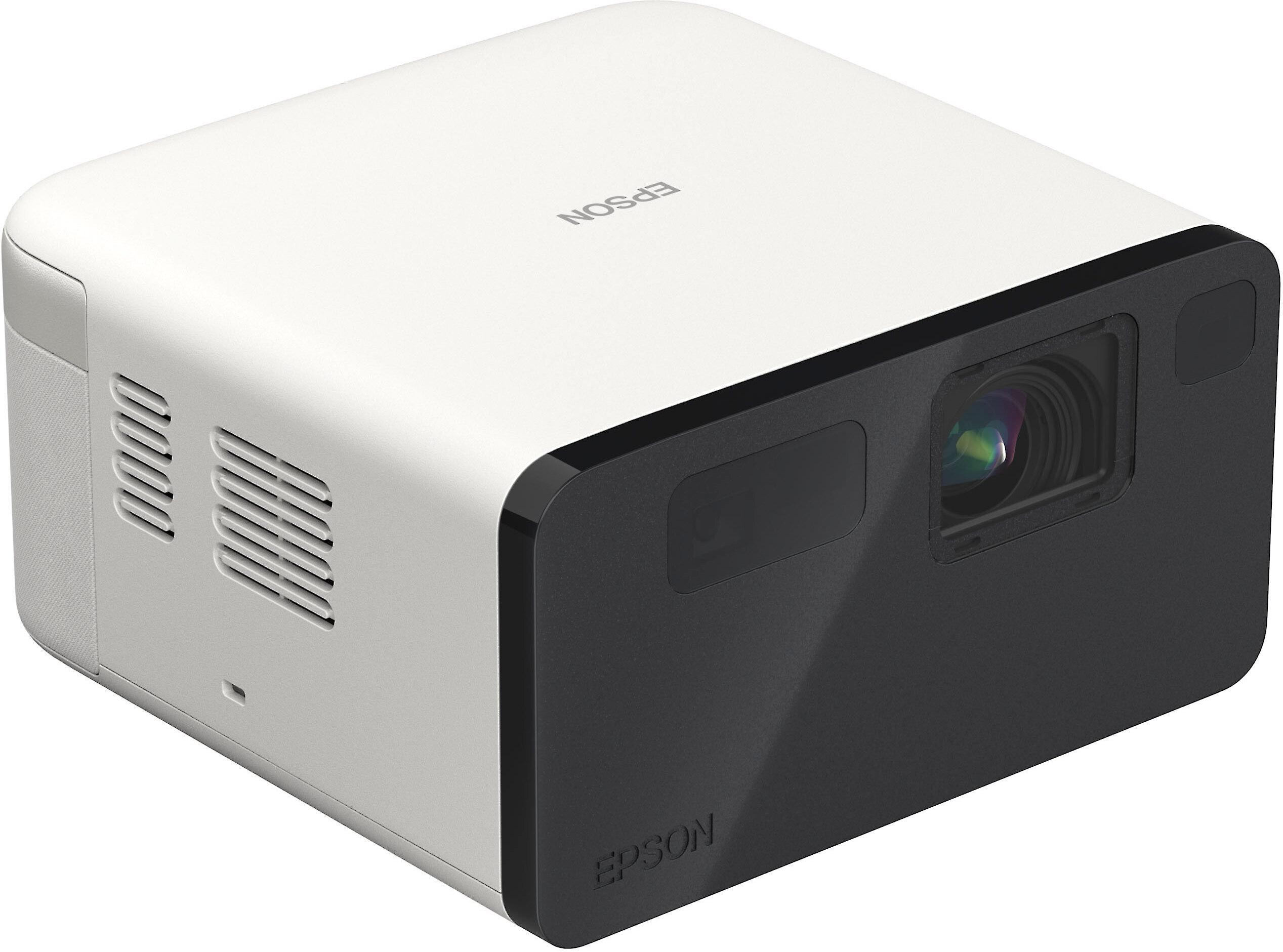
The 3LCD, 3-chip display technology eliminates rainbow effects entirely while providing more accurate color reproduction than single-chip alternatives. The laser light source offers several advantages: 20,000-hour lifespan (versus traditional lamp replacements), consistent brightness over time, and instant on/off without warm-up periods.
The 200,000:1 contrast ratio creates noticeably deeper blacks and better shadow detail than the HAPPRUN. When watching dark movies like horror films or sci-fi epics, the difference becomes immediately apparent. HDR10 and HLG support provide broad compatibility with streaming content, though the HAPPRUN's HDR10+ technically offers more advanced processing.
Automated Setup Magic
EpiqSense Technology represents the Epson EF21's standout feature. This system combines automatic focus, geometric correction, and obstacle avoidance to optimize image quality without user intervention. Place the projector anywhere within its range, power it on, and it automatically adjusts focus, corrects keystone distortion, and even adapts the image shape to avoid obstacles like picture frames or furniture.
This automation matters more than it might initially seem. Manual focus and keystone correction on budget projectors often requires several minutes of trial-and-error adjustment. The Epson's system completes this process in seconds with superior accuracy than most users achieve manually.
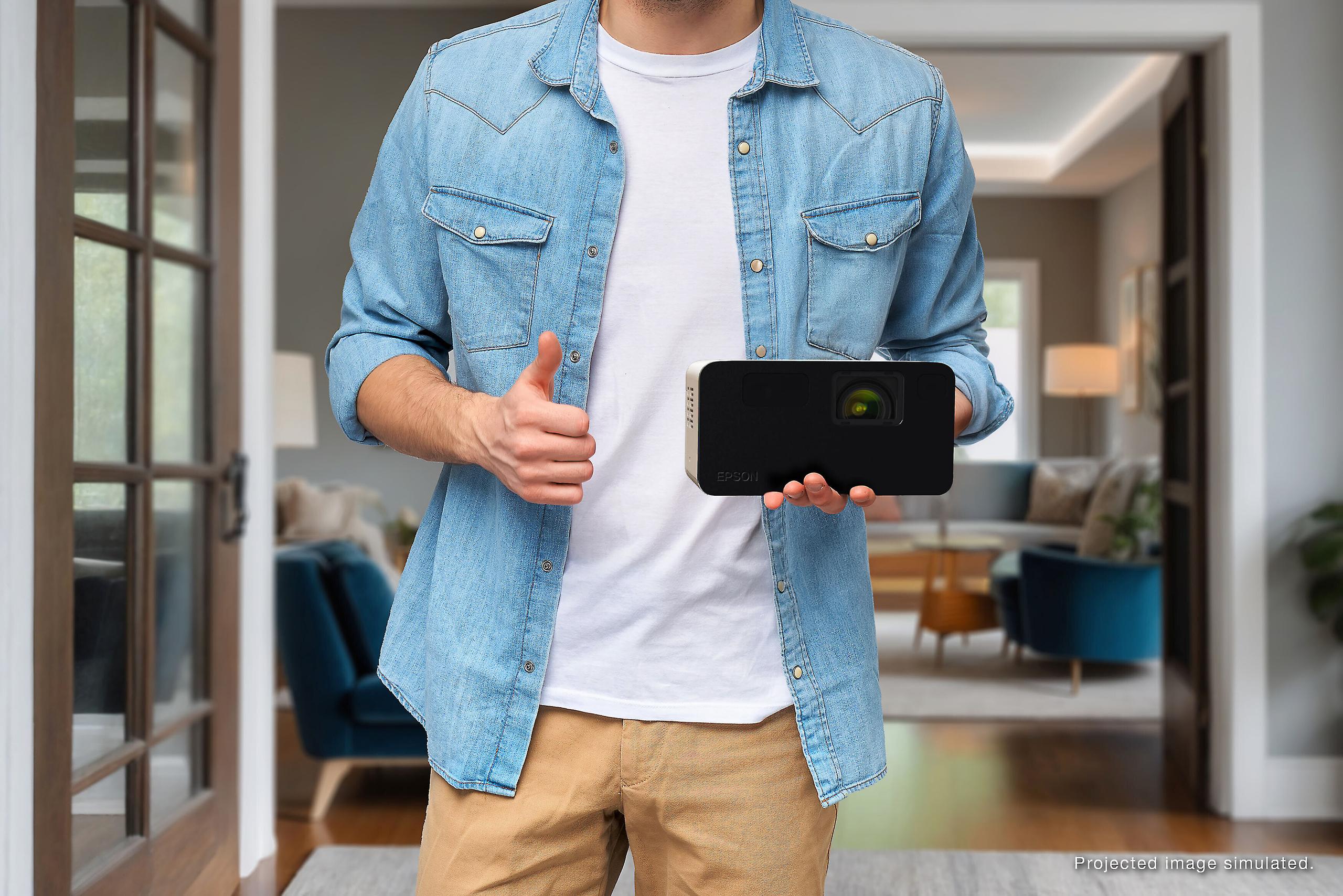
The compact 5.1-pound form factor enables true portability without sacrificing performance. Moving between rooms or taking the projector outdoors becomes genuinely practical rather than a setup ordeal.
Audio and Connectivity Considerations
Dual 5-watt speakers (10 watts total) with bass reflex design provide better stereo separation and fuller sound than the HAPPRUN's single speaker. The projector can function as a standalone Bluetooth speaker when not projecting, adding versatility. However, even the improved audio benefits from external speakers for serious movie watching.
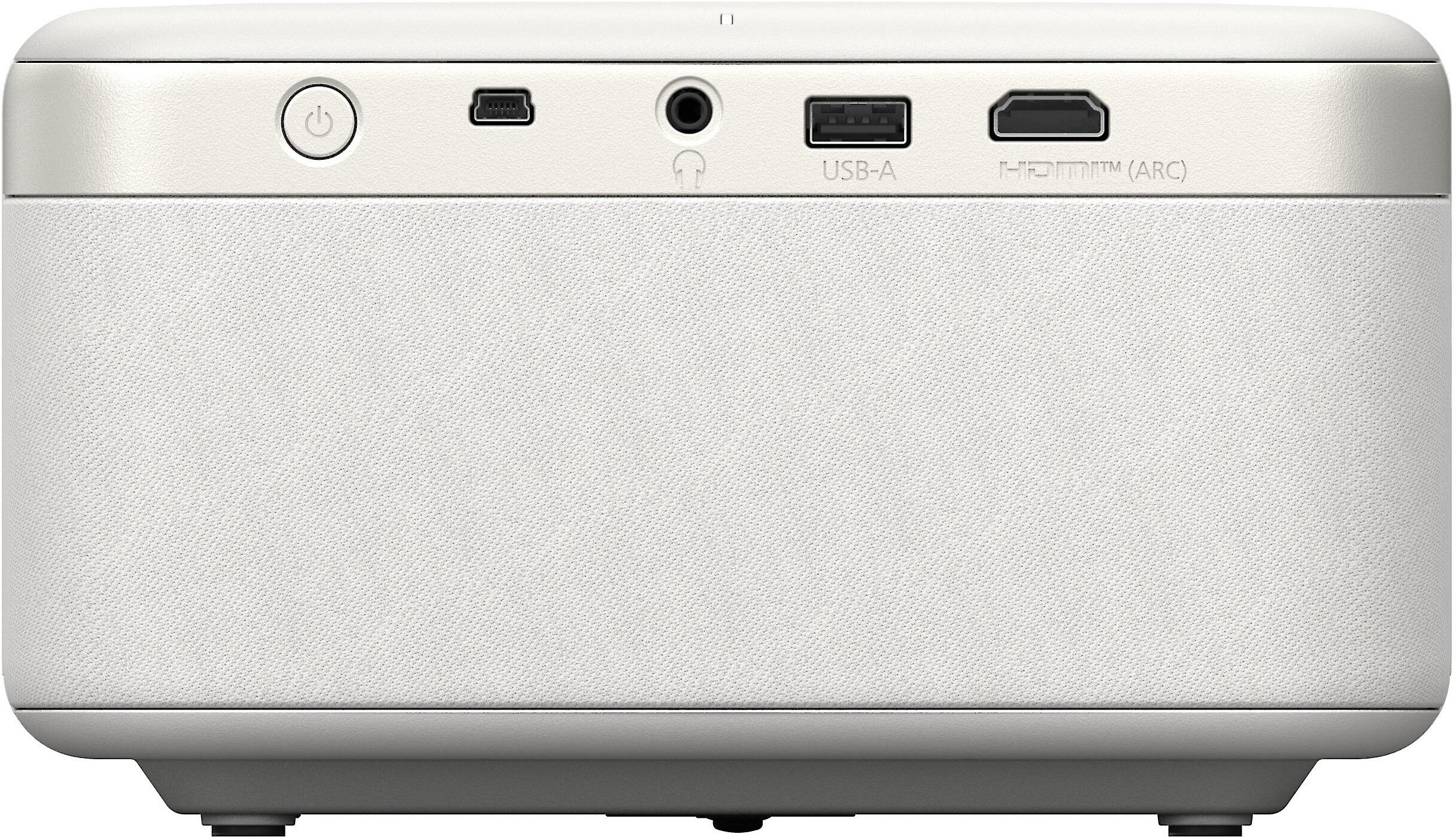
Connectivity focuses on modern standards: HDMI 2.0 with ARC (Audio Return Channel) enables simplified connection to soundbars or receivers. However, the single HDMI port limits connection options compared to the HAPPRUN's multiple inputs. Dual-band WiFi and Bluetooth 5.1 provide stable wireless performance.
Brightness Performance in Real Environments
The brightness difference between 350 and 1,000 ANSI lumens creates distinct usage scenarios. Our research into user experiences reveals that the HAPPRUN requires room-darkening blinds or curtains plus dimmed ambient lighting for satisfactory viewing. Even moderate lamp lighting significantly washes out the image.
The Epson EF21 maintains image visibility in typical family room lighting, though direct sunlight still poses challenges. This flexibility means spontaneous movie watching without environmental preparation, which significantly improves the projector's practical utility.
For outdoor movie nights, both projectors work after sunset, but the Epson provides better performance as ambient light fades and maintains image quality longer into evening hours.
Color Accuracy and Cinema Performance
The 3LCD technology in the Epson EF21 produces more accurate colors than typical budget DLP systems. This matters most for skin tones, which can appear oversaturated or unnatural on lesser projectors. Movie enthusiasts notice the difference immediately, particularly in dialogue-heavy scenes where natural-looking faces matter.
The HAPPRUN provides acceptable color reproduction for its price point, but side-by-side comparisons reveal the limitations. Reds tend toward orange, and blues can appear oversaturated. For casual viewing, these differences are minor, but they become apparent during extended movie sessions.
Gaming and Input Lag
Both projectors handle casual gaming adequately, though neither targets serious gamers. Input lag (the delay between controller input and screen response) appears acceptable for sports games and adventure titles based on user reports, but competitive gaming requires dedicated gaming projectors or monitors.
The HAPPRUN's multiple input options provide more flexibility for connecting various gaming consoles simultaneously, while the Epson EF21's single HDMI port requires switching or using an HDMI switch.
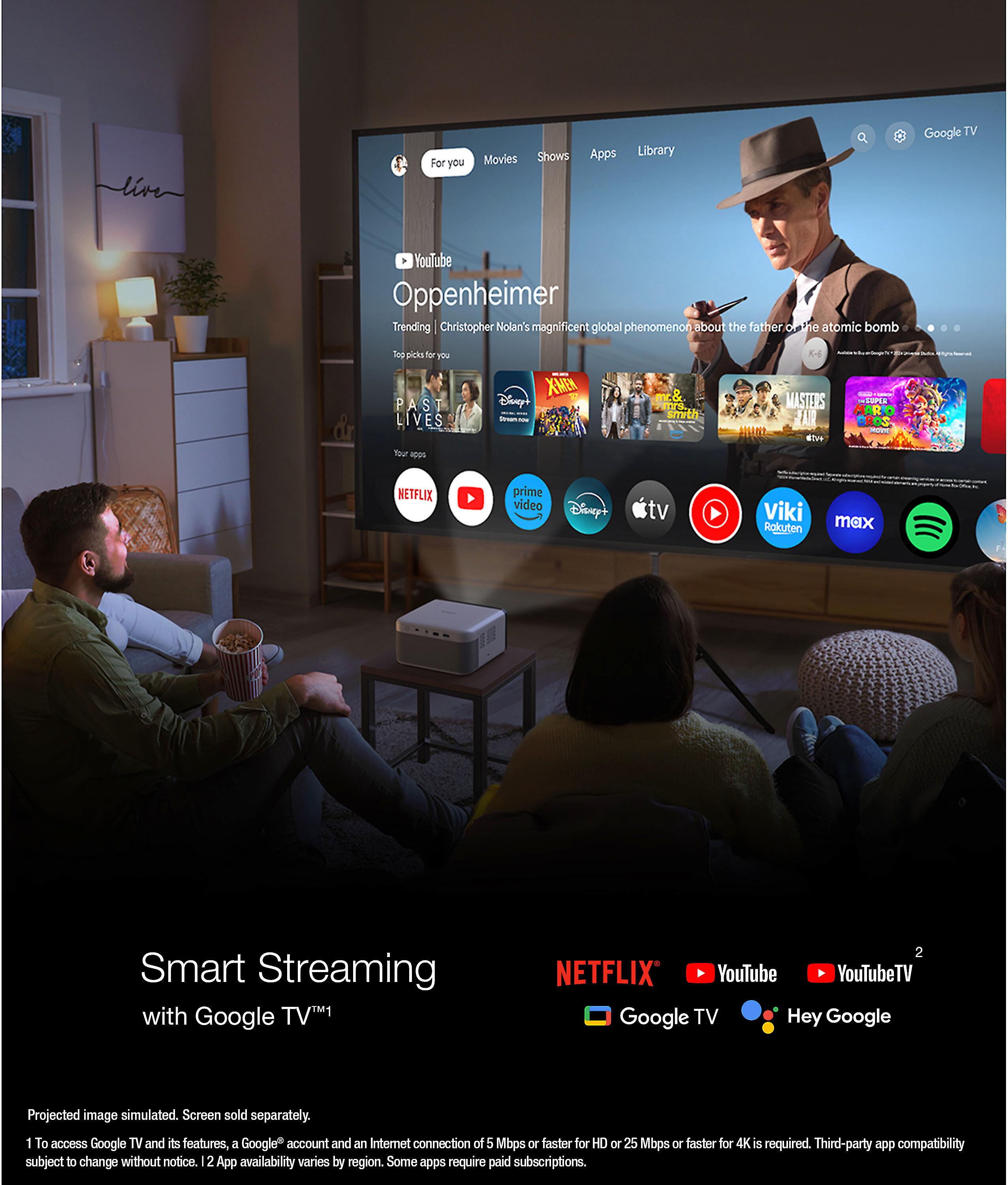
Both projectors run Google TV, but implementation quality varies. The HAPPRUN provides solid basic functionality with responsive navigation and reliable app performance. Official Netflix licensing ensures proper 4K content access without workarounds.
The Epson EF21 offers more polished Google TV integration with better optimization and smoother performance, though both platforms handle standard streaming tasks competently.
Voice control through Google Assistant works well on both projectors, enabling hands-free content search and basic navigation. Casting from smartphones and tablets performs reliably, though the Epson's more powerful processor handles multiple simultaneous connections more gracefully.
When the HAPPRUN Makes Sense
The HAPPRUN Google TV Smart Projector excels in specific scenarios that match its capabilities. If you have a dedicated media room or basement where lighting can be controlled completely, it delivers legitimate home theater experiences at a fraction of traditional projector costs.
College students, apartment dwellers, or anyone with strict budget constraints will appreciate the complete smart features package without additional streaming device purchases. The multiple input options suit users with various older devices that need connecting.
For introducing families to projection technology, the HAPPRUN provides an affordable entry point that demonstrates the benefits without major financial commitment. If the experience proves valuable, upgrading later makes sense.
When the Epson EF21 Justifies Its Premium
The Epson EpiqVision Mini EF21 targets users who prioritize convenience and performance over price. If you plan to use the projector in multiple rooms or lighting conditions, the brightness advantage alone justifies the cost difference.
The automated setup features matter enormously for users who lack patience for manual adjustments or move the projector frequently. The difference between 30 seconds of automated setup versus 5 minutes of manual tweaking becomes significant with regular use.
Quality-focused movie enthusiasts will notice and appreciate the superior color accuracy, contrast performance, and overall image quality. The laser light source eliminates maintenance concerns while ensuring consistent performance over years of use.
Home Theater Integration Considerations
For dedicated home theater setups, both projectors require external audio solutions to achieve cinematic sound quality. The Epson EF21 provides better integration options through HDMI ARC, enabling simplified connection to sound systems.
The HAPPRUN works well in home theaters where ambient light control isn't problematic and budget constraints are primary concerns. However, the Epson EF21's superior contrast and color accuracy create more engaging movie experiences that justify the investment for serious film enthusiasts.
Choose the HAPPRUN Google TV Smart Projector if budget is your primary constraint and you have appropriate viewing environments. It provides genuine smart projector capabilities at accessible prices, making projection technology available to users who couldn't otherwise afford it. The complete feature set eliminates additional purchases while delivering satisfactory performance within its limitations.
Choose the Epson EpiqVision Mini EF21 if you value convenience, performance, and flexibility over budget considerations. The brightness advantage, automated setup, and superior image quality create a fundamentally different user experience that justifies the premium for users who plan regular projector use.
The decision ultimately hinges on your intended usage patterns, viewing environment, and performance expectations. Both projectors represent solid value within their respective market segments, but they serve distinctly different user needs and preferences. Understanding those differences ensures you'll choose the projector that best matches your specific requirements and provides long-term satisfaction with your investment.
| HAPPRUN Google TV Smart Projector | Epson EpiqVision Mini EF21 Projector |
|---|---|
| Brightness - Most critical spec for room lighting flexibility | |
| 350 ANSI lumens (requires dark rooms) | 1,000 ANSI lumens (works in moderate ambient light) |
| Display Technology - Affects color accuracy and rainbow effects | |
| Single-chip DLP (budget standard, potential rainbow effect) | 3LCD 3-chip (eliminates rainbow effect, better colors) |
| Light Source - Determines lifespan and maintenance | |
| LED (typical 20,000+ hours, no details specified) | Laser diode array (20,000 hours, instant on/off) |
| Resolution - Both handle modern content well | |
| Native 1080p, 4K decoding (downscales UHD content) | Native 1080p, 4K input support |
| HDR Support - Enhanced dynamic range for streaming content | |
| HDR10+ (dynamic scene-by-scene processing) | HDR10, HLG (standard static tone mapping) |
| Contrast Ratio - Affects black levels and image depth | |
| 20,000:1 (adequate for dark scenes) | 200,000:1 (significantly deeper blacks) |
| Projection Size Range - Flexibility for different spaces | |
| 40-200 inches (larger maximum size) | 30-150 inches (optimized range for brightness) |
| Setup Process - Time and effort required | |
| Manual focus and keystone correction | EpiqSense auto-focus, keystone, obstacle avoidance |
| Audio System - Built-in speaker quality | |
| 8W single speaker, Dolby 3D processing | Dual 5W speakers (10W total), bass reflex design |
| Connectivity Options - Device compatibility | |
| HDMI, AV, 2x USB, headphone jack (more legacy support) | HDMI 2.0 with ARC, USB-A, headphone (modern focus) |
| Wireless Technology - Streaming and casting performance | |
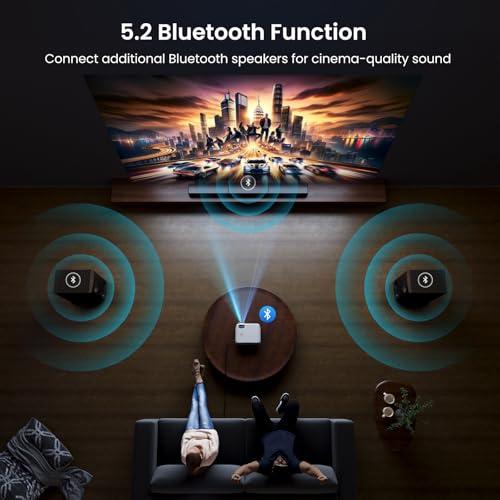
| WiFi 6, Bluetooth 5.2 (latest standards) | WiFi 5 (802.11ac), Bluetooth 5.1 |
| Weight and Portability - Ease of moving between rooms | |
| Not specified (typical budget projector size) | 5.1 lbs (true portable design) |
| Smart Platform - Streaming app integration | |
| Google TV with official Netflix licensing | Google TV with 10,000+ apps |
| Target Use Case - Best application scenario | |
| Budget home theater in controlled lighting | Premium portable for flexible room use |
The Epson EpiqVision Mini EF21 is significantly brighter at 1,000 ANSI lumens compared to the HAPPRUN Google TV Smart Projector's 350 ANSI lumens. This means the Epson EF21 can handle rooms with ambient light while the HAPPRUN requires darker environments for optimal viewing.
Yes, both the HAPPRUN Google TV Smart Projector and Epson EpiqVision Mini EF21 feature built-in Google TV with access to Netflix, YouTube, Disney+, and other major streaming platforms. No external streaming device is needed for either projector.
For dedicated home theaters with controlled lighting, the HAPPRUN Google TV Smart Projector offers excellent value with its smart features and 1080p resolution. However, if you need flexibility for different lighting conditions, the Epson EpiqVision Mini EF21 provides superior performance that justifies its higher cost.
The Epson EpiqVision Mini EF21 delivers superior image quality with its 3LCD technology, 200,000:1 contrast ratio, and laser light source. The HAPPRUN Google TV Smart Projector provides good 1080p quality for its price but has lower contrast and brightness limitations.
The Epson EpiqVision Mini EF21 features automatic setup with EpiqSense technology that handles focus, keystone correction, and obstacle avoidance automatically. The HAPPRUN Google TV Smart Projector requires manual adjustment of focus and keystone correction.
The Epson EpiqVision Mini EF21 has dual 5-watt speakers (10W total) with better stereo sound, while the HAPPRUN Google TV Smart Projector features an 8-watt single speaker with Dolby processing. Both benefit from external speakers for optimal home theater audio.
The Epson EpiqVision Mini EF21 performs much better in bright rooms due to its 1,000 ANSI lumen brightness. The HAPPRUN Google TV Smart Projector struggles with ambient light and requires darkened rooms for clear image visibility.
The HAPPRUN Google TV Smart Projector offers more ports including HDMI, AV input, dual USB ports, and headphone jack. The Epson EpiqVision Mini EF21 focuses on modern connectivity with HDMI 2.0 (with ARC), USB-A, and wireless options.
Both the HAPPRUN Google TV Smart Projector and Epson EpiqVision Mini EF21 handle casual gaming well. The HAPPRUN offers more input options for multiple consoles, while the Epson EF21 provides better image quality for gaming experiences.
The Epson EpiqVision Mini EF21 is specifically designed for portability at 5.1 pounds with automatic setup features. The HAPPRUN Google TV Smart Projector is portable but requires more manual setup when moving between locations.
The Epson EpiqVision Mini EF21 features a laser light source rated for 20,000 hours with consistent brightness over time, plus a 2-year warranty from an established manufacturer. The HAPPRUN Google TV Smart Projector uses LED technology but specific lifespan details aren't as clearly documented.
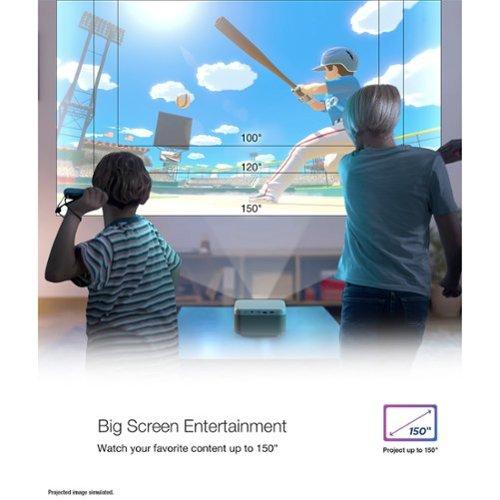
The HAPPRUN Google TV Smart Projector can project up to 200 inches but works best at 100-150 inches for optimal brightness. The Epson EpiqVision Mini EF21 is optimized for 30-150 inch screens and maintains better image quality at larger sizes due to its higher brightness output.
We've done our best to create useful and informative comparisons to help you decide what product to buy. Our research uses advanced automated methods to create this comparison and perfection is not possible - please contact us for corrections or questions. These are the sites we've researched in the creation of this article: youtube.com - topvisiontec.com - youtube.com - happrunprojector.com - youtube.com - happrunprojector.com - youtube.com - business.walmart.com - youtube.com - walmart.com - cordcuttersnews.com - nexpow.com - bestbuy.com - bestbuy.com - cnet.com - youtube.com - projectorreviews.com - epson.com - projectorreviews.com - epson.com - rtings.com - epson.com - youtube.com - projectorcentral.com - bestbuy.com - projectorcentral.com - nfm.com - crutchfield.com - latin.epson.com - mediaserver.goepson.com - planettv.com - bhphotovideo.com - cnet.com - epson.com

Privacy Policy
Terms and Conditions - Affiliate Policy
Home Security
© Copyright 2008-2026.
11816 Inwood Rd #1211, Dallas, TX 75244