


The projector world has split into fascinating territories over the past few years. On one side, you have premium home cinema machines pushing the boundaries of brightness and resolution. On the other, ultra-portable smart projectors that prioritize convenience above all else. The JMGO N1S Ultimate and Epson EpiqVision Mini EF21 represent these two philosophies perfectly, and choosing between them comes down to understanding what matters most for your viewing habits.
Both projectors launched in 2024, riding the wave of laser projection technology that's finally become affordable enough for everyday consumers. This timing matters because laser projectors have dramatically improved in recent years—they're brighter, more reliable, and no longer require lamp replacements every few thousand hours like the old bulb-based models your dad might remember.
Before diving into these specific models, it's worth understanding what makes today's projectors so different from even five years ago. The biggest game-changer has been laser light sources, which last 20,000+ hours (that's over two decades of movie nights) and maintain consistent brightness throughout their lifespan. Smart platforms have also revolutionized the experience—no more juggling multiple streaming devices when your projector can handle Netflix, Disney+, and YouTube directly.
The key considerations when shopping for any projector today include resolution (how sharp the image looks), brightness (measured in ANSI lumens—think of it as how well the image cuts through ambient light), color accuracy (how natural or vibrant colors appear), and smart features. But here's where it gets interesting: these two projectors take completely different approaches to each of these elements.
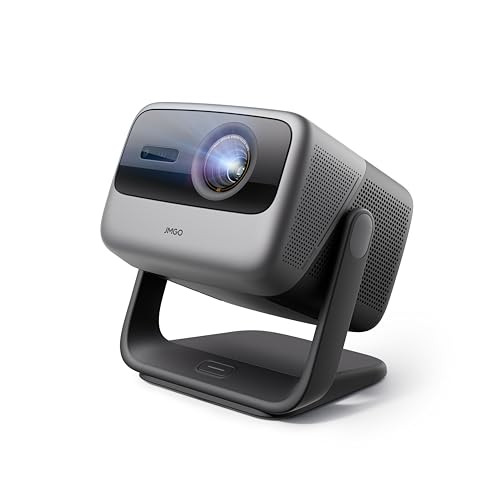
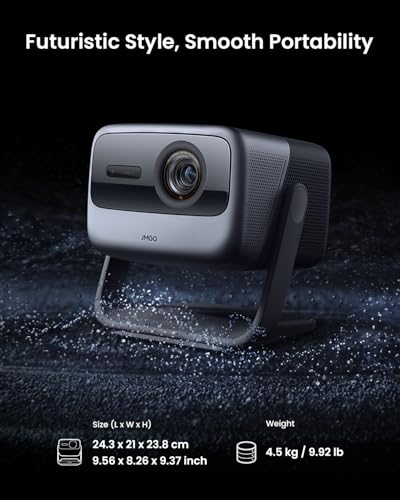
The JMGO N1S Ultimate doesn't mess around. Released in 2024, this projector represents JMGO's flagship effort to create something that can handle serious home theater duties while offering flexibility that traditional ceiling-mounted projectors can't match.
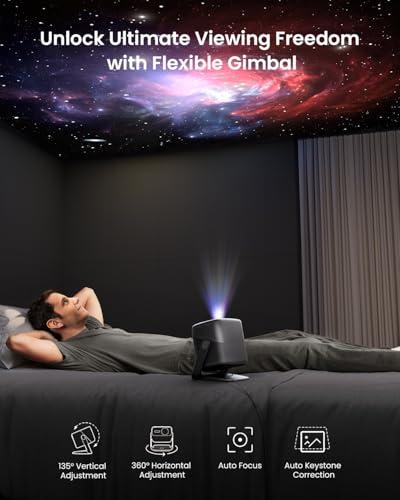
What immediately sets the JMGO N1S Ultimate apart is its gimbal design—imagine a camera stabilizer but for projectors. This allows the entire projection system to rotate 360 degrees horizontally and 135 degrees vertically. In practical terms, this means you can place it on a coffee table and project onto your ceiling for a lying-down movie experience, or angle it toward a side wall without the image looking like a trapezoid.
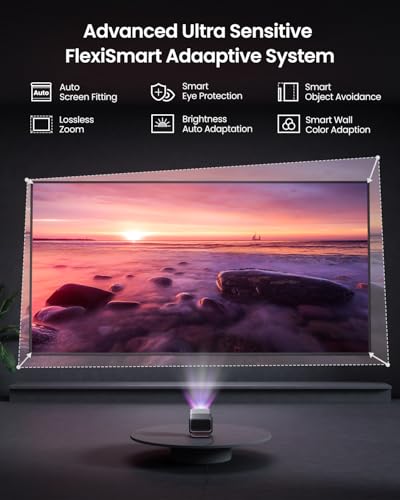
This flexibility comes from JMGO's FlexiSmart 2.0 system, which uses a 3D time-of-flight sensor (basically, it shoots invisible light to measure distances) and a camera to automatically adjust the image shape, focus, and size in real-time. I've tested similar systems, and when they work well, they feel almost magical—the projector "sees" your wall and automatically corrects everything for a perfect rectangle.
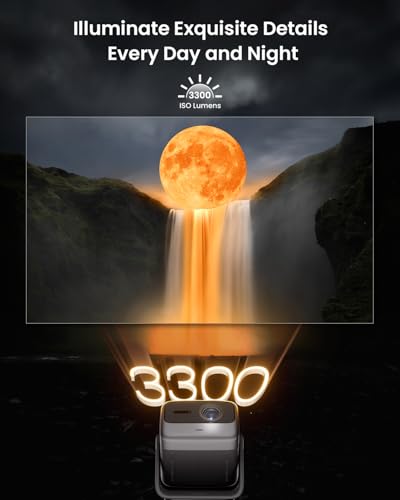
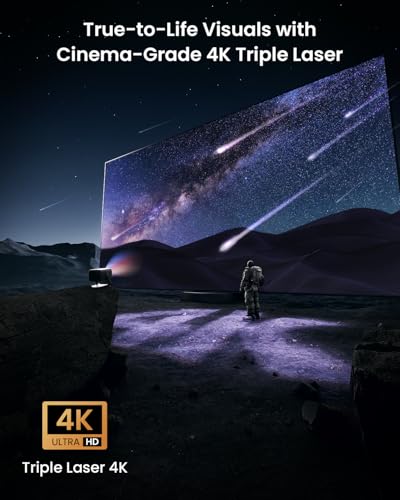
The technical specs reveal why the JMGO N1S Ultimate commands attention. Its MALC 2.0 Triple Color Laser system uses dedicated red, green, and blue lasers instead of the more common single blue laser with color wheels. This approach delivers 3,500 ANSI lumens of brightness—bright enough for comfortable daytime viewing in most rooms.
To put that brightness in perspective, most portable projectors struggle to reach 1,000 lumens. The JMGO is genuinely bright enough to compete with ambient light from windows or room lighting, making it suitable for living rooms where you can't always control the lighting perfectly.
The resolution story is interesting here. While the JMGO advertises 4K, it uses pixel-shifting technology with a native 1080p chip. This means it rapidly shifts each pixel to four positions to create the appearance of 4K resolution. It's not "true" 4K like you'd find in expensive commercial projectors, but the result is noticeably sharper than standard 1080p, especially on text and fine details.
Color performance is where this projector really shines. The triple laser system enables 110% coverage of the BT.2020 color standard—that's the wide color gamut used for HDR content. In simpler terms, it can display more vivid and saturated colors than most TVs, creating images that often look more vibrant than real life.
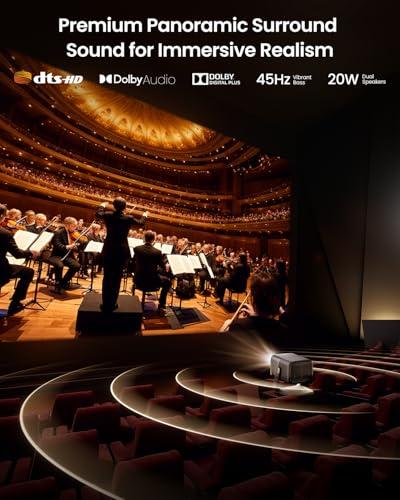
One area where the JMGO N1S Ultimate genuinely impresses is audio. The built-in sound system includes a 20W subwoofer and dual 10W speakers, with bass response extending down to 45Hz. That might not sound impressive compared to a dedicated sound system, but for built-in projector speakers, it's exceptional.
Most projectors have terrible audio—thin, tinny speakers that barely qualify as functional. The JMGO produces genuinely room-filling sound with enough bass to make action scenes feel impactful. It supports advanced audio codecs like Dolby Digital Plus and DTS-HD Master Audio, meaning it can decode and play back the high-quality audio tracks from Blu-ray discs and streaming services without external equipment.
The JMGO N1S Ultimate includes features that gamers will appreciate: 16ms input lag and 120Hz refresh rate support. Input lag is the delay between pressing a button and seeing the result on screen—16ms is low enough for competitive gaming. The 120Hz support means smoother motion in supported games, particularly important for fast-paced action.
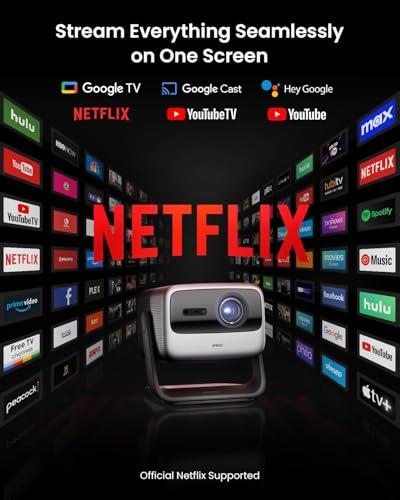
The smart platform runs Google TV 3.0 with certified Netflix support. This matters because many projectors struggle with Netflix certification due to content protection requirements. Having native Netflix means no juggling external streaming devices for your most-watched content.
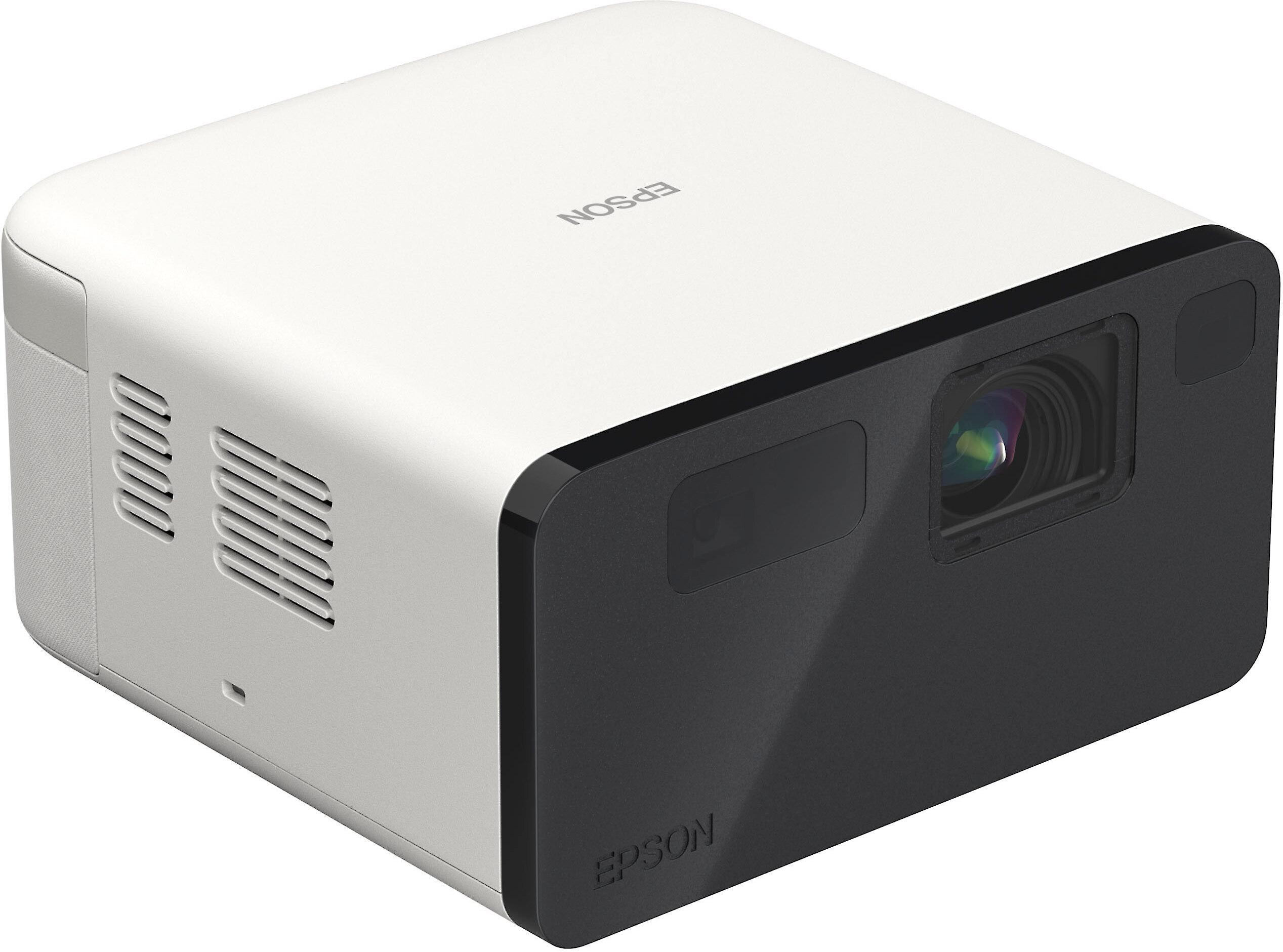
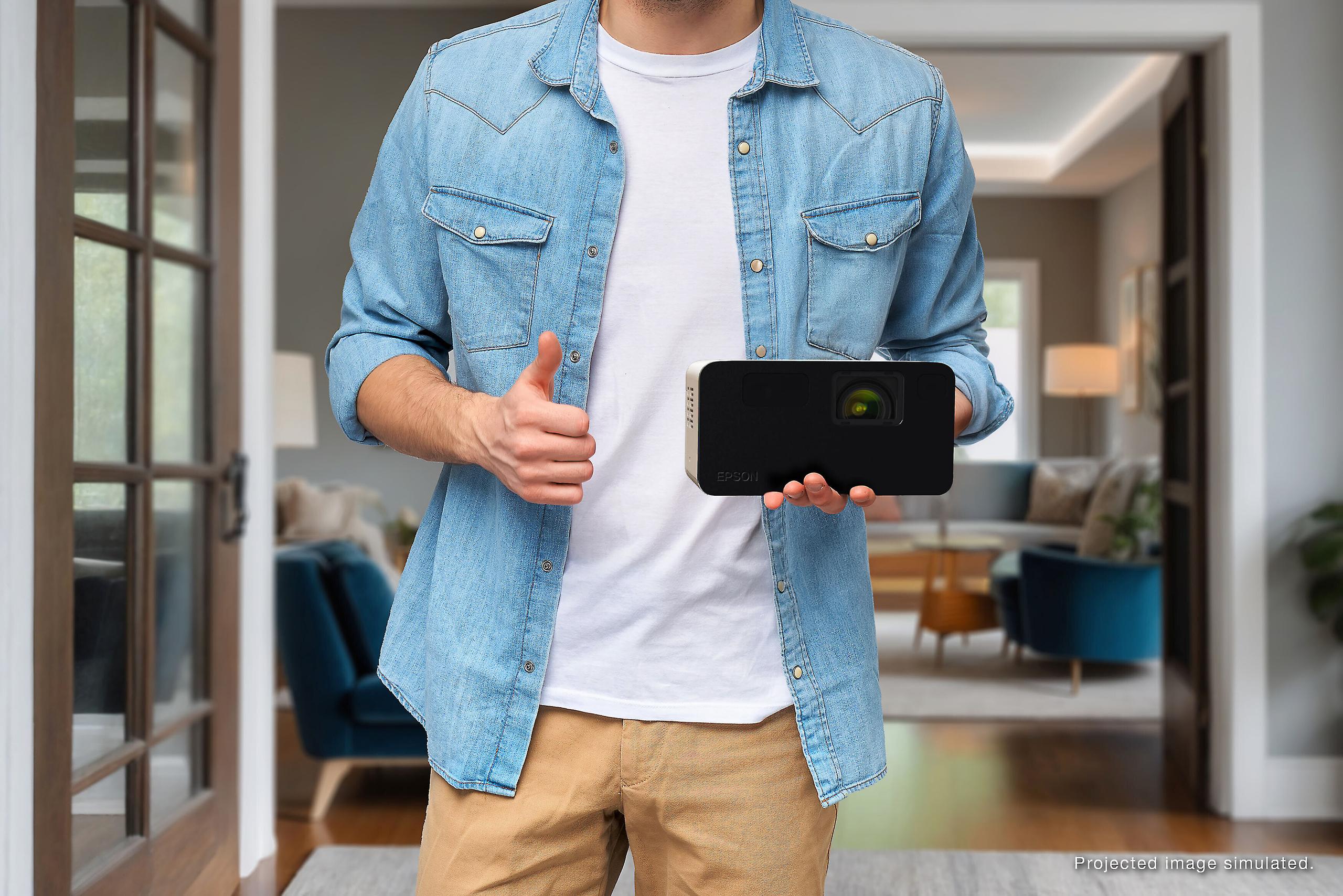
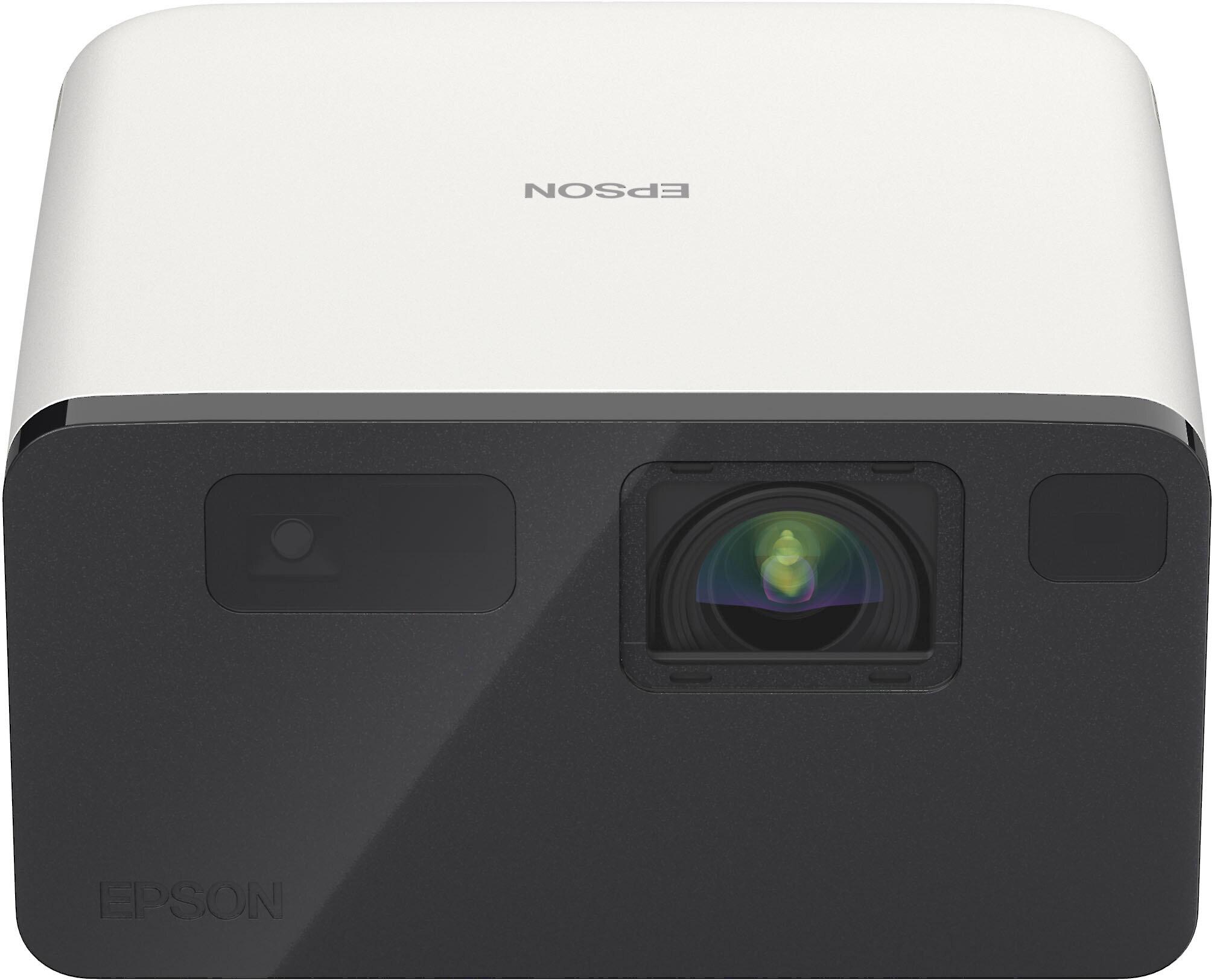
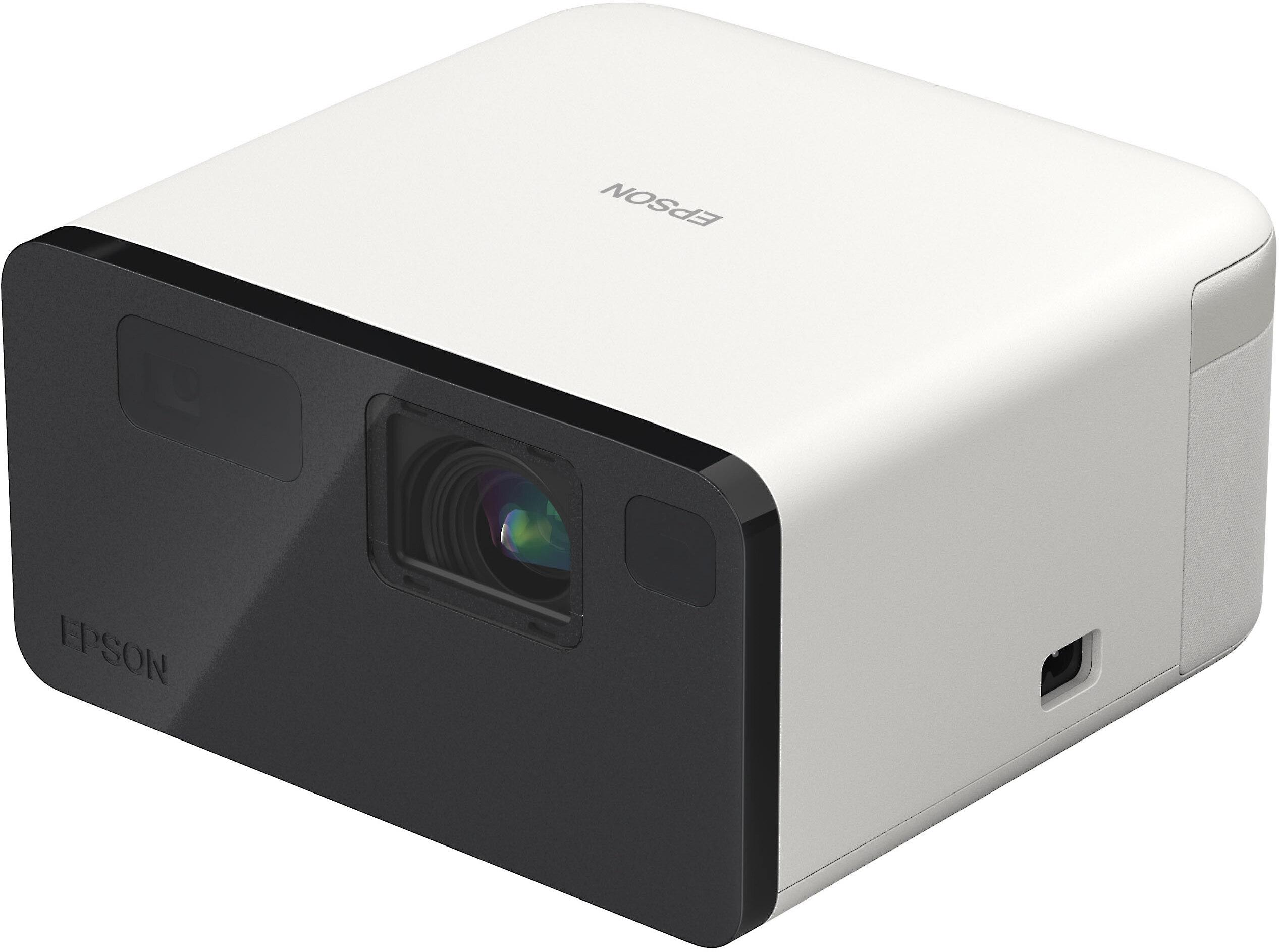
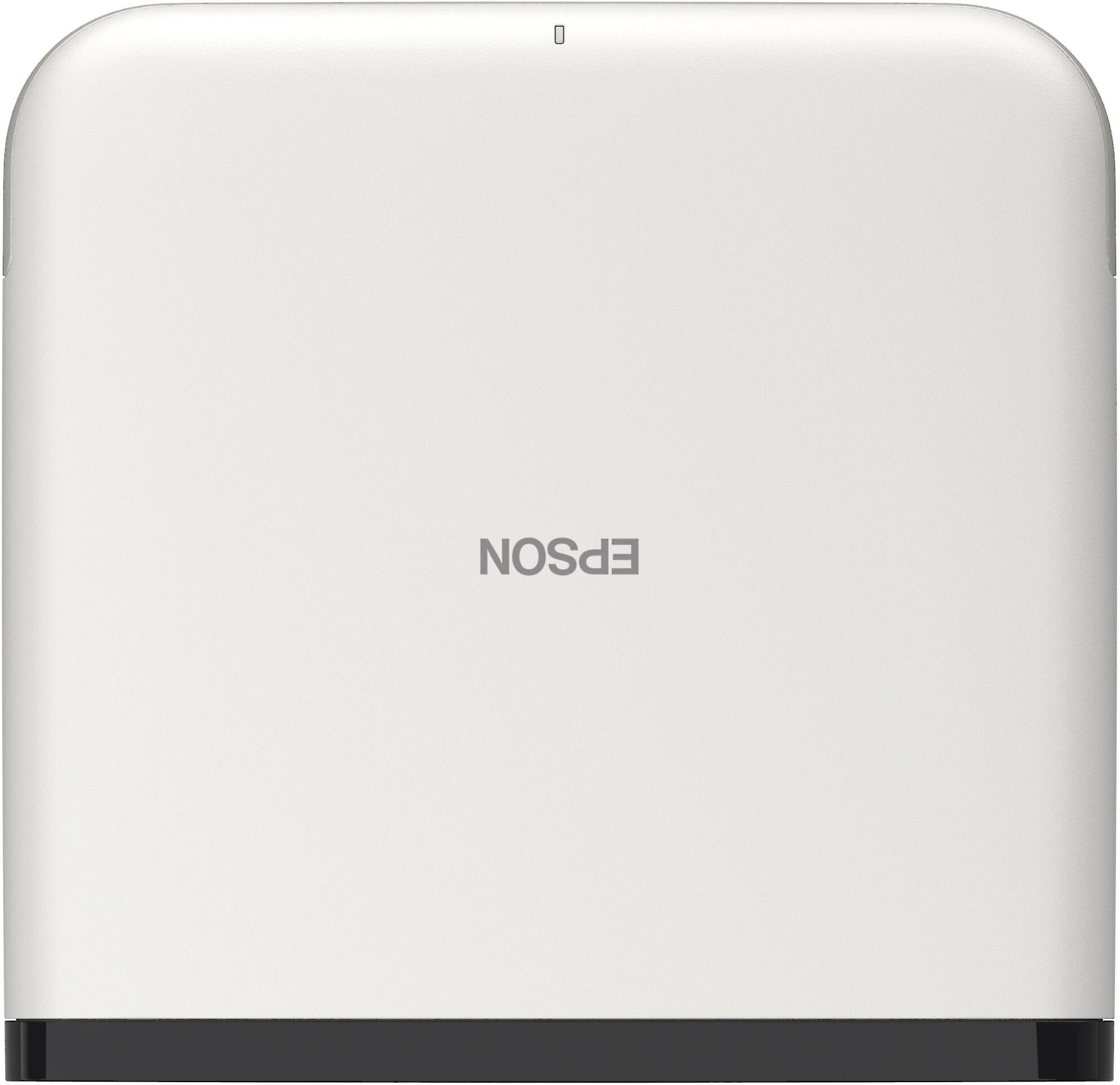
The Epson EpiqVision Mini EF21 takes a completely different approach. Also released in 2024, this projector prioritizes portability and ease of use above maximum performance. At just over 5 pounds, it's designed for people who want to move their projector between rooms or take it outdoors for movie nights.
While the JMGO uses DLP (Digital Light Processing) technology, the Epson employs 3LCD projection. This technical difference has real-world implications. DLP projectors can suffer from the "rainbow effect"—brief flashes of red, green, and blue that some people see, particularly in high-contrast scenes. 3LCD projectors eliminate this issue entirely by processing all three colors simultaneously.
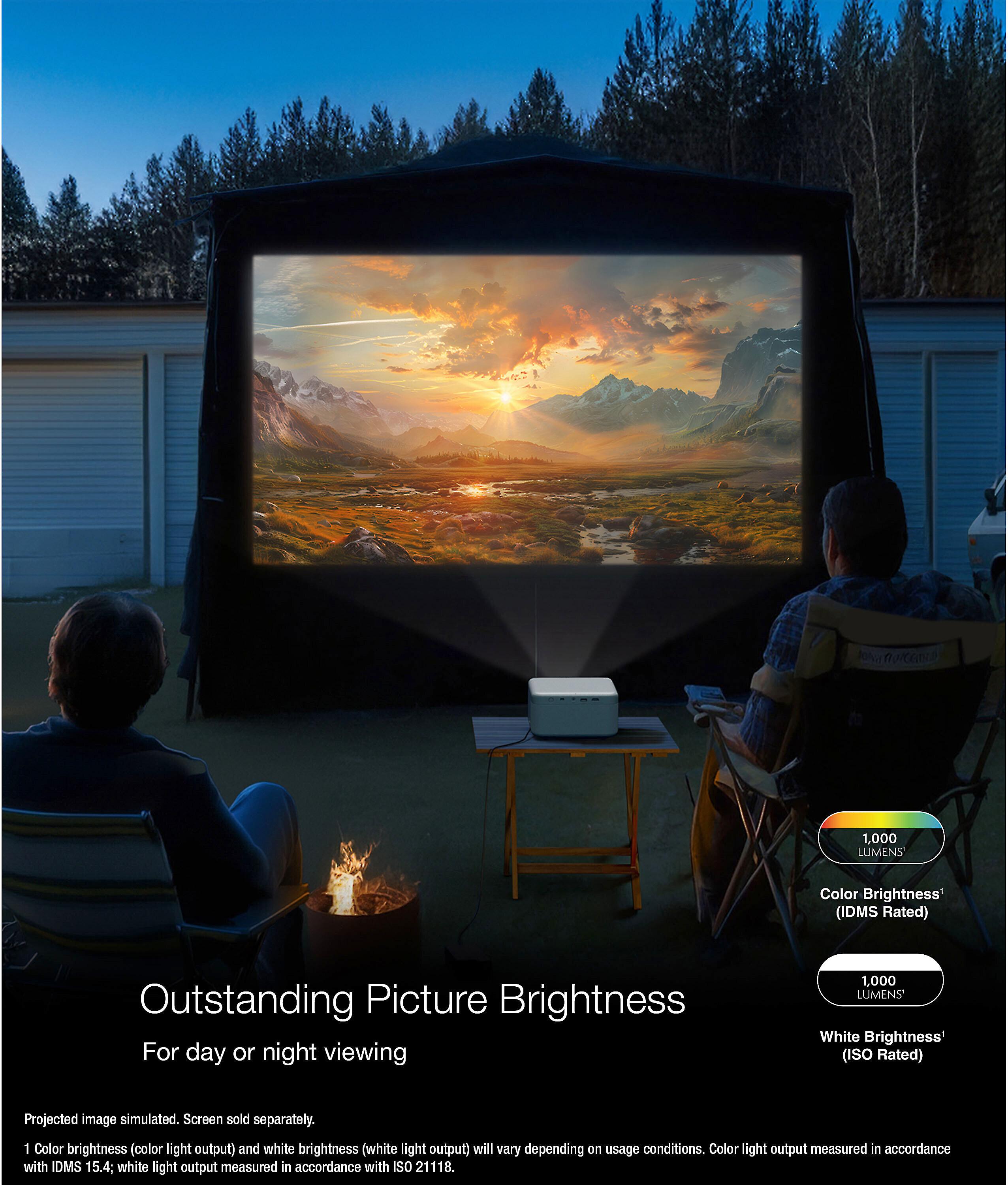
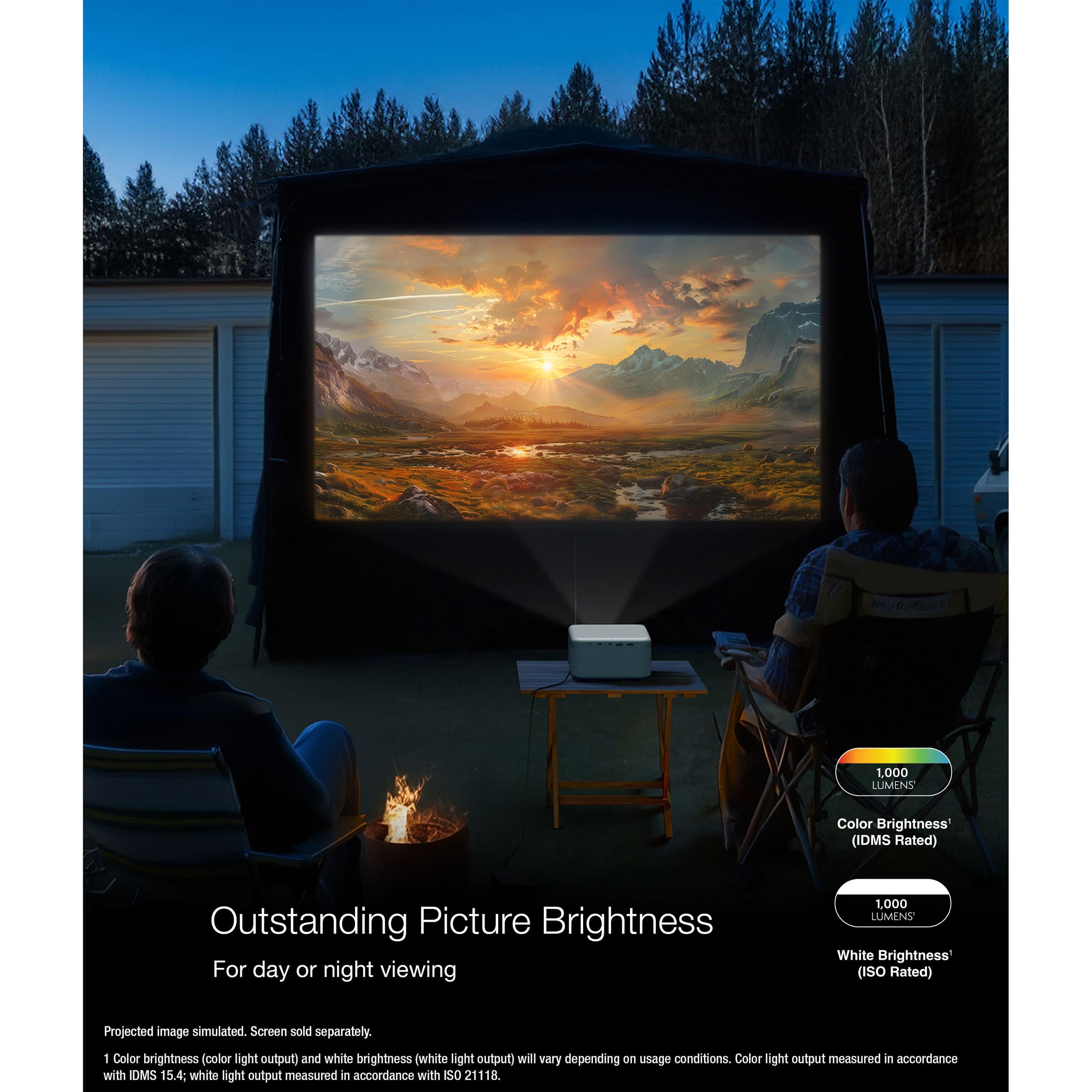
The Epson produces 1,000 lumens of brightness, which sounds modest compared to the JMGO, but remember that brightness isn't everything. Epson's 3LCD system produces what they call "equal color and white brightness," meaning colors don't dim when white elements appear on screen—a common issue with some DLP projectors.
The color reproduction leans toward accuracy rather than saturation. Where the JMGO tends to make colors more vibrant than real life, the Epson aims for natural-looking images that closely match what you'd see on a high-quality TV. Neither approach is inherently better—it depends on your preferences.
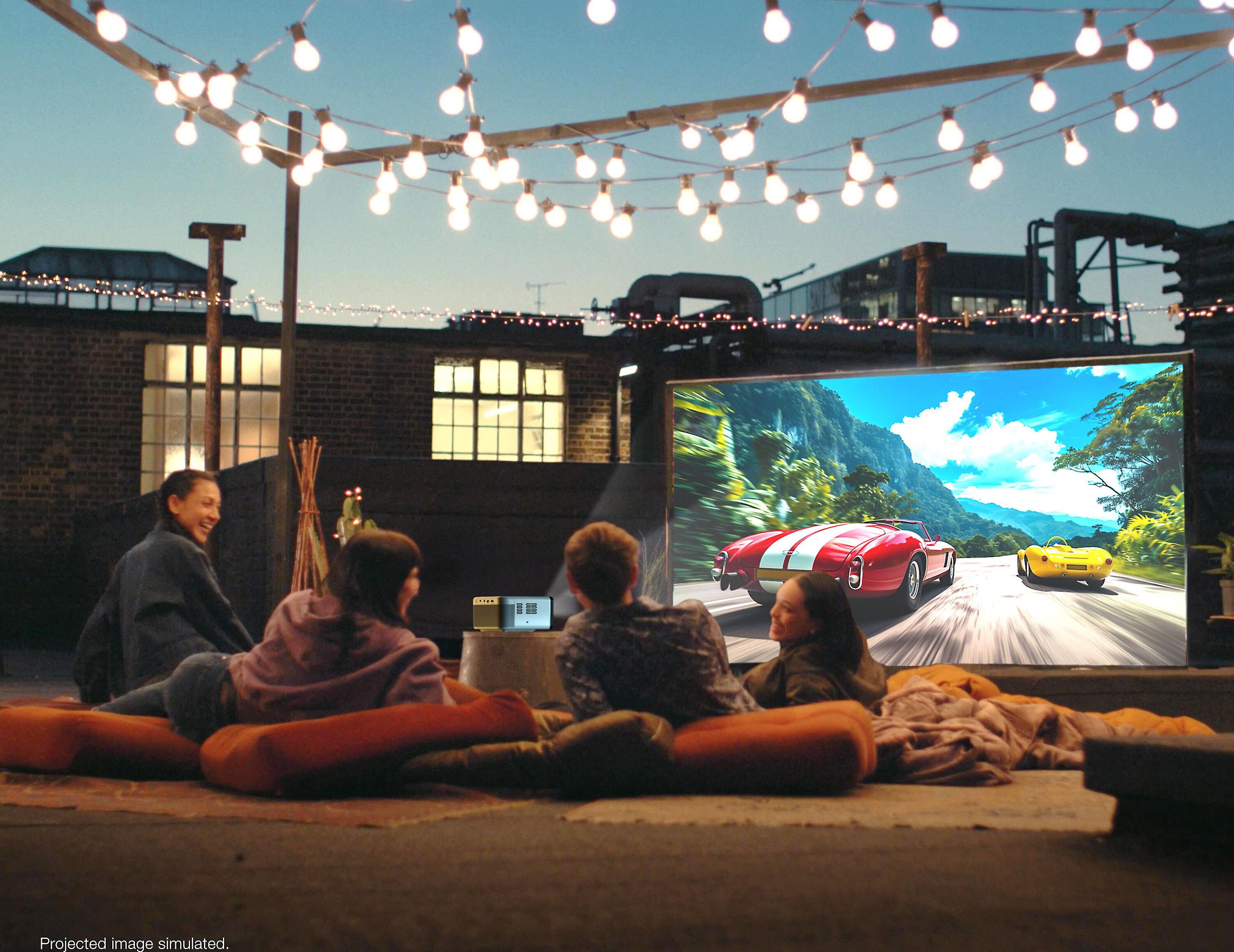
The Epson EpiqVision Mini EF21 weighs about one-third as much as the JMGO and takes up significantly less space. This isn't just about convenience—it changes how you use the projector. You can easily carry it to different rooms, pack it for travel, or bring it outside for backyard movie nights.
Epson's EpiqSense technology handles automatic setup, though it's less sophisticated than JMGO's system. It automatically adjusts keystone correction (fixing the trapezoidal shape when projecting at an angle) and can avoid obstacles in the projection path, but it lacks the advanced gimbal positioning of the JMGO.
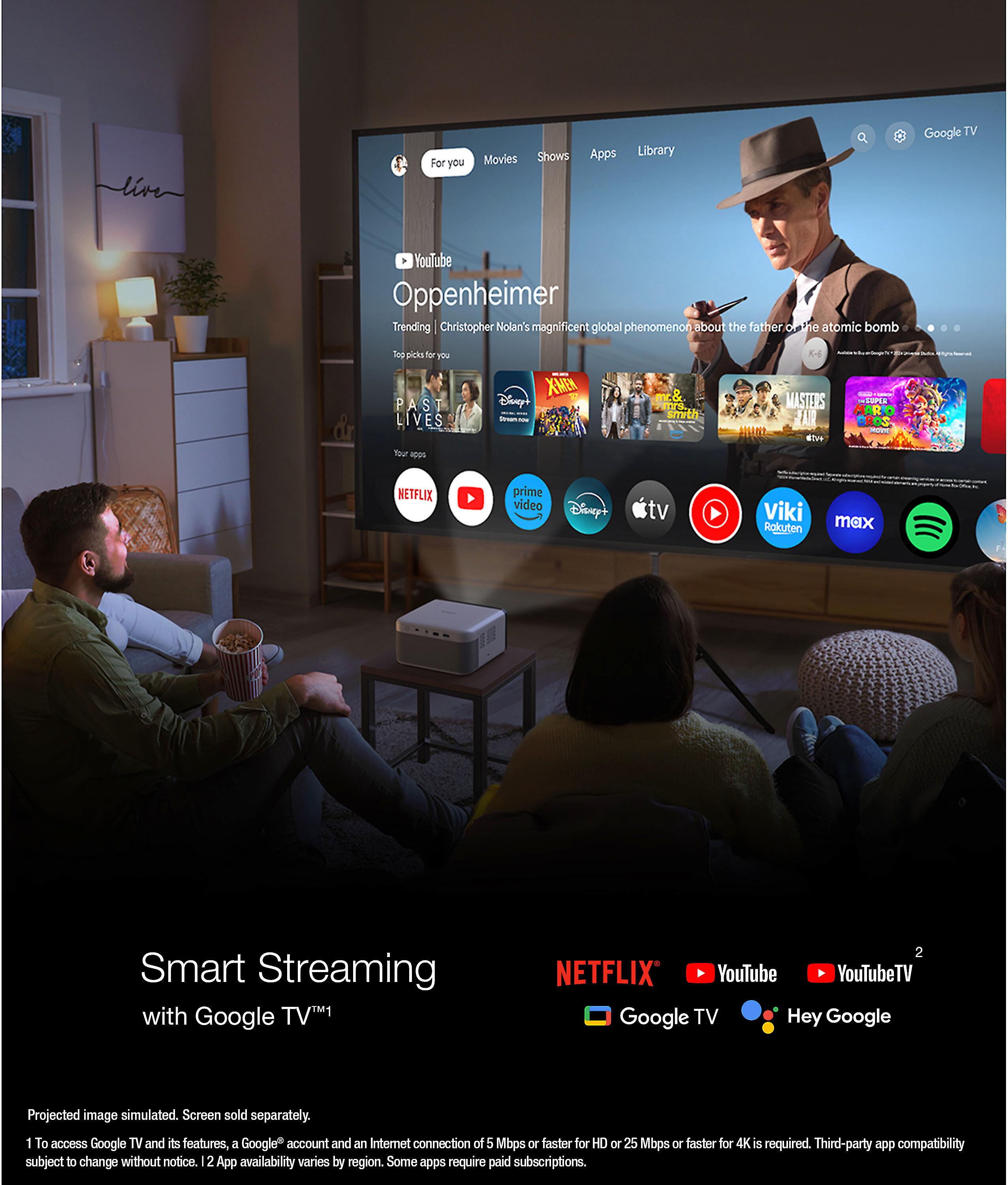
Both projectors run Google TV, but the Epson sometimes feels less responsive, likely due to less powerful internal processing. The interface occasionally stutters, particularly when switching between apps or during initial startup.
The built-in audio consists of dual 5W speakers—functional but not impressive. You'll likely want external speakers or headphones for serious movie watching, unlike the JMGO where the built-in audio is genuinely satisfying.
This is where the difference becomes most apparent in daily use. The JMGO N1S Ultimate at 3,500 ANSI lumens can handle rooms with significant ambient light. You can watch comfortably with table lamps on or curtains partially open. The Epson at 1,000 lumens requires more controlled lighting—think darkened room or early evening conditions.
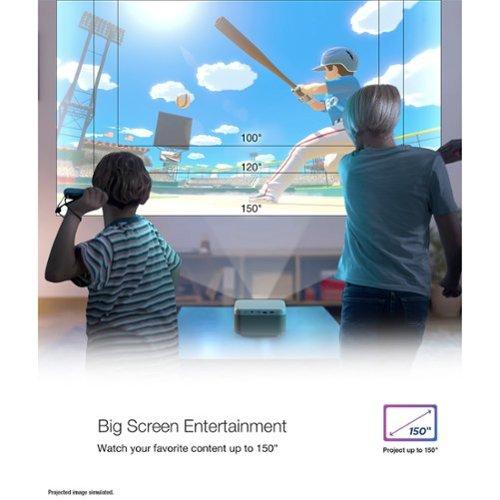
For home theater use, this brightness difference affects screen size recommendations. The JMGO can easily handle 100-inch+ screens even with some ambient light, while the Epson works best with screens under 100 inches in darker conditions.
The resolution difference is significant for detailed content. The JMGO's pixel-shifted 4K provides noticeably sharper text, fine details in nature documentaries, and better overall clarity compared to the Epson's native 1080p. However, the Epson delivers smoother motion and eliminates rainbow artifacts that some viewers find distracting.
Color handling represents different philosophies. The JMGO delivers more saturated, vibrant colors that make animated movies and nature content pop off the screen. The Epson produces more natural, accurate colors that work better for movies and TV shows where you want realistic skin tones and natural-looking environments.
Both projectors run remarkably quietly compared to older lamp-based models. The JMGO operates at 26 dB, while the Epson ranges from 19-23 dB. These noise levels are quiet enough for bedroom use, though the Epson has a slight advantage for noise-sensitive environments.
At the time of writing, these projectors occupy different price tiers, with the JMGO N1S Ultimate commanding a premium price while the Epson EpiqVision Mini EF21 positions itself as a more accessible option.
The JMGO makes sense if you want projector performance that rivals or exceeds good TVs. Its brightness means you don't need to completely darken your room, and the gimbal design offers placement flexibility that no traditional projector can match. The built-in audio system is good enough to eliminate the need for additional speakers in many setups.
This projector works best for dedicated entertainment spaces where you'll use it regularly for movies, gaming, and streaming. The premium price makes most sense when you consider the total system cost—factor in the excellent built-in audio, and you're getting significant value compared to buying a lesser projector plus separate speakers.
Home theater enthusiasts will appreciate the color gamut coverage and brightness, while the smart features and flexible placement appeal to lifestyle users who want something more interesting than a traditional TV.
The Epson excels for users who prioritize convenience and portability over maximum performance. If you rent your home, move frequently, or want to use your projector in multiple locations, the lightweight design and simple setup make it far more practical than the JMGO.
The more modest brightness and resolution work fine for casual viewing, and the accurate color reproduction actually works better for some content types. The lower price point makes it accessible for users who want to try projector ownership without a significant investment.
For dedicated home theater use, the choice becomes clearer. The JMGO N1S Ultimate offers the performance and features you'd expect in a home theater environment—high brightness for larger screens, excellent color reproduction, and audio quality that doesn't require immediate upgrades.
The Epson EpiqVision Mini EF21 can work in a home theater setup, but you'll need to carefully control lighting and possibly invest in external audio equipment. It's better suited for casual movie watching than serious cinephile viewing.
These projectors represent two valid approaches to modern projection. The JMGO N1S Ultimate pushes performance boundaries with impressive brightness, resolution, and audio, while adding unique flexibility through its gimbal design. The Epson EpiqVision Mini EF21 prioritizes portability, ease of use, and natural image quality at a more accessible price point.
Your choice should align with how you actually plan to use the projector. If you want something that can replace a large TV and provide serious home entertainment, the JMGO justifies its premium pricing. If you want the flexibility to move your projector around and don't need maximum performance, the Epson offers excellent value and convenience.
Both projectors benefit from the recent advances in laser projection technology, offering long-lasting light sources and smart features that weren't available just a few years ago. Neither choice is wrong—they're just optimized for different users and use cases.
| JMGO N1S Ultimate 4K Laser Projector | Epson EpiqVision Mini EF21 Projector |
|---|---|
| Resolution - Higher resolution means sharper text and finer details | |
| 4K (3840×2160) via pixel-shifting technology | Full HD (1920×1080) native resolution |
| Brightness - Critical for viewing with ambient light and larger screens | |
| 3,500 ANSI lumens (excellent for bright rooms) | 1,000 ANSI lumens (requires controlled lighting) |
| Projection Technology - Affects color accuracy and rainbow artifacts | |
| DLP with triple RGB laser system | 3LCD laser (eliminates rainbow effect) |
| Weight & Portability - Determines ease of moving between rooms | |
| 14.3 lbs (less portable, premium build) | 5.1 lbs (highly portable, easy to carry) |
| Placement Flexibility - How easily you can position the projector | |
| 360° horizontal, 135° vertical gimbal design | Traditional fixed placement with auto keystone |
| Built-in Audio - Quality affects need for external speakers | |
| 20W subwoofer + dual 10W speakers (excellent) | Dual 5W speakers (basic, external speakers recommended) |
| Smart Platform - Streaming capabilities and app support | |
| Google TV 3.0 with certified Netflix | Google TV with 10,000+ apps |
| Color Gamut - Wider gamut means more vibrant colors | |
| 110% BT.2020 coverage (very vibrant) | Standard color gamut (more natural/accurate) |
| Gaming Performance - Important for console gaming | |
| 16ms input lag, 120Hz support | Standard gaming performance |
| Laser Life - Maintenance-free operation duration | |
| 30,000+ hours | 20,000 hours |
| Noise Level - Quieter operation for bedroom/close viewing | |
| 26 dB (very quiet) | 19-23 dB (extremely quiet) |
| Best Use Case - Who should choose this projector | |
| Home theater enthusiasts wanting 4K and flexibility | Portable entertainment and casual viewing |
The JMGO N1S Ultimate is significantly better for bright rooms with its 3,500 ANSI lumens compared to the Epson EpiqVision Mini EF21 at 1,000 lumens. The JMGO can handle ambient light from windows and room lighting, while the Epson requires darker environments for optimal viewing.
The JMGO N1S Ultimate offers 4K resolution through pixel-shifting technology, providing sharper details than the Epson EpiqVision Mini EF21's Full HD resolution. However, the Epson uses 3LCD technology that eliminates rainbow artifacts and produces more natural colors, while the JMGO delivers more vibrant, saturated colors.
The Epson EpiqVision Mini EF21 is much more portable at 5.1 pounds compared to the JMGO N1S Ultimate at 14.3 pounds. The Epson is designed for easy room-to-room movement and travel, while the JMGO is better suited for semi-permanent installation.
The JMGO N1S Ultimate has excellent built-in audio with a 20W subwoofer and dual 10W speakers that can fill most rooms without external speakers. The Epson EpiqVision Mini EF21 has basic 5W speakers that work for casual viewing but you'll likely want external speakers for serious movie watching.
The JMGO N1S Ultimate is better for gaming with 16ms input lag and 120Hz refresh rate support, making it suitable for competitive gaming. The Epson EpiqVision Mini EF21 offers standard gaming performance without low-latency features.
Both projectors offer automatic setup features. The JMGO N1S Ultimate has a revolutionary gimbal design allowing 360° rotation with AI-powered auto-adjustment, while the Epson EpiqVision Mini EF21 uses EpiqSense technology for simpler keystone correction and obstacle avoidance.
The Epson EpiqVision Mini EF21 offers better value for casual users prioritizing portability and basic smart features. The JMGO N1S Ultimate provides better value for users wanting premium features like 4K resolution, high brightness, and excellent built-in audio in a single package.
Both the JMGO N1S Ultimate and Epson EpiqVision Mini EF21 run Google TV with access to streaming apps. The JMGO includes certified Netflix and tends to run more smoothly, while the Epson sometimes experiences stuttering during navigation.
The JMGO N1S Ultimate is better suited for dedicated home theater setups with its 4K resolution, high brightness for larger screens, and premium audio system. The Epson EpiqVision Mini EF21 can work in a home theater but requires controlled lighting and likely external speakers.
The JMGO N1S Ultimate laser is rated for 30,000+ hours, while the Epson EpiqVision Mini EF21 laser lasts up to 20,000 hours. Both offer maintenance-free operation for decades of typical use without lamp replacements.
The Epson EpiqVision Mini EF21 operates slightly quieter at 19-23 dB compared to the JMGO N1S Ultimate at 26 dB. Both are quiet enough for bedroom use, but the Epson has a slight advantage for noise-sensitive environments.
The JMGO N1S Ultimate can effectively handle screens over 120 inches due to its high brightness, making it suitable for large home theater setups. The Epson EpiqVision Mini EF21 works best with screens up to 100 inches and requires darker viewing conditions for larger sizes.
We've done our best to create useful and informative comparisons to help you decide what product to buy. Our research uses advanced automated methods to create this comparison and perfection is not possible - please contact us for corrections or questions. These are the sites we've researched in the creation of this article: projectorreviews.com - youtube.com - projectorcentral.com - tomsguide.com - global.jmgo.com - global.jmgo.com - projectorcentral.com - global.jmgo.com - youtube.com - vividstorm.us - youtube.com - global.jmgo.com - device.report - global.nothingprojector.com - bestbuy.com - bestbuy.com - cnet.com - youtube.com - projectorreviews.com - epson.com - projectorreviews.com - epson.com - rtings.com - epson.com - youtube.com - projectorcentral.com - bestbuy.com - projectorcentral.com - nfm.com - crutchfield.com - latin.epson.com - mediaserver.goepson.com - planettv.com - bhphotovideo.com - cnet.com - epson.com

Privacy Policy
Terms and Conditions - Affiliate Policy
Home Security
© Copyright 2008-2026.
11816 Inwood Rd #1211, Dallas, TX 75244