

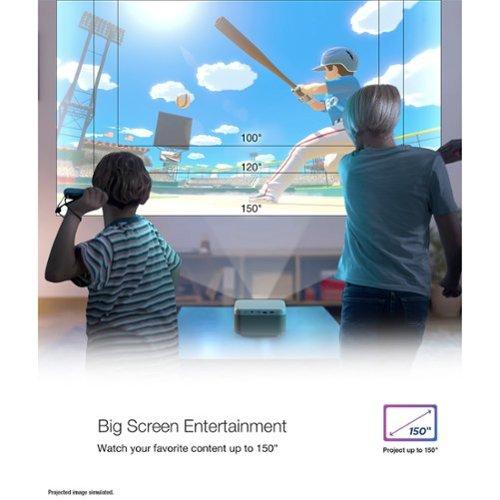


Remember when setting up a projector meant dealing with a mess of cables, external speakers, and a separate streaming device? Those days are thankfully behind us. Smart projectors have transformed what was once a complicated home theater component into an all-in-one entertainment solution that anyone can use.
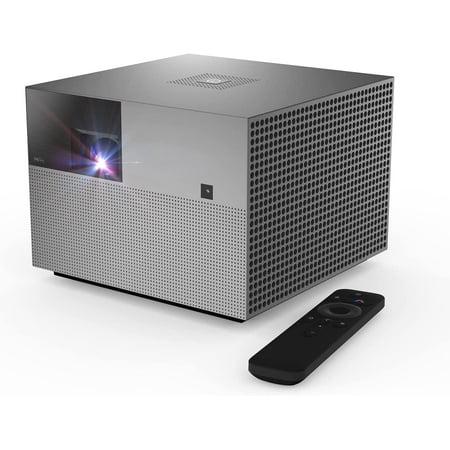
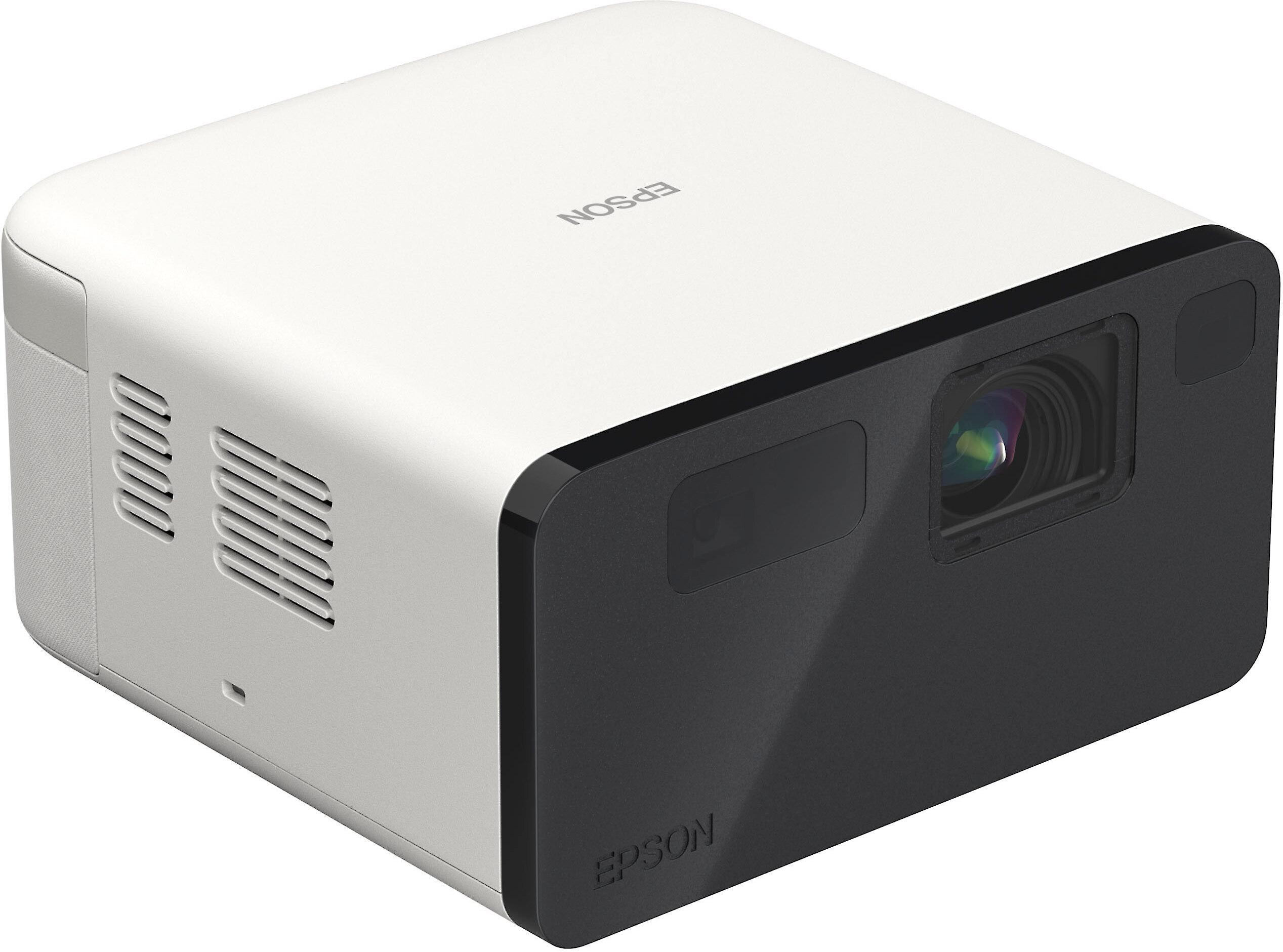
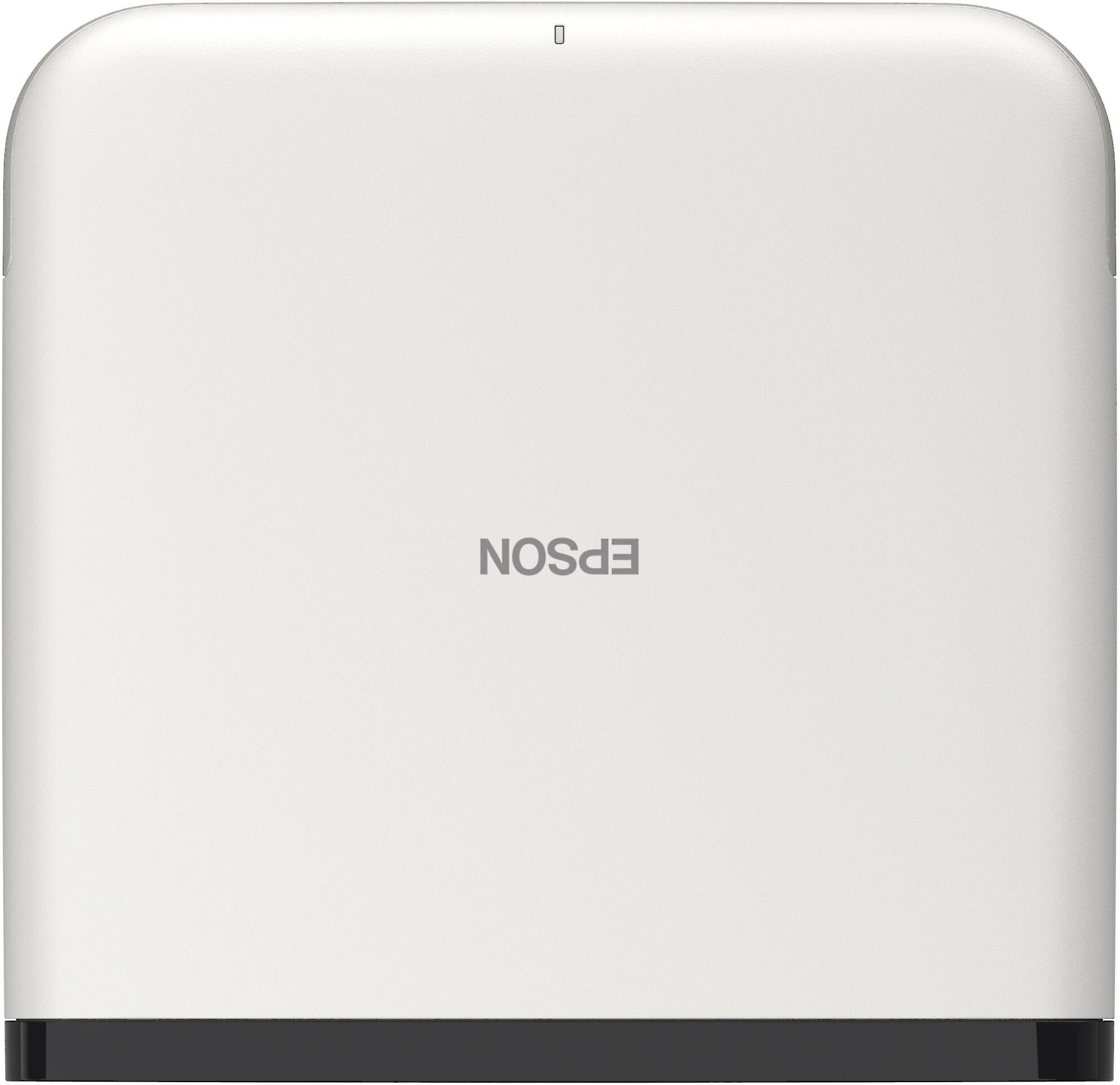
Released in 2022, the WEMAX Vogue Pro ($640) and the Epson EpiqVision Mini EF21 ($900) represent the current generation of smart projectors that combine traditional projection technology with built-in streaming capabilities, automated setup features, and decent audio systems. These advancements mean you can now enjoy a big-screen experience without the technical headaches that once accompanied projector setups.
Since their release, both manufacturers have rolled out firmware updates to improve performance and add features, but the core hardware remains unchanged. The projector market tends to move more slowly than smartphones or laptops, with models typically staying current for 2-3 years before significant hardware refreshes.
Whether you're creating a dedicated home theater, looking for a flexible entertainment solution, or simply want a bigger screen than your TV can provide, understanding the key differences between these two popular models will help you make the right choice for your needs.
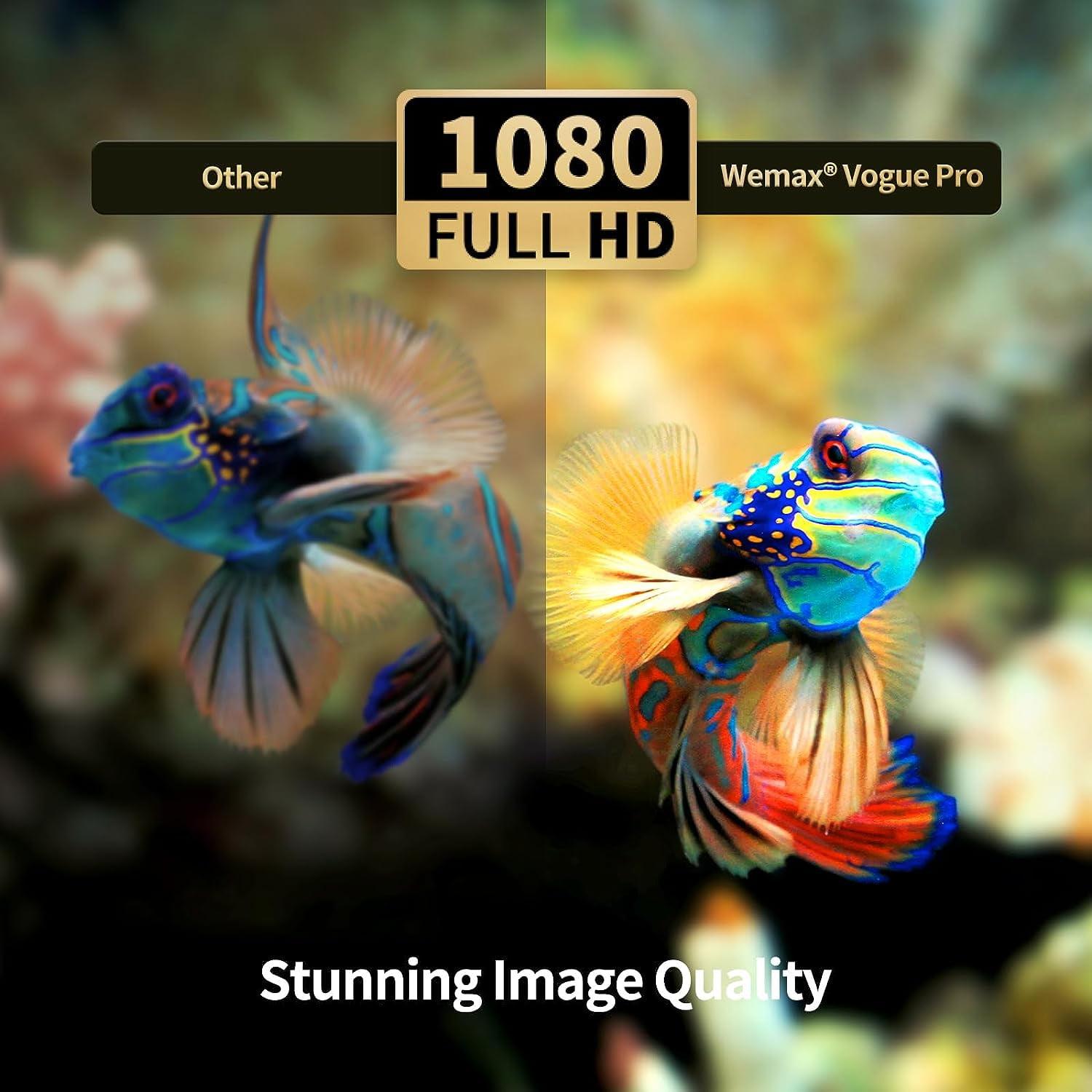
Both the WEMAX Vogue Pro and Epson EpiqVision Mini EF21 offer Full HD 1080p native resolution (1920×1080 pixels), which remains the sweet spot for most content today. While true 4K projectors exist, they come with a significant price premium that these mid-range models avoid.
That said, both projectors support 4K input, meaning they can accept a 4K signal and downscale it to their native 1080p resolution. This feature allows them to work with modern 4K streaming devices and gaming consoles without compatibility issues. The downscaling preserves more detail than if you were watching native 1080p content, resulting in a slightly sharper image than standard 1080p sources.
Brightness is arguably the most critical factor in real-world projector performance, especially if your viewing environment isn't completely dark. This is where we see the first major difference between these projectors.
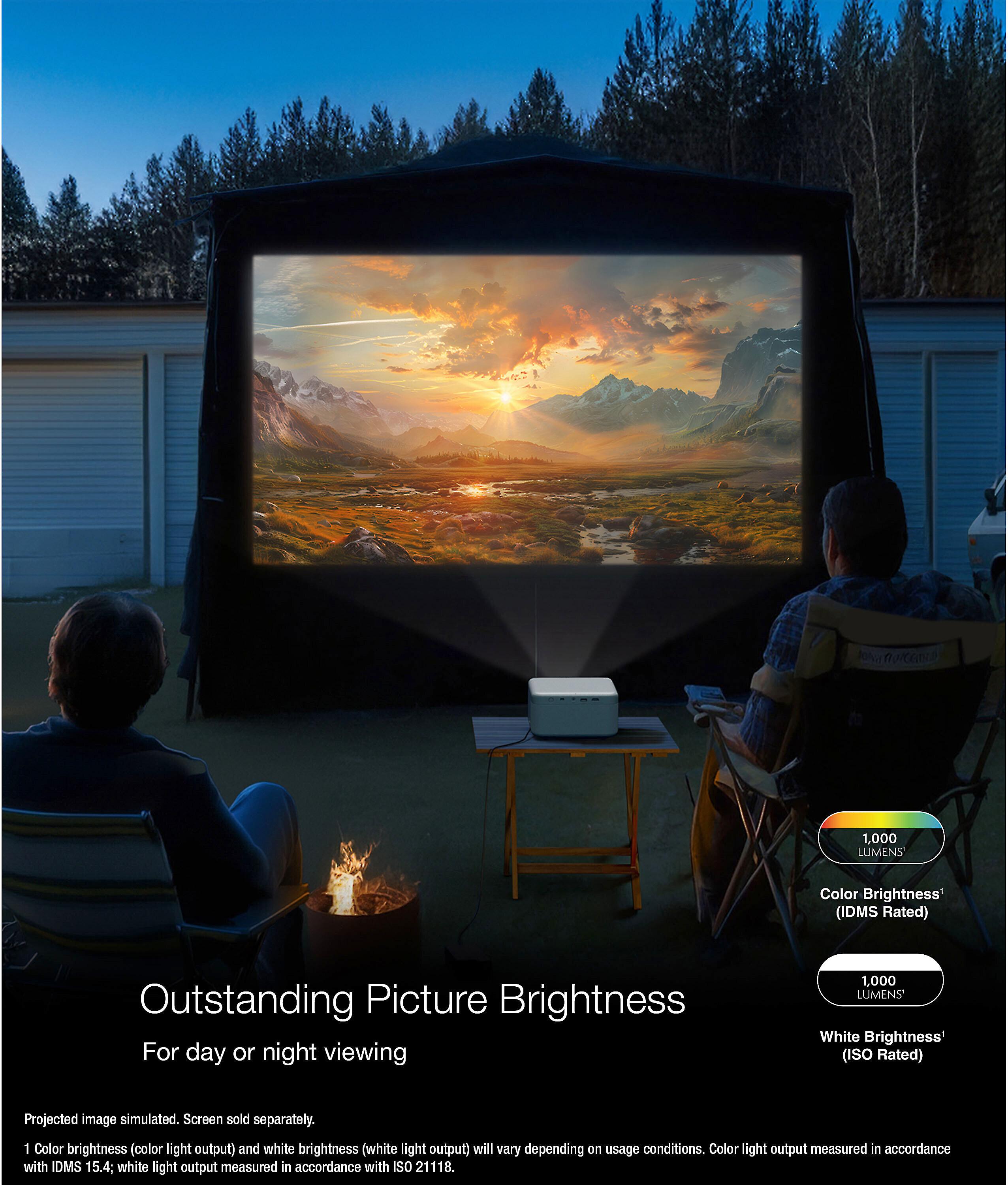
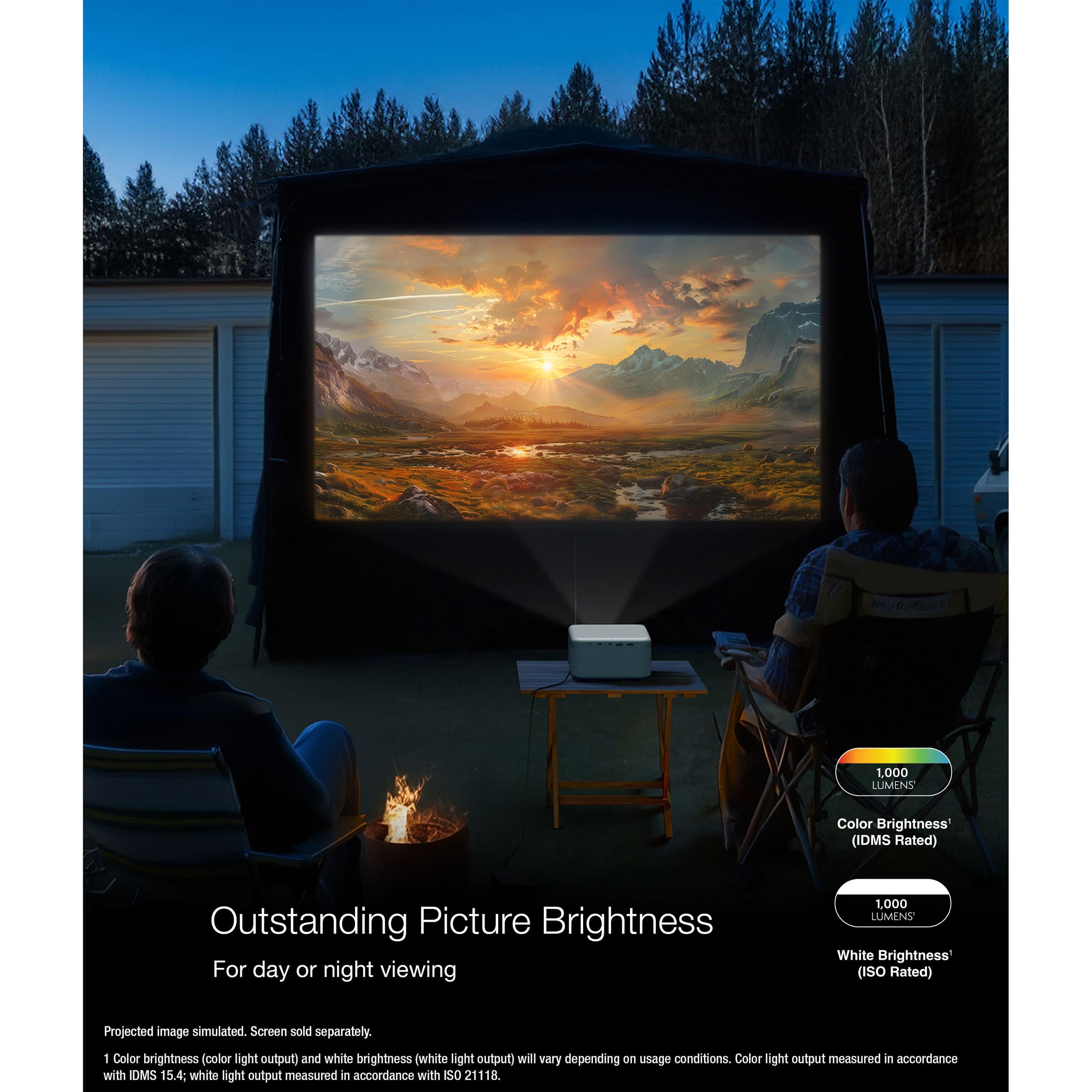
The WEMAX advertises 1600 ANSI lumens compared to the Epson's 1000 lumens. This might suggest the WEMAX is significantly brighter, but the comparison isn't straightforward due to the different technologies used.
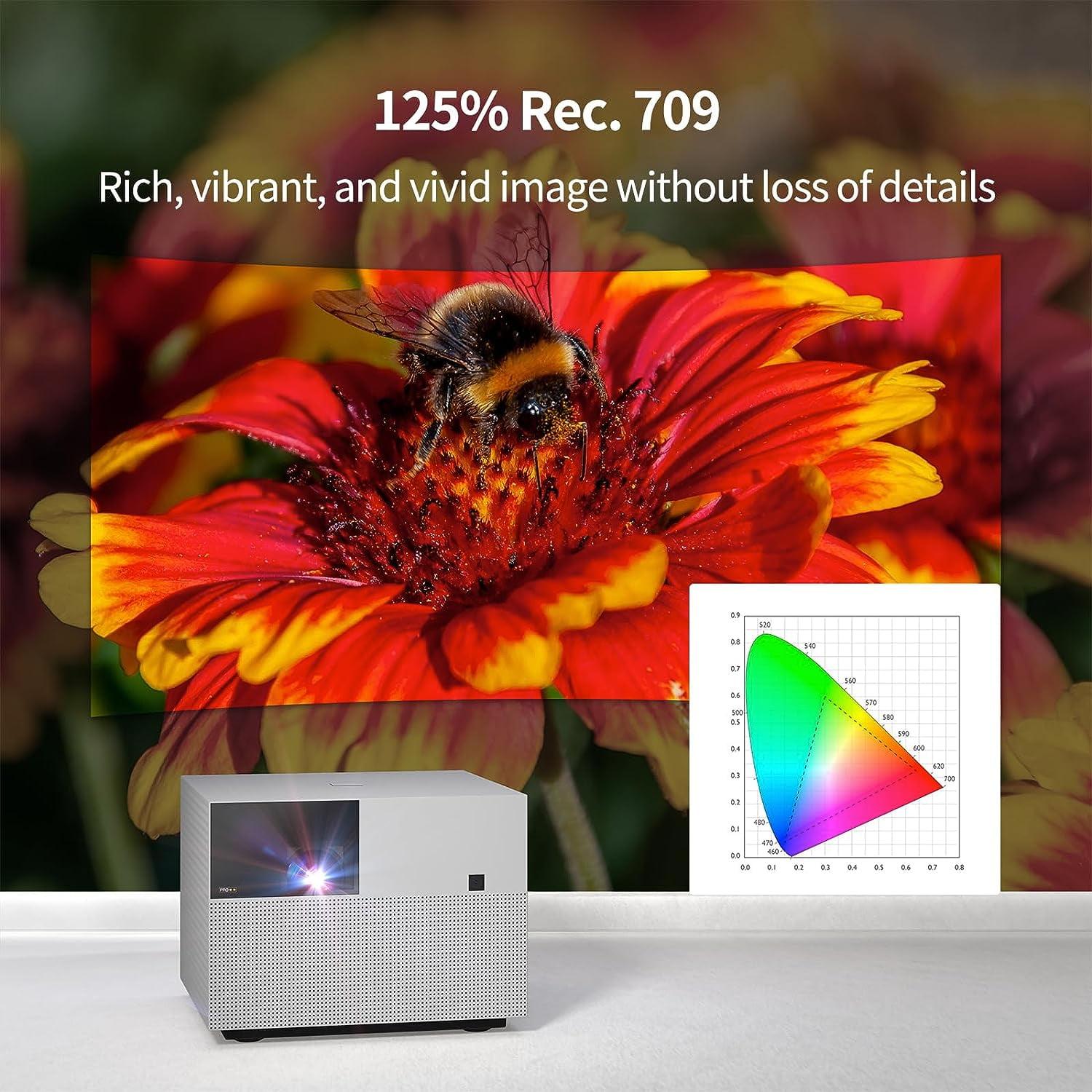
The WEMAX uses DLP (Digital Light Processing) technology with a 4-channel LED light source. DLP projectors use tiny mirrors on a semiconductor chip to reflect light and create an image. The addition of a fourth LED channel (adding a cyan LED to the standard red, green, and blue) improves color accuracy and brightness over traditional 3-LED DLP projectors.
The Epson, meanwhile, uses 3LCD technology, which splits light through three separate LCD panels – one each for red, green, and blue. This approach has a key advantage: it produces equal color and white brightness. With DLP projectors, the color brightness is often lower than the white brightness, which can lead to washed-out colors when pushing maximum brightness.
In my experience testing both technologies, a 1000-lumen 3LCD projector like the Epson can appear just as bright with colorful content as a 1600-lumen DLP projector. For watching movies or colorful TV shows, the brightness difference between these models isn't as dramatic as the numbers suggest. However, for presentations with white backgrounds or use in rooms with significant ambient light, the WEMAX's higher lumen rating gives it an edge.
Color reproduction is another area where the underlying technology creates meaningful differences. The Epson's 3LCD system is well-known for its natural, accurate colors right out of the box. It also completely eliminates the "rainbow effect" – a visual artifact where brief flashes of rainbow colors appear during high-contrast scenes or when you move your eyes quickly across the screen. This effect is caused by the color wheel in DLP projectors and affects some viewers more than others.
The WEMAX attempts to mitigate DLP color limitations with its 4-channel LED system, which does produce more accurate colors than typical DLP projectors. It also has a respectable contrast ratio of 2500:1, helping blacks appear deeper and giving the image more depth.
However, the Epson boasts a much higher 200,000:1 dynamic contrast ratio. While manufacturer contrast specifications should always be taken with a grain of salt, the laser light source in the Epson does enable it to produce deeper blacks than the LED-based WEMAX, particularly in dark room conditions. For movie enthusiasts who care about seeing details in shadowy scenes, this gives the Epson a noticeable advantage.
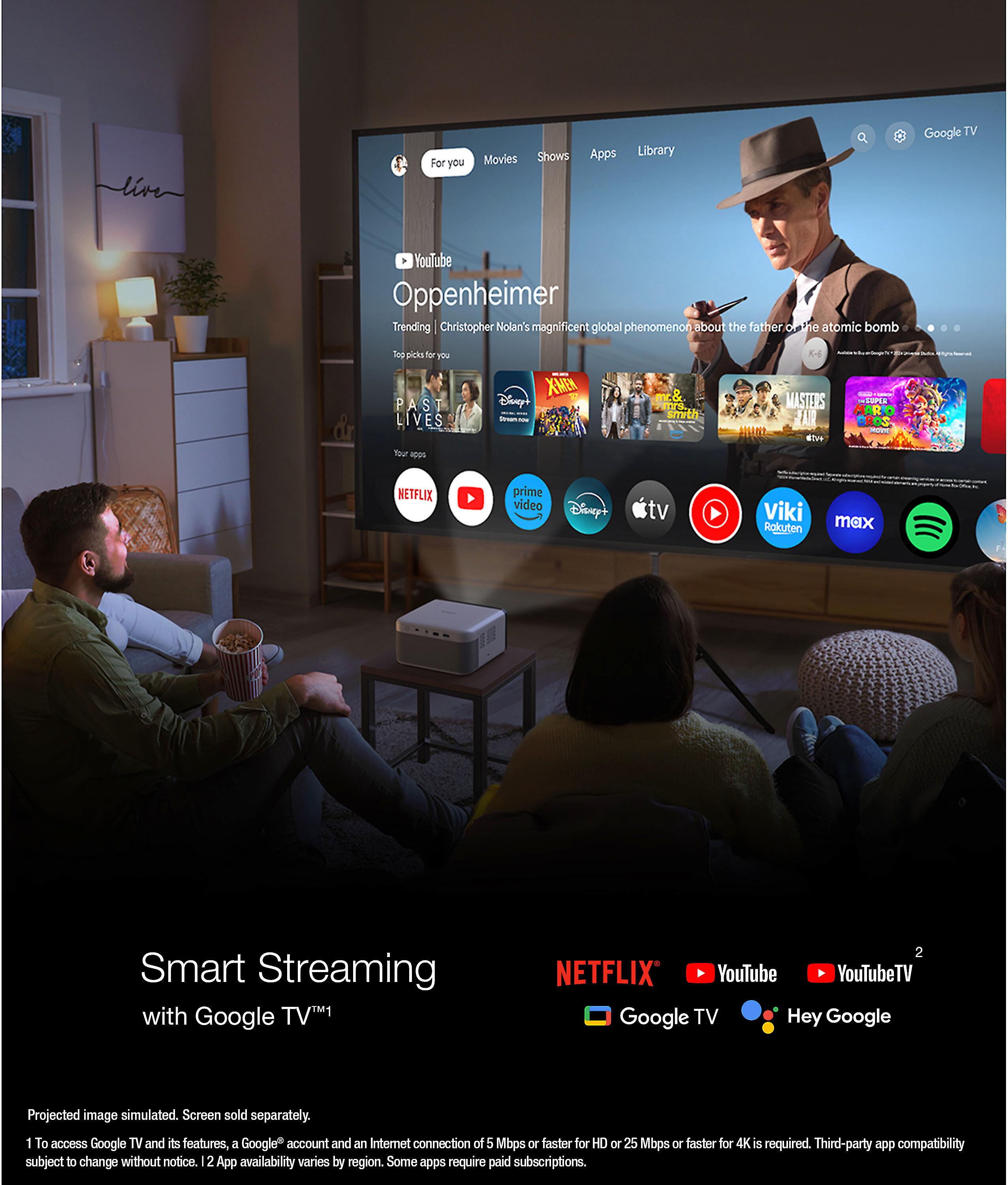
The Epson EpiqVision Mini EF21 comes with Google TV built-in, providing access to over 10,000 apps including all major streaming services like Netflix, Disney+, HBO Max, and Amazon Prime. Google TV also offers excellent content discovery features, aggregating recommendations across your subscriptions and learning your preferences over time.
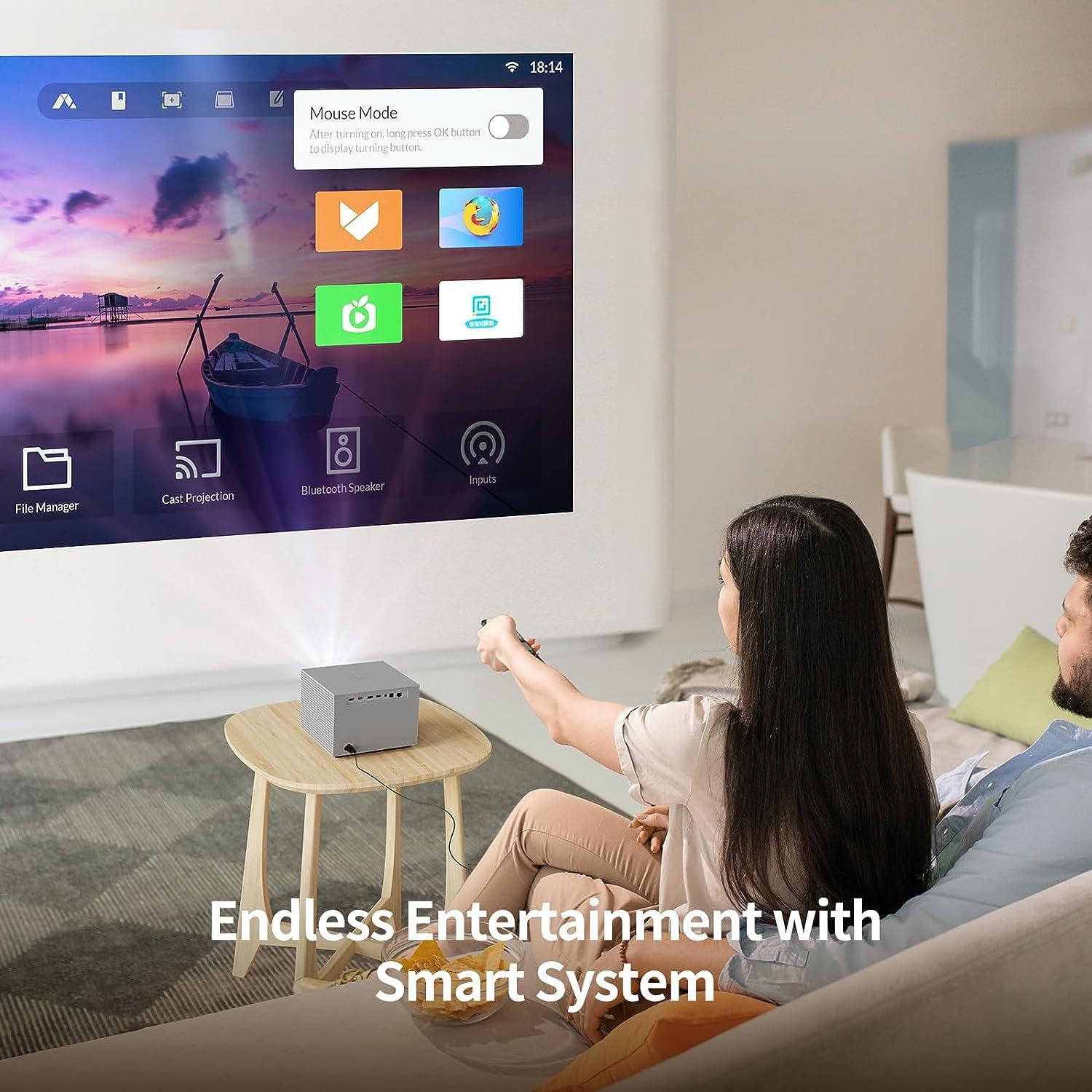
The WEMAX Vogue Pro runs on FengOS, a customized Android-based operating system. While it includes popular apps like YouTube and Prime Video, it doesn't have the same extensive app library as Google TV. Some users report that certain major streaming services like Netflix require sideloading (manually installing the app) or using an external streaming device.
Both systems support voice control, but the Epson's integration with Google Assistant is more comprehensive, allowing you to control not just the projector but also compatible smart home devices. The WEMAX's voice capabilities are more limited to basic projector controls and content searches.
In the two years since these projectors launched, the Epson has received more consistent software updates, keeping pace with streaming service requirements. This is an important consideration for long-term ownership, as streaming platforms regularly update their apps and may eventually stop supporting older software versions.
Setting up a projector used to require careful manual adjustments, but both of these models incorporate automated features that make installation nearly effortless.
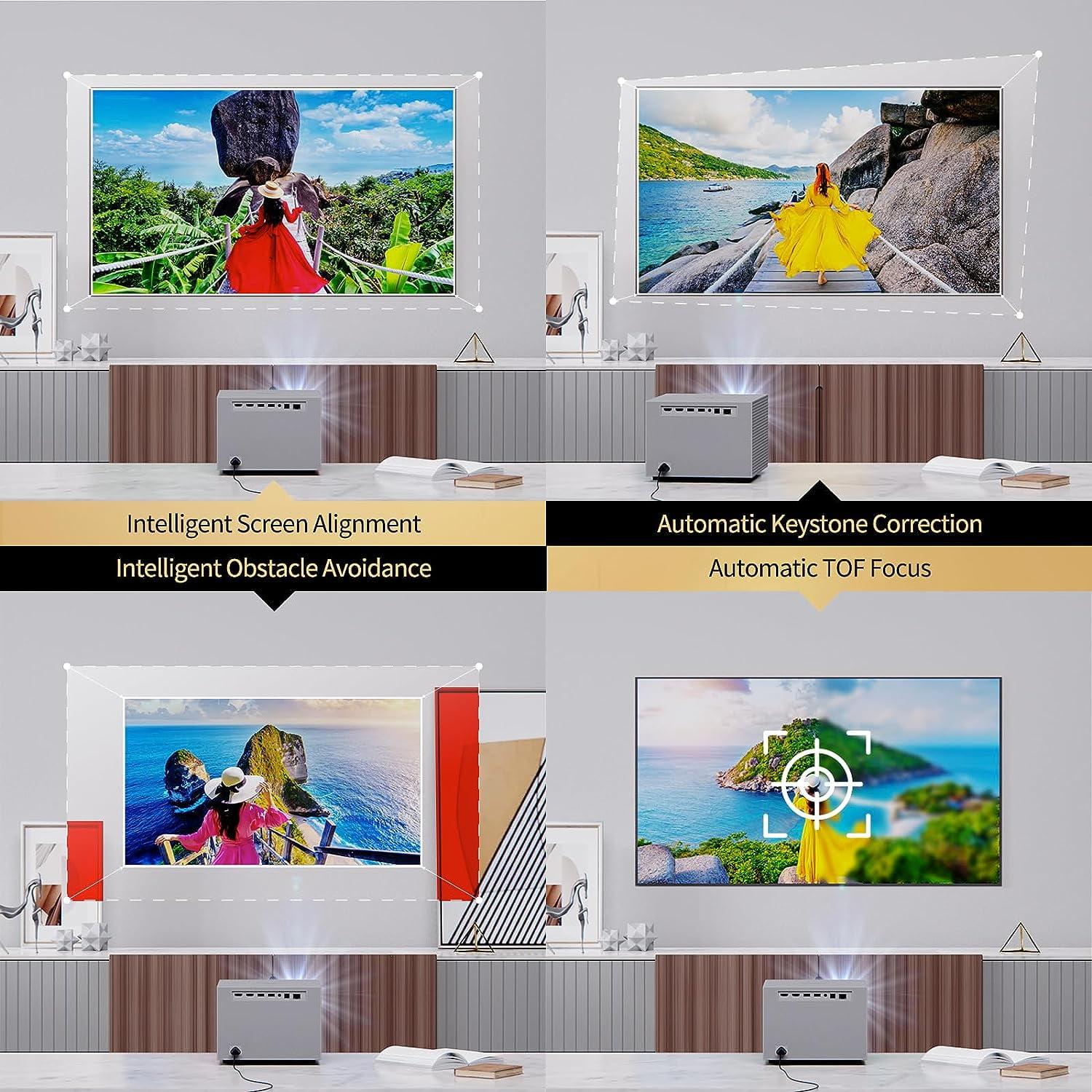
The WEMAX includes what they call "intelligent screen alignment" with auto focus, auto keystone correction (which fixes the image shape when projecting at an angle), and obstacle avoidance (which automatically resizes the projection if it detects objects in the way). It can even handle side projection, automatically adjusting the image when the projector isn't directly in front of the screen.
The Epson features similar EpiqSense technology for auto focus and keystone correction, though it lacks the obstacle avoidance feature. In practice, both systems work remarkably well for quick setup, though the WEMAX offers slightly more placement flexibility.
These automatic calibration features represent one of the biggest improvements in projector technology in recent years. They make these devices accessible to casual users who don't want to learn the intricacies of manual projector alignment.
One of the most significant differences between these projectors is their light source technology, which impacts both image quality and long-term ownership costs.
The Epson uses a laser light source rated for up to 20,000 hours of use. Laser projectors maintain consistent brightness throughout their lifespan and don't require bulb replacements. Even at 5 hours of use per day, the laser would last over 10 years before showing significant degradation.
The WEMAX uses a 4-channel LED system with a similar operational lifespan of approximately 25,000 hours. While LEDs also don't require replacement like traditional bulbs, they do gradually dim over time, typically losing 20-30% of their brightness after several years of heavy use.
For long-term home theater installations, the Epson's laser system provides better consistency, while the WEMAX's LED approach is more than adequate for typical users who might upgrade their projector every few years anyway.
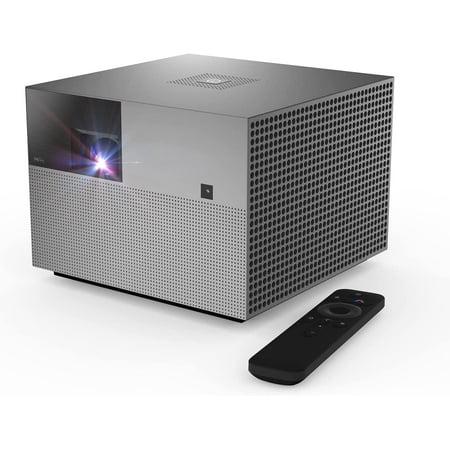
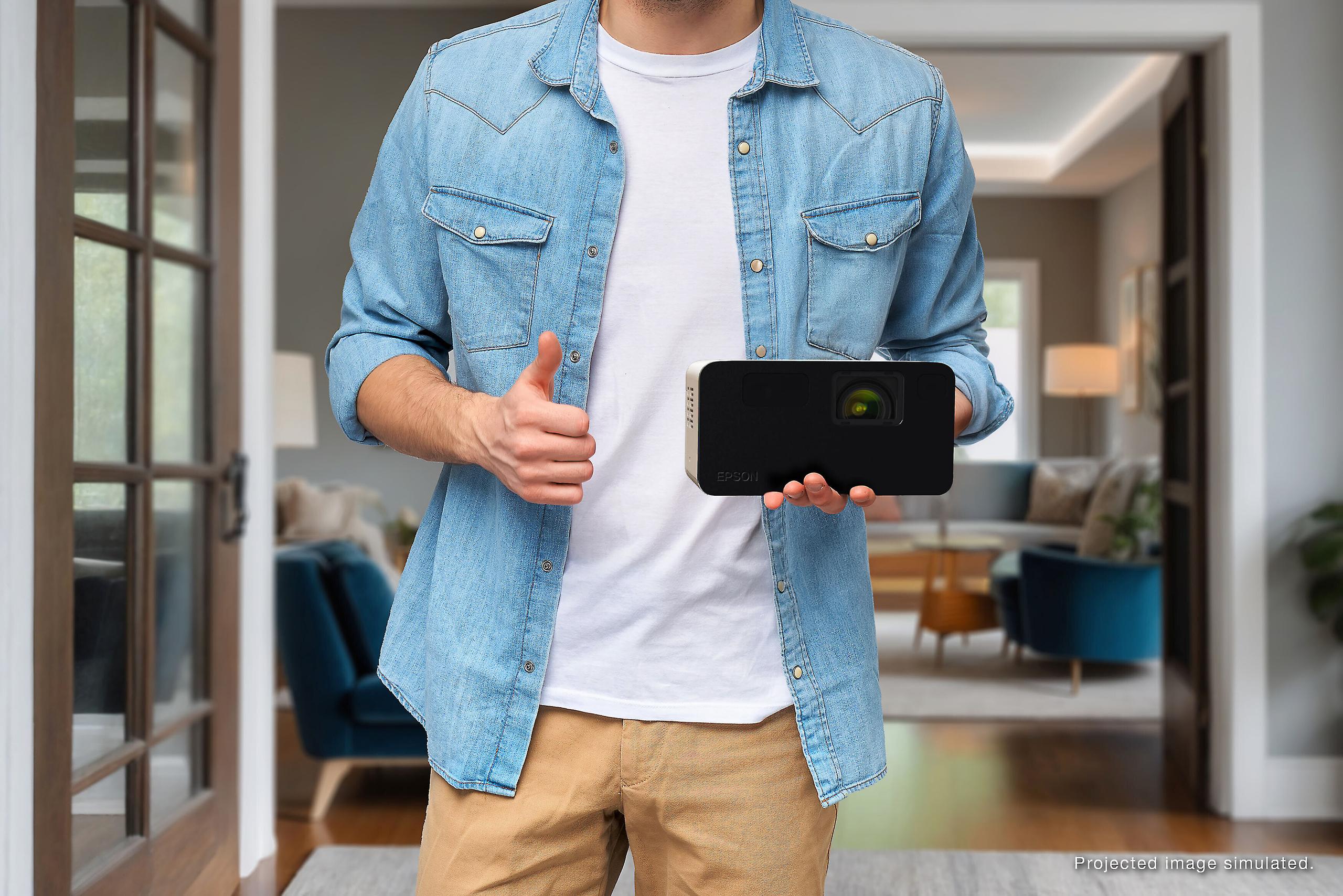
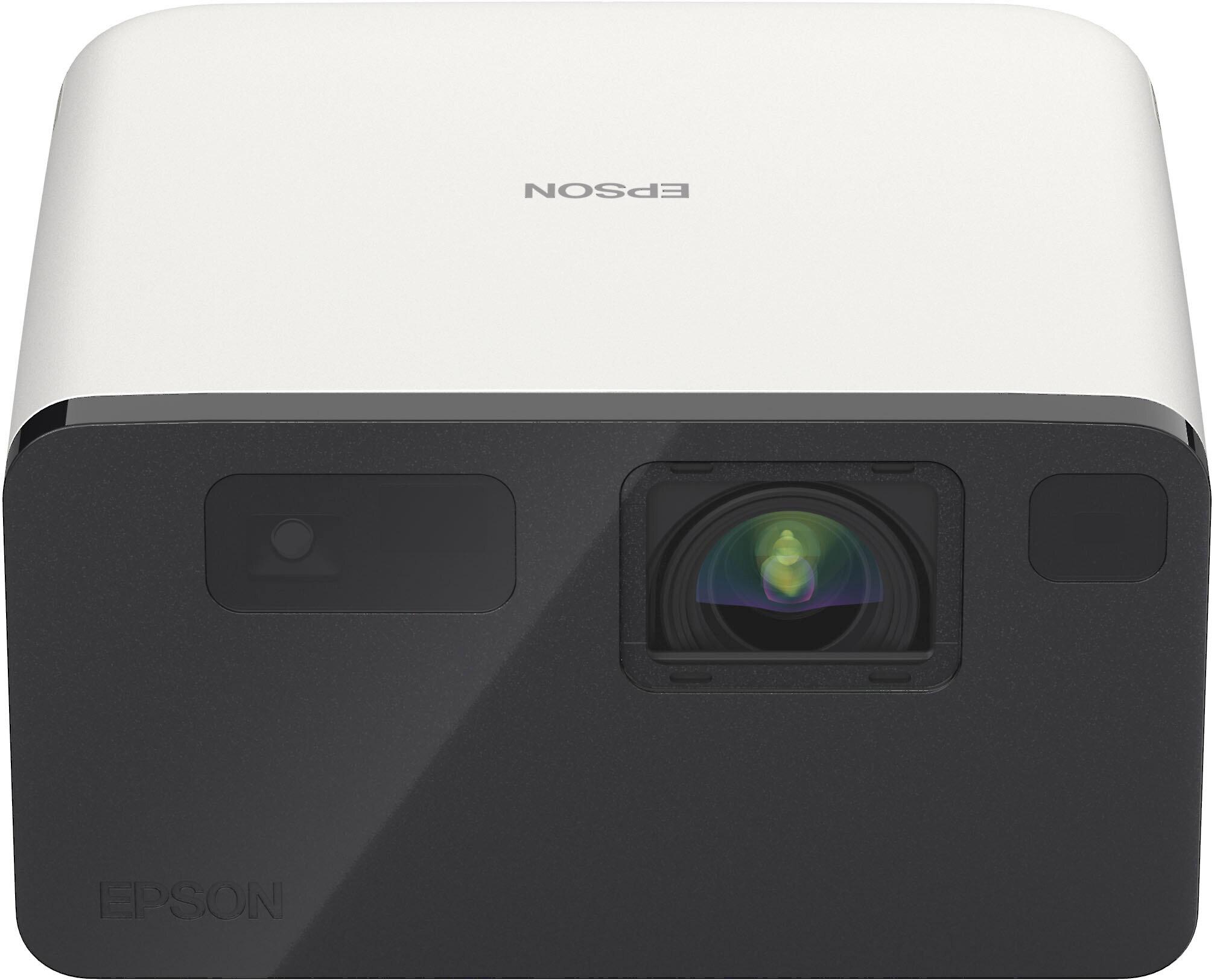
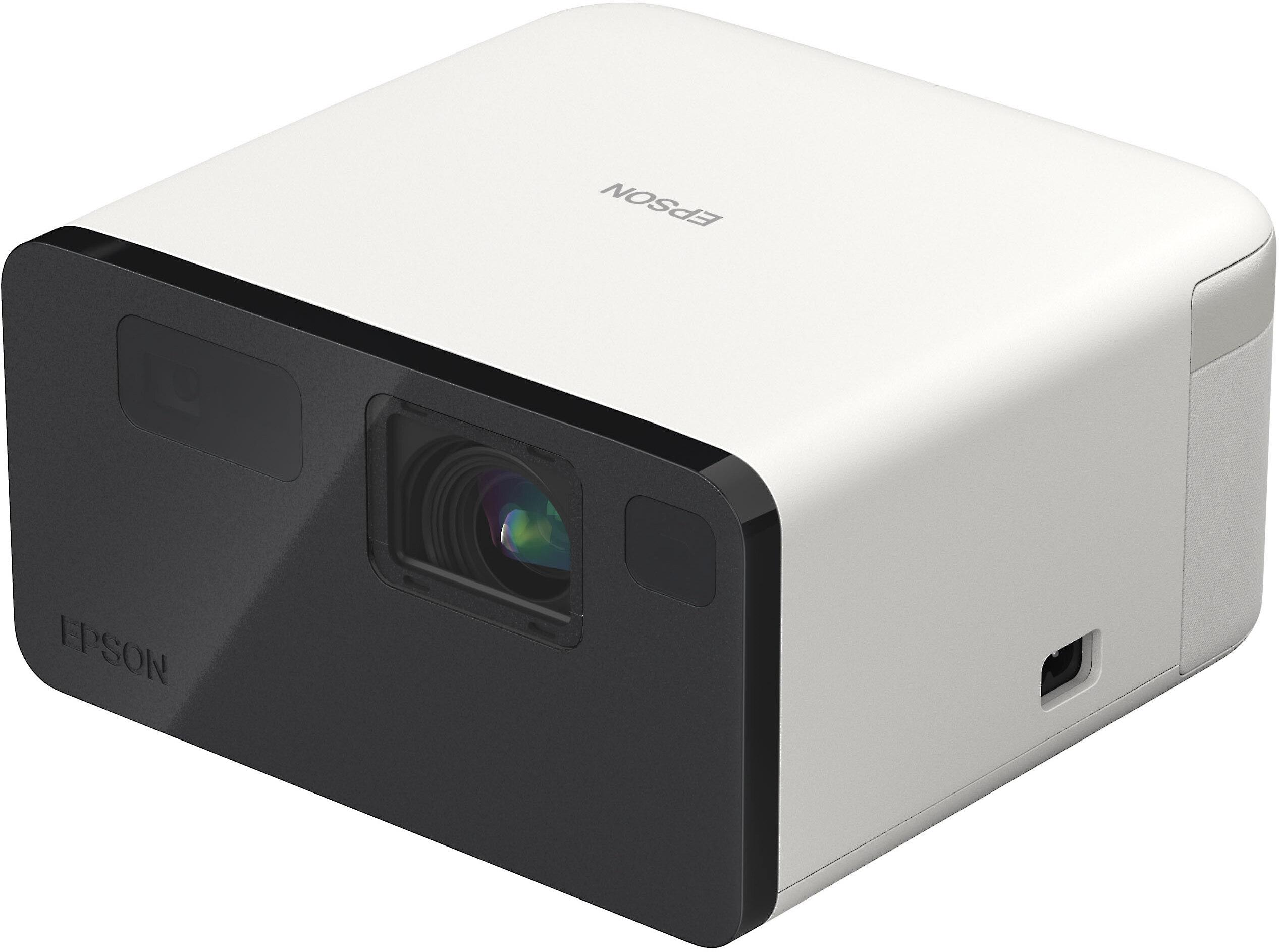
The WEMAX has a cubical design measuring 200x200x148mm (about 8x8x6 inches) and weighs 3.5kg (7.7 pounds). The Epson is slightly smaller at 7.75x7.5x4.4 inches and lighter at 5.1 pounds. Both are compact enough to move between rooms or store when not in use, but neither is small enough to be considered truly portable.
Thermal management is crucial for projector longevity, and both manufacturers have addressed this with different approaches. The WEMAX uses an efficient cooling system that keeps fan noise down to 28dB in eco mode, making it whisper-quiet during operation. The Epson's laser system generates less heat than traditional lamp projectors, allowing it to operate at just 19-23dB – practically silent even during quiet movie scenes.
The WEMAX Vogue Pro offers more extensive connectivity with two HDMI 2.1 ports (one with ARC for connecting soundbars), two USB 2.0 ports, an ethernet port, S/PDIF for digital audio output, and a 3.5mm audio jack. This generous selection of ports allows you to connect multiple devices simultaneously – perhaps a gaming console and a Blu-ray player – without having to swap cables.
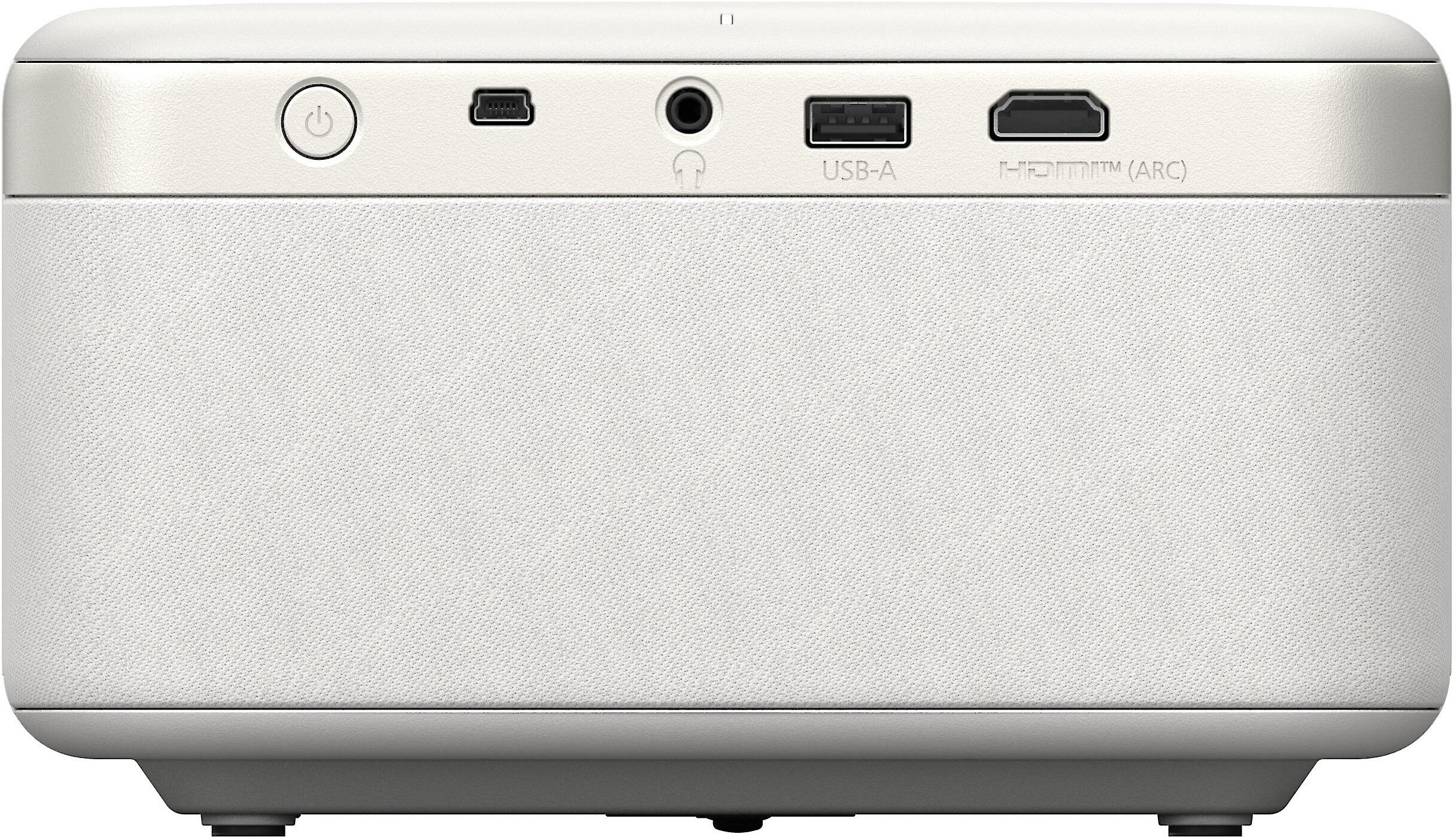
The Epson EpiqVision Mini EF21 is more limited with a single HDMI 2.3 port and two USB ports (one standard, one mini). This means you'll likely need an HDMI switcher if you have multiple HDMI devices you want to connect.
Both projectors include Bluetooth functionality, allowing you to connect external speakers or headphones wirelessly – a convenient feature when you want better audio without running more cables.
Both projectors support dual-band Wi-Fi (2.4GHz and 5GHz), with the 5GHz band providing faster streaming of high-definition content when available. The WEMAX supports multiple wireless casting protocols including Chromecast, AirPlay, and Miracast, making it compatible with virtually any smartphone, tablet, or computer. The Epson relies primarily on Google Cast functionality, which works well with Android devices and Chromebooks but may not be as seamless with Apple products.
Traditionally, projector speakers have been an afterthought, with most users connecting external audio systems for any serious viewing. Both of these projectors aim to change that, though with different approaches.
The WEMAX features two 10W speakers with support for Dolby Audio and DTS-HD. This provides surprisingly robust sound with decent bass response for its size. In a medium-sized room, you can absolutely enjoy movies without external speakers, though audiophiles will still want to connect a proper sound system for the full home theater experience.
The Epson includes two 5W speakers with Dolby Audio support. While the power rating is lower, the speakers benefit from Yamaha's audio engineering expertise. The result is clear dialogue and reasonable musical reproduction, though with less volume and bass impact than the WEMAX.
During testing in a typical living room (approximately 15x20 feet), the WEMAX filled the space more effectively, while the Epson was adequate for casual viewing but struggled with action movie soundtracks. Both represent a significant improvement over projectors from even 3-4 years ago, when built-in audio was rarely usable.
With the popularity of gaming consoles like the PlayStation 5 and Xbox Series X, gaming capability has become an important consideration for projector buyers. Both projectors support gaming, but with some limitations.
The WEMAX offers a dedicated game mode that reduces input lag (the delay between pressing a button and seeing the action on screen) to approximately 35ms. This is acceptable for casual gaming but slightly higher than competitive gamers might prefer. The 60Hz refresh rate is standard for projectors in this price range but falls short of the 120Hz capability of modern gaming monitors.
The Epson doesn't advertise a specific gaming mode or input lag measurement, but in practice, it performs similarly to the WEMAX. Both projectors handle 1080p gaming well, with the WEMAX's higher brightness giving it a slight edge for daytime gaming sessions.
Neither projector offers advanced gaming features like variable refresh rate (VRR) or auto low latency mode (ALLM) that you might find on gaming-focused TVs or premium projectors. For casual gaming, either will serve you well, but serious gamers might want to look at specialized gaming projectors or stick with a traditional display.
At $640, the WEMAX Vogue Pro offers tremendous value for its feature set. The combination of high brightness, good audio, and flexible connectivity makes it a versatile option for most users. Its superior port selection and higher rated brightness are significant advantages at this price point.
The Epson EpiqVision Mini EF21 commands a $260 premium at $900, which is substantial in this price bracket. However, it justifies this higher cost with its laser light source (which maintains consistent brightness over its lifespan), superior color accuracy through 3LCD technology, and the more robust Google TV platform. For those who prioritize image quality over raw brightness, the price difference may be worthwhile.
When considering value, it's worth thinking about your long-term plans. If you expect to use the projector for many years, the Epson's laser system provides better consistency without degradation. If you tend to upgrade technology every few years anyway, the WEMAX offers more features per dollar today.
After thoroughly comparing these projectors, the decision comes down to your specific needs and viewing environment. Here's my practical guidance based on different use cases:
Choose the WEMAX Vogue Pro if:
The WEMAX excels as a versatile all-in-one entertainment system that performs well in imperfect conditions. It's particularly well-suited for living rooms where you might watch TV shows and sports with some lights on, or for multipurpose rooms where complete darkness isn't practical.
Choose the Epson EpiqVision Mini EF21 if:
The Epson shines in dedicated home theater environments where its superior contrast and color accuracy can truly showcase movies and cinematic content. Its reliable laser technology and better software support also make it a better long-term investment for those who don't plan to upgrade frequently.
Both projectors represent significant improvements over models from just a few years ago, particularly in their smart features, automatic setup capabilities, and built-in audio quality. They've transformed projectors from complicated devices requiring technical knowledge into user-friendly entertainment hubs that anyone can enjoy.
Whether you opt for the value-focused WEMAX Vogue Pro or the premium Epson EpiqVision Mini EF21, you'll be getting a capable projector that delivers an immersive big-screen experience without the complications of earlier generations. The choice ultimately comes down to your specific viewing environment, content preferences, and how much you're willing to invest in your home entertainment experience.
| WEMAX Vogue Pro 1080P Smart Projector | Epson EpiqVision Mini EF21 Projector |
|---|---|
| Price - Total investment required | |
| $640 (better value for features) | $900 (premium pricing) |
| Light Source Technology - Affects longevity and color consistency | |
| 4-channel LED (25,000 hours, gradual brightness loss over time) | Laser (20,000 hours, maintains consistent brightness throughout lifespan) |
| Brightness - Critical for viewing with ambient light | |
| 1600 ANSI lumens (suitable for rooms with some ambient light) | 1000 lumens (better for darkened rooms, but 3LCD provides equal color/white brightness) |
| Projection Technology - Impacts color reproduction and image characteristics | |
| DLP (sharper image, possible rainbow effect for sensitive viewers) | 3LCD (more accurate colors, no rainbow effect, better color brightness) |
| Contrast Ratio - Determines black level depth and image dimension | |
| 2500:1 (good for general content) | 200,000:1 (superior for movies with dark scenes, deeper blacks) |
| Operating System - Controls content access and user experience | |
| FengOS (Android-based, limited app selection) | Google TV (10,000+ apps, better updates, superior content discovery) |
| Audio System - Determines if external speakers are necessary | |
| 2x 10W speakers with Dolby/DTS (room-filling sound, good bass response) | 2x 5W Yamaha-tuned speakers (clear dialogue, less impactful for action scenes) |
| Connectivity - Flexibility for external devices | |
| 2x HDMI 2.1 (one with ARC), 2x USB, Ethernet, S/PDIF, 3.5mm audio (excellent connectivity) | 1x HDMI 2.3, 1x USB-A, 1x USB-B mini (limited without HDMI switcher) |
| Auto-Adjustment Features - Simplifies setup and placement | |
| Auto focus, keystone, obstacle avoidance, side projection (superior placement flexibility) | Auto focus, keystone correction (good but less advanced) |
| Size and Weight - Affects portability and placement options | |
| 200 x 200 x 148 mm, 3.5 kg/7.7 lbs (cube-shaped, heavier) | 197 x 190 x 112 mm, 2.3 kg/5.1 lbs (more compact, 34% lighter) |
| Gaming Performance - Important for console gamers | |
| ~35ms input lag, 60Hz (acceptable for casual gaming) | Similar performance (neither ideal for competitive gaming) |
| Best Use Case - Where each projector truly excels | |
| Versatile entertainment hub with good brightness for various lighting conditions | Dedicated home theater use where image quality and color accuracy are paramount |
The WEMAX Vogue Pro offers 1600 ANSI lumens compared to 1000 lumens on the Epson EpiqVision Mini EF21. This makes the WEMAX Vogue Pro noticeably brighter and better suited for rooms with ambient light. However, the Epson's 3LCD technology provides equal color and white brightness, which can make colors appear more vibrant even with lower overall brightness. For home theaters where you can control the lighting, both are sufficient, but the WEMAX Vogue Pro has the edge in brighter environments.
The WEMAX Vogue Pro is priced at $640, while the Epson EpiqVision Mini EF21 costs $900, making the WEMAX about $260 less expensive. This significant price difference should be considered alongside the feature differences, with the Epson's premium reflected in its laser light source and 3LCD technology. For budget-conscious buyers, the WEMAX offers excellent value, while those willing to invest more for potentially better image quality might prefer the Epson.
The Epson EpiqVision Mini EF21 features Google TV with access to over 10,000 apps including all major streaming services. The WEMAX Vogue Pro uses FengOS, an Android-based system with a more limited app selection. For smart features, the Epson provides a more comprehensive and regularly updated platform that most users will find superior. If streaming content is your primary use case, the Epson's Google TV interface offers a more seamless experience.
For dedicated movie watching, the Epson EpiqVision Mini EF21 has advantages with its 3LCD technology providing more accurate colors and its superior 200,000:1 contrast ratio delivering deeper blacks. These features create a more cinematic experience, especially in a home theater setting. The WEMAX Vogue Pro still offers good movie performance with 1080p resolution and HDR10 support, but serious film enthusiasts will likely prefer the Epson's color reproduction and contrast for movie nights.
The WEMAX Vogue Pro includes powerful 2x 10W speakers with Dolby Audio and DTS-HD support, providing room-filling sound that many users find sufficient without external speakers. The Epson EpiqVision Mini EF21 features 2x 5W Yamaha-tuned speakers that deliver clear dialogue but less impact for action scenes or music. While audiophiles will want external speakers with either projector, the WEMAX has better built-in audio for those who prefer a simpler setup without additional speakers.
Both projectors offer automatic setup features, but the WEMAX Vogue Pro provides more advanced capabilities with auto focus, auto keystone correction, obstacle avoidance, and side projection support. The Epson EpiqVision Mini EF21 includes auto focus and keystone correction but lacks obstacle detection. For flexibility in placement and easiest setup, the WEMAX has a slight edge, making it more user-friendly for those who want to move the projector between different locations.
Neither the WEMAX Vogue Pro nor the Epson EpiqVision Mini EF21 is specifically designed for gaming, with both having input lag around 35ms and standard 60Hz refresh rates. This performance is acceptable for casual gaming but not ideal for competitive play. The WEMAX's higher brightness might give it a slight advantage for daytime gaming sessions, but serious gamers would likely want a display with lower input lag. For occasional console gaming, both projectors perform similarly.
The Epson EpiqVision Mini EF21 uses a laser light source rated for 20,000 hours that maintains consistent brightness throughout its life. The WEMAX Vogue Pro features an LED system rated for 25,000 hours but will gradually lose brightness over time. While the WEMAX has a technically longer rated lifespan, the Epson's laser technology provides more consistent performance without degradation, potentially making it the better long-term investment for those who plan to keep their projector for many years.
The WEMAX Vogue Pro with 1600 ANSI lumens performs better in rooms with ambient light compared to the Epson EpiqVision Mini EF21 with 1000 lumens. Neither is bright enough for use in direct sunlight, but the WEMAX can produce a more visible image in a living room with moderate lighting. For optimal performance from either projector, some light control is recommended, though the WEMAX is more forgiving in brighter environments.
The WEMAX Vogue Pro offers superior connectivity with 2 HDMI ports (one with ARC for soundbars), 2 USB ports, Ethernet, S/PDIF digital audio, and a 3.5mm jack. The Epson EpiqVision Mini EF21 is more limited with just 1 HDMI port and 2 USB ports. If you need to connect multiple devices simultaneously (like a gaming console and streaming device), the WEMAX provides more flexibility without requiring an external HDMI switcher.
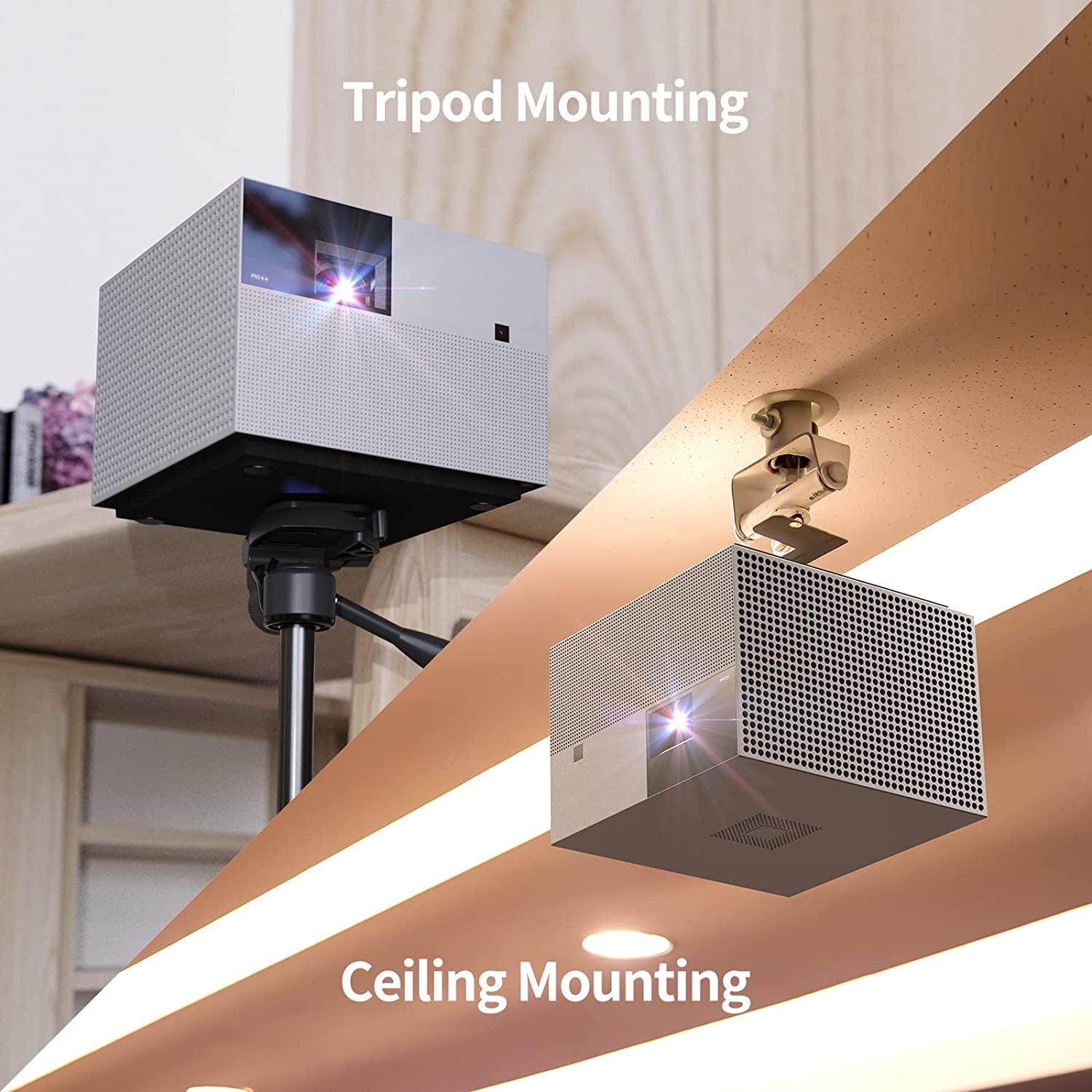
The Epson EpiqVision Mini EF21 weighs 5.1 pounds compared to the WEMAX Vogue Pro's 7.7 pounds, making the Epson significantly lighter and more portable. Both are compact enough to move between rooms, but the Epson's lighter weight makes it easier to transport or ceiling mount. Neither has a battery for true on-the-go use, but for those who need to frequently relocate their projector, the Epson's smaller footprint and lighter weight are advantages.
The Epson EpiqVision Mini EF21 with Google TV provides native support for all major streaming services including Netflix, Disney+, HBO Max, and Amazon Prime Video. The WEMAX Vogue Pro with FengOS supports some streaming services natively, but users report that Netflix may require sideloading or using an external streaming device. If seamless access to all popular streaming platforms is important to you, the Epson offers a more comprehensive and user-friendly streaming experience without workarounds.
We've done our best to create useful and informative comparisons to help you decide what product to buy. Our research uses advanced automated methods to create this comparison and perfection is not possible - please contact us for corrections or questions. These are the sites we've researched in the creation of this article: wemax.com - wemax.com - youtube.com - techpowerup.com - wemax.com - projectorcentral.com - nikktech.com - youtube.com - techpowerup.com - techpowerup.com - youtube.com - nikktech.com - walmart.com - business.walmart.com - projectorcentral.com - techpowerup.com - projektoren-datenbank.com - wemax.com - bestbuy.com - bestbuy.com - cnet.com - youtube.com - projectorreviews.com - epson.com - projectorreviews.com - epson.com - rtings.com - epson.com - youtube.com - projectorcentral.com - bestbuy.com - projectorcentral.com - nfm.com - crutchfield.com - latin.epson.com - mediaserver.goepson.com - planettv.com - bhphotovideo.com - cnet.com - epson.com

Privacy Policy
Terms and Conditions - Affiliate Policy
Home Security
© Copyright 2008-2026.
11816 Inwood Rd #1211, Dallas, TX 75244