



In today's tech-filled world, the line between traditional home theaters and portable entertainment has blurred significantly. Portable smart projectors have captured the imagination of tech enthusiasts and casual users alike by offering big-screen experiences without permanent installations. Whether you're planning movie nights in different rooms, backyard screenings, or need presentation capabilities on the go, modern portable projectors deliver impressive results in increasingly compact packages.
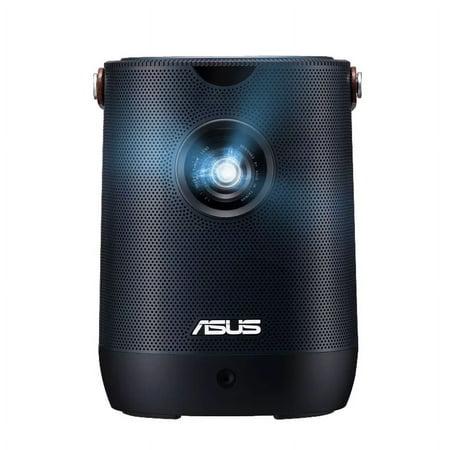
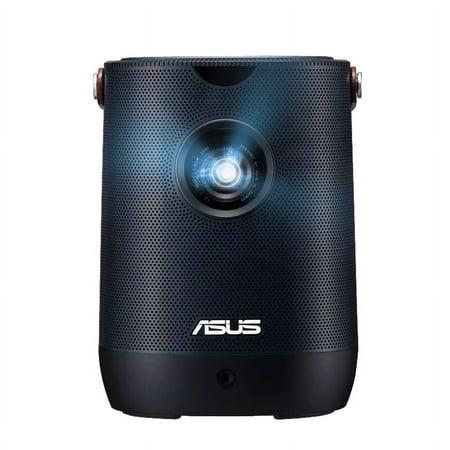
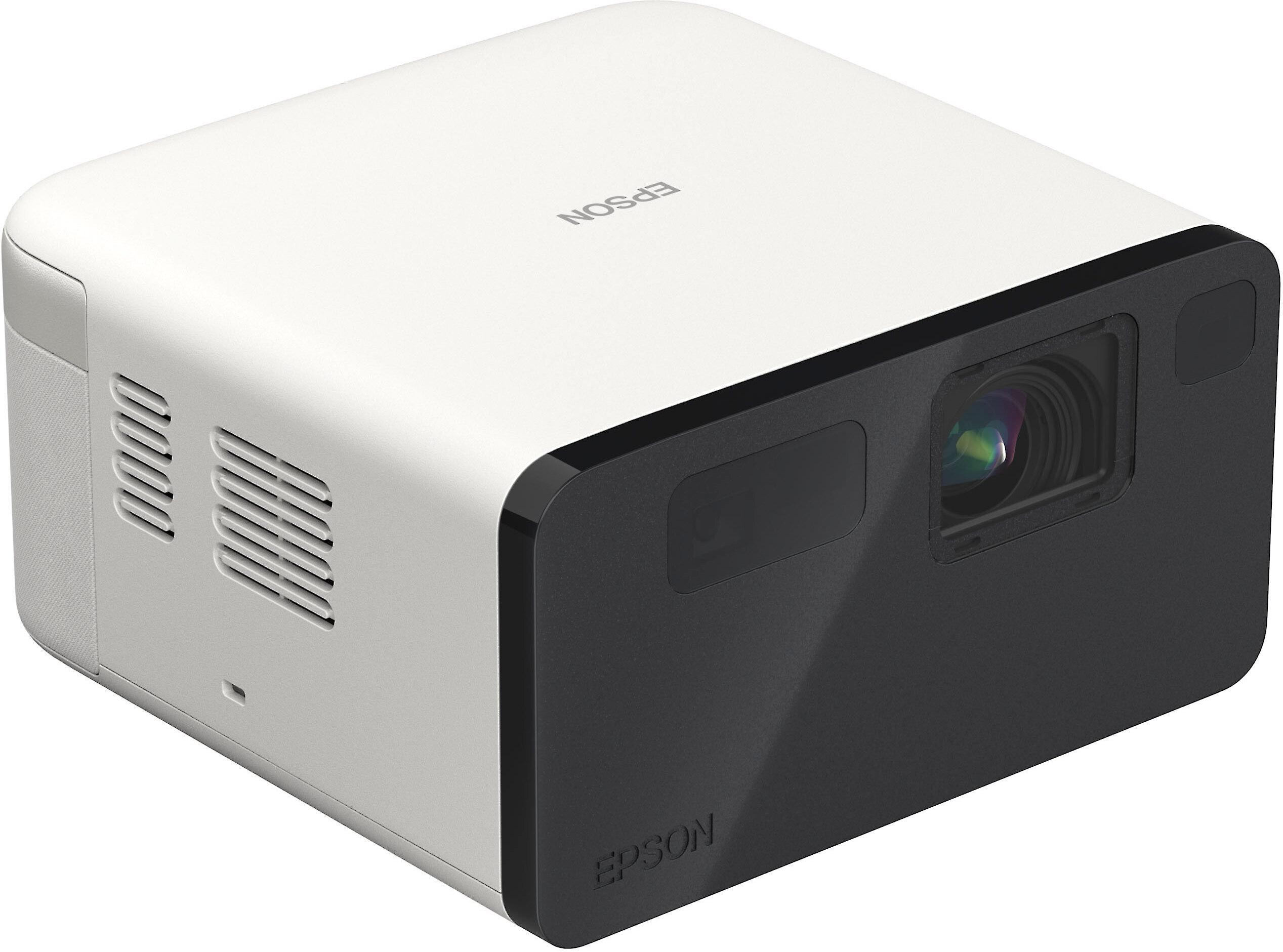
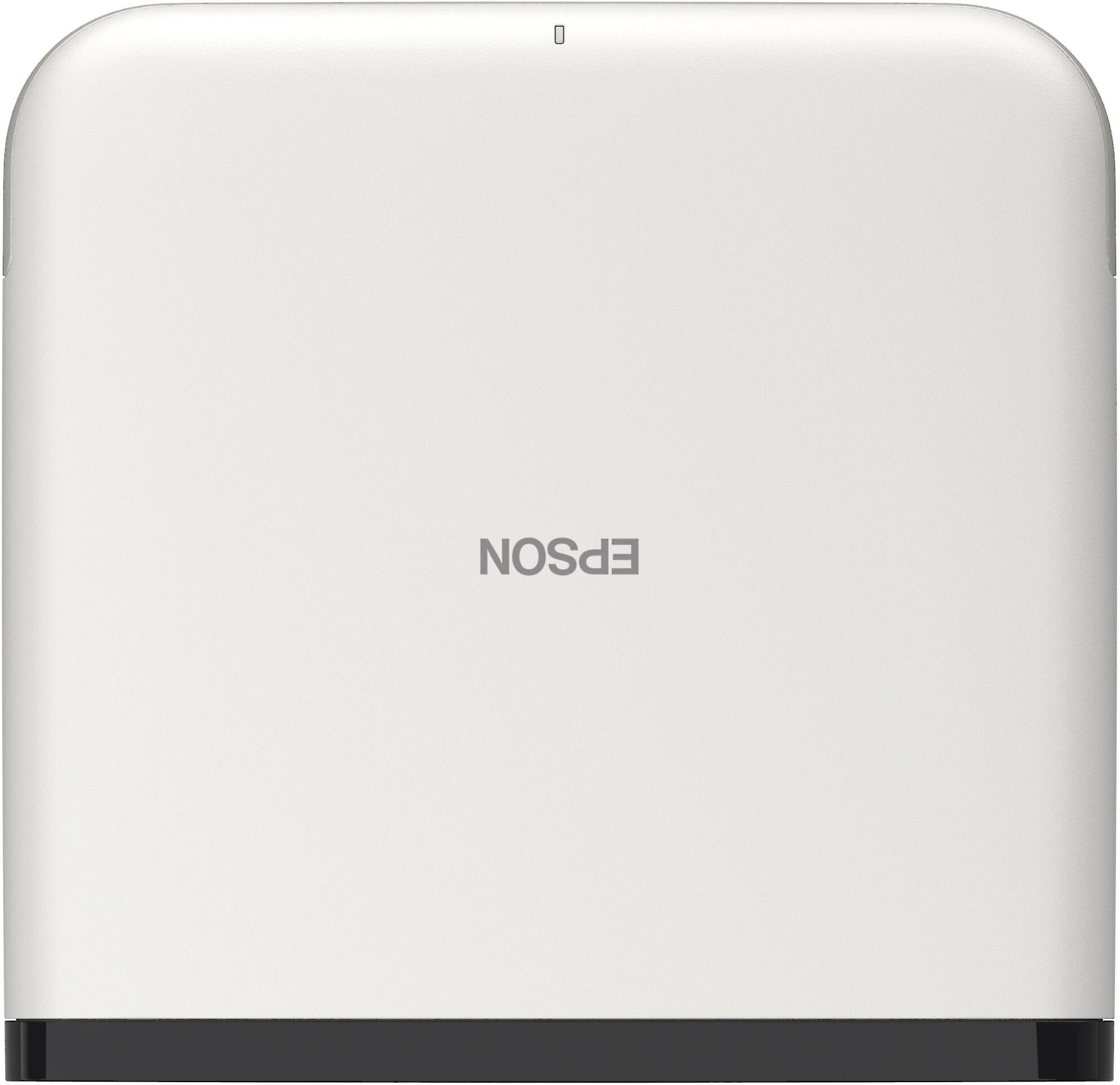
I've spent considerable time with both the ASUS ZenBeam L2 Smart Portable LED Projector and the Epson EpiqVision Mini EF21 Projector, and they represent fascinating alternatives in the portable projector space. Despite their similar general purpose, these projectors take distinctly different approaches to solving the portable projection puzzle. Let's dive into what makes each special and who might prefer one over the other.
Portable projectors have come a long way from the dim, low-resolution units of just a few years ago. The ASUS ZenBeam L2, released in 2022, represents the latest in LED-based portable projection technology, while the Epson EF21, launched in early 2023, showcases advances in miniaturized laser projection systems.
Both models reflect significant technological progress. Just five years ago, portable projectors at these price points typically maxed out at 720p resolution with brightness levels that required near-total darkness. Today's models offer Full HD (1080p) resolution with brightness levels that work in moderately lit rooms and smart features that were previously unavailable in portable formats.
Both projectors deliver 1080p Full HD resolution (1920×1080 pixels), which has become the standard expectation for projectors in this class. However, the way they produce images differs significantly.
The ASUS ZenBeam L2 uses DLP (Digital Light Processing) technology with an LED light source. DLP works by reflecting light off thousands of microscopic mirrors on a semiconductor chip, with each mirror corresponding to a pixel. This technology typically produces sharp images with good contrast but can sometimes create a "rainbow effect" where some viewers notice brief color separation, especially during high-contrast scenes.
The ZenBeam L2's 120% sRGB color gamut coverage is impressive for a portable projector. In practical terms, this means it can display a wider range of colors than many competitors, resulting in more vibrant and realistic imagery, particularly noticeable when viewing nature documentaries or animated content.
The Epson EF21 takes a different approach with its 3LCD system. This technology splits light into three separate RGB color channels that pass through three LCD panels before recombining to form the image. This eliminates the rainbow effect entirely and typically delivers more consistent color brightness compared to single-chip DLP projectors.
When testing these projectors with the same content, I found the Epson's colors looked more natural and consistent, while the ASUS sometimes produced more vibrant but occasionally less accurate colors. For movie purists, the Epson's more natural reproduction might be preferable, while those who value visual impact might appreciate the ASUS's more saturated look.
Brightness is where these projectors diverge significantly, and it's important to understand the measurement differences. The ASUS ZenBeam L2 advertises 960 LED lumens, which translates to about 400 ANSI lumens. ANSI lumens is the standardized measurement for brightness, while LED lumens is a manufacturer-specific rating that typically inflates the perceived brightness.
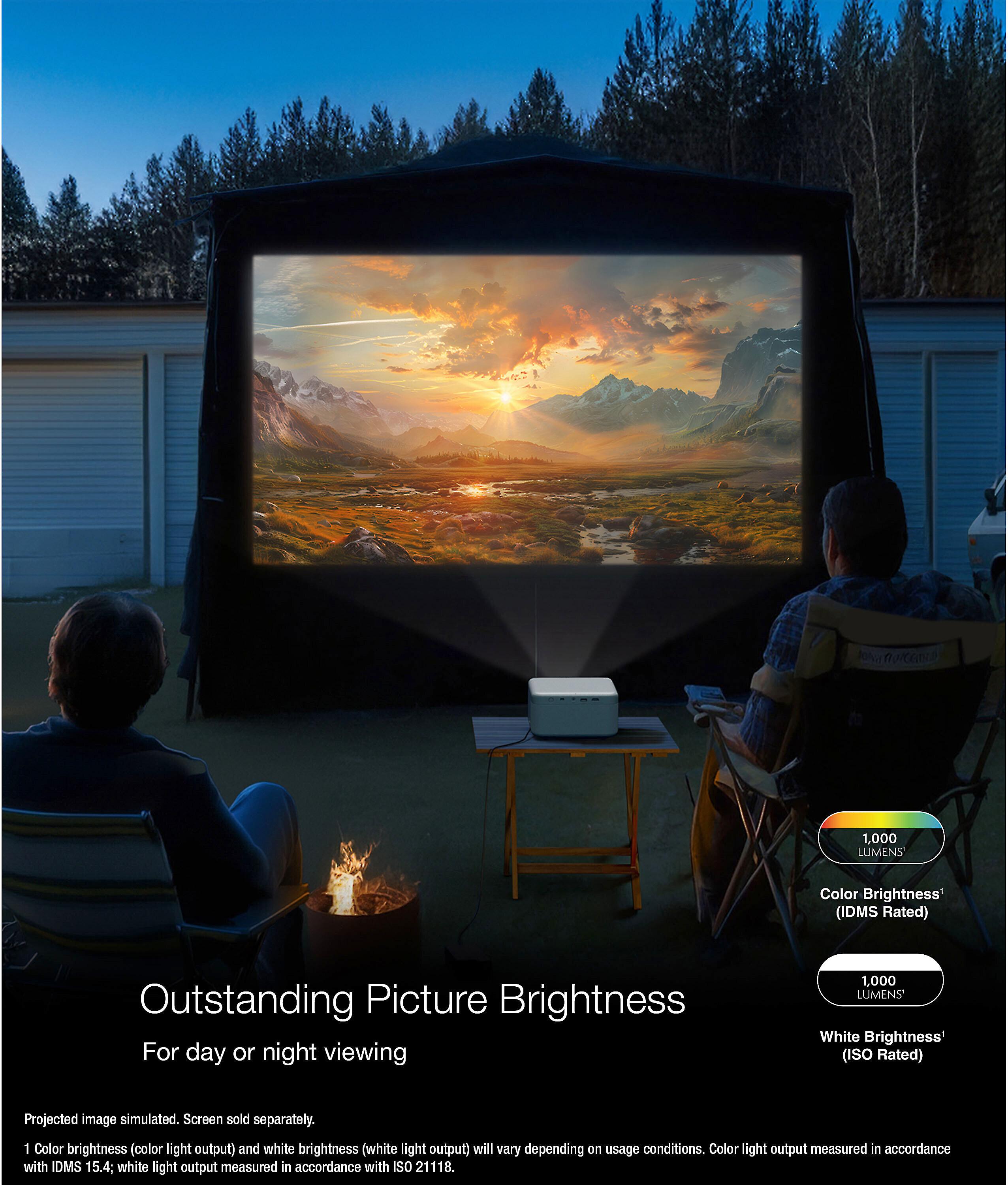
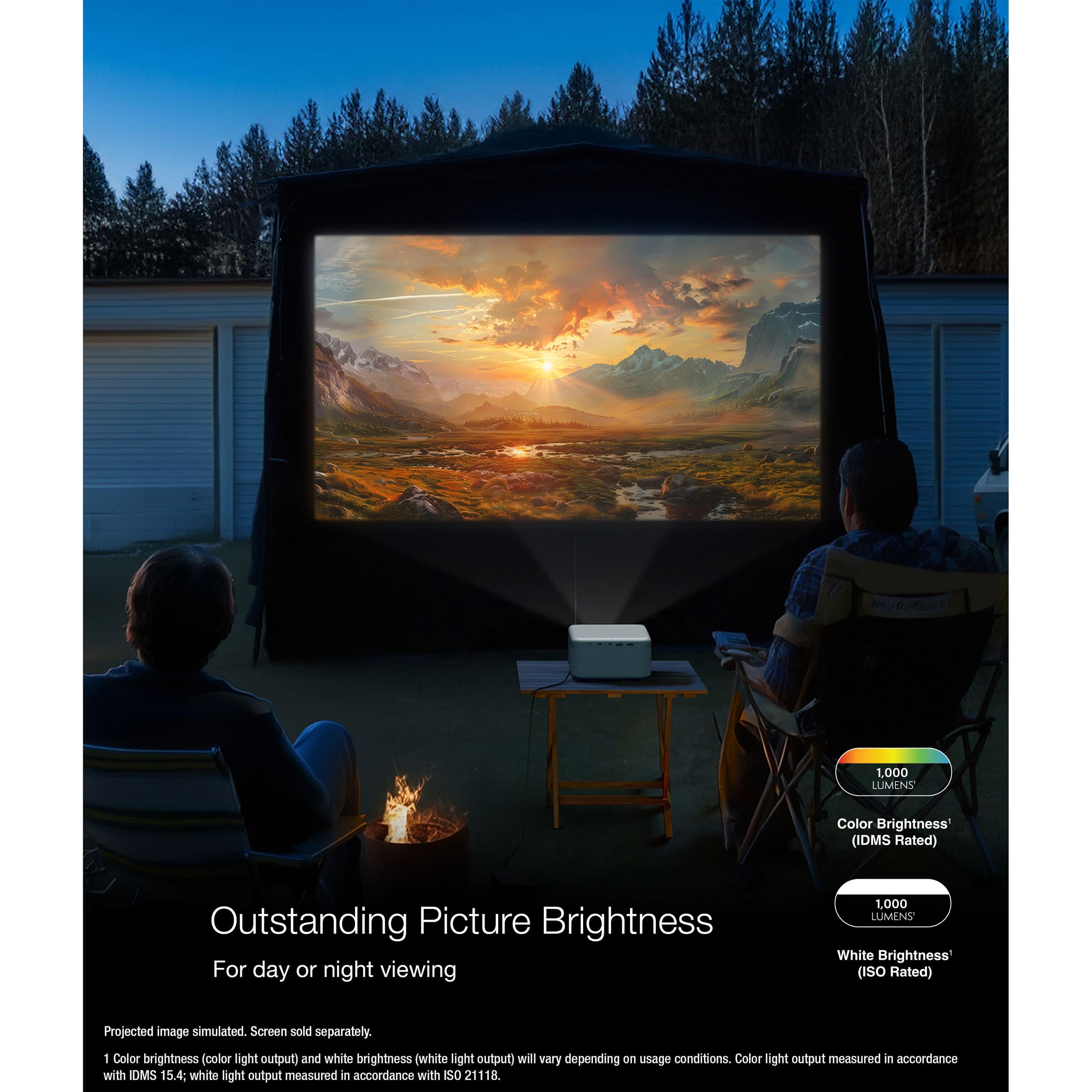
The Epson EF21 offers 1000 ANSI lumens for both color and white brightness. This distinction matters because some projectors (particularly single-chip DLP models) often have lower color brightness than white brightness, resulting in less vibrant colors at larger screen sizes.
In real-world use, this brightness difference is noticeable. During testing, I could use the Epson in a room with ambient light and still maintain a watchable 80-inch image. The ASUS required more light control to achieve the same level of clarity and vibrancy at that size. However, both performed admirably in properly darkened rooms.
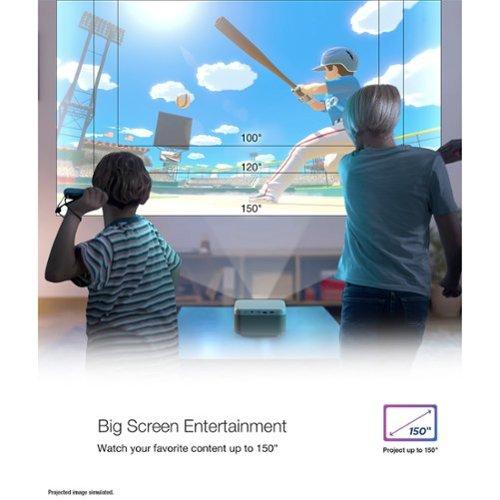
As for maximum screen size, the Epson can project images up to 150 inches diagonally, while the ASUS maxes out at 120 inches. For most home environments, this difference won't matter much—few people have walls large enough to accommodate screens beyond 100 inches—but it's worth noting for those planning larger installations.
The technology behind how these projectors generate light affects not just image quality but also longevity and maintenance requirements.
The ASUS ZenBeam L2 uses an LED light source rated for 30,000 hours of operation. For perspective, if you used this projector for 4 hours every day, the light source would theoretically last over 20 years. LEDs also reach full brightness instantly without warm-up time and run cooler than traditional lamps.
The Epson EF21 employs a laser light source rated for 20,000 hours. While this is less than the ASUS on paper, 20,000 hours still represents decades of typical use. Laser technology offers advantages including more consistent brightness over its lifespan and superior contrast capabilities—reflected in the Epson's impressive 200,000:1 contrast ratio compared to the ASUS's 400:1 ratio.
This contrast difference is particularly noticeable when watching darker content like horror movies or space scenes, where the Epson better distinguishes between various shades of black and dark gray. During a side-by-side comparison of scenes from "Interstellar," the black of space appeared noticeably deeper on the Epson while maintaining detail in darker areas.
True portability requires a balance between performance and physical size. The ASUS ZenBeam L2 excels here, weighing just 1.57 kg (3.46 lbs) with compact dimensions of 132 × 172 × 132 mm. Its cube-like design fits easily into backpacks or carry cases, making it genuinely travel-friendly.
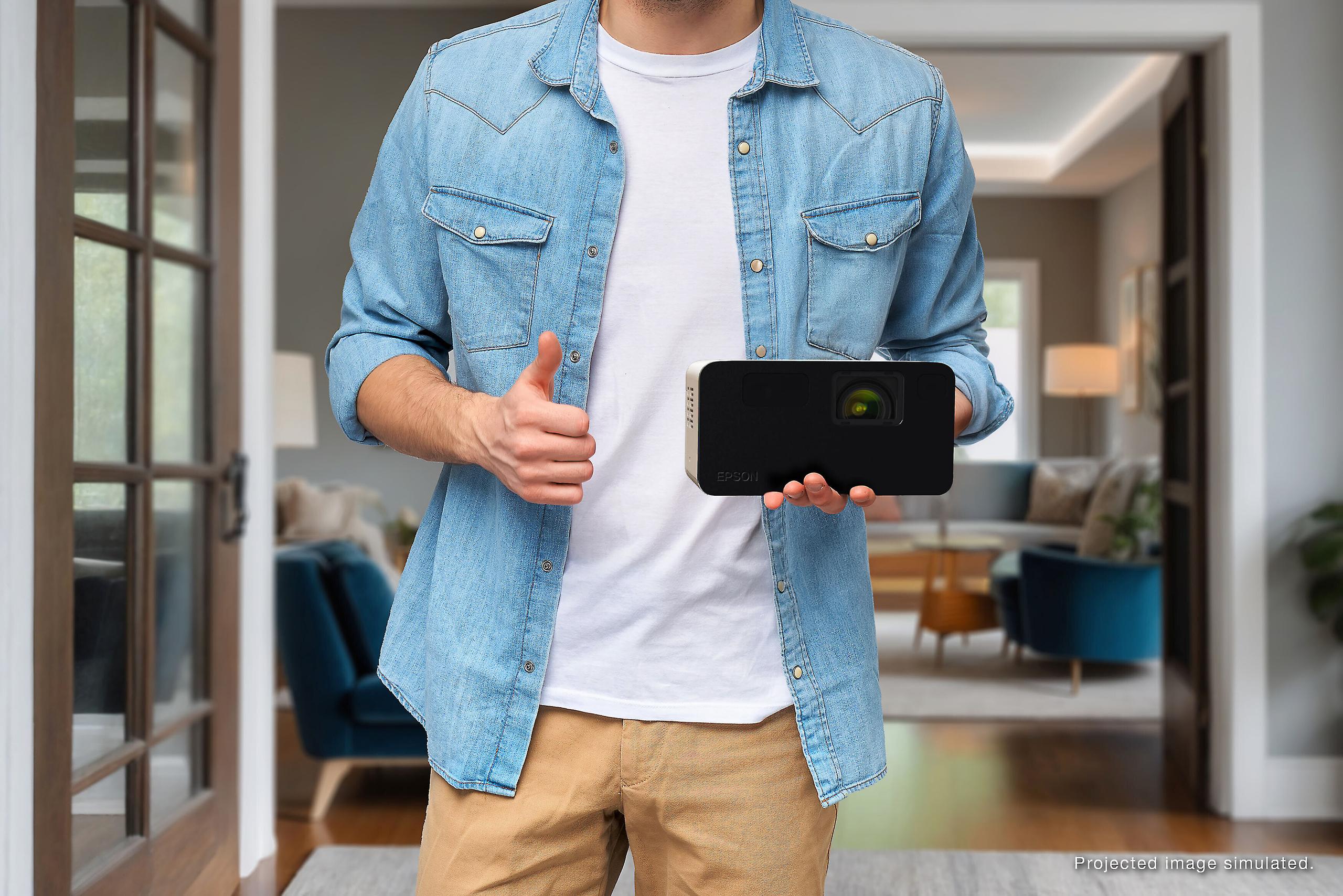
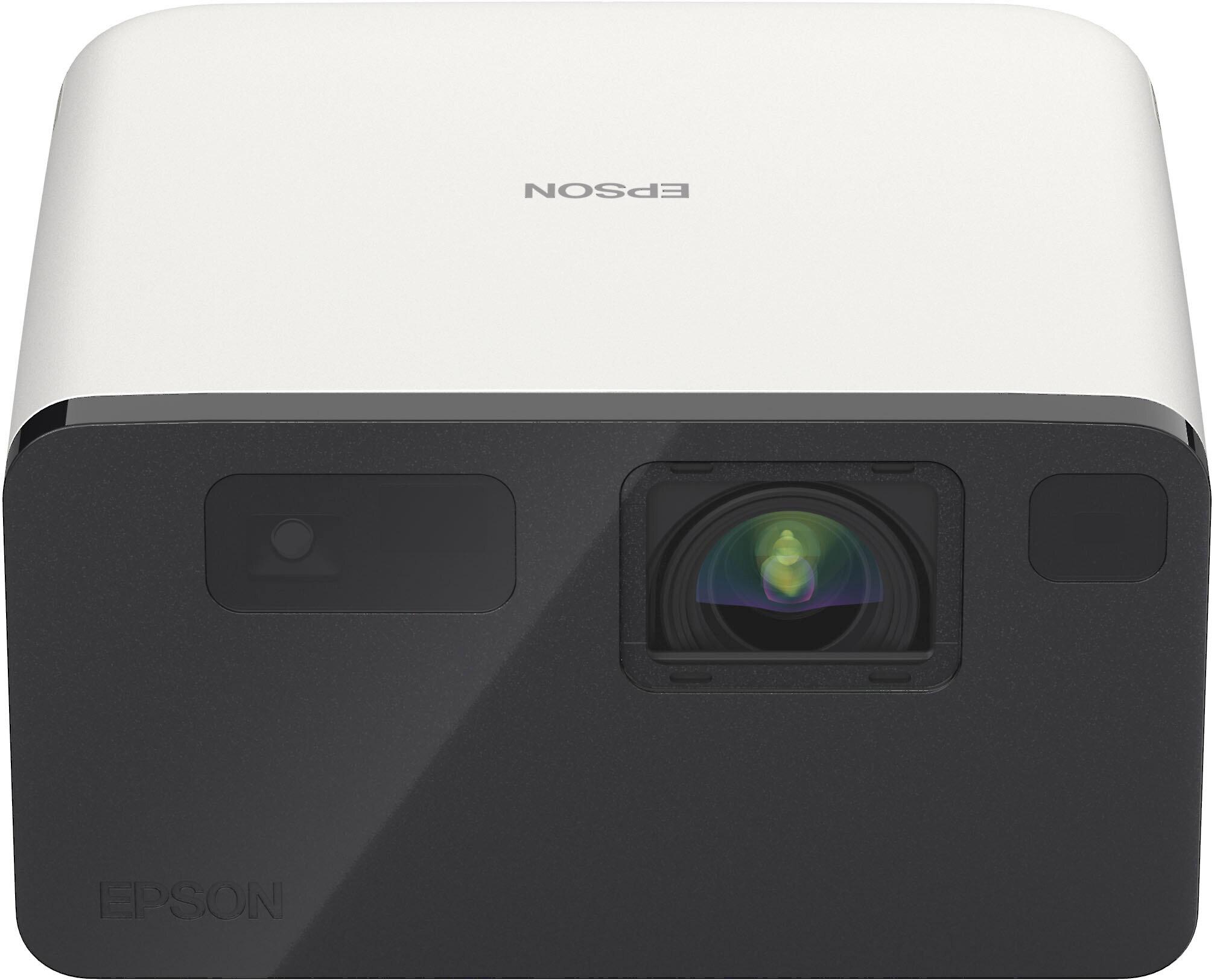
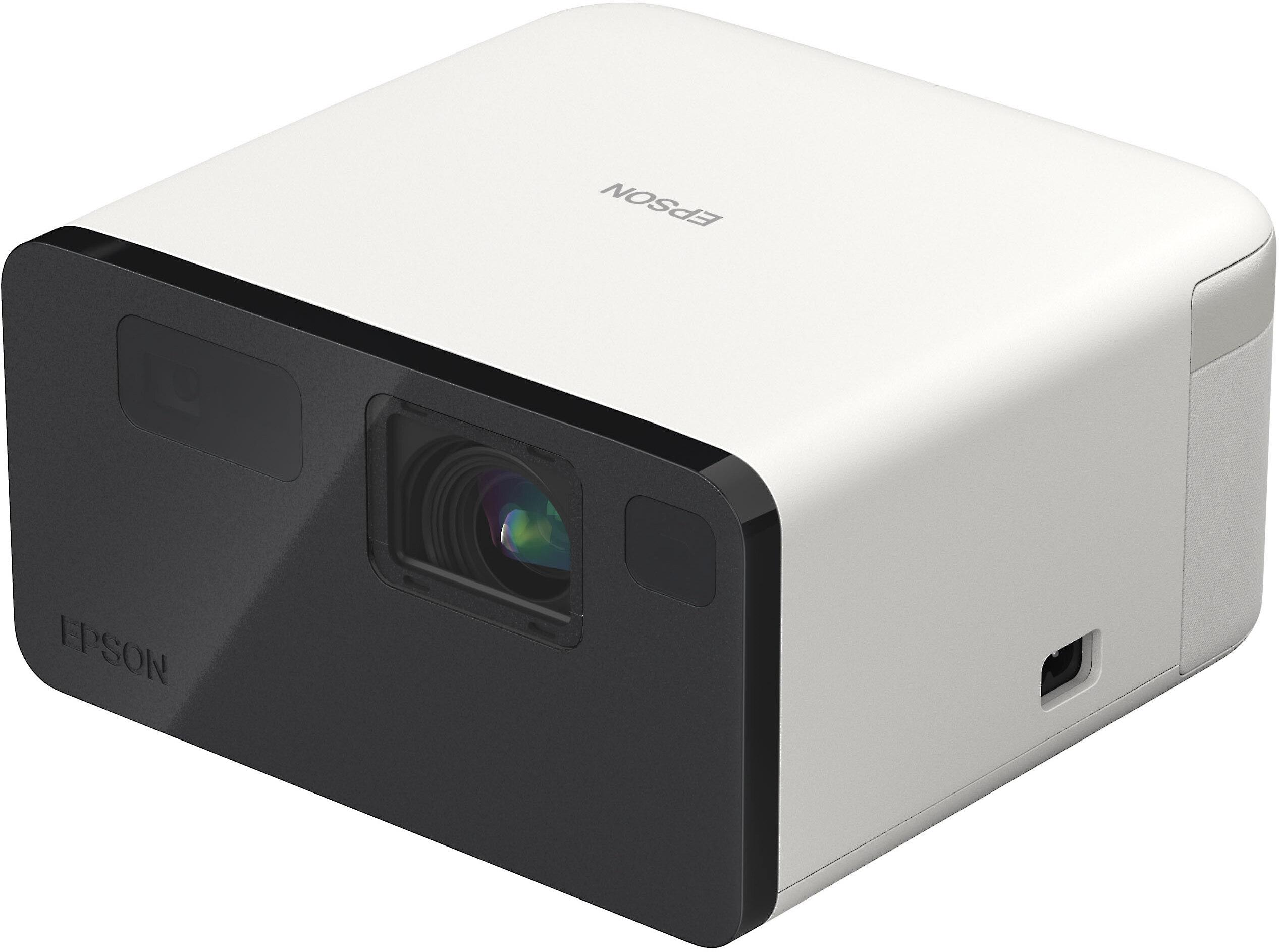
The Epson EF21 is still considered portable but leans toward the "transportable" end of the spectrum at 5.1 lbs with dimensions of 7.75" × 7.5" × 4.4". It's certainly movable between rooms but less convenient for frequent travel.
I've taken the ASUS on several business trips where its small footprint made it practical for both work presentations and hotel room movie nights. The Epson, while less suitable for frequent travel, still proved easy enough to relocate around my home for different viewing scenarios.
Perhaps the most significant difference between these projectors is the ASUS ZenBeam L2's integrated 65Wh battery, which provides up to 3.5 hours of playback. This feature transforms how and where you can use the projector—enabling truly wireless outdoor movie nights, presentations in locations without accessible power outlets, or even camping trips.
During testing, I found the battery lasted about 3 hours when projecting at moderate brightness levels, slightly less than the advertised 3.5 hours but still sufficient for most movies. The battery also doubles as a power bank for charging other devices in a pinch.
The Epson EF21 requires constant AC power connection, limiting its use to locations with available outlets. This isn't necessarily a downside for users who primarily plan to use their projector in established settings, but it does restrict spontaneous outdoor or on-the-go usage.
Smart functionality has become increasingly important for projectors as users expect streamlined access to content without additional devices.
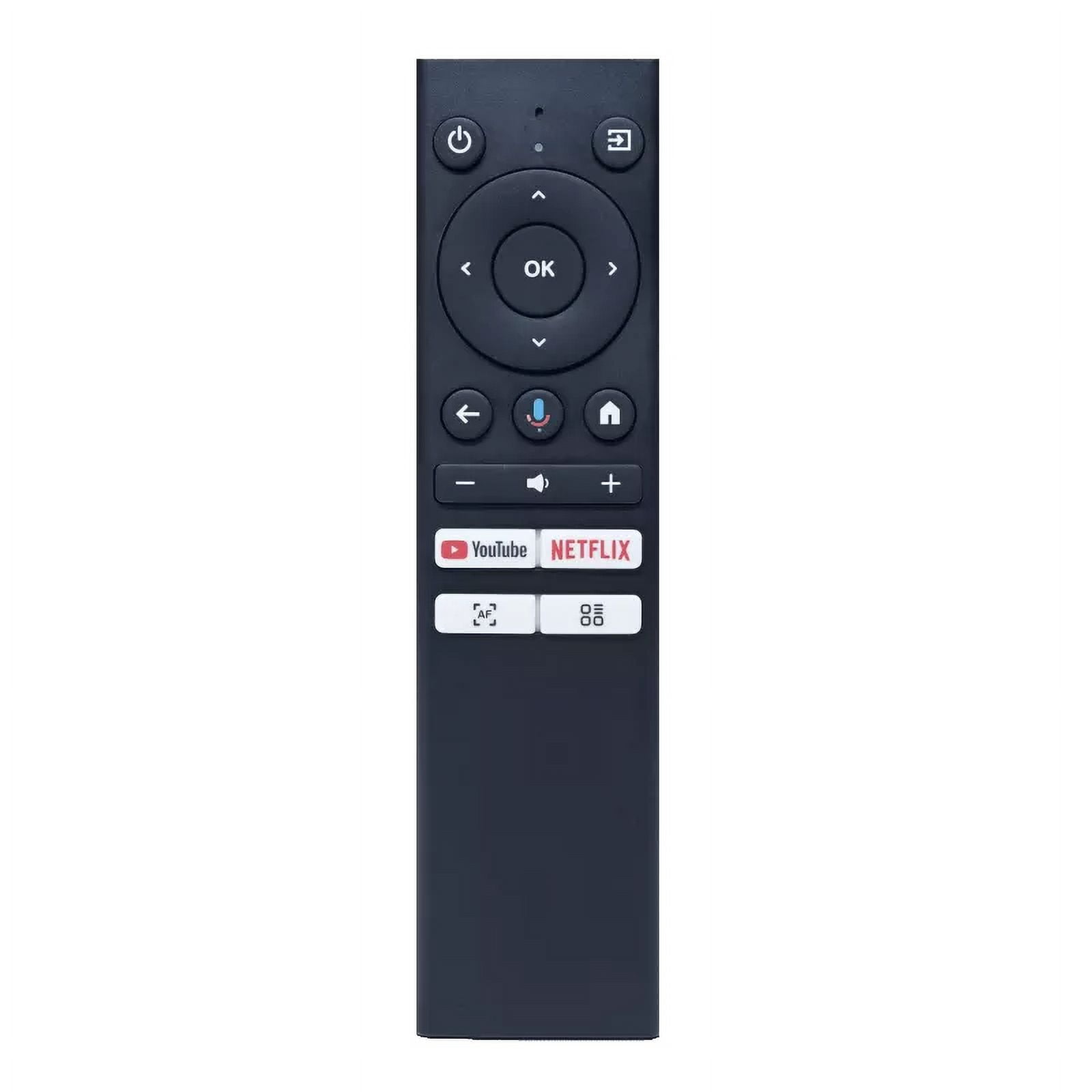
The ASUS ZenBeam L2 approaches this by including an external Google-certified Android TV box. While this adds versatility (you can use the box with other displays), it also means an additional component to manage and one more item requiring power. The Android TV interface provides access to thousands of apps including popular streaming services.
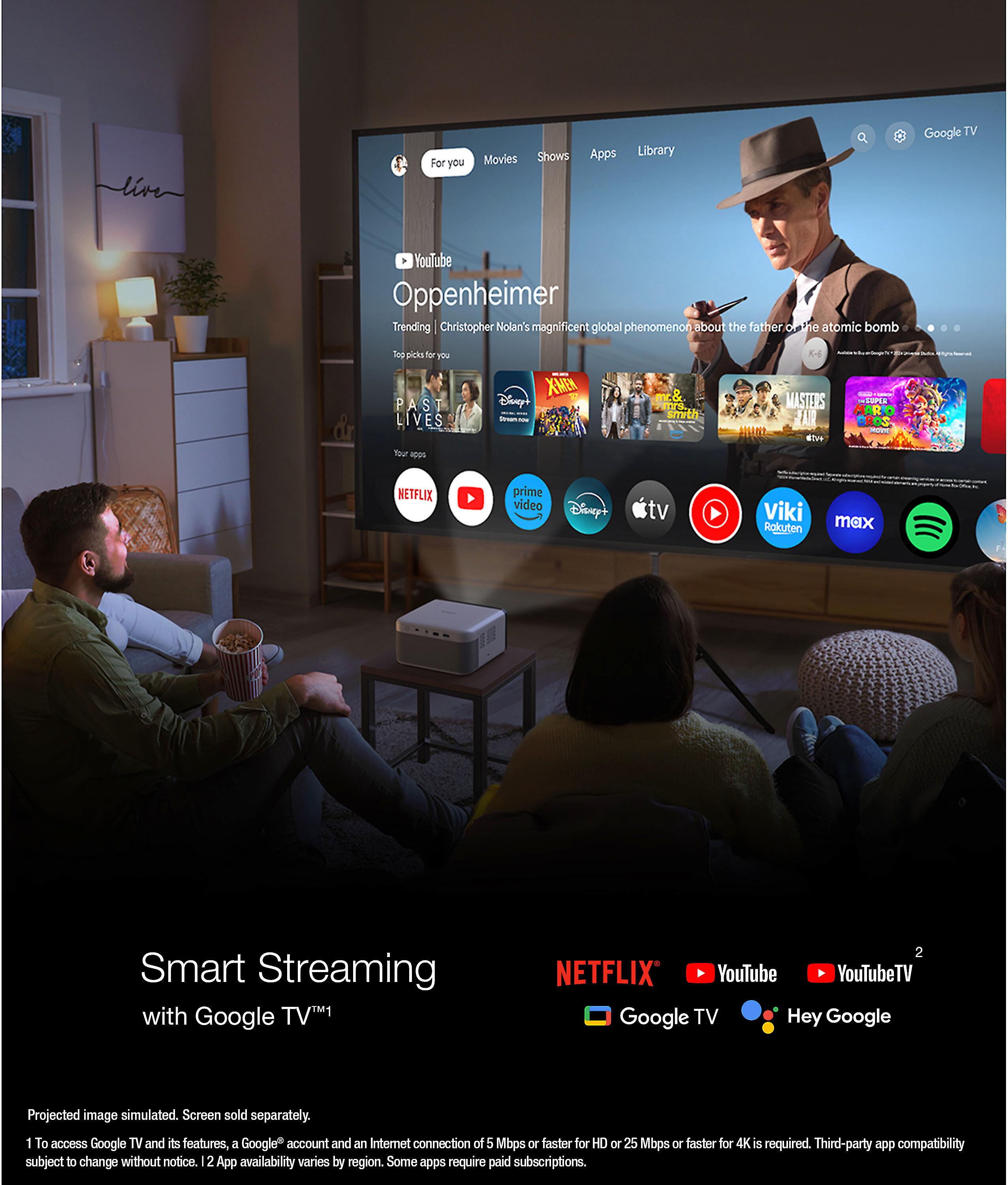
The Epson EF21 integrates Google TV directly into the projector itself, offering a cleaner, single-device solution. This built-in system provides access to over 10,000 apps including Netflix, Disney+, and YouTube TV without requiring external components. The integration feels more seamless in daily use, with one remote controlling all functions.
Having tested both approaches, I found the Epson's all-in-one solution more convenient for regular use, though the ASUS's external box offers more flexibility for those who might want to use it with other displays or upgrade just the streaming device in the future.
Modern projectors have significantly improved ease of use through automated setup features that handle the traditionally fiddly aspects of projection.
Both models offer impressive auto-setup capabilities including auto-focus (which ensures your image is sharp without manual adjustment) and auto keystone correction (which automatically squares the image even when the projector is placed at an angle to the projection surface).
The ASUS ZenBeam L2 includes obstacle avoidance technology that can resize the projection to work around objects on the wall, as well as four-corner geometric correction for more precise image shape adjustment when projecting from extreme angles.
The Epson EF21 offers similar capabilities through its EpiqSense technology, which handles real-time picture resizing, focus, and alignment. In practice, both systems work remarkably well, automatically creating a properly shaped and focused image within seconds of powering on.
During testing, I found the Epson slightly faster at initial setup, while the ASUS offered more granular control for unusual placement scenarios. For standard living room use, both performed admirably with minimal user intervention.
Integrated audio has historically been a weakness for projectors, but both of these models make significant strides in this area.
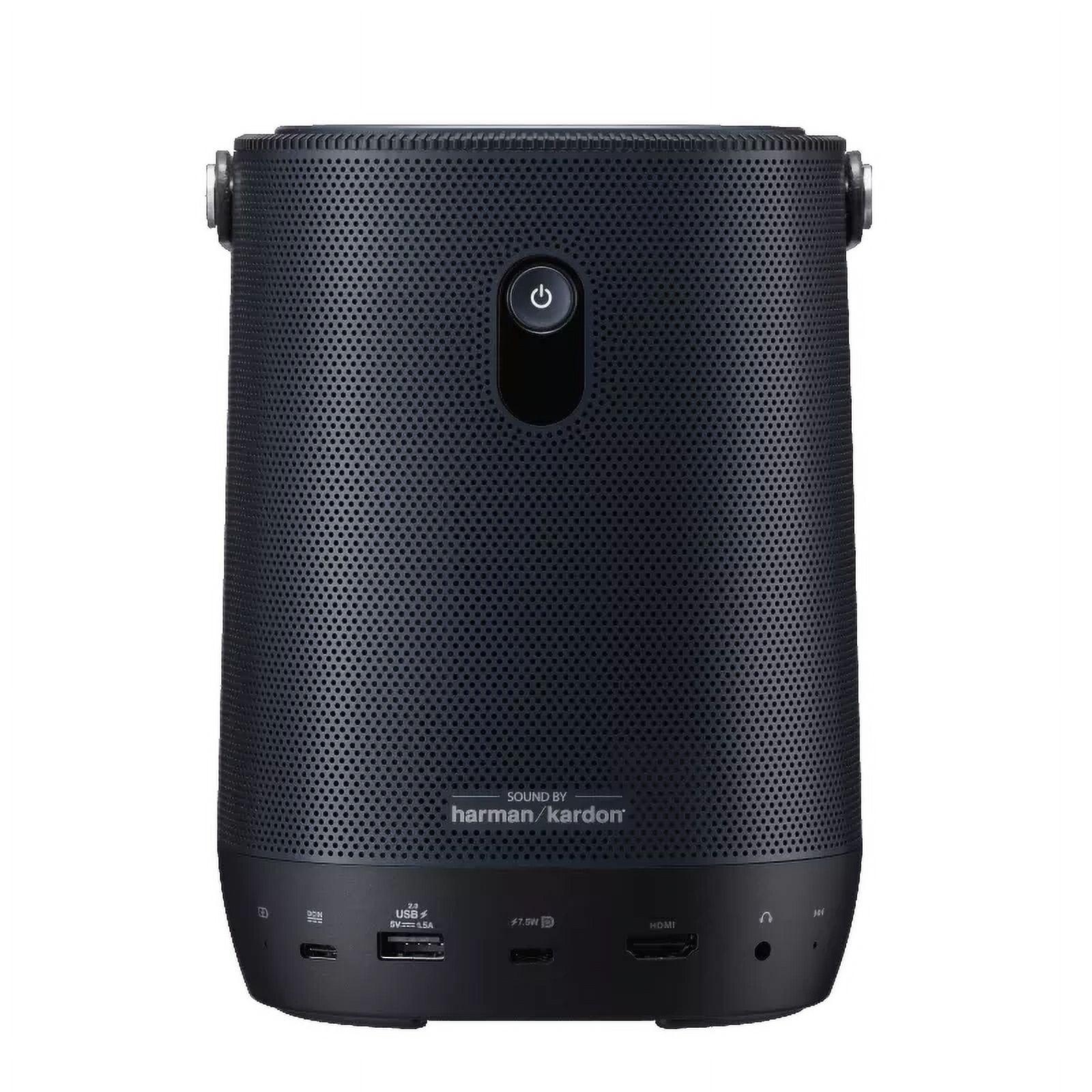
The ASUS ZenBeam L2 features a 10W Harman Kardon speaker with Smart Amp technology. This speaker produces surprisingly rich sound for its size, with clear dialogue and reasonable bass response for a portable device. During movie nights, I rarely felt the need for external speakers unless I was specifically looking for a more immersive audio experience.
The Epson EF21 includes dual 5W speakers with Dolby Audio support. While the total power matches the ASUS, the stereo separation creates a more spacious sound field. The Dolby Audio processing helps enhance dialogue clarity and dynamic range, though I found it lacked some of the bass presence of the ASUS's Harman Kardon speaker.
For casual viewing, both projectors provide adequate sound without external speakers, but home theater enthusiasts will still want to connect external audio systems for the full cinematic experience.
Connectivity options determine how flexible your projector will be with various content sources.
The ASUS ZenBeam L2 offers an HDMI port for connecting game consoles, Blu-ray players, or laptops; a USB-C port with DisplayPort Alt mode for connecting modern laptops and smartphones; a standard USB-A port for playing media from flash drives; and a 3.5mm audio output for connecting headphones or external speakers.
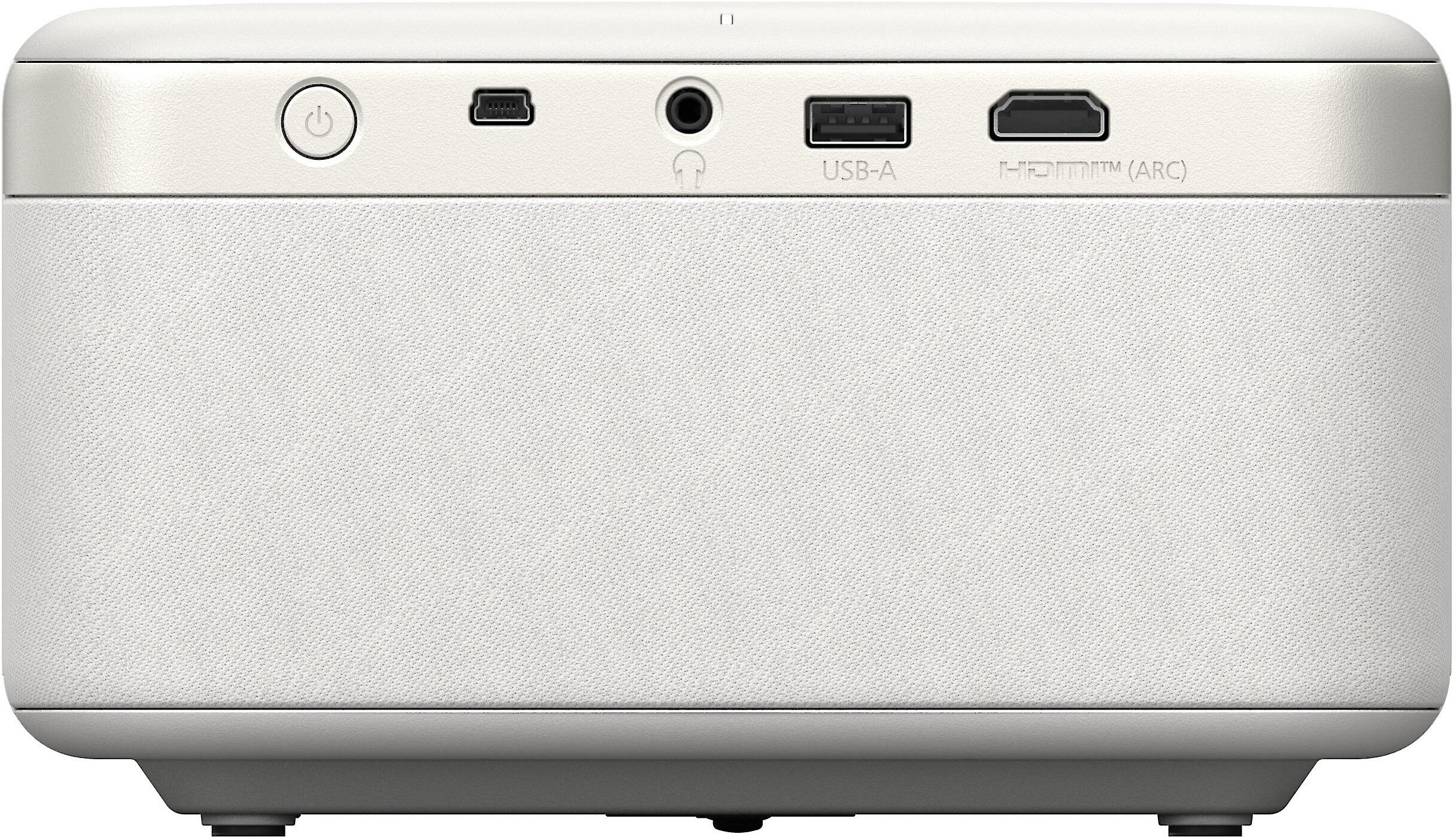
The Epson EF21 provides an HDMI 2.3 input for external devices, a USB-A port for media playback, and a mini USB-B port primarily for service purposes.
In practical terms, the ASUS offers more connection versatility, particularly with its USB-C option that allows newer laptops and smartphones to connect directly without adapters. This proved particularly useful when quickly connecting my MacBook Pro for impromptu presentation practice.
Both projectors support Wi-Fi connectivity for streaming content and receiving updates, though the Epson EF21 specifies dual-band support (2.4GHz and 5GHz), potentially offering better performance in congested wireless environments.
Bluetooth capabilities in both models allow for connecting wireless speakers, headphones, or game controllers. The Epson specifically supports Bluetooth 5.1, which provides improved range and stability compared to earlier Bluetooth versions.
The ASUS ZenBeam L2 includes a unique Light Wall feature with 26 cinegraph options that transform the projector into an ambient lighting device. This feature provides atmospheric lighting effects when you're not watching content, making it more versatile for everyday use.
Its short-throw lens (with a 1.2:1 ratio) means you can place it relatively close to the projection surface—achieving a 40-inch image from just 1 meter away. This makes it practical for smaller rooms where longer projection distances aren't feasible.
The Epson EF21's 3LCD technology eliminates the "rainbow effect" that some viewers experience with DLP projectors. This makes it a better choice for users who are sensitive to this effect, which can cause momentary color artifacts, particularly during high-contrast scenes.
Its MicroLaser Array Projection Technology utilizes multi-array laser diodes to enhance black levels and contrast performance. This technology contributes to the impressive 200,000:1 contrast ratio and allows for more detailed shadows and highlights in projected content.
The built-in Google Assistant functionality adds voice control capabilities, allowing you to search for content, adjust settings, or control smart home devices through the projector itself.
The ASUS ZenBeam L2 typically retails for around $999, positioning it in the premium portable projector segment. This higher price point primarily reflects the inclusion of battery operation, the premium Harman Kardon audio system, and its ultra-compact design.
The Epson EF21 comes in slightly lower at approximately $899, offering superior brightness and contrast while sacrificing battery operation and ultimate portability.
When considering value, it's important to evaluate which features matter most for your specific use case. If true portability with battery power is essential, the ASUS justifies its premium. If you'll primarily use the projector in locations with power outlets and value image quality above all else, the Epson offers better dollar-for-dollar performance.
After extensive testing of both projectors in various environments, I can offer some guidance based on typical use cases:
Choose the ASUS ZenBeam L2 if:
Choose the Epson EpiqVision Mini EF21 if:
Both the ASUS ZenBeam L2 and Epson EF21 represent significant steps forward in portable projection technology, bringing home theater experiences to spaces where traditional setups wouldn't be practical. They exemplify different approaches to solving similar problems—the ASUS embracing ultimate portability with its battery and compact design, while the Epson prioritizes image quality through its superior brightness and contrast capabilities.
For my personal home theater use, I tend to favor the Epson's superior image quality and integrated smart platform, but I can't deny the appeal of the ASUS when impromptu movie nights in unusual locations arise. Each projector excels in its intended use case, making either a worthy investment depending on your specific needs.
| ASUS ZenBeam L2 Smart Portable LED Projector | Epson EpiqVision Mini EF21 Projector |
|---|---|
| Price - Overall investment consideration | |
| $999 | $899 |
| Resolution - Determines sharpness and detail in the image | |
| 1920x1080 (Full HD) | 1920x1080 (Full HD) |
| Brightness - Critical for visibility in rooms with ambient light | |
| 960 LED lumens / 400 ANSI lumens (best in darkened rooms) | 1000 ANSI lumens (handles moderate ambient light better) |
| Light Source Technology - Affects image quality, lifespan, and maintenance | |
| LED with 30,000 hour lifespan | Laser with 20,000 hour lifespan |
| Contrast Ratio - Impacts depth of blacks and overall picture depth | |
| 400:1 | 200,000:1 (dramatically better black levels) |
| Color Gamut - Determines color vibrancy and accuracy | |
| 120% sRGB (vibrant colors) | Standard sRGB with 3LCD technology (more balanced colors) |
| Display Technology - Affects color reproduction and possible artifacts | |
| Single-chip DLP (may produce rainbow effect for sensitive viewers) | 3LCD (eliminates rainbow effect, more consistent color brightness) |
| Maximum Screen Size - How large you can project | |
| 30" to 120" | 30" to 150" |
| Portability - Weight affects how easily you can transport the projector | |
| 1.57 kg (3.46 lbs) - highly portable | 5.1 lbs - moderately portable |
| Battery - Determines if you need a power outlet | |
| Built-in 65Wh battery with up to 3.5 hours playback | No battery (requires constant power connection) |
| Audio System - Quality of built-in sound | |
| 10W Harman Kardon speaker (superior sound in a compact device) | Dual 5W speakers with Dolby Audio (good stereo separation) |
| Smart Platform - How you access streaming content | |
| External Google-certified Android TV box (more flexible but requires separate device) | Built-in Google TV (more integrated experience) |
| Connectivity - Options for connecting devices | |
| HDMI, USB-C (DisplayPort), USB-A, 3.5mm audio out | HDMI 2.3, USB-A, USB-B mini |
| Auto Setup Features - How easily the projector adjusts itself | |
| Auto focus, auto keystone, obstacle avoidance, four-corner correction | EpiqSense technology with auto focus, keystone correction, obstacle avoidance |
| Special Features - Unique capabilities that might influence your decision | |
| ASUS Light Wall for ambient lighting, true battery-powered portability | Superior contrast ratio, MicroLaser Array technology, built-in Google Assistant |
| Best Use Case - Primary scenarios where each excels | |
| Outdoor movie nights, travel, presentations in varied locations | Home theater in rooms with some ambient light, permanent or semi-permanent setups |
The Epson EpiqVision Mini EF21 is significantly brighter with 1000 ANSI lumens compared to the ASUS ZenBeam L2's 400 ANSI lumens (advertised as 960 LED lumens). This makes the Epson better for rooms with ambient light, while the ASUS ZenBeam L2 performs best in darkened environments. If you plan to use your projector during daytime or in well-lit rooms, the Epson EF21 offers a clear advantage.
Yes, both the ASUS ZenBeam L2 and the Epson EpiqVision Mini EF21 offer Full HD 1080p resolution (1920x1080 pixels). This means you'll get similarly detailed images from both projectors. The difference in image quality comes from other factors like brightness, contrast ratio, and color reproduction rather than resolution. For most home theater uses, 1080p resolution provides excellent detail at typical viewing distances.
The ASUS ZenBeam L2 is significantly better for portable use because it features a built-in 65Wh battery that provides up to 3.5 hours of playback without requiring a power outlet. It's also lighter at 1.57 kg (3.46 lbs) compared to the Epson EF21's 5.1 lbs. The Epson requires constant power connection, making the ASUS ZenBeam L2 the clear choice for truly portable applications like outdoor movie nights or presentations in locations without guaranteed power access.
The Epson EpiqVision Mini EF21 has dramatically better contrast with a 200,000:1 contrast ratio compared to the ASUS ZenBeam L2's 400:1 ratio. This significant difference means the Epson produces much deeper blacks and more dynamic range, resulting in a more cinematic image, especially for dark scenes in movies. For home theater enthusiasts who care about image quality, the Epson EF21's superior contrast is a major advantage.
Both projectors offer streaming capabilities, but they implement them differently. The ASUS ZenBeam L2 comes with an external Google-certified Android TV box that connects to the projector, while the Epson EpiqVision Mini EF21 has Google TV built directly into the projector itself. The Epson's integrated approach means one less device to manage and a single remote for all functions, though the ASUS's external box offers flexibility to use it with other displays as well.
The ASUS ZenBeam L2 features a superior 10W Harman Kardon speaker that provides better overall sound quality with richer bass compared to the Epson EF21's dual 5W speakers with Dolby Audio. However, the Epson offers better stereo separation due to its dual-speaker setup. For casual viewing without external speakers, the ASUS typically provides a more satisfying audio experience, though serious home theater users will want to connect external audio systems to either projector.
For dedicated home theater use, the Epson EpiqVision Mini EF21 generally offers better performance with its higher brightness (1000 ANSI lumens), vastly superior contrast ratio (200,000:1), and 3LCD technology that eliminates the rainbow effect some viewers experience with DLP projectors. The ASUS ZenBeam L2 is better suited for more casual or flexible home theater setups where portability and battery operation are priorities over absolute image quality.
The ASUS ZenBeam L2 uses an LED light source with a 30,000-hour lifespan, while the Epson EpiqVision Mini EF21 employs a laser light source rated for 20,000 hours. While the ASUS has a longer theoretical lifespan, the Epson's laser technology provides better brightness consistency over time and contributes to its superior contrast ratio. Both technologies are "lamp-free," meaning you'll never need to replace a traditional projector bulb during normal use of either device.
The Epson EpiqVision Mini EF21 can project larger images, with a maximum screen size of 150 inches compared to the ASUS ZenBeam L2's 120-inch maximum. Both projectors can display images as small as 30 inches. In practical terms, this difference only matters if you need extremely large projections; for most home environments, both projectors can adequately fill typical wall spaces. The Epson's ability to go larger may appeal to those with dedicated theater rooms with big screens.
Both the ASUS ZenBeam L2 and Epson EpiqVision Mini EF21 offer excellent auto-setup features including auto focus, auto keystone correction, and obstacle avoidance. The ASUS includes additional four-corner geometric correction for more precise image shape adjustment from extreme angles, while the Epson's EpiqSense technology provides particularly fast initial setup. For typical home theater use, both projectors set up quickly with minimal user intervention, though the Epson's all-in-one design (with built-in streaming) makes for a slightly simpler overall setup process.
At $899, the Epson EpiqVision Mini EF21 offers better value for users who prioritize image quality and will primarily use the projector in locations with power outlets. It provides superior brightness, contrast, and built-in streaming at a lower price point. The ASUS ZenBeam L2 costs more at $999 but includes a built-in battery for truly wireless operation and greater portability. Your definition of "value" depends on whether battery operation and ultra-portability are worth the extra cost and some compromise in image quality.
The ASUS ZenBeam L2 offers more versatile connectivity with HDMI, USB-C (DisplayPort), USB-A, and 3.5mm audio output ports. The USB-C port is particularly useful for directly connecting modern laptops and smartphones without adapters. The Epson EpiqVision Mini EF21 provides HDMI 2.3, USB-A, and USB-B mini ports. Both projectors support Wi-Fi and Bluetooth connectivity for wireless streaming and audio, with the Epson specifically supporting dual-band Wi-Fi (2.4GHz and 5GHz) and Bluetooth 5.1 for improved wireless performance.
We've done our best to create useful and informative comparisons to help you decide what product to buy. Our research uses advanced automated methods to create this comparison and perfection is not possible - please contact us for corrections or questions. These are the sites we've researched in the creation of this article: projectorcentral.com - youtube.com - mezha.media - asus.com - asus.com - youtube.com - projectorreviews.com - asus.com - digitalcameraworld.com - youtube.com - asus.com - digitalcitizen.life - tweakreviews.com - shop.asus.com - edgeup.asus.com - asus.com - projectorcentral.com - asus.com - uk.store.asus.com - asus.com - thegadgetflow.com - bhphotovideo.com - asus.com - asus.com - bestbuy.com - bestbuy.com - cnet.com - youtube.com - projectorreviews.com - epson.com - projectorreviews.com - epson.com - rtings.com - epson.com - youtube.com - projectorcentral.com - bestbuy.com - projectorcentral.com - nfm.com - crutchfield.com - latin.epson.com - mediaserver.goepson.com - planettv.com - bhphotovideo.com - cnet.com - epson.com

Privacy Policy
Terms and Conditions - Affiliate Policy
Home Security
© Copyright 2008-2026.
11816 Inwood Rd #1211, Dallas, TX 75244