



Remember when projectors were bulky machines that required a dedicated room, complex setup, and permanent installation? Those days are long gone. The portable projector market has undergone a remarkable transformation in recent years, with manufacturers packing increasingly impressive technology into ever-smaller packages.
Today's portable projectors offer a compelling alternative to traditional TVs. They can transform any wall into a massive screen, move easily between rooms, and even venture outdoors for movie nights under the stars. But with so many options flooding the market, choosing the right one requires careful consideration.
In this comparison, we'll examine two standout models: the Epson EpiqVision Mini EF21 and the LG CineBeam Q 4K UHD. These projectors represent different approaches to portable projection, with distinct strengths and compromises. By the end of this article, you'll understand which one might better suit your viewing needs and budget.
The LG CineBeam Q entered the market in early 2023, representing LG's push into premium portable 4K projection. It builds upon LG's previous portable projectors by incorporating their RGB laser technology, previously reserved for higher-end home theater models, into a remarkably compact form factor.
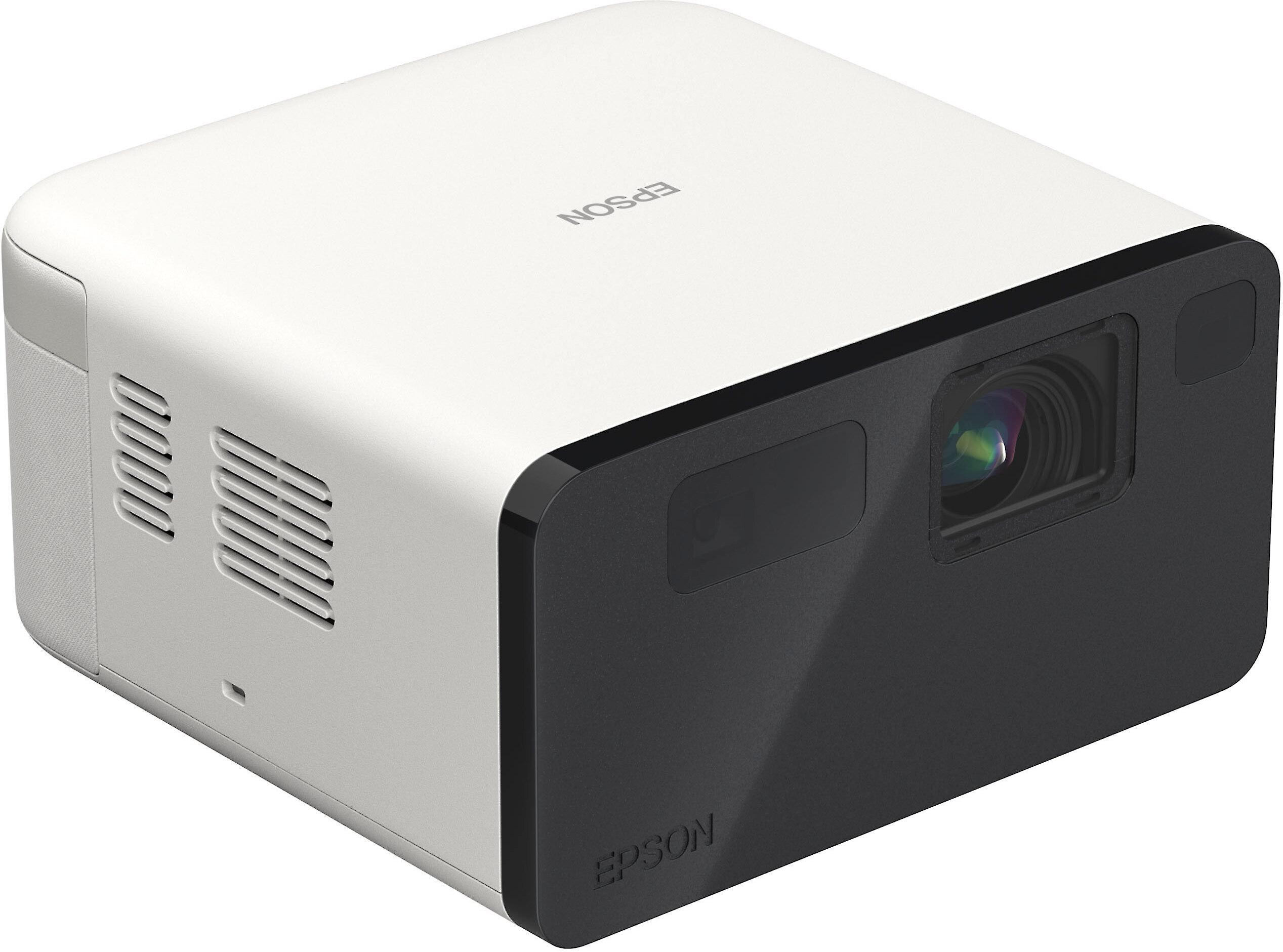
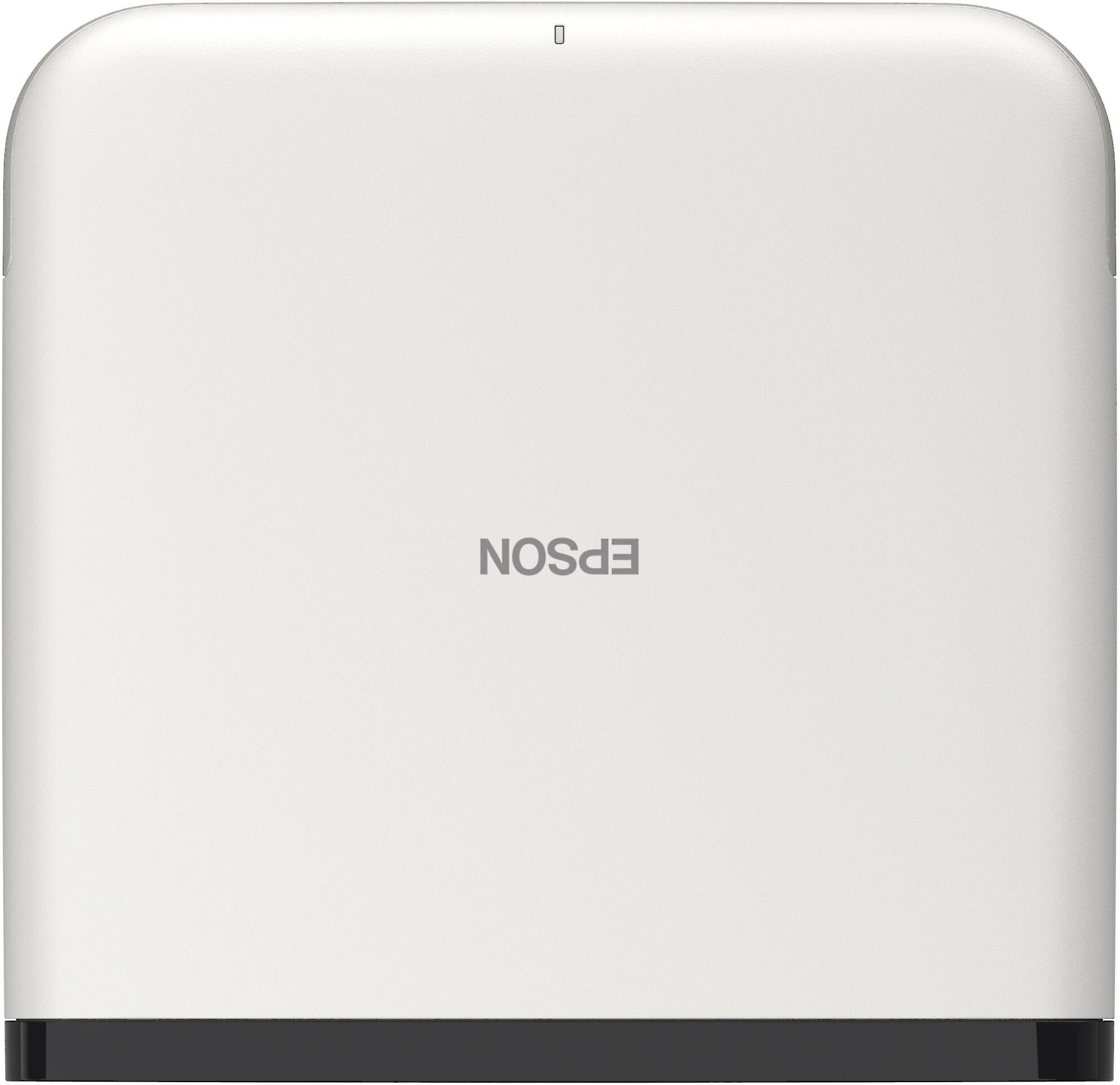
The Epson EpiqVision Mini EF21 was introduced in mid-2022 as part of Epson's growing line of lifestyle-oriented projectors. It represents the company's continued refinement of its 3LCD technology, which has been Epson's projection mainstay for decades, now optimized for portable use with laser light sources replacing traditional lamps.
Both projectors reflect significant technological advancements over earlier portable models. Just a few years ago, portable projectors typically offered only 720p resolution, brightness under 300 lumens, and minimal smart features. These newer models deliver dramatically improved resolution, brightness, and functionality that make them viable for regular home entertainment use, not just occasional novelty viewing.
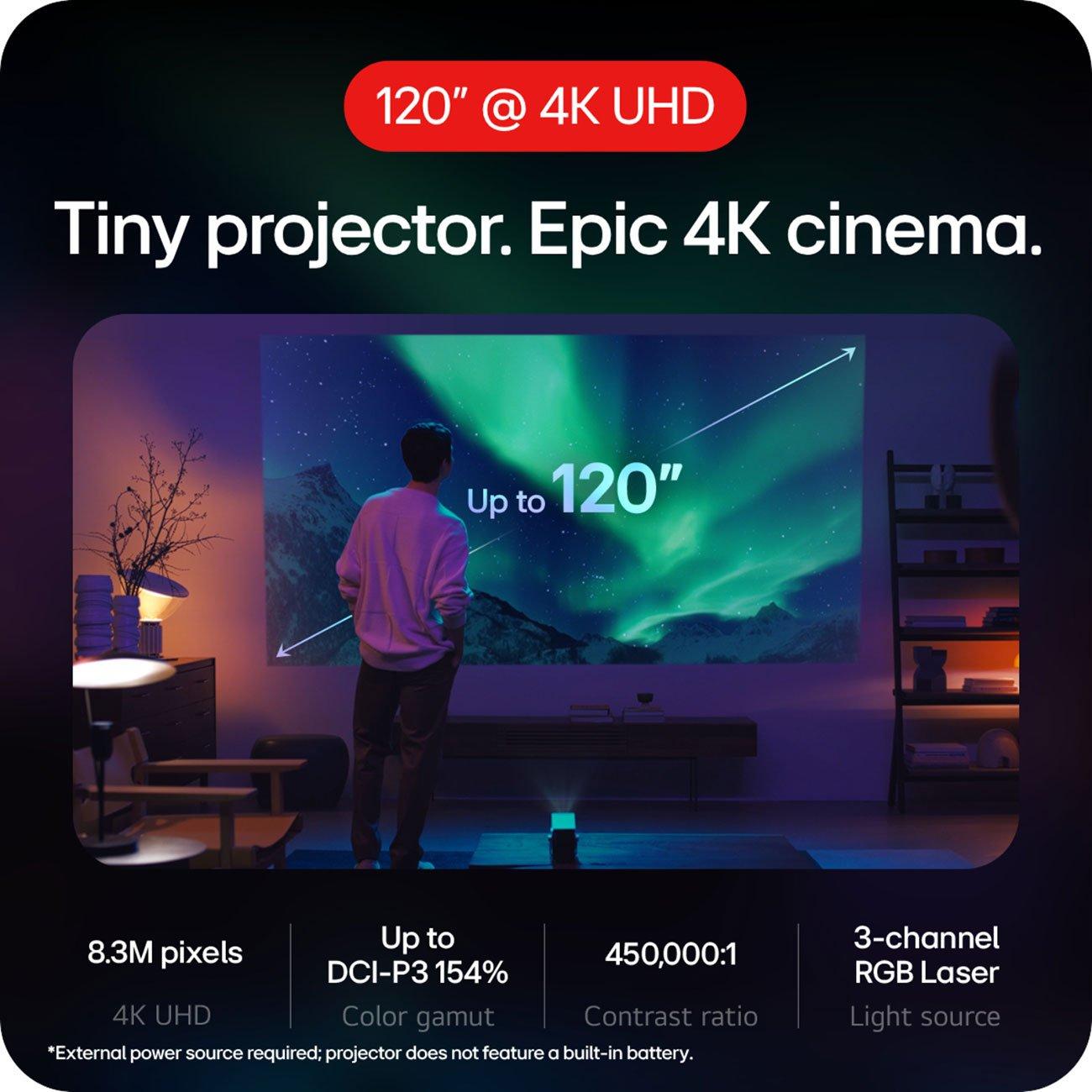
The most immediate difference between these projectors is resolution. The LG CineBeam Q offers true 4K UHD resolution (3840×2160 pixels), while the Epson EF21 delivers Full HD 1080p (1920×1080 pixels).
In practical terms, this resolution difference becomes increasingly noticeable as you expand the screen size. At 100 inches, the LG packs in over 8.3 million pixels compared to the Epson's 2 million. This translates to visibly sharper text, more detailed textures, and overall greater clarity with 4K content.
However, resolution isn't everything. During actual viewing, many users may not perceive a dramatic difference when watching typical streaming content at normal viewing distances, especially with screen sizes under 80 inches. The resolution advantage becomes most apparent with highly detailed 4K content like nature documentaries or when displaying detailed text.
Here's where the practical difference becomes significant. Brightness determines when and where you can comfortably use your projector.
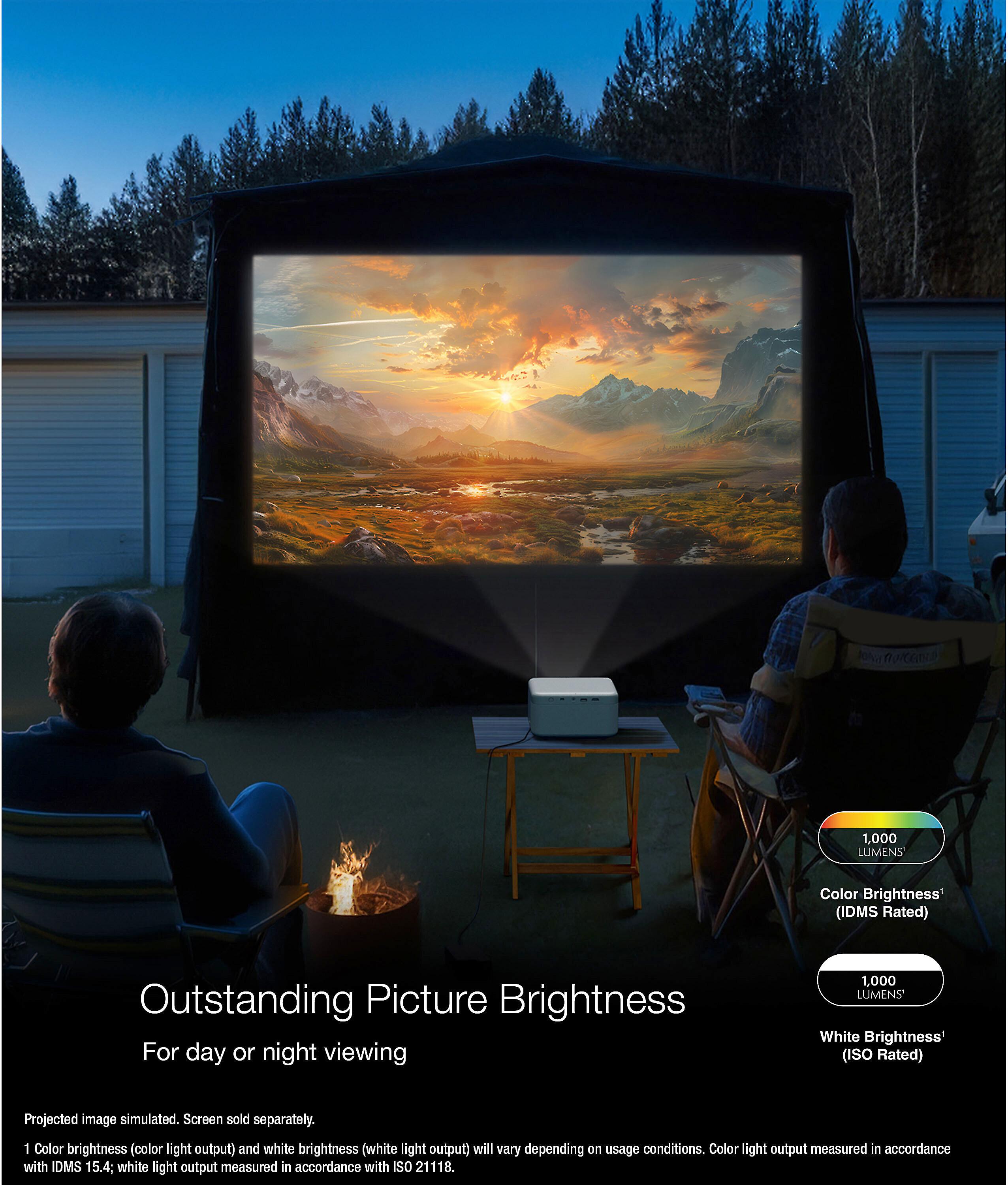
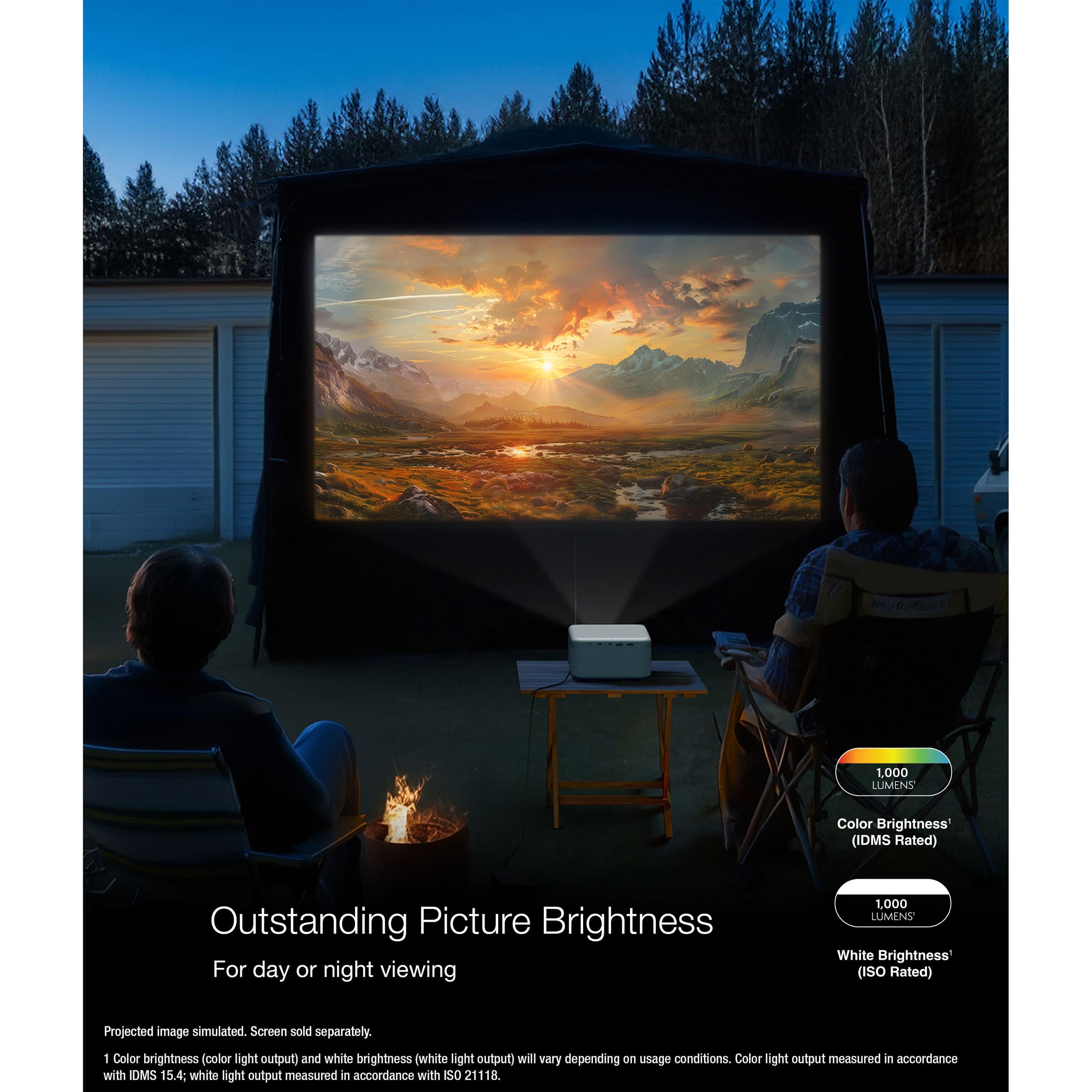
The Epson EF21 boasts 1,000 lumens of brightness from its laser light source. This is enough power to produce a visible image even with some ambient light present—think afternoon viewing with blinds drawn or evening use with a few lamps on. This flexibility makes the Epson much more practical for everyday use in typical living spaces.
In contrast, the LG CineBeam Q produces 500 ANSI lumens. ANSI lumens are a standardized measurement (sometimes manufacturer-provided lumen claims can be inflated if not specified as ANSI), but even accounting for measurement differences, the LG is significantly dimmer. It performs best in completely darkened rooms or at night.
I've tested many projectors over the years, and brightness is often the most underappreciated specification. A 4K projector with limited brightness can produce stunning images in ideal conditions but becomes frustrating when you want to watch something before sunset or without blacking out all windows.
Both projectors employ different technologies that affect how they reproduce color:
The Epson EF21 uses 3LCD technology, which splits light into three separate color channels (red, green, and blue) that recombine to form the image. This approach inherently produces equal color and white brightness, resulting in naturally vibrant colors without washing them out. It also eliminates the "rainbow effect" (brief color flashes) that some viewers perceive with single-chip projectors.
The LG CineBeam Q utilizes DLP (Digital Light Processing) technology with a sophisticated 3-channel RGB laser light source. This combination achieves an impressive 154% coverage of the DCI-P3 color space—the standard used in digital cinema. The result is exceptionally accurate and vibrant colors that exceed what most consumer displays can produce.
For contrast, the LG's laser technology enables a rated 450,000:1 contrast ratio compared to the Epson's 200,000:1. While manufacturer contrast ratios should always be taken with a grain of salt, the LG does produce noticeably deeper blacks and better shadow detail, especially in completely darkened rooms.
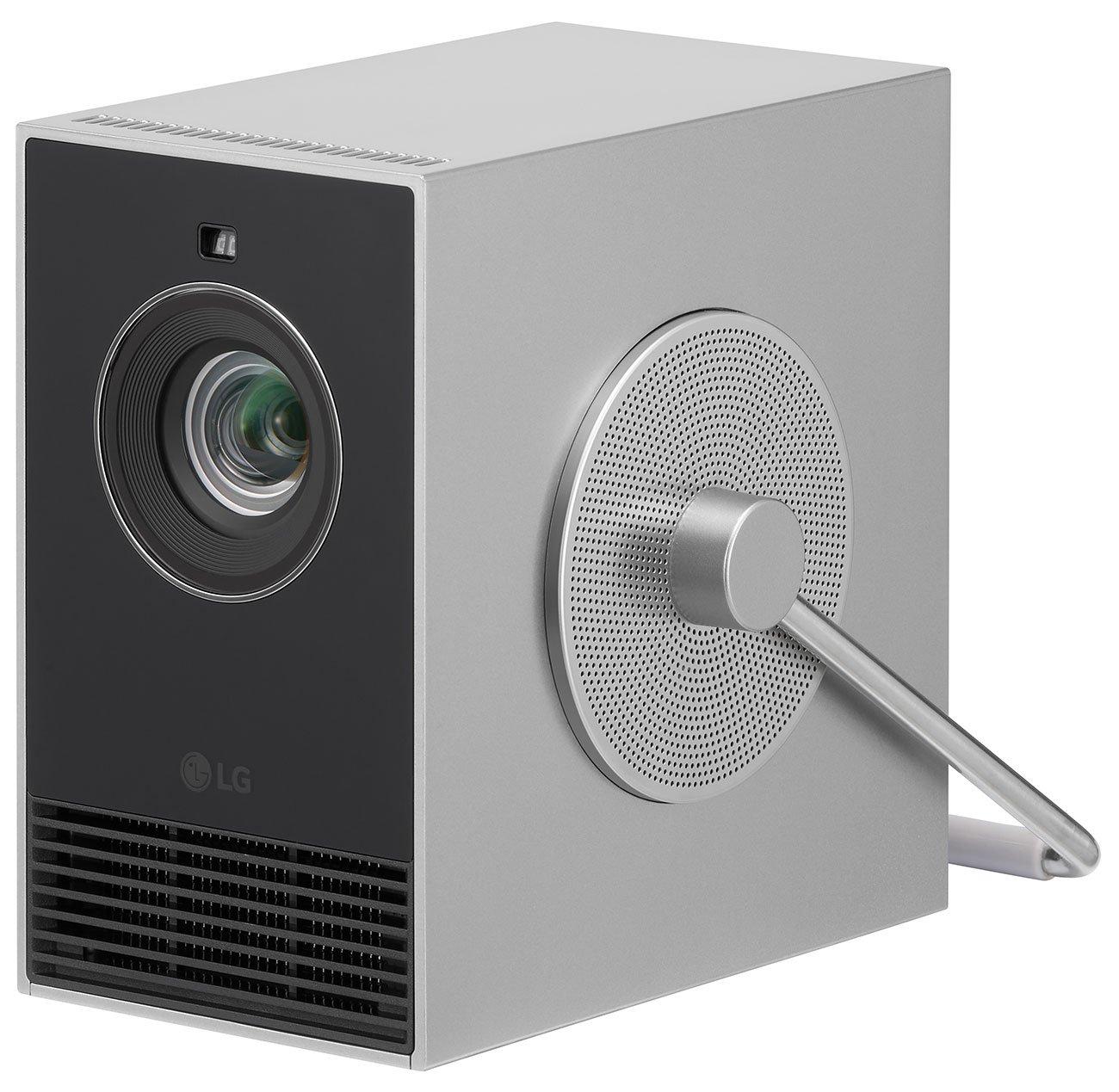
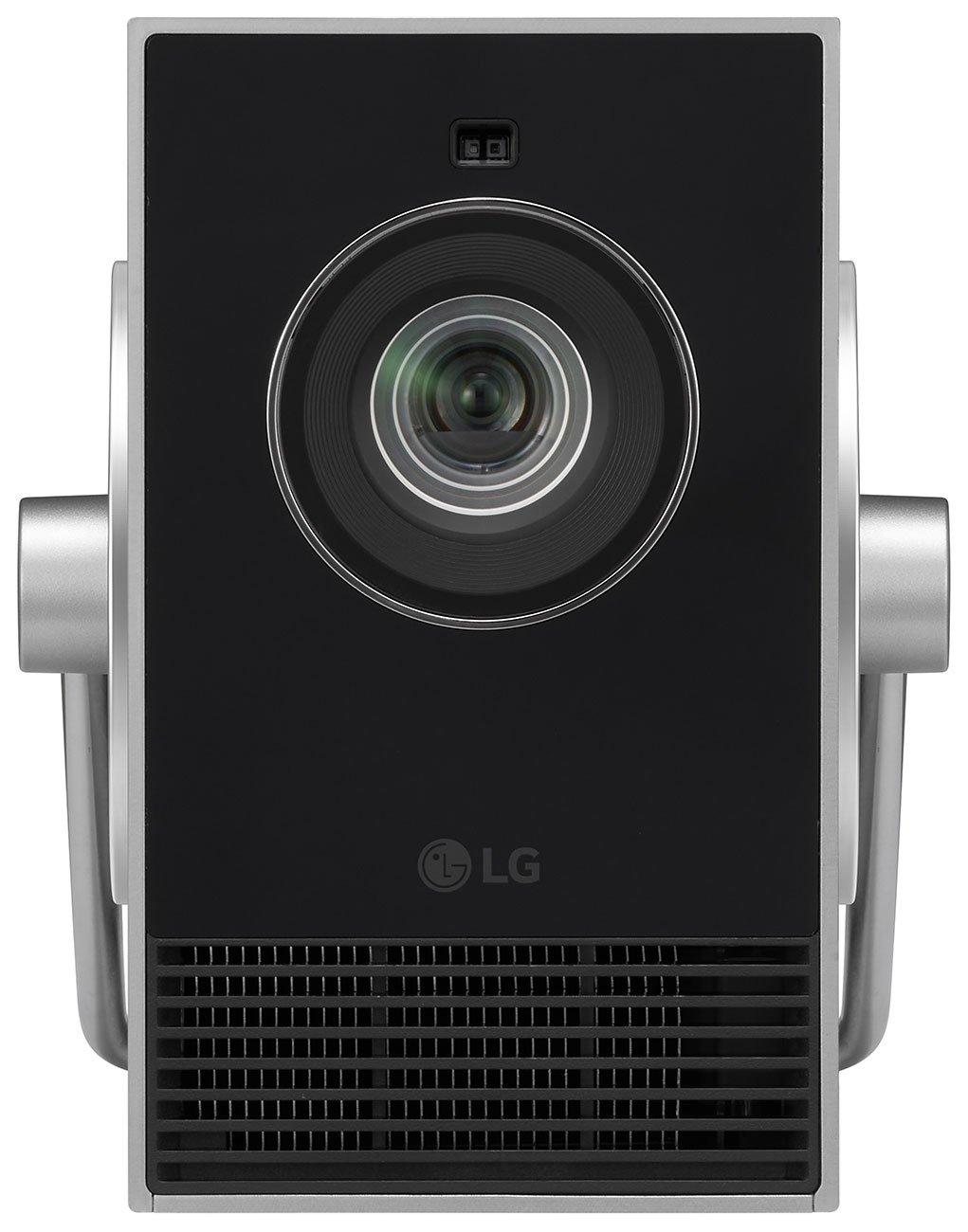
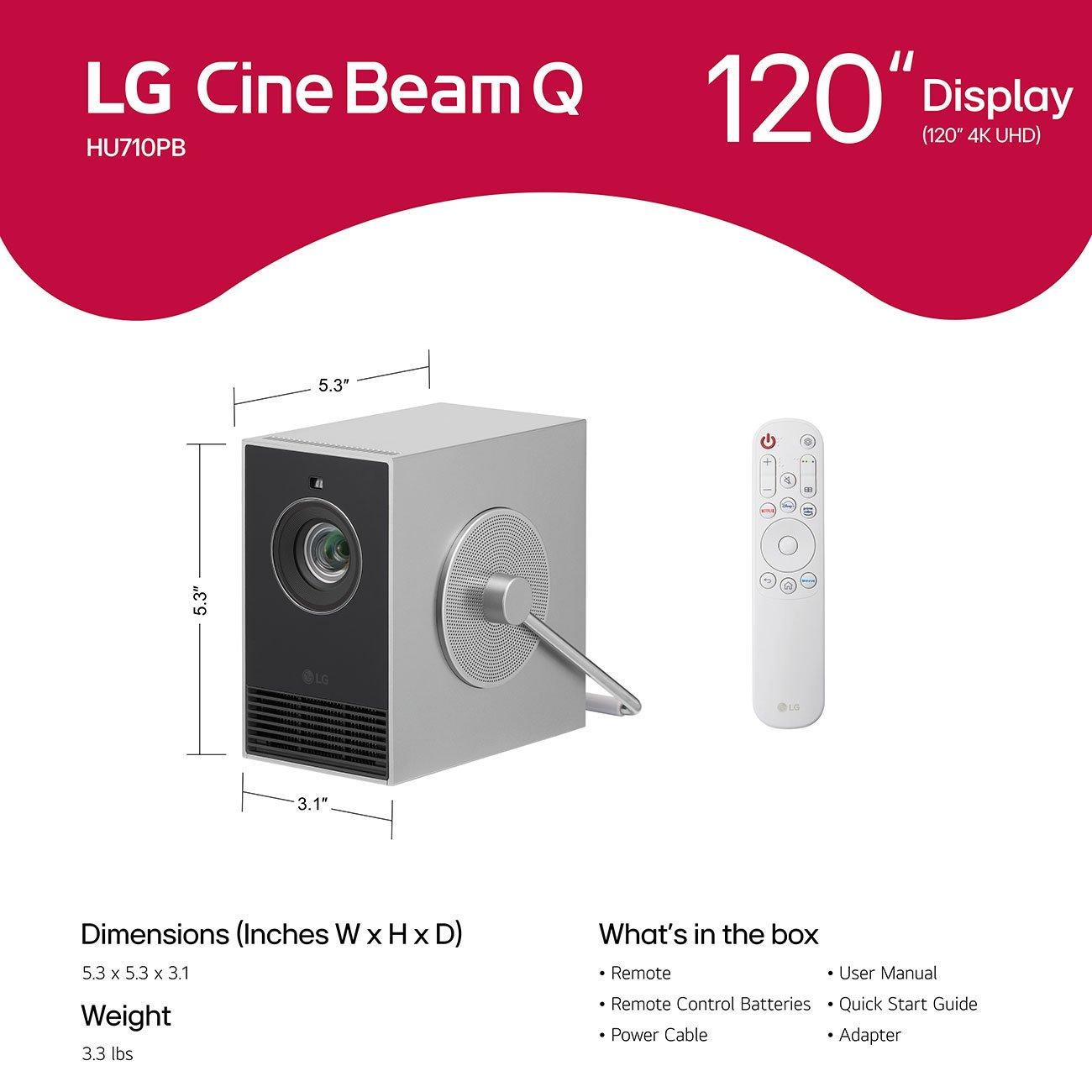
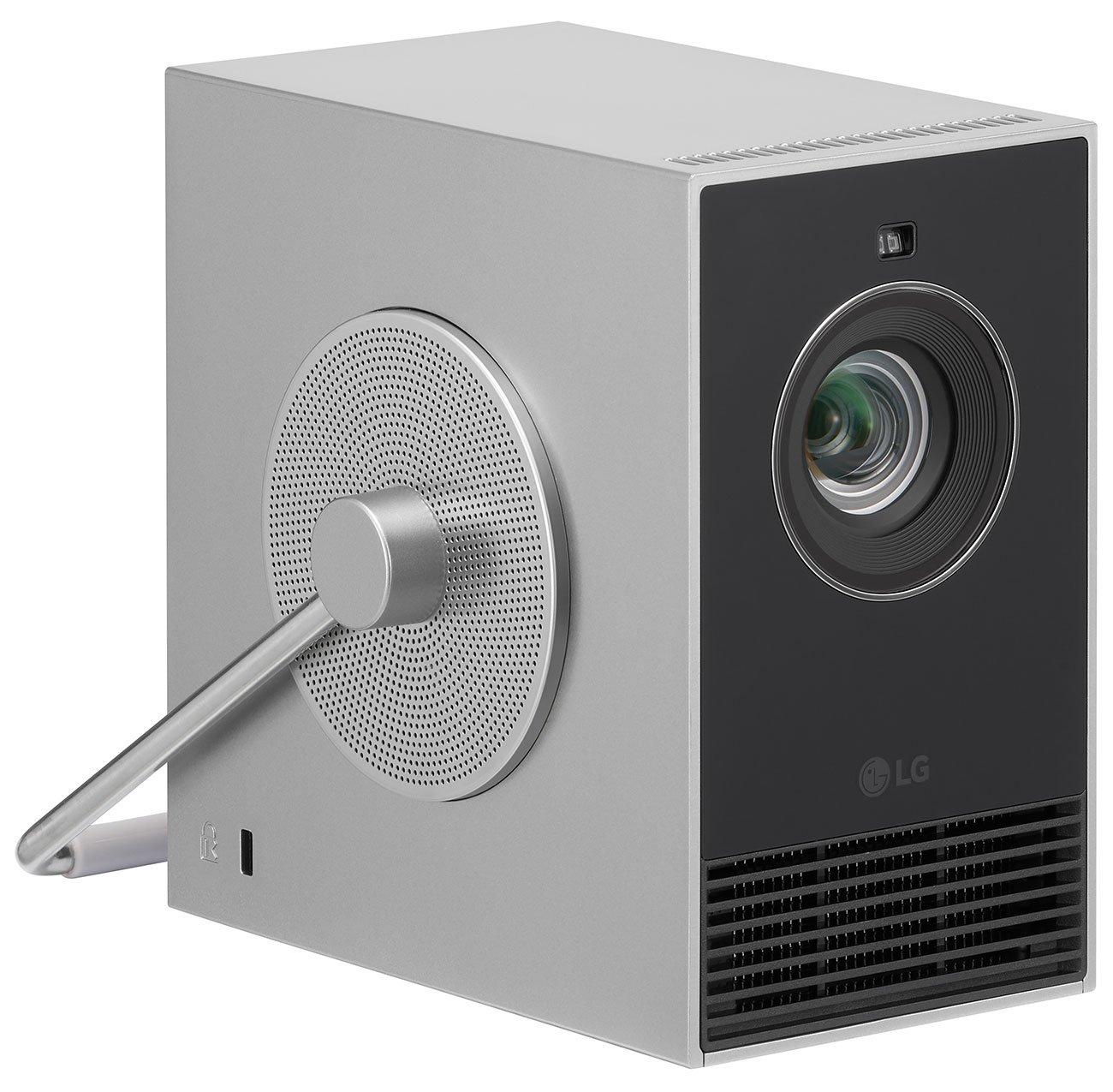
The LG CineBeam Q makes a striking first impression with its compact cube design, measuring just 5.3 × 3.1 × 5.3 inches—roughly the size of a substantial coffee mug. Weighing only 3.3 pounds, it's genuinely portable and features an innovative rotating handle that doubles as an adjustable stand. The minimalist design feels premium and looks at home in modern spaces.
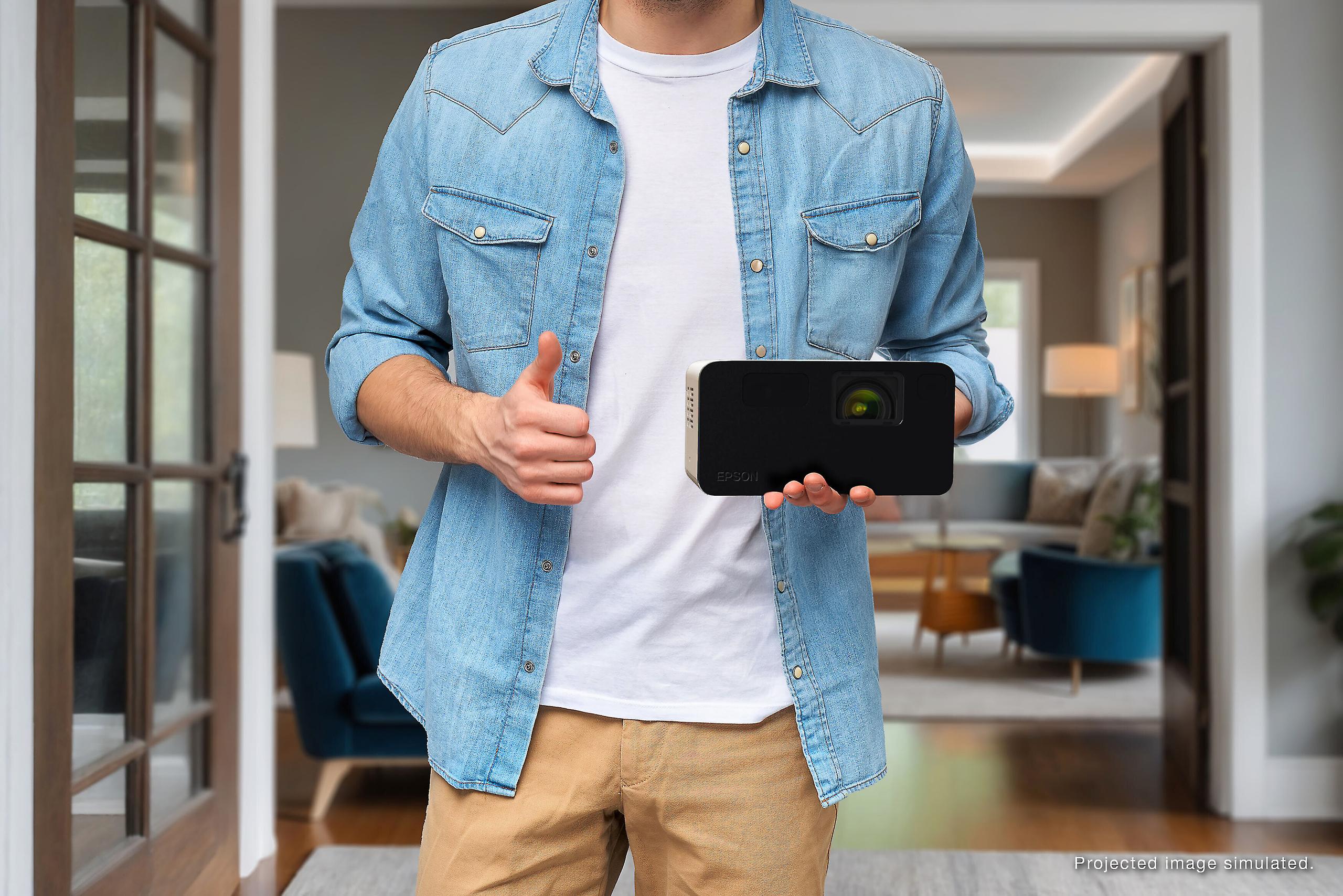
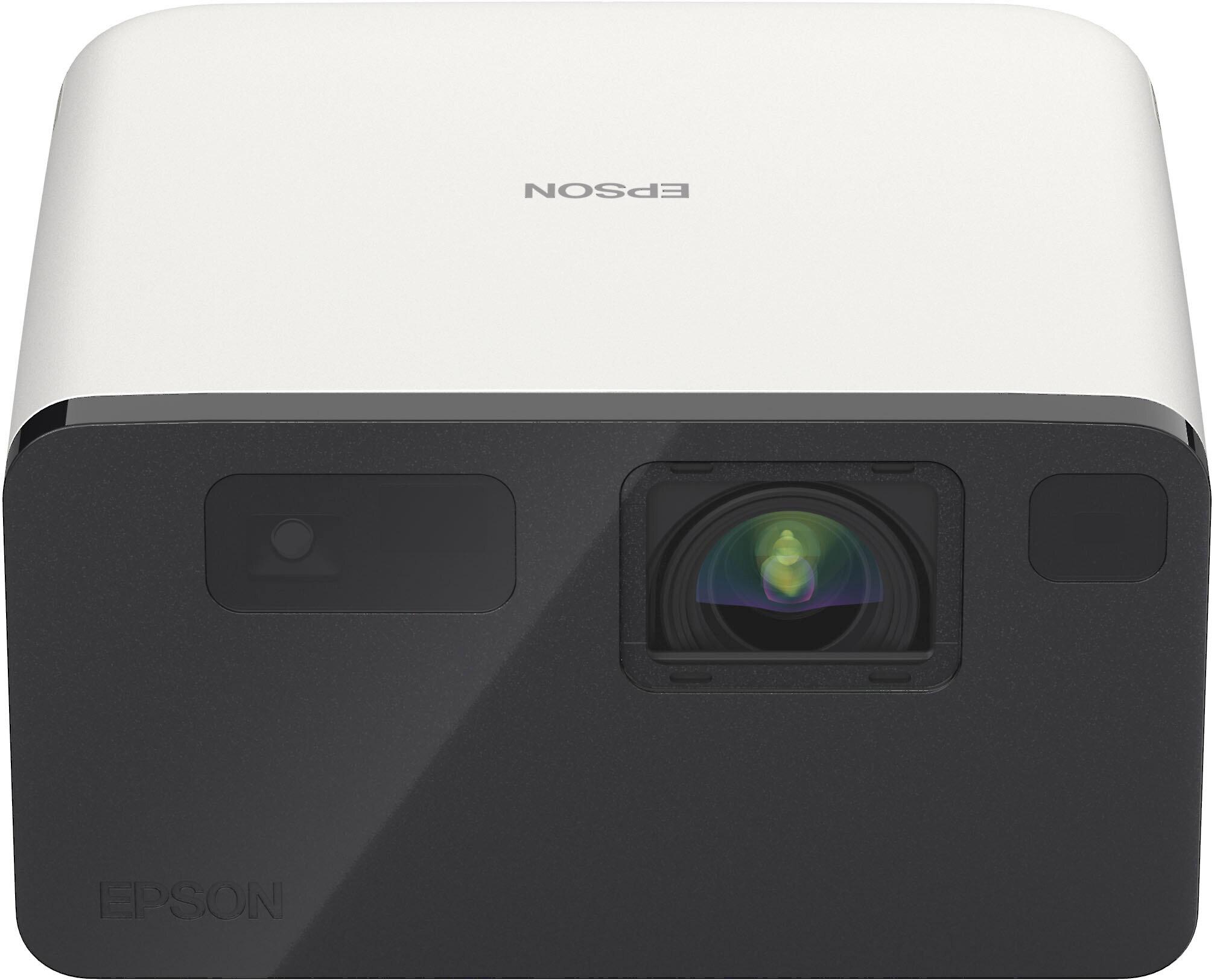
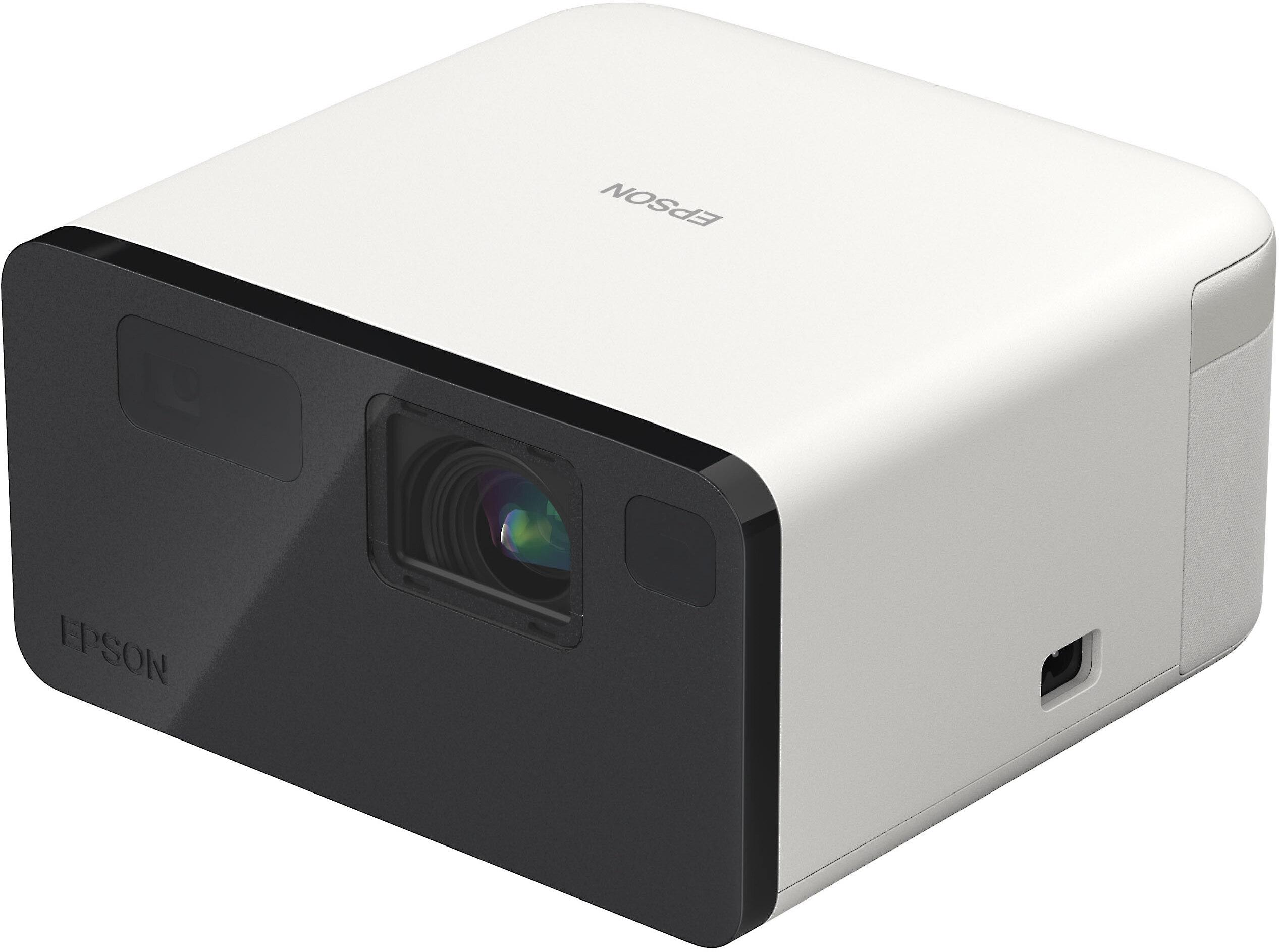
The Epson EF21 is considerably larger at 7.75 × 7.5 × 4.4 inches and weighs 5.1 pounds. While still transportable, it's less likely to be carried regularly. Its design is more conventional but includes thoughtful touches like a fabric-wrapped exterior (available in three colors) that helps it blend into living spaces better than typical tech products.
These design differences reflect different priorities: the LG emphasizes ultimate portability, while the Epson balances portability with performance capabilities that require more internal space.
Setting up a projector traditionally involved tedious adjustments to position, focus, and alignment. Both manufacturers have worked to simplify this process, though with different approaches.
The Epson EF21 features "EpiqSense" technology that automatically handles picture resize, focus, and alignment. In my testing of similar Epson models, this system works impressively well, quickly adapting to different surfaces and correcting for off-center placement. It can detect and avoid obstacles on the projection surface for images between 30" and 100" in size.
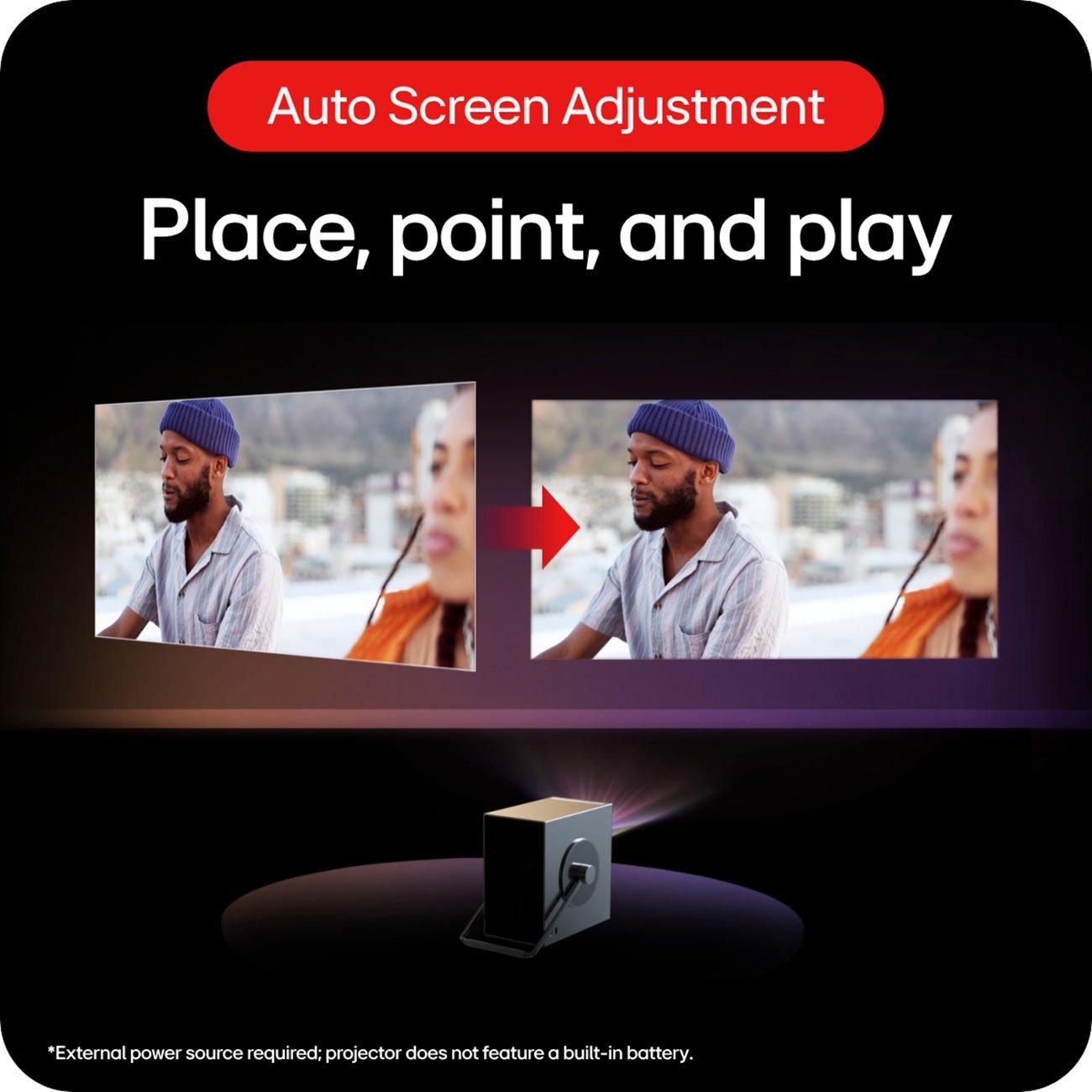
The LG CineBeam Q offers auto keystone correction (which adjusts the image shape when projecting at an angle) and auto focus capabilities, with additional manual adjustment options for fine-tuning. It provides a 4/9/15-point warping system for more precise corrections when needed.
Both systems work well, though the Epson's approach is slightly more comprehensive for absolute beginners. The LG offers more granular control for those who want to perfect their image alignment.
Both projectors function as complete entertainment systems with built-in streaming capabilities, eliminating the need for external devices in many situations.
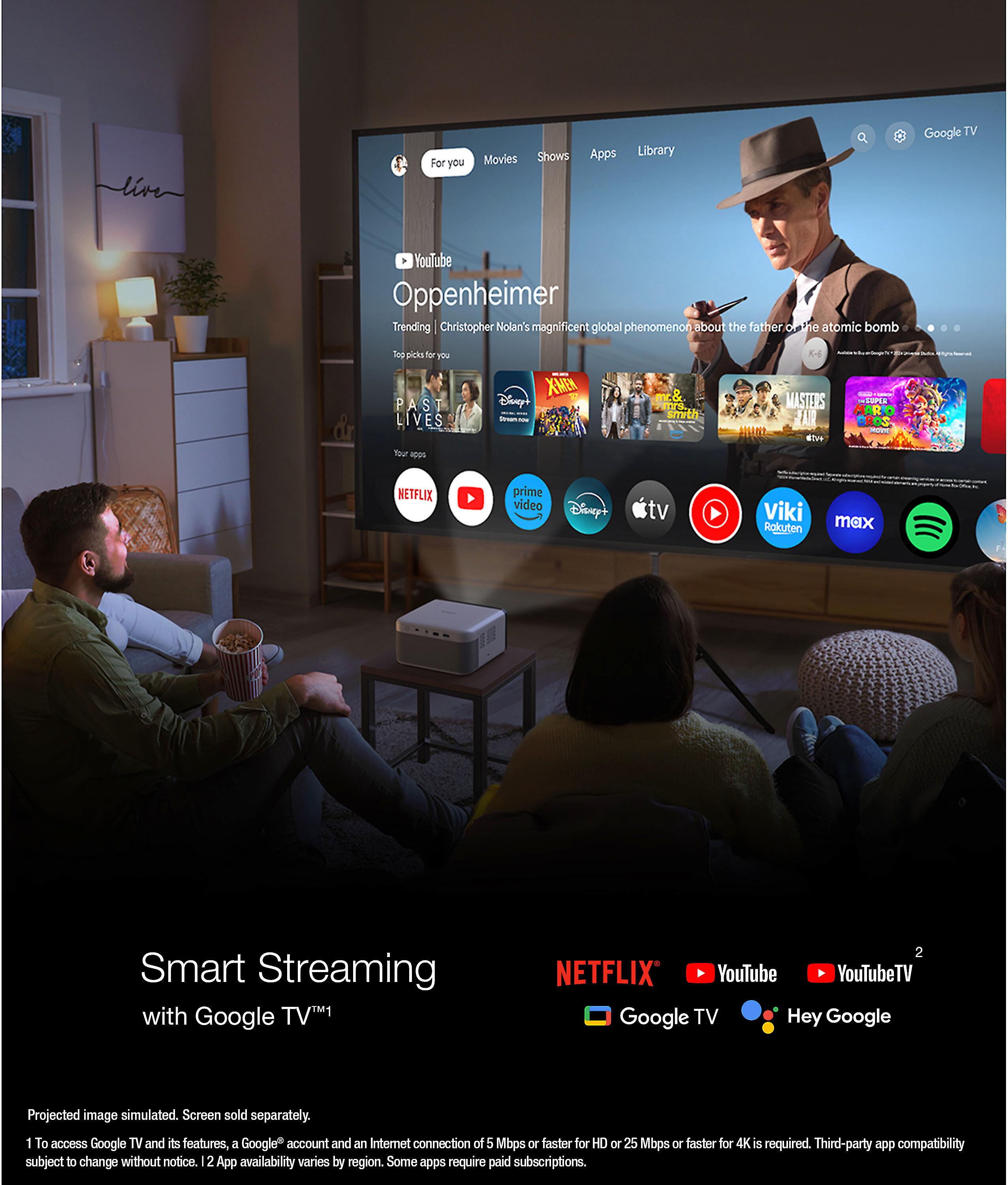
The Epson EF21 runs Google TV with access to over 10,000 apps, including all major streaming services like Netflix, Disney+, and YouTube TV. The interface will be familiar to anyone who's used Android TV or Chromecast with Google TV, with personalized recommendations and voice search capabilities. It supports dual-band Wi-Fi for reliable streaming even in bandwidth-crowded environments.
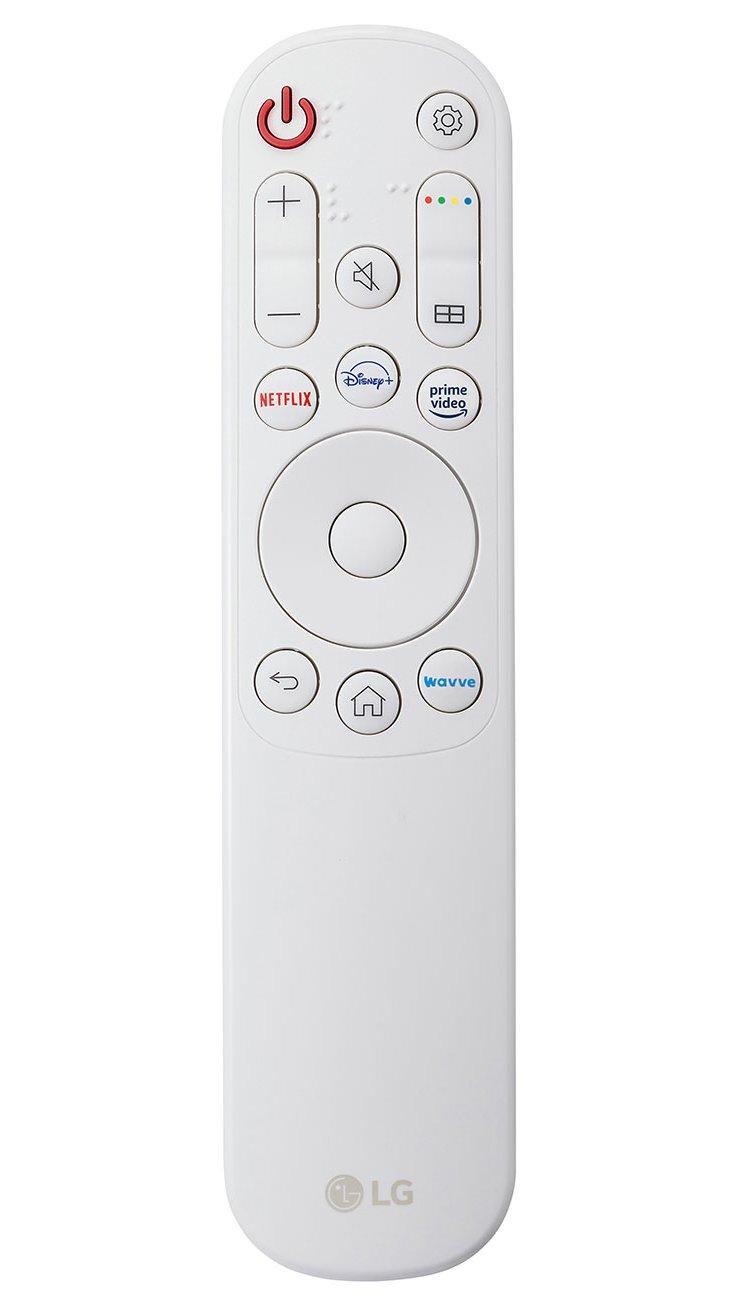
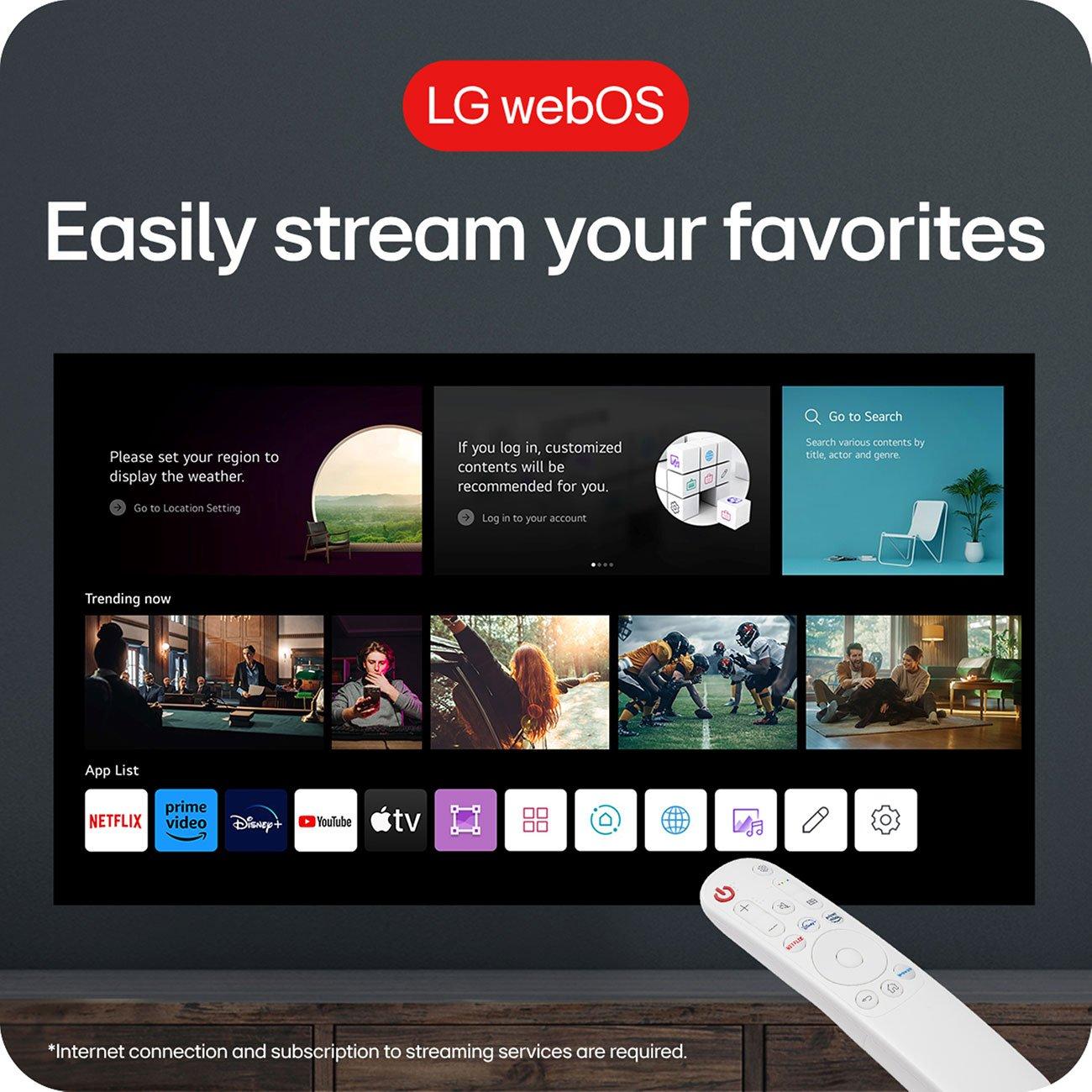
The LG CineBeam Q features LG's webOS platform, the same system used in their smart TVs. It provides access to major streaming services through a clean, tile-based interface. The platform also supports screen mirroring via AirPlay 2 for Apple devices and Screen Share for Android.
Both operating systems perform well, though Google TV generally offers a wider selection of apps and more frequent updates. If you have specific niche streaming services, it's worth checking compatibility with each platform.
The Epson includes Google Assistant integration, allowing voice control of the projector and connected smart home devices. The LG works with various smart home ecosystems through webOS but lacks the deeper integration of Google Assistant.
Built-in audio has traditionally been a weakness for projectors, often necessitating external speakers for satisfactory sound. How do these models stack up?
The Epson EF21 features stereo speakers (5W × 2) with Dolby Audio support. This system produces reasonably full sound with some stereo separation, adequate for casual viewing in medium-sized rooms. You'll still want external speakers for a proper movie night, but the built-in audio is serviceable for many scenarios.
The LG CineBeam Q contains a basic 3W mono speaker that most reviewers found inadequate. The audio is thin and lacks presence, making external speakers or headphones essentially mandatory for enjoyable viewing. The projector does offer a clever dual Bluetooth audio connection feature, allowing simultaneous connection to two external audio devices—useful for shared headphone listening.
For home theater applications, you'll want external audio with either projector, but the Epson can function independently in more casual viewing situations.
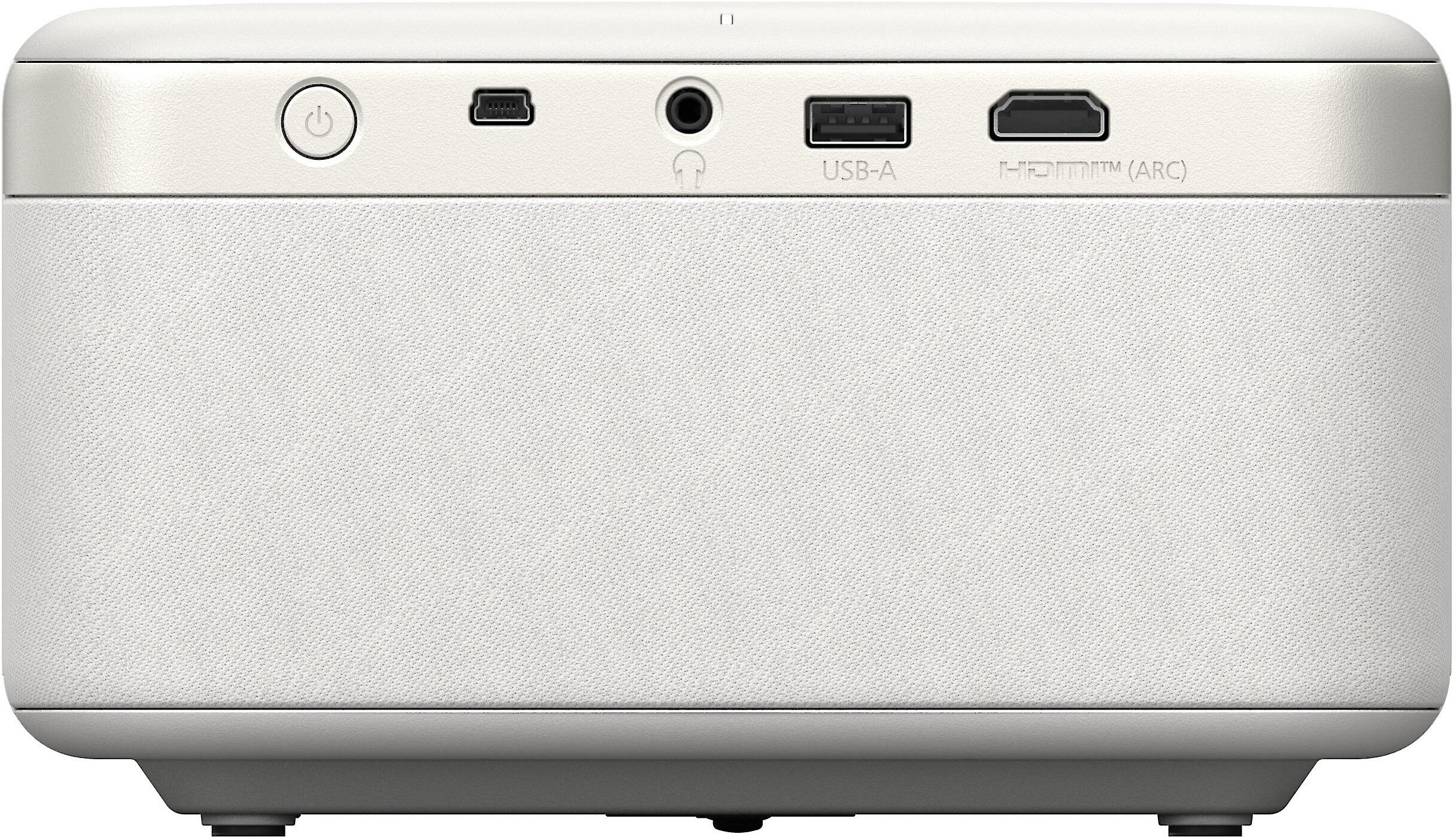
The Epson EF21 includes HDMI 2.3, USB-A, and USB-B (mini) ports, along with Bluetooth 5.1 support. This covers most modern connection needs, though those with newer devices might miss having USB-C input.
The LG CineBeam Q offers HDMI and USB-C ports, providing more modern connectivity. The USB-C port can handle video input from compatible devices like laptops and tablets, reducing cable clutter. It also features the aforementioned dual Bluetooth audio output.
Neither projector has a built-in battery, requiring connection to AC power. This is a reasonable compromise given their brightness levels, as battery-powered projectors typically offer significantly lower brightness to conserve power.
While marketed as portable projectors, both can potentially serve in dedicated home theater setups. How do they compare in this more demanding context?
The LG CineBeam Q has more home theater credibility with its 4K resolution and superior color performance. In a completely light-controlled room with proper external audio, it can deliver impressive cinematic images up to 120 inches. Its HDR10 support enhances contrast and color with compatible content. However, its limited brightness becomes a significant limitation for larger screen sizes, where the image may appear dim even in perfect conditions.
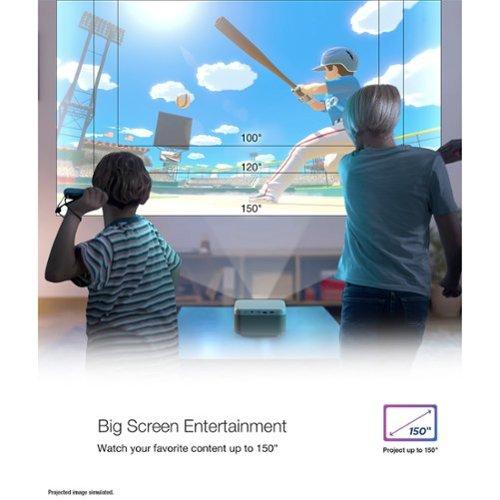
The Epson EF21 has less home theater pedigree with its 1080p resolution but offers practical advantages. Its higher brightness allows for larger screens (up to 150 inches) while maintaining good visibility, and its 3LCD technology eliminates rainbow artifacts that some viewers find distracting with DLP projectors like the LG. It also supports HDR10 content, though the effect is less pronounced than with the LG's superior contrast ratio.
For dedicated home theater use, neither matches the performance of purpose-built home theater projectors in the $1,500+ range. However, as flexible devices that can move between casual and more serious viewing environments, they offer compelling compromises.
At $899.99, the Epson EpiqVision Mini EF21 represents better value for most users. It delivers sufficient brightness for versatile environments, good overall performance, and useful built-in audio. Its Google TV platform provides comprehensive streaming options, and the automatic setup features remove traditional projector frustrations.
The LG CineBeam Q, priced at $1,299, commands a premium for its 4K resolution, superior color reproduction, and ultra-compact design. While technically impressive, its limited brightness restricts practical applications primarily to darkened rooms, and the inadequate built-in audio necessitates additional expense for speakers.
The $400 price difference is significant. For that additional cost, you're primarily gaining higher resolution, better color accuracy, and more compact design, while sacrificing brightness and built-in audio quality. Whether that trade-off makes sense depends on your specific viewing habits and environment.
The Epson EF21 is the more practical choice for most homes, offering balanced performance that works well in typical living spaces. It's particularly suited to families who want a versatile entertainment device that doesn't require perfect conditions to enjoy.
The LG CineBeam Q excels as a premium portable 4K solution for enthusiasts who can provide the ideal viewing environment. It's perfect for cinephiles who value image quality above all else and have the controlled lighting conditions to showcase its strengths.
These two projectors represent different philosophies in the portable projection market. The Epson EpiqVision Mini EF21 prioritizes practical performance with higher brightness and good overall features, while the LG CineBeam Q emphasizes premium image quality and ultra-compact design.
For most buyers seeking a flexible portable projector, the Epson offers better all-around performance and value at $899.99. Its brightness advantage alone makes it more versatile for real-world use in typical homes. However, videophiles with controlled viewing environments who prioritize image quality over brightness may find the CineBeam Q's superior resolution and color performance worth the premium price of $1,299.
Ultimately, the best choice depends on where and how you plan to use your projector most often. Either way, both models showcase how far portable projection technology has advanced, bringing big-screen entertainment to spaces where traditional TVs might never fit.
| Epson EpiqVision Mini EF21 | LG CineBeam Q 4K UHD |
|---|---|
| Price - Your investment | |
| $899.99 (better overall value for flexibility) | $1,299 (premium price for 4K and compact design) |
| Resolution - Determines image clarity and detail | |
| 1080p Full HD (sufficient for screens under 100") | 4K UHD (3840×2160, noticeably sharper, especially above 100") |
| Brightness - Critical for versatile viewing environments | |
| 1,000 lumens (usable with some ambient light) | 500 ANSI lumens (requires darkened room for optimal viewing) |
| Projection Technology - Impacts color accuracy and rainbow effects | |
| 3LCD (balanced colors, no rainbow effect) | DLP with RGB laser (superior color gamut but possible rainbow artifacts) |
| Color Performance - Affects image vibrancy and accuracy | |
| Good color accuracy with equal white/color brightness | Outstanding 154% DCI-P3 color gamut coverage (cinema-grade colors) |
| Maximum Screen Size - How big you can go | |
| Up to 150 inches | Up to 120 inches |
| Smart Platform - For streaming without external devices | |
| Google TV (10,000+ apps, comprehensive ecosystem) | webOS (major streaming apps, clean interface) |
| Built-in Audio - For standalone use without external speakers | |
| 5W × 2 stereo with Dolby Audio (adequate for casual viewing) | 3W mono speaker (inadequate, external audio recommended) |
| Physical Size - Impacts portability | |
| 7.75" × 7.5" × 4.4", 5.1 lbs (portable but substantial) | 5.3" × 3.1" × 5.3", 3.3 lbs (ultra-compact with rotating handle/stand) |
| Connectivity - For connecting external devices | |
| HDMI 2.3, USB-A, USB-B (mini), Bluetooth 5.1 | HDMI, USB-C, dual Bluetooth audio output |
| Light Source Lifespan - Long-term value and maintenance | |
| Laser, up to 20,000 hours (virtually maintenance-free) | RGB laser, up to 20,000 hours (virtually maintenance-free) |
| Auto Setup Features - Ease of deployment | |
| EpiqSense with auto resize, focus, and alignment | Auto keystone correction and auto focus with manual fine-tuning |
| Best Use Case - Who should buy each model | |
| Versatile users wanting flexible viewing in various lighting conditions | Videophiles with controlled dark environments prioritizing image quality |
For most living rooms, the Epson EpiqVision Mini EF21 is better for movies because its 1,000 lumens brightness performs well with ambient light. The LG CineBeam Q offers superior 4K resolution but with only 500 ANSI lumens, it requires near-complete darkness to shine. Unless you have blackout curtains and typically watch movies at night, the Epson EF21 provides a more practical viewing experience in typical living rooms.
The 4K resolution of the LG CineBeam Q is worth the extra cost only if you: 1) primarily watch 4K content, 2) have a completely darkened viewing environment, and 3) typically project at sizes over 100 inches where the resolution difference becomes more noticeable. For casual viewers, the Full HD resolution of the Epson EpiqVision Mini EF21 at $899.99 offers better value compared to the $1,299 LG CineBeam Q, especially when considering the Epson's superior brightness.
The LG CineBeam Q is significantly more portable at 3.3 pounds and dimensions of just 5.3" × 3.1" × 5.3", featuring an innovative rotating handle/stand. The Epson EpiqVision Mini EF21 is still considered portable but is larger (7.75" × 7.5" × 4.4") and heavier (5.1 pounds). If maximum portability is your priority, the LG CineBeam Q has a clear advantage and is easier to transport between locations.
You'll likely want external speakers with both projectors for the best experience, but their built-in audio differs significantly. The Epson EpiqVision Mini EF21 features decent 5W × 2 stereo speakers with Dolby Audio that are adequate for casual viewing. The LG CineBeam Q has a basic 3W mono speaker that most users find insufficient. For home theater use, external audio is recommended for both, but the Epson EF21 can function independently in more situations.
The Epson EpiqVision Mini EF21 performs significantly better in rooms with some light thanks to its 1,000 lumens brightness. The LG CineBeam Q, with only 500 ANSI lumens, struggles in anything but near-darkness. If you can't control all the light in your viewing environment or want to watch content during daytime hours, the Epson EF21 is the more practical choice by a substantial margin.
The main differences are: 1) Resolution: Epson EF21 is 1080p Full HD while LG CineBeam Q is 4K UHD, 2) Brightness: Epson offers 1,000 lumens vs LG's 500 ANSI lumens, 3) Size: LG is ultra-compact (3.3 lbs) while Epson is larger (5.1 lbs), 4) Price: Epson costs $899.99 vs LG's $1,299, 5) Technology: Epson uses 3LCD while LG uses DLP with RGB laser, providing different color performance characteristics.
Both projectors offer comprehensive smart platforms, but with different ecosystems. The Epson EpiqVision Mini EF21 uses Google TV with access to 10,000+ apps, built-in Google Assistant, and seamless integration with other Google services. The LG CineBeam Q features LG's webOS with major streaming services and a clean interface. Google TV generally offers more apps and more frequent updates, giving the Epson EF21 a slight edge in smart features for most users.
The Epson EpiqVision Mini EF21 uses 3LCD technology that splits light into three separate RGB channels, providing equal color and white brightness with no rainbow artifacts. The LG CineBeam Q employs DLP technology with an RGB laser light source, delivering exceptional color gamut (154% of DCI-P3) but potentially causing rainbow effects for sensitive viewers. The Epson offers more balanced performance while the LG excels in color richness and contrast (450,000:1 vs Epson's 200,000:1).
For gaming, the Epson EpiqVision Mini EF21 is generally more practical due to its higher brightness, which maintains visibility during longer gaming sessions where completely darkened rooms become uncomfortable. However, competitive gamers might prefer the LG CineBeam Q's sharper 4K resolution for detailed games. Neither manufacturer specifies input lag figures, which is crucial for gaming performance. For casual gaming in varied lighting conditions, the Epson EF21 provides a more versatile experience.
Yes, both projectors work with existing streaming devices through their HDMI inputs. The Epson EpiqVision Mini EF21 features HDMI 2.3 input while the LG CineBeam Q includes HDMI and USB-C video inputs. You can connect streaming sticks, game consoles, Blu-ray players, and computers to either projector. However, with their built-in smart platforms, you may not need external streaming devices except for specialized content.
The Epson EpiqVision Mini EF21 projects images from 30" up to 150" diagonal, while the LG CineBeam Q handles screens up to 120" diagonal. However, maximum brightness decreases as screen size increases. For the Epson EF21, its 1,000 lumens can maintain good visibility up to about 120" in darker rooms. The LG CineBeam Q's 500 ANSI lumens perform best at sizes under 100" unless in complete darkness.
Both projectors feature long-lasting laser light sources rated for up to 20,000 hours of use. This means if you watch content for 4 hours daily, the light source should last nearly 14 years before needing replacement. Unlike traditional lamp projectors, the Epson EpiqVision Mini EF21 and LG CineBeam Q maintain consistent brightness throughout their lifespan and don't require lamp replacements, making them virtually maintenance-free options with excellent long-term value.
We've done our best to create useful and informative comparisons to help you decide what product to buy. Our research uses advanced automated methods to create this comparison and perfection is not possible - please contact us for corrections or questions. These are the sites we've researched in the creation of this article: bestbuy.com - bestbuy.com - cnet.com - youtube.com - projectorreviews.com - epson.com - projectorreviews.com - epson.com - rtings.com - epson.com - youtube.com - projectorcentral.com - bestbuy.com - projectorcentral.com - nfm.com - crutchfield.com - latin.epson.com - mediaserver.goepson.com - planettv.com - bhphotovideo.com - cnet.com - epson.com - projectorcentral.com - lg.com - thefrogpadappliances.com - youtube.com - techradar.com - lg.com - avsforum.com - lg.com - tomsguide.com - jefflynch.com - hometheaterview.com - projectorreviews.com - youtube.com - avsforum.com - projectorcentral.com - pcrichard.com - bhphotovideo.com - youtube.com - lg.com - applerivertvandappliance.com - big-georges.com - queencityonline.com - lg.com - lg.com - lg.com - lgnewsroom.com - heimkino.de

Privacy Policy
Terms and Conditions - Affiliate Policy
Home Security
© Copyright 2008-2026.
11816 Inwood Rd #1211, Dallas, TX 75244