


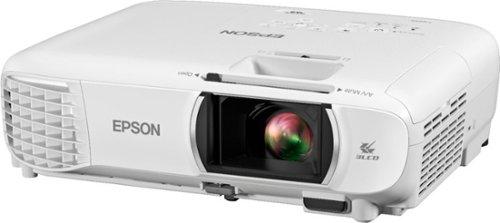
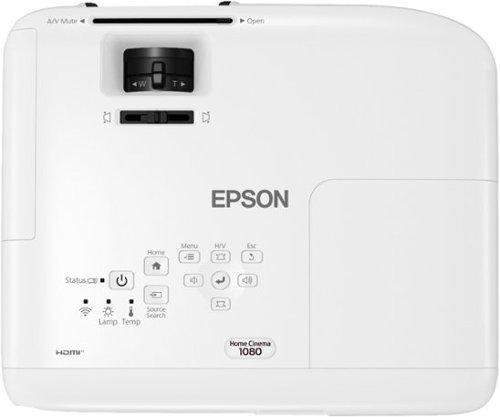
When diving into the world of projectors, you'll quickly discover there are distinct categories designed for different viewing experiences. The Anker Nebula Mars 3 and Epson Home Cinema 1080 represent two fundamentally different approaches to projection technology, each with its own strengths and ideal use cases.
Projectors have evolved significantly over the past decade. What once required dedicated rooms with controlled lighting has transformed into technology that can work in various environments. The line between portable and home projectors has blurred, with portable options becoming increasingly capable while traditional home projectors have become more affordable.
Released in late 2022, the Nebula Mars 3 represents the latest generation of premium portable projectors, building upon Anker's previous Mars and Capsule lines with improved brightness, resolution, and battery technology. The Epson Home Cinema 1080, introduced in early 2021, continues Epson's tradition of delivering high-value home theater projectors with their proven 3LCD technology.
Let's explore how these two projectors stack up against each other and which might be the right choice for your specific needs.
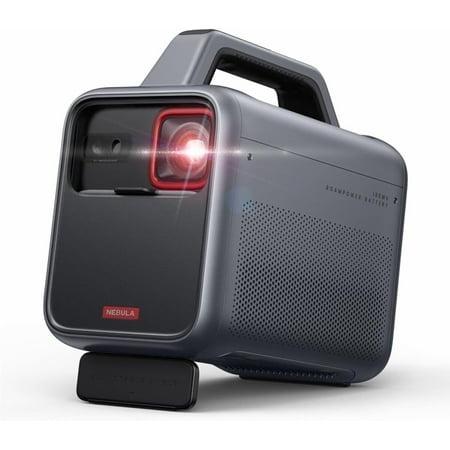
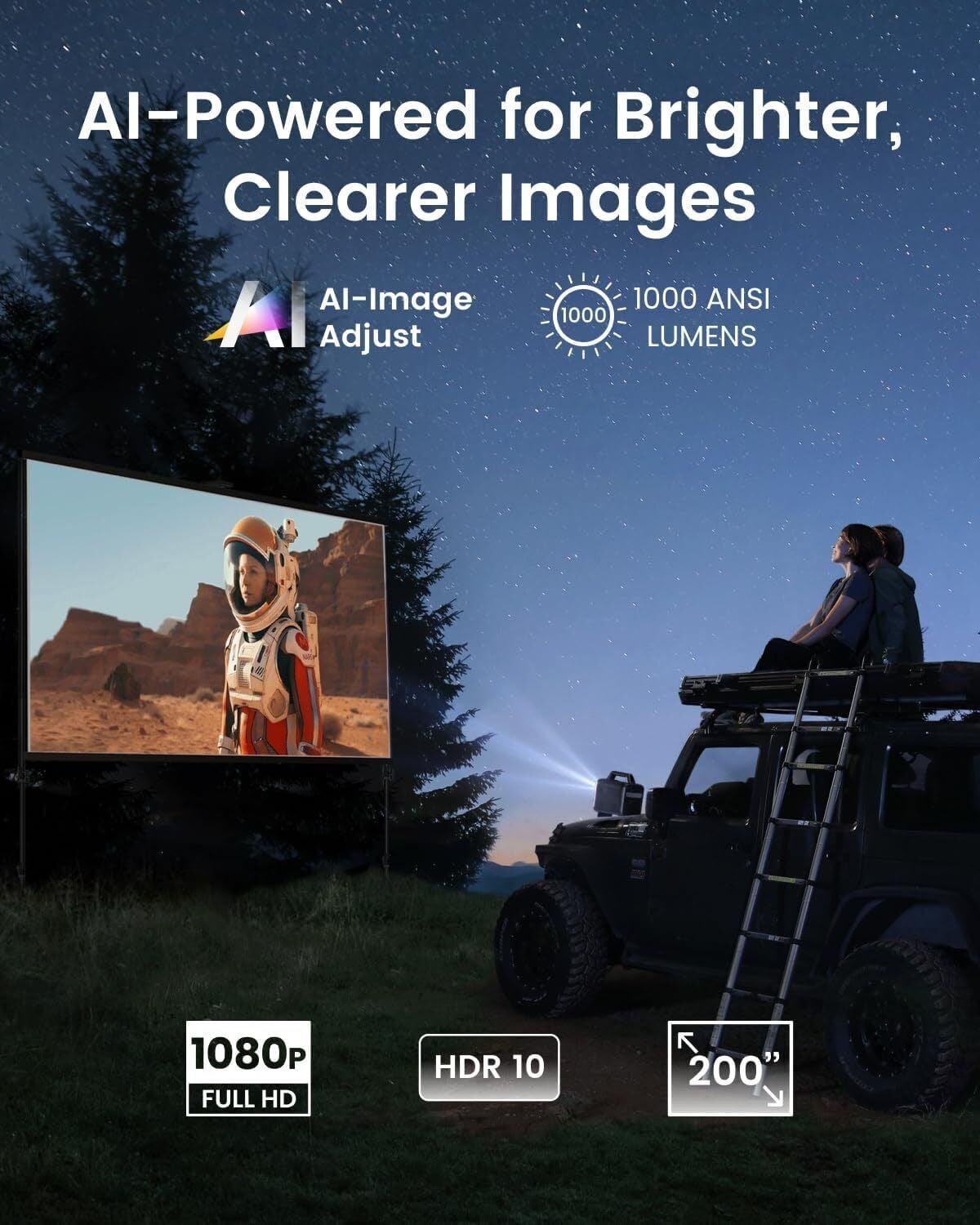
The Nebula Mars 3 is marketed as an outdoor-ready portable projector with an impressive feature set. Priced around $999-$1,100, it's positioned at the premium end of the portable projector market. It combines a 1080p resolution with 1,000 ANSI lumens of brightness—a significant achievement for a battery-powered unit.
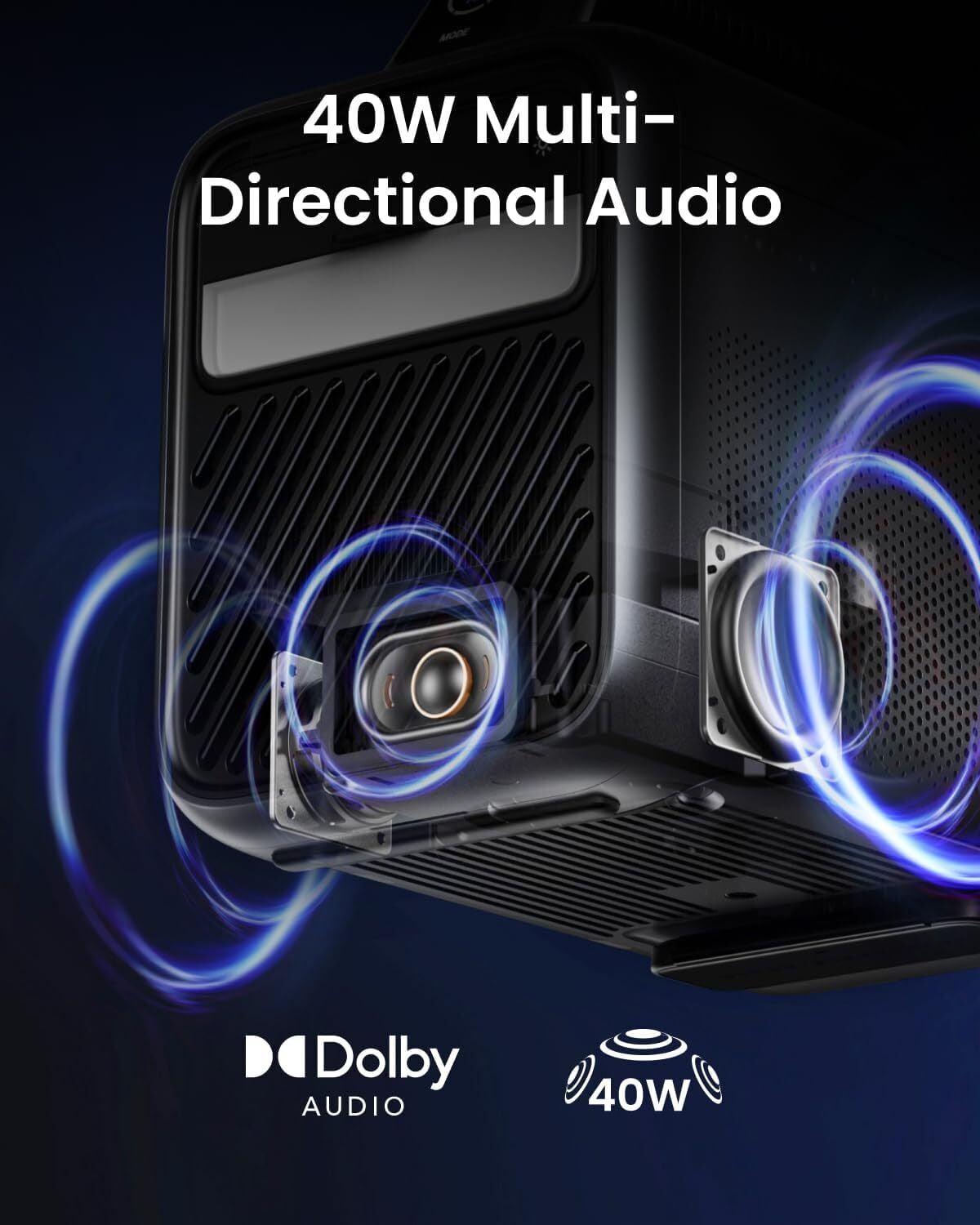
What makes the Mars 3 unique is its focus on being a complete entertainment package rather than just a display device. It includes a built-in Android TV 11.0 operating system, 40W speaker system, and rugged construction with IPX3 water resistance. The entire unit weighs just under 10 pounds and includes a carrying handle for easy transport.
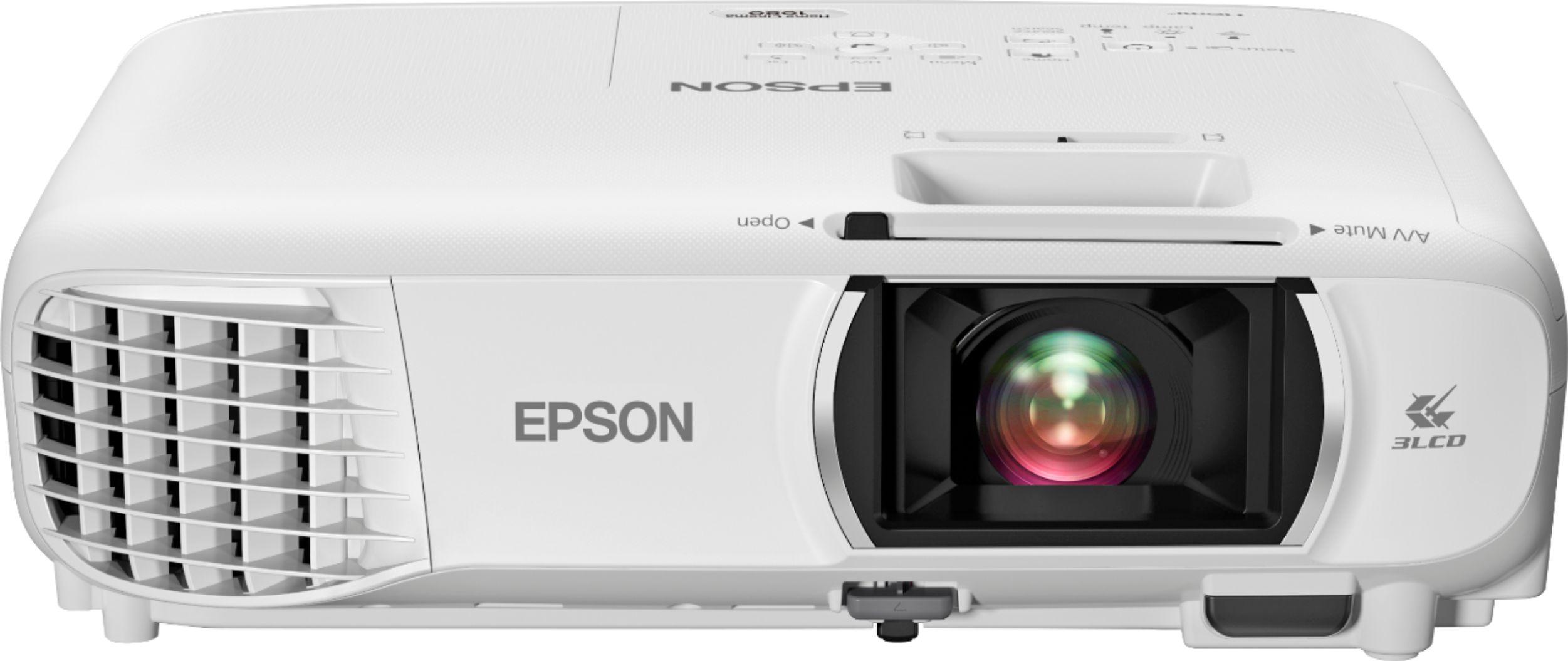
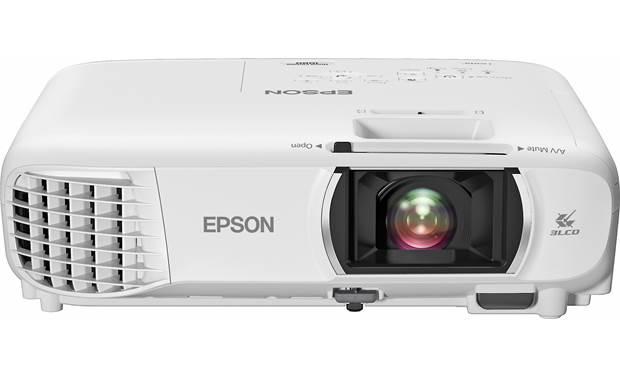
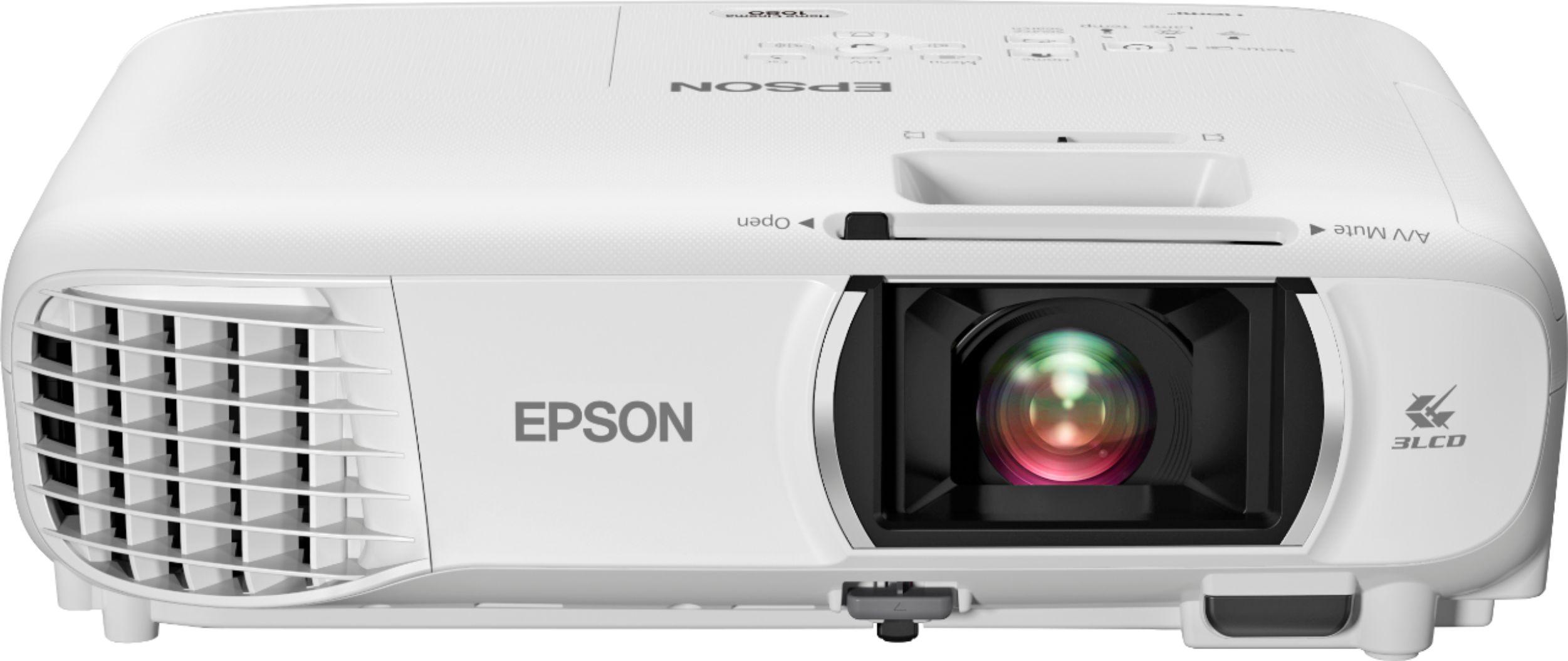
The Epson Home Cinema 1080 takes a more traditional approach, focusing on maximizing image quality and brightness for dedicated viewing spaces. Priced in the $650-$750 range, it delivers an impressive 3,400 lumens of brightness using Epson's proprietary 3LCD technology—a system that uses three separate LCD panels (one each for red, green, and blue) to create images without the "rainbow effect" sometimes seen in single-chip DLP projectors.
This model represents Epson's effort to bring higher-end features down to a more accessible price point, emphasizing core performance over extras like built-in streaming or portability.
Both projectors provide 1080p Full HD resolution (1920 × 1080 pixels), which remains the sweet spot for most content today. While 4K projectors exist, they command significantly higher prices, making 1080p an excellent value proposition for most viewers.
Where these projectors differ is in their display technology. The Epson uses 3LCD technology, which splits light through three separate LCD panels before recombining them to create the final image. This technique produces equal color and white brightness (3,400 lumens for both), resulting in more vibrant, accurate colors compared to many single-chip designs.
The Mars 3 uses DLP (Digital Light Processing) technology, which reflects light off a chip containing millions of tiny mirrors to create an image. DLP typically offers better contrast and sharper perceived detail but can sometimes produce a "rainbow effect" where some viewers might notice brief color separation when moving their eyes across the image.
In practical use, both projectors deliver crisp, detailed images with their own character. The Epson generally produces more natural colors out of the box, while the Mars 3 tends toward more saturated, punchy colors that some viewers might prefer for certain content.
The most significant performance gap between these projectors is brightness, which directly impacts when and where you can use them effectively:
This 3.4× brightness advantage for the Epson dramatically affects real-world performance. In a dedicated home theater with controlled lighting, both projectors can deliver excellent images. However, as ambient light increases, the difference becomes stark.
The Epson can handle rooms with some ambient light, making it suitable for living rooms where you might not want complete darkness. It can also project larger images while maintaining good visibility—easily handling 120-150 inch screens in darkened rooms.
The Mars 3's 1,000 ANSI lumens is impressive for a portable, battery-powered projector (many competitors offer only 300-500 lumens), but physics remains undefeated: it requires significantly darker conditions to shine. It works best at screen sizes of 80-100 inches in nearly dark environments or 50-80 inches with minimal ambient light.
Contrast ratio—the difference between the brightest whites and darkest blacks a projector can produce—significantly impacts image depth and realism.
The Epson boasts a contrast ratio of up to 16,000:1, while the Mars 3 doesn't specify its contrast ratio (typical for many portable projectors). In practice, the Epson demonstrates better shadow detail and more dynamic range, especially in darker scenes. The Mars 3 compensates somewhat by supporting HDR10 content, which helps improve perceived contrast, though its absolute black levels aren't as deep as the Epson in a dark room.
For color performance, the Epson's 3LCD technology gives it an advantage in color accuracy and consistency. The Mars 3 produces vibrant colors that look impressive, particularly for animated content and games, though they may not be as true to the filmmaker's intent as the Epson's more accurate reproduction.
The most obvious distinction between these projectors is their approach to mobility:
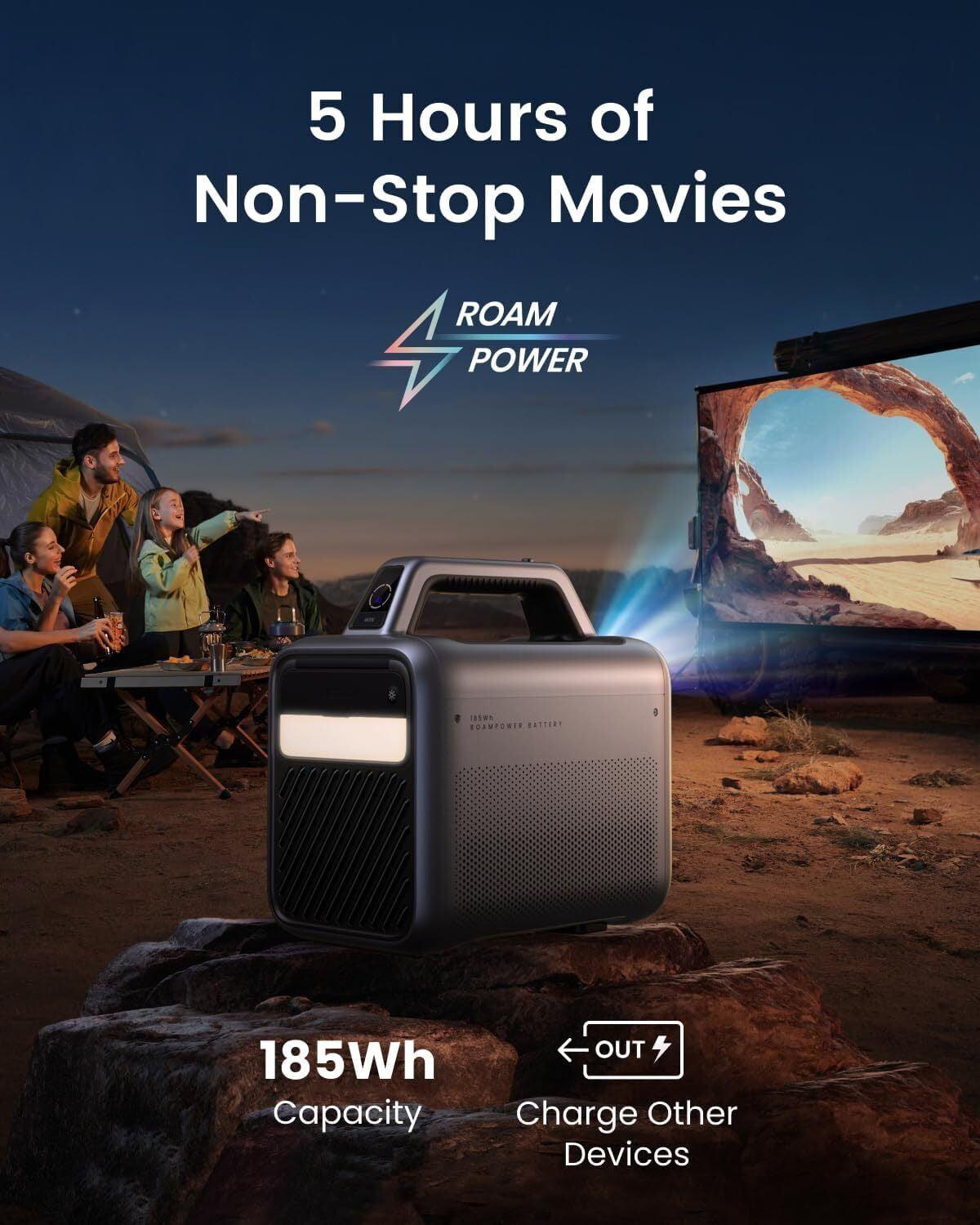
The Nebula Mars 3 is designed from the ground up for portability. Its integrated carrying handle, built-in battery (providing up to 5 hours in Eco mode or about 2 hours at full brightness), and all-in-one design make it ideal for impromptu movie nights. You can literally grab it, walk outside, and be watching a movie within minutes—no cables or power outlets required.
The Epson Home Cinema 1080 follows the traditional projector model: it's meant to be set up semi-permanently in one location. While relatively lightweight at 6.2 pounds, it requires constant power and additional components (like speakers or streaming devices) for a complete setup. It's portable in the sense that you could move it between rooms or take it to a friend's house, but it's not designed for frequent relocation.
Perhaps the most unique aspect of the Mars 3 is its outdoor-ready design. With IPX3 water resistance (protected against spraying water), 0.5m drop resistance, and dust protection, it's built to withstand the elements to a reasonable degree. While I wouldn't leave it out in heavy rain, it can handle light splashes, dusty environments, and the occasional bump that would occur during outdoor use.
The Epson makes no such durability claims—it's built for indoor use in controlled environments, as are most traditional home projectors. Its ventilation system and electronics aren't designed to handle moisture, dust, or impacts beyond normal careful handling.
Setting up these projectors reveals their different design philosophies:
The Mars 3 excels at quick, hassle-free deployment. Its "Intelligent Environment Adaptation 3.0" system automatically focuses, corrects keystone distortion (the trapezoidal shape that occurs when projecting at an angle), and fits the image to the projection surface within seconds. Point it at a wall or screen, press power, and you're watching content almost immediately.
The Epson requires more deliberate setup but offers more precise adjustment options. Its 1.2x optical zoom provides flexibility in placement distance, and while it has keystone correction capabilities (both vertical and horizontal), these adjustments are manual rather than automatic. This approach takes more time initially but allows for fine-tuning that might yield better results in a permanent installation.
For permanent home theater setups, the Epson's more powerful keystone correction and zoom lens make it easier to accommodate room constraints. It can be ceiling-mounted or placed on a table, and its fan noise is relatively quiet at 28dB in ECO mode.
The Mars 3's auto-adjustment features make it easy to reposition frequently, but its fixed lens doesn't offer zoom capability, meaning you must physically move the projector to change image size. Its fan noise is noticeable during operation, especially at full brightness, though not distracting when watching content with audio.
One area where the Mars 3 dramatically outperforms the Epson is built-in audio:
This difference is night and day. The Mars 3's speaker system produces clear, room-filling sound with reasonable bass response and stereo separation. For casual viewing, it eliminates the need for external speakers entirely—a huge advantage for portable use.
The Epson's tiny 2W speaker is functional but underwhelming, primarily intended for basic system sounds or temporary use. It's simply not designed to be your primary audio solution, assuming most users will connect to an external sound system.
Both projectors offer 3.5mm audio outputs for connecting to external speakers or sound systems. The Epson, as a home theater projector, is typically used with a dedicated audio system or soundbar, while the Mars 3's excellent built-in speakers mean external audio is optional rather than essential.
The Mars 3 also supports Bluetooth audio output to wireless speakers, giving it additional flexibility for outdoor setups where running cables might be impractical.
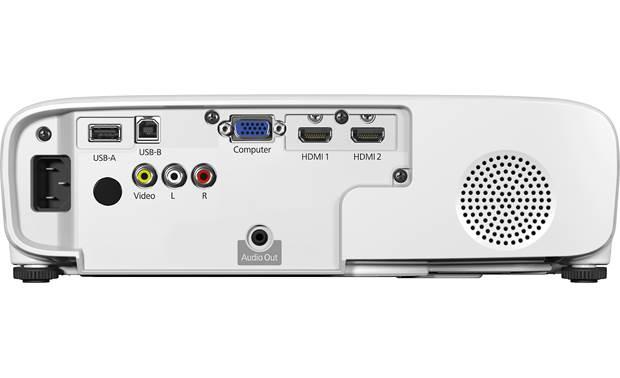
Both projectors offer standard HDMI connections for external devices like streaming sticks, game consoles, or Blu-ray players. The Epson includes two HDMI ports plus additional legacy inputs like VGA and composite video for older devices.
The Mars 3 has a single HDMI port but adds USB-C connectivity, which can be more convenient for connecting modern laptops or phones. It also allows the projector to function as a power bank to charge other devices—a thoughtful touch for its portable nature.
The Mars 3 runs Android TV 11.0, giving it built-in access to thousands of streaming apps without requiring additional devices. It includes Chromecast functionality for casting content from your phone or tablet and works with Google Assistant for voice control. This integration makes it a truly standalone entertainment device—all you need is a Wi-Fi connection.
The Epson offers basic Wi-Fi connectivity with Miracast support for screen mirroring but lacks a full smart platform. For streaming content, you'll need to connect an external device like a Roku, Fire TV Stick, or Apple TV. While this adds complexity, it also allows you to choose your preferred streaming platform rather than being locked into a built-in system that may become outdated.
Projector light sources eventually dim and require replacement, affecting long-term ownership costs:
The Mars 3's LED light source will likely never need replacement during the projector's useful life. If used for 4 hours daily, it would theoretically last over 17 years before reaching half brightness.
The Epson's traditional lamp will eventually require replacement, typically costing $100-200. At 4 hours of daily use in ECO mode, you'd need a replacement after about 8 years. This additional maintenance cost should factor into your long-term value calculation.
With the Epson priced around $650-$750 and the Mars 3 at $999-$1,100, there's a significant price gap to consider. The Epson delivers over 3 times the brightness at roughly two-thirds the cost, making it a superior value from a pure lumens-per-dollar perspective.
However, the Mars 3 includes features the Epson doesn't offer: battery power, excellent built-in audio, outdoor durability, and a complete smart platform. If these capabilities align with your needs, the premium price becomes easier to justify.
The Nebula Mars 3 excels as a versatile entertainment device that prioritizes convenience, flexibility, and portability. It's ideal for users who want a complete package they can take anywhere—from backyard movie nights to camping trips to different rooms in their home.
The Epson Home Cinema 1080 is the better choice for traditional home theater enthusiasts who value raw performance over portability. Its brightness advantage makes it more versatile in different lighting conditions and allows for larger screen sizes without sacrificing image quality.
The portable projector market has evolved dramatically in recent years, with devices like the Anker Nebula Mars 3 closing the performance gap with traditional home theater projectors. However, the physics of brightness and power consumption mean that dedicated home projectors like the Epson Home Cinema 1080 still maintain significant advantages in raw image performance.
Rather than declaring one projector "better" than the other, it's more useful to recognize they serve different purposes. The Mars 3 represents the pinnacle of portable projection technology, while the Epson exemplifies high-value traditional home theater projection.
For many users, the decision comes down to whether they value flexibility or performance more highly. If you primarily watch content in one location and care most about image quality, the Epson's superior brightness and lower price make it the logical choice. If you want the freedom to enjoy big-screen experiences anywhere without the hassle of additional components, the Mars 3's all-in-one design justifies its premium.
Both projectors represent excellent values within their respective categories, and either could serve as the centerpiece of many memorable movie nights for years to come.
| Anker Nebula Mars 3 Outdoor Portable Projector | Epson Home Cinema 1080 Projector |
|---|---|
| Price - Direct cost comparison | |
| $999-$1,100 (premium portable projector) | $650-$750 (mid-range home projector) |
| Resolution - Determines image detail and clarity | |
| 1920x1080p Full HD | 1920x1080p Full HD |
| Brightness - Most critical factor for visibility in various lighting conditions | |
| 1,000 ANSI lumens (requires dim to dark environments) | 3,400 lumens (works well in rooms with some ambient light) |
| Display Technology - Affects color reproduction and image characteristics | |
| DLP technology with LED light source | 3LCD technology (equal color and white brightness) |
| Portability - Determines where and how you can use the projector | |
| Truly portable with handle, battery-powered (5 hours in Eco mode) | Fixed installation, requires constant power source |
| Durability - Important for outdoor or varied environment usage | |
| IPX3 water resistance, 0.5m drop resistance, dust protection | Standard indoor design with no weather resistance |
| Audio System - Determines whether additional speakers are needed | |
| 40W 3-way speaker system with Dolby Audio (excellent standalone audio) | Basic 2W mono speaker (requires external audio system) |
| Smart Features - Affects need for additional devices | |
| Built-in Android TV 11.0, Chromecast, Google Assistant | Basic Miracast support, requires external streaming device |
| Light Source Lifespan - Impacts long-term cost of ownership | |
| LED rated for 25,000 hours (likely never needs replacement) | UHE lamp: 6,000 hours normal mode, 12,000 hours ECO mode (requires periodic replacement) |
| Image Size Range - Determines flexibility in viewing experience | |
| 30-200 inches (optimal at 80-100" in dark environments) | 30-300 inches (optimal at 100-150" with better bright-room performance) |
| Setup Features - Impacts ease of use, especially for temporary setups | |
| Auto-focus, auto-keystone, intelligent environment adaptation | Manual focus, 1.2x optical zoom, manual keystone correction |
| Connectivity - Determines compatibility with various devices | |
| 1x HDMI, USB-A, USB-C, 3.5mm audio output, Wi-Fi, Bluetooth 5.1 | 2x HDMI, VGA, Composite, USB-A, USB-B, Wi-Fi with Miracast |
| Weight - Affects ease of transport and mounting options | |
| 9.9 lbs with built-in handle | 6.2 lbs (lighter but requires additional components) |
| Ideal Use Case - Who should buy each product | |
| Best for users wanting flexibility to watch anywhere, outdoors, or in multiple locations | Best for dedicated home theater setups where maximum image quality per dollar is priority |
The Epson Home Cinema 1080 Projector is significantly brighter with 3,400 lumens compared to the Anker Nebula Mars 3 with 1,000 ANSI lumens. This makes the Epson much better for rooms with ambient light or larger screen sizes, while the Mars 3 performs best in darker environments.
Yes, the Anker Nebula Mars 3 is specifically designed for outdoor use with IPX3 water resistance, dust protection, and drop resistance. Unlike the Epson Home Cinema 1080 which is only for indoor use, the Mars 3 is rugged enough to handle backyard movie nights and even light rain without concern.
The Epson Home Cinema 1080 is generally better for a dedicated home theater due to its superior brightness (3,400 lumens), better contrast ratio (16,000:1), and lower price point. However, if you value flexibility or plan to move your projector between rooms, the Anker Nebula Mars 3 might be worth considering despite its premium price.
With the Anker Nebula Mars 3, external speakers are optional as it features an impressive 40W Dolby Audio speaker system that provides room-filling sound. The Epson Home Cinema 1080 has only a basic 2W mono speaker, so you'll definitely want external speakers or a sound system for a proper home theater experience.
The Anker Nebula Mars 3 has significantly better built-in streaming with Android TV 11.0, Chromecast, and Google Assistant support. The Epson Home Cinema 1080 has basic Miracast screen mirroring but requires an external streaming device (like Roku, Apple TV, or Fire Stick) for accessing streaming services.
The Anker Nebula Mars 3 costs approximately $999-$1,100, while the Epson Home Cinema 1080 is priced at around $650-$750. This $300-450 price difference represents the premium you pay for the Mars 3's portability, battery power, and all-in-one design compared to the Epson's superior brightness.
The Epson Home Cinema 1080 with its 3,400 lumens can perform acceptably in a living room with some ambient light, especially with curtains or blinds. The Anker Nebula Mars 3 at 1,000 ANSI lumens requires significantly darker conditions to produce a vibrant image and isn't ideal for bright living rooms.
The Anker Nebula Mars 3 uses an LED light source rated for 25,000 hours, which likely never needs replacement during the projector's lifetime. The Epson Home Cinema 1080 uses a traditional UHE lamp rated for 6,000 hours in normal mode or 12,000 hours in ECO mode, requiring occasional replacement at additional cost.
Both projectors offer 1080p resolution suitable for gaming, but have different strengths. The Epson Home Cinema 1080 provides a brighter, larger image that's better for serious gaming sessions. The Anker Nebula Mars 3 offers the unique advantage of portable gaming anywhere with its battery power, though with some brightness limitations.
The Epson Home Cinema 1080 doesn't require professional installation but benefits from thoughtful placement and setup in a fixed location. The Anker Nebula Mars 3 is designed for ultimate simplicity with automatic focus and keystone adjustment, making it extremely easy to set up anywhere with virtually no technical knowledge.
Both the Anker Nebula Mars 3 and Epson Home Cinema 1080 can technically project images from 30 to 200+ inches, but their effective sizes differ due to brightness. The Epson can comfortably achieve 120-150 inch screens even with some ambient light, while the Mars 3 performs best at 80-100 inches in darker environments.
The Epson Home Cinema 1080 offers better raw performance-per-dollar with its superior brightness and lower initial cost, making it better value for fixed installations. The Anker Nebula Mars 3 provides better long-term value for those who need portability, battery power, and outdoor durability, with its LED light source never needing replacement.
We've done our best to create useful and informative comparisons to help you decide what product to buy. Our research uses advanced automated methods to create this comparison and perfection is not possible - please contact us for corrections or questions. These are the sites we've researched in the creation of this article: techradar.com - seenebula.com - thesmarthomehookup.com - yuenx.com - projectorcentral.com - seenebula.com - youtube.com - youtube.com - youtube.com - cnet.com - projectorreviews.com - youtube.com - youtube.com - projectorcentral.com - seenebula.com - youtube.com - yuenx.com - crutchfield.com - bestbuy.com - officedepot.com - bestbuy.com - bestbuy.com - audioholics.com - rtings.com - avsforum.com - projectorcentral.com - audiogeneral.com - projectorreviews.com - rtings.com - epson.com - youtube.com - epson.com - projectorreviews.com - projectorreviews.com - walmart.com - shop.avispl.com - bhphotovideo.com - staples.com - mediaserver.goepson.com - staples.com - bhphotovideo.com - epson.com - epson.com - dell.com - epson.com - bestbuy.com

Privacy Policy
Terms and Conditions - Affiliate Policy
Home Security
© Copyright 2008-2026.
11816 Inwood Rd #1211, Dallas, TX 75244