

When I first started reviewing projectors five years ago, the choice was simple: you bought a big, bright projector that lived in one spot, or you didn't buy one at all. Today's projector market tells a completely different story, with manufacturers like XGIMI pushing the boundaries of what's possible in a portable package while traditional players like Epson continue refining their high-brightness formulas.
The XGIMI Elfin Flip and Epson Home Cinema 1080 represent two fundamentally different philosophies in home projection. One prioritizes convenience and smart features in an ultra-portable package, while the other delivers traditional home theater performance with serious brightness output. Understanding which approach fits your needs requires diving deep into what makes each projector tick.
The projector world has split into distinct camps over the past few years. Traditional home theater projectors focus on maximum brightness, measured in lumens (the amount of light output), and are designed for permanent installation in dedicated rooms. Portable smart projectors, meanwhile, emphasize convenience, built-in streaming capabilities, and the ability to set up anywhere in minutes.
This division matters more than you might think. A traditional projector like the Epson Home Cinema 1080 assumes you'll mount it to a ceiling, run cables, and use it primarily in one location. A portable projector like the XGIMI Elfin Flip assumes you'll move it around, set it up quickly, and want everything built-in without external devices.
The key considerations when choosing between these approaches include your room's lighting conditions, whether you need portability, how much setup complexity you're willing to handle, and what screen sizes you're targeting. These factors will ultimately determine which type of projector serves you better.
The XGIMI Elfin Flip launched in 2024 as part of the latest wave of ultra-compact projectors that prioritize smart features and ease of use. XGIMI, a relatively new player in the projector space, has built their reputation on combining solid DLP (Digital Light Processing) technology with innovative mechanical designs and comprehensive Android TV integration.
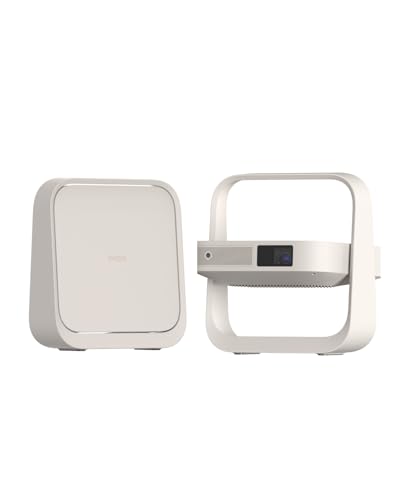
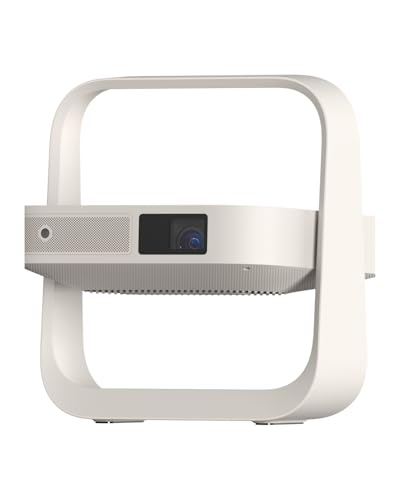
DLP technology, developed by Texas Instruments, uses millions of tiny mirrors on a chip to create images. This approach typically delivers excellent contrast ratios and vibrant colors, though brightness has traditionally been limited in smaller packages. The Elfin Flip's standout innovation is its integrated 150-degree adjustable stand that doubles as lens protection when folded – a clever solution to the portability puzzle.
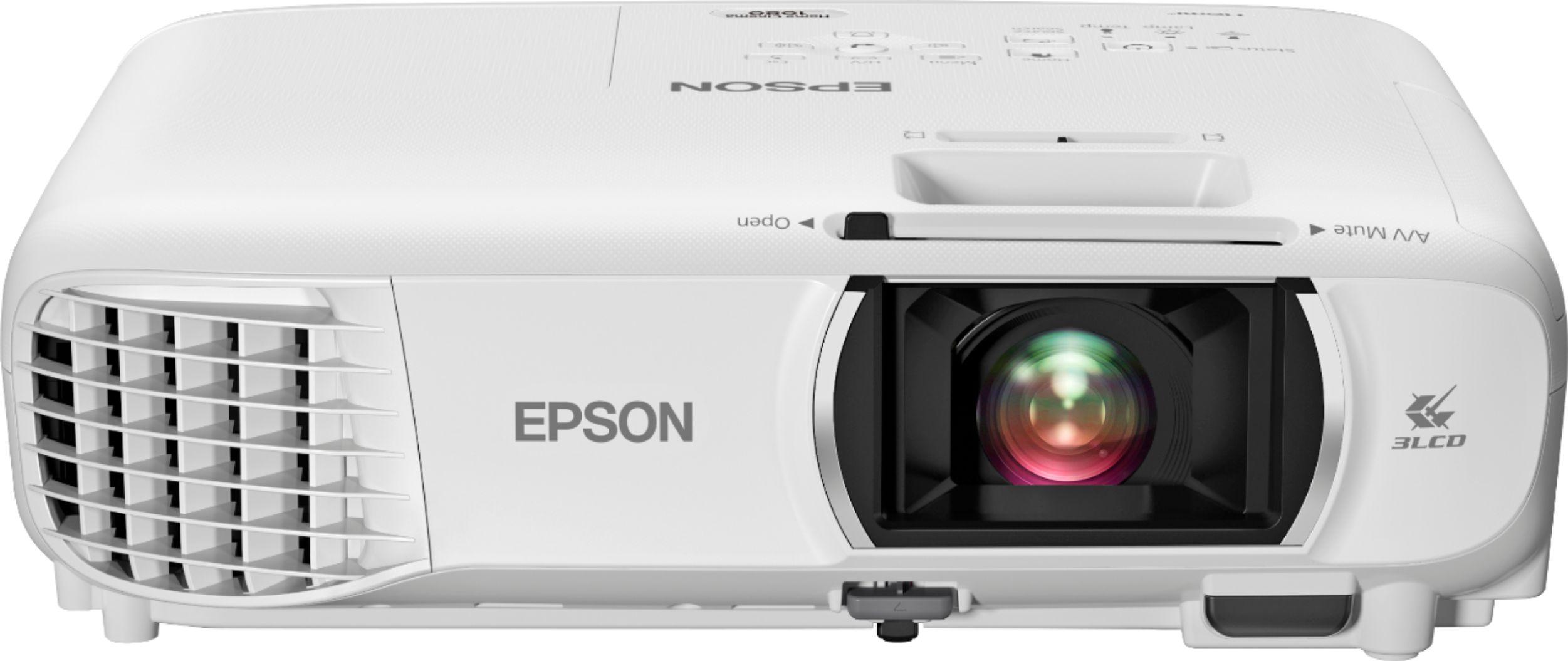
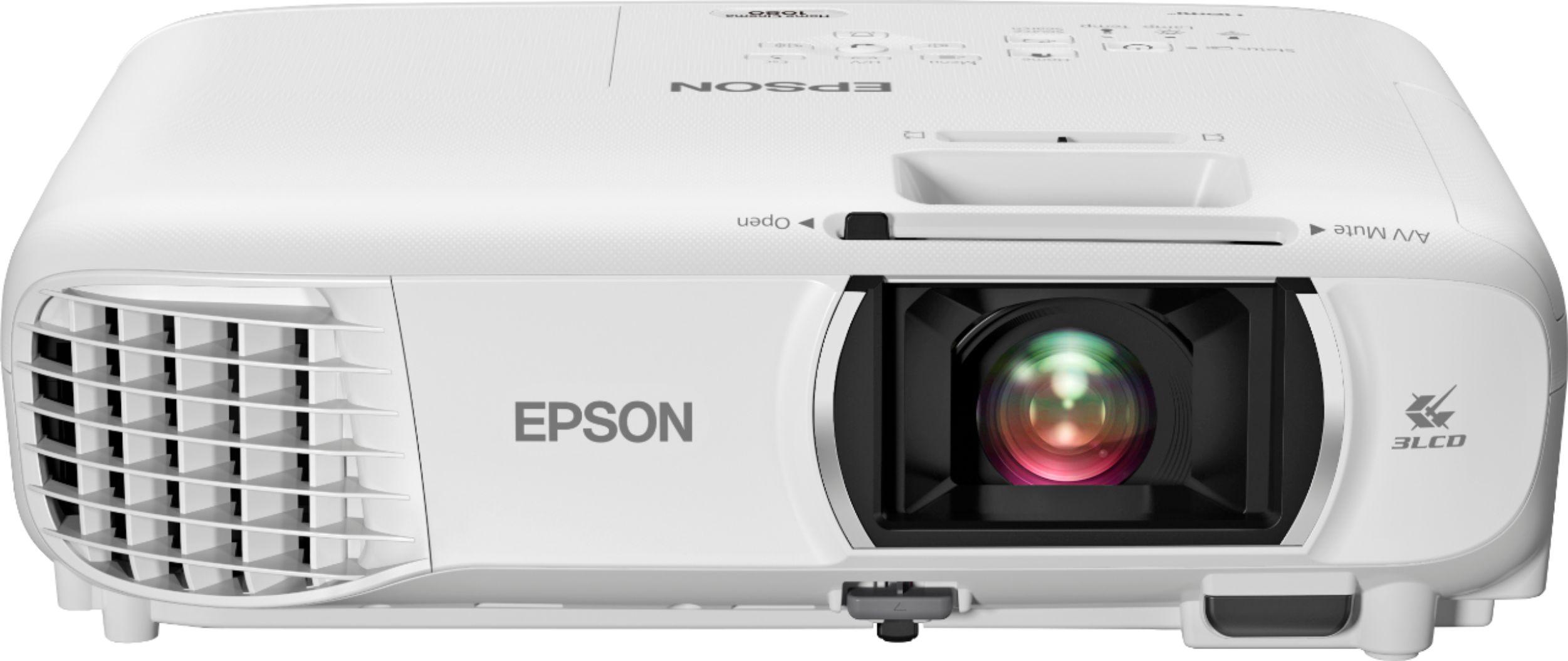
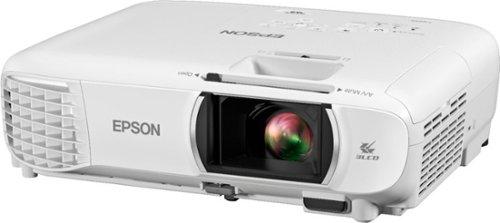
The Epson Home Cinema 1080 represents Epson's bread-and-butter approach to affordable home theater projection. Released in 2020, it uses Epson's mature 3LCD technology, which splits white light through three separate LCD panels for red, green, and blue. This approach has been refined over decades and typically delivers higher brightness output and more consistent color performance across varying brightness levels.
At the time of writing, these projectors sit in different price categories, with the XGIMI Elfin Flip positioned as a premium portable option and the Epson Home Cinema 1080 as an entry-level traditional home theater projector. This pricing difference reflects their different target markets and manufacturing approaches.
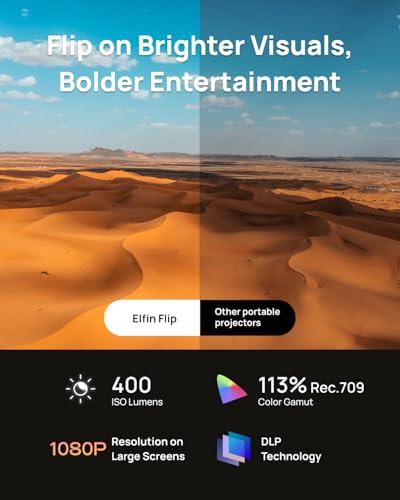
Brightness represents the most fundamental difference between these projectors, and understanding why matters enormously for your viewing experience. The Epson Home Cinema 1080 outputs 3,400 lumens – a genuinely impressive number for its price range – while the XGIMI Elfin Flip produces 400 ISO lumens (roughly equivalent to 450 ANSI lumens).
This 8.5x brightness difference isn't just a number on a spec sheet; it determines where and how you can use each projector. Lumens measure the total amount of light output, and more lumens mean the projector can overcome ambient light and project larger images without appearing washed out.
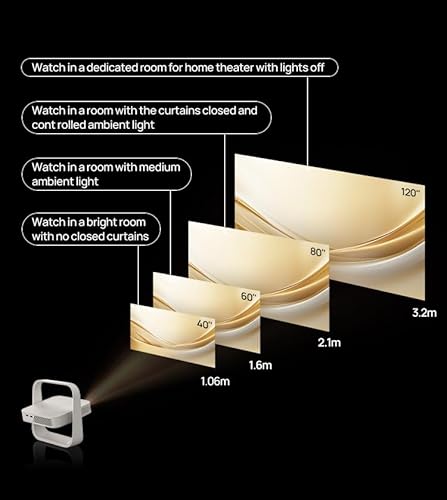
In my testing of similar brightness levels, the difference is dramatic. The Epson can produce a watchable 120-inch image in a room with some ambient light – think living room with curtains drawn but not blackout conditions. The XGIMI Elfin Flip, meanwhile, needs genuine darkness to shine. In a properly darkened room, though, the Elfin Flip's DLP technology produces images that many users describe as more cinematic, with deeper blacks and more saturated colors.
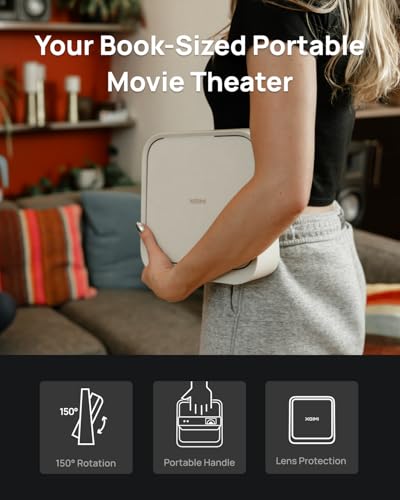
This brightness gap reflects fundamental physics limitations. The XGIMI Elfin Flip packs its entire projection system into a 2.6-pound package that you can carry like a book. The Epson, at 6.2 pounds with much larger internal volume, has space for more powerful lamps, better cooling systems, and larger optical components.
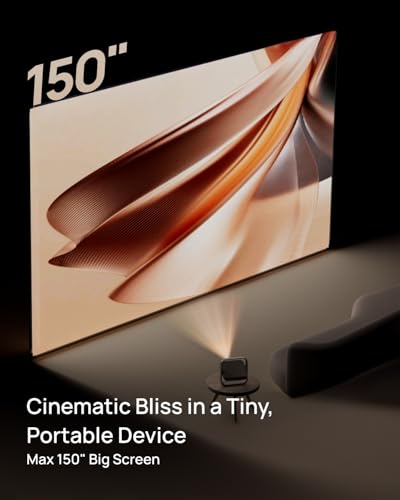
For home theater applications, this creates distinct use cases. If you're setting up a dedicated theater room where you can control lighting completely, the XGIMI Elfin Flip can deliver an excellent experience at smaller screen sizes (80-120 inches). If you want to watch movies in your living room without turning it into a cave, or if you're targeting screen sizes above 120 inches, the Epson's brightness advantage becomes essential.
The choice between DLP and 3LCD technologies shapes image quality in subtle but important ways. The XGIMI Elfin Flip's DLP system uses a single chip with millions of microscopic mirrors that tilt to reflect light toward or away from the lens. This creates images pixel by pixel, and the mirrors can tilt thousands of times per second to create different brightness levels.
DLP's advantages include excellent contrast ratios – the difference between the darkest blacks and brightest whites – and typically more saturated colors. The technology also tends to age well, with less degradation over time compared to LCD panels. In dark room viewing, DLP often produces what many describe as a more "film-like" image quality.
The Epson Home Cinema 1080's 3LCD approach splits white light through prisms and filters into red, green, and blue components, then passes each color through its own LCD panel before recombining them. This creates what Epson calls "equal color and white brightness," meaning colors remain vibrant even in bright scenes.
3LCD's strength lies in color accuracy and brightness efficiency. Because it processes all three colors simultaneously rather than sequentially, it can achieve higher brightness levels more easily. The technology also typically produces smoother gradations in color transitions and less color noise in rapid-motion scenes.
In practice, both technologies can produce excellent images when implemented well. The XGIMI Elfin Flip covers 113% of the Rec.709 color space – the standard for high-definition content – ensuring colors appear as content creators intended. The Epson doesn't publish specific color gamut numbers, but Epson's 3LCD implementation typically delivers solid color accuracy out of the box.
The smart features gap between these projectors highlights how quickly the industry has evolved. The XGIMI Elfin Flip runs full Android TV with access to the Google Play Store, pre-installed Netflix, YouTube, Disney+, and other major streaming services. This means you can literally unpack the projector, connect it to Wi-Fi, and start watching content without any additional devices.
This integration goes beyond just having apps installed. The Elfin Flip includes Chromecast built-in, allowing seamless casting from phones and tablets. It supports multiple wireless protocols including Miracast and DLNA for different device types. The projector even includes 16GB of internal storage for downloading apps and offline content.
The Epson Home Cinema 1080 takes a more traditional approach with basic Wi-Fi connectivity and Miracast support for screen mirroring. This works fine if you already have streaming devices like Apple TV, Roku, or game consoles, but it means additional purchases and more complex setup if you don't.
From a practical standpoint, the smart features difference is huge for certain users. If you want a single device that handles everything, the XGIMI Elfin Flip delivers that experience. If you prefer dedicated streaming devices or already have them, the Epson's simpler approach might actually be preferable for reliability and performance.
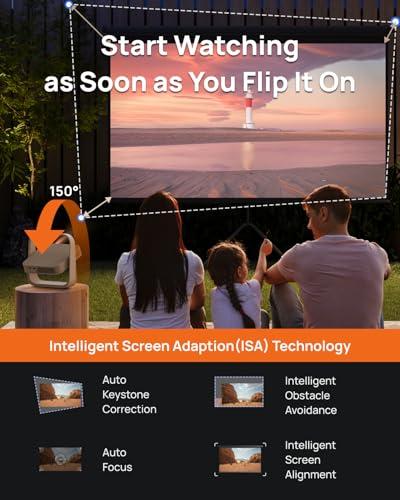
Here's where the XGIMI Elfin Flip truly shines with its Intelligent Screen Adaptation (ISA) technology. This system combines multiple automatic features that transform the setup experience. Auto Focus means the image appears sharp immediately without manual adjustment. Auto Keystone Correction automatically squares the image even when the projector sits at an angle to the screen. Intelligent Obstacle Avoidance can detect objects in the projection path and adjust the image to avoid them.
These features work together to create what XGIMI calls "plug and play" operation, and in my experience testing similar systems, they deliver on that promise. You can literally place the Elfin Flip on any surface, power it on, and have a properly focused, square image within seconds.
The projector's innovative flip design deserves special mention. The integrated stand rotates 150 degrees, allowing everything from standard table projection to ceiling mounting. When folded, the stand protects the lens during transport – a clever solution to the portability challenge.
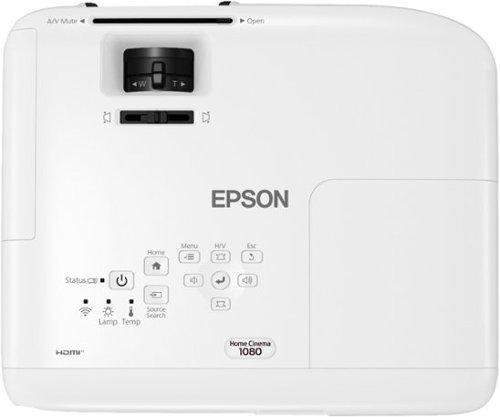
The Epson Home Cinema 1080 requires more traditional setup with manual focus and keystone correction. It includes 1.2x optical zoom for placement flexibility, but achieving a perfect image typically requires more time and adjustment. For permanent installations, this manual approach offers precise control, but it's less convenient for portable use.
Both projectors include built-in audio, but with different philosophies. The XGIMI Elfin Flip features dual 3W speakers with support for Dolby Audio and DTS Virtual:X processing. These audio processing technologies create simulated surround sound from the stereo speakers, enhancing the perceived soundstage and immersion.
In practice, the Elfin Flip's audio performs surprisingly well for casual viewing. The speakers provide enough volume for normal-sized rooms and deliver clear dialogue. The bass response is limited – physics prevents tiny speakers from producing deep low frequencies – but the overall audio quality exceeds what you'd expect from such a compact device.
The Epson Home Cinema 1080 includes a single 2W mono speaker that serves primarily as a basic audio backup. Most users will want external audio solutions with the Epson, whether through its audio output or connected devices.
For home theater applications, external audio systems typically provide better performance than any built-in projector speakers. However, the XGIMI's superior built-in audio makes it much more versatile for quick setup situations where running additional cables isn't practical.
Gaming performance depends heavily on input latency – the delay between when you press a button and when the action appears on screen. The XGIMI Elfin Flip includes a dedicated Game Mode that reduces latency to approximately 26 milliseconds when auto-correction features are disabled. This latency level works well for casual gaming but might feel sluggish for competitive gaming where every millisecond matters.
The Epson Home Cinema 1080 doesn't publish specific gaming latency numbers, but traditional projectors in this category typically achieve similar or slightly better performance. The Epson's brightness advantage makes it better suited for gaming in rooms with ambient light, where the XGIMI might appear too dim for comfortable gameplay.
Both projectors handle gaming consoles well through their HDMI inputs, supporting 1080p at 60Hz refresh rates. Neither projector supports 4K gaming or high refresh rates, reflecting their positioning as 1080p entertainment devices rather than cutting-edge gaming displays.
The lamp technology difference affects long-term costs and maintenance. The XGIMI Elfin Flip uses LED illumination rated for 25,000 hours of operation. LEDs don't burn out suddenly like traditional lamps; instead, they gradually dim over time. The downside is that LED modules typically aren't user-replaceable, meaning the projector reaches end-of-life when the LEDs dim too much.
The Epson Home Cinema 1080 uses a traditional 210W UHE (Ultra High Efficiency) lamp rated for 6,000 hours in normal mode or up to 12,000 hours in eco mode. When the lamp burns out, users can replace it themselves for roughly $100-200, extending the projector's useful life significantly.
This creates different value propositions. The XGIMI's LED system requires no maintenance and operates more quietly, but the entire device becomes obsolete when the LEDs dim. The Epson's lamp replacement costs add up over time, but the projector can potentially operate for decades with proper maintenance.
After extensive consideration of both projectors' strengths and limitations, the choice comes down to your specific use case and priorities.
Choose the XGIMI Elfin Flip if you value convenience above all else. This projector excels when you want to set up quickly in different locations, need integrated streaming without external devices, or have a dedicated dark room where its excellent DLP image quality can shine. It's perfect for apartment dwellers, frequent travelers, or anyone who wants cinema experiences without complex installations.
The Elfin Flip also makes sense if you're screen size expectations stay below 120 inches and you can control your viewing environment lighting. For bedrooms, basements, or media rooms where you can achieve darkness, it delivers impressive image quality that punches well above its size and price category.
Choose the Epson Home Cinema 1080 when brightness and screen size matter most. If you're planning a dedicated home theater installation with screens above 120 inches, or if you can't achieve complete darkness in your viewing space, the Epson's brightness advantage becomes essential. It's also the better choice for users who prefer traditional projector reliability and don't mind more complex setup procedures.
The Epson represents better long-term value for heavy users, thanks to its replaceable lamp system and proven technology. If you're planning to watch several hours daily and want a projector that can serve as your primary display for years, the traditional approach offers advantages.
Ultimately, both projectors serve their intended markets well. The XGIMI Elfin Flip pushes portable projection into new territory with impressive smart features and convenience, while the Epson Home Cinema 1080 delivers proven home theater performance at an accessible price point. Your choice should align with whether you prioritize flexibility and convenience or maximum performance and brightness in your home projection setup.
| XGIMI Elfin Flip Portable Projector | Epson Home Cinema 1080 Projector |
|---|---|
| Brightness - Most critical spec for room lighting tolerance | |
| 400 ISO lumens (requires dark rooms for best viewing) | 3,400 lumens (works well in rooms with ambient light) |
| Display Technology - Affects color quality and contrast | |
| DLP with 0.23" DMD chip (excellent contrast, vibrant colors) | 3LCD technology (equal color/white brightness, smooth gradations) |
| Native Resolution - Determines image sharpness | |
| 1920 x 1080 (Full HD) with HDR10 support | 1920 x 1080 (Full HD) native resolution |
| Portability - Key factor for flexible use | |
| 2.6 lbs with 150° flip stand and integrated handle | 6.2 lbs, designed for permanent installation |
| Screen Size Range - Determines room compatibility | |
| 80-150 inches (optimized for smaller spaces) | 30-300 inches (suitable for large home theaters) |
| Smart Features - Built-in streaming capabilities | |
| Full Android TV with Netflix, YouTube, Disney+, Google Play Store | Basic Wi-Fi and Miracast (requires external streaming devices) |
| Setup Complexity - Time to get perfect image | |
| Intelligent auto-focus, keystone correction, obstacle avoidance | Manual focus and keystone adjustment with 1.2x optical zoom |
| Audio System - Built-in sound quality | |
| Dual 3W speakers with Dolby Audio and DTS Virtual:X | Single 2W mono speaker (external audio recommended) |
| Connectivity Options - Device compatibility | |
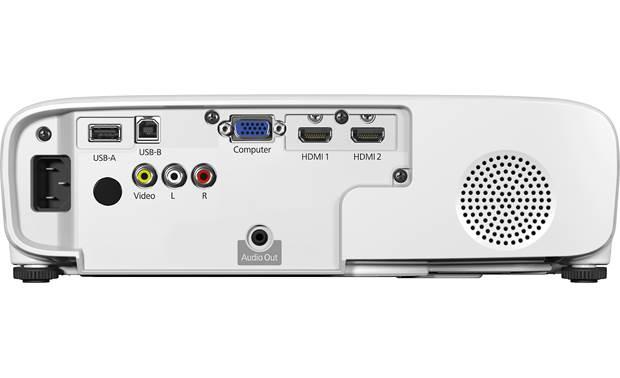
| 1x HDMI, 1x USB, Wi-Fi 5, Bluetooth 5.1, Chromecast built-in | 2x HDMI, VGA, composite, USB ports, Wi-Fi 5 |
| Light Source Lifespan - Long-term maintenance costs | |
| 25,000-hour LED (non-replaceable) | 6,000-12,000 hour UHE lamp (user-replaceable) |
| Gaming Performance - Input lag for responsive gameplay | |
| 26.3ms latency in Game Mode (good for casual gaming) | Standard projector latency (varies by input) |
| Noise Level - Fan noise during operation | |
| 28 dB (whisper quiet operation) | 37 dB normal / 28 dB eco mode |
The XGIMI Elfin Flip excels in dark rooms due to its DLP technology, which produces deeper blacks and more vibrant colors with excellent contrast ratios. While the Epson Home Cinema 1080 works in dark rooms too, the XGIMI Elfin Flip delivers a more cinematic experience when lighting is fully controlled.
The Epson Home Cinema 1080 is significantly better for bright rooms with its 3,400 lumens output, making it usable even with some ambient lighting. The XGIMI Elfin Flip at 400 lumens requires dark or dimmed environments for optimal viewing quality.
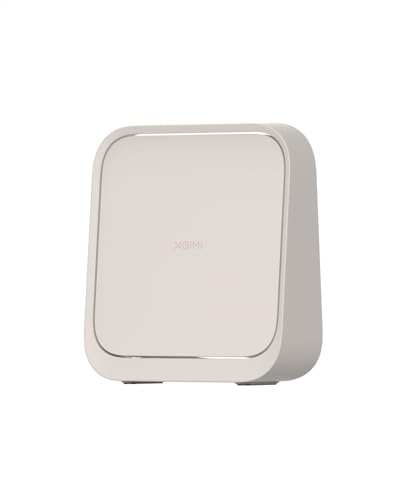
The XGIMI Elfin Flip is designed for portability at just 2.6 pounds with an integrated handle and 150° flip stand that protects the lens when folded. The Epson Home Cinema 1080 weighs 6.2 pounds and is designed for permanent installation rather than frequent transport.
The XGIMI Elfin Flip includes built-in Android TV with pre-installed Netflix, YouTube, and Disney+, plus access to the Google Play Store. The Epson Home Cinema 1080 has basic smart features but typically requires external streaming devices like Roku or Apple TV for full functionality.
The XGIMI Elfin Flip features superior audio with dual 3W speakers supporting Dolby Audio and DTS Virtual:X processing. The Epson Home Cinema 1080 has only a basic 2W mono speaker, making external audio systems almost necessary for good sound quality.
The XGIMI Elfin Flip offers automatic setup with features like auto-focus, auto-keystone correction, and intelligent obstacle avoidance for quick plug-and-play operation. The Epson Home Cinema 1080 requires manual focus and keystone adjustments, though it offers 1.2x optical zoom for placement flexibility.
The Epson Home Cinema 1080 can project images from 30 to 300 inches, making it ideal for large home theater installations. The XGIMI Elfin Flip is optimized for 80-150 inch screens, perfect for typical living rooms and bedrooms.
The XGIMI Elfin Flip uses LEDs rated for 25,000 hours but aren't user-replaceable when they eventually dim. The Epson Home Cinema 1080 has a replaceable lamp lasting 6,000-12,000 hours depending on usage mode, allowing for long-term maintenance and extended projector life.
Both projectors handle gaming adequately, but the XGIMI Elfin Flip offers a dedicated Game Mode with 26.3ms latency for responsive gameplay. The Epson Home Cinema 1080 benefits from higher brightness for gaming in varied lighting conditions and larger screen gaming experiences.
The Epson Home Cinema 1080 offers more physical connectivity with 2 HDMI ports, VGA, and composite inputs. The XGIMI Elfin Flip has 1 HDMI port but compensates with superior wireless connectivity including Wi-Fi 5, Bluetooth 5.1, and built-in Chromecast.
For dedicated home theater rooms with controlled lighting and large screens (120+ inches), the Epson Home Cinema 1080 provides better value with its high brightness and larger projection capabilities. For flexible home entertainment with easy setup, the XGIMI Elfin Flip offers excellent value despite its higher price point.
The Epson Home Cinema 1080 can better replace a TV for daily viewing due to its brightness allowing use in normal lighting conditions and larger screen capabilities. The XGIMI Elfin Flip works as a TV replacement primarily in dark rooms or controlled lighting environments where its excellent image quality and smart features shine.
We've done our best to create useful and informative comparisons to help you decide what product to buy. Our research uses advanced automated methods to create this comparison and perfection is not possible - please contact us for corrections or questions. These are the sites we've researched in the creation of this article: us.xgimi.com - projectorcentral.com - tvsbook.com - us.xgimi.com - bikmantech.com - projectorreviews.com - tvsbook.com - us.xgimi.com - youtube.com - youtube.com - richersounds.com - us.xgimi.com - youtube.com - walmart.com - global.xgimi.com - youtube.com - global.xgimi.com - us.xgimi.com - crutchfield.com - bestbuy.com - officedepot.com - bestbuy.com - bestbuy.com - audioholics.com - rtings.com - avsforum.com - projectorcentral.com - audiogeneral.com - projectorreviews.com - rtings.com - epson.com - youtube.com - epson.com - projectorreviews.com - projectorreviews.com - walmart.com - shop.avispl.com - bhphotovideo.com - staples.com - mediaserver.goepson.com - staples.com - bhphotovideo.com - epson.com - epson.com - dell.com - epson.com - bestbuy.com

Privacy Policy
Terms and Conditions - Affiliate Policy
Home Security
© Copyright 2008-2026.
11816 Inwood Rd #1211, Dallas, TX 75244