

The projector market has evolved dramatically in recent years, splitting into two distinct paths that serve very different needs. On one side, you have traditional high-brightness projectors that prioritize pure image quality and professional-grade performance. On the other, smart projectors have emerged as all-in-one entertainment hubs that emphasize convenience and modern features over raw specifications.
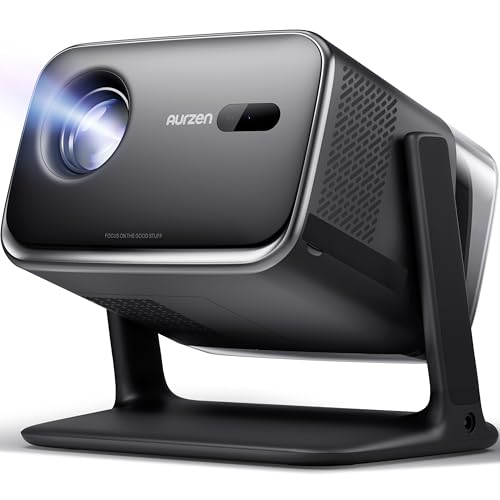
This fundamental divide creates an interesting comparison between the Aurzen BOOM Mini Smart Projector and the Epson Home Cinema 1080. Released in 2025 and 2020 respectively, these projectors represent the cutting edge of convenience-focused design versus the proven approach of traditional home theater equipment. Understanding which philosophy aligns with your needs will determine which projector delivers better value for your specific situation.
Before diving into specifics, it's worth understanding what makes these projectors fundamentally different. ANSI lumens measure actual light output according to standardized testing procedures - this is the most reliable brightness specification you'll see. Contrast ratio describes the difference between the brightest whites and darkest blacks a projector can display, directly impacting image depth and detail in dark scenes.
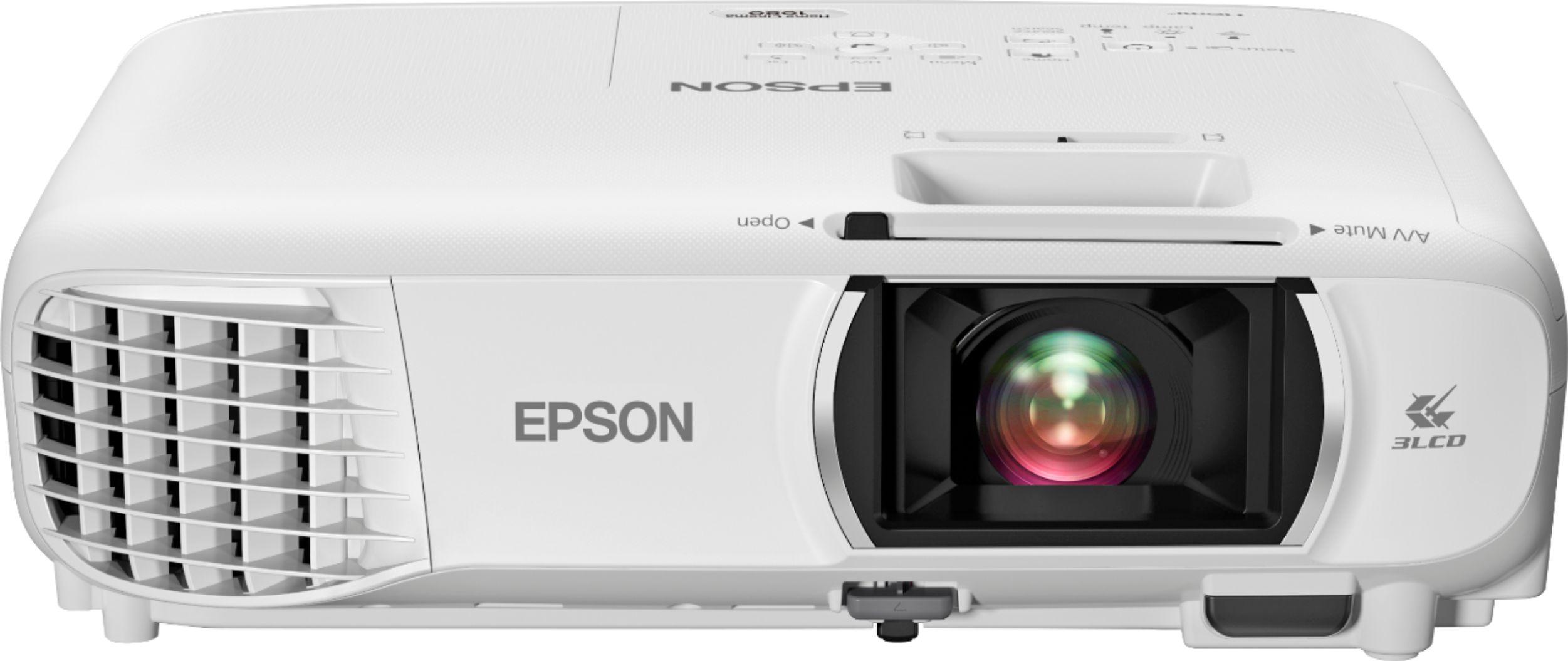
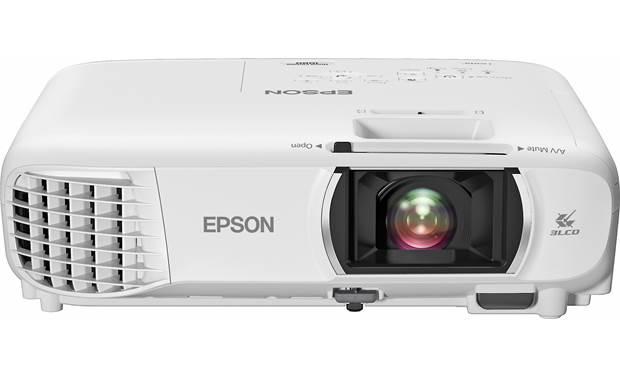
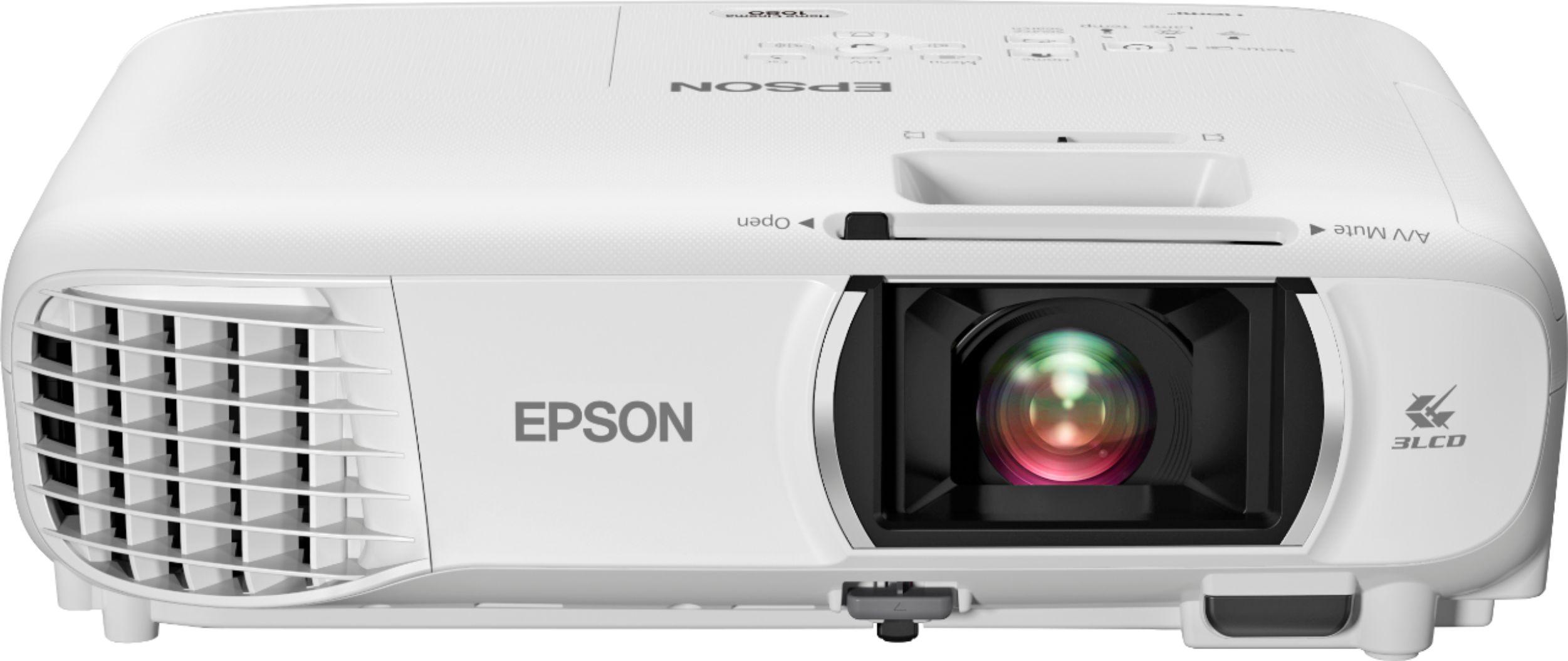
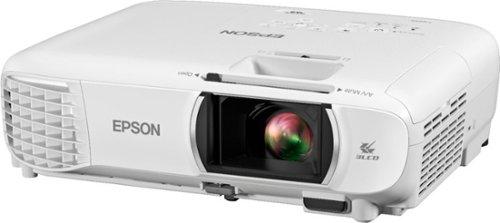
The Epson Home Cinema 1080 uses 3LCD technology, which splits white light into red, green, and blue components using separate LCD panels. This approach delivers consistent brightness across all colors, avoiding the "rainbow effect" some viewers notice with single-chip DLP projectors. Meanwhile, the Aurzen BOOM Mini uses a simpler LCD panel with LED backlighting, prioritizing energy efficiency and instant-on capability over maximum brightness.
Smart projector platforms like Google TV represent a significant shift in how we consume content. Instead of requiring separate streaming devices like Roku or Apple TV, these projectors handle everything internally. This integration eliminates cable management and reduces the number of devices you need to manage, though it also means you're dependent on the projector manufacturer for software updates and app support.
Brightness remains the single most critical specification for any projector, determining where and when you can actually use it. The difference between these two projectors is stark and fundamental to their design philosophy.
The Epson Home Cinema 1080 delivers a substantial 3,400 ANSI lumens, placing it in the high-brightness category for home projectors. This level of output allows for comfortable viewing in rooms with ambient lighting - you can watch movies with table lamps on or even some natural light filtering through curtains. For context, movie theaters typically run their projectors at around 14-16 foot-lamberts, which translates to roughly 1,500-2,000 ANSI lumens for a 100-inch screen. The Epson's brightness means you can go significantly larger or handle brighter room conditions.
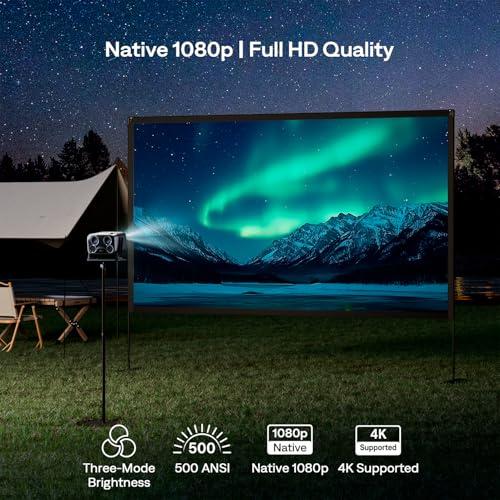
In contrast, the Aurzen BOOM Mini produces 500 ANSI lumens, which places it firmly in the "dark room only" category. This isn't necessarily a limitation - many projector enthusiasts prefer completely dark environments for the most cinematic experience. However, it does restrict when and where you can use it effectively. Think of it like the difference between a smartphone flashlight and a proper camping lantern - both serve their purpose, but in very different contexts.
The practical impact of this brightness difference extends beyond just room lighting. Higher brightness enables larger screen sizes while maintaining image quality. The Epson can comfortably fill a 150-inch screen in a moderately lit room, while the Aurzen works best with screens under 100 inches in dark conditions.
While brightness gets most of the attention, several other factors determine overall image quality. Native resolution describes how many individual pixels the projector can display - both projectors offer 1920x1080 (Full HD), which remains the sweet spot for most content and viewing distances.
The Epson Home Cinema 1080 leverages its 3LCD technology to achieve exceptional color accuracy and uniformity. Each color channel receives equal light output, resulting in vibrant, well-balanced images without the color brightness compromises found in some competing technologies. The 16,000:1 dynamic contrast ratio helps with detail in dark scenes, though it's worth noting that these contrast specifications can be somewhat marketing-driven.
The Aurzen BOOM Mini compensates for lower brightness with HDR10 and HLG support, which enhances color depth and contrast through advanced processing. While it can't match the raw light output of the Epson, the LED light source provides consistent color temperature and eliminates the warm-up period required by traditional lamps. LED projectors also maintain consistent brightness throughout their lifespan, while lamp-based projectors gradually dim.
Based on user feedback and professional reviews, the image quality hierarchy places the Epson ahead in bright room performance and overall image impact, while the Aurzen delivers surprisingly good results for its size and price point in dark room conditions.
Here's where the Aurzen BOOM Mini demonstrates the evolution of projector technology over the past few years. Traditional projectors require manual focus adjustment, keystone correction (fixing the trapezoidal distortion when projecting at an angle), and careful positioning to achieve a properly aligned image. This process can take 10-15 minutes and often requires multiple people - one to adjust settings and another to evaluate the image.
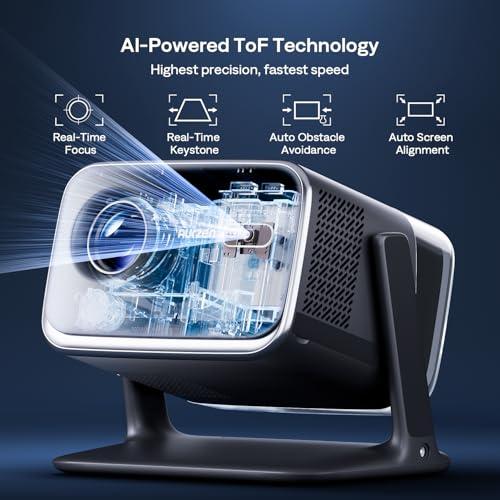
The Aurzen eliminates these pain points through Time-of-Flight (ToF) sensors that measure distance to the projection surface and automatically adjust focus in about three seconds. Real-time keystone correction continuously monitors the image geometry and makes instant adjustments if the projector moves or the surface changes. This technology represents a significant advancement in user experience, transforming projector setup from a technical challenge into a plug-and-play experience.
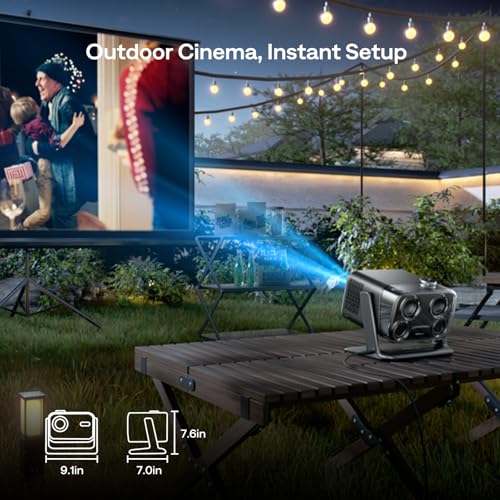
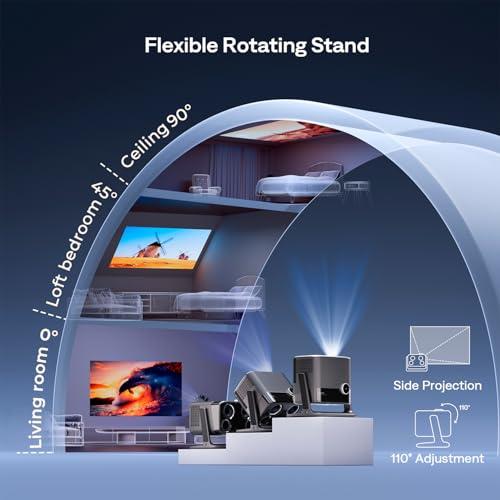
The physical design reinforces this convenience focus. The 110-degree flexible stand allows projection onto walls, traditional screens, or even ceilings without requiring additional mounting hardware. This flexibility opens up use cases that would be impractical with traditional projectors - imagine movie nights on the bedroom ceiling or outdoor screenings without complex setup procedures.
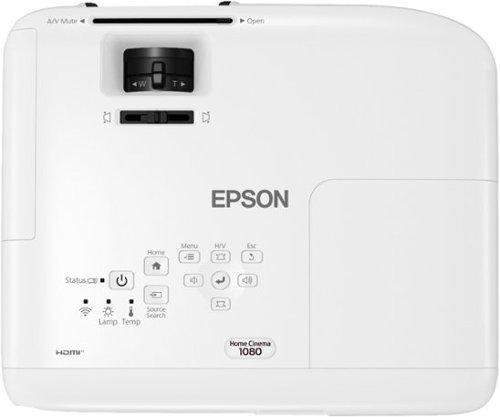
The Epson Home Cinema 1080 takes the traditional approach, offering 1.2x optical zoom and manual keystone correction up to ±30 degrees in both directions. While this requires more initial setup, it provides precise control over image geometry and placement. For permanent installations or dedicated home theater rooms, this manual control can actually be preferable, allowing for exact positioning and optimal image quality.
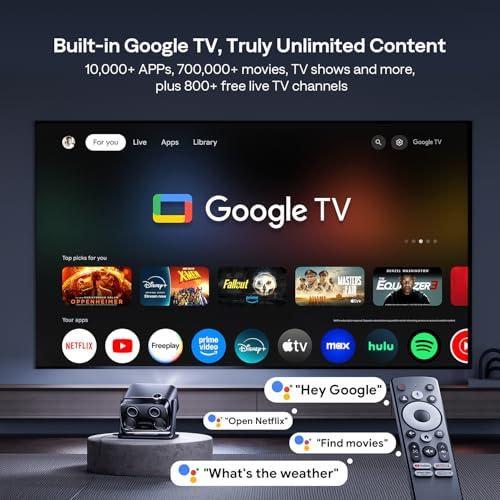
The integration of smart platforms represents perhaps the most significant evolution in projector design since the transition to digital. The Aurzen BOOM Mini includes full Google TV functionality, providing direct access to over 10,000 apps including Netflix, Disney+, YouTube, and Hulu without requiring any external devices.
This integration goes beyond simple app access. Google Assistant enables voice control for content search, smart home integration, and system settings. Google Cast allows wireless streaming from Android and iOS devices, while Kids Mode provides parental controls and screen time management. The projector essentially becomes a smart TV that happens to project rather than display on a fixed screen.
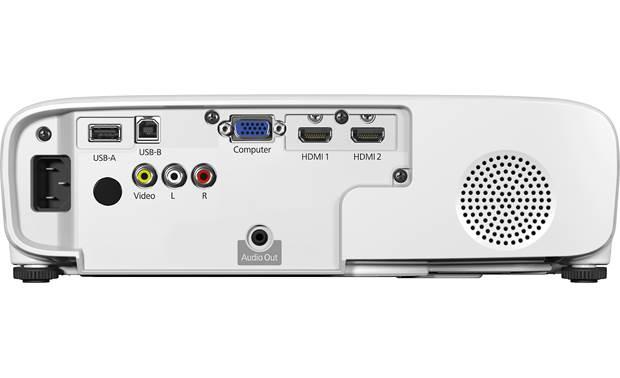
The Epson Home Cinema 1080 takes the traditional approach of focusing purely on display quality while leaving content delivery to external devices. This philosophy has merits - dedicated streaming devices like Apple TV 4K or NVIDIA Shield often provide better performance and more frequent updates than built-in smart platforms. The projector includes two HDMI inputs and basic Miracast support for wireless screen mirroring, but content delivery remains the responsibility of connected devices.
For users building dedicated home theaters, the external device approach often proves more flexible long-term. Smart platforms embedded in projectors may become outdated as streaming services evolve, while external devices can be upgraded independently. However, for casual users who want everything to "just work," the integrated approach eliminates complexity and reduces the total system cost.
Projector audio typically receives little attention, but it significantly impacts the overall user experience. Most projectors include minimal speakers designed for basic presentation use rather than entertainment.
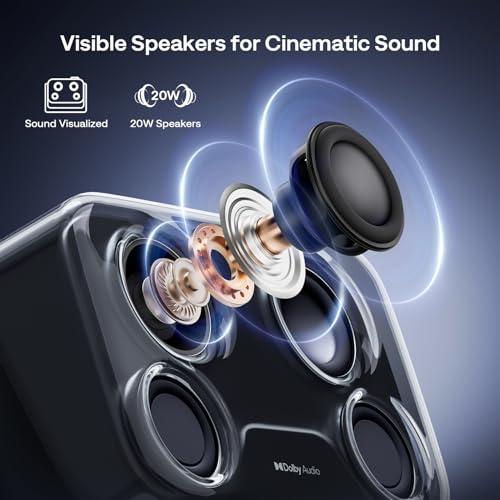
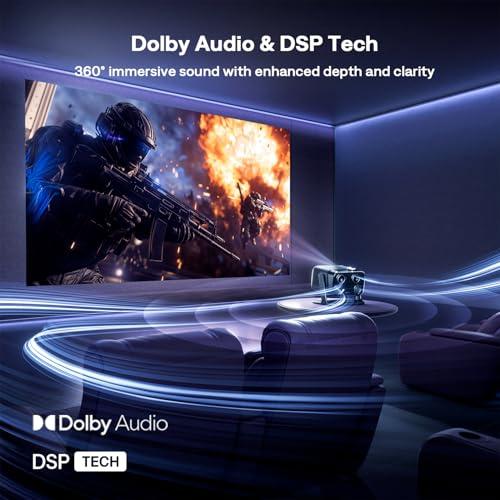
The Aurzen BOOM Mini breaks this pattern with dual 10W speakers (20W total) featuring Dolby Audio processing. The rear-facing design improves sound dispersion, and the projector can even function as a standalone Bluetooth speaker when not in use for projection. While not matching dedicated speakers, the built-in audio proves adequate for casual viewing and eliminates the need for additional equipment in many situations.
The Epson Home Cinema 1080 includes a basic 2W mono speaker clearly intended for presentation use rather than entertainment. Serious home theater applications will require external speakers or a soundbar, adding to the total system complexity and cost. However, this approach allows for better audio quality through dedicated components and provides more flexibility in speaker placement and selection.
At the time of writing, these projectors occupy different price segments that reflect their design philosophies. The Aurzen BOOM Mini positions itself as an affordable all-in-one solution, including everything needed for complete entertainment in a single purchase. When you factor in the cost of streaming devices, speakers, and mounting hardware that traditional projectors require, the total system cost becomes more competitive.
The Epson Home Cinema 1080 commands a higher upfront price but delivers professional-grade brightness that enables use cases impossible with lower-output projectors. The cost per ANSI lumen actually favors the Epson significantly, making it excellent value for applications requiring high brightness.
However, value calculations become complex when considering total system costs. A complete setup with the Epson typically requires an additional streaming device ($50-200), external speakers or soundbar ($100-500), and potentially mounting hardware ($50-150). The Aurzen includes equivalent functionality built-in, shifting the value equation based on your specific needs and existing equipment.
For serious home theater applications, the Epson Home Cinema 1080 demonstrates clear advantages. The high brightness enables larger screen sizes while maintaining image quality, and the superior contrast ratio provides better detail in dark scenes critical for movie watching. The ability to handle ambient lighting means you don't need perfect light control for enjoyable viewing.
The modular approach also proves beneficial in dedicated installations. External streaming devices often provide better performance and more regular updates than embedded platforms. Audio separation allows for proper speaker placement and upgrade flexibility. Manual controls enable precise image adjustment for optimal picture quality.
The Aurzen BOOM Mini excels in family entertainment scenarios where convenience outweighs maximum performance. The integrated streaming eliminates the complexity of managing multiple devices and remotes. Kids Mode provides parental controls and screen time management that external streaming devices may not offer as seamlessly.
The portability factor enables use cases impossible with traditional projectors. Bedroom ceiling projection, outdoor movie nights, and impromptu entertainment sessions become practical without complex setup procedures. The automatic adjustments ensure good image quality regardless of placement, reducing user frustration and technical barriers.
Both projectors handle gaming adequately, though with different strengths. The Aurzen's automatic focus ensures consistently sharp text and graphics, important for games with detailed user interfaces. The built-in speakers provide reasonable game audio without additional setup.
The Epson's higher brightness enables gaming in brighter conditions and supports larger screen sizes for more immersive experiences. However, the manual setup requirements make it less suitable for casual gaming sessions or frequent repositioning.
Light source technology impacts long-term ownership costs and user experience. The Aurzen's LED light source should last 30,000+ hours while maintaining consistent brightness and color accuracy. LED projectors also provide instant-on capability and don't require warm-up or cool-down periods.
The Epson's uses a traditional UHE (Ultra High Efficiency) lamp rated for 6,000-12,000 hours depending on usage mode. Lamp replacement costs and the gradual brightness decline over time represent ongoing considerations, though the initial brightness advantage provides significant headroom.
Smart platform longevity presents another consideration. The Aurzen's Google TV platform should receive updates for several years, but embedded smart platforms historically become outdated faster than external devices. The Epson's external device approach provides more upgrade flexibility but requires ongoing device management.
After extensive research into user experiences and professional evaluations, clear usage patterns emerge for each projector. The Aurzen BOOM Mini represents the future of casual entertainment - prioritizing user experience, convenience, and modern features over raw specifications. It's ideal for users who want projector capability without projector complexity.
The Epson Home Cinema 1080 delivers traditional projector strengths - maximum brightness, proven technology, and professional-grade performance. It serves users who prioritize image quality and have the commitment to properly configure and maintain a more complex system.
Your room lighting conditions ultimately determine the best choice. If you primarily watch in dark or dimmed environments and value convenience, the Aurzen provides exceptional functionality at an attractive total system cost. If you need performance in brighter conditions or want maximum image impact, the Epson's superior brightness justifies the higher complexity and cost.
Both projectors succeed in their intended roles - the choice depends on whether you prioritize modern convenience or traditional performance. The projector market's evolution means you no longer have to compromise on the factors most important to your viewing experience.
| Aurzen BOOM Mini Smart Projector Google TV | Epson Home Cinema 1080 Projector |
|---|---|
| Brightness - Most critical spec determining where you can use the projector | |
| 500 ANSI lumens (dark rooms only, bedroom/basement ideal) | 3,400 ANSI lumens (handles ambient light, works in living rooms) |
| Smart Features - Determines if you need external streaming devices | |
| Built-in Google TV with 10,000+ apps, no external devices needed | No smart features, requires Roku/Apple TV/Fire Stick for streaming |
| Setup Complexity - Time from box to watching content | |
| Real-time autofocus and keystone correction, ready in seconds | Manual focus and adjustments required, 10-15 minute setup |
| Audio Quality - Whether you need external speakers | |
| Dual 10W speakers with Dolby Audio (adequate for most rooms) | 2W mono speaker (external audio system essentially required) |
| Portability - Ease of moving between rooms or outdoor use | |
| Ultra-compact with 110° flexible stand, perfect for travel | Larger 6.2 lbs design meant for permanent installation |
| Screen Size Range - Maximum usable projection size | |
| 40-200 inches (best under 100" due to brightness limits) | 30-300 inches (can fill large screens even in bright rooms) |
| Light Source Technology - Long-term costs and maintenance | |
| LED (30,000+ hour lifespan, instant-on, no replacement) | UHE lamp (6,000-12,000 hours, replacement costs $200-300) |
| Contrast Ratio - Detail in dark movie scenes | |
| 1,000:1 (adequate for casual viewing) | 16,000:1 (superior detail in shadows and dark scenes) |
| Connectivity Options - Number of devices you can connect | |
| 1 HDMI, 2 USB, Wi-Fi, Bluetooth (minimal but covers basics) | 2 HDMI, VGA, composite, Wi-Fi (better for complex setups) |
| Noise Level - Distraction during quiet movie scenes | |
| ≤36dB ultra-quiet operation | 37dB normal / 28dB eco mode (slightly more fan noise) |
| Target Use Case - Who this projector serves best | |
| Casual family entertainment, bedroom viewing, outdoor movies | Dedicated home theaters, bright rooms, serious movie watching |
The Epson Home Cinema 1080 is significantly brighter at 3,400 ANSI lumens compared to the Aurzen BOOM Mini Smart Projector Google TV at 500 ANSI lumens. This means the Epson can handle rooms with ambient lighting and windows, while the Aurzen requires dark room conditions for optimal viewing.
The Aurzen BOOM Mini Smart Projector Google TV has built-in Google TV with access to Netflix, Disney+, YouTube, and over 10,000 apps - no external devices needed. The Epson Home Cinema 1080 requires external streaming devices like Roku, Apple TV, or Fire Stick to access streaming services.
The Aurzen BOOM Mini features real-time autofocus and automatic keystone correction, making it ready to use in seconds. The Epson Home Cinema 1080 requires manual focus adjustments and keystone correction, typically taking 10-15 minutes to set up properly.
The Epson Home Cinema 1080 can project up to 300 inches and still maintain good brightness due to its high lumen output. The Aurzen BOOM Mini Smart Projector Google TV works best with screens under 100 inches due to its lower 500 ANSI lumen brightness.
The Aurzen BOOM Mini has dual 10W speakers (20W total) with Dolby Audio that provide room-filling sound adequate for most viewing situations. The Epson Home Cinema 1080 has only a basic 2W mono speaker that requires external audio equipment for quality sound.
The Epson Home Cinema 1080 is better suited for dedicated home theaters due to its superior brightness, contrast ratio (16,000:1), and ability to fill large screens. The Aurzen BOOM Mini Smart Projector Google TV works well for casual home theater use in dark rooms with smaller screens.
The Aurzen BOOM Mini is highly portable with a compact design and built-in 110° flexible stand that enables wall, ceiling, or screen projection without additional mounting hardware. The Epson Home Cinema 1080 is larger at 6.2 pounds and designed more for permanent installation.
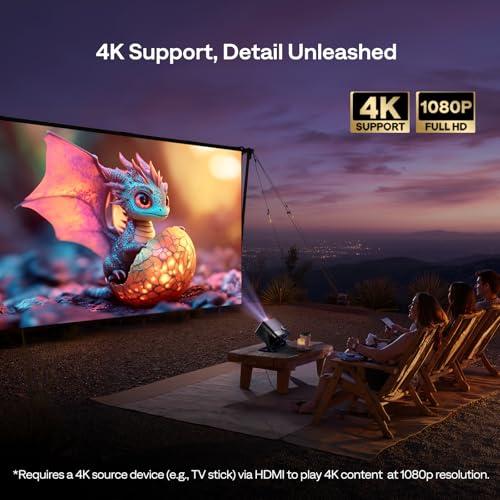
Both projectors have native 1080p resolution. The Aurzen BOOM Mini Smart Projector Google TV accepts 4K input and downscales it to 1080p with HDR10 support. The Epson Home Cinema 1080 also accepts various input resolutions but displays at native 1080p.
The Aurzen BOOM Mini operates at ≤36dB, making it ultra-quiet during viewing. The Epson Home Cinema 1080 runs at 37dB in normal mode and 28dB in eco mode, which is slightly louder but still acceptable for most users.
The Aurzen BOOM Mini Smart Projector Google TV uses LED technology with 30,000+ hour lifespan and no lamp replacement needed. The Epson Home Cinema 1080 uses a UHE lamp that lasts 6,000-12,000 hours and costs several hundred dollars to replace.
The Epson Home Cinema 1080 performs much better in bright rooms due to its 3,400 ANSI lumen output and 3LCD technology. The Aurzen BOOM Mini requires dimmed or dark environments to produce a watchable image due to its lower brightness.
The Aurzen BOOM Mini Smart Projector Google TV offers better value for families seeking convenience, with built-in streaming, automatic setup, good speakers, and portability all included. The Epson Home Cinema 1080 provides better value for families prioritizing maximum image quality and brightness, though it requires additional equipment purchases.
We've done our best to create useful and informative comparisons to help you decide what product to buy. Our research uses advanced automated methods to create this comparison and perfection is not possible - please contact us for corrections or questions. These are the sites we've researched in the creation of this article: aurzen.com - aurzen.com - the-gadgeteer.com - projectorcentral.com - aurzen.com - aurzen.com - youtube.com - bestbuy.com - bestbuy.com - youtube.com - aurzen.com - youtube.com - hometechnologyreview.com - youtube.com - aurzen.com - crutchfield.com - bestbuy.com - officedepot.com - bestbuy.com - bestbuy.com - audioholics.com - rtings.com - avsforum.com - projectorcentral.com - audiogeneral.com - projectorreviews.com - rtings.com - epson.com - youtube.com - epson.com - projectorreviews.com - projectorreviews.com - walmart.com - shop.avispl.com - bhphotovideo.com - staples.com - mediaserver.goepson.com - staples.com - bhphotovideo.com - epson.com - epson.com - dell.com - epson.com - bestbuy.com

Privacy Policy
Terms and Conditions - Affiliate Policy
Home Security
© Copyright 2008-2026.
11816 Inwood Rd #1211, Dallas, TX 75244