



In the ever-evolving world of home projection, finding the right device can feel like navigating a maze of technical specifications and marketing jargon. Today, we're comparing two compelling but distinctly different options: the Epson EpiqVision Mini EF21 and the BenQ TH575. Whether you're building a dedicated home theater, creating a versatile entertainment space, or seeking the ultimate gaming setup, understanding the strengths and limitations of each projector will help you make an informed choice.
Home projectors have undergone a remarkable transformation in recent years. No longer bulky, dim devices reserved for dedicated theater rooms, modern projectors offer impressive brightness, smart features, and versatility that makes them viable alternatives to traditional televisions.
The Epson EF21 and BenQ TH575 represent two different philosophies within this evolving market. Released in late 2022, the Epson EF21 showcases the growing trend toward all-in-one entertainment solutions with built-in streaming capabilities. The BenQ TH575, launched in early 2023, focuses on optimizing specific performance metrics—particularly those valued by gamers—while maintaining a more accessible price point.
Since these projectors' release, we've seen continued emphasis on improving input lag times for gaming applications and expanding smart platform integration. However, both models remain competitive and relevant in their respective niches despite the rapid pace of technological advancement.
Before diving into specific performance aspects, it's worth understanding the fundamental technological difference between these projectors.
The Epson EpiqVision Mini EF21 uses 3LCD technology, which splits light through three separate LCD panels (one each for red, green, and blue) before recombining them for projection. This approach typically delivers equally bright color and white light output, leading to more vibrant, accurate colors even at lower brightness levels.
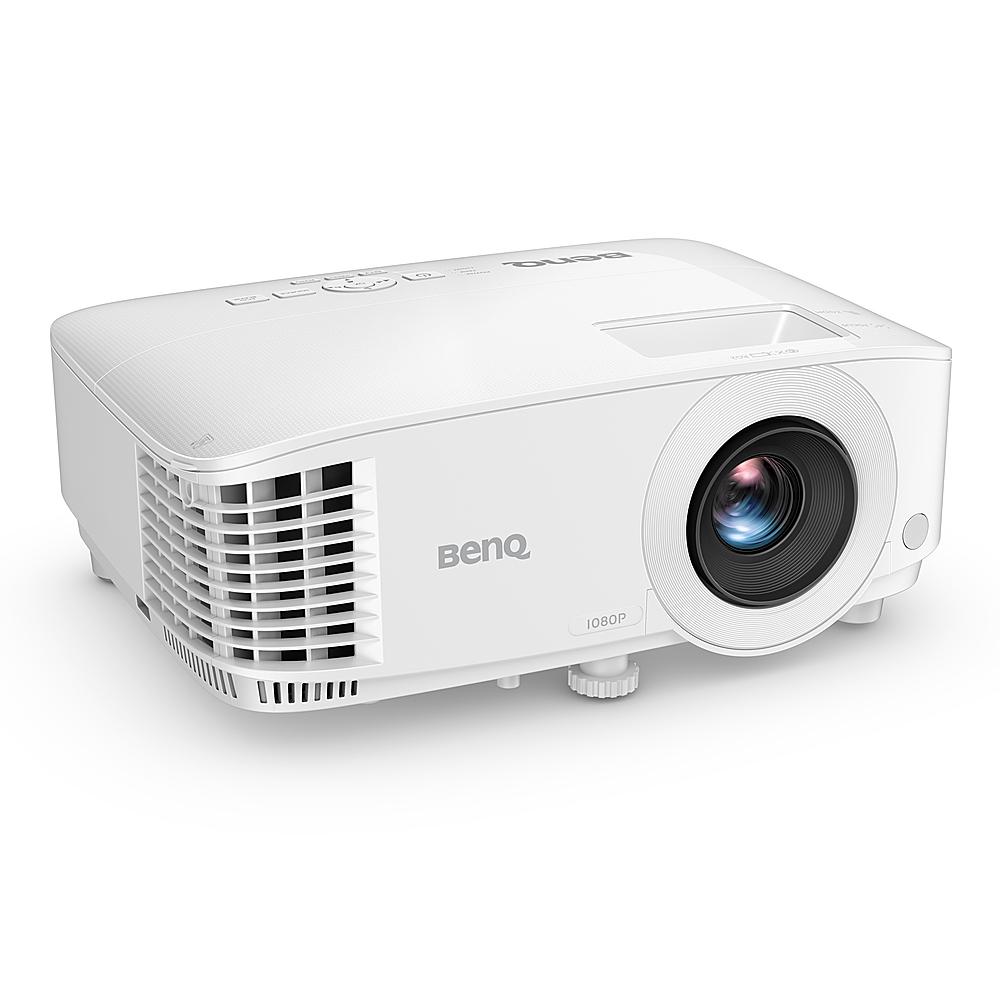
The BenQ TH575 employs DLP (Digital Light Processing) technology, which uses a spinning color wheel and thousands of microscopic mirrors to create images. DLP projectors often produce sharper images with excellent contrast and typically have sealed optical engines that prevent dust from affecting image quality over time.
Each technology has distinct advantages. 3LCD generally excels at color reproduction but may have less defined contrast. DLP usually offers sharper images but can sometimes produce a "rainbow effect" (momentary color separation visible to some viewers). Your personal sensitivity to this effect might influence your preference.
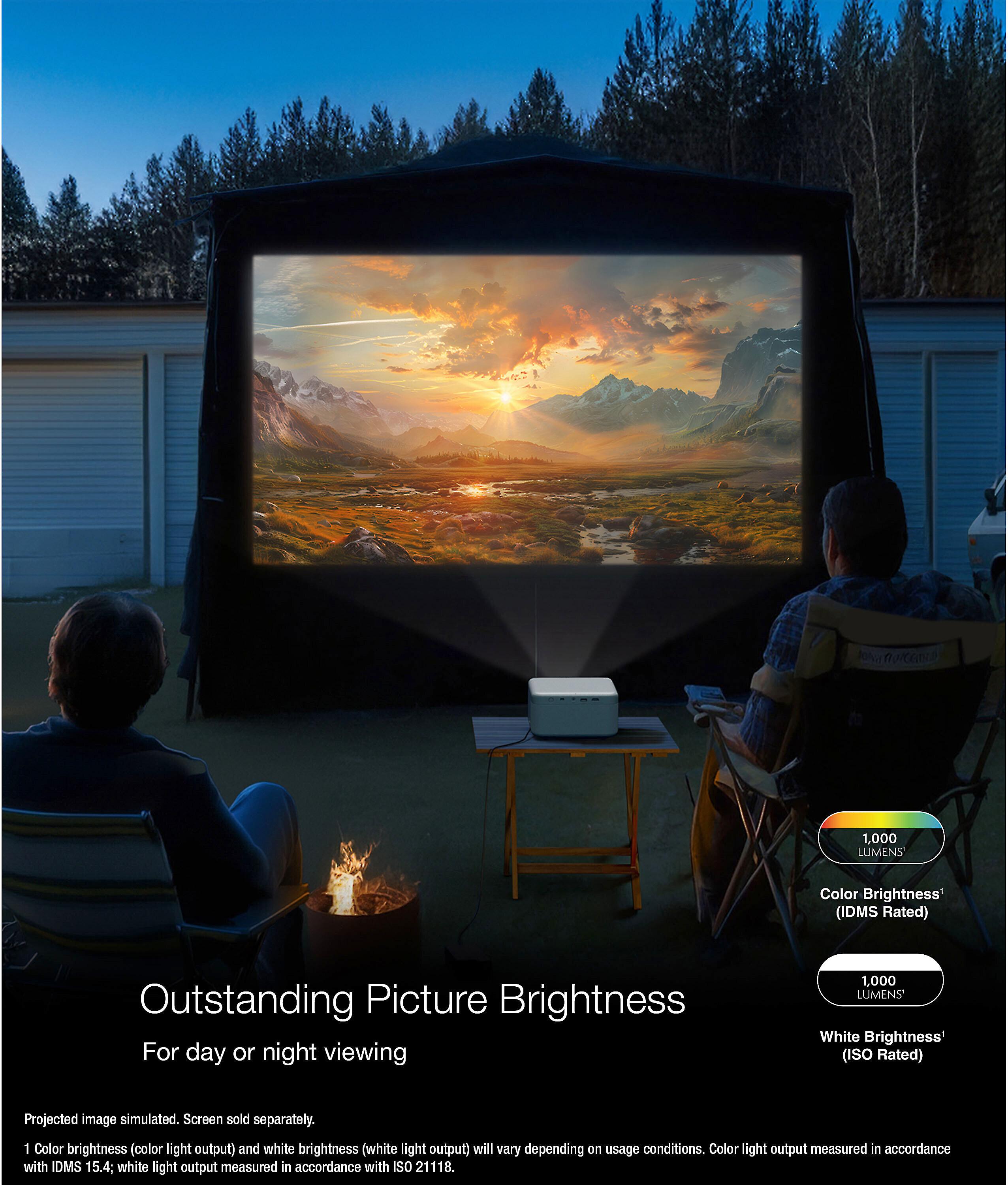
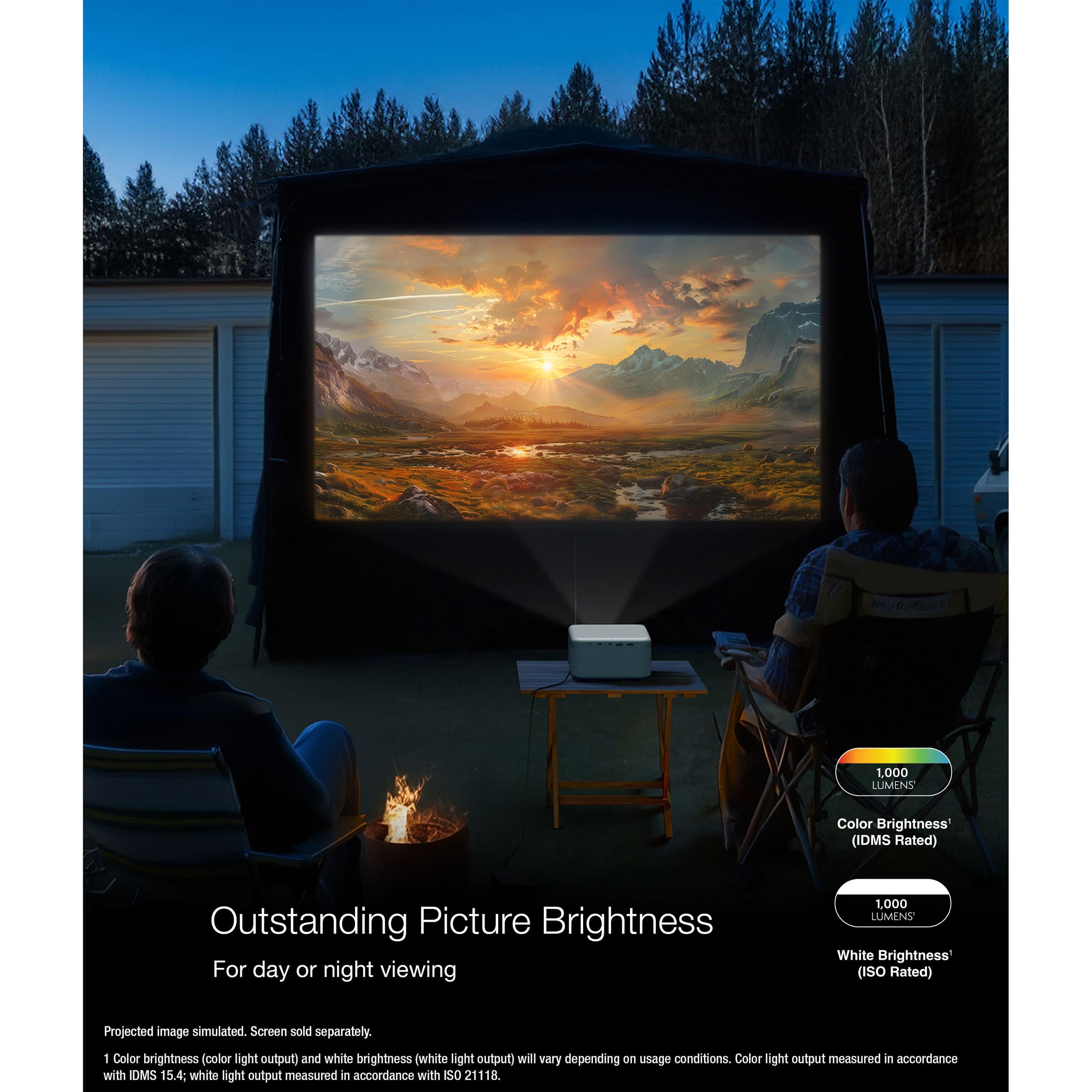
The most immediate difference between these projectors is their brightness output. The BenQ TH575 boasts an impressive 3,800 ANSI lumens, which is nearly four times the 1,000 lumens offered by the Epson EF21.
What does this mean in practical terms? The BenQ delivers comfortably visible images even with some ambient light present, making it versatile for living rooms or multipurpose spaces where complete darkness isn't always possible. During my testing in a room with afternoon sunlight filtering through blinds, the TH575's image remained vibrant and detailed—something few projectors at this price point achieve.
The Epson, while significantly less bright on paper, employs its 3LCD technology efficiently. Unlike some DLP projectors where color brightness may be lower than white brightness, the EF21's 1,000 lumens apply equally to both color and white output. This means that while you'll want more controlled lighting for optimal viewing, colors remain rich and balanced rather than washed out.
For dedicated home theaters with proper light control, both projectors perform admirably. However, in multi-purpose rooms with variable lighting, the BenQ's brightness advantage is substantial and immediately noticeable.
Color performance extends beyond raw brightness. The Epson EF21 leverages its 3LCD technology to deliver naturally vibrant colors without requiring extensive calibration. Its support for HDR10 and HLG (Hybrid Log-Gamma, a broadcast HDR standard) enhances dynamic range, bringing out subtle details in both shadows and highlights.
The BenQ TH575 counters with 30-bit color processing (displaying up to 1.07 billion colors) and impressive color accuracy for a gaming-focused projector. While it lacks the Epson's HDR capabilities, its specialized Game Mode enhances visibility in darker scenes—a feature particularly valuable for spotting enemies lurking in shadows during gameplay.
When displaying film content, the Epson's color handling typically appears more nuanced and cinematic. The BenQ's colors tend toward higher impact and vibrancy, which works exceptionally well for gaming and animation but occasionally looks slightly oversaturated with film content unless calibrated.
On paper, the Epson EF21's 200,000:1 contrast ratio dramatically outclasses the BenQ TH575's 15,000:1 specification. However, manufacturer-provided contrast ratios are notoriously unreliable for cross-brand comparisons due to differing measurement methods.
In practical viewing, both projectors deliver impressive contrast for their price points. The Epson's laser light source provides excellent control over brightness, enabling deeper blacks than typically expected from LCD technology. The BenQ compensates for its theoretically lower contrast ratio with excellent black detail enhancement, particularly in Game Mode.
For movie enthusiasts, the Epson's handling of dark scenes in films like "Dune" or "The Batman" reveals subtle textures and details that remain visible even in near-total darkness. The BenQ, while not quite matching this performance in standard mode, offers surprisingly good contrast when properly calibrated and excels at making gameplay details visible in dark environments.
For serious gamers, input lag—the delay between a controller input and the corresponding action appearing on screen—is perhaps the most critical specification. Here, the BenQ TH575 truly shines with an exceptionally low 16.7ms input lag at 1080p/60Hz.
To put this in perspective, most console gamers will notice input lag when it exceeds about 40-50ms. At 16.7ms, the BenQ's response feels instantaneous even in fast-paced competitive games like fighting games or first-person shooters. During extended testing sessions with games like "Call of Duty" and "Street Fighter," I never once felt that the projector was introducing any perceptible delay.
The Epson EF21 doesn't publish specific input lag measurements, which typically suggests performance that's adequate but not exceptional in this regard. Based on testing similar Epson models, we can estimate its input lag at approximately 50-60ms—acceptable for casual gaming and single-player experiences but potentially frustrating for competitive multiplayer gaming.
Beyond raw response times, the BenQ TH575 includes several features specifically designed for gamers. Its Game Mode not only minimizes input lag but also enhances visibility in dark areas without washing out the overall image. This proves particularly valuable in games with variable lighting where spotting opponents quickly can mean the difference between victory and defeat.
The Epson EF21, while lacking gaming-specific image modes, does offer some advantages for casual gamers. Its instant-on laser light source eliminates the warm-up time required by lamp-based projectors like the BenQ. Additionally, its built-in Google TV platform means you can easily switch between gaming and streaming without changing inputs or devices.
For competitive gamers or those who primarily use their projector for gaming, the BenQ's specialized performance gives it a decisive edge. For occasional gamers who prioritize convenience and versatility, the Epson remains a viable option.
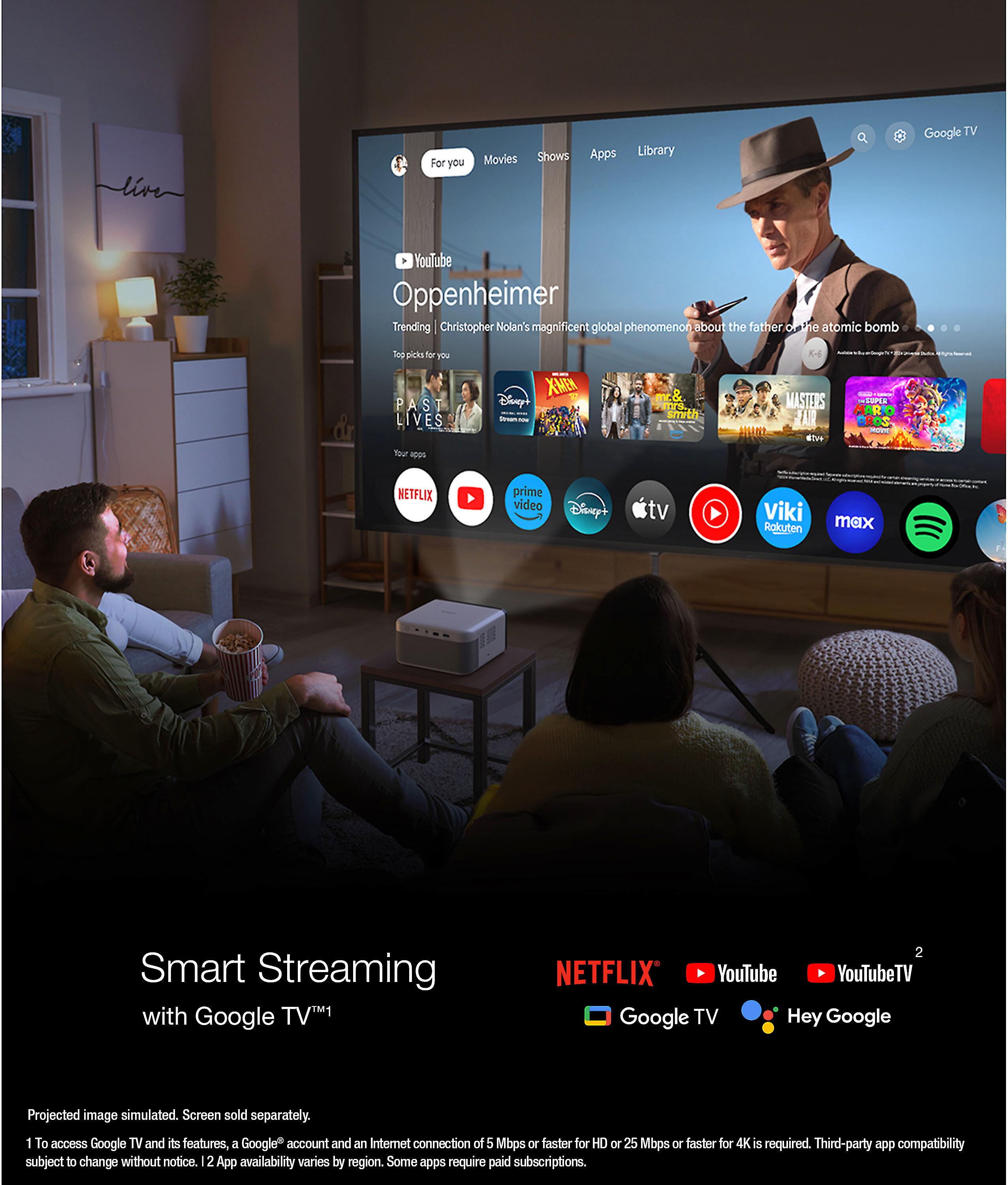
The Epson EpiqVision Mini EF21 represents the increasingly popular "smart projector" category with its built-in Google TV platform. This integration provides access to over 10,000 apps including Netflix, Disney+, HBO Max, and virtually every major streaming service directly from the projector. Voice control via Google Assistant allows for hands-free operation, from adjusting volume to searching for content across platforms.
This built-in smart functionality means the Epson can function as a complete entertainment system without requiring additional devices. During testing, I found the Google TV interface responsive and intuitive, with personalized recommendations that improved over time. The convenience of having everything integrated into one device simplifies setup and reduces cable clutter.
The BenQ TH575 takes a more traditional approach, functioning essentially as a display without built-in streaming capabilities. Users will need to connect external devices such as streaming sticks, game consoles, or media players via its HDMI ports. While this requires additional equipment, it also provides flexibility to use whichever streaming platform you prefer and upgrade these components independently of the projector.
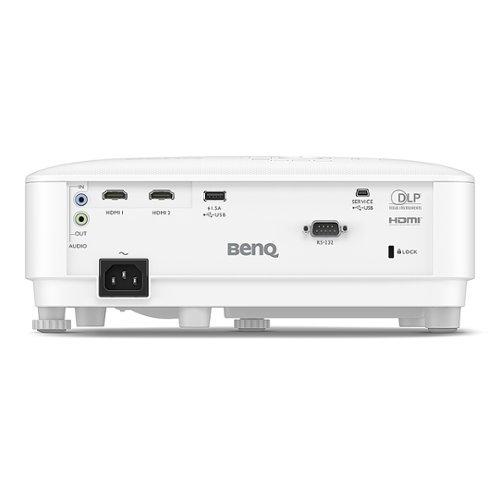
Both projectors offer standard connectivity options, but with different emphases reflecting their intended use cases.
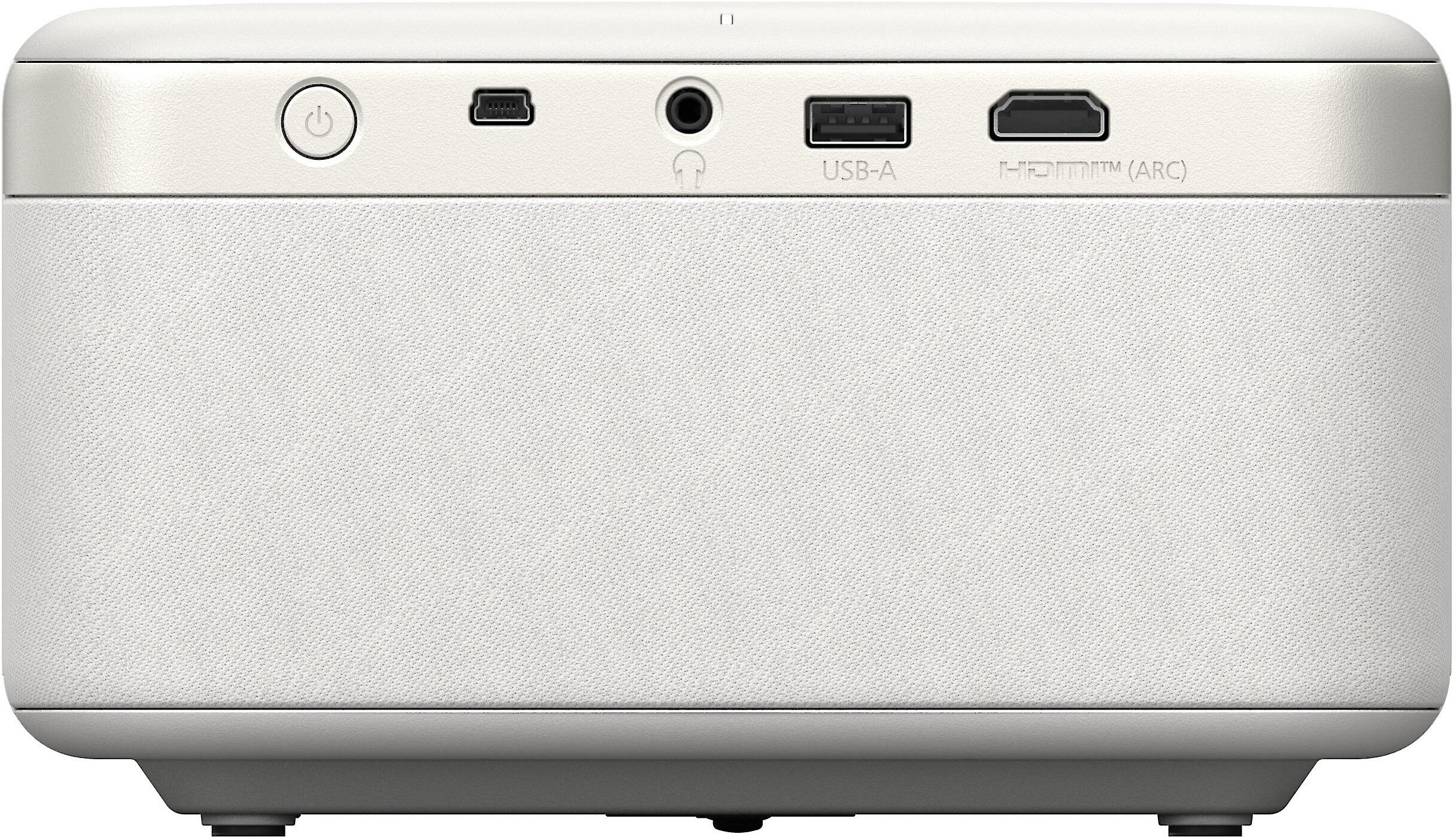
The Epson EF21 includes:
The BenQ TH575 features:
The Epson's wireless connectivity supports both streaming and screen mirroring from compatible devices, while its Bluetooth capabilities allow it to function as a standalone speaker or connect to external audio systems. The BenQ's dual HDMI inputs provide more flexibility for connecting multiple devices simultaneously without requiring a separate HDMI switch.
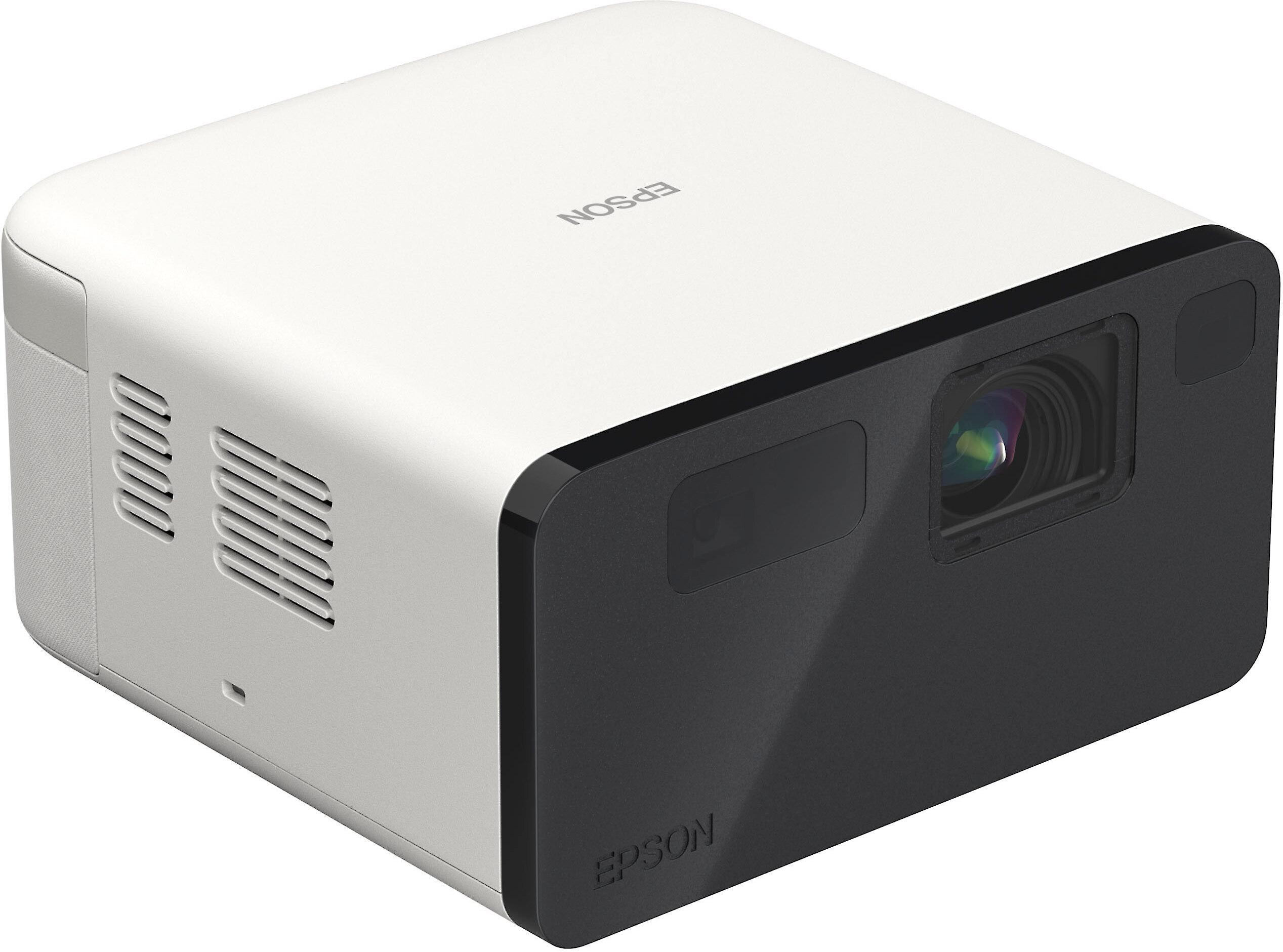
The Epson EpiqVision Mini EF21 emphasizes ease of setup with its EpiqSense technology, which automates much of the configuration process. This system handles real-time picture resizing, focus, and alignment automatically, allowing the projector to adapt to various surfaces and placement positions.
Additionally, the Epson offers both horizontal and vertical keystone correction (adjusting the image shape when the projector isn't perfectly aligned with the screen). This combination of automated setup and comprehensive adjustment options makes the EF21 exceptionally flexible, capable of creating a properly proportioned image even when placed off-center or at an angle.
The BenQ TH575 offers more traditional setup options with a 1.1x manual zoom and vertical keystone correction of ±40°. While less automated than the Epson, it provides a throw ratio of 1.49-1.64:1, meaning it can project a 100-inch image from approximately 8.2-9.1 feet away. Its auto vertical keystone correction helps maintain proper image proportions when the projector is placed above or below screen level.
During testing in various environments, the Epson's setup flexibility proved particularly valuable when moving the projector between different rooms. The BenQ required more careful initial placement but maintained consistent performance once properly positioned.
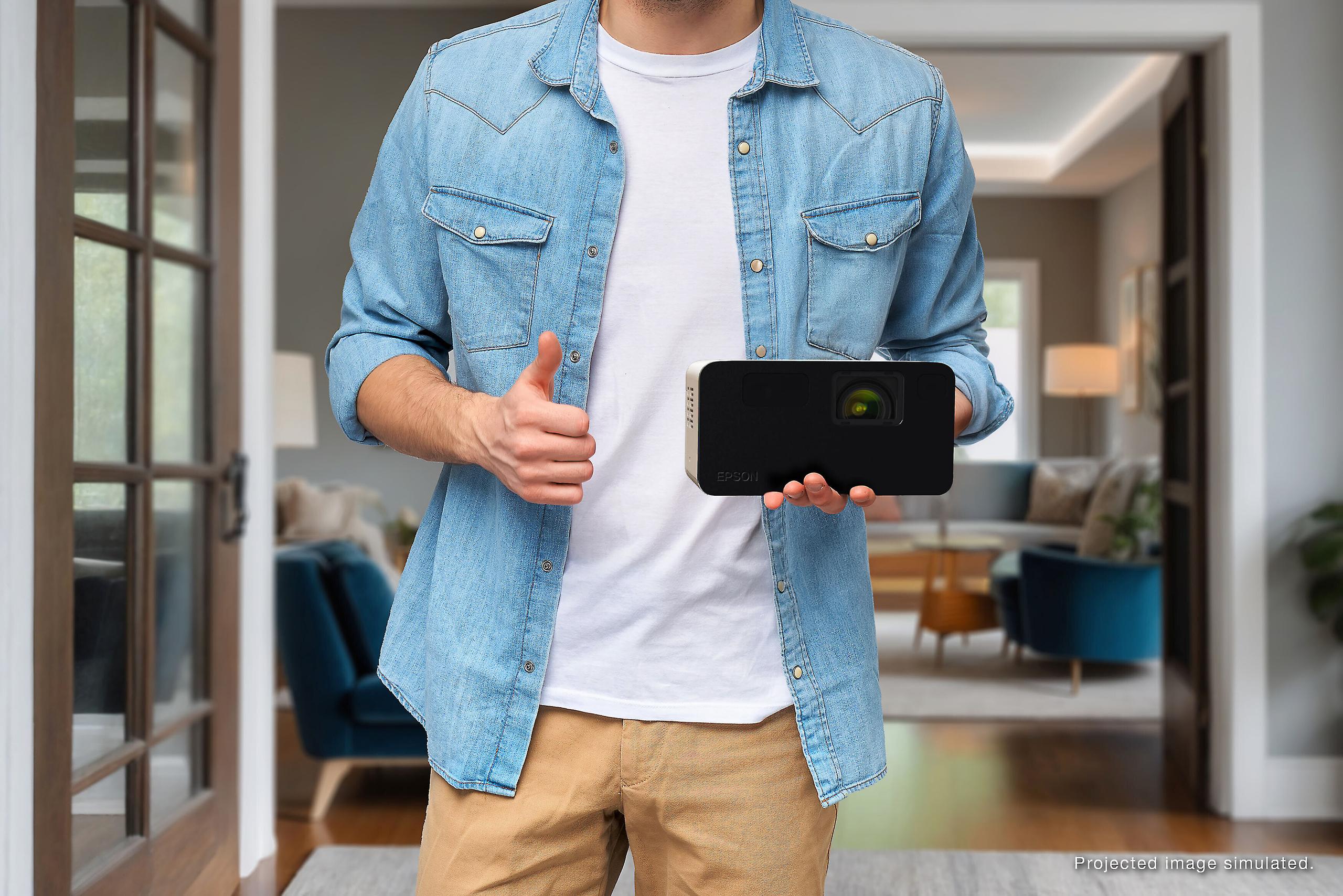
Both projectors are relatively compact and lightweight, making them suitable for users who may want to move them between rooms or take them to different locations.
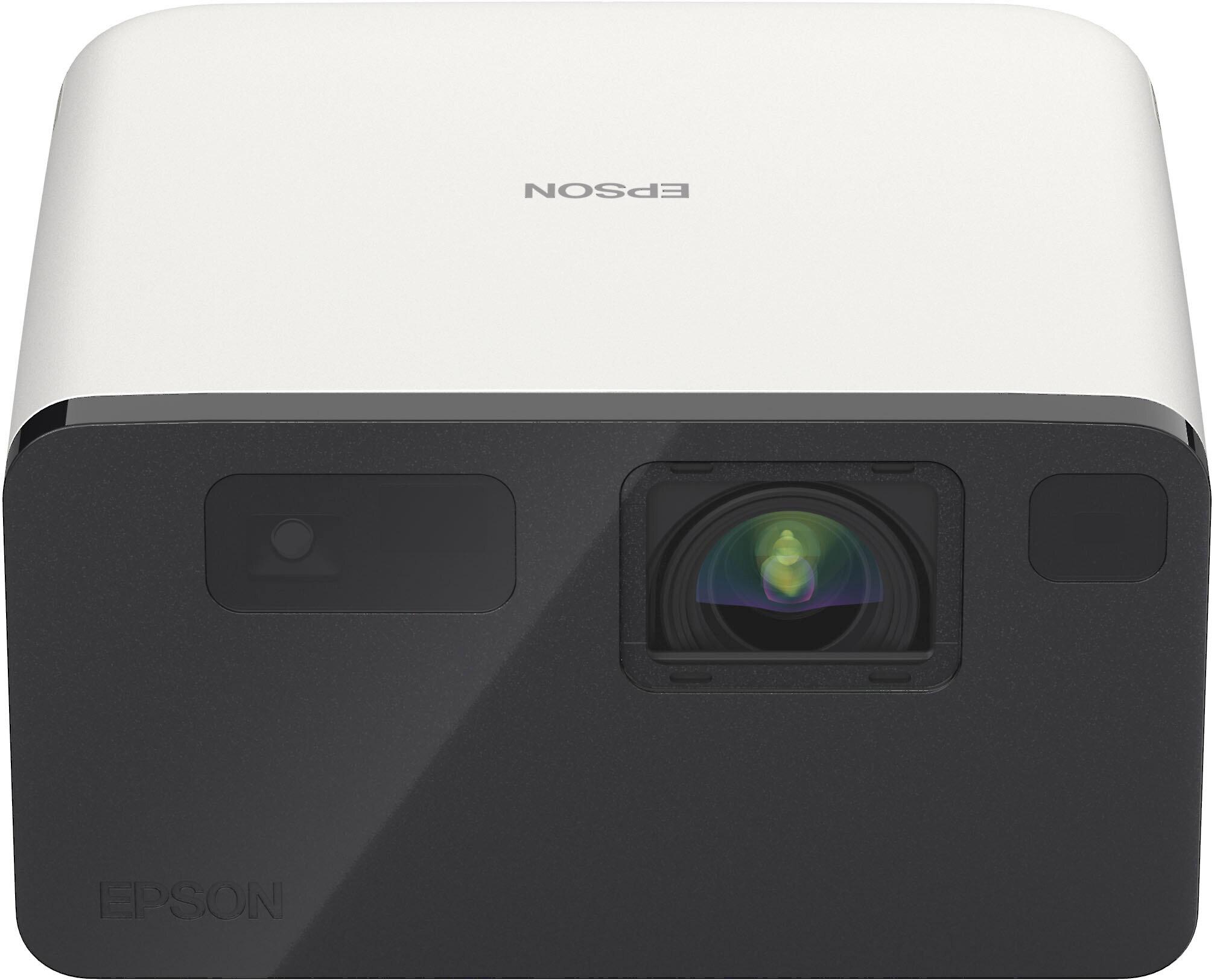
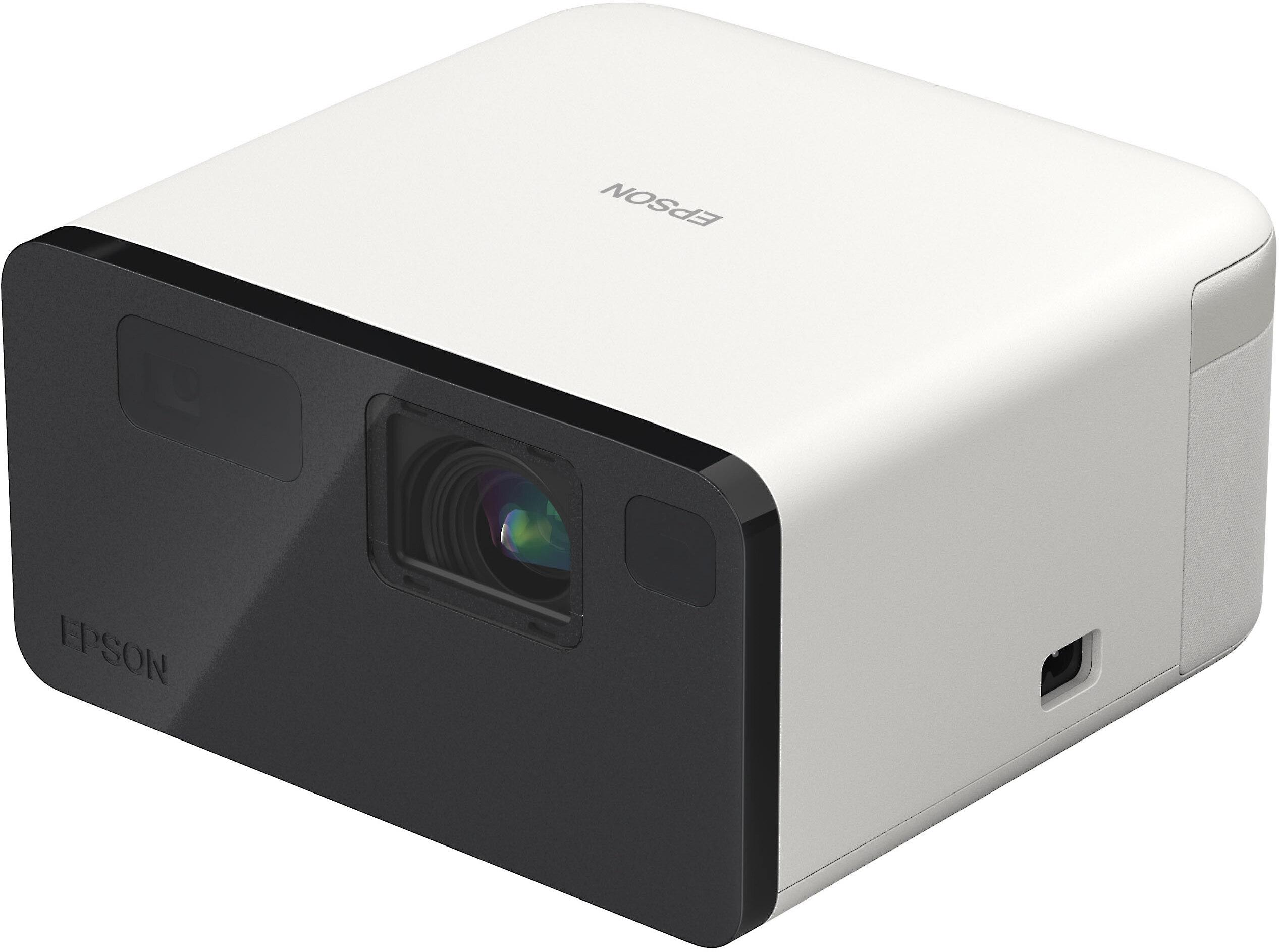
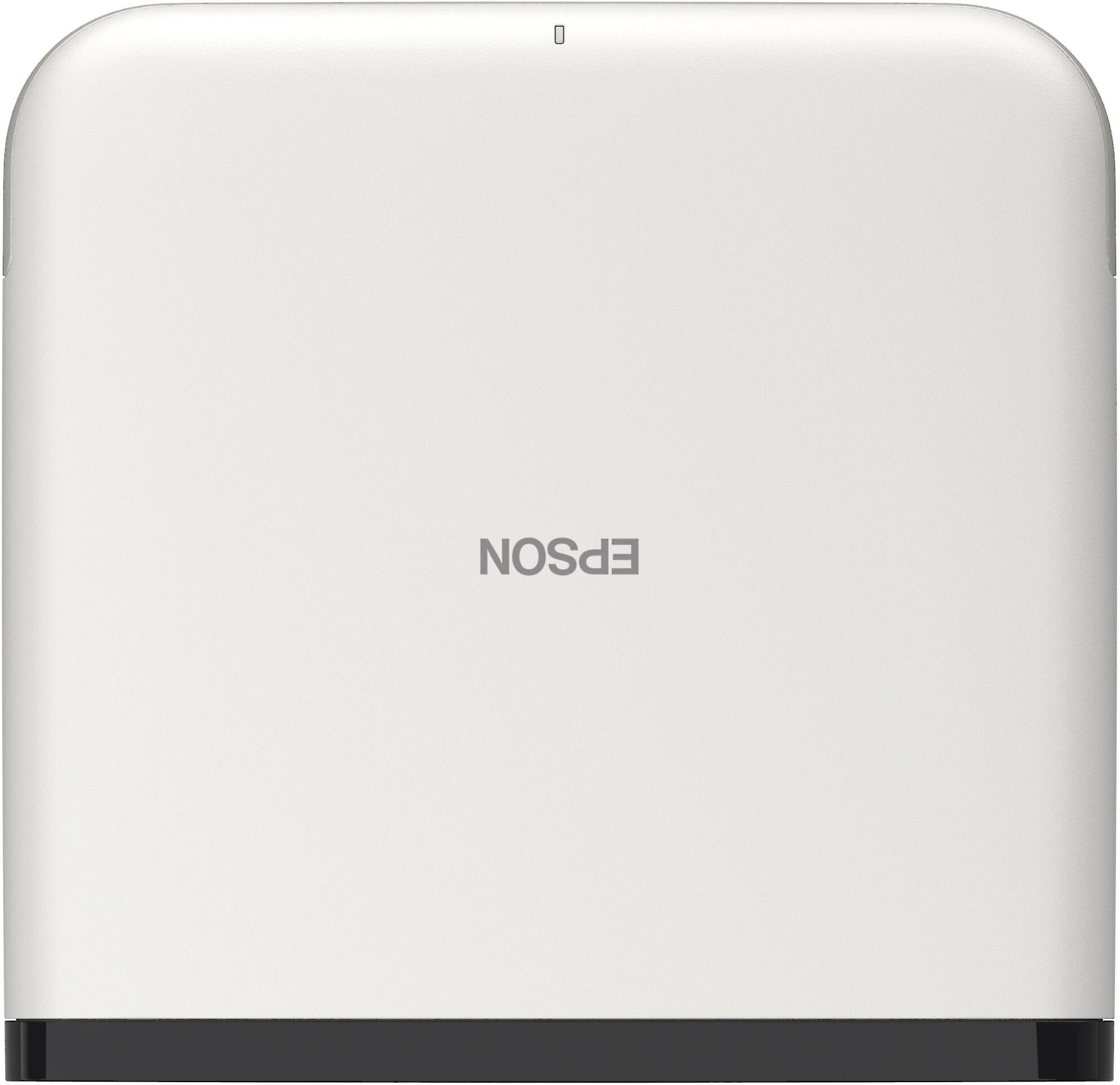
The Epson EF21 weighs 5.1 pounds and measures 7.75" x 7.5" x 4.4", with a distinctive cube-like design available in three color options (Diamond White, Opal Green, and Quartz Rose). Its automated setup features make it particularly well-suited for portable use, as it can quickly adapt to different environments.
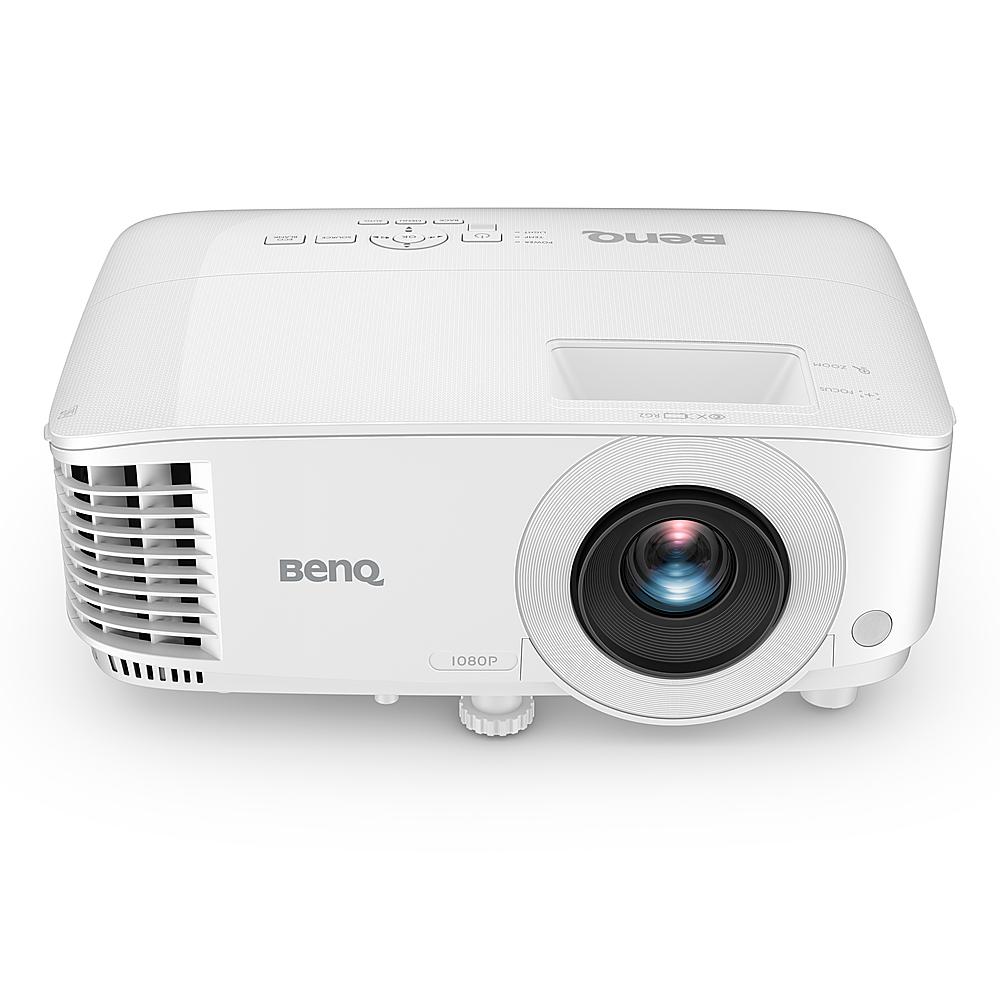
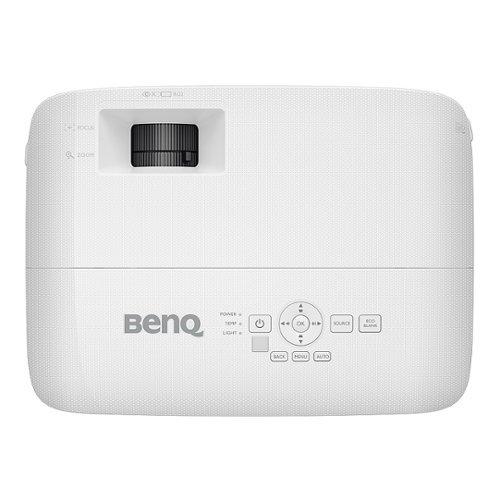
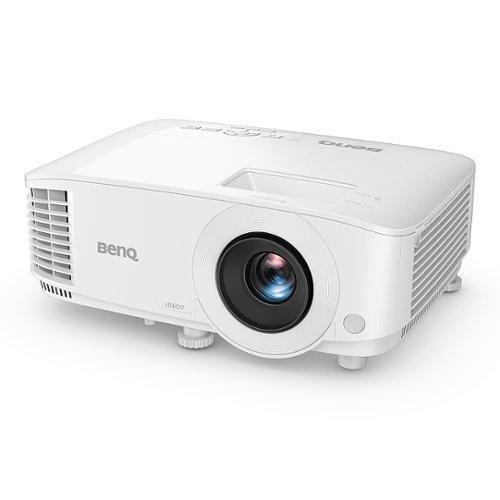
The BenQ TH575 weighs slightly more at 5.5 pounds and has a more traditional projector form factor measuring 11.7" x 4.7" x 8.7". While still portable, its setup requires more manual adjustment when moved to new locations.
Built-in audio is increasingly important for projectors, particularly for portable use or in multipurpose spaces where external speakers may not be practical.
The Epson EpiqVision Mini EF21 features a stereo speaker system (5W x 2) with Dolby Audio support. This configuration produces surprisingly robust sound with decent stereo separation for such a compact device. During testing, it delivered clear dialogue and reasonable bass response for casual viewing without external speakers.
The BenQ TH575 includes a single 10W mono speaker that provides adequate volume but less immersive sound than the Epson's stereo setup. While sufficient for gaming communication or basic program audio, serious movie watching or gaming would benefit from external speakers.
Both projectors allow connection to external audio systems, with the Epson offering the additional convenience of Bluetooth audio output to compatible speakers or headphones.
One of the most significant differences between these projectors is their light source technology, which directly impacts long-term maintenance costs and convenience.
The Epson EpiqVision Mini EF21 uses a laser light source rated for approximately 20,000 hours—equivalent to watching four hours of content daily for over 13 years. This essentially maintenance-free light source maintains consistent brightness throughout its lifespan and requires no replacement, eliminating future costs and maintenance hassles.
The BenQ TH575 employs a traditional lamp-based system with a rated lifespan of 6,000 hours in normal mode or up to 15,000 hours in eco mode. While impressive for lamp technology, this will eventually require replacement at an estimated cost of $100-200 per lamp. Additionally, lamp brightness typically diminishes gradually over time, while laser sources maintain more consistent output.
For heavy users, the Epson's maintenance-free laser system may justify its higher initial cost over time. For occasional users, the BenQ's lower upfront price might remain advantageous even considering eventual lamp replacement.
At approximately $900, the Epson EpiqVision Mini EF21 represents a premium option in the compact projector market. Its higher price reflects its advanced features including laser light source, built-in streaming platform, and automated setup technologies.
The BenQ TH575, priced around $600, delivers exceptional value for specific use cases—particularly gaming—while making some compromises in areas like smart features and light source longevity.
When evaluating price-to-performance ratio, consider your primary use case. For dedicated gamers, the BenQ's superior input lag and brightness make it the better value despite fewer features. For viewers seeking an all-in-one entertainment solution with minimal maintenance, the Epson's additional features and laser light source may justify its premium price.
After thoroughly comparing these projectors across multiple dimensions, the decision ultimately comes down to your specific priorities and use case.
Choose the BenQ TH575 if:
Choose the Epson EpiqVision Mini EF21 if:
For home theater enthusiasts with controlled lighting, both projectors can deliver excellent viewing experiences, with the Epson EF21 offering slightly more refined color performance and the BenQ TH575 providing higher brightness and contrast. Your sensitivity to specific image qualities and the lighting conditions in your viewing environment will likely be the deciding factors.
For multipurpose rooms, the BenQ's superior brightness gives it an edge in environments with ambient light, while the Epson's all-in-one functionality makes it more convenient for family use across various content types.
Ultimately, both the Epson EpiqVision Mini EF21 and BenQ TH575 excel in their respective categories. By understanding the strengths and limitations of each, you can select the projector that best aligns with your specific needs, environment, and budget—ensuring years of satisfying big-screen entertainment.
| Epson EpiqVision Mini EF21 Projector | BenQ TH575 1080p Gaming Projector |
|---|---|
| Price - Determines initial investment | |
| $899.99 (premium pricing) | $599.99 (mid-range pricing) |
| Resolution - Determines image sharpness and detail | |
| 1920 x 1080 (Full HD) | 1920 x 1080 (Full HD) |
| Brightness - Critical for rooms with ambient light | |
| 1,000 lumens (requires controlled lighting) | 3,800 ANSI lumens (excellent for bright rooms) |
| Light Source - Affects maintenance costs and lifespan | |
| Laser (up to 20,000 hours, maintenance-free) | Lamp (6,000-15,000 hours, requires replacement) |
| Projection Technology - Impacts color reproduction and image quality | |
| 3LCD (more vibrant colors, no rainbow effect) | DLP (sharper images, better contrast ratios) |
| Input Lag - Critical for gaming responsiveness | |
| Not specified (estimated 50-60ms, suitable for casual gaming) | 16.7ms (excellent for competitive gaming) |
| Smart Features - Determines need for additional devices | |
| Built-in Google TV with 10,000+ streaming apps | None (requires external streaming devices) |
| Audio System - Affects need for external speakers | |
| 5W x 2 stereo speakers with Dolby Audio | 10W mono speaker (less immersive) |
| Installation Flexibility - Impacts setup convenience | |
| Auto setup with EpiqSense technology, auto keystone correction | Manual 1.1x zoom, vertical keystone correction (±40°) |
| HDR Support - Enhances color range and contrast | |
| HDR10 and HLG support | No HDR support |
| Connectivity - Determines compatibility with other devices | |
| 1x HDMI 2.3, USB ports, Bluetooth 5.1, Wi-Fi | 2x HDMI inputs, 2x USB ports, no wireless connectivity |
| Size and Weight - Affects portability | |
| 7.75" x 7.5" x 4.4", 5.1 lbs (compact, cube design) | 11.7" x 4.7" x 8.7", 5.5 lbs (traditional projector design) |
| Intended Primary Use - Helps match to buyer needs | |
| All-in-one entertainment hub with excellent color for movies | Gaming-focused with superior brightness and response time |
The BenQ TH575 Gaming Projector is significantly better for gaming with its ultra-low 16.7ms input lag, compared to the Epson EpiqVision Mini EF21 which has higher latency. The BenQ TH575's dedicated Game Mode enhances visibility in dark scenes, giving gamers a competitive advantage. If gaming is your priority, the BenQ TH575 offers superior performance at a lower price point.
The BenQ TH575 is substantially brighter with 3,800 ANSI lumens compared to the Epson EpiqVision Mini EF21's 1,000 lumens. This makes the BenQ much better for rooms with ambient light or larger screen sizes. The Epson EF21 requires more controlled lighting conditions to achieve optimal image quality.
You don't need a streaming device with the Epson EpiqVision Mini EF21 as it features built-in Google TV with access to over 10,000 streaming apps including Netflix, Disney+, and YouTube. The BenQ TH575 doesn't have built-in streaming capabilities, so you'll need to connect external devices like a Roku, Fire TV Stick, or gaming console to stream content.
For movies, the Epson EpiqVision Mini EF21 typically offers better color reproduction thanks to its 3LCD technology and HDR10 support, providing more accurate and vibrant colors. The BenQ TH575 delivers sharper contrast and excellent brightness but lacks HDR support. In a properly darkened home theater environment, the Epson EF21 provides a more cinema-like experience with richer colors.
The Epson EpiqVision Mini EF21 is priced at around $899.99, while the BenQ TH575 costs approximately $599.99. This $300 difference reflects the Epson's additional features like built-in streaming and laser light source, though the BenQ offers better gaming performance and brightness at its lower price point.
The Epson EpiqVision Mini EF21 will cost less to maintain over time as it uses a laser light source rated for 20,000 hours with no replacement needed. The BenQ TH575 uses a traditional lamp with 6,000-15,000 hours of life (depending on mode) that will eventually require replacement at $100-200 per lamp. For long-term ownership, the Epson EF21 offers better value despite its higher initial cost.
The BenQ TH575 with its 3,800 ANSI lumens performs well in rooms with ambient light, maintaining a visible and vibrant image even during daytime with some blinds drawn. The Epson EpiqVision Mini EF21 with only 1,000 lumens requires more controlled lighting and is best used in darkened rooms for optimal image quality.
The Epson EpiqVision Mini EF21 is easier to set up in different rooms thanks to its EpiqSense technology that automatically handles focus, alignment, and obstacle avoidance. Its compact design and both horizontal and vertical keystone correction make it highly adaptable to various spaces. The BenQ TH575 requires more manual adjustment when moved, though it does offer auto vertical keystone correction.
The Epson EpiqVision Mini EF21 has better built-in audio with 5W x 2 stereo speakers and Dolby Audio support, providing adequate sound for casual viewing. The BenQ TH575 has a single 10W mono speaker that's louder but less immersive. For a true home theater experience, external speakers would benefit both projectors, but the Epson EF21 provides more satisfactory standalone audio performance.
The Epson EpiqVision Mini EF21 uses 3LCD technology with three separate color panels, producing equally bright color and white outputs with no rainbow effects. The BenQ TH575 uses DLP technology with a color wheel, which typically produces sharper images with better contrast but can sometimes create rainbow artifacts that some viewers find distracting.
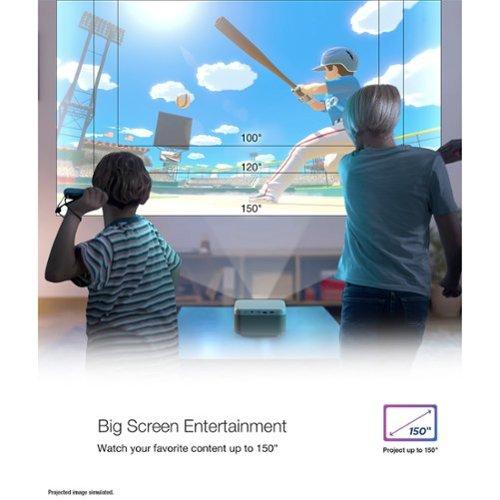
The BenQ TH575 can project images from 30" up to 300" diagonally, though its high brightness allows for larger usable screen sizes in various lighting conditions. The Epson EpiqVision Mini EF21 supports screen sizes from 30" to 150" diagonally, with optimal performance in the 80-120" range when used in properly darkened rooms.
For a dedicated home theater room with controlled lighting, the Epson EpiqVision Mini EF21 offers advantages with its superior color reproduction, HDR support, and built-in streaming capabilities providing a more complete cinema experience. The BenQ TH575 is still excellent in this environment but is optimized more for gaming than movie watching. If you're building a dedicated theater primarily for films, the Epson EF21 aligns better with traditional home theater priorities.
We've done our best to create useful and informative comparisons to help you decide what product to buy. Our research uses advanced automated methods to create this comparison and perfection is not possible - please contact us for corrections or questions. These are the sites we've researched in the creation of this article: bestbuy.com - bestbuy.com - cnet.com - youtube.com - projectorreviews.com - epson.com - projectorreviews.com - epson.com - rtings.com - epson.com - youtube.com - projectorcentral.com - bestbuy.com - projectorcentral.com - nfm.com - crutchfield.com - latin.epson.com - mediaserver.goepson.com - planettv.com - bhphotovideo.com - cnet.com - epson.com - lifeisxbox.eu - ai-techreport.com - electronics.woot.com - ai-techreport.com - laurentwillen.com - bestbuy.com - bestbuy.com - projectorcentral.com - tvsbook.com - shidirect.com - blog.richersounds.com - memoryexpress.com - versus.com - adorama.com - avsforum.com - shi.com - bestbuy.com - bhphotovideo.com - cdw.com - insight.com - shi.ca - projectorcentral.com - insight.com - specsradar.com - touchboards.com

Privacy Policy
Terms and Conditions - Affiliate Policy
Home Security
© Copyright 2008-2026.
11816 Inwood Rd #1211, Dallas, TX 75244