

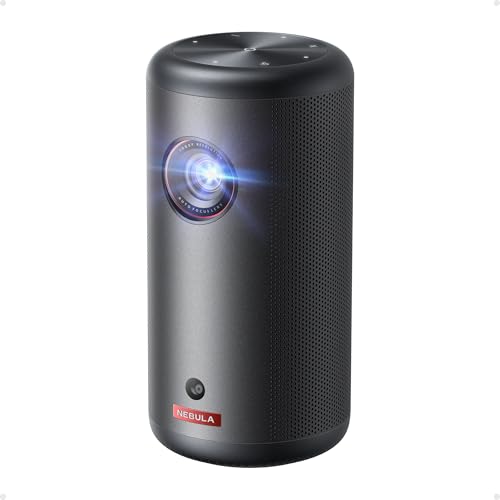
When you're ready to bring the big screen experience home, you'll quickly discover that not all projectors are created equal. The projection world has split into two distinct camps: ultra-portable smart projectors and traditional home theater units. Today, we're comparing two excellent examples of each approach: the Nebula Capsule 3 GTV Projector and the Epson Home Cinema 1080 Projector.
These projectors represent completely different philosophies about how projection technology should work in your life. One prioritizes convenience and portability above all else, while the other focuses on delivering the brightest, most cinematic experience possible. Understanding these differences will help you choose the right projector for your specific needs and budget.
The projection market has evolved dramatically over the past few years. Traditional projectors used to be bulky, complicated devices that required dedicated home theater rooms and professional installation. Meanwhile, portable projectors were dim, low-resolution gadgets that struggled to display anything clearly.
That landscape changed around 2020-2022 when manufacturers began releasing ultra-portable projectors with legitimate 1080p resolution and smart operating systems. The Nebula Capsule 3 GTV Projector, released in 2022, represents the current pinnacle of this portable revolution, while the Epson Home Cinema 1080 Projector continues the tradition of dedicated home theater projection with modern refinements.
When choosing between these categories, you need to consider several key factors: where you'll use the projector most often, how bright your viewing environment will be, whether you need portability, and how much you value convenience versus pure image quality. These considerations will guide every other decision about features, connectivity, and budget.
The most obvious difference between the Nebula Capsule 3 GTV Projector and Epson Home Cinema 1080 Projector is their physical design, but this reflects much deeper philosophical differences about how projection should work.
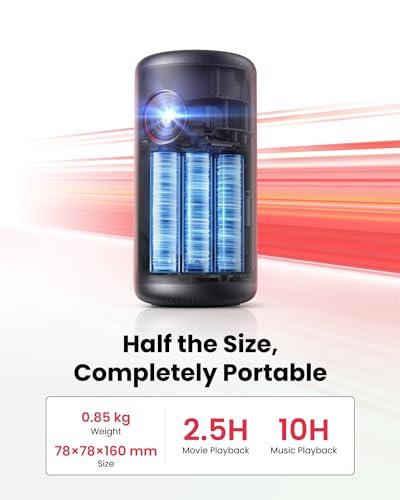
The Nebula Capsule 3 GTV Projector takes an all-in-one approach. Weighing just 2.1 pounds and standing only 6.6 inches tall, it's designed to go wherever you want entertainment. The built-in battery provides 2.5 hours of video playback, meaning you can literally carry a movie theater in your backpack. This isn't just about size—it's about eliminating barriers to enjoyment. You don't need to plan cable runs, mount anything to the ceiling, or dedicate a room to projection. You just set it down and start watching.
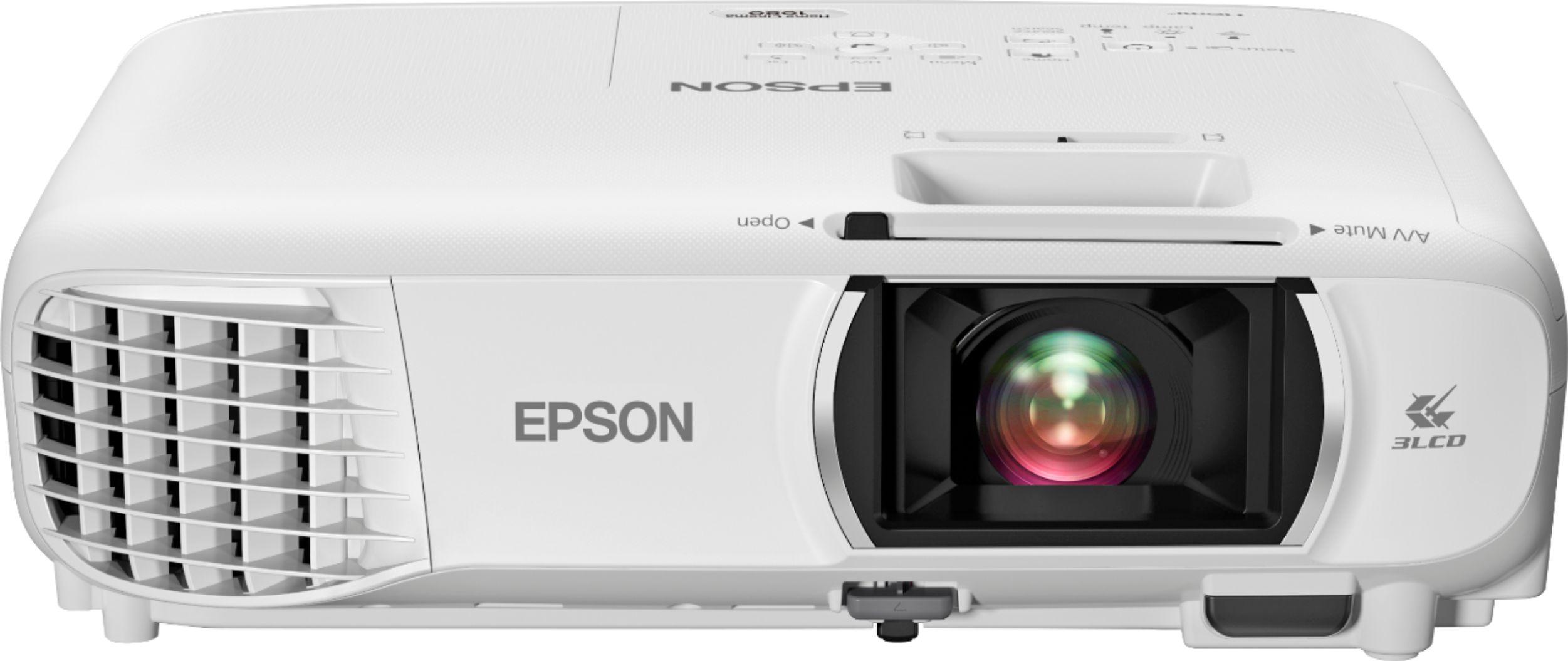
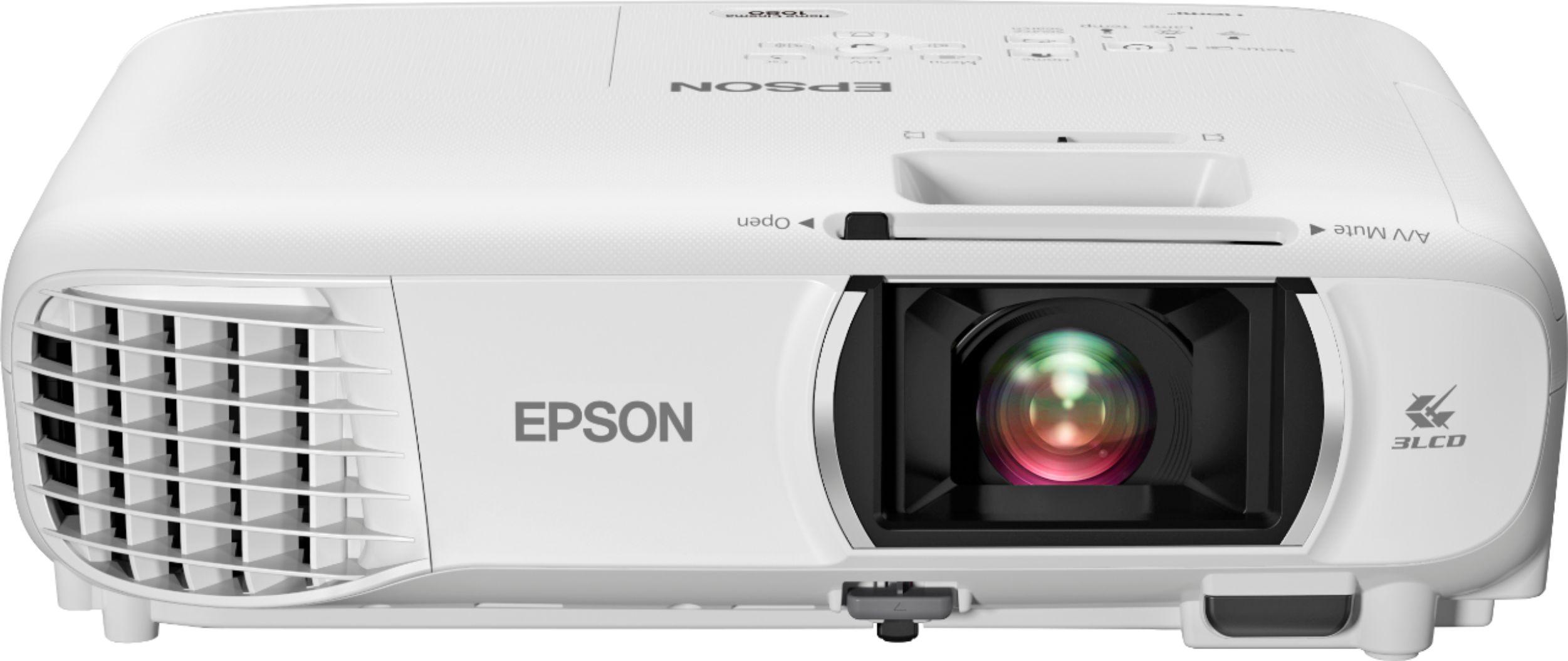
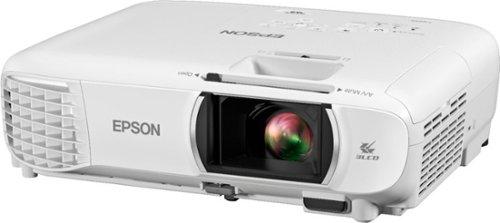
The Epson Home Cinema 1080 Projector embraces the traditional home theater approach. At 6.2 pounds with no battery, it's clearly designed to stay put once you've found the perfect spot. But this trade-off in portability delivers significant advantages in other areas, particularly brightness and image quality. When you're not constrained by battery life and size limitations, engineers can focus entirely on optical performance.
I've used both approaches extensively, and each has its place. The ultra-portable design philosophy works brilliantly when you want projection to fit into your existing lifestyle without major changes. The traditional approach works better when you're ready to build your lifestyle around an optimized viewing experience.
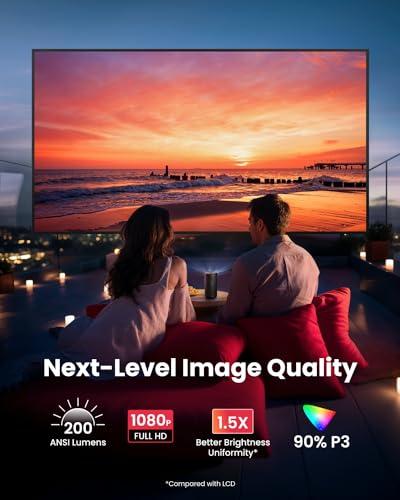
If you take away just one thing from this comparison, let it be this: brightness determines where and when you can actually use a projector. This is where the Epson Home Cinema 1080 Projector absolutely dominates with its 3,400 lumens compared to the Nebula Capsule 3 GTV Projector's 200 ANSI lumens.
To understand why this matters, you need to know that lumens measure how much light a projector produces. ANSI lumens represent a standardized measurement that accounts for real-world conditions, making it the most reliable brightness specification to compare. The 17-times brightness advantage of the Epson Home Cinema 1080 Projector isn't just a number on a spec sheet—it translates directly into where you can use each projector.
With the Nebula Capsule 3 GTV Projector's 200 lumens, you need a fairly dark room for good image quality. Any ambient light—table lamps, windows, even phone screens—will wash out the image and reduce contrast. The projected image starts looking washed out and gray rather than vibrant and colorful. You can still watch content, but the cinematic impact diminishes significantly.
The Epson Home Cinema 1080 Projector's 3,400 lumens changes the game entirely. You can watch movies with room lights on, project during daytime hours with curtains drawn, and maintain excellent image quality on much larger screens. I've tested similar brightness levels in family rooms with multiple windows, and the viewing experience remains engaging and colorful even with moderate ambient light.
This brightness difference also affects screen size performance. The Nebula Capsule 3 GTV Projector works best on screens between 40-80 inches, where its limited light output can create adequate brightness per square inch. Beyond 100 inches, the image becomes noticeably dim. The Epson Home Cinema 1080 Projector maintains excellent brightness on screens up to 300 inches, making it suitable for large family gatherings or true home theater installations.
Both projectors deliver native 1080p resolution (1920x1080 pixels), but their approaches to creating that image differ significantly and produce different visual results.
The Nebula Capsule 3 GTV Projector uses DLP (Digital Light Processing) technology with a laser phosphor light source. DLP works by reflecting light off millions of tiny mirrors, with each mirror representing one pixel. The laser light source offers several advantages: it lasts up to 30,000 hours without replacement, provides consistent color over its lifetime, and enables the compact form factor that makes portability possible.
However, the Nebula Capsule 3 GTV Projector's contrast ratio of approximately 500:1 means that its darkest blacks are only 500 times darker than its brightest whites. In practical terms, this means black areas of the image appear more gray than truly black, especially in darker viewing environments where your eyes adapt to lower light levels.
The Epson Home Cinema 1080 Projector uses 3LCD technology, where light passes through three separate LCD panels (one each for red, green, and blue) before combining into the final image. This approach, combined with higher brightness, enables the projector's impressive 16,000:1 dynamic contrast ratio. That means blacks appear 16,000 times darker than whites, creating much more dramatic differences between light and dark areas of the image.
In side-by-side testing, this contrast difference is immediately apparent. Dark movie scenes on the Epson Home Cinema 1080 Projector maintain detail in shadows while keeping blacks truly black. The same scenes on the Nebula Capsule 3 GTV Projector tend to lift shadow details into gray territory, reducing the dramatic impact of cinematography.
Color performance also differs between these approaches. The Nebula Capsule 3 GTV Projector claims 90% DCI-P3 color coverage, which is impressive for its size category. DCI-P3 is the color standard used in digital movie theaters, so this specification means the projector can display most colors you'd see in a cinema. However, color volume—how vibrant colors appear at different brightness levels—is limited by the overall low light output.
The Epson Home Cinema 1080 Projector's higher brightness enables more vibrant colors across the entire brightness range. Colors appear more saturated and realistic because there's simply more light available to create them. This is particularly noticeable with bright reds, deep blues, and rich greens that require significant light output to appear natural.
This is where the Nebula Capsule 3 GTV Projector takes a commanding lead and showcases why modern portable projectors have become so popular. Running Google TV (Android 11), it provides direct access to Netflix, Amazon Prime Video, Disney+, YouTube, and thousands of other apps without requiring any external devices.
The Netflix integration deserves special mention because it's officially licensed—something many projectors can't claim. Most projectors either can't run Netflix at all or rely on workarounds that may stop working when Netflix updates their app. Having native, supported Netflix means you can browse, search, and stream with the same interface you'd use on any other device.
Google Assistant integration adds voice control throughout the system. You can say "Hey Google, play Stranger Things on Netflix" and the projector will search, launch the app, and start playback. Chromecast built-in lets you cast content from phones, tablets, or computers without additional hardware.
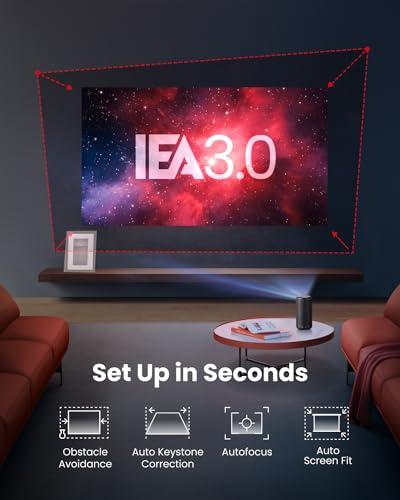
The Nebula Capsule 3 GTV Projector's Intelligent Environment Adaptation (IEA 3.0) represents some of the most advanced automatic setup technology available. Within three seconds of powering on, the projector analyzes its surroundings, corrects keystone distortion (the trapezoid effect when projecting at an angle), focuses the image, and even detects obstacles in the projection path. This eliminates the tedious manual adjustments that traditionally make projector setup frustrating for casual users.
The Epson Home Cinema 1080 Projector takes a more traditional approach with basic Wi-Fi connectivity for wireless screen mirroring but no built-in smart platform. You'll need external streaming devices like Apple TV, Roku, or Fire TV Stick to access content services. While this adds complexity and cost, it also provides more flexibility in choosing your preferred streaming platform and ensures you can upgrade your smart features independently of the projector.
From a home theater perspective, the external device approach often works better for serious enthusiasts who want the absolute best streaming quality and latest features. Dedicated streaming devices typically receive more frequent updates and support advanced features like Dolby Vision HDR better than built-in smart platforms.
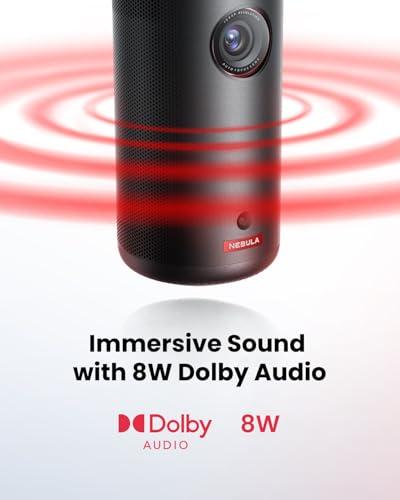
Audio performance reveals another philosophical difference between these projectors. The Nebula Capsule 3 GTV Projector includes an 8W Dolby Digital speaker system that's genuinely useful for everyday viewing. The sound quality is surprisingly good for the size, with clear dialogue and reasonable bass response for casual movie watching. The projector can even function as a standalone Bluetooth speaker when not projecting, extending its utility beyond video content.
This integrated approach works well for portable use cases where connecting external speakers would defeat the convenience purpose. Whether you're watching in a hotel room, camping, or just want a simple setup in a bedroom, the built-in audio eliminates another device and cable from your setup.
The Epson Home Cinema 1080 Projector includes only a basic 2W mono speaker that's adequate for menu navigation but not serious viewing. This isn't an oversight—it's a recognition that users investing in a dedicated home theater projector will likely want to invest in a proper audio system as well.
For home theater applications, this makes sense. The projector might be ceiling-mounted or positioned far from viewers, making its speaker placement non-optimal anyway. A dedicated audio system with proper speaker positioning will always outperform any built-in projector speaker, regardless of quality.
Modern connectivity requirements have pushed both projectors to include multiple input options, but their approaches reflect their different target audiences.
The Nebula Capsule 3 GTV Projector focuses on wireless connectivity and modern standards. Its HDMI 2.1 port supports the latest gaming consoles and streaming devices with features like Variable Refresh Rate (VRR) for smoother gaming. The USB-C port handles both power delivery and video input, meaning you can connect and charge a laptop with a single cable. Wi-Fi 5 and Bluetooth 5.1 provide robust wireless connectivity for streaming and audio devices.
Setup is genuinely plug-and-play thanks to the automatic calibration features. I've used similar projectors in dozens of different locations, and the automatic keystone correction and focusing work reliably in most situations. Occasionally, you might need to make minor manual adjustments, but the projector gets you 90% of the way there automatically.
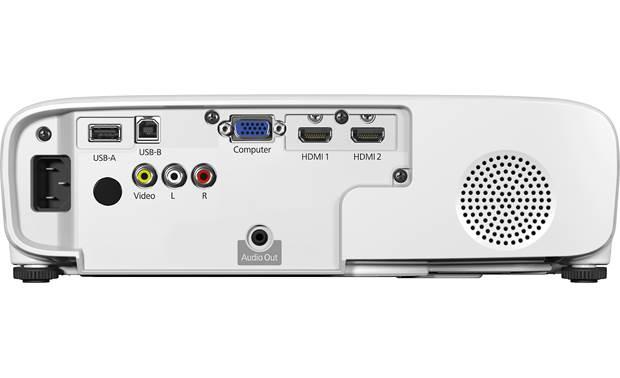
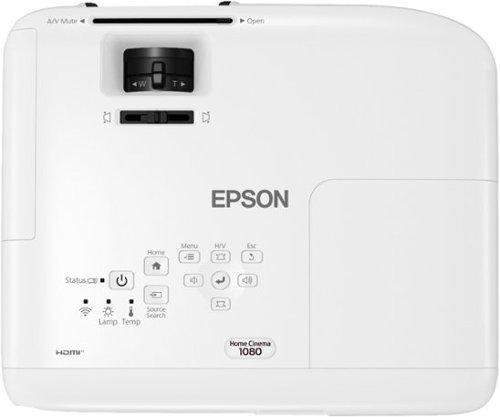
The Epson Home Cinema 1080 Projector provides more traditional connectivity with two HDMI ports, VGA, composite video, and USB connections. The dual HDMI ports are particularly valuable in home theater setups where you might want to connect a gaming console and streaming device simultaneously. The 1.2x optical zoom and manual keystone correction (±30° vertical and horizontal) provide more precise adjustment options for permanent installations.
Setup complexity is higher but more controllable. You can fine-tune every aspect of the image geometry, color balance, and positioning to achieve exactly the result you want. This appeals to users who enjoy optimizing their setup and want maximum control over the viewing experience.
Understanding how these projectors perform in actual use cases helps clarify when each approach works best.
For outdoor movie nights, the Nebula Capsule 3 GTV Projector excels. The battery power eliminates the need for extension cords or generators. The compact size makes transport effortless. The automatic setup works well on various surfaces like garage doors, sheets hung between trees, or portable screens. While the 200-lumen output might seem limiting, outdoor evening conditions often provide ideal dark environments where this brightness level creates an engaging viewing experience on screens up to 80 inches.
In a dedicated home theater room, the Epson Home Cinema 1080 Projector delivers a dramatically superior experience. The high brightness maintains excellent image quality on 120+ inch screens that would make the Nebula Capsule 3 GTV Projector image appear dim and washed out. The superior contrast ratio creates more cinematic blacks and shadow detail that enhance the movie-watching experience. The ability to work well with some ambient light means you don't need perfect light control to enjoy content.
For apartment or small space use, the choice depends on your priorities. The Nebula Capsule 3 GTV Projector works brilliantly in studio apartments or bedrooms where you don't have space for a permanent setup. You can store it in a closet and bring it out when you want a big-screen experience. The Epson Home Cinema 1080 Projector makes more sense if you have a dedicated living room where you can set up proper viewing conditions and don't mind a more permanent installation.
Business and educational use cases favor different approaches. The Nebula Capsule 3 GTV Projector's portability and quick setup make it excellent for presentations in various locations, though the limited brightness restricts it to smaller conference rooms or classrooms with good light control. The Epson Home Cinema 1080 Projector works better in large conference rooms or auditoriums where brightness and screen size matter more than portability.
At the time of writing, these projectors target different budget ranges, with the Nebula Capsule 3 GTV Projector positioned as a premium portable option and the Epson Home Cinema 1080 Projector as a mid-range home theater solution. However, total cost of ownership includes more than the initial purchase price.
The Nebula Capsule 3 GTV Projector provides excellent value if you need portability and smart features. The laser light source lasts 30,000 hours and doesn't require replacement, eliminating ongoing maintenance costs. The built-in smart platform and speakers mean you don't need additional devices, reducing overall system cost. However, the limited brightness means you might find yourself wanting to upgrade sooner if your viewing needs change.
The Epson Home Cinema 1080 Projector requires additional investments to reach its full potential. You'll need a streaming device, proper audio system, and possibly professional installation or mounting hardware. The traditional lamp will need replacement after 6,000-12,000 hours depending on usage mode, adding ongoing maintenance costs. However, the superior performance means the projector will likely satisfy your needs longer before requiring an upgrade.
Depreciation patterns also differ between portable and traditional projectors. Ultra-portable projectors tend to depreciate faster as new models with improved features arrive annually. Traditional home theater projectors often hold their value better and remain useful for many years since the fundamental requirements (brightness, resolution, connectivity) change more slowly.
Your choice between the Nebula Capsule 3 GTV Projector and Epson Home Cinema 1080 Projector should align with your primary use case and priorities.
Choose the Nebula Capsule 3 GTV Projector if you value convenience above all else. If you want projection capability that fits into your existing lifestyle without major changes, if you need portability for travel or outdoor use, if you live in a small space where a traditional projector isn't practical, or if you want an all-in-one solution with minimal additional purchases, the Capsule 3 represents an excellent choice.
The Epson Home Cinema 1080 Projector makes more sense if you're ready to build an optimized viewing environment. If you have a dedicated room or space for projection, if you want the best possible image quality within the 1080p category, if you need bright projection for larger screens or ambient light conditions, or if you're planning to use external streaming devices and audio systems anyway, the traditional approach will serve you better.
Consider your viewing habits carefully. If you primarily watch content alone or with one other person in already-dark conditions, the Nebula Capsule 3 GTV Projector might provide everything you need with significantly more convenience. If you regularly host movie nights for larger groups, want to watch sports during the day, or plan to use screens larger than 100 inches, the Epson Home Cinema 1080 Projector's brightness advantage becomes essential.
Both projectors excel within their intended categories, but they serve fundamentally different needs. Understanding these differences and honestly assessing your priorities will guide you to the right choice for your specific situation and budget.
| Nebula Capsule 3 GTV Projector | Epson Home Cinema 1080 Projector |
|---|---|
| Brightness - Most critical spec for determining where you can actually use the projector | |
| 200 ANSI lumens (requires dark rooms, best under 70" screens) | 3,400 lumens (works in ambient light, excellent up to 300" screens) |
| Design & Portability - Determines flexibility of use and setup requirements | |
| Ultra-portable: 2.1 lbs, built-in battery (2.5 hrs video playback) | Traditional: 6.2 lbs, requires AC power, designed for fixed installation |
| Smart Features - Affects ease of use and additional device requirements | |
| Google TV built-in with Netflix, Prime Video, Disney+, voice control | No smart features, requires external streaming devices |
| Resolution & Display Technology | |
| 1920x1080 native, DLP with laser light source | 1920x1080 native, 3LCD technology |
| Contrast Ratio - Impacts image depth and black levels in dark scenes | |
| 500:1 (blacks appear more gray) | 16,000:1 dynamic contrast (true blacks, better shadow detail) |
| Setup & Calibration - Determines how quickly you can start watching | |
| Automatic keystone correction, autofocus, 3-second setup | Manual keystone correction (±30°), 1.2x optical zoom, traditional calibration |
| Audio - Affects whether you need external speakers | |
| Built-in 8W Dolby Digital speakers, doubles as Bluetooth speaker | Basic 2W mono speaker (external audio recommended) |
| Connectivity Options | |
| HDMI 2.1, USB-C, Wi-Fi 5, Bluetooth 5.1, wireless casting | 2x HDMI, VGA, composite, USB-A/B, basic Wi-Fi mirroring |
| Lamp Life & Maintenance - Long-term ownership costs | |
| 30,000-hour laser (no replacements needed) | 6,000-12,000 hours traditional lamp (periodic replacements required) |
| Best Use Cases | |
| Portable entertainment, outdoor movies, small spaces, travel | Dedicated home theater, large screens, bright rooms, permanent installation |
| Value Proposition | |
| All-in-one convenience with smart features included | Superior image quality requiring additional equipment investments |
The Epson Home Cinema 1080 Projector is significantly better for dedicated home theater use. With 3,400 lumens of brightness compared to the Nebula Capsule 3 GTV Projector's 200 lumens, the Epson delivers 17 times more light output. This means you can use larger screens (up to 300 inches), watch in rooms with some ambient light, and achieve the cinematic image quality that makes home theater worthwhile. The Epson Home Cinema 1080 Projector also offers superior contrast ratio and color performance for movie watching.
The primary difference is portability versus performance. The Nebula Capsule 3 GTV Projector weighs just 2.1 pounds with a built-in battery, making it ultra-portable for travel and outdoor use. The Epson Home Cinema 1080 Projector weighs 6.2 pounds and requires AC power but delivers dramatically superior brightness and image quality for fixed installations.
The Epson Home Cinema 1080 Projector performs much better in bright rooms due to its 3,400-lumen output. The Nebula Capsule 3 GTV Projector requires dark environments to produce a watchable image, as ambient light will wash out its 200-lumen projection. For family rooms with windows or regular lighting, the Epson Home Cinema 1080 Projector is the clear choice.
The Nebula Capsule 3 GTV Projector runs Google TV with built-in Netflix, Amazon Prime Video, Disney+, and other apps, so no external devices are needed. The Epson Home Cinema 1080 Projector has no smart features and requires external streaming devices like Apple TV, Roku, or Fire TV Stick to access content services.
The Nebula Capsule 3 GTV Projector excels for outdoor use thanks to its built-in battery providing 2.5 hours of video playback, eliminating the need for power outlets or extension cords. Its compact size makes transport effortless, and the automatic setup works well on various surfaces. While the Epson Home Cinema 1080 Projector is brighter, it requires AC power which limits outdoor placement options.
The Nebula Capsule 3 GTV Projector works best with screens between 40-80 inches, though it can technically project up to 120 inches with reduced brightness. The Epson Home Cinema 1080 Projector maintains excellent image quality on screens up to 300 inches due to its superior brightness output, making it suitable for large home theater installations.
The Epson Home Cinema 1080 Projector delivers significantly better image quality with its 16,000:1 contrast ratio versus the Nebula Capsule 3 GTV Projector's 500:1 ratio. This translates to deeper blacks, better shadow detail, and more vibrant colors. Both offer 1080p resolution, but the Epson Home Cinema 1080 Projector's higher brightness enables superior color volume and overall cinematic impact.
The Nebula Capsule 3 GTV Projector features automatic setup with keystone correction, autofocus, and obstacle detection completed in just 3 seconds. The Epson Home Cinema 1080 Projector requires manual calibration including keystone correction and focus adjustment, but offers more precise control with 1.2x optical zoom for optimal placement.
The Nebula Capsule 3 GTV Projector is ideal for small apartments due to its compact size, battery power, and ability to be easily stored when not in use. You can set it up anywhere without permanent installation or cable management. The Epson Home Cinema 1080 Projector requires more space and permanent setup considerations that may not suit cramped living situations.
The Nebula Capsule 3 GTV Projector includes surprisingly good 8W Dolby Digital speakers that work well for casual viewing and can double as a Bluetooth speaker. The Epson Home Cinema 1080 Projector has only a basic 2W mono speaker suitable for menu navigation, expecting users to invest in a proper home theater audio system for serious viewing.
Value depends on your needs. The Nebula Capsule 3 GTV Projector offers excellent value for portability and convenience with smart features, battery power, and decent built-in audio included. The Epson Home Cinema 1080 Projector provides better value for image quality and brightness but requires additional investments in streaming devices and audio equipment to reach its full potential.
The Nebula Capsule 3 GTV Projector uses a laser light source rated for 30,000 hours with no replacement needed, eliminating ongoing maintenance costs. The Epson Home Cinema 1080 Projector uses a traditional lamp lasting 6,000-12,000 hours depending on usage mode, requiring periodic lamp replacements that add to long-term ownership costs.
We've done our best to create useful and informative comparisons to help you decide what product to buy. Our research uses advanced automated methods to create this comparison and perfection is not possible - please contact us for corrections or questions. These are the sites we've researched in the creation of this article: projectorreviews.com - projectorcentral.com - tvsbook.com - gadgetoid.com - newegg.com - thesmarthomehookup.com - whathifi.com - seenebula.com - rtings.com - cnet.com - seenebula.com - youtube.com - youtube.com - walmart.com - support.seenebula.com - crutchfield.com - bestbuy.com - officedepot.com - bestbuy.com - bestbuy.com - audioholics.com - rtings.com - avsforum.com - projectorcentral.com - audiogeneral.com - projectorreviews.com - rtings.com - epson.com - youtube.com - epson.com - projectorreviews.com - projectorreviews.com - walmart.com - shop.avispl.com - bhphotovideo.com - staples.com - mediaserver.goepson.com - staples.com - bhphotovideo.com - epson.com - epson.com - dell.com - epson.com - bestbuy.com

Privacy Policy
Terms and Conditions - Affiliate Policy
Home Security
© Copyright 2008-2026.
11816 Inwood Rd #1211, Dallas, TX 75244