

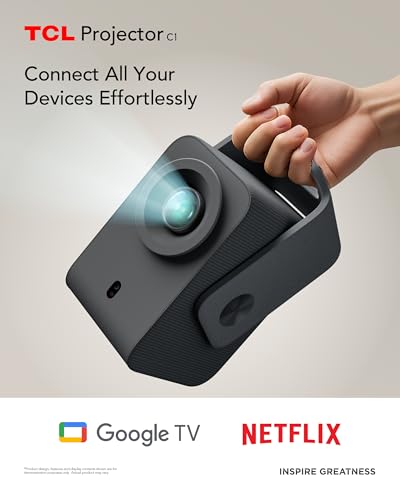
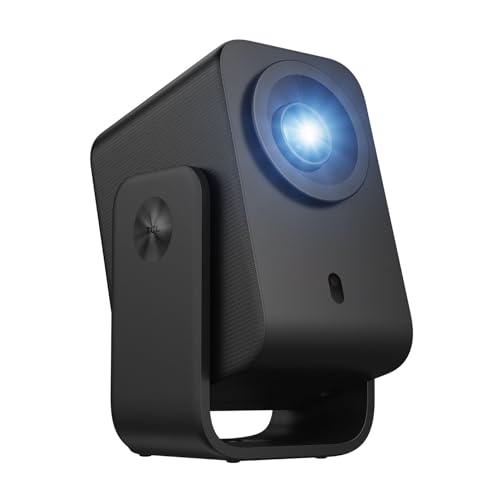

The projector world has split into two fascinating camps. On one side, you have ultra-portable smart projectors like the TCL C1 Google TV Portable Projector that can stream Netflix right out of the box. On the other, traditional home theater projectors like the Epson Home Cinema 1080 prioritize raw brightness and color accuracy over convenience. This divide represents fundamentally different approaches to home entertainment, and choosing between them depends entirely on how you plan to watch movies and shows.
The projector market has evolved dramatically since 2020. Traditional projectors focused on brightness measured in lumens (the amount of light output) and required separate streaming devices, sound systems, and careful room setup. Modern portable projectors integrate smart TV operating systems, auto-adjustment features, and prioritize convenience over maximum performance.
This shift reflects how we consume media today. Streaming services dominate, people move frequently, and many prefer flexible entertainment solutions over permanent installations. The TCL C1, released in 2025, embodies this new philosophy with built-in Google TV and a unique gimbal design. The Epson Home Cinema 1080, launched in 2020, represents the traditional approach with professional-grade brightness and comprehensive connectivity.
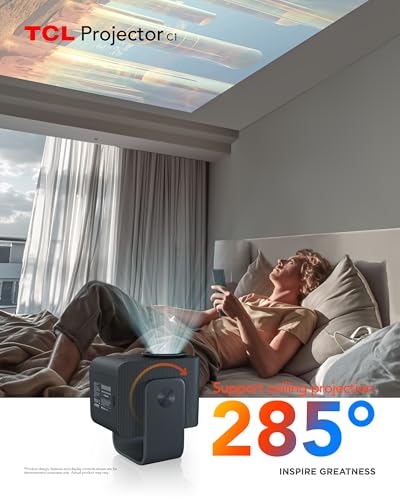
The most striking difference between these projectors is their approach to mobility. The TCL C1 weighs just 3.9 pounds and includes an integrated handle with a revolutionary 285-degree rotating gimbal. This gimbal acts like a ball joint, letting you point the projector in almost any direction—even straight up at the ceiling for stargazing movie nights. The projector's footprint is roughly the size of a CD case, making it genuinely portable.
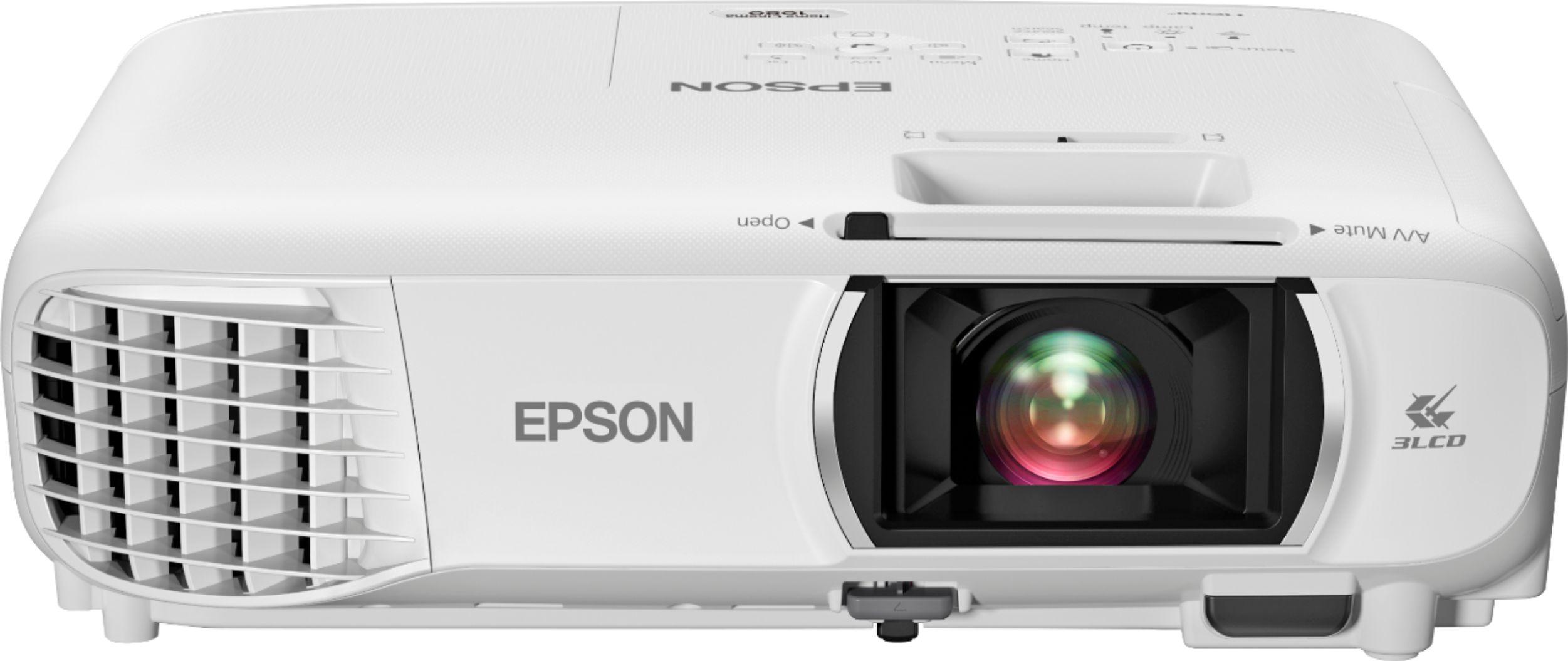
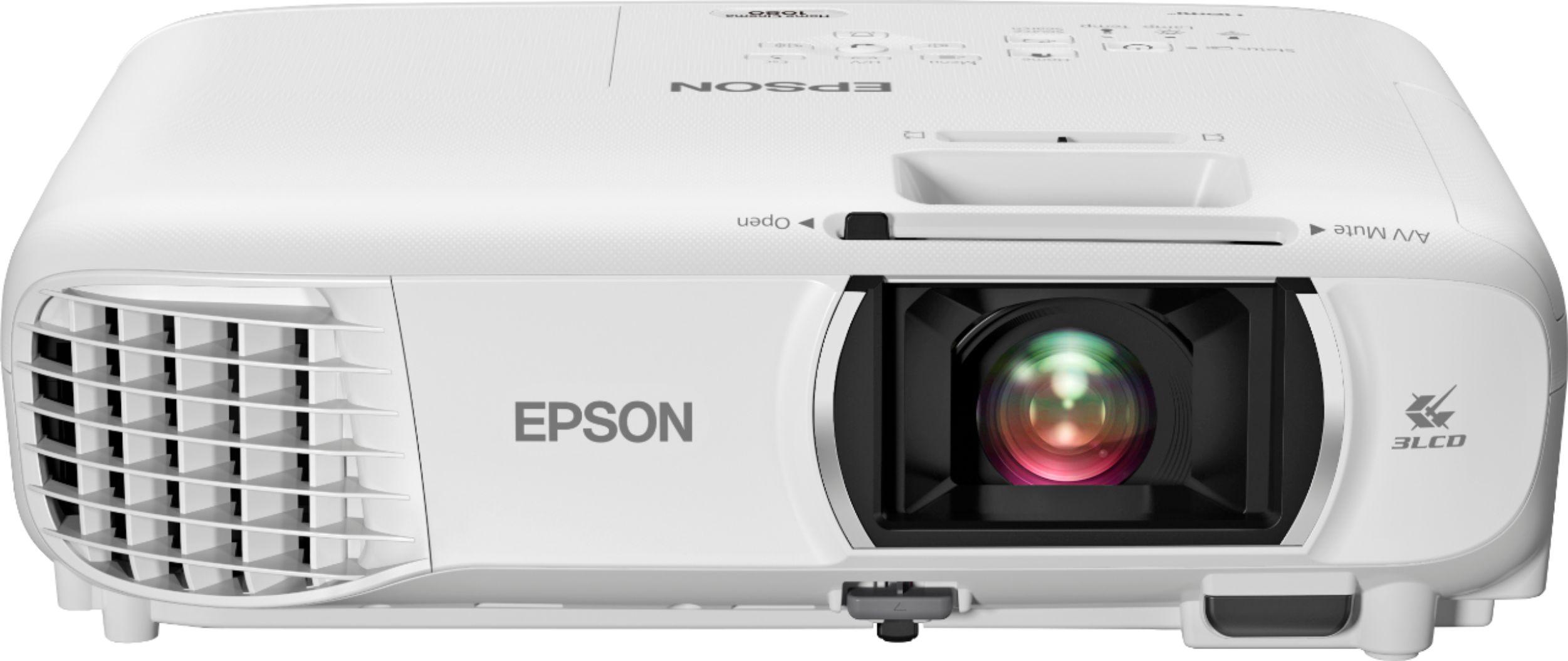
Compare this to the Epson Home Cinema 1080 at 6.2 pounds with traditional rectangular housing. While not massive, it's clearly designed to stay put once installed. The Epson includes mounting threads for ceiling installation and expects to remain in one location, connected to multiple devices through its various input ports.
This portability difference affects everything else. The TCL C1 uses an LED light source that lasts 30,000 hours and never needs replacement, while the Epson uses a traditional UHE (Ultra High Efficiency) lamp lasting 6,000-12,000 hours before requiring a costly replacement bulb. LED technology runs cooler and consumes less power (65 watts vs. 345 watts), making portable operation practical.
Here's where these projectors diverge most dramatically. The Epson Home Cinema 1080 produces 3,400 ISO lumens, while the TCL C1 manages 230 ISO lumens. That's nearly a 15-fold difference in raw light output.
ISO lumens represent standardized brightness measurements, different from the inflated "ANSI lumens" or marketing lumens some manufacturers claim. This massive brightness gap determines where each projector can actually be used. The Epson can produce watchable images in moderately lit rooms and maintain color saturation even with some ambient light. You could watch it during an overcast afternoon with curtains drawn.
The TCL C1 demands darkness. In a well-lit room, its image becomes washed out and difficult to see. However, in dark environments, this brightness difference becomes less critical. Your eyes adapt, and the TCL's 230 lumens provide perfectly adequate brightness for movie watching in dim conditions.
This brightness limitation isn't necessarily a dealbreaker. Many people primarily watch movies at night with lights dimmed anyway. The TCL C1 excels in bedrooms, basements, or outdoor evening gatherings where you can control lighting conditions.
Both projectors use LCD (Liquid Crystal Display) technology, but their implementations differ significantly. The Epson Home Cinema 1080 employs 3LCD technology—essentially three separate LCD panels (one each for red, green, and blue) that combine to create the final image. This approach typically produces more accurate colors and reduces the "rainbow effect" some people notice with single-chip projectors.
The TCL C1 uses a single LCD panel with LED backlighting and includes TCL's proprietary TrueHue technology. This system analyzes each frame and optimizes color and contrast in real-time, producing what reviewers describe as smooth, film-like images. The sealed optical engine prevents dust from entering the projection system—a common problem with traditional projectors that can degrade image quality over time.
Contrast ratio—the difference between the brightest whites and darkest blacks—heavily favors the Epson at 16,000:1 versus the TCL's 1,500:1. Higher contrast ratios mean more detail in dark scenes and more vivid overall images. However, these specifications don't tell the complete story. The LED light source in the TCL C1 maintains consistent brightness over its lifetime, while traditional lamps gradually dim.
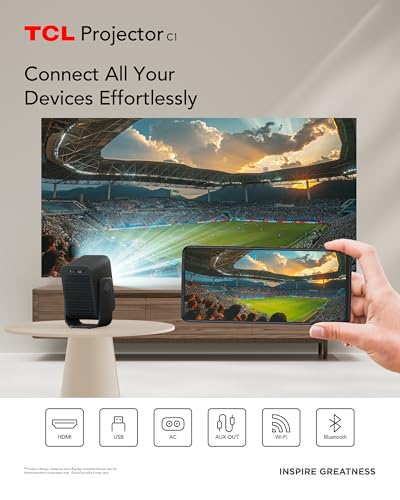
This represents perhaps the most significant philosophical difference between these projectors. The TCL C1 runs Google TV, essentially turning it into a massive smart TV that happens to use projection instead of a built-in screen. You get immediate access to Netflix, YouTube, Disney+, Spotify, and thousands of other apps without connecting any external devices. Google Assistant integration allows voice control, and Chromecast support enables easy content sharing from phones and tablets.
The Epson Home Cinema 1080 takes the traditional approach—it's essentially a display that requires external devices for content. You'll need to connect a streaming stick, cable box, gaming console, or other source device. This isn't necessarily negative; many enthusiasts prefer dedicated streaming devices like Apple TV or Nvidia Shield for better performance and more features than built-in smart systems.
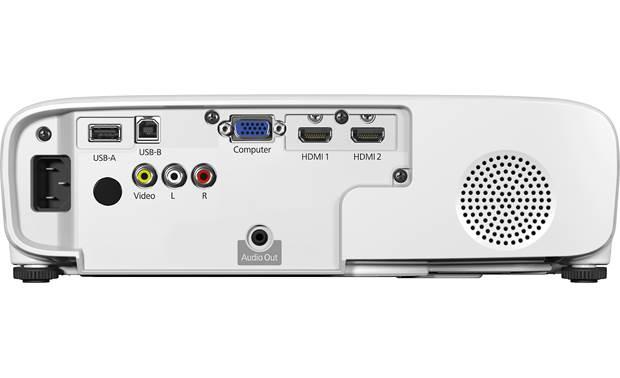
Connectivity options reflect these different approaches. The Epson offers two HDMI inputs, VGA (for older computers), composite video, and multiple USB ports. The TCL C1 includes one HDMI 2.1 port, USB-A, and wireless connectivity through Wi-Fi 5 and Bluetooth 5.1.
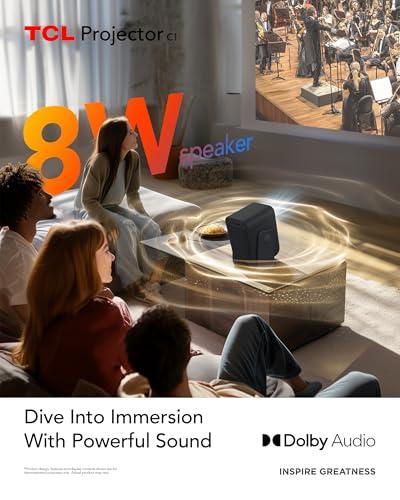
Sound quality often gets overlooked in projector comparisons, but it significantly affects the viewing experience. The TCL C1 includes an 8-watt speaker with Dolby Audio processing—surprisingly robust for a portable device. Reviewers consistently note it's loud enough to fill small to medium rooms and produces clear dialogue. The projector can even function as a Bluetooth speaker for music when not projecting video.
The Epson Home Cinema 1080 includes a minimal 2-watt mono speaker that's essentially useless for serious viewing. This aligns with its target audience—people building dedicated home theaters typically invest in separate sound systems. However, it means additional cost and complexity for anyone expecting decent audio out of the box.
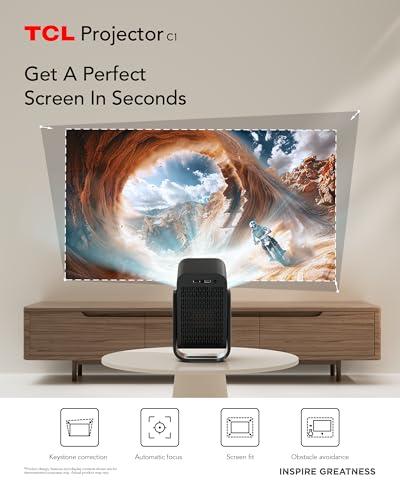
Modern projector buyers increasingly value convenience, and the TCL C1 delivers transformative ease of use. Auto-focus ensures sharp images instantly, while omni-directional keystone correction automatically squares the image regardless of projector angle. Obstacle avoidance detects objects in the projection path and adjusts accordingly, while screen alignment fits the image to available wall space.
These features eliminate the traditional projector setup frustration of manual focus rings, keystone adjustment wheels, and careful positioning. You literally power on the TCL C1 and start watching within seconds.
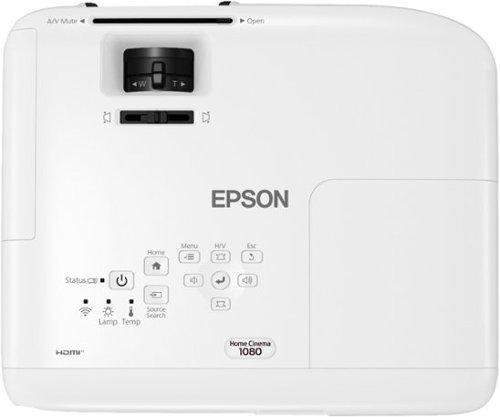
The Epson Home Cinema 1080 requires traditional manual setup. You'll adjust focus, correct keystone distortion, and potentially deal with color calibration for optimal results. While more involved, this hands-on approach allows precise customization impossible with automated systems.
Throw distance—how far the projector sits from the screen—affects room layout and installation options. The TCL C1 projects 40-120 inch images from approximately 3.8 to 13 feet away. Its compact size and flexible gimbal make unconventional placement possible, like projecting from a coffee table onto the ceiling.
The Epson Home Cinema 1080 handles 30-300 inch screens with throw distances from 2.7 to 22 feet. This enormous range accommodates everything from small bedrooms to large dedicated theaters. The 1.2x optical zoom provides placement flexibility without digital image degradation.
For home theater applications, larger screens generally provide more immersive experiences. The Epson's ability to produce bright, color-accurate images at 200+ inches makes it suitable for serious cinephiles wanting theater-like experiences.
Both projectors handle gaming adequately for casual players. The TCL C1 supports 4K input through its HDMI 2.1 port (downscaled to 1080p output) with acceptably low input lag. The Epson offers dual HDMI 1.4 inputs, though these older standards limit bandwidth for high-refresh gaming.
Neither projector targets competitive gaming where millisecond response times matter. For console gaming, movie watching, and casual PC gaming, both perform well, with the Epson's larger screen capability potentially providing more immersive experiences.
The TCL C1 virtually eliminates ongoing maintenance. Its LED light source lasts 30,000 hours—potentially decades of normal use—and the sealed optical system prevents dust accumulation. Beyond occasional cleaning, it requires no servicing.
Traditional lamp-based projectors like the Epson need periodic bulb replacements. At 6,000-12,000 hours depending on usage mode, you'll replace the lamp several times over the projector's lifetime. Replacement bulbs typically cost $150-200, adding significant long-term expense.
At the time of writing, the TCL C1 costs significantly less than the Epson Home Cinema 1080—roughly one-third the price. This dramatic cost difference reflects their different target markets and feature sets.
The TCL provides exceptional value for anyone wanting large-screen entertainment without major investment or permanent installation. Its all-in-one design eliminates costs for streaming devices, while LED technology avoids lamp replacement expenses.
The Epson delivers professional-grade performance justifying its higher price for serious home theater enthusiasts. Superior brightness, color accuracy, and connectivity options support larger, more demanding installations.
For dedicated home theater rooms, the Epson Home Cinema 1080 generally makes more sense. Its exceptional brightness maintains image quality on large screens, while superior contrast ratios and color accuracy produce more cinematic experiences. Multiple HDMI inputs accommodate various sources without constant cable swapping.
However, the TCL C1 could work in smaller home theaters where portability and convenience outweigh maximum performance. Its streaming integration and simple setup appeal to families wanting movie nights without technical complexity.
Choose the TCL C1 Google TV Portable Projector if you:
The TCL excels for apartment dwellers, college students, frequent movers, and anyone wanting flexible entertainment options. Its unique ceiling projection capability creates novel viewing experiences impossible with traditional TVs or projectors.
Choose the Epson Home Cinema 1080 if you:
The Epson suits homeowners building dedicated entertainment spaces, families with large living rooms, and enthusiasts wanting the best possible 1080p projection experience.
These projectors represent entirely different philosophies rather than direct competitors. The TCL C1 Google TV Portable Projector reimagines projectors as portable smart devices prioritizing convenience and modern features. The Epson Home Cinema 1080 delivers traditional home theater excellence with professional brightness and connectivity.
Your choice depends on viewing habits, room constraints, and priorities. For maximum flexibility and value, the TCL C1 provides remarkable capabilities at an accessible price point. For dedicated home theater installations demanding maximum performance, the Epson justifies its higher cost with superior brightness and image quality.
Both projectors serve their intended audiences well, representing the evolution of projection technology in different directions. The future likely holds both approaches—portable smart projectors for flexible entertainment and high-performance models for serious installations.
| TCL C1 Google TV Portable Projector | Epson Home Cinema 1080 Projector |
|---|---|
| Brightness - Most critical spec for room compatibility and image visibility | |
| 230 ISO lumens (requires dark/dim rooms) | 3,400 ISO lumens (works in moderately lit spaces) |
| Portability - Determines where and how you can use the projector | |
| 3.9 lbs with integrated handle and 285° gimbal design | 6.2 lbs, designed for stationary installation |
| Smart Features - Built-in streaming vs external device requirements | |
| Google TV 11 with Netflix, YouTube, Disney+ built-in | No smart features, requires external streaming devices |
| Setup Convenience - Time from power-on to viewing | |
| Auto-focus, auto-keystone, obstacle avoidance (instant setup) | Manual focus and keystone adjustment required |
| Screen Size Range - Maximum viewing experience potential | |
| 40-120 inches (optimal for smaller spaces) | 30-300 inches (supports large home theaters) |
| Audio Quality - Built-in sound capability | |
| 8-watt Dolby Audio speaker (room-filling sound) | 2-watt mono speaker (external speakers required) |
| Light Source Lifespan - Long-term maintenance costs | |
| 30,000-hour LED (never needs replacement) | 6,000-12,000 hour UHE lamp (requires periodic replacement) |
| Connectivity Options - Device compatibility and flexibility | |
| 1x HDMI 2.1, USB-A, Wi-Fi, Bluetooth | 2x HDMI 1.4, VGA, USB ports, composite video |
| Image Technology - Color accuracy and visual quality | |
| Single LCD with TrueHue optimization and sealed optics | 3LCD technology with superior color accuracy |
| Contrast Ratio - Detail in dark scenes and overall image depth | |
| 1,500:1 (adequate for casual viewing) | 16,000:1 (excellent black levels and shadow detail) |
| Power Consumption - Energy efficiency and heat generation | |
| 65 watts (energy efficient, cool operation) | 345 watts (requires adequate ventilation) |
| Unique Features - Standout capabilities that differentiate each model | |
| Ceiling projection capability, dust-proof sealed engine | Professional installation options, dynamic iris |
| Target User - Best suited for which type of buyer | |
| Renters, casual viewers, portability-focused users | Homeowners, dedicated theater rooms, image quality enthusiasts |
The Epson Home Cinema 1080 is significantly better for dedicated home theater setups. With 3,400 lumens of brightness compared to the TCL C1's 230 lumens, the Epson can produce large, vibrant images up to 300 inches even in moderately lit rooms. Its 3LCD technology and 16,000:1 contrast ratio deliver superior color accuracy and deeper blacks essential for cinematic experiences.
The fundamental difference is portability versus performance. The TCL C1 Google TV Portable Projector weighs just 3.9 pounds with built-in streaming and a unique gimbal design for flexible placement. The Epson Home Cinema 1080 is a stationary projector focused on maximum brightness and image quality for permanent installations.
Only the Epson Home Cinema 1080 works reasonably well in daylight conditions due to its 3,400-lumen brightness. The TCL C1 requires dark or dimly lit rooms for optimal viewing, as its 230 lumens will appear washed out in bright environments.
The TCL C1 Google TV Portable Projector has comprehensive streaming built-in with Google TV, Netflix, YouTube, Disney+, and thousands of other apps. The Epson Home Cinema 1080 has no smart features and requires external streaming devices like Roku, Apple TV, or Fire Stick.
The TCL C1 has a much better built-in audio system with an 8-watt Dolby Audio speaker that can fill small to medium rooms. The Epson Home Cinema 1080 only has a basic 2-watt mono speaker that requires external speakers or a sound system for meaningful audio.
The TCL C1 Google TV Portable Projector is dramatically easier to use with auto-focus, automatic keystone correction, and obstacle avoidance that creates a perfect image instantly. The Epson Home Cinema 1080 requires manual focus adjustment, keystone correction, and careful positioning for optimal results.
The Epson Home Cinema 1080 supports much larger screens from 30 to 300 inches, making it ideal for large rooms and dedicated theaters. The TCL C1 projects 40 to 120-inch images, which works well for apartments, bedrooms, and smaller spaces.
The TCL C1 Google TV Portable Projector uses an LED light source lasting 30,000 hours with no maintenance required. The Epson Home Cinema 1080 uses a traditional lamp lasting 6,000-12,000 hours before needing replacement, adding ongoing costs.
The Epson Home Cinema 1080 provides more comprehensive connectivity with two HDMI ports, VGA, USB ports, and composite video for connecting multiple devices simultaneously. The TCL C1 has one HDMI 2.1 port, USB-A, and wireless connectivity, focusing on simplicity over quantity.
Yes, the Epson Home Cinema 1080 is designed for ceiling mounting with standard mounting threads and professional installation options. The TCL C1 Google TV Portable Projector can technically be ceiling mounted, but its portability and gimbal design make it more suited for table placement and flexible positioning.
Both handle casual gaming well, but the TCL C1 has a slight edge with HDMI 2.1 support for newer gaming consoles and lower input lag. The Epson Home Cinema 1080 offers dual HDMI 1.4 inputs and larger screen capability but uses older connection standards.
The TCL C1 Google TV Portable Projector has lower long-term costs with no lamp replacements needed, lower power consumption (65W vs 345W), and no need for external streaming devices. The Epson Home Cinema 1080 requires periodic lamp replacements and typically needs external audio and streaming solutions, increasing total ownership costs over time.
We've done our best to create useful and informative comparisons to help you decide what product to buy. Our research uses advanced automated methods to create this comparison and perfection is not possible - please contact us for corrections or questions. These are the sites we've researched in the creation of this article: youtube.com - thegadgetflow.com - notebookcheck.net - shopabunda.com - youtube.com - youtube.com - youtube.com - youtube.com - tcl.com - androidauthority.com - manuals.plus - westcoast.co.uk - crutchfield.com - bestbuy.com - officedepot.com - bestbuy.com - bestbuy.com - audioholics.com - rtings.com - avsforum.com - projectorcentral.com - audiogeneral.com - projectorreviews.com - rtings.com - epson.com - youtube.com - epson.com - projectorreviews.com - projectorreviews.com - walmart.com - shop.avispl.com - bhphotovideo.com - staples.com - mediaserver.goepson.com - staples.com - bhphotovideo.com - epson.com - epson.com - dell.com - epson.com - bestbuy.com

Privacy Policy
Terms and Conditions - Affiliate Policy
Home Security
© Copyright 2008-2026.
11816 Inwood Rd #1211, Dallas, TX 75244