







When it comes to portable projectors, 2024 marked a turning point in the technology. We saw the emergence of truly smart portable units that could rival traditional home theater setups in convenience, if not always in raw power. Two standout models from this year perfectly illustrate the different directions this category has taken: the Anker Nebula Mars 3 Air and the Epson EpiqVision Mini EF21.
Having spent considerable time with both projectors, I can tell you they represent fundamentally different approaches to the same goal—bringing big-screen entertainment anywhere you want it. But "portable" means very different things to these two devices, and understanding those differences is crucial to making the right choice.
Before diving into these specific models, it's worth understanding what we're looking for in a portable projector. Unlike the massive home theater units of the past, modern portable projectors need to balance several competing demands: brightness, battery life, size, and image quality.
The biggest challenge has always been brightness. Traditional projectors pump out thousands of lumens (the measurement of light output), but doing so requires substantial power and generates significant heat. Portable units must work within the constraints of battery power and compact cooling systems, which means compromises.
Another key consideration is the light source technology. Older projectors used replaceable bulbs that would dim over time and eventually burn out. Modern portable units typically use either LED arrays or laser light sources, both of which last much longer and maintain consistent brightness throughout their lives.
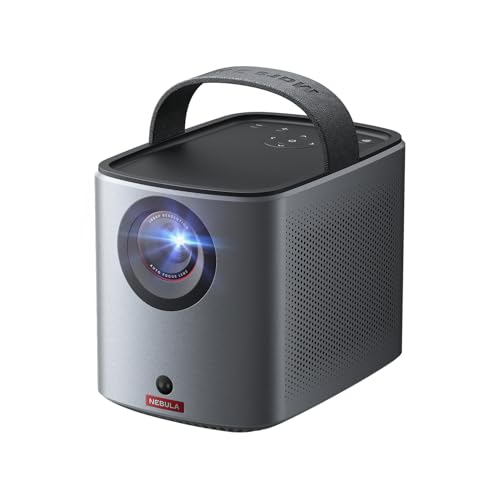
The Mars 3 Air represents what I consider the gold standard for truly portable projection. Released in early 2024, it was marketed as the world's first portable projector with Google TV and built-in Netflix support—a claim that, while marketing-heavy, actually reflects some meaningful technical achievements.
The most obvious advantage is the built-in battery. The 65.8Wh battery provides about 2.5 hours of movie playback, which might not sound like much until you consider the alternatives. Most "portable" projectors in this class require a wall outlet, severely limiting where you can actually use them.
The Mars 3 Air uses DLP (Digital Light Processing) technology, which is essentially a chip covered in millions of tiny mirrors that tilt to create the image. This approach tends to produce sharper images with better contrast than some alternatives, though it can create a "rainbow effect"—brief flashes of color separation that some people notice when they move their eyes quickly across bright scenes.
At 400 ANSI lumens, the brightness is respectable for battery-powered projection. ANSI lumens is the industry standard measurement that accounts for how the light is distributed across the entire image, not just the brightest spot. In practical terms, 400 ANSI lumens means you'll get a watchable image in a darkened room, though you'll want to minimize ambient light for the best experience.
Where the Mars 3 Air really shines is audio. The dual 8-watt speakers with Dolby Audio processing produce surprisingly full sound for such a compact device. Most portable projectors have tinny, weak audio that forces you to connect external speakers. The Mars 3 Air's speakers are good enough that you might not bother with external audio for casual viewing.
Even better, it doubles as a Bluetooth speaker when not projecting, with up to 8 hours of battery life in this mode. This feature transforms it from a single-purpose device into something genuinely useful for outdoor gatherings, even when you're not watching movies.
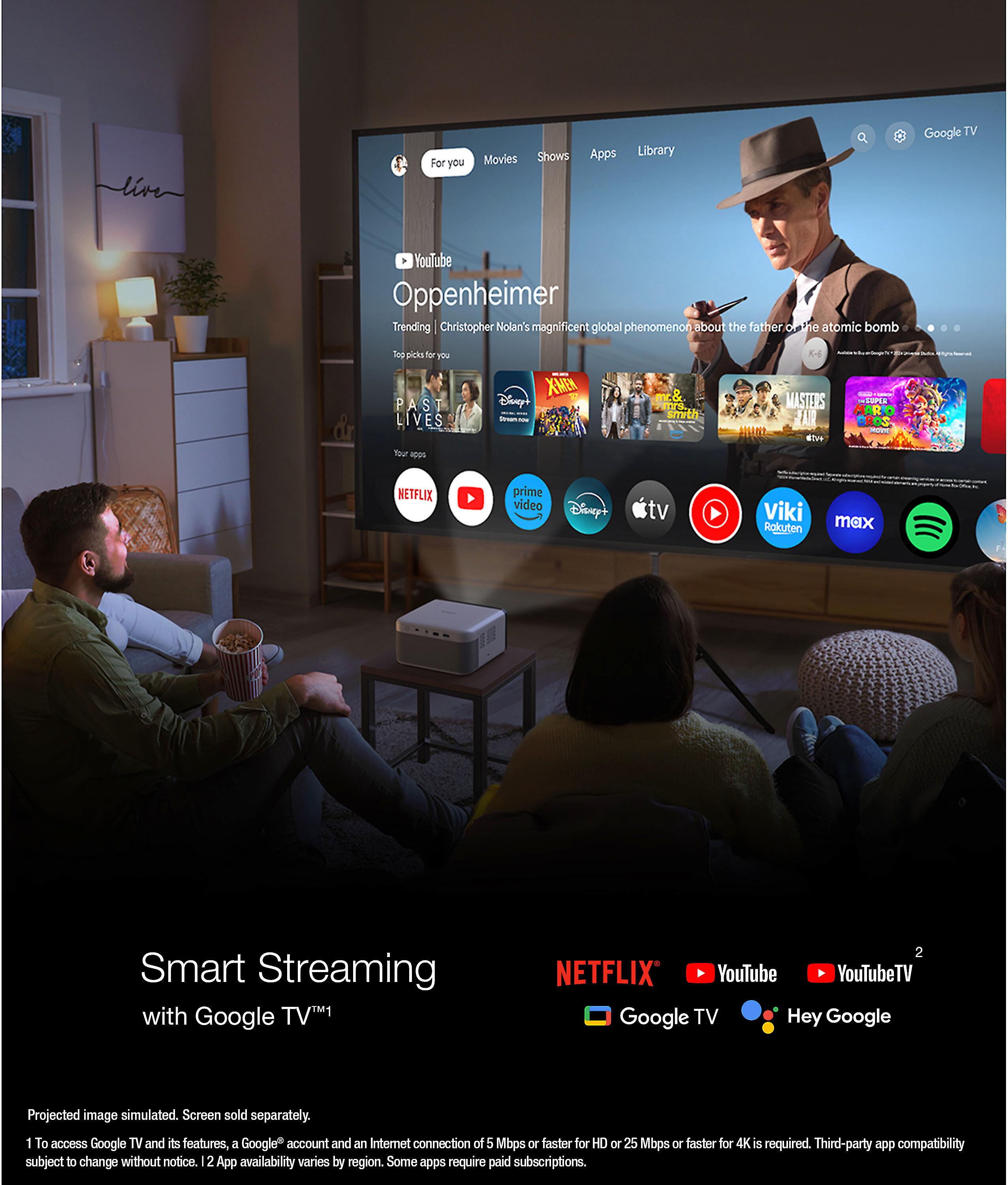
The Google TV integration deserves special mention. Unlike many projectors that slap Android onto their hardware as an afterthought, the Mars 3 Air was designed from the ground up to work seamlessly with streaming services. The native Netflix app is properly optimized for the projector's capabilities, avoiding the lag and compatibility issues that plague many portable units.
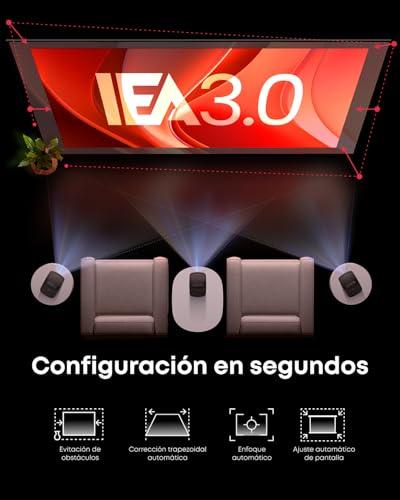
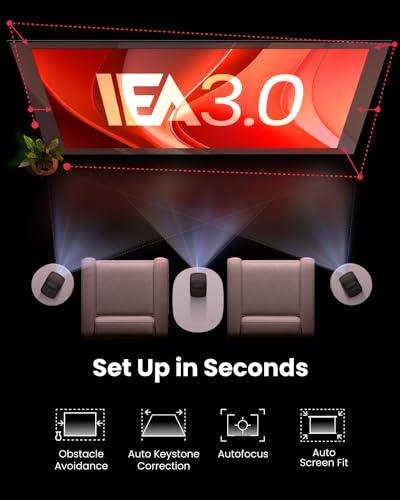
The Intelligent Environment Adaptation 3.0 system automatically handles focus, keystone correction (fixing the trapezoidal distortion when projecting at an angle), and even obstacle avoidance. This might sound gimmicky, but in practice, it means you can set the projector down almost anywhere and get a properly aligned image within seconds.
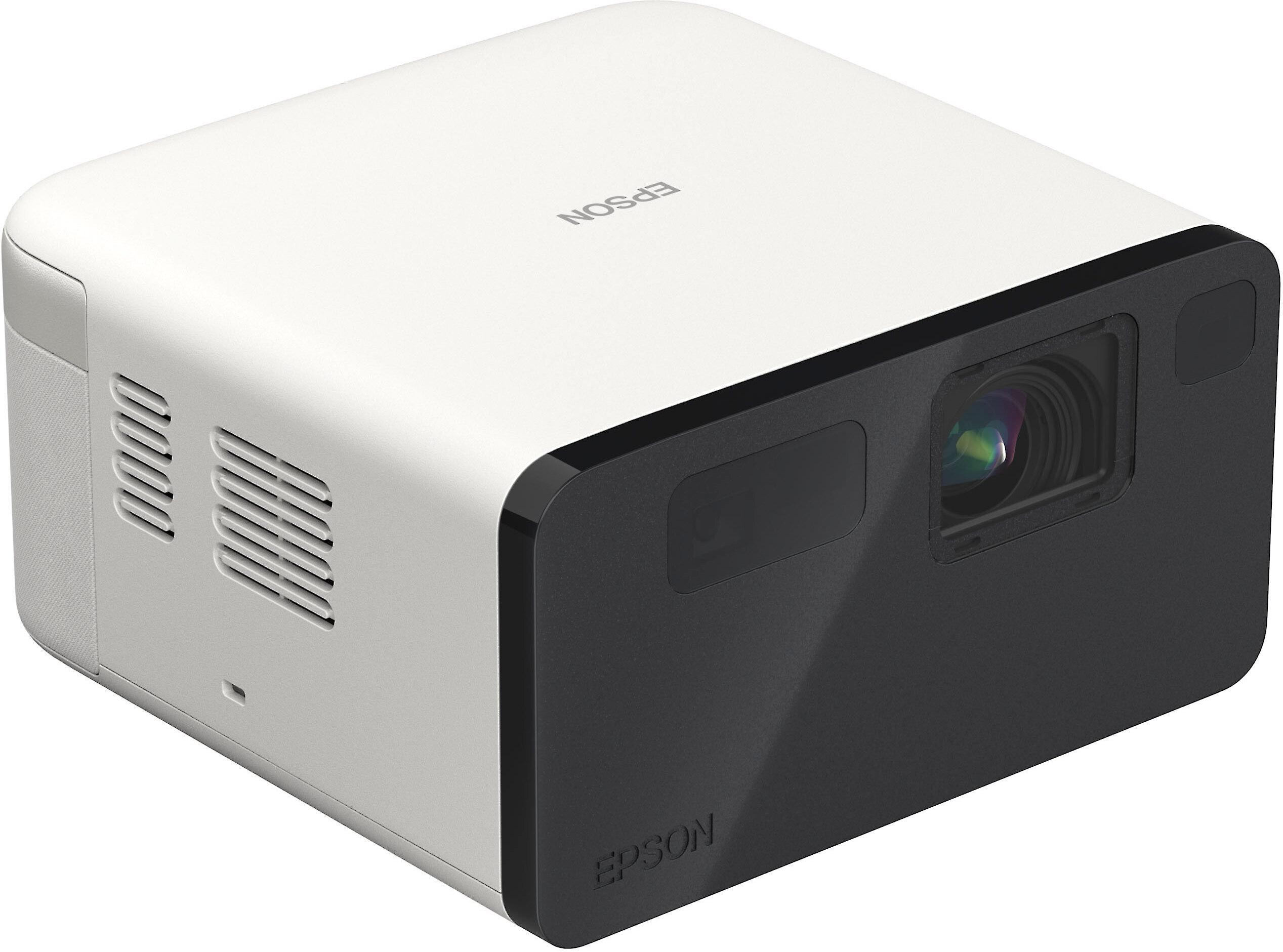
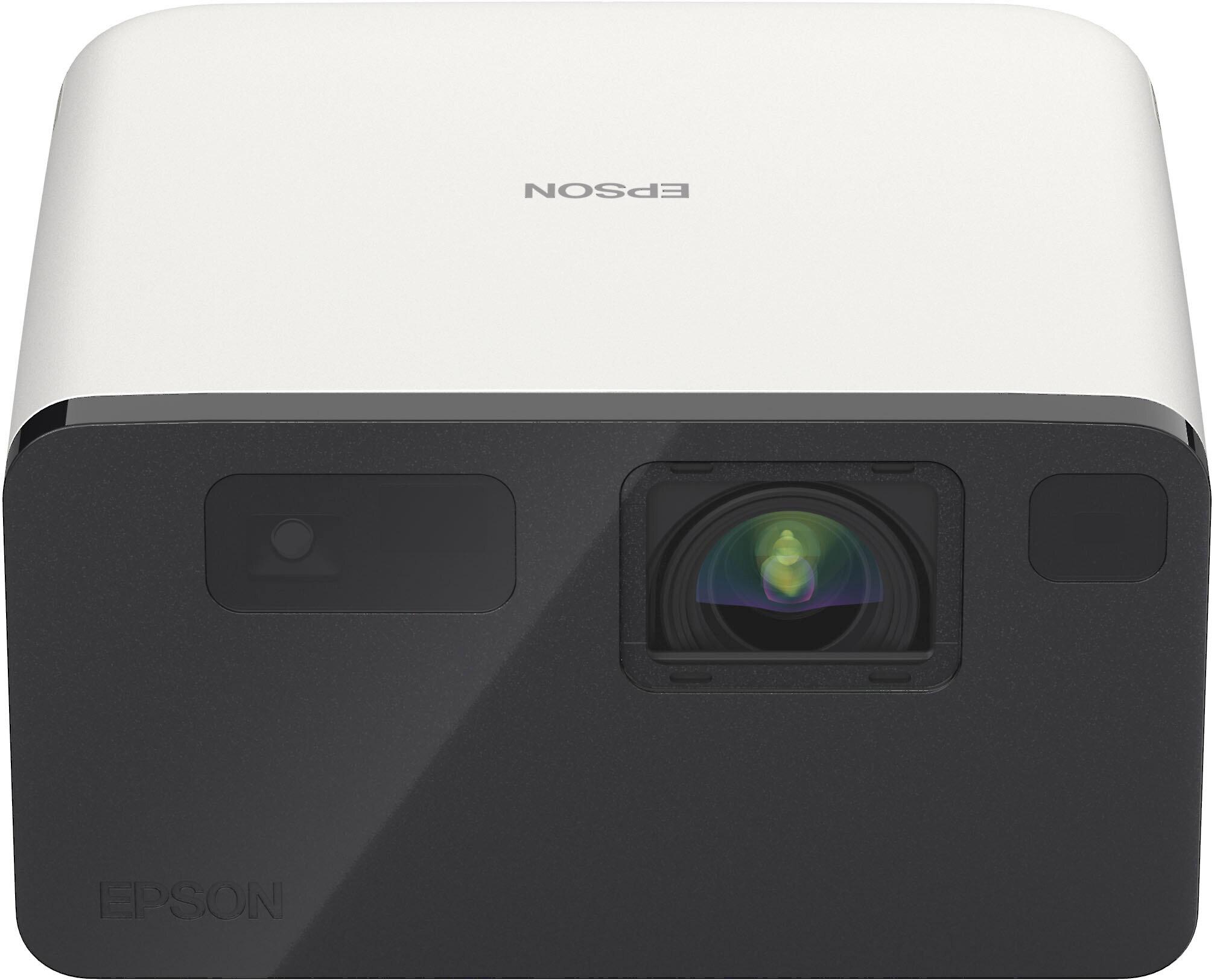
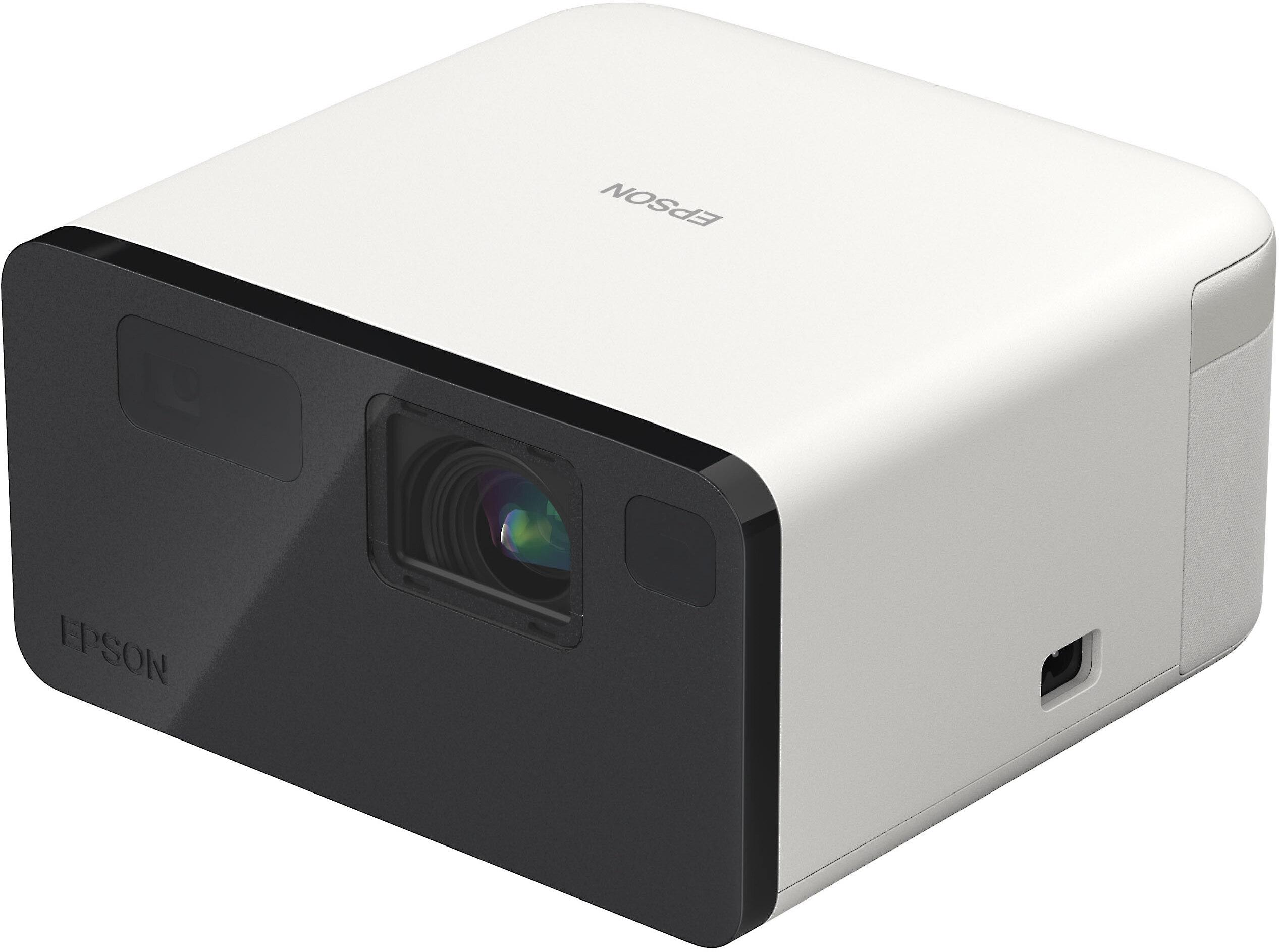
Released later in 2024, the EpiqVision Mini EF21 takes a completely different approach. Rather than prioritizing battery operation, Epson focused on delivering the best possible image quality in a relatively compact form factor.
The EF21 uses 3LCD technology, which splits the light source into red, green, and blue components, processes each color separately, then recombines them. This approach typically produces more accurate colors and eliminates the rainbow effect that can affect single-chip DLP projectors. The trade-off is usually a slightly larger and more complex optical system.
The laser light source is particularly noteworthy. Unlike LED arrays that gradually dim over time, laser projectors maintain consistent brightness throughout their 20,000-hour lifespan. That's roughly 10 years of normal use without any maintenance or bulb replacements.
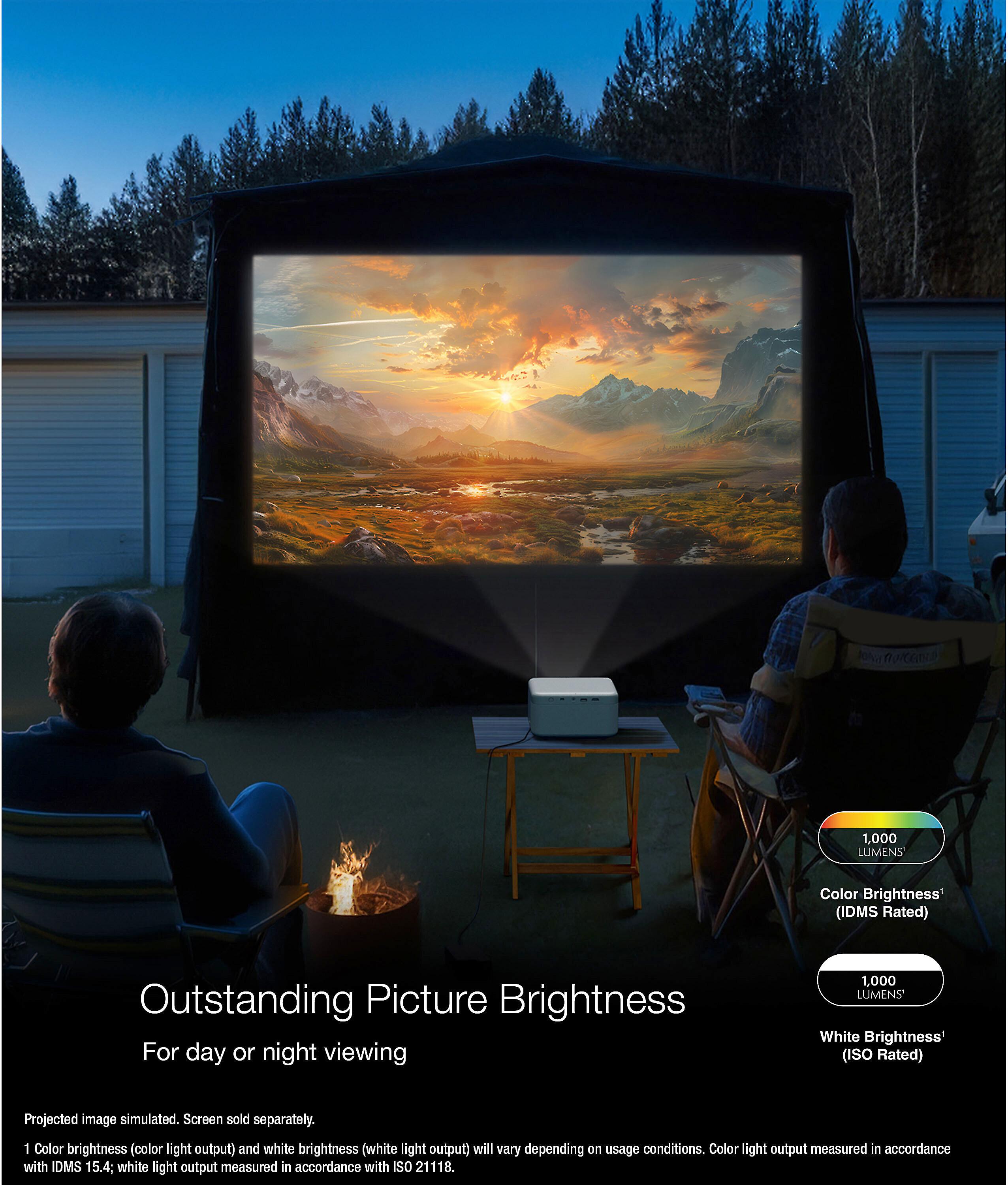
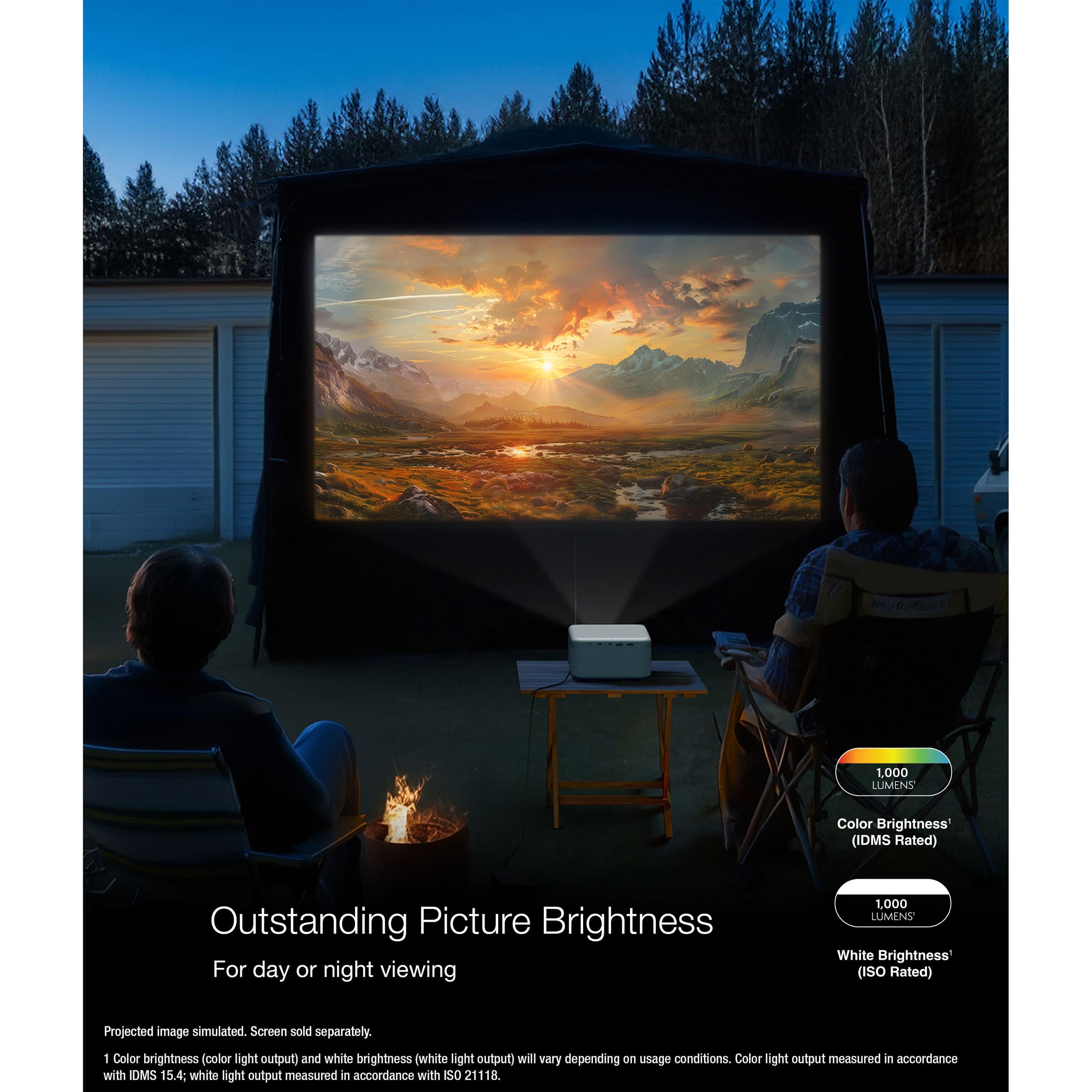
At 1,000 lumens of both color and white brightness, the EF21 is significantly brighter than the Mars 3 Air. But here's where specifications can be misleading—the measurement standards are different. The EF21's 1,000 lumens is measured using ISO standards, while the Mars 3 Air's 400 ANSI lumens uses a different methodology.
In real-world testing, the brightness difference is substantial but not quite as dramatic as the numbers suggest. The EF21 measured around 502 lumens in accurate color mode, compared to about 252 lumens for the Mars 3 Air in its most accurate setting. That's still a meaningful difference—enough to make the Epson usable in rooms with some ambient light.
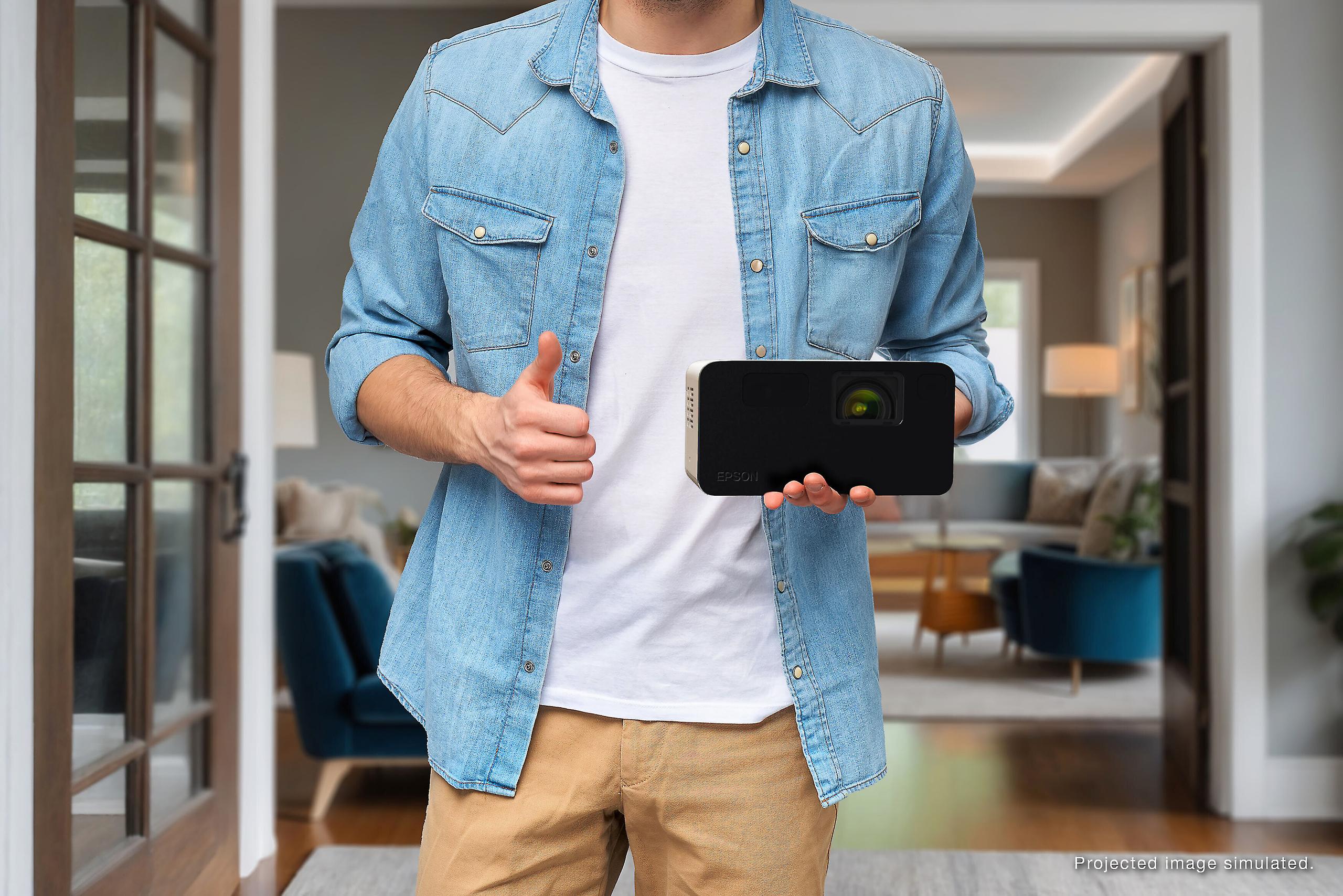
Here's where the EF21 reveals its compromise. At 5.1 pounds and requiring constant AC power, it's "portable" in the sense that you can move it between rooms, but it's not something you'd take camping. The lack of battery operation fundamentally limits its use cases compared to the Mars 3 Air.
That said, the smaller footprint when stationary is actually an advantage in many situations. The 1.03:1 throw ratio means you can get a larger image from a shorter distance—useful in smaller rooms or when space behind the projector is limited.
After extensive use of both projectors, certain performance characteristics stand out as most important for different use cases.
The brightness discussion goes beyond raw numbers. The Mars 3 Air at 400 ANSI lumens produces a perfectly watchable image in a darkened room up to about 100 inches diagonal. Push it to 120+ inches and you'll start noticing the image getting dim, especially in brighter scenes.
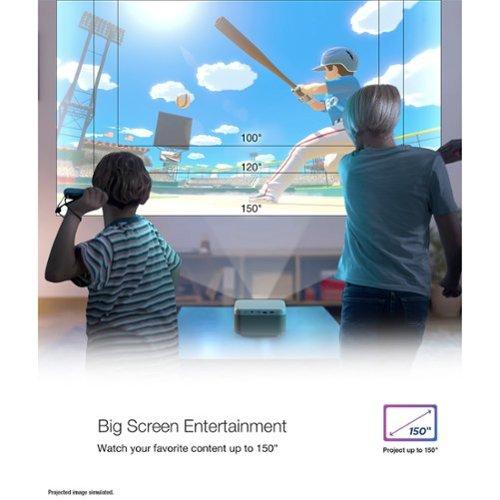
The EF21 at 1,000 lumens gives you more flexibility. You can go larger—up to 150 inches while maintaining good brightness—or watch in rooms with more ambient light. This makes it viable for daytime use with curtains closed or evening use without completely darkening the room.
Both projectors support HDR10, but their handling is quite different. The Mars 3 Air does a reasonable job with HDR content, though the limited brightness means HDR highlights don't have much impact. Colors are punchy and vibrant, which works well for movies and streaming content.
The EF21's 3LCD system provides more accurate color reproduction, particularly important for presentations or content creation where color fidelity matters. The laser light source also enables a much wider contrast ratio—5 million to 1 versus 400 to 1 for the Mars 3 Air. In practice, this means deeper blacks and better shadow detail.
The Mars 3 Air wins decisively on setup simplicity. The auto-correction systems work remarkably well, and the battery operation means no cable management. You literally just set it down and start watching.
The EF21 requires more thought about placement due to the power cord, but Epson's EpiqSense technology handles most of the image correction automatically once positioned. The setup isn't difficult, just less spontaneous than the battery-powered alternative.
Having used both projectors extensively, clear patterns emerge for when each makes sense.
You want genuine mobility. This is the projector for camping trips, backyard movie nights, or moving between rooms regularly. The battery operation opens up use cases that simply aren't possible with AC-only projectors.
Students and renters will particularly appreciate the Mars 3 Air. There's no installation, no permanent setup, and you can easily take it with you when you move. The audio quality means you don't need to invest in speakers, keeping the total system simple and affordable.
The streaming integration also favors casual users. Everything you need is built in—no external devices, no additional streaming boxes, just power it on and watch Netflix.
Image quality is your priority and you have reliable AC power where you plan to use it. The EF21 is the better choice for dedicated media rooms, home offices, or anywhere you want the best possible picture.
The brighter output makes it suitable for environments where the Mars 3 Air would struggle. Family rooms with large windows, classrooms, or anywhere you can't achieve complete darkness benefit from the extra lumens.
Professional users will appreciate the color accuracy and reliability of laser technology. Presentations, photo slideshows, or any content where accurate colors matter will look better on the EF21.
Neither projector is designed to replace a dedicated home theater setup, but both can serve as excellent stepping stones or alternatives for those who can't commit to a permanent installation.
The Mars 3 Air excels as a flexible entertainment solution. You can set up movie night anywhere in the house, then pack it away when not needed. This flexibility is particularly valuable in smaller homes or apartments where dedicating space to a projector isn't practical.
The EF21 can anchor a semi-permanent home theater setup. While not as bright as dedicated home theater projectors costing several thousand dollars, it provides much of the experience at a fraction of the cost and complexity. Paired with good speakers (the built-in audio is adequate but not exceptional), it can deliver a satisfying big-screen experience.
At the time of writing, these projectors occupy different price tiers, with the Mars 3 Air positioned as the more affordable option and the EF21 commanding a premium for its laser technology and superior brightness.
The Mars 3 Air represents excellent value for users who prioritize portability and smart features. The built-in Google TV, Netflix integration, and capable audio system eliminate the need for additional devices, making the total cost of ownership attractive.
The EF21 asks you to pay more upfront but delivers better long-term value for image quality. The maintenance-free laser operation and extended warranty (two years versus one year for the Anker) provide additional peace of mind.
The choice between these projectors ultimately comes down to how you plan to use them. If you value the freedom to project anywhere—outdoors, different rooms, or on trips—the Mars 3 Air is the clear winner. Its combination of battery operation, good audio, and smart features creates a genuinely versatile entertainment device.
If you're looking for the best possible image quality in a compact projector and don't need battery operation, the EF21 delivers significantly better brightness and color accuracy. It's the better choice for anyone prioritizing picture quality over ultimate portability.
Both projectors represent significant advances in portable projection technology. The Mars 3 Air finally delivers on the promise of truly portable big-screen entertainment, while the EF21 brings near-home-theater image quality to a surprisingly compact package. Your choice should be based on which set of compromises better fits your specific needs and viewing habits.
The portable projector category has matured significantly in 2024, and both of these models show how far the technology has come. Whichever you choose, you're getting a capable device that would have been unthinkable just a few years ago—and that's exciting for anyone who loves the big-screen experience.
| Anker Nebula Mars 3 Air | Epson EpiqVision Mini EF21 |
|---|---|
| Brightness - Key factor for room lighting flexibility | |
| 400 ANSI lumens (requires dark rooms for best viewing) | 1,000 lumens (handles ambient light much better) |
| Power Source - Determines true portability | |
| Built-in 65.8Wh battery (2.5 hours movie playback) | AC power only (limits mobility to powered locations) |
| Display Technology - Affects color accuracy and rainbow effects | |
| DLP with LED light source (sharp but potential rainbow artifacts) | 3LCD with laser light source (superior color accuracy, no rainbow effect) |
| Weight & Portability - Critical for frequent moving | |
| 3.7 lbs with carrying handle (genuinely portable) | 5.1 lbs, no battery (semi-portable, needs power outlet) |
| Audio Performance - Important for all-in-one entertainment | |
| Dual 8W speakers with Dolby Audio (excellent for portable unit) | Dual 5W speakers with Dolby Audio (adequate but less powerful) |
| Smart Features - Streaming convenience | |
| Google TV with native Netflix app and voice control | Google TV with 10,000+ apps and EpiqSense auto-setup |
| Image Size Range - Flexibility for different spaces | |
| 30" to 150" projection (1.2:1 throw ratio) | 30" to 150" projection (1.03:1 throw ratio for closer placement) |
| Light Source Lifespan - Long-term reliability | |
| LED lifetime operation (no replacements needed) | 20,000-hour laser life (maintenance-free, more consistent) |
| Contrast Ratio - Affects black levels and image depth | |
| 400:1 (adequate for portable use) | 5,000,000:1 (significantly better blacks and shadow detail) |
| Connectivity Options - Device compatibility | |
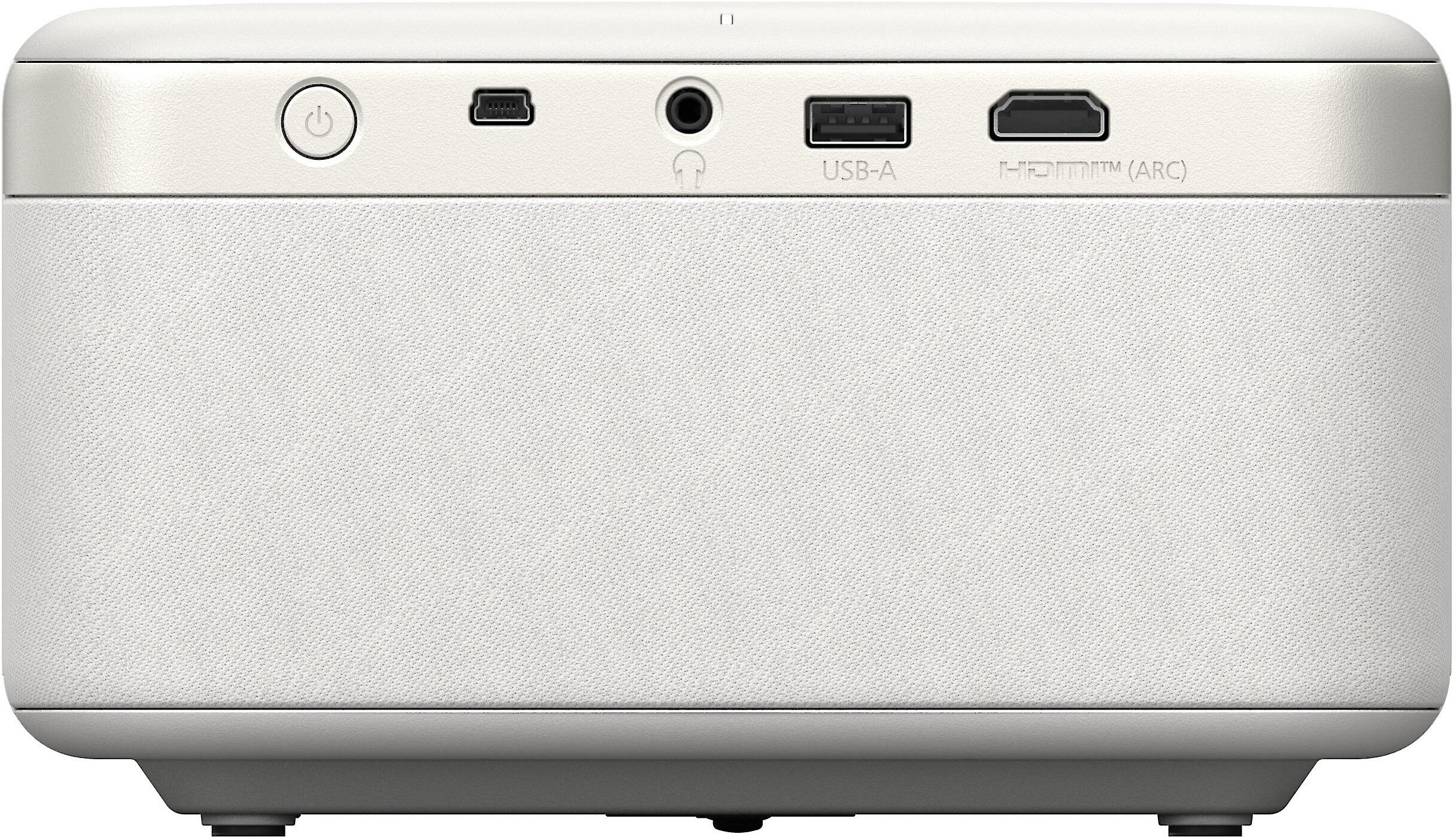
| HDMI, USB-A, Wi-Fi, Bluetooth 5.1, AUX out | HDMI 2.3, USB-A, USB-B mini, Wi-Fi, Bluetooth 5.1 |
| Warranty Coverage - Purchase protection | |
| 1 year limited warranty | 2 years limited warranty (better long-term support) |
| Noise Level - Important for quiet viewing | |
| 28 dB (whisper quiet operation) | 19-23 dB (exceptionally quiet, laser advantage) |
The Anker Nebula Mars 3 Air is significantly better for outdoor use thanks to its built-in battery that provides 2.5 hours of movie playback without needing a power outlet. The Epson EpiqVision Mini EF21 requires constant AC power, making it unsuitable for camping, backyard gatherings, or any location without electrical access.
The Epson EpiqVision Mini EF21 is much brighter at 1,000 lumens compared to the Anker Nebula Mars 3 Air at 400 ANSI lumens. This means the EF21 can handle rooms with some ambient light, while the Mars 3 Air requires darker environments for optimal viewing.
The Anker Nebula Mars 3 Air has superior audio with dual 8W speakers that produce fuller, more expansive sound compared to the EF21's 5W speakers. The Mars 3 Air can also function as a standalone Bluetooth speaker for up to 8 hours.
Yes, both the Anker Nebula Mars 3 Air and Epson EpiqVision Mini EF21 feature Google TV with native Netflix apps. However, the Mars 3 Air was specifically marketed as having optimized Netflix integration designed for portable projection.
The Anker Nebula Mars 3 Air is truly portable at 3.7 pounds with a built-in battery and carrying handle. The Epson EpiqVision Mini EF21 weighs 5.1 pounds and requires AC power, making it semi-portable for moving between rooms but not suitable for outdoor use.
The Epson EpiqVision Mini EF21 delivers superior image quality with 3LCD technology providing better color accuracy, a 5,000,000:1 contrast ratio, and no rainbow effects. The Mars 3 Air uses DLP technology which is sharp but may show rainbow artifacts and has a lower 400:1 contrast ratio.
Both projectors offer long-lasting light sources. The Anker Nebula Mars 3 Air uses LED technology for lifetime operation, while the Epson EpiqVision Mini EF21 features a maintenance-free laser that lasts 20,000 hours with consistent brightness throughout its life.
For dedicated home theater setups, the Epson EpiqVision Mini EF21 is superior due to its higher brightness, better color accuracy, and excellent contrast ratio. However, the Anker Nebula Mars 3 Air offers more flexibility for casual home theater use across different rooms.
Both projectors offer easy setup with auto-correction features. The Mars 3 Air includes Intelligent Environment Adaptation 3.0 for automatic focus and keystone correction, while the EF21 features EpiqSense technology for quick alignment and surface adaptation.
The Epson EpiqVision Mini EF21 can handle rooms with some ambient light due to its 1,000-lumen output, making it suitable for evening use without complete darkness. The Anker Nebula Mars 3 Air requires darker environments for optimal viewing due to its lower 400-lumen brightness.
Value depends on your needs. The Anker Nebula Mars 3 Air offers excellent value for true portability with good audio and smart features at a lower cost. The Epson EpiqVision Mini EF21 provides better long-term value for image quality with its laser technology, longer warranty, and superior brightness.
The Epson EpiqVision Mini EF21 includes a 2-year limited warranty, providing better coverage than the Anker Nebula Mars 3 Air's 1-year warranty. This extended coverage reflects Epson's confidence in their laser technology and provides additional peace of mind for buyers.
We've done our best to create useful and informative comparisons to help you decide what product to buy. Our research uses advanced automated methods to create this comparison and perfection is not possible - please contact us for corrections or questions. These are the sites we've researched in the creation of this article: techradar.com - thesmarthomehookup.com - whathifi.com - thesmarthomehookup.com - cnet.com - whathifi.com - projectorreviews.com - youtube.com - youtube.com - versus.com - projectorcentral.com - practicalmotorhome.com - youtube.com - seenebula.com - us.seenebula.com - harveynorman.ie - bestbuy.com - bestbuy.com - cnet.com - youtube.com - projectorreviews.com - epson.com - projectorreviews.com - epson.com - rtings.com - epson.com - youtube.com - projectorcentral.com - bestbuy.com - projectorcentral.com - nfm.com - crutchfield.com - latin.epson.com - mediaserver.goepson.com - planettv.com - bhphotovideo.com - cnet.com - epson.com

Privacy Policy
Terms and Conditions - Affiliate Policy
Home Security
© Copyright 2008-2026.
11816 Inwood Rd #1211, Dallas, TX 75244