

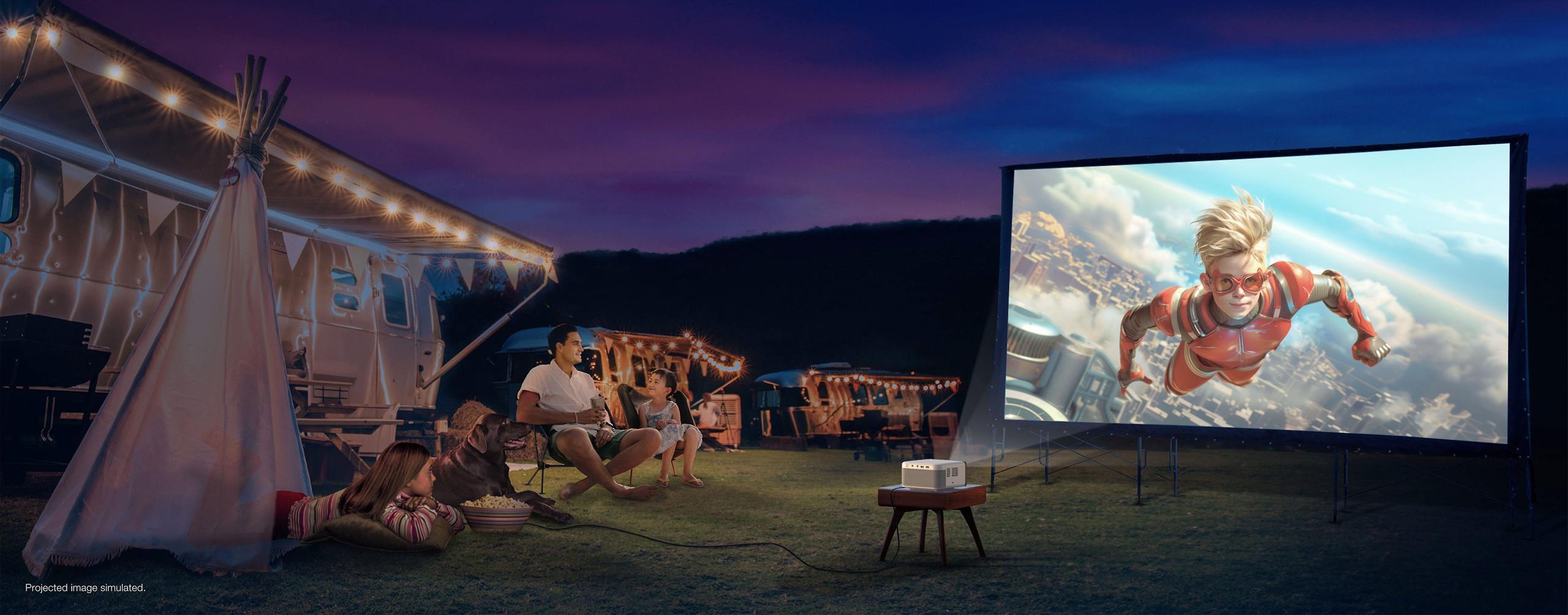
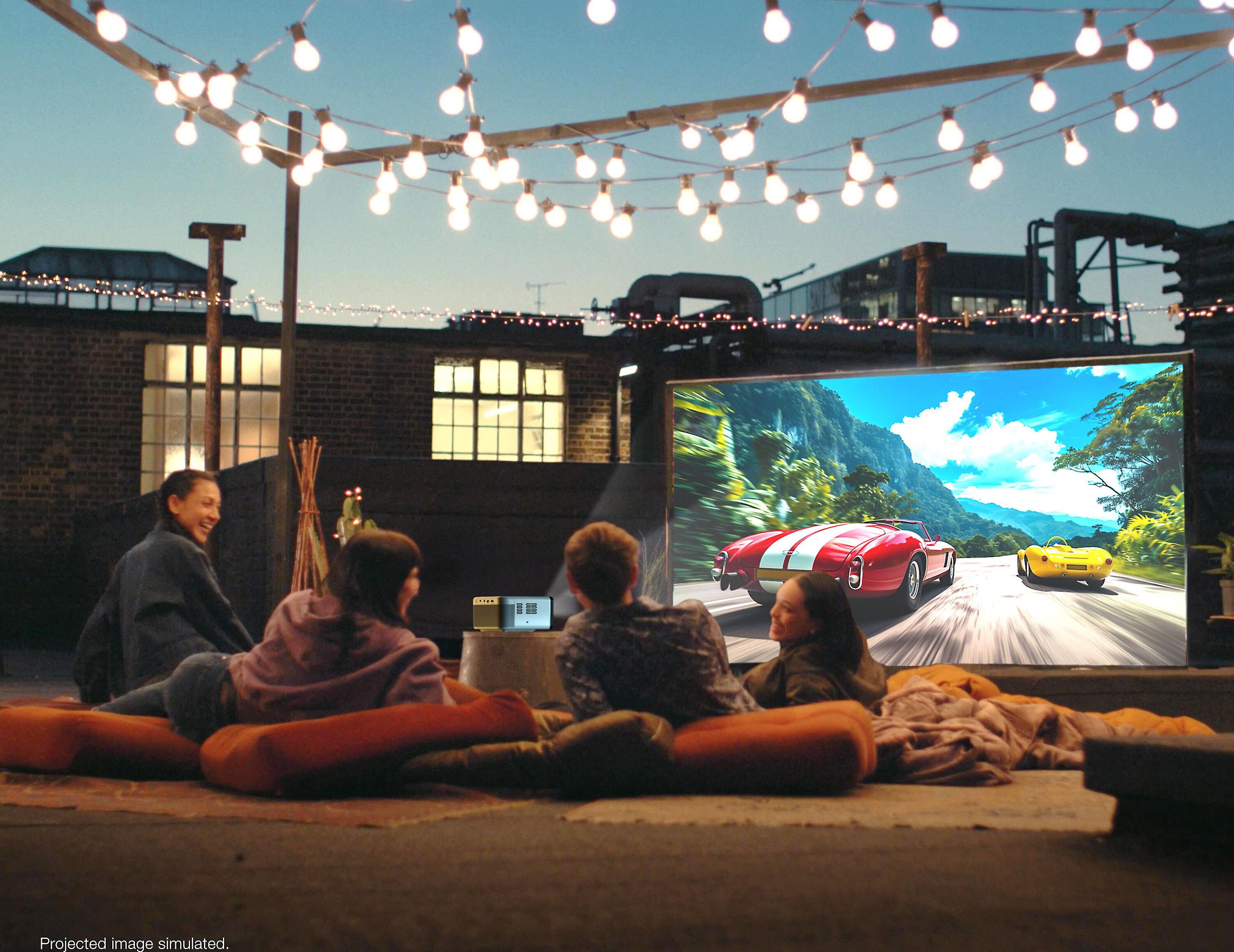
Remember when projectors were bulky, complicated devices reserved for business presentations and high-end home theaters? Those days are firmly behind us. The latest generation of portable smart projectors has transformed how we think about big-screen entertainment, making it accessible virtually anywhere.
The TCL A1 Portable 1080p Smart Projector ($499) and Epson EpiqVision Mini EF21 Projector ($899.99) represent two compelling options in this evolving category. Both promise to turn any wall into an entertainment center, but they take different approaches to achieve this goal—with significant implications for your viewing experience.
Smart portable projectors combine projection technology with built-in streaming platforms, essentially packing a complete entertainment system into a compact device you can move from room to room or even take on the road. Before diving into our comparison, it's worth understanding what makes these devices so appealing in today's entertainment landscape.
Unlike traditional home theater projectors, these portable units prioritize convenience without completely sacrificing performance. They feature integrated operating systems (in both our cases, Google TV), built-in speakers, and automatic setup features that eliminate much of the traditional projector setup headache. This plug-and-play approach has opened projection technology to a much wider audience.
The TCL A1 was released in mid-2022 as part of TCL's push into the projector market, building on their success in the TV space. TCL has positioned the A1 as an entry-level smart projector, bringing their reputation for value-focused products to a new category. Since its release, the A1 has remained relatively unchanged, though firmware updates have improved the Google TV experience somewhat.
The Epson EpiqVision Mini EF21 arrived on the market in early 2023, representing Epson's latest advancement in their mini laser projector lineup. Epson has a much longer history in the projector market than TCL, with decades of experience developing both business and home theater projection systems. The EF21 incorporates technology from their higher-end home theater projectors into a more compact, smart platform-equipped package.
Both projectors reflect the industry's move toward more integrated, user-friendly designs, though they were developed with different priorities in mind. The technology landscape has evolved since their respective releases, with newer competitors pushing brightness levels even higher and adding features like built-in batteries for true portability, which neither of our contenders offers.
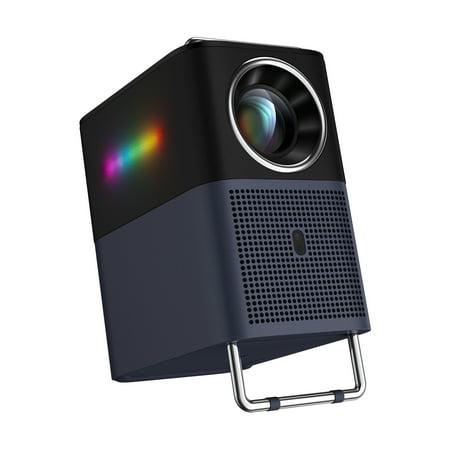
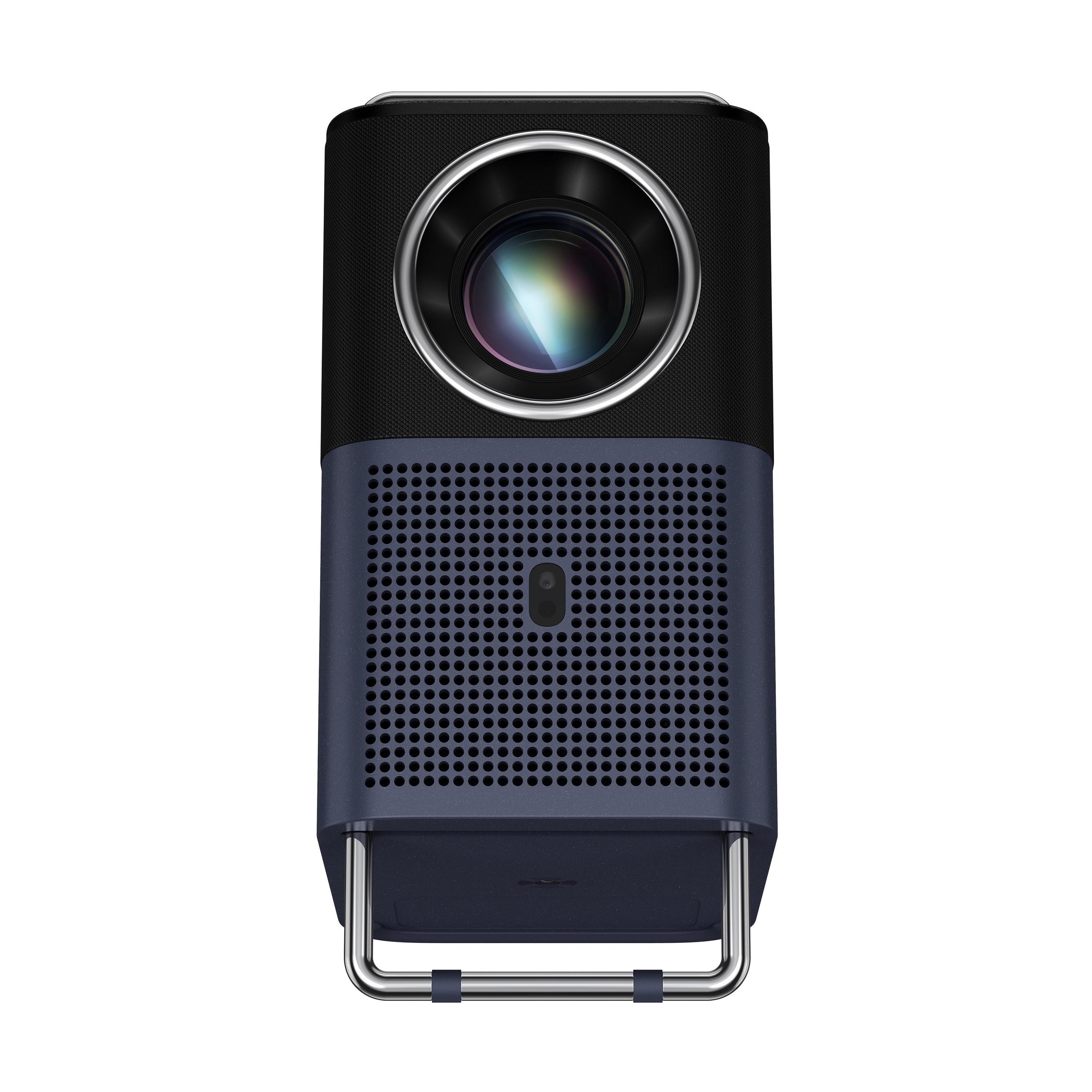
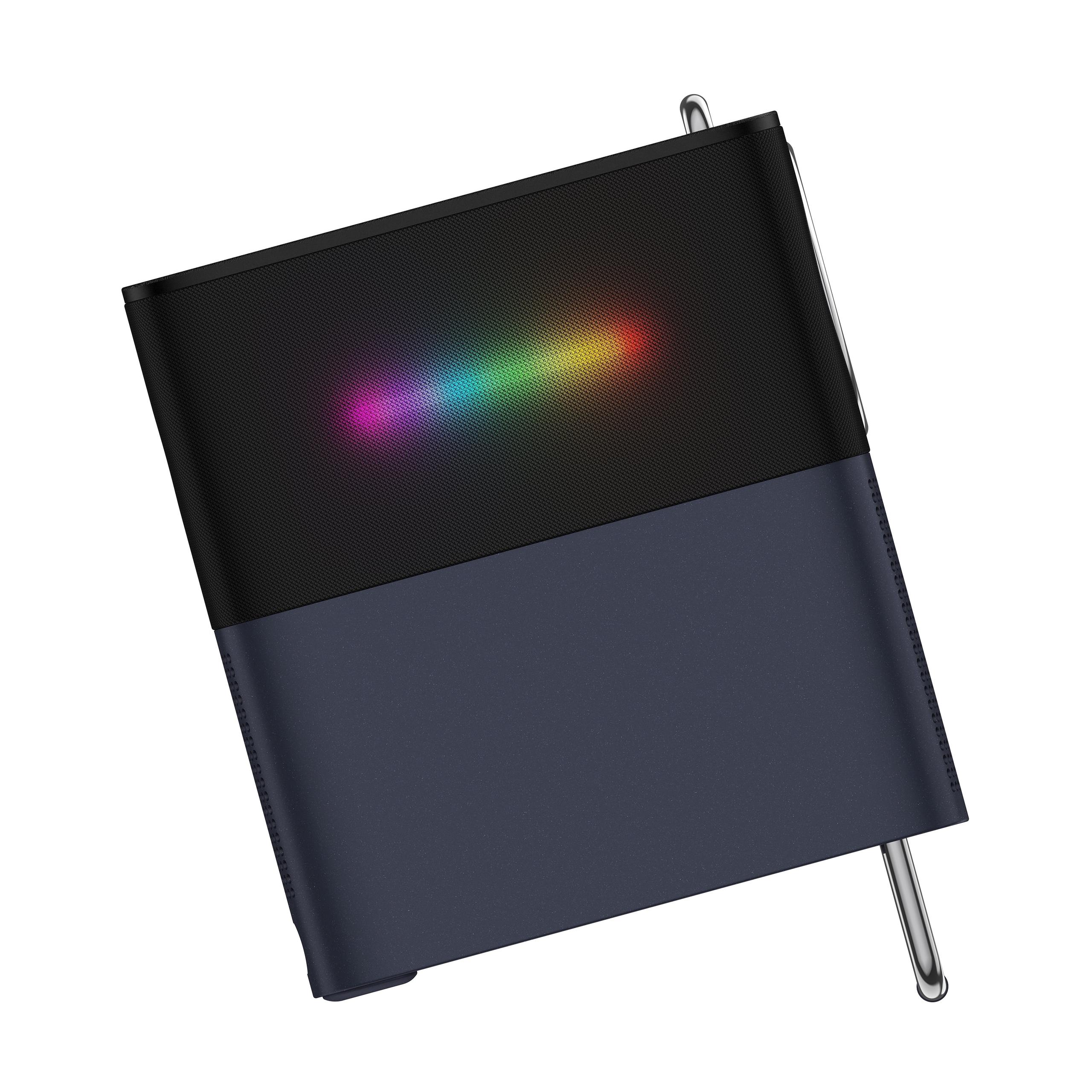
The TCL A1 offers a handsome, compact design that emphasizes portability. Its most distinctive physical feature is the "VersaGrip" handle that doubles as an adjustable stand, allowing for up to 15 degrees of tilt without requiring additional props or stands. This innovative design element makes quick setup genuinely simpler, especially on uneven surfaces.
Measuring 5.0" × 7.6" × 10.4" and weighing 5.5 pounds, the A1 isn't pocket-sized but remains easily transportable between rooms or to a friend's house. TCL includes a carrying case, reinforcing its positioning as a projector you'll want to move around.
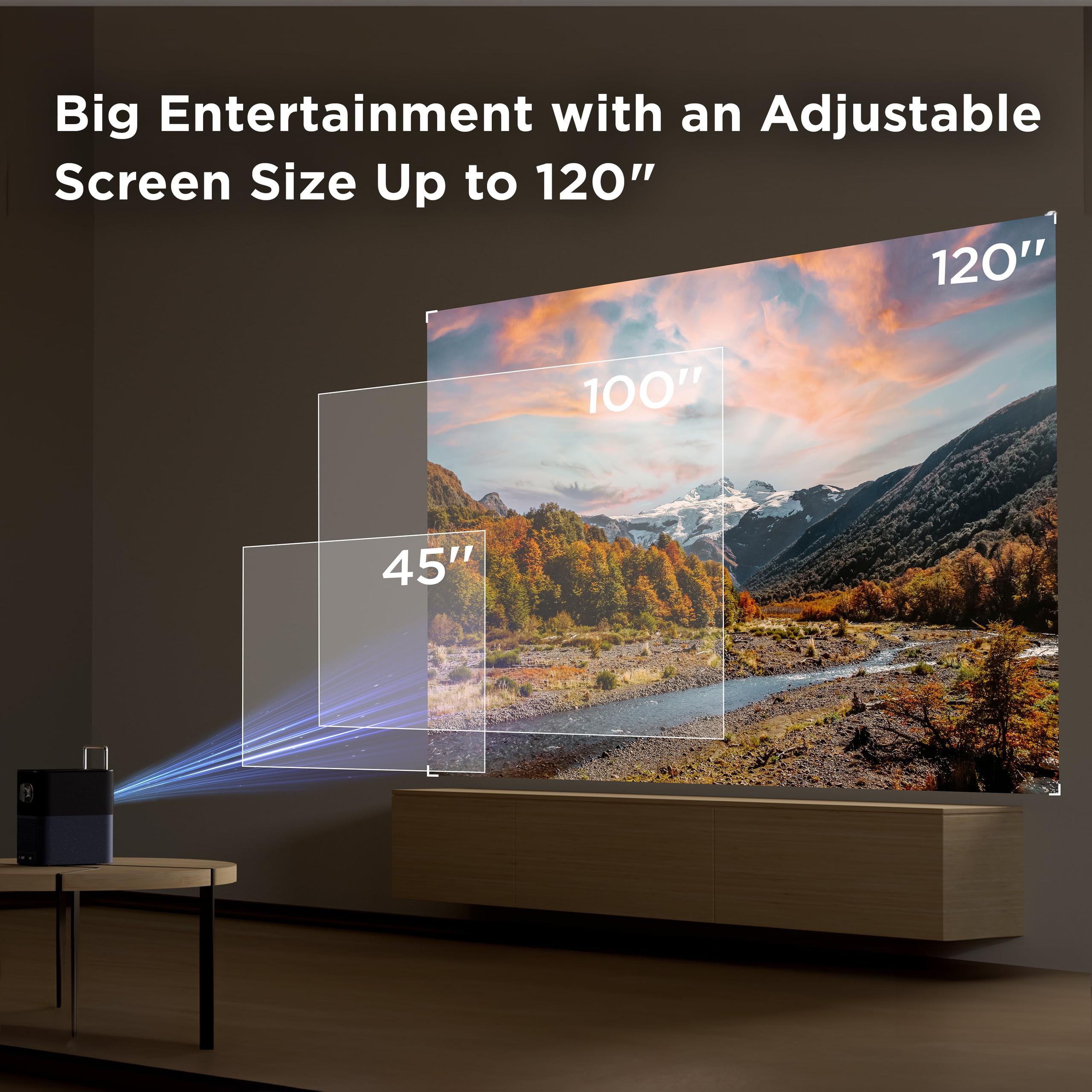
Inside, the A1 utilizes LCD projection technology at a Full HD (1920 × 1080) resolution. Its brightness rating of 360 ISO lumens is modest—ISO lumens is a standardized measurement that's generally more accurate than marketing-oriented ANSI or LED lumen claims, so this rating reflects what you'll actually experience. The A1 can project images from 45 to 120 inches diagonally, though ambient light will significantly impact the effective viewing size.
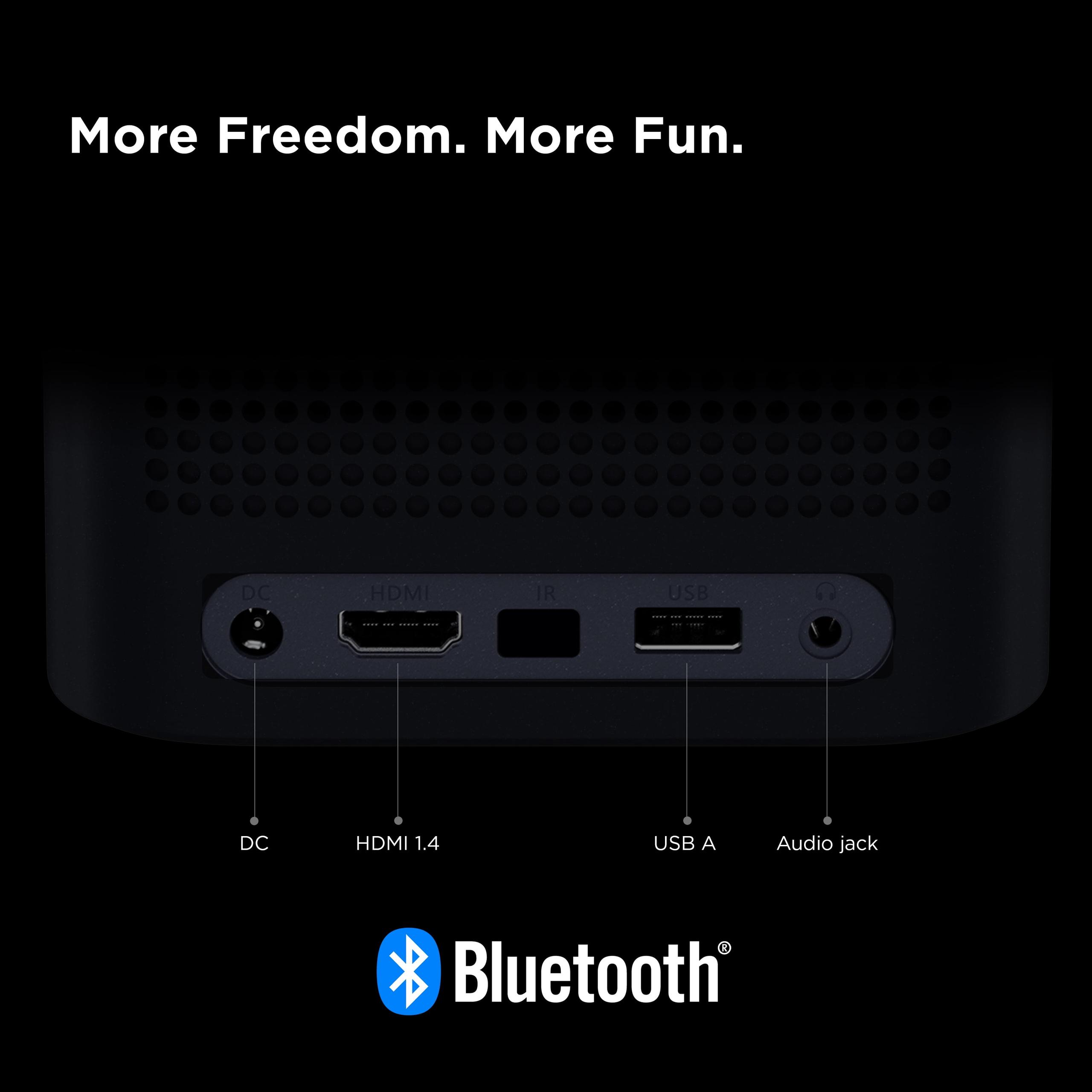
Connectivity options include one HDMI port, one USB port, and a 3.5mm audio output. Wireless connections cover Bluetooth 5.1 and Wi-Fi 4 (802.11a/b/g/n)—noticeably not the newer Wi-Fi 5 or 6 standards, which could impact streaming performance on congested networks.
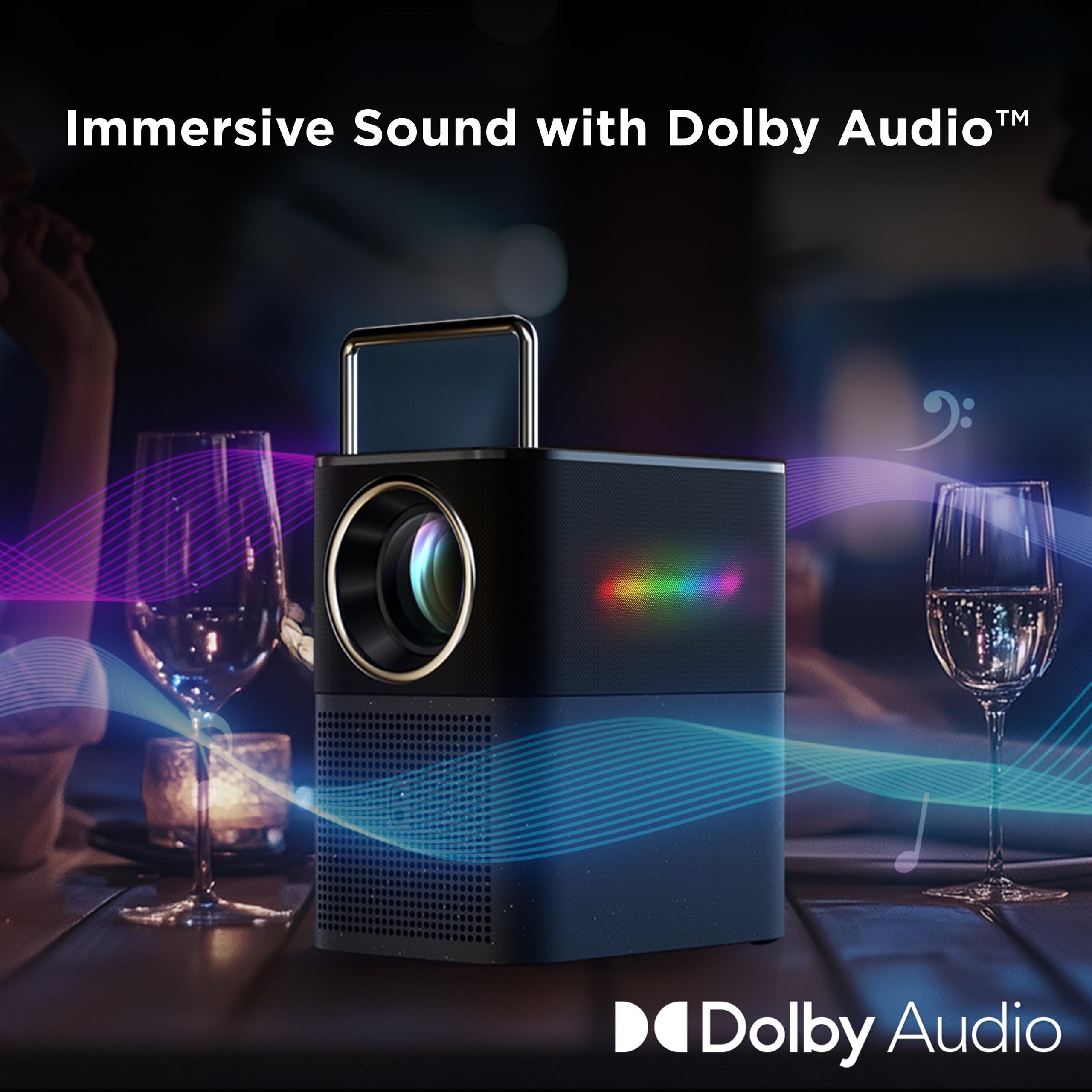
Audio is handled by dual 8W speakers with Dolby Digital+ processing, impressively powerful for a projector of this size. The A1 also features a unique "Light Sync" ambient lighting system that can pulse with your music, adding a fun atmospheric element to casual viewing or small gatherings.
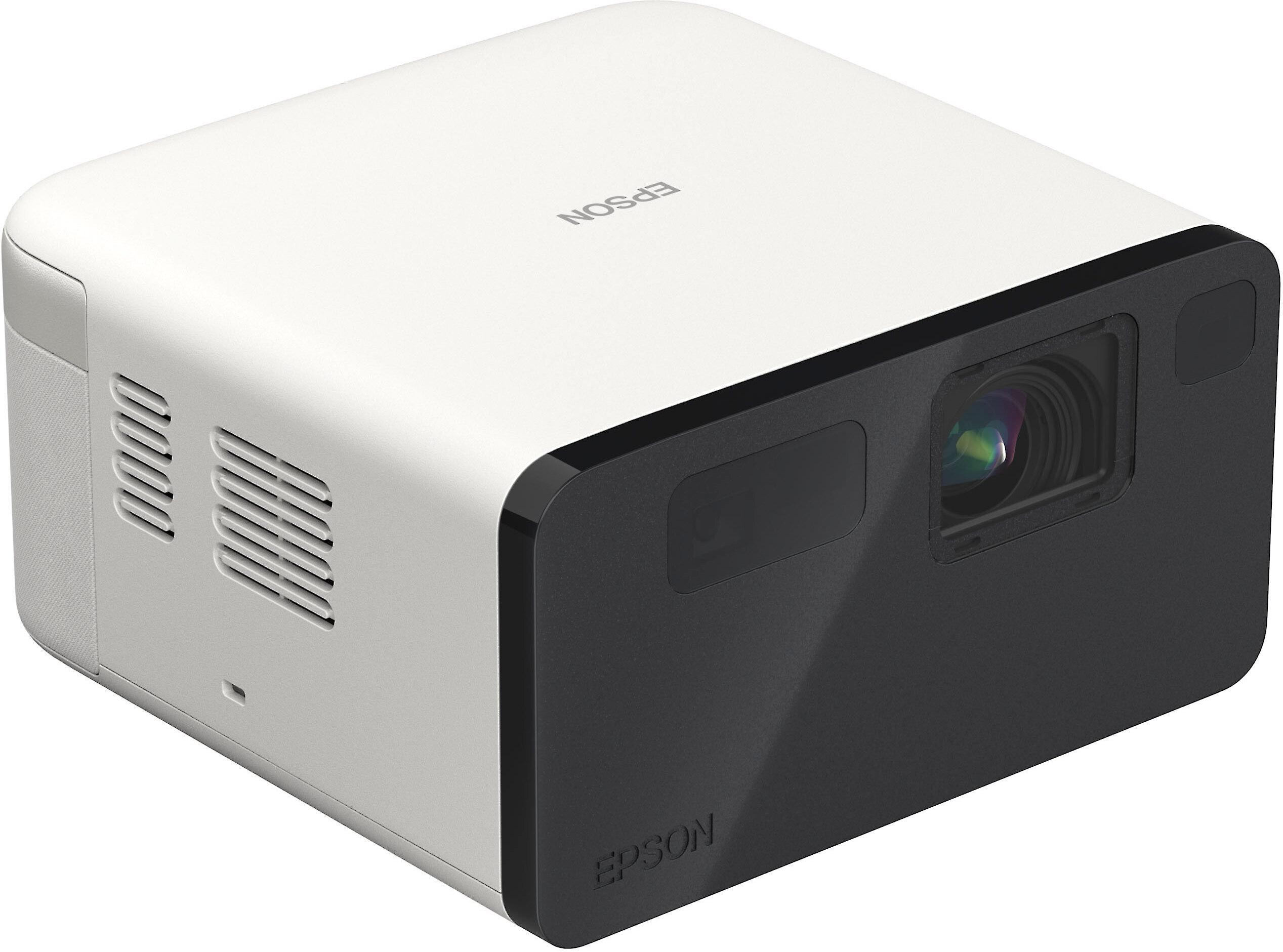
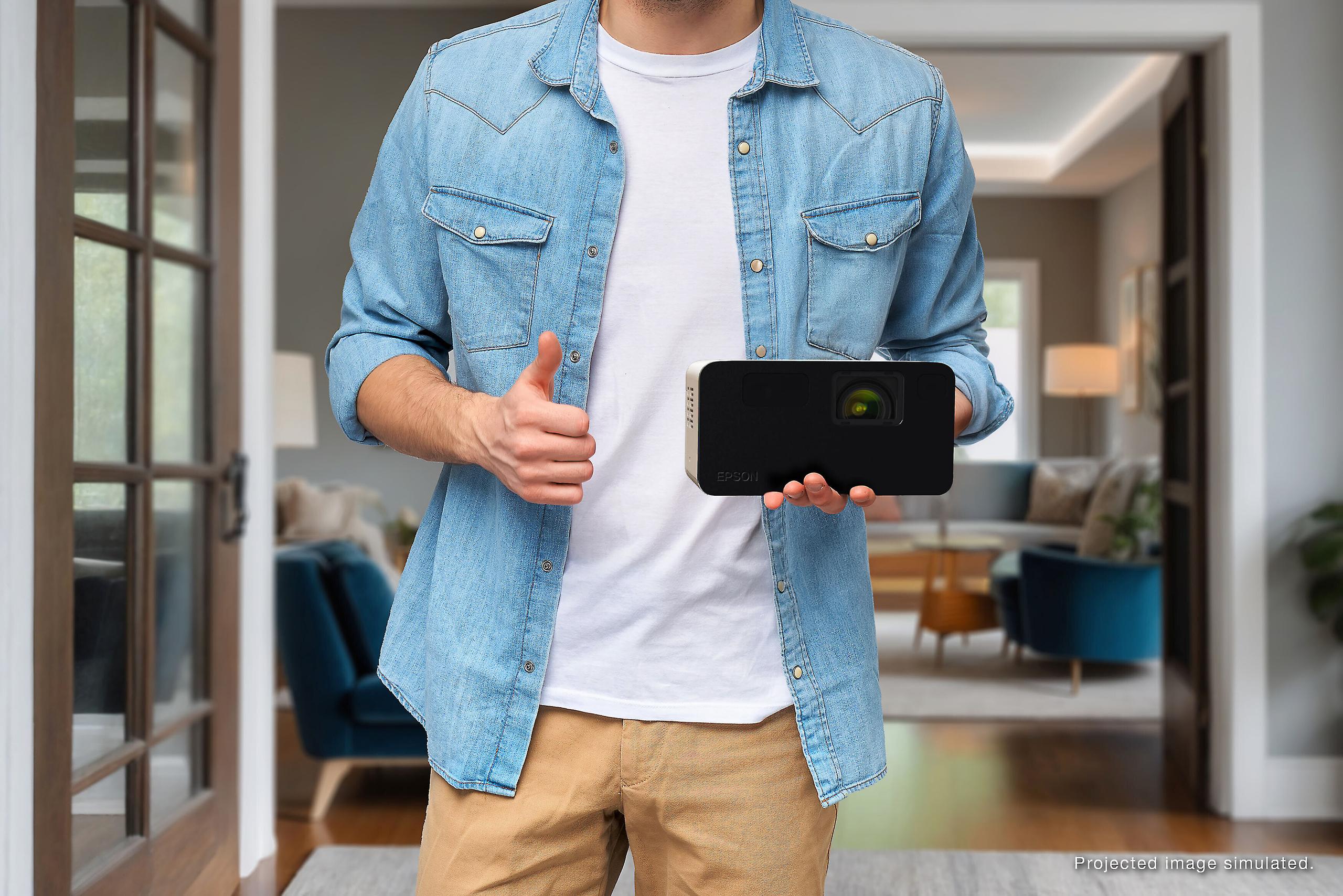
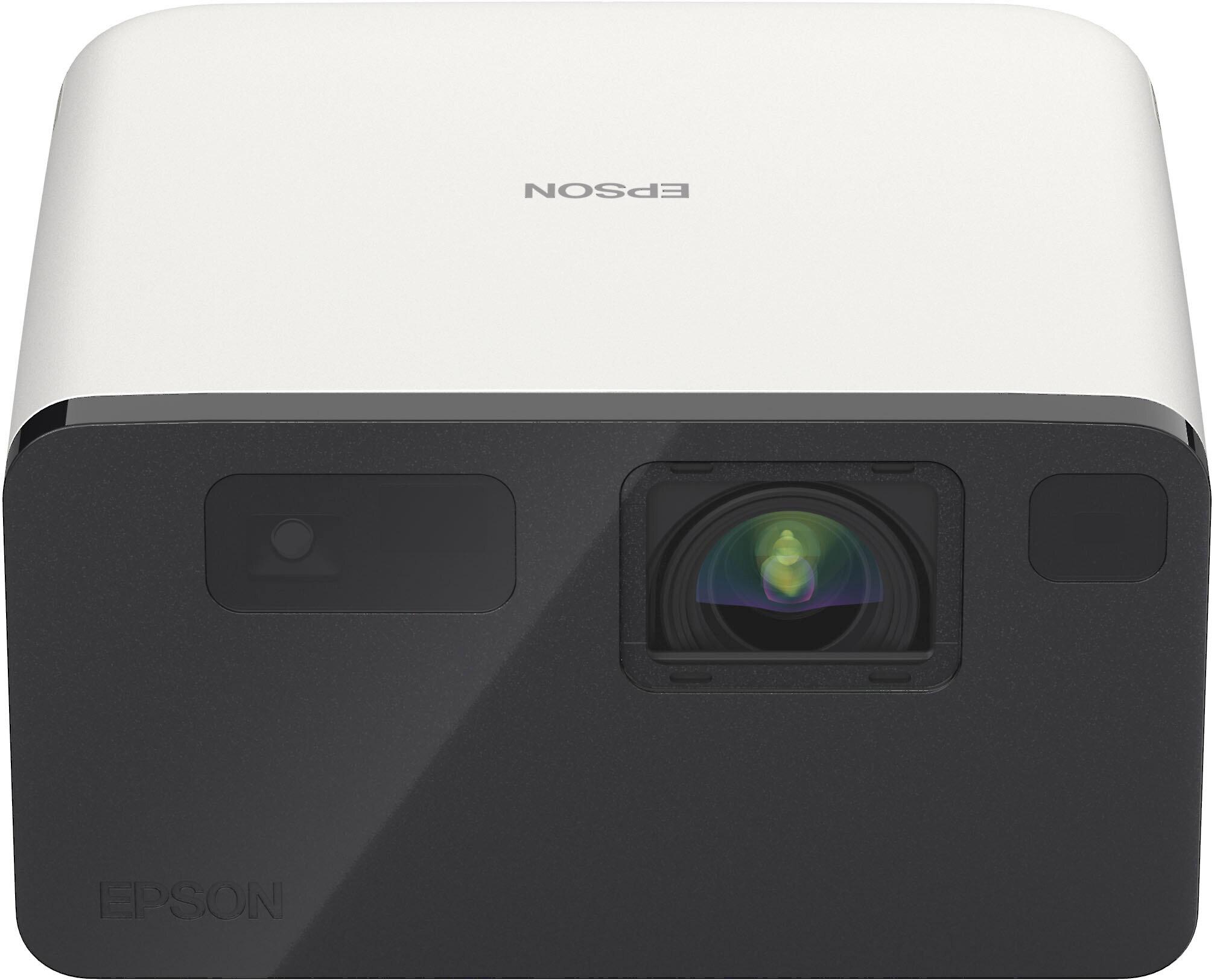
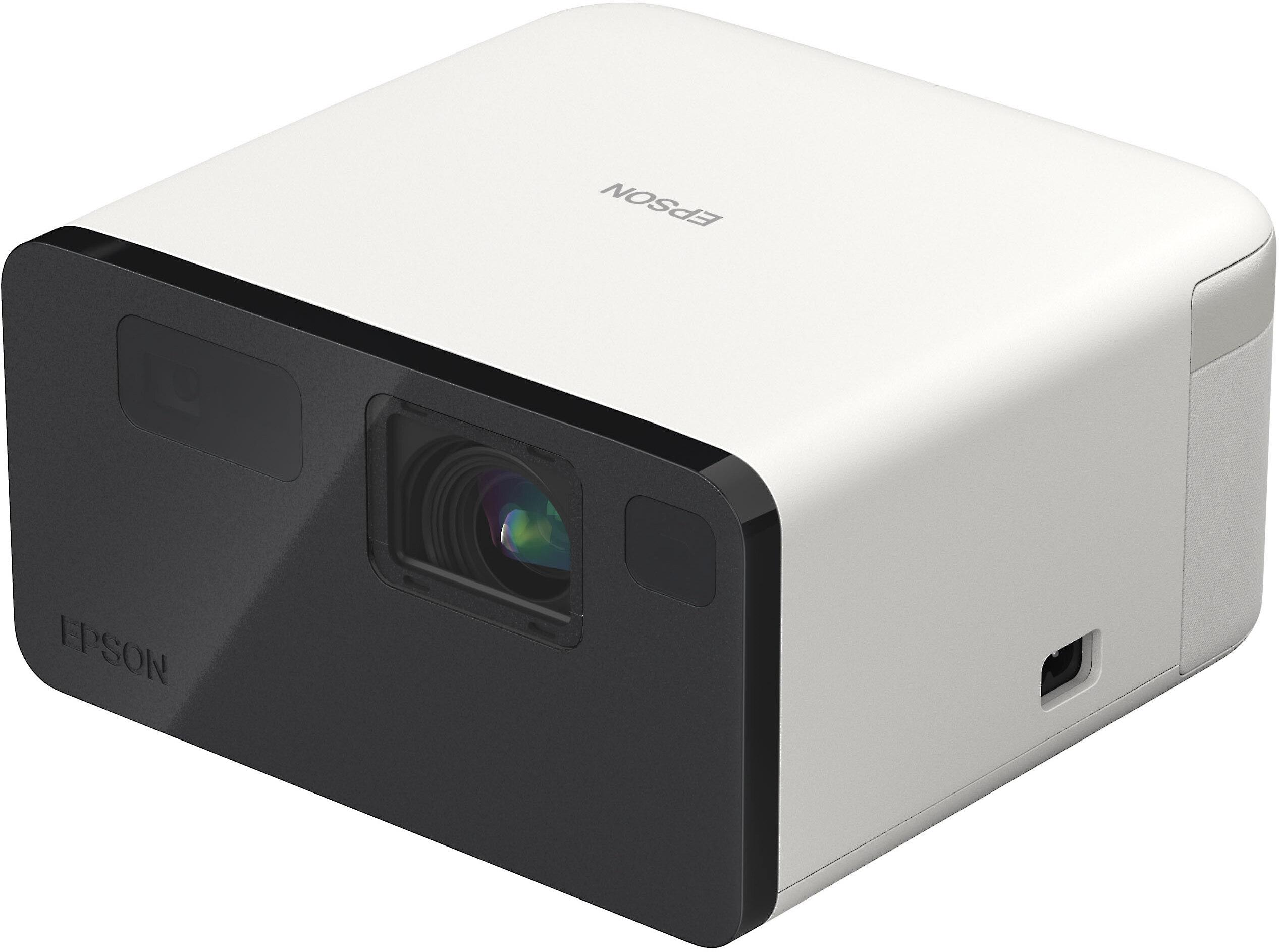
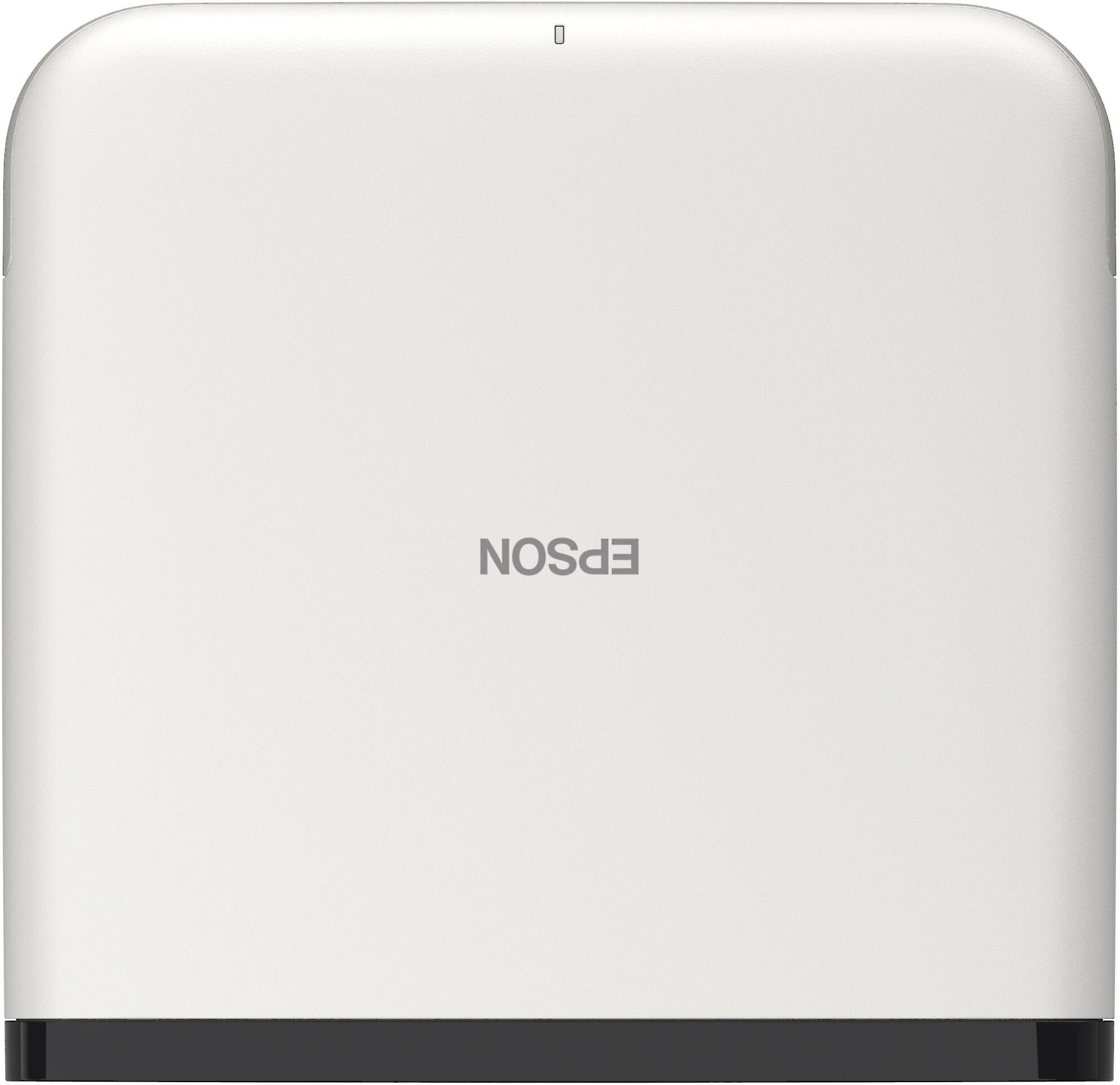
The Epson EF21 takes a more premium approach both in design and technology. Available in three color options (Diamond White, Opal Green, and Quartz Rose), the EF21 sports a modern, minimalist aesthetic that looks at home in contemporary living spaces. At 7.75" × 7.5" × 4.4" and weighing 5.1 pounds, it's actually slightly lighter than the TCL despite packing more advanced technology.
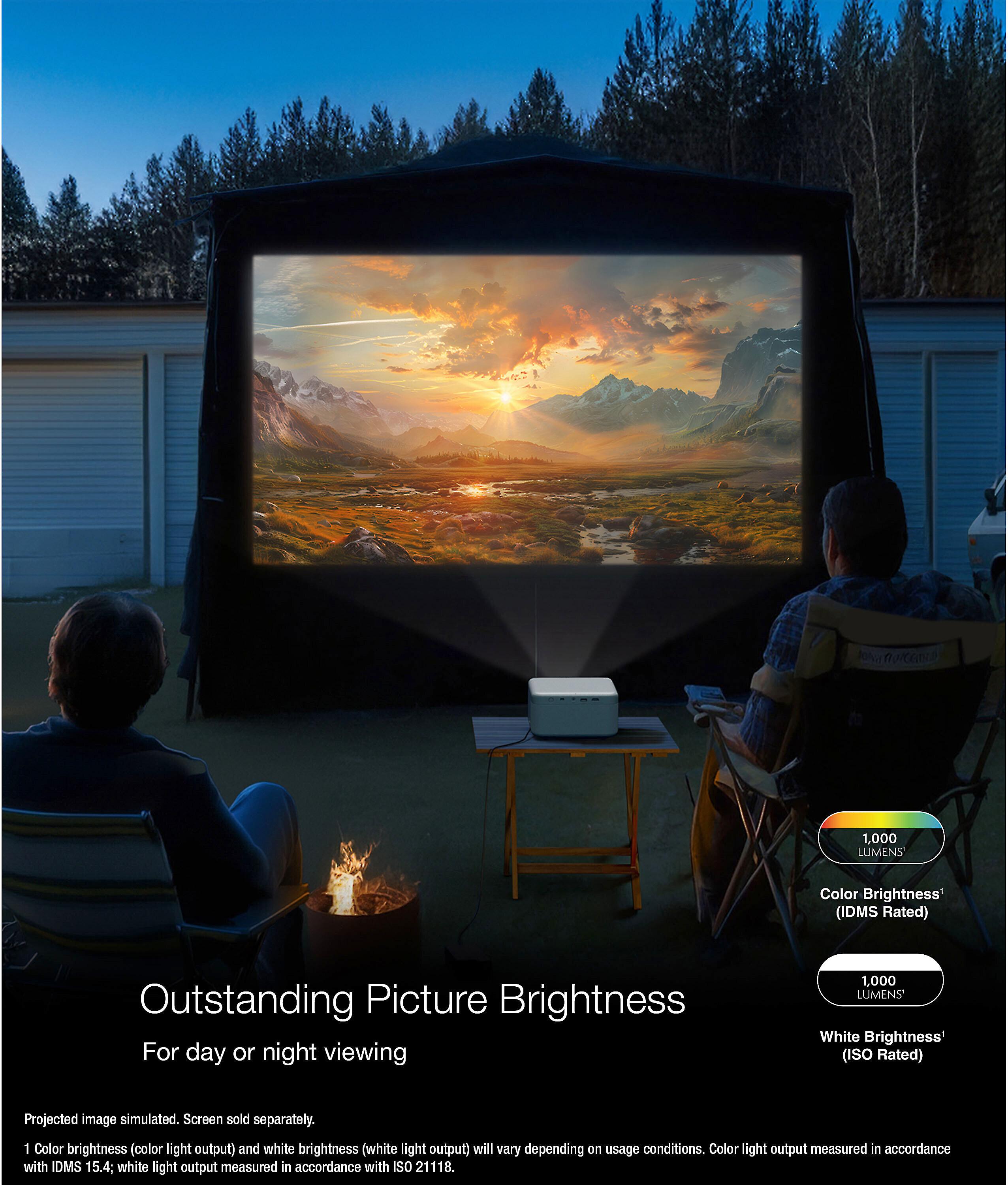
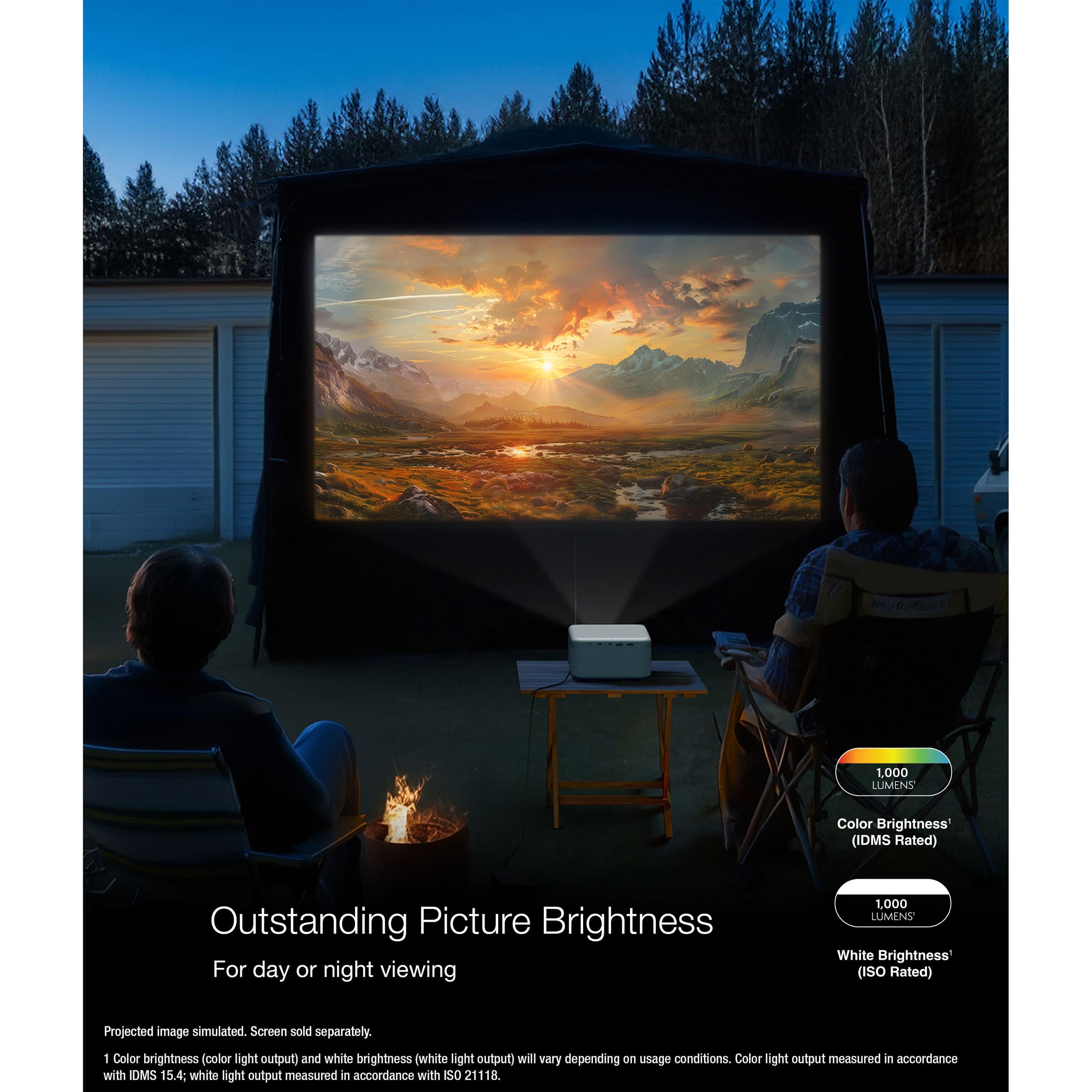
The EF21's standout technical feature is its laser light source, which delivers 1,000 lumens of brightness—nearly triple that of the TCL A1. This laser engine has a rated lifespan of 20,000 hours, which translates to over 10 years of typical use without requiring lamp replacement. The projector uses Epson's 3LCD technology, which employs three separate LCD panels (one each for red, green, and blue) to produce color, as opposed to the single-chip approach used in many portable projectors.
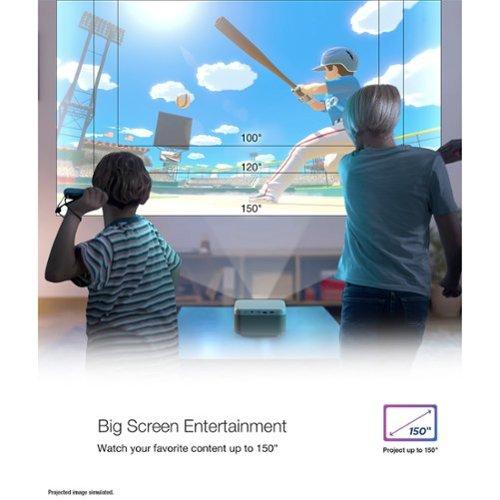
Resolution matches the TCL at 1080p Full HD, but the EF21 adds HDR10 and HLG (Hybrid Log-Gamma) support for improved dynamic range with compatible content. It also boasts a considerably higher contrast ratio of 200,000:1 and can project images from 30 to 150 inches, offering more flexibility in both very small and very large spaces.
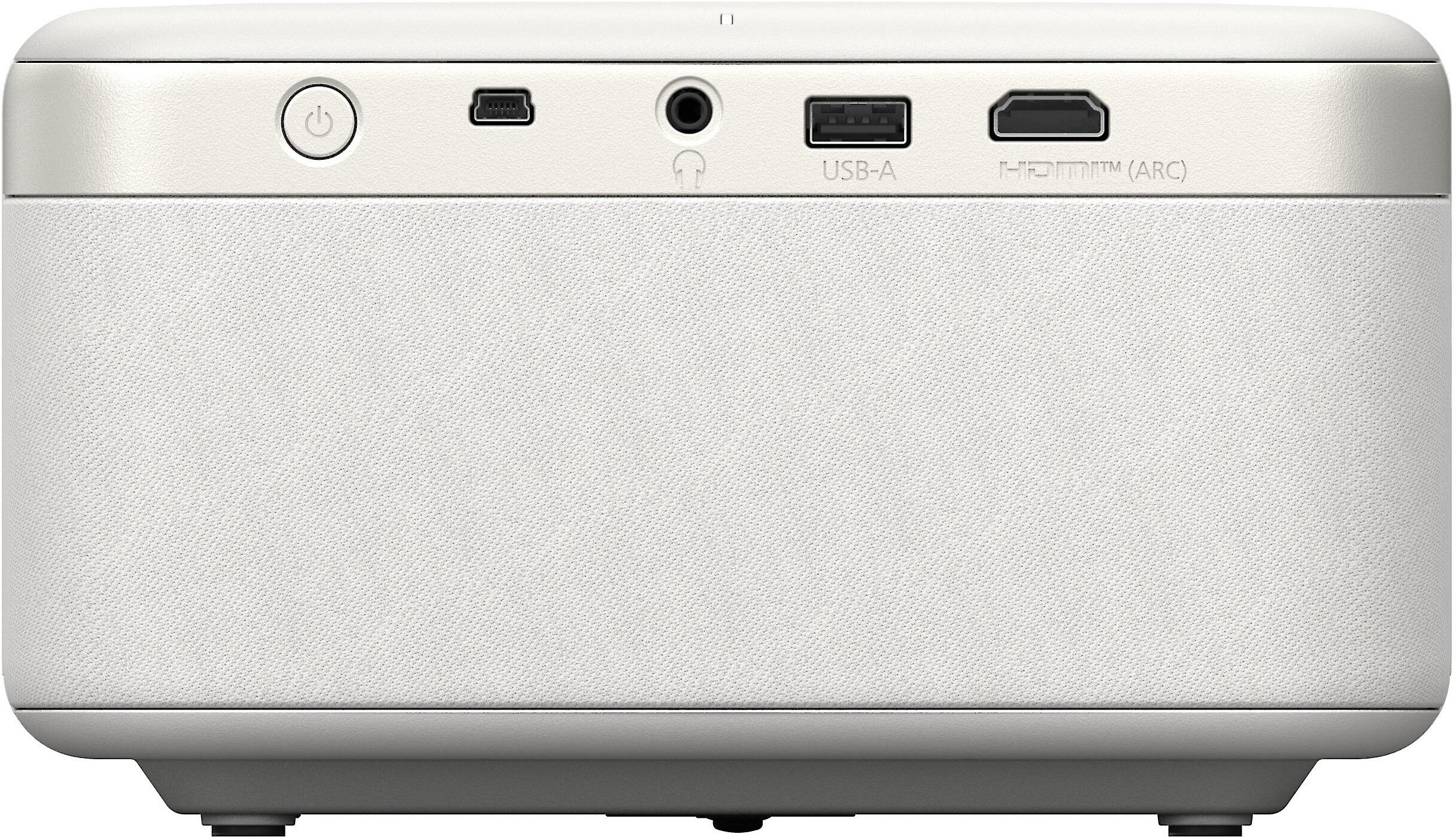
Connectivity includes HDMI 2.3 input (newer than the standard HDMI port on the TCL), USB-A, and mini USB-B ports. Wireless options include Bluetooth 5.1 and dual-band Wi-Fi supporting both 2.4GHz and 5GHz networks—a meaningful improvement over the TCL's Wi-Fi 4 capabilities.
For audio, the EF21 features dual 5W speakers with Dolby Audio support. While lower-powered than the TCL's speakers on paper, Epson has tuned these speakers specifically for this compact enclosure.
Perhaps the most significant practical difference between these projectors is their brightness capability. The TCL A1's 360 ISO lumens means it's primarily suited for dark or very dim environments. In my experience testing similar brightness projectors, you'll need near-complete darkness to enjoy a 100-inch image. During daytime viewing, even with blinds closed, you'll likely need to reduce the image size to 50-60 inches to maintain acceptable visibility.
The Epson EF21's 1,000 lumens output dramatically changes this equation. While still not bright enough for full daylight viewing on a 100-inch screen (you'd need 2,500+ lumens for that), it comfortably handles moderately lit living rooms in the evening or rooms with some ambient light leakage. This increased brightness gives you much more flexibility in when and where you can use the projector effectively.
For context, most dedicated home theater projectors start at around 1,500-2,000 lumens, so the Epson sits closer to that "proper home theater" experience than the TCL, which is firmly in the "casual viewing" category regarding brightness.
The underlying display technologies create another significant difference in image quality. The TCL A1 uses a single-LCD system, which is cost-effective but has limitations in color accuracy and brightness efficiency.
Epson's 3LCD technology in the EF21 uses three separate LCD panels, one dedicated to each primary color (red, green, blue). This approach has several advantages:
In real-world viewing, this means the Epson generally produces more natural skin tones, richer colors, and better handling of subtle color gradations. The addition of HDR support further enhances this advantage when watching HDR content from streaming services or external devices.
Both projectors offer 1080p Full HD resolution, which remains the sweet spot for projection at these price points. While 4K projectors exist, they typically cost significantly more and often require trade-offs in brightness or portability.
At typical viewing distances, 1080p resolution looks crisp on screens up to about 100 inches diagonal. Beyond that size, particularly eagle-eyed viewers might start to notice the pixel structure, especially with text-heavy content.
One subtle advantage for the Epson is that its higher brightness allows you to achieve better perceived detail in practice. When a projector lacks brightness, contrast suffers, and fine details can appear washed out or lost entirely in darker scenes. The EF21's superior brightness helps maintain detail visibility across a wider range of content and lighting conditions.
Both projectors aim to simplify the traditionally finicky process of projector setup, but they take different approaches with varying degrees of sophistication.
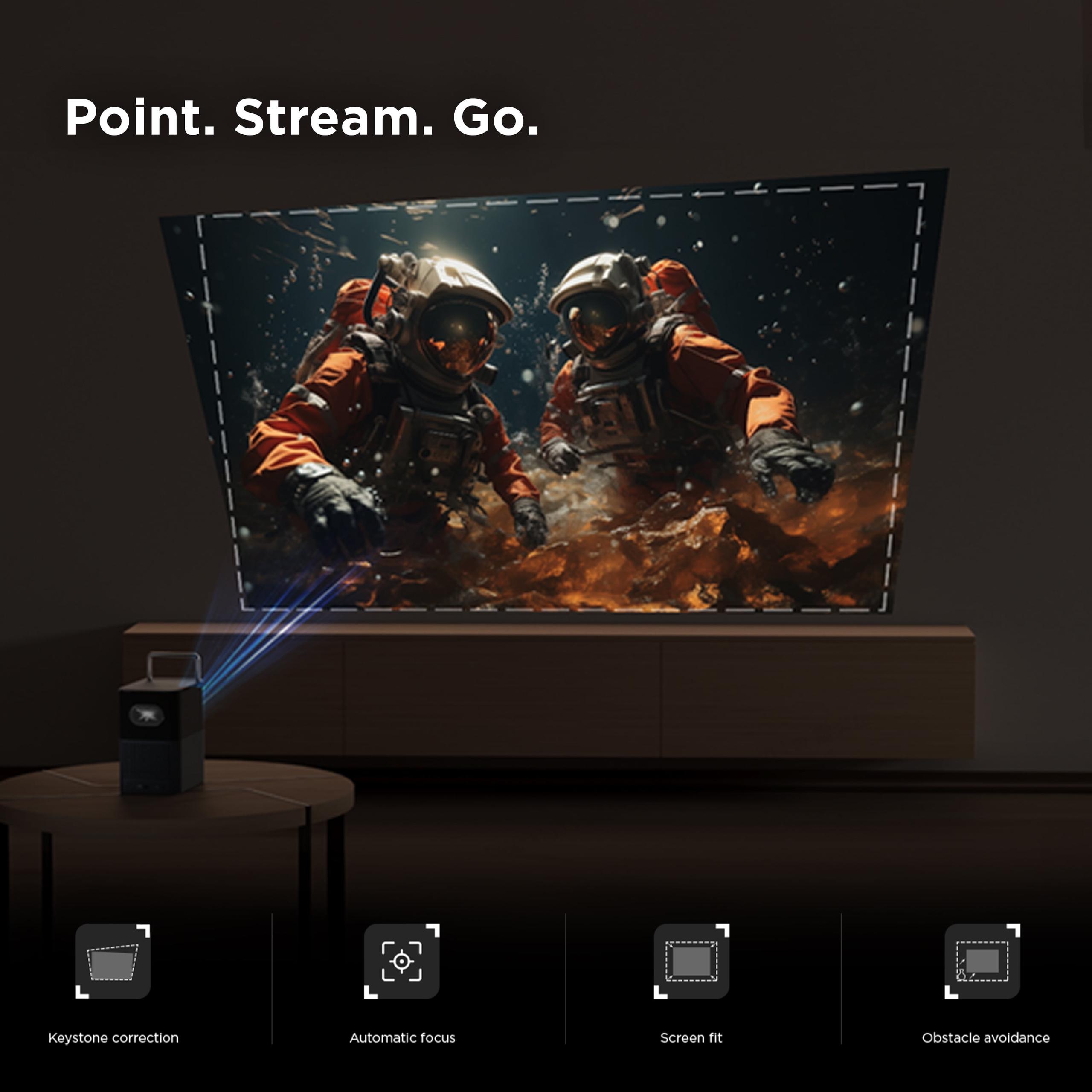
The TCL A1 includes basic auto-focus and auto-keystone correction. The auto-focus works quite well in my experience, quickly achieving sharp focus when you first power on the projector. The auto-keystone correction handles basic vertical alignment but isn't as sophisticated as systems found in higher-end projectors. The VersaGrip handle/stand helps mitigate some positioning challenges by allowing physical adjustment of the projection angle.
The Epson EF21 steps things up with its EpiqSense technology, which provides more comprehensive automatic setup. This system handles not just focus and basic keystone correction but also includes obstacle avoidance—meaning it can automatically resize and reposition the image to fit within a specific area of your wall, working around obstacles like frames or wall fixtures. This level of automation makes the EF21 notably easier to set up in imperfect environments, such as living rooms where you might not have a perfectly clear, flat white wall available.
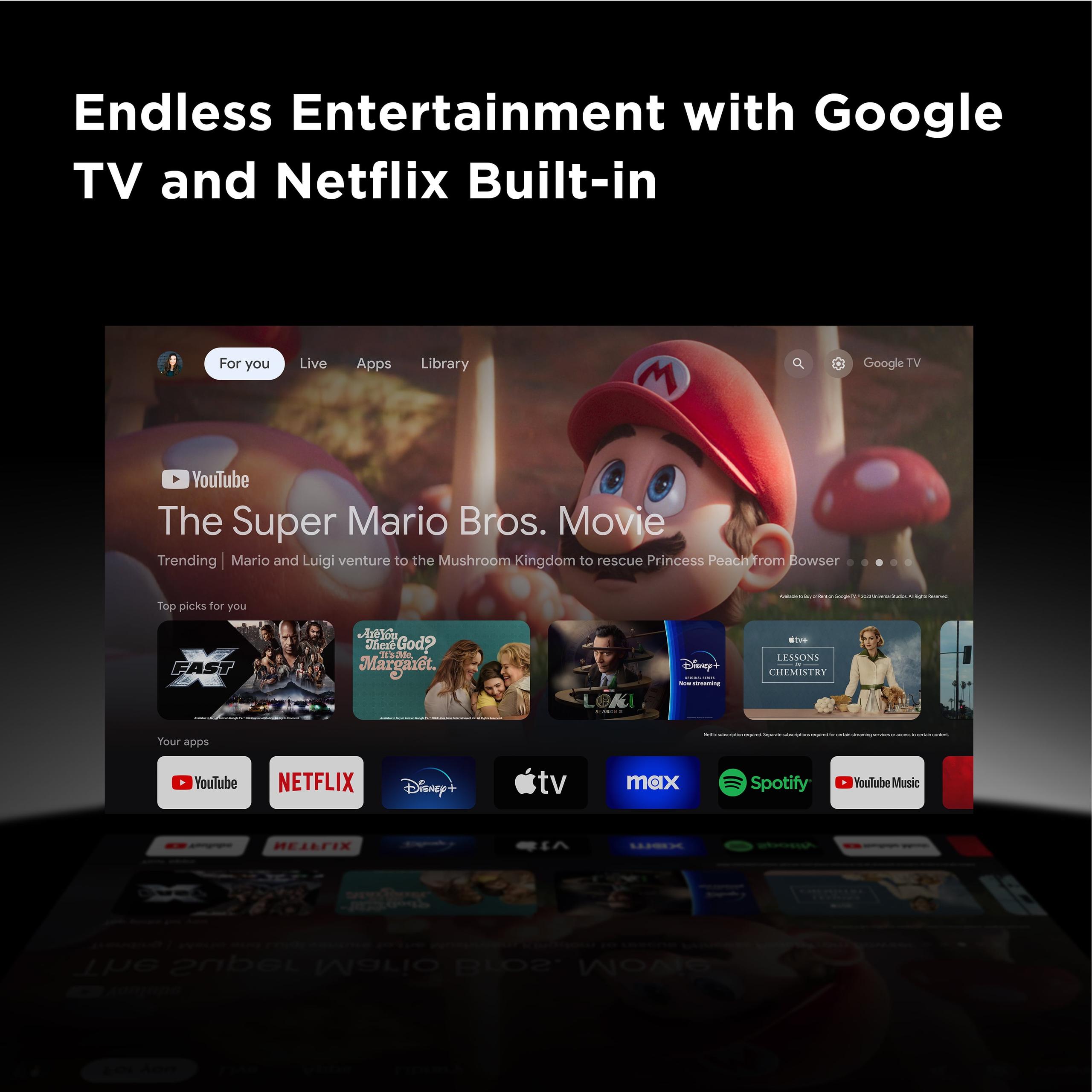
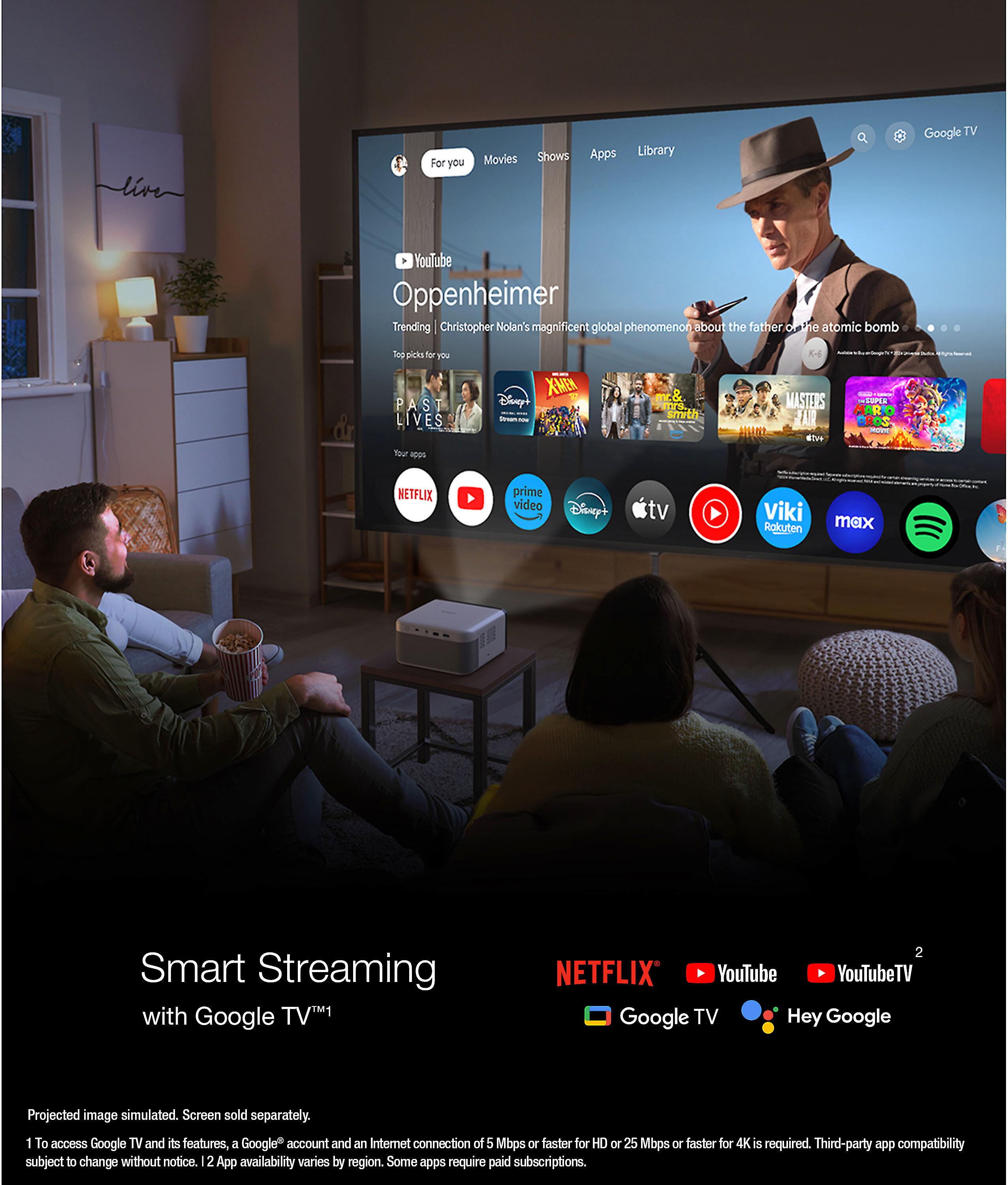
Both projectors run Google TV as their smart platform, providing access to thousands of streaming apps including Netflix, Disney+, Hulu, and HBO Max. Google TV offers personalized recommendations across services and integrates with Google Assistant for voice control.
The implementation of Google TV isn't identical between the two, however. Multiple reviewers have noted that the TCL A1's interface feels sluggish, with noticeable lag when navigating menus or loading apps. The Epson EF21 offers a more responsive experience, likely due to more powerful internal processing hardware.
It's worth noting that Google TV requires an internet connection to set up and use most features. Both projectors allow you to connect external devices via HDMI if you prefer to use a streaming stick, game console, or Blu-ray player instead of the built-in smart features.
Projector audio is often overlooked, but it's particularly important for portable models since you're less likely to connect them to external sound systems regularly.
The TCL A1 impresses on paper with its dual 8W speakers and Dolby Digital+ processing. In practice, these speakers deliver room-filling sound that's surprisingly robust for a projector. The audio is clear enough for dialogue and has enough presence for casual movie watching, though it naturally lacks the bass response of dedicated speakers or soundbars.
The Epson EF21's dual 5W speakers aren't as powerful on paper, but Epson has tuned them well for the projector's form factor. The sound quality is clear and balanced, though maximum volume is lower than the TCL. For quiet environments and average-sized living rooms, the Epson's audio is perfectly adequate, but larger spaces might reveal its limitations.
Both projectors offer Bluetooth output if you want to connect to external speakers or headphones, and both include audio output jacks for wired connections.
With a $400 price gap between these projectors, it's important to assess whether the Epson's advantages justify its premium position.
The TCL A1 at $499 offers solid value as an entry point to smart projection. Its 1080p resolution, integrated Google TV, and innovative design make it appealing for casual users who primarily watch content in controlled lighting conditions. The impressive audio system adds further value, potentially eliminating the need for external speakers in many scenarios.
The Epson EF21 at $899.99 represents a significant step up in both price and performance. The laser light source alone adds considerable long-term value, as there's no lamp to replace over the projector's lifespan. Factor in the nearly tripled brightness, superior color reproduction, and more advanced auto-setup features, and the price premium becomes easier to justify for those who will use their projector regularly.
For context, traditional home theater projectors with comparable brightness to the Epson typically start around $700-800 but lack the integrated smart platform and often have more complicated setup requirements. Viewed through that lens, the EF21 offers compelling value despite its higher price tag.
The TCL A1 is ideally suited for:
I've found that projectors in this brightness range work best for special occasion viewing rather than daily use. They create a fun, cinematic experience for movie nights when you can control the lighting, but they don't attempt to replace a TV for everyday viewing.
The Epson EF21 becomes the better choice for:
The EF21 can serve as a genuine TV replacement in many scenarios, particularly in the evening hours. Its brightness and image quality make it suitable for everything from casual TV viewing to sports, movies, and gaming.
While neither of these projectors would be classified as dedicated home theater projectors, the Epson EF21 comes much closer to delivering that experience. In a proper light-controlled environment with dark walls, the EF21's 1,000 lumens brightness, strong contrast ratio, and HDR support can create an immersive viewing experience on screens up to 120 inches.
For serious home theater applications, you'll still want to consider external audio—perhaps a soundbar or proper surround sound system—to match the scale of the visual experience. The EF21's image quality deserves better audio than its built-in speakers can provide.
The TCL A1, while capable of producing a large image, lacks the brightness and contrast capabilities that home theater enthusiasts typically seek. In a dedicated theater room, these limitations become more apparent, especially with challenging content containing both very bright and very dark elements.
After reviewing both projectors in detail, here's how to determine which one aligns best with your needs:
If budget is your primary concern, the TCL A1 delivers impressive value at $499, providing a good entry point to the world of projection. But if you can stretch to the Epson EF21's $899.99 price tag, its dramatically better performance and versatility make it the superior choice for most users who plan to use their projector regularly.
In the rapidly evolving world of portable smart projectors, both of these options have their place—the TCL A1 as an affordable first step and the Epson EF21 as a more capable solution that bridges the gap between convenience and genuine home theater performance.
| TCL A1 Portable 1080p Smart Projector | Epson EpiqVision Mini EF21 Projector |
|---|---|
| Price - Overall investment consideration | |
| $499 (budget-friendly entry point) | $899.99 (premium but with added capabilities) |
| Brightness - Critical for visibility in ambient light | |
| 360 ISO Lumens (requires near-darkness) | 1,000 Lumens (usable in dim to moderate lighting) |
| Light Source Technology - Affects longevity and maintenance costs | |
| LED (standard lifespan, eventual replacement needed) | Laser (20,000-hour lifespan, virtually maintenance-free) |
| Projection Technology - Impacts color accuracy and rainbow effects | |
| Single LCD panel | 3LCD (three separate panels for better color accuracy) |
| Resolution - Determines image clarity and detail | |
| 1080p Full HD | 1080p Full HD with HDR10 and HLG support |
| Maximum Screen Size - Defines largest possible viewing area | |
| 120 inches diagonal | 150 inches diagonal |
| Smart Platform - For streaming without external devices | |
| Google TV (reported to be somewhat sluggish) | Google TV (more responsive implementation) |
| Auto-Setup Features - Simplifies installation and adjustment | |
| Basic auto-focus and keystone correction | Advanced EpiqSense technology with obstacle avoidance |
| Audio System - Built-in sound quality for standalone use | |
| Dual 8W speakers with Dolby Digital+ | Dual 5W speakers with Dolby Audio (less powerful but well-tuned) |
| Special Features - Unique selling points | |
| VersaGrip handle/stand for flexible positioning, Light Sync ambient effects | Virtually maintenance-free laser light source, superior auto-setup |
| Connectivity - For connecting external devices and networks | |
| HDMI, USB, Wi-Fi 4, Bluetooth 5.1 | HDMI 2.3, USB-A, USB-B (mini), Dual-band Wi-Fi, Bluetooth 5.1 |
| Weight - Important for portability | |
| 5.5 lbs | 5.1 lbs |
| Best Use Case - Ideal scenarios for each projector | |
| Occasional movie nights in dark rooms, budget-conscious buyers | Regular use in various lighting conditions, long-term investment |
Both the TCL A1 Portable 1080p Smart Projector and the Epson EpiqVision Mini EF21 Projector perform well in dark rooms, but the Epson EF21 delivers superior image quality with better contrast and more accurate colors thanks to its 3LCD technology. While the TCL A1 ($499) is adequate for casual movie nights in completely darkened spaces, the Epson EF21 ($899.99) provides a more cinema-like experience with its HDR support and higher brightness, making it the better choice for dedicated home theater use despite the price difference.
The Epson EpiqVision Mini EF21 Projector with its 1,000 lumens brightness performs significantly better in rooms with some ambient light compared to the TCL A1 Portable 1080p Smart Projector, which is limited to 360 ISO lumens. While neither is suitable for bright daylight viewing, the Epson EF21 can maintain good image quality during evening hours with some lights on, whereas the TCL A1 really requires near-darkness to produce satisfactory results.
Both the TCL A1 and Epson EF21 run on the Google TV platform with access to thousands of streaming apps including Netflix, Disney+, and YouTube. However, the Epson EF21 typically provides a more responsive experience when navigating the interface and launching apps. The TCL A1 does offer a unique Light Sync feature for ambient lighting effects, but overall, the Epson delivers a smoother and more reliable smart TV experience for daily use.
The Epson EpiqVision Mini EF21 Projector offers more advanced auto-setup features with its EpiqSense technology, which includes obstacle avoidance and superior automatic focus and alignment. The TCL A1 Portable 1080p Smart Projector provides basic auto-focus and keystone correction, along with its innovative VersaGrip handle that allows for physical angle adjustments. For users wanting the simplest possible setup experience, especially in imperfect environments, the Epson EF21's more sophisticated automation gives it a clear advantage.
The TCL A1 Portable 1080p Smart Projector at $499 provides good value for occasional users who primarily watch content in completely dark rooms. The Epson EpiqVision Mini EF21 Projector at $899.99 is significantly more expensive but offers nearly three times the brightness, a maintenance-free laser light source with 20,000-hour lifespan, and superior image quality. For frequent users, the Epson's additional capabilities and lower long-term maintenance costs make its higher price justified, while casual users might find the TCL A1 offers sufficient performance for their needs.
The TCL A1 features more powerful dual 8W speakers with Dolby Digital+ processing, providing surprisingly robust audio for a portable projector. The Epson EF21 uses dual 5W speakers that deliver clear sound but with less maximum volume. For casual viewing without external speakers, the TCL A1 has a slight edge in audio performance, though neither projector can match a dedicated soundbar or home theater audio system for immersive movie experiences.
Both projectors are considered portable, though neither includes a battery for truly wireless operation. The TCL A1 Portable 1080p Smart Projector weighs 5.5 pounds and includes a carrying case, while featuring a versatile VersaGrip handle. The Epson EpiqVision Mini EF21 Projector is slightly lighter at 5.1 pounds with a more compact design. Both can be easily moved between rooms or transported to different locations, though you'll need to consider power access and setup space wherever you use them.
The Epson EpiqVision Mini EF21 Projector has a significant advantage in longevity with its laser light source rated for 20,000 hours (approximately 10 years of typical use) without requiring any maintenance or bulb replacement. The TCL A1 Portable 1080p Smart Projector uses an LED light source with a shorter lifespan, though specific ratings aren't provided. For long-term investment, the Epson's laser technology offers much better durability and consistent brightness over time compared to traditional lamp or LED-based projectors.
Both projectors can be used for casual gaming, though neither is specifically optimized for competitive gaming with features like extremely low input lag. The Epson EpiqVision Mini EF21 Projector offers advantages for gaming with its higher brightness and better contrast, making game details more visible even in darker game scenes. The TCL A1 Portable 1080p Smart Projector can provide an enjoyable gaming experience in completely dark rooms, but its lower brightness may make some darker game content difficult to see clearly.
The TCL A1 Portable 1080p Smart Projector can project images from 45 to 120 inches diagonally, while the Epson EpiqVision Mini EF21 Projector offers a wider range from 30 to 150 inches diagonally. However, practical screen size is heavily dependent on ambient light conditions. The TCL A1's 360 ISO lumens means that in anything but complete darkness, you'll likely need to keep the image under 80 inches for acceptable brightness, while the Epson's 1,000 lumens allows for larger images even with some ambient light.
Neither the TCL A1 nor the Epson EF21 requires ceiling mounting, as both are designed for tabletop placement. The TCL A1's VersaGrip handle doubles as an adjustable stand allowing up to 15 degrees of tilt, while the Epson EF21's advanced auto-setup features can accommodate various placement positions. Both projectors include automatic keystone correction to create a properly shaped image even when projecting at an angle. This flexibility makes them suitable for temporary setups or homes where permanent installation isn't desired.
Both the TCL A1 Portable 1080p Smart Projector and Epson EpiqVision Mini EF21 Projector run Google TV with access to major streaming services. However, the Epson EF21 has advantages for streaming with its dual-band Wi-Fi support (both 2.4GHz and 5GHz networks) compared to the TCL A1's older Wi-Fi 4 standard. Users report that the Epson also offers a more responsive interface when browsing content. For the best streaming experience, especially in homes with multiple wireless devices or network congestion, the Epson EF21 provides more reliable performance despite its higher $899.99 price compared to the TCL A1's $499 cost.
We've done our best to create useful and informative comparisons to help you decide what product to buy. Our research uses advanced automated methods to create this comparison and perfection is not possible - please contact us for corrections or questions. These are the sites we've researched in the creation of this article: youtube.com - hometheaterforum.com - hifivision.com - tcl.com - gstylemag.com - youtube.com - youtube.com - soundandvision.com - tcl.com - androidheadlines.com - valueelectronics.com - tcl.com - walmart.com - esquire.com - hometheaterview.com - androidpolice.com - projectorcentral.com - howtogeek.com - nfm.com - tcl.com - valueelectronics.com - extapps.dec.ny.gov - cna-aiic.ca - projectorcentral.com - tcl.com - tcl.com - tcl.com - bestbuy.com - bestbuy.com - cnet.com - youtube.com - projectorreviews.com - epson.com - projectorreviews.com - epson.com - rtings.com - epson.com - youtube.com - projectorcentral.com - bestbuy.com - projectorcentral.com - nfm.com - crutchfield.com - latin.epson.com - mediaserver.goepson.com - planettv.com - bhphotovideo.com - cnet.com - epson.com

Privacy Policy
Terms and Conditions - Affiliate Policy
Home Security
© Copyright 2008-2026.
11816 Inwood Rd #1211, Dallas, TX 75244