

Remember when home projectors were enormous boxes that could barely illuminate a room unless it was pitch black? Those days are long behind us. The projector market has evolved dramatically in recent years, with manufacturers introducing innovations that have transformed these devices from niche products into mainstream entertainment solutions.
Today's home projectors offer impressive brightness, sharp resolution, and smart features that can rival traditional TVs, all while delivering the massive screen sizes that make movie nights truly special. Released in late 2022, the Epson EpiqVision Mini EF21 and the BenQ TH685P (launched in early 2022) represent two distinct approaches to modern home projection.
When shopping for a projector in 2023, several factors should guide your decision:
Brightness is measured in lumens and determines how visible your content will be in different lighting conditions. Think of lumens like the wattage in a light bulb—the higher the number, the brighter the image. For rooms with ambient light, higher brightness is essential.
Resolution affects the clarity and detail of your image. Most modern projectors offer at least Full HD (1920×1080 pixels), with some pushing into 4K territory.
Throw ratio is a technical term that describes how far a projector needs to be from the screen to create a certain image size. A short-throw projector can sit close to your wall and still produce a large image, while standard throw projectors need more distance.
Input lag measures the delay between your device sending a signal and the projector displaying it—critical for gaming where split-second reactions matter.
Light source technology has seen significant changes, with traditional lamps giving way to LED and laser options that offer longer lifespans and reduced maintenance.
Over the past few years, we've also seen the rise of smart projectors with built-in streaming capabilities, eliminating the need for external devices like streaming sticks or game consoles.
The Epson EF21 (~$900) represents a new breed of projector that blends the lines between traditional projection and smart TV functionality. Released in late 2022, it's part of Epson's push to make projectors more accessible and user-friendly for everyday consumers.
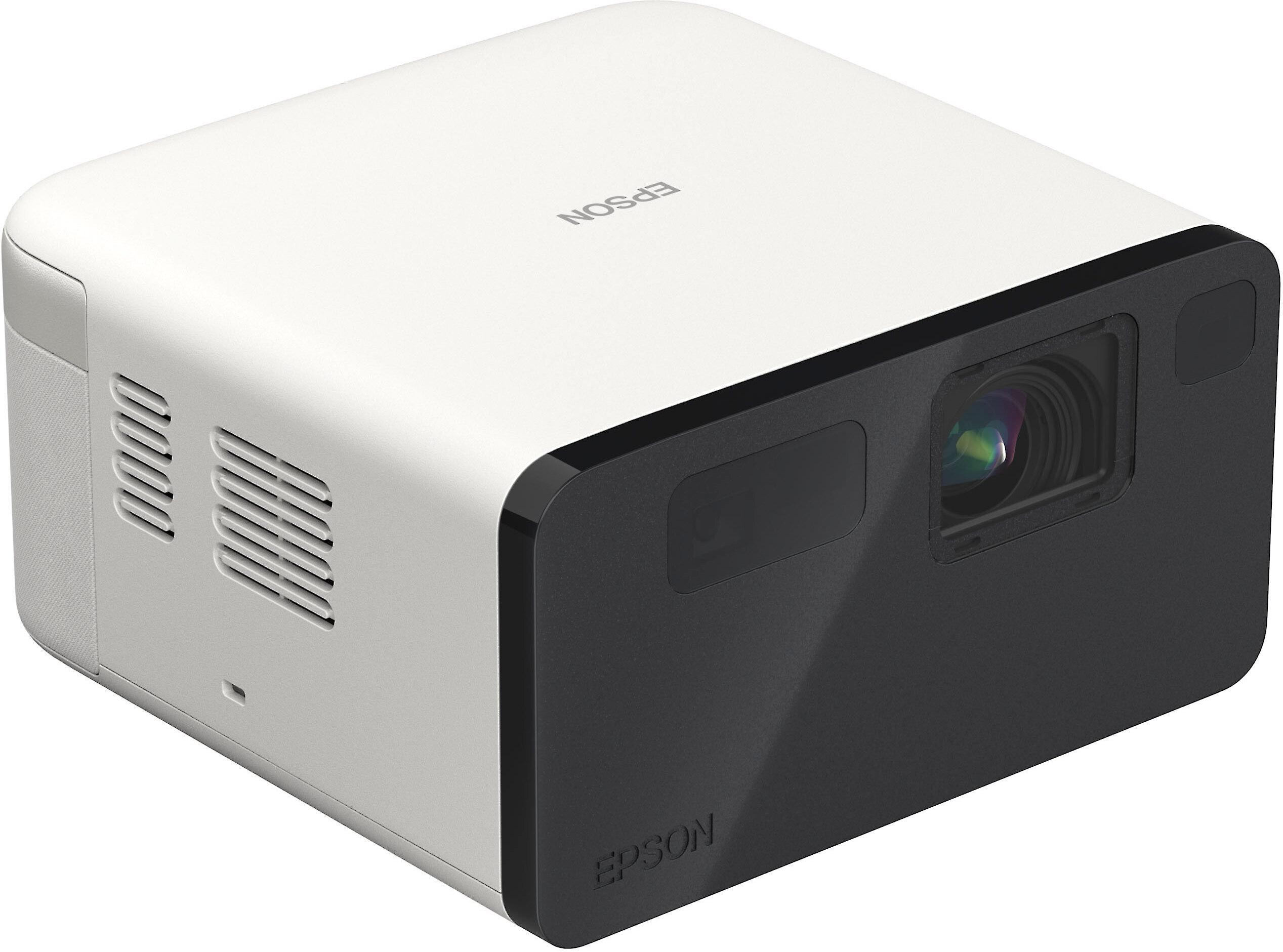
This compact projector features laser technology, which was previously only available in much more expensive models just a few years ago. The EF21's design philosophy centers around simplicity and versatility—it's meant to be moved from room to room, set up in minutes, and used without additional devices.
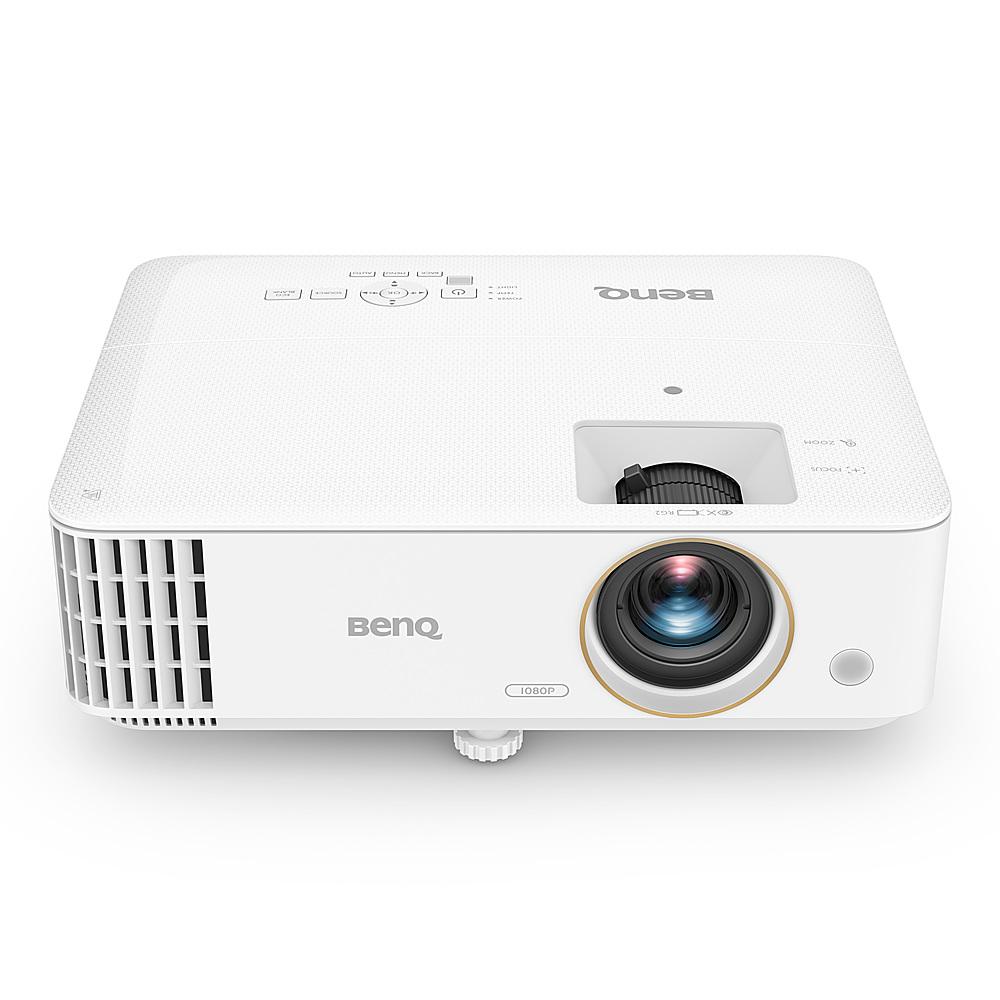
The BenQ TH685P (~$800) hit the market in early 2022 as an update to their popular TH685 model. BenQ has specifically engineered this projector for gaming performance, with features that would have been unheard of in projectors just five years ago.
Using traditional lamp-based technology but with modern optimizations, the TH685P prioritizes low input lag and high refresh rates—technical specifications that directly impact gaming responsiveness. While it lacks the smart features of the Epson, it compensates with raw performance in its target use case.
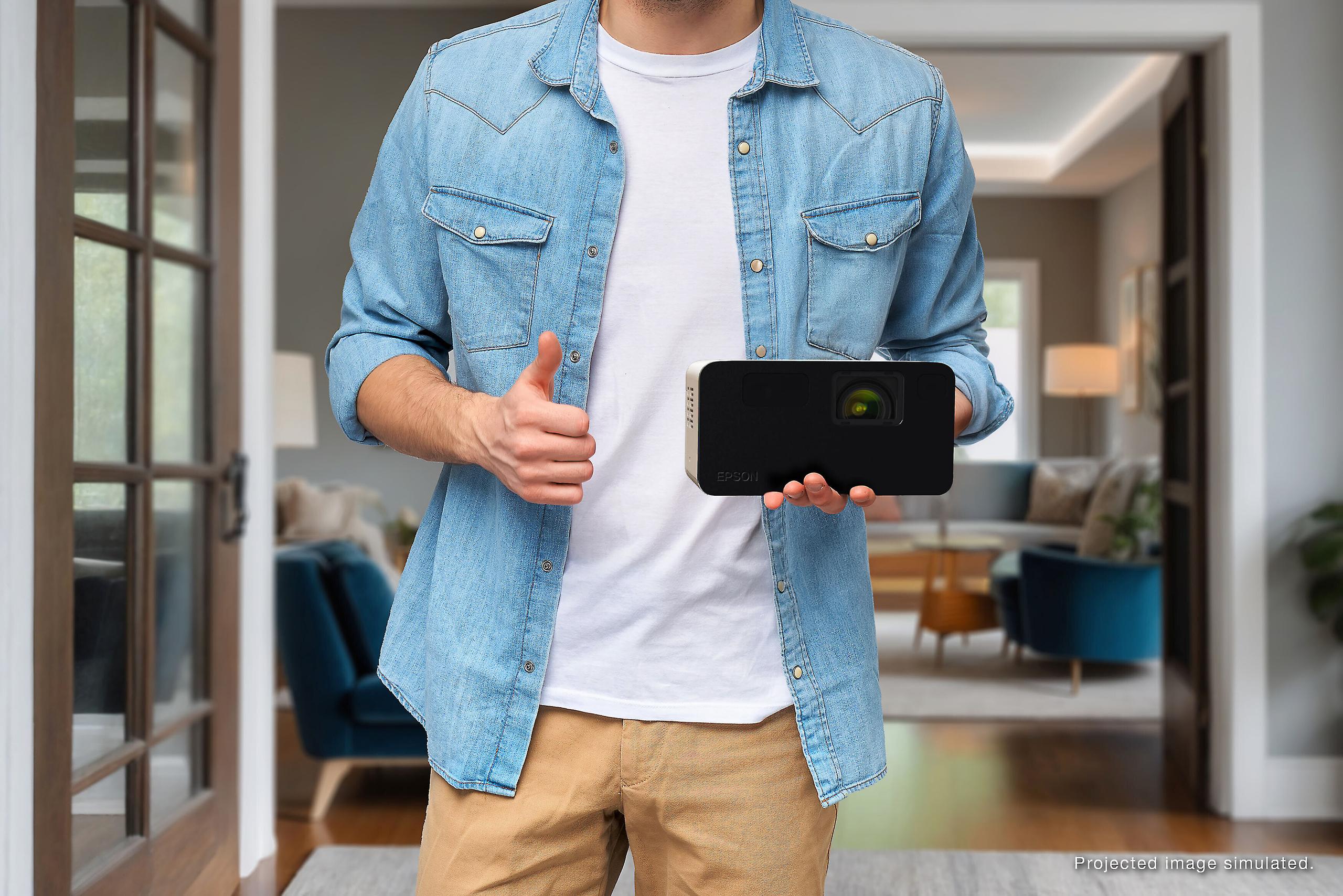
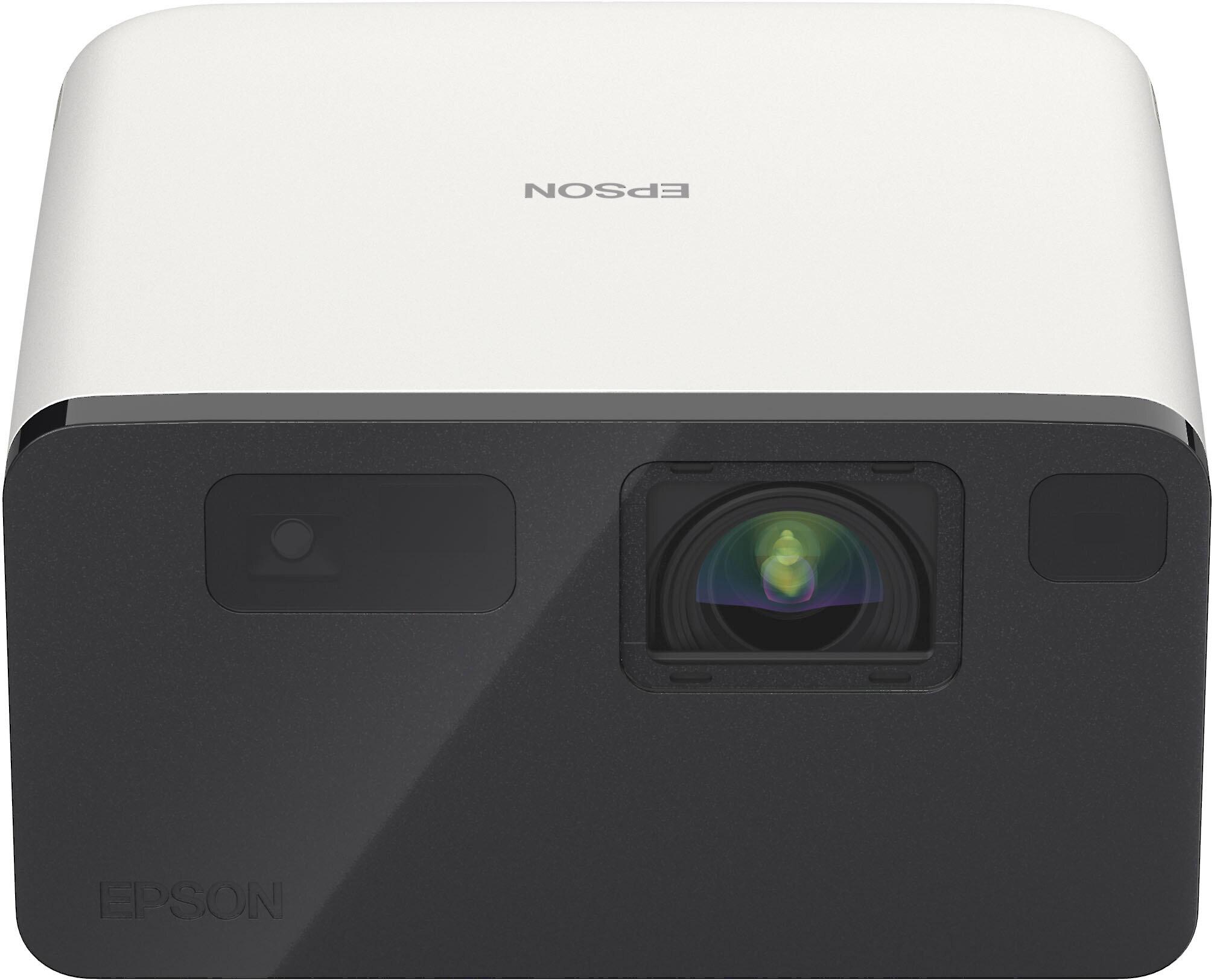
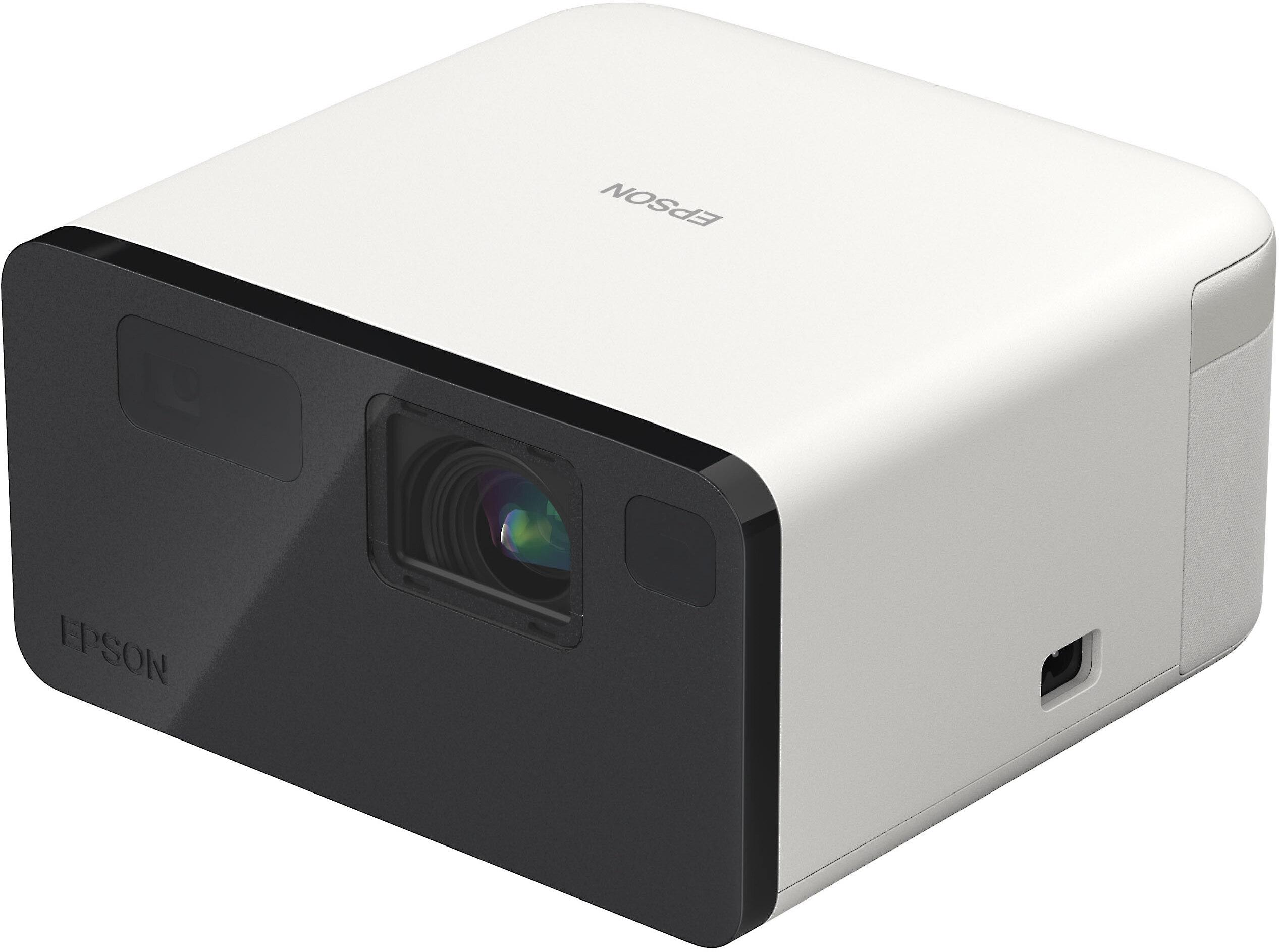
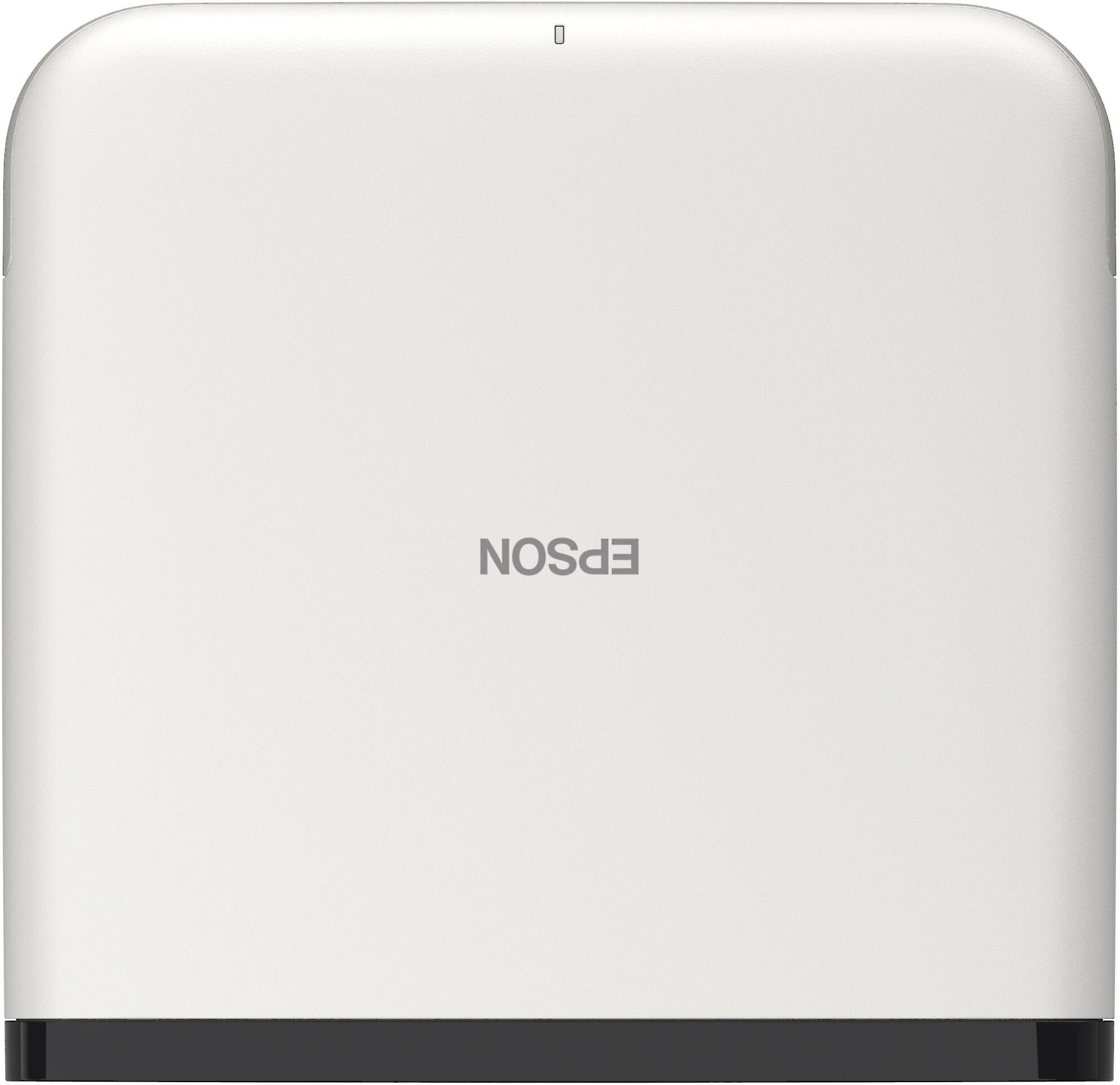
The EF21 represents a significant departure from traditional projector design. At just 7.75" × 7.5" × 4.4" and weighing a mere 5.1 pounds, it's designed to blend into modern living spaces rather than being hidden away. Available in three attractive colors (Diamond White, Opal Green, and Quartz Rose), the EF21 looks more like a stylish Bluetooth speaker than a conventional projector.
This design approach isn't just about aesthetics—it's practical. The compact size makes it easy to move between rooms or take to a friend's house. I've found that this portability encourages more frequent use compared to larger, permanently installed projectors.
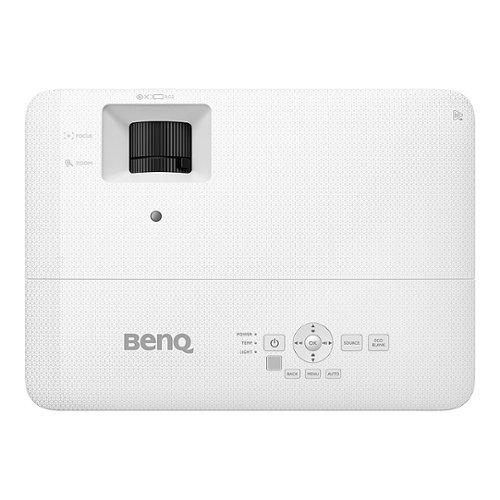
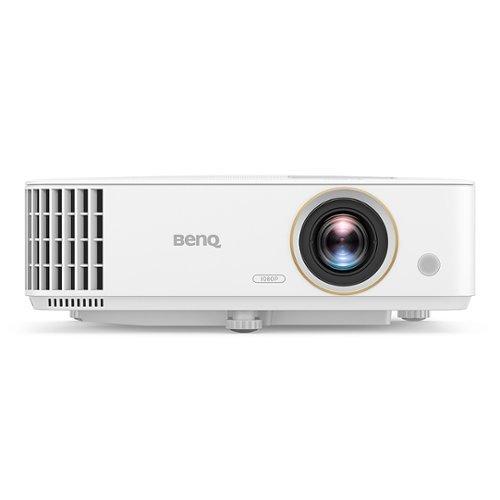
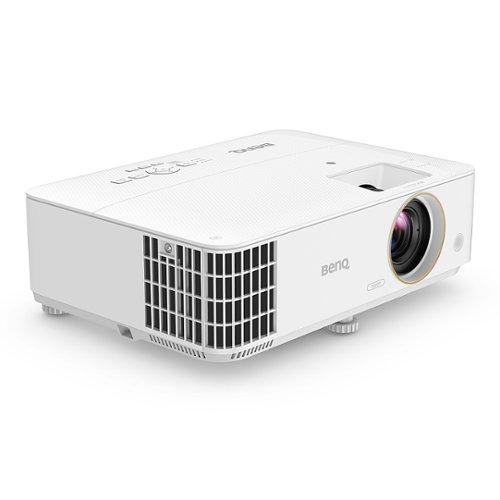
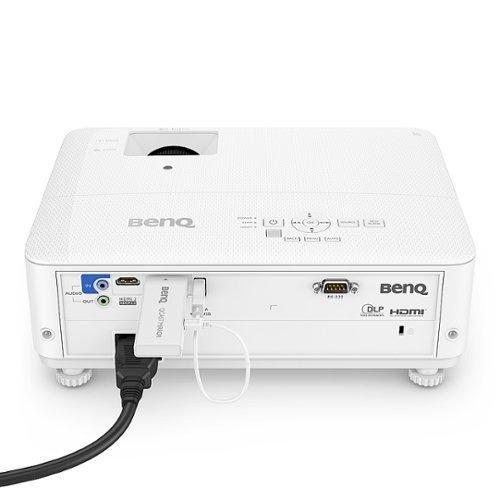
The TH685P follows a more traditional projector design philosophy. At 12.28" × 4.33" × 8.86" and 6.2 pounds, it's noticeably larger than the Epson but still relatively portable by projector standards.
BenQ has focused on function over form, with a white chassis that features prominent ventilation for cooling the lamp-based system. While not as living room-friendly as the Epson, the TH685P's design makes sense for its primary use case—it's likely to be ceiling-mounted in a dedicated gaming space or home theater rather than moved frequently.
The EF21 employs Epson's 3LCD technology, a system that uses three separate LCD panels (one each for red, green, and blue) to create images. This approach differs fundamentally from DLP (Digital Light Processing) projectors and offers some distinct advantages.
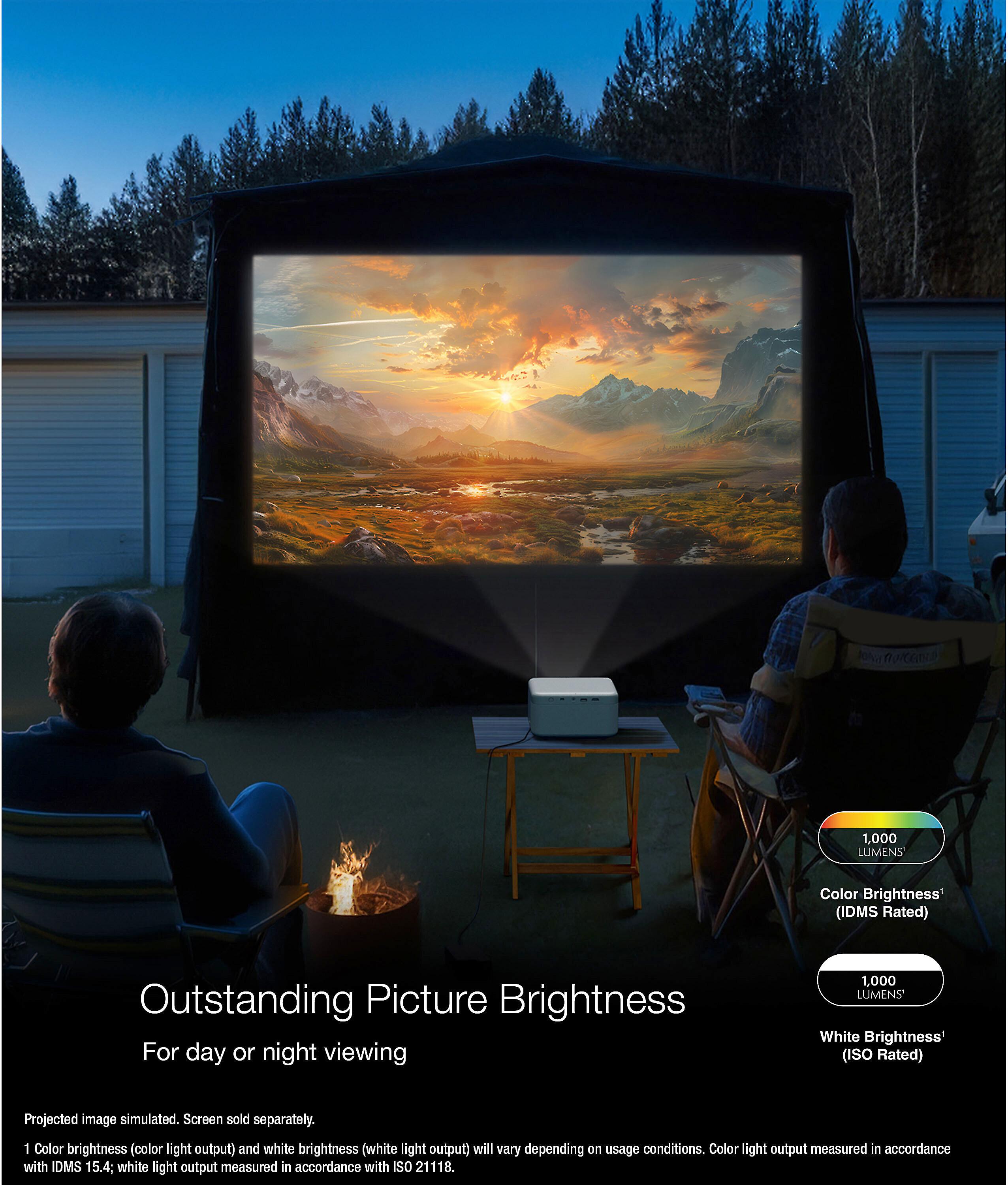
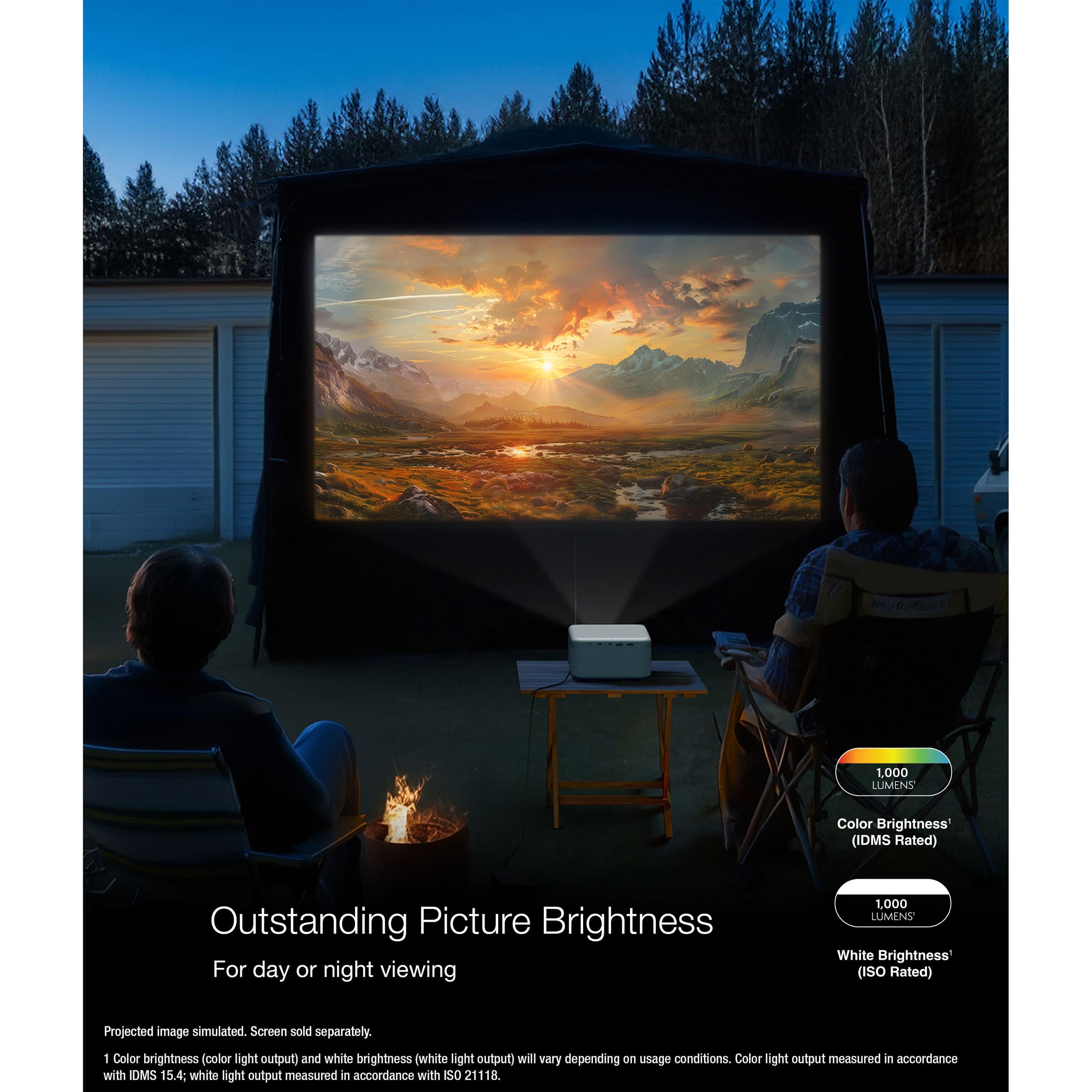
With 1080p Full HD resolution and 1,000 lumens of brightness, the EF21 delivers respectable but not class-leading brightness. However, the 3LCD system ensures that color brightness matches white brightness—something that isn't always true with single-chip DLP projectors. This results in more accurate and vibrant colors, especially noticeable in colorful animated films or nature documentaries.
The laser light source provides an impressive 200,000:1 contrast ratio, allowing for deeper blacks than what's typically possible with lamp-based projectors. Support for HDR10 and HLG (Hybrid Log-Gamma, a broadcast HDR standard) ensures compatibility with modern content.
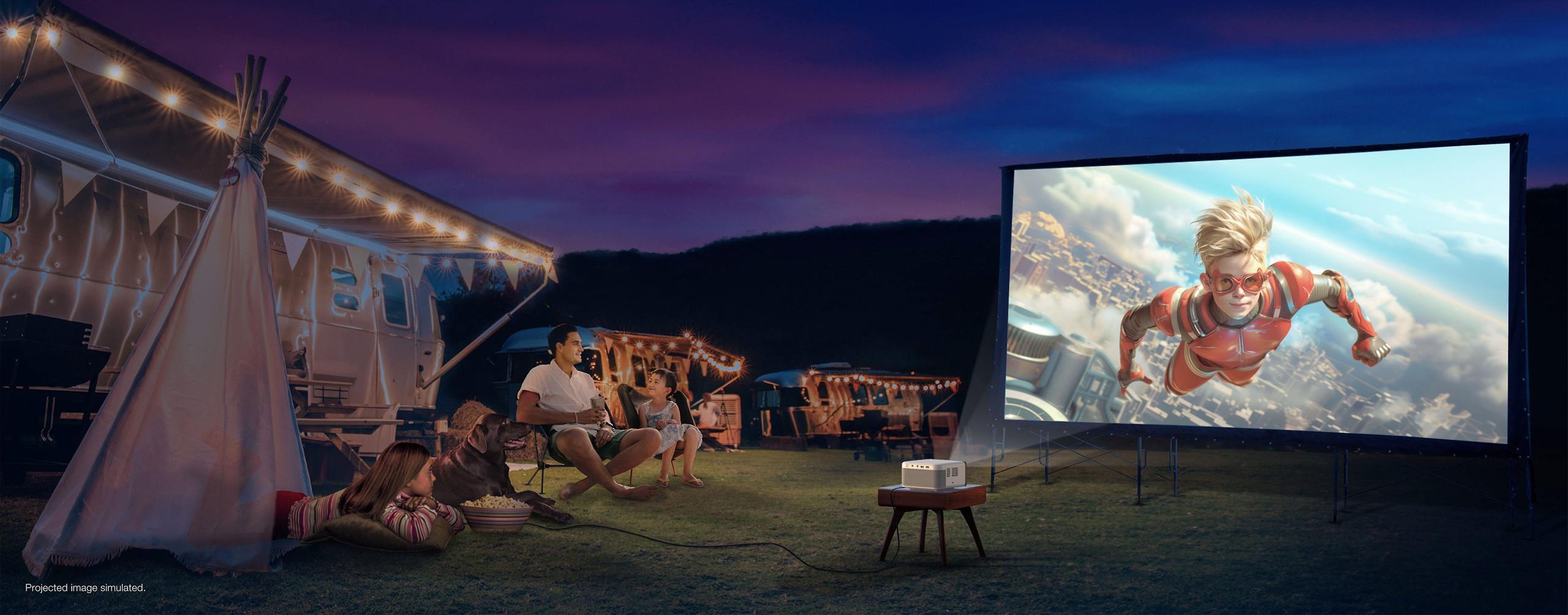
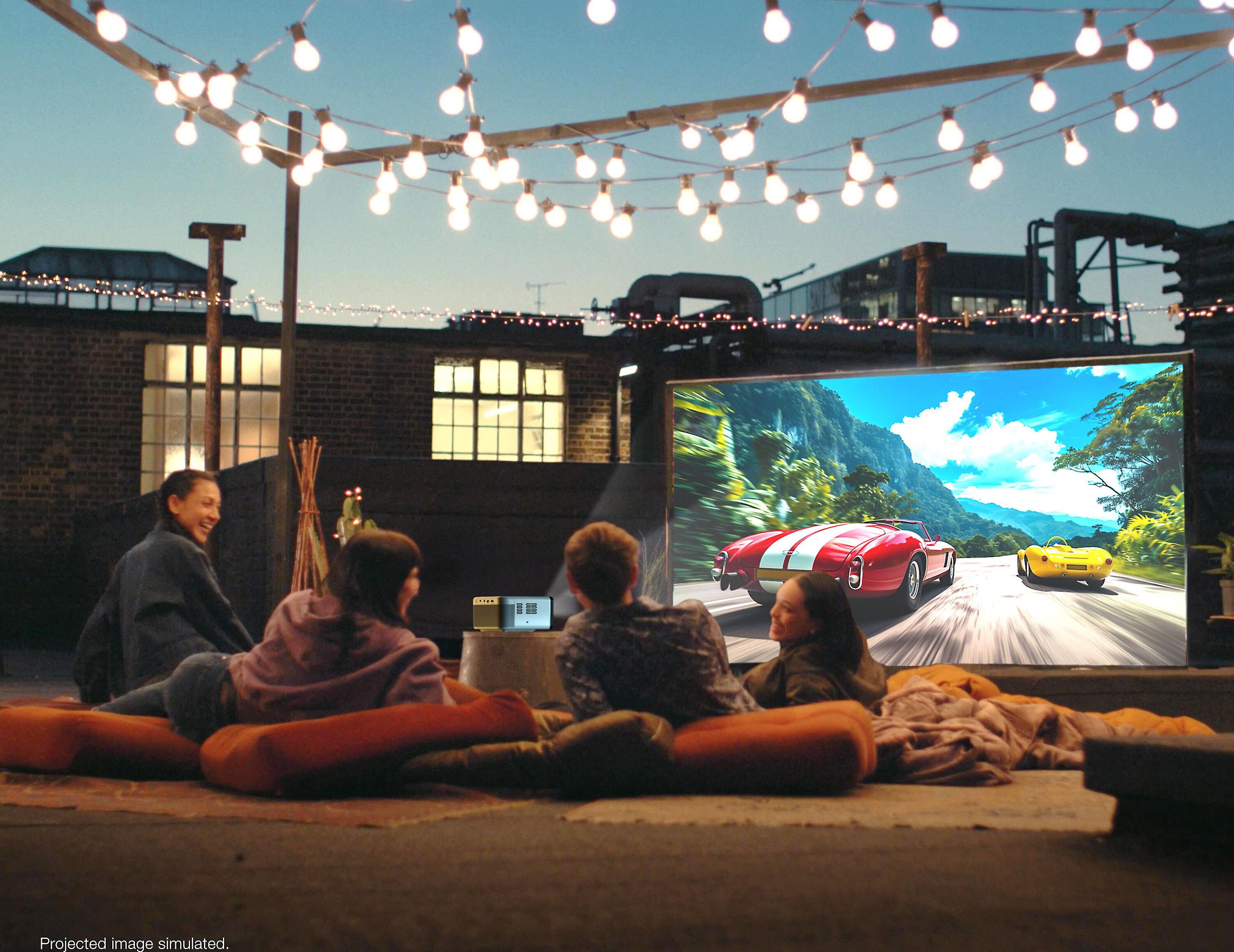
In my experience, the EF21 performs best in controlled lighting conditions. While 1,000 lumens is sufficient for a darkened room, images will appear washed out in bright daylight. For evening viewing or in rooms with good light control, however, the color accuracy and contrast make for a pleasing image up to about 120 inches.
The TH685P takes a different approach, utilizing single-chip DLP technology with a color wheel that rotates rapidly to create sequential color images. This system allows for extremely high brightness—3,500 ANSI lumens in this case—at a competitive price point.
This brightness is the TH685P's standout feature for image quality, making it usable even in rooms with ambient light. For gaming, where you might not want to play in complete darkness, this offers a significant advantage.
The projector offers the same 1080p resolution as the Epson but with a lower 10,000:1 contrast ratio. In practice, this means blacks won't be quite as deep, and shadow detail may be less defined. However, the TH685P compensates with excellent color accuracy, covering 95% of the Rec.709 color space (the standard for HDTV).
One potential drawback of single-chip DLP technology is the "rainbow effect"—momentary flashes of rainbow colors that some viewers can perceive, especially during high-contrast scenes. Not everyone is sensitive to this effect, but it's worth considering if you've noticed it in previous DLP projectors.
While the Epson EF21 wasn't specifically designed with gaming as a primary use case, it can certainly handle casual gaming sessions. The projector doesn't advertise its input lag (the delay between your controller input and the action appearing on screen), which typically suggests it's not optimized for competitive gaming.
Based on similar projectors, we can estimate the input lag is likely between 30-50 milliseconds—acceptable for casual gaming but potentially noticeable in fast-paced competitive games where split-second reactions matter. The standard 60Hz refresh rate (meaning the image refreshes 60 times per second) is adequate for console gaming but won't take advantage of higher frame rates available on gaming PCs.
The EF21 does benefit from its laser technology here, as the instant on/off capability eliminates the warm-up time required by lamp-based projectors. This makes it more convenient for quick gaming sessions where you don't want to wait for a projector to reach full brightness.
The BenQ TH685P shines when it comes to gaming performance. With an incredible 8.3ms input lag at 120Hz (or 16ms at 60Hz), it responds almost instantaneously to your inputs. For context, most TVs considered "good" for gaming have input lags around 15-20ms, so the TH685P is truly exceptional.
The 120Hz refresh rate support means the projector can display up to 120 frames per second, resulting in noticeably smoother motion in compatible games. This has become increasingly important as the latest PlayStation and Xbox consoles support 120Hz in select titles.
BenQ has also included game-specific enhancements like a Game Mode that adjusts image settings for better visibility in dark scenes—particularly useful in games like horror titles or dark stealth sections where seeing details in shadows can give you an advantage.
The Game Sound Mode optimizes audio to emphasize important gameplay sounds like footsteps or reload cues, though as we'll discuss later, the built-in audio has limitations regardless of sound mode.
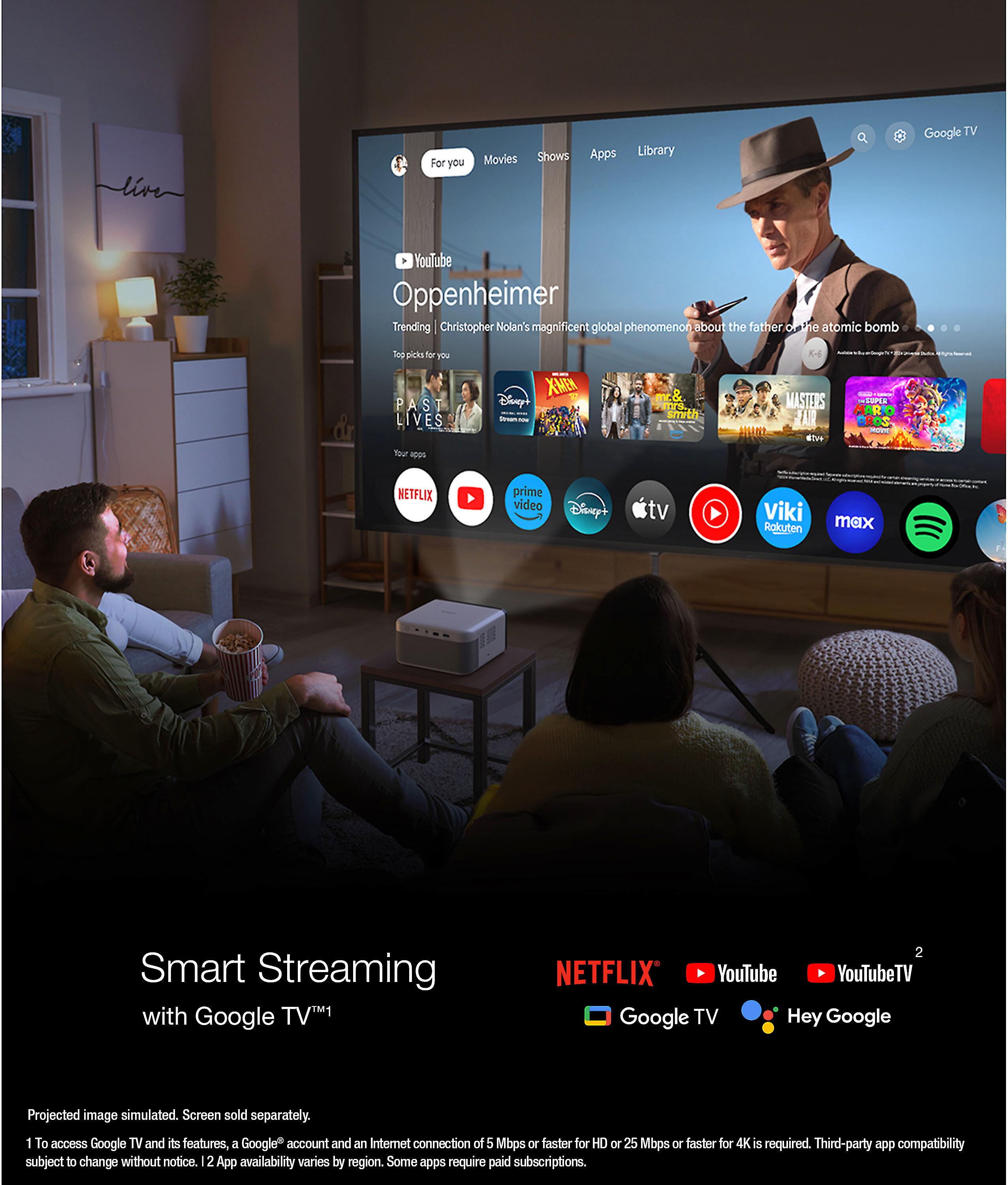
The EF21 represents the new generation of smart projectors that function as complete entertainment systems. With built-in Google TV, it offers access to over 10,000 apps including all major streaming services like Netflix, Disney+, HBO Max, and YouTube.
This integration eliminates the need for external streaming devices—a significant convenience that shouldn't be underestimated. The included voice-enabled remote works with Google Assistant, allowing you to search for content, control playback, and even control other smart home devices with voice commands.
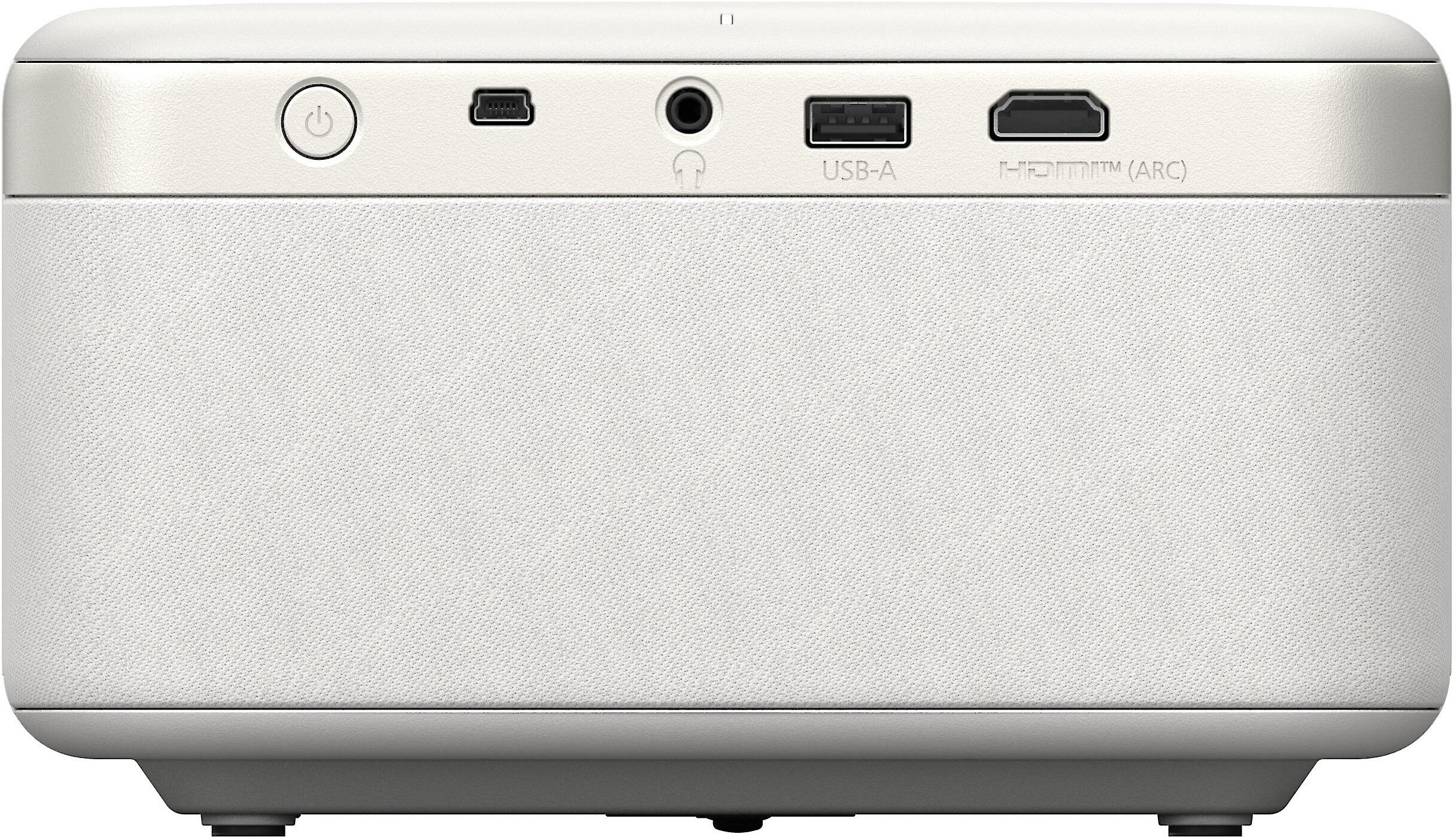
Connectivity options are modern and comprehensive, with HDMI 2.3 (supporting the latest devices), USB ports for media playback, and both Wi-Fi and Bluetooth 5.1. The Bluetooth connectivity is particularly useful for connecting wireless headphones or gaming controllers directly to the projector.
In daily use, this all-in-one approach makes the EF21 feel more like a TV replacement than a traditional projector. Turn it on, and you're immediately at the familiar Google TV interface, ready to choose your content without fumbling with additional remotes or devices.
The TH685P takes a more conventional approach, functioning primarily as a display device rather than a smart entertainment hub. It lacks any built-in streaming platform, meaning you'll need to connect external devices like streaming sticks, Blu-ray players, or game consoles to access content.
The projector offers dual HDMI 2.0 inputs, which support 4K at 60Hz despite the projector's native 1080p resolution (the signal is downscaled). There's also a VGA input for connecting older computers and a USB port that provides power for streaming sticks.
While this approach lacks the convenience of the Epson's all-in-one solution, it offers flexibility and upgrade potential. When streaming platforms update their interfaces or new services emerge, you can simply replace your streaming stick rather than the entire projector.
Setting up the Epson EF21 is remarkably simple thanks to its EpiqSense technology. This system uses sensors to automatically adjust focus, keystone correction (fixing the image shape when the projector isn't perfectly aligned with the wall), and even detect and avoid obstacles on your projection surface.
This auto-setup technology represents a significant advancement over projectors from just a few years ago, where manual adjustments could be tedious and time-consuming. In my testing, placing the EF21 on a coffee table and powering it on typically resulted in a properly configured image within seconds, with minimal need for manual tweaking.
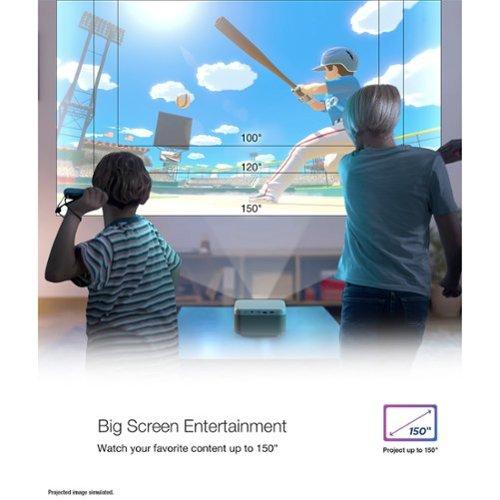
The projector supports image sizes from 30" to 150", though for the best balance of brightness and size, I'd recommend staying in the 80-120" range unless you're in a very dark room.
The BenQ TH685P relies on more traditional manual setup, with physical zoom and focus rings that require adjustment by hand. The 1.3× zoom provides some flexibility in placement, with a throw ratio of 1.13:1 to 1.46:1 (meaning to get a 100" image, you'll need to place the projector roughly 9.5 to 12.5 feet from the screen).
Manual vertical keystone correction (±40°) helps adjust for placement that isn't perfectly level with the screen, but lacks the automatic horizontal correction found in the Epson. While this setup process takes more time and effort, it sometimes results in better image quality since automatic systems can introduce subtle distortions.
The TH685P supports a wider range of image sizes (30" to 300"), though at the largest sizes, brightness will naturally decrease. For gaming purposes, a 100-120" image from about 10 feet away provides an immersive experience while maintaining good brightness.
Recognizing that many users will rely on the projector's built-in speakers, Epson equipped the EF21 with a surprisingly capable audio system. The stereo setup features two 5W speakers with Dolby Audio support, delivering clear dialogue and reasonable bass response for a projector of this size.
The stereo separation creates a wider soundstage than mono projector speakers, making the audio feel more immersive. While it won't replace a dedicated sound system or soundbar, the audio quality is perfectly adequate for casual viewing and significantly better than what projectors offered just a few years ago.
The TH685P features a single 5W mono speaker that prioritizes functionality over audio quality. While the Game Sound Mode helps emphasize important audio cues in games, the overall audio experience is limited by the mono configuration and lack of bass response.
For serious gaming or movie watching, you'll definitely want to connect external speakers or a gaming headset. However, the built-in speaker serves its purpose for casual use or situations where carrying additional audio equipment isn't practical.
One of the most significant technological advancements in the EF21 is its laser light source. Rated for up to 20,000 hours of use, this laser system essentially eliminates the need for maintenance during the projector's lifetime. For perspective, that's about 10 years of use at 5.5 hours per day.
Laser technology also provides consistent brightness throughout the projector's life, unlike lamps which gradually dim over time. The system powers on to full brightness almost instantly and can be turned off immediately without a cooling period—small conveniences that improve the daily user experience.
The TH685P uses a conventional lamp system rated for up to 15,000 hours in its most economical mode (LampSave). In standard mode, expect closer to 4,000-8,000 hours before needing a replacement lamp.
While lamp technology is mature and reliable, it does require eventual maintenance. Replacement lamps typically cost $150-250, which should be factored into the total cost of ownership. Lamps also take time to reach full brightness when powered on and require a cooling period before moving the projector after use.
The advantage of lamp technology is that it can produce higher brightness levels at lower cost, which is why the TH685P achieves its impressive 3,500 lumens at a competitive price point.
At around $900, the Epson EF21 sits in the mid-range of the consumer projector market. While the initial investment is higher than many entry-level projectors, several factors contribute to its value proposition:
For many users, especially those new to projectors or those upgrading from older models, these conveniences justify the premium price. The EF21 is particularly appealing for those who want a simple, maintenance-free solution that works reliably for years.
At approximately $800, the BenQ TH685P presents a strong value for gamers and users with specific performance needs. While you'll potentially need to factor in the cost of a lamp replacement and external streaming device, the projector delivers specialized capabilities that justify its price:
For dedicated gamers or those setting up a multi-purpose room where ambient light control is challenging, these performance advantages make the TH685P a worthwhile investment despite the potential for additional costs down the line.
Choosing between the Epson EpiqVision Mini EF21 and BenQ TH685P ultimately comes down to your specific needs and use case. Here's a framework to help you decide:
The EF21 excels as a versatile entertainment hub that prioritizes user experience over raw specifications. It's perfect for movie nights, streaming shows, and casual content consumption where the all-in-one approach and automatic setup features create a friction-free experience.
The TH685P shines as a dedicated performance machine that excels at its intended purpose—delivering responsive, bright gaming experiences in various lighting conditions. Its specialized features make it the clear choice for serious gamers, while its brightness makes it versatile for multi-purpose rooms where complete darkness isn't always practical.
The projector market has diversified significantly in recent years, with manufacturers creating specialized products rather than one-size-fits-all solutions. The Epson EpiqVision Mini EF21 and BenQ TH685P exemplify this trend, each excelling in their respective niches.
The Epson EF21 represents the future of casual projection—smart, maintenance-free, and designed for the average consumer who values convenience and versatility. Its all-in-one approach eliminates complexity and creates a TV-like experience on a much larger scale.
The BenQ TH685P demonstrates how specialization can deliver outstanding performance for specific use cases. By focusing on what matters most to gamers—responsiveness, brightness, and gaming-specific features—it creates an experience that general-purpose projectors simply can't match.
Both projectors deliver impressive value in their respective categories, and both represent significant advancements over models available just a few years ago. The right choice depends not on which is "better" in absolute terms, but on which better aligns with your specific needs and how you plan to use your projector in the years to come.
| Epson EpiqVision Mini EF21 | BenQ TH685P 1080p HDR Gaming Projector |
|---|---|
| Price - Initial investment comparison | |
| $899.99 | $799.99 |
| Projection Technology - Impacts color accuracy and potential rainbow effect | |
| 3LCD (3-chip) laser technology with no rainbow effect | Single-chip DLP with color wheel (may cause rainbow effect in some viewers) |
| Brightness - Determines usability in rooms with ambient light | |
| 1,000 lumens (best for darkened rooms) | 3,500 ANSI lumens (usable in rooms with ambient light) |
| Resolution - Affects image sharpness and detail | |
| 1920×1080 (Full HD) | 1920×1080 (Full HD) |
| Contrast Ratio - Impacts black levels and image depth | |
| 200,000:1 (excellent black levels) | 10,000:1 (good but not as deep blacks) |
| Light Source Lifespan - Affects long-term maintenance costs | |
| Laser with 20,000 hours (no replacement needed) | Lamp with up to 15,000 hours (may require $150-250 replacement) |
| Input Lag - Critical for gaming responsiveness | |
| Not specified (estimated 30-50ms, adequate for casual gaming) | 8.3ms at 120Hz (excellent for competitive gaming) |
| Refresh Rate - Impacts motion smoothness in games | |
| Standard 60Hz | Up to 120Hz (noticeably smoother motion in compatible games) |
| Smart Features - Determines need for external devices | |
| Built-in Google TV with 10,000+ apps (no additional devices needed) | None (requires external streaming devices) |
| Audio System - Affects need for external speakers | |
| Stereo 5W×2 speakers with Dolby Audio (good for casual viewing) | Mono 5W speaker (basic, external audio recommended) |
| Size and Weight - Impacts portability and placement options | |
| 7.75" × 7.5" × 4.4", 5.1 lbs (highly portable) | 12.28" × 4.33" × 8.86", 6.2 lbs (less portable) |
| Setup Features - Affects ease of installation | |
| Auto focus, keystone, and obstacle avoidance (effortless setup) | Manual focus and keystone adjustment (more precise but requires effort) |
| Image Size Range - Determines flexibility in different spaces | |
| 30" to 150" (optimal at 80-120") | 30" to 300" (can project much larger images) |
| Gaming Features - Enhances gaming experience | |
| No specialized gaming features | Game Mode and Game Sound Mode for enhanced visibility and audio cues |
| HDR Support - Improves dynamic range for compatible content | |
| HDR10 and HLG support | HDR10 and HLG support |
| Best Use Case - Who should buy this model | |
| Casual users wanting an all-in-one, maintenance-free entertainment solution | Gamers and users needing high brightness in varied lighting conditions |
The BenQ TH685P is significantly brighter at 3,500 ANSI lumens compared to the Epson EpiqVision Mini EF21 at 1,000 lumens. This makes the BenQ much better for rooms with ambient light or daytime viewing, while the Epson requires a darker environment for optimal image quality. If you plan to use your projector in a living room with windows, the BenQ TH685P would be the better choice for visibility.
The BenQ TH685P is specifically designed for gaming with an ultra-low input lag of 8.3ms at 120Hz and dedicated Game Mode features. The Epson EpiqVision Mini EF21 doesn't advertise its input lag (likely 30-50ms) and lacks gaming-specific optimizations. For competitive or fast-paced gaming, the BenQ TH685P is clearly superior, offering responsiveness comparable to gaming monitors.
The Epson EpiqVision Mini EF21 has built-in Google TV with access to 10,000+ streaming apps including Netflix, Disney+, and YouTube, so no external streaming devices are needed. The BenQ TH685P has no smart features, requiring external devices like Roku, Apple TV, or Fire Stick for streaming content. If you want a complete all-in-one solution, the Epson EF21 is more convenient.
Both the Epson EpiqVision Mini EF21 and BenQ TH685P offer 1080p Full HD resolution, but they use different technologies affecting image quality. The Epson uses 3LCD technology providing balanced color brightness and a 200,000:1 contrast ratio for deeper blacks. The BenQ uses DLP technology with higher brightness but a lower 10,000:1 contrast ratio. The Epson typically offers better color accuracy and black levels, while the BenQ provides a brighter image overall.
The Epson EpiqVision Mini EF21 features a laser light source rated for 20,000 hours with virtually no maintenance required throughout its lifespan. The BenQ TH685P uses a traditional lamp system rated for up to 15,000 hours in economy mode that will eventually need replacement at additional cost. For a maintenance-free experience, the Epson EF21 is clearly superior.
The Epson EpiqVision Mini EF21 features stereo sound with two 5W speakers and Dolby Audio support, providing better audio quality and separation than the BenQ TH685P, which has a single 5W mono speaker. For watching movies without external speakers, the Epson EF21 delivers a noticeably better audio experience, though both would benefit from external sound systems for a true home theater setup.
Both projectors can work in a dedicated home theater, but with different strengths. The Epson EpiqVision Mini EF21 offers better contrast ratio and color accuracy in a completely darkened room, making it better for movie purists. The BenQ TH685P provides gaming optimization and higher brightness for flexibility. For a traditional movie-focused home theater experience in a light-controlled room, the Epson EF21 might deliver a more cinematic experience.
The Epson EpiqVision Mini EF21 features automatic setup with EpiqSense technology that handles focus, keystone correction, and obstacle avoidance automatically. The BenQ TH685P requires manual adjustment of focus and keystone settings. For quick, hassle-free setup, especially when moving the projector between rooms, the Epson EF21 offers a much more user-friendly experience.
The Epson EpiqVision Mini EF21 typically costs around $899.99, while the BenQ TH685P is priced around $799.99. The $100 price difference reflects the Epson's laser technology and smart features. When considering long-term value, remember the BenQ may require lamp replacements ($150-250 each) and possibly an external streaming device ($30-50), potentially making the Epson EF21 more economical over its lifetime despite the higher initial cost.
Both projectors can work in small spaces, but with different capabilities. The Epson EpiqVision Mini EF21 is more compact and designed for flexibility, though its throw ratio isn't specified in marketing materials. The BenQ TH685P has a 1.13:1 to 1.46:1 throw ratio, meaning it needs approximately 8-10 feet to project a 100-inch image. For very small rooms, you might want to check the exact placement requirements for both the Epson EF21 and BenQ TH685P against your available space.
The Epson EpiqVision Mini EF21 uses 3LCD technology with three separate imaging chips for consistent color and white brightness, and no rainbow artifacts. The BenQ TH685P uses DLP technology with a single chip and color wheel, which can achieve higher brightness at lower cost but may produce rainbow effects that some viewers find distracting. For viewers sensitive to these artifacts, the Epson EF21 would provide a more comfortable viewing experience.
The BenQ TH685P is generally better for sports viewing due to its higher 3,500 ANSI lumen brightness, which maintains image visibility even with some ambient light during daytime games. Its low input lag also helps with fast-moving sports action. The Epson EpiqVision Mini EF21, while offering good color accuracy, has lower brightness at 1,000 lumens, making it less ideal for bright-room sports viewing. For the best sports experience, particularly daytime events or with friends where some lighting is preferred, the BenQ TH685P would be the better choice.
We've done our best to create useful and informative comparisons to help you decide what product to buy. Our research uses advanced automated methods to create this comparison and perfection is not possible - please contact us for corrections or questions. These are the sites we've researched in the creation of this article: bestbuy.com - bestbuy.com - cnet.com - youtube.com - projectorreviews.com - epson.com - projectorreviews.com - epson.com - rtings.com - epson.com - youtube.com - projectorcentral.com - bestbuy.com - projectorcentral.com - nfm.com - crutchfield.com - latin.epson.com - mediaserver.goepson.com - planettv.com - bhphotovideo.com - cnet.com - epson.com - youtube.com - projectorcentral.com - androidguys.com - bhphotovideo.com - techradar.com - newegg.com - projectorcentral.com - cnet.com - staples.com - cdw.com - youtube.com - shi.com - touchboards.com - projectorcentral.com - youtube.com - iconicmicro.com - adorama.com - publicsector.shidirect.com - adorama.com

Privacy Policy
Terms and Conditions - Affiliate Policy
Home Security
© Copyright 2008-2026.
11816 Inwood Rd #1211, Dallas, TX 75244