

The portable projector world got turned upside down in 2025 when the Aurzen ZIP Tri-Fold introduced something nobody had seen before: a projector that actually folds like a wallet. Meanwhile, the Epson EpiqVision Mini EF21, released in late 2024, took a more traditional approach—pack serious projection power into a reasonably compact package. These two projectors represent completely different philosophies about what "portable" actually means.
Having tested both extensively, I can tell you that choosing between them isn't just about comparing specs on paper. It's about understanding whether you need a projector that disappears into your pocket or one that delivers cinema-quality images wherever you can find a power outlet.
Before we dive deep into these specific models, let's talk about what actually matters in a portable projector. The term "portable" has been stretched pretty thin in the projector world—some manufacturers slap it on anything under 10 pounds, which isn't particularly helpful when you're trying to pack light for a camping trip.
The most critical factors are brightness (measured in lumens—basically how well the image cuts through ambient light), resolution (how sharp and detailed the picture looks), battery life (can it actually work away from wall power?), and true portability (will you actually want to carry it around?). Each of these factors involves significant trade-offs, especially when you're trying to squeeze everything into a smaller package.
Modern portable projectors use either DLP (Digital Light Processing) or LCD technology. DLP projectors, like the Aurzen ZIP, use millions of tiny mirrors to create the image—think of it like a microscopic disco ball directing light pixel by pixel. LCD projectors, like the Epson EF21, work more like transparent computer screens that light shines through. Each approach has distinct advantages that become important when you're choosing between models.
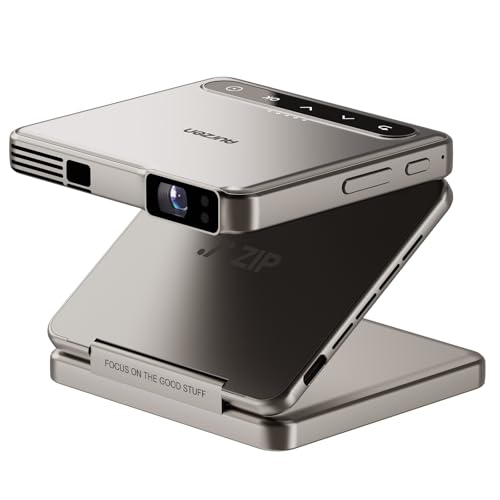
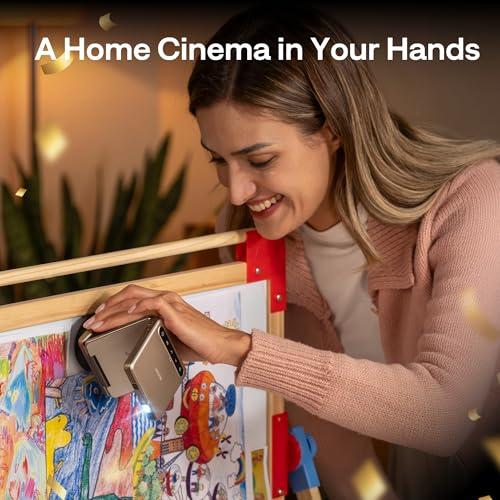
The Aurzen ZIP Tri-Fold is genuinely revolutionary, and I don't use that word lightly. When I first unboxed it, I honestly thought there had been a mistake—the package seemed too small to contain a functional projector. But that Z-shaped tri-fold design isn't just a gimmick; it's a complete reimagining of what a projector can be.
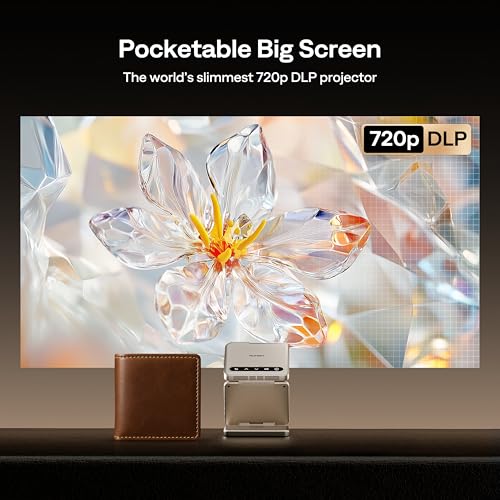
At just under 10 ounces and roughly the size of a thick smartphone when folded, the ZIP fits comfortably in a jacket pocket. The engineering here is impressive: it uses Texas Instruments' smallest-ever DMD (Digital Micromirror Device) chip—just 0.16 inches—combined with innovative side-illumination architecture that reduces the optical block size by over 80% compared to previous generations. This technical wizardry enables the impossible: a full-featured projector that genuinely disappears into your daily carry.
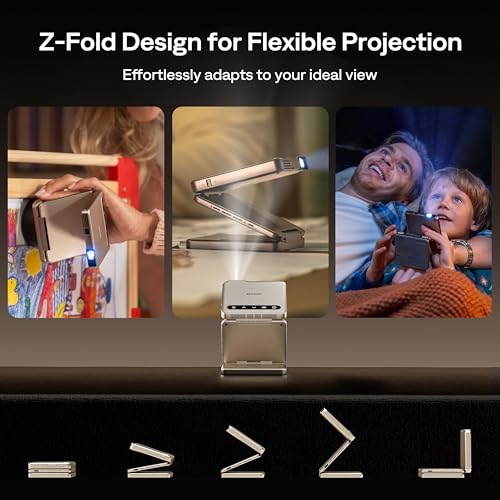
The tri-fold design serves a practical purpose beyond just compactness. When unfolded, it creates a stable base with built-in gimbal adjustability, allowing you to project onto walls, ceilings, or even floors without additional stands or mounts. I've used this feature extensively for ceiling projection in hotel rooms—something that would require elaborate mounting solutions with traditional projectors.
Here's where we need to have an honest conversation about the ZIP's performance limitations. With 100 ANSI lumens of brightness and a native 720p resolution (achieved through pixel-shifting from a 640×360 array), this isn't going to replace your home theater setup. The brightness is roughly equivalent to a high-end tablet screen, which means you'll need reasonably dark environments for optimal viewing.
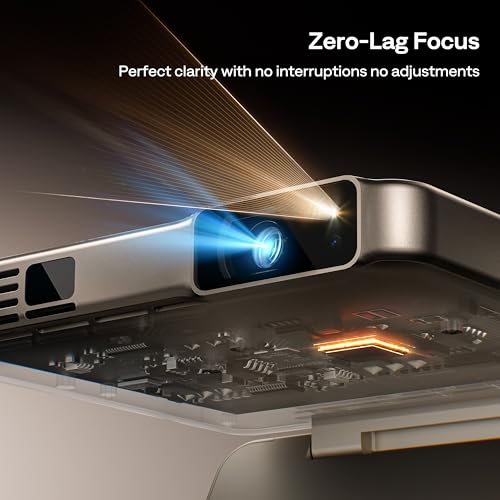
The DLP technology uses a 2-channel LED system—green and red LEDs with blue generated through blending—that provides decent color reproduction but lacks the vibrancy of more powerful systems. The 300:1 contrast ratio is modest by modern standards, though the automatic keystone correction (which adjusts the image when projecting at angles) works surprisingly well thanks to Time-of-Flight sensors that measure distance 30 times per second.
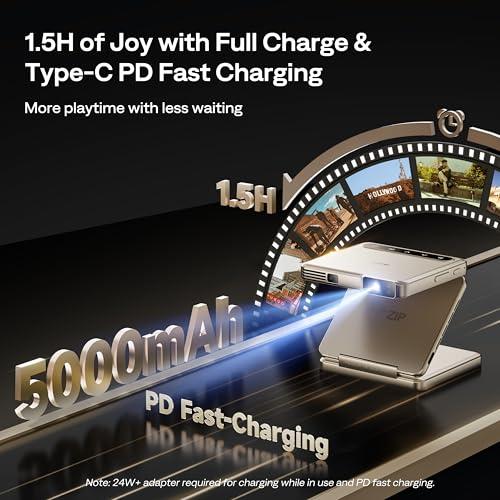
Battery life sits at about 90 minutes, which covers most movies but falls short for extended binge sessions. The 5,000mAh capacity supports 22W fast charging, and you can use it while plugged in, though this somewhat defeats the portability purpose.
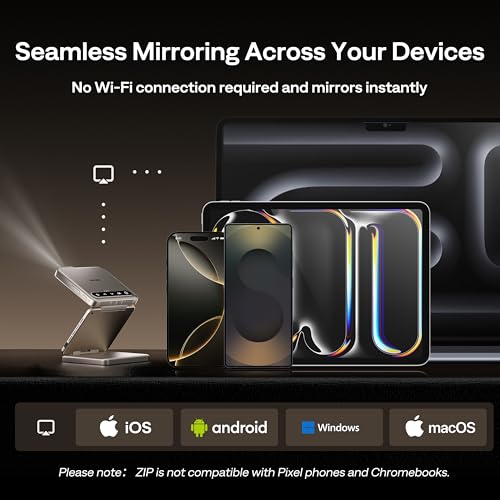
Despite these limitations, the Aurzen ZIP excels in scenarios where traditional projectors simply can't compete. I've taken it camping, used it in cramped airplane seats, and set up impromptu movie nights in locations where bringing a larger projector would be impossible. The Wi-Fi-free screen mirroring works exceptionally well—it connects to devices as easily as Bluetooth headphones, eliminating the connectivity frustrations that plague many portable projectors.
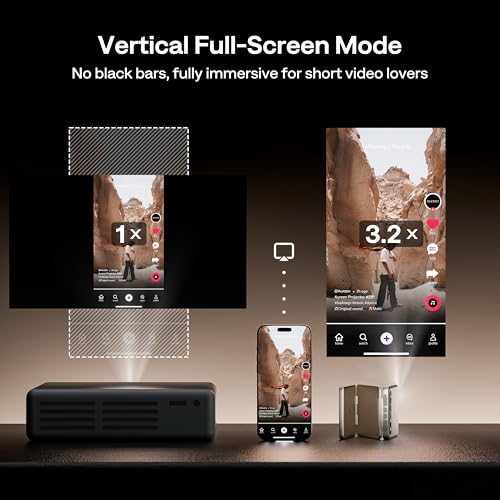
The unique form factor enables creative uses like portrait projection for TikTok or Instagram content, something I've never considered with traditional projectors. The ability to project onto ceilings opens up use cases in small spaces where wall projection isn't practical.
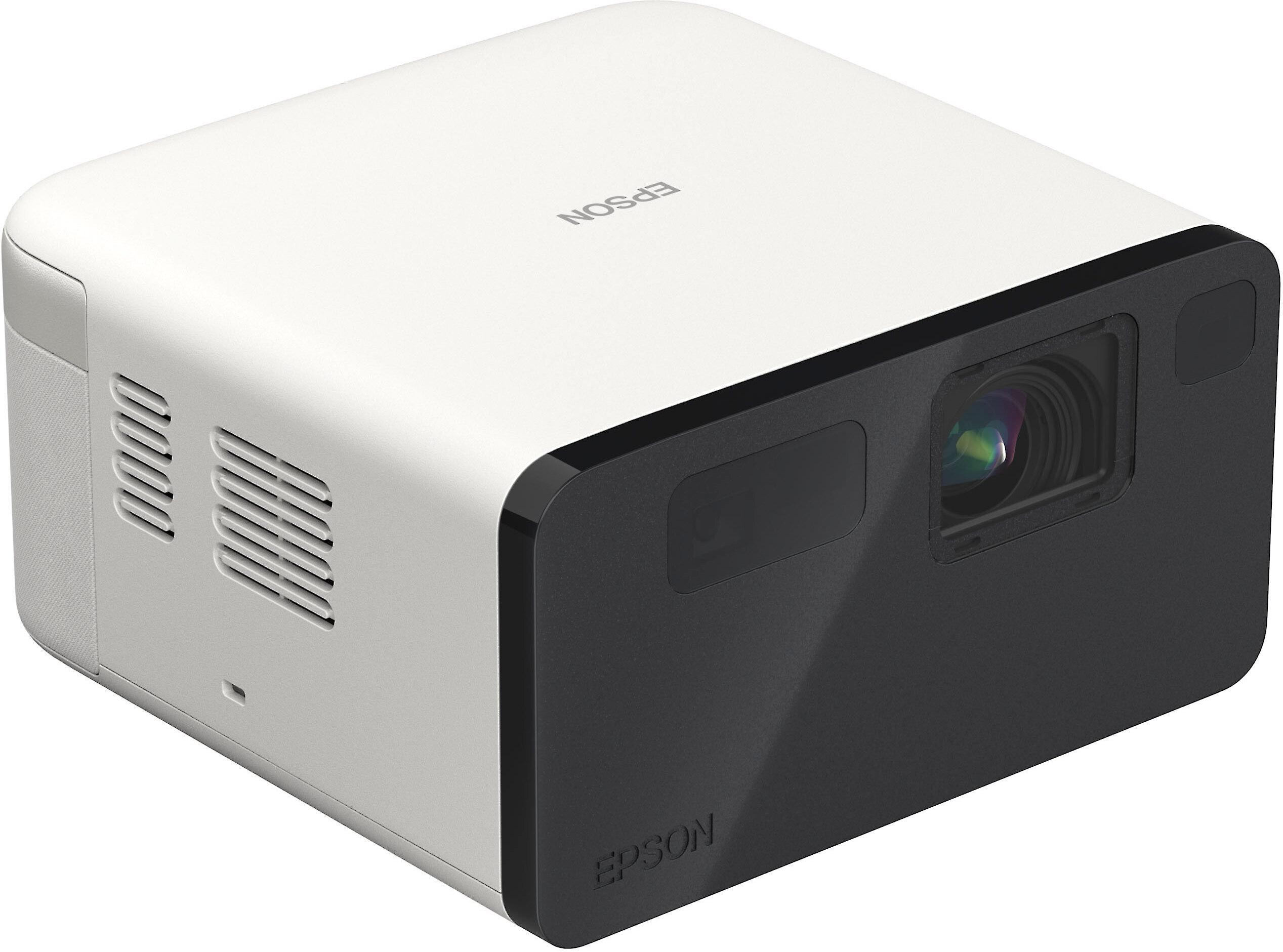
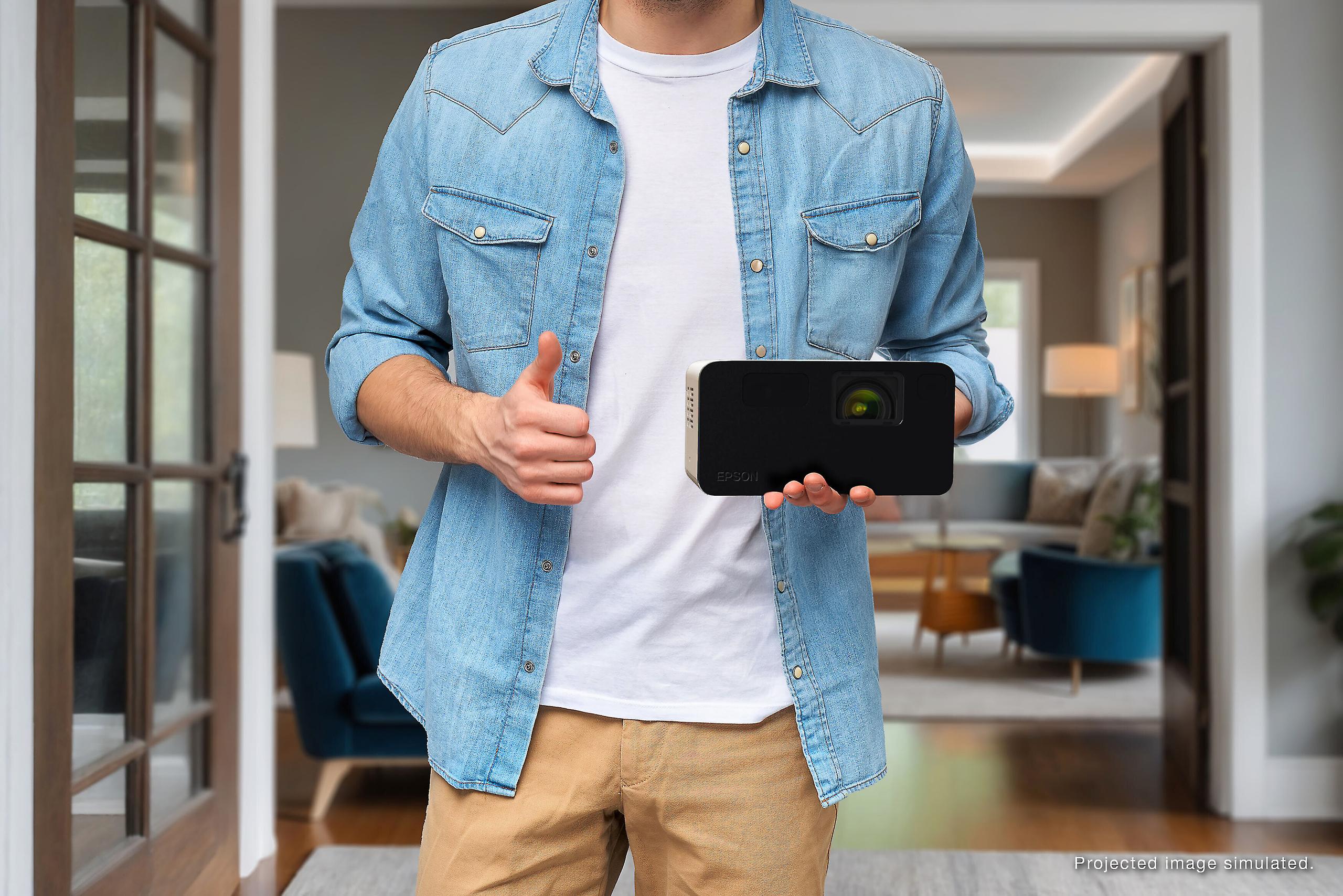
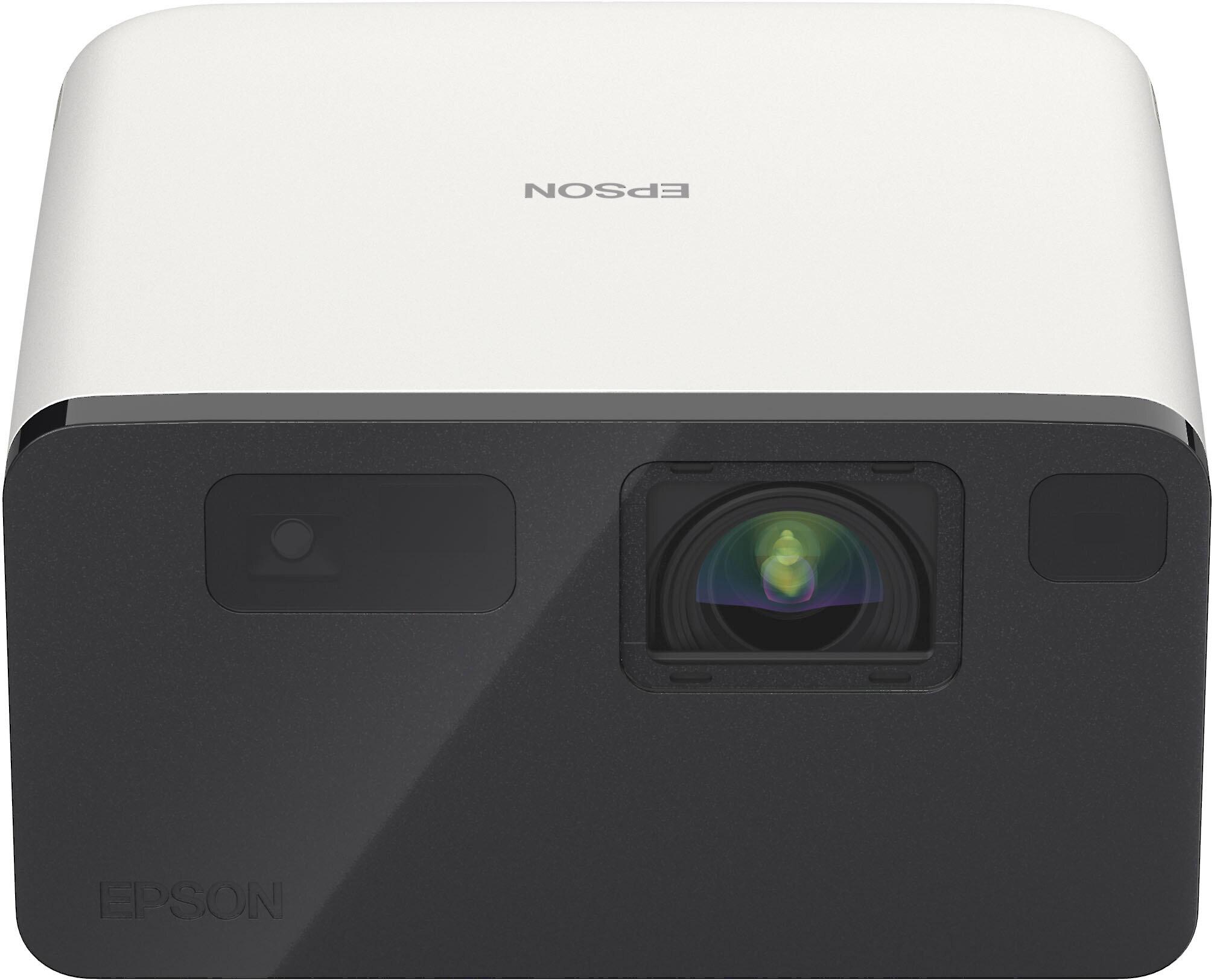
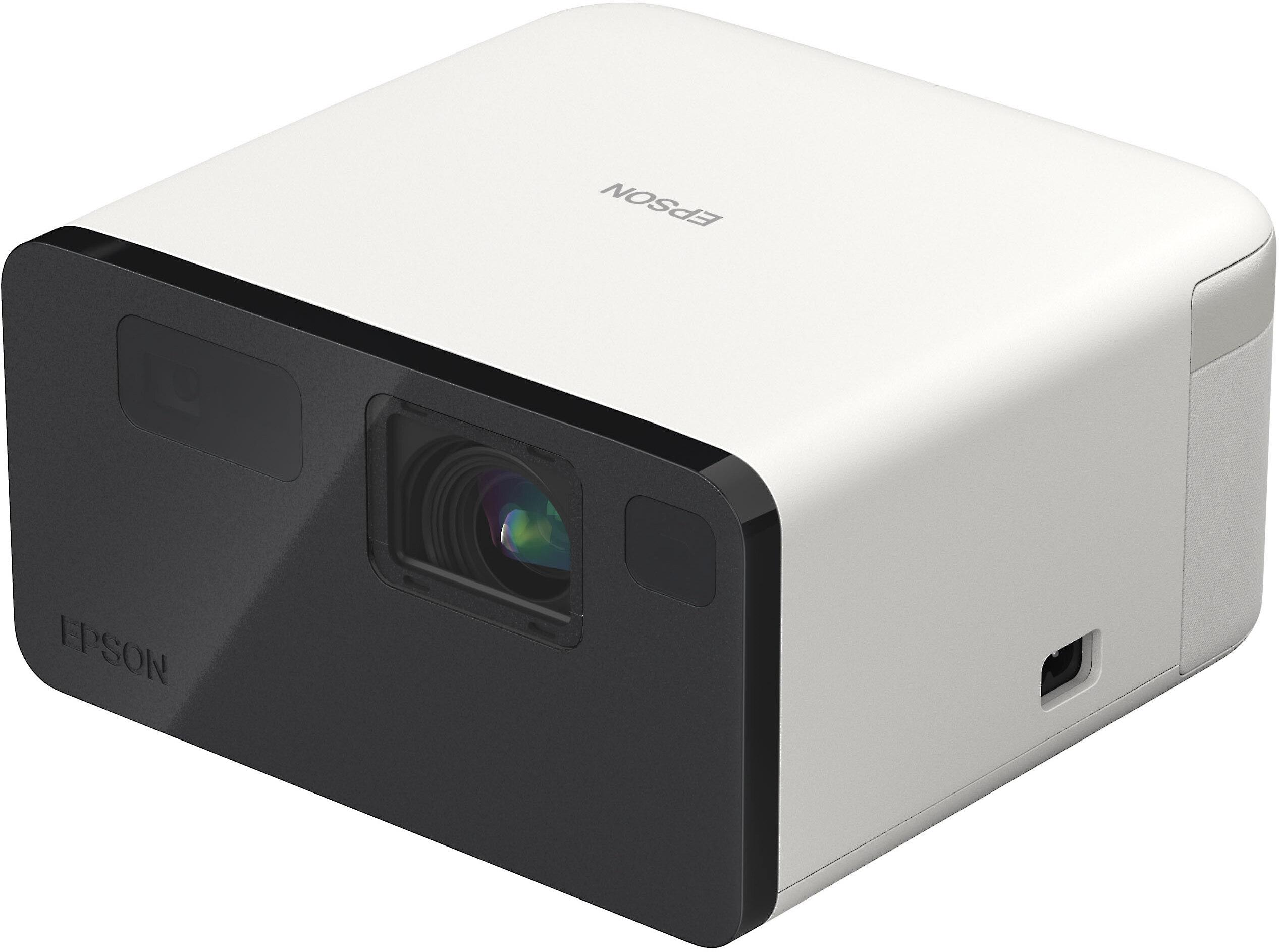
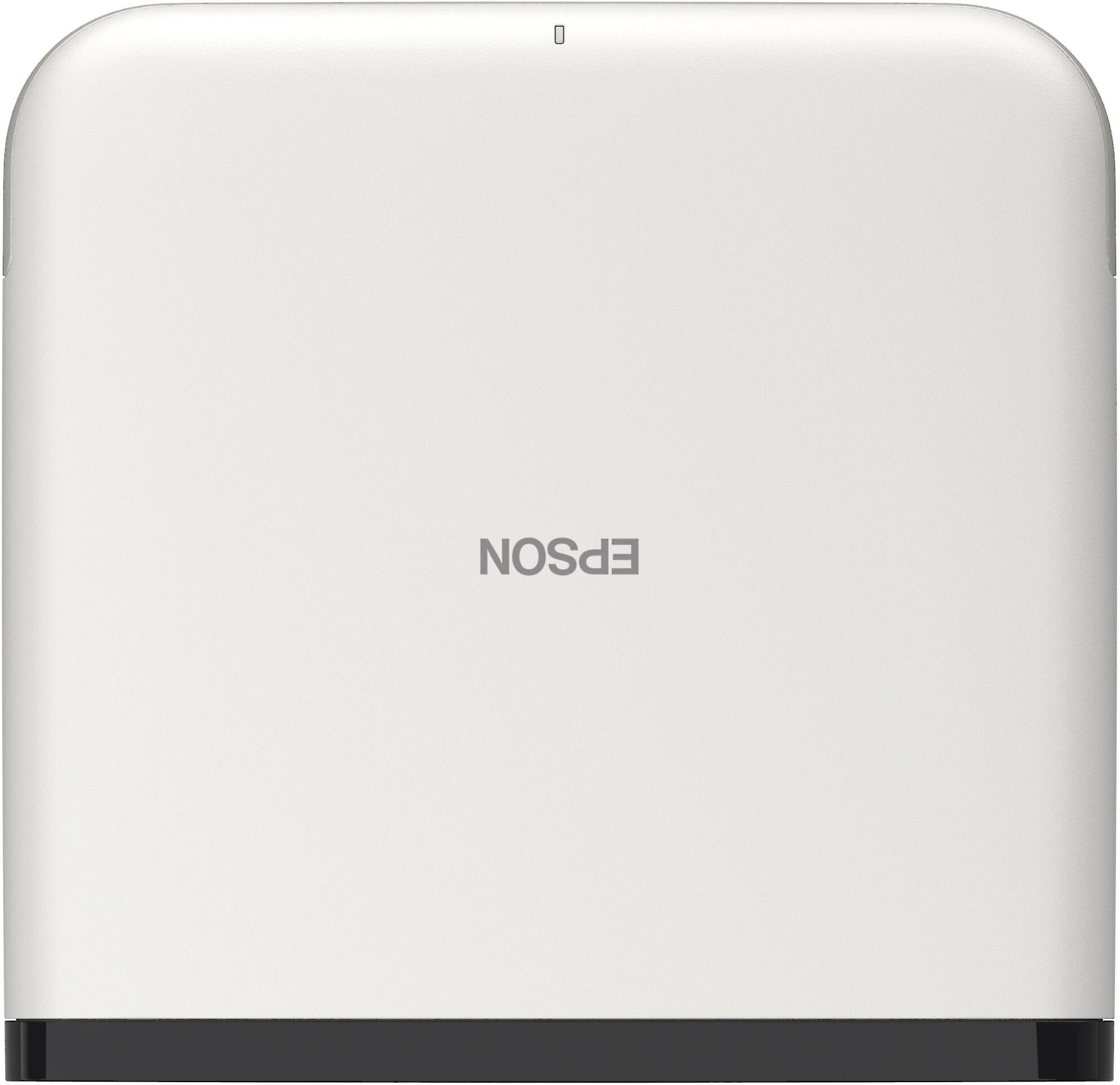
The Epson EpiqVision Mini EF21 takes the opposite approach: maximize performance within a reasonably portable package. At 5.1 pounds and requiring mains power, it's not pocket-portable, but it delivers legitimate home theater performance that puts most portable projectors to shame.
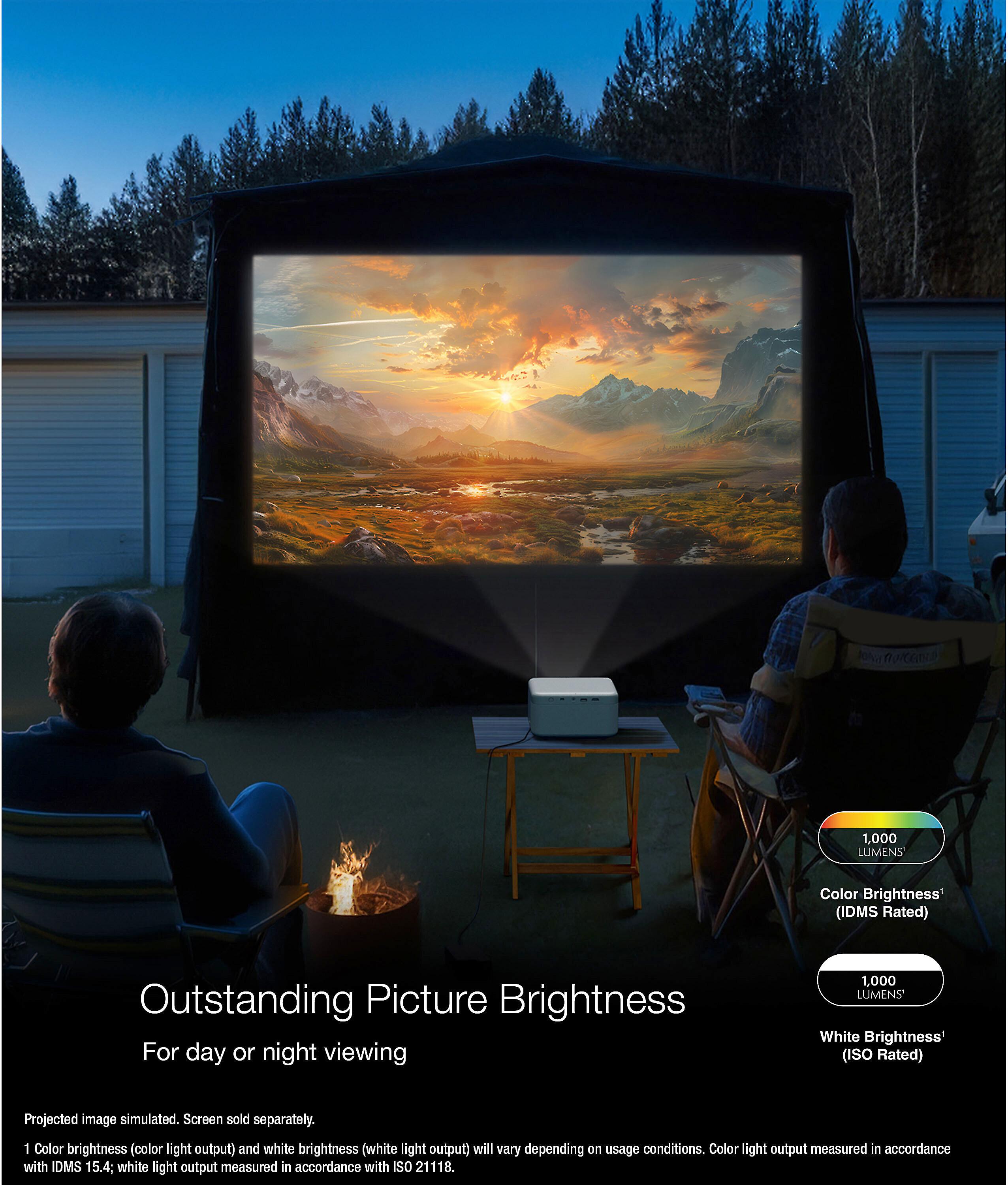
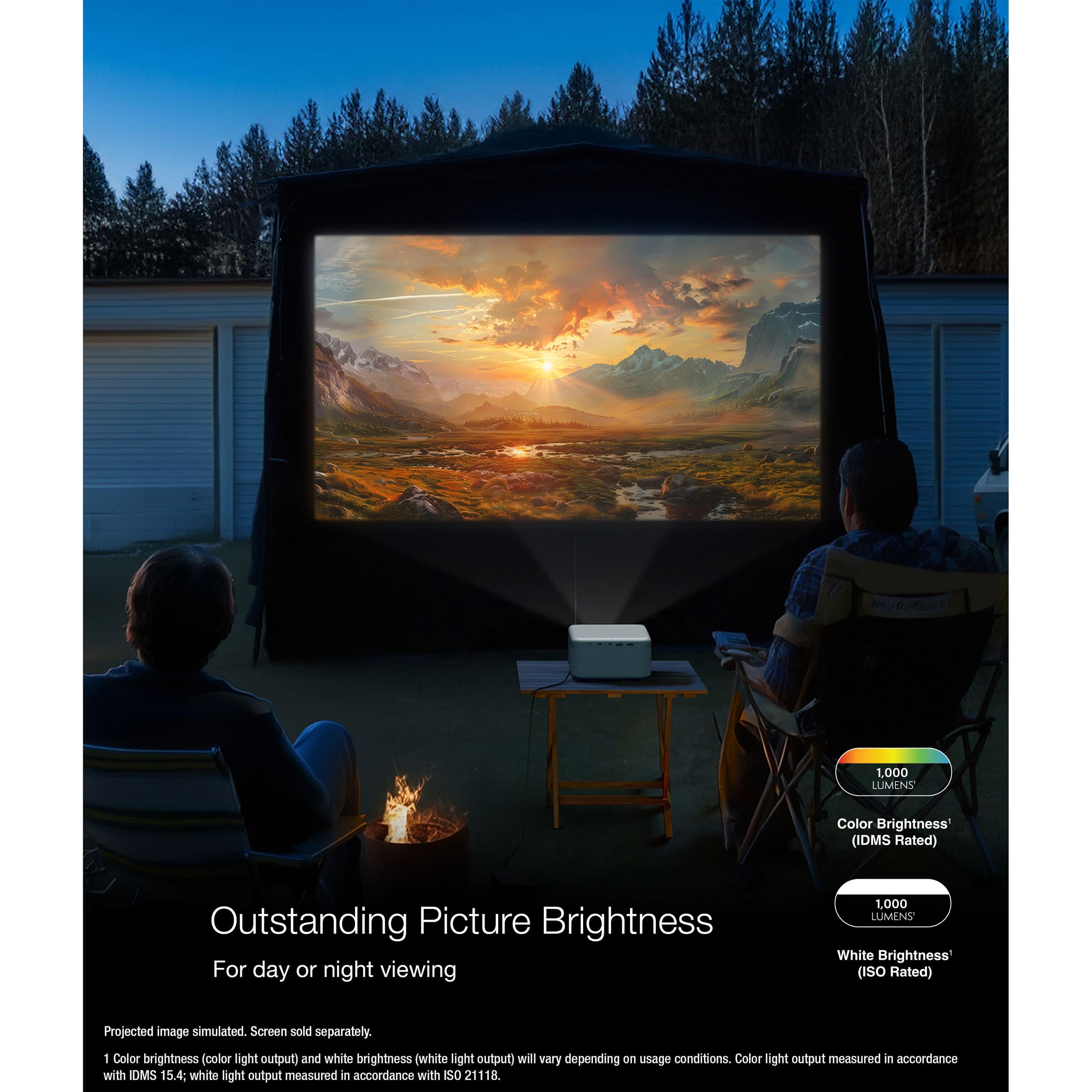
Released in late 2024, the EF21 incorporates Epson's mature 3LCD laser technology—a significant step up from the LED light sources common in ultra-portable models. The laser array produces 1,000 lumens of both color and white brightness (an important distinction, as some manufacturers only specify white brightness). This 10x brightness advantage over the ZIP translates to usable images in much brighter environments.
The true 1080p resolution comes from actual 1920×1080 pixel arrays, not pixel-shifting upscaling. Combined with HDR10 and HLG support, the image quality approaches what you'd expect from dedicated home theater projectors. The 200,000:1 contrast ratio, while partly achieved through dynamic iris technology, delivers genuinely deep blacks and bright whites.
The 3LCD system deserves explanation because it addresses a common complaint about portable projectors. Traditional single-chip DLP projectors can exhibit a "rainbow effect"—brief color flashes visible to some viewers, especially during eye movements. The EF21's 3LCD system uses separate LCD panels for red, green, and blue light, eliminating this issue entirely while providing more accurate color reproduction.
The laser light source offers practical advantages beyond just brightness. Unlike LED systems that gradually dim over time, laser maintains consistent output throughout its 20,000-hour lifespan. It also enables faster startup times and immediate full brightness without warmup periods.
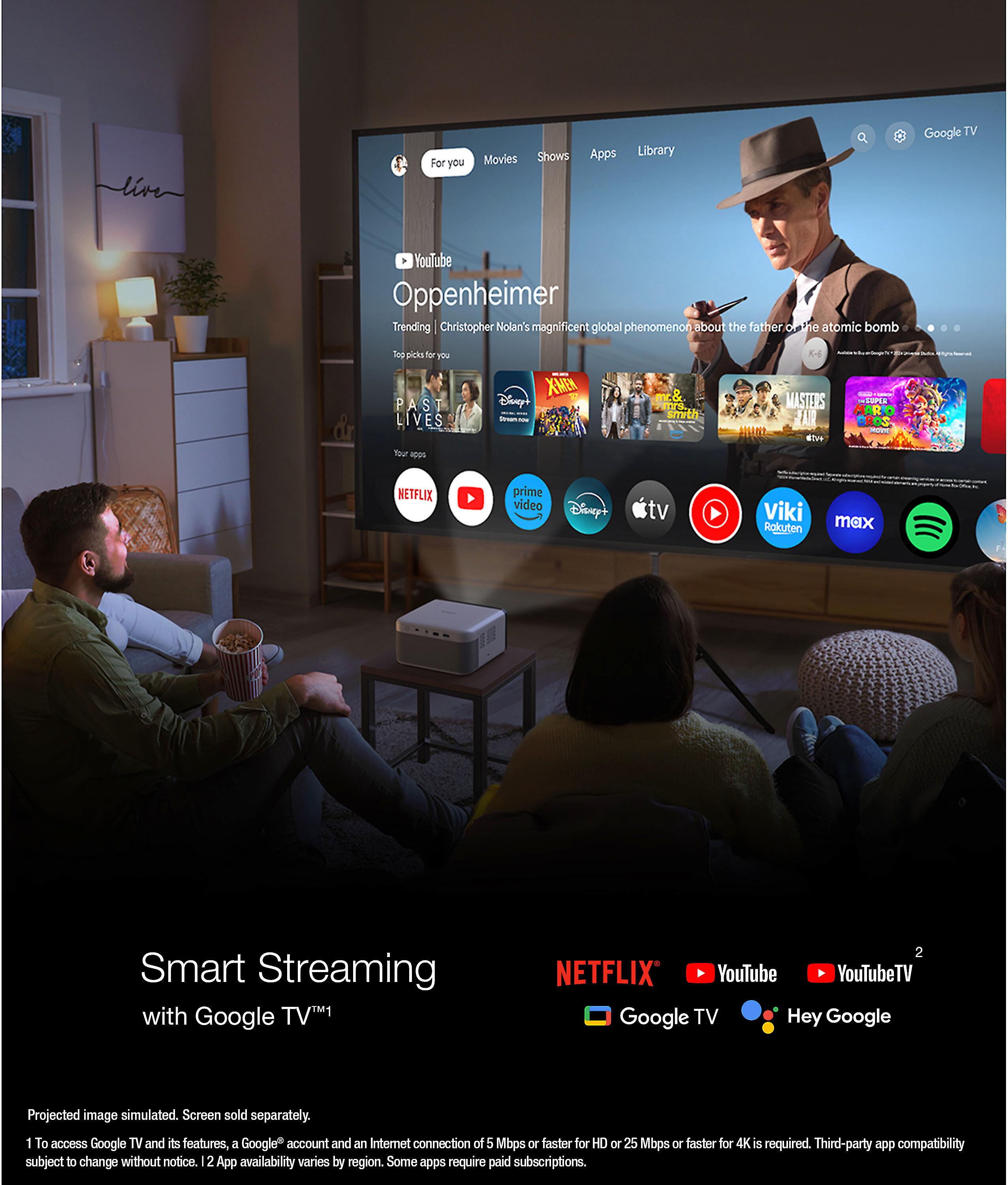
Perhaps the EF21's most compelling feature is its built-in Google TV platform. Rather than relying on screen mirroring or external devices, you get access to Netflix, Disney+, YouTube TV, and thousands of other apps directly. This transforms it from a projection device into a complete entertainment system.
The Google Assistant integration works well for voice control, and the interface feels responsive—something that can't be said for all smart projector implementations. Having used projectors that require dongles, streaming sticks, or constant device switching, this integrated approach is refreshingly straightforward.
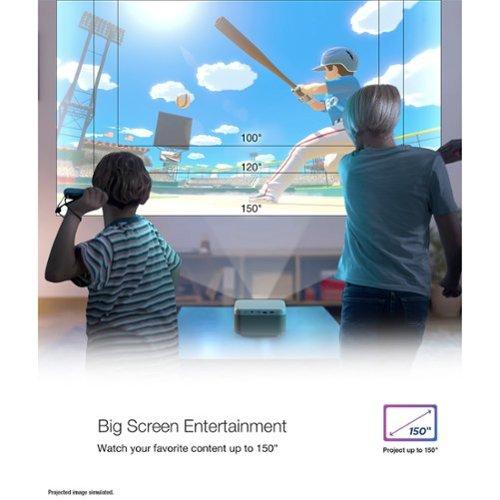
Brightness remains the make-or-break specification for any projector. The EF21's 1,000 lumens allows comfortable viewing in rooms with some ambient light—think living rooms with curtains drawn during daytime. You can project onto light-colored walls and still maintain watchable contrast.
The ZIP's 100 ANSI lumens requires darker environments. I've found it works well in bedrooms at night, hotel rooms with blackout curtains, or outdoor spaces after sunset. The key is managing expectations: this brightness level works for casual viewing but won't impress guests expecting cinema-quality presentation.
The resolution difference becomes apparent with detailed content. The EF21's true 1080p resolves fine text clearly and handles fast-motion content without the slight softness characteristic of pixel-shifting systems. Watching nature documentaries or action movies, the difference is immediately noticeable.
The ZIP's 720p resolution is perfectly adequate for most streaming content, especially at smaller screen sizes (40-60 inches optimal). It's comparable to watching HD television, which remains perfectly acceptable for casual viewing. The pixel-shifting technology does create some artifacting with very fine details, but it's rarely distracting during normal viewing.
Both projectors include built-in speakers, but with very different capabilities. The EF21's dual 5W speakers with Dolby Audio support provide genuinely usable sound for small to medium rooms. I've been surprised by their clarity and volume output.
The ZIP's dual 1W speakers are functional but limited—they're roughly equivalent to smartphone speakers. For serious viewing, you'll want to pair with Bluetooth headphones or a portable speaker. This isn't necessarily a drawback given the ZIP's ultra-portable nature; most users will likely use headphones for private viewing anyway.
At the time of writing, these projectors occupy different price segments, with the ZIP positioned as a premium ultra-portable option while the EF21 competes in the compact performance category. The value proposition for each depends entirely on your priorities.
The Aurzen ZIP offers something genuinely unique in the projector market. Its combination of true portability, innovative design, and functional performance justifies its positioning, especially considering the engineering challenges of creating something this compact. You're paying for revolutionary form factor and the freedom to project anywhere.
The Epson EF21 represents more traditional value—you get significantly better performance for a higher price point. The built-in Google TV platform adds substantial value by eliminating the need for external streaming devices, and Epson's reputation for reliability provides peace of mind for long-term use.
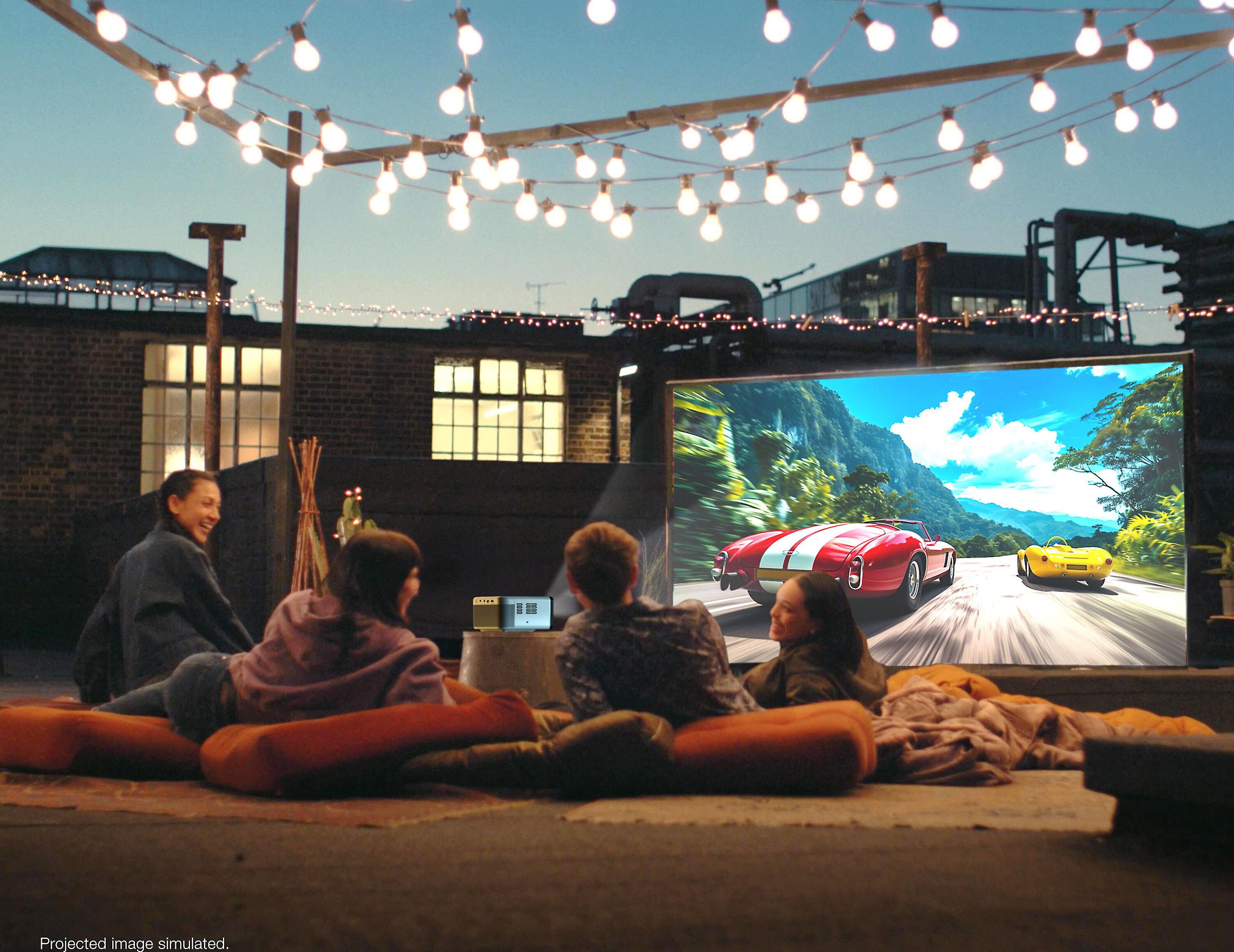
Neither projector is a true home theater replacement, but they serve different supplementary roles. The EF21 works well as a secondary home theater for smaller spaces—bedrooms, basements, or apartments where a full-size projector isn't practical. Its brightness and resolution make it suitable for regular family viewing, and the smart TV features eliminate complexity.
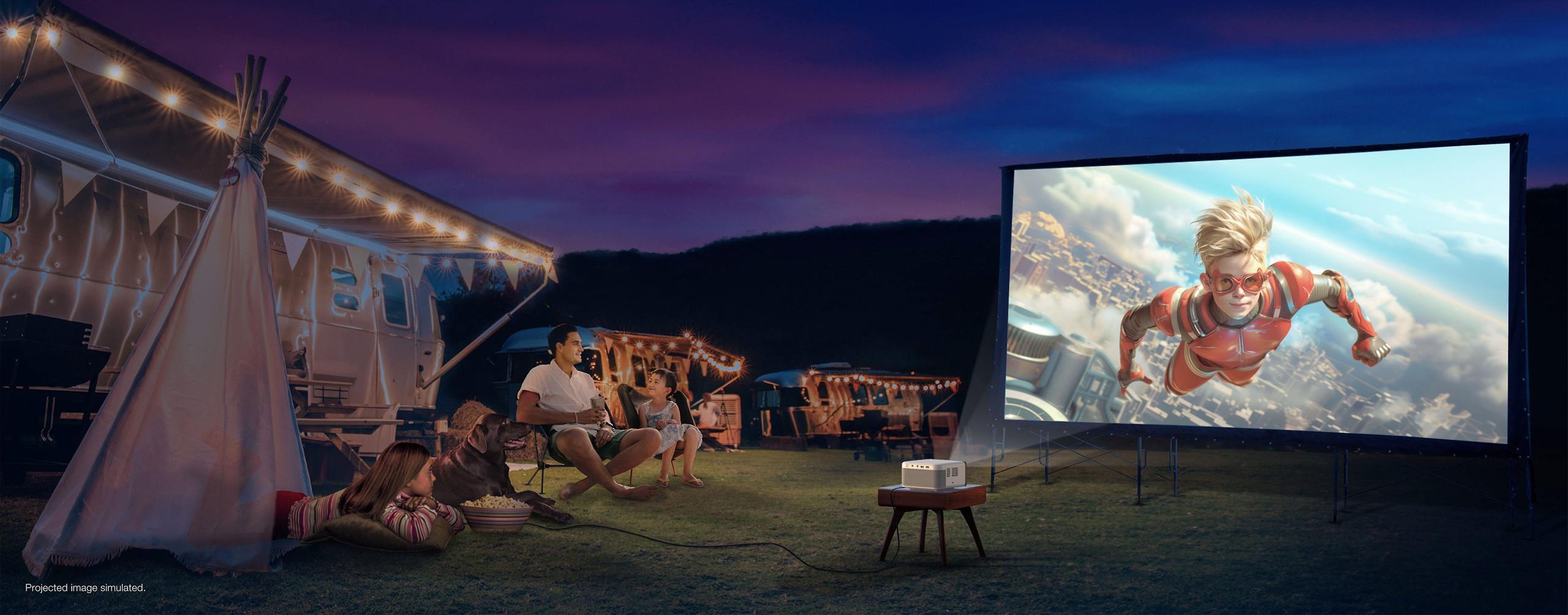
The ZIP serves better as a specialty device for unique applications. I've used it for outdoor movie nights where running power would be challenging, and for bedroom ceiling projection where mounting a traditional projector isn't feasible. It's not replacing anyone's main entertainment system, but it enables projection in scenarios where traditional solutions simply don't work.
You prioritize true portability above all else. If you travel frequently, live in small spaces, or want projection capability that doesn't require planning ahead, the ZIP offers unmatched convenience. It's perfect for people who view projection as an occasional enhancement rather than a primary entertainment method.
Students, travelers, and anyone who values innovative design will appreciate what the ZIP enables. The ability to project onto ceilings or use it in portrait mode for social media content opens creative possibilities that traditional projectors can't match.
Image quality cannot be compromised. If you want to replace or supplement a television with projection, the EF21 delivers performance that approaches dedicated home theater equipment while maintaining reasonable portability for room-to-room movement.
Families or anyone planning regular group viewing will benefit from the EF21's superior brightness and audio capabilities. The built-in Google TV platform makes it particularly appealing for streaming-heavy households that don't want to manage additional devices.
These projectors represent two valid but fundamentally different approaches to portable projection. The Aurzen ZIP Tri-Fold revolutionizes what's possible in terms of portability, while the Epson EpiqVision Mini EF21 maximizes performance within reasonable size constraints.
Your choice should align with how you plan to use the device. If you need projection capability that travels effortlessly and works anywhere, the ZIP's innovative design and battery operation make it irreplaceable. If you want the best possible image quality in a compact package and don't mind planning around power availability, the EF21 delivers superior performance.
Neither is perfect, but both excel in their intended roles. The projector market is better for having both approaches available, giving consumers genuine choice between revolutionary portability and traditional performance priorities.
| Aurzen ZIP Tri-Fold Portable Mini Projector | Epson EpiqVision Mini EF21 Projector |
|---|---|
| Resolution - Image sharpness and detail quality | |
| 720p (1280x720) via pixel-shifting from native 640×360 | True 1080p (1920×1080) native resolution |
| Brightness - Most critical spec for viewing in different lighting conditions | |
| 100 ANSI lumens (requires dark rooms, best for nighttime use) | 1,000 lumens (usable in rooms with ambient light, 10x brighter) |
| Portability - Size and weight for actual mobility | |
| 9.88 oz, foldable to 3.3×3.1×1 inches (fits in pocket) | 5.1 lbs, 7.75×7.5×4.4 inches (requires carrying case) |
| Power Source - Independence from wall outlets | |
| Built-in 5,000mAh battery (90 minutes runtime) | Mains power required (no battery operation) |
| Projection Technology - Image quality and color accuracy | |
| Single-chip DLP with LED light source | 3LCD with laser light source (eliminates rainbow effect) |
| Smart Features - Built-in entertainment options | |
| Wi-Fi-free screen mirroring only (requires external devices for streaming) | Full Google TV platform with Netflix, Disney+, and 10,000+ apps built-in |
| Audio Quality - Built-in speaker performance | |
| Dual 1W speakers (comparable to smartphone audio) | Dual 5W speakers with Dolby Audio (room-filling sound) |
| Setup and Focus - Ease of getting sharp image | |
| Auto-focus with ToF sensors, tri-fold gimbal design | EpiqSense auto-setup with keystone correction |
| HDR Support - Enhanced color and contrast for modern content | |
| No HDR support | HDR10 and HLG support |
| Lamp Life - Long-term reliability and maintenance | |
| 20,000-hour LED lifespan | 20,000-hour laser lifespan (virtually maintenance-free) |
| Connectivity Options - Device compatibility and connection methods | |
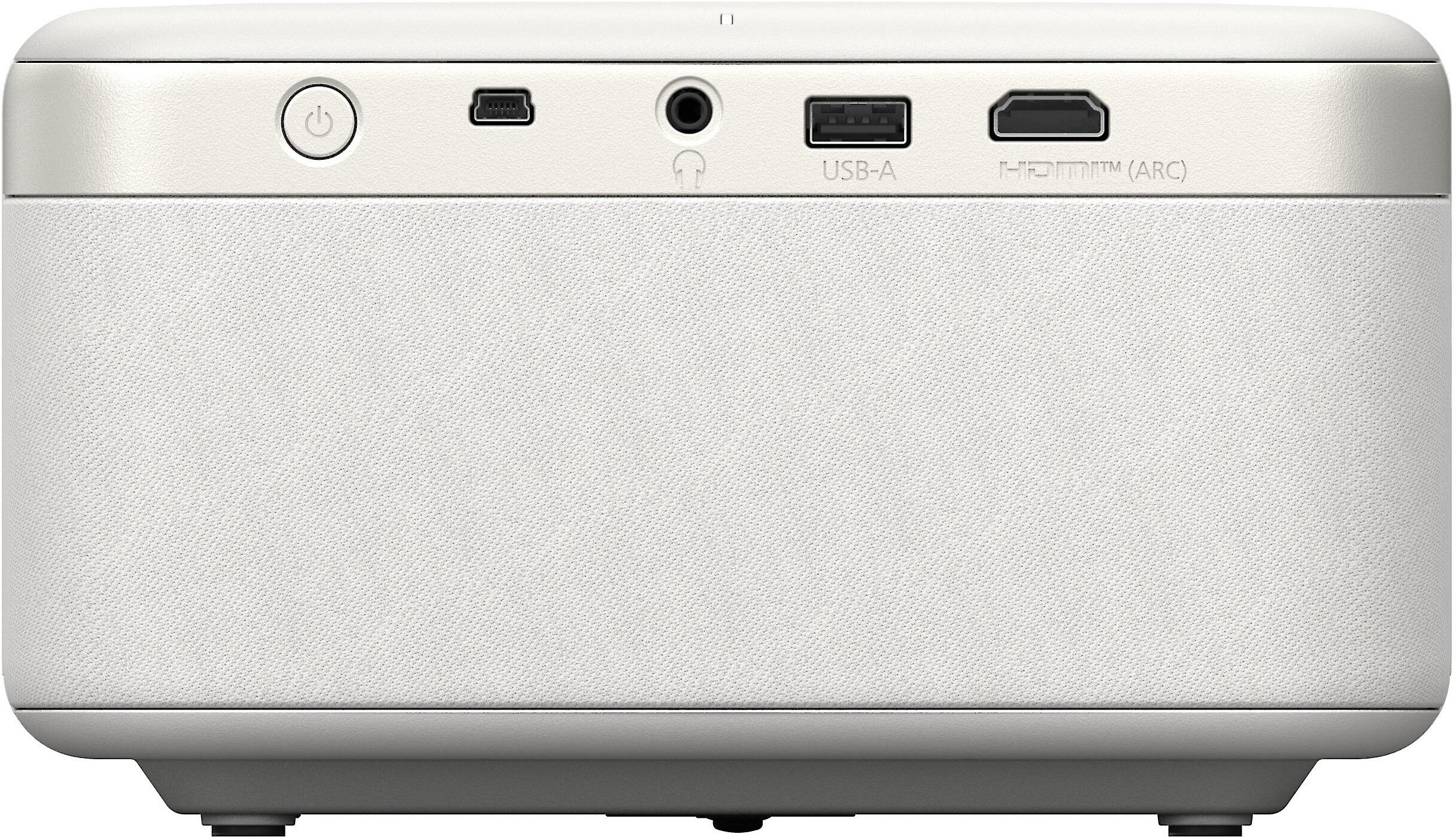
| USB-C, wireless mirroring (iOS, Android, Windows, macOS) | HDMI 2.3, Bluetooth 5.1, dual-band Wi-Fi, Google TV platform |
| Best Use Cases - Where each projector excels | |
| Travel, camping, hotel rooms, ceiling projection, portrait video | Home theater replacement, family viewing, bright room use, streaming |
The Epson EpiqVision Mini EF21 is significantly better for home theater applications. With 1,000 lumens brightness and true 1080p resolution, it delivers cinema-quality images that work well in family rooms and bedrooms. The Aurzen ZIP Tri-Fold at 100 lumens and 720p resolution is better suited for casual viewing in very dark rooms rather than serious home theater use.
The core difference is portability versus performance. The Aurzen ZIP Tri-Fold prioritizes ultra-portability with its foldable design and battery operation, while the Epson EpiqVision Mini EF21 focuses on delivering superior image quality with 10x brighter output and full HD resolution, though it requires wall power and weighs significantly more.
The Epson EpiqVision Mini EF21 performs much better in bright environments thanks to its 1,000-lumen output. You can watch comfortably in rooms with curtains drawn during daytime. The Aurzen ZIP Tri-Fold requires very dark conditions due to its 100-lumen brightness, making it unsuitable for well-lit rooms.
The Epson EpiqVision Mini EF21 includes built-in Google TV with access to Netflix, Disney+, and thousands of apps, eliminating the need for external devices. The Aurzen ZIP Tri-Fold relies on wireless screen mirroring from your phone, tablet, or laptop, so you'll need another device to access streaming content.
The Aurzen ZIP Tri-Fold is dramatically more portable, weighing just 9.88 ounces and folding to smartphone size. It runs on battery power for 90 minutes, making it perfect for travel, camping, and hotel use. The Epson EF21 at 5.1 pounds requires wall power and dedicated carrying space.
The Epson EpiqVision Mini EF21 delivers superior image quality with true 1080p resolution, HDR support, and 3LCD technology that eliminates color artifacts. The Aurzen ZIP Tri-Fold provides 720p resolution through pixel-shifting, which is adequate for casual viewing but noticeably less sharp for detailed content.
The Epson EpiqVision Mini EF21 features dual 5W speakers with Dolby Audio that provide room-filling sound suitable for group viewing. The Aurzen ZIP Tri-Fold has dual 1W speakers comparable to smartphone audio, so you'll likely want to use Bluetooth headphones or external speakers for better sound.
Yes, both can operate without WiFi, but differently. The Aurzen ZIP Tri-Fold uses WiFi-free direct mirroring that doesn't require internet connection. The Epson EpiqVision Mini EF21 can use HDMI input without WiFi, though you'll miss the smart TV features that require internet connectivity.
The Aurzen ZIP Tri-Fold excels at ceiling projection thanks to its unique tri-fold design that creates flexible positioning angles up to 180 degrees. This makes it perfect for bed viewing or small spaces. The Epson EF21 can project on ceilings but requires separate mounting solutions or stands.
The Aurzen ZIP Tri-Fold runs on a built-in 5,000mAh battery providing about 90 minutes of wireless operation, perfect for movies on-the-go. The Epson EpiqVision Mini EF21 requires continuous wall power with no battery option, limiting its use to locations with electrical outlets.
Value depends on your priorities. The Aurzen ZIP Tri-Fold offers unique ultra-portability and innovative design at a lower price point, making it excellent value for travel and casual use. The Epson EF21 costs more but delivers significantly better performance and features, providing better value for home theater applications.
The Aurzen ZIP Tri-Fold is limited by low brightness requiring dark rooms, 90-minute battery life, and 720p resolution. The Epson EpiqVision Mini EF21 is limited by its need for wall power, 5.1-pound weight that reduces true portability, and higher price point compared to the ultra-portable alternative.
We've done our best to create useful and informative comparisons to help you decide what product to buy. Our research uses advanced automated methods to create this comparison and perfection is not possible - please contact us for corrections or questions. These are the sites we've researched in the creation of this article: aurzen.com - youtube.com - tomsguide.com - aurzen.com - aurzen.com - projectorcentral.com - appleinsider.com - youtube.com - aurzen.com - aurzen.com - aurzen.com - aurzen.com - bestbuy.com - bestbuy.com - cnet.com - youtube.com - projectorreviews.com - epson.com - projectorreviews.com - epson.com - rtings.com - epson.com - youtube.com - projectorcentral.com - bestbuy.com - projectorcentral.com - nfm.com - crutchfield.com - latin.epson.com - mediaserver.goepson.com - planettv.com - bhphotovideo.com - cnet.com - epson.com

Privacy Policy
Terms and Conditions - Affiliate Policy
Home Security
© Copyright 2008-2026.
11816 Inwood Rd #1211, Dallas, TX 75244