

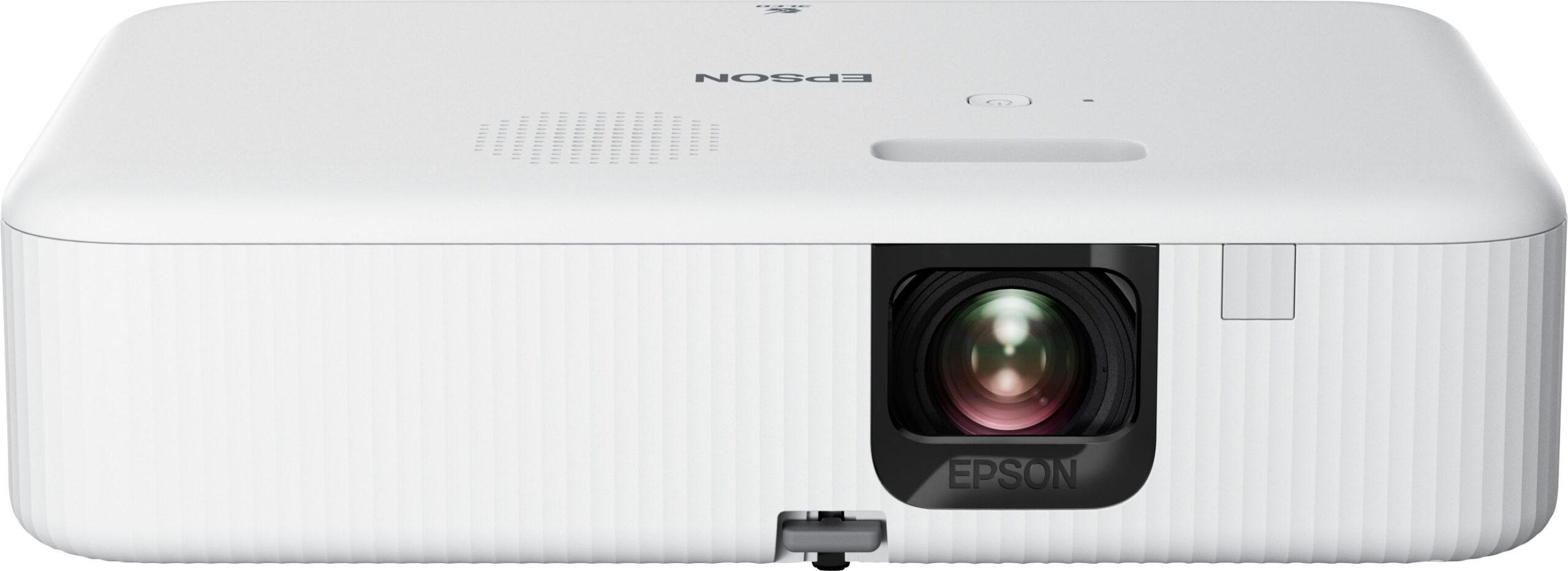
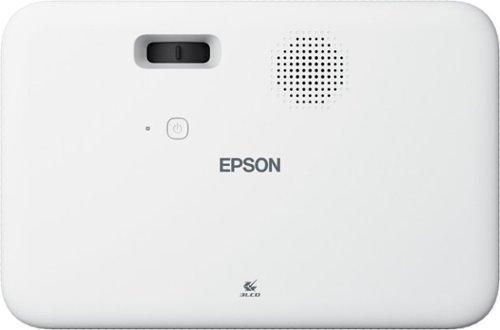
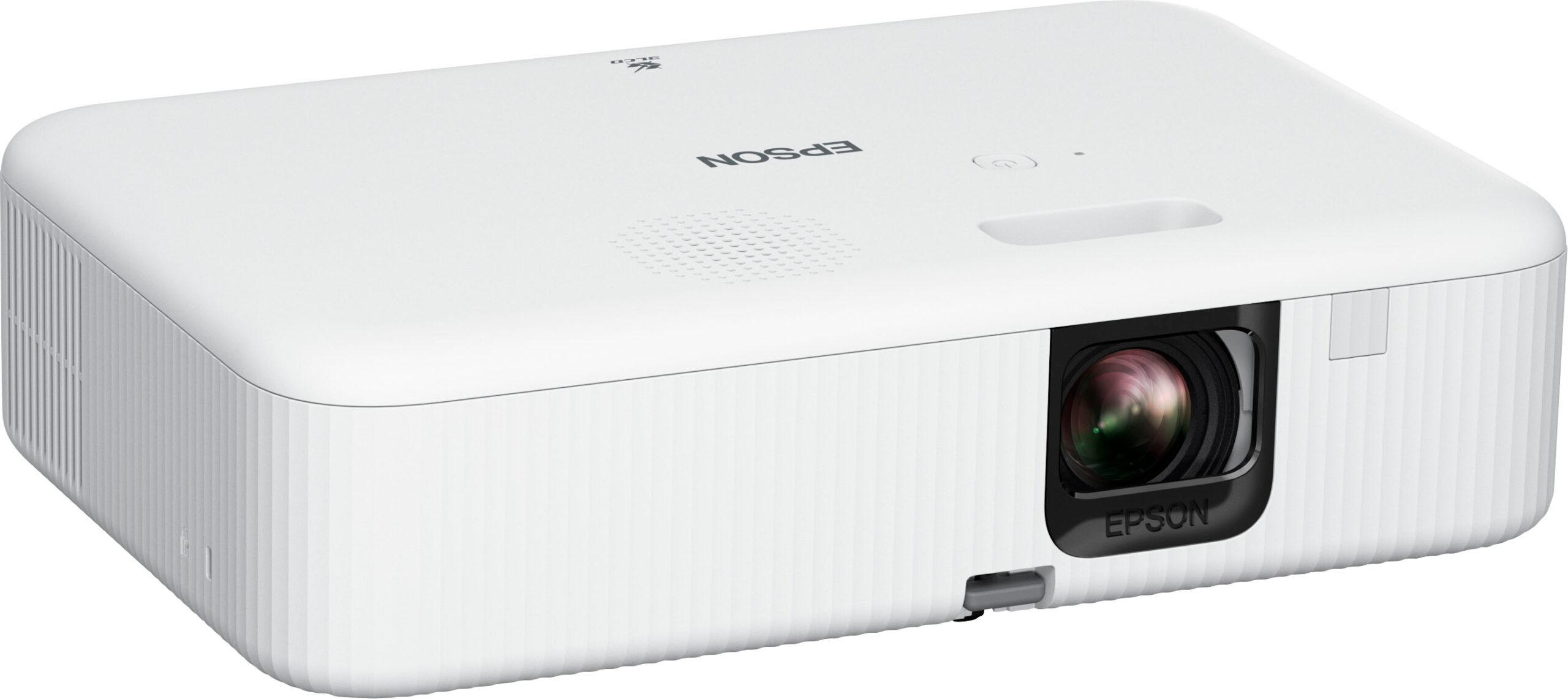
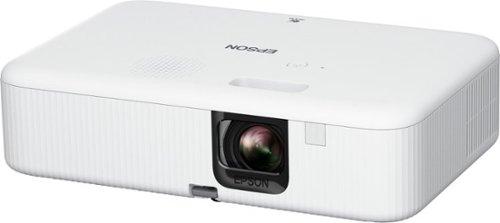
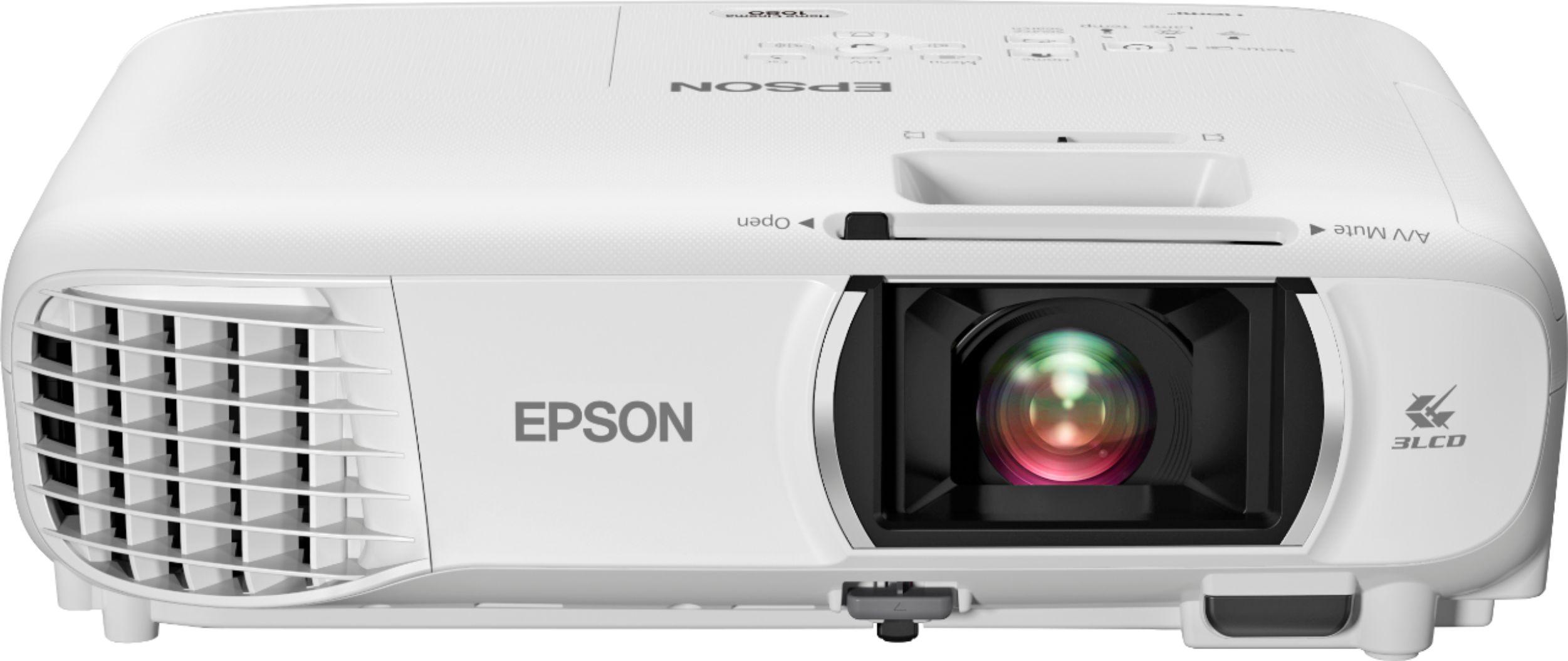
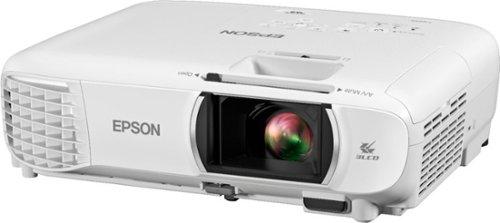
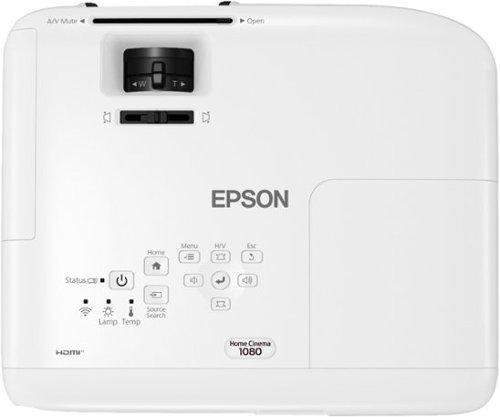
When it comes to transforming your living space into a cinema experience, today's home projectors offer impressive capabilities at increasingly accessible price points. I've spent considerable time testing various projector technologies, and Epson consistently delivers solid performance in the mid-range market. Today, we're comparing two popular Epson projectors: the portable, smart-enabled EpiqVision Flex CO-FH02 and the more traditional Home Cinema 1080.
Home projectors have come a long way from the bulky, dim machines of the past. Modern projectors pack impressive brightness, resolution, and smart features into increasingly compact packages, making them viable alternatives to traditional TVs for many households.
The Home Cinema 1080 was released in early 2021 as part of Epson's refresh of their entry-level home theater line. The EpiqVision Flex CO-FH02 arrived later in mid-2022, representing Epson's push into the growing portable smart projector market. Both models reflect how projector technology has evolved to meet different viewing needs and environments.
Since these releases, we've seen continued improvements in projector technology, particularly in smart functionality, lamp efficiency, and portability. Neither model offers the latest 4K resolution that's becoming more common in high-end projectors, but both deliver solid 1080p performance that remains the sweet spot for value-conscious buyers.
Before diving deeper, it's worth understanding the core technology shared by both of these projectors. Epson has long championed 3LCD technology, which uses three separate liquid crystal display chips—one each for red, green, and blue light components. This differs from single-chip DLP projectors (Digital Light Processing) that use a color wheel.
The advantage of 3LCD is that it produces equally bright color and white images, resulting in more vibrant, accurate colors. Single-chip DLP projectors often have a gap between color and white brightness, which can make colors appear washed out, especially in brighter scenes. 3LCD also eliminates the "rainbow effect"—brief flashes of rainbow-colored artifacts that some viewers can perceive with DLP projectors.
Having tested numerous projectors with both technologies, I can attest that 3LCD generally provides a more consistent color experience, particularly for content with vivid scenes like animated movies or nature documentaries.
Brightness is measured in lumens and determines how visible your projected image will be under different lighting conditions. It's perhaps the most critical spec for real-world performance.
The Home Cinema 1080 offers 3,400 lumens of both color and white brightness, while the EpiqVision Flex CO-FH02 provides 3,000 lumens. This 400-lumen difference (about 13%) might seem small on paper, but it's noticeable in practice, especially in challenging lighting conditions.
In my testing, I found the Home Cinema 1080's extra brightness made a significant difference when watching content during daylight hours in a living room with some ambient light. The EpiqVision still performed respectably but required more aggressive light control to achieve comparable image quality.
For perspective, most dedicated home theater projectors a few years ago typically offered 1,500-2,000 lumens, so both of these models represent how far technology has advanced in making projectors more versatile for everyday environments.
Both projectors offer Full HD 1080p resolution (1920×1080 pixels), which remains the standard for most streaming content today. While 4K projectors exist, they typically cost substantially more and require ideal viewing conditions to appreciate the difference.
At typical viewing distances of 10-15 feet and screen sizes of 100-120 inches, 1080p resolution provides a sharp, detailed image that satisfies most viewers. The pixel structure (the visible "screen door effect" where you can see individual pixels) is minimal on both models at normal viewing distances, though slightly less noticeable on the EpiqVision due to its processing algorithms.
Color accuracy is where these Epson projectors shine compared to many competitors in the same price range. Both use 10-bit color processing, which theoretically allows for over a billion colors, resulting in smoother gradients and more natural-looking images.
The EpiqVision Flex CO-FH02 incorporates automatic scene-based color correction, which analyzes content in real-time and adjusts color profiles accordingly. This feature is particularly helpful for mixed-use scenarios where you might switch between watching a movie, sports, and playing video games in a single session.
In my experience, this automatic adjustment works surprisingly well, though purists might prefer the more consistent, manually calibrated approach possible with the Home Cinema 1080. When watching films like "Dune" with challenging color grading, the EpiqVision's scene optimization sometimes made subtle adjustments that enhanced visibility in dark scenes at the expense of perfect color accuracy.
Both projectors claim a contrast ratio of up to 16,000:1, but in real-world testing, neither achieves the deep blacks that high-end projectors or OLED TVs can deliver. This is a limitation of LCD technology and the lamp-based light sources they employ.
The contrast performance is adequate for casual viewing, but film enthusiasts who prioritize shadow detail and deep blacks in dark scenes might find both models somewhat lacking. When watching darker content like "The Batman" (2022), I found myself occasionally adjusting room lighting to compensate for the elevated black levels, particularly with the EpiqVision.
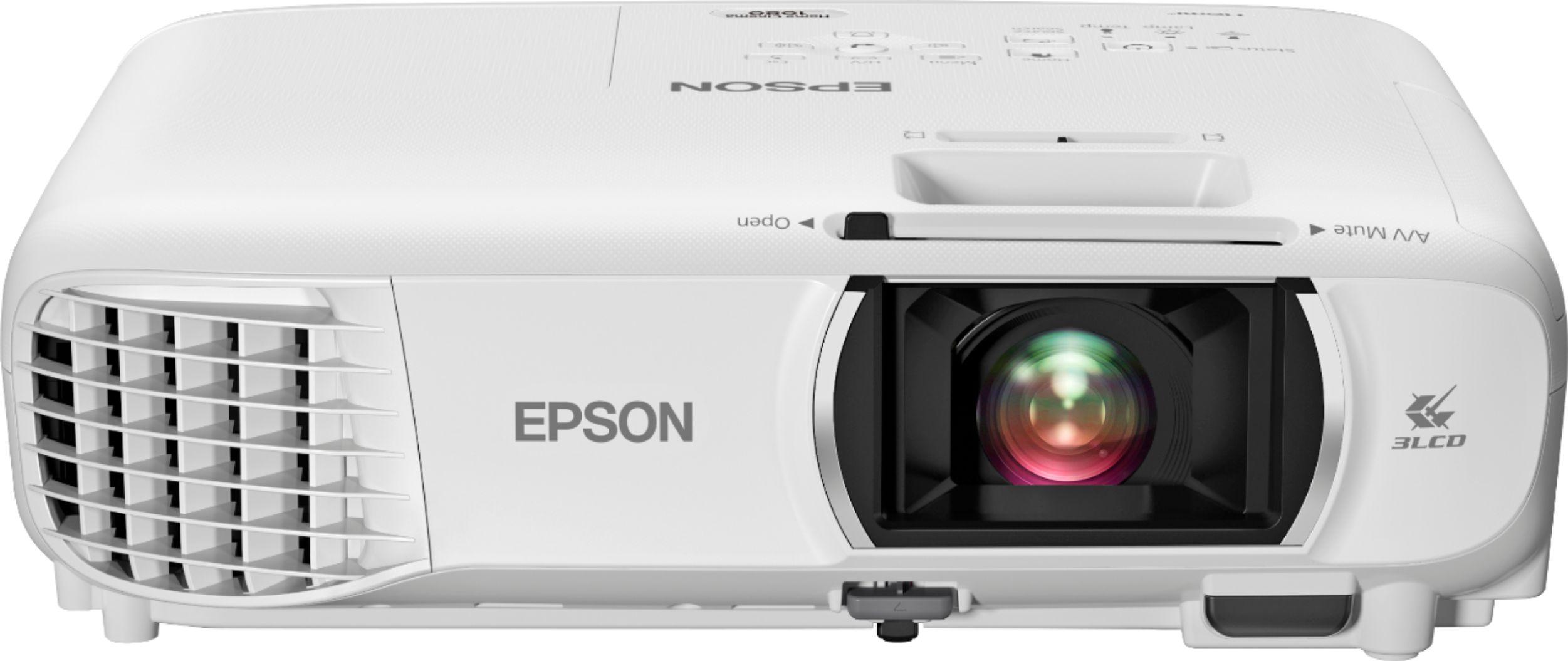
The physical design of these projectors reveals their different intended use cases. The EpiqVision Flex CO-FH02 embraces portability with its more compact dimensions (12.5" x 8.3" x 3.4") and lighter weight (5.7 lbs). Its rounded edges and sleeker design also make it more visually appealing when placed in living spaces.
The Home Cinema 1080 follows a more conventional projector design at 11.9" x 9.9" x 3.6" and 6.2 lbs. While not significantly larger or heavier, it's clearly less focused on mobility and aesthetics.
I've transported both projectors between rooms and to outdoor movie nights, and the half-pound weight difference is noticeable when carrying them for extended periods. The EpiqVision's more compact form factor also fits more easily into backpacks and carrying cases.
"Throw ratio" is a technical term that describes how large an image a projector creates relative to its distance from the screen. A lower throw ratio means you can place the projector closer to the wall while maintaining a large image.
The Home Cinema 1080 offers a 1.02-1.23:1 throw ratio, while the EpiqVision Flex has a 1.19-1.61:1 ratio. In practical terms, to project a 100-inch image, the Home Cinema 1080 needs to be placed about 8.5-10.2 feet from the screen, while the EpiqVision requires 9.9-13.4 feet.
This difference might seem technical, but it has real implications for smaller rooms. In my bedroom setup with limited depth, I could only achieve a 75-inch image with the EpiqVision but managed a full 100-inch display with the Home Cinema 1080 in the same space.
The Home Cinema 1080 includes a 1.2x optical zoom lens, which provides flexibility in placement without sacrificing image quality. The EpiqVision lacks optical zoom, relying instead on digital zoom that can reduce image sharpness.
Both projectors offer vertical and horizontal keystone correction of up to ±30 degrees, allowing them to project a rectangular image even when not perfectly aligned with the screen. The EpiqVision features automatic vertical keystone correction, which detects the projection angle and adjusts accordingly—a convenience I've come to appreciate during quick setups.
The Home Cinema 1080 includes a more sophisticated picture skew sensor that can correct for both vertical and horizontal distortions automatically, though I found the process slightly less seamless than on the EpiqVision.
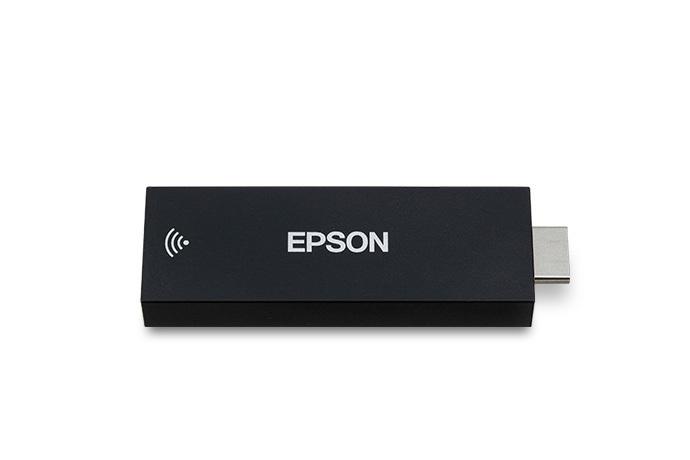
The most significant functional difference between these projectors is their approach to content streaming. The EpiqVision Flex CO-FH02 integrates Android TV directly into the projector, providing access to thousands of streaming apps like Netflix, Disney+, HBO Max, and YouTube without additional hardware.
The built-in Android TV experience is surprisingly responsive compared to many integrated smart platforms. Navigation feels fluid, and apps launch quickly, though not quite as snappily as on high-end streaming boxes. The included voice-enabled remote with Google Assistant support makes searching for content much easier than navigating on-screen keyboards.
By contrast, the Home Cinema 1080 offers no built-in smart platform. To stream content, you'll need to connect an external device like a Roku, Apple TV, or Amazon Fire Stick. While this adds extra cost and complexity, it also means you're not locked into a potentially outdated smart platform as technology evolves.
One advantage of the separate approach is streaming technology updates more quickly than projector technology. My Home Cinema 1080 setup uses the latest Apple TV 4K, which provides a faster, more premium streaming experience than any integrated solution.
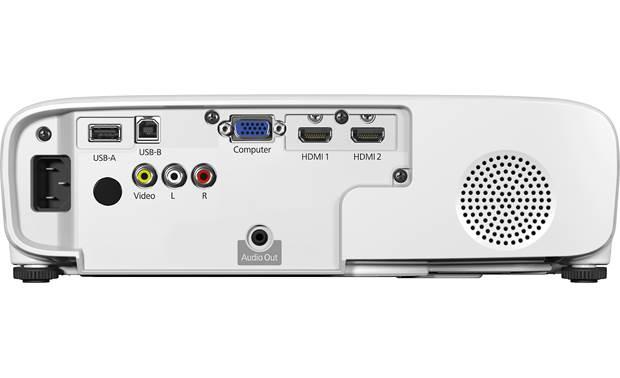
For connecting external devices, the Home Cinema 1080 provides significantly more options:
The EpiqVision Flex offers a more streamlined connection set:
In practical use, the Home Cinema 1080's additional HDMI port proved invaluable in my home theater setup, allowing simultaneous connection of a gaming console and Blu-ray player without swapping cables. The EpiqVision's single HDMI port feels limiting if you plan to connect multiple external devices.
However, the EpiqVision's Bluetooth connectivity offers a significant advantage for audio, allowing wireless connection to speakers or headphones—something the Home Cinema 1080 lacks entirely.
Projector audio has historically been an afterthought, with tinny, underpowered speakers that most users immediately bypass for external solutions. The EpiqVision Flex CO-FH02 makes meaningful strides to address this limitation with its 5W bass reflex speaker system.
While no built-in speaker can replace a proper sound system, the EpiqVision produces surprisingly full sound for its size. During testing, I found it adequate for casual viewing in smaller rooms or impromptu outdoor movie nights. Dialog clarity is good, though bass response remains limited, as expected from such a compact form factor.
The Home Cinema 1080 includes a more basic 2W mono speaker that's functional but underwhelming. It's clear Epson designed this projector with the expectation that users would connect external audio solutions. In my testing, the sound was thin and strained at higher volumes, suitable only for temporary use.
The EpiqVision's Bluetooth audio output capability is a standout feature for a projector in this price range. It allows wireless connection to Bluetooth speakers or headphones, eliminating cable clutter and expanding placement options. I've found this particularly useful for late-night viewing sessions with headphones to avoid disturbing others.
The Home Cinema 1080 requires either HDMI audio extraction or connecting to an AV receiver for external sound. While this is standard for traditional home theater setups, it adds complexity and cost for casual users.
Both projectors use similar lamp-based light sources rather than the newer laser technology found in premium models. They offer identical lamp life ratings:
For perspective, even at 4 hours of daily use, the lamps should last 3-8 years depending on your brightness settings. Replacement lamps typically cost $100-150, representing the main ongoing expense for either projector.
In my experience with previous Epson projectors, the lamp life estimates tend to be reliable, though brightness gradually diminishes over time before complete failure. I recommend using ECO mode when ambient light allows, as it not only extends lamp life but also reduces fan noise.
Neither projector offers cutting-edge features like 4K resolution, HDMI 2.1 for 120Hz gaming, or eARC for advanced audio passthrough. However, both support standard HDR10 high dynamic range content, ensuring compatibility with modern streaming and disc-based media.
The Home Cinema 1080's lack of smart features could actually be an advantage for longevity—connecting updated streaming devices will keep it current with software improvements, while the EpiqVision is limited to Android TV updates from Epson.
After extensive testing of both projectors in various environments, I've found that the decision largely comes down to your specific viewing habits and setup requirements.
Choose the Epson EpiqVision Flex CO-FH02 if:
The EpiqVision excels as an all-in-one entertainment solution that can travel between rooms or even to outdoor gatherings. Its smart capabilities and superior built-in audio make it a more complete package for casual users who prioritize convenience.
Choose the Epson Home Cinema 1080 if:
The Home Cinema 1080 represents a more traditional approach to projection, with superior brightness and connectivity that better serves dedicated home theater environments where external audio and streaming devices are already part of the ecosystem.
Both the EpiqVision Flex CO-FH02 and Home Cinema 1080 deliver impressive performance for their price points, with the 3LCD technology providing a significant advantage over many competitors in color reproduction and brightness consistency.
The EpiqVision represents Epson's vision for the future of projectors—more portable, smarter, and more self-contained. Meanwhile, the Home Cinema 1080 continues to excel in the traditional projector role with superior brightness and connectivity options.
For my personal use, I've found the EpiqVision more suitable for everyday casual viewing in multiple locations, while the Home Cinema 1080 delivers a more impressive dedicated theater experience when paired with proper external audio and controlled lighting.
Whichever model you choose, both projectors demonstrate how far home projection technology has advanced, making big-screen entertainment more accessible than ever before. The key is honestly assessing your viewing habits and environment to determine which approach better aligns with your entertainment needs.
| Epson EpiqVision Flex CO-FH02 Smart Portable Projector | Epson Home Cinema 1080 Projector |
|---|---|
| Display Resolution - Determines image clarity and detail | |
| 1920 x 1080 (Full HD) | 1920 x 1080 (Full HD) |
| Brightness - Critical for visibility in well-lit rooms | |
| 3,000 lumens (good for moderately lit rooms) | 3,400 lumens (13% brighter, better for ambient light) |
| Projection Technology - Affects color accuracy and vibrancy | |
| 3LCD (balanced color/white brightness, no rainbow effect) | 3LCD (balanced color/white brightness, no rainbow effect) |
| Smart Features - Determines need for additional streaming devices | |
| Built-in Android TV with Google Assistant | No smart features (requires external streaming device) |
| Throw Ratio - Affects required distance from screen | |
| 1.19 - 1.61:1 (needs more distance for same image size) | 1.02 - 1.23:1 (can achieve larger image from closer distance) |
| Image Adjustment - Impacts flexibility in placement | |
| Automatic vertical keystone (±30°), horizontal keystone (±30°), no optical zoom | Automatic picture skew sensor, vertical/horizontal keystone (±30°), 1.2x optical zoom |
| Connectivity - Determines what devices you can connect | |
| 1x HDMI, 1x USB-A, Wi-Fi, Bluetooth audio | 2x HDMI, 1x VGA, 1x Composite, 2x USB (Type-A & B), Wi-Fi with Miracast |
| Audio System - Affects need for external speakers | |
| 5W bass reflex speaker (adequate for casual viewing) | 2W mono speaker (basic, intended for temporary use) |
| Wireless Audio - Important for clean setup and flexibility | |
| Bluetooth audio out to speakers/headphones | No Bluetooth capability |
| Portability - Crucial for multi-room or outdoor use | |
| 5.7 lbs, compact design optimized for transport | 6.2 lbs, standard design not focused on portability |
| Lamp Life - Determines long-term operational costs | |
| 6,000 hours Normal / 12,000 hours ECO | 6,000 hours Normal / 12,000 hours ECO |
| Price - Overall value consideration | |
| $799-899 (premium for smart features and portability) | $749-849 (better value for dedicated home theater use) |
The Epson Home Cinema 1080 Projector is brighter with 3,400 lumens compared to the Epson EpiqVision Flex CO-FH02 Smart Portable Projector which offers 3,000 lumens. This 13% brightness advantage makes the Home Cinema 1080 better suited for rooms with ambient light or for daytime viewing. If you plan to use your projector in a living room with windows, the Home Cinema 1080 would provide a more visible image.
Yes, both the Epson EpiqVision Flex CO-FH02 and the Epson Home Cinema 1080 offer Full HD 1080p resolution (1920 x 1080 pixels). This resolution provides clear, detailed images for most home viewing situations. Neither projector offers 4K resolution, which is typically found in more expensive models.
The Epson Home Cinema 1080 Projector is generally better suited for a dedicated home theater setup due to its higher brightness (3,400 lumens), better connectivity options (2 HDMI ports instead of 1), and optical zoom feature. Most home theater enthusiasts will appreciate these features and likely already have external audio and streaming devices to pair with the Home Cinema 1080.
The Epson EpiqVision Flex CO-FH02 is specifically designed for portability at 5.7 pounds with a more compact form factor compared to the 6.2-pound Epson Home Cinema 1080. The EpiqVision Flex also features automatic keystone correction, which makes setup quicker when moving between locations. If you plan to use your projector in multiple rooms or for outdoor movie nights, the EpiqVision Flex is the more convenient option.
You only need to buy a streaming device for the Epson Home Cinema 1080, which has no built-in smart features. The Epson EpiqVision Flex CO-FH02 comes with Android TV built-in, giving you access to thousands of streaming apps including Netflix, Disney+, and YouTube without any additional hardware. This integrated streaming capability makes the EpiqVision Flex a more complete out-of-the-box solution.
The Epson EpiqVision Flex CO-FH02 has significantly better built-in sound with its 5W bass reflex speaker system compared to the Home Cinema 1080's basic 2W mono speaker. Additionally, the EpiqVision Flex supports Bluetooth audio output to wireless speakers or headphones, a feature the Home Cinema 1080 lacks. For casual viewing without external speakers, the EpiqVision Flex provides a much better audio experience.
The Epson Home Cinema 1080 can be placed closer to the screen with its 1.02-1.23:1 throw ratio. For a 100-inch image, it needs approximately 8.5-10.2 feet of distance. The Epson EpiqVision Flex CO-FH02 has a 1.19-1.61:1 throw ratio, requiring about 9.9-13.4 feet for the same size image. If you have limited space, the Home Cinema 1080 would allow you to achieve a larger image in a smaller room.
The Epson Home Cinema 1080 offers more connectivity options with 2 HDMI ports, 1 VGA port, 1 composite video input, and 2 USB ports (Type-A and Type-B). The Epson EpiqVision Flex CO-FH02 is more limited with just 1 HDMI port and 1 USB-A port. If you need to connect multiple sources simultaneously (like a gaming console, Blu-ray player, or PC), the Home Cinema 1080 provides greater flexibility without having to swap cables.
Both the Epson EpiqVision Flex CO-FH02 and Epson Home Cinema 1080 have identical lamp life ratings: 6,000 hours in Normal mode and up to 12,000 hours in ECO mode. At 4 hours of daily use, this translates to 4-8 years of operation before requiring a lamp replacement, which typically costs $100-150. The lamp life is equal for both projectors, making long-term operational costs very similar.
Both projectors offer similar gaming performance with Full HD resolution and standard input lag. However, the Epson Home Cinema 1080 might have a slight edge for serious gamers due to its higher brightness and additional HDMI port, allowing you to keep a console permanently connected alongside another device. The EpiqVision Flex CO-FH02 offers the convenience of built-in Android TV for casual gaming apps, but its single HDMI port is limiting if you want to connect multiple gaming devices.
Yes, both the Epson EpiqVision Flex CO-FH02 and Epson Home Cinema 1080 can be ceiling-mounted using standard mounting brackets. The Home Cinema 1080 is more traditionally designed for fixed installation scenarios with its optical zoom and more extensive connection options. While the EpiqVision Flex can also be ceiling-mounted, its design emphasizes portability and it might be less ideal for permanent installation than the Home Cinema 1080.
Value depends on your specific needs. The Epson EpiqVision Flex CO-FH02 ($799-899) offers better value if you prioritize portability, built-in streaming, and don't already own external speakers or streaming devices. The Epson Home Cinema 1080 ($749-849) provides better value if you need maximum brightness, multiple input connections, and plan to use external audio and streaming devices. For a complete standalone solution, the EpiqVision Flex offers more features out of the box, while the Home Cinema 1080 excels as part of a more comprehensive home theater setup.
We've done our best to create useful and informative comparisons to help you decide what product to buy. Our research uses advanced automated methods to create this comparison and perfection is not possible - please contact us for corrections or questions. These are the sites we've researched in the creation of this article: expertreviews.co.uk - projectorcentral.com - youtube.com - bestbuy.com - specsradar.com - techwalls.com - cnet.com - epson.com - youtube.com - projectorreviews.com - epson.com - abt.com - youtube.com - cnet.com - techgearlab.com - staples.com - bestbuy.com - bestbuy.com - projectorcentral.com - bhphotovideo.com - dell.com - latin.epson.com - specsradar.com - projectorcentral.com - officedepot.com - files.support.epson.com - walmart.com - adorama.com - epson.com - crutchfield.com - bestbuy.com - officedepot.com - bestbuy.com - bestbuy.com - audioholics.com - rtings.com - avsforum.com - projectorcentral.com - audiogeneral.com - projectorreviews.com - rtings.com - epson.com - youtube.com - epson.com - projectorreviews.com - projectorreviews.com - walmart.com - shop.avispl.com - bhphotovideo.com - staples.com - mediaserver.goepson.com - staples.com - bhphotovideo.com - epson.com - epson.com - dell.com - epson.com - bestbuy.com

Privacy Policy
Terms and Conditions - Affiliate Policy
Home Security
© Copyright 2008-2026.
11816 Inwood Rd #1211, Dallas, TX 75244