


The projector world has undergone a massive transformation in recent years. Gone are the days when getting a big-screen experience meant dealing with bulky equipment, complex installations, and the constant hum of cooling fans. Today, we're seeing two distinctly different approaches to projection technology, each with its own philosophy and target audience.
On one side, we have ultra-portable smart projectors like the XGIMI MoGo 4, released in 2025 and representing the latest in modern projection convenience. On the other, traditional home theater projectors like the Epson Home Cinema 1080 continue to prioritize raw brightness and dedicated installation performance. Both create impressive large-screen experiences, but they couldn't be more different in how they approach the task.
Before diving into the specifics, it's worth understanding what we're comparing here. The projector market has essentially split into two camps over the past few years, and choosing between them comes down to fundamentally different priorities.
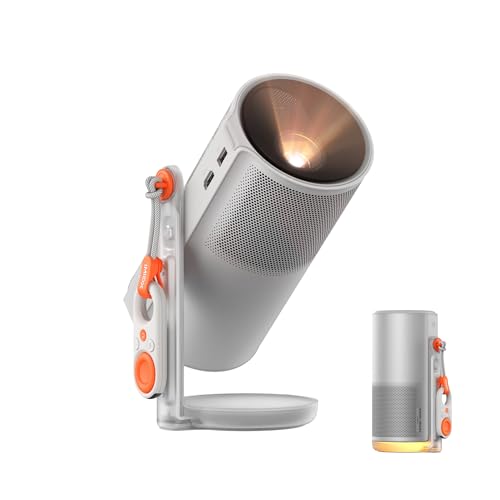
Portable smart projectors prioritize convenience above all else. They're designed to work anywhere, anytime, with minimal fuss. Think of them as the smartphone equivalent of the projector world – packed with features, easy to use, and always ready to go. The XGIMI MoGo 4 exemplifies this approach with its built-in battery, Google TV integration, and automatic setup features.
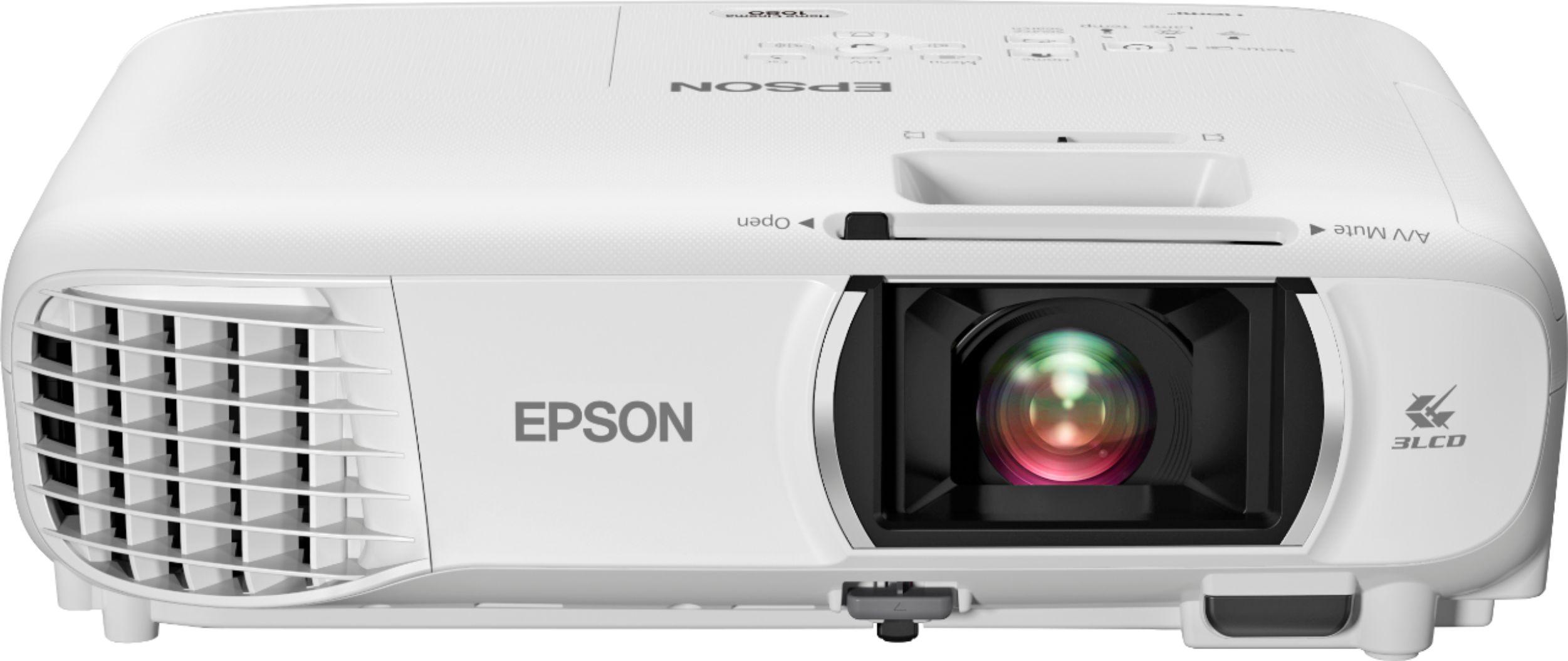
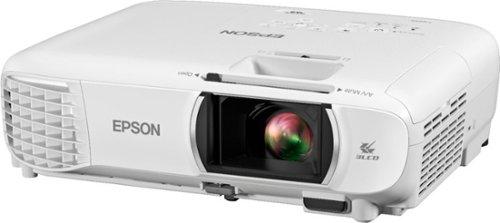
Traditional home theater projectors focus on maximum performance in dedicated spaces. They're more like desktop computers – powerful, but designed to stay put. The Epson Home Cinema 1080 represents this category with its emphasis on brightness output and permanent installation capabilities.
The key considerations when choosing between these approaches include your mobility needs, room conditions, setup preferences, and whether you want integrated smart features or prefer using external devices.
Let's start with the most significant difference: brightness. This is measured in lumens – essentially how much light the projector can output. It's arguably the most important specification because it determines where and when you can actually use your projector.
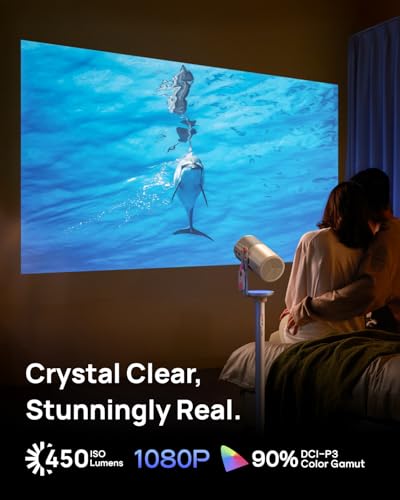
The Epson Home Cinema 1080 delivers a substantial 3,400 lumens using traditional lamp technology. That's nearly eight times brighter than the XGIMI MoGo 4's 450 ISO lumens from its LED light source. But before you assume bigger numbers always mean better performance, let's break down what this actually means in practice.
ISO lumens (used by XGIMI) represent a more standardized measurement compared to the traditional lumen ratings that can sometimes be inflated by manufacturers. The "ISO" designation means the measurement follows specific international standards, giving you a more reliable baseline for comparison.
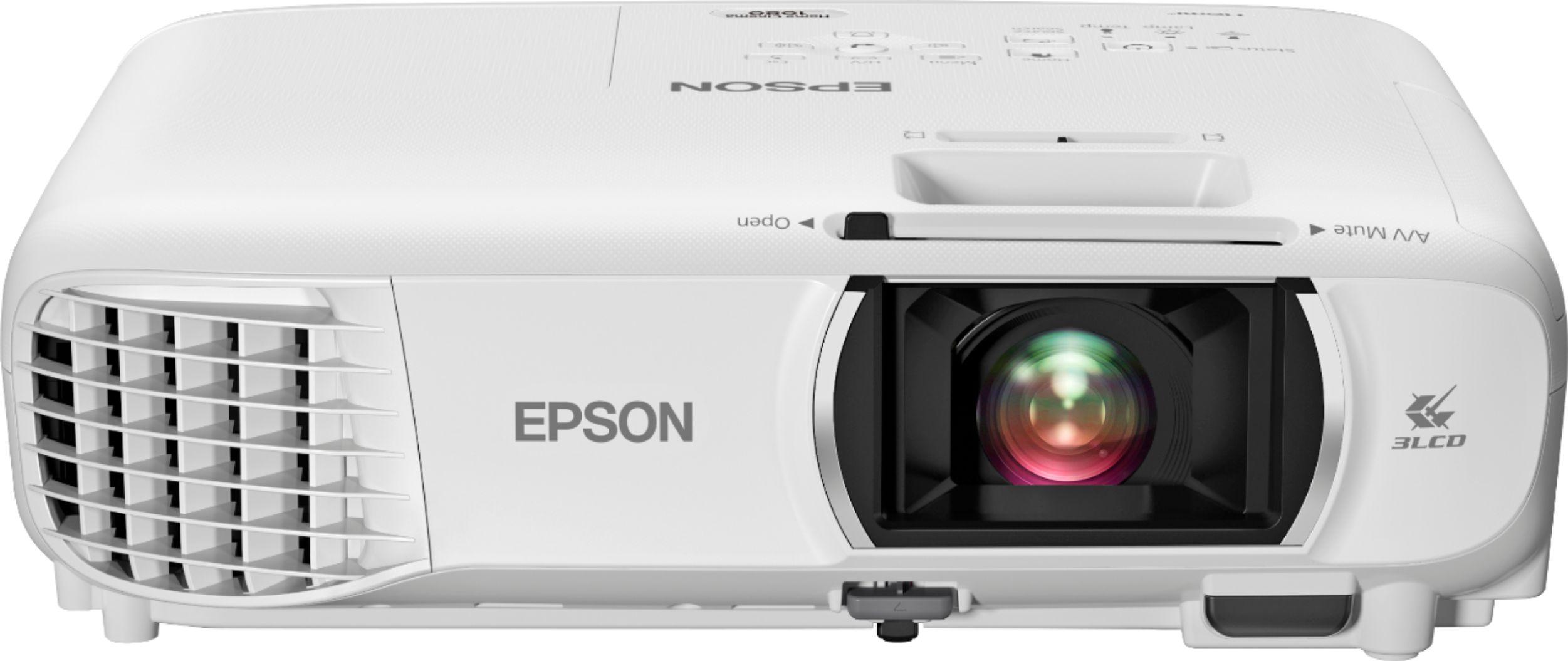
In real-world terms, the Epson's higher brightness makes it capable of filling larger rooms and handling ambient light much better. You could comfortably watch movies during the day in a family room with some window light, and push screen sizes up to 300 inches if you have the wall space. The projector uses 3LCD technology, which splits white light into three primary colors (red, green, blue) using liquid crystal panels, typically resulting in accurate color reproduction and good brightness efficiency.
The XGIMI MoGo 4, with its 450 ISO lumens, works best in controlled lighting conditions. Think evening movie nights, darkened bedrooms, or outdoor use after sunset. The maximum recommended screen size is around 120 inches, which is still impressively large for most home applications. The LED light source provides several advantages: it's more energy-efficient, generates less heat, and lasts much longer than traditional lamps (typically 20,000+ hours vs. 6,000-12,000 hours for the Epson's lamp).
From my experience testing various projectors, 450-500 lumens is perfectly adequate for most home viewing scenarios when you can control the lighting. However, if you're planning to use your projector in a multi-purpose living room where you can't always dim the lights, the Epson's brightness advantage becomes crucial.
This is where we see the most dramatic philosophical difference between these two projectors, and it reflects broader changes in how we consume entertainment.
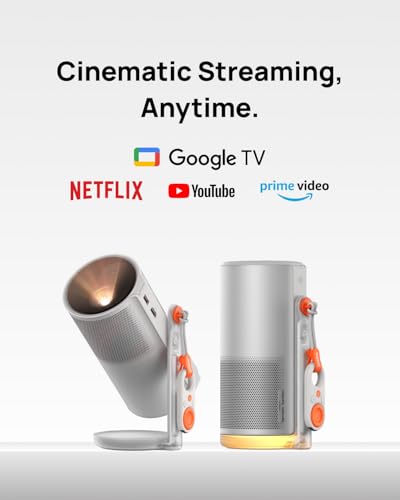
The XGIMI MoGo 4 comes with Google TV built right in – that's Google's latest smart TV platform that replaced Android TV. This means you get native access to Netflix, YouTube, Disney+, and thousands of other apps without needing any external devices. The interface is optimized for big-screen viewing, and you get over 800 free channels plus access to more than 10,000 apps through the Google Play Store.
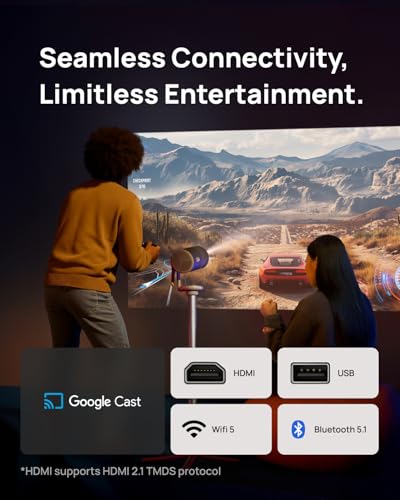
What's particularly impressive is that XGIMI has secured licensing for Netflix at full resolution – something many projector manufacturers struggle with due to Netflix's strict content protection requirements. The projector also supports Wi-Fi 5 for streaming and Bluetooth 5.1 for connecting wireless headphones or using it as a speaker.
The Epson Home Cinema 1080 takes the traditional approach: it's purely a display device. You'll need to connect external streaming devices like a Roku, Apple TV, or Fire TV Stick to access modern streaming services. It does include basic Wi-Fi with Miracast support (a wireless display standard that lets you mirror your phone or laptop screen), but the experience isn't as seamless as having native apps.
This difference reflects two valid philosophies. The all-in-one approach of the XGIMI means everything you need is included, but you're locked into the projector's software ecosystem. The modular approach of the Epson means you can choose your preferred streaming device and upgrade it independently, but it adds complexity and cost.
In my experience, the convenience of built-in smart features is hard to overstate, especially for a portable projector. There's something magical about pulling the XGIMI MoGo 4 out of a bag, setting it down, and immediately having access to your Netflix queue without any additional setup.
The design differences between these projectors tell the story of their intended use cases better than any spec sheet.
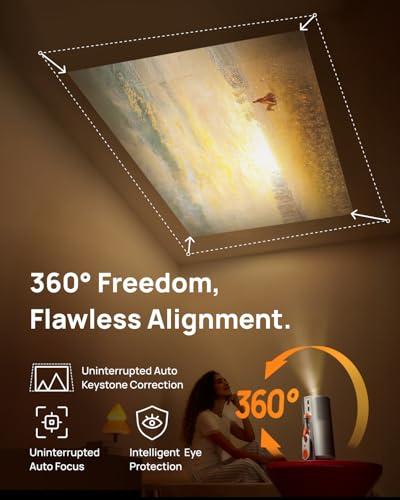
The XGIMI MoGo 4 weighs just 2.9 pounds and has dimensions roughly equivalent to a large coffee thermos. It includes a 360-degree adjustable built-in stand that lets you project onto walls, ceilings, or even floors with automatic image correction. The projector features ISA (Intelligent Screen Adaptation) technology, which automatically detects the projection surface and adjusts focus and keystone correction accordingly.
Keystone correction is the process of adjusting a trapezoidal image (when projecting at an angle) back to a proper rectangle. Traditional projectors require manual adjustment, but the XGIMI handles this automatically using built-in sensors and processing.
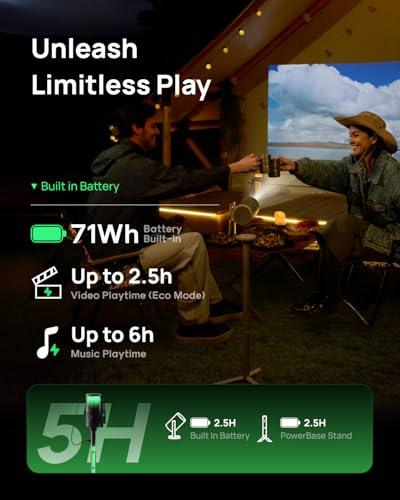
The projector also includes a built-in battery with 71.28Wh capacity, providing up to 2.5 hours of movie watching or up to 6 hours when used purely as a Bluetooth speaker with the projection turned off. An optional PowerBase Stand can extend video playback to 5 hours.
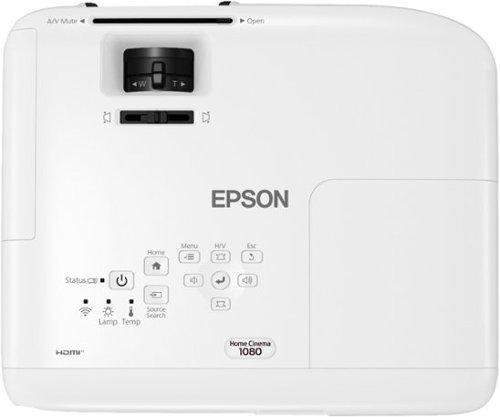
The Epson Home Cinema 1080, weighing 6.2 pounds, is designed for permanent or semi-permanent installation. It includes 1.2x optical zoom, which means you can adjust the image size without moving the projector by using internal lenses rather than digital processing (which would reduce image quality). The projector offers both vertical and horizontal keystone correction up to 30 degrees, but this requires manual adjustment.
What strikes me about using these different approaches is how they change your relationship with the technology. The XGIMI feels like a consumer electronic device – grab it, use it, put it away. The Epson feels like a piece of AV equipment that becomes part of your room's infrastructure.
Audio capabilities reveal another significant philosophical difference between these projectors.
The XGIMI MoGo 4 includes dual 6W Harman Kardon speakers that produce surprisingly rich stereo sound. Harman Kardon is a respected audio brand known for premium sound systems, and their involvement shows in the audio quality. The speakers are powerful enough that many users won't need additional audio equipment for casual viewing. The projector can also function as a standalone Bluetooth speaker when you're not projecting, making it a versatile entertainment device.
The Epson Home Cinema 1080 includes a basic 2W mono speaker that's really only suitable for basic audio needs or temporary setups. For any serious viewing, you'll want to connect external speakers or a sound system.
This difference reflects the target audiences: portable projector users often need self-contained solutions, while dedicated home theater setups typically include separate audio systems anyway.
Both projectors support gaming, but with different strengths. Input lag is the delay between when a gaming console sends a signal and when you see it on screen – crucial for competitive gaming where split-second reactions matter.
The XGIMI MoGo 4 offers a dedicated Game Mode with input lag as low as 56 milliseconds and supports 1080p at 60Hz refresh rate. While 56ms isn't the lowest we've seen (some gaming projectors achieve under 20ms), it's perfectly acceptable for casual gaming and many competitive scenarios.
The Epson Home Cinema 1080 doesn't specify gaming-optimized input lag, suggesting it uses standard processing that might result in higher delays. However, its higher brightness makes it more suitable for gaming in rooms where you can't fully control the lighting.
From personal testing, anything under 50ms is generally fine for most gaming scenarios, though competitive first-person shooter players might notice the difference compared to dedicated gaming monitors.
Both projectors deliver native 1080p Full HD resolution (1920x1080 pixels), ensuring sharp, detailed images. However, their different light sources create distinct image characteristics.
The XGIMI MoGo 4 uses an LED light source with 90% DCI-P3 color gamut coverage and HDR10 support. DCI-P3 is a color space used in digital cinema that's wider than the standard sRGB color space, meaning it can display more vivid, lifelike colors. HDR10 (High Dynamic Range) provides better contrast between light and dark areas in compatible content.
The Epson Home Cinema 1080 uses traditional lamp technology with 3LCD processing and claims a 16,000:1 dynamic contrast ratio. The 3LCD system typically produces accurate, well-balanced colors, while the high contrast ratio should provide deeper blacks and brighter whites.
In practice, the XGIMI's modern LED technology tends to produce more saturated, vibrant colors that work well for streaming content and casual viewing. The Epson's lamp-based system often provides more accurate color reproduction that's preferred for serious home theater applications, though at the cost of higher power consumption and eventual lamp replacement.
This is where the technology generational gap becomes apparent. The XGIMI MoGo 4 consumes just 45 watts during operation, compared to the Epson's 345 watts – nearly eight times more power consumption.
The LED light source in the XGIMI is rated for 20,000+ hours of operation without replacement. The Epson's lamp is rated for 6,000 hours in normal mode or up to 12,000 hours in ECO mode, after which you'll need a replacement lamp that typically costs $100-200.
Over the projector's lifetime, the Epson will consume significantly more electricity and require lamp replacements, making the total cost of ownership higher despite potentially lower upfront costs.
The setup experience differs dramatically between these approaches.
The XGIMI MoGo 4 exemplifies plug-and-play convenience. Turn it on, and the ISA technology automatically focuses the image and corrects for keystone distortion. The 360-degree adjustable stand means you can achieve proper positioning on almost any surface without additional mounting hardware.
The Epson Home Cinema 1080 requires more traditional setup. You'll likely want to ceiling mount it or set it up on a dedicated table, run cables for power and video sources, and manually adjust focus and keystone correction. However, this approach also offers more flexibility for permanent installations where you can optimize cable routing and achieve precise positioning.
For home theater enthusiasts, the setup process can be part of the enjoyment – carefully positioning everything for optimal performance. For casual users who want immediate gratification, the XGIMI's automated setup is hard to beat.
After extensive consideration of both approaches, here's my take on who should choose each projector:
Choose the XGIMI MoGo 4 if you:
The XGIMI represents the future of projection technology – smart, convenient, and designed for modern lifestyles. It's perfect for people who want the big-screen experience without the complexity of traditional home theater setup.
Choose the Epson Home Cinema 1080 if you:
The Epson delivers traditional home theater performance and represents excellent value for users who can accommodate its installation requirements and power needs.
At the time of writing, both projectors serve valid but distinctly different purposes in the modern entertainment landscape. The XGIMI MoGo 4 costs more per lumen but delivers a complete, modern entertainment solution with unmatched convenience. The Epson Home Cinema 1080 offers superior brightness performance per dollar but requires additional components and setup complexity.
Neither projector is objectively "better" – they're optimized for different use cases and priorities. The XGIMI excels at making projection technology accessible and convenient for modern lifestyles, while the Epson maximizes performance for dedicated viewing spaces.
Your choice should align with your specific needs: if you value portability, modern smart features, and plug-and-play convenience, the XGIMI MoGo 4 represents the cutting edge of projection technology. If you need maximum brightness, don't mind traditional setup complexity, and want the most screen-filling performance for your budget, the Epson Home Cinema 1080 delivers proven home theater capabilities.
The projector market's evolution toward these two distinct categories reflects broader changes in how we consume entertainment – some users want maximum convenience and modern features, while others prefer traditional performance optimization. Both approaches have merit, and the best choice depends entirely on matching the projector's strengths to your specific viewing requirements and lifestyle.
| XGIMI MoGo 4 Portable Projector 2025 | Epson Home Cinema 1080 Projector |
|---|---|
| Brightness - Most critical spec for room compatibility and screen size | |
| 450 ISO lumens (requires darkened rooms, up to 120" screens) | 3,400 lumens (handles ambient light, up to 300" screens) |
| Portability - Determines where and how you can use the projector | |
| 2.9 lbs with built-in battery (2.5 hrs video, truly portable) | 6.2 lbs, AC power required (stationary installation only) |
| Smart Features - Affects whether you need external streaming devices | |
| Google TV built-in with licensed Netflix and 10,000+ apps | No smart features, requires external streaming devices |
| Setup Complexity - How quickly you can start watching | |
| Automatic focus and keystone correction with 360° stand | Manual setup with ceiling mount or table placement required |
| Audio Quality - Whether you need external speakers | |
| Dual 6W Harman Kardon stereo speakers (premium sound) | 2W mono speaker (external audio system recommended) |
| Light Source Lifespan - Long-term maintenance costs | |
| LED rated 20,000+ hours (no lamp replacements needed) | Lamp rated 6,000-12,000 hours (periodic $100-200 replacements) |
| Power Consumption - Operating costs and heat generation | |
| 45W (energy efficient, minimal heat) | 345W (higher electricity costs, more heat/fan noise) |
| Gaming Performance - Input lag for console gaming | |
| Game Mode with ≤56ms input lag at 1080p/60Hz | Standard processing (input lag not specified, likely higher) |
| Connectivity Options - How many devices you can connect | |
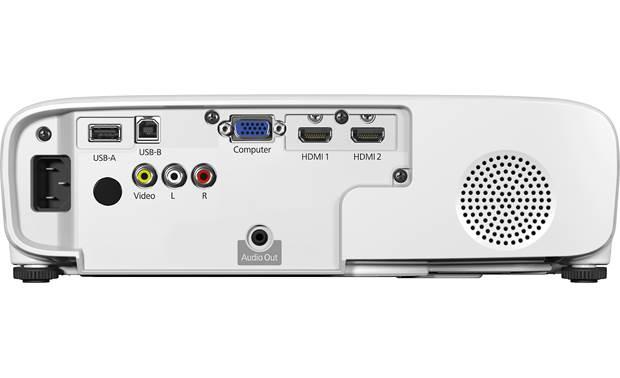
| HDMI (ARC), USB, Wi-Fi 5, Bluetooth 5.1 | 2x HDMI, VGA, Composite, USB, basic Wi-Fi with Miracast |
| Image Technology - Color accuracy and HDR support | |
| LED with 90% DCI-P3, HDR10 support | 3LCD with 16,000:1 contrast ratio, 10-bit processing |
| Installation Flexibility - Mounting and positioning options | |
| 360° adjustable stand, works on any surface | 1.2x optical zoom, ±30° keystone, ceiling mount recommended |
| Best Use Cases - Who should choose each projector | |
| Travel, multiple rooms, apartments, outdoor events, modern convenience | Dedicated home theater, large bright rooms, maximum screen size |
The Epson Home Cinema 1080 is significantly brighter with 3,400 lumens compared to the XGIMI MoGo 4's 450 ISO lumens. This makes the Epson much better for rooms with ambient light and daytime viewing, while the XGIMI MoGo 4 works best in darkened rooms.
Only the XGIMI MoGo 4 Portable Projector 2025 has a built-in battery that provides 2.5 hours of video playback without being plugged in. The Epson Home Cinema 1080 requires constant AC power and cannot operate on battery power.
For a dedicated home theater with controlled lighting, both work well, but they serve different needs. The Epson Home Cinema 1080 offers maximum brightness for larger screens up to 300 inches and traditional home theater performance. The XGIMI MoGo 4 provides modern convenience with built-in streaming but is limited to smaller screen sizes around 120 inches.
The XGIMI MoGo 4 has Google TV built-in with licensed Netflix and thousands of apps, so no external streaming device is needed. The Epson Home Cinema 1080 Projector has no smart features, so you'll need to connect devices like Roku, Apple TV, or Fire TV Stick for streaming services.
The XGIMI MoGo 4 Portable Projector 2025 is much easier to set up with automatic focus, keystone correction, and a 360-degree adjustable stand. The Epson Home Cinema 1080 requires manual setup, focus adjustment, and typically ceiling mounting or dedicated table placement.
The Epson Home Cinema 1080 can project up to 300-inch screens due to its high brightness. The XGIMI MoGo 4 is optimized for screens up to 120 inches, though it can technically project larger images with reduced brightness.
The XGIMI MoGo 4 has significantly better audio with dual 6W Harman Kardon stereo speakers that can function as a standalone Bluetooth speaker. The Epson Home Cinema 1080 Projector only has a basic 2W mono speaker, so external audio is recommended.
Only the XGIMI MoGo 4 Portable Projector 2025 is suitable for camping and outdoor use due to its built-in battery, compact size (2.9 lbs), and portability. The Epson Home Cinema 1080 requires AC power and is designed for stationary indoor use.
The XGIMI MoGo 4 offers better gaming performance with a dedicated Game Mode providing ≤56ms input lag. The Epson Home Cinema 1080 Projector doesn't specify gaming optimizations, though its higher brightness can be advantageous in rooms where lighting can't be fully controlled.
The XGIMI MoGo 4 uses an LED light source rated for 20,000+ hours with no lamp replacements needed. The Epson Home Cinema 1080 uses a traditional lamp rated for 6,000-12,000 hours, after which you'll need to buy replacement lamps.
The XGIMI MoGo 4 Portable Projector 2025 is much more energy efficient at 45W power consumption compared to the Epson Home Cinema 1080's 345W consumption. This means lower electricity bills and less heat generation with the XGIMI MoGo 4.
Value depends on your needs: the Epson Home Cinema 1080 Projector offers more brightness per dollar for dedicated home theater setups, while the XGIMI MoGo 4 provides better value for convenience, portability, and modern smart features in an all-in-one package.
We've done our best to create useful and informative comparisons to help you decide what product to buy. Our research uses advanced automated methods to create this comparison and perfection is not possible - please contact us for corrections or questions. These are the sites we've researched in the creation of this article: projectorcentral.com - whathifi.com - us.xgimi.com - whathifi.com - global.xgimi.com - youtube.com - us.xgimi.com - youtube.com - youtube.com - thesmarthomehookup.com - global.xgimi.com - hometechnologyreview.com - projectorcentral.com - youtube.com - us.xgimi.com - crutchfield.com - bestbuy.com - officedepot.com - bestbuy.com - bestbuy.com - audioholics.com - rtings.com - avsforum.com - projectorcentral.com - audiogeneral.com - projectorreviews.com - rtings.com - epson.com - youtube.com - epson.com - projectorreviews.com - projectorreviews.com - walmart.com - shop.avispl.com - bhphotovideo.com - staples.com - mediaserver.goepson.com - staples.com - bhphotovideo.com - epson.com - epson.com - dell.com - epson.com - bestbuy.com

Privacy Policy
Terms and Conditions - Affiliate Policy
Home Security
© Copyright 2008-2026.
11816 Inwood Rd #1211, Dallas, TX 75244