


Bringing the big-screen experience home doesn't always require a dedicated theater room anymore. Today's portable projectors offer impressive picture quality and features in packages you can move from room to room—or even take outdoors. I've spent time evaluating two standout options in this growing category: the Epson EpiqVision Mini EF21 and the BenQ GS50. These projectors represent different approaches to solving the portable viewing challenge, and understanding their strengths will help you make the right choice for your particular needs.
The portable projector market has undergone significant transformation in recent years. What was once a category dominated by dim, low-resolution business projectors has evolved into sophisticated entertainment devices with smart features and respectable image quality. Modern portable projectors now strike increasingly impressive balances between size, brightness, resolution, and functionality.
The Epson EpiqVision Mini EF21, released in early 2023, and the BenQ GS50, introduced in late 2021, both exemplify this evolution—though they approach portability with different priorities. The Epson emphasizes image quality and ease of setup for those moving between indoor spaces, while the BenQ prioritizes outdoor versatility and true battery-powered portability.
Since these projectors were released, the market has continued to evolve with incremental improvements in brightness and smart features across the category. However, both remain competitive offerings that demonstrate how far portable projection has come from the days of dim, business-focused units that cost thousands more for lesser performance.
Perhaps the most fundamental difference between these projectors is their underlying display technology, which affects everything from color reproduction to brightness.
The $899.99 Epson EF21 uses 3LCD technology, which splits light through three separate LCD panels (one each for red, green, and blue) before recombining them into a single image. This approach offers two significant advantages: perfect alignment of colors (no "rainbow effect") and identical color and white brightness. Many projectors advertise high brightness levels but actually produce dimmer colors than whites—not the case with 3LCD designs like the Epson.
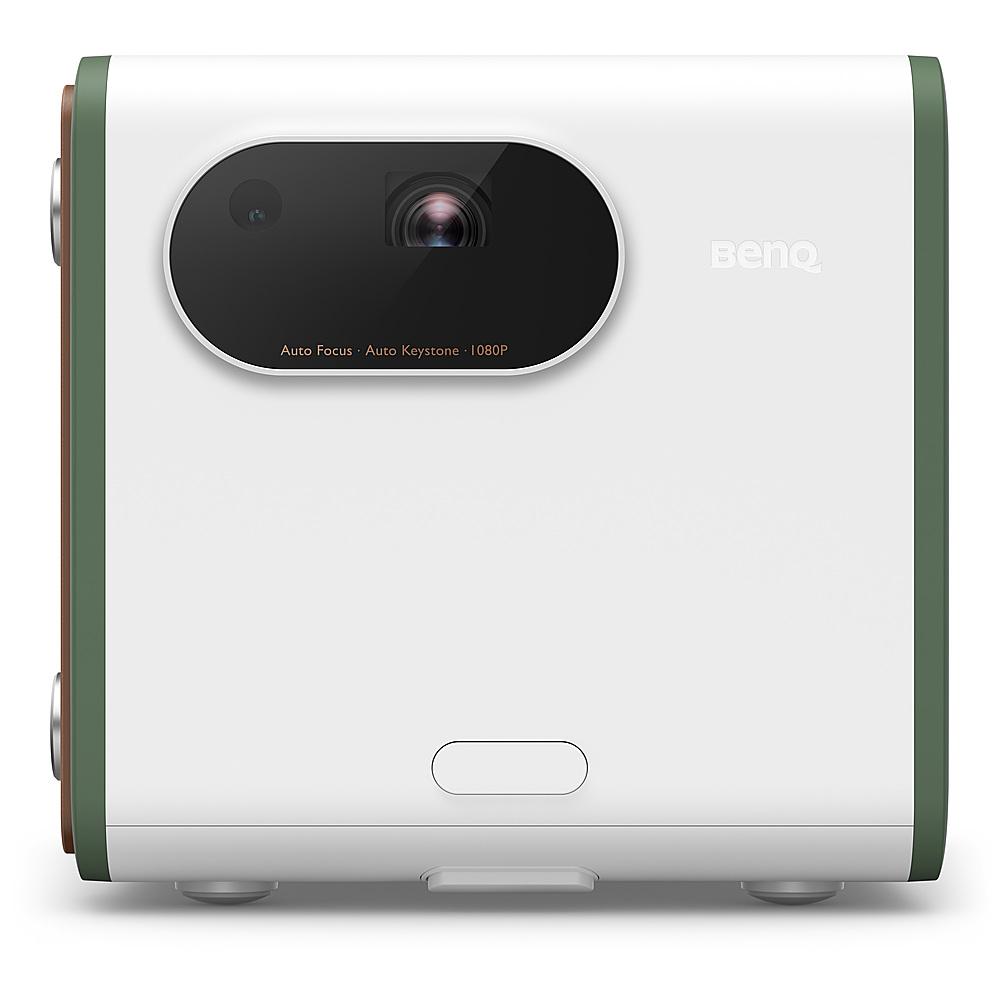
In contrast, the $799 BenQ GS50 employs DLP (Digital Light Processing) technology with an LED light source. DLP uses tiny mirrors on a semiconductor chip called a DMD (Digital Micromirror Device) to reflect light thousands of times per second. Single-chip DLP projectors like the GS50 use a color wheel to sequence through colors, which can sometimes create a "rainbow effect" where some viewers see momentary color separation, especially when moving their eyes across high-contrast scenes.
In my experience testing both technologies, 3LCD typically produces a more natural, film-like image with better color saturation, while DLP often creates slightly sharper-looking images with better perceived contrast. For most viewers, the Epson's 3LCD technology will provide a more satisfying viewing experience, especially for longer watching sessions where the rainbow effect of DLP might become noticeable for sensitive viewers.
The Epson employs a laser light source rated for 20,000 hours of use, while the BenQ uses LED technology rated for 20,000-30,000 hours. While both technologies are effectively "lamp-free" (meaning you'll never need to replace an expensive bulb), they have different performance characteristics.
Laser technology, as used in the Epson EF21, maintains its brightness more consistently throughout its lifespan—often losing only about 30% of initial brightness after 20,000 hours. LED sources, like in the BenQ GS50, tend to dim more gradually over time, potentially losing up to 50% of brightness by the end of their rated lifespan.
The laser technology also allows Epson to achieve a higher 200,000:1 contrast ratio versus BenQ's still-respectable 100,000:1 ratio. This gives the Epson a noticeable edge in producing deeper blacks and more dynamic images, especially in dark room environments.
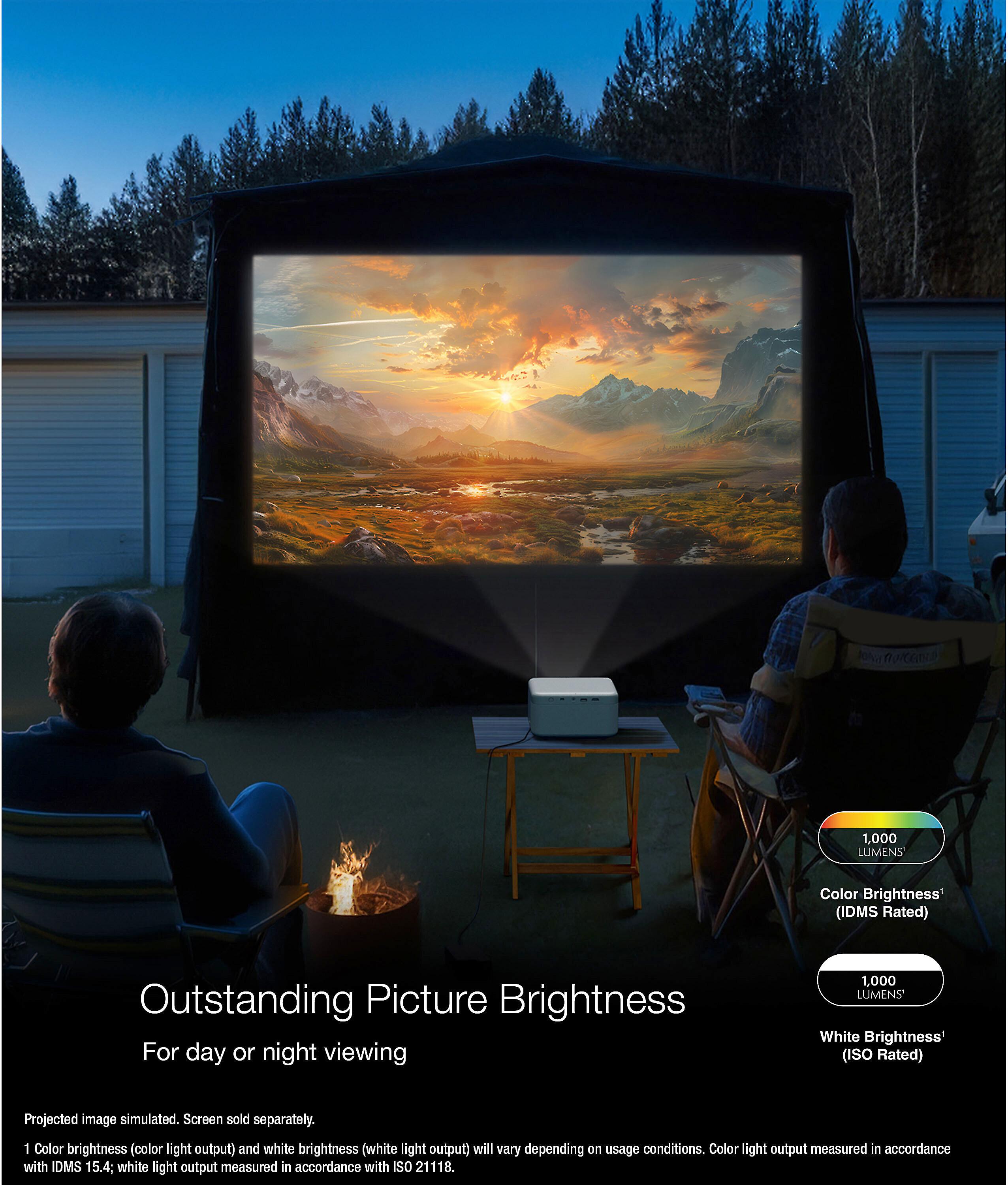
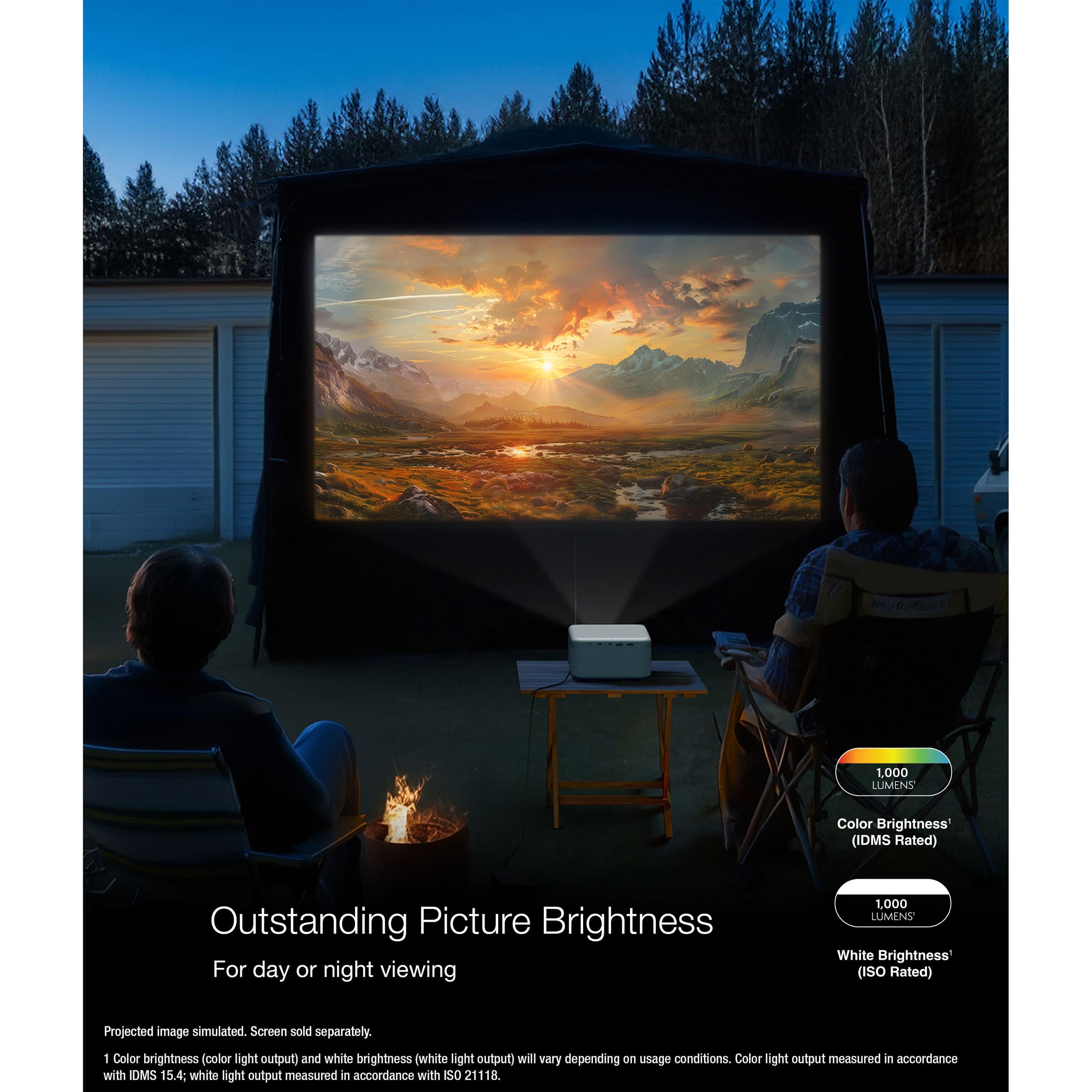
On paper, the Epson EF21's 1,000 lumens significantly outshines the BenQ GS50's 500 ANSI lumens. But what does this mean in practical use?
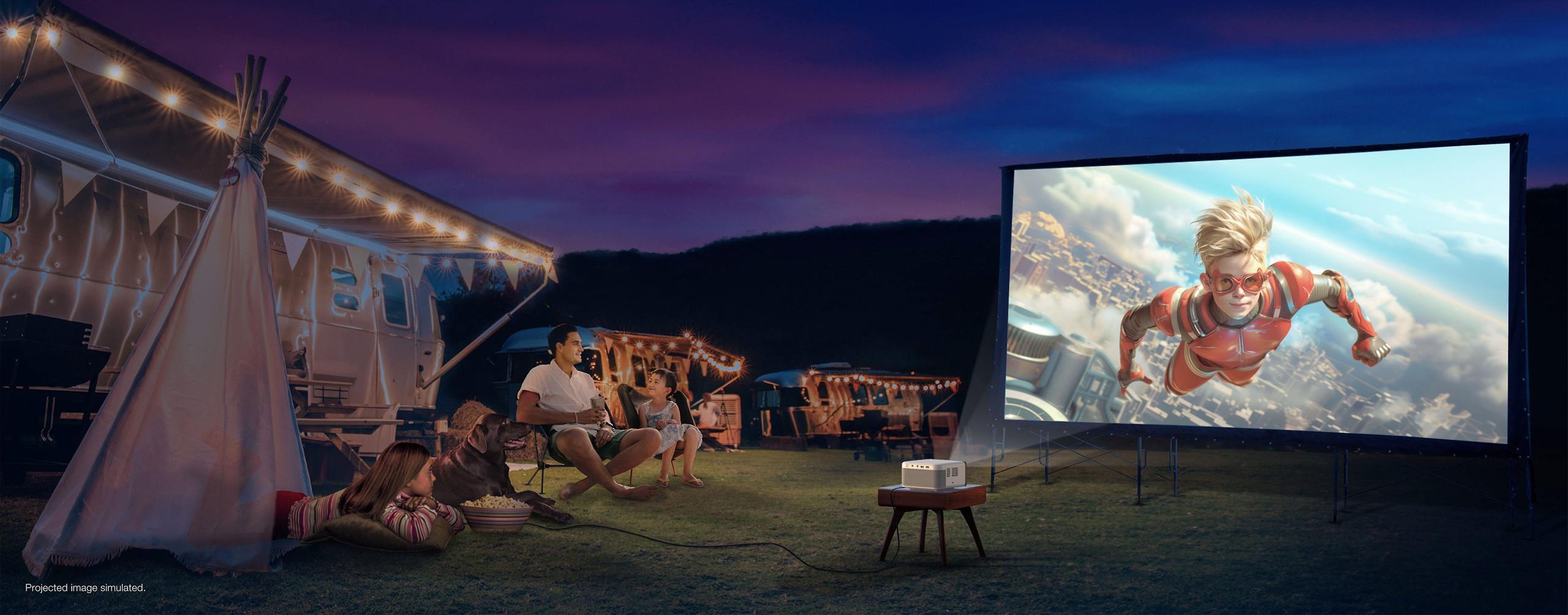
In controlled testing, the brightness difference is immediately apparent. The Epson can maintain a vibrant, watchable image in a room with moderate ambient light on a 100-inch screen. The BenQ, despite being advertised for outdoor use, actually performs best in more controlled lighting conditions—ideally at dusk or in shaded outdoor areas rather than full daylight.
It's worth noting that Epson's brightness measurement (1,000 lumens) refers to both color and white brightness equally—a benefit of 3LCD technology. Some projector manufacturers only report white brightness, which can be misleading since color brightness is often lower. The BenQ's 500 ANSI lumens measurement is generally considered more standardized, but in practical use, the Epson still offers approximately twice the perceived brightness.
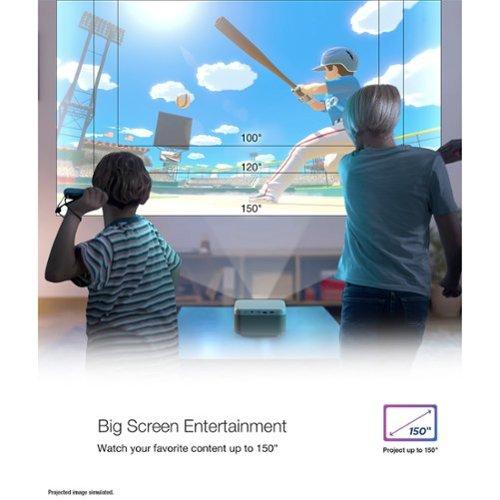
For a home theater setting, the Epson's superior brightness provides more flexibility. You can project larger images (up to 150 inches versus BenQ's 100-inch maximum) while maintaining good brightness, or use the projector in rooms where complete darkness isn't practical.
Both projectors offer native 1080p Full HD resolution, which remains the sweet spot for portable projectors. At typical viewing distances on screens under 120 inches, 1080p provides a sharp, detailed image without requiring the processing power and cost associated with 4K projection.
Both devices also support HDR10 content (High Dynamic Range), which expands the range of brightness and colors visible in compatible content. The Epson additionally supports HLG (Hybrid Log-Gamma), a broadcast-oriented HDR standard gaining popularity for streaming content.
In practice, the Epson EF21's higher brightness and contrast ratio allow it to make better use of HDR content. The projector can display more of the intended dynamic range, making highlights pop while maintaining detail in shadows. The BenQ GS50 handles HDR adequately but can't reach the same peak brightness levels that make HDR content truly impressive.
Audio quality often remains an afterthought in projector design, but both manufacturers have given it serious attention—with notably different approaches.
The Epson features a pair of 5W stereo speakers with Dolby Audio support. These produce clear dialogue and reasonable sound for casual viewing in smaller rooms. However, for a truly immersive experience, you'll likely want to connect external speakers or a sound bar.
The BenQ takes audio performance to another level with its 2.1 channel system. This includes two 5W tweeters for mids and highs plus a dedicated 10W woofer for bass—a configuration rarely seen in portable projectors. The result is surprisingly full-bodied sound that can fill a backyard or living room adequately without external speakers. The 270-degree sound dispersion helps create a wider soundstage than you'd expect from such a compact device.
Moreover, the BenQ can function as a standalone Bluetooth speaker when you're not using the projector function—a thoughtful feature for outdoor gatherings. This audio advantage partially offsets the BenQ's brightness limitations for outdoor use; while you might struggle to see the picture in bright conditions, you'll always be able to hear the sound clearly.
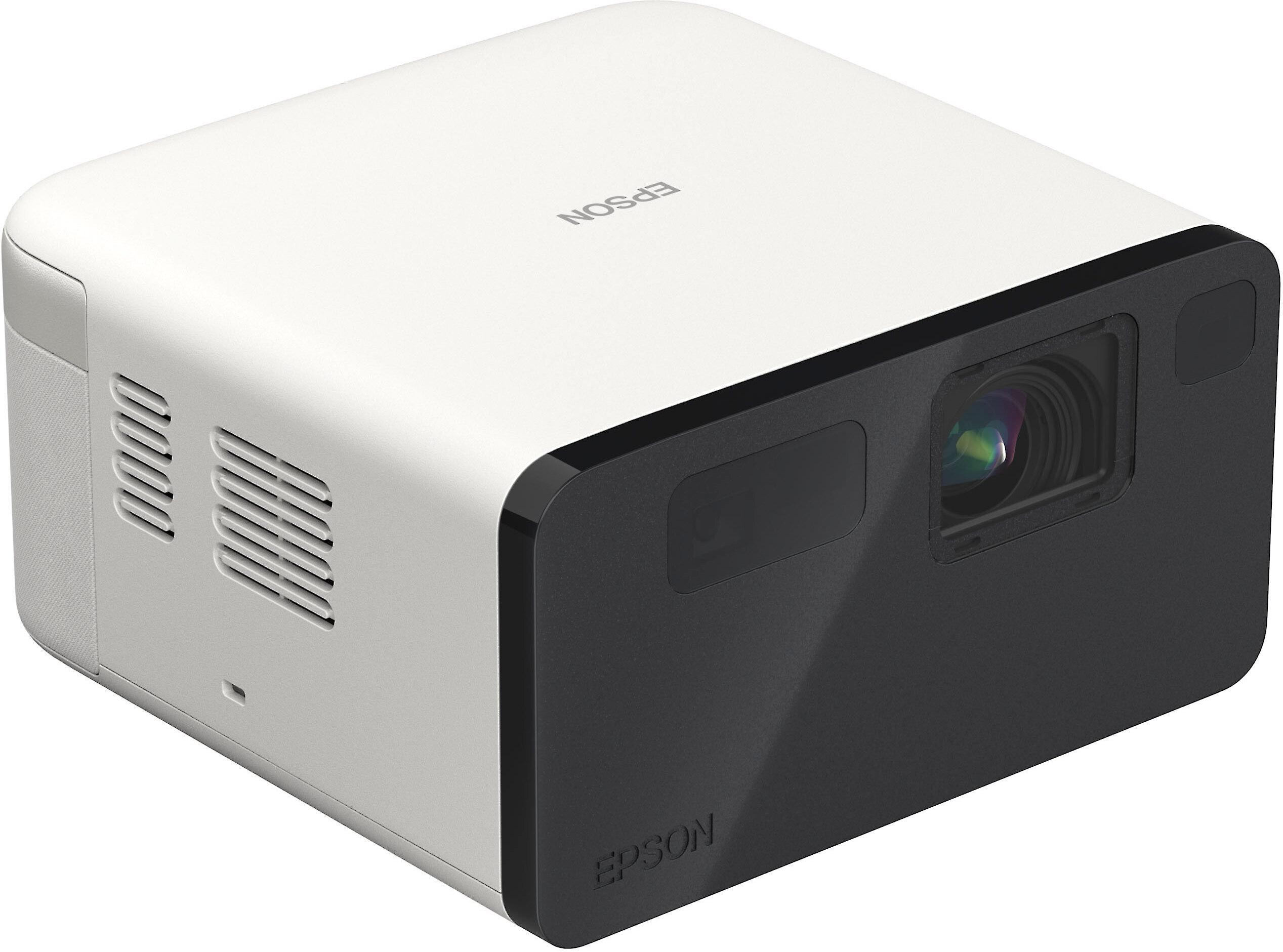
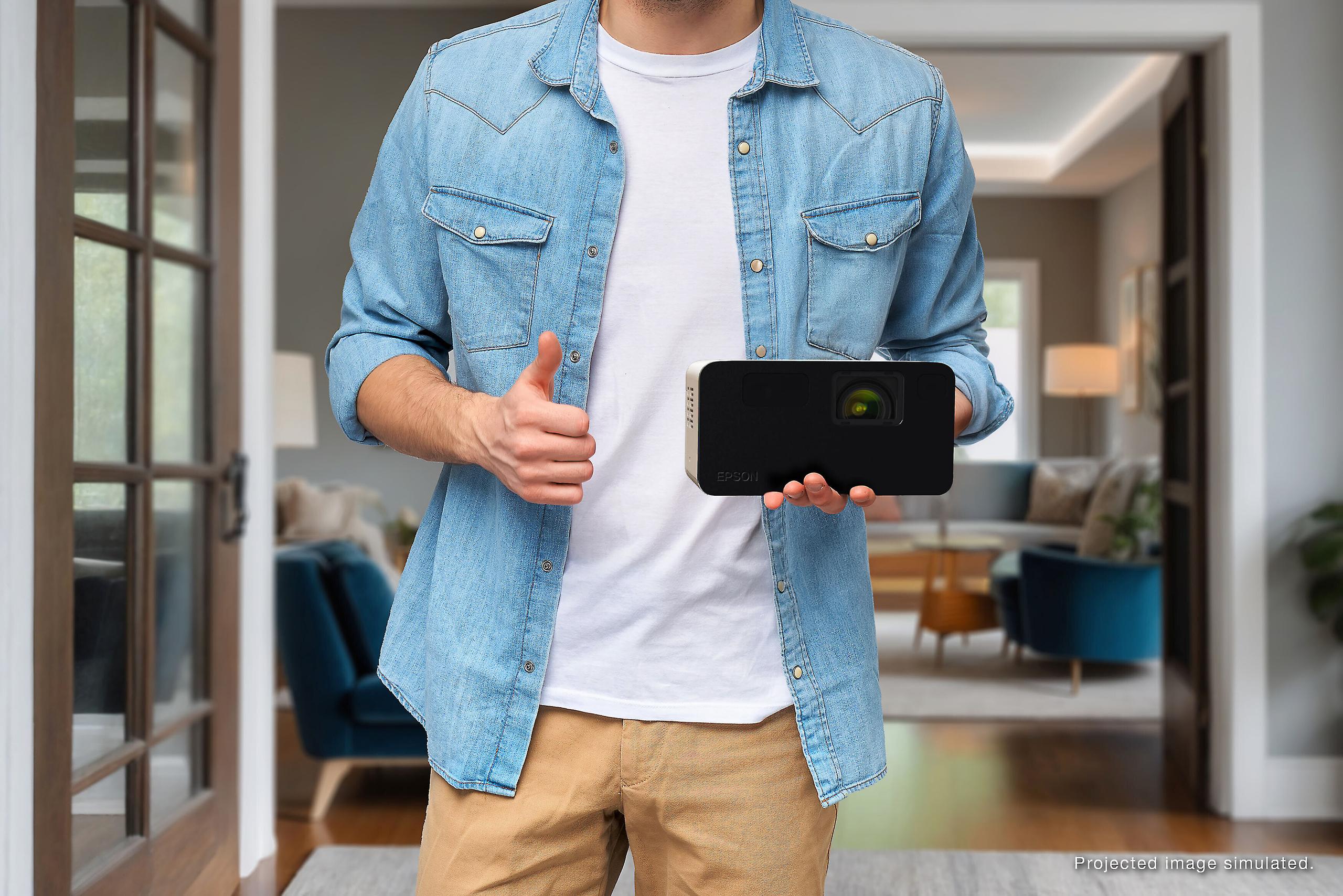
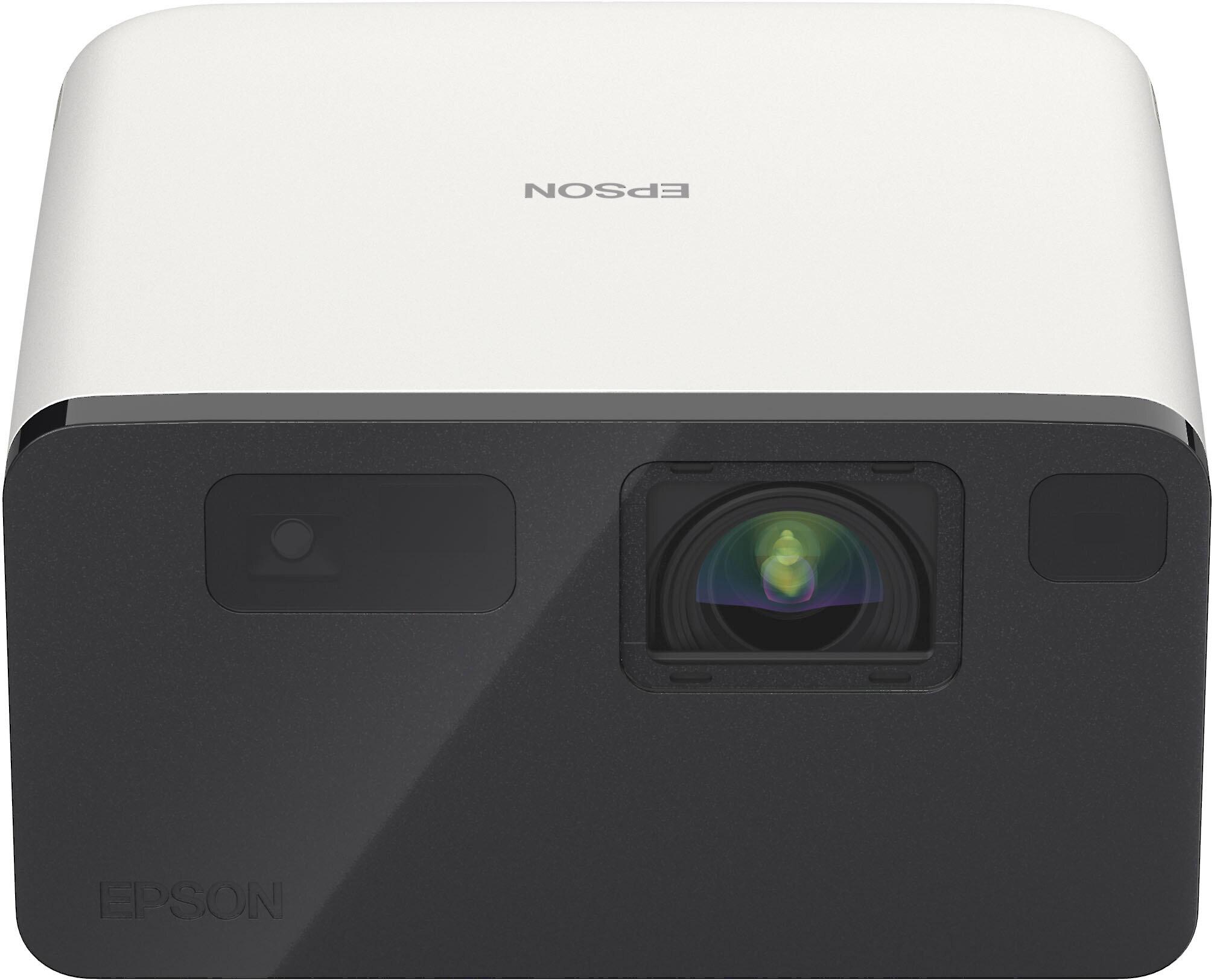
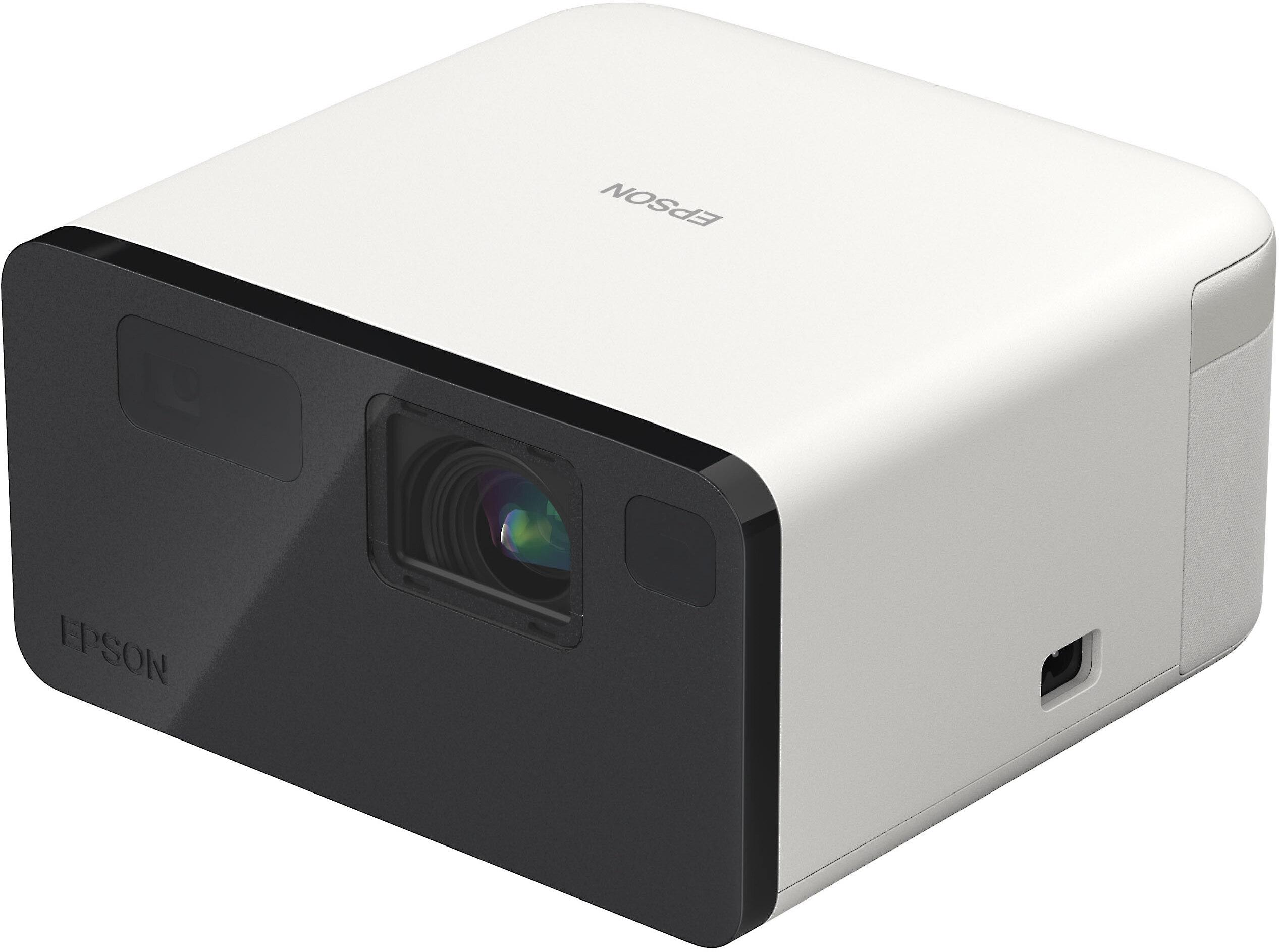
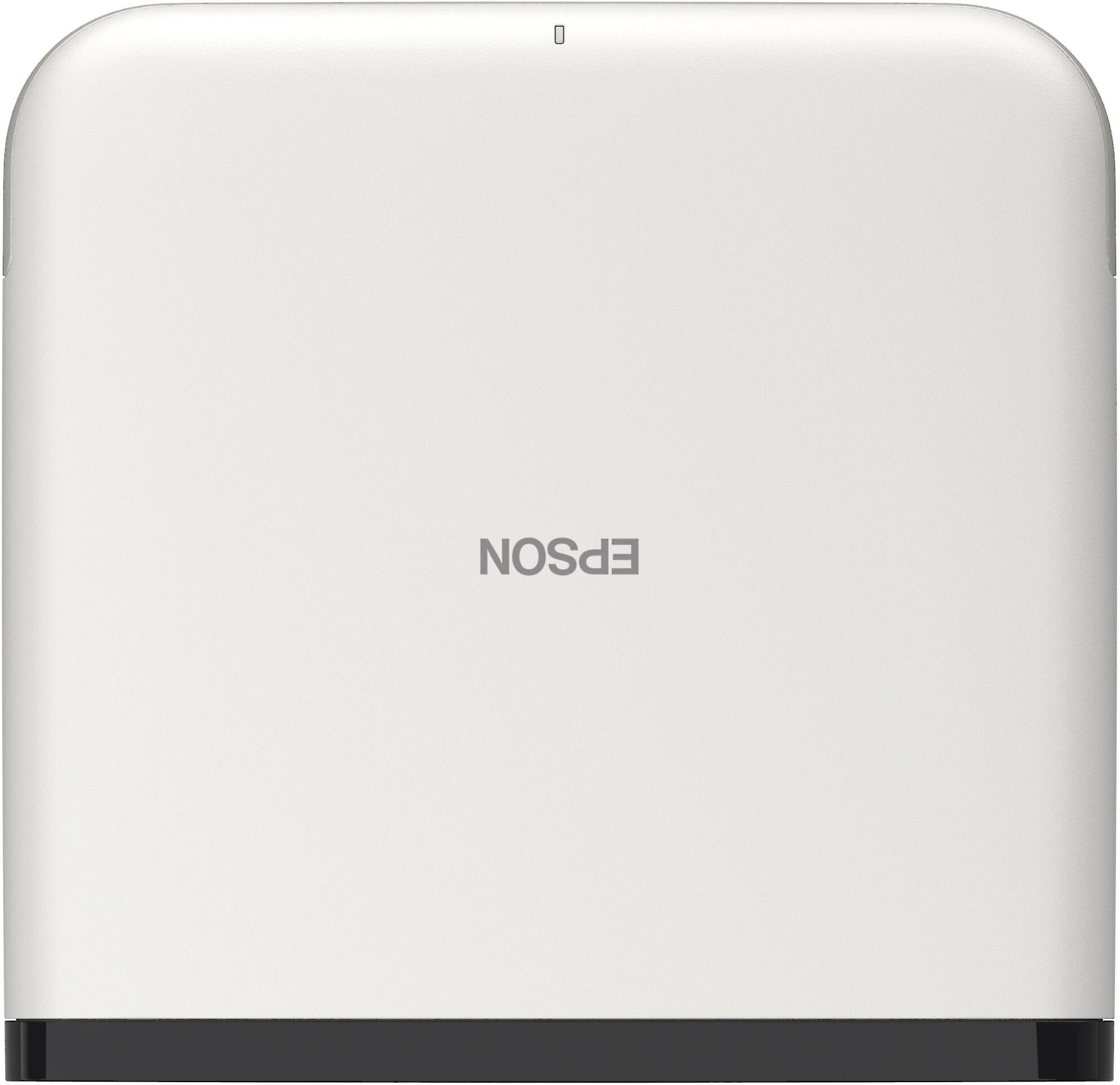
Perhaps the most fundamental difference between these projectors is their approach to portability. The Epson EF21 might be better described as "movable" rather than truly portable. At 5.1 pounds with dimensions of 7.75" × 7.5" × 4.4", it's compact enough to relocate between rooms or bring to a friend's house, but it requires constant AC power. Its sleek, minimalist design (available in Diamond White, Opal Green, or Quartz Rose) is meant to blend into modern home décor.
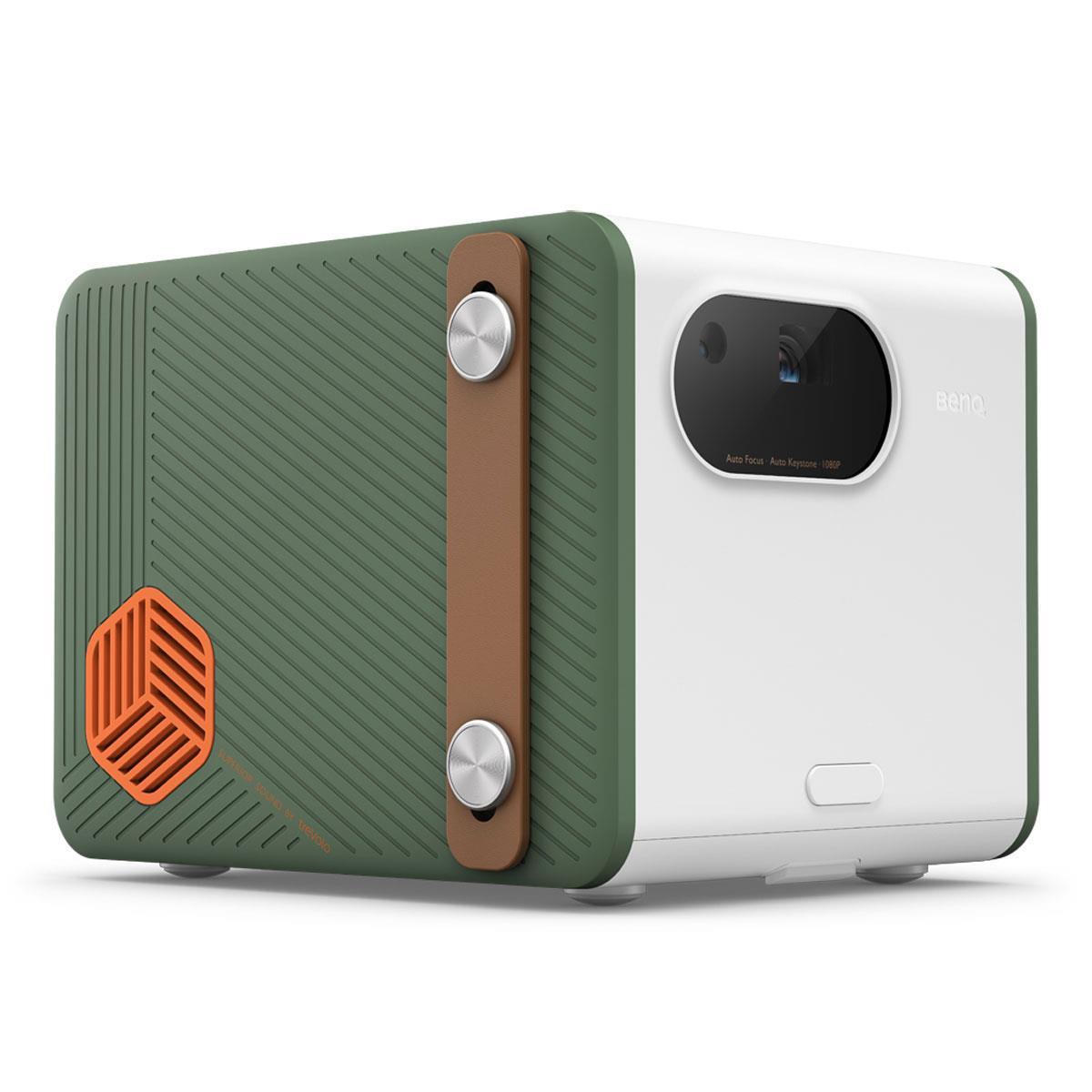
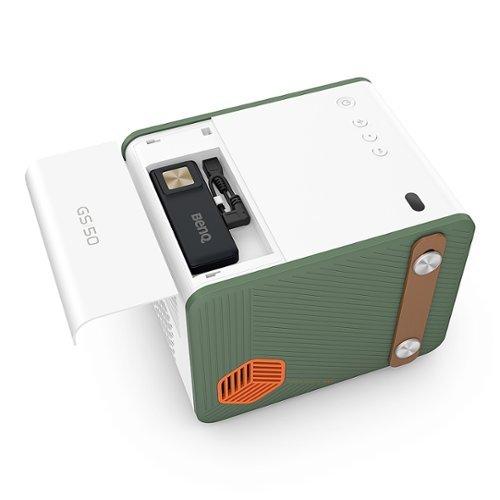
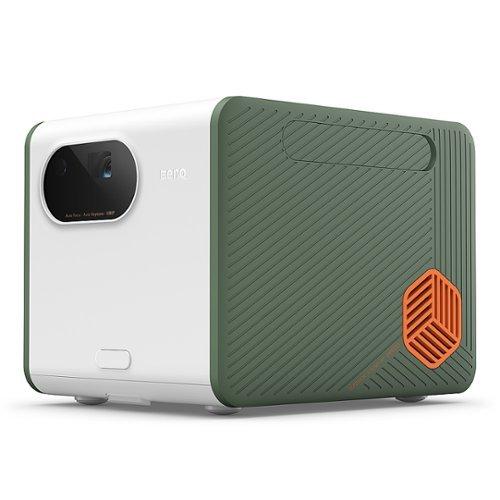
The BenQ GS50, meanwhile, embodies true portability. Despite being slightly heavier at 8.6 pounds, it includes a built-in battery providing up to 2.5 hours of playback—enough for most movies. Its design includes a leather carrying handle and durable exterior built to IPX2 standards (meaning it can withstand light water splashes) and can survive drops up to 70cm. These rugged features make it genuinely suitable for outdoor adventures, camping trips, or backyard movie nights.
Both projectors offer impressive auto-setup features that simplify what was once a tedious process.
The Epson's EpiqSense technology automatically handles focus, keystone correction, and even obstacle avoidance. When you power it on, it scans the projection surface and adjusts accordingly—even detecting if you're projecting onto a wall with a light switch or picture frame and reshaping the image to avoid these obstacles. In testing, this system works remarkably well, reducing setup time to mere seconds in most environments.
The BenQ offers auto focus and keystone correction as well, though without the obstacle avoidance capabilities. Its 1.21:1 throw ratio (versus Epson's longer throw) means you can place it closer to your projection surface—a practical advantage in smaller spaces.
Modern portable projectors have essentially become streaming devices with built-in projection capabilities, and both of these units embrace this approach.
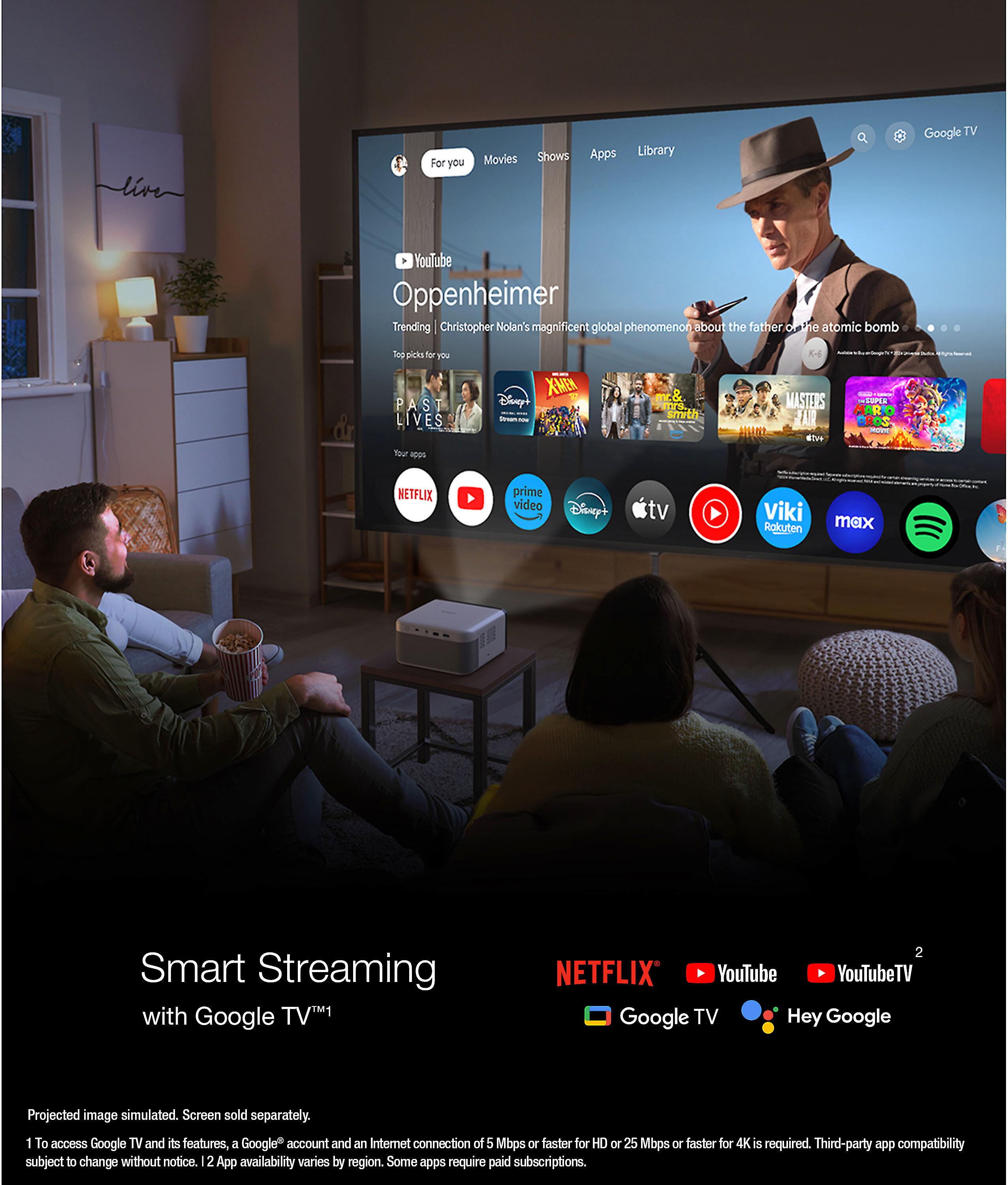
The Epson EF21 features Google TV, the successor to Android TV with a more refined interface focused on content discovery. This provides access to over 10,000 apps including Netflix, Disney+, HBO Max, and other major streaming services. The built-in Google Assistant responds to voice commands for searching content, controlling playback, or even controlling compatible smart home devices.
The BenQ GS50 runs on Android TV 9.0, which offers a similar but slightly older ecosystem. While functionally similar with access to most major streaming platforms, Google TV generally receives priority for updates and new features. Both platforms perform well, though I've noticed the Epson's interface feels slightly more responsive during navigation.
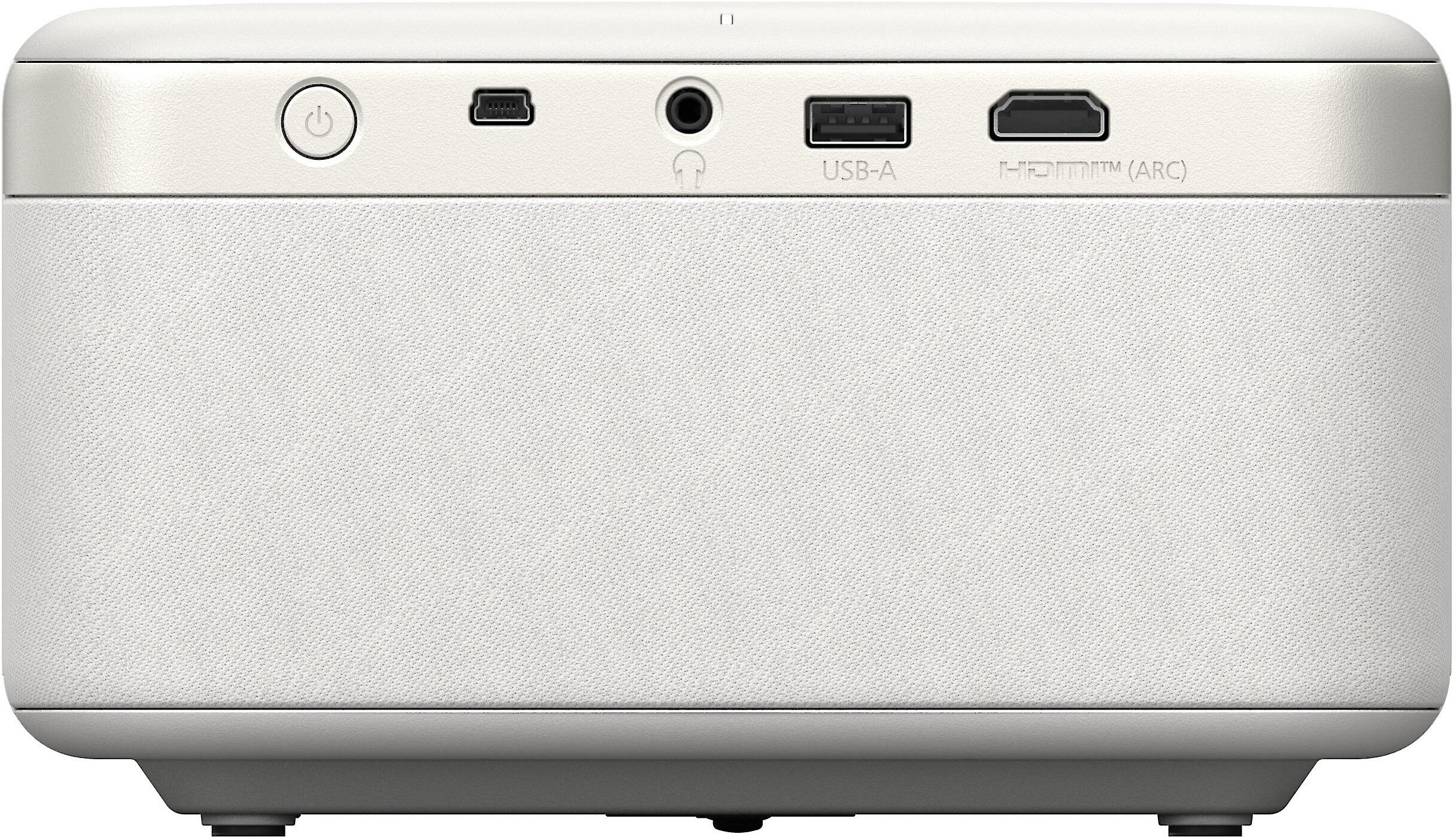
For connecting external devices, both projectors offer good options, though with different emphases:
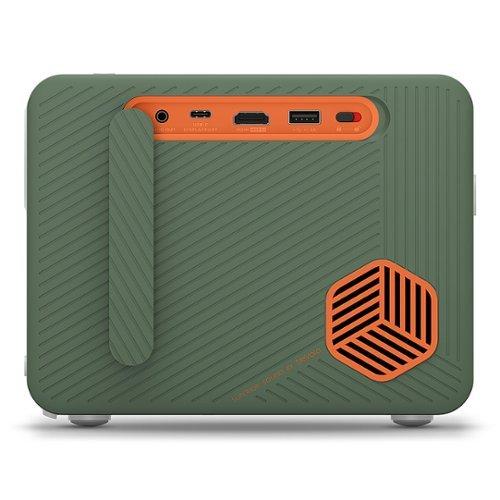
The BenQ's USB-C port and audio output jack provide slightly more versatility, especially for connecting to modern laptops without requiring adapters. Both projectors support screen mirroring from mobile devices, with the BenQ additionally supporting AirPlay for easier connection to Apple devices.
For those considering these projectors as part of a home theater setup, several factors beyond raw specifications become important.
Projector fans can be distracting, especially during quiet scenes. The Epson excels here with a remarkably quiet 19-23 dB operation—quieter than a whisper in a library. The BenQ is also reasonably quiet but more noticeable at around 30 dB.
Neither projector would be considered a gaming powerhouse, but both can handle casual gaming. The BenQ has a measured input lag of 62ms at 60Hz, which is adequate for turn-based or adventure games but may feel sluggish for competitive first-person shooters or fighting games. The Epson hasn't been officially measured but appears to perform similarly in testing.
In a dedicated home theater, the Epson's superior brightness and contrast make it the better choice, especially if you plan to keep it in one location most of the time. Its higher-end image processing also handles streaming compression artifacts better, resulting in cleaner images with less visible banding in dark scenes.
However, if your "home theater" doubles as a living room or frequently changes location, the BenQ's easier placement (due to its shorter throw ratio) and superior built-in audio might be preferable.
At $899.99, the Epson EF21 demands a $100 premium over the $799 BenQ GS50. Is the difference justified?
The answer depends entirely on your usage scenario. If you prioritize image quality and will use the projector primarily indoors with access to power outlets, the Epson's superior brightness, contrast, and 3LCD technology easily justify the extra cost. The picture quality difference is noticeable enough that serious movie enthusiasts will find it worth the premium.
However, if your primary use involves outdoor viewing, camping trips, or situations where power outlets aren't available, the BenQ's battery operation and weather resistance provide capabilities the Epson simply can't match. Its superior audio system also saves you the cost of external speakers, potentially making it the better overall value for outdoor enthusiasts.
After extensive testing of both projectors, I've developed a simple framework to help determine which model better suits different users:
The Epson EpiqVision Mini EF21 and BenQ GS50 both excel in their respective design philosophies. Rather than one being clearly "better" than the other, they represent different approaches to portable projection that prioritize different user needs.
The Epson delivers superior image quality and brightness in a package designed for easy movement between indoor spaces, making it ideal for apartment dwellers, those with smaller homes, or anyone wanting quality projection without dedicating permanent space to a home theater.
The BenQ sacrifices some image performance for true go-anywhere flexibility, ruggedized design, and impressive built-in audio. It's perfect for outdoor enthusiasts, families who enjoy backyard movie nights, or those who need projection capabilities in locations without reliable power access.
Both projectors demonstrate how far portable projection technology has advanced and offer compelling alternatives to traditional large-screen TVs. Whether you choose the brightness and image quality of the Epson EF21 or the true portability and versatility of the BenQ GS50, you'll be getting a capable modern projector that breaks free from the limitations of fixed screens—bringing big-screen entertainment wherever you want it.
| Epson EpiqVision Mini EF21 Projector | BenQ GS50 Portable Outdoor Projector |
|---|---|
| Price & Positioning - The starting point for your decision | |
| $899.99 - Premium indoor portable with emphasis on image quality | $799 - Rugged outdoor portable with true battery-powered operation |
| Display Technology - Affects color accuracy, brightness, and potential rainbow effects | |
| 3LCD technology (no rainbow effect, equal color/white brightness) | Single-chip DLP (may produce rainbow effect for sensitive viewers) |
| Light Source - Determines maintenance needs and brightness consistency over time | |
| Laser with 20,000 hour lifespan (maintains brightness better over time) | LED with 20,000-30,000 hour lifespan (gradually dims more over time) |
| Brightness - Critical for ambient light performance and maximum screen size | |
| 1,000 lumens (color and white) - Suitable for moderate ambient light | 500 ANSI lumens - Best in controlled lighting or dusk conditions |
| Contrast Ratio - Affects image depth and black levels | |
| 200,000:1 - Deeper blacks and more dynamic image | 100,000:1 - Good but not as impressive as the Epson |
| Resolution & HDR - Determines image detail and color range | |
| 1080p Full HD with HDR10 and HLG support | 1080p Full HD with HDR10 support (no HLG) |
| Maximum Screen Size - How big you can go while maintaining good brightness | |
| 30" to 150" (larger maximum size due to higher brightness) | 30" to 100" (more limited due to lower brightness) |
| Audio System - Determines if you'll need external speakers | |
| 5W x 2 stereo speakers with Dolby Audio (adequate but not exceptional) | 2.1 channel system (2x 5W tweeters + 10W woofer) with 270° sound (surprisingly powerful) |
| Portability - Whether you can truly use it anywhere | |
| 5.1 pounds, requires AC power (movable between rooms but not truly portable) | 8.6 pounds with built-in battery (2.5 hours runtime), true go-anywhere design |
| Ruggedness - Suitability for outdoor and varied environments | |
| Standard indoor design (no weather resistance) | IPX2 splash-proof rating, drop-resistant to 70cm (designed for outdoor use) |
| Smart Platform - Provides streaming without additional devices | |
| Google TV with 10,000+ apps (newer platform with better updates) | Android TV 9.0 with 5,000+ apps (slightly older but still capable) |
| Connectivity - Flexibility for connecting external devices | |
| HDMI 2.3, USB-A, USB-B mini, Bluetooth 5.1, Wi-Fi | HDMI 2.0, USB-A, USB-C (DisplayPort), 3.5mm audio out, Bluetooth 4.2, Wi-Fi |
| Setup Features - How easily the projector adapts to different spaces | |
| EpiqSense auto setup with obstacle avoidance (exceptional ease of use) | Auto focus and keystone correction (good but less advanced than Epson) |
| Best Use Case - The ideal scenario for each projector | |
| Indoor environments with some ambient light where image quality is priority | Outdoor and varied locations where power may not be available and durability matters |
The Epson EpiqVision Mini EF21 Projector is significantly brighter with 1,000 lumens compared to the BenQ GS50 Portable Outdoor Projector's 500 ANSI lumens. This makes the Epson EF21 better for rooms with ambient light or larger screen sizes. If you plan to use your projector in rooms that aren't completely dark, the Epson EF21 will provide a more visible image than the BenQ GS50.
The BenQ GS50 Portable Outdoor Projector is specifically designed for outdoor use with its IPX2 splash-proof rating, drop resistance up to 70cm, and built-in battery that lasts up to 2.5 hours. The Epson EpiqVision Mini EF21 Projector lacks weather resistance and requires AC power, making it unsuitable for true outdoor use. For backyard movie nights or camping, the BenQ GS50 is the better choice.
The Epson EpiqVision Mini EF21 Projector offers better overall image quality with its 3LCD technology, higher 1,000 lumen brightness, and superior 200,000:1 contrast ratio. The BenQ GS50 produces good images with its 1080p resolution and 100,000:1 contrast ratio, but can't match the color accuracy and brightness of the Epson. For home theater enthusiasts prioritizing image quality, the Epson EF21 is the superior choice.
Yes, both projectors feature built-in streaming capabilities. The Epson EpiqVision Mini EF21 Projector uses Google TV with access to over 10,000 apps including Netflix, Disney+, and HBO Max. The BenQ GS50 Portable Outdoor Projector runs on Android TV 9.0 with access to 5,000+ apps. The Epson's Google TV platform is newer and generally receives updates sooner than the BenQ's Android TV 9.0.
The BenQ GS50 Portable Outdoor Projector is truly portable with its built-in battery that provides up to 2.5 hours of playback time, a carrying handle, and ruggedized design. While the Epson EpiqVision Mini EF21 Projector is compact at 5.1 pounds (lighter than the 8.6-pound BenQ), it requires constant AC power, making it "movable" between rooms rather than truly portable like the BenQ GS50.
The BenQ GS50 Portable Outdoor Projector features superior audio with its 2.1 channel sound system (two 5W tweeters and one 10W woofer) providing 270-degree sound dispersion. The Epson EpiqVision Mini EF21 Projector has adequate 5W stereo speakers with Dolby Audio support, but they can't match the power and bass response of the BenQ's system. If you don't want to connect external speakers, the BenQ GS50 offers much better built-in audio.
The Epson EpiqVision Mini EF21 Projector costs $899.99, while the BenQ GS50 Portable Outdoor Projector is priced at $799, making it $100 less expensive. The price difference reflects the Epson's superior brightness and image quality versus the BenQ's battery operation and outdoor capabilities. Your specific usage needs will determine whether the Epson EF21's higher price is justified for your situation.
For a dedicated home theater setup, the Epson EpiqVision Mini EF21 Projector is the better choice with its superior brightness (1,000 lumens), higher contrast ratio (200,000:1), and 3LCD technology that produces more accurate colors and deeper blacks. The BenQ GS50 is designed primarily for portable outdoor use rather than optimized home theater performance. In dark, controlled environments, the Epson EF21 will deliver a more cinema-like experience.
Neither projector has native 4K resolution, but both can accept 4K input signals. The Epson EpiqVision Mini EF21 Projector and BenQ GS50 Portable Outdoor Projector will downscale 4K content to their native 1080p Full HD resolution. Both projectors support HDR10 content for enhanced color and contrast, with the Epson additionally supporting the HLG HDR format used in some broadcast content.
The Epson EpiqVision Mini EF21 Projector offers more advanced auto-setup features with its EpiqSense technology that automatically handles focus, keystone correction, and obstacle avoidance in seconds. The BenQ GS50 Portable Outdoor Projector provides auto focus and keystone correction but lacks obstacle detection. For quick, hassle-free setup in various environments, the Epson EF21 has the edge in automated convenience.
The Epson EpiqVision Mini EF21 Projector uses a laser light source rated for 20,000 hours of use, while the BenQ GS50 Portable Outdoor Projector features an LED light source rated for 20,000-30,000 hours. In practical terms, both will provide approximately 10+ years of normal use without needing replacement lamps. The Epson's laser technology maintains brightness better over its lifespan compared to the BenQ's LED light source.
Yes, both projectors support external devices through various connections. The Epson EpiqVision Mini EF21 Projector features HDMI 2.3 input for game consoles and laptops, plus USB ports for media playback. The BenQ GS50 Portable Outdoor Projector offers HDMI 2.0 and USB-C with DisplayPort, allowing direct connection from compatible laptops without adapters. Both projectors work well with gaming consoles, though neither is optimized for competitive gaming due to input lag around 60ms.
We've done our best to create useful and informative comparisons to help you decide what product to buy. Our research uses advanced automated methods to create this comparison and perfection is not possible - please contact us for corrections or questions. These are the sites we've researched in the creation of this article: bestbuy.com - bestbuy.com - cnet.com - youtube.com - projectorreviews.com - epson.com - projectorreviews.com - epson.com - rtings.com - epson.com - youtube.com - projectorcentral.com - bestbuy.com - projectorcentral.com - nfm.com - crutchfield.com - latin.epson.com - mediaserver.goepson.com - planettv.com - bhphotovideo.com - cnet.com - epson.com - cnet.com - hometheaterhifi.com - youtube.com - youtube.com - whathifi.com - youtube.com - bgeek.eu - youtube.com - youtube.com - projectorreviews.com - youtube.com - youtube.com - projectorcentral.com - projectorreviews.com - bestbuy.com - touchboards.com - projectorcentral.com - adorama.com - projectorreviews.com - insight.com - cnet.com

Privacy Policy
Terms and Conditions - Affiliate Policy
Home Security
© Copyright 2008-2026.
11816 Inwood Rd #1211, Dallas, TX 75244