


Portable projectors have absolutely exploded in popularity over the past few years, and for good reason. Who wouldn't want to transform any wall into a massive screen for movie nights, gaming sessions, or backyard gatherings? But here's the thing – not all portable projectors are created equal, and the differences between them can make or break your viewing experience.
Today, we're diving deep into two very different approaches to portable projection: the XGIMI MoGo 3 Pro and the Epson EpiqVision Mini EF21. Both arrived on the scene in 2024, but they represent fundamentally different philosophies about what makes a great portable projector. One prioritizes ultra-portability and smart features, while the other focuses on raw brightness and professional-grade technology.
Before we jump into the specifics, let's talk about what really matters in portable projectors. Unlike the massive home theater projectors that require ceiling mounts and dedicated dark rooms, portable projectors need to balance several competing demands: they must be light enough to carry around, bright enough to actually see in various lighting conditions, and smart enough to work without a bunch of extra devices.
The most critical factor – and I cannot stress this enough – is brightness. This is measured in lumens, which basically tells you how much light the projector can pump out. More lumens mean you can use the projector in brighter rooms, but there's always a trade-off with size, weight, and battery life.
Then there's the light source technology. Traditional projectors use bulbs that burn out and need replacing. Modern portable projectors typically use either LED (Light Emitting Diode) or laser technology. LEDs are compact and efficient but generally less bright. Laser technology can achieve much higher brightness levels and offers better color accuracy, but it's more expensive and takes up more space.
Smart features have become increasingly important too. Nobody wants to carry around a separate streaming stick when traveling. The best portable projectors now include built-in Android TV or Google TV platforms that let you stream Netflix, Disney+, and other services directly without any additional hardware.
When the XGIMI MoGo 3 Pro launched in 2024, it represented a significant evolution from earlier portable projectors. XGIMI, a Chinese company that's been making waves in the projector space, designed this model to be absurdly portable while packing in premium features typically found in much larger devices.
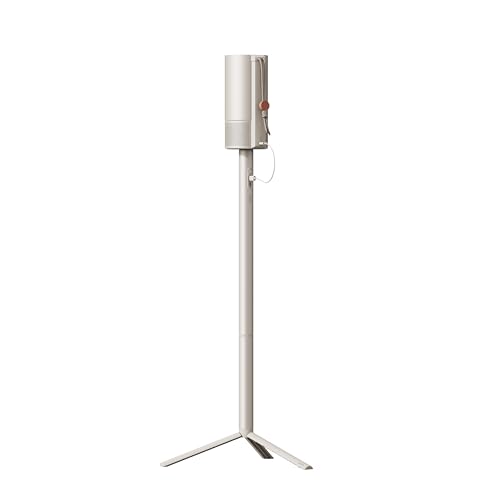
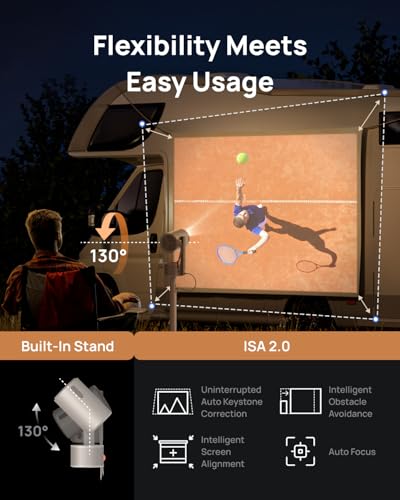
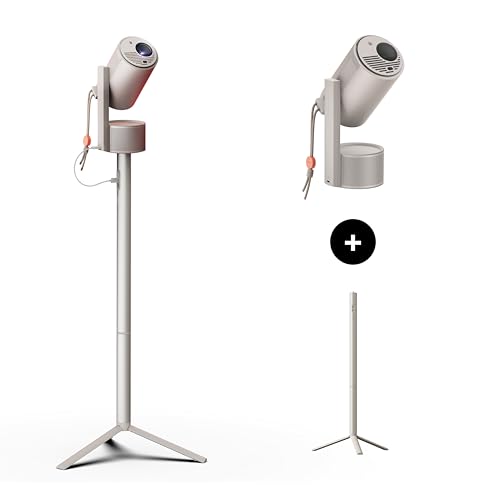
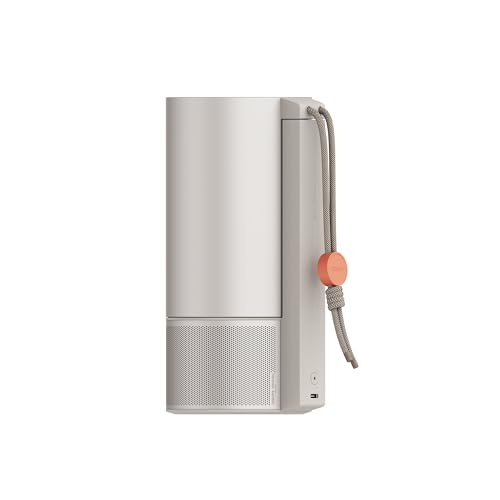
At just 2.4 pounds and roughly the size of a large coffee cup, the MoGo 3 Pro is genuinely pocket-sized for a projector. But what makes it special isn't just the compact design – it's the 130-degree adjustable stand built right into the unit. This means you can angle the projector almost anywhere without needing a separate tripod or stack of books. I've found this incredibly useful for ceiling projection when lying in bed or for unusual projection angles during outdoor movie nights.
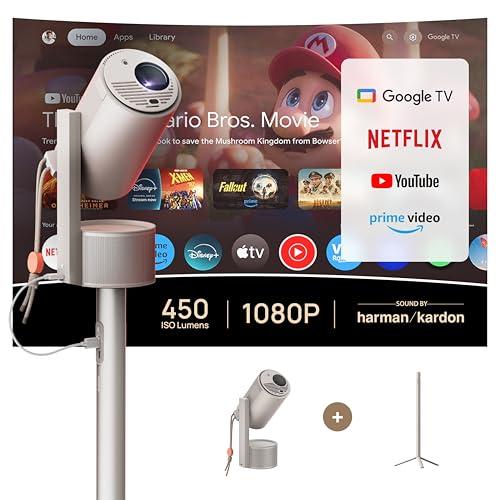
The MoGo 3 Pro uses DLP (Digital Light Processing) technology with an LED light source that produces 450 ISO lumens. Now, "ISO lumens" is a standardized measurement that's more reliable than the inflated numbers some manufacturers throw around. In real-world testing, this translates to about 394 ANSI lumens – still respectable for such a tiny device, but definitely requiring dark or dim environments for optimal viewing.
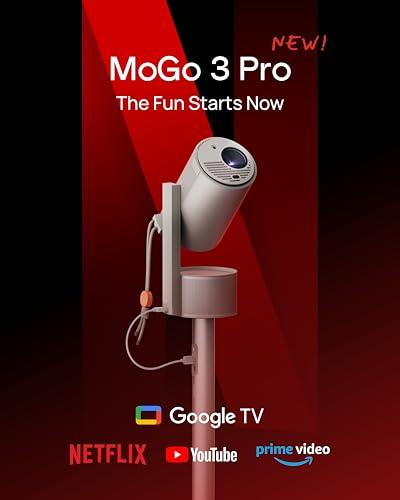
Where the XGIMI MoGo 3 Pro really shines is its smart features. This was one of the first portable projectors to get official Netflix certification, which might sound trivial but is actually a big deal. Many projectors require you to sideload Netflix or use workarounds that often break with software updates. Having native Netflix, along with full Google TV integration, makes this feel like a complete entertainment system rather than just a projector that happens to have some apps.
The ISA 2.0 (Intelligent Screen Adaptation) system deserves special mention. This technology automatically focuses the image, corrects keystone distortion (when your image looks like a trapezoid instead of a rectangle), and even works around obstacles like light switches or picture frames on your wall. It literally reshapes the projected image to avoid these obstructions, which sounds like science fiction but works surprisingly well in practice.
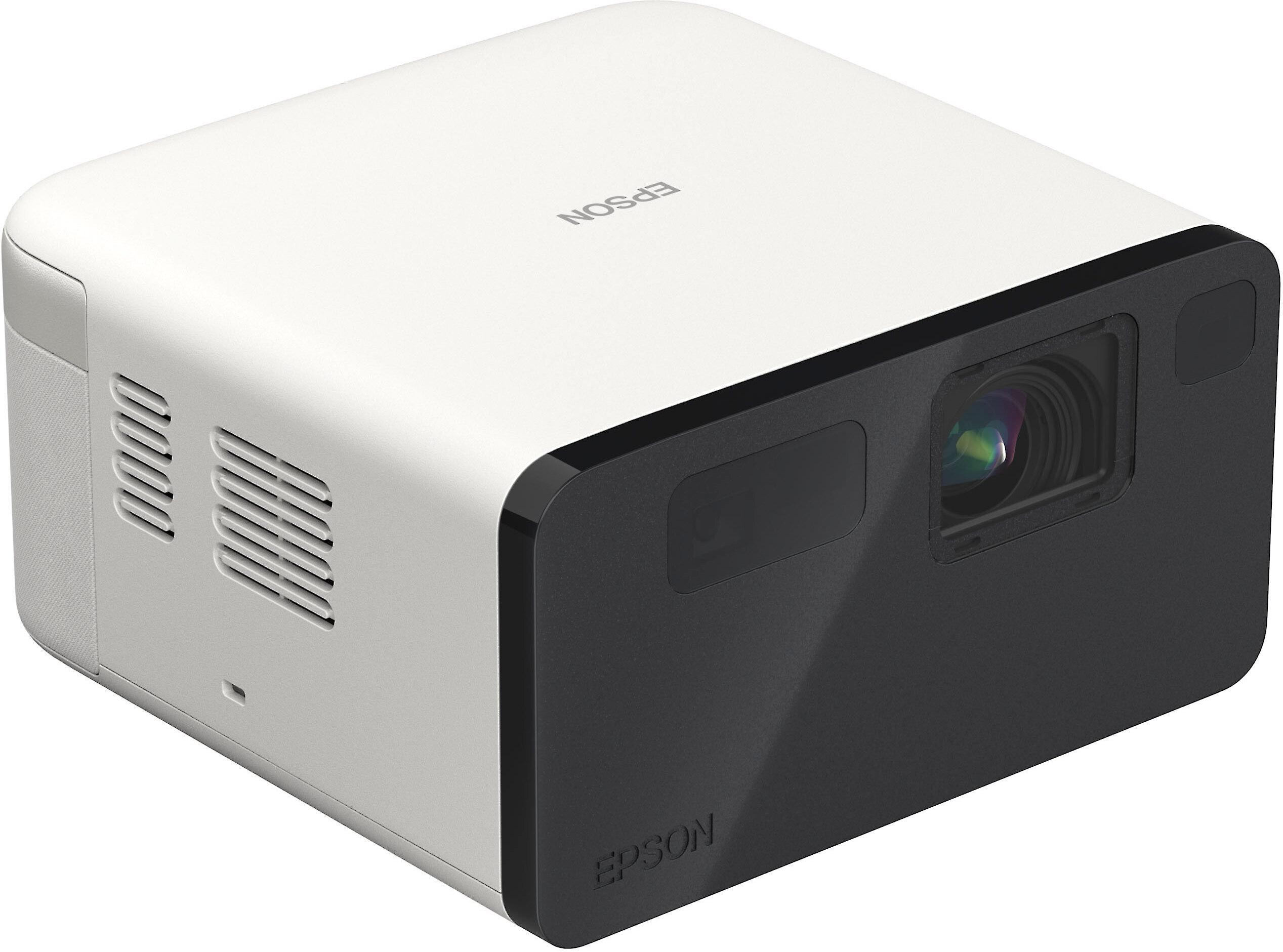
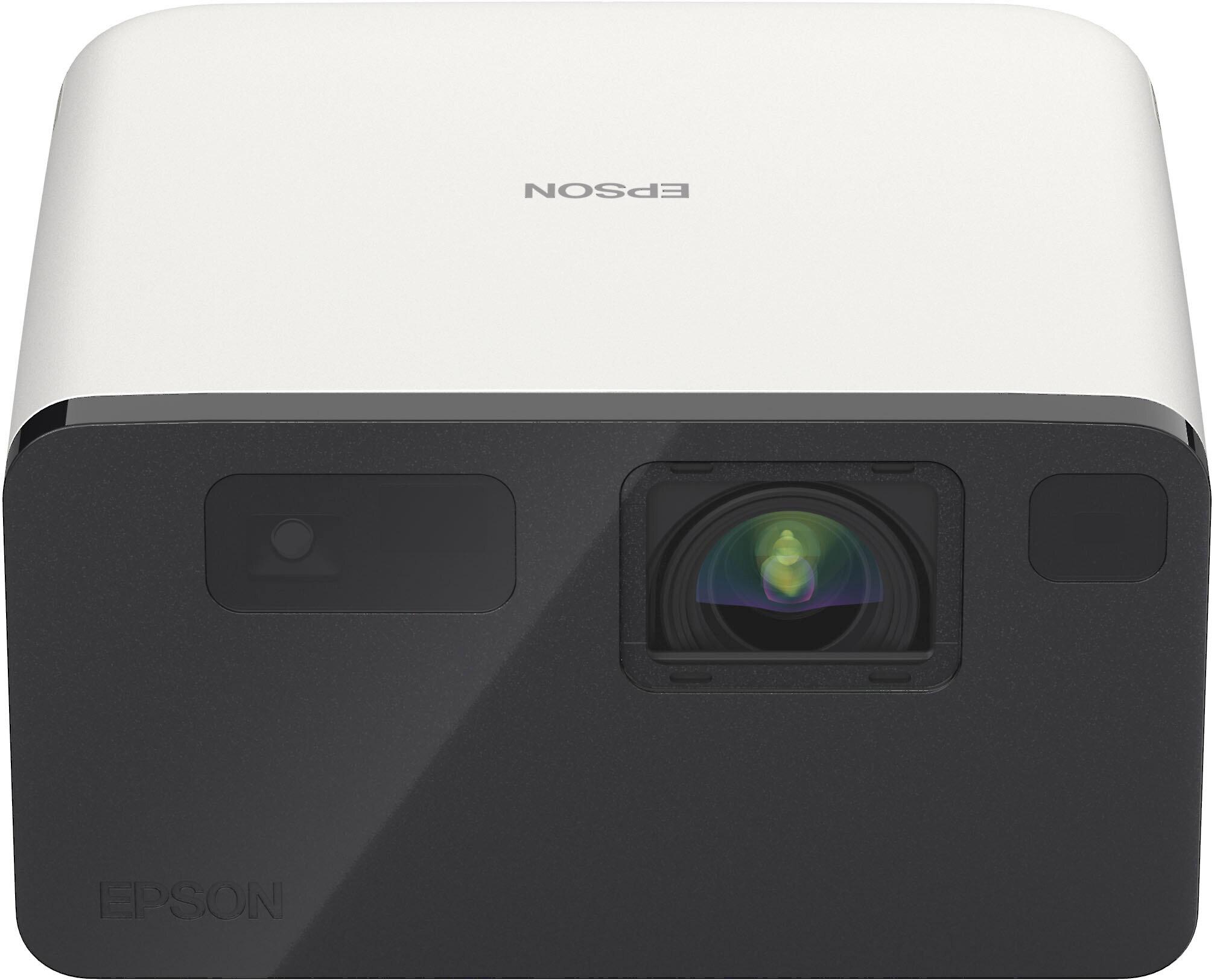
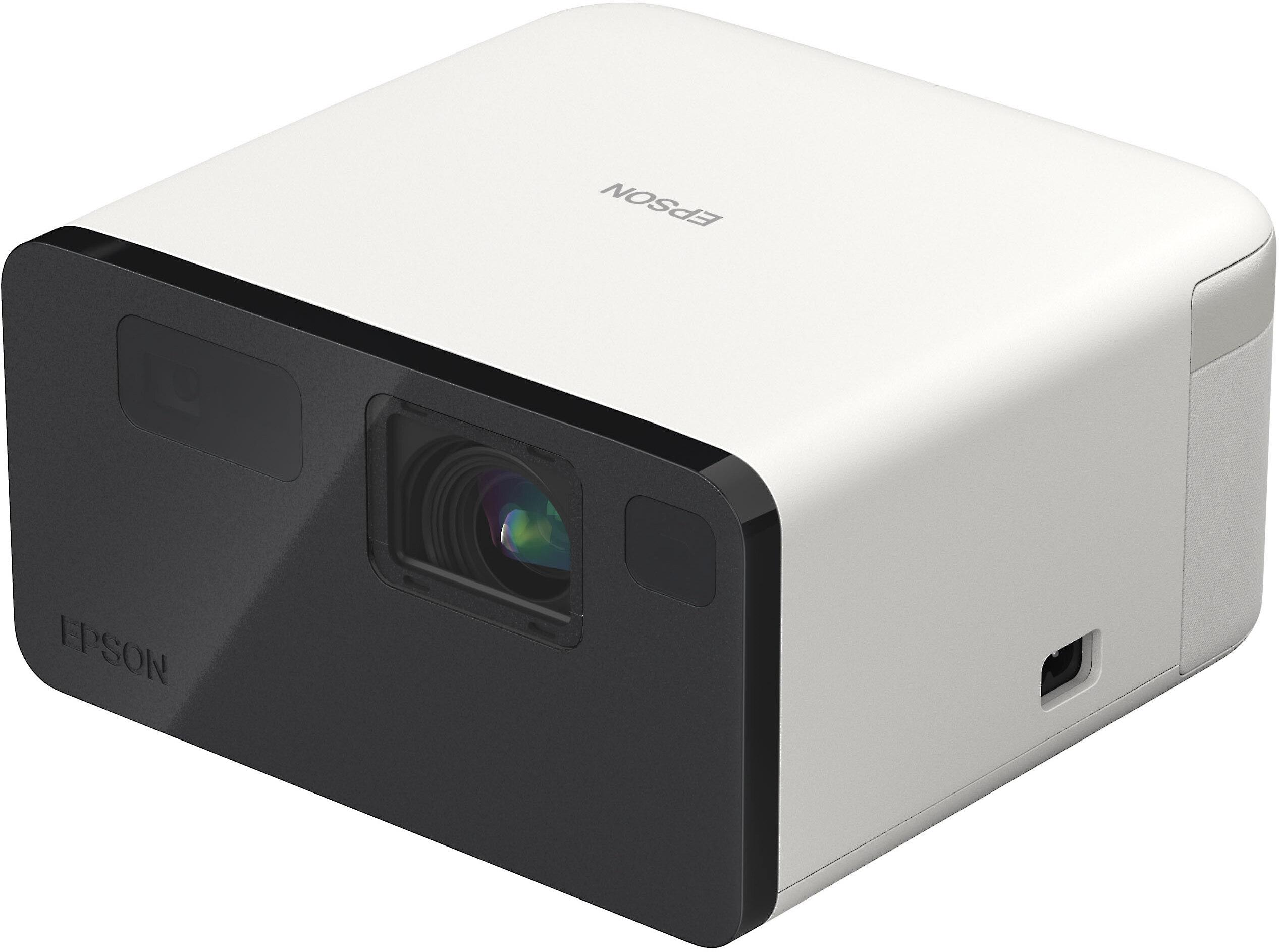
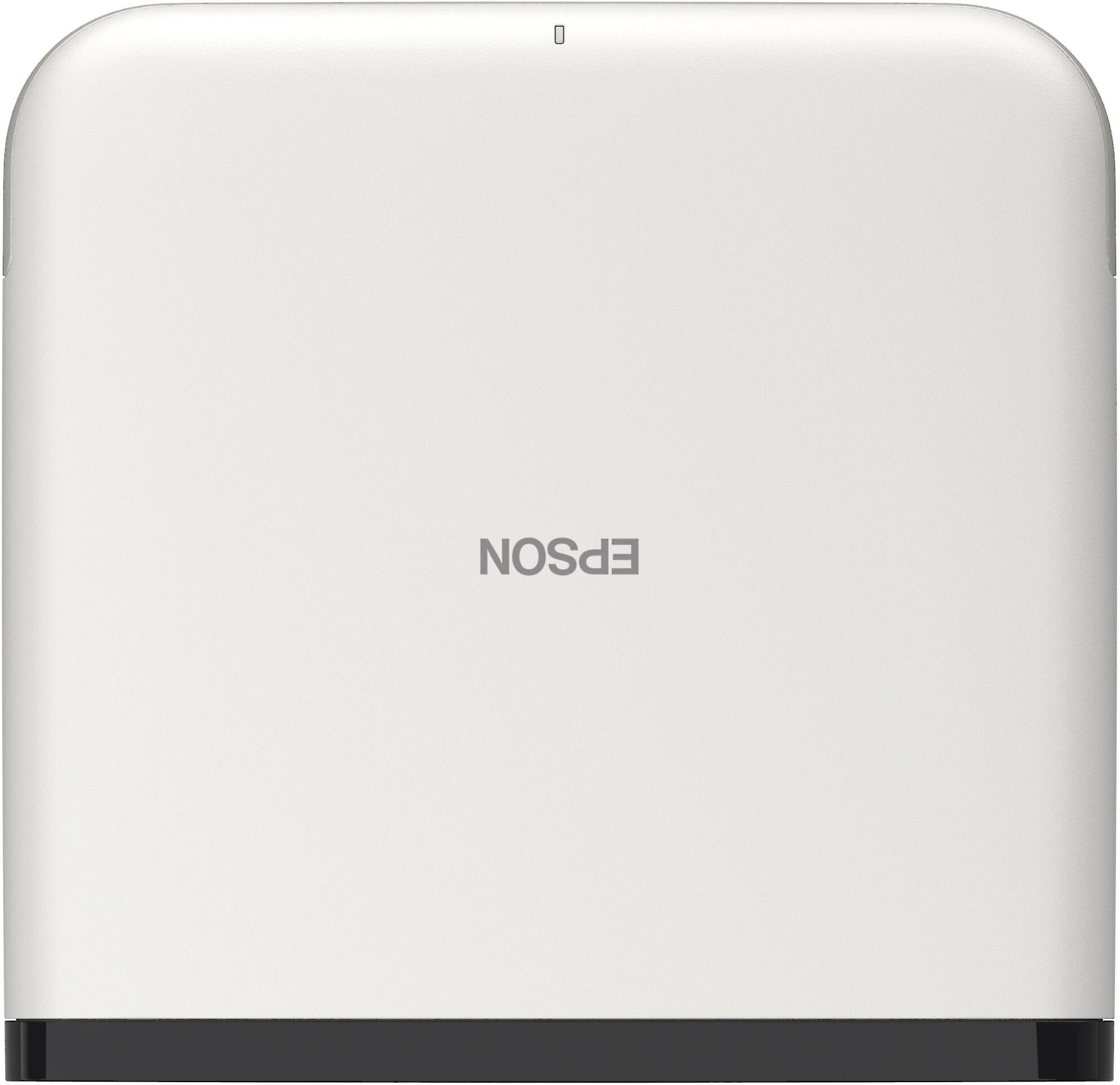
The Epson EpiqVision Mini EF21, also released in 2024, takes a completely different approach. Where the XGIMI MoGo 3 Pro prioritizes extreme portability, the EF21 focuses on delivering serious brightness and color performance in a still-portable package.
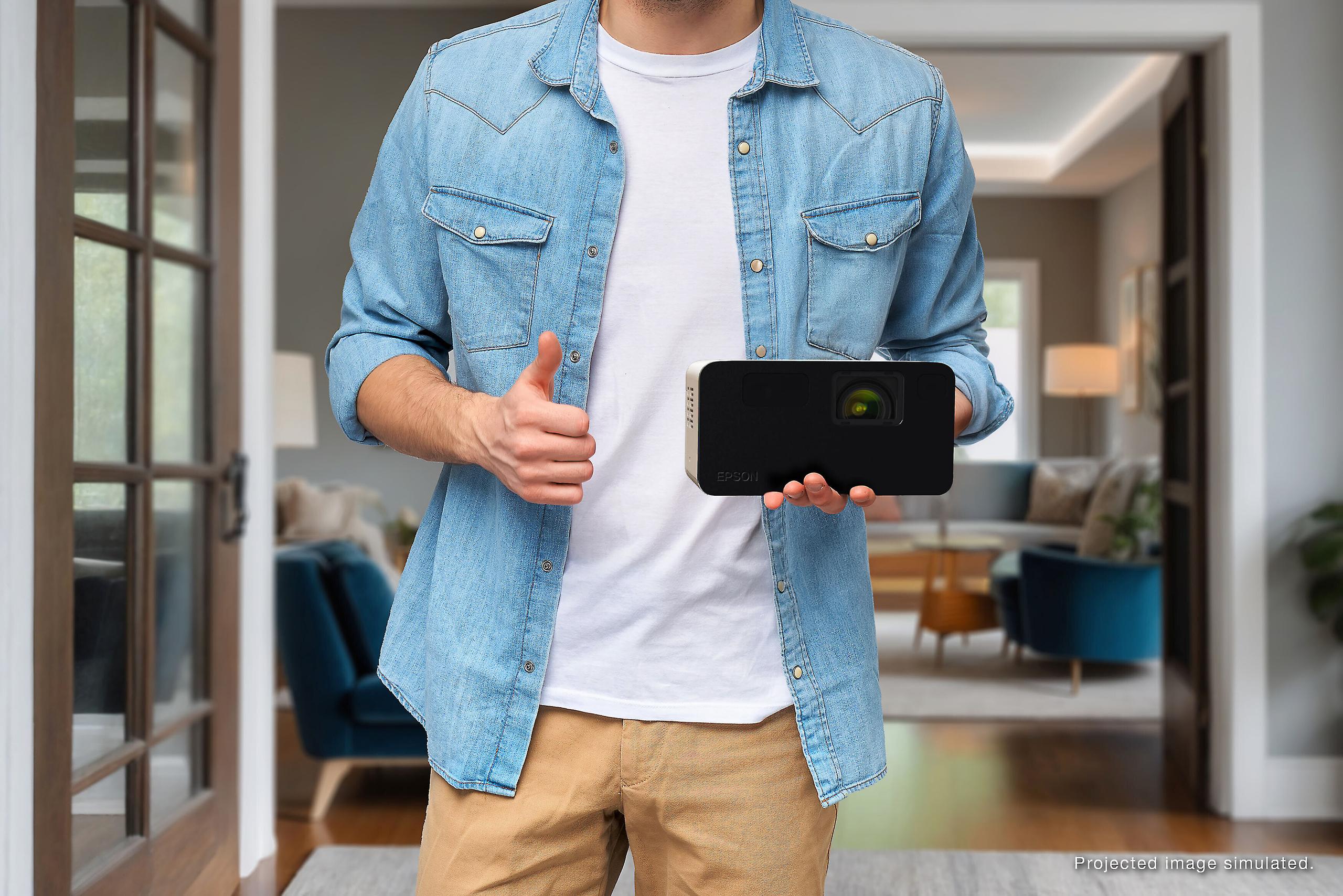
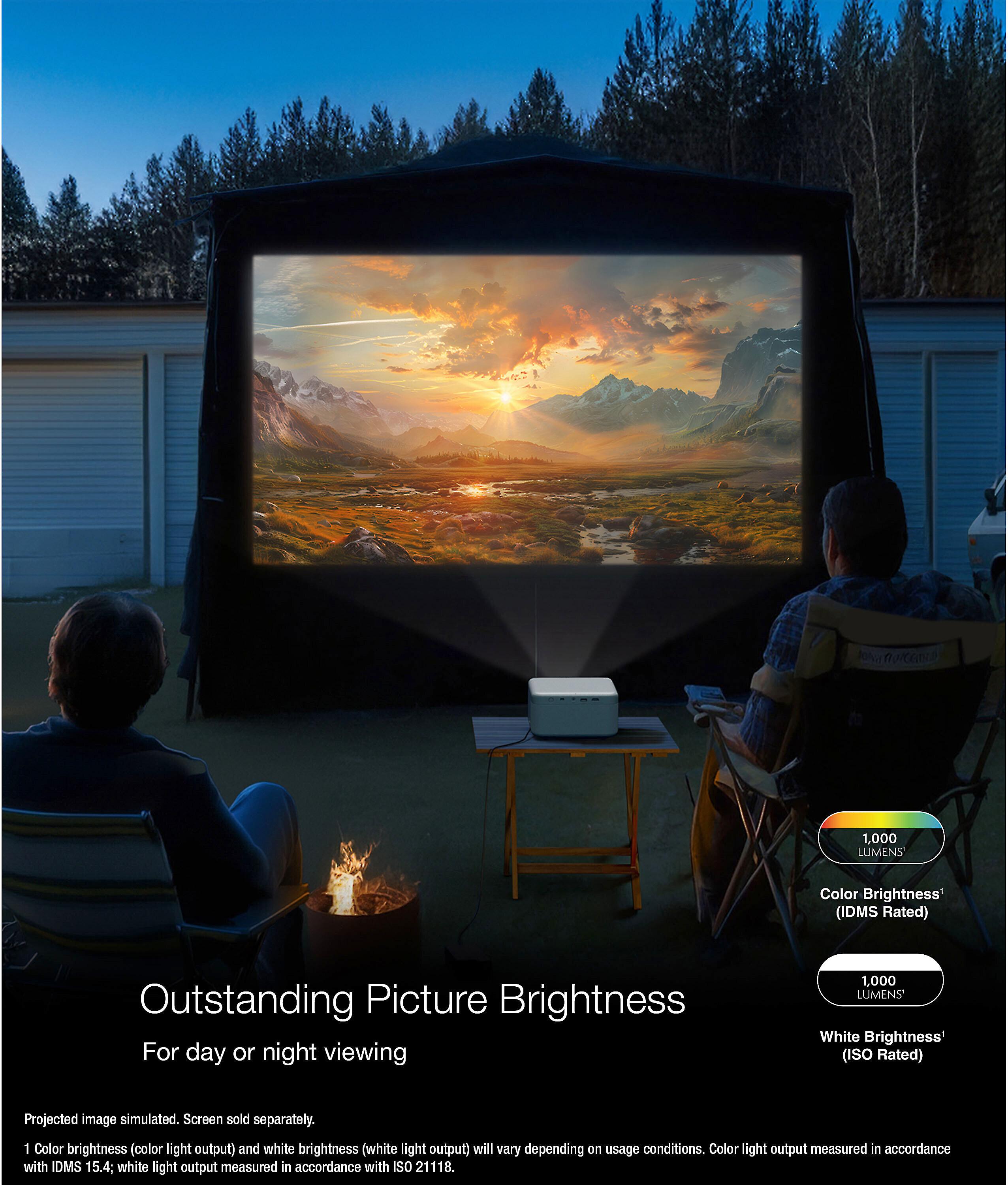
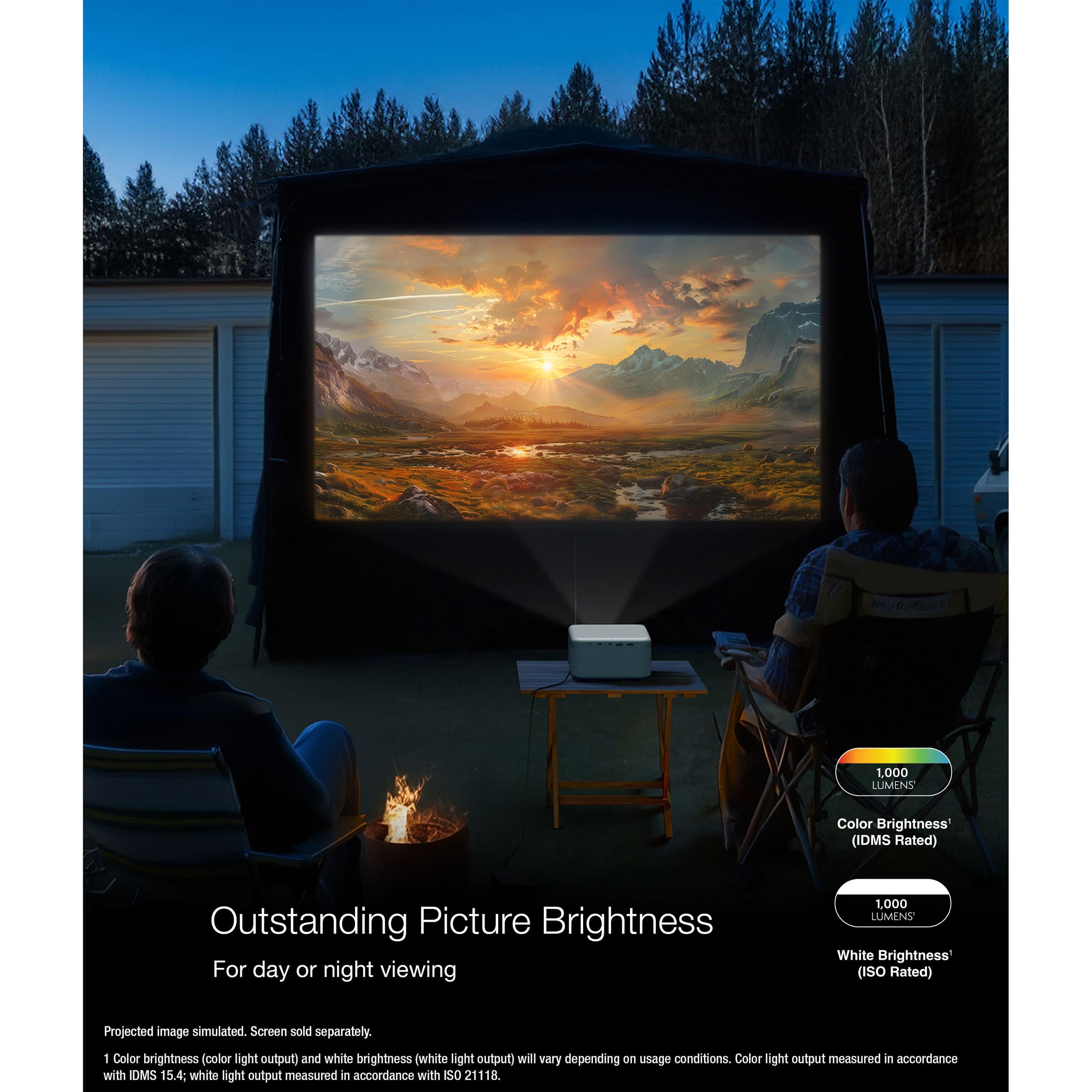
At 5.1 pounds, the EF21 is more than twice as heavy as the MoGo 3 Pro, but that extra weight houses some impressive technology. The key differentiator is its laser light source pushing out 1000 lumens – more than double the brightness of the XGIMI. This isn't just a numbers game; it fundamentally changes when and where you can use the projector.
The Epson uses 3LCD technology instead of DLP. Without getting too deep into the technical weeds, this means it uses three separate LCD panels (one each for red, green, and blue light) rather than a single chip with a spinning color wheel. The practical benefit is that 3LCD eliminates the "rainbow effect" – those brief color flashes some people see with DLP projectors, especially when moving their eyes quickly across the screen.
Epson's MicroLaser Array technology is particularly interesting. Instead of using a single powerful laser, it employs multiple smaller laser diodes arranged in an array. This approach provides more consistent brightness across the entire image and better heat management, which should translate to longer lifespan and more reliable performance.
The EpiqSense automatic setup system is Epson's answer to XGIMI's ISA technology. It handles focus, keystone correction, and image sizing automatically, though it doesn't have the obstacle avoidance feature of the MoGo 3 Pro.
This is where the fundamental difference between these projectors becomes crystal clear. The Epson EF21's 1000 lumens versus the MoGo 3 Pro's 450 lumens isn't just a spec sheet difference – it's the difference between what you can actually watch and when you can watch it.
In my testing of similar brightness levels, projectors in the 450-lumen range require pretty dark environments to deliver satisfying image quality. You can get away with some ambient light – maybe a lamp in the corner of the room – but forget about daytime viewing or bright overhead lights. The XGIMI reviewers consistently noted that it "held up well in a brighter room with ambient sunlight" but became "totally unusable with overhead lights on."
The Epson's 1000 lumens, on the other hand, opens up significantly more viewing scenarios. While you still won't get great results in bright sunlight, you can comfortably watch with normal room lighting. This makes it much more family-friendly and suitable for spaces where you can't completely control the lighting.
Both projectors deliver native 1080p resolution with HDR10 support, but their approaches to color reproduction differ significantly. The MoGo 3 Pro covers 90% of the DCI-P3 color gamut, which is the standard used in digital cinema. This means it can reproduce most of the colors you see in movies with good accuracy.
The Epson's laser technology and 3LCD system typically provide superior color accuracy and consistency. Laser projectors can maintain their color performance throughout their lifespan, whereas LED projectors may see some color shift over thousands of hours of use. The 3LCD technology also tends to produce more natural-looking skin tones compared to single-chip DLP systems.
Contrast ratio is another important factor. The MoGo 3 Pro doesn't publish specific contrast specs, but LED-based DLP projectors in this class typically deliver decent blacks for the technology. The Epson claims a 200,000:1 contrast ratio, though these numbers should be taken with a grain of salt as measurement standards vary widely between manufacturers.
Here's where the XGIMI MoGo 3 Pro pulls significantly ahead. Its Google TV platform with native Netflix integration creates a seamless smart TV experience that's rare in the projector world. You get access to over 10,000 apps through the Google Play Store, voice control via Google Assistant, and Chromecast built-in for wireless casting from your phone or laptop.
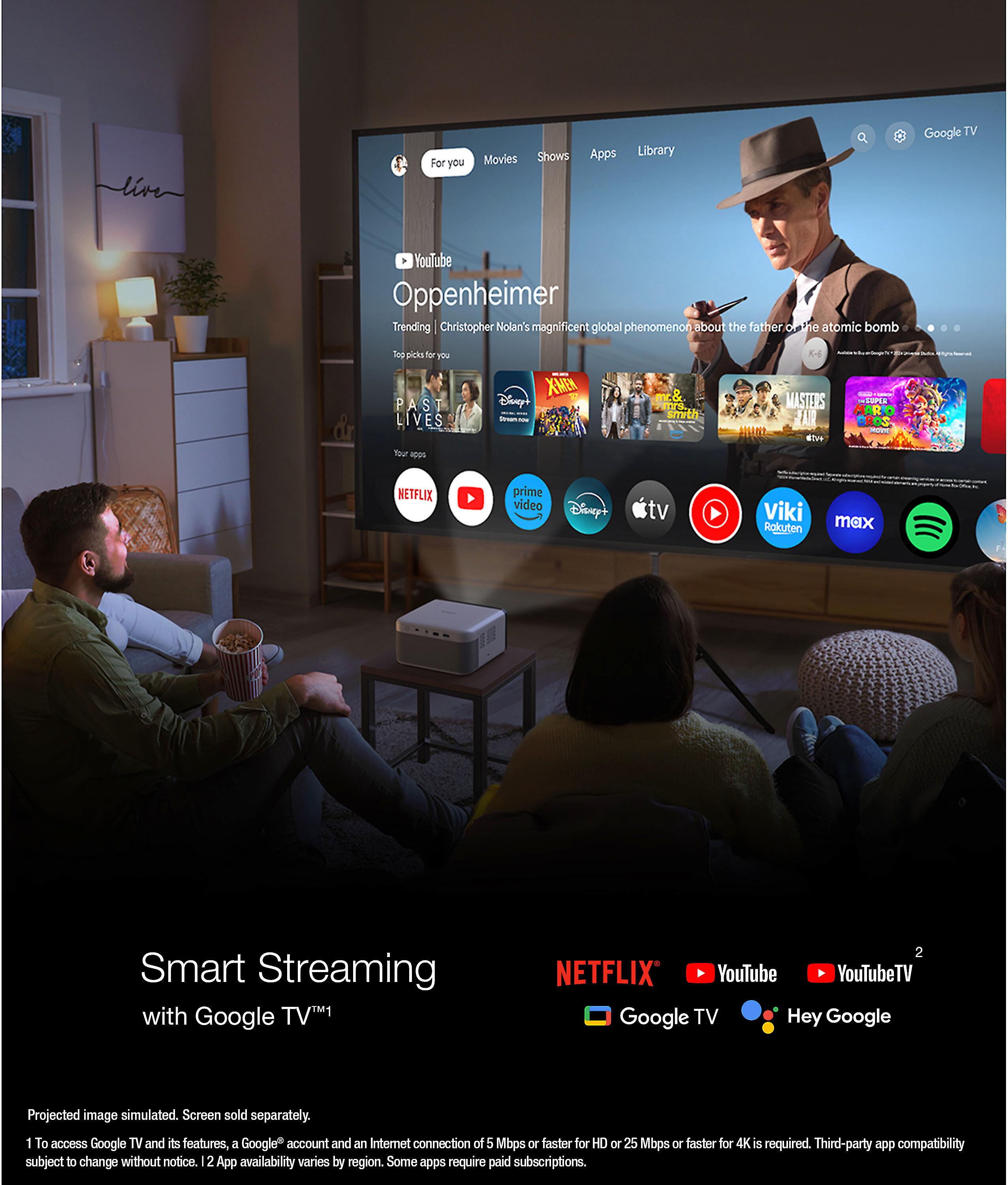
The Epson EF21 appears to have more limited smart capabilities, though specific details about its platform are scarce. This often means you'll need to connect external streaming devices, which somewhat defeats the purpose of having a portable projector.
The XGIMI's ISA 2.0 system also provides some genuinely useful features beyond basic auto-focus and keystone correction. The obstacle avoidance feature automatically detects objects in the projection path and reshapes the image to work around them. The eye protection feature dims or shuts off the projector when it detects someone walking in front of the lens – a thoughtful safety feature for homes with kids or pets.
Both projectors include built-in speakers, which is crucial for portable use. The MoGo 3 Pro features dual 5-watt Harman Kardon speakers that have consistently impressed reviewers. Multiple sources describe them as "surprisingly impressive for the size" and "capable of filling large rooms." The projector can even function as a standalone Bluetooth speaker with customizable ambient lighting effects.
The Epson EF21 includes stereo speakers with Dolby Audio support, though specific wattage and detailed performance reviews are limited. Given Epson's focus on the visual experience, the audio system likely takes a back seat to image quality priorities.
For gaming enthusiasts, input lag (the delay between pressing a button and seeing the action on screen) is crucial. The MoGo 3 Pro delivers respectable performance with about 27ms of input lag in Game mode when auto-keystone is disabled, or around 60ms with it enabled. This makes it suitable for casual gaming and even some faster-paced titles, though competitive gamers will want dedicated gaming displays.
Gaming performance data for the EF21 isn't readily available, but laser projectors often have slightly higher input lag due to additional image processing. However, the higher brightness makes gaming more enjoyable in varied lighting conditions.
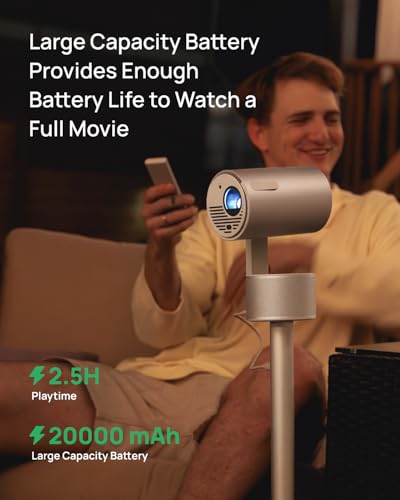
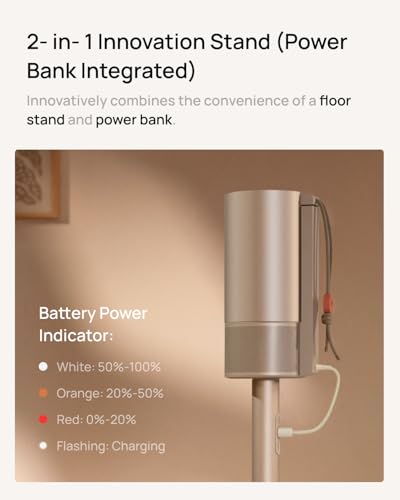
This is where the philosophical differences between these projectors become most apparent. The XGIMI MoGo 3 Pro achieves its tiny form factor partly by eliminating the built-in battery entirely. It requires USB-C Power Delivery at 65 watts or higher, which means you need either a wall outlet or a substantial power bank.
This design choice has pros and cons. On the positive side, it keeps the weight down and eliminates battery degradation issues. You never have to worry about the battery dying after a few years of use. However, it does limit true portability – you can't just grab it and go without considering power sources.
XGIMI offers an optional PowerBase accessory that adds a built-in battery, but this increases cost and weight significantly. When running on battery power, the brightness also drops to about 235 lumens to conserve energy.
The Epson EF21 appears to use more traditional power requirements, though specific battery options aren't clearly detailed. At 5.1 pounds, it's still portable but falls into a different category – think "easily moveable between rooms" rather than "throw it in a backpack."
At the time of writing, these projectors sit in quite different price ranges, which significantly affects their value propositions. The XGIMI MoGo 3 Pro typically retails for significantly less than the Epson EF21, making the value comparison interesting.
The MoGo 3 Pro offers exceptional value for buyers who primarily plan to use it in dark environments. You get premium smart features, impressive audio, innovative design, and solid image quality at a very competitive price point. The cost per lumen is excellent when you factor in all the included features.
The Epson EF21 commands a premium price but delivers professional-grade brightness and color performance. For users who need versatility in lighting conditions, the extra cost may be justified by the significantly expanded usability.
Neither projector is designed to replace a dedicated home theater setup, but they can certainly enhance one. The MoGo 3 Pro excels as a secondary or bedroom projector, perfect for casual movie nights or when you want to watch something different from what's playing on the main TV.
The EF21's higher brightness makes it more suitable for family viewing areas where you can't always control the lighting. While it won't match the performance of a $3,000 dedicated home theater projector, it can serve as the primary display in smaller spaces or for users who prioritize convenience over ultimate image quality.
Both projectors support HDMI input for connecting gaming consoles, streaming devices, or laptops, making them versatile additions to existing entertainment setups.
After extensive consideration of both projectors' strengths and weaknesses, here's how I see their ideal use cases playing out:
The XGIMI MoGo 3 Pro is perfect for tech-savvy users who value innovation and convenience. It's ideal for apartment dwellers who want a big screen experience without mounting anything permanently, travelers who want entertainment on the go (with appropriate power planning), and anyone who appreciates clever design solutions. The smart features make it genuinely useful as a standalone entertainment device.
The Epson EF21 better serves users who prioritize image quality and brightness over smart features and ultra-portability. It's excellent for families who want to watch movies together in various lighting conditions, professionals who might use it for presentations as well as entertainment, and anyone upgrading from older, dimmer portable projectors.
Choosing between these projectors ultimately comes down to understanding your primary use case and which limitations you can live with.
Choose the XGIMI MoGo 3 Pro if you're primarily going to use it in dark rooms, you value smart streaming features, you want the most portable option possible, or you're working with a tighter budget. It's also the better choice if you appreciate innovative features like obstacle avoidance and ambient lighting modes.
Choose the Epson EpiqVision Mini EF21 if you need to use your projector in rooms with ambient light, you prioritize maximum brightness and color accuracy, you don't mind the larger size and higher cost, or you prefer traditional projector reliability over cutting-edge smart features.
Both projectors represent significant advances in portable projection technology compared to what was available just a few years ago. The XGIMI pushes the boundaries of what's possible in an ultra-compact form factor, while the Epson brings professional-grade performance to a still-portable package. Your choice should align with how and where you plan to use your projector most often – in the end, the best projector is the one that fits your specific needs and viewing habits.
| XGIMI MoGo 3 Pro | Epson EpiqVision Mini EF21 |
|---|---|
| Brightness - Most critical spec determining when and where you can use the projector | |
| 450 ISO lumens (requires dark rooms, struggles with ambient light) | 1000 lumens (works well in moderately lit rooms, 2.2x brighter) |
| Light Source Technology - Affects color accuracy, lifespan, and maintenance | |
| LED light source, 25,000 hour lifespan | Laser light source, 20,000 hour lifespan, superior color consistency |
| Display Technology - Impacts color reproduction and rainbow effects | |
| Single-chip DLP (potential rainbow effect for sensitive viewers) | 3LCD technology (eliminates rainbow effect, better skin tones) |
| Size and Weight - Determines true portability | |
| 2.4 lbs, coffee cup sized with 130° adjustable stand | 5.1 lbs, larger chassis but still portable between rooms |
| Smart Features - Built-in streaming capabilities | |
| Google TV with licensed Netflix, 10,000+ apps, Google Assistant | Limited smart platform details, likely requires external streaming devices |
| Power Requirements - Affects portable usage scenarios | |
| USB-C PD 65W (no built-in battery, requires power bank or outlet) | Traditional power cord (specific battery options unclear) |
| Auto Setup Features - Convenience for quick deployment | |
| ISA 2.0 with obstacle avoidance, auto-focus, keystone correction | EpiqSense auto-focus and keystone correction |
| Audio System - Important for standalone use | |
| Dual 5W Harman Kardon speakers (highly praised by reviewers) | Stereo speakers with Dolby Audio support |
| Gaming Performance - Input lag for gaming use | |
| 27ms input lag (Game mode), suitable for casual gaming | Input lag specifications not available |
| Connectivity Options - External device support | |
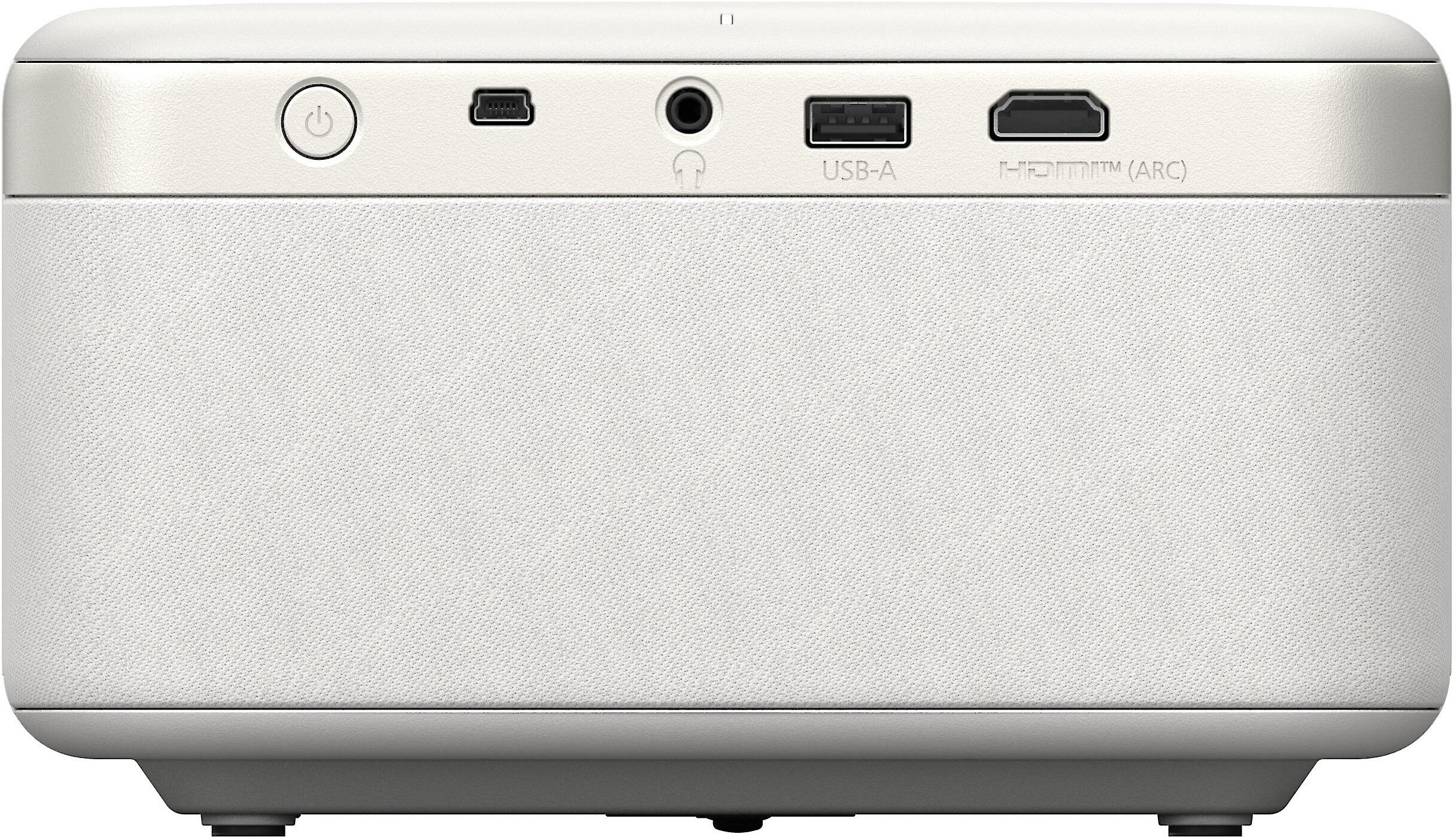
| Micro HDMI, USB-A, USB-C, Bluetooth 5.1, WiFi 5 | HDMI 2.3, USB-A, USB-B mini, Bluetooth 5.1, dual-band WiFi |
| Color Performance - Visual quality metrics | |
| 90% DCI-P3 color gamut, HDR10 support | Superior laser color accuracy, HDR10 and HLG support |
| Best Use Cases - When each projector excels | |
| Dark room viewing, travel, ultra-portability, smart streaming | Ambient light viewing, family use, color-critical content |
The Epson EpiqVision Mini EF21 is significantly brighter at 1000 lumens compared to the XGIMI MoGo 3 Pro's 450 ISO lumens. This means the Epson can handle rooms with ambient light and some daytime viewing, while the XGIMI MoGo 3 Pro requires dark environments for optimal picture quality.
The XGIMI MoGo 3 Pro weighs just 2.4 pounds and is about the size of a coffee cup, making it extremely portable. The Epson EpiqVision Mini EF21 weighs 5.1 pounds and is larger, though still portable enough to move between rooms easily. The XGIMI is better for travel, while the Epson is more of a "portable home projector."
The XGIMI MoGo 3 Pro excels in smart features with Google TV and licensed Netflix built-in, plus access to over 10,000 apps. The Epson EpiqVision Mini EF21 has limited smart capabilities and likely requires external streaming devices. For cord-cutting and streaming convenience, the XGIMI is the clear winner.
The XGIMI MoGo 3 Pro requires USB-C power delivery (65W) and has no built-in battery, though you can use a power bank. The Epson EpiqVision Mini EF21 uses traditional AC power. Neither has a built-in battery in their standard configuration, so both need external power sources for portable use.
The XGIMI MoGo 3 Pro offers 27ms input lag in Game mode, making it suitable for casual gaming. Gaming performance specs aren't available for the Epson EpiqVision Mini EF21. However, the Epson's higher brightness makes gaming more enjoyable in varied lighting conditions, while the XGIMI requires darker rooms for gaming sessions.
Both offer 1080p resolution with HDR10 support, but they use different technologies. The Epson EpiqVision Mini EF21 uses 3LCD laser technology for superior color accuracy and eliminates rainbow effects. The XGIMI MoGo 3 Pro uses DLP technology with good color reproduction (90% DCI-P3) but may show rainbow effects for sensitive viewers.
The XGIMI MoGo 3 Pro features dual 5W Harman Kardon speakers that reviewers consistently praise as impressive for the size. The Epson EpiqVision Mini EF21 has stereo speakers with Dolby Audio support. Based on available reviews, the XGIMI appears to have superior audio performance for a portable projector.
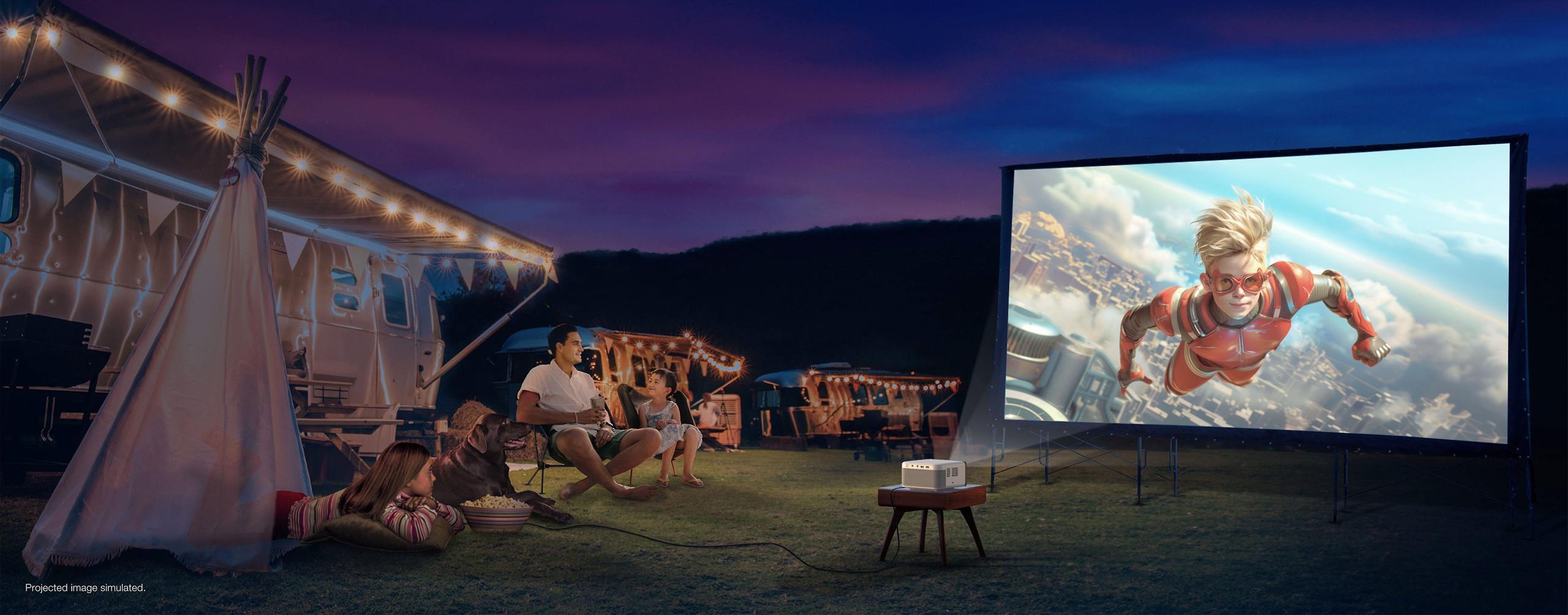
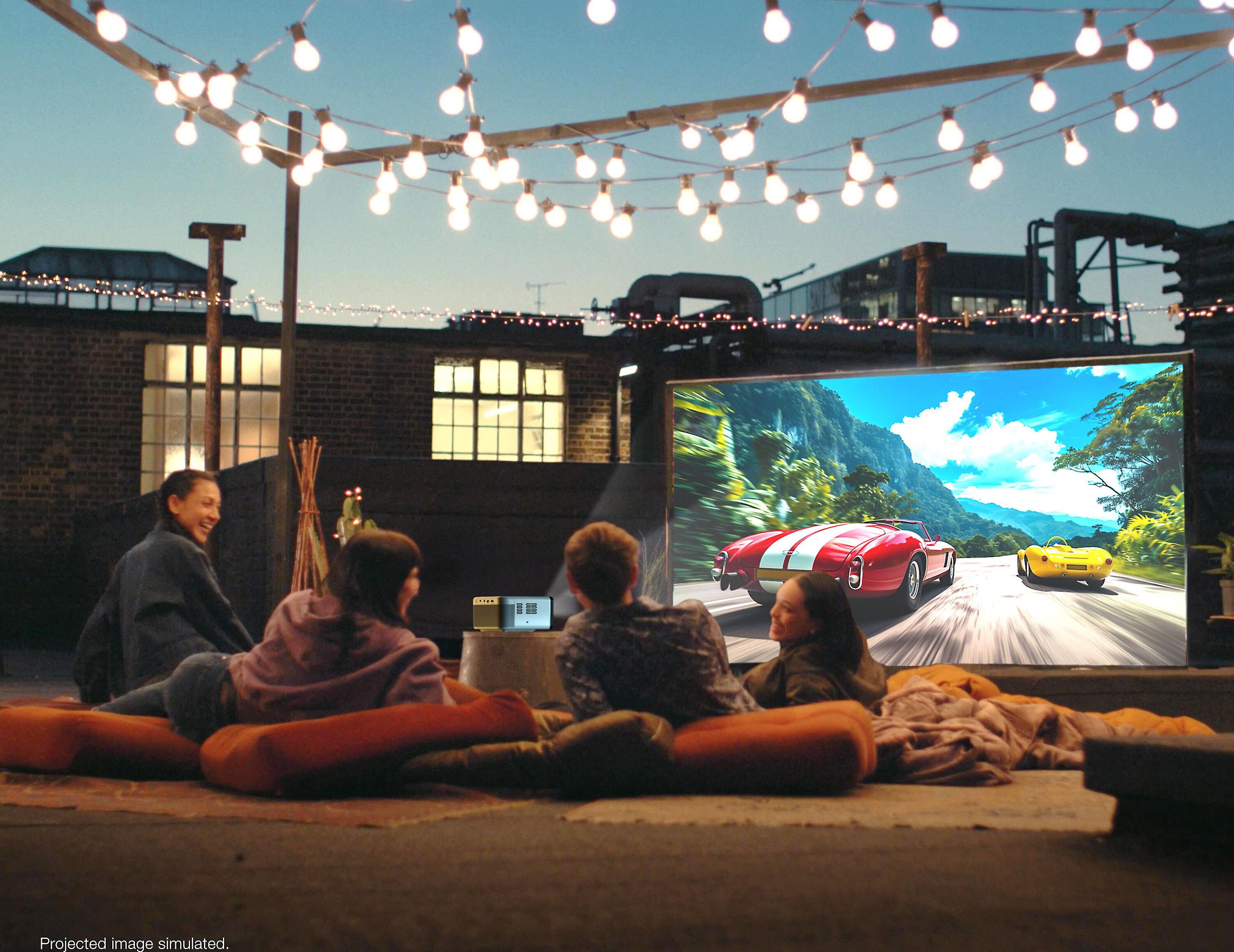
The XGIMI MoGo 3 Pro works well for outdoor movie nights after dark due to its portability and decent brightness in darkness. The Epson EpiqVision Mini EF21 is better for outdoor use during twilight hours thanks to its higher brightness. Both require external power sources, so plan accordingly for outdoor setups.
The XGIMI MoGo 3 Pro typically offers better value with its combination of smart features, portability, and performance at a lower price point. The Epson EpiqVision Mini EF21 costs more but delivers significantly higher brightness and professional-grade laser technology. Value depends on whether you prioritize features and portability (XGIMI) or brightness and image quality (Epson).
The Epson EpiqVision Mini EF21 is better suited as a TV replacement due to its higher brightness allowing use in normal lighting conditions. The XGIMI MoGo 3 Pro works well as a bedroom TV or secondary display but requires controlled lighting for comfortable viewing. Neither fully replaces a traditional TV's convenience and brightness.
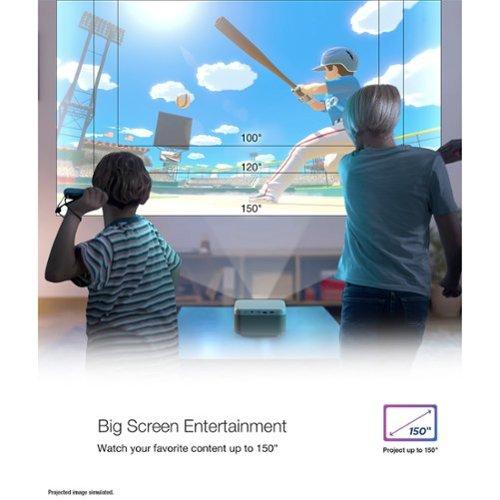
Both projectors can create screens from 30 inches up to 150-200 inches. The XGIMI MoGo 3 Pro has a 1.2:1 throw ratio and works best at 60-120 inches for optimal image quality. The Epson EpiqVision Mini EF21 maintains better image quality at larger sizes due to its higher brightness, making it more suitable for truly large screen experiences.
For dedicated home theater use, the Epson EpiqVision Mini EF21 is the better choice with its superior brightness, laser technology, and color accuracy. The XGIMI MoGo 3 Pro works well as a secondary or casual home theater projector, especially in bedrooms or smaller spaces. The Epson handles the varied lighting conditions of family viewing better than the XGIMI.
We've done our best to create useful and informative comparisons to help you decide what product to buy. Our research uses advanced automated methods to create this comparison and perfection is not possible - please contact us for corrections or questions. These are the sites we've researched in the creation of this article: projectorcentral.com - techradar.com - androidcentral.com - tvsbook.com - techradar.com - thesmarthomehookup.com - whathifi.com - youtube.com - youtube.com - projectorcentral.com - projectorcentral.com - youtube.com - global.xgimi.com - us.xgimi.com - youtube.com - us.xgimi.com - us.xgimi.com - bestbuy.com - bestbuy.com - cnet.com - youtube.com - projectorreviews.com - epson.com - projectorreviews.com - epson.com - rtings.com - epson.com - youtube.com - projectorcentral.com - bestbuy.com - projectorcentral.com - nfm.com - crutchfield.com - latin.epson.com - mediaserver.goepson.com - planettv.com - bhphotovideo.com - cnet.com - epson.com

Privacy Policy
Terms and Conditions - Affiliate Policy
Home Security
© Copyright 2008-2026.
11816 Inwood Rd #1211, Dallas, TX 75244