

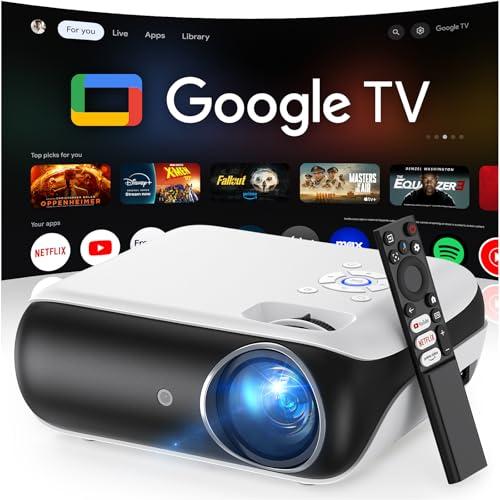
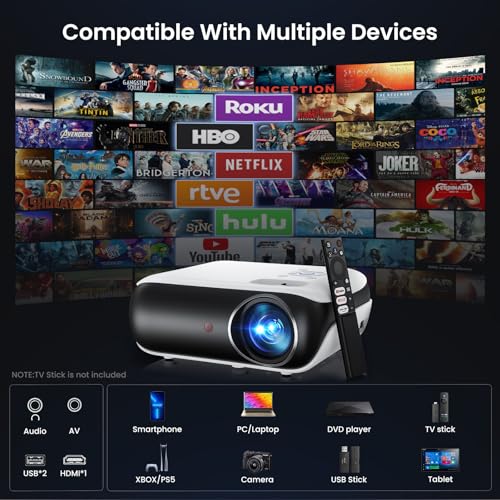
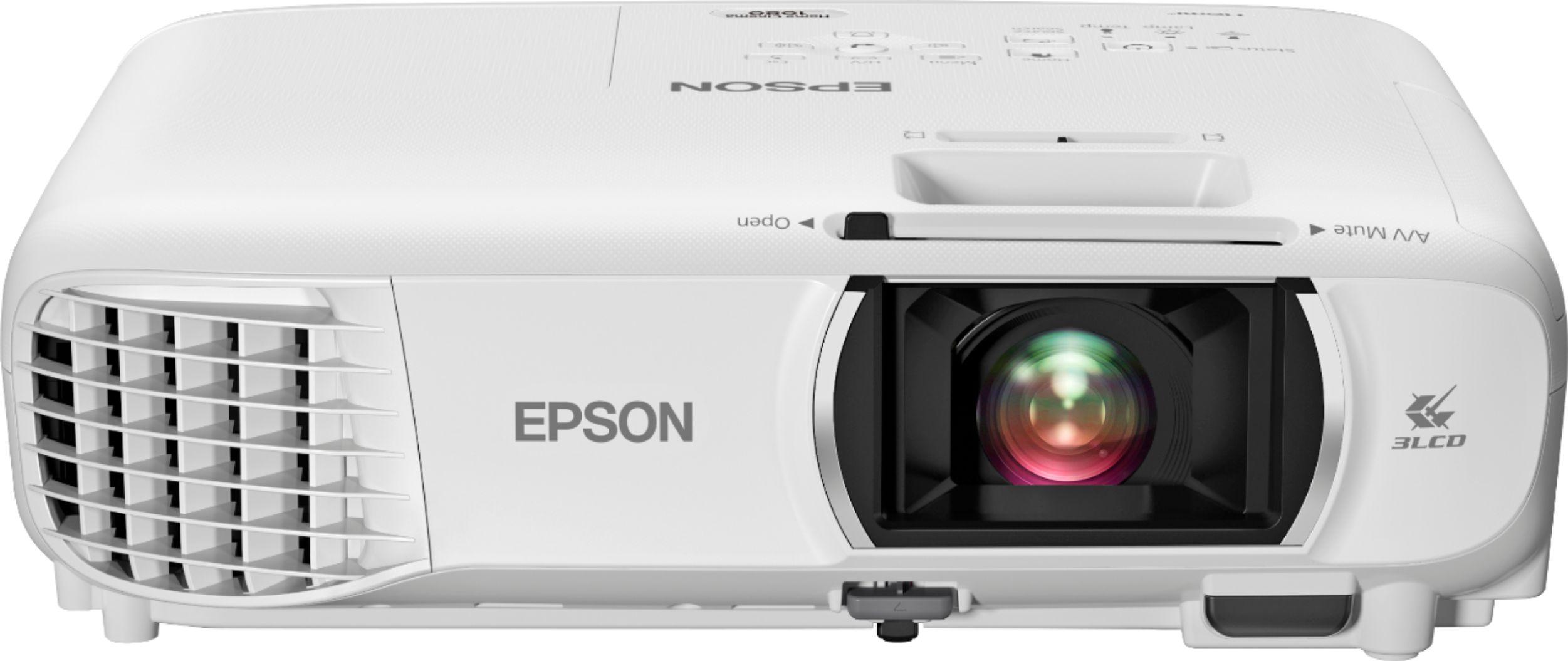
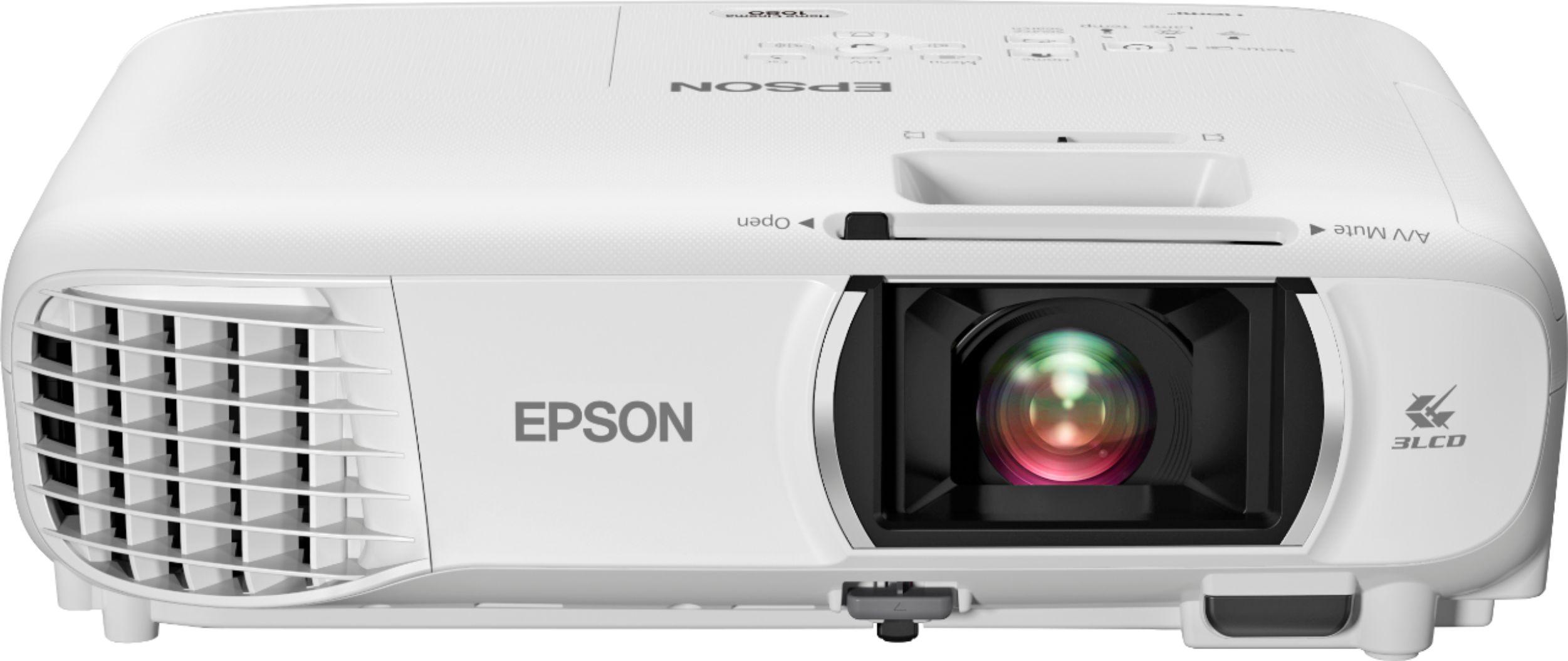
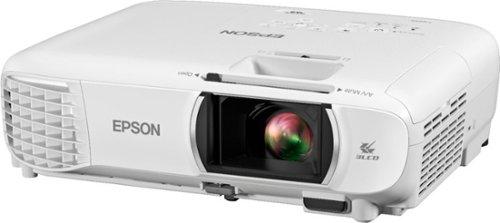
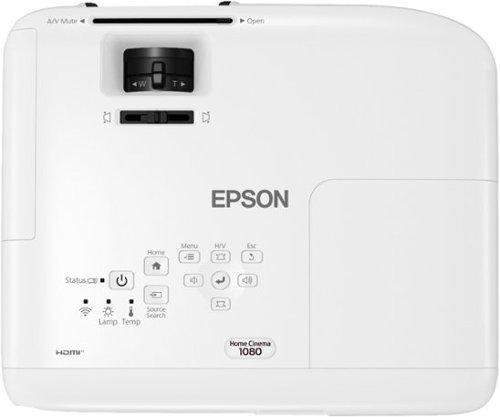
When shopping for a home projector, you're essentially choosing between two very different philosophies. On one side, you have budget-friendly smart projectors like the HAPPRUN Google TV Smart Projector that prioritize convenience and built-in streaming capabilities. On the other, traditional home theater projectors such as the Epson Home Cinema 1080 focus on raw performance and versatility across different viewing environments.
At the time of writing, these two projectors represent fundamentally different approaches to home entertainment, with price points that reflect their target audiences—the HAPPRUN sits in the ultra-budget category under $300, while the Epson commands a premium position in the $2,000-3,000 range. This isn't just about spending more money; it's about understanding what trade-offs matter most for your specific situation.
Before diving into specifics, it's worth understanding what separates different projector categories. The main factors that determine a projector's performance and price include brightness (measured in lumens—essentially how much light the projector can output), native resolution (the actual number of pixels the projector can display), color accuracy, contrast ratio (the difference between the darkest and brightest parts of an image), and smart features.
The projector market has evolved significantly since 2020, when both of these models were introduced. Back then, smart projectors were relatively new, and most required external streaming devices. The integration of full operating systems like Google TV directly into projectors was still emerging technology. Meanwhile, traditional lamp-based projectors like the Epson Home Cinema 1080 represented decades of refinement in LCD projection technology.
Since their release, we've seen dramatic improvements in LED brightness, better smart TV integration, and more sophisticated upscaling algorithms. However, the fundamental trade-offs between these two approaches remain largely the same.
Let's start with the most critical specification: brightness. The Epson Home Cinema 1080 delivers a substantial 3,400 lumens using traditional lamp technology, while the HAPPRUN Google TV Smart Projector manages around 350 ANSI lumens with its LED light source.
This difference is absolutely massive—we're talking about nearly ten times more light output from the Epson. In practical terms, this means the Epson Home Cinema 1080 can produce a watchable image even with some ambient light in the room, while the HAPPRUN Google TV Smart Projector really demands a dark environment to shine.
ANSI lumens, by the way, represent a standardized measurement that's more accurate than the inflated lumen numbers you sometimes see on budget projectors. When a projector claims "4000 lumens" but only delivers 350 ANSI lumens, that's the difference between marketing numbers and real-world performance.
Based on our research into user experiences, the Epson performs admirably in living rooms with normal lighting, making it suitable for everything from afternoon sports viewing to evening movie nights. Users consistently report being able to use it with table lamps on or curtains partially open—scenarios where the HAPPRUN Google TV Smart Projector would struggle to produce a visible image.
The HAPPRUN, however, delivers surprisingly good contrast and color saturation in its intended dark-room environment. Several reviewers noted that while the image is dimmer, the blacks are deeper and colors more vibrant than they expected from a budget LED projector. This is partly due to LED technology's inherent advantages in contrast ratio—the ability to turn completely off rather than just dimming like traditional lamps.
Both projectors claim 1080p capability, but they achieve it differently. The Epson Home Cinema 1080 uses native 1920x1080 resolution with true 3LCD technology, which means it has separate LCD panels for red, green, and blue light. This results in more accurate color reproduction and eliminates the "rainbow effect" that some people see with single-chip DLP projectors.
The HAPPRUN Google TV Smart Projector also offers native 1080p, but includes 4K decoding and upscaling. This means it can accept a 4K signal and intelligently scale it down to its native resolution, potentially providing sharper images than standard 1080p content. However, it's crucial to understand that this isn't true 4K projection—it's sophisticated processing that tries to make 1080p look better.
The contrast ratio specifications tell an interesting story. While the HAPPRUN claims 20,000:1 contrast and the Epson lists 16,000:1, real-world performance depends heavily on viewing conditions. In a completely dark room, the HAPPRUN's LED technology can achieve those deep blacks that contribute to high contrast. However, introduce any ambient light, and that advantage disappears quickly because the projector simply doesn't have enough brightness to overcome environmental light.
The Epson Home Cinema 1080 uses 10-bit color processing, which means it can display over a billion different colors compared to the 16.7 million colors of standard 8-bit displays. This translates to smoother color gradations and more natural-looking images, particularly in scenes with subtle color changes like sunsets or skin tones.
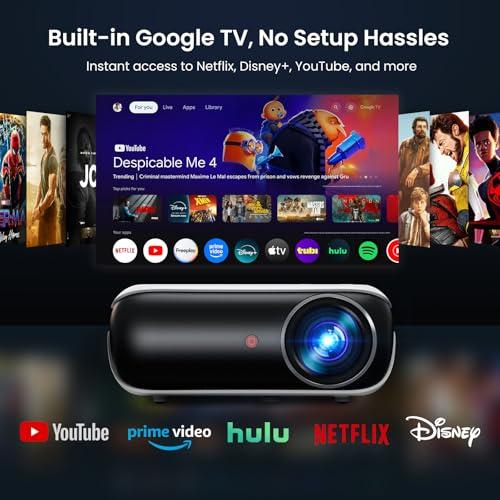
Here's where the HAPPRUN Google TV Smart Projector really shines. It runs full Google TV 11.0 with official Netflix licensing—something that's surprisingly rare in the projector world. Most projectors, including the Epson Home Cinema 1080, require you to connect an external streaming device like a Roku, Apple TV, or Chromecast.
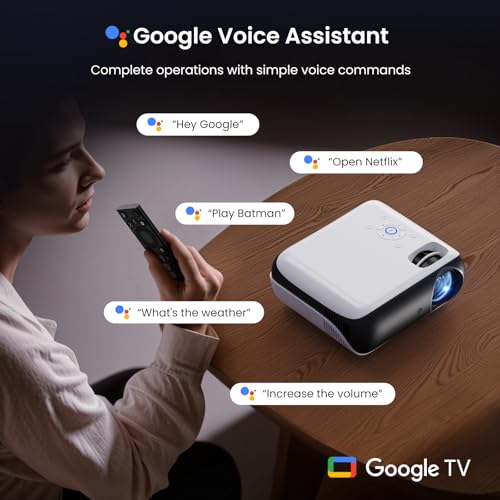
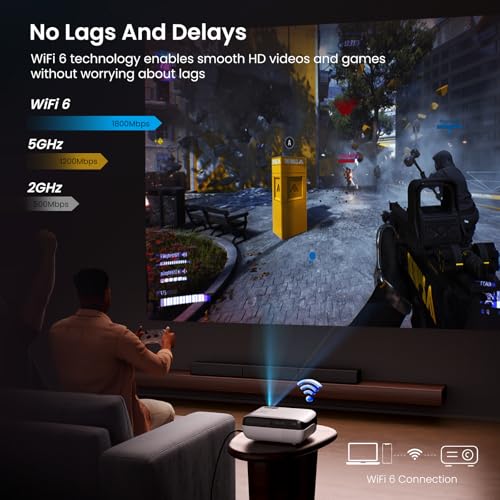
The convenience factor cannot be overstated. With the HAPPRUN, you literally plug it in, connect to WiFi, and start watching Netflix, YouTube, Disney+, or any other app directly. It supports Google Assistant voice control, Chromecast casting from your phone, and even AirPlay for iPhone users. The WiFi 6 support means faster, more stable streaming with less buffering.
The Epson Home Cinema 1080 takes a more traditional approach with WiFi 5 and Miracast support for screen mirroring, but for serious streaming, you'll want to connect a dedicated streaming device. While this might seem like a disadvantage, it actually offers more flexibility for home theater enthusiasts who prefer to choose their own streaming platform or upgrade it independently.
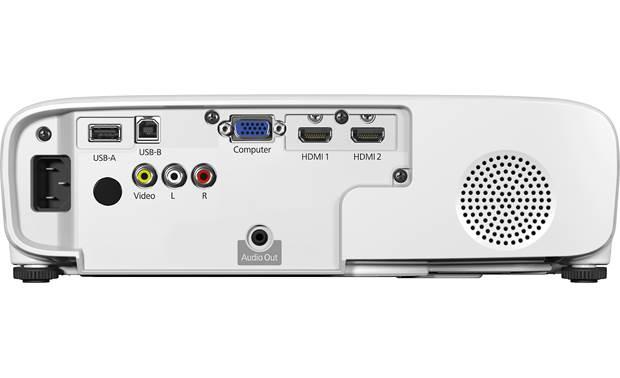
Connectivity-wise, the Epson provides more professional options with dual HDMI ports, VGA input, and multiple USB connections. This makes it better suited for mixed-use scenarios where you might connect gaming consoles, computers, or other devices simultaneously.
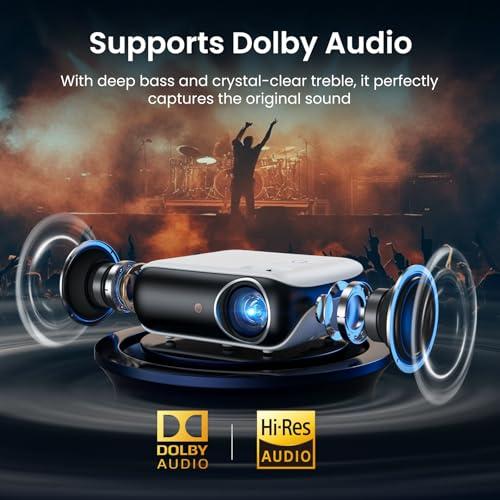
Neither projector will win awards for audio quality, but there are meaningful differences. The HAPPRUN Google TV Smart Projector includes a 5-8W speaker with Dolby Audio certification, which produces surprisingly decent sound for casual viewing in small to medium rooms. Users report that dialogue is clear and there's reasonable bass response for a built-in speaker.
The Epson Home Cinema 1080 includes only a basic 2W mono speaker—essentially a notification speaker rather than something intended for actual movie watching. This reflects the traditional home theater philosophy: projectors handle video, dedicated audio systems handle sound.
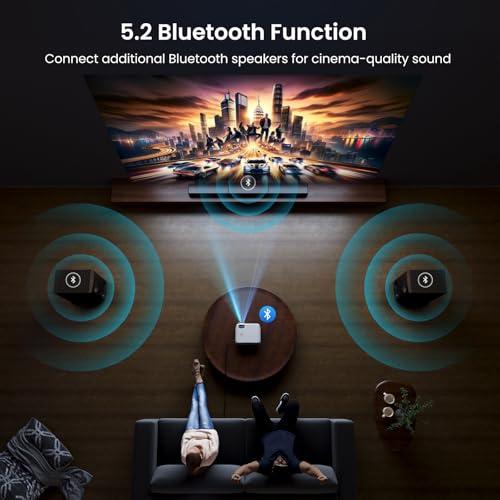
For serious home theater use, both projectors benefit enormously from external audio. The HAPPRUN supports Bluetooth 5.2 for wireless audio connections, though some users report slight lip-sync delays with certain Bluetooth devices. The Epson's approach assumes you'll route audio through an AV receiver or soundbar connected to your source devices.
This is where the technologies diverge significantly. The Epson Home Cinema 1080 uses a traditional 210W UHE (Ultra High Efficiency) lamp rated for 6,000 hours in normal mode or up to 12,000 hours in eco mode. When the lamp eventually dims, you'll need to replace it—typically costing $200-400 depending on where you shop.
The HAPPRUN Google TV Smart Projector uses LED technology rated for 20,000+ hours of use. LEDs gradually dim over time rather than suddenly burning out, and they're not user-replaceable. This means lower ongoing costs but potentially requiring complete unit replacement after many years of use.
In practical terms, if you watch 3 hours per day, the Epson's lamp might last 5-11 years depending on the mode used, while the HAPPRUN's LEDs should maintain reasonable brightness for 15+ years. However, the LED projector's electronics and smart features might become obsolete long before the light source fails.
Based on extensive user feedback and professional reviews, here's how these projectors perform in different situations:
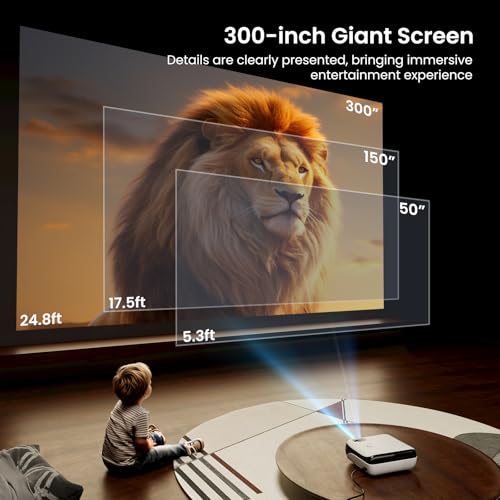
Dark Room Movie Nights: The HAPPRUN Google TV Smart Projector excels here. Users consistently praise its deep blacks, vibrant colors, and convenient streaming interface. The 100-200 inch image size is perfect for bedroom or basement theater setups.
Living Room Entertainment: The Epson Home Cinema 1080 dominates this scenario. Its brightness allows for viewing with some ambient light, making it suitable for family movie nights or sports viewing without complete light control.
Gaming Performance: Both projectors offer reasonable gaming experiences, but the Epson's higher brightness provides more consistent performance across different game types. The HAPPRUN works well for darker games but struggles with bright, fast-paced titles in anything but perfect darkness.
Outdoor Movies: This is where the brightness difference becomes crucial. The Epson can work for early evening outdoor viewing as the sun sets, while the HAPPRUN requires full darkness—meaning truly nighttime outdoor use only.
At the time of writing, the price difference between these projectors is substantial, but so are the hidden costs. The HAPPRUN Google TV Smart Projector represents remarkable value for dark-room viewing, requiring no additional purchases beyond possibly a screen or white wall.
The Epson Home Cinema 1080 often requires a streaming device ($50-200), proper screen ($100-500 for decent quality), and ideally an audio system ($200-2000+) to reach its full potential. However, for users who need the brightness and flexibility, these additional costs are worthwhile investments.
The maintenance costs also differ significantly. Over a 10-year period, the Epson might require 1-2 lamp replacements, while the HAPPRUN should run maintenance-free. However, the Epson's modular design means individual components can be serviced or upgraded, potentially extending its useful life beyond the HAPPRUN's smart features becoming obsolete.
The decision ultimately comes down to your viewing environment and expectations. The HAPPRUN Google TV Smart Projector is perfect for apartment dwellers, students, or anyone wanting to dip their toes into projection without major investment. It's genuinely impressive what you get for the money, provided you can control room lighting.
The Epson Home Cinema 1080 serves users who need versatility, higher image quality, or plan to use their projector in various lighting conditions. It's a more traditional home theater approach that assumes you'll build a complete system around the projector.
If you're setting up a dedicated home theater room with light control, the HAPPRUN Google TV Smart Projector offers tremendous value and convenience. The built-in smart features eliminate complexity and reduce the total system cost significantly.
However, if your projector needs to work in a living room, handle daytime viewing, or serve multiple purposes, the Epson Home Cinema 1080 provides the brightness and flexibility necessary for consistent performance across different scenarios.
Both projectors represent excellent value in their respective categories, but they serve fundamentally different needs. The key is honestly assessing your viewing environment, usage patterns, and long-term expectations before making the investment.
| HAPPRUN Google TV Smart Projector | Epson Home Cinema 1080 Projector |
|---|---|
| Brightness - Most critical spec determining room flexibility | |
| 350 ANSI lumens (requires dark rooms only) | 3,400 lumens (works in well-lit rooms, 10x brighter) |
| Native Resolution - Base image sharpness before processing | |
| 1920x1080 with 4K upscaling | 1920x1080 with 3LCD technology |
| Smart Features - Convenience vs flexibility trade-off | |
| Built-in Google TV 11.0 with official Netflix (no external device needed) | WiFi 5 with Miracast (requires streaming stick for most apps) |
| Projection Size - Optimal viewing ranges | |
| 40-200 inches (best at 100-150" in dark rooms) | 30-300 inches (consistent quality across full range) |
| Audio Quality - Built-in speaker performance | |
| 5-8W Dolby-certified speaker (decent for casual viewing) | 2W mono speaker (minimal, assumes external audio) |
| Light Source Technology - Maintenance and longevity | |
| LED (20,000+ hours, no lamp replacement needed) | 210W UHE lamp (6,000-12,000 hours, replaceable) |
| Connectivity Options - How many devices you can connect | |
| HDMI, USB x2, AV, WiFi 6, Bluetooth 5.2 | HDMI x2, VGA, USB x2, WiFi 5 |
| Contrast Ratio - Deep blacks and bright whites | |
| 20,000:1 (excellent in dark rooms only) | 16,000:1 (consistent across lighting conditions) |
| Setup Complexity - Ease of getting started | |
| Plug-and-play streaming (no additional devices needed) | Traditional setup (streaming device recommended) |
| Best Use Case - Where each projector excels | |
| Dark room streaming and casual gaming | Versatile home theater with ambient light tolerance |
The Epson Home Cinema 1080 is significantly brighter at 3,400 lumens compared to the HAPPRUN Google TV Smart Projector's 350 ANSI lumens. This makes the Epson suitable for rooms with ambient light, while the HAPPRUN requires a dark environment for optimal viewing.
The HAPPRUN Google TV Smart Projector has built-in Google TV with Netflix, YouTube, and other apps pre-installed, so no streaming device is needed. The Epson Home Cinema 1080 requires an external streaming device like Roku or Apple TV for most streaming services.
For dedicated home theaters with light control, the HAPPRUN Google TV Smart Projector offers excellent value with deep blacks and convenient streaming. For flexible home theaters that need to work with ambient light, the Epson Home Cinema 1080 is the better choice due to its superior brightness.
Both offer native 1080p resolution, but the Epson Home Cinema 1080 uses 3LCD technology for more accurate colors and 10-bit processing. The HAPPRUN Google TV Smart Projector provides 4K upscaling and HDR10+ support, with excellent contrast in dark rooms.
The HAPPRUN Google TV Smart Projector uses LEDs rated for 20,000+ hours with no replacement needed. The Epson Home Cinema 1080 has a replaceable lamp lasting 6,000-12,000 hours depending on usage mode.
The HAPPRUN Google TV Smart Projector features a 5-8W Dolby-certified speaker that's adequate for casual viewing. The Epson Home Cinema 1080 only has a basic 2W mono speaker, designed assuming you'll use external audio equipment.
The Epson Home Cinema 1080 can work for early evening outdoor viewing as the sun sets due to its high brightness. The HAPPRUN Google TV Smart Projector requires complete darkness, making it suitable only for nighttime outdoor movies.
The HAPPRUN Google TV Smart Projector performs best at 100-150 inches in dark rooms, though it can project 40-200 inches. The Epson Home Cinema 1080 maintains consistent quality from 30-300 inches across various lighting conditions.
The HAPPRUN Google TV Smart Projector offers plug-and-play convenience with built-in streaming and WiFi 6 connectivity. The Epson Home Cinema 1080 requires more setup with external devices but offers more connectivity options including dual HDMI ports.
Both work for gaming, but the Epson Home Cinema 1080 provides more consistent performance across different game types due to its brightness. The HAPPRUN Google TV Smart Projector works well for darker games but may struggle with bright, fast-paced titles unless in complete darkness.
The HAPPRUN Google TV Smart Projector has minimal ongoing costs with no lamp replacements needed. The Epson Home Cinema 1080 requires lamp replacements every few years, but offers better repairability and component upgrades over time.
For dark room viewing and streaming convenience, the HAPPRUN Google TV Smart Projector provides exceptional value with no additional purchases required. The Epson Home Cinema 1080 offers better value for users needing versatility across different lighting conditions and room types.
We've done our best to create useful and informative comparisons to help you decide what product to buy. Our research uses advanced automated methods to create this comparison and perfection is not possible - please contact us for corrections or questions. These are the sites we've researched in the creation of this article: youtube.com - topvisiontec.com - youtube.com - happrunprojector.com - youtube.com - happrunprojector.com - youtube.com - business.walmart.com - youtube.com - walmart.com - cordcuttersnews.com - nexpow.com - crutchfield.com - bestbuy.com - officedepot.com - bestbuy.com - bestbuy.com - audioholics.com - rtings.com - avsforum.com - projectorcentral.com - audiogeneral.com - projectorreviews.com - rtings.com - epson.com - youtube.com - epson.com - projectorreviews.com - projectorreviews.com - walmart.com - shop.avispl.com - bhphotovideo.com - staples.com - mediaserver.goepson.com - staples.com - bhphotovideo.com - epson.com - epson.com - dell.com - epson.com - bestbuy.com

Privacy Policy
Terms and Conditions - Affiliate Policy
Home Security
© Copyright 2008-2026.
11816 Inwood Rd #1211, Dallas, TX 75244