





Choosing the right portable Bluetooth speaker feels overwhelming when you're staring at dozens of options promising everything from "concert-quality sound" to "unbreakable durability." The Monster S320 Superstar and Sony XG300 MEGA BASS represent two completely different philosophies in portable audio, and understanding these differences will save you from buyer's remorse.
After diving deep into user reviews, technical specifications, and expert opinions, one thing becomes crystal clear: these speakers aren't really competing for the same customers, despite both being labeled "portable Bluetooth speakers." The Monster S320 is a true adventure companion, while the Sony XG300 is more like a high-tech portable home stereo system.
Before we dive into the specifics, let's talk about what actually matters when you're shopping for a portable speaker. Audio quality sits at the top - after all, you're buying this to play music. But "good sound" means different things to different people. Some want earth-shaking bass for EDM and hip-hop, others prioritize clear vocals for podcasts, and many want something that handles everything reasonably well.
Portability seems obvious, but there's a spectrum here. True portability means you can toss it in a backpack without thinking twice. Semi-portable means it's moveable but you're planning where it goes. Battery life directly impacts how you'll use the speaker - short battery life means constant charging anxiety, while exceptional battery life means freedom.
Durability matters especially for outdoor use. Water resistance ratings like IPX7 mean the speaker can survive being dunked in water, while shockproof construction means it'll survive being dropped on rocks. Connectivity features determine how well the speaker plays with your devices and whether you can connect multiple speakers together.
The Monster S320 launched around 2020-2021, while the Sony XG300 hit the market in 2022. Since then, we've seen significant improvements in Bluetooth connectivity, battery efficiency, and audio processing algorithms, which both speakers incorporate to varying degrees.
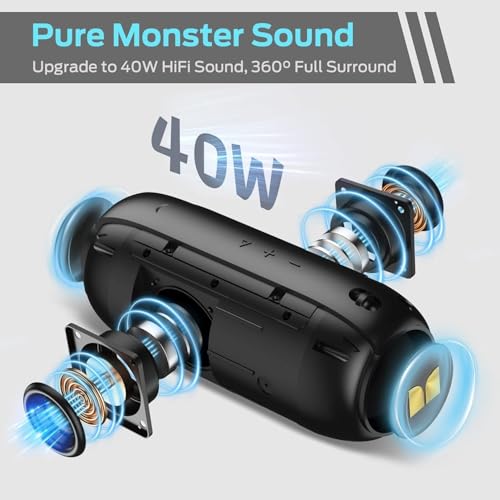
The Monster S320 takes a fundamentally different approach to sound reproduction with its 360-degree audio dispersion. Instead of traditional front-firing speakers, it radiates sound in all directions using dual 2-inch drivers powered by 40 watts total. This creates what Monster calls "Pure Monster Sound" - essentially an omnidirectional sound field that fills a space rather than projecting toward a specific listening position.
This design philosophy makes sense when you think about real-world usage. At a beach party or camping trip, people aren't sitting in a perfect listening triangle like they would with home stereo speakers. They're scattered around, moving, talking. The 360-degree design means everyone gets reasonably good sound regardless of where they're standing relative to the speaker.
Based on user reviews, the Monster S320 delivers what most describe as "clean and bassy" sound with impressive volume for its size. The frequency response spans 20Hz to 20kHz (the full range of human hearing), and reviewers consistently praise its ability to maintain clarity even when pushing heavy bass content. The sound signature appears tuned for modern music genres that rely heavily on sub-bass and punchy drums.
The Sony XG300 takes a more traditional audiophile approach with its four-driver system: two dedicated X-Balanced woofers and two separate tweeters arranged in a proper left/right stereo configuration. This separation of frequency duties - woofers handle bass and midrange, tweeters handle treble - typically produces more accurate sound reproduction than full-range drivers trying to do everything.
Sony's X-Balanced Speaker Unit technology deserves explanation because it's genuinely innovative. Traditional speakers use circular drivers, but Sony designed non-circular diaphragms that maximize the surface area within a given space. More surface area means the driver can move more air with less effort, theoretically producing cleaner sound with less distortion.
However, our research into user experiences reveals some concerning patterns. Multiple reviewers describe the Sony XG300 as having a "boomy overall sound profile" that can overwhelm certain music genres. The MEGA BASS mode, while impressive for electronic music and hip-hop, reportedly makes the sound muddy for acoustic content. More problematically, several reviews mention "significant compression at max volume" - meaning the speaker struggles to maintain audio quality when you crank it up for outdoor use.
Here's where the speakers diverge dramatically. The Monster S320 is essentially a "set it and forget it" device. You get Monster's pre-tuned sound signature, and that's it. For many users, this simplicity is actually a feature - no analysis paralysis, no endless tweaking, just consistent sound quality.
The Sony XG300 offers extensive customization through the Sony Music Center app. You get three preset modes (Clear Audio+, MEGA BASS, and LIVE SOUND) plus a custom EQ with separate bass, mid, and treble controls. Sony's DSEE (Digital Sound Enhancement Engine) upscales compressed audio files, theoretically improving the sound quality of streaming music.
While this level of control appeals to audio enthusiasts, it also creates complexity. Based on user feedback, many people struggle to find settings that work well across different music genres, often ending up switching between presets constantly or just leaving it on the default setting.
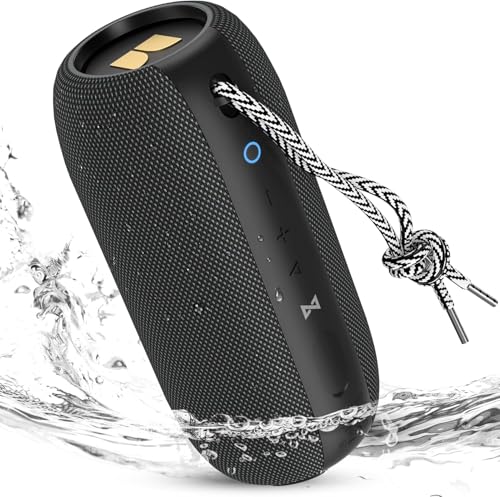
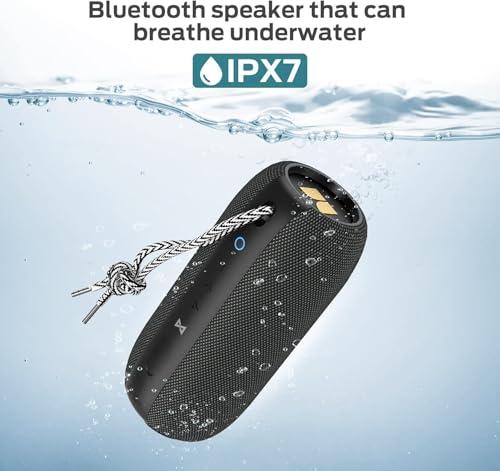
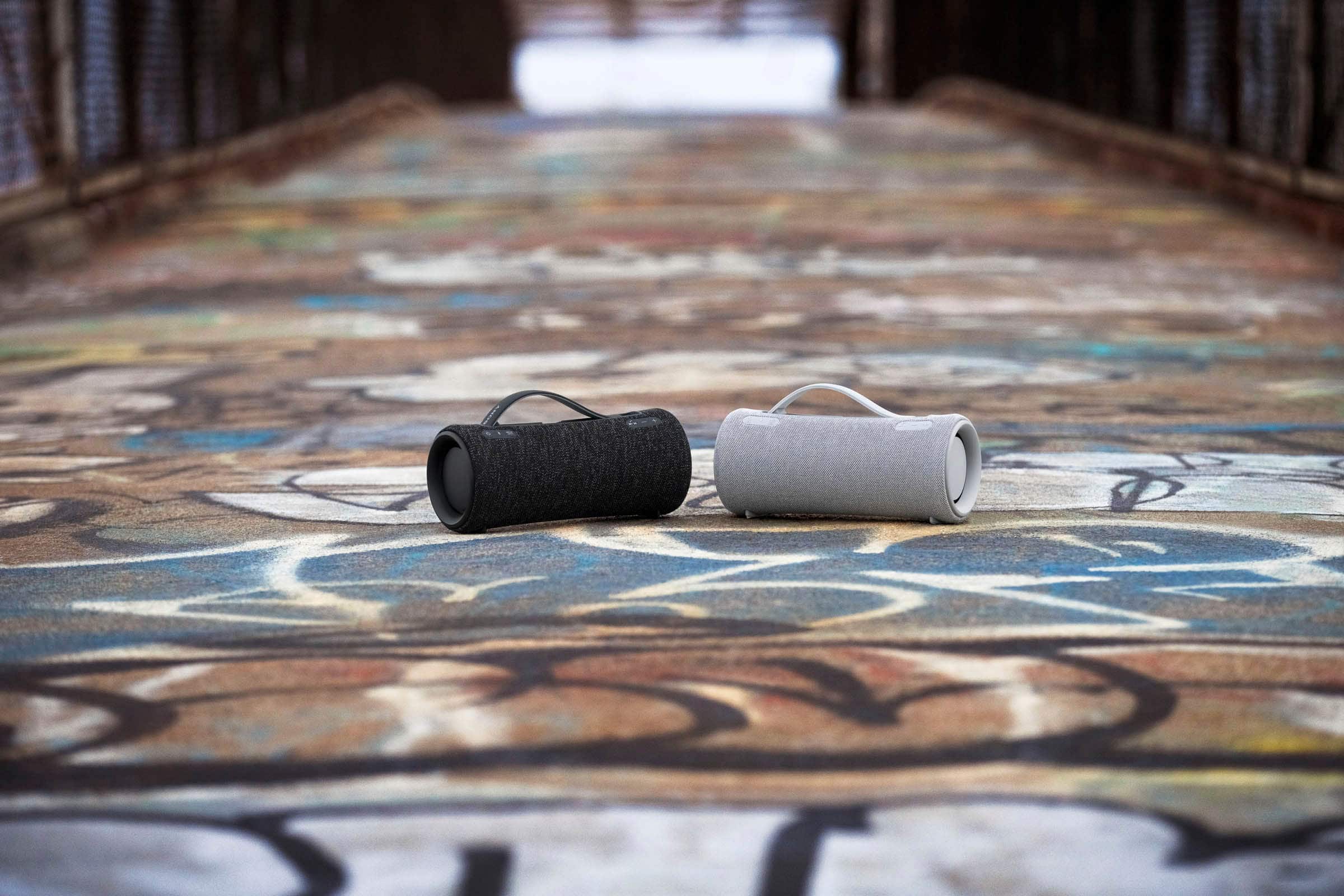
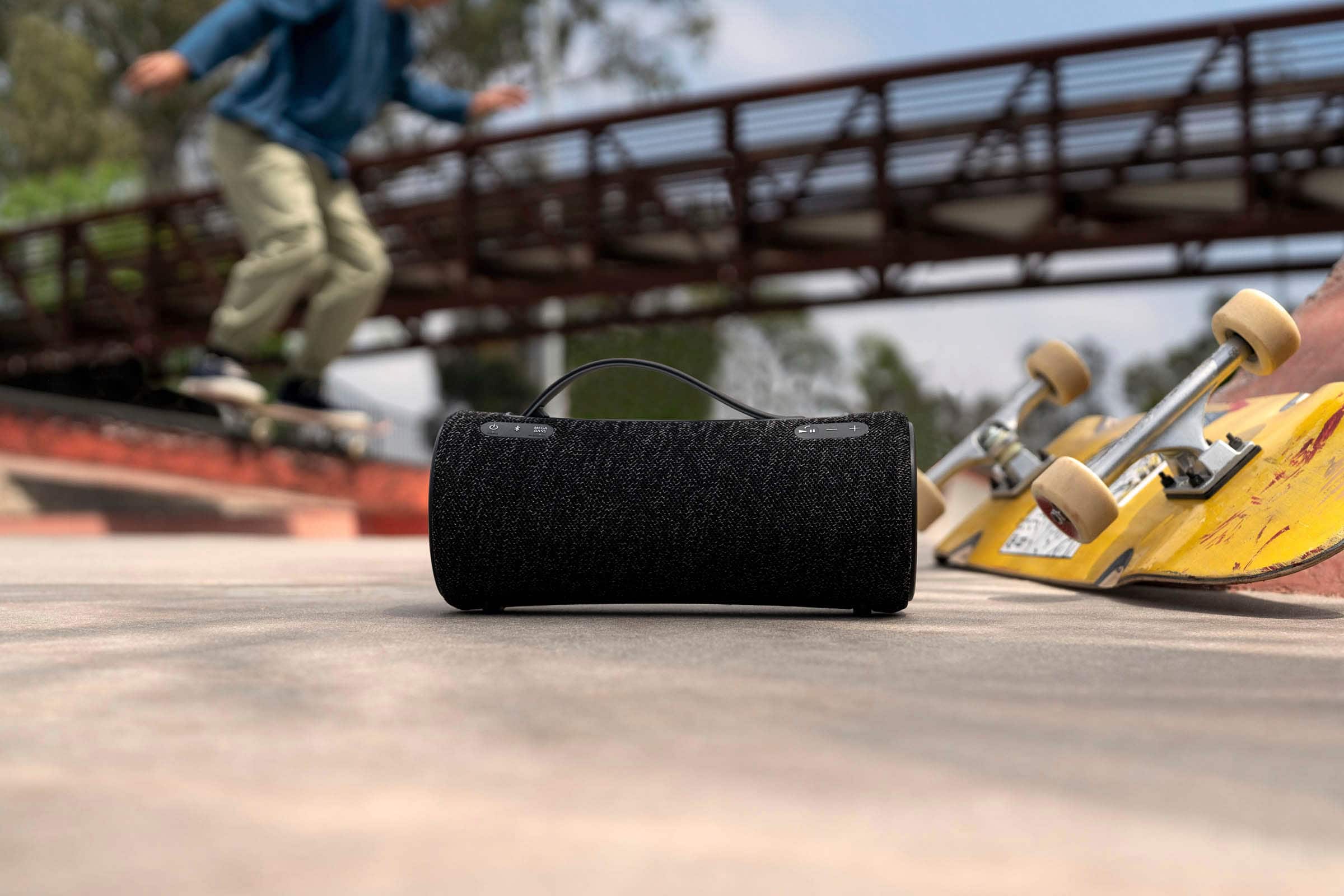
At 720 grams (about 1.6 pounds) and measuring roughly 3.4 x 3.4 x 7.5 inches, the Monster S320 represents genuine portability. You can literally throw this in a backpack's side pocket and forget it's there until you need it. The cylindrical design with an adjustable hanging strap means you can position it almost anywhere - hanging from a tree branch, standing on a rock, or even floating in a pool (thanks to its IPX7 waterproof rating).
The build quality focuses on ruggedness over aesthetics. Monster specifically markets this as shockproof and designed for extreme activities like rock climbing and skiing. User reviews consistently mention the speaker's substantial feel despite its light weight, suggesting solid internal construction.
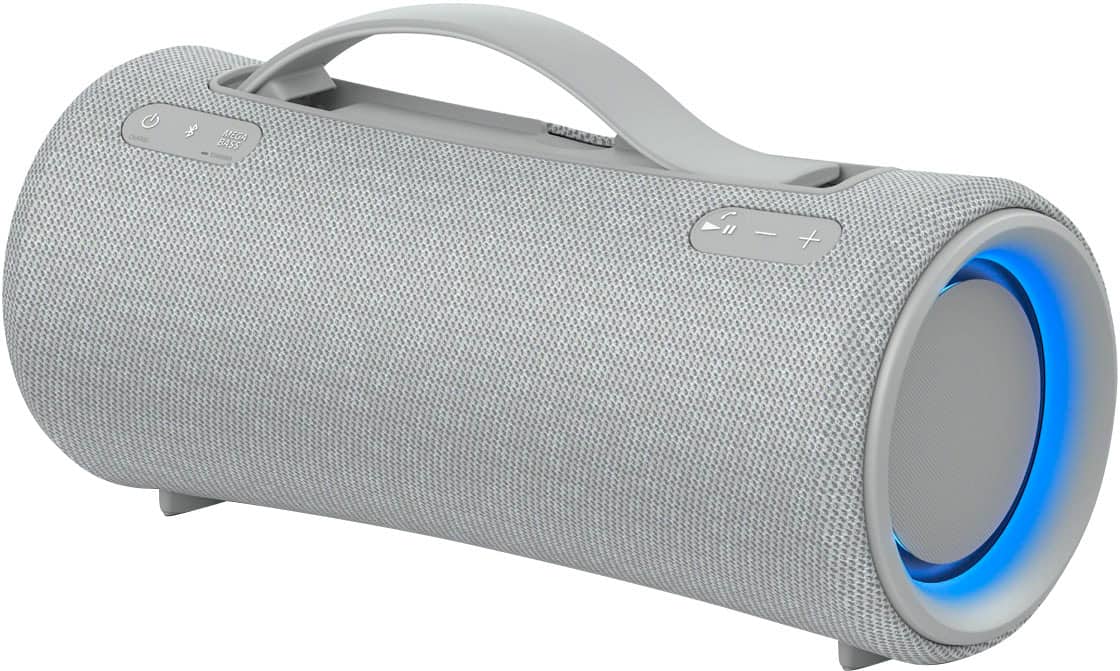
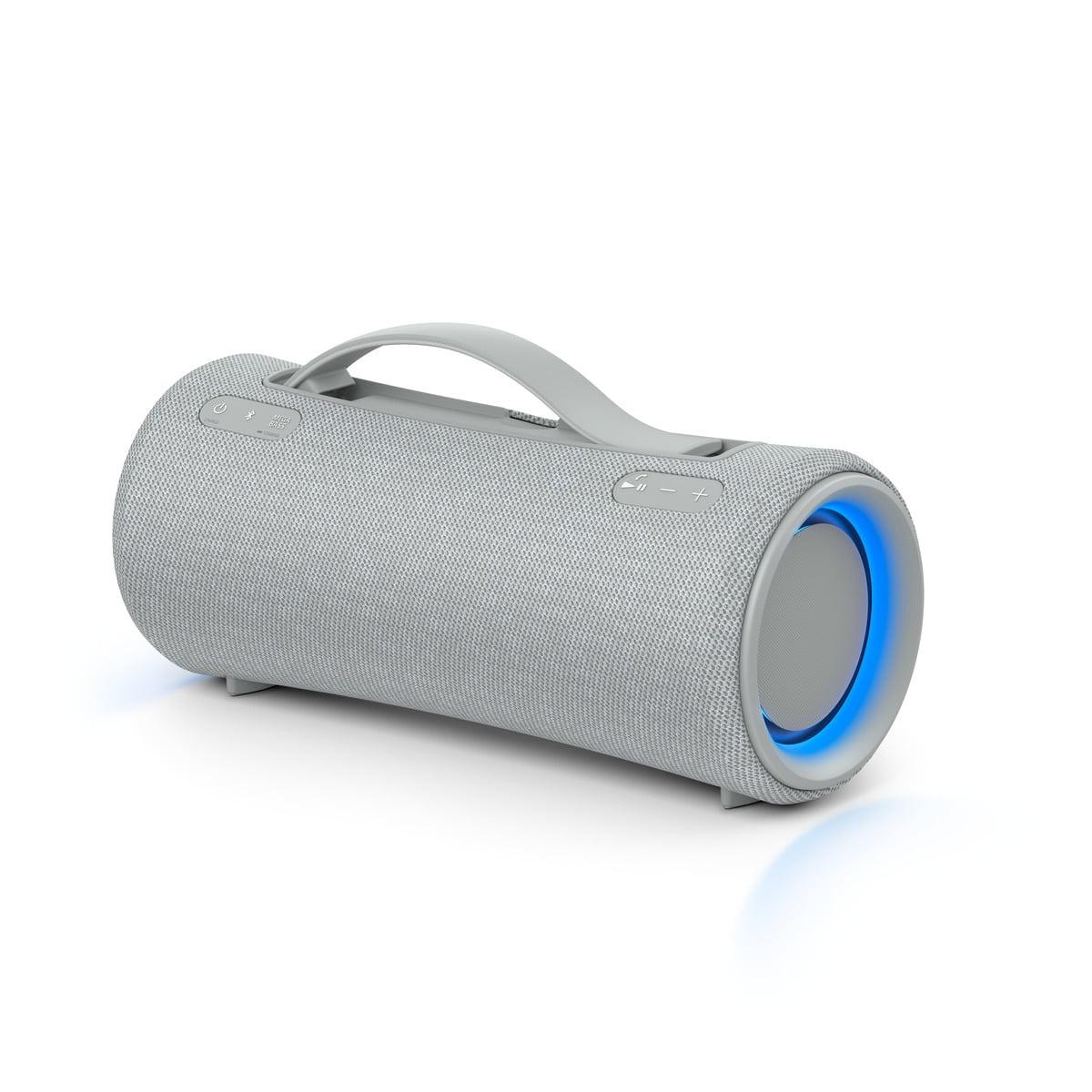
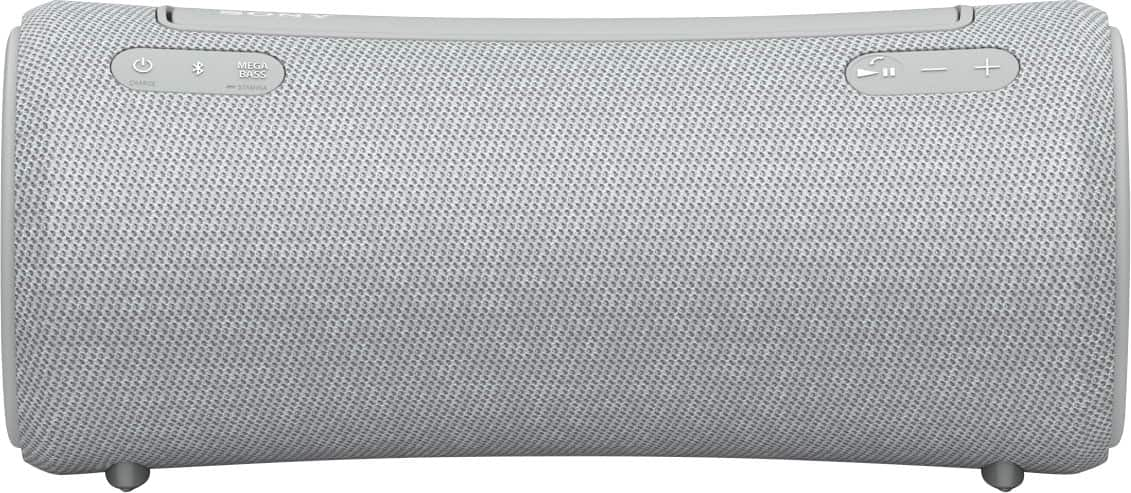
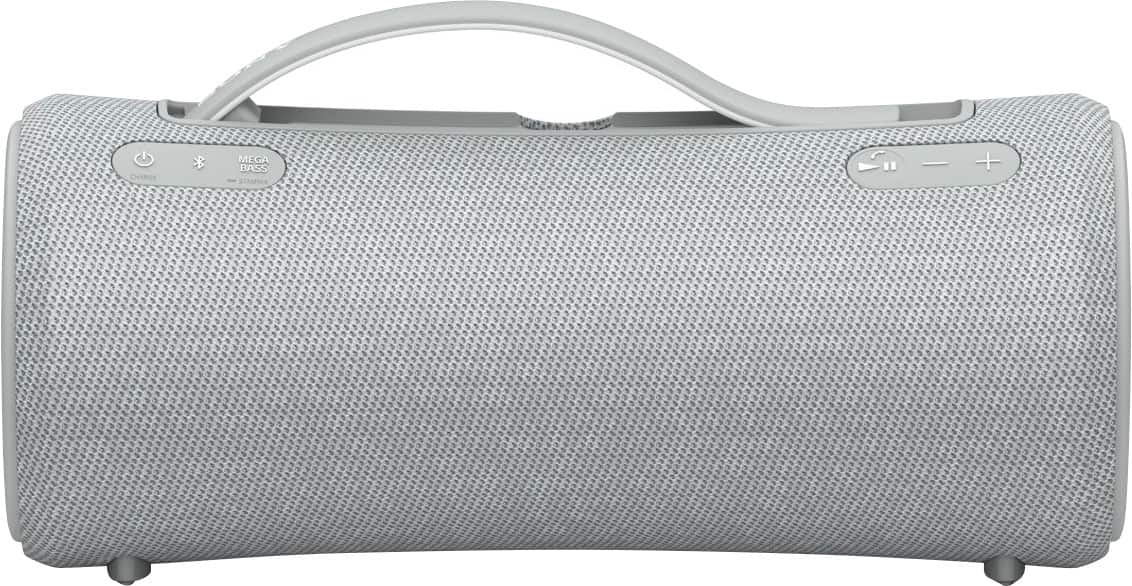
The Sony XG300 weighs 3 kilograms (about 6.6 pounds) and measures approximately 12.5 x 5.4 x 5.4 inches. This puts it firmly in "semi-portable" territory - you can move it around your house or take it to parties, but you're making deliberate decisions about where it goes rather than casually tossing it in a bag.
Sony includes a retractable handle, which helps with moving the speaker but also acknowledges its substantial weight. The build quality feels premium, with materials that suggest it's designed more for occasional outdoor use rather than constant adventure abuse. The IP67 rating (equivalent water protection to IPX7, plus dust resistance) means it can handle poolside splash zones but probably shouldn't be your first choice for whitewater rafting.
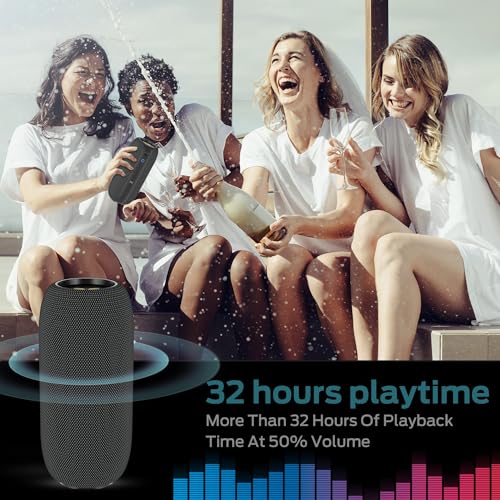
The Monster S320 absolutely dominates in battery life, delivering up to 32 hours of continuous playback at medium volume from its 2500mAh lithium-ion polymer battery. This isn't marketing fluff - user reviews consistently confirm getting close to the claimed runtime in real-world usage.
Thirty-two hours means the speaker can handle a three-day camping trip without needing a charge. It means you can use it daily for background music at work for nearly a week. This kind of battery life transforms how you think about the device - it becomes a utility rather than another gadget to manage and charge constantly.
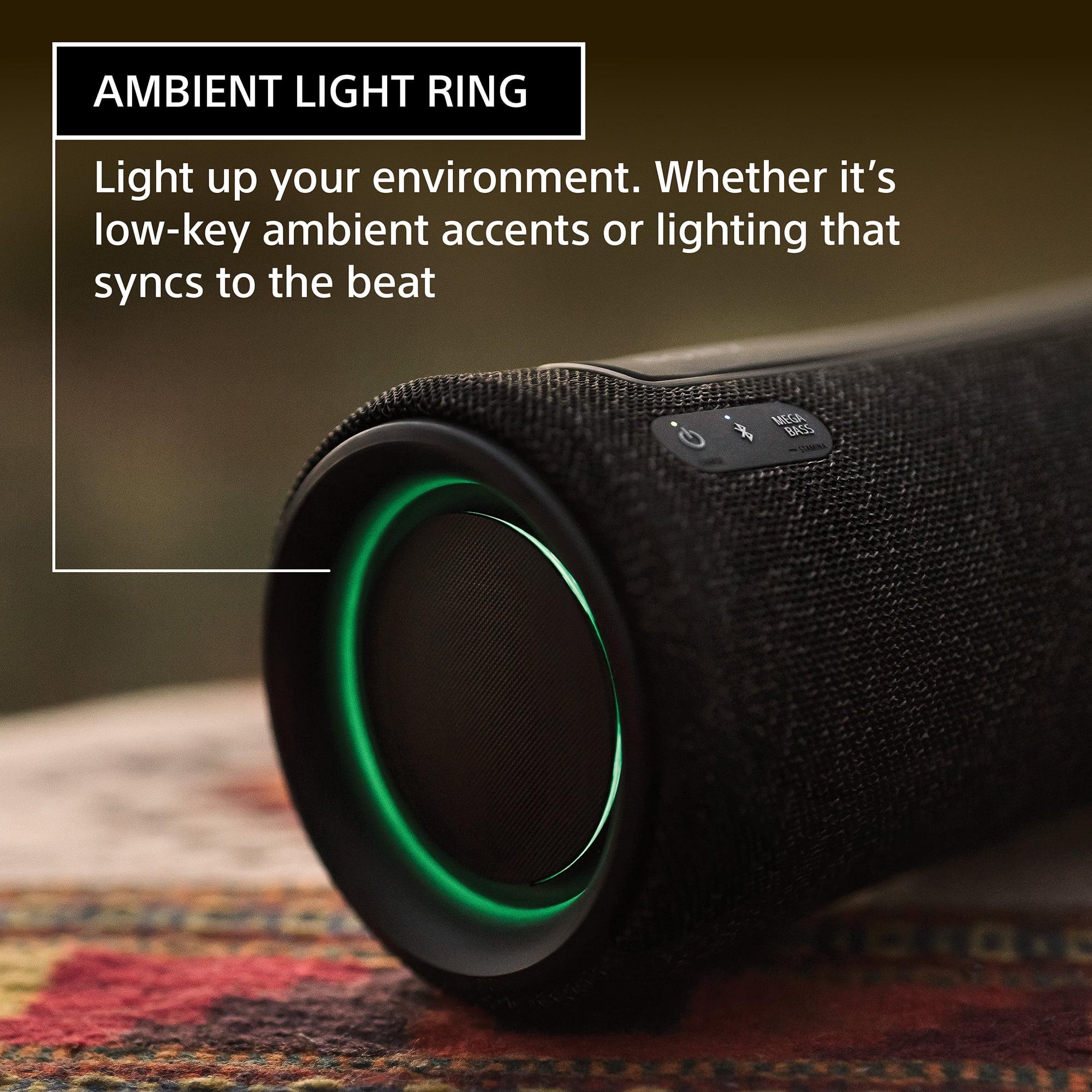
The Sony XG300 provides approximately 25 hours of playback, which is genuinely good but not exceptional in today's market. More importantly, that figure drops significantly when you use higher volumes or enable the RGB lighting features. User testing suggests around 14 hours at louder volumes with lights active - still respectable, but not the all-day marathon performance of the Monster.
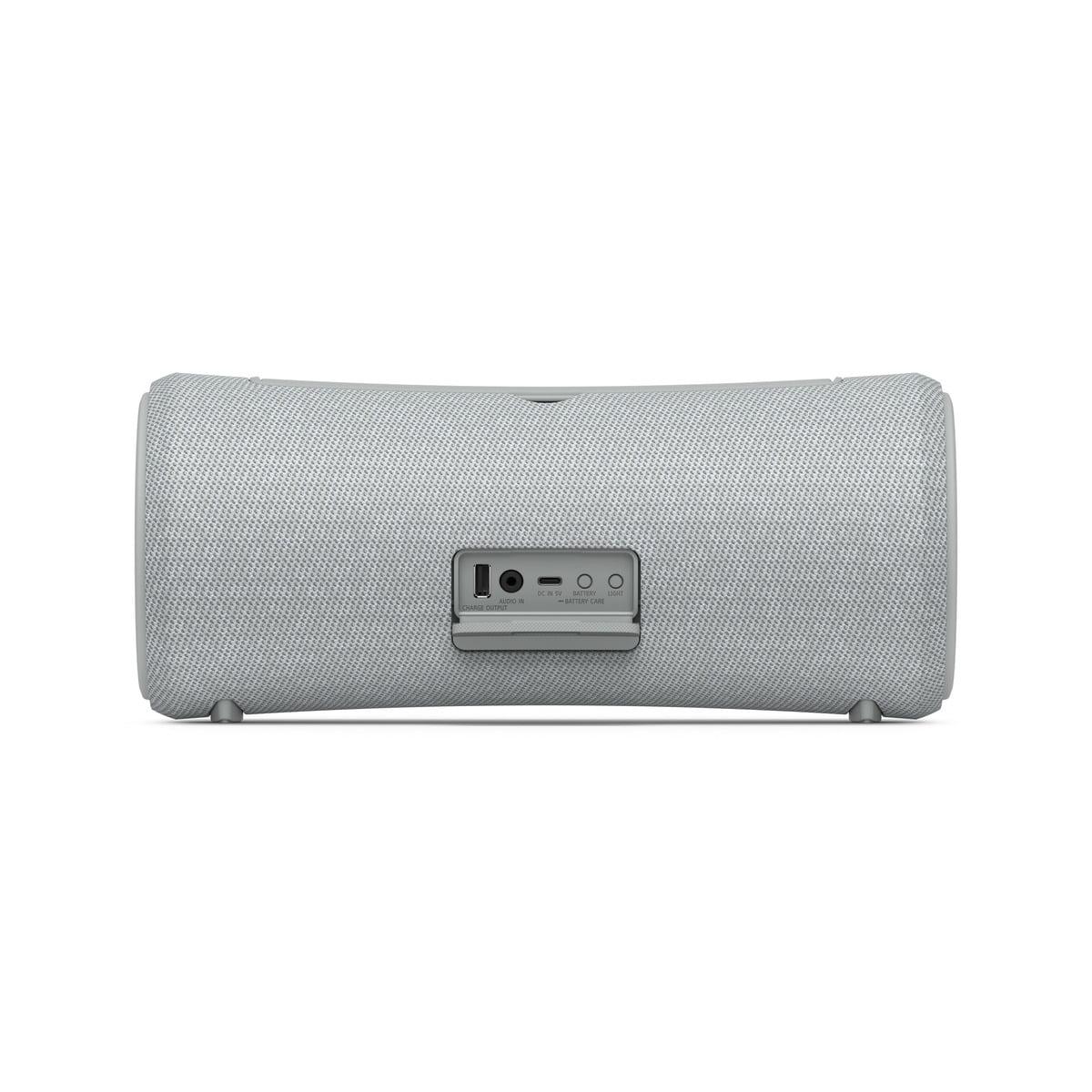
The Sony does add practical value with its USB-A port that can charge your phone at 1.5 amps. This power bank functionality makes sense for extended outdoor activities where you might need to top up your smartphone. However, using this feature obviously reduces the speaker's own runtime.
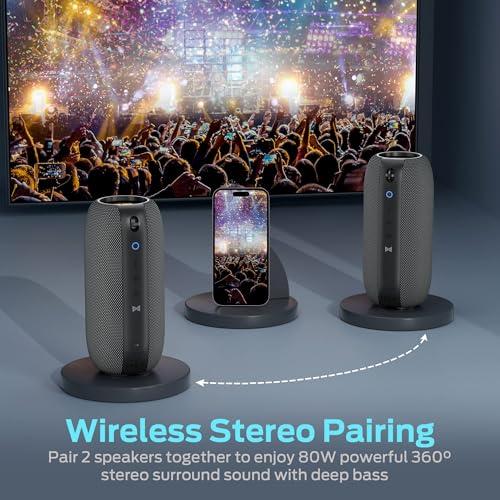
The Monster S320 uses Bluetooth 5.0 (some sources mention 4.2, suggesting possible regional variations or revisions) with support for True Wireless Stereo (TWS). TWS lets you pair two identical speakers for genuine stereo separation and 80 watts combined output. Based on user reviews, the pairing process works reliably and the stereo effect is noticeable and enjoyable.
The simplicity here is both a strength and limitation. You get reliable connectivity without complexity, but you miss advanced features like multi-device pairing or high-resolution audio codec support.
The Sony XG300 implements Bluetooth 5.2, the most current standard offering improved range, stability, and power efficiency. More importantly, it supports Sony's LDAC codec, which can transmit roughly three times more audio data than standard Bluetooth. For streaming high-quality music from compatible devices (mainly Android phones and Sony products), this could provide noticeably better sound quality.
The speaker also supports multipoint technology, letting you connect two devices simultaneously. This means you can seamlessly switch between watching a video on your tablet and taking a phone call without manually reconnecting devices.
Sony's Party Connect feature allows linking up to 100 compatible speakers for large-scale installations, though the practical value of this depends entirely on whether you own other Sony speakers.
At the time of writing, these speakers target different price segments, with the Monster S320 positioned as a more affordable option while the Sony XG300 commands a premium price reflecting its brand positioning and advanced features.
The Monster represents exceptional value if your priorities align with its strengths: maximum portability, extraordinary battery life, rugged durability, and straightforward operation. You're paying for core performance fundamentals executed extremely well rather than flashy features.
The Sony asks you to pay more for sophistication: app-based customization, premium build materials, advanced Bluetooth features, and integration with Sony's ecosystem. Whether this premium is justified depends heavily on how much you value these additional capabilities.
User reviews suggest some buyer's remorse with the Sony, particularly from people who expected its higher price to translate into obviously superior sound quality. The reality is that sound quality differences between good speakers in this category are often subtle and highly dependent on personal preference and music taste.
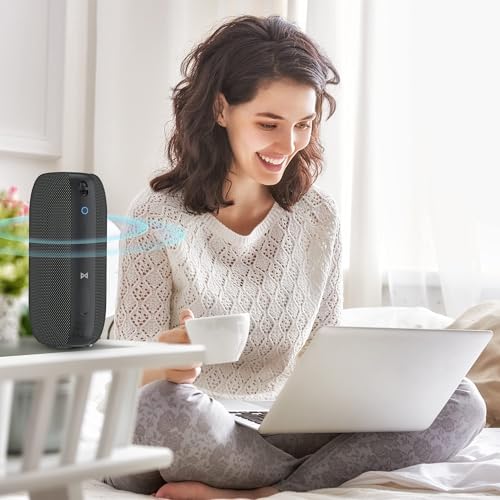
While both speakers are designed for portability, they can serve indoor roles too. The Monster S320's 360-degree sound dispersion actually works well for background music in open floor plans, creating ambient sound that fills a space without being directional.
The Sony XG300's stereo driver configuration and more substantial size make it better suited for desktop or bookshelf use where you're listening from a relatively fixed position. The app-based EQ controls become more valuable in indoor environments where you can fine-tune the sound for room acoustics.
Neither speaker is designed to replace a proper home theater system, but the Sony's superior stereo imaging and customization options give it an edge for indoor entertainment use.
Both speakers incorporate meaningful technological advances from their respective manufacturers. Monster's 360-degree dispersion and Pure Monster Sound processing represent genuine innovation in compact speaker design, even if the underlying technology isn't revolutionary.
Sony's X-Balanced drivers and DSEE audio enhancement show more technical sophistication, leveraging the company's decades of audio engineering experience. The LDAC support provides genuine future-proofing as more devices adopt high-resolution wireless audio standards.
The Monster S320 makes sense for active users who genuinely need portability and reliability. If you're hiking, camping, traveling, or just want a speaker that disappears into your daily routine without management overhead, the Monster delivers exactly what you need. The 32-hour battery life alone makes this compelling for anyone who uses their speaker regularly.
The Sony XG300 targets users who want a premium portable speaker for occasional outdoor use and regular indoor enjoyment. If you like tweaking audio settings, appreciate build quality details, and don't mind managing a heavier device, the Sony provides more sophisticated audio reproduction and features.
Based on our research, the Monster seems to consistently exceed user expectations while the Sony occasionally disappoints relative to its price point. However, Sony users who embrace the customization features tend to be very satisfied with their purchase.
The decision ultimately comes down to usage patterns: choose maximum portability and simplicity with the Monster S320, or choose sophistication and features with the Sony XG300. Both are good speakers, but they're solving different problems for different users.
| Monster S320 Superstar | Sony XG300 MEGA BASS |
|---|---|
| Weight & Portability - Critical for true mobility and outdoor adventures | |
| 720g (1.6 lbs) - True backpack portable | 3kg (6.6 lbs) - Semi-portable, needs planning |
| Battery Life - Determines freedom from charging anxiety | |
| 32 hours at medium volume - Multi-day adventures | 25 hours (14+ hours at high volume with lights) |
| Sound Architecture - Affects listening experience and placement flexibility | |
| 360° omnidirectional, dual 2" drivers, 40W total | Stereo left/right, 4-driver system with separate tweeters/woofers |
| Water Resistance - Essential for outdoor reliability | |
| IPX7 waterproof + shockproof for extreme conditions | IP67 waterproof/dustproof for poolside/beach use |
| Sound Customization - Important for audiophiles and varied music tastes | |
| Pre-tuned "Pure Monster Sound" - no adjustments | Extensive app control: custom EQ, 3 presets, DSEE enhancement |
| Bluetooth Technology - Affects connection quality and device compatibility | |
| Bluetooth 5.0, True Wireless Stereo pairing | Bluetooth 5.2, LDAC codec, multipoint connection, Party Connect |
| Multi-Speaker Features - Valuable for parties and large spaces | |
| TWS pairing with second Monster S320 for 80W stereo | Party Connect (up to 100 speakers), Stereo Pair mode |
| Additional Features - Convenience factors that justify price differences | |
| Hanging strap, voice assistant, simple controls | USB charging port, RGB lighting, retractable handle, comprehensive app |
| Target User - Who gets the most value from each approach | |
| Active adventurers prioritizing portability and battery life | Home/patio users wanting premium features and sound control |
The Monster S320 Superstar is significantly better for outdoor adventures. At just 720g compared to the Sony XG300's 3kg weight, the Monster is truly portable for hiking and camping. Its 32-hour battery life means you won't need to charge it during multi-day trips, while the Sony's 25-hour battery (less at high volumes) requires more planning. Both are waterproof, but the Monster S320 is specifically designed as shockproof for rugged outdoor use.
The Sony XG300 has a more sophisticated four-driver system with separate tweeters and woofers for better frequency separation. However, users report it can sound "boomy" with compression at high volumes. The Monster S320 uses 360° sound dispersion that's described as "clean and bassy" by reviewers, creating immersive sound that works well for group listening situations.
The Monster S320 Superstar wins decisively with 32 hours of playback at medium volume versus the Sony XG300's 25 hours. The Sony's battery life drops to around 14 hours when using higher volumes with RGB lighting enabled, while the Monster maintains consistent performance throughout its charge cycle.
The Sony XG300 supports multipoint technology, allowing simultaneous connection to two Bluetooth devices for seamless switching between your phone and tablet. The Monster S320 connects to one device at a time but offers True Wireless Stereo pairing with a second Monster speaker for 80W combined stereo output.
The Monster S320 Superstar is far more travel-friendly. Its compact cylindrical design and light 720g weight make it easy to pack in any bag. The Sony XG300 weighs over four times more at 3kg and requires deliberate packing decisions due to its larger size, though it does include a retractable handle for easier carrying.
Both can work indoors, but serve different purposes. The Sony XG300 is better for desktop or bookshelf use with its stereo driver configuration and extensive EQ customization through the app. The Monster S320's 360° sound works well for ambient background music in open floor plans, filling spaces evenly without directional limitations.
The Sony XG300 provides extensive customization through the Sony Music Center app, including three preset modes (Clear Audio+, MEGA BASS, LIVE SOUND), custom EQ controls, and DSEE audio enhancement. The Monster S320 Superstar offers minimal customization, focusing on delivering a consistent "Pure Monster Sound" signature without complex adjustments.
Both speakers offer excellent water protection with IPX7/IP67 ratings, meaning they can survive complete submersion. The Monster S320 adds shockproof construction specifically designed for extreme outdoor activities like rock climbing and skiing. The Sony XG300 is better suited for poolside or beach use rather than rugged adventure scenarios.
Yes, but with different approaches. The Monster S320 Superstar supports TWS (True Wireless Stereo) pairing with another identical Monster speaker for genuine stereo separation. The Sony XG300 offers Party Connect for linking up to 100 compatible Sony speakers, plus Stereo Pair mode, all managed through the comprehensive app.
The Sony XG300 uses more advanced Bluetooth 5.2 with support for Sony's LDAC codec, which transmits three times more audio data than standard Bluetooth for higher quality sound from compatible devices. The Monster S320 uses Bluetooth 5.0 with reliable but more basic connectivity features focused on stability rather than advanced codec support.
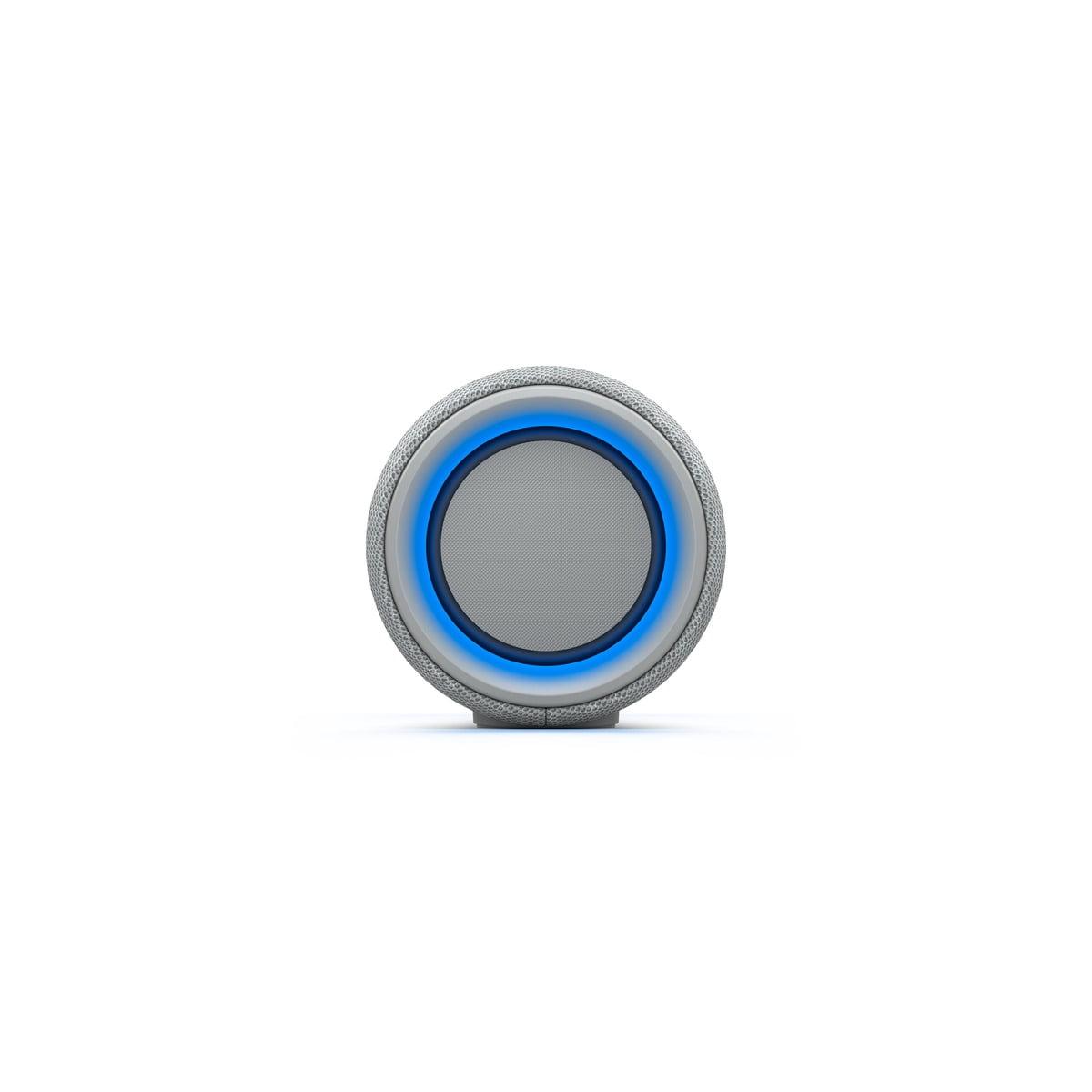
The Sony XG300 includes RGB lighting effects, a USB port for charging devices, comprehensive app control, and voice assistant integration. The Monster S320 Superstar keeps things simpler with an adjustable hanging strap for versatile positioning, basic voice assistant support, and straightforward physical controls without app complexity.
This depends on your priorities. The Monster S320 Superstar delivers exceptional value for users prioritizing core performance - maximum portability, outstanding battery life, and rugged durability. The Sony XG300 justifies its premium through advanced features, app customization, and sophisticated audio processing, but some users report feeling it's overpriced relative to the sound quality improvement over the Monster.
We've done our best to create useful and informative comparisons to help you decide what product to buy. Our research uses advanced automated methods to create this comparison and perfection is not possible - please contact us for corrections or questions. These are the sites we've researched in the creation of this article: youtube.com - runbazaar.com - youtube.com - exceldisc.com - youtube.com - 961souq.com - walmart.com - eshtir.com - mct-audio.com - hk.monsterstore.com - alibaba.com - cdn.tgdd.vn - device.report - manualslib.com - alibaba.com - bestbuy.com - youtube.com - sony.ca - youtube.com - electronics.sony.com - sony.com - abt.com - helpguide.sony.net - bhphotovideo.com - rtings.com - thesonyshop.ca - helpguide.sony.net

Privacy Policy
Terms and Conditions - Affiliate Policy
Home Security
© Copyright 2008-2026.
11816 Inwood Rd #1211, Dallas, TX 75244