

When it comes to portable Bluetooth speakers, the market has split into two distinct paths. On one side, you have ultra-portable speakers designed for personal listening and outdoor adventures. On the other, you'll find larger "portable party speakers" built to energize gatherings and events. The Monster S320 Superstar and JBL PartyBox On-The-Go Essential represent these two approaches perfectly—and understanding their differences is crucial for making the right choice.
At the time of writing, these speakers sit at opposite ends of the portable audio spectrum, with the Monster S320 priced around $50 while the JBL PartyBox commands roughly six times that amount. This price gap isn't just about brand positioning—it reflects fundamentally different design philosophies and target audiences.
The portable speaker landscape has evolved dramatically since Bluetooth speakers first gained popularity in the early 2010s. What started as simple wireless alternatives to wired computer speakers has branched into specialized categories, each optimized for specific use cases.
Personal portable speakers prioritize battery life, weather resistance, and true portability—meaning you can genuinely carry them anywhere without thinking twice. Party speakers, meanwhile, focus on maximum volume output, entertainment features like light shows and microphone inputs, and the ability to energize larger groups of people.
The key considerations when choosing between these categories include power output (measured in watts), which determines how loud the speaker can get and how large a space it can fill; portability factors like size, weight, and battery life; durability specifications like water resistance ratings; and additional features that enhance the listening or entertainment experience.
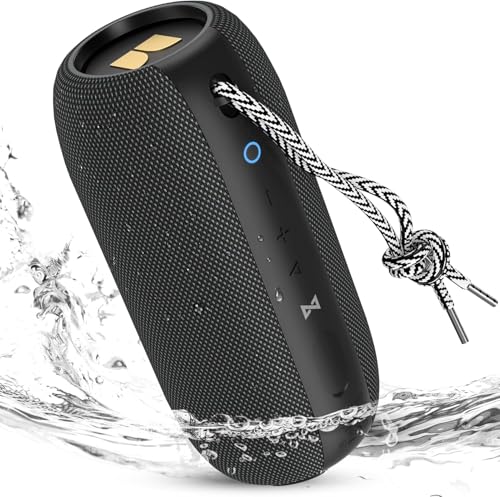
The Monster S320 Superstar, released in 2024, represents Monster's entry into the ultra-portable speaker market. Monster, historically known for premium audio cables and headphones, designed this speaker for users who want surprisingly good sound quality in an extremely portable package. At roughly the size of a large water bottle and weighing just over 1.5 pounds, it's built for people who live active lifestyles.
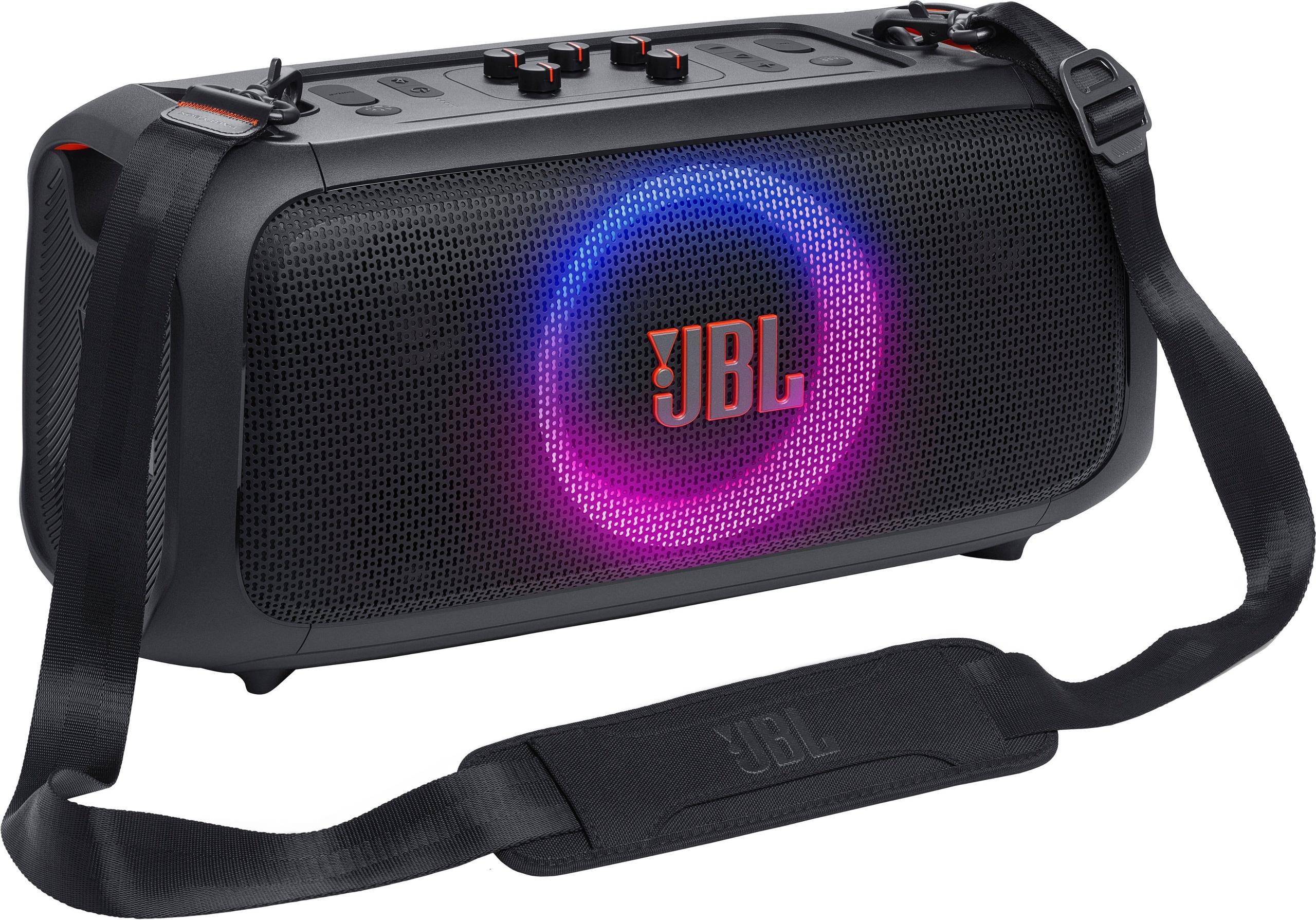
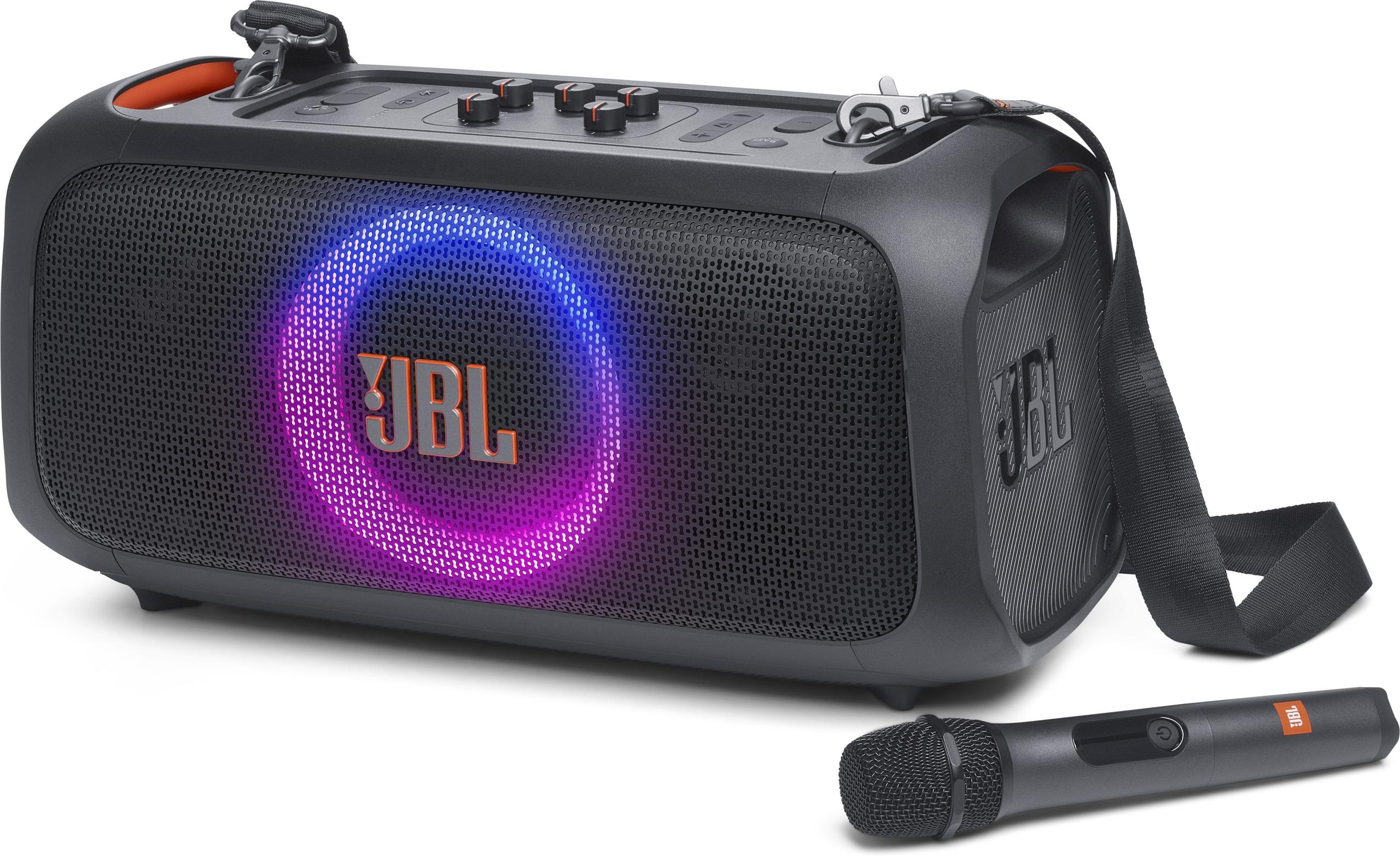
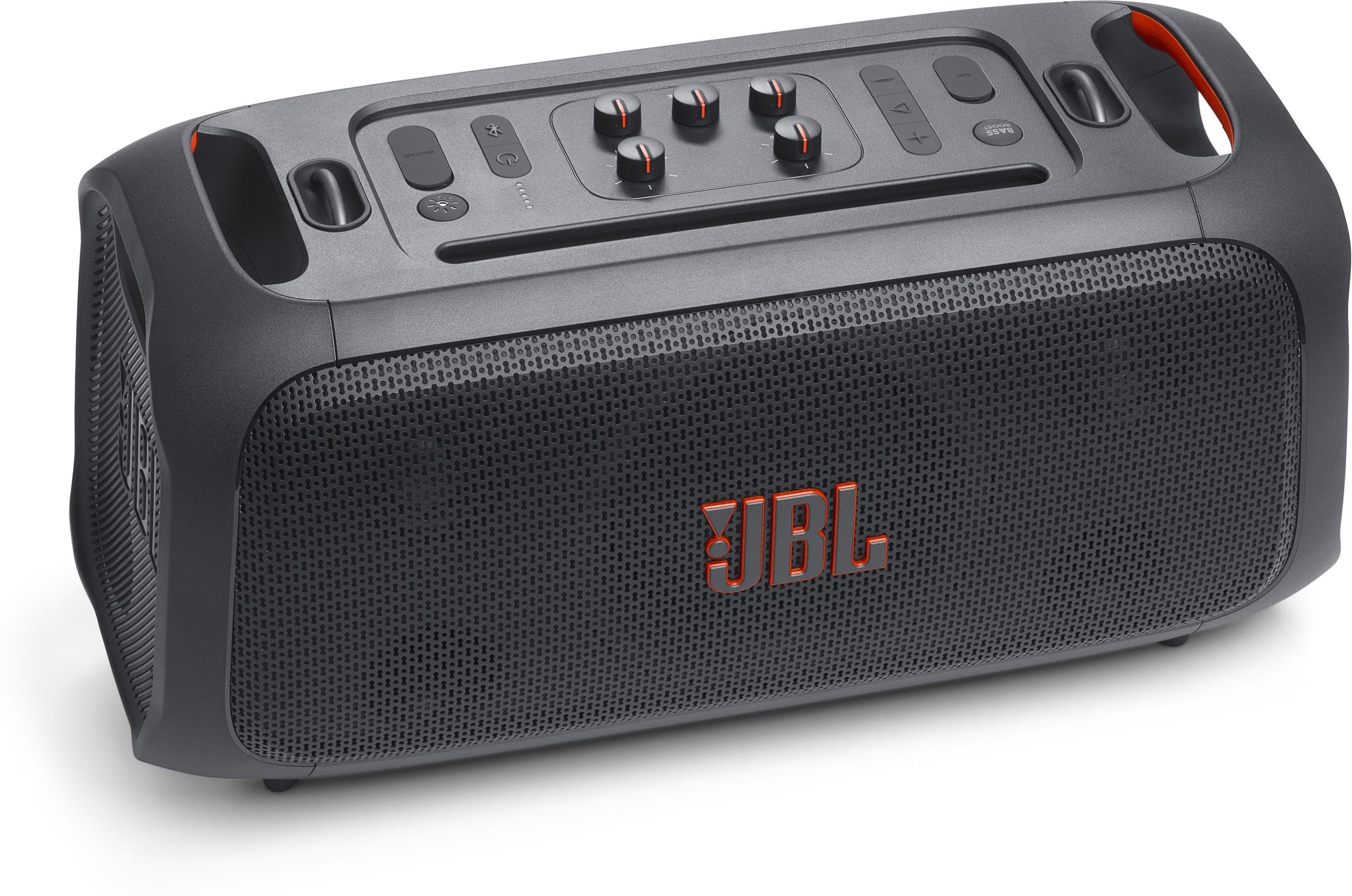
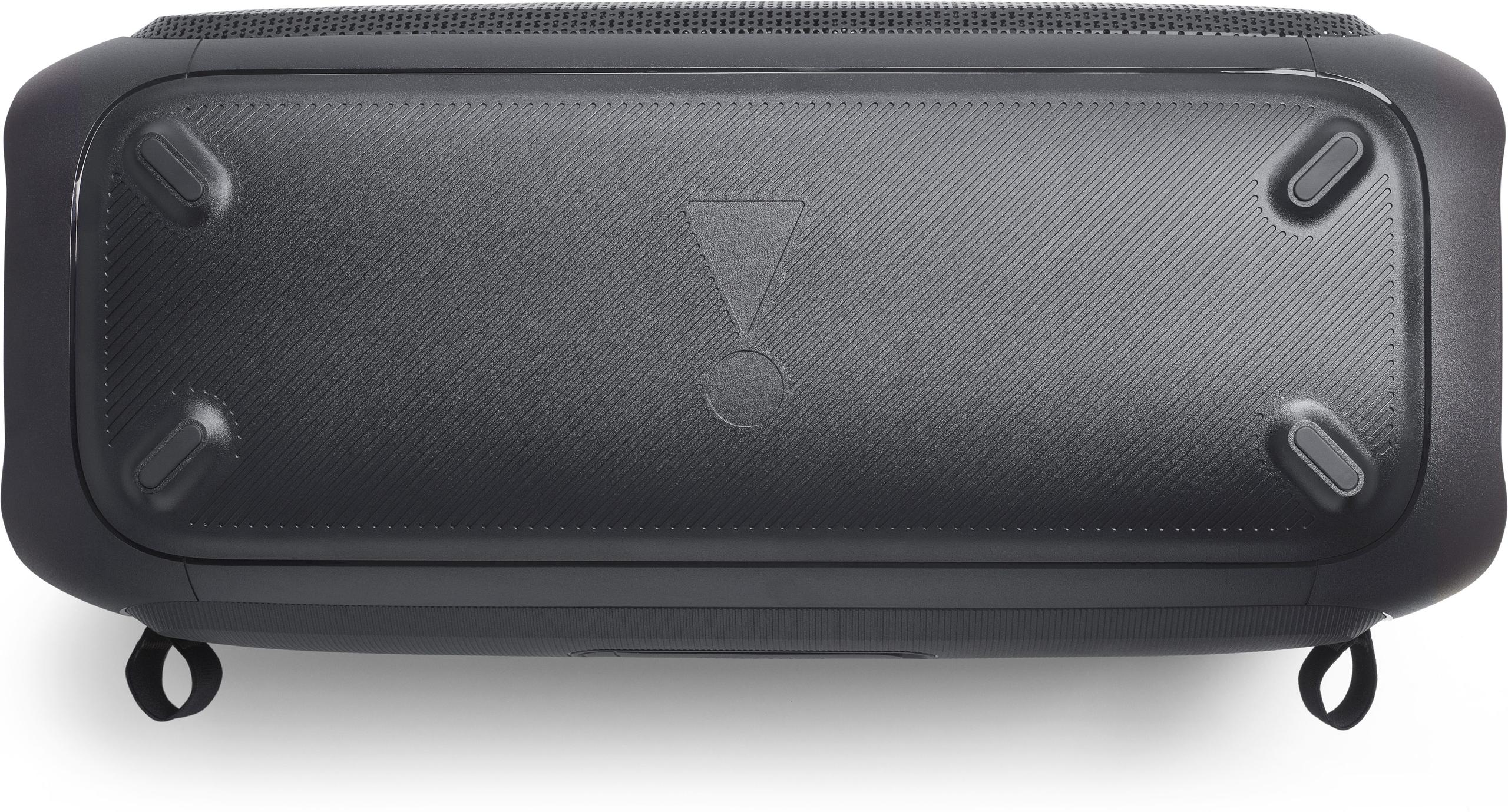
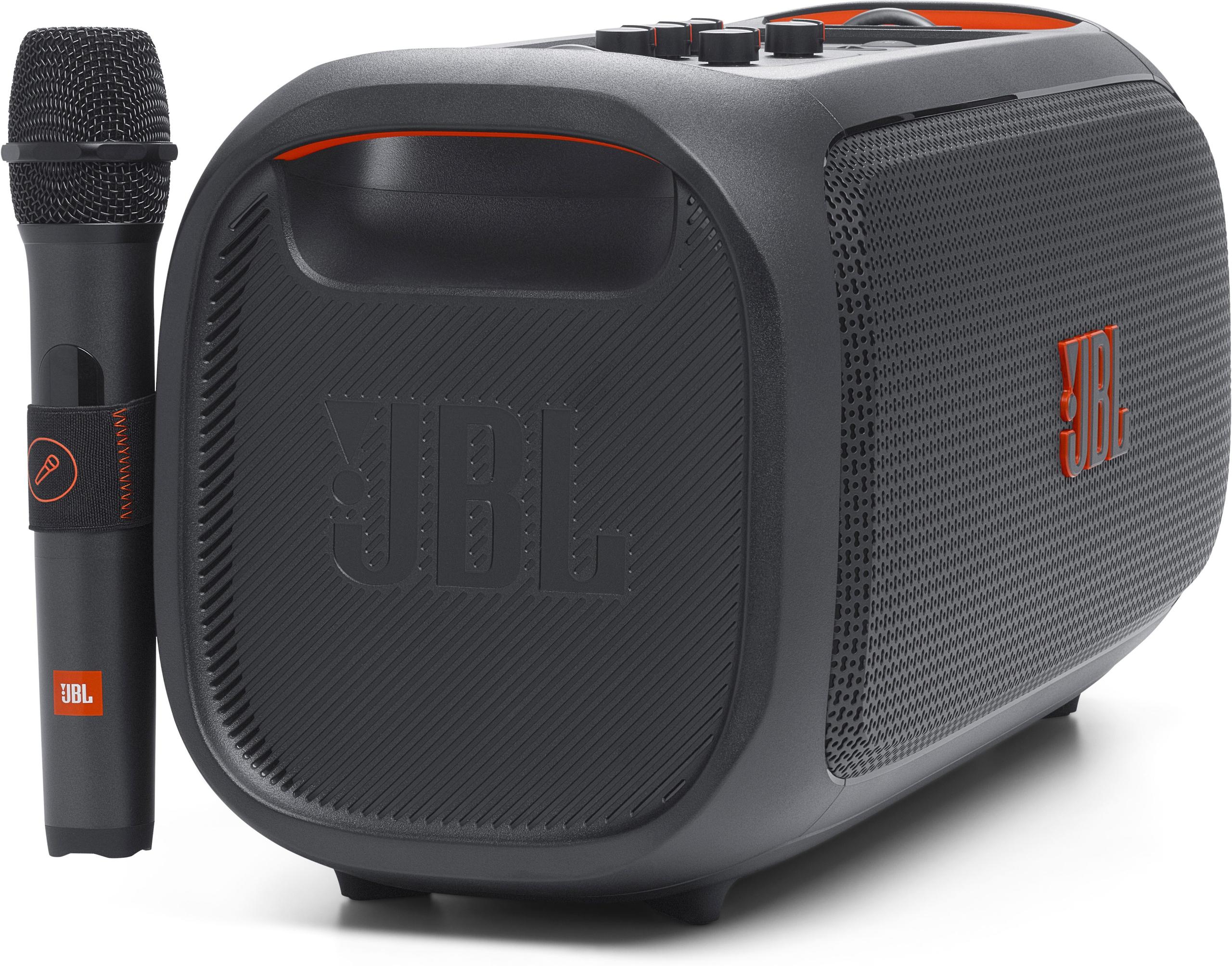
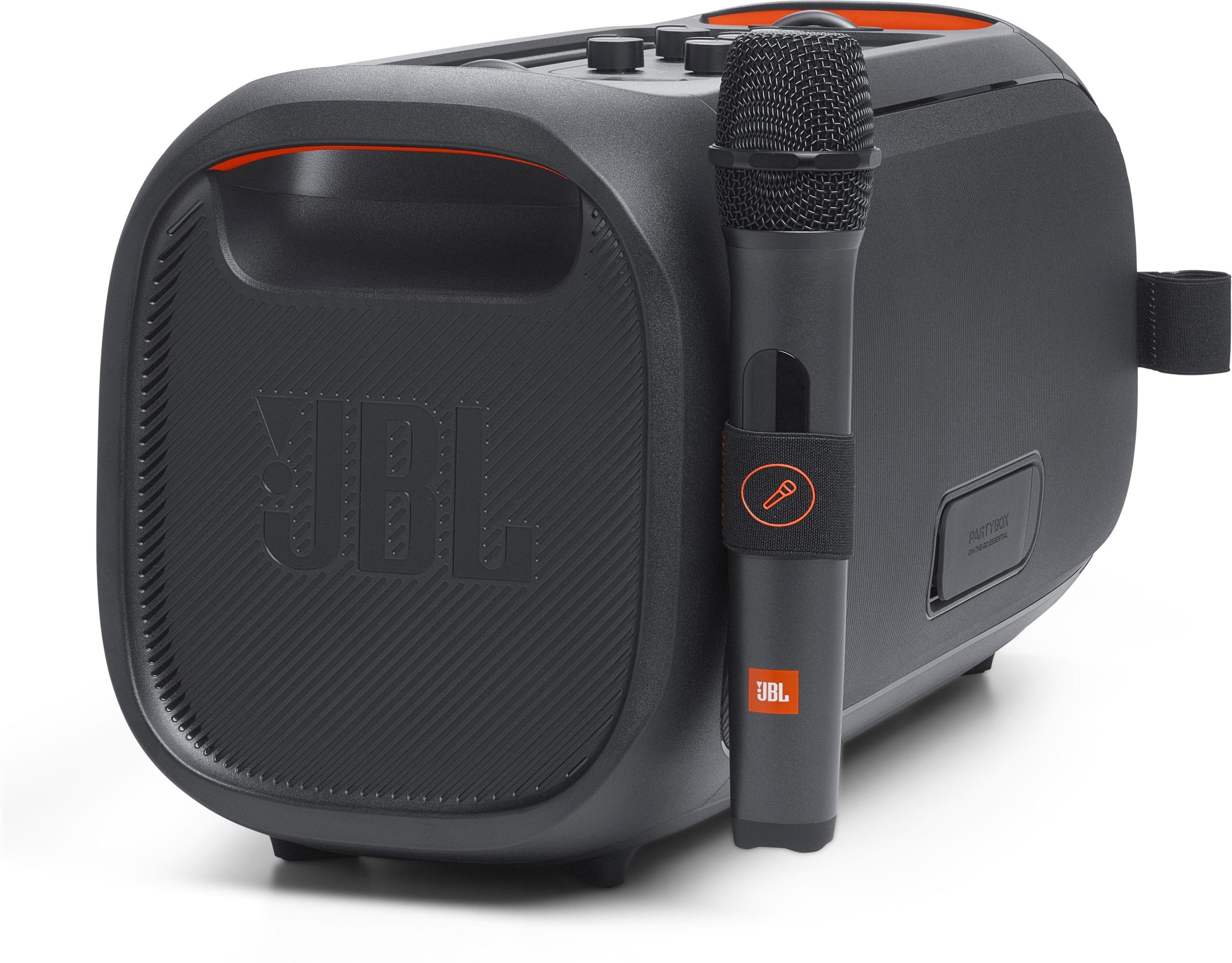
The JBL PartyBox On-The-Go Essential, also launched in 2024, continues JBL's successful PartyBox line that began gaining traction in the late 2010s. JBL recognized that many consumers wanted the powerful audio and party features of their larger PartyBox systems but in a more manageable size. At 13.4 pounds, it's still substantial but includes wheels and a telescopic handle for easier transport.
The timing of both releases reflects the maturation of the portable speaker market, where manufacturers now clearly understand the distinct needs of personal versus party audio users.
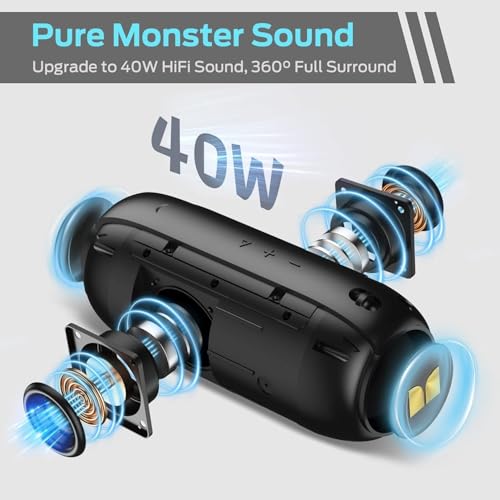
When evaluating speaker performance, watts tell only part of the story, but they're a crucial starting point. The Monster S320 delivers 40 watts through its dual 2-inch drivers arranged in a 360-degree configuration. This omnidirectional design means sound radiates in all directions, creating an immersive listening experience for the user and anyone nearby.
The 360-degree sound dispersion is particularly clever for a personal speaker because it eliminates the need to position the speaker perfectly. Whether you place it on a beach towel, camping table, or bathroom counter, everyone around gets quality audio. The frequency response spans 20Hz to 20kHz, covering the full range of human hearing, though the small drivers naturally emphasize mid-range clarity over deep bass extension.
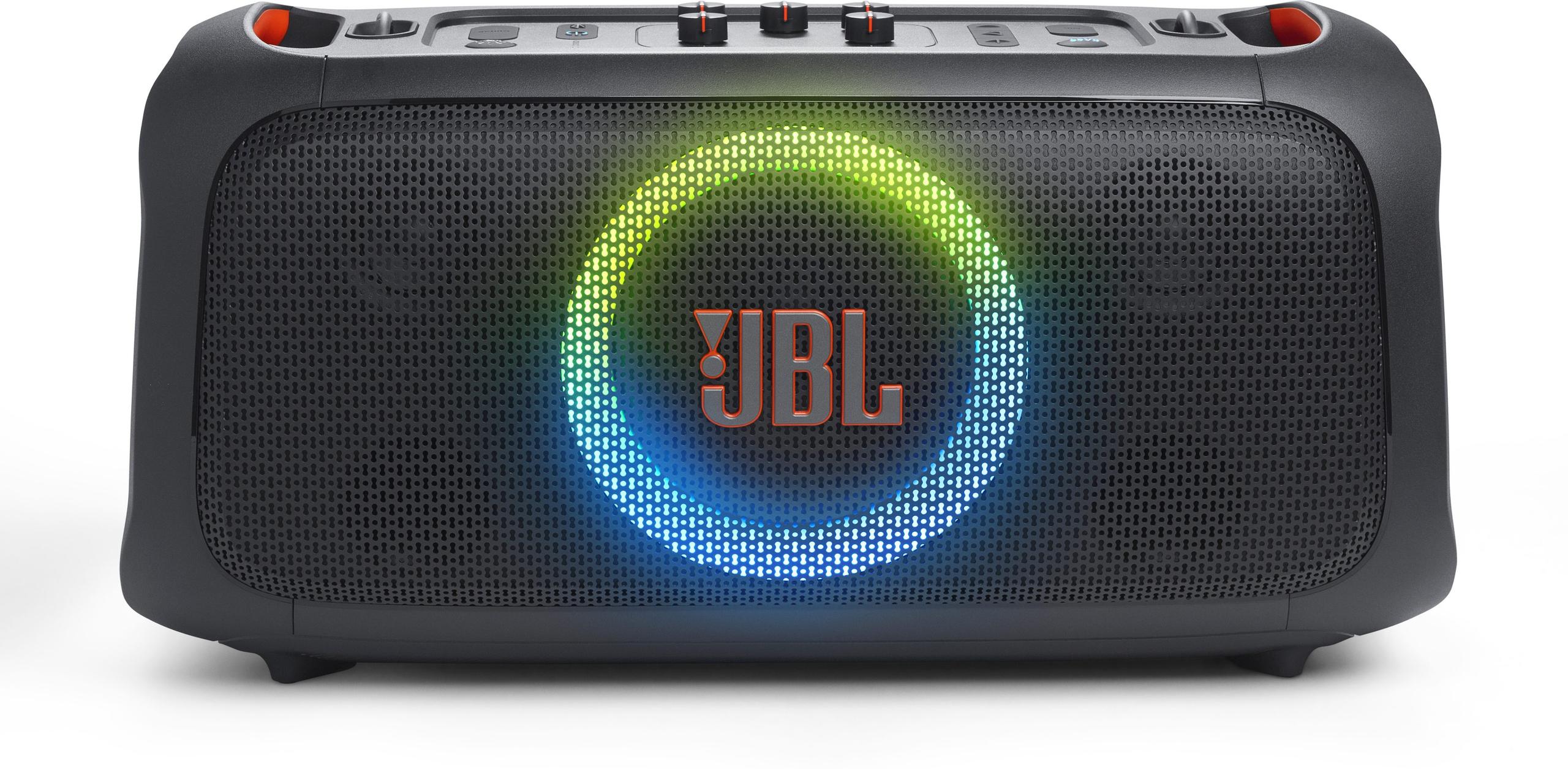
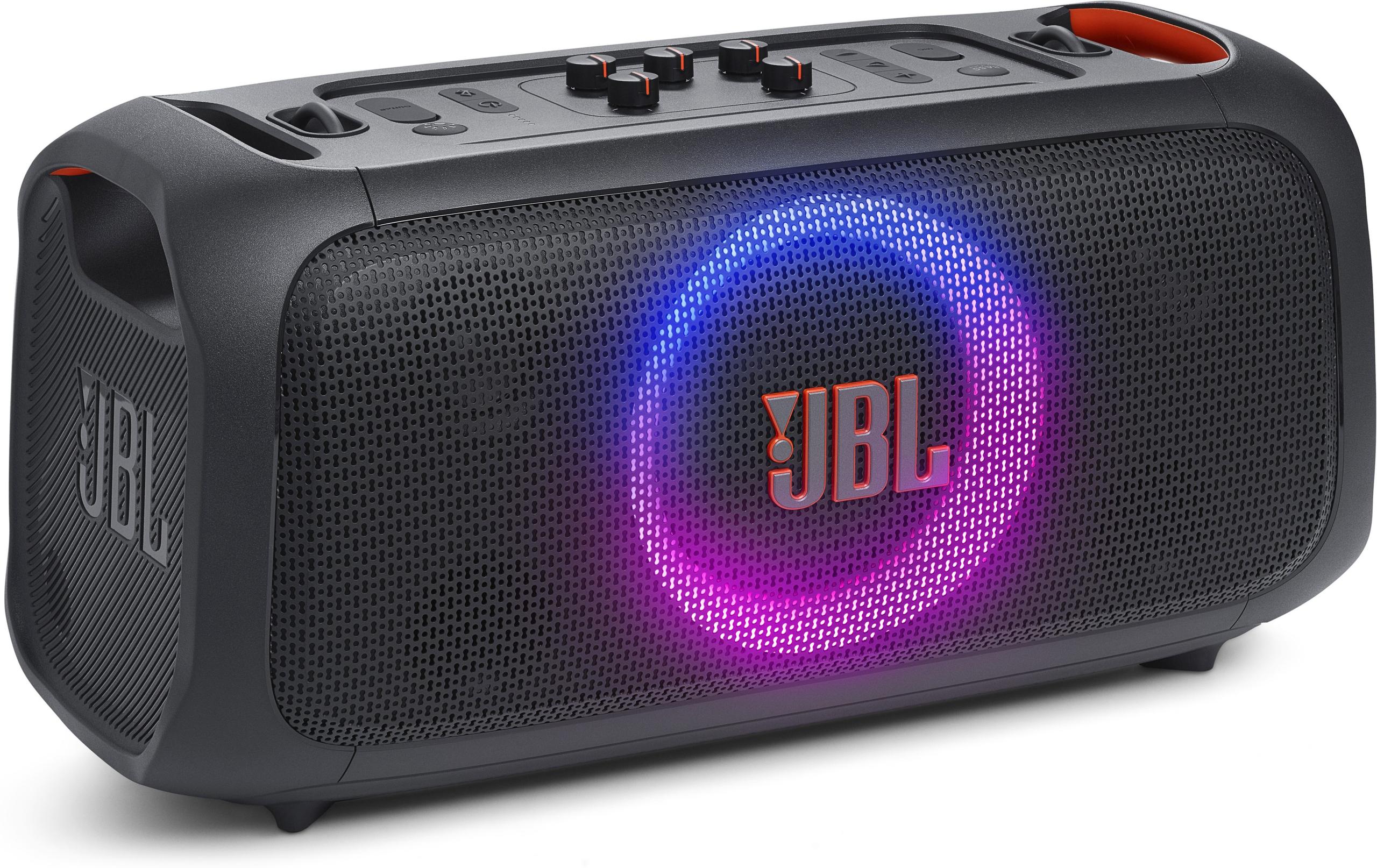
In contrast, the JBL PartyBox On-The-Go Essential pumps out 100 watts through a more traditional configuration: one 5.25-inch woofer for bass and two 1.75-inch tweeters for high frequencies. This directional setup projects sound forward and outward, designed to fill larger spaces rather than create intimate listening environments.
The woofer size makes a significant difference here. At 5.25 inches, the JBL's main driver can move much more air than the Monster's 2-inch drivers, producing deeper, more impactful bass that you can feel in your chest. This becomes crucial when you're trying to energize a party where background conversation and ambient noise compete with the music.
Based on user reviews and expert evaluations, the Monster S320 excels at delivering clear, balanced audio at moderate volumes. Its sweet spot appears to be personal listening and small group settings where you're within 10-15 feet of the speaker. The JBL PartyBox, meanwhile, truly shines when pushed to higher volumes, maintaining clarity and punch even when filling large outdoor spaces.
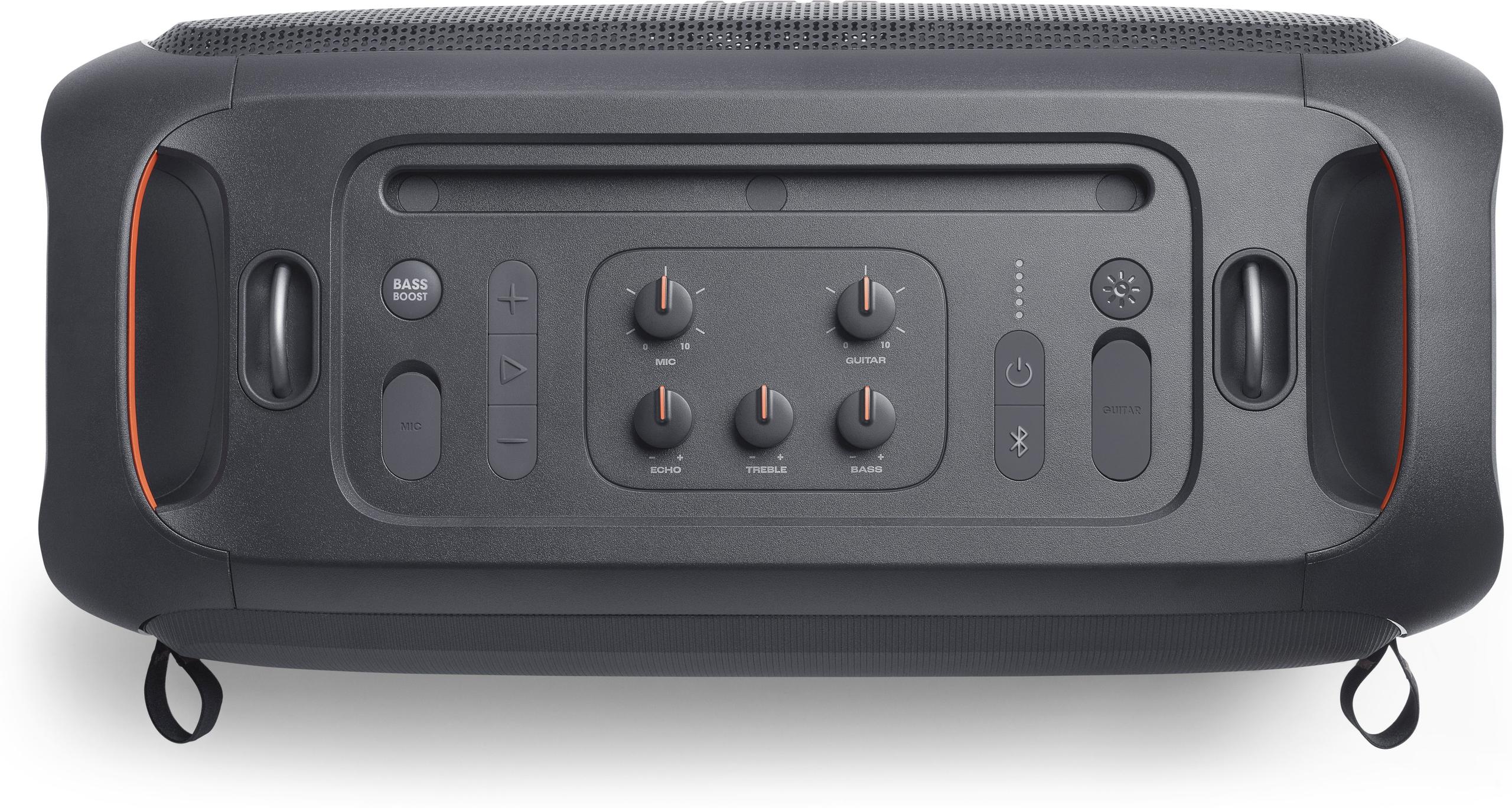
The JBL's Bass Boost feature deserves special mention. This isn't just an EQ adjustment—it's a dedicated mode that optimizes the speaker's power distribution to emphasize low-frequency output. For music genres like hip-hop, electronic dance music, or any tracks with prominent bass lines, this feature can transform the listening experience from pleasant background music to energizing party fuel.
True portability means different things to different users, and this is where these speakers diverge most dramatically. The Monster S320 measures just 87 x 87 x 190mm and weighs 720 grams. To put this in perspective, it's roughly the size of a large smartphone stacked on top of a thick paperback book, and lighter than many tablets.
This ultra-compact design enables genuinely spontaneous use. You can toss it in a backpack without thinking about space or weight restrictions, clip it to a beach bag, or even carry it in a large jacket pocket. The built-in carrying strap reinforces this grab-and-go philosophy.
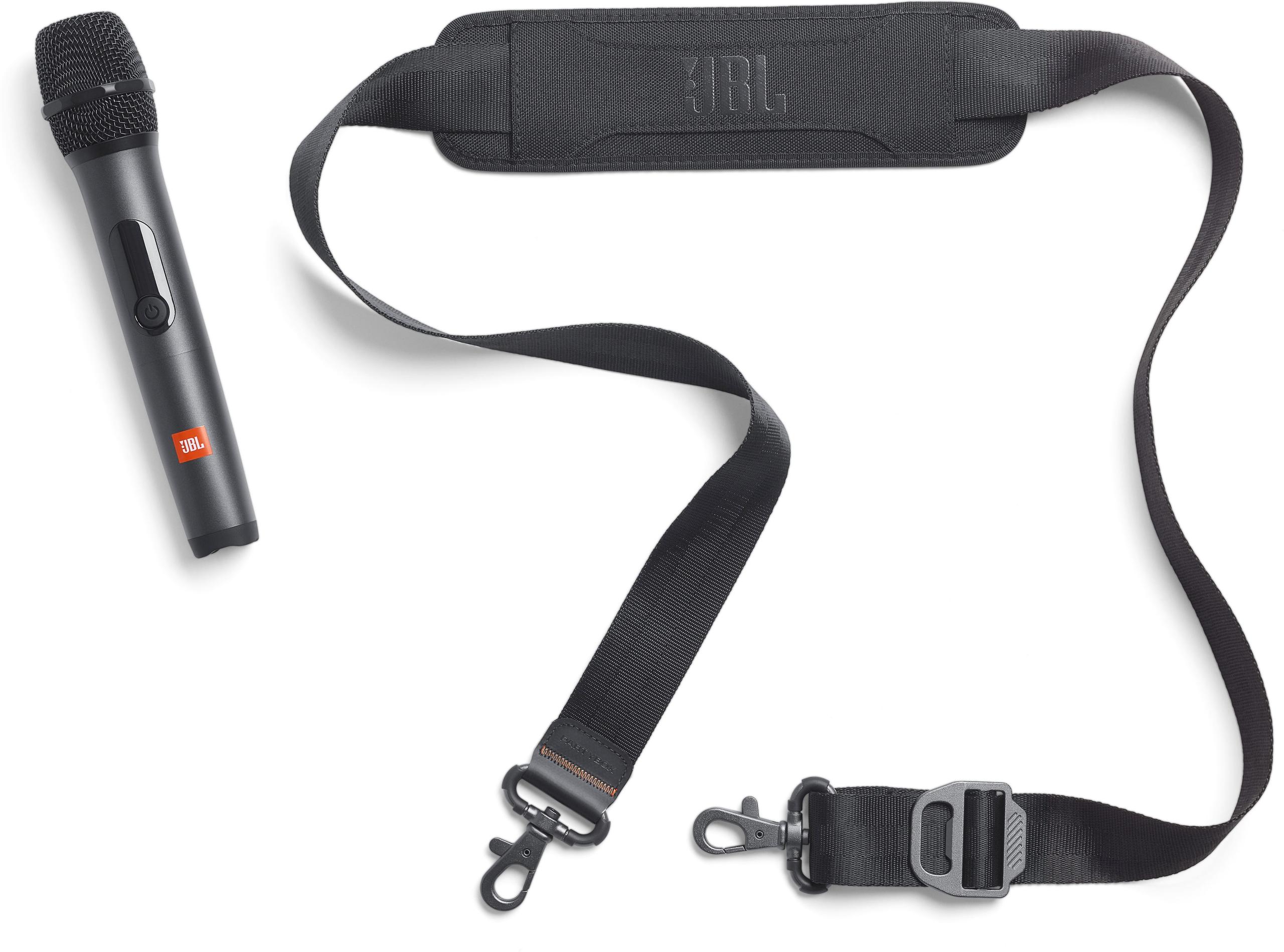
The JBL PartyBox, at 6.1 kilograms and measuring 490 x 245 x 228mm, requires more deliberate transport planning. It's about the size of a large boom box from the 1980s, but with modern conveniences like a padded shoulder strap and, in some configurations, wheels and a telescopic handle. While still technically portable, it's more like portable furniture than a personal accessory.
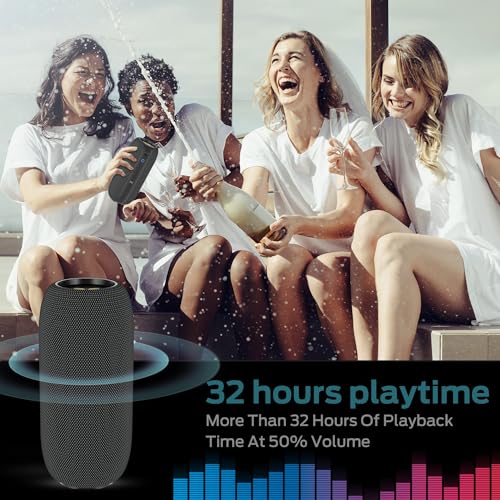
Battery life reveals another fundamental difference in design priorities. The Monster S320 achieves an impressive 32 hours of playback at medium volume levels thanks to its efficient 2,500mAh lithium-ion polymer battery and lower power consumption. This marathon endurance means you can take it on weekend camping trips without worrying about charging.
The JBL PartyBox provides about 6 hours of continuous playback from its similarly sized battery. This shorter runtime reflects the much higher power demands of its 100-watt amplification system. However, six hours typically covers most party scenarios, and the speaker can run continuously when plugged into wall power for indoor events.
The charging interfaces also differ: the Monster uses modern USB-C for fast, convenient charging, while the JBL includes both battery charging and AC power operation capabilities.
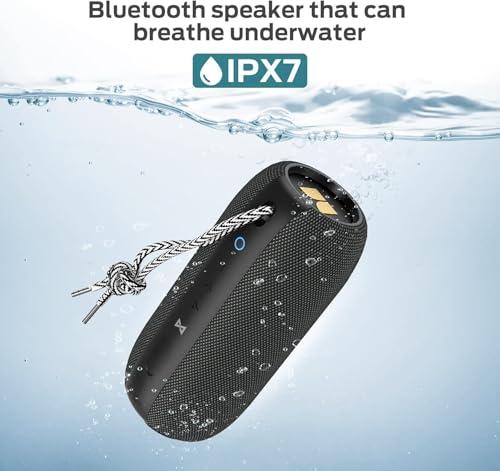
Weather resistance ratings use the IP (Ingress Protection) code system, where the first number indicates dust protection and the second indicates water protection. The Monster S320 boasts an IPX7 rating, meaning it can withstand complete submersion in up to one meter of water for 30 minutes.
This IPX7 rating makes the Monster genuinely suitable for beach days, poolside use, boat trips, and even shower listening. Users report successfully taking it swimming, using it during rain storms, and accidentally dropping it in water without damage. The shockproof construction adds another layer of durability for outdoor adventures.
The JBL PartyBox carries an IPX4 rating, which provides protection against water splashes from any direction but cannot handle submersion. This splash-resistant design works fine for outdoor parties where you might encounter light rain or drink spills, but you wouldn't want to use it near pools or at the beach without careful positioning.
The durability difference reflects each speaker's intended environment. The Monster is built for unpredictable outdoor adventures where weather and accidents happen. The JBL is designed for controlled party environments where the primary risks are spills and light weather exposure.
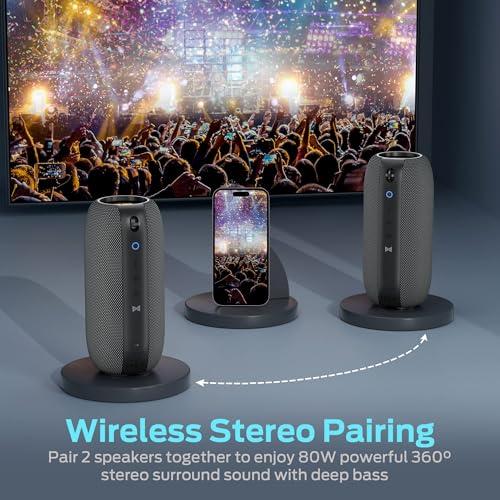
Modern portable speakers have evolved beyond simple audio playback, and the feature differences between these models highlight their distinct purposes. The Monster S320 focuses on audio-centric features: True Wireless Stereo (TWS) pairing allows you to connect two units for genuine stereo separation and doubled power output, voice assistant integration works with Siri or Google Assistant, and hands-free calling capability turns it into a speakerphone.
The TWS pairing deserves explanation because it's more sophisticated than simply playing the same audio from two speakers. When properly paired, one speaker handles the left audio channel while the other handles the right, creating true stereo imaging. This can dramatically improve the listening experience for music that was mixed with stereo separation in mind.
The JBL PartyBox goes all-in on entertainment features. The synchronized light show uses LED arrays that pulse, flash, and change colors in rhythm with your music. While this might sound gimmicky, user reviews consistently praise how much energy and atmosphere the lights add to actual parties.
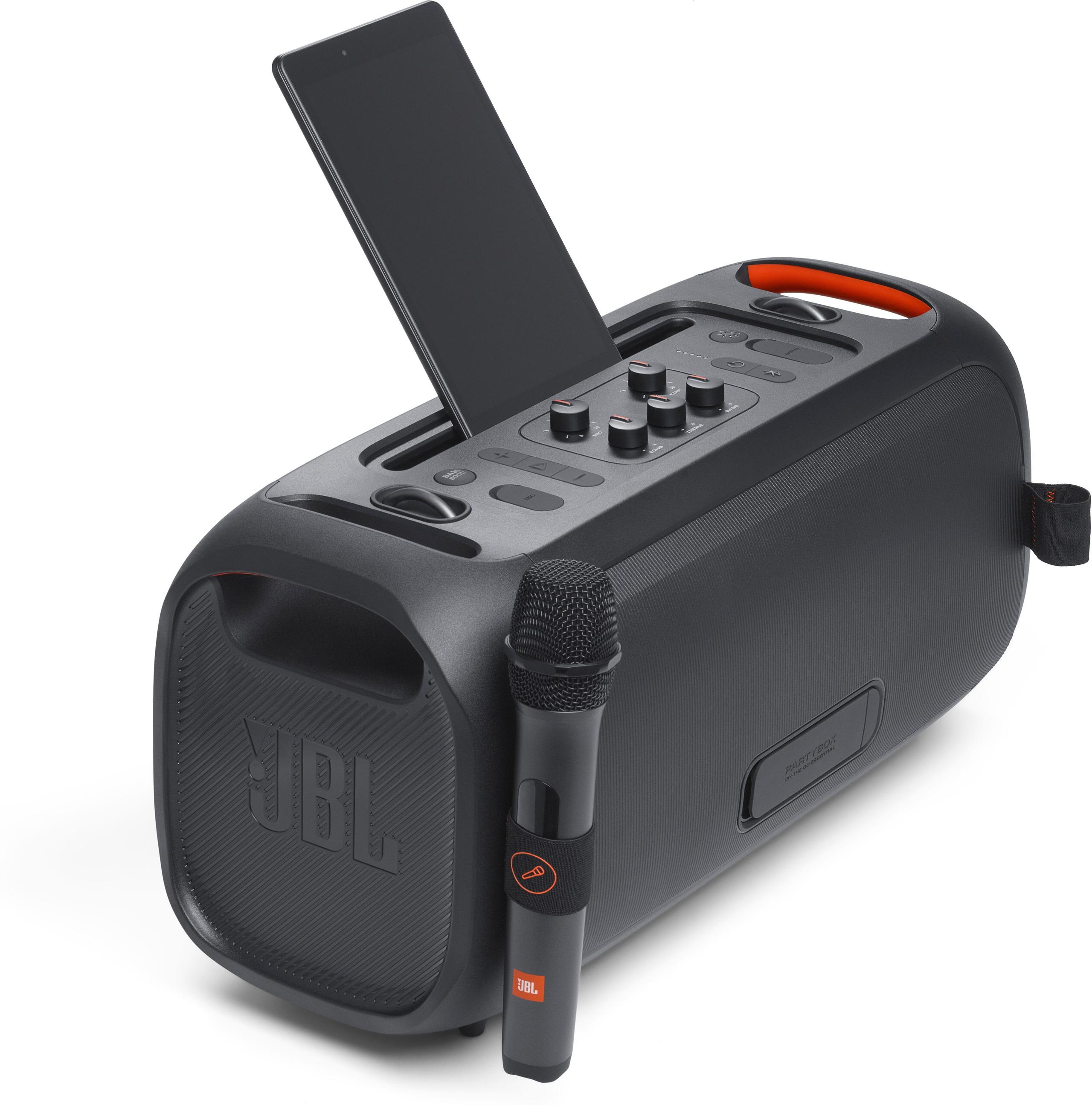
The included wireless microphone transforms the speaker into a karaoke system, complete with vocal fine-tuning controls. The dual microphone inputs mean two people can sing together, and there's even a guitar input for live performance. These features position the JBL as a complete entertainment system rather than just a speaker.
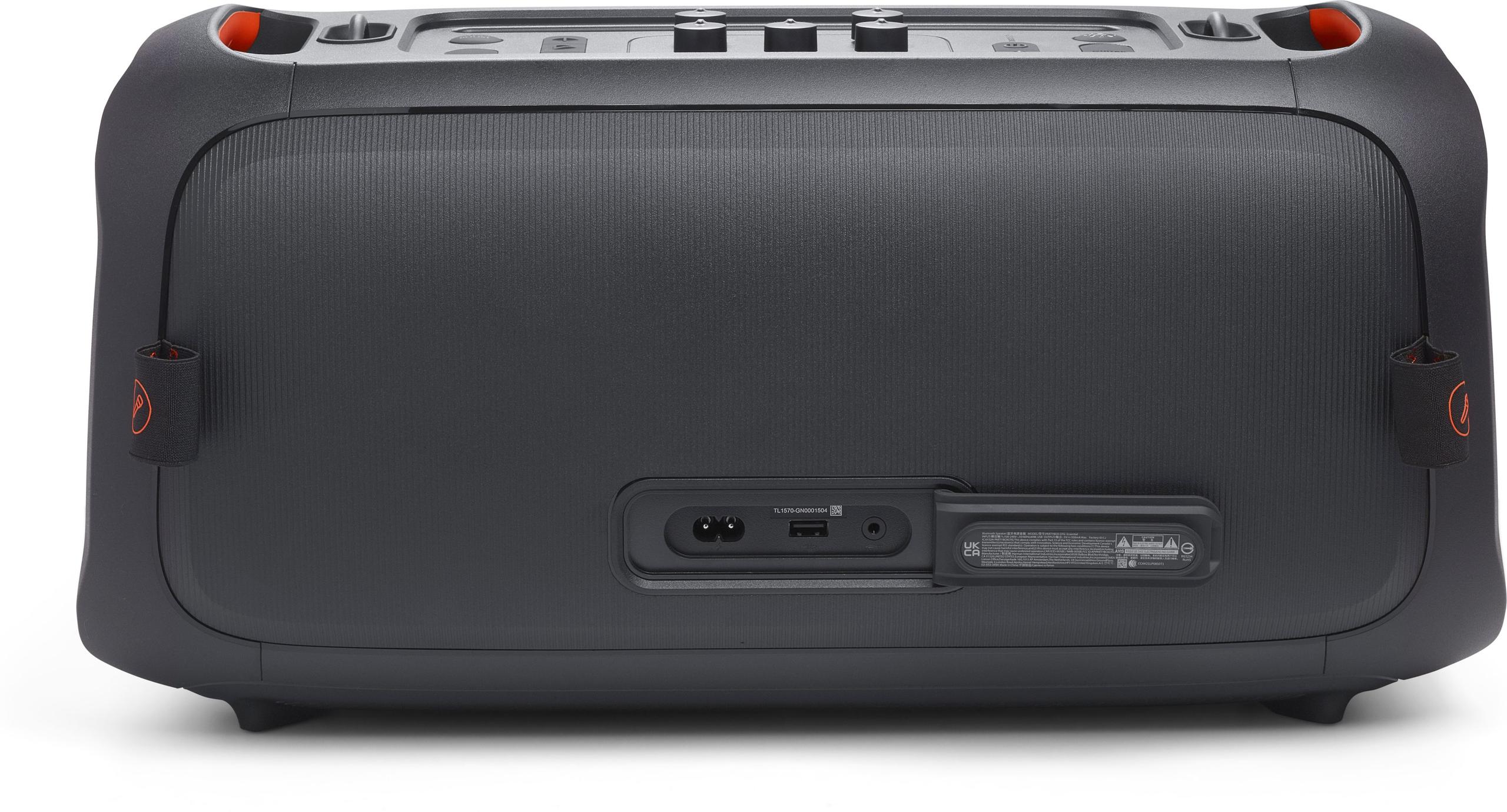
Both speakers support multiple connectivity options, but the JBL offers more flexibility with USB drive support, multiple auxiliary inputs, and app control for customizing light patterns and audio settings.
At the time of writing, the price difference between these speakers reflects their different target markets rather than a simple feature hierarchy. The Monster S320 delivers exceptional value for users who prioritize portability and battery life, offering impressive audio quality and true waterproofing at a budget-friendly price point.
The JBL PartyBox commands a premium price but includes features that would cost significantly more if purchased separately—a wireless microphone system alone typically costs $50-100, and the powerful amplification system would require a much larger investment in traditional audio equipment.
When evaluating value, consider the total cost of achieving your audio goals. For personal listening and outdoor adventures, the Monster provides complete functionality in a single affordable purchase. For party hosting, the JBL replaces multiple pieces of equipment (speaker, microphone system, lighting) in one integrated package.
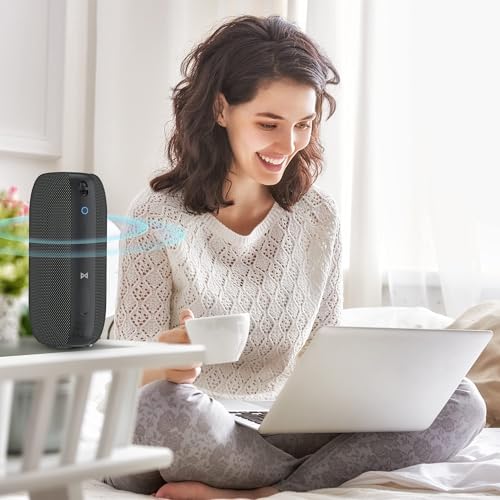
While neither speaker is designed primarily for home theater use, they handle indoor listening differently. The Monster S320's 360-degree sound dispersion works well in smaller rooms where you want ambient background music without the speaker dominating the space visually or acoustically.
The JBL PartyBox can serve as an impressive upgrade for casual TV watching, especially for action movies or sports where dynamic range and powerful bass enhance the experience. However, its size and party-focused features make it less suitable for subtle home theater applications.
For serious home theater use, both speakers would be secondary options to dedicated home audio systems, but the JBL gets closer to providing satisfying performance for movie watching and gaming.
Choose the Monster S320 Superstar if you live an active lifestyle where true portability matters most. It's perfect for people who exercise outdoors, travel frequently, enjoy water activities, or simply want a reliable audio companion that disappears into their daily routine. The 32-hour battery life and IPX7 waterproofing make it ideal for camping trips, beach days, and any situation where charging opportunities are limited.
The Monster also makes sense for budget-conscious buyers who want solid audio quality without paying for features they won't use. If you primarily listen to music alone or with 1-2 other people, the additional power and party features of the JBL represent expensive overkill.
Choose the JBL PartyBox On-The-Go Essential if you regularly host gatherings, enjoy karaoke, or need audio that can energize groups of 10+ people. The 100-watt output, bass boost capability, and entertainment features justify the higher price when you need genuine party performance.
The JBL also works better for users who prioritize maximum audio quality and don't mind the size and weight trade-offs. The larger drivers and higher power output deliver more impactful, room-filling sound that smaller speakers simply cannot match.
The decision ultimately comes down to lifestyle and priorities. The Monster S320 excels as a personal audio companion that happens to be shareable, while the JBL PartyBox succeeds as a party entertainment system that happens to be portable. Both execute their intended roles exceptionally well, making the choice more about matching the right tool to your specific needs than determining which is objectively better.
At the time of writing, both speakers represent mature, refined products that clearly understand their target audiences. The portable speaker market has evolved to the point where these specialized approaches deliver better results than trying to create one speaker that does everything adequately.
| Monster S320 Superstar Portable Bluetooth Speaker | JBL PartyBox On-The-Go Essential Portable Party Speaker |
|---|---|
| Power Output - Determines maximum volume and room-filling capability | |
| 40W total (dual 2" drivers) - suitable for personal/small group listening | 100W (5.25" woofer + dual 1.75" tweeters) - fills large spaces and outdoor areas |
| Size & Weight - Critical for true portability and travel convenience | |
| Ultra-compact: 87x87x190mm, 720g - fits in backpack or large pocket | Party-sized: 490x245x228mm, 6.1kg - requires shoulder strap or wheels |
| Battery Life - Affects uninterrupted listening time | |
| 32 hours at medium volume - weekend trips without charging | 6 hours continuous - covers most party scenarios |
| Water Resistance - Protection level for outdoor and water activities | |
| IPX7 waterproof - full submersion safe, perfect for beach/pool use | IPX4 splash-resistant - light rain and spill protection only |
| Sound Design - How audio is projected and experienced | |
| 360° omnidirectional - immersive personal listening from any angle | Directional projection - optimized for room-filling party audio |
| Entertainment Features - Additional functionality beyond music playback | |
| Voice assistant, hands-free calls, TWS stereo pairing | Wireless microphone, karaoke mode, synchronized light show, guitar input |
| Connectivity Options - How you connect your devices and media | |
| Bluetooth 5.0, AUX input, USB-C charging | Bluetooth 4.2, USB drive support, multiple AUX inputs, AC power option |
| Frequency Range - Audio spectrum coverage for different music types | |
| 20Hz-20kHz - full spectrum with balanced response | 50Hz-20kHz - optimized for high-volume performance with bass boost |
| Target Use Case - Primary scenarios where each speaker excels | |
| Personal listening, travel, outdoor adventures, water activities | Parties, gatherings, karaoke nights, entertainment events |
| Value Proposition - What you get for the price difference | |
| Maximum portability and battery life at budget-friendly cost | Professional party features and room-filling power at premium price |
The JBL PartyBox On-The-Go Essential is significantly better for parties with its 100W power output, synchronized light show, wireless microphone for karaoke, and ability to fill large spaces with sound. The Monster S320 Superstar is designed for personal listening and small groups, making it inadequate for actual party scenarios.
The Monster S320 Superstar is ultra-portable at just 720g and compact dimensions, easily fitting in backpacks or large pockets. The JBL PartyBox On-The-Go Essential weighs 6.1kg and requires a shoulder strap or wheels for transport, making it more of a "transportable" rather than truly portable speaker.
The Monster S320 Superstar offers exceptional 32-hour battery life at medium volume, perfect for weekend trips without charging. The JBL PartyBox On-The-Go Essential provides about 6 hours of continuous playback, which covers most party scenarios but requires more frequent charging.
The Monster S320 Superstar has IPX7 waterproof rating, meaning it can be fully submerged and is perfect for beach, pool, or shower use. The JBL PartyBox On-The-Go Essential only has IPX4 splash-resistance, protecting against light rain and spills but not suitable for water activities.
The JBL PartyBox On-The-Go Essential is significantly more powerful with 100W output compared to the Monster S320's 40W. The JBL can fill large outdoor spaces and compete with background noise at parties, while the Monster is better suited for personal listening and small groups.
The Monster S320 Superstar costs significantly less than the JBL PartyBox On-The-Go Essential, offering exceptional value for personal listening with its long battery life and waterproofing. The JBL justifies its higher price with party features like wireless microphone, light show, and much more powerful audio output.
Neither speaker is designed primarily for home theater use. The JBL PartyBox On-The-Go Essential can provide some enhancement for casual TV watching with its powerful bass and higher output, but both are better suited for music playback than dedicated home theater applications.
Both deliver good sound quality for their intended purposes. The Monster S320 Superstar excels at balanced, clear audio for personal listening with its 360-degree sound dispersion. The JBL PartyBox On-The-Go Essential is optimized for high-volume performance with deeper bass and room-filling projection.
Both support True Wireless Stereo (TWS) pairing. The Monster S320 Superstar can pair with another Monster S320 for 80W combined output and true stereo separation. The JBL PartyBox On-The-Go Essential can connect with other compatible JBL PartyBox speakers for expanded party audio systems.
The Monster S320 Superstar includes voice assistant integration, hands-free calling, and stereo pairing capability. The JBL PartyBox On-The-Go Essential offers much more extensive party features including wireless microphone, karaoke mode, synchronized light show, guitar input, and app control for customization.
The Monster S320 Superstar is far superior for outdoor activities and travel due to its ultra-portable size, 32-hour battery life, IPX7 waterproofing, and shockproof construction. The JBL PartyBox is too large and heavy for most travel scenarios and lacks waterproof protection.
The Monster S320 Superstar offers Bluetooth 5.0, AUX input, and USB-C charging with focus on simplicity. The JBL PartyBox On-The-Go Essential provides more connectivity options including Bluetooth 4.2, USB drive support, multiple AUX inputs, microphone inputs, guitar input, and AC power operation for versatile party setups.
We've done our best to create useful and informative comparisons to help you decide what product to buy. Our research uses advanced automated methods to create this comparison and perfection is not possible - please contact us for corrections or questions. These are the sites we've researched in the creation of this article: youtube.com - runbazaar.com - youtube.com - exceldisc.com - youtube.com - 961souq.com - walmart.com - eshtir.com - mct-audio.com - hk.monsterstore.com - alibaba.com - cdn.tgdd.vn - device.report - manualslib.com - alibaba.com - jbl.com - pcrichard.com - jbl.com - bestbuy.com - verizon.com - greentoe.com - youtube.com - listenup.com - hypermicro.com - jbl.com - mm.jbl.com

Privacy Policy
Terms and Conditions - Affiliate Policy
Home Security
© Copyright 2008-2026.
11816 Inwood Rd #1211, Dallas, TX 75244