

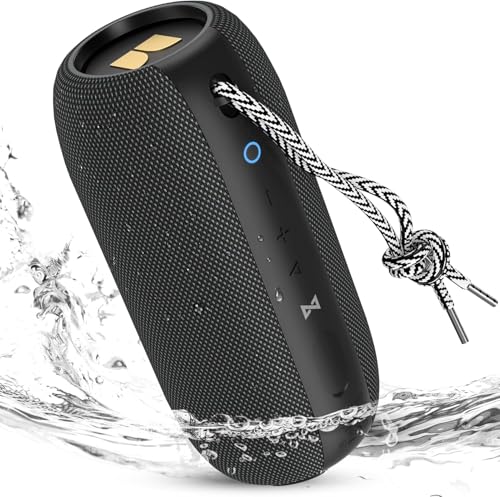

When shopping for a portable Bluetooth speaker, you're essentially choosing between two different philosophies. Do you want something that disappears into your pocket but still delivers surprisingly good sound? Or would you rather carry something slightly larger that can genuinely entertain a crowd? The Monster S320 Superstar and JBL Clip 4 perfectly illustrate this divide, and understanding which approach fits your lifestyle will save you from buyer's remorse.
Before diving into specifics, let's establish what really matters in portable speakers. The most critical factor is power output, measured in watts (W), which directly affects how loud your speaker can get and how full the sound feels. But raw power isn't everything—frequency response (the range of bass to treble the speaker can reproduce) determines whether your music sounds thin or rich.
Battery life has become increasingly important as people expect their devices to last through entire camping trips or beach days. Water resistance ratings like IPX7 or IP67 tell you exactly what conditions your speaker can survive—the higher the numbers, the better the protection. Finally, connectivity features like True Wireless Stereo (TWS) pairing can transform your listening experience by connecting two speakers for genuine stereo sound.
The Monster S320 launched around 2020-2021, positioning itself as a "superstar" performer that doesn't compromise on audio quality despite its portable design. The JBL Clip 4 arrived in early 2021 as JBL's latest iteration of their ultra-portable clip-on speaker concept, building on nearly a decade of refinements to the original Clip design.
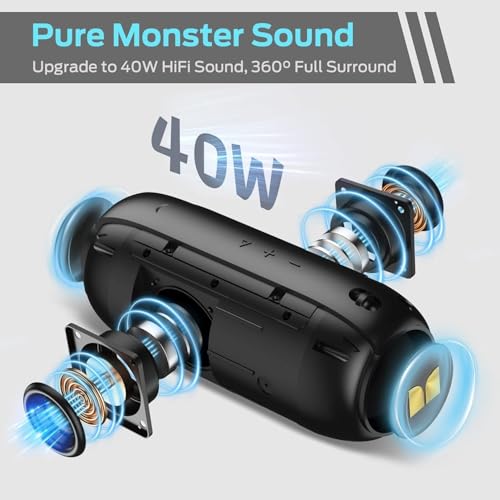
These speakers represent completely different priorities. The Monster S320 delivers 40 watts of power through dual drivers arranged to create 360-degree sound—meaning the audio projects in all directions rather than just forward. This creates what Monster calls "Pure Monster Sound," which in practical terms means you get room-filling audio that doesn't drop off dramatically when you're not directly in front of the speaker.
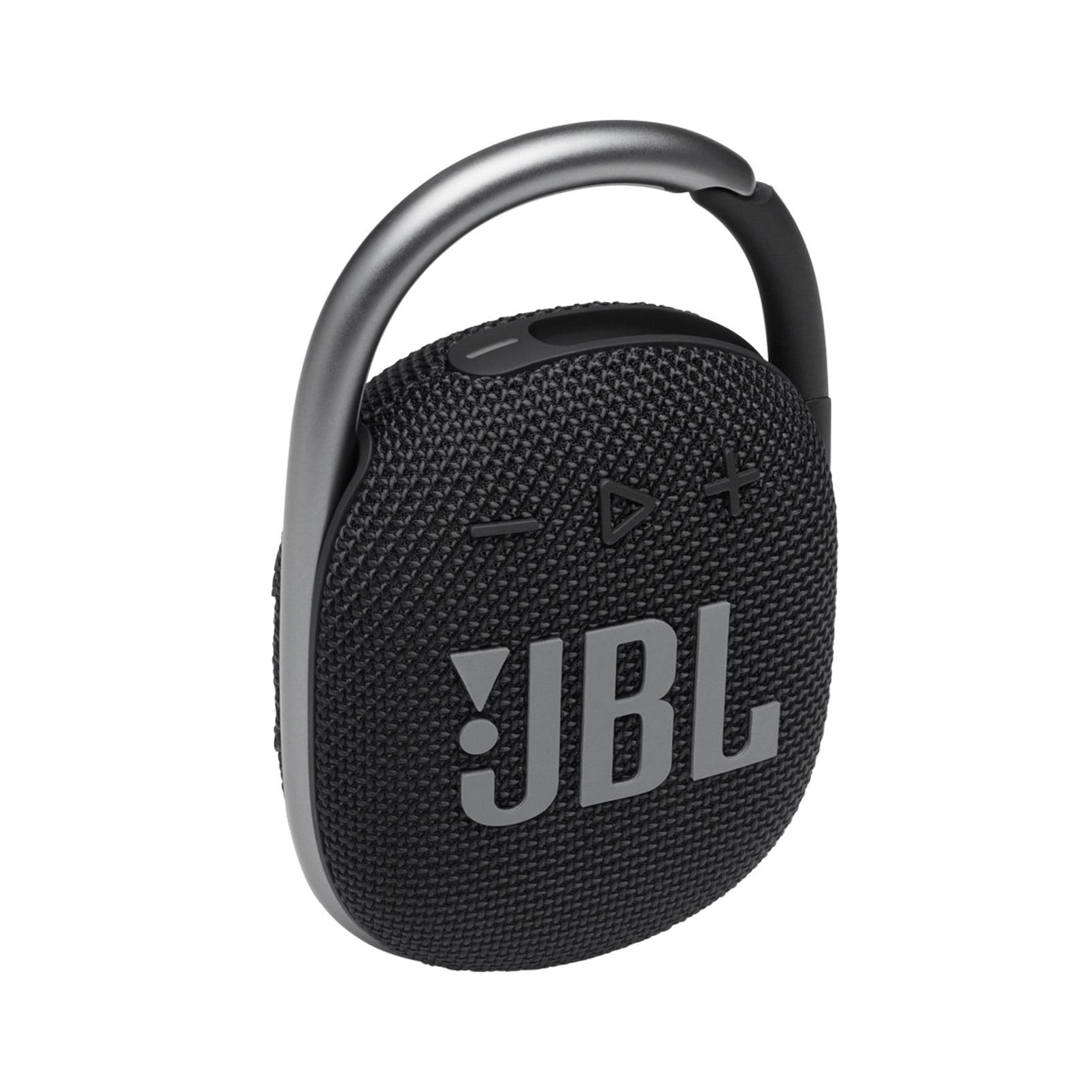
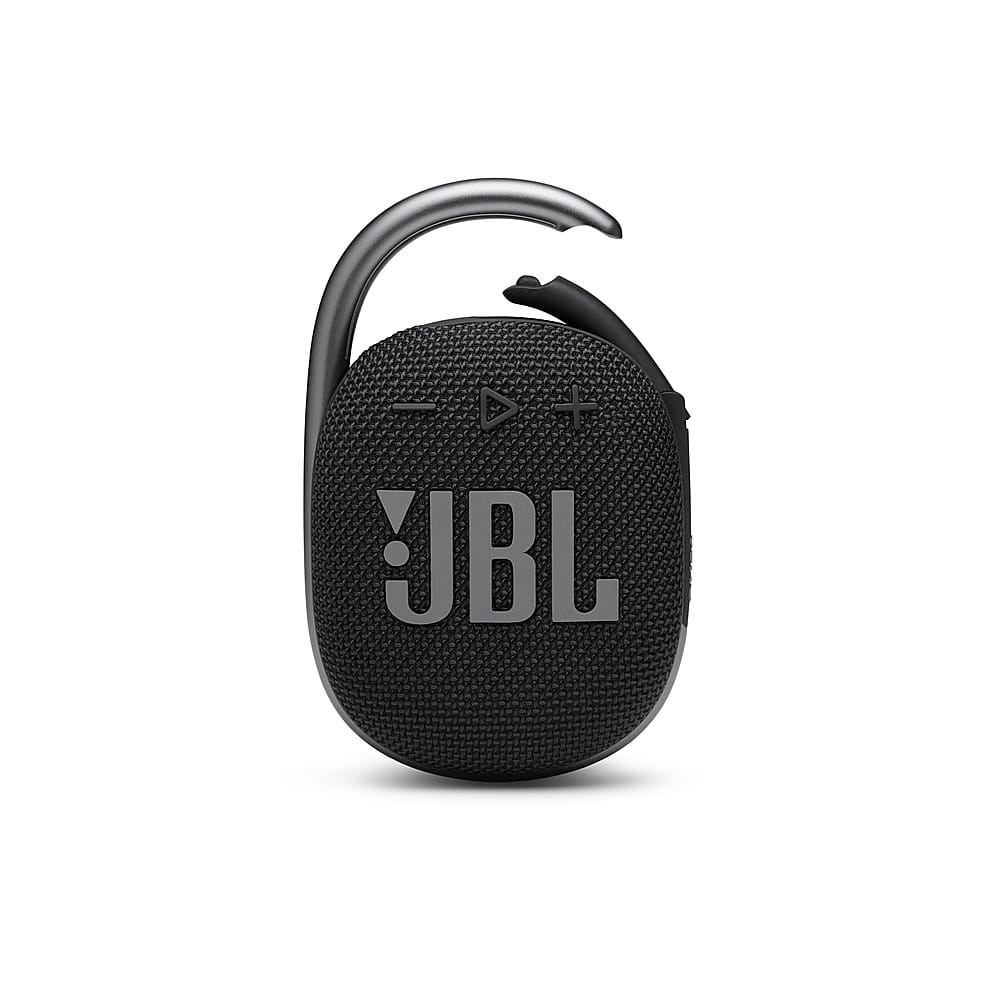
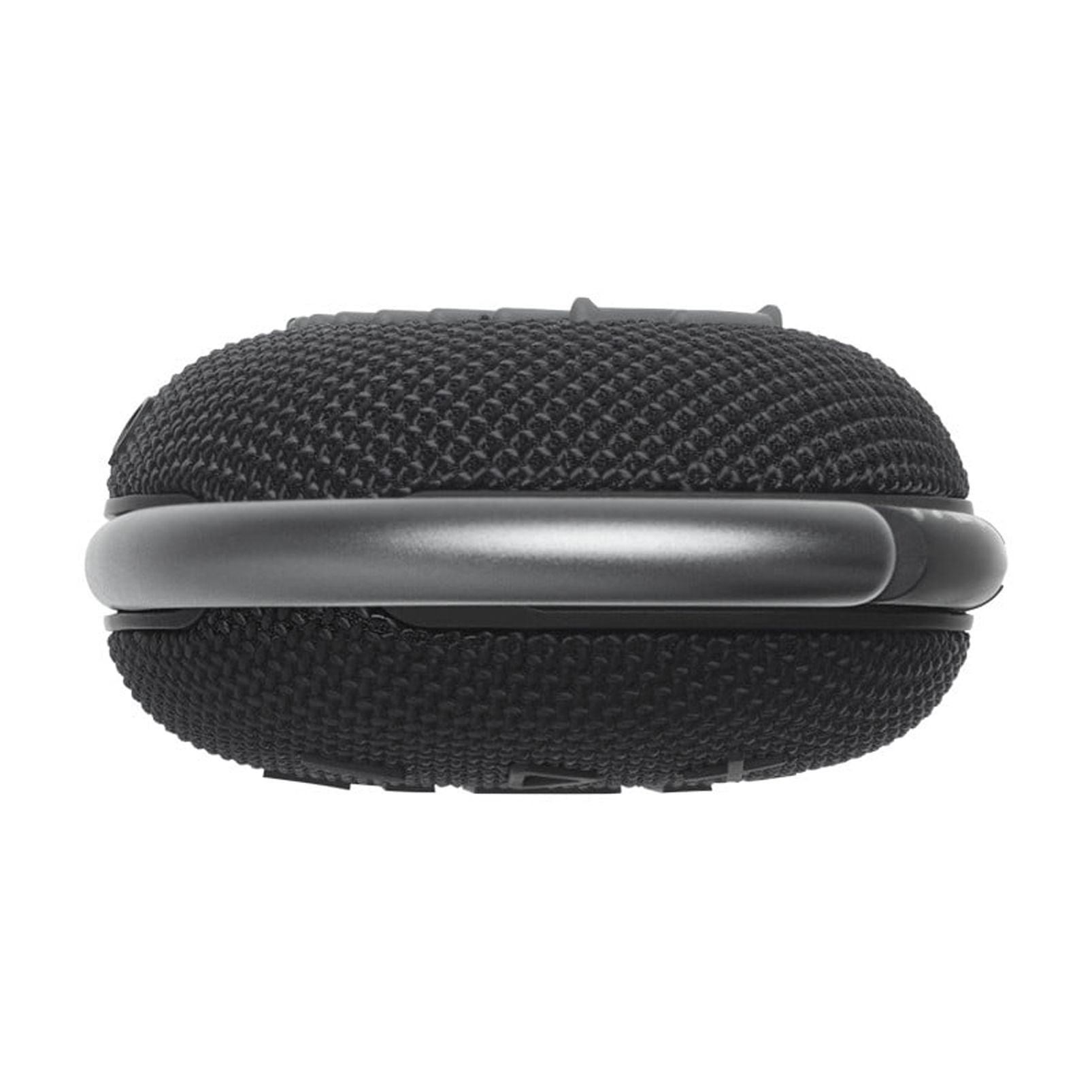
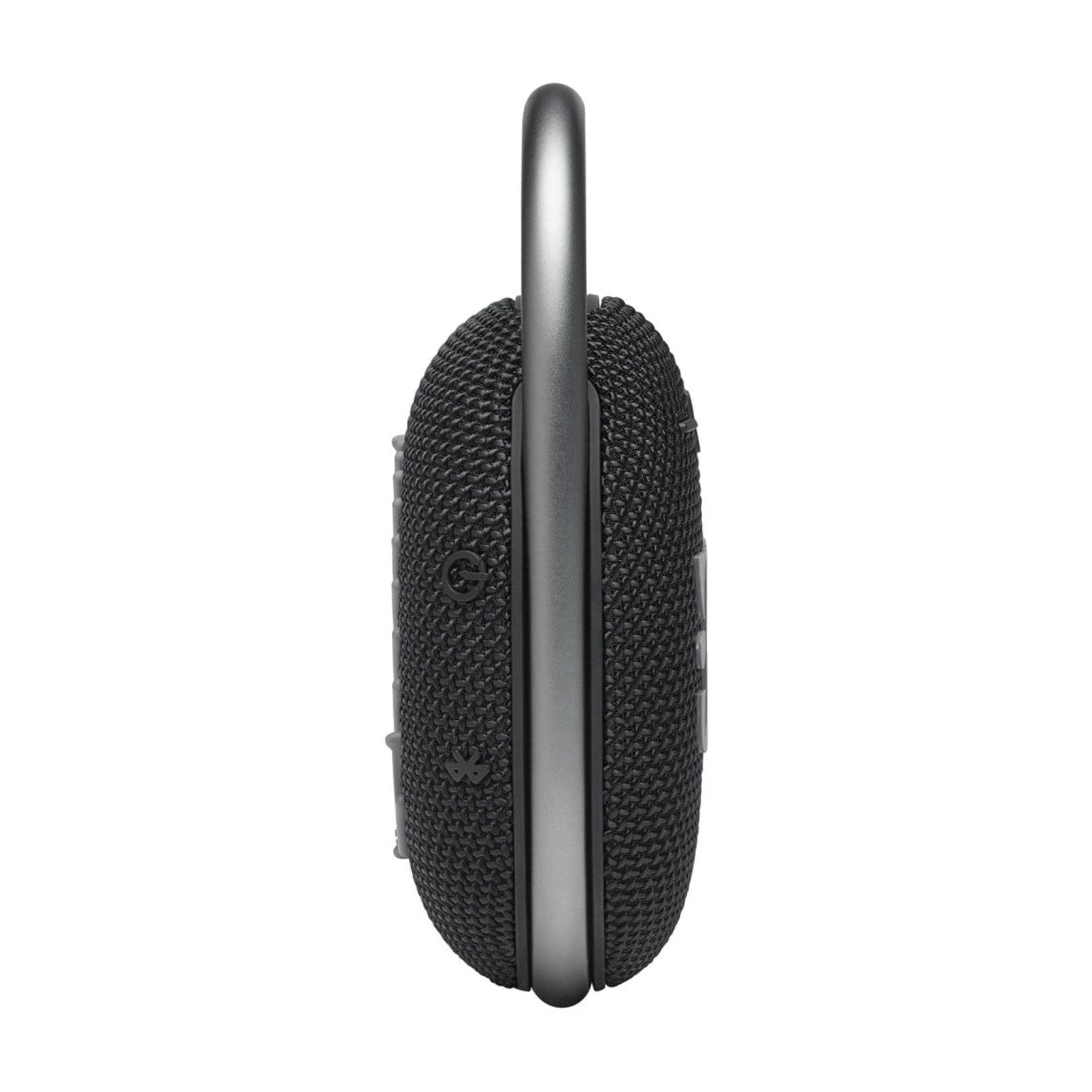
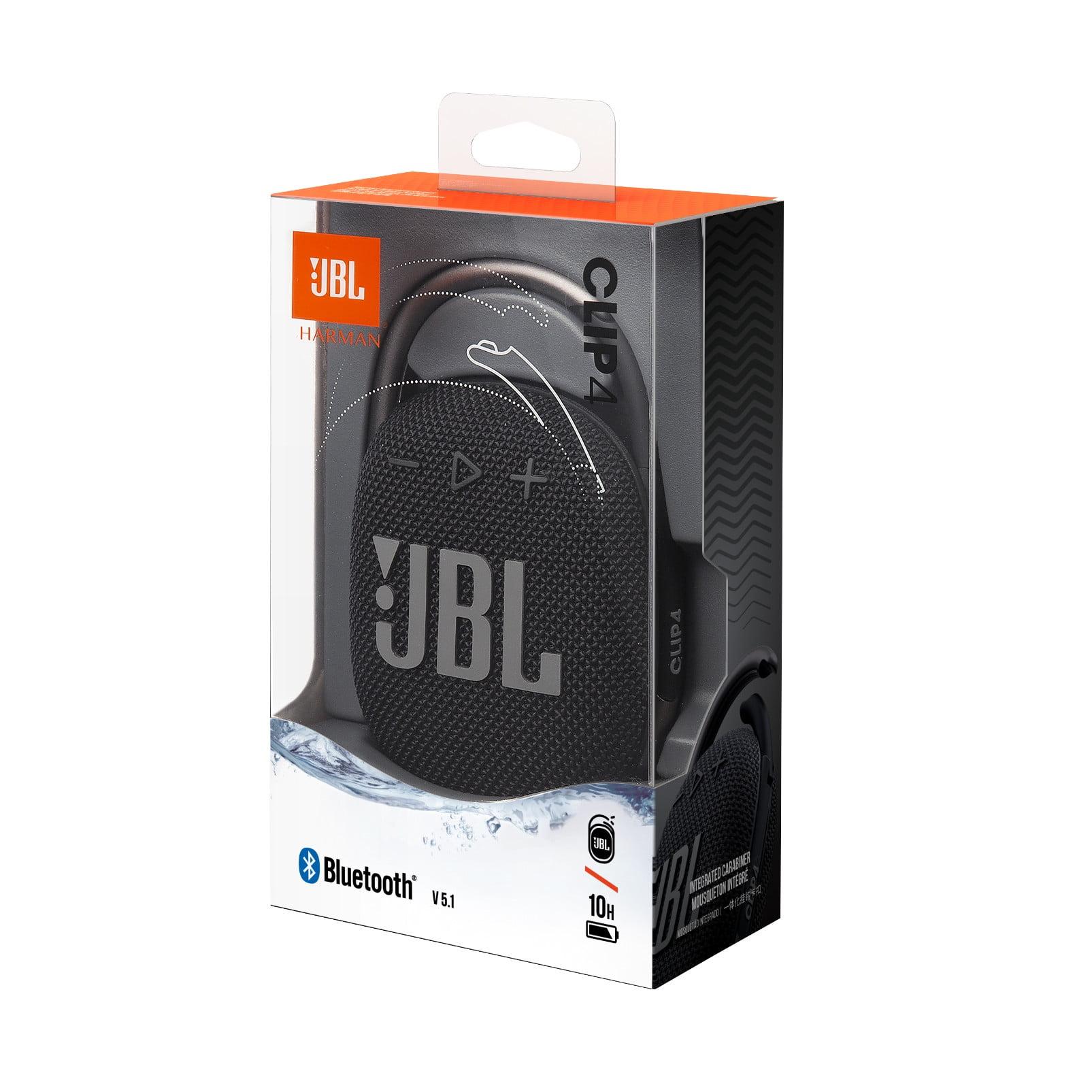
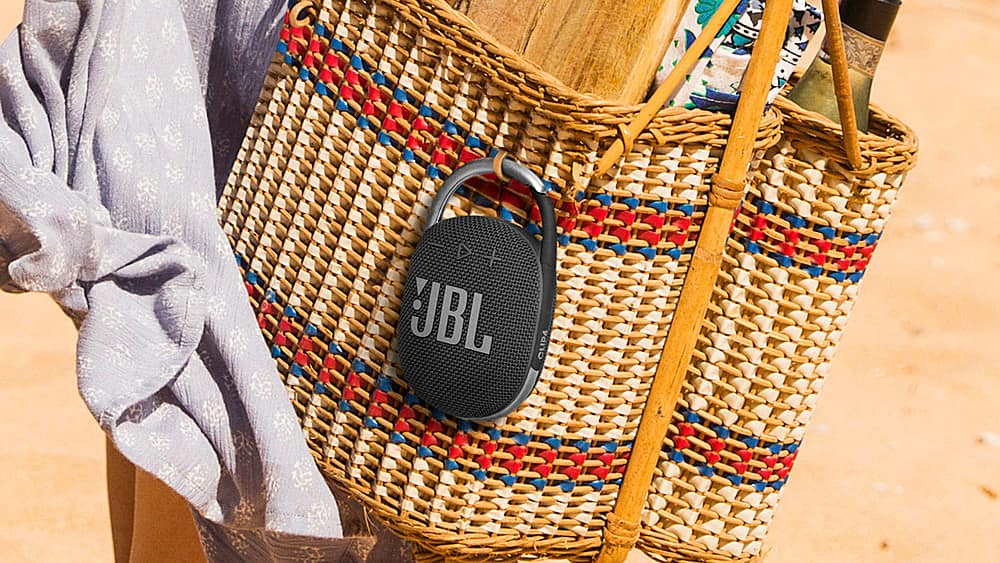
The JBL Clip 4, by contrast, produces just 5 watts of power but packs that into a 239-gram package with an integrated carabiner clip. JBL calls this "JBL Original Pro Sound," focusing on tuning that maximizes perceived audio quality within the severe size constraints. The frequency response spans 100Hz to 20kHz, which means it can reproduce most of the audible spectrum but won't deliver the deepest bass frequencies below 100Hz.
The size difference is immediately obvious: the Monster S320 measures roughly the size of a large water bottle, while the JBL Clip 4 is closer to a deck of cards. This isn't just about convenience—it fundamentally changes how you use each speaker.
The eight-fold power difference between these speakers creates dramatically different listening experiences. The Monster S320's 40 watts allows it to produce genuine bass response that you can feel, not just hear. When music has deep bass lines or kick drums, the larger drivers and internal space create the air movement necessary for those low frequencies to sound realistic.
User reviews consistently highlight the Monster S320's ability to "fill a room" or "compete with much larger speakers." This isn't marketing speak—it's physics. More power means the speaker can move more air, and moving air is how speakers create sound pressure that translates to volume and bass impact.
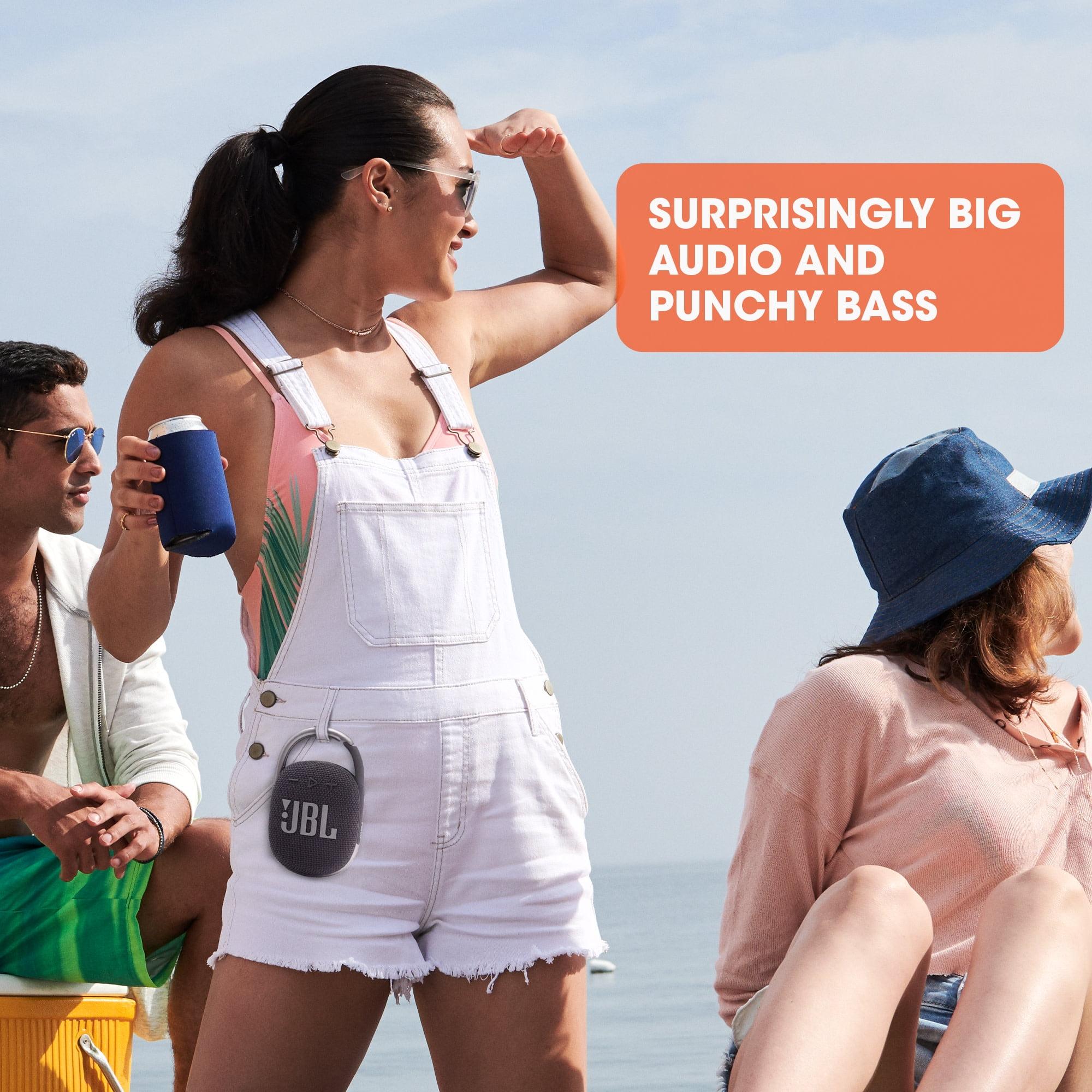
The JBL Clip 4 takes a different approach, using clever acoustic tuning to maximize its limited power budget. Despite only 5 watts, reviews frequently mention being "surprised by how much bass" it produces. JBL achieves this through careful driver selection and internal acoustic design, but there are hard limits to what's possible in such a small enclosure.
For perspective, 5 watts is perfectly adequate for personal listening while hiking or working at a desk, but 40 watts can genuinely provide background music for a backyard gathering of 20 people. The difference becomes even more pronounced outdoors, where sound dissipates quickly without walls to contain it.
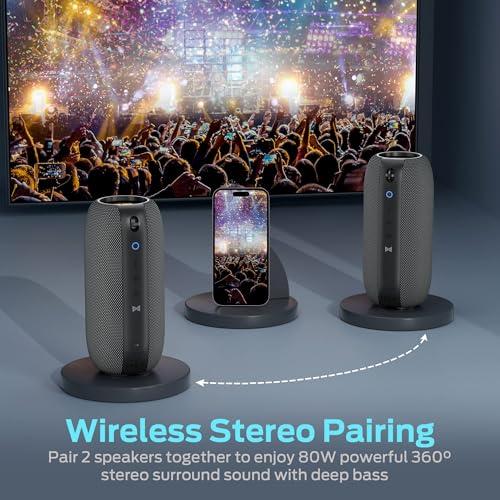
One of the Monster S320's standout features is TWS capability, which allows you to wirelessly pair two units for genuine stereo sound. This isn't just marketing—true stereo separation, where different parts of the music come from different directions, creates a much more immersive listening experience. When paired, you get 80 watts of total power with proper left and right channel separation.
The JBL Clip 4 lacks this capability entirely, limiting you to mono sound regardless of how many units you own. For casual listening, mono isn't necessarily a problem, but for music with strong stereo effects or when you want to create a more engaging audio environment, the difference is substantial.
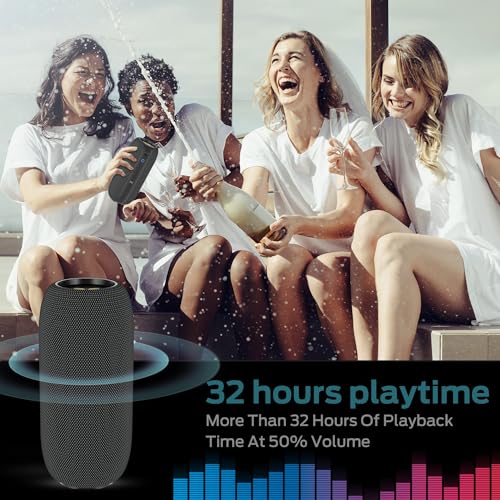
Battery performance reveals another fundamental difference in design philosophy. The Monster S320 claims up to 32 hours of playback, which seems almost excessive until you consider the use cases. If you're camping for a long weekend or hosting an all-day outdoor event, that extended runtime means you're not constantly worried about finding power outlets or carrying backup batteries.
The JBL Clip 4's 10-hour battery life represents excellent efficiency for its size. Cramming a lithium-ion battery into such a small package while maintaining safety standards is genuinely impressive engineering. Those 10 hours will easily cover most hiking days, beach trips, or daily commutes.
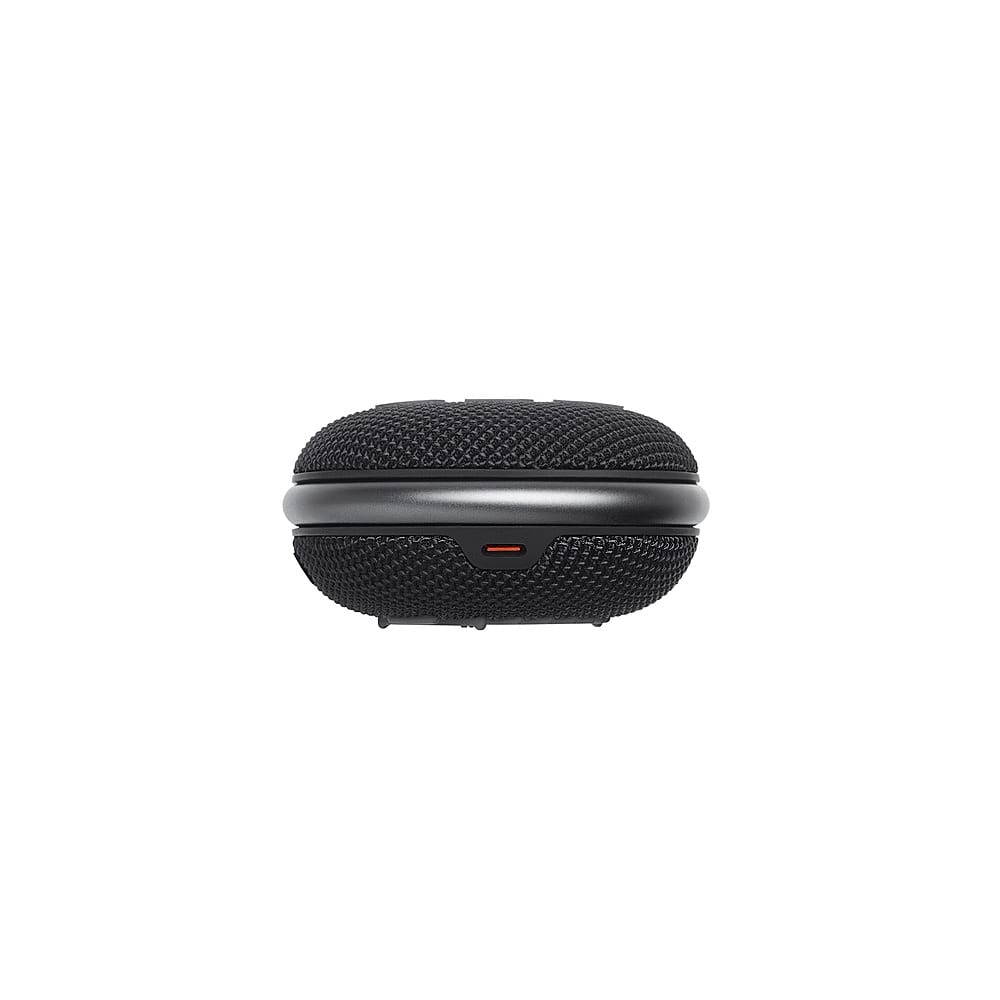
Both speakers use USB-C charging, which has become the standard for modern devices and means faster charging times compared to older micro-USB connectors. The Monster S320 takes about 3 hours to fully charge, while the JBL Clip 4 also requires roughly 3 hours despite its smaller battery—likely due to the constraints of charging safely in such a compact space.
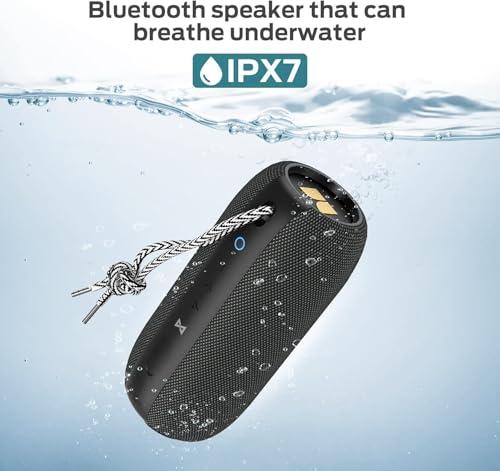
Water resistance ratings can be confusing, but they're crucial for portable speakers. The Monster S320 carries an IPX7 rating, where the "X" means dust protection isn't officially rated, but the "7" indicates it can survive immersion in up to 1 meter of water for 30 minutes. In practical terms, this means it can handle rain, splashes, and even brief dunking in pools or lakes.
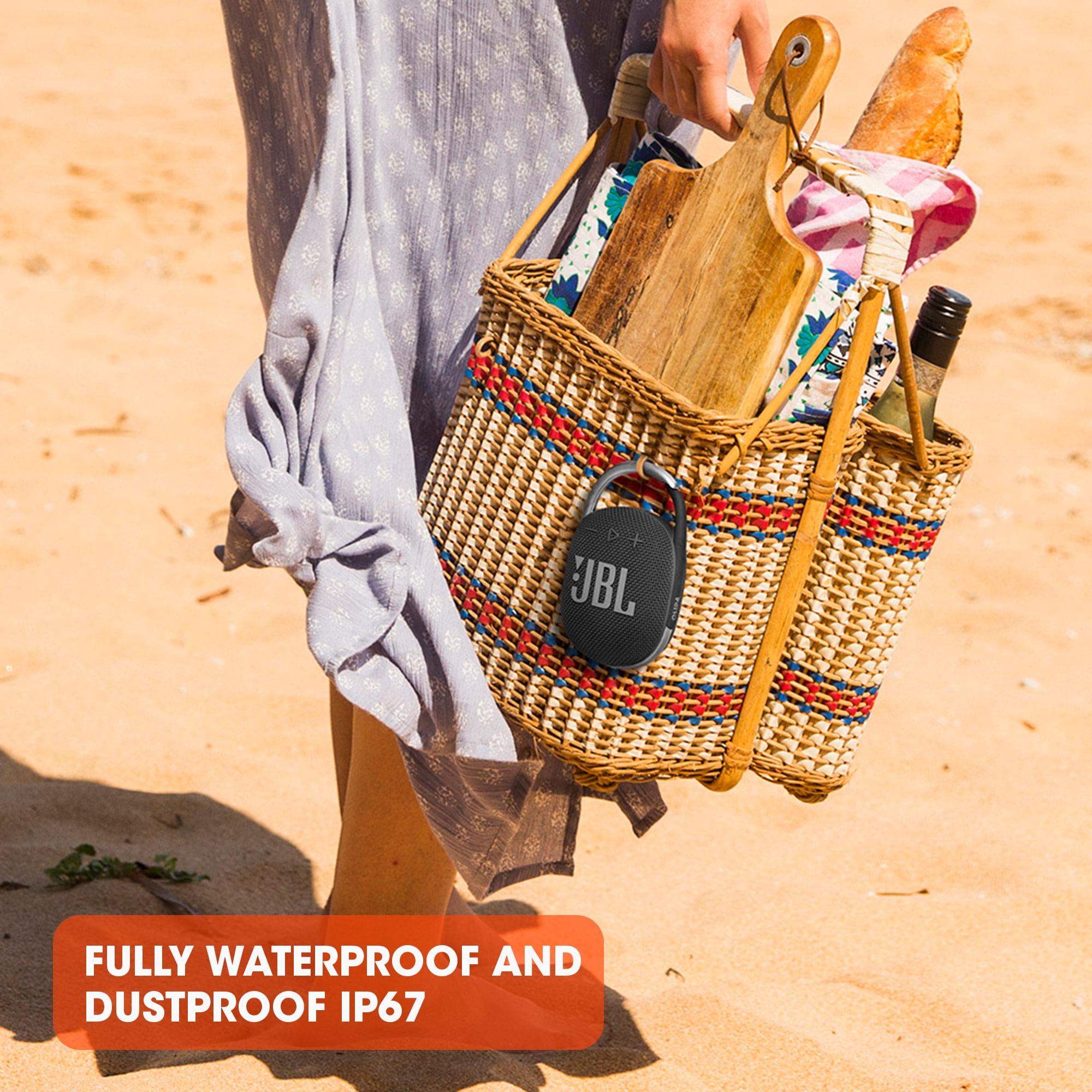
The JBL Clip 4 goes with IP67, where the "6" confirms complete dust protection and the "7" provides the same water immersion resistance. This makes it technically more versatile for dusty environments like beaches or construction sites, though both speakers will handle typical outdoor conditions without problems.
Based on user feedback, both speakers live up to their ratings. The Monster S320 frequently appears in reviews describing pool parties and beach use, while JBL Clip 4 owners regularly mention using it during sweaty workouts or in steamy showers without issues.
Both speakers use relatively recent Bluetooth versions—the Monster S320 features Bluetooth 5.0, while the JBL Clip 4 uses Bluetooth 5.1. These newer versions offer better range, more stable connections, and lower power consumption compared to older Bluetooth standards. In practical use, both should maintain solid connections up to about 30 feet in typical environments.
The Monster S320 includes additional connectivity options like a standard 3.5mm auxiliary input, which can be valuable when you want to connect older devices or when Bluetooth isn't available. It also supports voice assistant integration, allowing you to activate Siri or Google Assistant directly from the speaker.
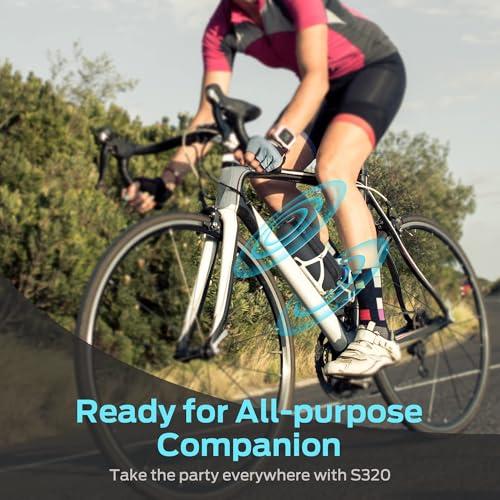
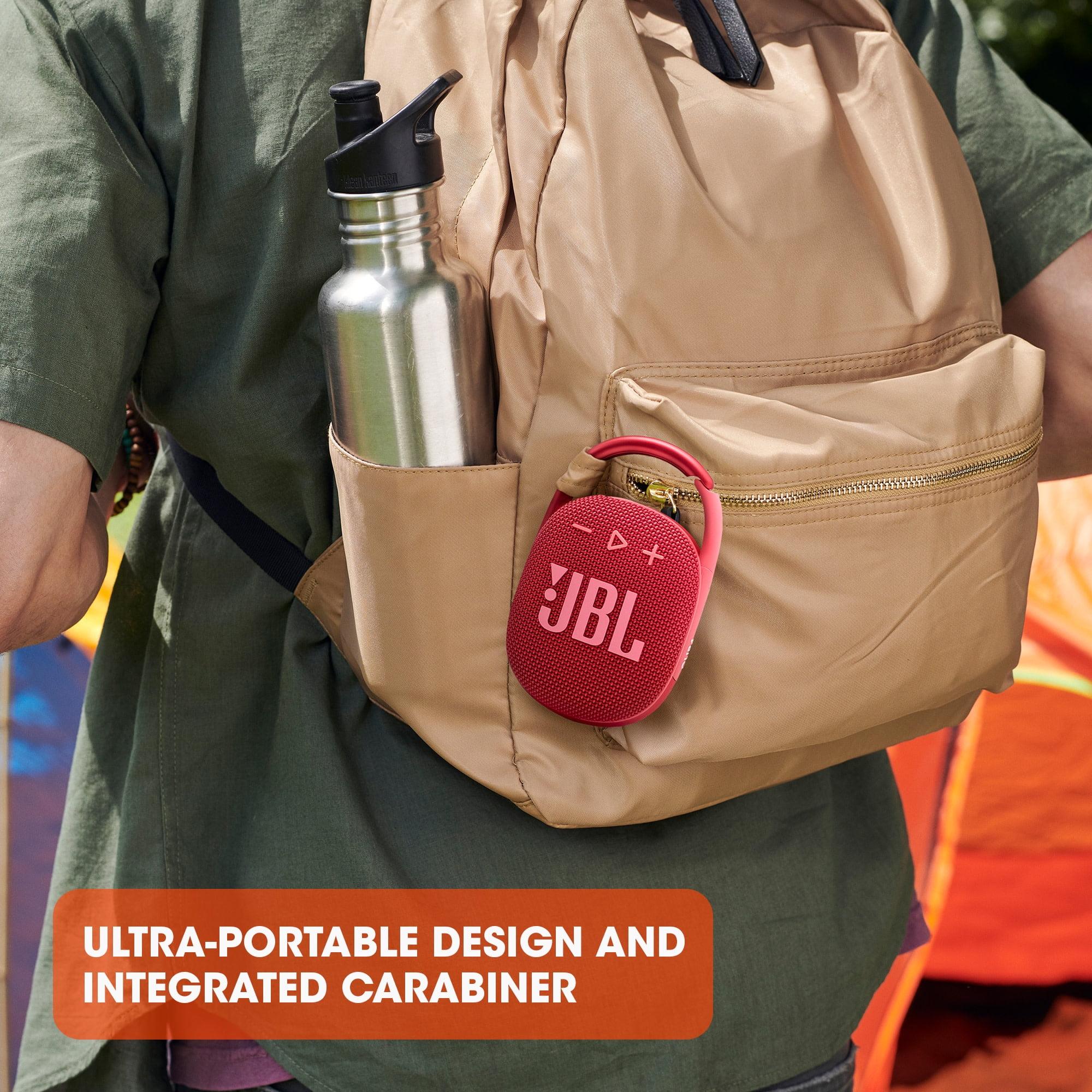
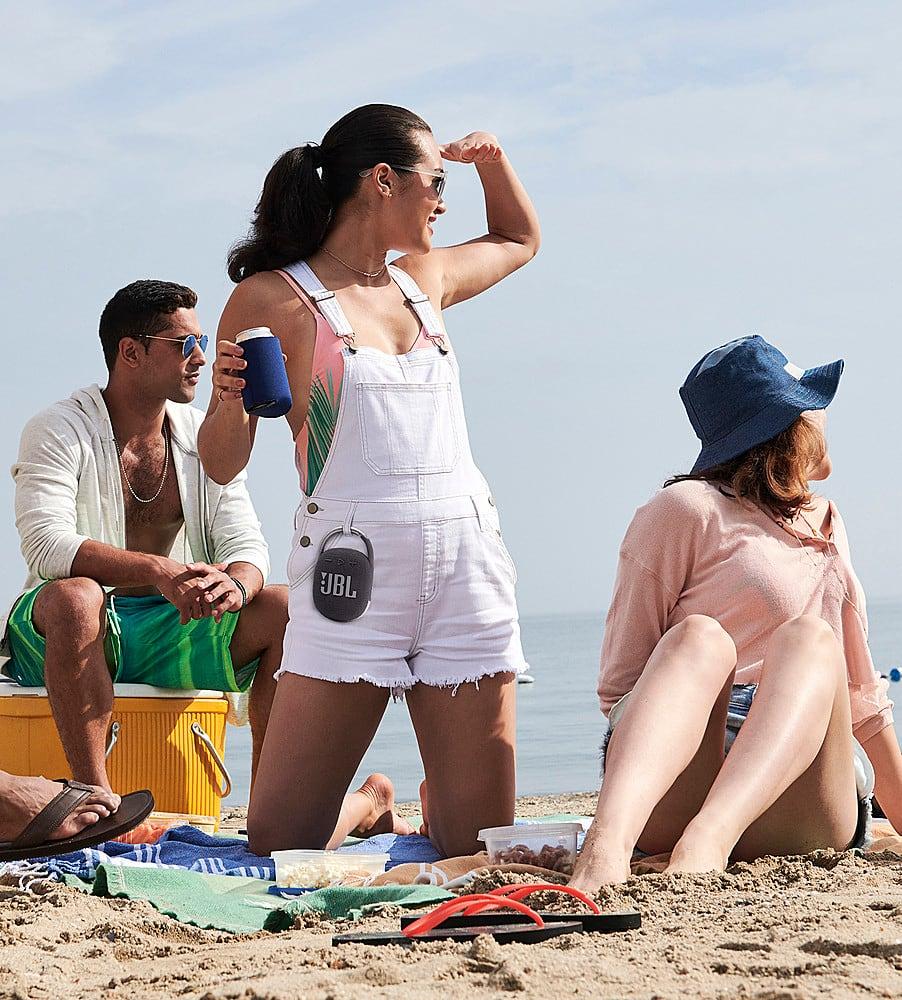
The JBL Clip 4's integrated carabiner isn't just a convenience feature—it fundamentally changes how you interact with portable audio. Instead of carrying a speaker, you attach it to your backpack, belt loop, or bike frame and forget about it until you want music. This hands-free approach makes it perfect for activities where you can't spare a hand to hold or position a speaker.
Rock climbers, trail runners, and cyclists particularly appreciate this design. The speaker stays securely attached during movement, and the 239-gram weight won't noticeably affect your performance or comfort. Reviews from hikers consistently mention being able to clip it to their pack's shoulder strap for easy access to controls without stopping.
The sound quality, while limited by physics, proves surprisingly effective for personal listening. The JBL Clip 4 excels at reproducing vocals and mid-range instruments clearly, making it excellent for podcasts, audiobooks, and music where lyrics are important.
The Monster S320 targets entirely different scenarios. Its 40-watt output can provide legitimate background music for outdoor gatherings, camping groups, or beach parties. The 360-degree sound design means people can sit around the speaker in a circle without anyone being stuck in a "dead zone" with poor audio quality.
The 32-hour battery life becomes crucial in these group settings. Nobody wants to be the person whose speaker dies halfway through a camping trip or outdoor celebration. That extended runtime also makes it viable for multi-day festivals or events where charging opportunities are limited.
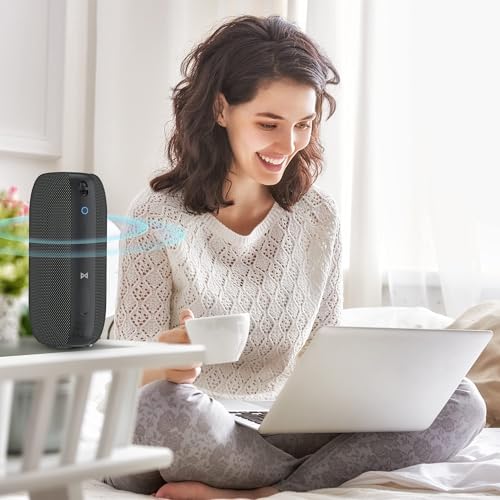
For home use, the Monster S320 can serve double duty as a portable speaker for outdoor activities and a capable indoor speaker for background music while cooking, cleaning, or working. The TWS pairing capability means couples or roommates could potentially invest in two units and create a proper stereo system for larger spaces.
At the time of writing, both speakers occupy similar price ranges in the mid-tier portable speaker market, but they deliver value in completely different ways. The Monster S320 offers exceptional audio performance per dollar, especially when you consider the 40-watt output and extended battery life. If you calculate value based on watts per dollar or hours of battery life per dollar, it's genuinely competitive with much more expensive speakers.
The JBL Clip 4 delivers value through convenience and reliability. The integrated clip design, combined with JBL's reputation for durability, creates a speaker that many users describe as "indispensable" once they adapt their routines around it. The brand reputation also matters—JBL has been making audio equipment since the 1940s and portable speakers since the early 2000s, so there's substantial expertise behind the product.
Neither speaker is designed for home theater use, but it's worth noting how they might integrate with existing audio setups. The Monster S320, with its higher power output and TWS capability, could potentially serve as rear surround speakers in a very casual outdoor movie setup, though this would be far from ideal compared to dedicated home theater speakers.
The JBL Clip 4 has no realistic home theater application beyond serving as a personal speaker when you don't want to disturb others. Its small size and mono output make it unsuitable for any kind of surround sound configuration.
Both speakers benefit from recent advances in battery technology, Bluetooth efficiency, and digital signal processing. The lithium-ion batteries use modern chemistries that pack more energy into smaller spaces while maintaining safety standards. The Bluetooth 5.0+ implementations offer significant improvements over older versions in terms of range, stability, and power consumption.
The Monster S320's 360-degree sound design reflects industry trends toward speakers that work well regardless of positioning, while the JBL Clip 4's ultra-portable approach continues JBL's decade-long refinement of the clip-on concept. Both represent mature approaches to their respective niches rather than experimental designs.
The choice between these speakers ultimately comes down to your primary use case and what compromises you're willing to make.
Choose the JBL Clip 4 if:
Choose the Monster S320 if:
Avoid both if:
The reality is that both speakers excel in their intended roles. The JBL Clip 4 offers an almost magical combination of portability and sound quality that makes music accessible in situations where larger speakers would be impractical. The Monster S320 provides legitimate audio performance that can enhance group activities and outdoor adventures without requiring you to carry truly large equipment.
Your lifestyle and priorities should make the choice clear. If you're still unsure, consider which scenario you'd regret more: wishing you had more volume and battery life during a group camping trip, or wishing you had something lighter and more convenient during a solo hiking adventure. That emotional response will probably guide you toward the right decision.
| Monster S320 Superstar | JBL Clip 4 |
|---|---|
| Power Output - Determines maximum volume and bass response | |
| 40W (suitable for parties and large outdoor spaces) | 5W (perfect for personal listening and small groups) |
| Battery Life - Critical for extended outdoor use | |
| Up to 32 hours (multi-day camping without recharging) | 10 hours (covers most daily activities and day trips) |
| Size & Weight - Affects true portability | |
| 87 × 87 × 190 mm, 730g (grab-and-go portable) | 86 × 135 × 46 mm, 239g (pocket-portable with clip) |
| Water Resistance - Essential for outdoor durability | |
| IPX7 (survives water immersion, no dust rating) | IP67 (complete dust protection plus water immersion) |
| Stereo Pairing - Creates immersive sound experience | |
| True Wireless Stereo (TWS) - pair two for 80W stereo | No stereo pairing capability |
| Frequency Response - Determines sound quality range | |
| Not specified (likely wider range due to larger drivers) | 100Hz - 20kHz (limited deep bass below 100Hz) |
| Connectivity - Affects versatility and reliability | |
| Bluetooth 5.0, AUX input, voice assistant support | Bluetooth 5.1, no additional inputs |
| Mounting Options - How you carry and position the speaker | |
| Carrying strap included | Integrated carabiner clip for hands-free attachment |
| Charging - Modern convenience standard | |
| USB-C, 3-hour charge time | USB-C, 3-hour charge time |
| Sound Design - How audio projects from the speaker | |
| 360° surround sound (works well from any position) | Directional (best when facing the speaker) |
The Monster S320 Superstar is significantly louder with 40W of power output compared to the JBL Clip 4's 5W. This means the Monster S320 can fill larger spaces and work well for outdoor gatherings, while the JBL Clip 4 is better suited for personal listening or small groups.
The Monster S320 Superstar offers exceptional battery life with up to 32 hours of playback, making it ideal for camping trips and multi-day events. The JBL Clip 4 provides 10 hours of battery life, which is sufficient for most daily activities and day trips.
The JBL Clip 4 is far more portable, weighing only 239g with an integrated carabiner clip that attaches to backpacks, belts, or gear. The Monster S320 weighs 730g and is larger, making it less suitable for activities where weight and hands-free carrying matter.
Neither the Monster S320 Superstar nor JBL Clip 4 is designed for home theater use. These are portable Bluetooth speakers optimized for casual listening rather than the precise audio positioning and power needed for home theater systems.
Both speakers offer excellent water protection, but with different approaches. The JBL Clip 4 has IP67 rating with complete dust protection plus water immersion resistance. The Monster S320 features IPX7 rating for water immersion but doesn't specify dust protection.
Yes, the Monster S320 Superstar supports True Wireless Stereo (TWS) pairing, allowing you to connect two units for genuine stereo sound and 80W combined power. The JBL Clip 4 does not offer stereo pairing capabilities.
The Monster S320 Superstar is much better for parties and gatherings due to its 40W power output, 360-degree sound projection, and 32-hour battery life. The JBL Clip 4 lacks the volume and battery endurance needed for group entertainment.
The Monster S320 delivers significantly better bass and overall sound quality thanks to its larger drivers and 40W power output. The JBL Clip 4 produces surprisingly good sound for its size but is limited by physics—its 5W output and compact size restrict deep bass response.
Both the Monster S320 Superstar and JBL Clip 4 use USB-C charging and take approximately 3 hours to fully charge. The modern USB-C standard provides faster charging than older micro-USB connections.
The JBL Clip 4 is much more compact at 86 × 135 × 46 mm and fits easily in your pocket. The Monster S320 measures 87 × 87 × 190 mm, roughly the size of a large water bottle, making it portable but not pocket-sized.
Value depends on your needs. The Monster S320 Superstar offers exceptional performance-per-dollar with 8x more power and 3x longer battery life. The JBL Clip 4 provides premium ultra-portable convenience with the integrated clip design and JBL's proven reliability.
The Monster S320 uses Bluetooth 5.0 while the JBL Clip 4 features Bluetooth 5.1. Both versions offer excellent range, stability, and power efficiency compared to older Bluetooth standards, so the difference between 5.0 and 5.1 is minimal for typical use.
We've done our best to create useful and informative comparisons to help you decide what product to buy. Our research uses advanced automated methods to create this comparison and perfection is not possible - please contact us for corrections or questions. These are the sites we've researched in the creation of this article: youtube.com - runbazaar.com - youtube.com - exceldisc.com - youtube.com - 961souq.com - walmart.com - eshtir.com - mct-audio.com - hk.monsterstore.com - alibaba.com - cdn.tgdd.vn - device.report - manualslib.com - alibaba.com - youtube.com - outeraudio.com - jbl.com - rtings.com - youtube.com - jbl.com - harmanaudio.com - youtube.com - ggelectronics.com - greentoe.com - soundstagexperience.com

Privacy Policy
Terms and Conditions - Affiliate Policy
Home Security
© Copyright 2008-2026.
11816 Inwood Rd #1211, Dallas, TX 75244