

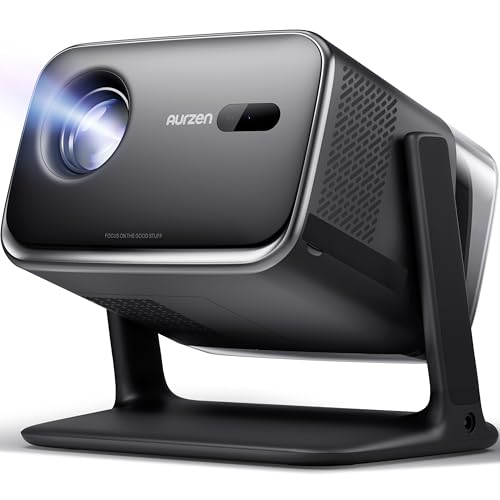
Portable projectors have transformed from bulky business presentation tools into sleek entertainment devices that can turn any blank wall into a cinema screen. The category has exploded in recent years, with manufacturers embracing everything from basic LED technology to cutting-edge laser systems. Two standout models represent very different philosophies: the Aurzen BOOM Mini Smart Projector Google TV prioritizes comprehensive features and exceptional value, while the LG CineBeam Q 4K UHD Portable Laser Projector focuses on premium image quality in an ultra-compact design.
Understanding which approach suits your needs requires diving deep into what makes each projector tick. The choice isn't just about specs on paper – it's about how these different technologies translate into real-world performance and whether the premium features justify their costs.
The portable projector market has matured significantly since 2020, driven by increased home entertainment demands and rapid technological improvements. Modern portable projectors now offer genuine alternatives to traditional TVs, with built-in smart platforms eliminating the need for external streaming devices.
The fundamental challenge in portable projection remains the physics of light. Unlike TVs that generate light directly at each pixel, projectors must produce enough brightness to illuminate large surfaces while maintaining color accuracy and detail. This creates inherent tradeoffs between size, brightness, battery life, and cost.
Two primary display technologies dominate the space. LCD (Liquid Crystal Display) projectors use liquid crystal panels with LED backlighting, offering good color reproduction and cost-effectiveness. DLP (Digital Light Processing) projectors employ tiny mirrors on a chip, typically delivering sharper images and better contrast ratios. The newest advancement is RGB laser technology, which uses separate red, green, and blue lasers instead of traditional bulbs, providing wider color gamuts and longer lifespans.
The Aurzen BOOM Mini represents the latest generation of LCD-based smart projectors, building on years of refinement in LED lighting and Google TV integration. Released in 2024, it incorporates real-time autofocus technology and comprehensive streaming capabilities that weren't available in earlier portable models. This reflects the broader industry trend toward all-in-one devices that eliminate setup complexity.
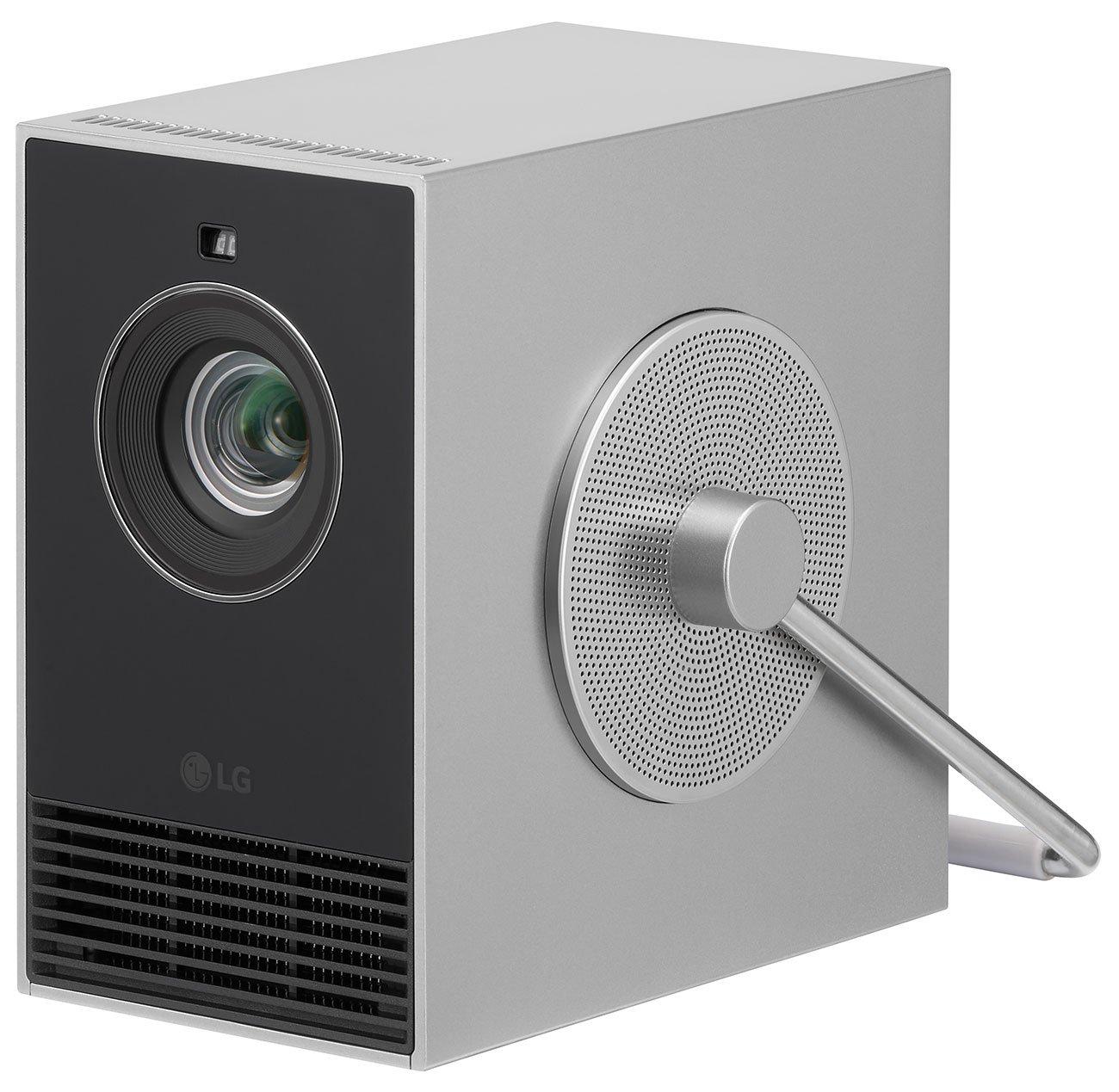
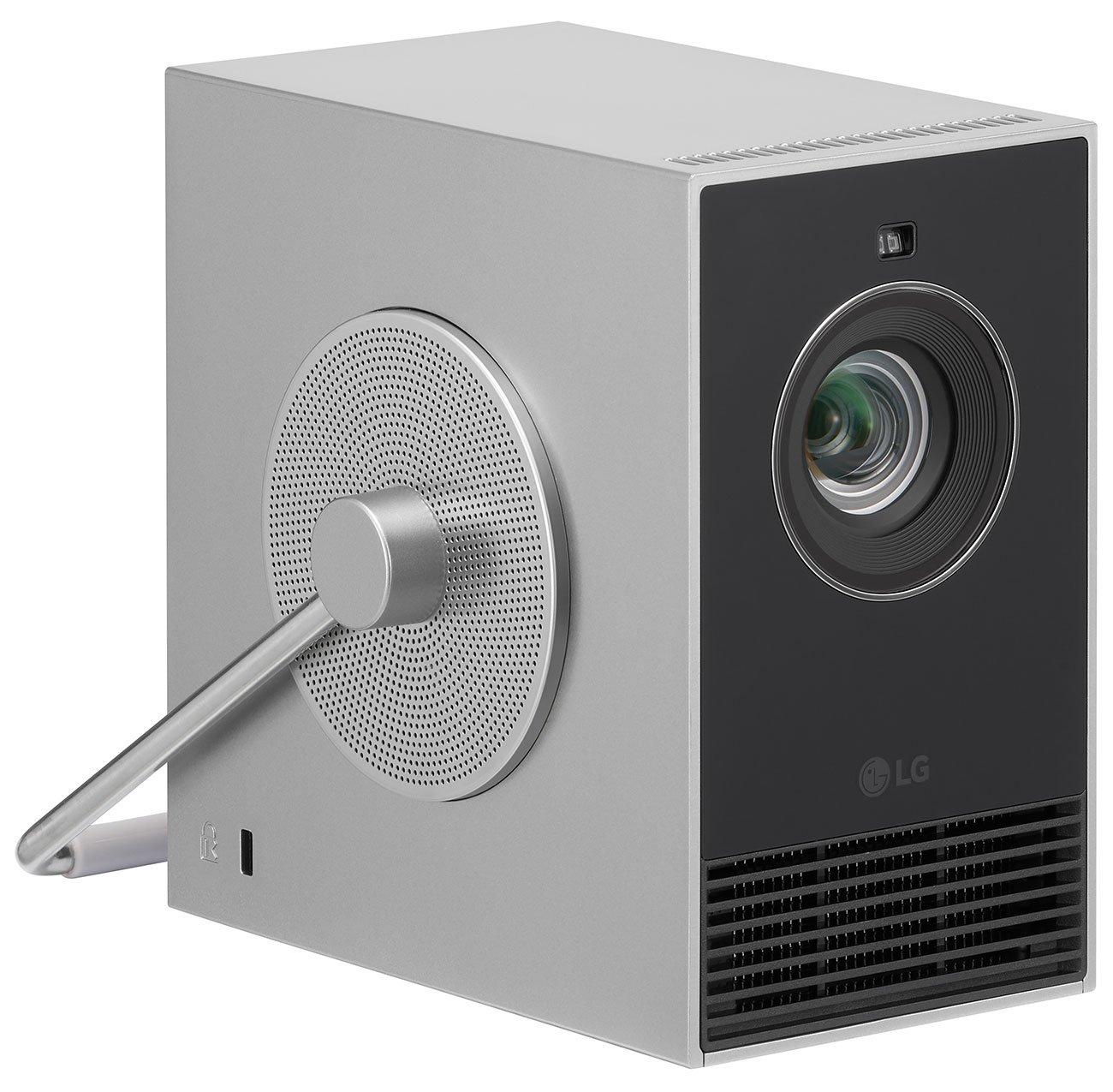
The LG CineBeam Q, also launched in 2024, showcases LG's advancement in miniaturizing laser projection technology. This ultra-compact cube design wouldn't have been possible even two years ago, when laser projectors required significantly larger housings for heat management. The RGB triple-laser system represents cutting-edge technology that was previously limited to expensive home theater projectors.
Both projectors benefit from recent improvements in image processing and smart platform maturity. The integration of advanced auto-correction features and mature streaming ecosystems reflects how the category has evolved from simple projection devices to comprehensive entertainment systems.
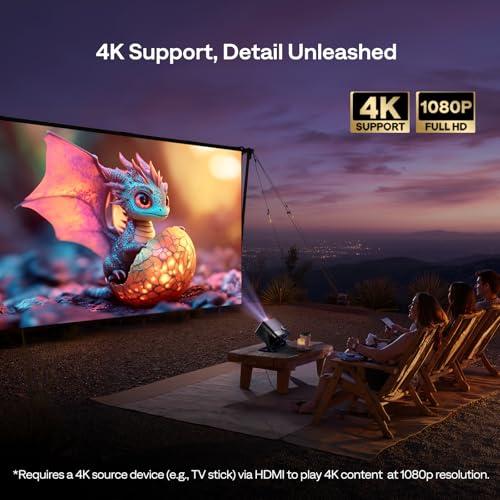
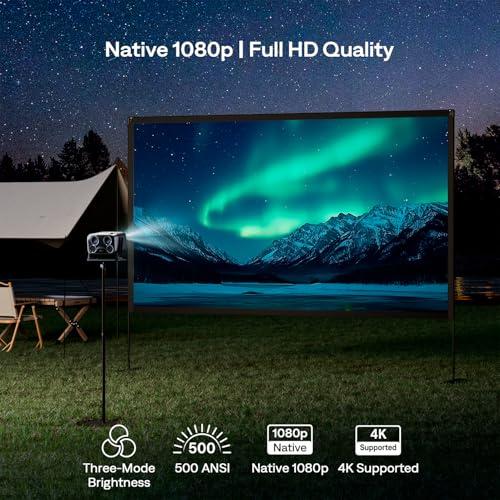
Resolution represents the most fundamental difference between these projectors. The Aurzen BOOM Mini delivers native 1080p (1920x1080) resolution while accepting 4K input signals, which it downscales to fit its LCD panel. This approach provides crisp, detailed images that satisfy most viewers, especially at typical viewing distances of 8-12 feet.
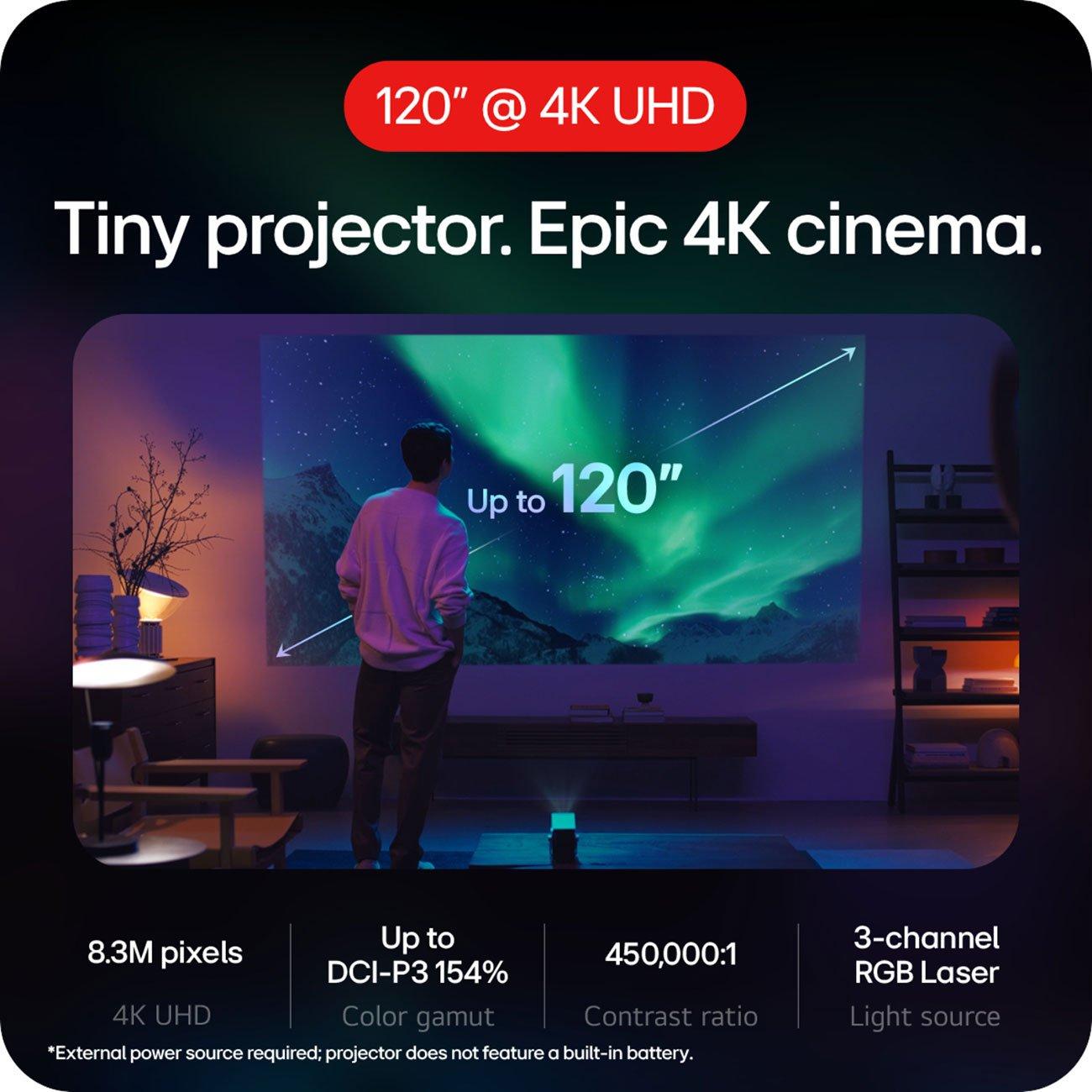
The LG CineBeam Q employs true 4K UHD resolution (3840x2160) through DLP technology with pixel-shifting. This means it actually creates 8.3 million distinct pixels on screen, delivering noticeably sharper text, finer details in facial features, and more defined textures in clothing or scenery. The difference becomes particularly apparent when projecting images larger than 80 inches or when viewing high-quality 4K content from streaming services or Ultra HD Blu-rays.
However, resolution alone doesn't determine image quality. Color accuracy, contrast ratio, and brightness all contribute significantly to the viewing experience. Based on our research into professional reviews and user feedback, the LG CineBeam Q excels in color performance with its RGB laser system covering 154% of the DCI-P3 color space – the standard used in digital cinema. This translates to more vibrant reds, deeper blues, and more accurate skin tones compared to traditional LED systems.
The Aurzen BOOM Mini compensates for its lower resolution with solid overall image quality and more forgiving performance in varied lighting conditions. LCD technology typically handles ambient light better than DLP, making it more practical for family rooms or spaces where complete darkness isn't always possible.
For home theater enthusiasts prioritizing the sharpest possible image, the LG CineBeam Q clearly wins. However, the Aurzen BOOM Mini delivers perfectly acceptable quality for most content, and the resolution difference matters less when viewing typical streaming content at moderate sizes.
Both projectors rate at 500 ANSI lumens – a standardized brightness measurement that provides reliable comparison points. This brightness level works well in darkened rooms but struggles in brightly lit environments. However, the underlying technologies handle this brightness differently.
The LG CineBeam Q's laser light source maintains consistent brightness throughout its rated 20,000-hour lifespan, while LED-based projectors like the Aurzen BOOM Mini gradually dim over time. More importantly, the laser system achieves an impressive 450,000:1 dynamic contrast ratio compared to the Aurzen's 1,000:1 ratio.
Contrast ratio measures the difference between the brightest whites and darkest blacks a projector can produce. Higher contrast ratios create more dramatic images with better shadow detail and more vivid colors. The massive difference here – 450 times higher on the LG model – translates to noticeably better performance in dark scenes and overall image depth.
In practice, this means the LG CineBeam Q renders movie scenes with dramatic lighting much more effectively. Dark scenes in films like "Dune" or "The Batman" retain shadow details that might be lost on lower-contrast projectors. The Aurzen BOOM Mini still produces watchable images but can't match this level of performance in challenging content.
For optimal performance, both projectors work best in darkened rooms. The Aurzen BOOM Mini proves more flexible in partially lit environments, while the LG CineBeam Q demands darker conditions to showcase its superior contrast capabilities.
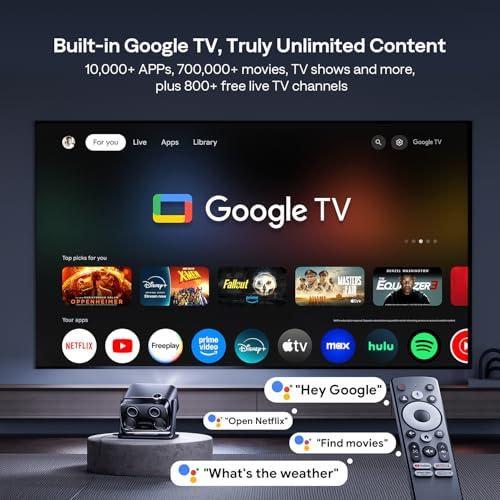
Modern portable projectors must function as complete entertainment systems, not just projection devices. The Aurzen BOOM Mini excels here with official Google TV integration, providing access to over 10,000 apps including Netflix, Disney+, Hulu, and YouTube without requiring external devices.
Google TV offers several advantages over competitor platforms. Its recommendation engine learns viewing preferences across services, making content discovery more intuitive. The interface supports voice control through Google Assistant, allowing hands-free operation for play, pause, volume, and search functions. The platform also includes robust parental controls through Kids Mode, essential for family use.
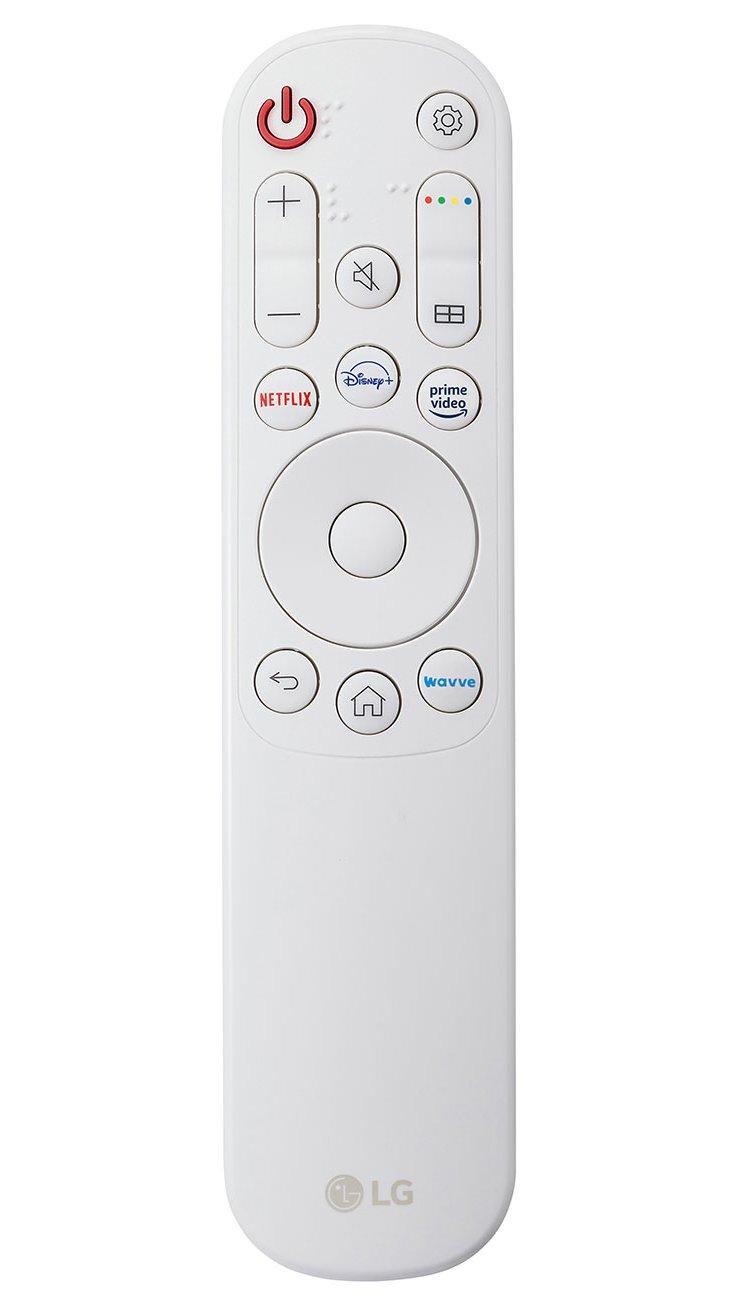
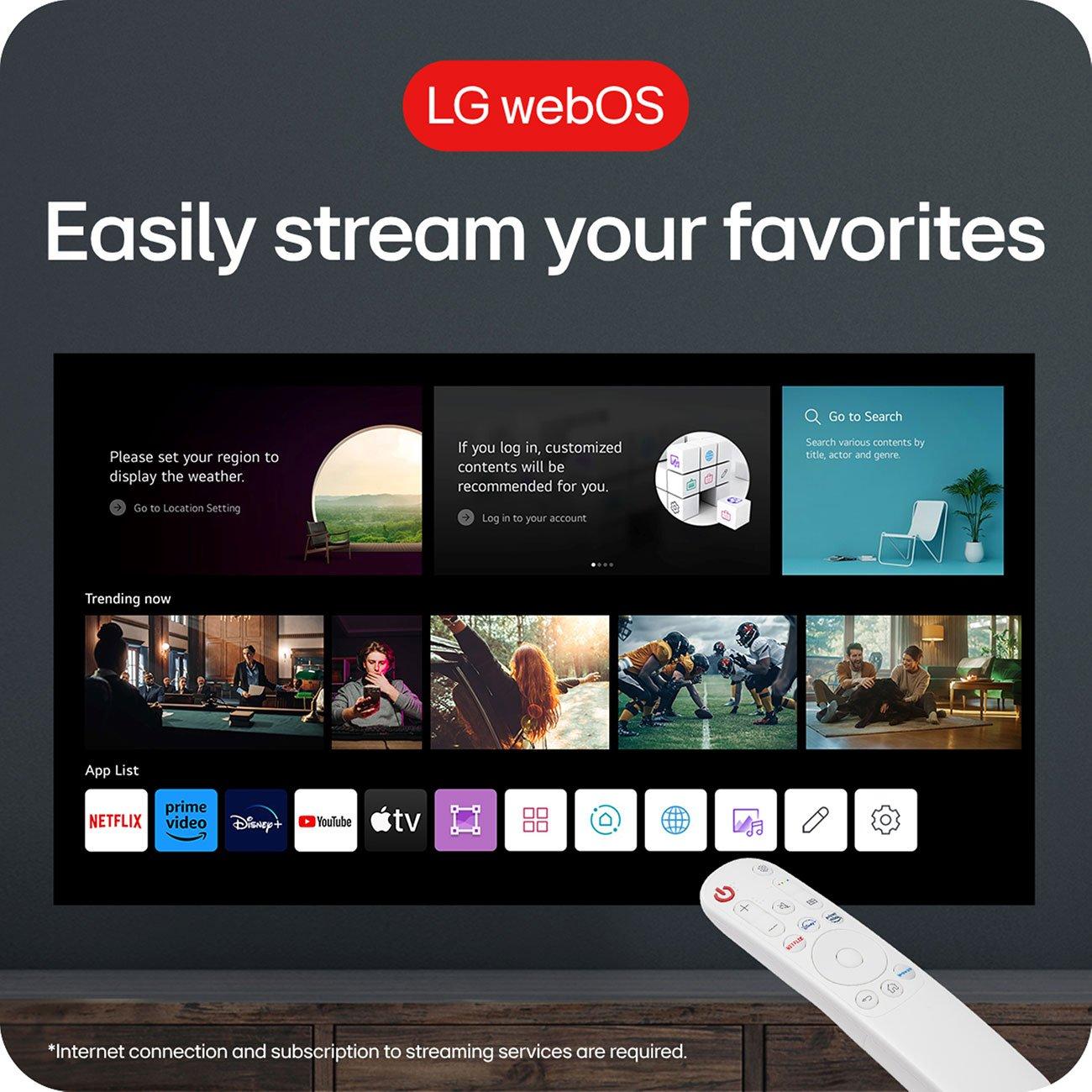
The LG CineBeam Q runs webOS, LG's smart TV platform that includes major streaming services but with a more limited app selection. While webOS offers a clean, responsive interface, it can't match Google TV's breadth of available applications or integration with Google's ecosystem services.
Both projectors support wireless casting from smartphones and tablets, but through different protocols. The Aurzen model uses Google Cast, which integrates seamlessly with Android devices and many iOS apps. The LG projector supports AirPlay 2 for Apple devices and Android Screen Share, providing good compatibility across platforms.
The connectivity differences extend to physical ports. The Aurzen BOOM Mini includes HDMI, dual USB ports, and 3.5mm audio output, supporting various external devices. The LG CineBeam Q offers HDMI and USB-C, with the USB-C port supporting both data and power delivery – a unique feature allowing operation from high-capacity battery banks.
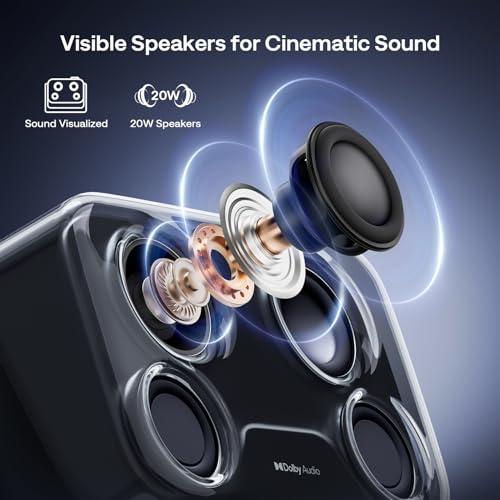
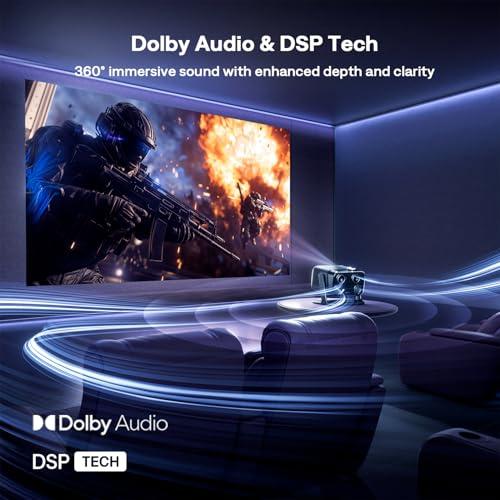
Audio capability represents one of the starkest differences between these projectors. The Aurzen BOOM Mini features dual 10W speakers totaling 20W output with Dolby Audio processing. These rear-facing speakers provide surprisingly robust sound for a projector, with enough volume and clarity for most rooms. The speakers can even function independently as a Bluetooth speaker system.
Professional reviews consistently praise the Aurzen's audio performance as eliminating the need for external speakers in casual viewing scenarios. The sound quality surpasses most TV speakers and many soundbars in this price range, making it a genuine all-in-one entertainment solution.
The LG CineBeam Q includes only a single 3W mono speaker that reviewers universally describe as inadequate. The tiny speaker produces thin, tinny sound suitable only for basic menu navigation or emergency use. Any serious viewing requires external speakers, adding complexity and cost to the setup.
This difference significantly impacts the user experience. The Aurzen BOOM Mini works immediately out of the box for complete movie nights, while the LG CineBeam Q requires additional audio equipment planning. However, enthusiasts building dedicated home theater setups likely prefer external audio solutions anyway, making the LG's minimal built-in audio less concerning.
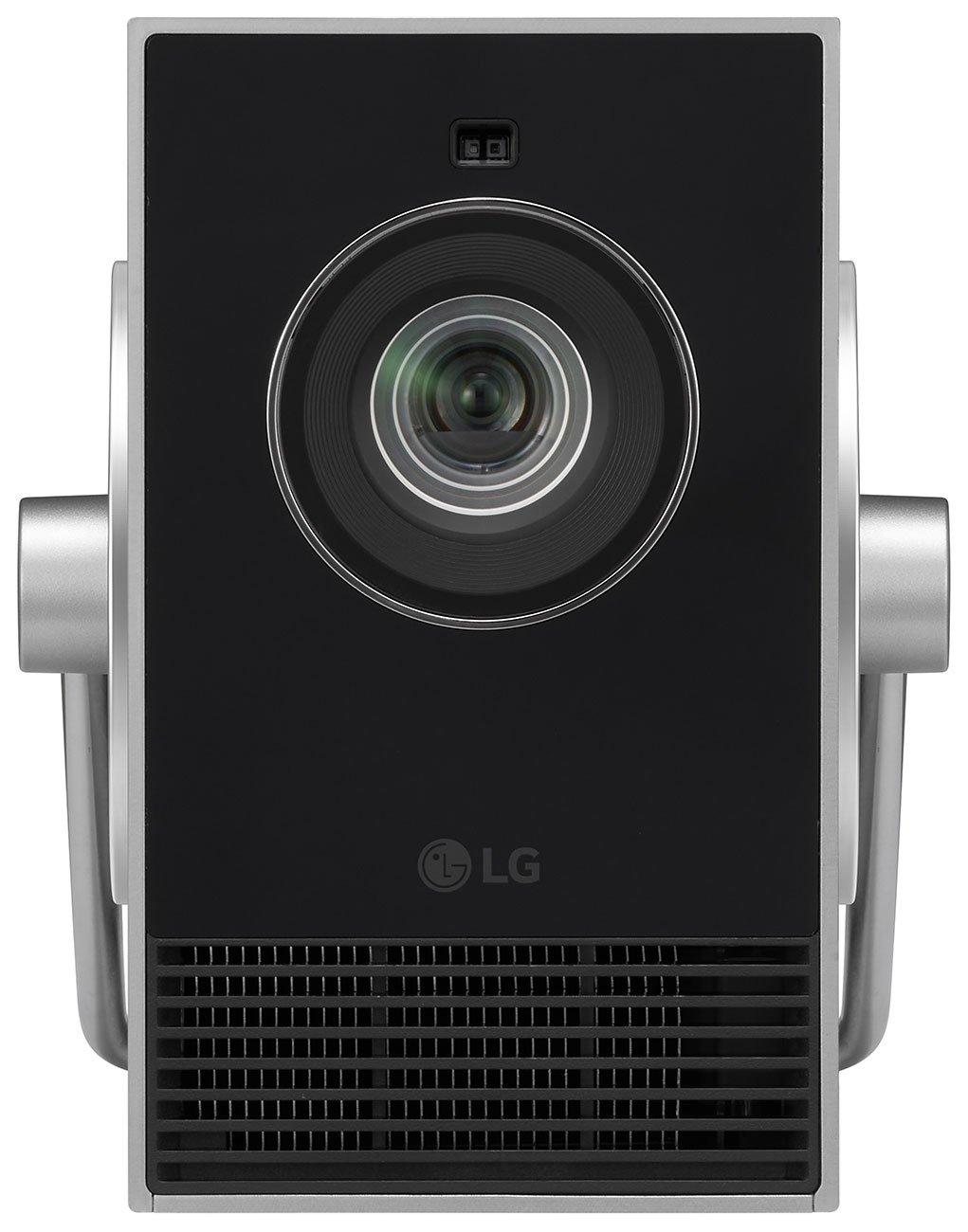
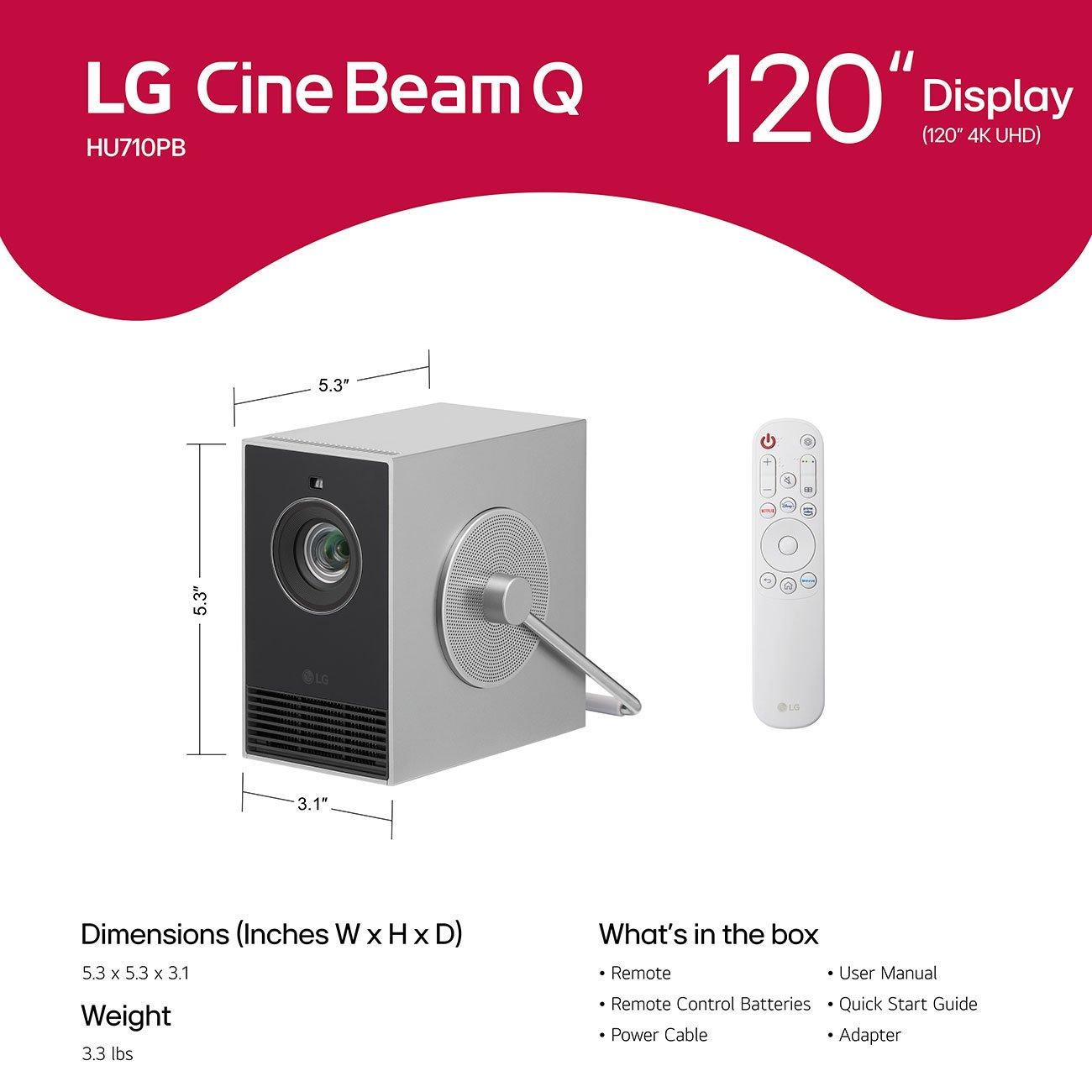
True portability varies dramatically between these models. The LG CineBeam Q measures just 5.3 x 3.1 x 5.3 inches and weighs 3.3 pounds, making it genuinely pocketable for travel. Its unique cube design includes a 360-degree rotating handle that doubles as an adjustable stand, enabling projection at various angles without additional equipment.
More importantly, the LG projector supports USB-C Power Delivery, allowing operation from high-capacity battery banks. This enables true off-grid use for camping, backyard movies, or locations without convenient power access. The laser light source also reaches full brightness immediately without warm-up time.
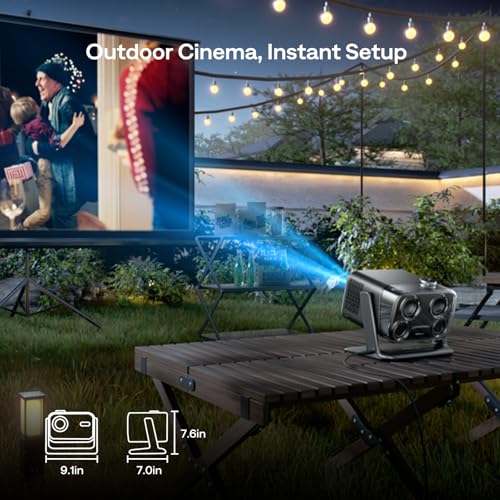
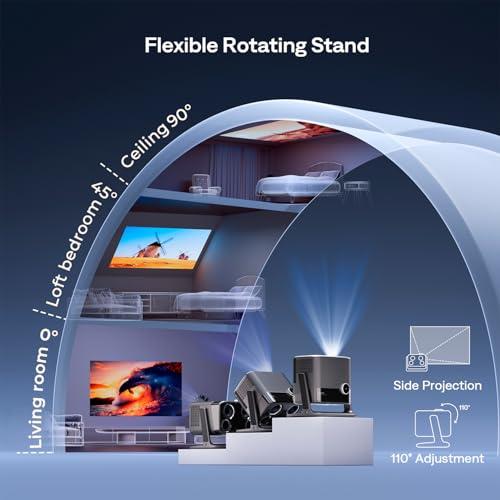
The Aurzen BOOM Mini takes a different approach to portability. While larger than the LG model, it includes a built-in 110-degree flexible stand that supports ceiling projection – a feature requiring separate mounting hardware with most competitors. The projector handles repositioning easily but requires AC power, limiting outdoor use options.
For users prioritizing grab-and-go portability, the LG CineBeam Q clearly wins. However, the Aurzen BOOM Mini's flexible stand system and comprehensive feature set make it excellent for frequent repositioning within homes or offices.
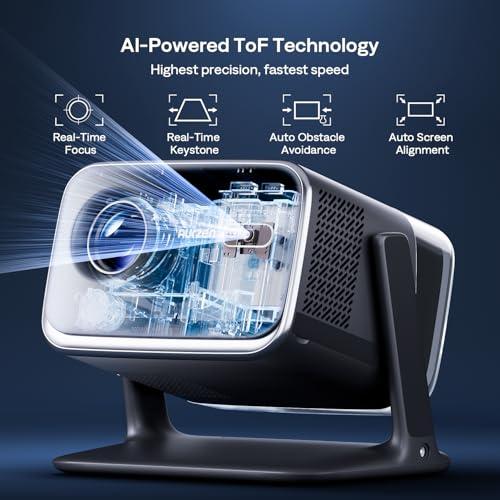
Both projectors emphasize ease of setup, but through different approaches. The Aurzen BOOM Mini incorporates real-time autofocus using ToF (Time-of-Flight) sensors that continuously monitor the projection surface and adjust focus within seconds. Combined with automatic keystone correction – which fixes the trapezoidal distortion when projecting at angles – setup becomes nearly effortless.
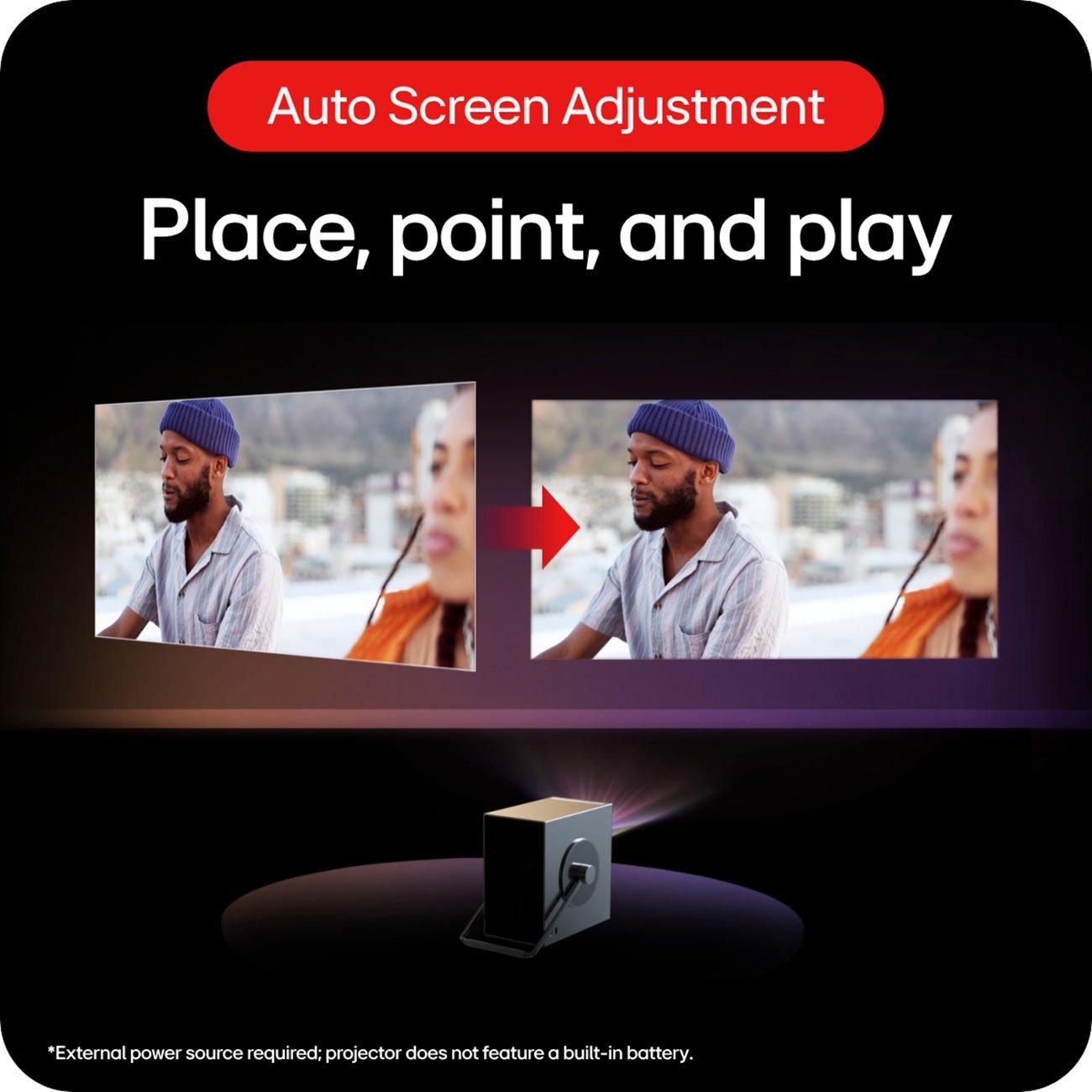
The LG CineBeam Q also includes automatic focus and keystone correction, but its compact design limits the sophistication of these systems compared to larger projectors. However, its premium build quality and intuitive webOS interface create a more polished user experience once running.
The Aurzen projector's Google TV integration provides superior long-term usability with frequent platform updates, extensive app availability, and voice control capabilities. The LG model's webOS platform offers a cleaner interface but fewer features and apps.
For dedicated home theater use, both projectors face inherent limitations compared to full-sized models, but each serves different scenarios effectively. The LG CineBeam Q's superior 4K resolution and contrast ratio provide a more cinematic experience when conditions allow. Its laser technology delivers consistent performance over thousands of hours without maintenance.
However, both projectors' 500-lumen brightness limits home theater applications to smaller screens or very dark rooms. Professional home theater projectors typically output 1,500-3,000 lumens for larger screens and ambient light tolerance. These portable models work best for intimate viewing experiences rather than large-scale entertainment.
The Aurzen BOOM Mini's comprehensive audio system makes it more practical for casual home theater use, eliminating the complexity of external speakers. Its larger projection size range (40-200 inches vs 50-120 inches) provides more flexibility for different room sizes.
At the time of writing, the Aurzen BOOM Mini costs significantly less than the LG CineBeam Q – roughly one-third the price. This price difference fundamentally changes the value equation and target audience for each projector.
The Aurzen BOOM Mini delivers exceptional value for users seeking a primary entertainment device that replaces or supplements a traditional TV. Its combination of Google TV integration, solid 1080p performance, excellent audio, and flexible installation options creates a comprehensive package that eliminates most additional purchases. For families, students, or anyone wanting maximum functionality per dollar spent, it represents an outstanding choice.
The LG CineBeam Q justifies its premium pricing through cutting-edge technology and superior performance in key areas. Its true 4K resolution, RGB laser system, and ultra-portable design appeal to technology enthusiasts, frequent travelers, and users prioritizing image quality above all else. However, the higher cost extends beyond the initial purchase – external audio solutions add complexity and expense.
Choose the Aurzen BOOM Mini if you want a versatile, all-in-one entertainment solution that works immediately out of the box. It's ideal for families needing comprehensive smart features, students in dorms or apartments, or anyone wanting a TV replacement that doesn't require additional components. The excellent built-in audio and extensive projection size options make it perfect for varied use cases from bedroom ceiling viewing to living room entertainment.
The Aurzen model also makes sense for users who value the Google ecosystem integration, need extensive app selection, or prefer the flexibility of larger projection sizes. Its real-time auto-adjustment features and solid overall performance across all categories create a satisfying user experience without compromises.
Choose the LG CineBeam Q if image quality and portability are your primary concerns and you're willing to invest in a complete setup. It's perfect for technology enthusiasts who appreciate cutting-edge laser technology, frequent travelers needing genuine portability, or users planning to build a dedicated projection setup with external audio.
The LG projector excels for outdoor movie nights, business presentations requiring 4K clarity, or any scenario where its ultra-compact size and battery operation provide unique advantages. Its superior color accuracy and contrast ratio create a more premium viewing experience when conditions allow.
Both projectors represent excellent choices within their respective market segments, but they serve fundamentally different needs. The Aurzen BOOM Mini maximizes practical value and convenience, while the LG CineBeam Q delivers premium performance in a revolutionary form factor. Understanding which priorities matter most to your specific use cases will guide you toward the right choice for your entertainment needs.
| Aurzen BOOM Mini Smart Projector Google TV | LG CineBeam Q 4K UHD Portable Laser Projector |
|---|---|
| Native Resolution - Higher resolution shows more detail, especially on large screens | |
| 1080p (1920x1080) with 4K input support | True 4K UHD (3840x2160) with pixel-shifting DLP |
| Display Technology - Affects color accuracy, contrast, and lifespan | |
| LCD panels with LED lighting (reliable, cost-effective) | DLP with RGB triple-laser system (premium performance, 20,000hr lifespan) |
| Brightness - Both projectors work best in darkened rooms | |
| 500 ANSI lumens | 500 ANSI lumens |
| Contrast Ratio - Higher ratios create more dramatic images with better shadow detail | |
| 1,000:1 (adequate for most content) | 450,000:1 (exceptional dark scene performance) |
| Projection Size Range - Flexibility for different room sizes | |
| 40"-200" (exceptional flexibility) | 50"-120" (more limited but adequate for most spaces) |
| Built-in Audio - Critical for all-in-one convenience | |
| Dual 10W speakers (20W total) with Dolby Audio | Single 3W mono speaker (external audio essentially required) |
| Smart Platform - Determines available streaming apps and features | |
| Google TV with 10,000+ apps including Netflix | LG webOS with major streaming services |
| Physical Size & Weight - Impacts true portability | |
| 9.1" x 7" x 7.6" (semi-portable, flexible stand included) | 5.3" x 3.1" x 5.3", 3.3 lbs (ultra-compact cube design) |
| Power Requirements - Affects where you can use the projector | |
| AC power only (limits outdoor use) | AC or USB-C PD (can run on battery banks for true portability) |
| Auto Setup Features - Reduces installation hassle | |
| Real-time autofocus and keystone correction with ToF sensors | Automatic focus and keystone correction |
| Connectivity Options - Important for connecting external devices | |
| HDMI, dual USB, 3.5mm audio out, dual-band Wi-Fi, Bluetooth 5.1 | HDMI, USB-C, Wi-Fi, Bluetooth audio output |
| Color Performance - Affects image vibrancy and accuracy | |
| Standard LED color gamut (good for the price) | 154% DCI-P3 coverage (cinema-grade color accuracy) |
| Voice Control - Hands-free operation convenience | |
| Google Assistant integration | Limited voice control through webOS |
The LG CineBeam Q 4K UHD Portable Laser Projector offers superior home theater performance with true 4K resolution, exceptional 450,000:1 contrast ratio, and cinema-grade color accuracy covering 154% of the DCI-P3 color space. However, you'll need external speakers since its 3W mono speaker is inadequate. The Aurzen BOOM Mini Smart Projector Google TV provides a more complete home theater solution out-of-the-box with excellent built-in 20W Dolby Audio speakers, though it's limited to 1080p resolution. For dedicated home theater setups prioritizing image quality, choose the LG CineBeam Q. For casual home theater use wanting simplicity, the Aurzen BOOM Mini is more practical.
The LG CineBeam Q 4K UHD Portable Laser Projector delivers true 4K UHD resolution (3840x2160) with RGB laser technology, providing sharper details and more vibrant colors than the Aurzen BOOM Mini Smart Projector Google TV, which offers 1080p native resolution with 4K input support. The LG model also features a dramatically higher 450,000:1 contrast ratio compared to 1,000:1 on the Aurzen projector, resulting in better dark scene performance and overall image depth.
The LG CineBeam Q 4K UHD Portable Laser Projector is significantly more portable, measuring just 5.3" x 3.1" x 5.3" and weighing only 3.3 pounds in a compact cube design. It also supports USB-C power delivery, allowing operation from battery banks for true off-grid use. The Aurzen BOOM Mini Smart Projector Google TV is larger and requires AC power, making it better suited for semi-permanent installations or occasional repositioning within homes rather than frequent travel.
The Aurzen BOOM Mini Smart Projector Google TV includes excellent dual 10W speakers (20W total) with Dolby Audio that eliminate the need for external speakers in most scenarios. The LG CineBeam Q 4K UHD Portable Laser Projector has only a basic 3W mono speaker that's inadequate for quality viewing, essentially requiring external speakers or headphones. If you want an all-in-one solution without additional audio equipment, the Aurzen BOOM Mini is the clear choice.
The Aurzen BOOM Mini Smart Projector Google TV runs official Google TV with access to over 10,000 apps including Netflix, Disney+, Hulu, YouTube, and many others. It also includes Google Assistant voice control and comprehensive parental controls. The LG CineBeam Q 4K UHD Portable Laser Projector uses LG's webOS platform, which includes major streaming services but has a more limited app selection. For extensive streaming options and smart features, the Aurzen projector provides superior functionality.
Both the Aurzen BOOM Mini Smart Projector Google TV and LG CineBeam Q 4K UHD Portable Laser Projector output 500 ANSI lumens, which works well in darkened rooms but struggles in bright daylight. Neither projector is suitable for daytime viewing without controlling ambient light. The LG model's laser technology maintains consistent brightness over its 20,000-hour lifespan, while the Aurzen's LED system may gradually dim over time.
The Aurzen BOOM Mini Smart Projector Google TV offers exceptional flexibility with a 40"-200" projection range, making it suitable for everything from small bedrooms to large living rooms. The LG CineBeam Q 4K UHD Portable Laser Projector has a more limited 50"-120" range but still covers most typical viewing scenarios. If you need maximum size flexibility or want very large projections, the Aurzen BOOM Mini provides better options.
Both projectors feature automatic setup capabilities, but the Aurzen BOOM Mini Smart Projector Google TV includes more comprehensive auto-adjustment with real-time autofocus using ToF sensors and automatic keystone correction that continuously optimizes the image. It also has a built-in 110° flexible stand supporting ceiling projection. The LG CineBeam Q 4K UHD Portable Laser Projector offers automatic focus and keystone correction with its premium 360° rotating handle/stand design. Both are user-friendly, but the Aurzen model provides more installation flexibility.
The LG CineBeam Q 4K UHD Portable Laser Projector supports USB-C Power Delivery, allowing it to run on high-capacity battery banks for true portable outdoor use. The Aurzen BOOM Mini Smart Projector Google TV requires AC power only, limiting it to locations with electrical outlets. For camping, outdoor movies, or locations without power access, only the LG CineBeam Q offers battery operation capability.
The Aurzen BOOM Mini Smart Projector Google TV provides exceptional value with comprehensive features including Google TV, excellent built-in audio, flexible projection sizes, and solid 1080p performance at a budget-friendly price point. The LG CineBeam Q 4K UHD Portable Laser Projector costs significantly more but delivers premium 4K image quality and ultra-portable design. For most users seeking maximum functionality per dollar, the Aurzen BOOM Mini represents better value, while the LG model justifies its premium pricing for image quality enthusiasts.
The Aurzen BOOM Mini Smart Projector Google TV offers more comprehensive connectivity with HDMI, dual USB ports, 3.5mm audio output, dual-band Wi-Fi, and Bluetooth 5.1. The LG CineBeam Q 4K UHD Portable Laser Projector includes HDMI, USB-C (with power delivery), Wi-Fi, and Bluetooth audio output. Both support wireless casting - the Aurzen model uses Google Cast while the LG projector supports AirPlay 2 and Android Screen Share. The Aurzen BOOM Mini provides more port options for external devices.
The Aurzen BOOM Mini Smart Projector Google TV is more family-friendly with built-in Kids Mode offering parental controls, screen time management, and content filtering. Its Google TV platform provides extensive educational content and family apps. The excellent built-in speakers eliminate setup complexity, and the larger projection size range accommodates various viewing scenarios. The LG CineBeam Q 4K UHD Portable Laser Projector offers superior image quality but requires external speakers and has more limited parental control options. For families prioritizing ease of use and comprehensive features, the Aurzen BOOM Mini is the better choice.
We've done our best to create useful and informative comparisons to help you decide what product to buy. Our research uses advanced automated methods to create this comparison and perfection is not possible - please contact us for corrections or questions. These are the sites we've researched in the creation of this article: aurzen.com - aurzen.com - the-gadgeteer.com - projectorcentral.com - aurzen.com - aurzen.com - youtube.com - bestbuy.com - bestbuy.com - youtube.com - aurzen.com - youtube.com - hometechnologyreview.com - youtube.com - aurzen.com - projectorcentral.com - lg.com - thefrogpadappliances.com - youtube.com - techradar.com - lg.com - avsforum.com - lg.com - tomsguide.com - jefflynch.com - hometheaterview.com - projectorreviews.com - youtube.com - avsforum.com - projectorcentral.com - pcrichard.com - bhphotovideo.com - youtube.com - lg.com - applerivertvandappliance.com - big-georges.com - queencityonline.com - lg.com - lg.com - lg.com - lgnewsroom.com - heimkino.de

Privacy Policy
Terms and Conditions - Affiliate Policy
Home Security
© Copyright 2008-2026.
11816 Inwood Rd #1211, Dallas, TX 75244