

In a world where our entertainment needs to be as mobile as we are, portable projectors have carved out an essential niche in the tech landscape. Today, we're comparing two standout contenders: the Samsung Freestyle 2nd Gen Smart Projector and the LG CineBeam Q 4K UHD Portable Laser Projector. These compact powerhouses promise to transform any space into a personal theater, but they take distinctly different approaches to portable projection technology. Let's dive into what makes each unique and which might be right for your specific needs.
Portable projectors have come a long way from the dim, bulky units of the past. Modern smart projectors combine sophisticated display technologies with streaming capabilities and intelligent features previously only found in high-end TVs.
The Samsung Freestyle 2nd Gen, released in mid-2023, builds upon the success of its predecessor with enhanced features and performance. Samsung took the original concept—a versatile, rotating projector—and refined it with better image quality and expanded smart capabilities.
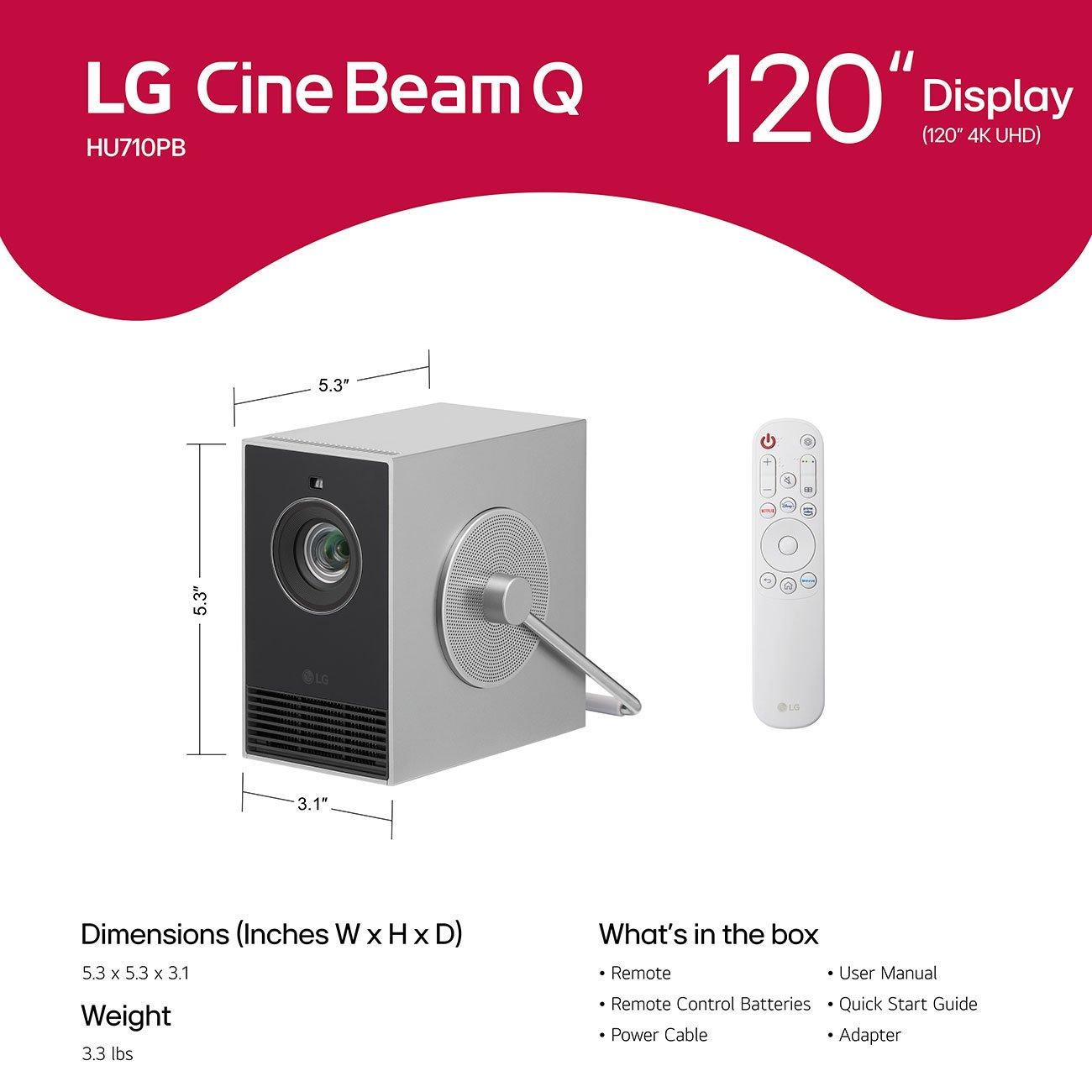
The LG CineBeam Q, launched in early 2023, represents LG's latest innovation in their respected projector lineup. It brings true 4K resolution to an impressively compact form factor, pushing the boundaries of what's possible in portable projection technology.
Both devices exemplify how rapidly this category is advancing, with manufacturers packing increasingly sophisticated technology into ever-smaller packages. These aren't the faint, fuzzy projectors of yesterday—they're legitimate alternatives to traditional displays for many use cases.
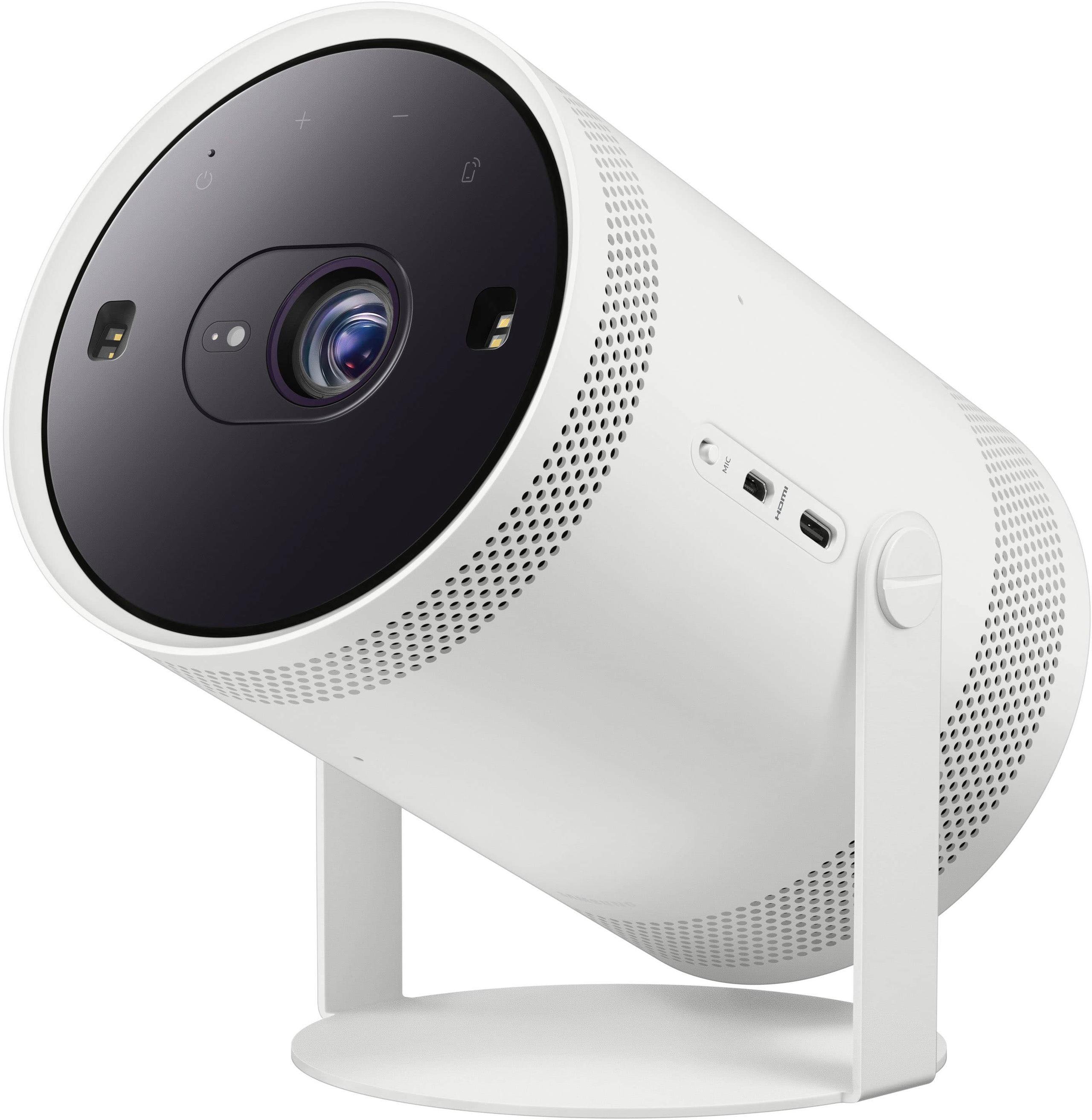
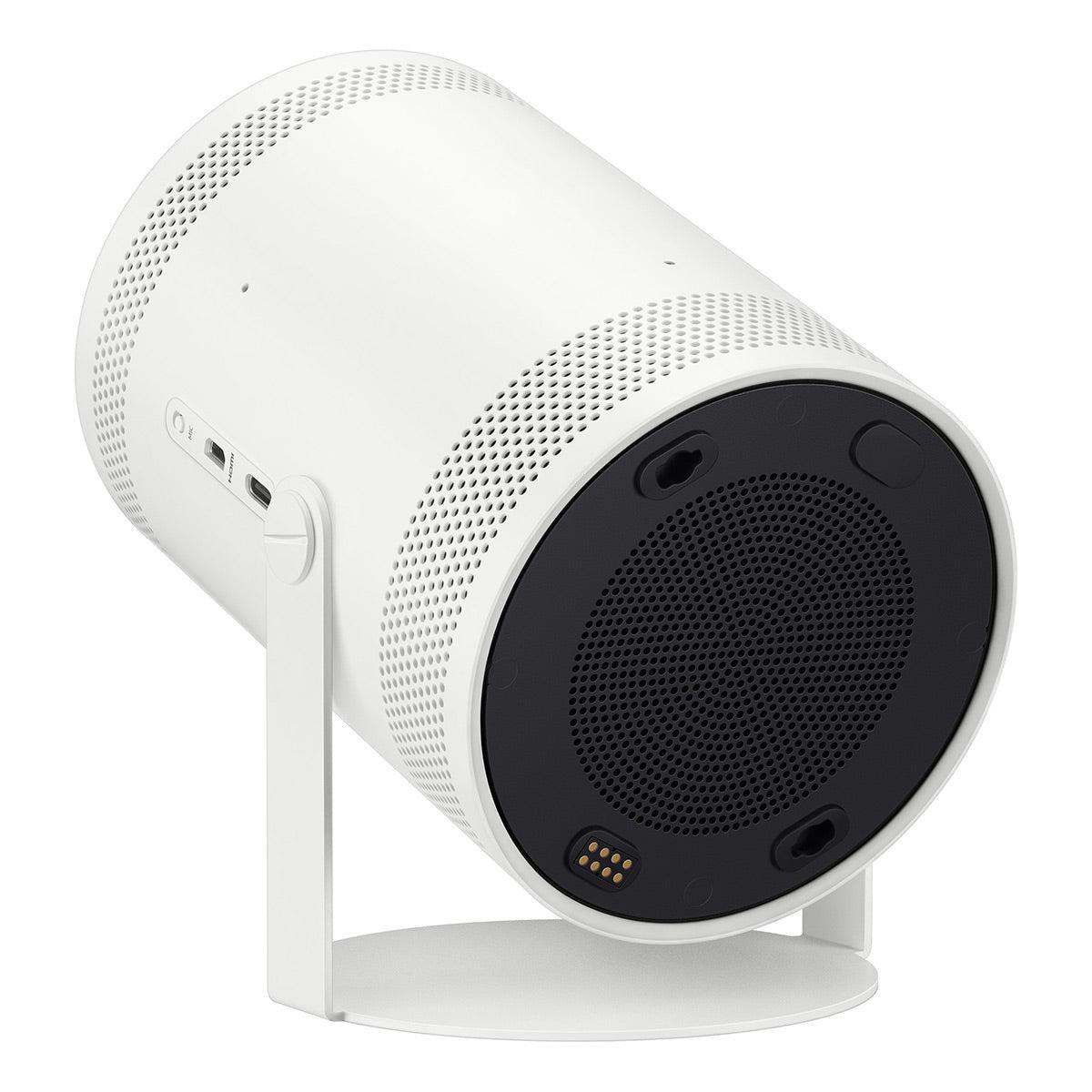
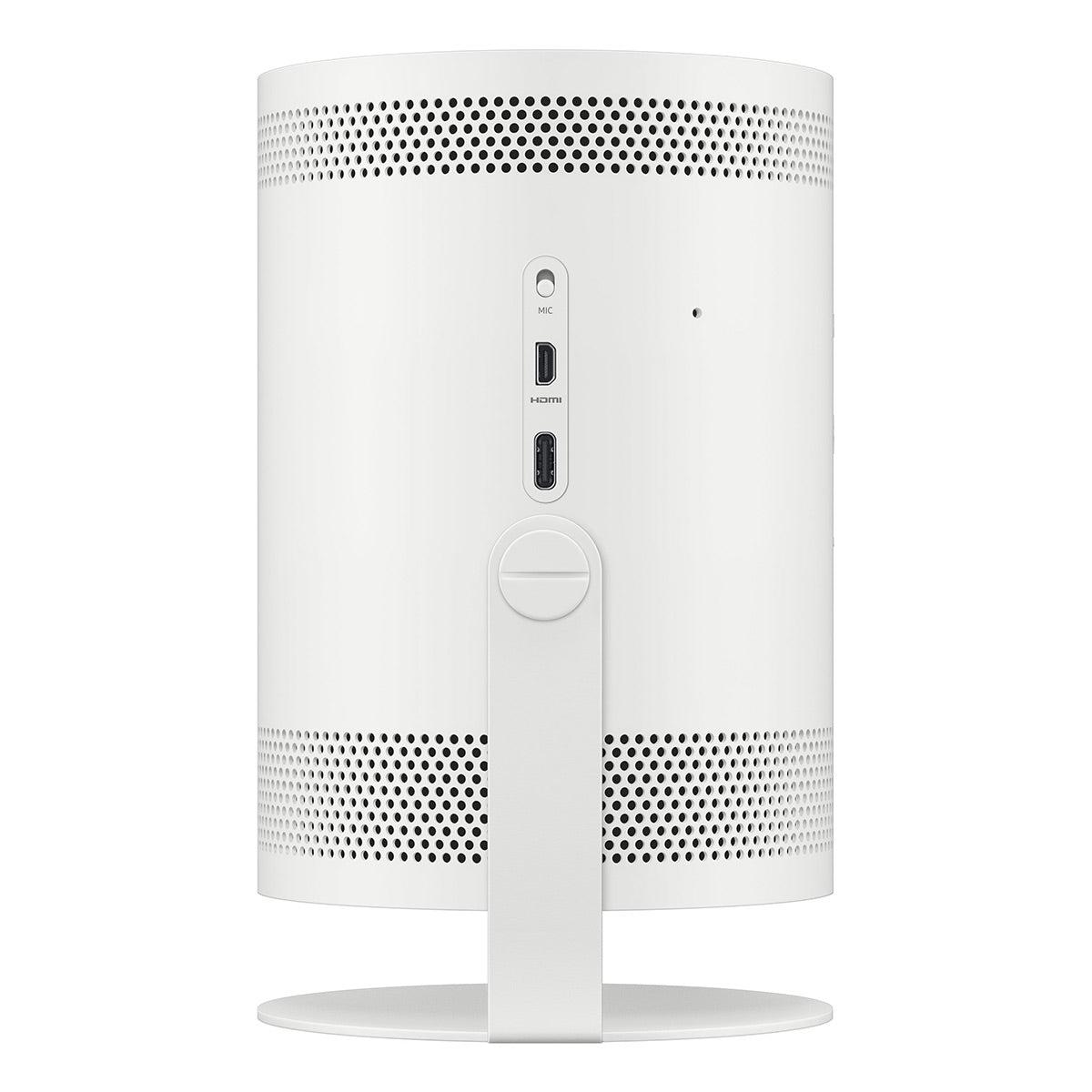
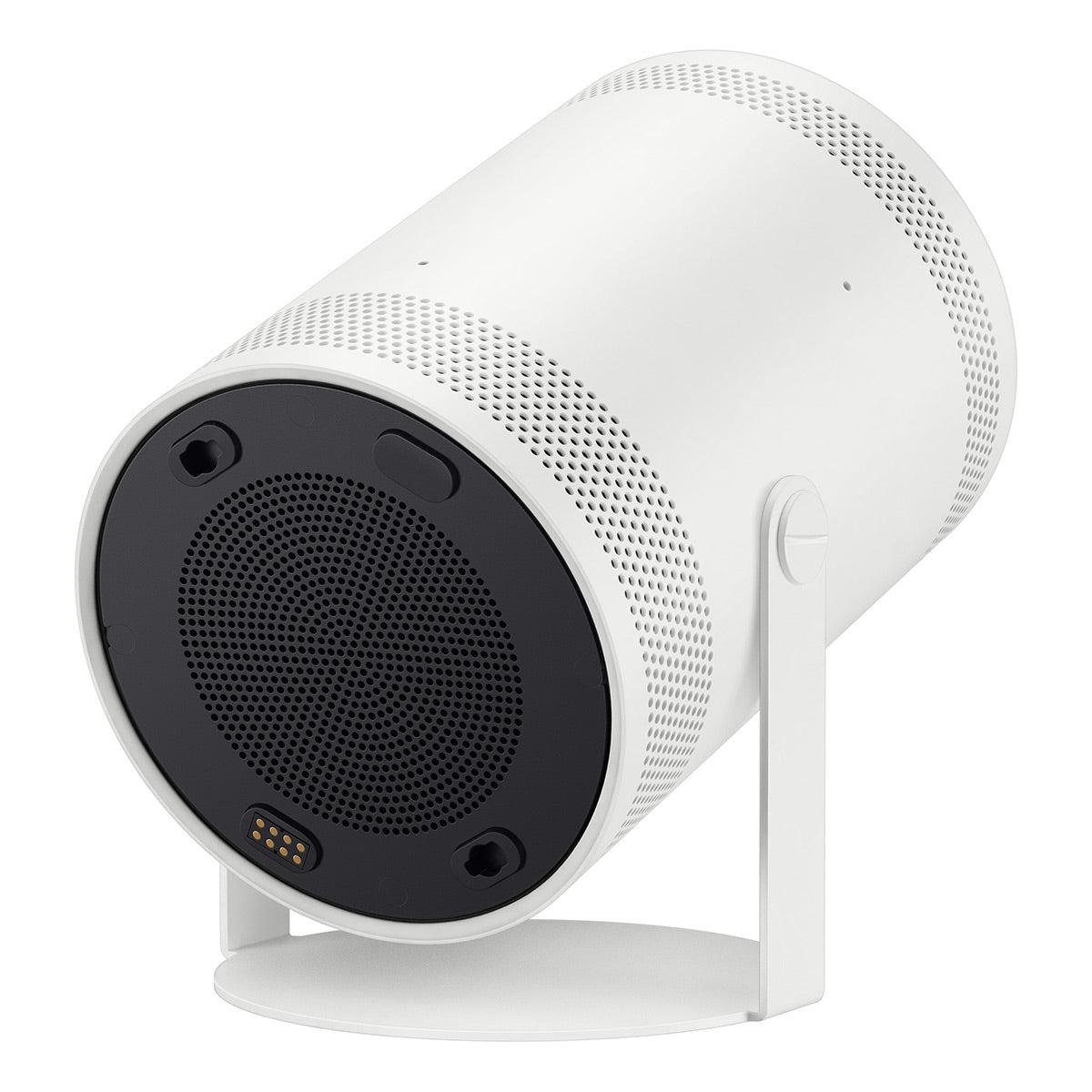
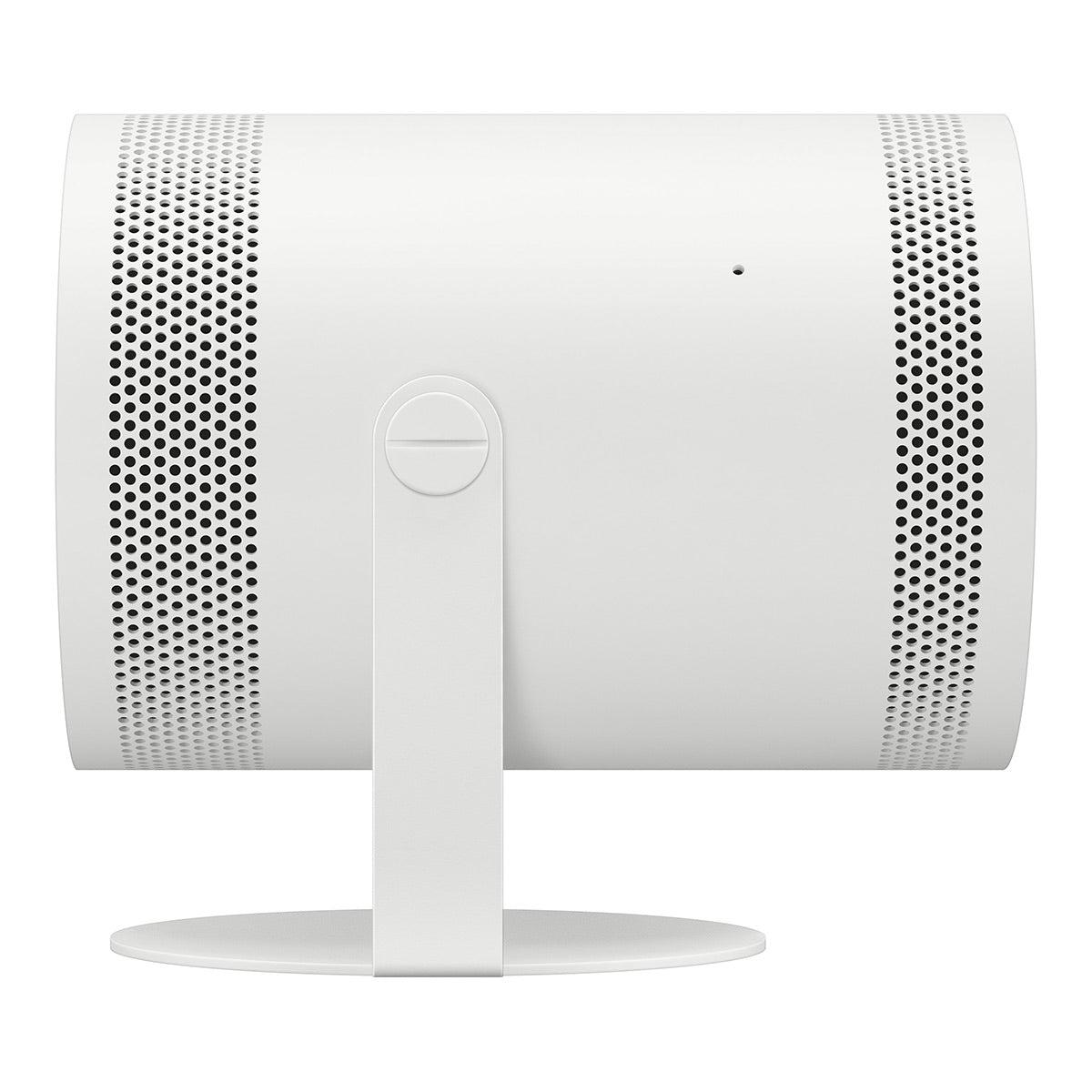
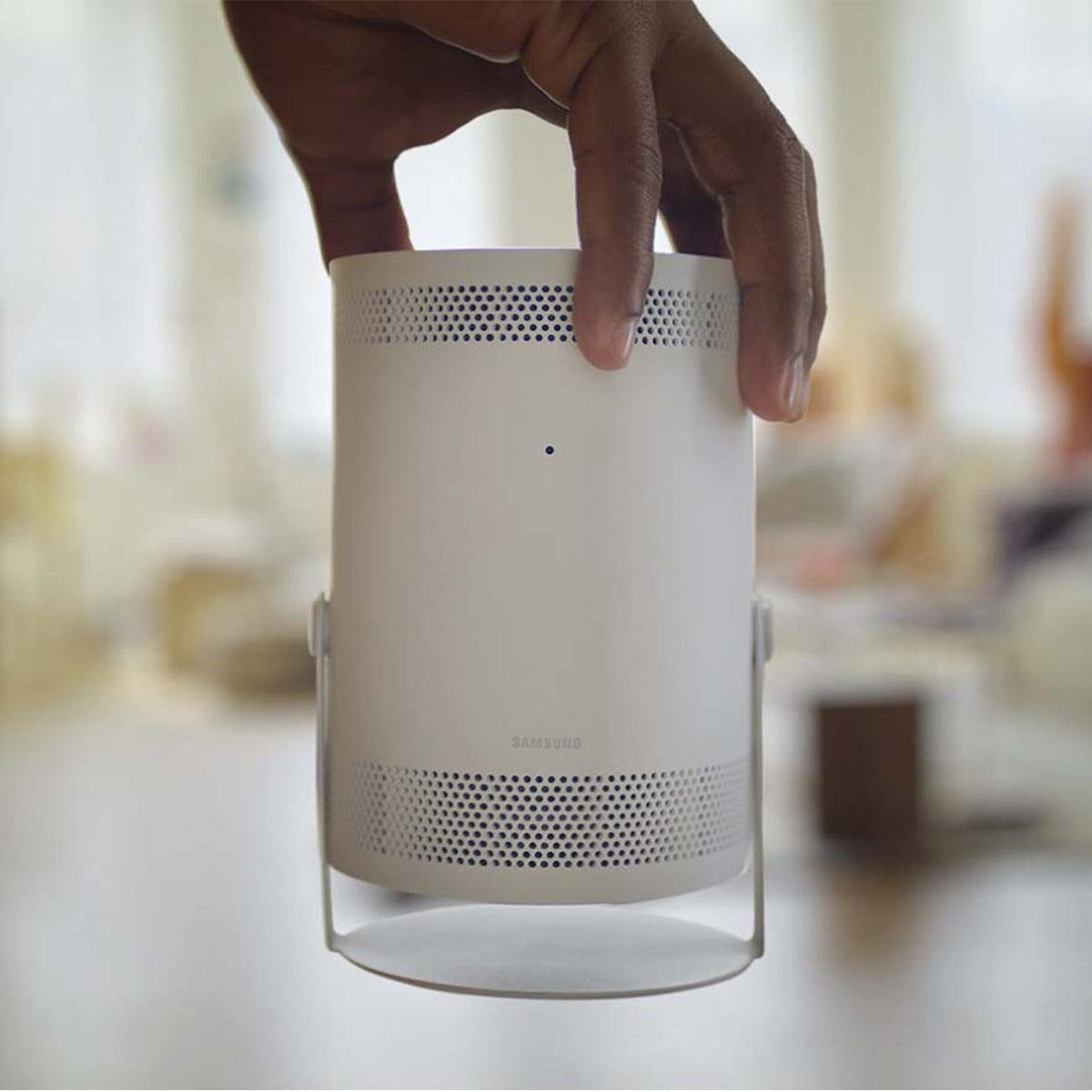
The Samsung Freestyle 2nd Gen maintains the distinctive barrel-shaped design of the original, weighing a mere 1.83 pounds. Its most striking feature is the 180° rotation capability, allowing you to point it at virtually any surface in your environment. This cylindrical design isn't just aesthetic—it's functional, housing the projection components in a way that facilitates its unique swiveling capability.
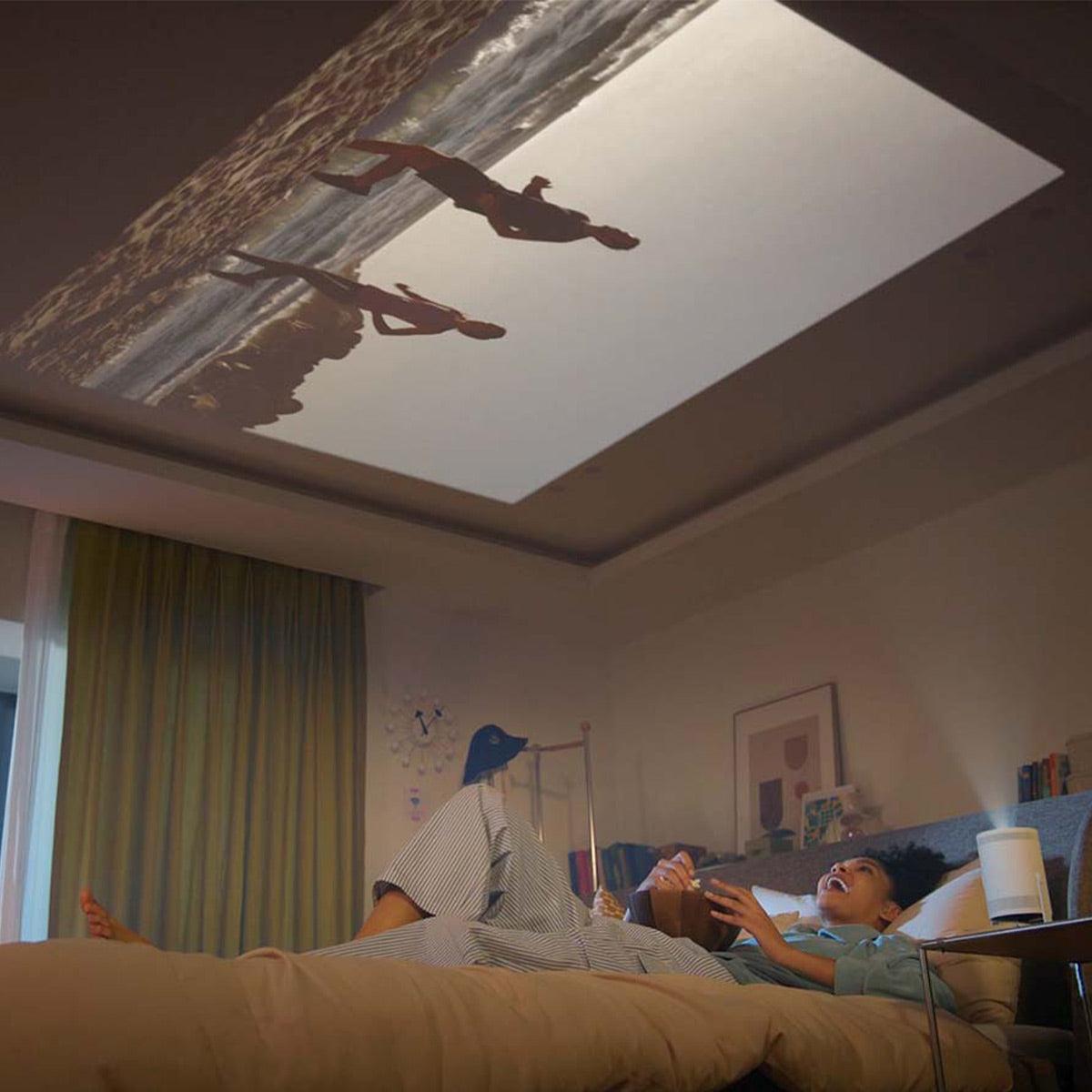
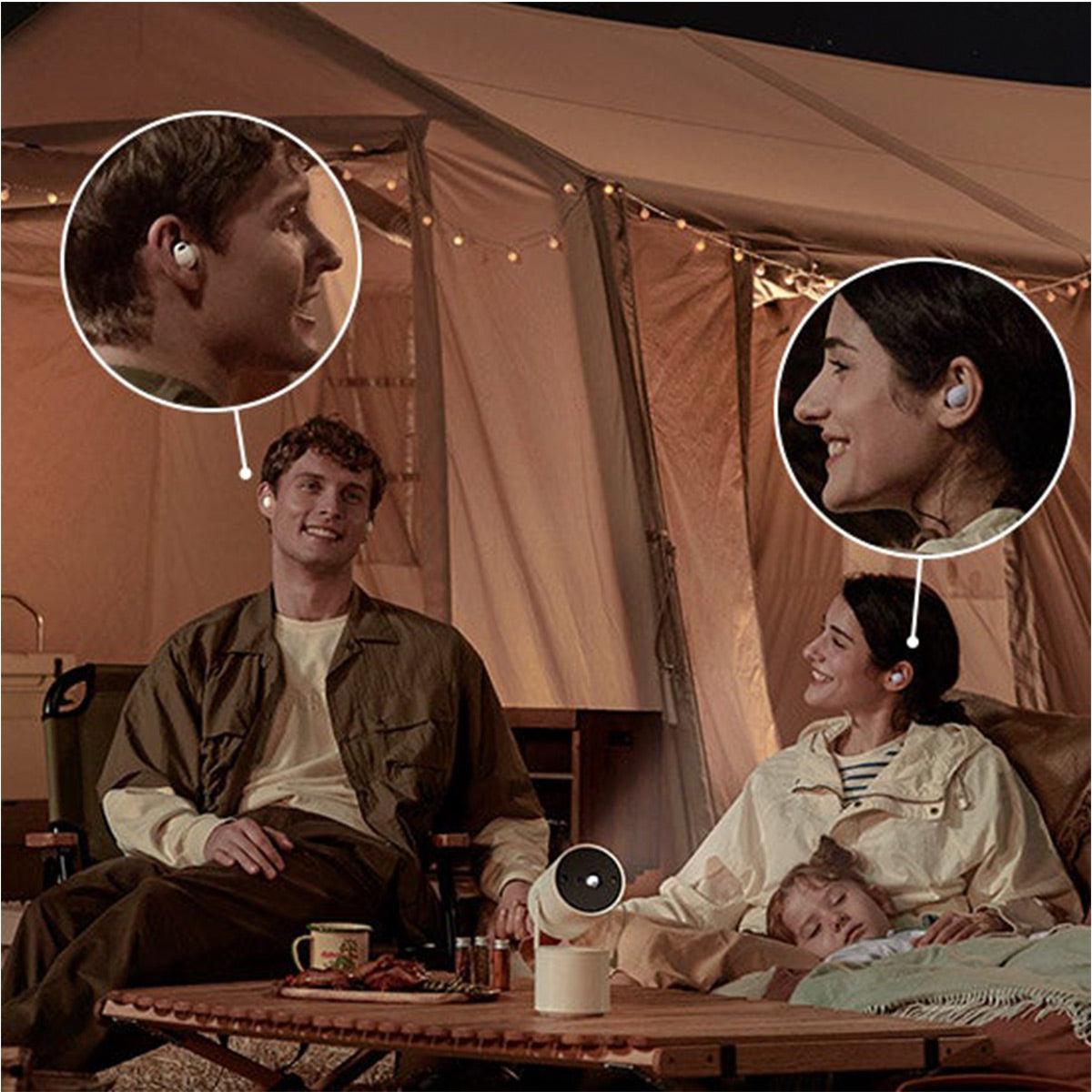
The lightweight nature of the Freestyle means you can easily move it between rooms, take it outside for a backyard movie night, or pack it for travel. Its form factor strikes an impressive balance between capability and true portability. The design also accommodates various accessories, including custom cases and lens covers that enhance its versatility.
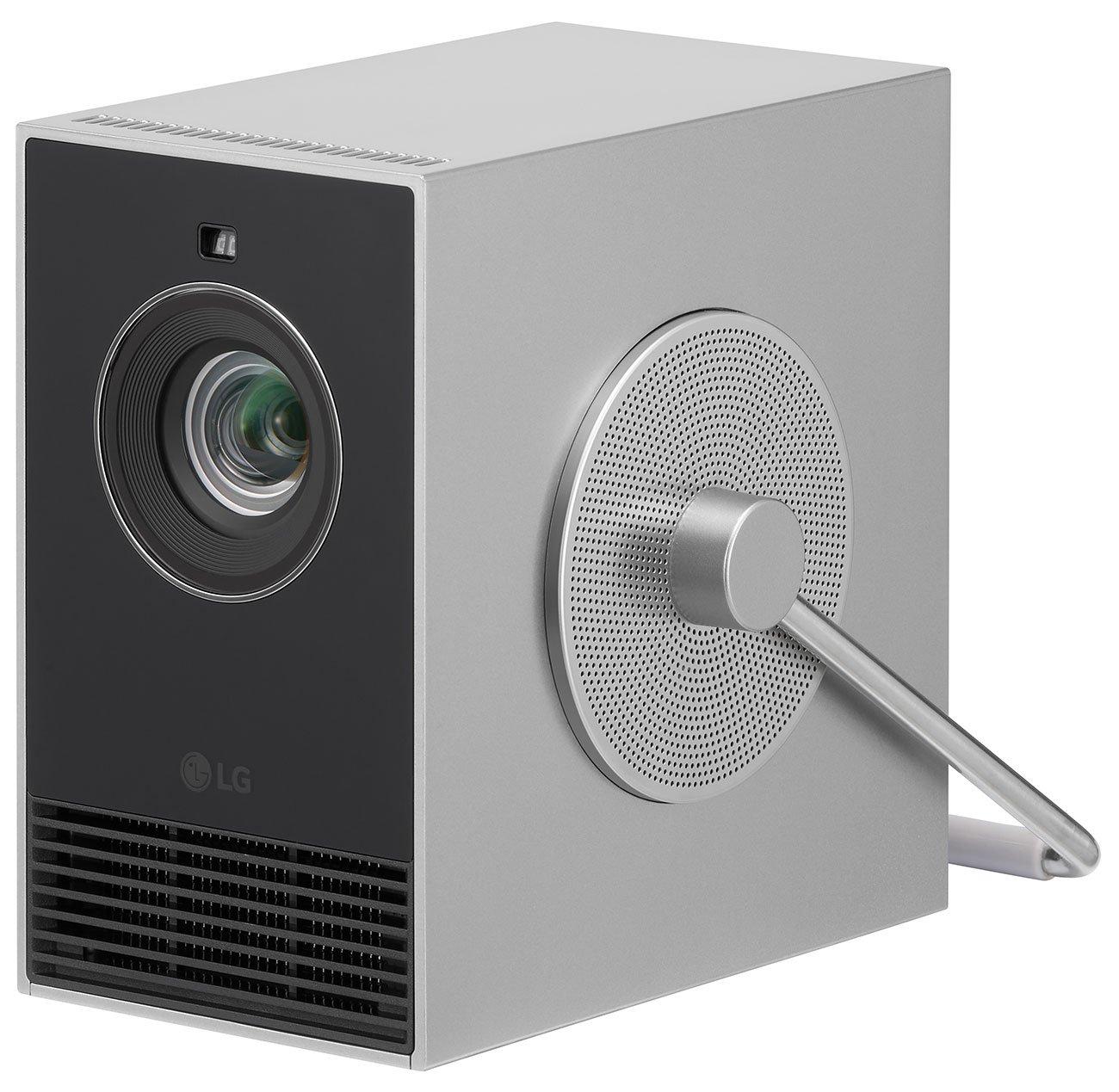
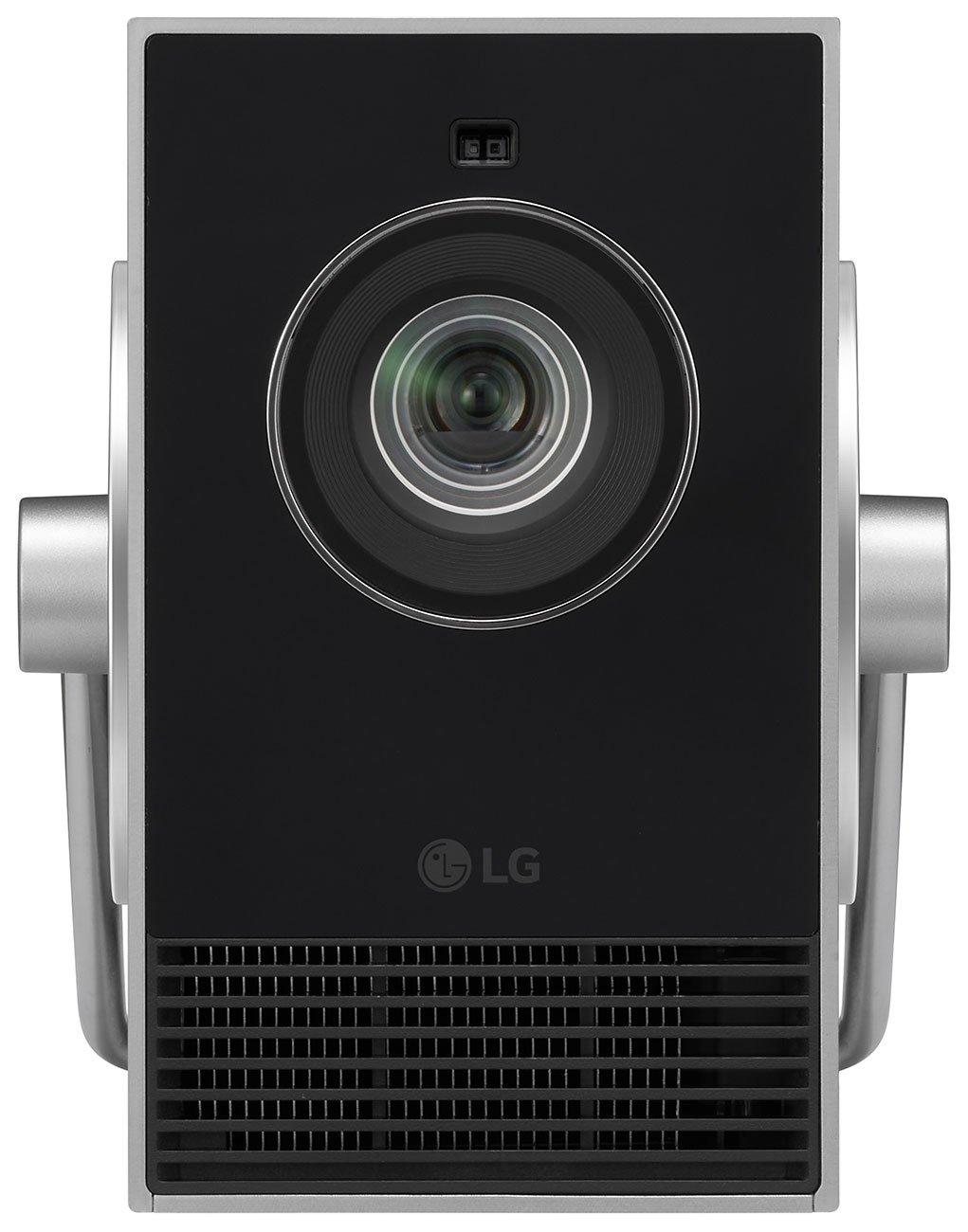
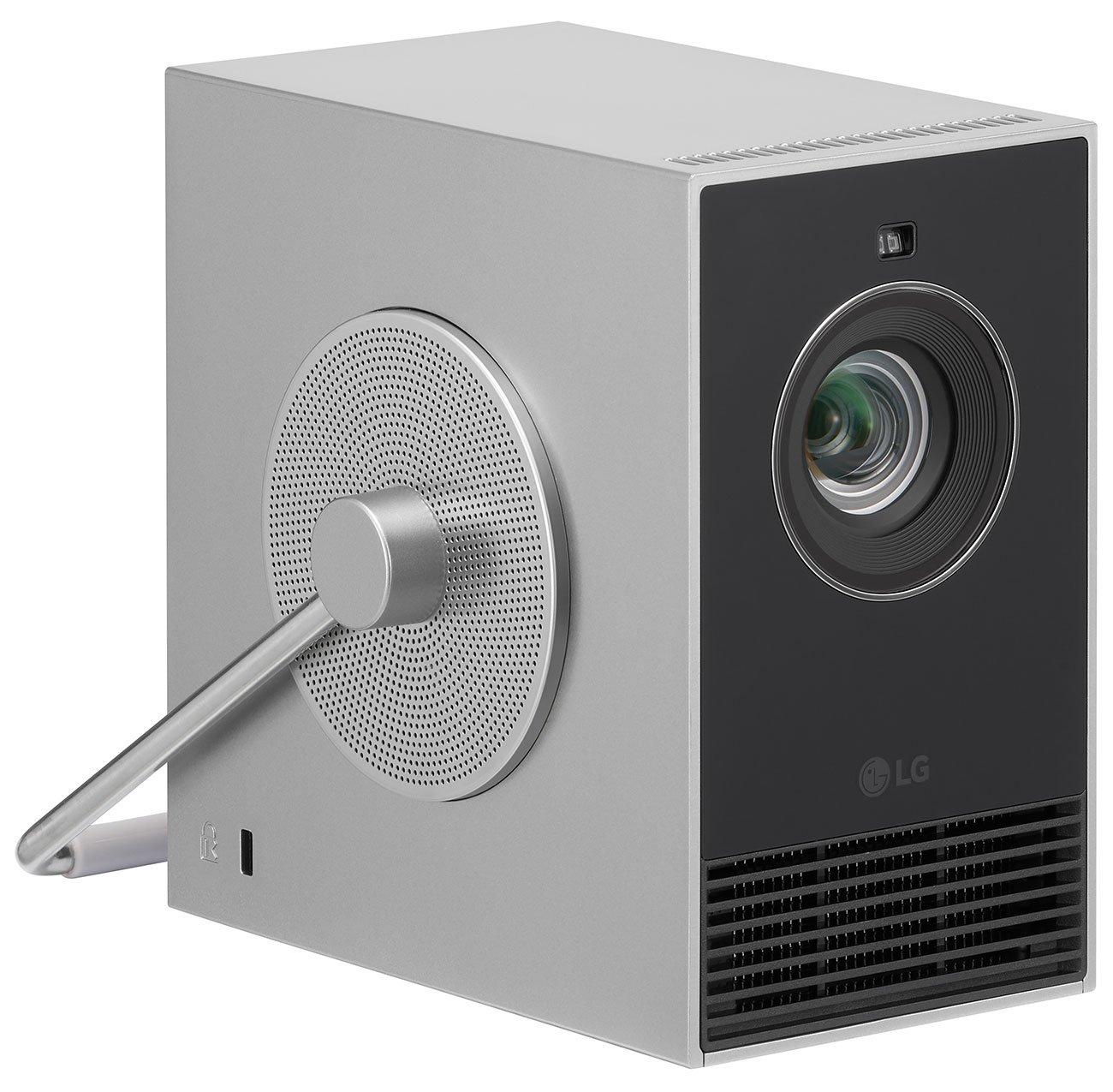
The LG CineBeam Q takes a different approach with its squared, cube-like design. At 3.7 pounds, it's noticeably heavier than the Freestyle but still qualifies as genuinely portable. The cube shape isn't just for show—it provides stability when placed on uneven surfaces and houses the more substantial components needed for its 4K laser projection system.
LG's design approach prioritizes image quality over extreme portability, though it remains compact enough for easy transportation. The glossy finish and premium materials make it feel like a luxury device, which aligns with its higher-end positioning in the market.
In practice, both projectors are genuinely portable, but they define portability differently. The Freestyle feels like something you might impulsively move from room to room, while the CineBeam Q requires slightly more deliberate transportation. I've found the Freestyle's lighter weight makes a noticeable difference when holding it for extended periods (like when finding the perfect spot to project), while the CineBeam Q tends to stay put once positioned.
The most fundamental difference between these projectors is their resolution and underlying projection technology.
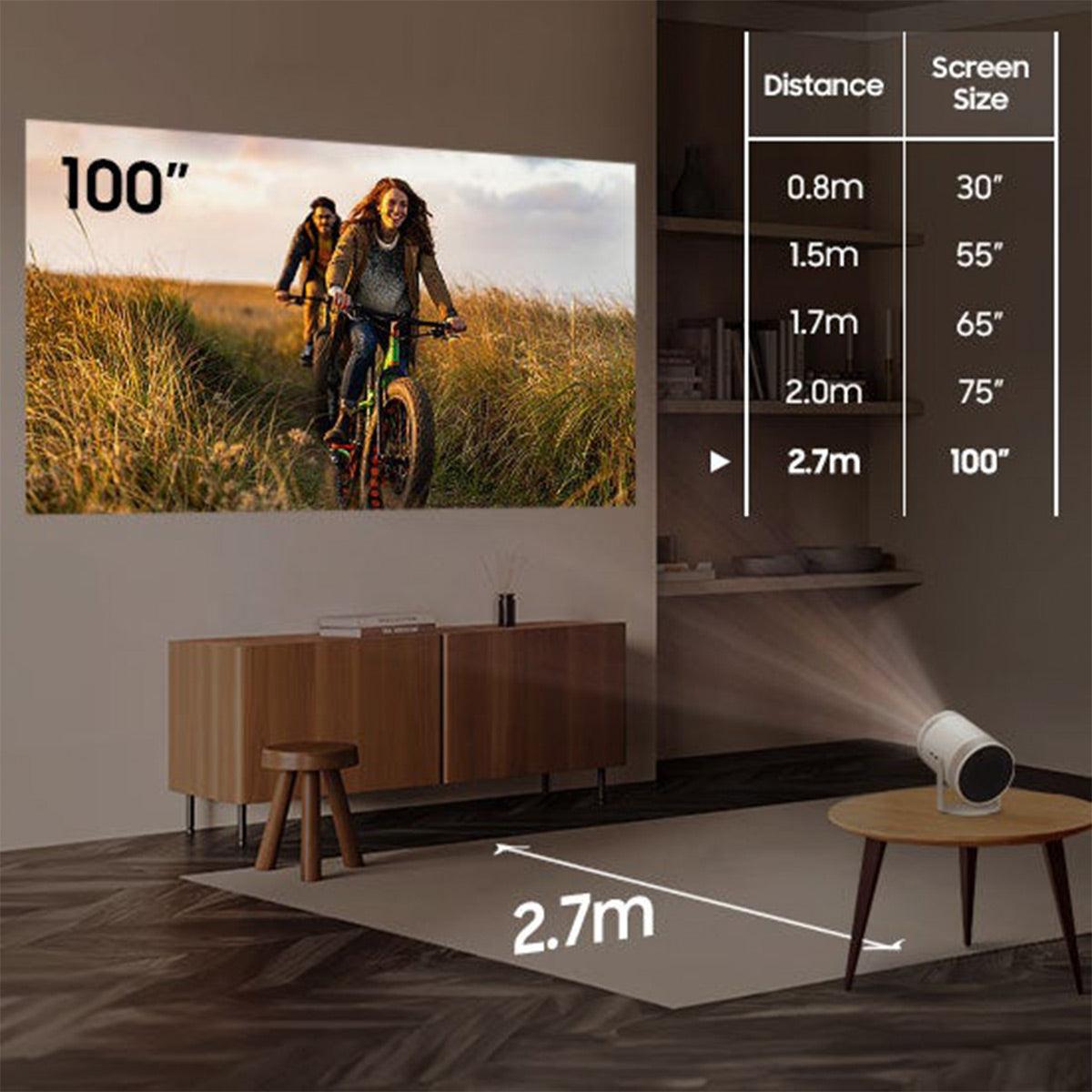
The Samsung Freestyle 2nd Gen offers Full HD (1920×1080) resolution, which equates to about 2 million pixels on screen. It uses Digital Light Processing (DLP) technology with LED lighting, which works by reflecting light off millions of microscopic mirrors onto your viewing surface. This setup can produce images up to 100 inches diagonally.
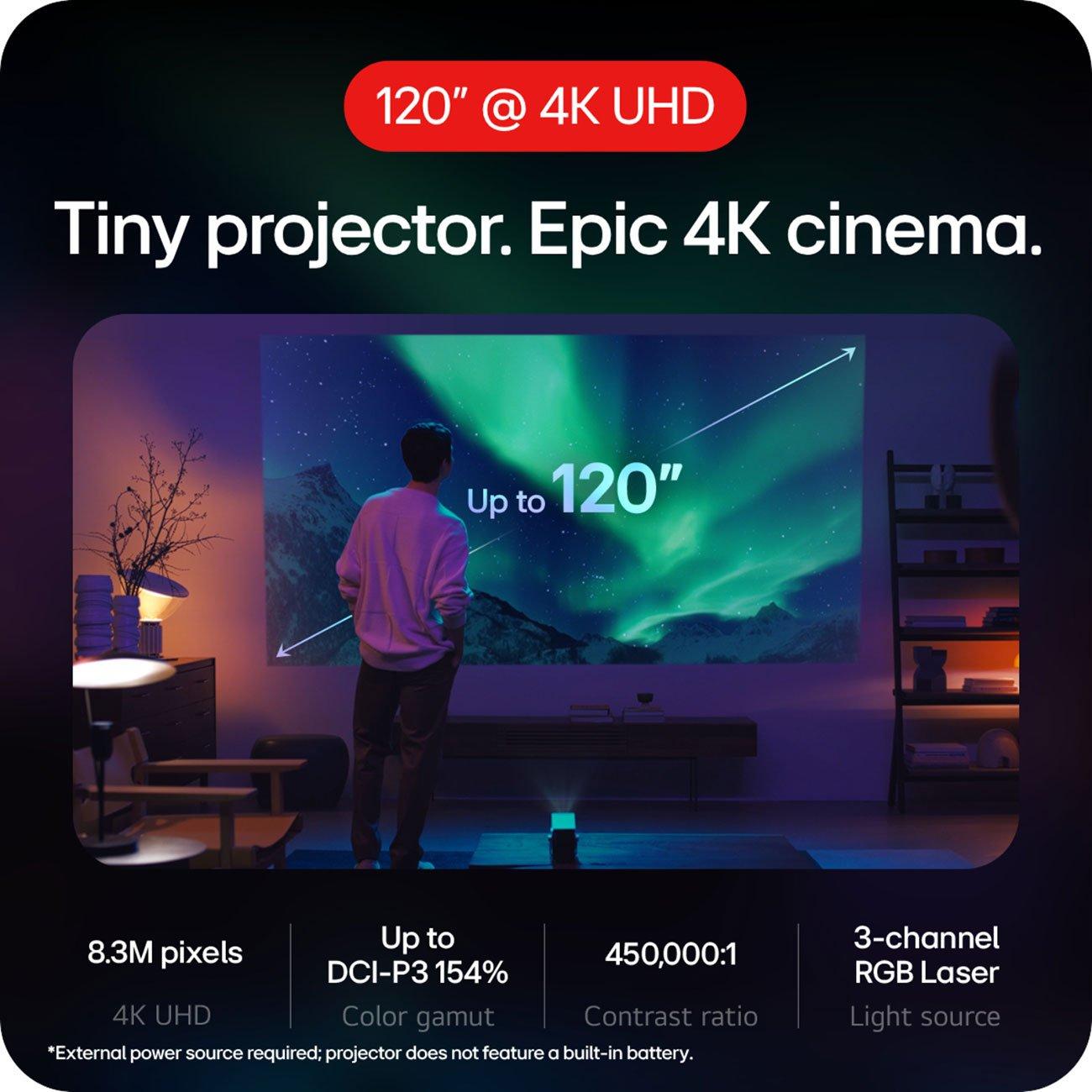
The LG CineBeam Q delivers true 4K UHD (3840×2160) resolution, packing over 8.3 million pixels—four times the resolution of the Freestyle. It employs laser projection technology, which produces light by stimulating phosphors rather than using traditional bulbs. This approach typically yields better color accuracy and contrast while extending the life of the light source. The CineBeam Q can project images up to 120 inches diagonally.
In real-world viewing, the resolution difference becomes increasingly noticeable as the screen size grows. At smaller sizes (under 50 inches), both projectors look sharp. However, beyond that threshold, the CineBeam Q's additional pixels maintain clarity while the Freestyle begins to show its resolution limitations.
The color reproduction also differs significantly. The CineBeam Q's laser technology produces more vivid colors with greater accuracy. In side-by-side comparisons, content on the CineBeam Q appears more lifelike, with subtle gradations in color that the Freestyle simply can't match. This becomes particularly apparent when viewing HDR content, where the laser projection system can better represent the expanded color range and contrast.
Brightness is critical for projectors since they're often fighting against ambient light in rooms that aren't completely dark.
The Samsung Freestyle 2nd Gen is rated at approximately 550 ANSI lumens. ANSI lumens are a standardized measure of brightness, giving you a reasonably accurate way to compare projector light output. This brightness level means the Freestyle performs best in dim or dark environments.
The LG CineBeam Q offers 500 ANSI lumens, which on paper is slightly less bright than the Freestyle. However, laser projection technology typically creates better perceived brightness and superior contrast ratios compared to LED projection at the same lumen rating. This is because laser light is more focused and efficient.
In practical use, the CineBeam Q actually appears brighter in most viewing scenarios despite its lower lumen rating. The contrast advantage of laser projection means that dark scenes maintain their detail while bright areas pop with vivid intensity. When watching movies with dramatic lighting, like space scenes or nighttime sequences, the CineBeam Q preserves subtle details that the Freestyle might render as uniform darkness.
Neither projector is bright enough for well-lit rooms during daytime, but the CineBeam Q copes better with moderate ambient light. For optimal performance from either device, you'll want to use them in environments where you can control the lighting.
Modern projectors aren't just about throwing an image on the wall—they're complete entertainment systems with built-in intelligence.
The Samsung Freestyle 2nd Gen runs on Samsung's Tizen operating system, the same platform found in their smart TVs. This gives you access to a wide array of streaming services including Netflix, Disney+, Amazon Prime Video, and many others without needing external devices. The interface is intuitive and responsive, particularly if you're already familiar with Samsung products.
The Freestyle includes built-in voice assistants, allowing you to control content and search for shows or movies using just your voice. It also integrates with Samsung's SmartThings ecosystem, enabling it to communicate with other compatible smart home devices. Screen mirroring allows you to easily cast content from your phone or tablet.
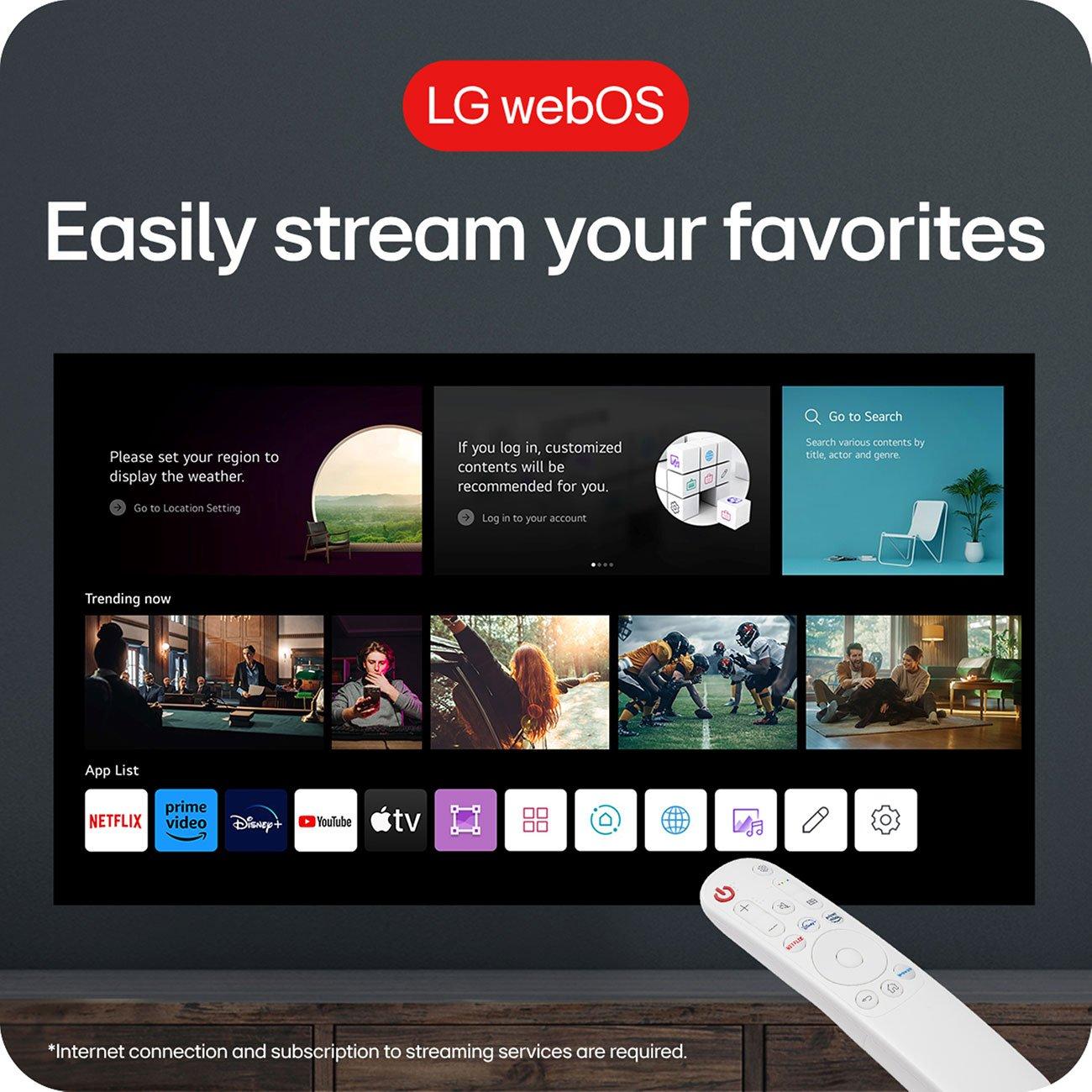
The LG CineBeam Q utilizes LG's webOS platform, widely considered one of the most user-friendly smart TV interfaces on the market. The ribbon-style menu at the bottom of the screen gives you quick access to apps and settings without overwhelming the viewing experience.
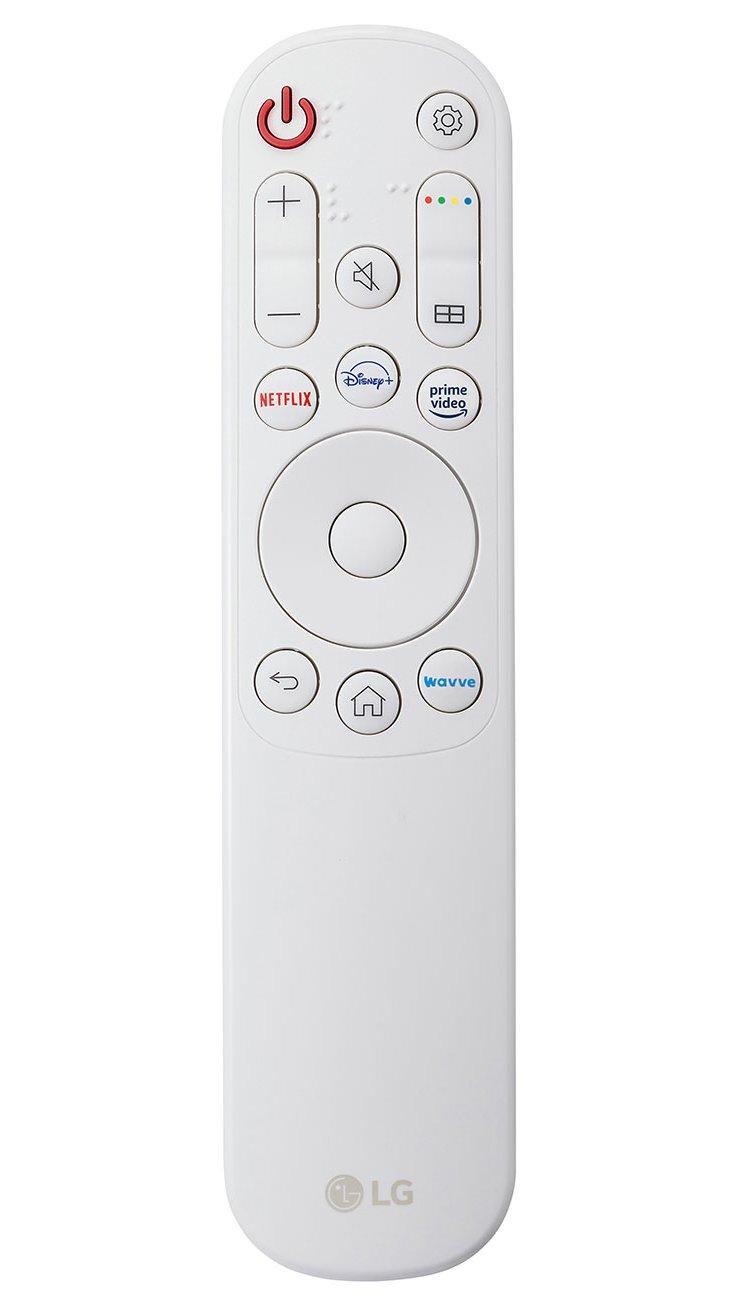
Like the Freestyle, the CineBeam Q offers access to major streaming platforms and includes screen sharing capabilities. The webOS interface is particularly smooth when navigating between apps, and the magic remote functionality (where your remote works like a pointer) makes text entry and navigation significantly easier than traditional remote designs.
Both projectors offer similar connectivity options, including HDMI inputs for connecting external devices like gaming consoles or Blu-ray players. They also feature USB ports for media playback and Bluetooth connectivity for audio output to external speakers or headphones.
Wi-Fi connectivity allows both projectors to connect to your home network for streaming and updates, though neither offers wired Ethernet connections due to their portable nature.
Built-in audio is particularly important for portable projectors since carrying separate speakers defeats the purpose of an all-in-one solution.
The Samsung Freestyle 2nd Gen features a 360° omnidirectional speaker with 5W output. This design disperses sound in all directions, creating a room-filling effect despite the limited power. The speaker quality is surprisingly good for the size of the device, with clear dialogue and reasonable bass response for casual viewing.
In quiet environments, the Freestyle's audio is perfectly adequate for movie watching or music playback. However, in noisier settings or larger rooms, you'll likely want to connect external speakers for a more immersive experience.
The LG CineBeam Q comes equipped with built-in 3W stereo speakers with Dolby Audio support. Despite the lower wattage compared to the Freestyle, the CineBeam's speakers offer excellent clarity for dialogue and a more directional sound output that aligns with the projected image.
The Dolby Audio processing helps create a wider soundstage than you might expect from such compact speakers, though like the Freestyle, it won't replace a dedicated sound system for serious home theater applications.
In real-world testing, the Freestyle's higher-powered omnidirectional speaker produces more volume, while the CineBeam Q delivers clearer sound separation and dialogue intelligibility. For casual viewing in average-sized rooms, both provide acceptable audio that exceeds what you might expect from such compact devices.
True portability requires freedom from power outlets, but this remains a challenge for projectors due to their power demands.
Neither the Samsung Freestyle 2nd Gen nor the LG CineBeam Q comes with built-in batteries. Both require external power to operate, which limits their true portability.
The Freestyle has an advantage here, as it can be powered via USB-C from compatible power banks (though you'll need a high-capacity one). This gives it some flexibility for outdoor use or locations without convenient power outlets. Samsung sells a compatible battery base separately, though third-party power banks can work if they meet the power requirements.
The CineBeam Q requires its AC adapter for operation, making it less flexible for truly off-grid use. This reflects its positioning as a premium portable projector rather than an ultraportable device.
Value isn't just about the lowest price—it's about what you get for your money relative to your needs and the competition.
The Samsung Freestyle 2nd Gen typically retails around $800, placing it in the premium portable projector category. This represents a significant investment, but you're paying for the unique form factor, versatility, and Samsung's smart TV ecosystem in a portable package.
The LG CineBeam Q commands an even higher price point of approximately $1,300. This $500 premium over the Freestyle primarily reflects its 4K resolution, laser technology, and the superior image quality these features enable.
Whether either represents a good value depends entirely on your priorities. If versatility, portability, and good-but-not-great image quality satisfy your needs, the Freestyle offers better value. If you're seeking the best possible image quality in a portable package and are willing to pay for it, the CineBeam Q justifies its premium price.
Both projectors include thoughtful extras that enhance their usability in different scenarios.
The Samsung Freestyle 2nd Gen offers ambient lighting modes that transform it into a mood light when not being used for projection. It can serve as a smart speaker even when the projection function isn't active, expanding its utility beyond just video.
One of its most practical features is automatic keystone correction, which automatically adjusts the image to appear rectangular even when projecting at an angle. Auto-leveling further refines this, ensuring your picture stays properly oriented regardless of the projector's position. These features make setup remarkably simple—point the projector at a surface, and it handles the rest.
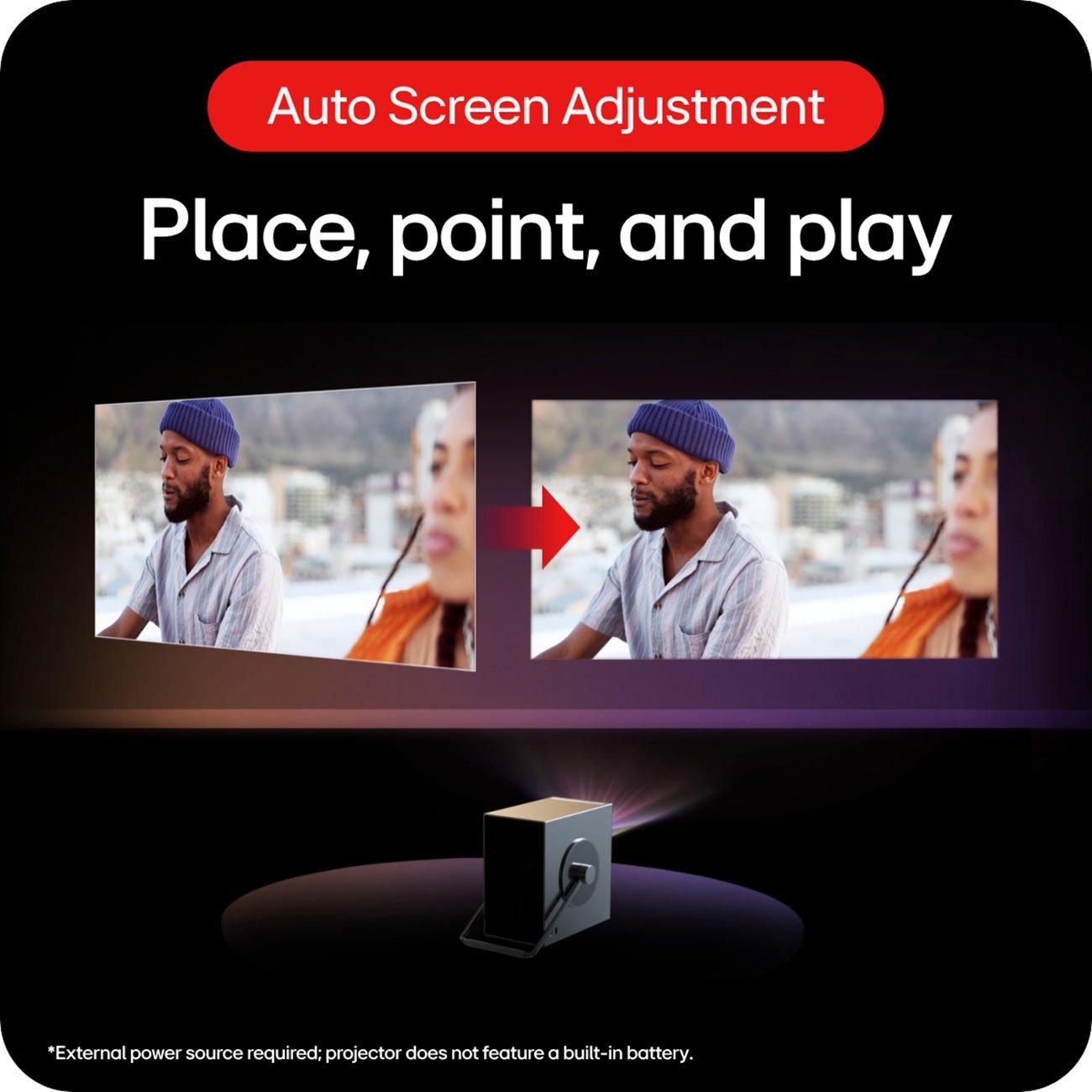
The LG CineBeam Q focuses its additional features on enhancing the projection experience. Its auto keystone correction works similarly to the Freestyle's, but adds auto focus to ensure the image remains sharp without manual adjustment. Screen adjustment features help optimize the picture for different colored surfaces, improving color accuracy when you can't project onto a proper screen.
The CineBeam Q also includes a "Filmmaker Mode" which disables processing that might interfere with seeing content as the director intended—a feature particularly appreciated by cinema enthusiasts.
For home theater enthusiasts, these projectors present interesting possibilities despite not being designed as dedicated home theater devices.
The LG CineBeam Q comes closer to traditional home theater performance with its 4K resolution and laser projection technology. In a properly darkened room with a good projection screen, it can deliver genuinely impressive cinematic experiences. The contrast and color performance make it suitable for occasional serious movie watching, though dedicated home theater projectors still outperform it for permanent installations.
The Samsung Freestyle 2nd Gen makes less sense as a primary home theater device due to its 1080p resolution and more limited contrast. However, it excels as a secondary or temporary solution, perhaps for occasional movie nights in rooms without permanent screens or for outdoor viewing.
Neither can match the brightness or feature set of dedicated home theater projectors in the same price range, but they aren't trying to. Their value proposition centers on versatility and portability rather than maximum performance in a single fixed location.
After exploring both projectors in depth, it's time to determine which might be right for you.
The Samsung Freestyle 2nd Gen is ideal for the tech-savvy nomad who wants good-enough projection capabilities in a highly versatile package. It's perfect for apartment dwellers, frequent travelers, or anyone who prizes flexibility over ultimate image quality.
The LG CineBeam Q makes sense for the discerning viewer who refuses to compromise significantly on image quality but still needs portability. It bridges the gap between portable and home theater projectors better than almost any other device on the market.
The portable projector market continues to evolve rapidly, with manufacturers finding innovative ways to balance performance, size, and functionality. The Samsung Freestyle 2nd Gen and LG CineBeam Q represent two different philosophies toward solving this complex equation.
Samsung prioritizes versatility, positioning flexibility, and ecosystem integration, creating a projector that feels like a lifestyle device. LG focuses on maximizing image quality while maintaining reasonable portability, delivering a premium viewing experience in a compact package.
Neither approach is inherently superior—they simply target different priorities. Your ideal choice depends entirely on which aspects of portable projection matter most to you. If versatility and true portability win out, the Freestyle beckons. If image quality is non-negotiable, the CineBeam Q justifies its premium pricing.
Whichever you choose, both represent impressive achievements in miniaturizing projection technology while maintaining performance that would have seemed impossible just a few years ago. The Samsung Freestyle 2nd Gen and LG CineBeam Q show just how far portable projectors have come—and hint at an even brighter future ahead.
| Samsung Freestyle 2nd Gen Smart Projector | LG CineBeam Q 4K UHD Portable Laser Projector |
|---|---|
| Resolution - Determines image clarity and detail, especially at larger screen sizes | |
| 1080p Full HD (sufficient for screens under 80") | True 4K UHD (exceptional detail on screens up to 120") |
| Projection Technology - Affects color accuracy, contrast, and light source longevity | |
| LED DLP (20,000+ hour lifespan, good color) | Laser (20,000+ hour lifespan, superior color accuracy and contrast) |
| Brightness - Critical for viewability in rooms with ambient light | |
| 550 ANSI lumens (requires dimly lit environments) | 500 ANSI lumens (appears brighter due to laser technology with better contrast) |
| Form Factor - Impacts portability and placement flexibility | |
| Cylindrical design, 1.83 lbs with 180° rotation | Cube-shaped design, 3.7 lbs with fixed projection angle |
| Smart Platform - Determines interface and app availability | |
| Samsung Tizen OS (full smart TV experience) | LG webOS (intuitive ribbon-style interface) |
| Audio - Built-in sound quality reduces need for external speakers | |
| 5W 360° omnidirectional speaker (good volume spread) | 3W stereo speakers with Dolby Audio (better clarity and separation) |
| Power Options - Affects true portability | |
| AC power with USB-C power bank compatibility | AC power only (no battery operation) |
| Maximum Screen Size - Determines largest possible viewing experience | |
| Up to 100 inches diagonal | Up to 120 inches diagonal |
| Setup Features - Simplifies achieving proper image alignment | |
| Auto keystone correction and auto-leveling | Auto keystone correction, auto focus, and screen adjustment |
| Additional Functions - Adds value beyond projection | |
| Ambient lighting modes, can function as smart speaker | Filmmaker Mode for accurate cinema presentation |
| Price - Overall value consideration | |
| $800 (better value for versatility and portability) | $1,300 (premium price for superior image quality) |
| Best For - User profiles most suited to each device | |
| Versatility seekers, frequent movers, Samsung ecosystem users | Image quality enthusiasts, movie lovers, those wanting a semi-permanent setup |
The LG CineBeam Q 4K UHD Portable Laser Projector delivers superior image quality with true 4K resolution (3840×2160), offering four times the detail of the Samsung Freestyle 2nd Gen Smart Projector, which has 1080p resolution. The CineBeam Q's laser technology also provides better color accuracy and contrast compared to the Freestyle's LED projection, making the LG CineBeam Q significantly better for viewers who prioritize image quality.
The Samsung Freestyle 2nd Gen Smart Projector typically retails for around $800, while the LG CineBeam Q 4K UHD Portable Laser Projector costs approximately $1,300. This $500 price difference (about 60% more) represents the premium you'll pay for the CineBeam Q's 4K resolution, laser projection technology, and superior image quality compared to the more affordable Freestyle.
Neither projector is ideal for very bright rooms, but the LG CineBeam Q performs slightly better in environments with some ambient light despite its 500 ANSI lumens rating compared to the Samsung Freestyle 2nd Gen's 550 ANSI lumens. This is because the CineBeam Q's laser technology creates better perceived brightness and contrast, making images more visible when there's some light in the room.
The Samsung Freestyle 2nd Gen Smart Projector is significantly more portable at just 1.83 pounds with a compact cylindrical design, compared to the LG CineBeam Q which weighs 3.7 pounds with a cube-shaped design. The Freestyle also offers 180° rotation for flexible positioning and can be powered via compatible USB-C power banks, making it the better choice for users who prioritize mobility and versatile placement.
For home theater use, the LG CineBeam Q 4K UHD Portable Laser Projector is clearly superior with its true 4K resolution, better contrast ratios, and laser projection technology that delivers more accurate colors. While the Samsung Freestyle 2nd Gen can create an enjoyable viewing experience, serious home theater enthusiasts will notice the significant difference in image quality, especially on larger screens where the CineBeam Q's 4K resolution shows much more detail.
No, neither the Samsung Freestyle 2nd Gen Smart Projector nor the LG CineBeam Q 4K UHD Portable Laser Projector comes with built-in batteries. Both require external power to operate. However, the Freestyle has an advantage as it can be powered via USB-C from compatible high-capacity power banks, while the CineBeam Q requires its AC adapter, limiting its use in locations without power outlets.
Both projectors offer comprehensive smart platforms. The Samsung Freestyle 2nd Gen runs Samsung's Tizen OS with access to major streaming services, voice assistants, and SmartThings integration. The LG CineBeam Q uses webOS, widely regarded as one of the most user-friendly smart TV interfaces. Your preference may depend on which ecosystem you're already using, though many users find LG's webOS slightly more intuitive and responsive.
The LG CineBeam Q 4K UHD Portable Laser Projector can project images up to 120 inches diagonally, while the Samsung Freestyle 2nd Gen Smart Projector maxes out at 100 inches. Additionally, the CineBeam Q's 4K resolution maintains excellent clarity even at larger sizes, whereas the Freestyle's 1080p resolution becomes more noticeably limited as the screen size increases.
The Samsung Freestyle 2nd Gen Smart Projector features a 5W 360° omnidirectional speaker that provides good volume and room-filling sound. The LG CineBeam Q has 3W stereo speakers with Dolby Audio support that deliver better clarity and sound separation despite lower wattage. For casual viewing, the Freestyle offers more volume, while the CineBeam provides clearer dialogue and better stereo separation.
Both projectors offer convenience features for easy setup. The Samsung Freestyle 2nd Gen includes automatic keystone correction and auto-leveling to ensure properly oriented images regardless of placement angle. The LG CineBeam Q provides auto keystone correction plus auto focus and screen adjustment features that optimize the picture for different surfaces. The CineBeam Q's auto focus feature gives it a slight edge in setup convenience.
For gaming, input lag and resolution are important factors. While neither projector is optimized specifically for gaming, the Samsung Freestyle 2nd Gen typically offers lower input lag, making it more responsive for casual gaming. However, the LG CineBeam Q's superior 4K resolution provides much better visual detail in games. Serious gamers might prefer the Freestyle for faster-paced games, while those who value visual quality would appreciate the CineBeam Q.
Value depends on your priorities. The Samsung Freestyle 2nd Gen Smart Projector at $800 offers better value if you prioritize versatility, portability, and good-enough image quality for casual viewing. The LG CineBeam Q 4K UHD Portable Laser Projector at $1,300 provides better value for those who prioritize image quality above all else and are willing to pay a 60% premium for significantly better visual performance with 4K resolution and laser projection technology.
We've done our best to create useful and informative comparisons to help you decide what product to buy. Our research uses advanced automated methods to create this comparison and perfection is not possible - please contact us for corrections or questions. These are the sites we've researched in the creation of this article: techradar.com - tech.slashdot.org - youtube.com - bestbuy.com - youtube.com - youtube.com - rtings.com - samsung.com - samsung.com - samsung.com - thesmarthomehookup.com - nfm.com - samsung.com - abt.com - projectorcentral.com - valueelectronics.com - target.com - samsung.com - samsung.com - images.samsung.com - abt.com - youtube.com - samsung.com - samsung.com - walts.com - bhphotovideo.com - shi.com - youtube.com - publicsector.shidirect.com - provantage.com - abcwarehouse.com - projectorcentral.com - lg.com - thefrogpadappliances.com - youtube.com - techradar.com - lg.com - avsforum.com - lg.com - tomsguide.com - jefflynch.com - hometheaterview.com - projectorreviews.com - youtube.com - avsforum.com - projectorcentral.com - pcrichard.com - bhphotovideo.com - youtube.com - lg.com - applerivertvandappliance.com - big-georges.com - queencityonline.com - lg.com - lg.com - lg.com - lgnewsroom.com - heimkino.de

Privacy Policy
Terms and Conditions - Affiliate Policy
Home Security
© Copyright 2008-2026.
11816 Inwood Rd #1211, Dallas, TX 75244