


The portable projector market has exploded in recent years, but it's split into two very different camps. On one side, you have ultra-compact projectors that prioritize convenience above all else. On the other, premium portable models that pack serious performance into a still-manageable package. Today, we're diving deep into two projectors that perfectly represent these philosophies: the revolutionary Aurzen ZIP Tri-Fold Portable Mini Projector and the premium LG CineBeam Q 4K UHD Portable Laser Projector.
Having tested dozens of portable projectors over the years, I can tell you that choosing between these approaches isn't always obvious. The right choice depends entirely on how you plan to use your projector, where you'll take it, and what you're willing to compromise on. Let me break down everything you need to know to make the best decision for your needs.
Before we dive into specifics, it's worth understanding what "portable" actually means in 2024. Unlike the bulky home theater projectors that require ceiling mounts and dedicated rooms, portable projectors are designed to go wherever you go. But that's where the similarities end.
The fundamental challenge with any portable projector is physics. Light output, processing power, and battery life all require space and generate heat. The smaller you make a projector, the more compromises you'll face in performance. This creates a sliding scale where ultra-compact models sacrifice image quality for convenience, while larger "portable" units maintain better performance at the cost of true pocket-sized portability.
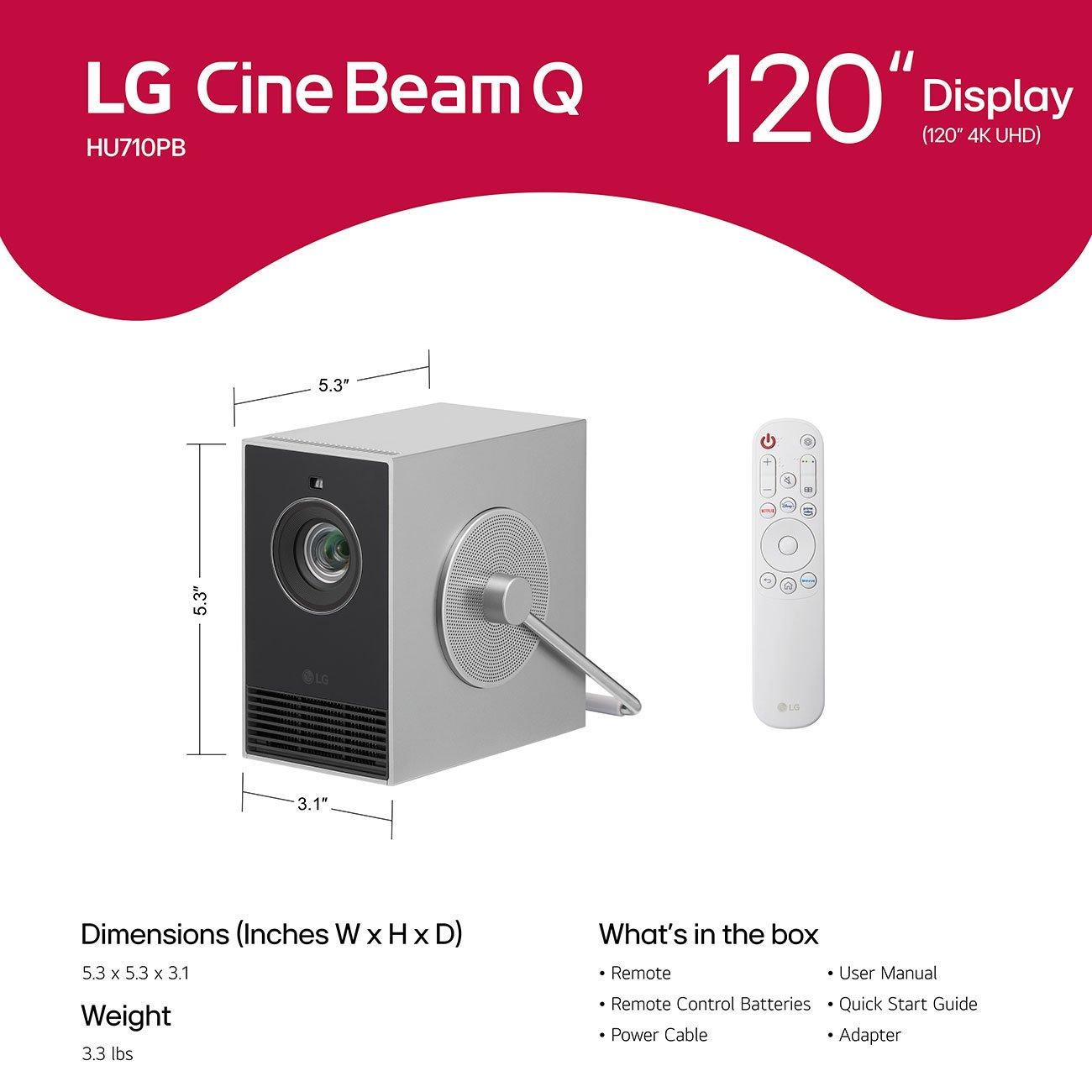
The Aurzen ZIP, released in 2024, represents the absolute extreme of miniaturization. At just over 9 ounces, it's smaller than most smartphones when folded. The LG CineBeam Q, also from 2024, takes the opposite approach—it's still portable at 3.3 pounds, but packs genuine 4K performance that rivals much larger projectors.
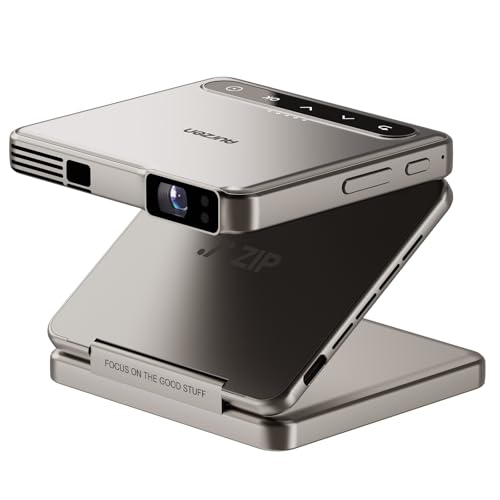
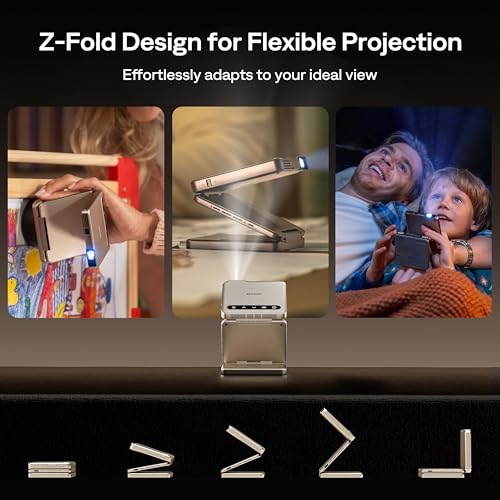
The Aurzen ZIP introduced something genuinely new to the projector world: a tri-fold design that transforms from a wallet-sized rectangle into a functional projection system. This isn't just a marketing gimmick—the Z-shaped folding mechanism serves real purposes.
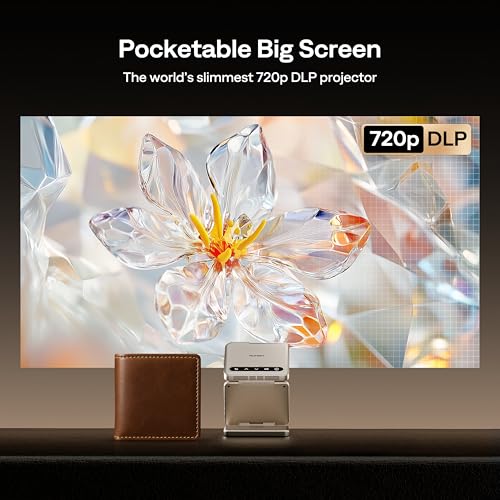
When folded, the ZIP measures just 3.3 by 3.1 by 1 inch, making it genuinely pocket-portable. But here's where it gets interesting: when unfolded, that same compact size becomes a strength. The tri-fold design creates a built-in stand that can position the projector at virtually any angle, including pointing straight up at the ceiling. I've tested dozens of mini projectors, and this level of positioning flexibility is unprecedented in something this small.
The heart of the ZIP's miniaturization is Texas Instruments' latest 0.16-inch DMD chip—the smallest digital micromirror device ever used in a consumer projector. DMD technology works by using thousands of tiny mirrors that tilt back and forth millions of times per second to create images. The smaller the chip, the more compact the entire optical system can be. Aurzen paired this with pixel-shifting technology called XPR, which effectively doubles the perceived resolution by rapidly shifting the image position to fill in gaps between pixels.
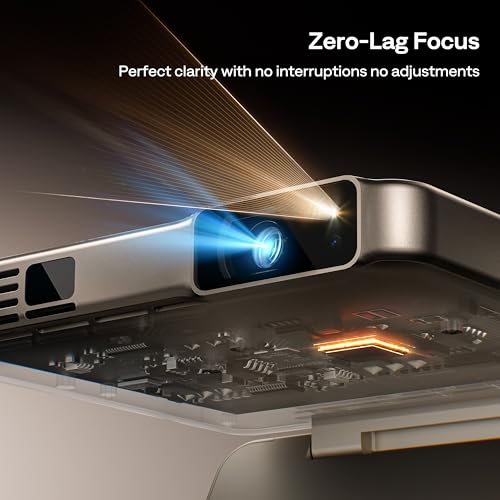
But perhaps the most impressive technical achievement is the ZIP's ToF (Time of Flight) auto-focus system. This technology, borrowed from aerospace and robotics, measures distance by sending out light pulses and timing their return—30 times per second. The result is genuinely zero-lag focusing that automatically adjusts as you move the projector or change projection surfaces. After years of manually focusing tiny projectors, this feels almost magical in use.
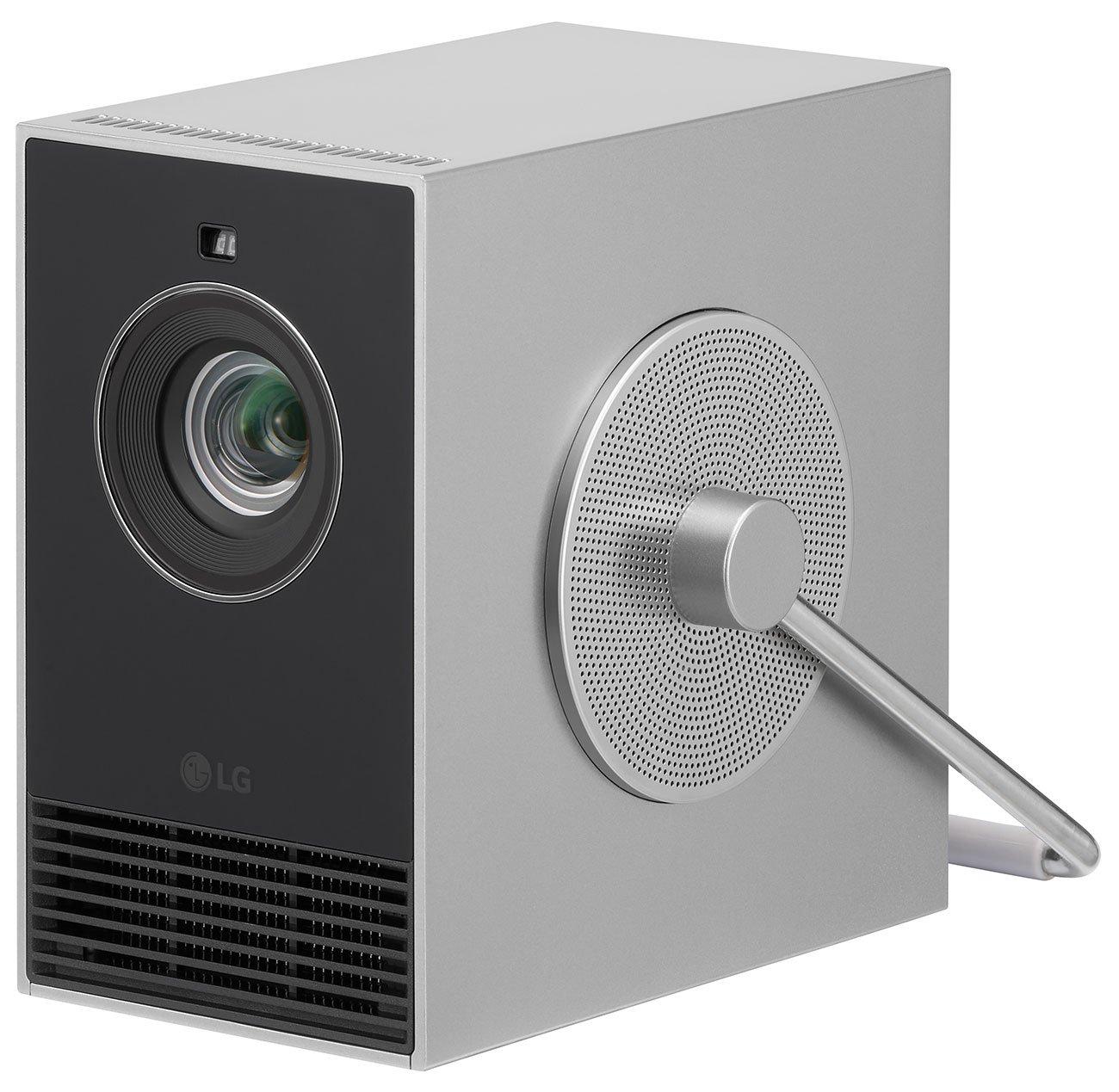
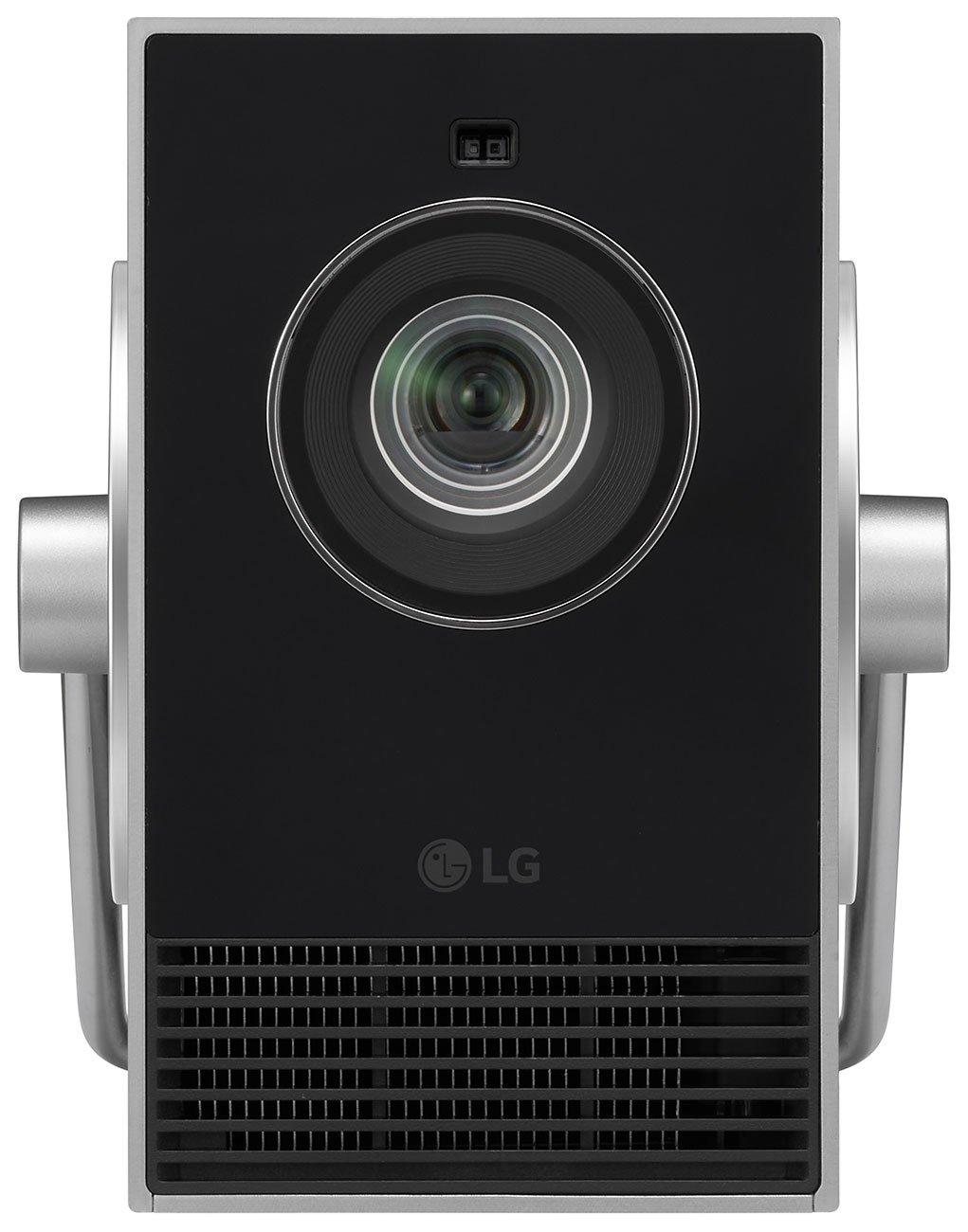
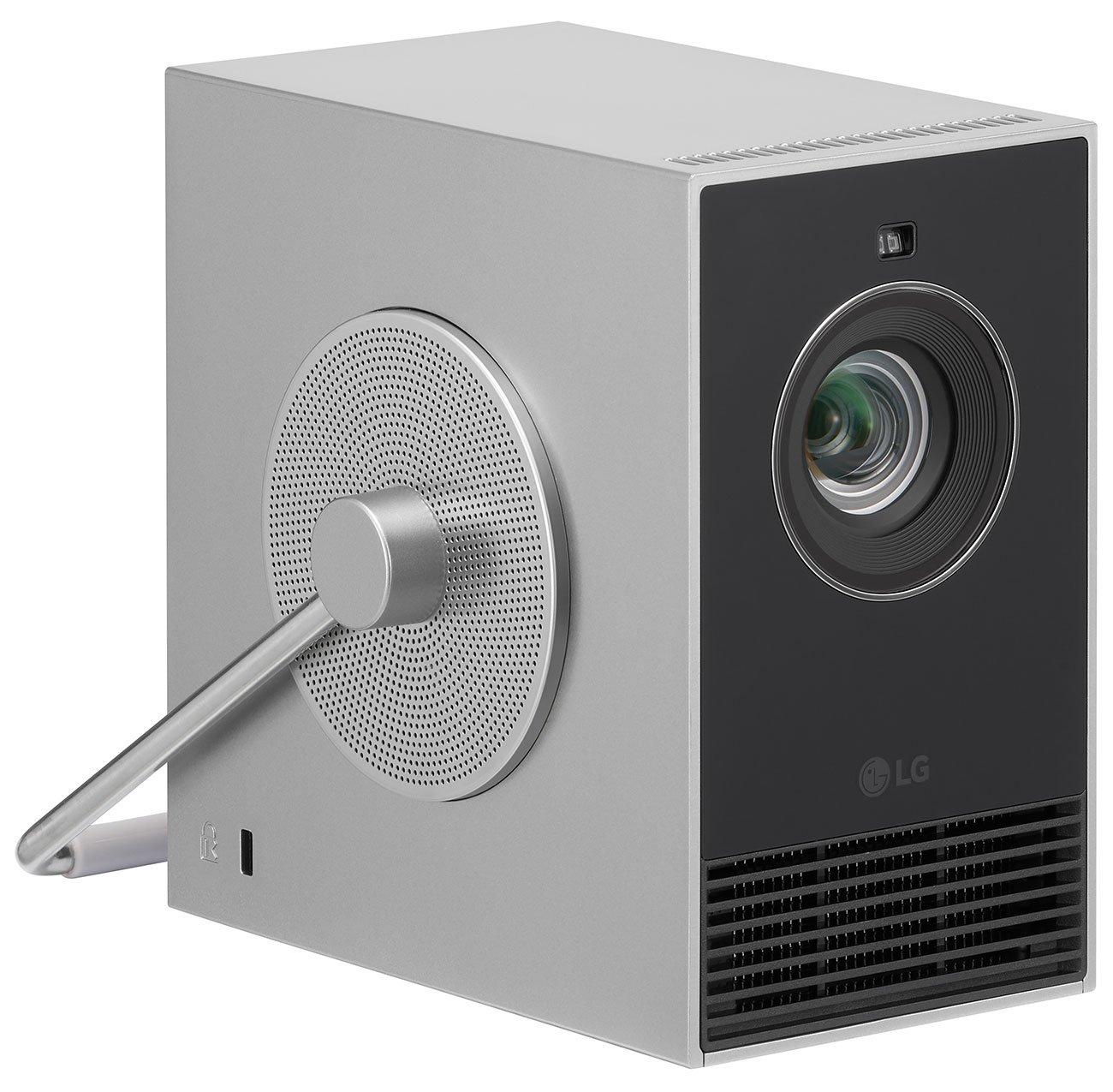
The LG CineBeam Q takes an entirely different approach. Instead of pushing miniaturization to its limits, LG focused on delivering the best possible image quality in a package that's still reasonably portable. At 3.3 pounds, it's roughly the weight of a large laptop—manageable for occasional transport but not something you'd casually toss in a backpack.
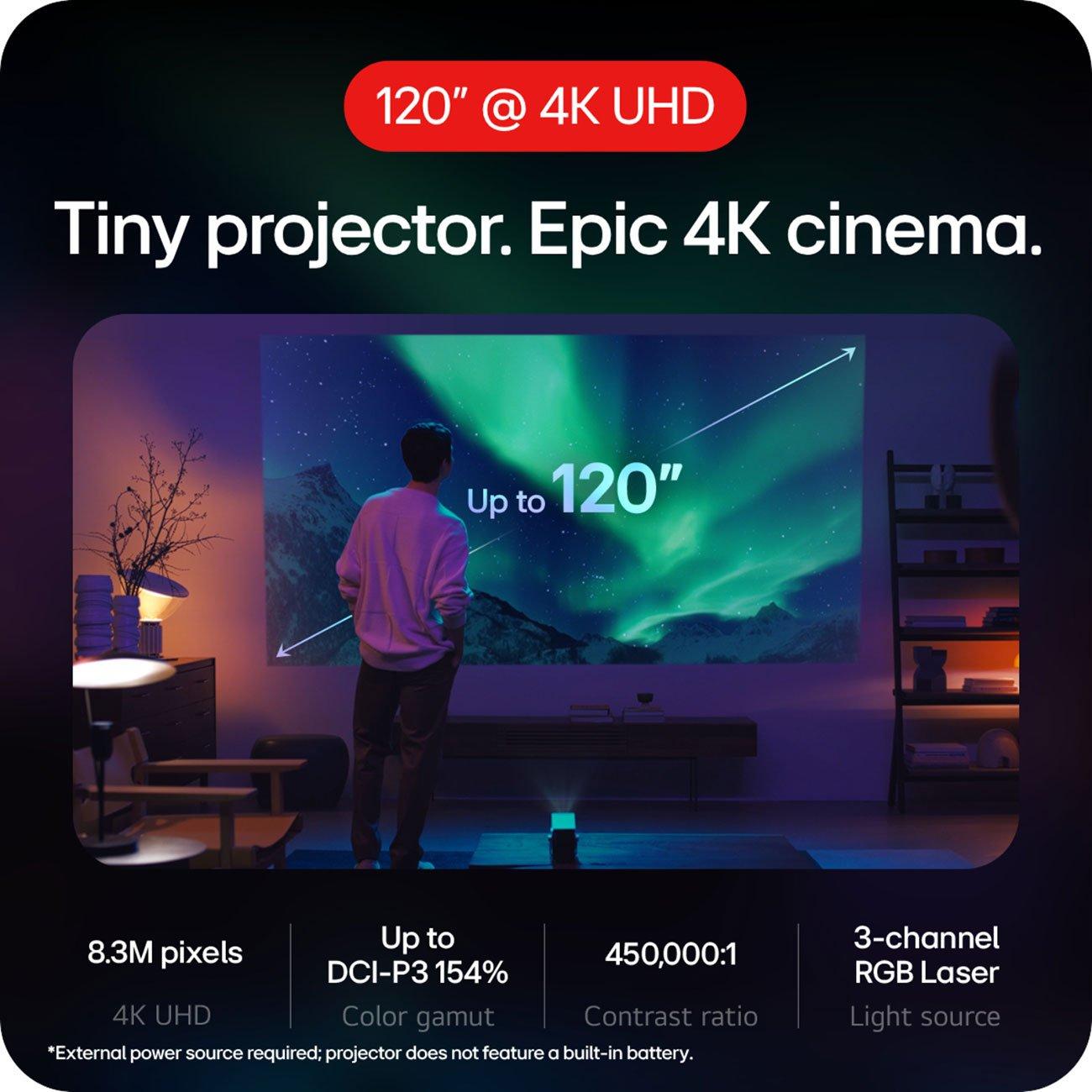
The centerpiece of the CineBeam Q is its RGB laser light source. Unlike traditional lamp-based projectors or the LED systems found in most mini projectors, laser projection offers several key advantages. First, it's incredibly bright—the CineBeam Q puts out 500 ANSI lumens, which is five times brighter than the ZIP. ANSI lumens is the standardized measurement for projector brightness, and 500 lumens is bright enough for comfortable viewing even with some ambient light in the room.
More importantly, the RGB laser system produces an incredibly wide color gamut. Color gamut refers to the range of colors a display can reproduce, and the CineBeam Q covers 154% of the DCI-P3 color space—the standard used by movie theaters. This means you're getting colors that are more vivid and accurate than most home TVs, let alone portable projectors.
The laser system also contributes to the projector's impressive 450,000:1 dynamic contrast ratio. Dynamic contrast measures the difference between the brightest whites and darkest blacks a projector can produce. While these numbers can be somewhat inflated by manufacturers, the practical result is images with deep, inky blacks and bright, punchy highlights that give content a more three-dimensional, lifelike appearance.
Perhaps the biggest performance gap between these projectors is resolution. The LG CineBeam Q delivers true 4K UHD (3840 x 2160 pixels), while the Aurzen ZIP maxes out at 720p (1280 x 720 pixels) using pixel-shifting from a native 640 x 360 chip.
To put this in perspective, 4K contains over 8 million pixels, while 720p has less than one million. When you're projecting onto a large screen, this difference is immediately obvious. Text appears crisp and readable on the CineBeam Q, while the ZIP shows noticeable pixelation and softness, especially with small fonts or detailed graphics.
For movies and casual content, 720p can be perfectly acceptable, especially on smaller screens or from further viewing distances. But if you plan to use your projector for presentations, gaming, or any content with fine details, the 4K resolution of the CineBeam Q is transformative. Having used both extensively, I'd say 720p works well for screens up to about 60 inches, while 4K remains sharp even at the CineBeam Q's maximum 120-inch screen size.
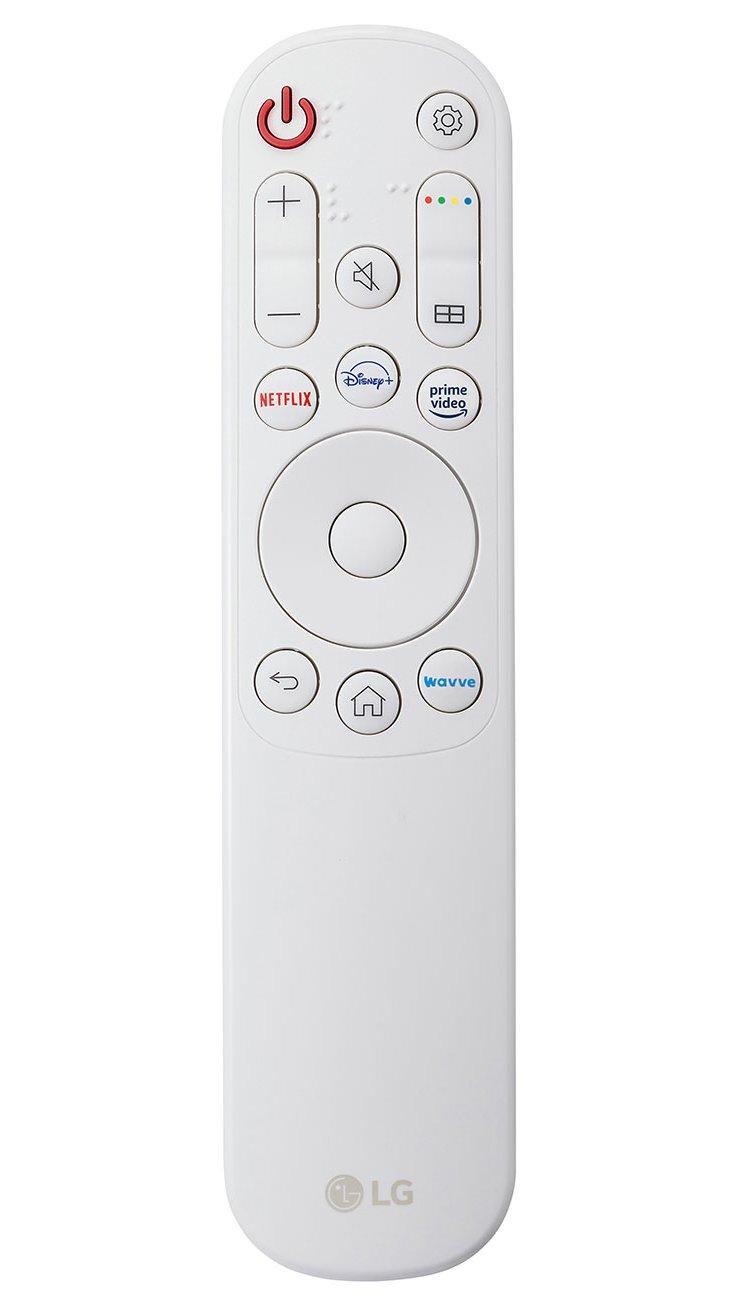
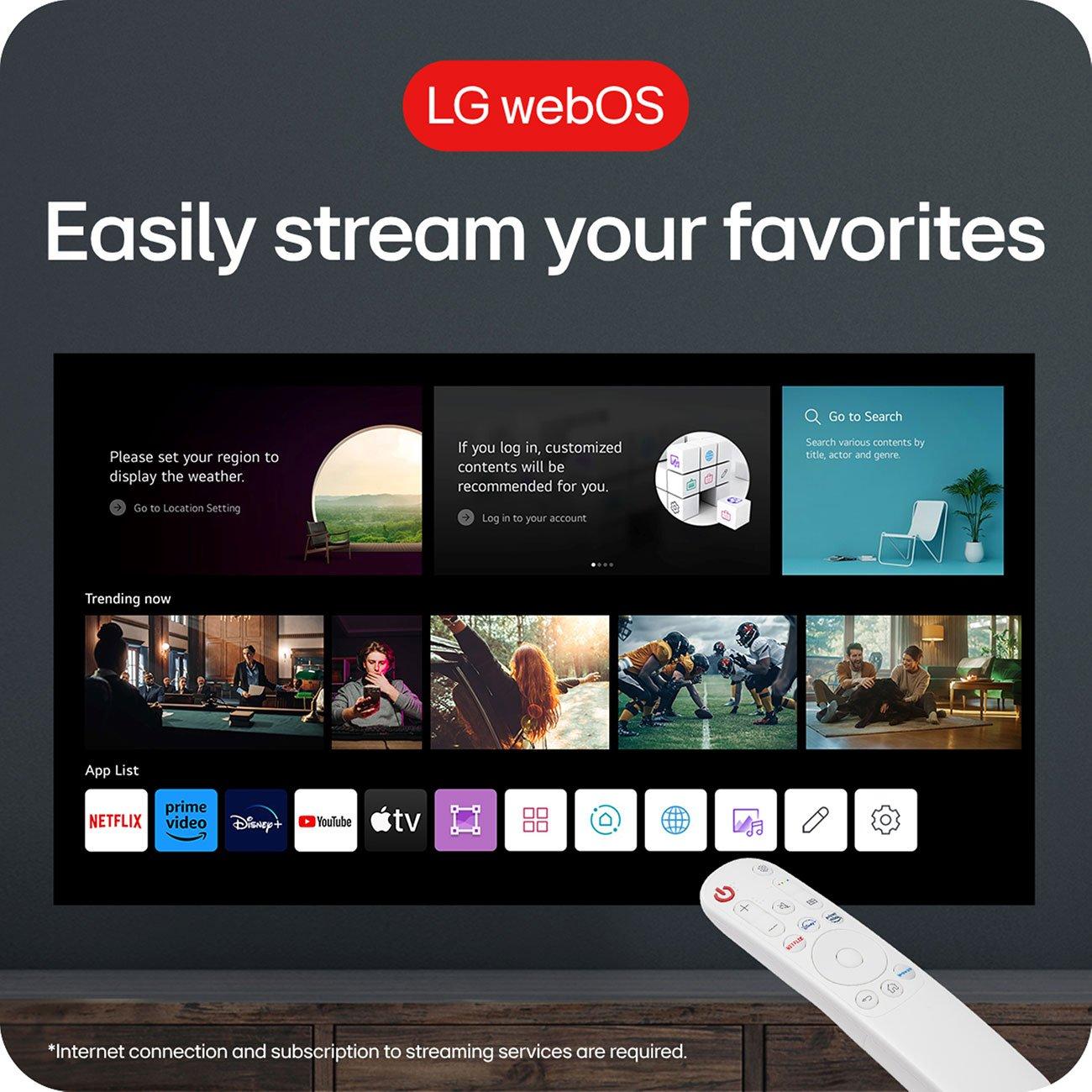
The connectivity approach of these projectors reveals their intended use cases. The LG CineBeam Q runs LG's webOS smart TV platform, essentially turning it into a standalone entertainment device. You can access Netflix, Disney+, YouTube, and dozens of other streaming apps directly without connecting any external device. This makes setup incredibly simple—just plug in power and start watching.
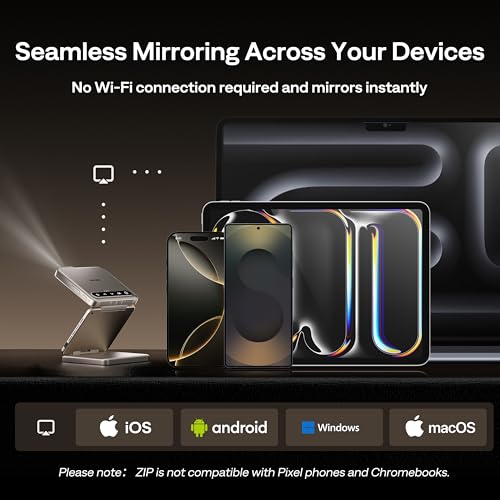
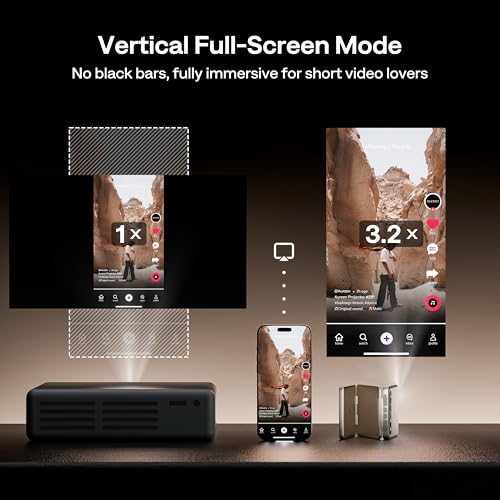
The Aurzen ZIP takes a different approach with its AirLink wireless mirroring system. Instead of built-in apps, it relies on your phone, tablet, or laptop as the content source. The advantage is simplicity and compatibility—any device that can mirror its screen will work with the ZIP. The downside is that you're limited by your source device's capabilities and battery life.
However, there's an important caveat with streaming services. Due to digital rights management (DRM) protection, neither projector can directly mirror protected content from apps like Netflix or Disney+ using standard screen mirroring. The CineBeam Q solves this with its built-in apps, while the ZIP requires an optional CastPlay dongle for wireless HDMI input from compatible devices.
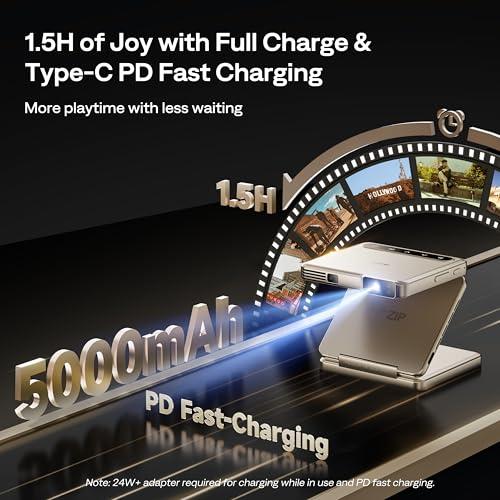
This is where the size difference really shows its impact. The Aurzen ZIP includes a built-in 5,000mAh battery that provides about 90 minutes of viewing time. While that might seem short, it's actually impressive for such a compact device—and it's often enough for a movie or short presentation.
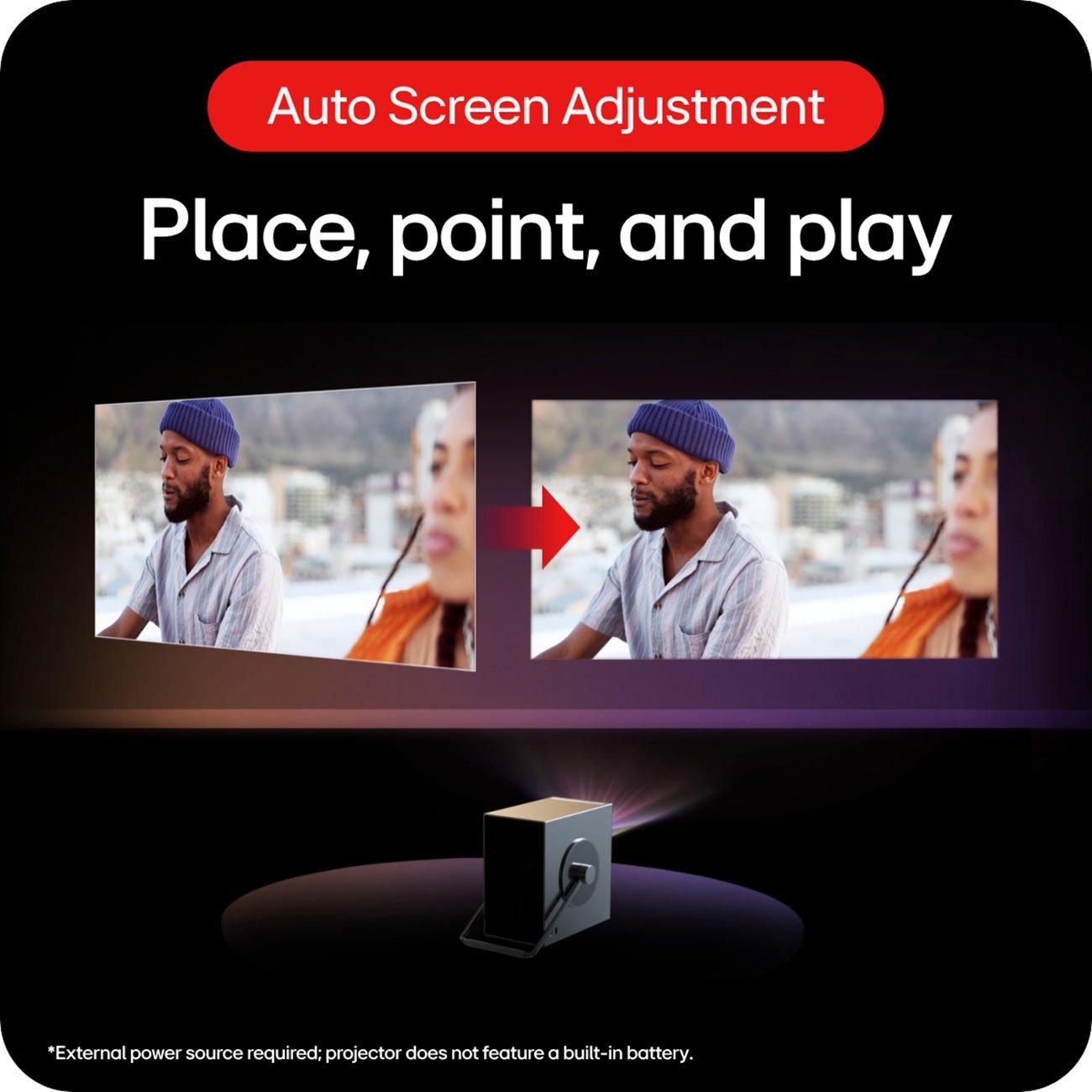
The LG CineBeam Q, on the other hand, requires constant external power. Its laser system and 4K processing simply demand too much energy for practical battery operation. This means you'll need access to a wall outlet or a substantial power bank for extended use.
In practice, I've found this trade-off defines how you use each projector. The ZIP excels at spontaneous use—pulling it out for a quick movie in a hotel room, sharing photos while camping, or giving an impromptu presentation. The CineBeam Q is better suited for planned viewing sessions where you can ensure power access but want the best possible image quality.
Neither projector excels at audio, but for different reasons. The Aurzen ZIP's dual 1W speakers are impressive for the size but simply can't produce much volume or bass in such a tiny package. They're adequate for personal viewing but you'll want Bluetooth headphones or an external speaker for anything more serious.
The LG CineBeam Q's 3W mono speaker is louder but still underwhelming compared to even modest soundbars or TV speakers. The good news is both projectors support Bluetooth audio output, so pairing with external speakers is straightforward. If audio quality is important to you, budget for external speakers regardless of which projector you choose.
After extensive testing, I've found distinct scenarios where each projector shines. The Aurzen ZIP is unbeatable for true mobility. Its battery life covers most movies, the automatic focusing means setup takes seconds, and the tri-fold design enables projection angles impossible with traditional projectors. I've used it successfully in tents, hotel rooms, and even lying in bed pointing at the ceiling.
However, the 100 ANSI lumen brightness really limits its use to very dark environments. Even with curtains closed during the day, the image appears washed out and difficult to see. This makes it primarily a nighttime or very dark room projector.
The LG CineBeam Q performs much better in varied lighting conditions. At 500 ANSI lumens, it can handle moderate ambient light and produces a watchable image even with some lights on. The 4K resolution makes it genuinely suitable for home theater use, gaming, and professional presentations where image quality matters.
If you're considering either projector as a primary or secondary home theater solution, the LG CineBeam Q is the clear winner. Its 4K resolution, wide color gamut, and higher brightness make it suitable for serious movie watching. While it can't match dedicated home theater projectors costing thousands more, it delivers a genuinely cinematic experience that rivals many mid-range TVs.
The Aurzen ZIP can certainly create a fun home theater experience, especially for casual viewing or in smaller rooms. Its unique positioning flexibility means you could even create a ceiling-mounted theater in a bedroom or small apartment. However, the 720p resolution and limited brightness mean it's more of a novelty or backup solution rather than a primary viewing device.
At the time of writing, these projectors occupy different price tiers that generally reflect their capabilities. The Aurzen ZIP is positioned as an accessible entry point into portable projection, while the LG CineBeam Q commands a premium price for its advanced features.
The value equation depends entirely on your priorities. If ultimate portability and convenience matter most, the ZIP's innovative design and battery operation justify its cost. If image quality is paramount and you don't mind the larger size, the CineBeam Q's 4K performance represents good value compared to similar premium portable projectors.
Both projectors represent significant advances in their respective categories since their 2024 releases. The ZIP pushed miniaturization further than anyone thought possible, while the CineBeam Q brought laser projection technology to a more accessible portable form factor.
Looking ahead, we'll likely see continued improvements in LED efficiency for ultra-compact projectors like the ZIP, potentially increasing brightness without sacrificing battery life. Laser projectors like the CineBeam Q may become smaller and more power-efficient as the technology matures.
After testing both extensively, here's my honest assessment of who should choose which projector:
Choose the Aurzen ZIP Tri-Fold if you prioritize true portability above all else. If you travel frequently, camp regularly, or simply want a projector you can use anywhere without planning ahead, its unique design and battery operation are game-changing. It's perfect for casual movie nights, sharing content with friends, or any scenario where convenience trumps absolute image quality.
Choose the LG CineBeam Q if image quality is your primary concern and you can work within its power requirements. If you want a projector for regular home entertainment, professional presentations, or any use case where the image needs to look truly impressive, the 4K resolution and laser brightness make it worth the extra size and cost.
The beauty of having such different approaches in the same category is that both projectors excel in their intended roles. The ZIP succeeds because it prioritizes convenience without completely sacrificing functionality, while the CineBeam Q proves that portable doesn't have to mean compromised performance.
Ultimately, neither projector is perfect—physics still imposes real limitations on portable projection. But both represent thoughtful approaches to solving the mobility versus performance equation, just from opposite directions. Your choice should align with how you actually plan to use your projector, not just how you imagine you might use it.
The portable projector market continues to evolve rapidly, but these two models establish compelling benchmarks for ultra-compact convenience and premium portable performance. Whichever direction appeals to you, both represent solid investments in their respective categories.
| Aurzen ZIP Tri-Fold Portable Mini Projector | LG CineBeam Q 4K UHD Portable Laser Projector |
|---|---|
| Resolution - Determines image sharpness and detail quality | |
| 720p (1280x720) with pixel-shifting - adequate for casual viewing | True 4K UHD (3840x2160) - crisp text and fine details |
| Brightness - Critical for ambient light tolerance | |
| 100 ANSI lumens (requires very dark rooms) | 500 ANSI lumens (usable with moderate ambient light) |
| Size & Weight - Defines true portability | |
| 3.3×3.1×1 inches, 9.88oz (genuinely pocket-sized) | 5.3×5.3×3.1 inches, 3.3 lbs (compact but substantial) |
| Light Source Technology - Affects color quality and lifespan | |
| 2-channel LED system (20,000 hour lifespan) | 3-channel RGB laser (wider color gamut, 20,000 hours) |
| Battery Operation - Freedom from power outlets | |
| Built-in 5,000mAh battery (90 minutes runtime) | Requires external power (65W consumption) |
| Smart Features - Built-in content access | |
| Wi-Fi-free screen mirroring only | Full webOS platform with Netflix, Disney+, streaming apps |
| Design Innovation - Unique positioning capabilities | |
| Revolutionary tri-fold design enables 180° flexible projection | Traditional cube design with 360° rotating handle/stand |
| Contrast Ratio - Depth of blacks and overall image pop | |
| 300:1 (basic contrast performance) | 450,000:1 dynamic contrast (deep blacks, bright highlights) |
| Auto-Focus Technology - Setup convenience | |
| ToF zero-lag auto-focus (30x per second measurement) | Standard auto-focus with manual fine-tuning options |
| Connectivity Options - Device compatibility | |
| USB-C, wireless mirroring (HDMI via optional dongle) | HDMI 2.0, USB-C, AirPlay 2, Android Screen Share |
| Audio Performance - Built-in speaker quality | |
| Dual 1W stereo speakers (weak, external audio recommended) | 3W mono speaker (louder but still benefits from external audio) |
| Target Use Cases - Best applications for each | |
| Ultra-mobile: travel, camping, spontaneous viewing | Home entertainment, presentations, quality-focused viewing |
The Aurzen ZIP Tri-Fold Portable Mini Projector is significantly better for travel due to its pocket-sized design at just 9.88oz and built-in battery. The LG CineBeam Q 4K UHD Portable Laser Projector weighs 3.3 pounds and requires external power, making it less convenient for true mobility.
The LG CineBeam Q delivers superior image quality with true 4K UHD resolution (3840x2160) and 500 ANSI lumens brightness, compared to the Aurzen ZIP's 720p resolution and 100 ANSI lumens. The difference is especially noticeable with text, fine details, and larger screen sizes.
The LG CineBeam Q has built-in webOS with native Netflix, Disney+, and streaming apps. The Aurzen ZIP requires screen mirroring from your phone or tablet, and needs an optional dongle for DRM-protected content like Netflix.
The LG CineBeam Q 4K UHD Portable Laser Projector is much better suited for home theater with its 4K resolution, 500 ANSI lumens brightness, and wide color gamut. The Aurzen ZIP works for casual home viewing but is limited by its 720p resolution and low brightness.
The Aurzen ZIP Tri-Fold Portable Mini Projector has a built-in 5,000mAh battery providing about 90 minutes of viewing time. The LG CineBeam Q doesn't have a battery and requires constant external power from a wall outlet or power bank.
The LG CineBeam Q performs much better in ambient light with its 500 ANSI lumens output, while the Aurzen ZIP at 100 ANSI lumens requires very dark environments for optimal viewing. Neither works well in bright daylight conditions.
The LG CineBeam Q 4K UHD Portable Laser Projector can project up to 120 inches with good image quality. The Aurzen ZIP works best at 40-60 inches, though it can technically project larger images with reduced brightness and clarity.
Both offer automatic setup features, but the Aurzen ZIP Tri-Fold Portable Mini Projector has superior ToF zero-lag auto-focus that adjusts 30 times per second. The LG CineBeam Q has standard auto-focus with manual fine-tuning options.
The LG CineBeam Q is better for professional presentations due to its 4K resolution making text crisp and readable, plus higher brightness for conference room use. The Aurzen ZIP's 720p resolution may show pixelation with detailed slides or small text.
The LG CineBeam Q 4K UHD Portable Laser Projector offers HDMI 2.0, USB-C, AirPlay 2, and Android Screen Share. The Aurzen ZIP has USB-C and wireless screen mirroring, with HDMI available through an optional wireless dongle.
Both have weak built-in speakers - the Aurzen ZIP has dual 1W stereo speakers while the LG CineBeam Q has a 3W mono speaker. Both support Bluetooth audio output, and external speakers are recommended for either projector.
Value depends on your priorities: the Aurzen ZIP Tri-Fold Portable Mini Projector offers exceptional portability and innovative design at a lower price point, while the LG CineBeam Q 4K UHD Portable Laser Projector delivers premium image quality that justifies its higher cost for quality-focused users.
We've done our best to create useful and informative comparisons to help you decide what product to buy. Our research uses advanced automated methods to create this comparison and perfection is not possible - please contact us for corrections or questions. These are the sites we've researched in the creation of this article: aurzen.com - youtube.com - tomsguide.com - aurzen.com - aurzen.com - projectorcentral.com - appleinsider.com - youtube.com - aurzen.com - aurzen.com - aurzen.com - aurzen.com - projectorcentral.com - lg.com - thefrogpadappliances.com - youtube.com - techradar.com - lg.com - avsforum.com - lg.com - tomsguide.com - jefflynch.com - hometheaterview.com - projectorreviews.com - youtube.com - avsforum.com - projectorcentral.com - pcrichard.com - bhphotovideo.com - youtube.com - lg.com - applerivertvandappliance.com - big-georges.com - queencityonline.com - lg.com - lg.com - lg.com - lgnewsroom.com - heimkino.de

Privacy Policy
Terms and Conditions - Affiliate Policy
Home Security
© Copyright 2008-2026.
11816 Inwood Rd #1211, Dallas, TX 75244