

When the first 4K portable projectors hit the market just a few years ago, they were expensive, dim, and frankly not very good. Fast forward to 2024, and we're seeing projectors like the JMGO N1S Pro and LG CineBeam Q that actually deliver on the promise of cinematic 4K visuals in packages you can move around your home. But these two take dramatically different approaches to the same goal, and understanding those differences is crucial to picking the right one for your needs.
The portable projector market has transformed rapidly since 2020. Early models struggled with poor brightness, washed-out colors, and clunky interfaces. The introduction of laser light sources changed everything – they last longer (typically 20,000-30,000 hours versus 3,000-5,000 for traditional lamps), produce more accurate colors, and reach brightness levels that actually work in real-world lighting conditions.
Both the JMGO N1S Pro and LG CineBeam Q represent the current state of this evolution, but they've chosen different priorities. The JMGO, released in late 2024, pushes brightness and features to near-traditional projector levels while maintaining portability. LG's CineBeam Q, which arrived earlier in 2024, prioritizes extreme portability above all else, creating something closer to a large tablet in terms of size and weight.
Before diving into specifics, it's worth understanding what separates good 4K portable projectors from mediocre ones. Unlike traditional home theater projectors that can weigh 20+ pounds and require permanent installation, portable 4K projectors need to balance several competing demands.
Brightness is king in this category. Traditional projectors often output 3,000+ lumens, but portable units typically range from 300-2,500 lumens. This matters because ambient light is the enemy of projection quality – even small amounts can wash out colors and make dark scenes unwatchable. The difference between 500 and 2,400 lumens isn't just numerical; it's the difference between needing blackout curtains or being able to watch during the day.
Smart platform integration has become essential. These projectors need to function as complete entertainment systems, not just display devices. The quality of the built-in streaming interface, app selection, and update frequency directly impacts daily usability.
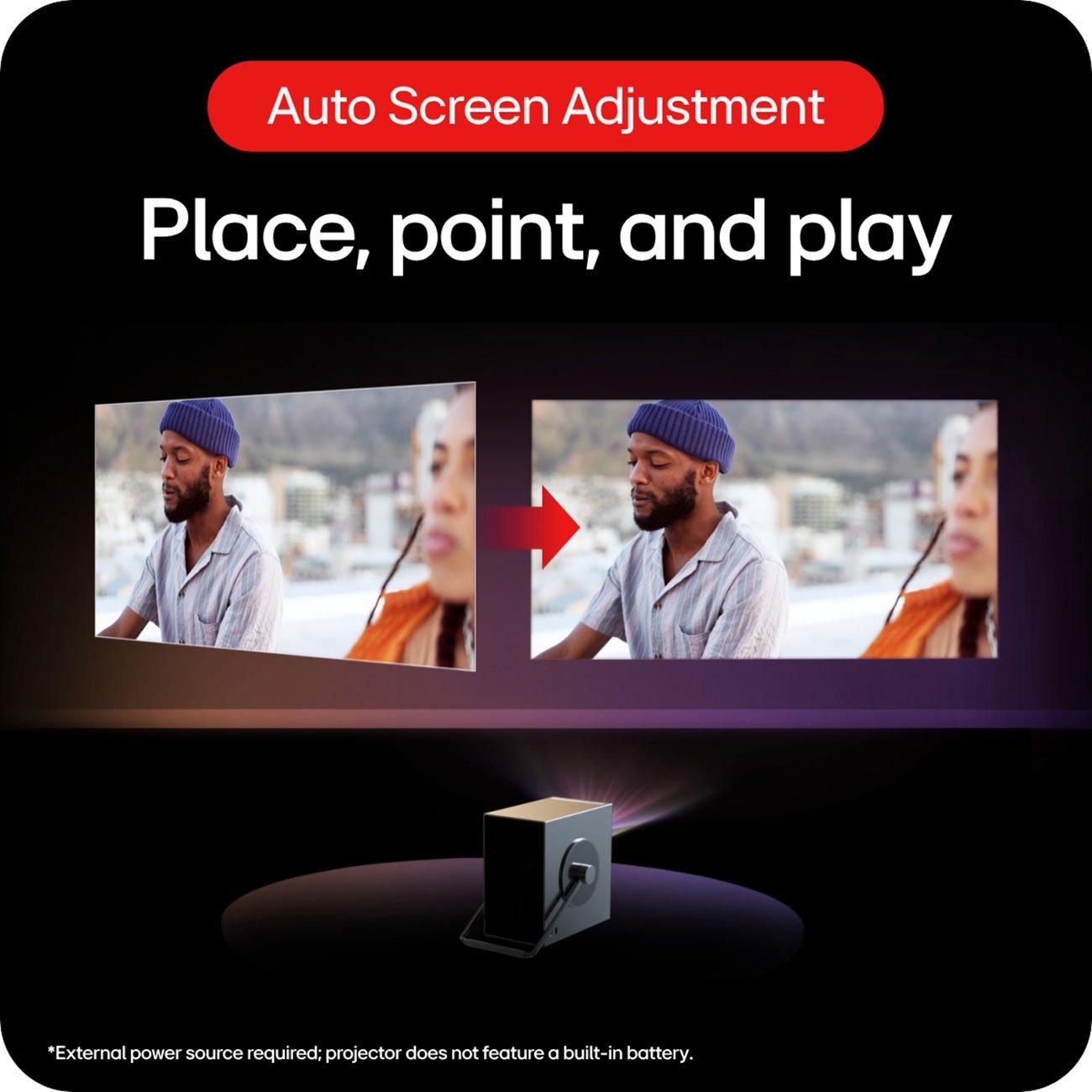
Setup convenience determines whether you'll actually use the projector's portability. Auto-focus, keystone correction (which fixes the trapezoidal distortion when projecting at an angle), and screen alignment features transform setup from a 10-minute frustration into a 30-second process.
The fundamental difference between these projectors starts with their design philosophy, which cascades into every other aspect of their performance.
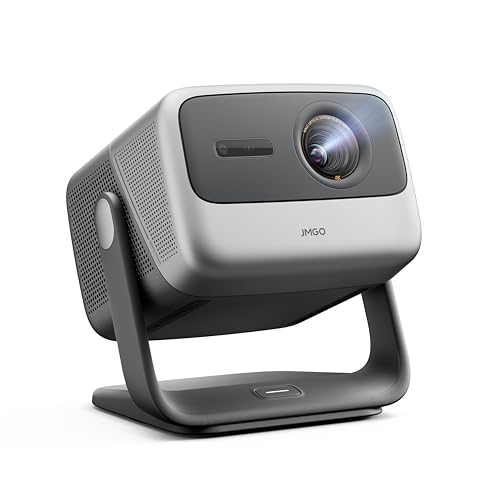
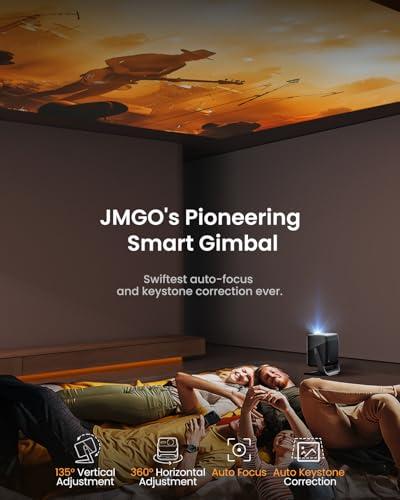
The JMGO N1S Pro measures roughly 8" × 9" × 9" – still portable, but clearly prioritizing performance over ultimate convenience. Its most distinctive feature is the gimbal mounting system, which allows the projector head to rotate 360 degrees horizontally and 135 degrees vertically without moving the base. This might seem like a gimmick, but it solves a real problem: traditional projectors require precise positioning relative to your screen or wall, often requiring you to physically move the entire unit for minor adjustments.
The gimbal system means you can place the JMGO N1S Pro on a coffee table and project onto the wall behind your couch, or onto the ceiling for bed viewing, all with simple adjustments. The base stays put, the image moves where you want it. For anyone who's spent time crawling behind furniture to nudge a projector a few inches, this innovation feels genuinely useful.
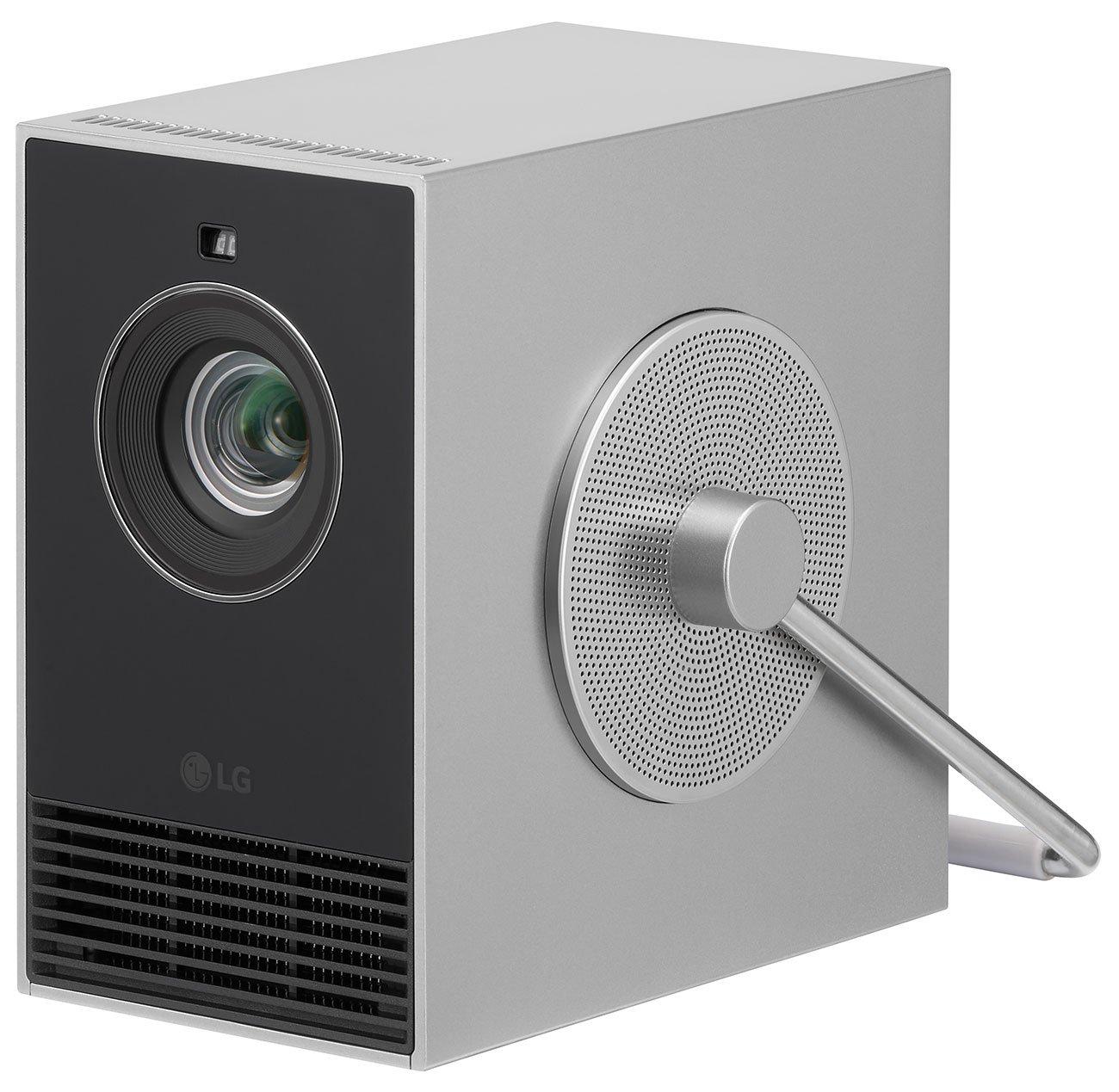
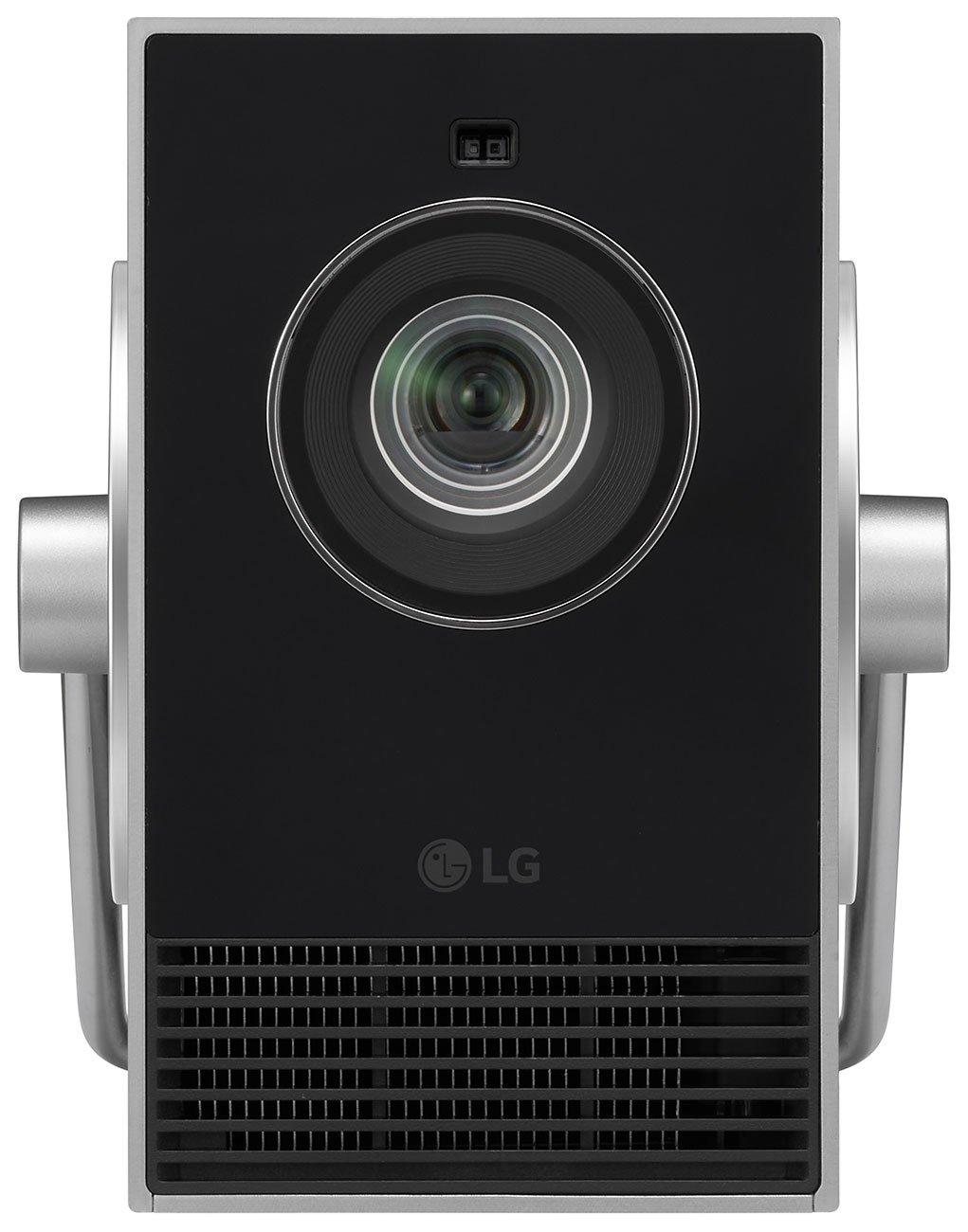
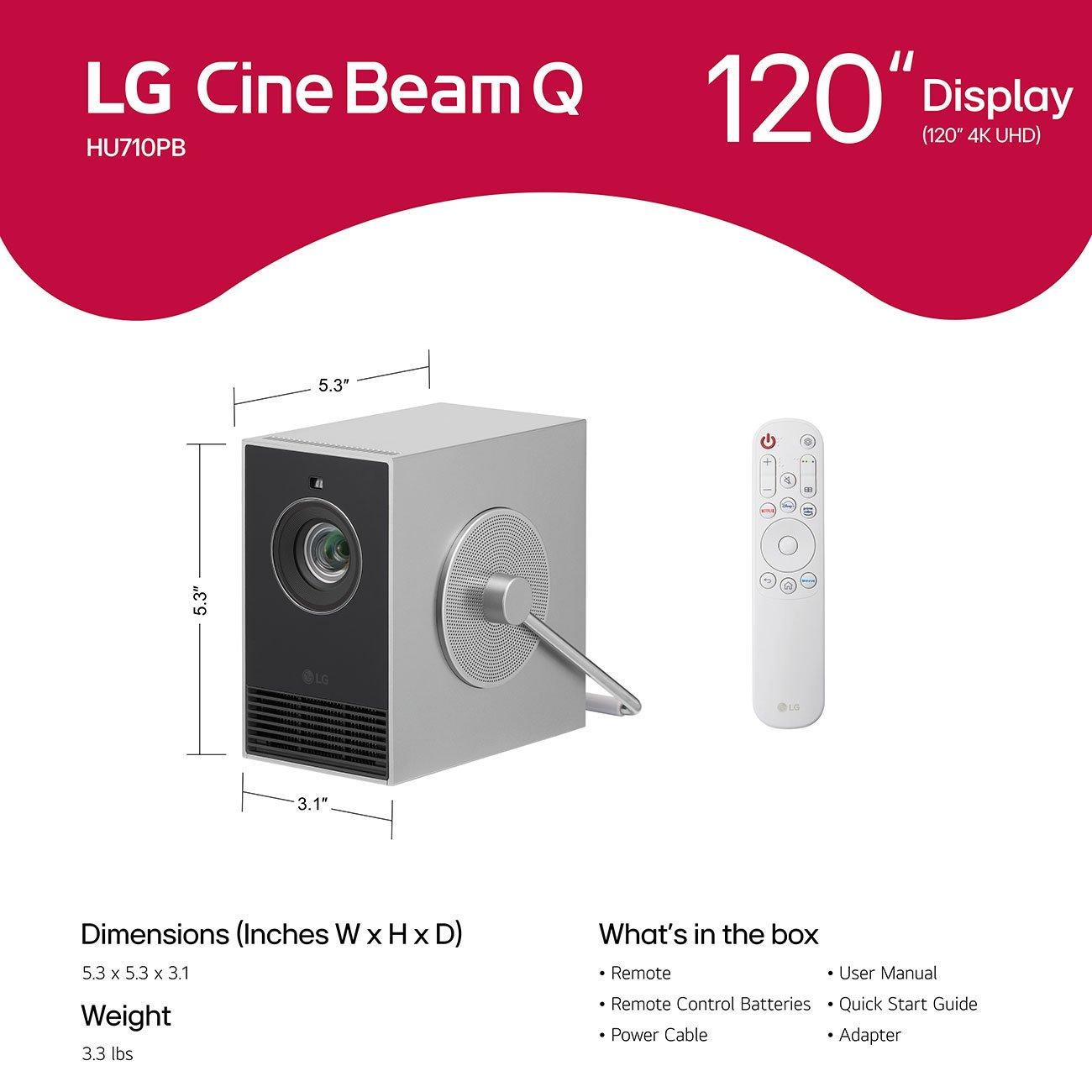
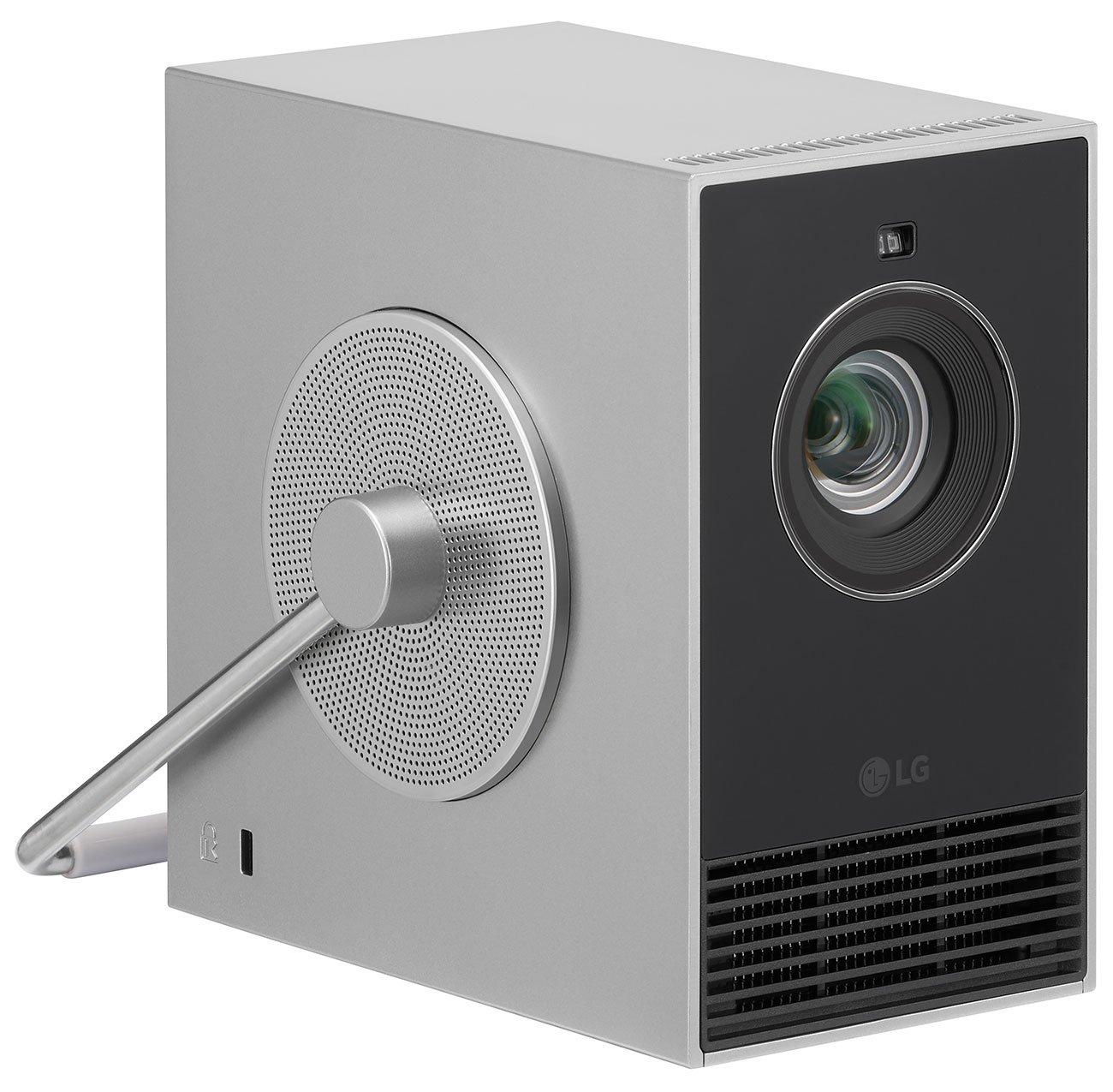
In contrast, the LG CineBeam Q pursues radical miniaturization. At roughly 5" × 3" × 5" and weighing just 3.3 pounds, it's genuinely pocket-sized for a 4K projector. The rotating handle doubles as a stand, creating clean lines and maximum portability. You could genuinely throw this in a backpack for a weekend trip without thinking twice.
This size difference isn't just aesthetic – it reflects completely different use cases and compromises.
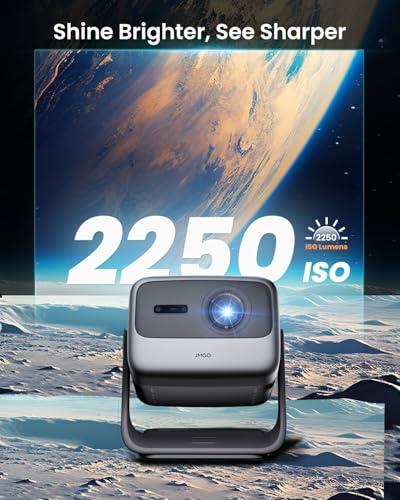
Here's where the fundamental trade-off becomes crystal clear. The JMGO N1S Pro outputs 2,400 ANSI lumens, while the LG CineBeam Q manages 500 ANSI lumens. This isn't a minor difference – it's transformational for how and where you can use these projectors.
ANSI lumens (American National Standards Institute lumens) provide standardized brightness measurements that account for real-world conditions rather than laboratory peaks. To put these numbers in perspective: movie theaters typically run around 14 foot-lamberts, which translates to roughly 50-100 ANSI lumens per screen size. A 100-inch screen needs about 1,000-1,500 ANSI lumens for comfortable viewing in a darkened room, and 2,000+ lumens for rooms with ambient light.
The JMGO N1S Pro hits that sweet spot where you can watch during the day with curtains drawn, or in the evening with normal room lighting. You're not restricted to cave-like darkness. The projector can fill screens up to 180 inches while maintaining adequate brightness – that's genuinely large enough for basement home theaters or outdoor movie nights.
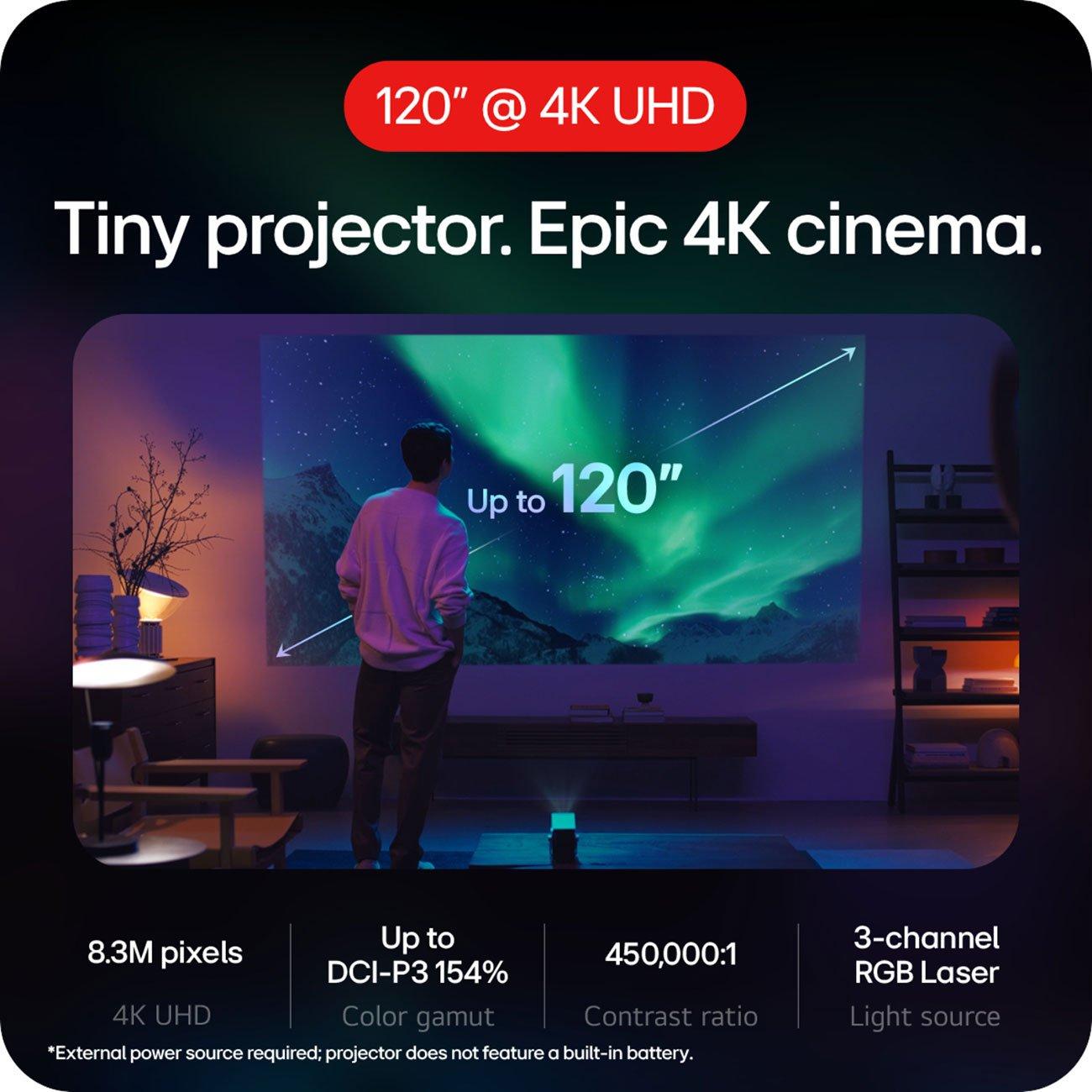
The LG CineBeam Q, with its 500 ANSI lumens, requires more controlled conditions. You'll want darkened rooms and screen sizes closer to 80-120 inches for optimal results. This isn't necessarily bad – many people prefer dedicated movie-watching environments anyway – but it does limit flexibility.
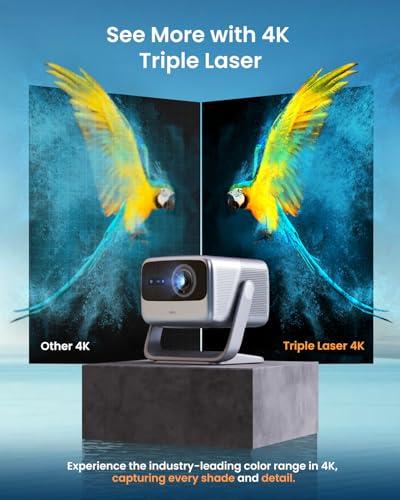
Both projectors use laser light sources, but different implementations. The JMGO N1S Pro employs what they call MALC 2.0 triple RGB laser technology, using separate red, green, and blue lasers for color production. This approach typically produces wider color gamuts and more accurate color reproduction than single-laser systems. The LG CineBeam Q uses a three-channel RGB laser as well, but optimized for efficiency and size rather than maximum output.
Both projectors deliver true 4K resolution (3840×2160 pixels), but their image characteristics differ significantly due to their different priorities and technical implementations.
Color performance shows interesting contrasts. The JMGO N1S Pro covers 110% of the BT.2020 color space – a very wide gamut that produces vivid, saturated colors. BT.2020 represents the color standard for 4K content, so high coverage percentages mean the projector can display more of the colors that content creators intended. However, wide gamuts don't always mean accurate colors, and user reviews suggest the JMGO prioritizes visual impact over reference accuracy.
The LG CineBeam Q takes a different approach, covering 154% of the DCI-P3 color space. DCI-P3 is the digital cinema standard, smaller than BT.2020 but often more relevant for current content. The higher percentage coverage suggests LG has tuned for vibrant, cinema-like presentation within this more focused color range.
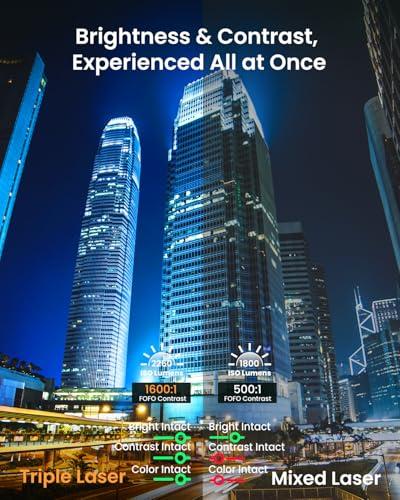
Contrast performance reveals another trade-off. The JMGO N1S Pro claims a 1,600:1 contrast ratio, while the LG CineBeam Q specifies 450,000:1 dynamic contrast. These numbers aren't directly comparable – the LG figure represents dynamic contrast (the difference between the brightest white and darkest black the projector can produce in different scenes), while JMGO's figure likely represents native contrast (the difference within a single frame).
Dynamic contrast figures are often inflated marketing numbers, but user reviews consistently praise the LG CineBeam Q for deeper blacks and better shadow detail than typical portable projectors. The JMGO N1S Pro, conversely, receives mixed reviews for black level performance, with some users noting inconsistency in darker scenes.
Motion handling becomes important for sports and action content. DLP projectors (which both of these are) traditionally handle motion better than LCD projectors, but implementation matters. Reviews suggest the JMGO N1S Pro occasionally struggles with fast motion, showing artifacts or stutter in demanding scenes. The LG CineBeam Q receives fewer motion-related complaints, possibly due to its more conservative brightness and processing approach.
Most projector reviews focus on image quality and ignore audio, but for portable units that need to work without elaborate setups, built-in sound quality significantly impacts the user experience.
The JMGO N1S Pro includes 20-watt stereo speakers with Dolby Digital Plus processing. This isn't home theater reference quality, but it's surprisingly capable for built-in speakers. The stereo separation and bass response are adequate for casual viewing, and the power output can fill medium-sized rooms without external amplification.
The LG CineBeam Q includes a 3-watt mono speaker – essentially an afterthought. User reviews consistently describe it as "tinny" and recommend external speakers or Bluetooth headphones. This makes sense given the size constraints, but it does impact the grab-and-go convenience that the projector otherwise excels at.
Both projectors support Bluetooth audio output, but the JMGO N1S Pro also includes HDMI eARC (enhanced Audio Return Channel) for connecting soundbars or AVR systems. This matters for home theater setups where you want to route all audio through a dedicated sound system.
The software experience has become crucial for modern projectors, as most users expect Netflix, Disney+, and other streaming services to work directly without additional devices.
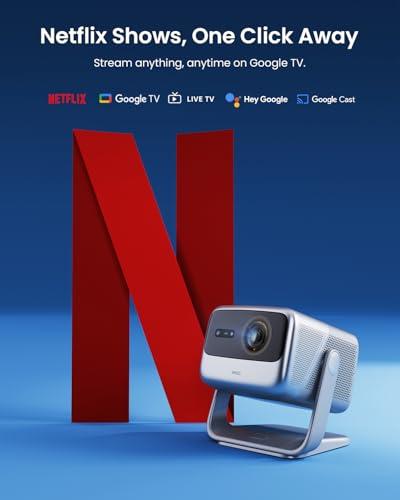
The JMGO N1S Pro runs Google TV (the newest version of Android TV), providing access to thousands of apps including native Netflix support. Google TV's interface is generally responsive and intuitive, with good content discovery and recommendation features. The projector includes 2GB of RAM and 32GB of storage – adequate but not generous by current standards.
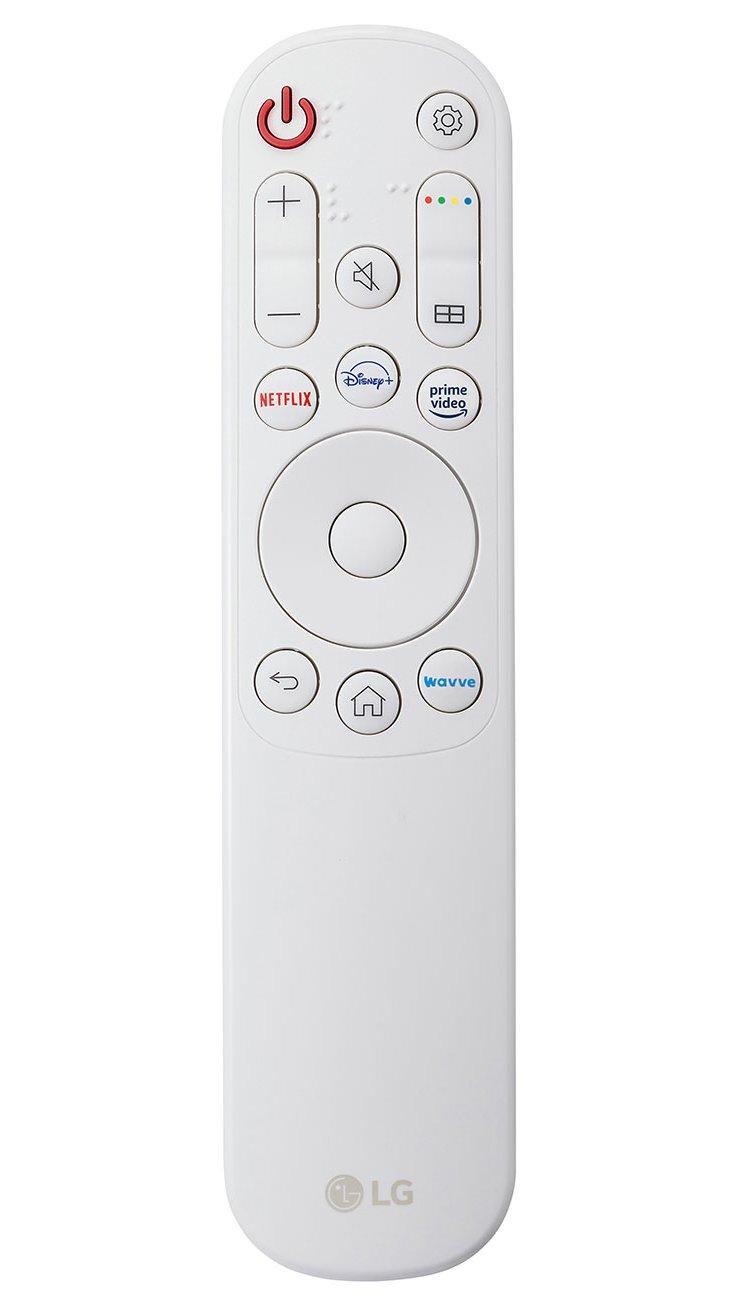
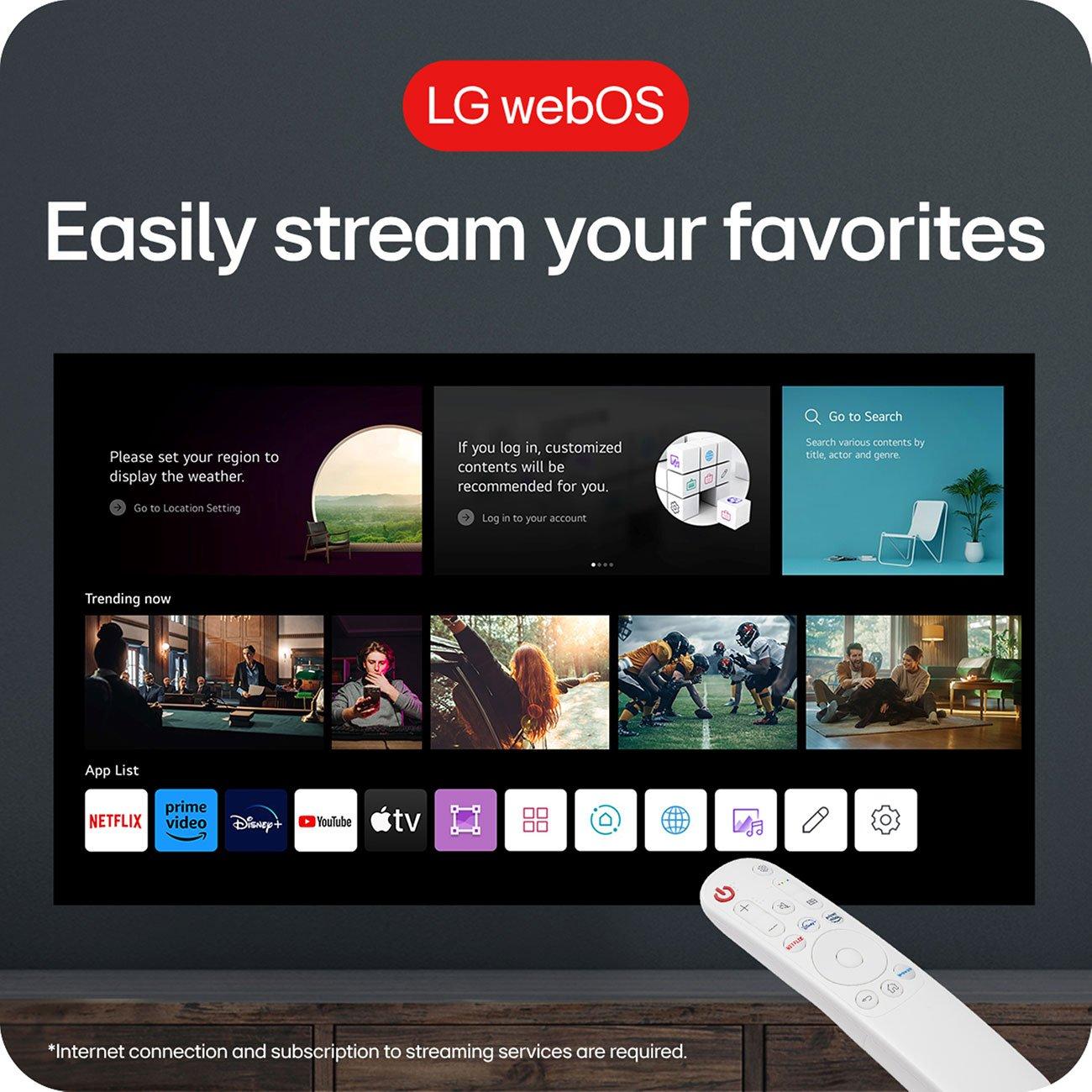
The LG CineBeam Q uses LG's WebOS platform, which offers solid streaming capabilities but with a smaller app ecosystem than Android TV. WebOS is generally stable and user-friendly, but interface responsiveness can lag, particularly when switching between apps or navigating complex menus.
Both platforms support screen mirroring – the JMGO through Chromecast, the LG through AirPlay 2 and Screen Share. For iOS users, the LG's AirPlay 2 support provides seamless integration with iPhones and iPads.
Modern portable projectors live or die on convenience features that eliminate the traditional hassles of projector setup.
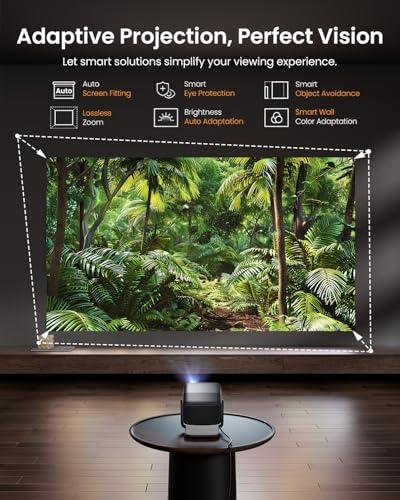
The JMGO N1S Pro includes comprehensive automatic features: instant autofocus, auto keystone correction, screen alignment, and object avoidance. The object avoidance feature uses sensors to detect when someone walks into the projection beam and temporarily dims the output – a thoughtful safety feature for households with children or pets.
The gimbal system is the star convenience feature, allowing precise image positioning without moving the projector base. Combined with the auto-correction features, setup typically requires less than a minute from power-on to optimal image.
The LG CineBeam Q includes standard auto-focus and keystone correction, which work reliably but offer less flexibility than the JMGO's advanced features. However, its extreme portability often makes up for the reduced automation – you can simply pick it up and move it rather than relying on software corrections.
For dedicated home theater use, these projectors serve different needs. The JMGO N1S Pro approaches traditional home theater projector capabilities while maintaining setup flexibility. Its 2,400 ANSI lumens output, large screen capability (up to 180 inches), and HDMI eARC support make it suitable for basement theaters or dedicated media rooms.
The gimbal system particularly benefits home theater setups where you might want different projection angles – perhaps wall-mounted for movies and ceiling-mounted for gaming. The automated setup features reduce the technical knowledge required for optimal image quality.
The LG CineBeam Q works better as a secondary or casual home theater solution. Its compact size makes it perfect for apartments, bedrooms, or situations where a permanent projector installation isn't practical. The image quality in darkened rooms genuinely impresses, but the brightness limitations restrict it to smaller screens and controlled lighting.
Both projectors support HDR10 (High Dynamic Range), which improves contrast and color in compatible content, though neither reaches the peak brightness levels where HDR truly shines.
At the time of writing, the JMGO N1S Pro commands a premium price reflecting its higher brightness and advanced features, while the LG CineBeam Q offers more accessible pricing for its ultra-portable form factor.
The cost-per-lumen analysis heavily favors the JMGO N1S Pro – you get roughly five times the brightness for approximately 25% more money. However, this analysis assumes brightness is your primary concern. If portability, simplicity, or budget constraints are more important, the math changes.
For context, both projectors cost significantly more than budget portable projectors but less than traditional home theater projectors with similar specifications. They occupy a middle ground where convenience and modern features command premium pricing over pure specifications.
After extensive research into user experiences and expert reviews, clear usage patterns emerge for each projector.
Choose the JMGO N1S Pro if:
You want maximum flexibility in viewing conditions and locations. The high brightness output means movie nights don't require complete darkness, and the large screen capability works for everything from intimate viewing to backyard movie parties. The gimbal system and automated features make it genuinely easy to achieve optimal image quality without technical expertise.
This projector particularly suits users who want one device for multiple scenarios – perhaps a living room setup most of the time with occasional moves to the bedroom or patio. The built-in audio quality reduces dependence on external equipment, simplifying setups.
Home theater enthusiasts who want projector-like performance with modern convenience will appreciate the JMGO N1S Pro. It's not reference-quality like dedicated home theater projectors, but it delivers similar brightness levels with far less installation complexity.
Choose the LG CineBeam Q if:
Portability is your primary concern and you're willing to accept some performance compromises. The ultra-compact size makes it genuinely practical for travel, temporary setups, or small living spaces where storage matters.
This projector excels for users who prioritize occasional use over daily viewing. College students, renters, or anyone who moves frequently will appreciate the grab-and-go convenience. The image quality in controlled conditions is genuinely impressive for such a small device.
Budget-conscious buyers who still want 4K laser projection will find the LG CineBeam Q offers solid value, provided they understand the brightness limitations and plan their viewing environment accordingly.
These projectors represent the current state of portable 4K projection technology, but they're optimized for different priorities. The JMGO N1S Pro pushes performance boundaries while maintaining portability, creating a device that approaches traditional projector capabilities with modern convenience features.
The LG CineBeam Q prioritizes extreme portability and accessibility, delivering impressive 4K quality in a package that fits in a small bag.
Neither projector is perfect – the JMGO occasionally struggles with black levels and motion processing, while the LG requires controlled lighting and external audio for optimal experience. However, both represent significant advances over earlier portable projectors and deliver genuinely usable 4K projection in their intended scenarios.
The decision ultimately comes down to whether you value maximum performance and flexibility (JMGO N1S Pro) or prioritize portability and value (LG CineBeam Q). Both approaches have merit, and both projectors execute their respective visions well enough to recommend to users whose priorities align with their strengths.
| JMGO N1S Pro 4K Projector | LG CineBeam Q 4K UHD Portable Laser Projector |
|---|---|
| Brightness - The most critical factor determining where and when you can watch | |
| 2,400 ANSI lumens (enables daytime viewing and well-lit rooms) | 500 ANSI lumens (requires darkened room for optimal viewing) |
| Size & Portability - Balance between performance and convenience | |
| 7.99" × 9.29" × 9.48", heavier but manageable | 3.15" × 5.31" × 5.31", 3.3 lbs, truly grab-and-go portable |
| Maximum Screen Size - How big your projected image can realistically be | |
| Up to 180 inches (brightness supports large screens) | Up to 120 inches (brightness limits larger sizes) |
| Built-in Audio - Whether you need external speakers | |
| 20W stereo speakers with Dolby Digital Plus (room-filling sound) | 3W mono speaker (requires external audio for good experience) |
| Smart Platform - Streaming apps and interface quality | |
| Google TV with native Netflix, 10,000+ apps | LG webOS with major streaming apps, smaller ecosystem |
| Setup Features - How quickly you can get optimal image quality | |
| Gimbal system, auto-focus, keystone correction, object avoidance | Standard auto-focus and keystone correction |
| Connectivity - Options for external devices and audio systems | |
| 2× HDMI 2.1 (one with eARC), USB-A, Wi-Fi 6, Bluetooth 5.2 | 1× HDMI, USB-C, Wi-Fi, Bluetooth audio |
| Contrast Ratio - Affects black levels and overall image depth | |
| 1,600:1 native (adequate but inconsistent black performance) | 450,000:1 dynamic (superior black levels and shadow detail) |
| Color Gamut - How vivid and accurate colors appear | |
| 110% BT.2020 coverage (wide, vibrant colors) | 154% DCI-P3 coverage (cinema-focused color reproduction) |
| Power Consumption - Affects heat and running costs | |
| 180W (higher consumption due to brightness) | 65W (efficient operation, less heat generation) |
| Use Case Strengths - Where each projector excels | |
| Flexible home theater, daytime viewing, large screens | Travel, small spaces, controlled lighting environments |
The JMGO N1S Pro 4K Projector is significantly brighter at 2,400 ANSI lumens compared to the LG CineBeam Q at 500 ANSI lumens. This means the JMGO N1S Pro can handle well-lit rooms and daytime viewing, while the LG CineBeam Q requires darkened environments for optimal image quality.
The LG CineBeam Q 4K UHD Portable Laser Projector is much more portable, weighing only 3.3 pounds and measuring just 3.15" × 5.31" × 5.31". The JMGO N1S Pro is larger at 7.99" × 9.29" × 9.48" but still considered portable for a high-brightness projector.
The JMGO N1S Pro 4K Projector has excellent built-in audio with 20W stereo speakers and Dolby Digital Plus, often eliminating the need for external speakers. The LG CineBeam Q has a basic 3W mono speaker that requires external audio for a good experience.
The JMGO N1S Pro supports screens up to 180 inches thanks to its high brightness, making it ideal for large home theater setups. The LG CineBeam Q 4K UHD Portable Laser Projector works best with screens up to 120 inches due to brightness limitations.
The JMGO N1S Pro 4K Projector runs Google TV with native Netflix and access to over 10,000 apps. The LG CineBeam Q uses LG's webOS platform with major streaming apps but a smaller overall app ecosystem compared to Android TV.
Both deliver true 4K resolution, but they excel in different areas. The JMGO N1S Pro offers brighter, more vibrant images suitable for various lighting conditions. The LG CineBeam Q 4K UHD Portable Laser Projector provides superior contrast and black levels in darkened rooms.
The JMGO N1S Pro features advanced auto-setup with gimbal positioning, auto-focus, keystone correction, and object avoidance for quick optimization. The LG CineBeam Q has standard auto-focus and keystone correction but relies more on manual positioning due to its ultra-compact design.
The JMGO N1S Pro 4K Projector is better suited for dedicated home theater setups with its higher brightness, larger screen capability, HDMI eARC support, and quality built-in audio. The LG CineBeam Q works well for casual home theater use in controlled lighting conditions.
The JMGO N1S Pro provides more connectivity with 2× HDMI 2.1 ports (one with eARC), USB-A, Wi-Fi 6, and Bluetooth 5.2. The LG CineBeam Q 4K UHD Portable Laser Projector offers 1× HDMI, USB-C, Wi-Fi, and Bluetooth connectivity.
The JMGO N1S Pro 4K Projector performs well in rooms with ambient light due to its 2,400 ANSI lumen output. The LG CineBeam Q requires darkened rooms for optimal viewing as its 500 ANSI lumens struggle against ambient light.
The JMGO N1S Pro offers better cost-per-lumen value with significantly higher brightness and more features. The LG CineBeam Q 4K UHD Portable Laser Projector provides good value for users prioritizing extreme portability and who can accommodate its brightness limitations.
The key difference is the trade-off between performance and portability. The JMGO N1S Pro 4K Projector prioritizes brightness, features, and versatility in a moderately portable package. The LG CineBeam Q maximizes portability and convenience while accepting lower brightness and requiring external audio for the best experience.
We've done our best to create useful and informative comparisons to help you decide what product to buy. Our research uses advanced automated methods to create this comparison and perfection is not possible - please contact us for corrections or questions. These are the sites we've researched in the creation of this article: techradar.com - projectorcentral.com - gray9.in - projectorreviews.com - howtogeek.com - the-gadgeteer.com - projectorcentral.com - global.jmgo.com - global.jmgo.com - cnet.com - cnet.com - youtube.com - global.jmgo.com - avsforum.com - youtube.com - youtube.com - projectorcentral.com - lg.com - thefrogpadappliances.com - youtube.com - techradar.com - lg.com - avsforum.com - lg.com - tomsguide.com - jefflynch.com - hometheaterview.com - projectorreviews.com - youtube.com - avsforum.com - projectorcentral.com - pcrichard.com - bhphotovideo.com - youtube.com - lg.com - applerivertvandappliance.com - big-georges.com - queencityonline.com - lg.com - lg.com - lg.com - lgnewsroom.com - heimkino.de

Privacy Policy
Terms and Conditions - Affiliate Policy
Home Security
© Copyright 2008-2026.
11816 Inwood Rd #1211, Dallas, TX 75244