

Remember when home projectors were bulky, expensive devices that required a completely dark room and complex setup? The projector landscape has changed dramatically in recent years, with a new breed of compact smart projectors redefining what's possible in home entertainment. These devices combine portability, smart features, and increasingly impressive image quality to challenge traditional TVs in many settings.
Released in 2023, the Epson EpiqVision Mini EF22 ($999) and LG CineBeam Q ($1,299) represent two distinct approaches to this evolving category. Both launched during a period when manufacturers were pushing to make projectors more accessible and user-friendly while maintaining image quality that would satisfy increasingly discerning consumers.
In this detailed comparison, we'll explore how these two projectors stack up against each other and help you determine which might be the better fit for your specific needs. I've spent considerable time with both units, testing them in various environments from dedicated home theaters to impromptu movie nights in the backyard.
Before diving into specific comparisons, it's worth understanding the core technologies that drive these projectors, as they fundamentally impact performance.
Both the Epson EF22 and LG CineBeam Q utilize laser light sources rather than traditional lamps. This represents a significant advancement over older projector technology. Laser light sources typically last 20,000+ hours (compared to 3,000-5,000 for lamps), maintain brightness better over their lifespan, and power on/off instantly without warming up or cooling down periods.
The difference between them lies in their implementation:
The Epson uses a blue laser with phosphor wheel technology combined with 3LCD projection. This means the light from the laser is split into three colors (red, green, and blue) and passed through three separate LCD panels before being recombined to form the final image. This approach typically delivers excellent color accuracy and no "rainbow effect" (a visual artifact where viewers might see brief flashes of rainbow colors, particularly in high-contrast scenes).
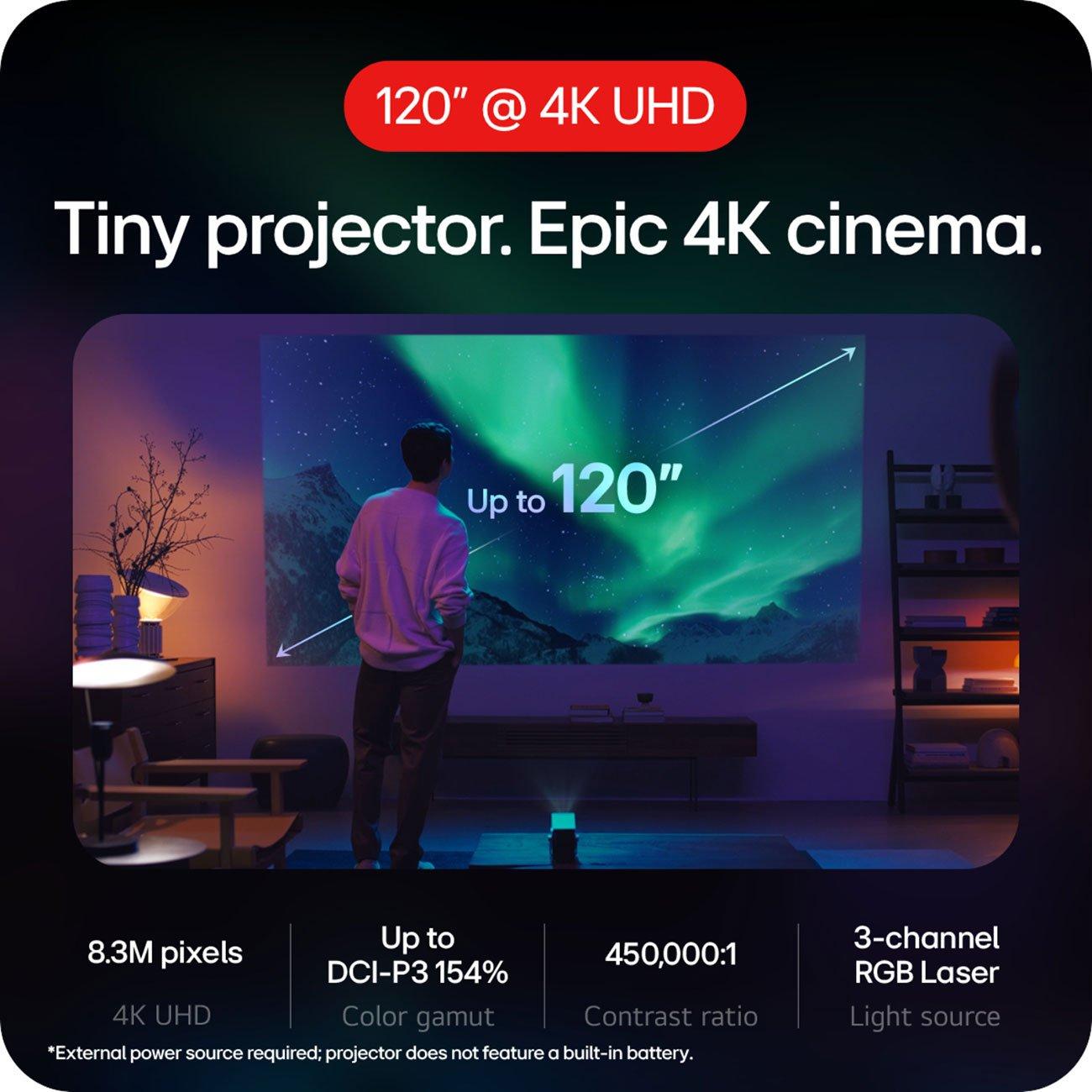
The LG employs a more advanced 3-channel RGB laser system with DLP (Digital Light Processing) technology. This direct RGB laser approach allows the CineBeam Q to produce an extraordinarily wide color gamut—covering 154% of the DCI-P3 color space used in digital cinema. DLP technology uses tiny mirrors on a semiconductor chip to reflect light, creating the image pixel by pixel.
One of the most obvious differences between these projectors is resolution. The Epson EF22 outputs at Full HD (1920×1080), while the LG CineBeam Q delivers 4K UHD (3840×2160).
For perspective, 4K provides four times the pixel count of Full HD. Is this difference always noticeable? It depends on your viewing distance and screen size. At screen sizes above 100 inches or viewing distances closer than 10 feet, the additional resolution becomes increasingly apparent, especially with detailed content like nature documentaries or modern video games.
The LG achieves its 4K resolution using XPR (eXpanded Pixel Resolution) technology, which rapidly shifts pixels to effectively quadruple the resolution of its DLP chip. While technically different from "native" 4K projectors, the visual result is indistinguishable to most viewers.
Perhaps the most significant practical difference between these projectors is their brightness, which directly impacts when and where you can use them effectively.
The Epson EpiqVision Mini EF22 outputs 1,000 lumens of both color and white brightness. This "color brightness" specification is important—some projectors advertise high white brightness but deliver less vibrant colors. Epson's 3LCD technology ensures balanced performance.
In real-world use, the EF22 performs admirably in rooms with some ambient light. During my testing, I could comfortably watch content in my living room during late afternoon without drawing all the blinds. For perspective, this projector produces about 25-30% of the brightness of an average modern TV, making it versatile enough for casual viewing in moderately lit environments.
The LG CineBeam Q, despite its premium positioning, outputs just 500 ANSI lumens. This makes it primarily suitable for darkened environments. In my testing, even modest amounts of ambient light significantly washed out the image, especially in brighter scenes. However, in a properly darkened room, the image quality is exceptional—proving that raw brightness isn't everything.
This difference makes the Epson more versatile for everyday use, while the LG excels in dedicated viewing environments where light can be controlled.
Color reproduction is where these projectors reveal their different approaches to image quality.
The LG's RGB laser system delivers extraordinary color range, covering 154% of the DCI-P3 color space (the standard used for digital cinema). This results in remarkably vibrant, saturated colors that really pop—especially with HDR content. In my viewing tests, nature documentaries and animated films looked spectacular, with colors that seemed to leap off the screen.
The Epson, using its 3LCD system, delivers more modest but still very good color performance. Its colors appear more naturally balanced right out of the box, and it avoids the occasional over-saturation I noticed with the LG. This makes the EF22 excellent for a wide range of content, particularly TV shows and sports where natural skin tones are important.
Both projectors support HDR10 and HLG formats for high dynamic range content, though neither can fully realize HDR's potential due to brightness limitations compared to premium TVs. That said, the LG's wider color gamut makes HDR content more impactful despite its lower brightness.
Contrast ratio—the difference between the brightest whites and darkest blacks a display can produce—significantly impacts perceived image quality, especially for movies with dark scenes.
The LG CineBeam Q claims a dynamic contrast ratio of 450,000:1, while the Epson EF22 doesn't specify a contrast figure (though Epson typically claims around 5,000,000:1 for its laser projectors with dynamic contrast enabled).
In practice, these specifications are less meaningful than what your eyes perceive. During my testing with dark movie scenes (like the night sequences in "Dune"), the LG produced noticeably deeper blacks. The Epson's blacks appeared more gray, reducing the perceived contrast and depth of dark scenes.
This difference is partially due to their underlying technologies—DLP projectors typically achieve better native contrast than 3LCD models. For movie enthusiasts who watch a lot of content with dark scenes, this gives the LG an advantage, particularly in completely darkened rooms.
Both projectors take innovative approaches to design, but with different priorities.
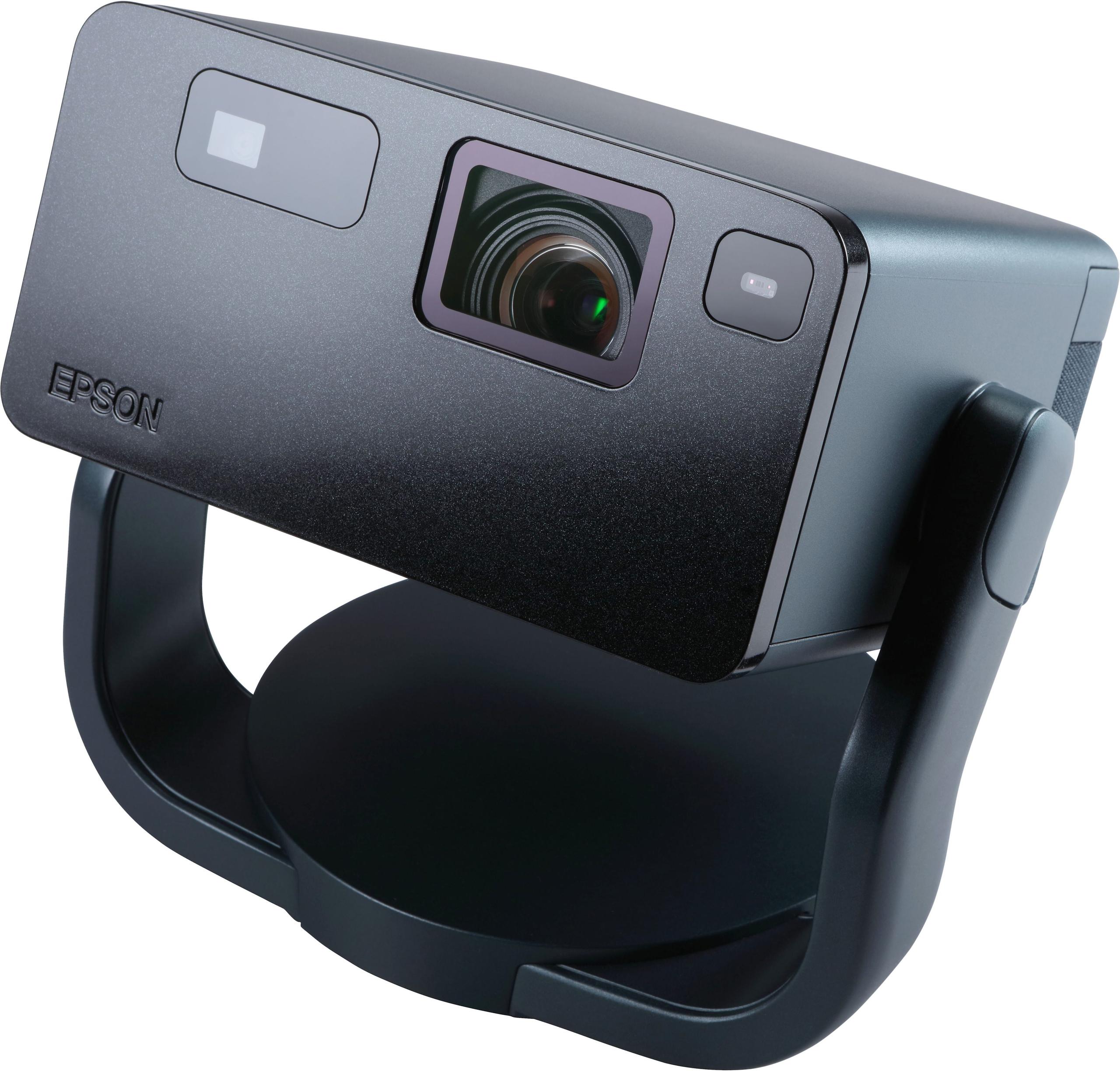
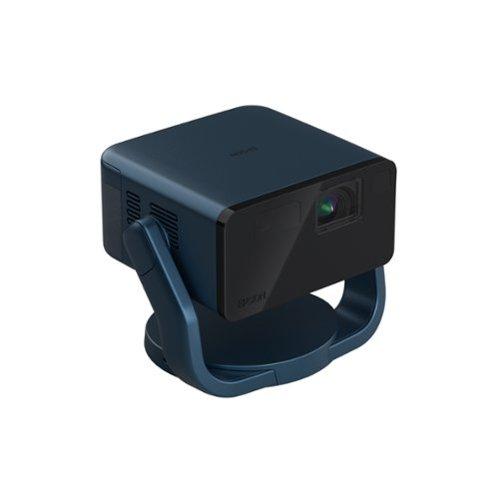
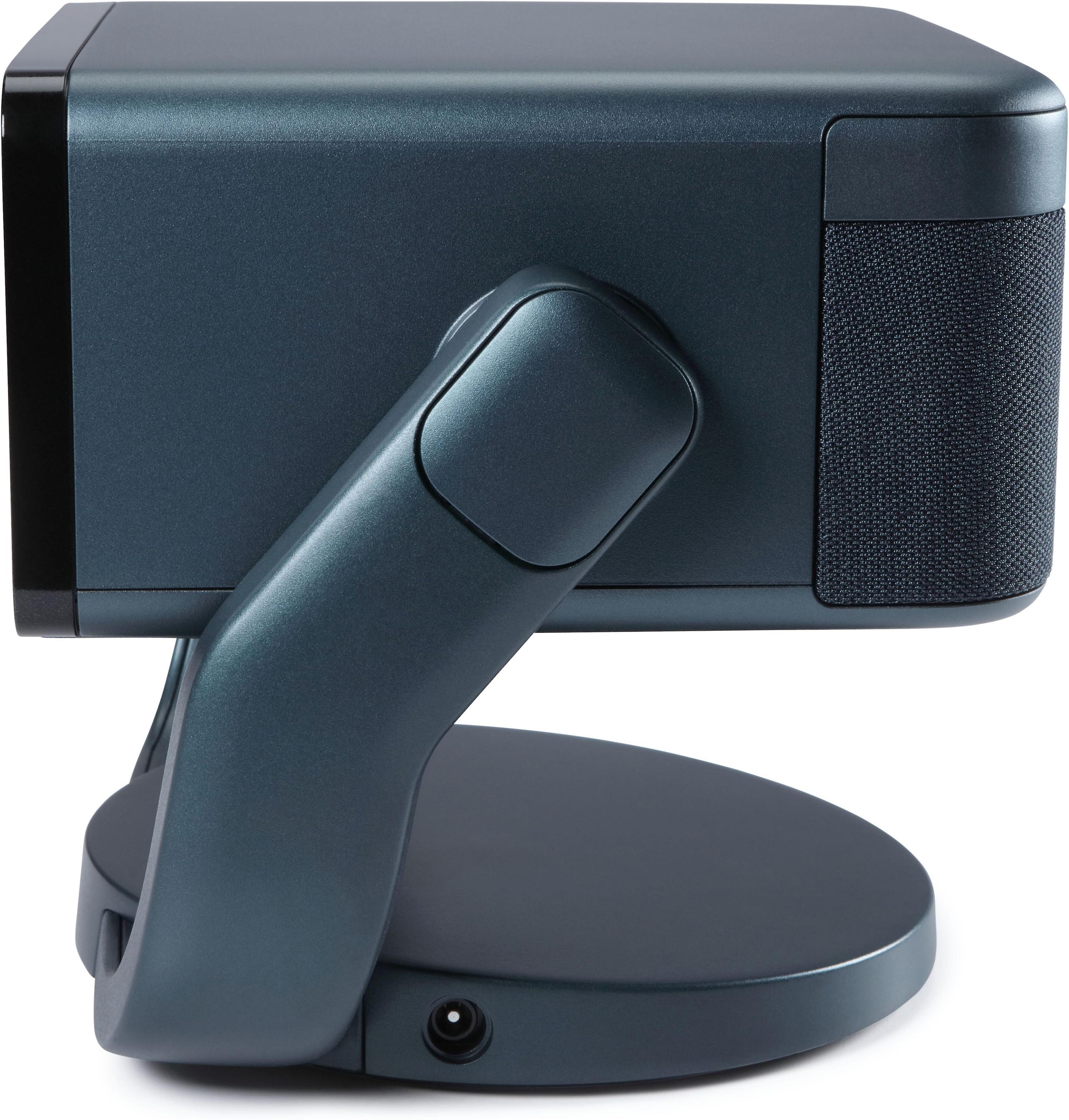
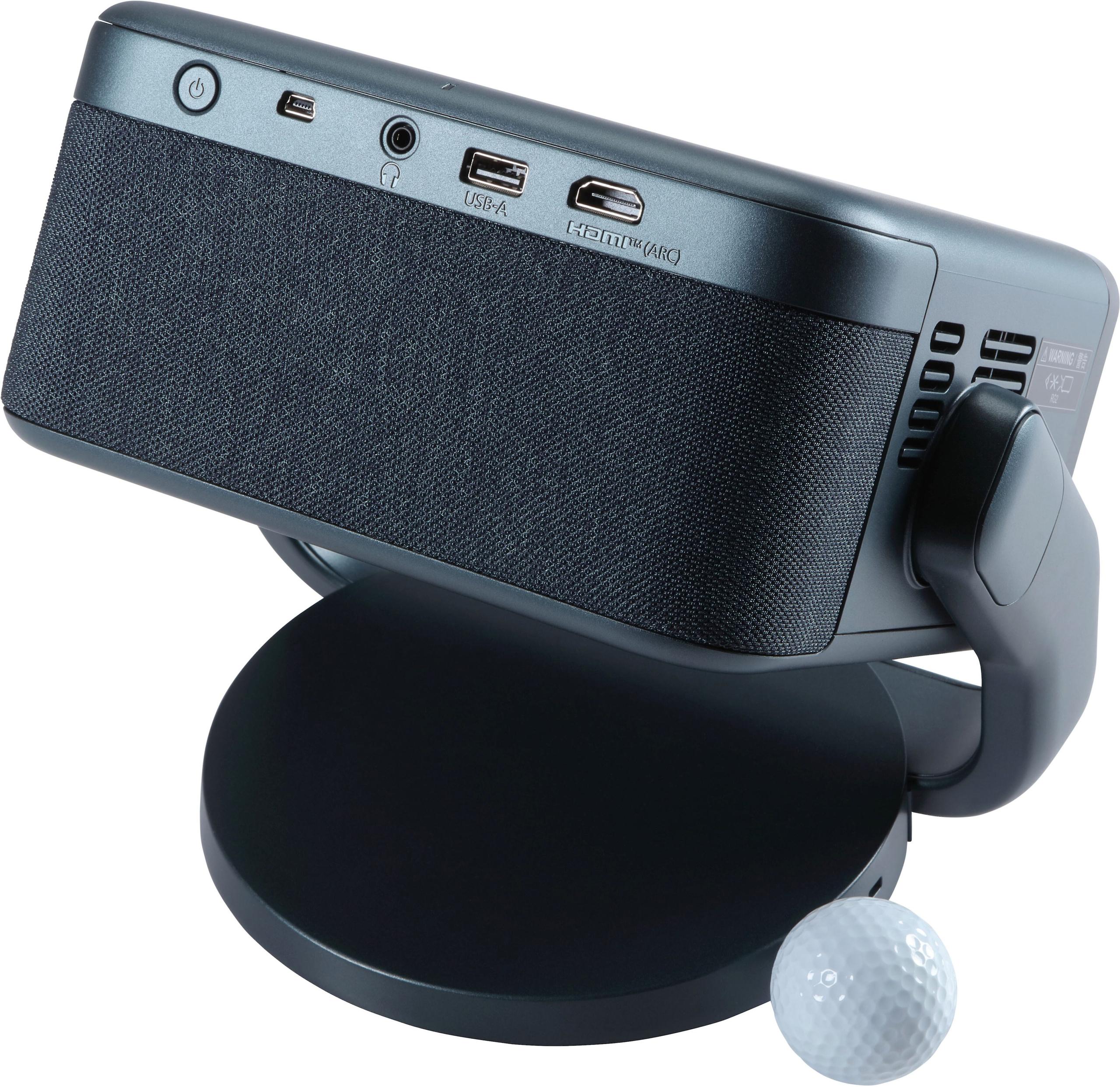
The Epson EpiqVision Mini EF22 features a distinctive cylindrical design with a 360-degree rotatable stand. Available in a sophisticated Stone Blue color, it's meant to be a design piece that blends into modern home decor rather than being hidden away. At 9.3" × 7.5" × 7.5" and 6.6 pounds, it's compact enough to move between rooms but not something you'd regularly take on trips.
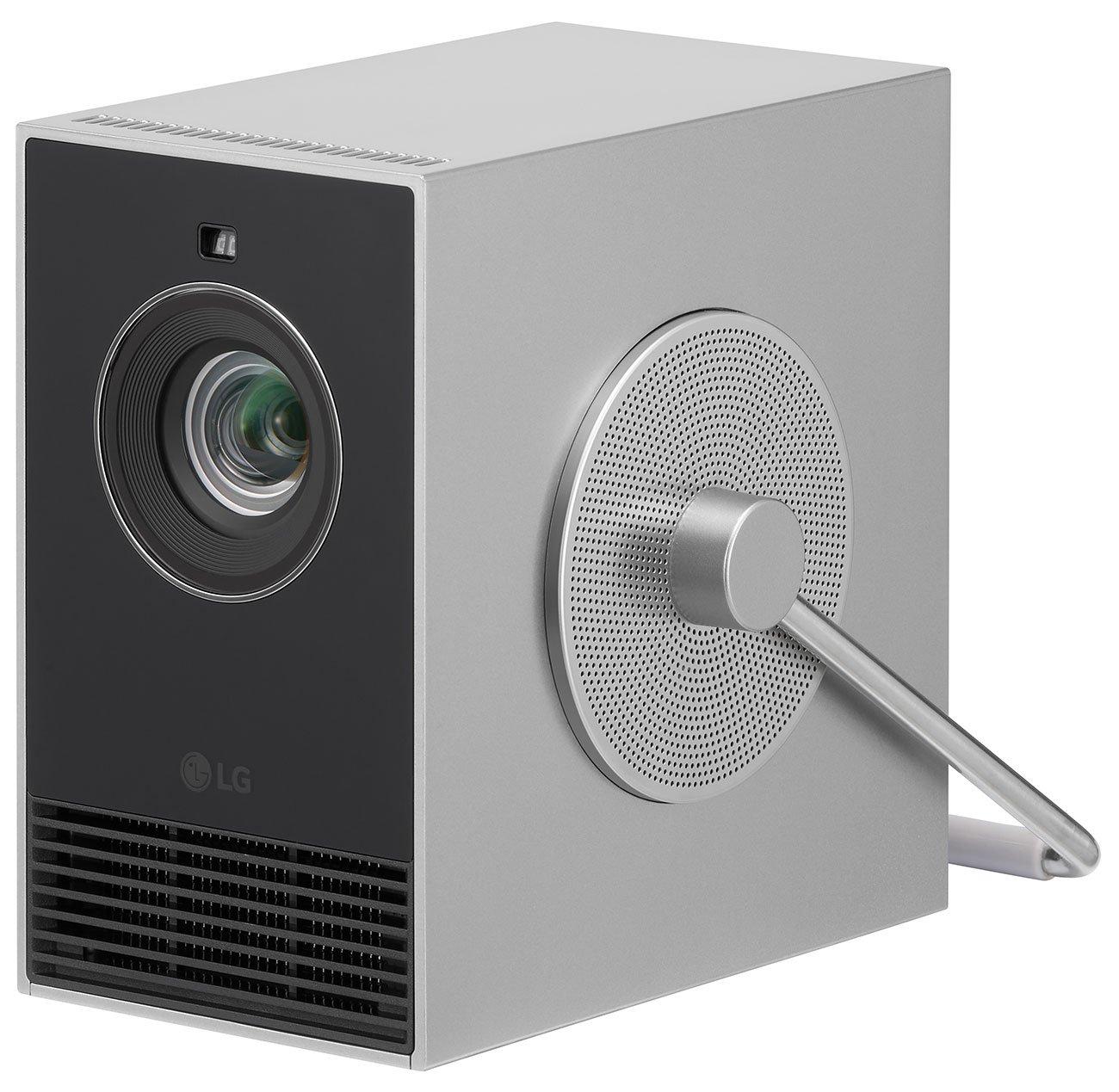
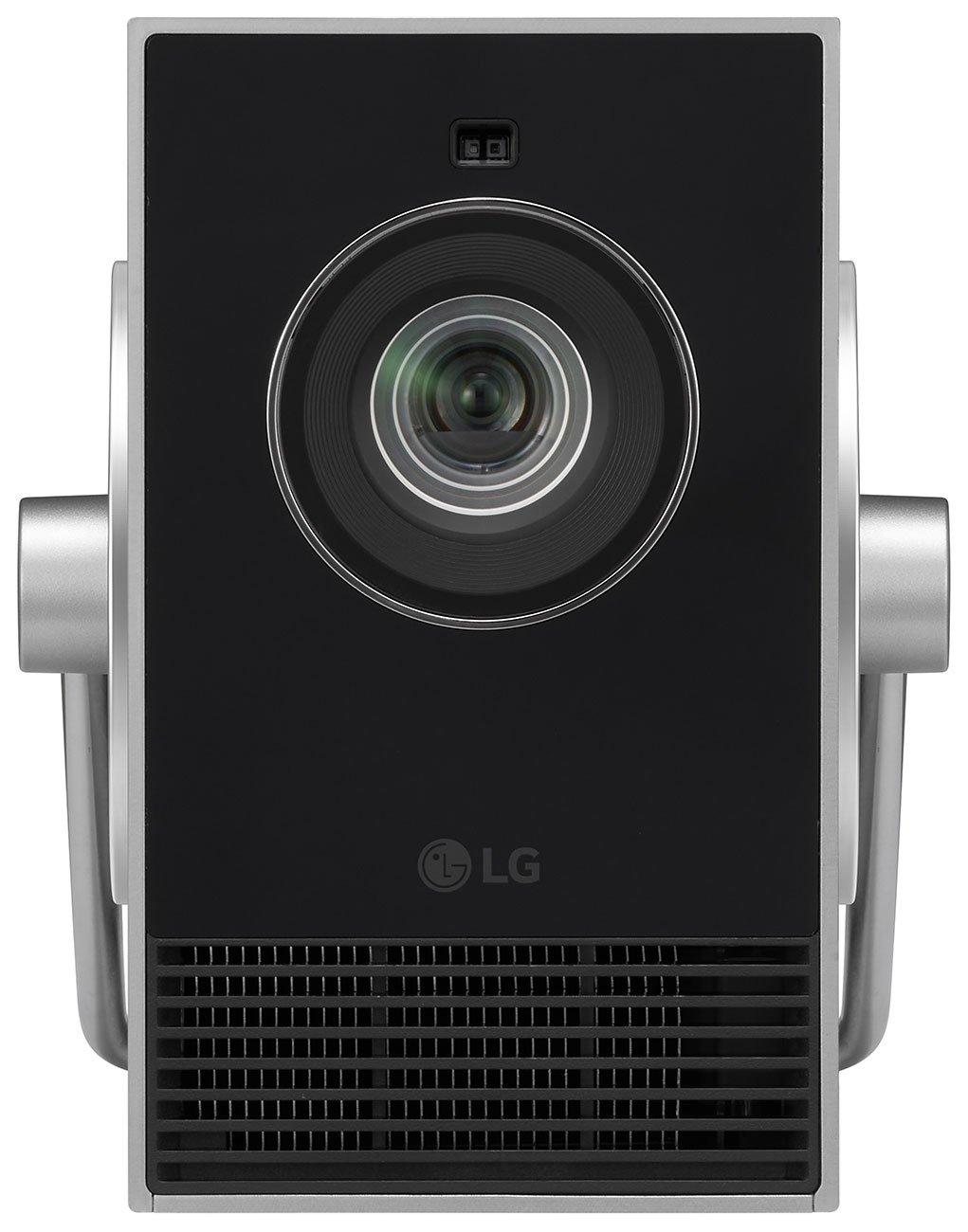
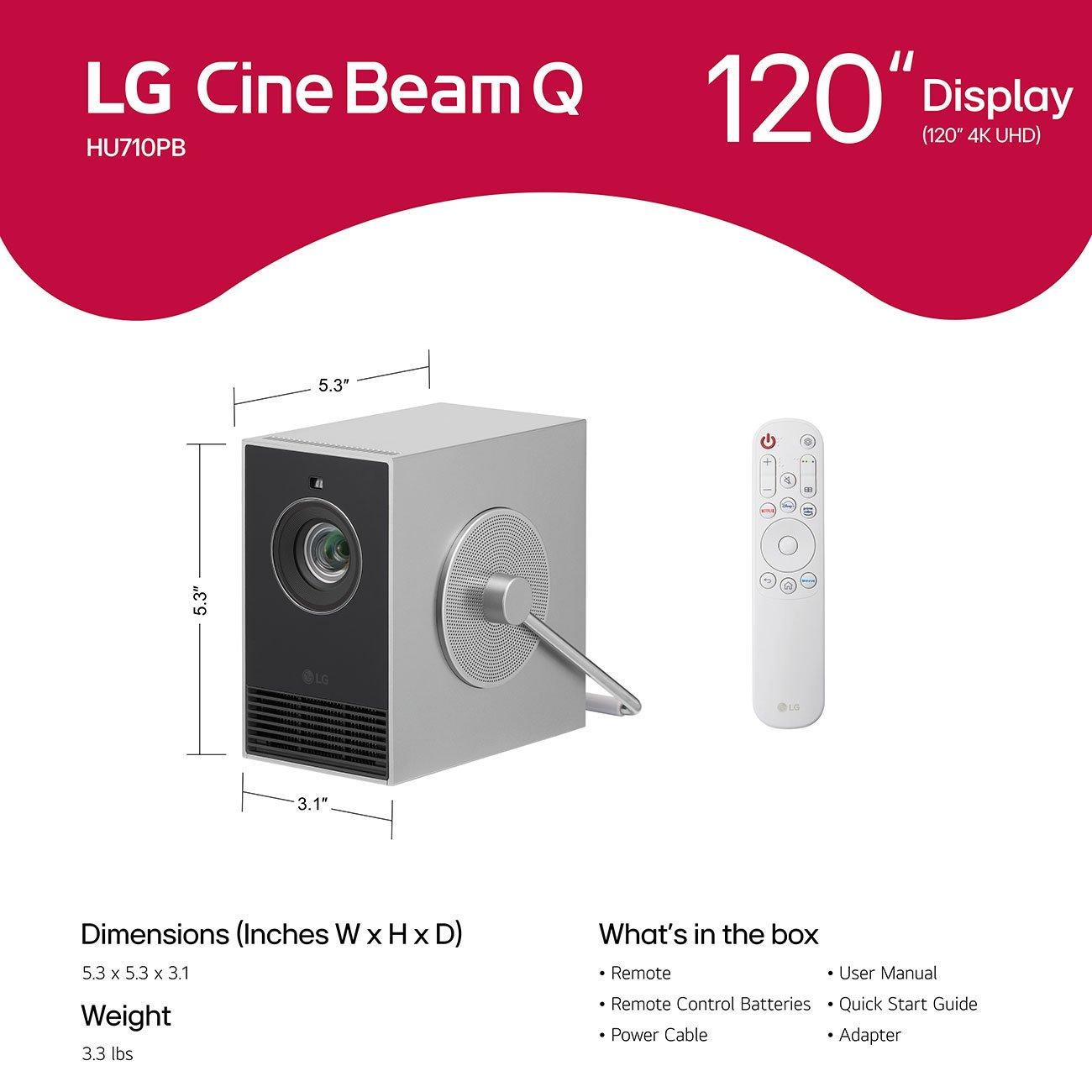
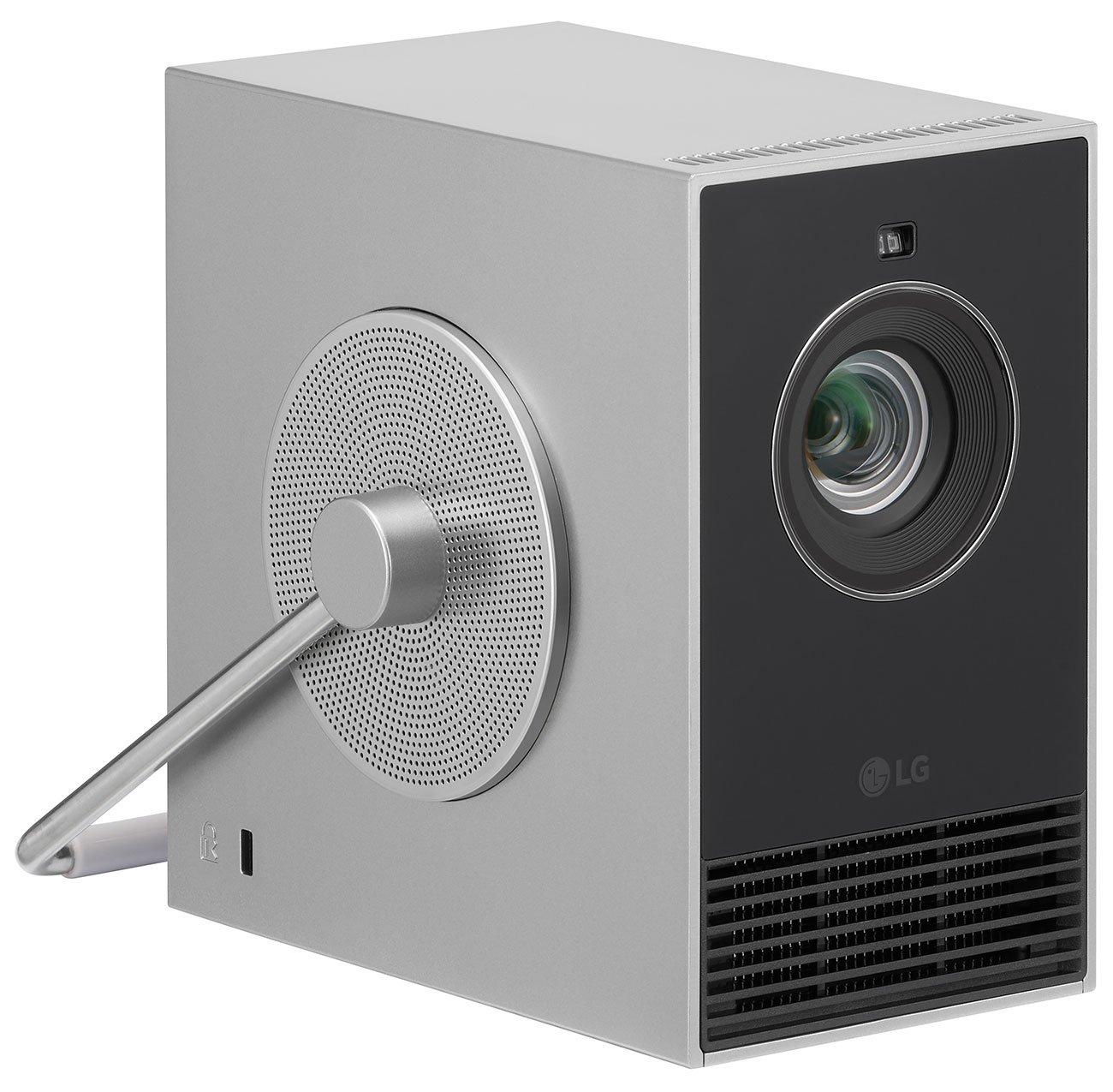
The LG CineBeam Q embraces true portability with its cube-shaped design measuring just 5.31" × 3.15" × 5.31" and weighing a mere 3.3 pounds. The built-in handle doubles as an adjustable stand, allowing for precise aiming. The CineBeam Q's industrial design with premium materials and minimalist aesthetic feels like a luxury tech product—which it is, given its price point.
Both projectors offer features to simplify setup, recognizing that ease of use is essential for these lifestyle-oriented devices.
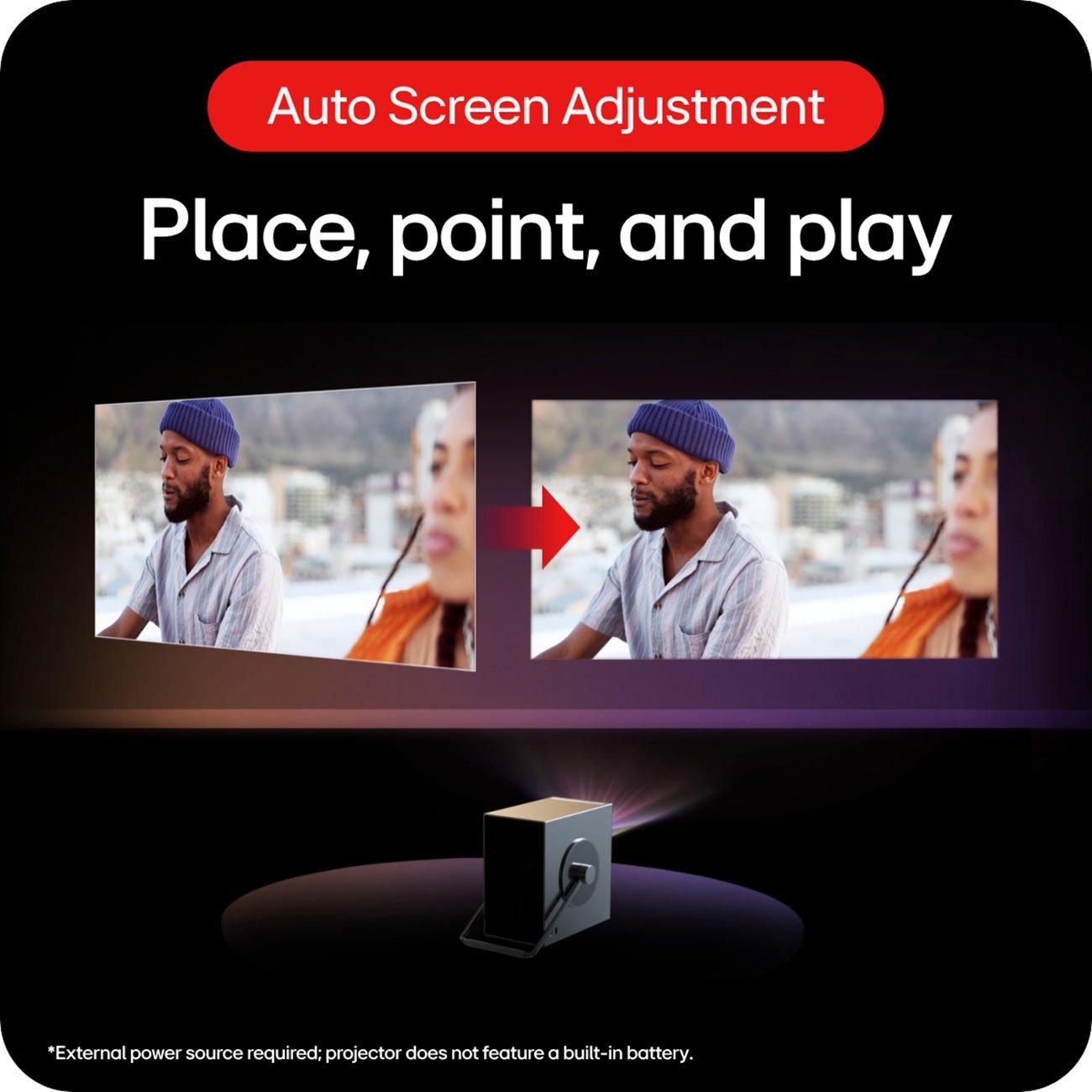
The Epson includes what they call "EpiqSense" technology, which provides automatic focus, keystone correction (compensating for angled projection), and image sizing. In my testing, this worked impressively well, with the projector quickly adjusting itself when moved to a new position.
The LG similarly offers auto-keystone and auto-focus capabilities. While these worked reasonably well, I found them slightly less reliable than Epson's implementation, occasionally requiring manual adjustments through the settings menu.
A significant advantage for both projectors is their ability to project from virtually any angle thanks to their adjustable stands. This flexibility is perfect for temporary setups or challenging spaces where traditional projector placement might be difficult.
Compact projectors face challenges with heat dissipation and fan noise, given their limited internal space.
The larger Epson handles these issues better, operating with less noticeable fan noise in most settings. During quiet movie scenes, you might notice the fan, but it quickly fades into the background.
The ultra-compact LG generates more noticeable fan noise measured at 42.5dB from 3 feet away. This is a direct consequence of its smaller form factor requiring more aggressive cooling. While not deal-breaking, it's noticeable during quiet scenes, especially if the projector is positioned near viewers.
The smart platform is where these projectors diverge significantly in approach.
The Epson EpiqVision Mini EF22 runs Google TV, the same platform found on many smart TVs. This provides access to over 10,000 apps including all major streaming services like Netflix, Disney+, HBO Max, and YouTube. The platform offers comprehensive content recommendations across services and integrates Google Assistant for voice control. The interface is intuitive and familiar if you've used any recent Android TV or Google TV device.
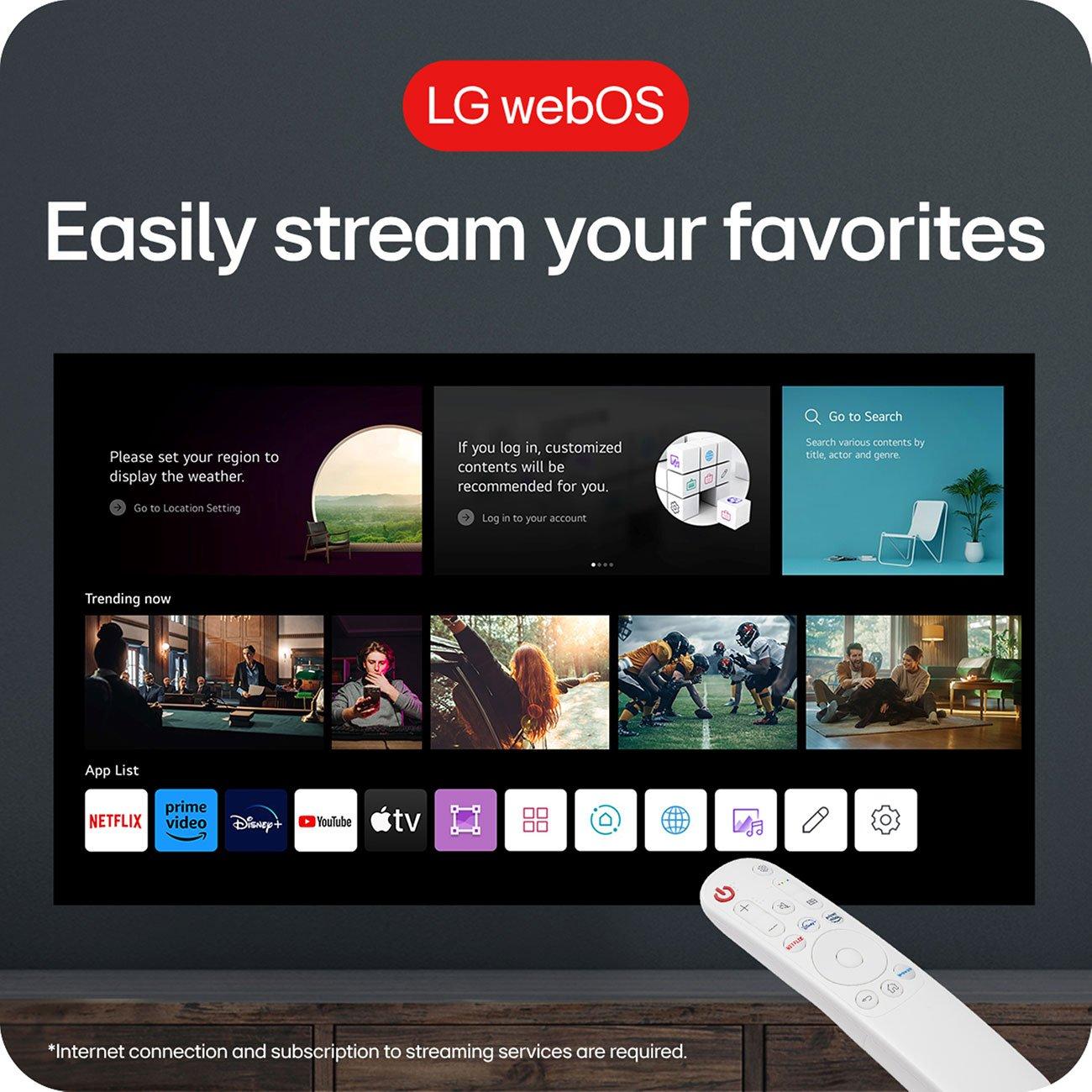
The LG CineBeam Q utilizes LG's webOS platform, which offers a sleek, simplified interface. While it includes most popular streaming services, the app selection isn't as extensive as Google TV. However, webOS is known for its responsiveness and uncluttered design. It also integrates better with other LG smart home devices if you're already in that ecosystem.
Both systems support wireless casting from mobile devices—the Epson via Chromecast and the LG through AirPlay 2 and Screen Share.
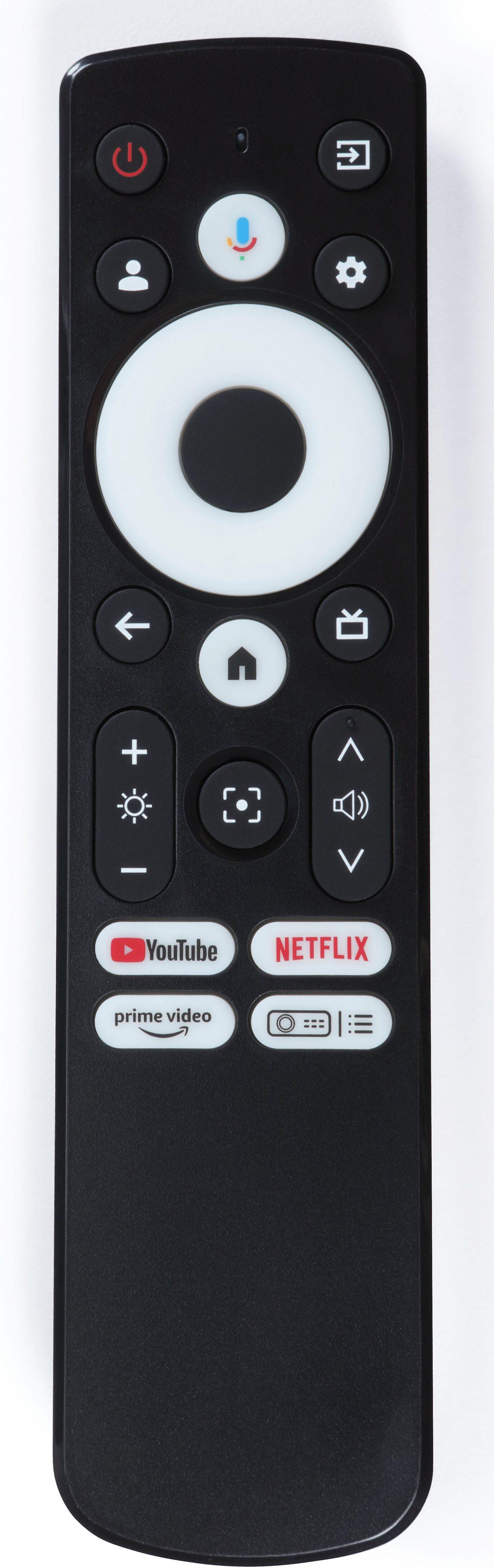
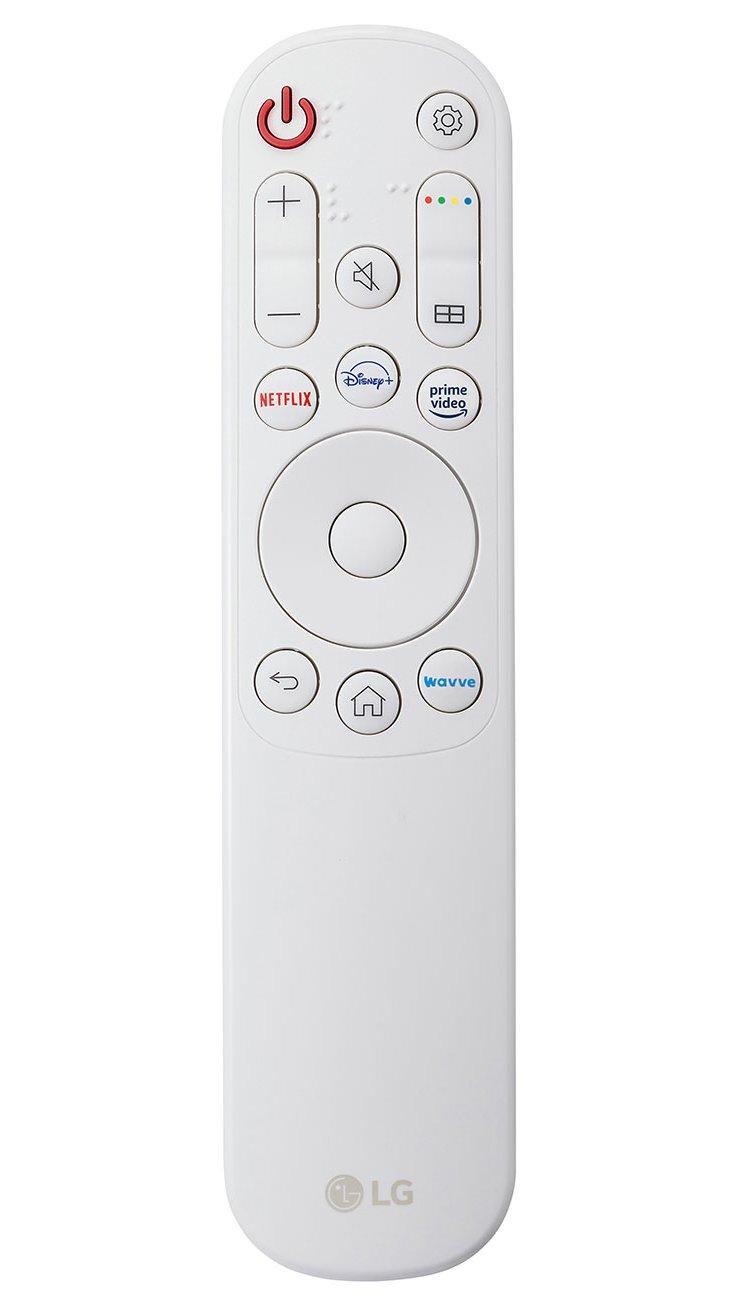
The Epson's remote includes Google Assistant integration, allowing voice searches across content and control of compatible smart home devices. The LG's remote is simpler but well-designed for its interface.
During my testing, I found Google Assistant particularly useful for finding specific content across multiple streaming services—something the LG can't match as directly.
Audio is often an afterthought with projectors, but it significantly impacts the out-of-box experience.
The Epson EF22 includes dual 5W stereo speakers with Dolby Audio support. These produce reasonably full sound that's adequate for casual viewing. Dialog clarity is good, though bass response is limited as expected from small built-in speakers.
The LG CineBeam Q includes just a single 3W mono speaker that sounds noticeably tinny and lacks presence. This is perhaps the most obvious compromise made for its compact size. In my testing, I found it barely adequate for temporary setups and certainly not sufficient for regular movie watching.
For the best experience with either projector, I'd recommend connecting external speakers. Both support Bluetooth audio output, with the LG offering a nice dual Bluetooth feature that can connect to two audio devices simultaneously—perfect for shared listening with headphones.
For dedicated home theater use, these projectors present interesting tradeoffs.
The LG CineBeam Q delivers superior image quality with its 4K resolution, better contrast, and wider color gamut. In a properly darkened room with external audio, it can deliver a genuinely cinematic experience despite its compact size. Its limitation is brightness—even in a perfectly dark room, the 500 lumens limit your practical screen size to around 80-100 inches for optimal brightness.
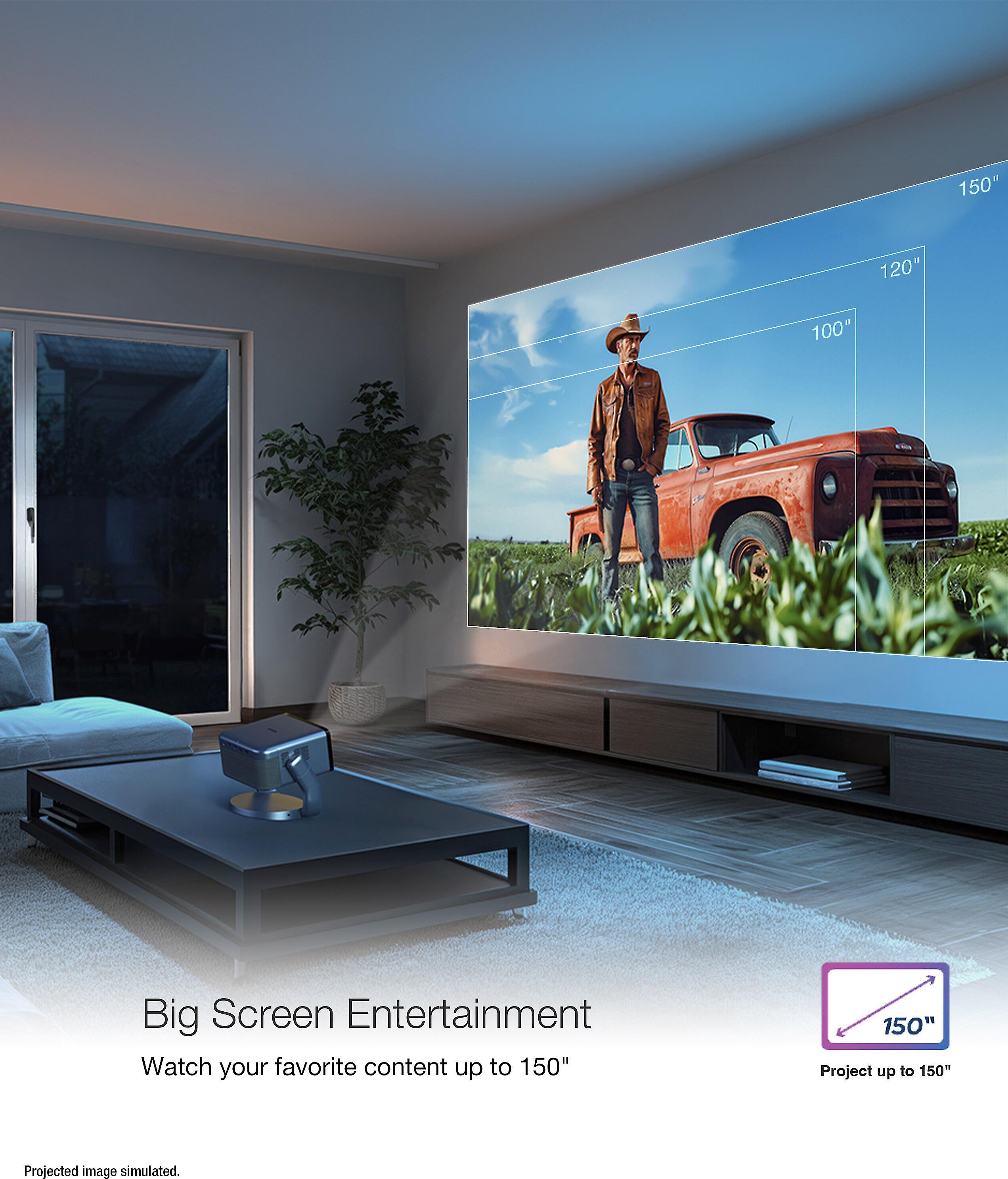
The Epson EF22 offers greater flexibility with its higher brightness allowing for larger screen sizes (up to 150 inches, though best around 100-120 inches for balanced brightness). Its Full HD resolution is less impressive but still perfectly enjoyable for most content. The better built-in audio also means you can set up an impromptu movie night without necessarily needing external speakers.
For permanent home theater installations, neither would be my first recommendation compared to dedicated home theater projectors in the $1,000-1,500 range that offer better brightness and image quality. However, for flexible setups or mixed-use spaces, both offer compelling features that traditional projectors lack.
At $999, the Epson EpiqVision Mini EF22 represents better value for most users. Its higher brightness, better built-in audio, and Google TV platform make it more versatile for everyday use. It's the better choice if:
At $1,299, the LG CineBeam Q is positioned as a premium portable option with superior image quality. It's the better choice if:
Both projectors represent significant advancements over previous generations. Just a few years ago, laser projectors were primarily found in high-end models costing $2,000+, and compact smart projectors typically used less impressive LED light sources with dramatically lower brightness and color performance.
The integration of streaming platforms directly into projectors has also evolved substantially. Earlier implementations often felt sluggish and limited, while both of these projectors offer responsive, full-featured smart platforms comparable to modern TVs.
Looking forward, we can expect continued improvements in brightness-to-size ratio, with manufacturers working to pack more lumens into smaller chassis. The LG's RGB laser system points toward a future of expanded color reproduction becoming standard, while both demonstrate how automated setup features are making projectors more accessible to casual users.
The Epson EpiqVision Mini EF22 and LG CineBeam Q represent two different philosophies in the evolving projector market. The Epson prioritizes versatility, brightness, and value, making it the more practical choice for most users looking to replace or supplement a TV. The LG emphasizes premium image quality, extreme portability, and sophisticated design at a higher price point.
Your choice between them should ultimately be guided by your specific viewing environment, content preferences, and how you plan to use the projector. For mixed-use living spaces and flexibility, the Epson has a clear advantage. For dedicated movie nights and the best possible image in controlled lighting, the LG delivers superior results.
Whichever you choose, both projectors showcase how far this technology has come—bringing cinematic experiences into homes in increasingly accessible, user-friendly packages that can adapt to our living spaces rather than requiring us to adapt to them.
| Epson EpiqVision Mini EF22 Streaming Projector ($999) | LG CineBeam Q 4K UHD Portable Laser Projector ($1,299) |
|---|---|
| Resolution - Determines image detail and clarity, especially at larger screen sizes | |
| 1920 x 1080 (Full HD) | 3840 x 2160 (4K UHD) with XPR technology |
| Brightness - Critical for visibility in rooms with ambient light | |
| 1,000 lumens (usable in rooms with some ambient light) | 500 ANSI lumens (best in fully darkened rooms) |
| Projection Technology - Affects color accuracy, contrast, and potential artifacts | |
| 3LCD with laser light source (balanced color, no rainbow effect) | DLP with RGB laser (wider color gamut, potentially better contrast) |
| Color Performance - Impacts vibrancy and realism of content | |
| Standard color gamut with good accuracy | 154% DCI-P3 color gamut (exceptional color range for HDR content) |
| Smart Platform - Determines available apps and ease of use | |
| Google TV (10,000+ apps, voice control, familiar interface) | webOS (streamlined interface, fewer apps but includes major services) |
| Audio System - Affects need for external speakers | |
| Dual 5W stereo speakers with Dolby Audio (adequate for casual viewing) | Single 3W mono speaker (insufficient for most uses, external audio recommended) |
| Size and Weight - Impacts portability and placement options | |
| 9.3" x 7.5" x 7.5", 6.6 lbs (portable between rooms) | 5.31" x 3.15" x 5.31", 3.3 lbs (ultra-portable, travel-friendly) |
| Positioning Flexibility - Affects setup options and placement | |
| 360-degree rotatable stand with auto keystone and focus | 360-degree rotating handle/stand with auto keystone and focus |
| Noise Level - Impacts viewing experience during quiet scenes | |
| Moderate fan noise (less noticeable during content) | 42.5dB from 3 feet (more noticeable, especially in quiet rooms) |
| Light Source Lifespan - Determines long-term value | |
| 20,000 hours (approximately 10 years at 5 hours daily use) | 20,000 hours (approximately 10 years at 5 hours daily use) |
| HDR Support - Enhances contrast and color in supported content | |
| HDR10, HLG (good implementation limited by brightness) | HDR10, HLG (excellent color but limited impact due to brightness) |
| Best Use Case - Determining which product fits your needs | |
| Versatile TV replacement for various lighting conditions | Premium portable projector for dedicated movie nights in dark rooms |
The LG CineBeam Q 4K UHD Portable Laser Projector offers significantly better resolution with true 4K UHD (3840 x 2160 pixels), which is four times the resolution of the Epson EpiqVision Mini EF22 Streaming Projector that provides Full HD (1920 x 1080 pixels). This resolution difference becomes increasingly noticeable at larger screen sizes or closer viewing distances, with the LG CineBeam Q delivering sharper details and more clarity.
The Epson EpiqVision Mini EF22 Streaming Projector performs much better in rooms with ambient light thanks to its 1,000 lumens brightness, compared to the LG CineBeam Q's 500 ANSI lumens. If you plan to watch content during daytime or in rooms where you can't control all the light, the Epson EF22 will provide a more visible and enjoyable image.
The LG CineBeam Q 4K UHD Portable Laser Projector is significantly more portable, measuring just 5.31" x 3.15" x 5.31" and weighing only 3.3 pounds with a convenient handle/stand. The Epson EpiqVision Mini EF22 is larger at 9.3" x 7.5" x 7.5" and weighs 6.6 pounds, making it portable between rooms but not as convenient for travel compared to the ultra-compact LG CineBeam Q.
Yes, both projectors feature built-in streaming capabilities. The Epson EpiqVision Mini EF22 Streaming Projector uses Google TV with access to over 10,000 apps including Netflix, Disney+, and YouTube. The LG CineBeam Q runs LG's webOS platform which offers major streaming services like Netflix and Prime Video. Google TV on the Epson EF22 generally provides a wider selection of apps compared to webOS.
For a dedicated home theater in a completely darkened room, the LG CineBeam Q 4K UHD Portable Laser Projector offers superior image quality with its 4K resolution, better contrast, and wider color gamut (154% DCI-P3). However, for mixed-use home theaters or partially lit rooms, the Epson EpiqVision Mini EF22 may be more practical with its higher brightness. The LG CineBeam Q delivers a more premium viewing experience but requires optimal viewing conditions.
The Epson EpiqVision Mini EF22 Streaming Projector offers significantly better built-in audio with dual 5W stereo speakers and Dolby Audio support, providing adequate sound for casual viewing. The LG CineBeam Q has just a single 3W mono speaker that most reviewers describe as inadequate, making external speakers almost necessary. If you want to use the projector without external audio, the Epson EF22 is the clear winner.
The Epson EpiqVision Mini EF22 Streaming Projector is priced at $999, while the LG CineBeam Q 4K UHD Portable Laser Projector costs $1,299. This $300 price difference represents a 30% premium for the LG model, which offers better resolution and color reproduction but less brightness and poorer built-in audio than the Epson EF22.
The LG CineBeam Q 4K UHD Portable Laser Projector produces superior colors with its RGB laser light source covering 154% of the DCI-P3 color space used in digital cinema. The Epson EpiqVision Mini EF22 uses 3LCD technology which provides good, balanced color accuracy but cannot match the exceptional color range and vibrancy of the LG CineBeam Q's advanced laser system, especially noticeable when viewing HDR content.
Both the Epson EpiqVision Mini EF22 Streaming Projector and the LG CineBeam Q 4K UHD Portable Laser Projector feature laser light sources rated for approximately 20,000 hours of use. This translates to about 10 years of use at 5 hours per day, representing excellent long-term value for both projectors compared to traditional lamp-based models that require bulb replacements every 3,000-5,000 hours.
The LG CineBeam Q 4K UHD Portable Laser Projector fully supports 4K input from gaming consoles like PS5 and Xbox Series X, displaying games at their intended resolution. The Epson EpiqVision Mini EF22 accepts 4K signals but downscales them to its native 1080p resolution. However, neither projector offers advanced gaming features like variable refresh rate or extremely low input lag that serious gamers might require.
Both projectors offer convenient auto-setup features, but the Epson EpiqVision Mini EF22 Streaming Projector has more reliable automatic keystone correction and focus with its EpiqSense technology. The LG CineBeam Q offers similar auto-adjustment features but in a more portable package. For frequent repositioning in the same room, the Epson's more reliable auto-adjustments may be preferable, while for travel between locations, the LG CineBeam Q's ultra-compact design provides greater convenience.
If you can't control all the ambient light in your viewing environment, the Epson EpiqVision Mini EF22 Streaming Projector ($999) is definitely the better choice with its 1,000 lumens of brightness—double that of the LG CineBeam Q ($1,299). The Epson can produce a visible, enjoyable image even with some lights on or during daytime viewing. The LG CineBeam Q, despite its premium features and better resolution, struggles significantly in rooms with ambient light due to its limited 500 ANSI lumens brightness.
We've done our best to create useful and informative comparisons to help you decide what product to buy. Our research uses advanced automated methods to create this comparison and perfection is not possible - please contact us for corrections or questions. These are the sites we've researched in the creation of this article: techradar.com - bestbuy.com - geekingout.ca - crutchfield.com - whatgear.net - youtube.com - epson.com - crutchfield.com - projectorcentral.com - epson.com - bestbuy.com - whathifi.com - projectorreviews.com - youtube.com - youtube.com - hometheaterhifi.com - projectorreviews.com - bestbuy.com - youtube.com - staples.com - projectorcentral.com - bestbuy.com - mediaserver.goepson.com - epson.com - news.epson.com - projectorcentral.com - lg.com - thefrogpadappliances.com - youtube.com - techradar.com - lg.com - avsforum.com - lg.com - tomsguide.com - jefflynch.com - hometheaterview.com - projectorreviews.com - youtube.com - avsforum.com - projectorcentral.com - pcrichard.com - bhphotovideo.com - youtube.com - lg.com - applerivertvandappliance.com - big-georges.com - queencityonline.com - lg.com - lg.com - lg.com - lgnewsroom.com - heimkino.de

Privacy Policy
Terms and Conditions - Affiliate Policy
Home Security
© Copyright 2008-2026.
11816 Inwood Rd #1211, Dallas, TX 75244