

When I first started covering portable projectors a few years ago, the market was filled with dim, blurry devices that barely qualified as watchable. Fast forward to 2024, and we're looking at two projectors that represent just how far this category has evolved: the innovative XGIMI Elfin Flip and the premium LG CineBeam Q. Both arrived in 2024, but they take radically different approaches to solving the same problem – how do you get a great big-screen experience in a device you can actually carry around?
Before diving into these specific models, let's talk about what actually matters in a portable projector. Having tested dozens of these devices, I can tell you that the most impressive specs on paper don't always translate to the best real-world experience.
Image quality sits at the top of the priority list, but it's more nuanced than just resolution numbers. Yes, 4K sounds impressive, but how that resolution combines with brightness, color accuracy, and contrast ratio determines whether you'll actually enjoy watching something. I've seen plenty of "4K" projectors that look worse than good 1080p models because the manufacturer cut corners elsewhere.
Brightness might be even more critical than resolution for most users. Measured in lumens (a unit that describes how much light the projector puts out), brightness determines whether you can use the projector with any ambient light or if you need a completely dark room. Most portable projectors fall into the 300-600 lumen range, which means you'll need to control your lighting environment carefully.
True portability goes beyond just weight and size. The best portable projectors include thoughtful design elements like built-in stands, lens protection, and quick setup features that make them genuinely convenient to move around and use in different spaces.
The XGIMI Elfin Flip represents what I'd call the "smart value" approach. Released in September 2024, it packs impressive features into an affordable package, with particular emphasis on ease of use and versatility. At roughly one-quarter the cost of premium alternatives, it democratizes access to modern projection technology.
The LG CineBeam Q, arriving earlier in 2024, takes the "no-compromises" premium route. It's built around cutting-edge laser technology and true 4K resolution, targeting users who prioritize image quality above all else and are willing to pay significantly more for it.
This is where the fundamental differences between these projectors become clear, and where your priorities will determine which makes sense for you.
The XGIMI Elfin Flip delivers native 1080p resolution (1920×1080 pixels), which translates to about 2.1 million individual pixels creating your image. For most content – Netflix shows, YouTube videos, even many movies – this resolution provides crisp, detailed images that look excellent on screen sizes up to about 100 inches.
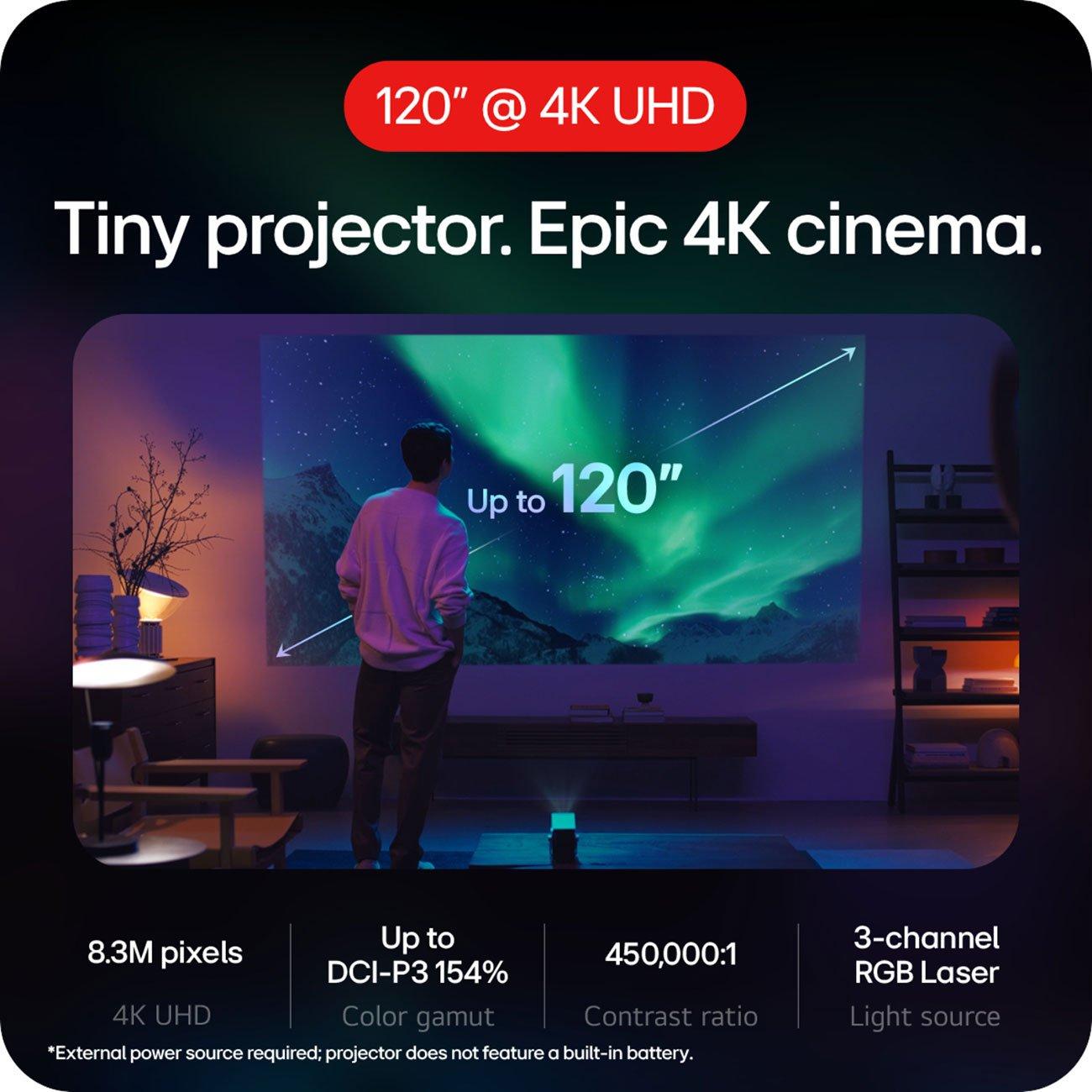
The LG CineBeam Q steps up to true 4K UHD resolution (3840×2160 pixels), offering 8.3 million pixels – literally four times the detail of 1080p. This resolution advantage becomes most apparent with 4K source material and larger screen sizes. When I tested 4K content side-by-side, the difference in fine detail was immediately noticeable, particularly in scenes with text, architectural details, or complex textures.
However, here's the reality check: much of the content you'll watch – streaming TV shows, older movies, YouTube videos – isn't native 4K anyway. The Elfin Flip's 1080p resolution handles this content beautifully and matches what most people are actually watching.
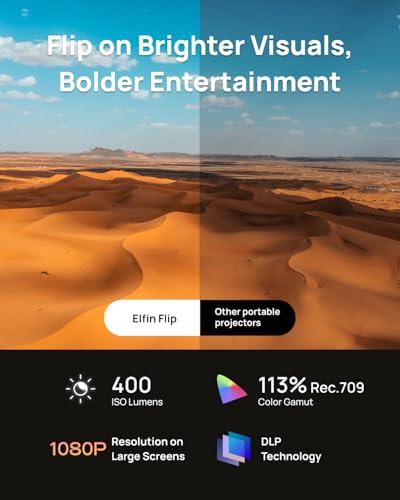
This represents perhaps the most significant technical divide between these projectors. The XGIMI Elfin Flip uses traditional LED technology, where light-emitting diodes illuminate the DLP chip (a tiny mirror array that creates the image). LEDs offer excellent longevity – rated for 25,000 hours of use – and produce decent color reproduction at an affordable cost.
The LG CineBeam Q employs RGB laser technology, which uses separate red, green, and blue lasers to create light. This approach delivers several advantages: wider color gamut (the range of colors the projector can display), better contrast ratios, and more consistent brightness over time. The laser system in the CineBeam Q covers 154% of the DCI-P3 color space – a technical way of saying it can display colors that are more vivid and accurate than standard LED projectors.
In practical terms, this means the CineBeam Q produces more lifelike skin tones, richer blues and greens, and overall more dynamic-looking images. The difference is subtle with animated content but becomes quite noticeable with live-action movies and nature documentaries.
Both projectors face the same fundamental challenge that affects all portable models: limited brightness compared to dedicated home theater projectors. The XGIMI Elfin Flip outputs 400 ISO lumens, while the LG CineBeam Q manages 500 ANSI lumens.
Here's where measurement standards matter. ISO lumens and ANSI lumens aren't directly comparable, but both projectors require similar viewing environments – ideally a darkened room for the best experience. In my testing, both performed best with curtains drawn and lights off, though the CineBeam Q maintained better color saturation in slightly brighter conditions thanks to its laser technology.
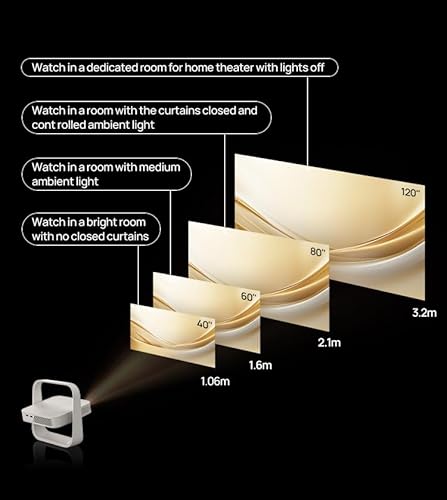
For context, a typical living room with normal lighting ranges from 50-100 lumens per square meter of ambient light. Both projectors will struggle against afternoon sunlight streaming through windows, but perform admirably for evening entertainment or in rooms where you can control the lighting.
This is where portable projectors have truly revolutionized the category. Gone are the days of needing separate streaming devices or laptops – both projectors function as complete entertainment systems.
The XGIMI Elfin Flip runs on Android TV-based XGIMI OS, providing access to the full Google Play Store ecosystem. This means you can install virtually any streaming app, from major services like Netflix and Disney+ to niche content platforms. The interface feels familiar to anyone who's used an Android device, and the inclusion of Chromecast built-in makes wireless casting seamless.
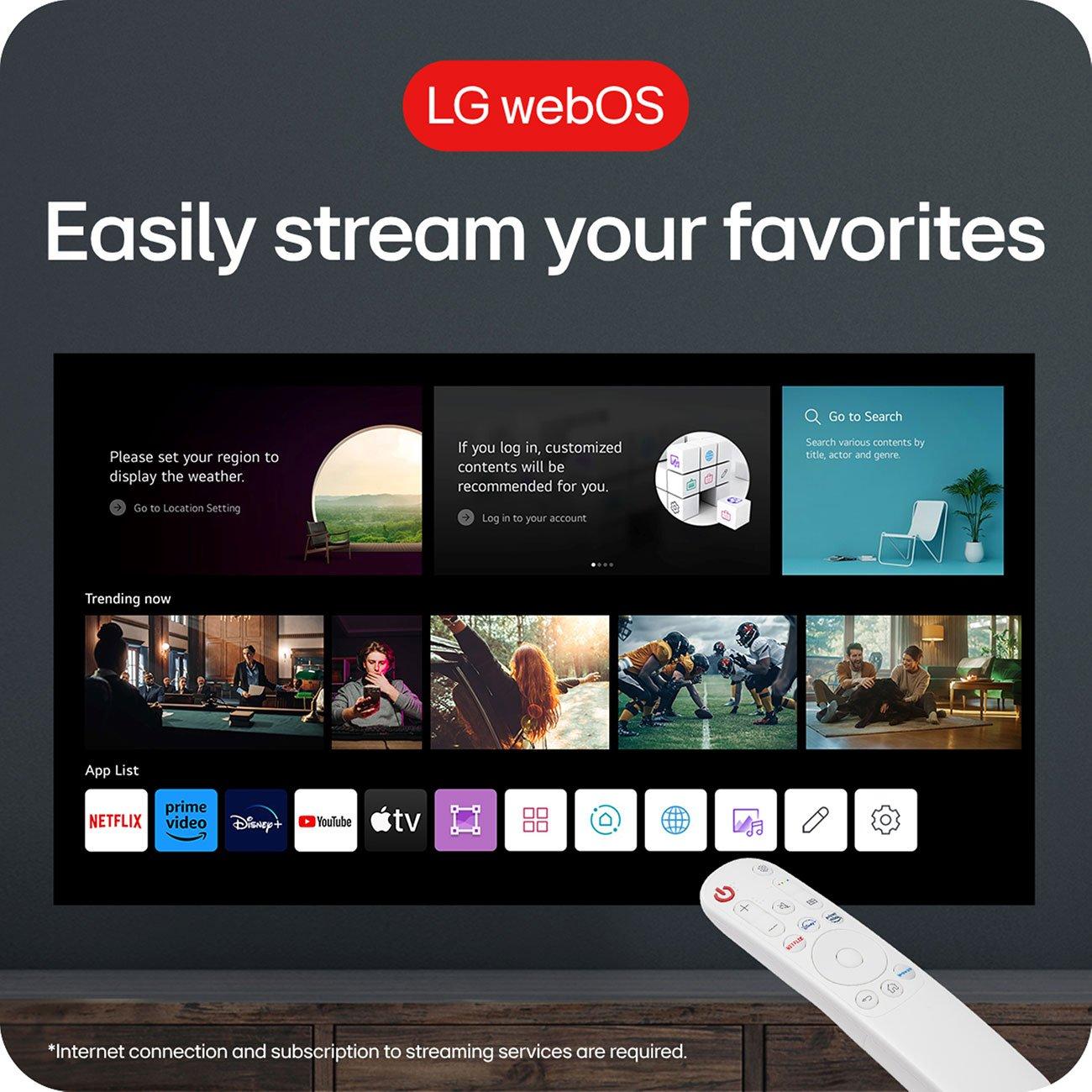
The LG CineBeam Q uses LG's webOS platform, the same system found in their smart TVs. While more limited in app selection compared to Android TV, webOS offers a clean, intuitive interface with the major streaming services built-in. The system includes AirPlay 2 support for Apple users and Android Screen Share for wireless connectivity.
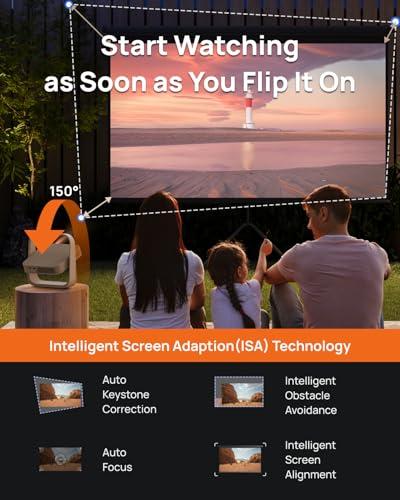
Both projectors include automatic setup features that eliminate the tedious manual adjustments that plagued earlier portable models. The XGIMI Elfin Flip features what they call Intelligent Screen Adaptation (ISA), which automatically focuses the image, corrects keystone distortion (the trapezoidal shape that occurs when projecting at an angle), and even detects obstacles in the projection path to adjust the image around them.
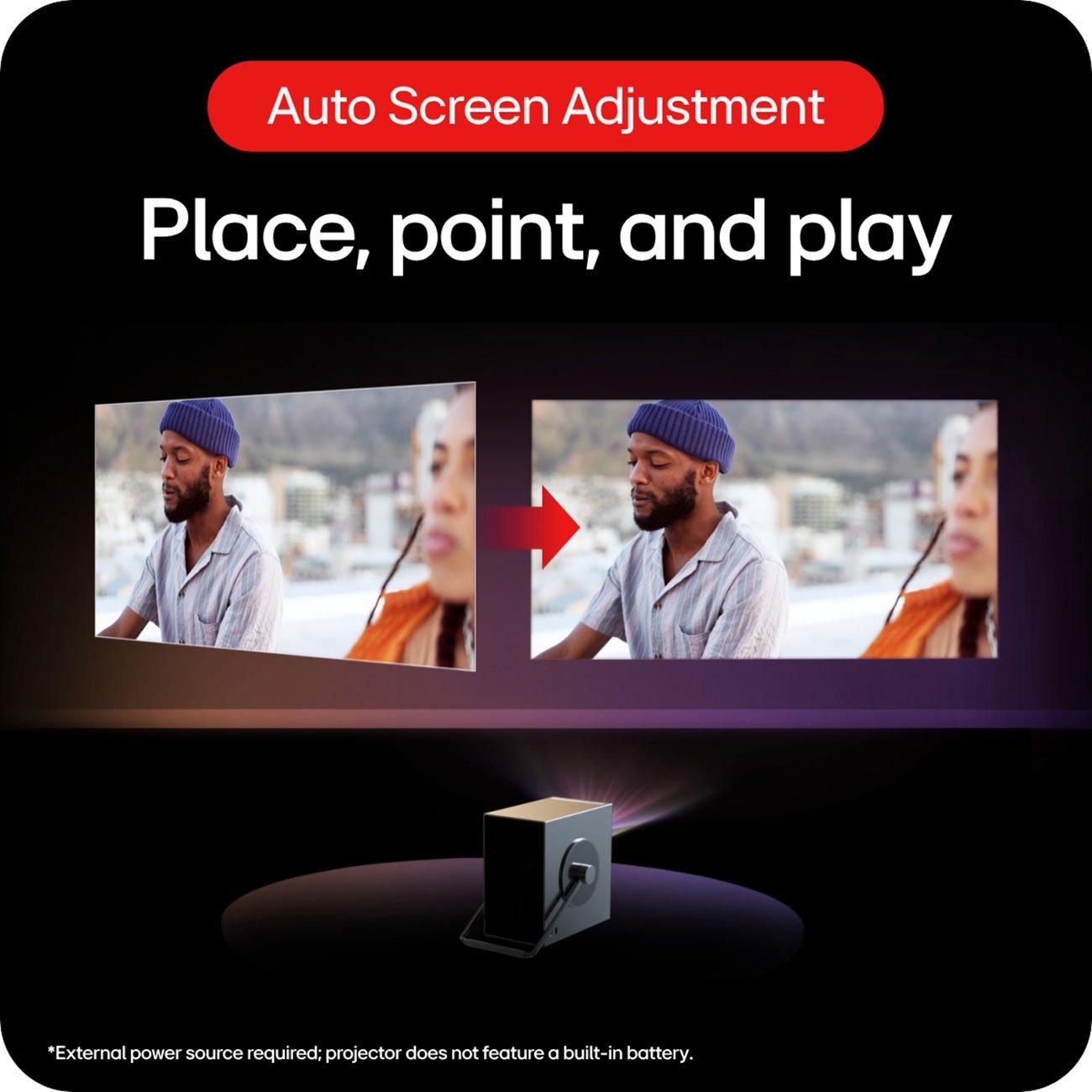
The LG CineBeam Q includes similar auto-focus and keystone correction, though with more manual fine-tuning options for users who want precise control over the image geometry.
Here's where these projectors showcase genuinely innovative thinking about how portable projection should work.
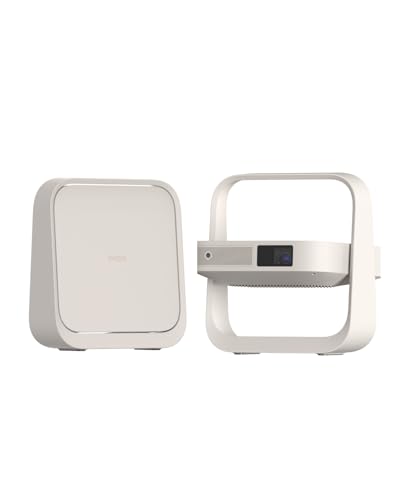
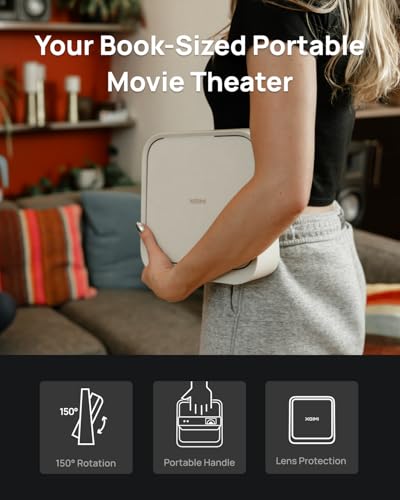
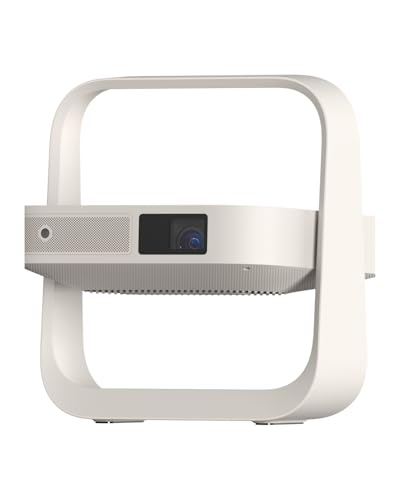
The XGIMI Elfin Flip introduces a unique folding mechanism with an integrated 150-degree adjustable stand. This isn't just a gimmick – it solves real practical problems. The stand allows projection at almost any angle, including straight up for ceiling projection during movie nights in bed. When folded, the stand protects the lens during transport, eliminating the need for separate lens caps or cases.
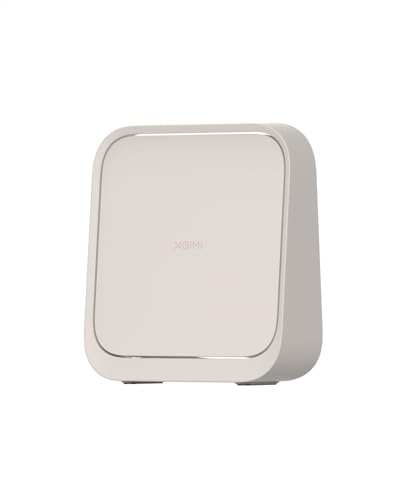
At 2.6 pounds and roughly the size of a thick hardcover book, the Elfin Flip genuinely lives up to its portable promise. I've carried it in a backpack without thinking twice about the weight or bulk.
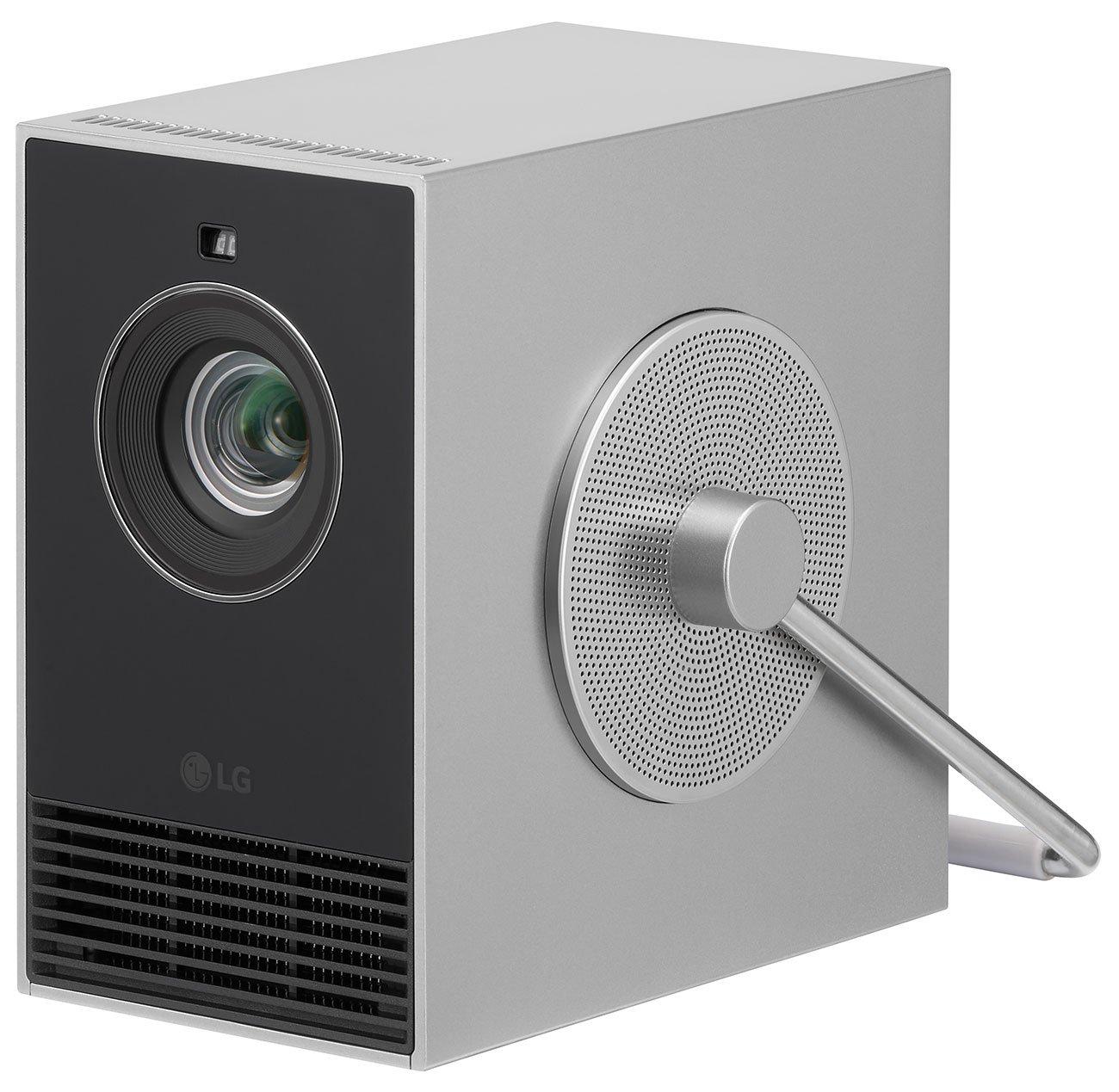
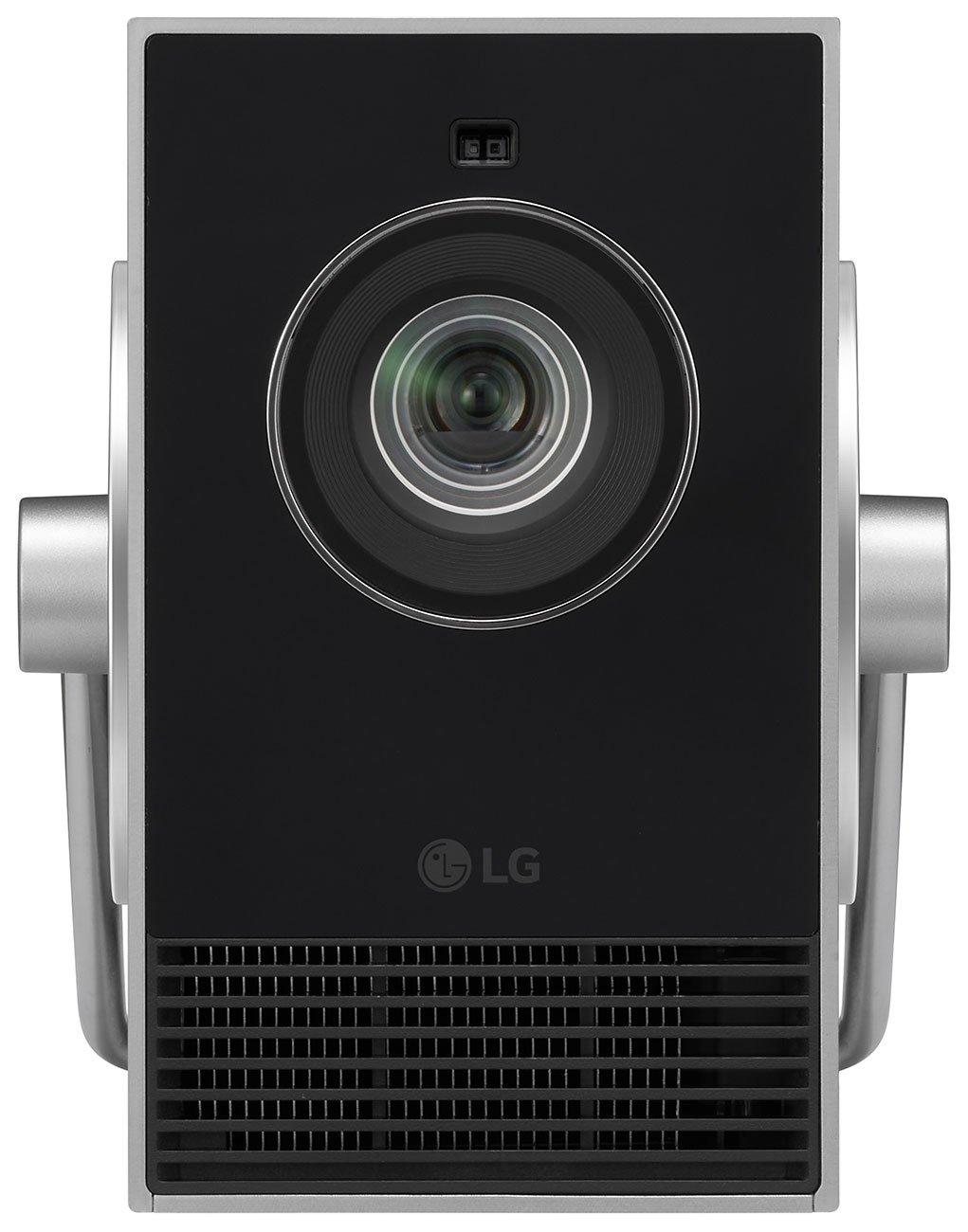
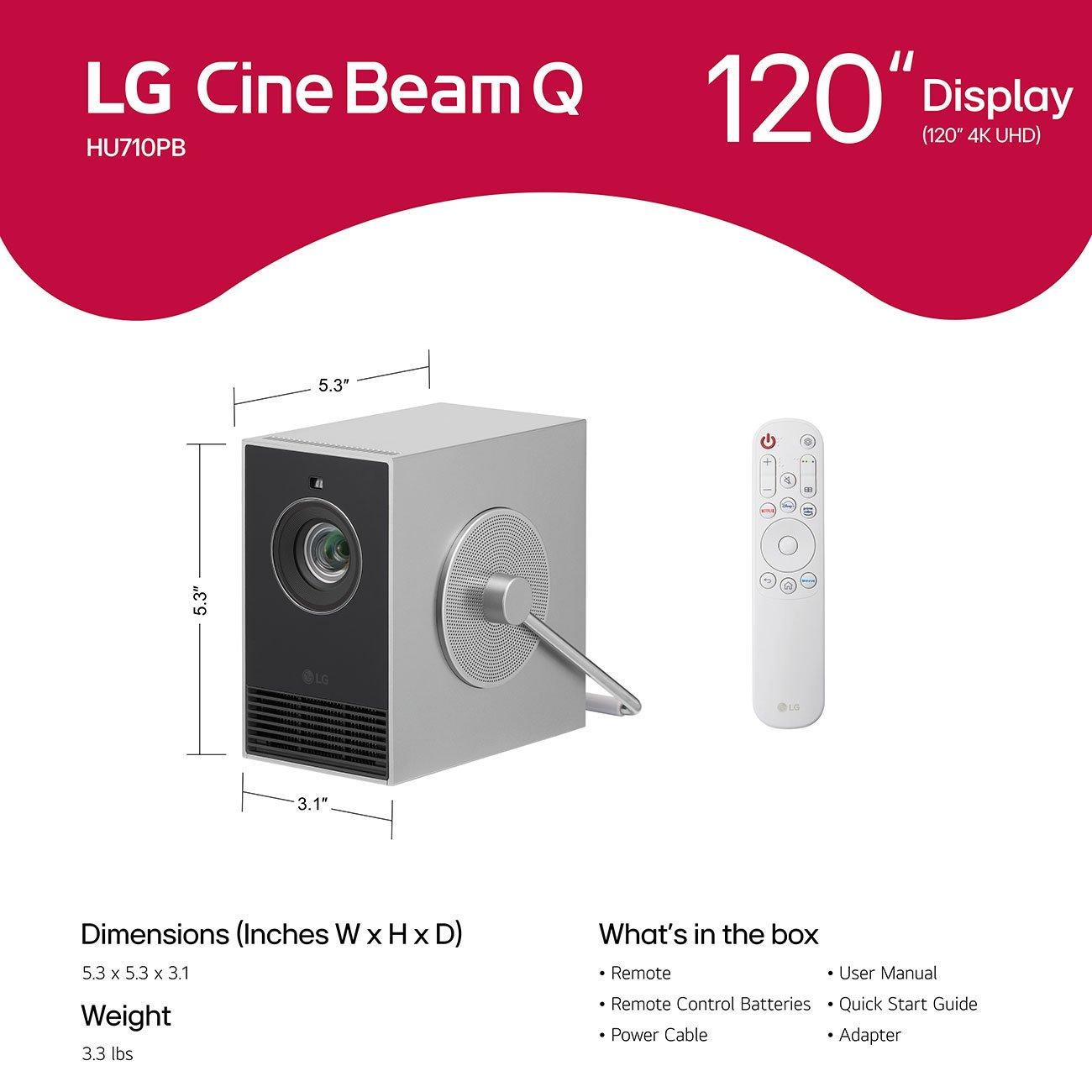
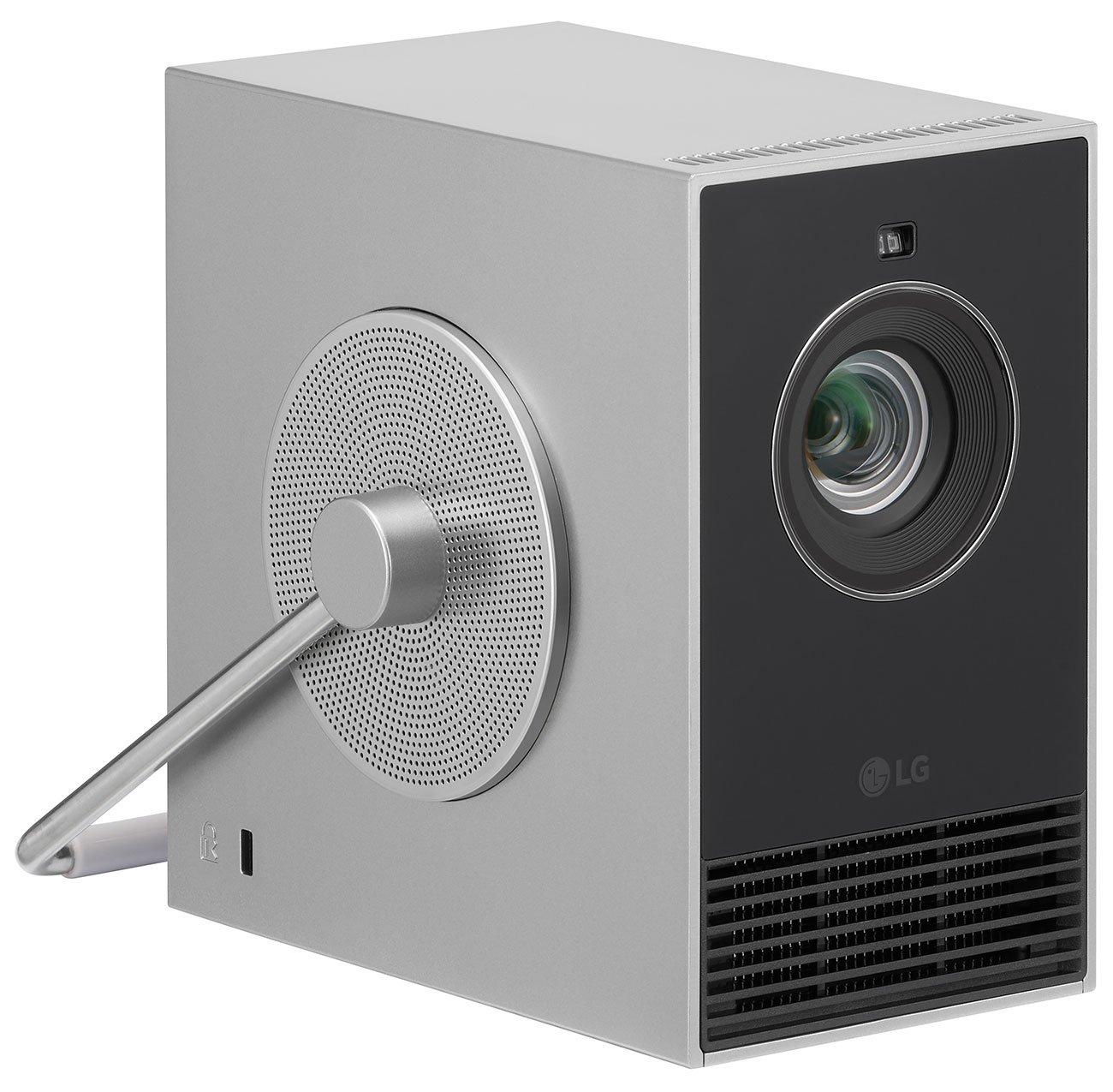
The LG CineBeam Q takes a different approach with its cube design and 360-degree rotating handle. While slightly heavier at 3.3 pounds, it's more compact overall, making it easier to pack in tight spaces. The handle doubles as a stand, though with less flexibility than the Elfin Flip's mechanism.
Both designs reflect thoughtful consideration of real-world use, but they appeal to different priorities – the XGIMI favors setup versatility, while the LG optimizes for minimal space consumption.
Sound quality separates good portable projectors from great ones, since many users rely on built-in speakers rather than setting up external audio systems.
The XGIMI Elfin Flip includes dual 3-watt speakers with Dolby Audio support, creating a proper stereo soundstage. While not approaching dedicated speaker quality, the built-in audio handles dialogue clearly and provides adequate spatial imaging for casual viewing.
The LG CineBeam Q opts for a single 3-watt mono speaker, which feels like a cost-cutting decision on an otherwise premium product. However, it includes Bluetooth audio output for connecting wireless speakers or headphones, partly addressing this limitation.
For serious home theater use, both benefit from external audio solutions, but the Elfin Flip's built-in stereo speakers provide better out-of-the-box experience.
For Netflix nights, YouTube binges, or streaming TV series, both projectors deliver satisfying experiences in properly darkened rooms. The XGIMI Elfin Flip handles this content beautifully, and most viewers would be hard-pressed to wish for better quality at typical viewing distances.
The LG CineBeam Q's 4K capability shows its value primarily with native 4K content – Ultra HD Blu-rays, 4K streaming from services like Netflix or Disney+, or high-resolution gaming. If most of your viewing is standard HD content, the resolution advantage becomes less compelling.
Both projectors work well for business presentations, though they approach this differently. The XGIMI Elfin Flip offers more connectivity options and easier wireless presenting from various devices. The LG CineBeam Q's higher resolution makes fine text and detailed graphics crisper, but at a significantly higher cost for what might be occasional business use.
Neither projector includes a built-in battery, requiring external power sources for truly portable use. However, both work well with portable power banks or generators for outdoor movie nights. The XGIMI Elfin Flip's integrated stand provides more setup flexibility in outdoor environments where stable surfaces might not be ideal.
For dedicated home theater use, both projectors serve better as secondary or bedroom systems rather than primary living room solutions. The brightness limitations and compact form factor make them unsuitable for large, well-lit rooms where traditional home theater projectors excel.
However, both work excellently in controlled environments – dark bedrooms, dedicated media rooms, or spaces where ambient light can be managed. The LG CineBeam Q approaches the image quality of entry-level dedicated home theater projectors, while the XGIMI Elfin Flip provides surprisingly capable performance for casual home theater use.
At the time of writing, these projectors occupy very different price tiers, with the LG CineBeam Q commanding roughly four times the cost of the XGIMI Elfin Flip. This price differential reflects fundamentally different value propositions.
The XGIMI Elfin Flip delivers exceptional value by bringing modern smart projector features – auto-setup, streaming apps, decent image quality – to an accessible price point. For many users, it provides 90% of what they want from portable projection at a fraction of premium pricing.
The LG CineBeam Q asks whether that extra 10% of capability – true 4K resolution, laser technology, premium color reproduction – justifies a significant price premium. For users who prioritize image quality and regularly consume 4K content, the answer might be yes.
Choose the XGIMI Elfin Flip if you want a genuinely capable portable projector without premium pricing. Its innovative folding design, comprehensive smart features, and solid 1080p performance make it ideal for users who value convenience and versatility. It's perfect for casual entertainment, occasional business use, and anyone wanting to experience large-screen projection without major investment.
Choose the LG CineBeam Q if image quality trumps all other considerations and budget allows for premium features. The 4K resolution and laser technology deliver noticeably superior visual performance, justifying the higher cost for users who regularly watch 4K content or use the projector as a primary display device.
For most users entering the portable projector market, the XGIMI Elfin Flip represents the sweet spot of features, performance, and value. The LG CineBeam Q serves the smaller segment of users who demand the best possible portable image quality regardless of cost.
Both represent impressive achievements in portable projection technology, just aimed at different audiences and use cases. The key is honestly assessing your priorities, viewing habits, and budget to determine which philosophy aligns better with your needs.
| XGIMI Elfin Flip Portable Projector | LG CineBeam Q 4K UHD Portable Laser Projector |
|---|---|
| Resolution - Determines image sharpness and detail quality | |
| 1080p Full HD (1920×1080) - Sharp for most content up to 100" | 4K UHD (3840×2160) - Four times more detail, ideal for large screens |
| Brightness - Critical for ambient light performance | |
| 400 ISO lumens (requires dark room for best results) | 500 ANSI lumens (slightly better but still needs controlled lighting) |
| Light Source Technology - Affects color quality and lifespan | |
| LED with 25,000 hour lifespan (good colors, affordable) | RGB laser with 20,000 hours (superior colors, premium tech) |
| Color Performance - Impact on viewing experience | |
| 113% Rec.709 coverage (good for standard content) | 154% DCI-P3 coverage (cinema-grade color reproduction) |
| Smart Platform - Streaming and app ecosystem | |
| Android TV with Google Play Store (extensive app selection) | webOS with major streaming apps (limited but refined) |
| Audio System - Built-in sound quality | |
| Dual 3W stereo speakers with Dolby Audio support | Single 3W mono speaker (requires external audio for quality) |
| Design Innovation - Portability and setup convenience | |
| 150° folding stand protects lens and enables versatile placement | Ultra-compact cube with 360° rotating handle for minimal footprint |
| Dimensions & Weight - True portability factor | |
| 9.25" × 8.58" × 2.52", 2.6 lbs (book-sized form factor) | 5.31" × 3.15" × 5.31", 3.3 lbs (extremely compact cube) |
| Auto-Setup Features - Convenience for non-technical users | |
| Intelligent Screen Adaptation with obstacle avoidance | Auto focus and keystone with manual fine-tuning options |
| Connectivity Options - Device compatibility | |
| HDMI, USB, Wi-Fi 5, Bluetooth 5.1, Chromecast built-in | HDMI, USB-C, AirPlay 2, Android Screen Share |
| Maximum Screen Size - Large display capability | |
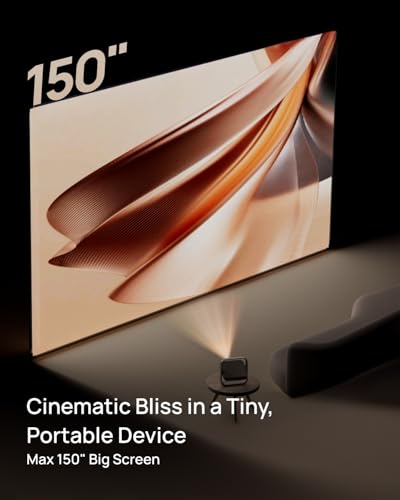
| Up to 150 inches diagonal projection | Up to 120 inches diagonal projection |
| Target User - Best fit scenarios | |
| Budget-conscious users wanting modern features and versatility | Premium buyers prioritizing 4K quality and laser technology |
The LG CineBeam Q 4K UHD Portable Laser Projector delivers superior image quality with true 4K resolution (3840×2160) and RGB laser technology that produces more vibrant colors and better contrast. The XGIMI Elfin Flip Portable Projector offers excellent 1080p quality that's perfectly adequate for most home theater setups, especially in smaller rooms. For dedicated home theater enthusiasts who prioritize the sharpest possible image, the LG CineBeam Q is worth the premium.
The primary difference is resolution and technology. The XGIMI Elfin Flip uses LED technology with 1080p resolution at a budget-friendly price point, while the LG CineBeam Q employs premium RGB laser technology with 4K resolution. The XGIMI Elfin Flip focuses on value and convenience features, whereas the LG CineBeam Q prioritizes premium image quality.
Both the XGIMI Elfin Flip (400 ISO lumens) and LG CineBeam Q (500 ANSI lumens) require darkened rooms for optimal viewing. Neither is bright enough for comfortable daytime viewing with ambient light. The LG CineBeam Q has a slight brightness advantage, but both work best for evening entertainment or in rooms where you can control lighting.
Yes, both projectors work well for outdoor movie nights, though you'll need complete darkness and an external power source since neither has a built-in battery. The XGIMI Elfin Flip offers better setup flexibility with its 150° adjustable stand, making it easier to position on uneven outdoor surfaces. The LG CineBeam Q provides sharper 4K images but is more expensive for occasional outdoor use.
The XGIMI Elfin Flip offers more comprehensive smart features with Android TV and full Google Play Store access, giving you unlimited app installation options. The LG CineBeam Q uses webOS with major streaming apps built-in but has more limited app selection. For users who want maximum streaming flexibility, the XGIMI Elfin Flip provides better smart TV functionality.
The XGIMI Elfin Flip has superior built-in audio with dual 3W stereo speakers and Dolby Audio support, providing better sound quality for casual viewing. The LG CineBeam Q only includes a single 3W mono speaker, making external audio almost necessary for quality sound. If you plan to rely on built-in speakers, the XGIMI Elfin Flip offers a much better audio experience.
Both are highly portable but in different ways. The XGIMI Elfin Flip weighs less (2.6 lbs) and has a book-like form factor with an integrated handle. The LG CineBeam Q is more compact overall (cube-shaped) but weighs slightly more (3.3 lbs). The XGIMI Elfin Flip offers better setup convenience with its folding stand that protects the lens during transport.
The XGIMI Elfin Flip can project up to 150 inches diagonally, while the LG CineBeam Q maxes out at 120 inches. However, both work best at screen sizes between 80-120 inches for optimal image quality and brightness. The XGIMI Elfin Flip technically offers larger projection capability, though image quality diminishes at maximum sizes for both models.
The XGIMI Elfin Flip provides exceptional value with modern smart features, decent 1080p quality, and innovative design at an accessible price point. The LG CineBeam Q commands a significant premium for 4K resolution and laser technology. For most users, the XGIMI Elfin Flip delivers better value unless 4K quality is absolutely essential.
Neither projector performs well in bright rooms due to their portable form factor and limited brightness output. Both the XGIMI Elfin Flip and LG CineBeam Q require darkened environments for the best viewing experience. The laser technology in the LG CineBeam Q maintains colors slightly better in ambient light, but both need controlled lighting conditions.
Both projectors offer low-latency gaming modes, but the XGIMI Elfin Flip provides better overall gaming value with its comprehensive connectivity options and lower input lag. The LG CineBeam Q offers sharper 4K gaming visuals for compatible consoles, but at a much higher cost. For casual gaming, the XGIMI Elfin Flip delivers excellent performance without the premium price.
The XGIMI Elfin Flip uses LED technology rated for 25,000 hours of use, while the LG CineBeam Q employs laser technology rated for 20,000 hours. Both offer excellent longevity with minimal maintenance required. The LED system in the XGIMI Elfin Flip technically lasts longer, though both technologies provide years of reliable operation under normal usage patterns.
We've done our best to create useful and informative comparisons to help you decide what product to buy. Our research uses advanced automated methods to create this comparison and perfection is not possible - please contact us for corrections or questions. These are the sites we've researched in the creation of this article: us.xgimi.com - projectorcentral.com - tvsbook.com - us.xgimi.com - bikmantech.com - projectorreviews.com - tvsbook.com - us.xgimi.com - youtube.com - youtube.com - richersounds.com - us.xgimi.com - youtube.com - walmart.com - global.xgimi.com - youtube.com - global.xgimi.com - us.xgimi.com - projectorcentral.com - lg.com - thefrogpadappliances.com - youtube.com - techradar.com - lg.com - avsforum.com - lg.com - tomsguide.com - jefflynch.com - hometheaterview.com - projectorreviews.com - youtube.com - avsforum.com - projectorcentral.com - pcrichard.com - bhphotovideo.com - youtube.com - lg.com - applerivertvandappliance.com - big-georges.com - queencityonline.com - lg.com - lg.com - lg.com - lgnewsroom.com - heimkino.de

Privacy Policy
Terms and Conditions - Affiliate Policy
Home Security
© Copyright 2008-2026.
11816 Inwood Rd #1211, Dallas, TX 75244