

In the evolving world of home entertainment, portable projectors represent an exciting frontier that bridges the gap between traditional home theater setups and our increasingly mobile lifestyles. Today, we're comparing two compelling options that have emerged in this space: the LG CineBeam Q 4K UHD Portable Laser Projector ($1,299) and the BenQ GV50 Full HD Smart Ceiling Projector ($799). Both offer innovative approaches to portable projection, but they target different user needs and come at significantly different price points.
The portable projector market has transformed dramatically over the past five years. What were once dim, low-resolution novelties have evolved into legitimate entertainment devices capable of delivering impressive picture quality. Today's best portable projectors incorporate advanced technologies previously found only in high-end home theater projectors—laser light sources, smart platforms, auto-adjustment features, and dramatically improved resolution.
Both the LG CineBeam Q and the BenQ GV50 represent the cutting edge of this evolution, having been released in 2023 and 2022 respectively. They demonstrate how far portable projection technology has come while highlighting different approaches to solving the same fundamental challenge: creating a flexible viewing experience that doesn't sacrifice too much quality for portability.
The primary considerations when evaluating these projectors include resolution and image quality, brightness capabilities, physical design and portability, placement flexibility, smart features, audio performance, and overall value. Let's dive deeper into each of these aspects to see how these two innovative projectors compare.
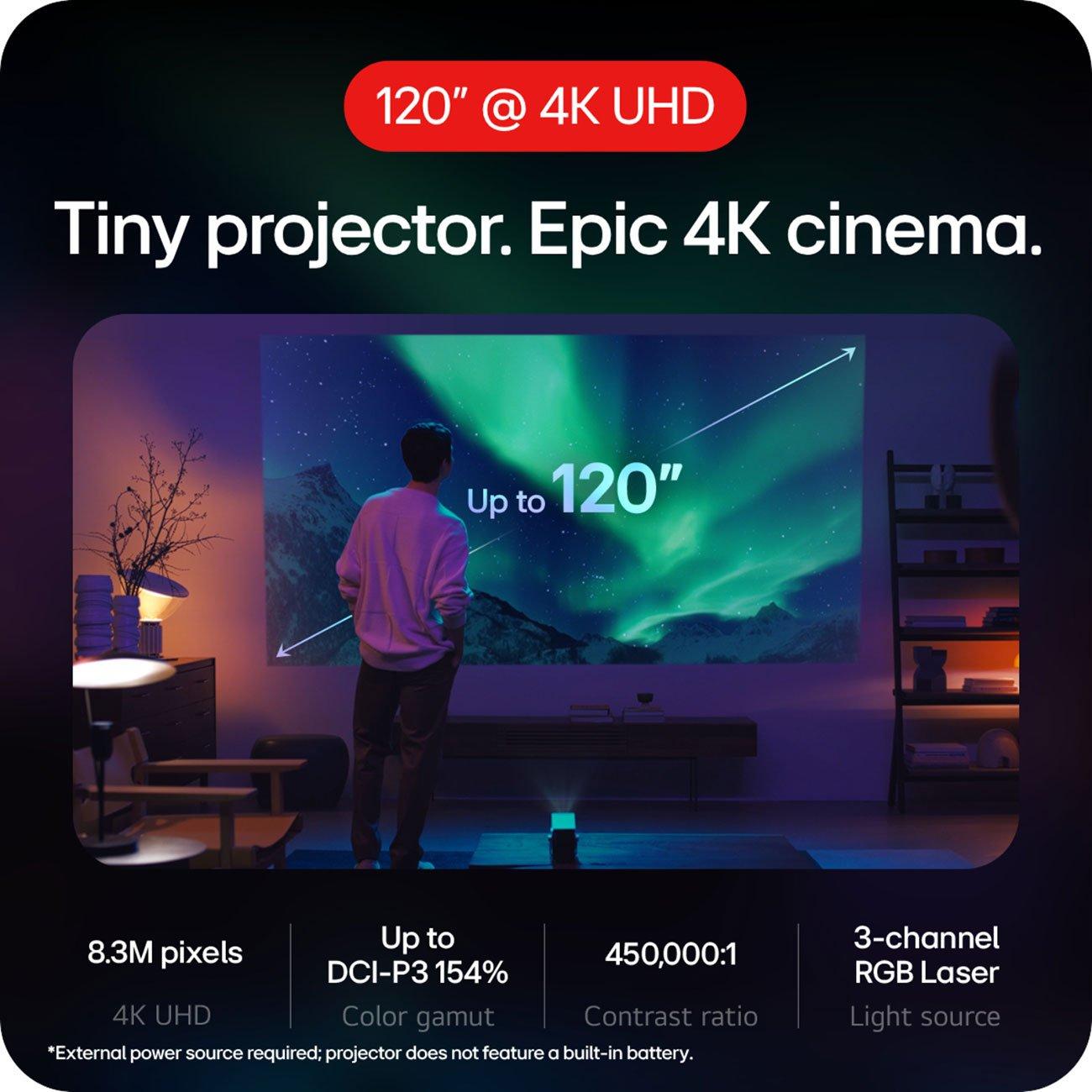
The LG CineBeam Q stands out immediately with its true 4K UHD resolution (3840 x 2160 pixels), which packs in over 8.3 million pixels. This is perhaps the most crucial technical distinction between the two projectors. What does 4K resolution mean in practical terms? When projecting onto a 100-inch screen, you'll see noticeably sharper text, more detailed landscapes, and finer textures in clothing and faces compared to Full HD.
The CineBeam Q doesn't just stop at resolution—it employs a 3-channel RGB laser light source that covers an impressive 154% of the DCI-P3 color gamut. To put this in perspective, most good TVs cover about 95-98% of this professional cinema color standard. This expanded color range means the projector can display more vibrant reds, deeper greens, and more nuanced blues than many competing models.
Additionally, the CineBeam Q supports both HDR10 and HLG (Hybrid Log-Gamma) high dynamic range formats, with Dynamic Tone Mapping that adjusts brightness and contrast scene-by-scene. This results in better highlight detail and shadow performance. With a contrast ratio of 450,000:1, the CineBeam Q can display impressive black levels for a portable projector, though it won't match the deep blacks of a high-end OLED TV or a much more expensive dedicated home theater projector.
The BenQ GV50 features Full HD resolution (1920 x 1080), which provides 2.1 million pixels—about a quarter of the LG's pixel count. While this might seem like a significant downgrade, it's worth noting that on screens under 80 inches, many viewers may not notice a dramatic difference, especially when watching from typical viewing distances.
The GV50 also uses a laser light source with HDR10 and HLG support, though its color gamut coverage isn't as wide as the LG's. Its 100,000:1 contrast ratio is good for a portable projector but doesn't reach the performance levels of the CineBeam Q. In practice, this means that while colors look punchy and accurate, they lack the extreme vibrancy and nuance that the LG can deliver.
When I've tested 4K versus Full HD projectors side-by-side, the difference is most noticeable with specific content. For instance, nature documentaries, sports broadcasts, and video games with detailed textures show clear improvements in the 4K presentation. However, for most casual movie watching, particularly with streaming content (which is often compressed anyway), the gap narrows considerably.
That said, if you're projecting onto a screen larger than 100 inches or sitting closer than 8-9 feet away, the 4K resolution of the LG becomes increasingly valuable. For dedicated home theater enthusiasts who care deeply about image fidelity, the LG's superior resolution and color performance justify much of its premium pricing.
Both projectors feature an identical brightness rating of 500 ANSI lumens, which represents a curious convergence point. This brightness level places them in what I'd call the "dark room projector" category—neither is bright enough to compete with significant ambient light.
In my experience testing projectors in this brightness range, they perform best in completely darkened rooms where they can produce vibrant, colorful images on screens up to about 100 inches. As you increase the screen size or introduce ambient light, the image becomes progressively washed out.
For context, most dedicated home theater projectors start at around 1,500-2,000 ANSI lumens, making them 3-4 times brighter than either of these portable options. The 500-lumen rating means both projectors are best suited for:
Neither the LG CineBeam Q nor the BenQ GV50 can overcome a sun-filled room or compete with bright overhead lighting. This shared limitation means your intended viewing environment should be a primary consideration regardless of which model you choose.
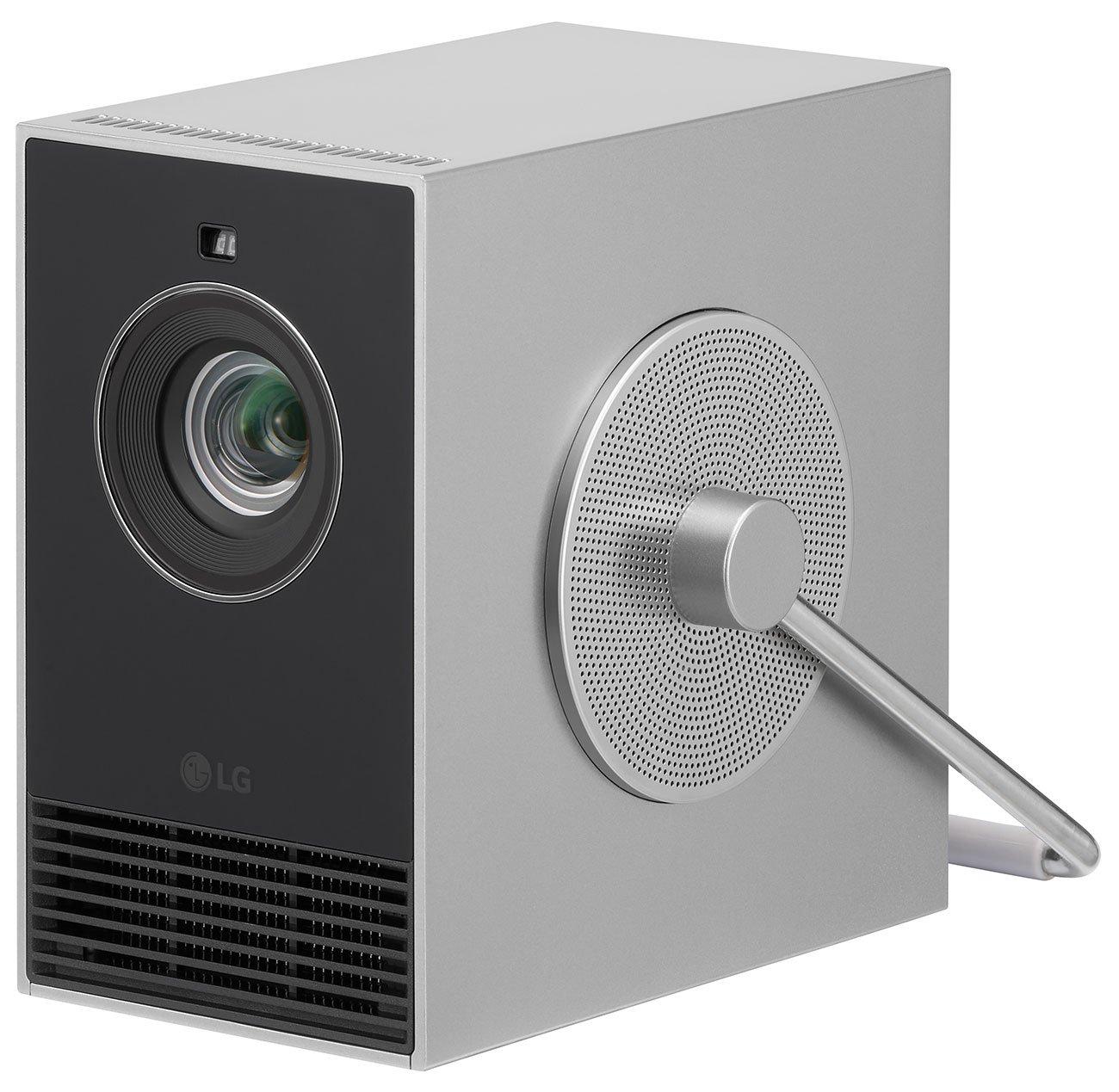
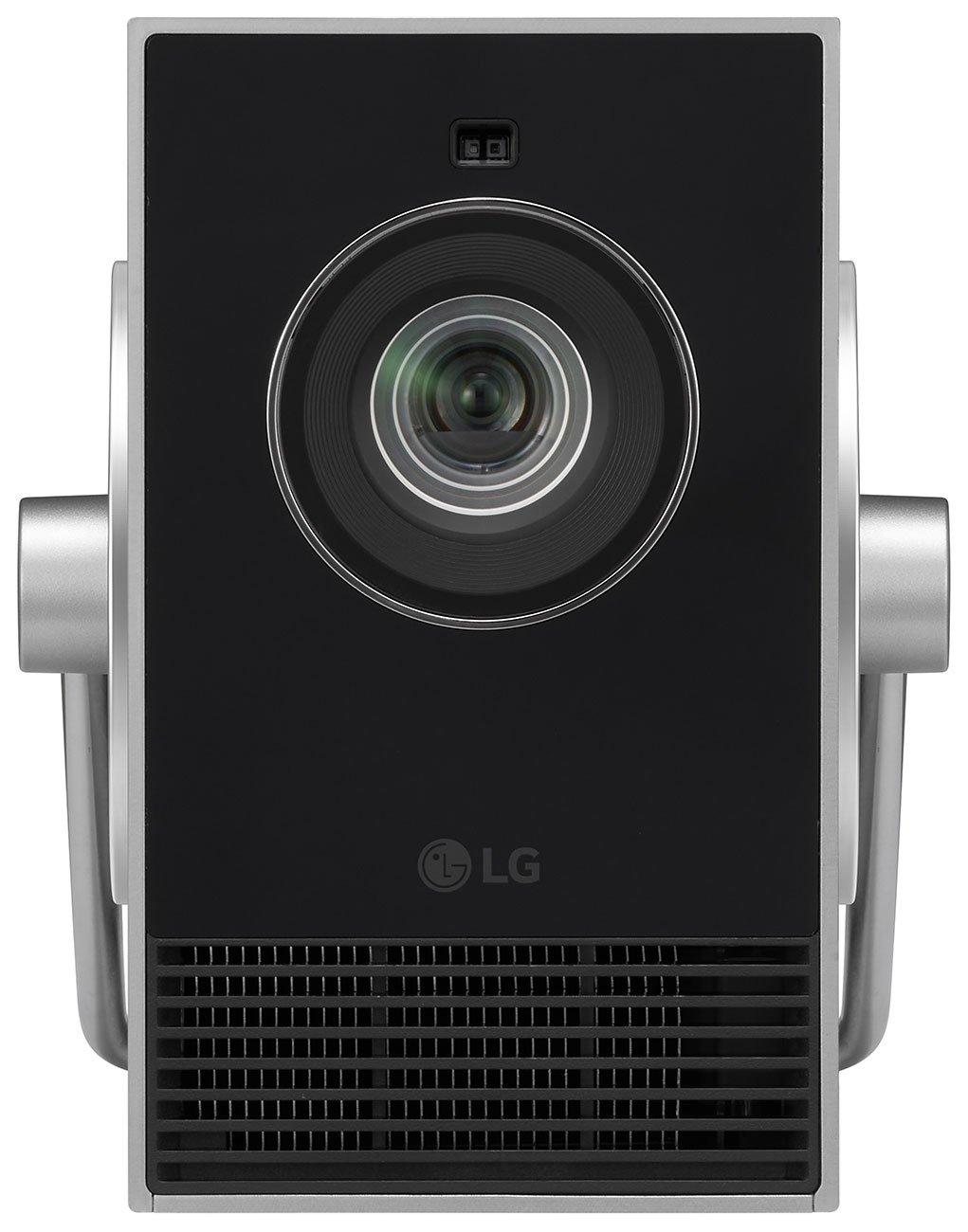
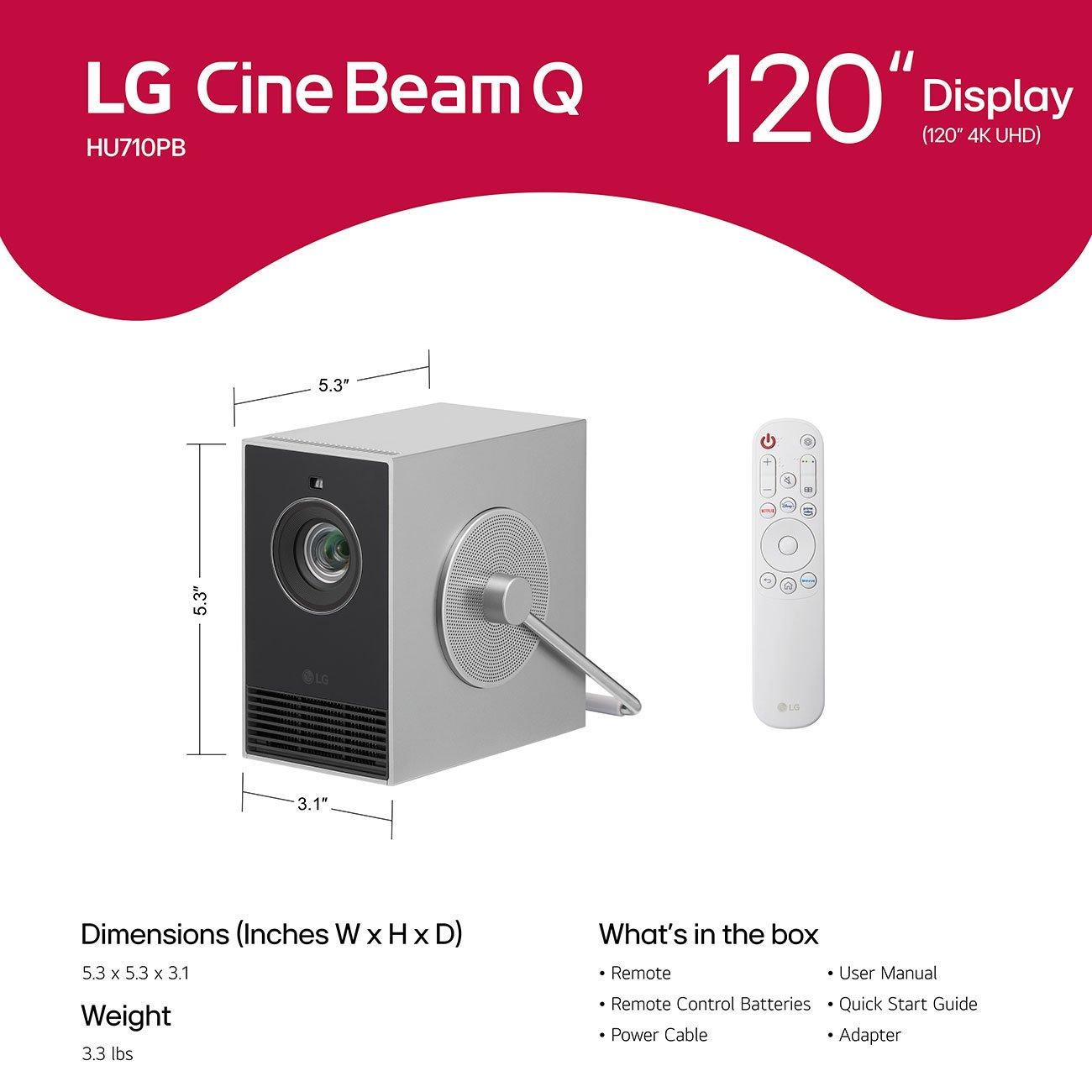
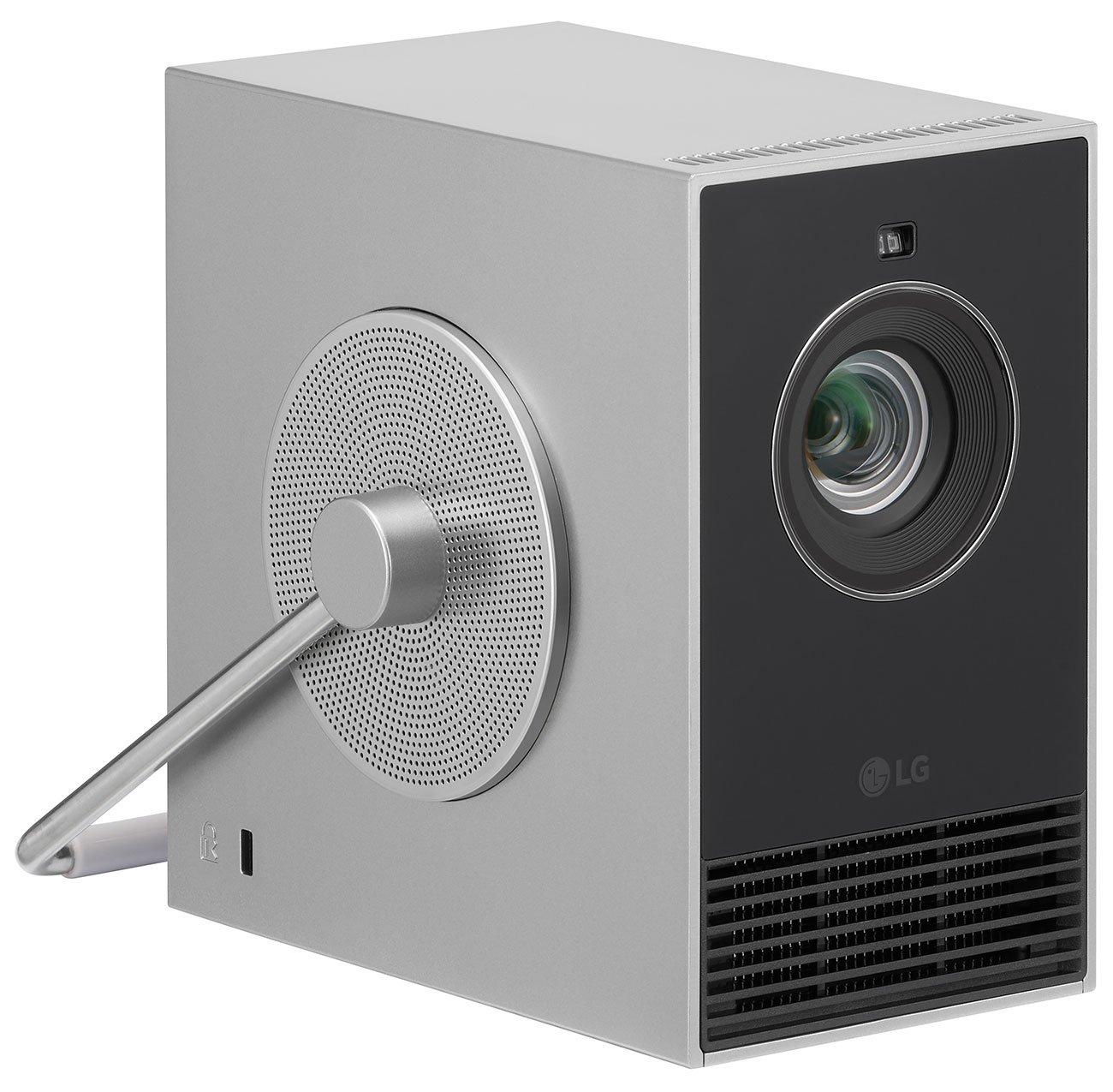
The LG CineBeam Q's design is immediately striking—a compact cube measuring just 5.31" x 3.15" x 5.31" and weighing a mere 3.3 pounds. This makes it one of the smallest 4K projectors on the market. Its minimalist aesthetic features a 360-degree rotating handle that doubles as an adjustable stand, allowing you to point the projector at different angles without additional accessories.
The projector's sleek white housing and premium materials convey a sense of quality that matches its price point. However, there's one significant omission in the CineBeam Q's portable design: it lacks a built-in battery. This means that despite its small size, you'll always need access to a power outlet, limiting true portability.
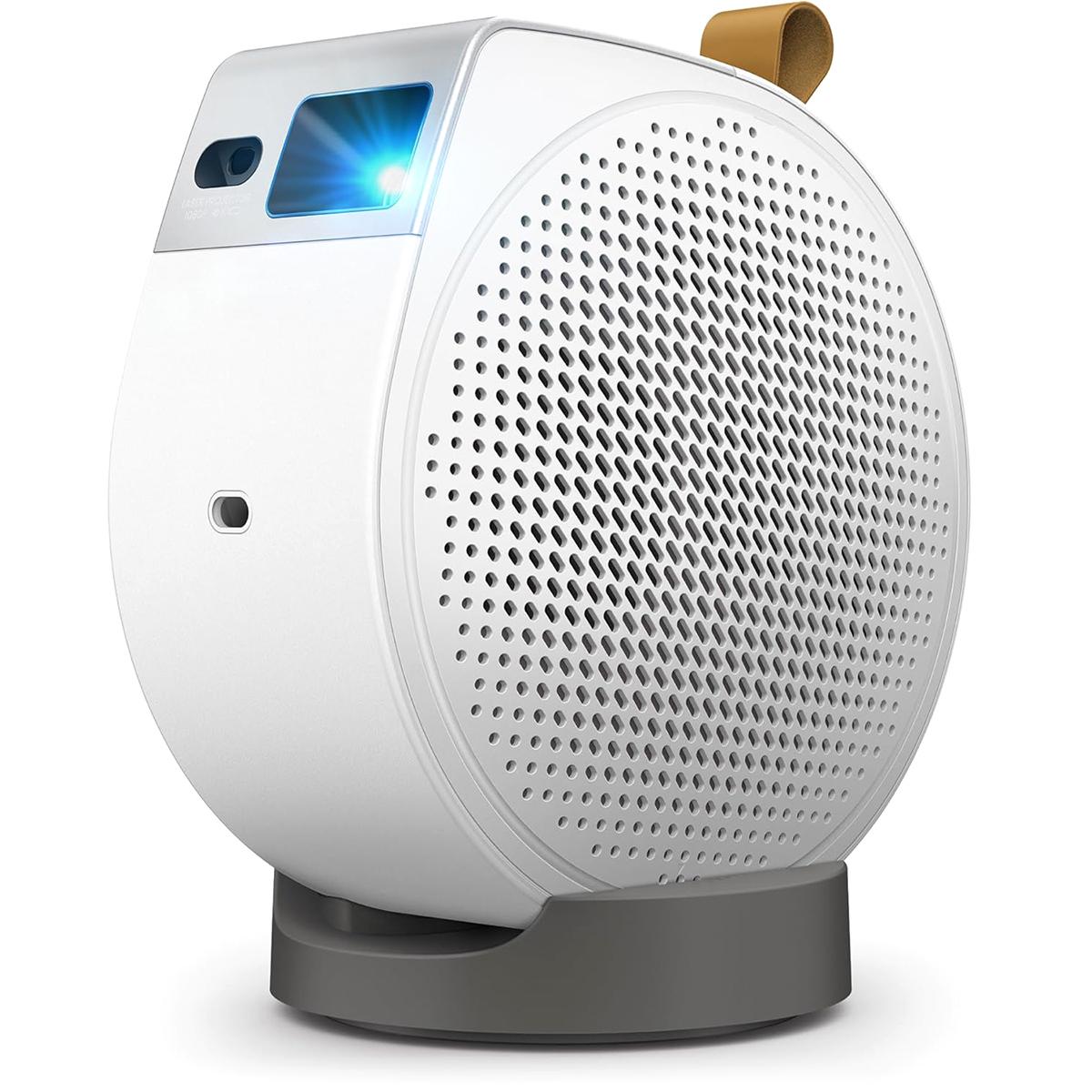
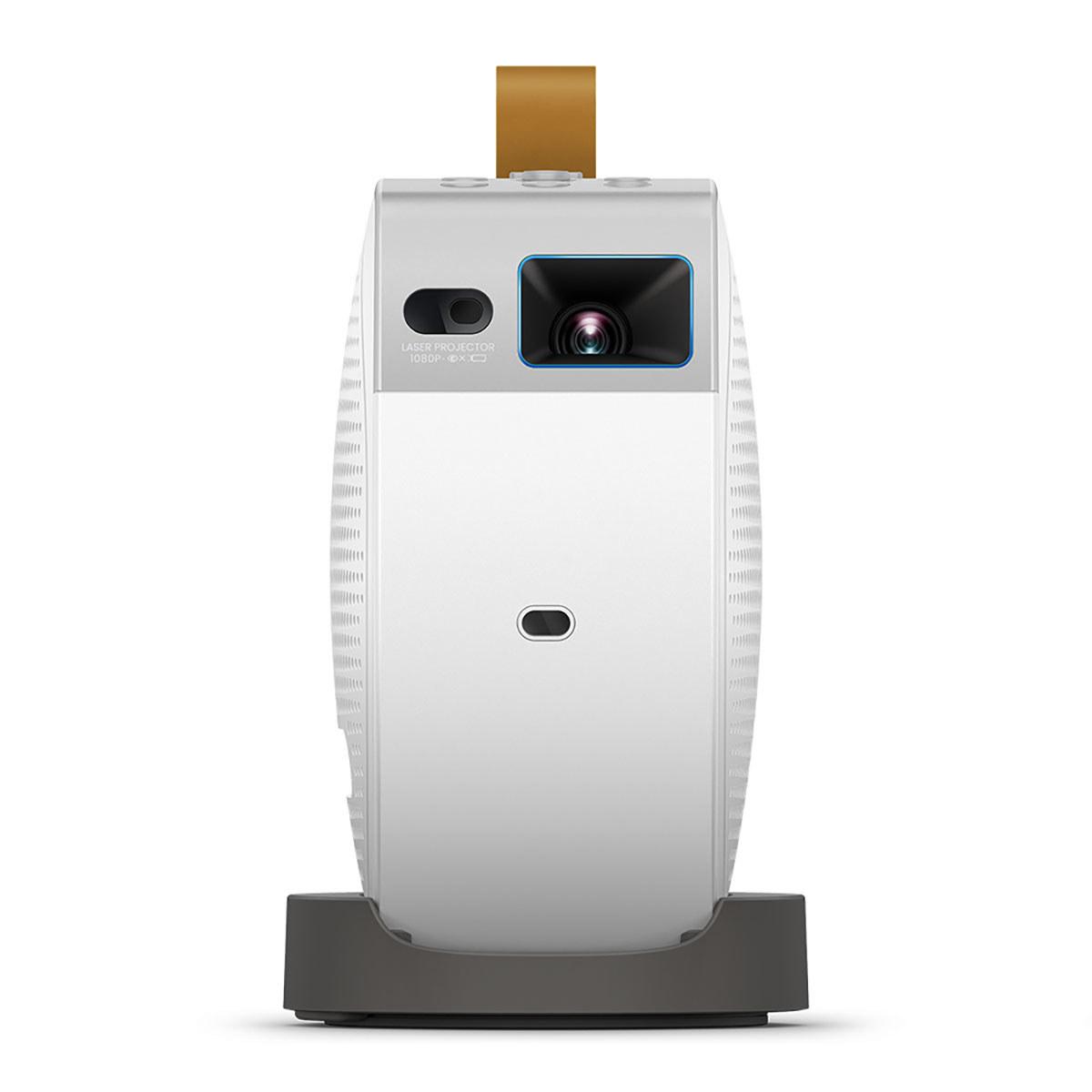
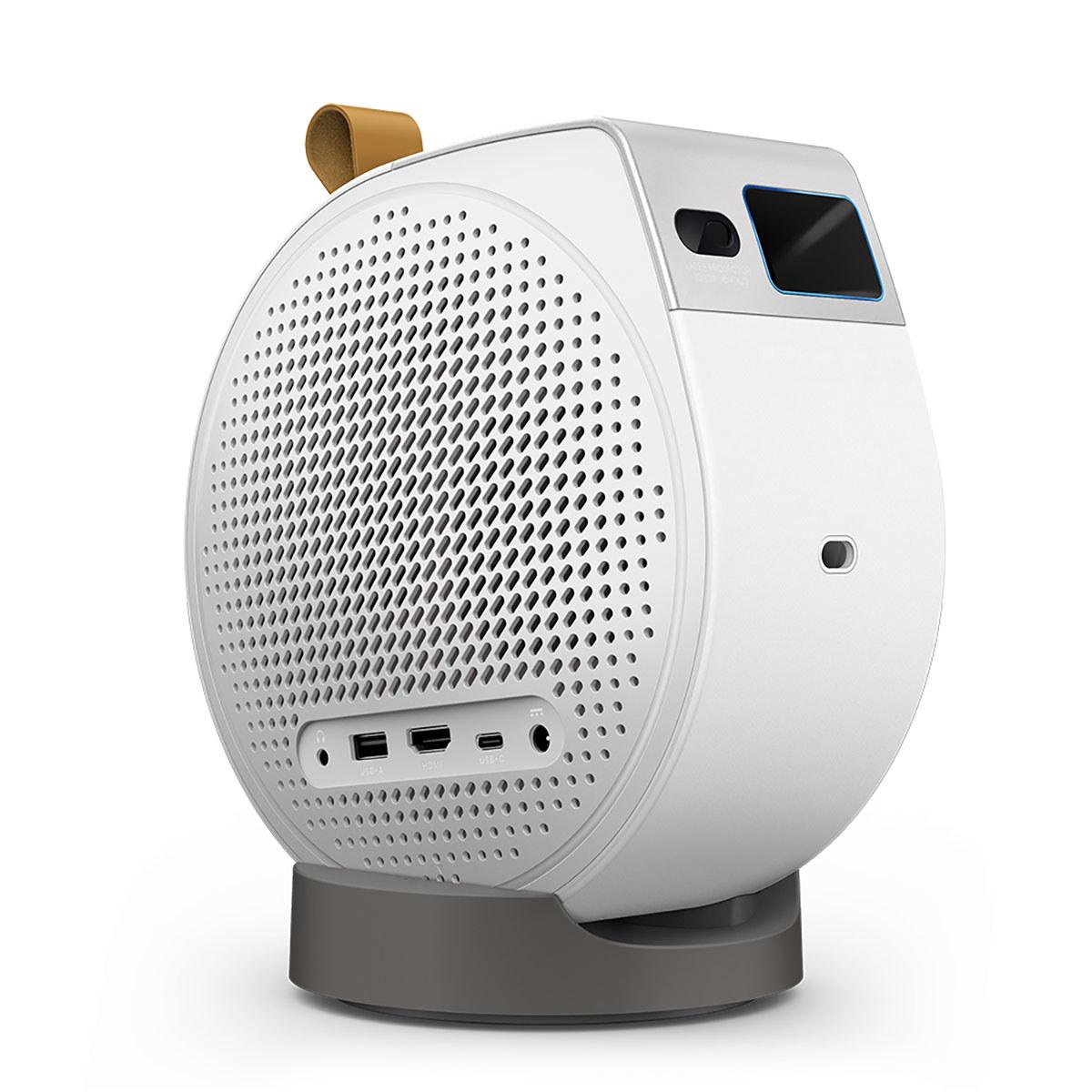
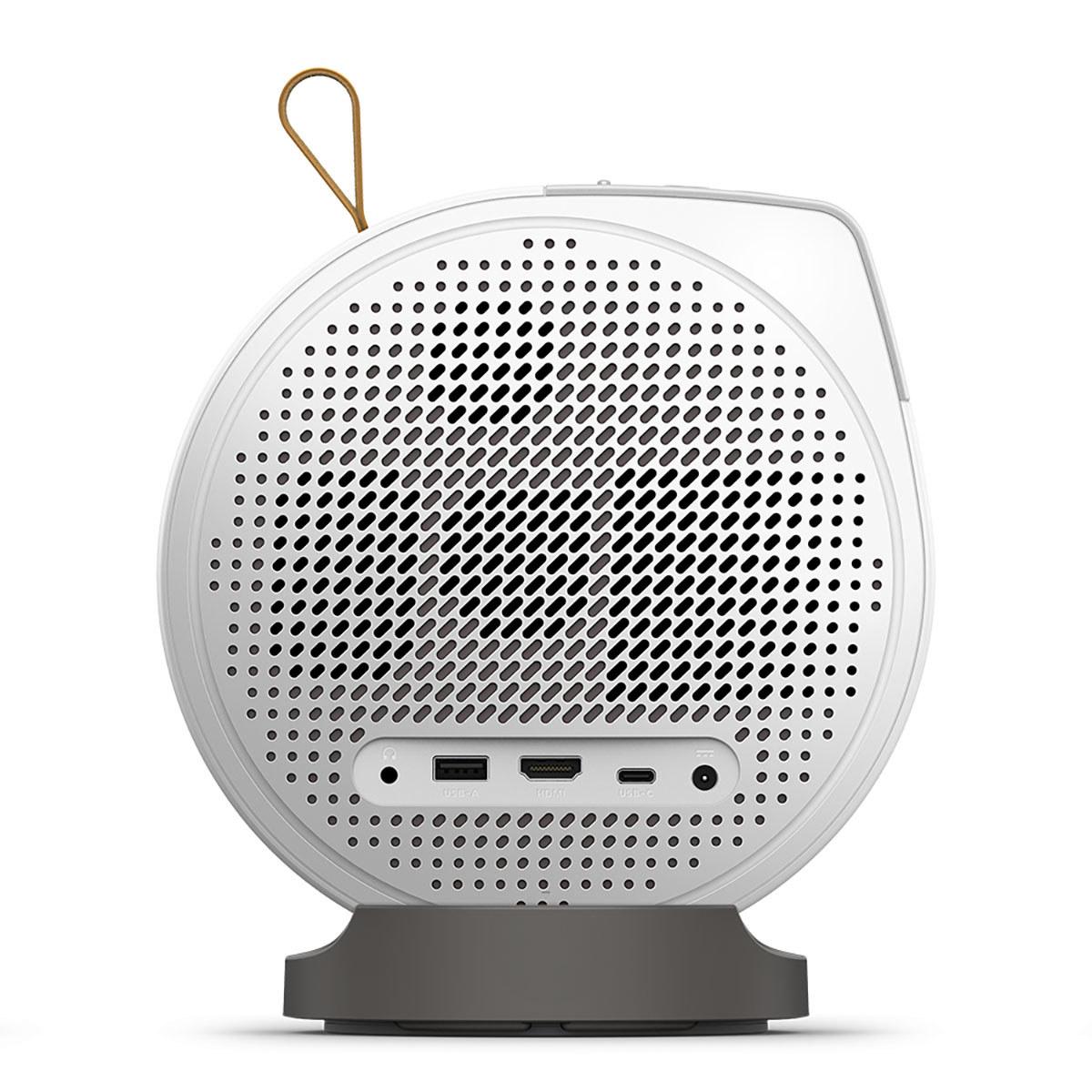
The BenQ GV50 takes a different approach to portability. While larger than the LG at 5.1" x 8.3" x 7.5" and heavier at 4.6 pounds, it includes a built-in battery that provides approximately 2.5 hours of playback time—enough for most movies. This feature dramatically enhances its versatility for outdoor movie nights, camping trips, or simply moving between rooms without worrying about power outlets.
The GV50's design is more functional than fashionable, with a focus on its 135° vertical adjustment capability. This specialized design choice enables the projector's standout feature: ceiling projection.
The portability comparison comes down to two different philosophies:
Your personal definition of "portable" might help determine which approach better suits your needs. For moving around within a home where outlets are plentiful, the LG's smaller size might be preferable. For true go-anywhere usage, the BenQ's battery power represents a significant advantage.
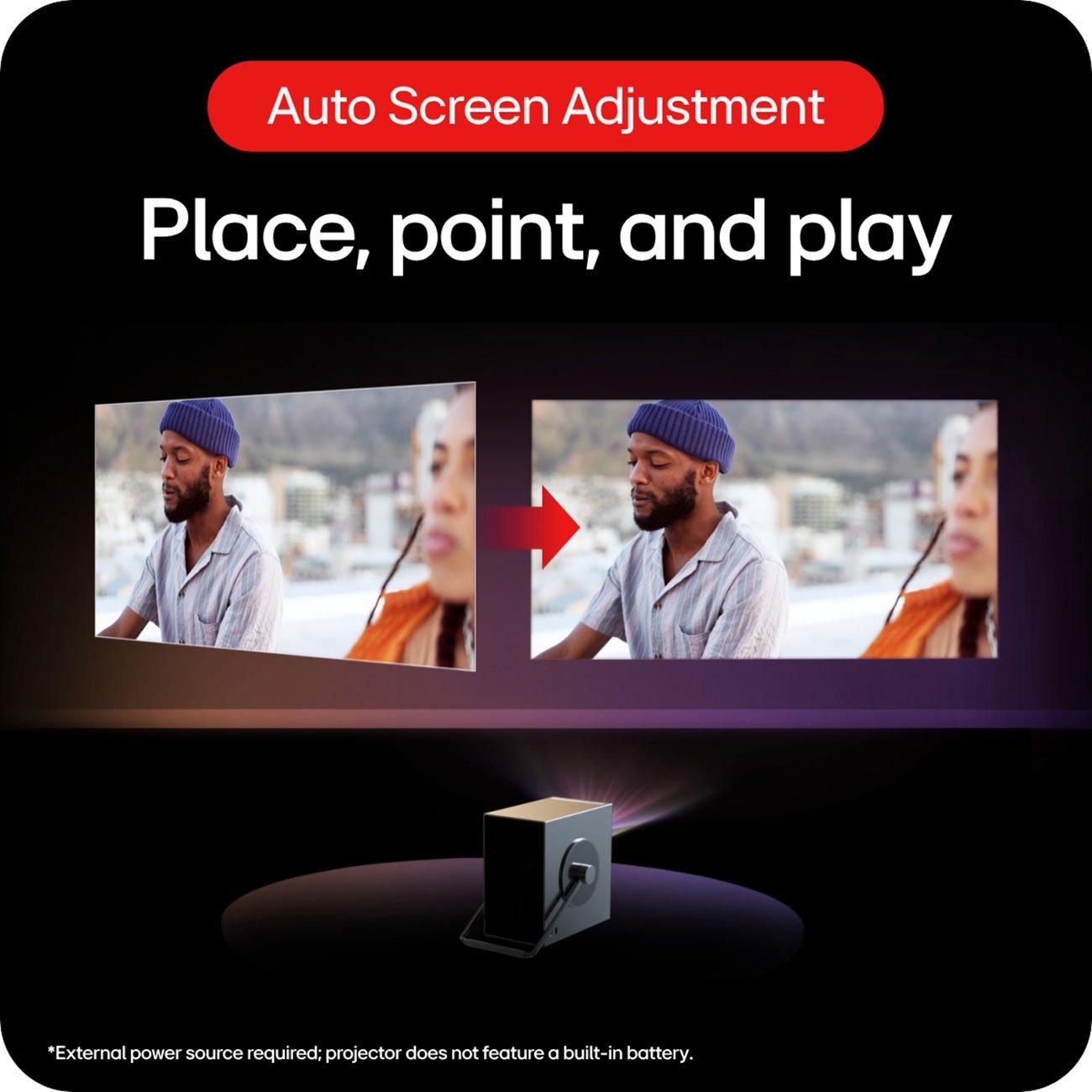
The LG CineBeam Q focuses on making traditional front projection setups as hassle-free as possible. Its auto keystone correction and auto focus features mean you can place the projector, turn it on, and quickly have a properly adjusted rectangular image without manual tweaking. This is particularly valuable for a portable device that might be frequently repositioned.
With a 1.2:1 throw ratio, the LG produces a 100-inch image from about 10 feet away—a fairly standard projection distance. This means you'll need reasonable clearance between the projector and your viewing surface, which might limit placement options in smaller rooms.
The rotating handle/stand provides some flexibility in angling the projector, but the design is primarily intended for standard tabletop placement projecting straight ahead. The lack of battery power means you'll always need to consider proximity to outlets when setting up.
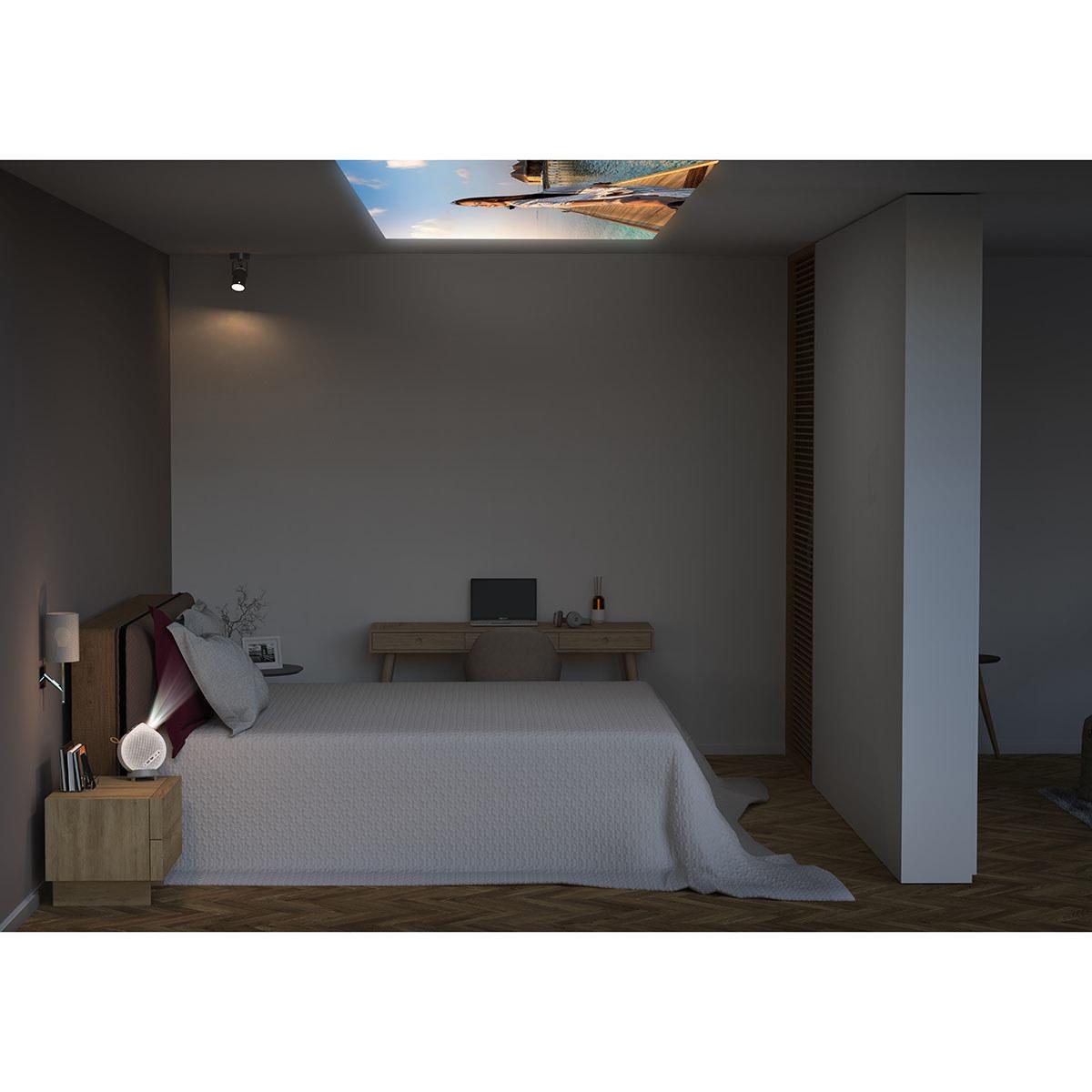
The BenQ GV50 takes a dramatically different approach to projection flexibility with its ceiling projection capabilities. The 135° vertical tilt combined with 360° rotation allows you to point the projector directly upward or at virtually any angle. This specialized design makes it perfect for projecting onto bedroom ceilings while lying in bed—a use case that has grown increasingly popular.
Like the LG, the BenQ offers auto keystone correction and auto focus, but adds auto image rotation and obstacle avoidance technology, which are particularly useful for ceiling projection. The projector can automatically adjust the image orientation depending on how you've positioned it.
The built-in battery adds another dimension of placement flexibility, allowing temporary setups anywhere without requiring power planning. This is valuable not just for outdoor use, but also for quick impromptu movie nights in different rooms.
In real-world usage, the BenQ offers significantly more flexibility in where and how you can use it. I've found ceiling projection to be surprisingly enjoyable for relaxed viewing—imagine watching a movie while lying comfortably in bed without neck strain. The battery power also enables creative setups like backyard movie nights or camping trips that would be impossible with the LG without additional power solutions.
For traditional home theater setups where the projector will remain in a fixed position near a power outlet, the LG's placement limitations become less relevant, and its superior image quality takes precedence.
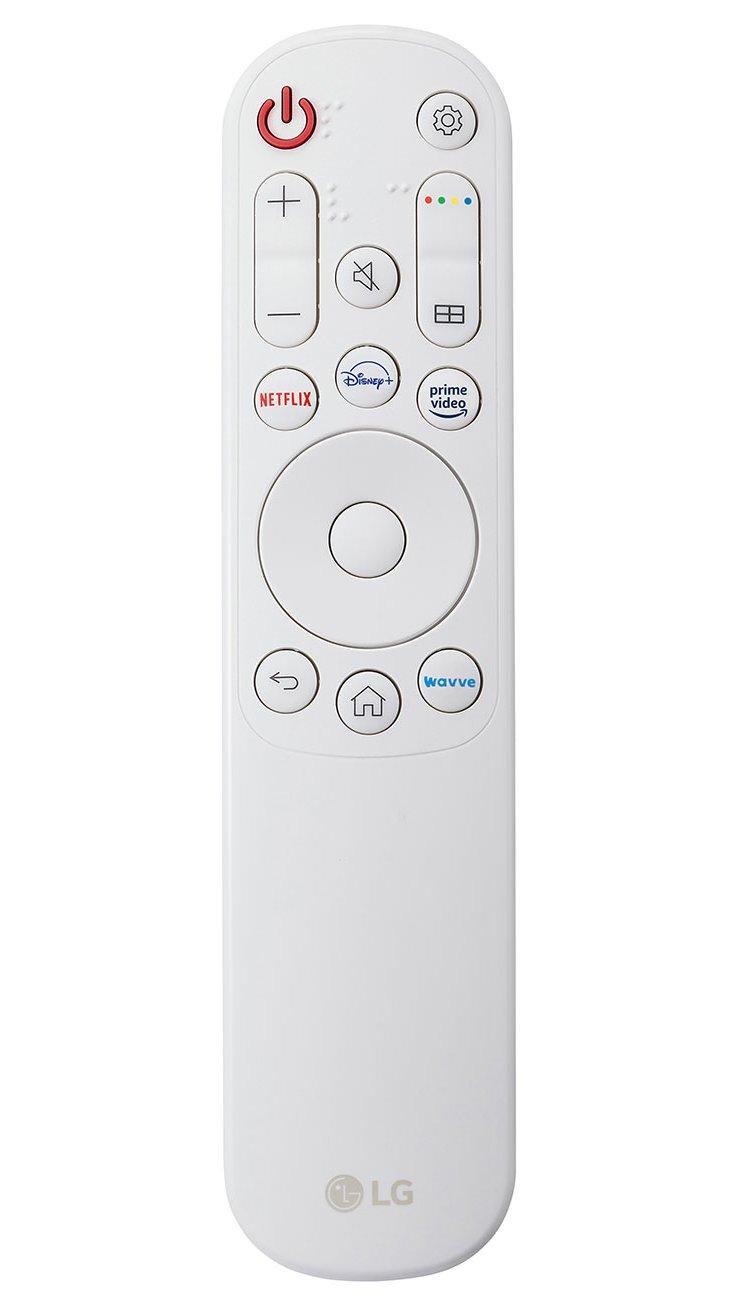
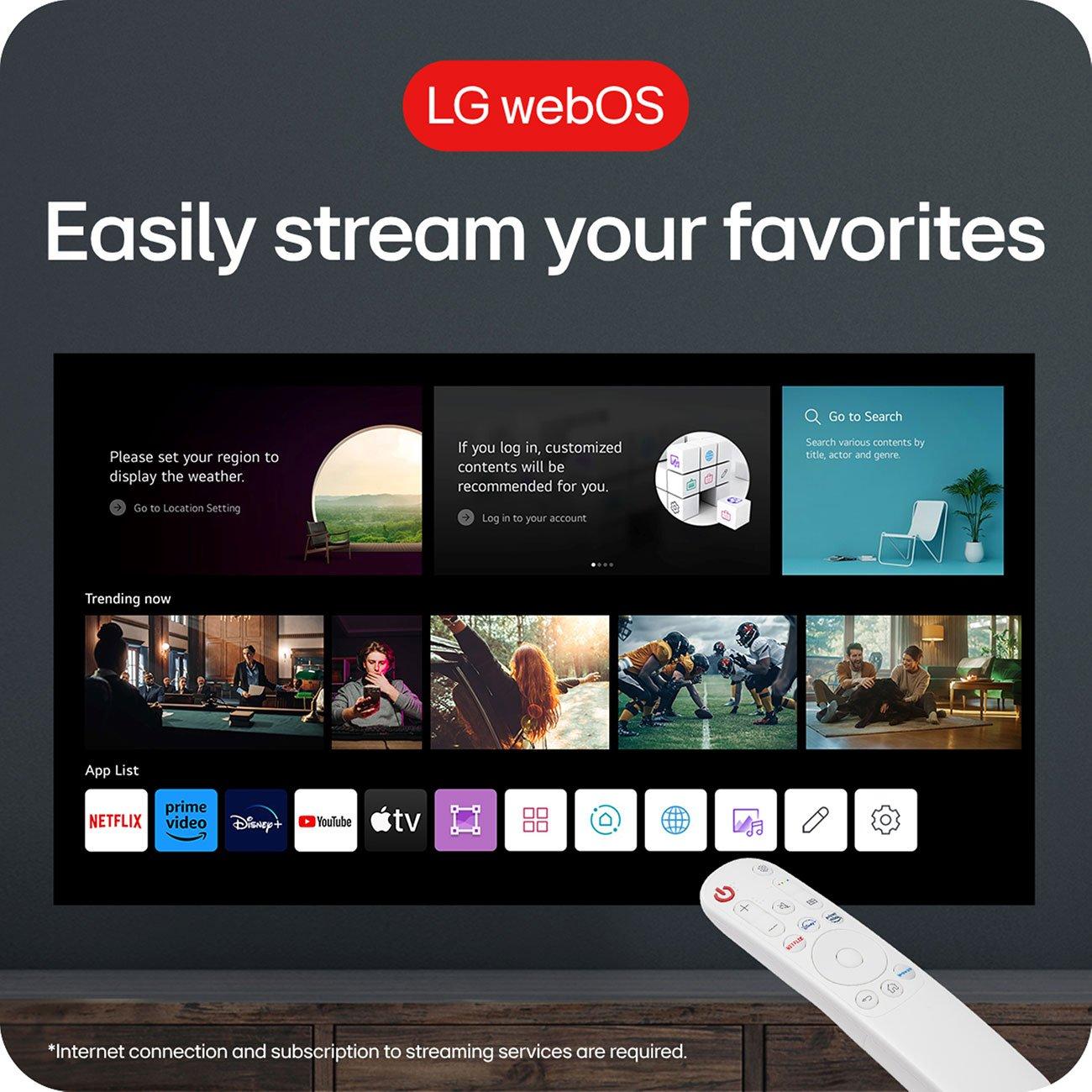
The LG CineBeam Q runs on LG's webOS smart TV platform, the same system used in their popular TV lineup. If you're familiar with LG TVs, you'll immediately feel at home with the interface. The platform provides access to most major streaming services including Netflix, Disney+, Prime Video, and more.
For connectivity, the LG offers one HDMI input and one USB-C port. While this might seem limited, it's fairly standard for portable projectors. The projector supports AirPlay 2 and Screen Share for wireless streaming from compatible devices. A particularly nice touch is the ability to connect two Bluetooth audio devices simultaneously, allowing shared listening with a partner.
The BenQ GV50 uses Google TV (Android 11) as its smart platform, providing access to thousands of apps through the Google Play Store. This includes all major streaming services plus a wide range of games and utilities. The inclusion of Google Assistant provides voice control capabilities that the LG lacks.
The BenQ offers slightly more physical connectivity with one HDMI port, one USB-A port, and one USB-C port. It supports both AirPlay and Google Cast for wireless streaming, making it compatible with virtually all modern smartphones and tablets.
Your preference between webOS and Google TV might depend on which ecosystem you're already invested in. Google TV generally offers more apps and greater customization, while webOS is known for its simplicity and reliability. In my testing, I've found that Google TV occasionally suffers from more performance hiccups, while webOS can be more limited in app selection but provides a more consistent experience.
For a dedicated home theater setup, these smart features may be less important if you're planning to use an external streaming device like an Apple TV, Roku, or NVIDIA Shield. However, for a portable projector that might be used in various locations, having good built-in smart features becomes more valuable.
Audio is perhaps the LG CineBeam Q's greatest weakness. It features a single 3W mono speaker that reviewers consistently describe as "tinny" and inadequate. While this is common for ultra-compact projectors, it's disappointing in a $1,299 device. For any serious viewing, you'll want to connect external speakers or headphones via Bluetooth.
The BenQ GV50 takes audio much more seriously, incorporating an 18W 2.1 channel audio system with dual 4W speakers and a dedicated 10W woofer. This configuration delivers surprisingly rich sound with respectable bass response—unusual in a portable projector. The GV50 also features a specialized "ceiling cinema sound mode" that optimizes audio directionality when projecting upward.
In a home theater context, you'd likely use external speakers or a soundbar with either projector. However, the BenQ's superior built-in audio makes it much more viable as a standalone device for casual viewing sessions or when external audio isn't practical. This becomes particularly valuable for the impromptu or mobile viewing scenarios that portable projectors are often used for.
The audio difference is significant enough that it should factor into your decision if you anticipate frequently using the projector without external sound.
At $1,299, the LG CineBeam Q positions itself as a premium portable projector. This pricing is justified primarily by its 4K resolution, superior color performance, and compact design. For discerning viewers who prioritize image quality above all else, the LG makes a compelling case despite its high price.
However, the lack of a built-in battery and disappointing audio performance create value gaps that are hard to ignore at this price point. When spending over $1,000 on a portable projector, these omissions feel more significant.
The BenQ GV50 at $799 represents a different value proposition. While sacrificing 4K resolution, it offers numerous practical advantages: built-in battery power, superior audio, and specialized ceiling projection capabilities. The $500 price difference is substantial enough to potentially fund complementary equipment like a quality screen or external speakers.
For most users, the BenQ offers better overall value unless 4K resolution is a must-have feature. The versatility provided by its battery power and ceiling projection capabilities, combined with its superior audio performance, make it more immediately useful across a wider range of scenarios.
However, for home theater enthusiasts who primarily care about image quality and already have audio solutions, the LG's superior resolution and color performance might justify the premium price. This is especially true if you're projecting onto larger screens where the resolution difference becomes more apparent.
After thoroughly comparing these two innovative projectors, your decision comes down to prioritizing either maximum image quality or maximum versatility and value.
Choose the LG CineBeam Q if:
Choose the BenQ GV50 if:
The technological advances represented by both projectors show just how far portable projection has come. The LG pushes the boundaries of image quality in a compact form factor, while the BenQ redefines versatility with its specialized ceiling projection capabilities and battery power.
For my personal use, I'd lean toward the BenQ GV50 for its versatility and value, as I find the battery power and superior audio more practical for the spontaneous viewing scenarios where portable projectors excel. However, for a dedicated home theater enthusiast looking for the best possible image quality in a compact device, the LG CineBeam Q deserves serious consideration despite its premium price.
Ultimately, both projectors represent excellent examples of modern portable projection technology, each with a clear target audience and use case. By understanding your specific needs and priorities, you can choose the projector that will bring your mobile viewing experiences to life in the most satisfying way.
| LG CineBeam Q 4K UHD Portable Laser Projector ($1,299) | BenQ GV50 Full HD Smart Ceiling Projector ($799) |
|---|---|
| Resolution - Determines image detail and clarity, especially at larger screen sizes | |
| 4K UHD (3840 x 2160) - Noticeably sharper image, especially on 100"+ screens | Full HD (1920 x 1080) - Good for screens under 80", less detailed on larger displays |
| Brightness - Determines usability in different lighting conditions | |
| 500 ANSI lumens - Best in completely darkened rooms | 500 ANSI lumens - Best in completely darkened rooms |
| Light Source - Affects color accuracy, lifespan, and startup time | |
| 3-channel RGB laser - 154% DCI-P3 color gamut coverage, 20,000 hour lifespan | Laser phosphor - Good color performance, up to 30,000 hour lifespan |
| Contrast Ratio - Impacts image depth and black level performance | |
| 450,000:1 - Better black levels and shadow detail | 100,000:1 - Good but not as deep blacks as the LG |
| Built-in Battery - Critical for true portable use | |
| No battery - Always requires power outlet | 2.5 hours battery life - Enables truly wireless usage |
| Audio System - Determines need for external speakers | |
| 3W mono speaker - Inadequate, external audio recommended | 18W 2.1 channel system (2x 4W + 10W woofer) - Good standalone audio experience |
| Size and Weight - Affects portability and placement options | |
| 5.31" x 3.15" x 5.31", 3.3 lbs - Ultra-compact and lightweight | 5.1" x 8.3" x 7.5", 4.6 lbs - Larger and heavier but includes battery |
| Projection Flexibility - Determines where and how you can use it | |
| 360° rotating handle/stand - Traditional front projection only | 135° vertical tilt with 360° rotation - Specialized for ceiling projection |
| Smart Platform - Provides streaming without external devices | |
| webOS - Simple interface with major streaming apps | Google TV (Android 11) - More apps and customization with Google Assistant |
| Connectivity Options - Enables connection to various sources | |
| 1x HDMI, 1x USB-C, Bluetooth audio output | 1x HDMI, 1x USB-A, 1x USB-C, Bluetooth 5.0 |
| Ideal Use Case - Primary intended application | |
| High-quality portable home theater with premium image quality | Flexible viewing including ceiling projection, battery-powered outdoor use |
The LG CineBeam Q 4K UHD Portable Laser Projector offers superior picture quality with true 4K resolution (3840 x 2160) and a wider color gamut (154% DCI-P3 coverage). The BenQ GV50 Full HD Smart Ceiling Projector produces good image quality with Full HD resolution (1920 x 1080), but can't match the detail and color accuracy of the LG CineBeam Q. If picture quality is your top priority, the LG CineBeam Q is the better choice.
Neither the LG CineBeam Q nor the BenQ GV50 is ideal for bright rooms. Both projectors offer 500 ANSI lumens of brightness, which is only sufficient for viewing in dark or dimly lit environments. For the best viewing experience with either projector, you'll need to use blackout curtains or wait until evening. If you need a projector for daytime viewing in a bright room, you should consider models with at least 2,000+ ANSI lumens instead.
The BenQ GV50 Full HD Smart Ceiling Projector is specifically designed for ceiling projection with its 135° vertical tilt and 360° rotation capabilities. It also features a specialized ceiling cinema sound mode to optimize audio when projecting upward. The LG CineBeam Q is primarily designed for traditional forward projection and doesn't offer the same specialized features for ceiling use. For bedroom ceiling projection, the BenQ GV50 is clearly the better choice.
The BenQ GV50 features an impressive 18W 2.1 channel audio system with dual 4W speakers and a 10W woofer that provides good sound quality for most casual viewing. The LG CineBeam Q only has a single 3W mono speaker that most users find inadequate, making external speakers virtually necessary. If you want to avoid the need for external speakers, the BenQ GV50 is your better option.
The BenQ GV50 Full HD Smart Ceiling Projector is better suited for outdoor movie nights because it has a built-in battery that lasts up to 2.5 hours, allowing for truly wireless operation. The LG CineBeam Q has no built-in battery and requires constant access to a power outlet. Additionally, the BenQ's superior built-in speakers eliminate the need to carry separate audio equipment outdoors. For outdoor viewing flexibility, the BenQ GV50 offers significant advantages.
Whether the 4K resolution of the LG CineBeam Q justifies its $500 price premium over the Full HD BenQ GV50 depends on your viewing habits. The 4K difference is most noticeable on screen sizes over 100 inches and when viewing 4K content like nature documentaries and recent movies. For smaller screen sizes (under 80 inches) or when primarily watching streaming content, many users may not notice enough difference to justify the higher cost. Consider your screen size and content preferences when deciding.
Both projectors offer good smart features, but with different ecosystems. The LG CineBeam Q uses webOS, which is simple, responsive, and includes major streaming apps like Netflix and Disney+. The BenQ GV50 runs Google TV (Android 11), offering more apps, greater customization options, and Google Assistant voice control. The BenQ's platform generally provides more app options, while the LG's interface may be more stable. Your preference may depend on which ecosystem you already use.
The LG CineBeam Q is more compact and lightweight (5.31" x 3.15" x 5.31", 3.3 lbs) compared to the BenQ GV50 (5.1" x 8.3" x 7.5", 4.6 lbs). However, the BenQ includes a built-in battery while the LG requires constant power. If portability means smallest size and weight, the LG wins. If portability means freedom from power outlets, the BenQ is more portable. Consider your specific needs when evaluating which type of portability matters most to you.
Both projectors can be used for casual gaming, but neither is ideal for competitive gaming due to input lag. The LG CineBeam Q offers superior resolution for gaming at 4K, making game details more visible. The BenQ GV50 provides more flexible setup options with its battery power and adjustable projection angles. For the best visual quality in games with rich environments, the LG CineBeam Q has an advantage, while the BenQ offers more versatile gaming setups.
The BenQ GV50 Full HD Smart Ceiling Projector ($799) generally offers better value for most users with its built-in battery, superior audio system, and specialized ceiling projection capabilities at a price $500 less than the LG CineBeam Q ($1,299). The LG's premium price primarily pays for 4K resolution and better color performance. Unless these image quality improvements are essential to you, the BenQ provides more features and flexibility per dollar spent.
Both projectors use laser light sources with impressive longevity. The LG CineBeam Q laser has a rated lifespan of 20,000 hours, while the BenQ GV50 laser can last up to 30,000 hours in eco mode. At 4 hours of daily use, this translates to roughly 13.7 years for the LG and 20.5 years for the BenQ before the light source would need replacement. Both significantly outperform traditional lamp-based projectors, but the BenQ offers 50% longer potential lifespan.
For a dedicated home theater setup, the LG CineBeam Q 4K UHD Portable Laser Projector is generally the better choice due to its superior 4K resolution, better contrast ratio (450,000:1), and wider color gamut. These advantages become more noticeable on larger screens in controlled lighting conditions. However, the BenQ GV50 could still work well in a home theater if you value its flexible positioning and superior built-in audio. For optimal image quality in a traditional home theater environment, the LG CineBeam Q has clear advantages.
We've done our best to create useful and informative comparisons to help you decide what product to buy. Our research uses advanced automated methods to create this comparison and perfection is not possible - please contact us for corrections or questions. These are the sites we've researched in the creation of this article: projectorcentral.com - lg.com - thefrogpadappliances.com - youtube.com - techradar.com - lg.com - avsforum.com - lg.com - tomsguide.com - jefflynch.com - hometheaterview.com - projectorreviews.com - youtube.com - avsforum.com - projectorcentral.com - pcrichard.com - bhphotovideo.com - youtube.com - lg.com - applerivertvandappliance.com - big-georges.com - queencityonline.com - lg.com - lg.com - lg.com - lgnewsroom.com - heimkino.de - thewellnessinsider.asia - bhphotovideo.com - thetechnovore.com - howtogeek.com - projectorcentral.com - projectorcentral.com - techradar.com - adorama.com - projectorcentral.com - thesmarthomehookup.com - youtube.com - youtube.com - whathifi.com - youtube.com - cdw.com - projectorcentral.com - youtube.com

Privacy Policy
Terms and Conditions - Affiliate Policy
Home Security
© Copyright 2008-2026.
11816 Inwood Rd #1211, Dallas, TX 75244