

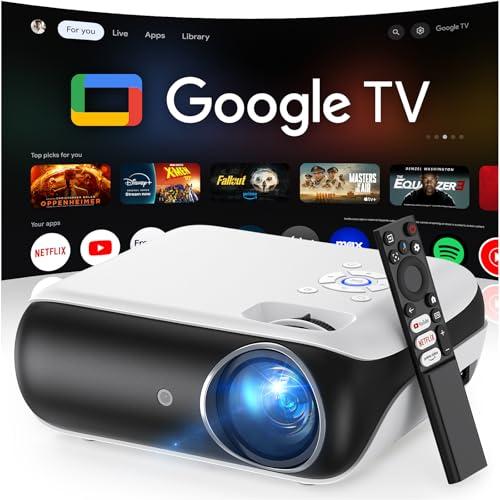
The home projection market has exploded in recent years, with smart projectors leading the charge by eliminating the need for separate streaming devices. But choosing between budget-friendly large-screen options and premium portable models requires understanding some fundamental trade-offs. Today, we're comparing two projectors that represent distinctly different philosophies: the HAPPRUN Google TV Smart Projector, a budget-focused model that prioritizes screen size and connectivity, and the LG CineBeam Q 4K UHD Portable Laser Projector, a premium device that emphasizes image quality and convenience.
At the time of writing, these projectors sit in completely different price tiers—the HAPPRUN targets budget-conscious buyers typically spending under $400, while the LG CineBeam Q appeals to quality-focused users willing to invest significantly more for superior performance. This price difference reflects fundamental differences in technology, capabilities, and intended use cases.
Before diving into specifics, it's worth understanding what makes a projector "smart" and why these technologies matter. Smart projectors integrate streaming platforms directly into the device, running operating systems like Google TV or webOS. This eliminates the need for external streaming sticks, creating a cleaner setup with fewer cables and devices.
The display technology varies dramatically between models. Traditional projectors use lamps with color wheels, while premium models employ laser light sources. Laser technology offers several advantages: longer lifespan (often 20,000+ hours), wider color gamuts (the range of colors a device can display), and more consistent brightness over time. The LG CineBeam Q uses a tri-channel RGB laser system, while the HAPPRUN relies on traditional lamp technology.
Resolution represents another critical distinction. Native resolution refers to the actual number of pixels the projector can display, while "supports 4K" often means the device can accept 4K input but displays it at a lower resolution through downscaling. This difference significantly impacts image sharpness and detail.
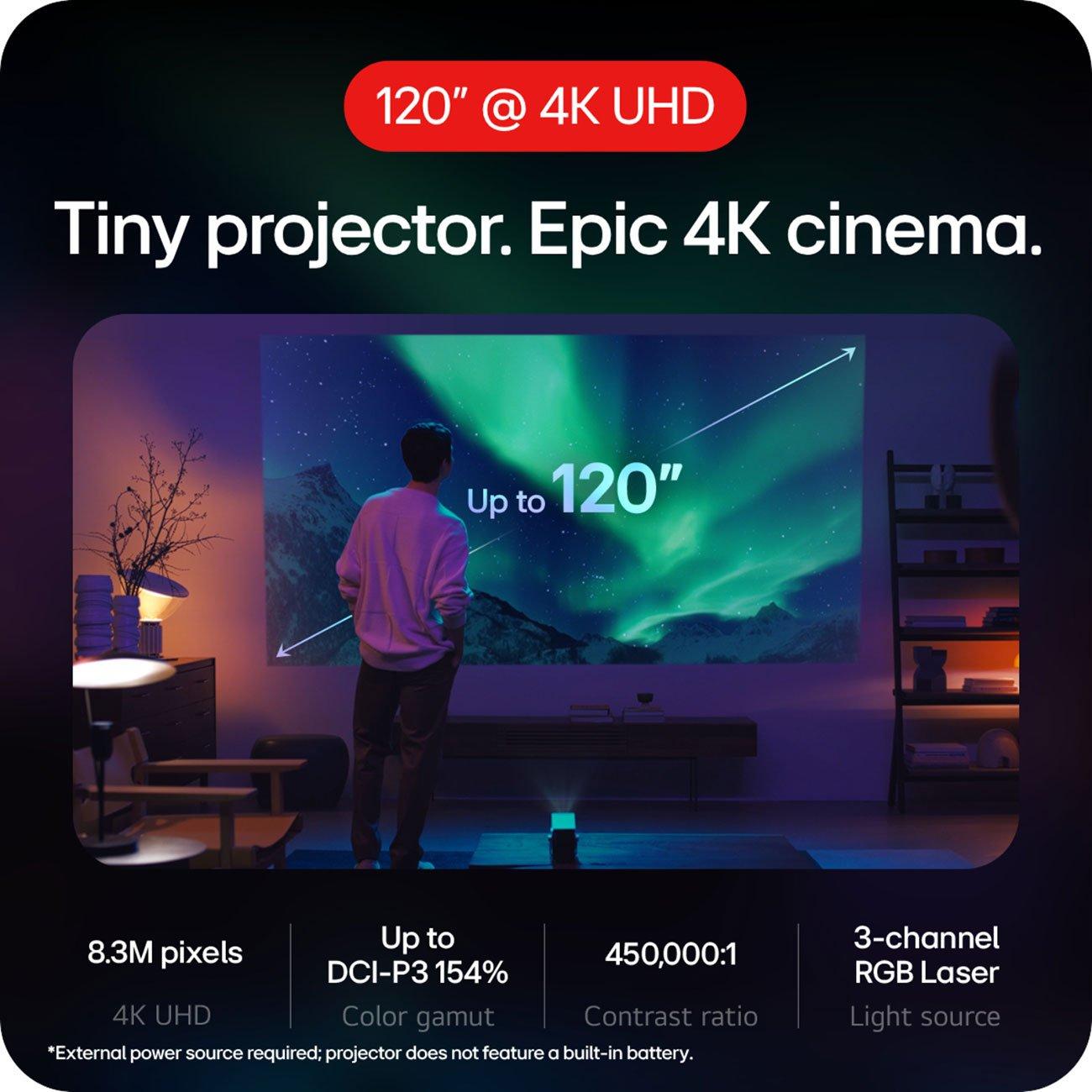
The most fundamental difference between these projectors lies in their native resolution capabilities. The LG CineBeam Q delivers genuine 4K UHD resolution at 3840 x 2160 pixels—that's 8.3 million individual pixels creating the image. In contrast, the HAPPRUN offers native 1080p resolution (1920 x 1080) with 4K decoding support, meaning it can accept 4K content but displays it at the lower 1080p resolution.
This distinction matters enormously for image sharpness. When projecting large images, having four times the pixel count means the difference between seeing individual pixels and enjoying smooth, detailed imagery. If you're planning to sit relatively close to a large screen—say, 100 inches or more—the resolution difference becomes immediately apparent in text clarity, fine details in movies, and overall image crispness.
From our research into user experiences, the 4K advantage of the LG CineBeam Q becomes most noticeable when viewing detailed content like nature documentaries, sports, or gaming. Users consistently report that text appears sharp even on large screens, while HAPPRUN users note that text can become fuzzy at larger projection sizes, though it remains perfectly acceptable for casual movie watching.
Color reproduction represents perhaps the most dramatic performance difference between these projectors. The LG CineBeam Q employs a tri-channel RGB laser system covering 154% of the DCI-P3 color space—a professional standard used in cinema. This translates to significantly more vibrant reds, deeper blues, and more accurate skin tones compared to traditional lamp-based systems.
The HAPPRUN uses a more conventional approach with HDR10+ support to enhance color and contrast. While HDR10+ does improve the viewing experience by optimizing brightness and color on a scene-by-scene basis, it can't match the fundamental color gamut advantages of laser technology.
In practical terms, this means the LG projector will display sunset scenes with more vivid oranges and reds, ocean footage with deeper, more realistic blues, and animated content with colors that truly pop off the screen. The HAPPRUN produces pleasant, watchable colors that satisfy most casual viewers but won't deliver the "wow factor" that enthusiasts seek.
Both projectors face the reality of home projection: they work best in darkened rooms. The LG CineBeam Q produces 500 ANSI lumens with a remarkable 450,000:1 contrast ratio, while the HAPPRUN generates 350-400 ANSI lumens (depending on the specific model) with a 20,000:1 contrast ratio.
ANSI lumens measure the actual brightness output under standardized conditions, and neither projector produces enough light for comfortable viewing in bright rooms. However, the contrast ratio—the difference between the brightest whites and darkest blacks—dramatically affects image quality. The LG's superior contrast ratio means deeper blacks, more defined shadow details, and overall more dynamic imagery.
User feedback consistently indicates that both projectors shine in dedicated dark rooms but struggle with ambient light. The LG projector performs slightly better in rooms with minimal ambient lighting, but both require controlled lighting conditions for optimal results.
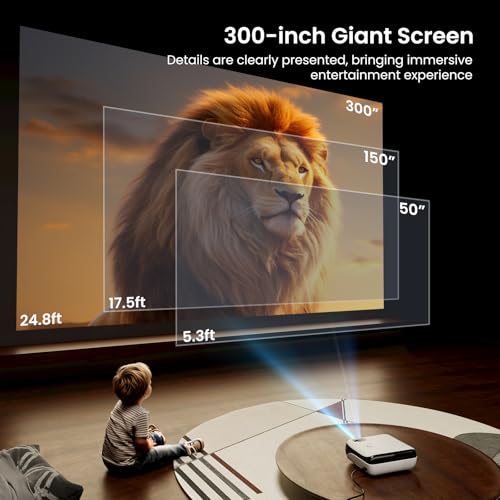
Here's where the HAPPRUN takes a decisive lead. While the LG CineBeam Q maxes out at 120 inches, the HAPPRUN can project images from 40 to 300 inches. This massive range makes it appealing for users who want truly enormous displays—think backyard movie nights or conference room presentations.
However, bigger isn't always better. The HAPPRUN's brightness gets distributed across a larger area as screen size increases, resulting in dimmer images at maximum sizes. User reviews suggest optimal performance at 100-200 inches, where brightness and sharpness remain balanced. Beyond that, image quality degrades noticeably.
The LG projector's 120-inch limitation might seem restrictive, but it ensures consistent brightness and sharpness across the entire projection range. For most home theater applications, 120 inches provides an immersive experience without compromising image quality.
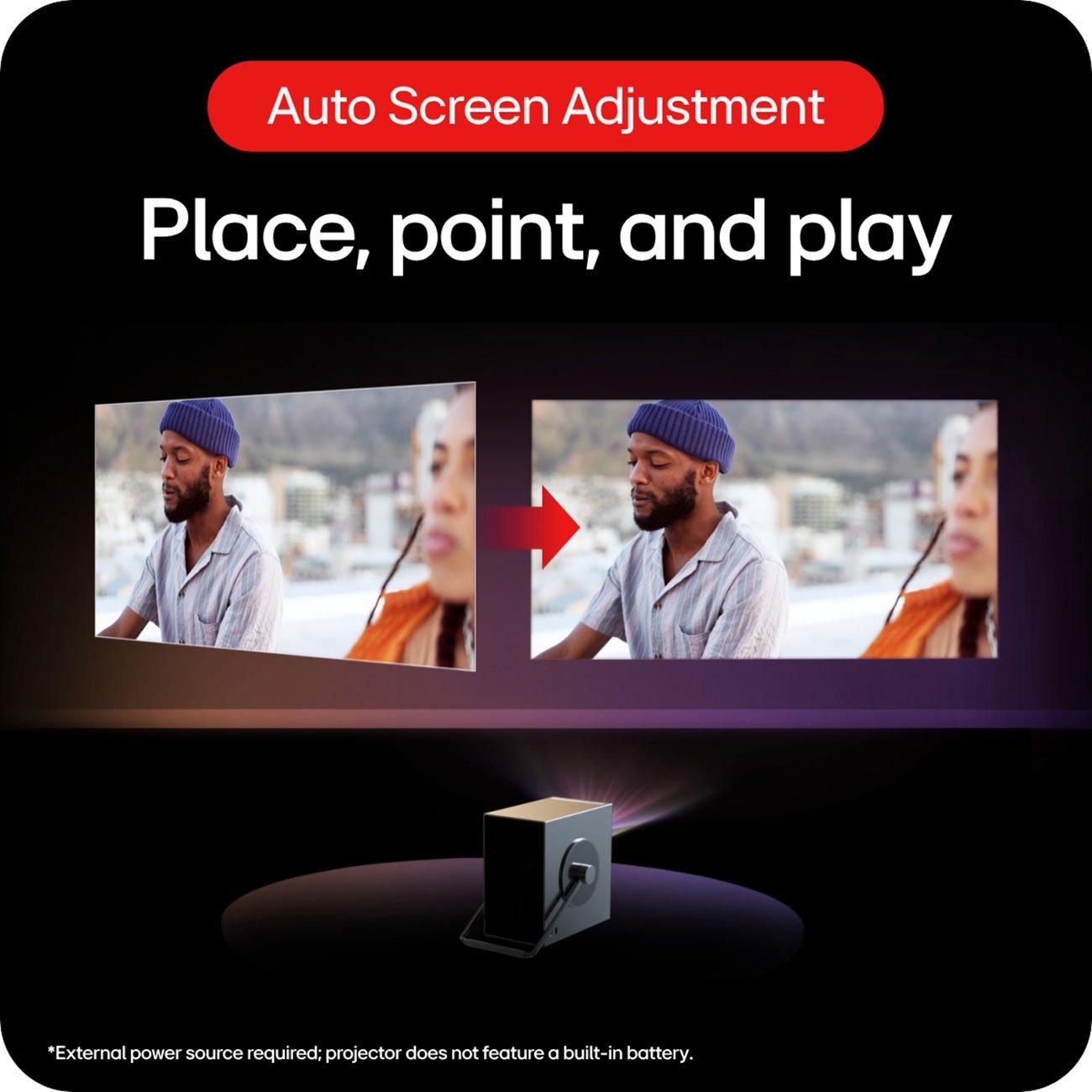
This represents one of the most significant practical differences between these projectors. The LG CineBeam Q incorporates advanced auto-correction features including automatic keystone adjustment (correcting geometric distortion when the projector isn't perfectly aligned), autofocus, and even 15-point digital warping correction for irregular surfaces.
The HAPPRUN offers only manual vertical keystone correction—and here's where user feedback reveals a critical limitation. Multiple reviews indicate that any keystone adjustment on the HAPPRUN causes focus issues across the image, with sharp center areas becoming progressively blurry toward the edges. Users emphasize that the projector must be positioned perfectly level horizontally, as there's no horizontal keystone correction available.
This difference matters enormously for casual users. The LG projector can be placed almost anywhere and automatically adjust for optimal image geometry, while the HAPPRUN requires careful positioning and potentially frustrating manual adjustments.
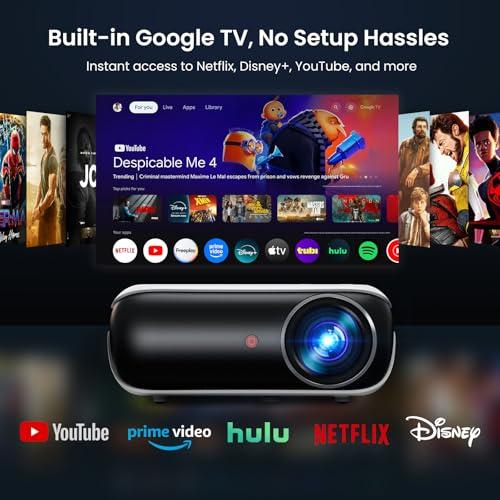
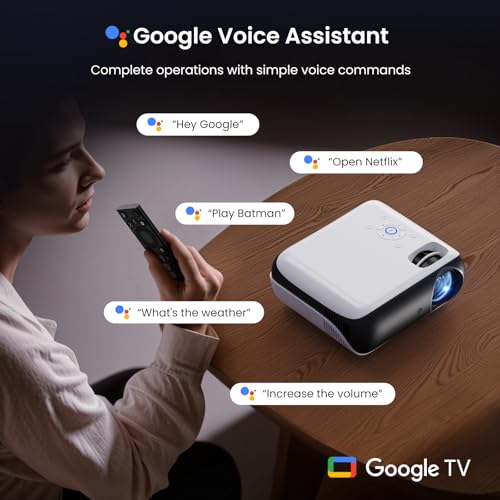
Both projectors eliminate the need for external streaming devices, but they take different approaches. The HAPPRUN runs Google TV 11.0 with official Netflix licensing—a notable advantage since many budget projectors lack official Netflix support. It includes Google Assistant for voice control and supports Chromecast for easy content casting from mobile devices.
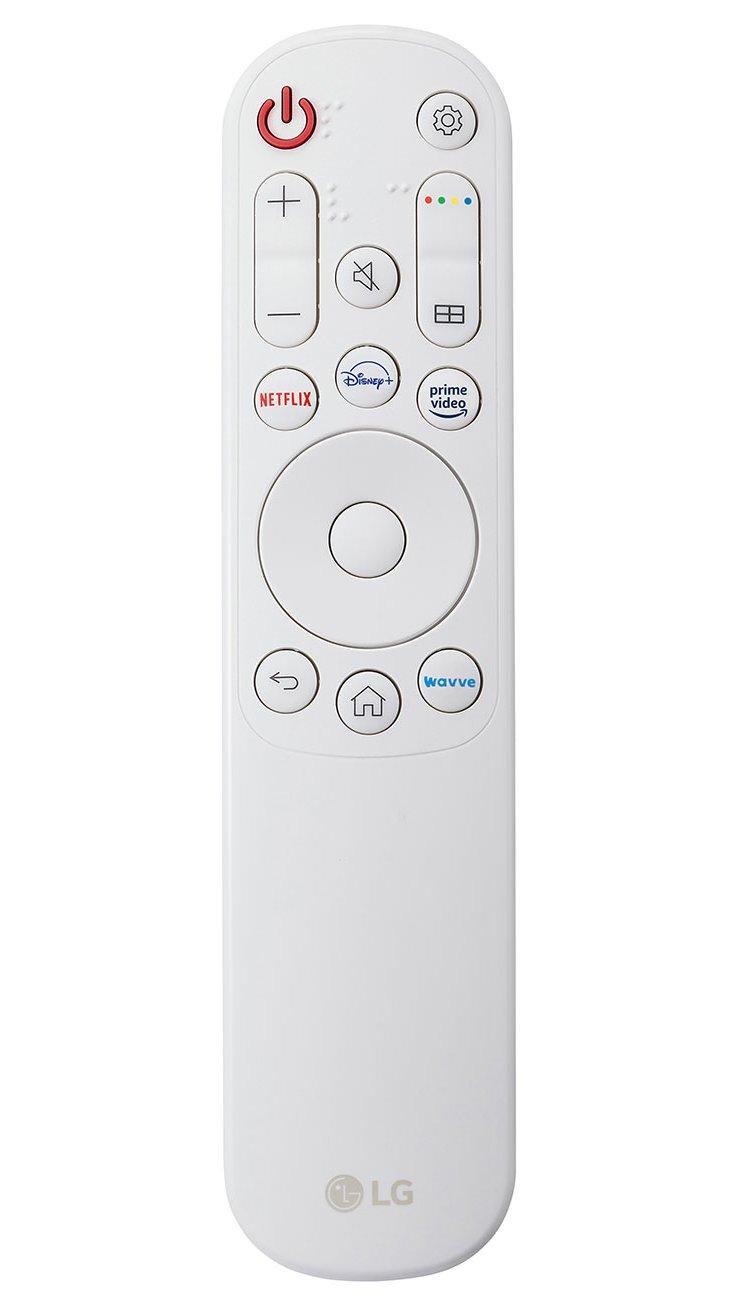
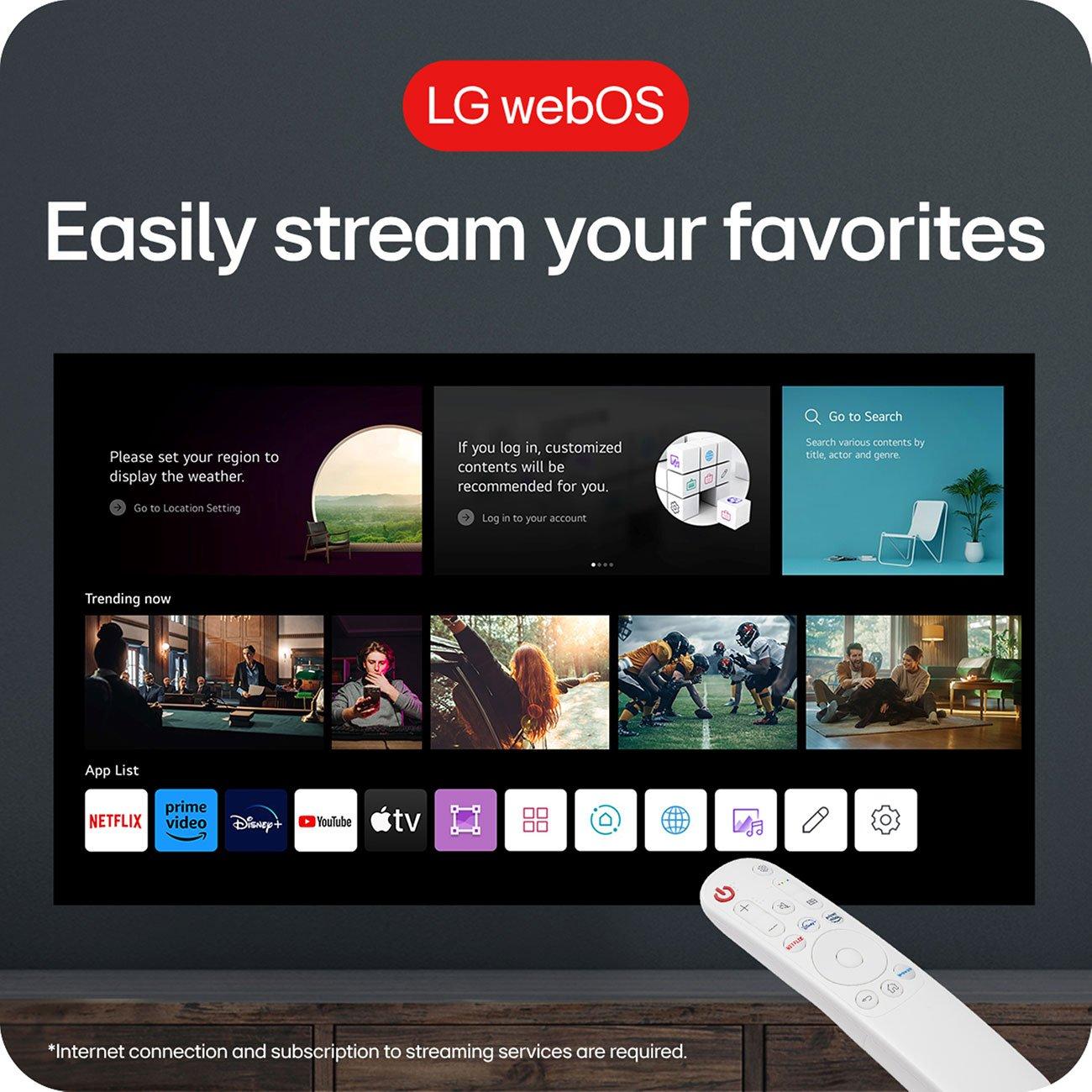
The LG CineBeam Q operates on webOS, LG's smart TV platform, with similar streaming app access including Netflix, YouTube, Prime Video, and Disney+. It emphasizes Apple ecosystem integration with AirPlay 2 support, making it particularly appealing for iPhone and iPad users.
Both platforms work well, with responsive interfaces and regular app updates. The choice often comes down to ecosystem preference: Google users will appreciate the HAPPRUN's integration, while Apple users will prefer the LG's AirPlay capabilities.
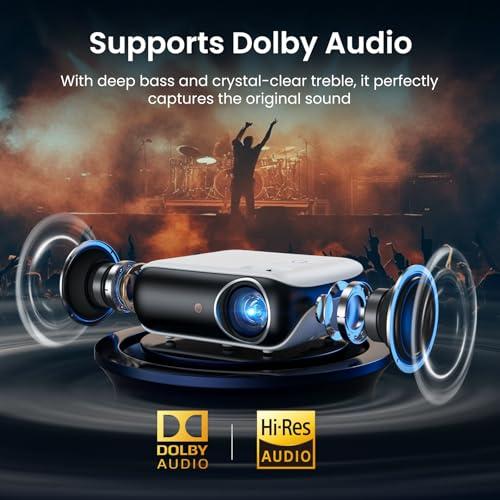
Neither projector excels in audio performance, but they handle it differently. The HAPPRUN includes an 8-watt speaker with Dolby-enhanced processing that produces adequate volume but hollow sound quality. User reviews consistently describe it as "loud enough" but recommend external speakers for serious viewing.
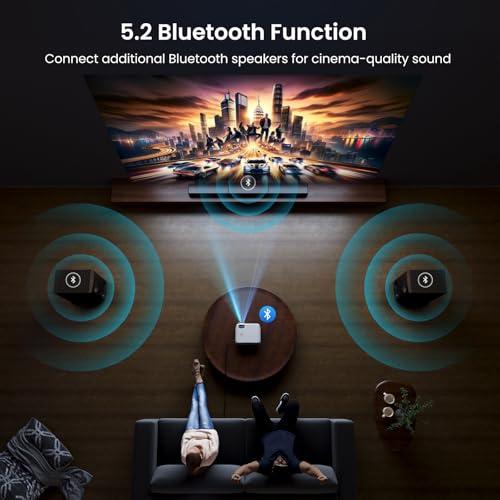
The LG CineBeam Q takes a minimalist approach with a 3-watt mono speaker clearly intended as a backup rather than the primary audio solution. Both projectors support Bluetooth audio output, allowing wireless connection to external speakers or soundbars.
For home theater applications, plan on investing in external audio regardless of which projector you choose. The built-in speakers serve adequately for casual viewing but won't deliver the immersive audio experience that complements large-screen visuals.
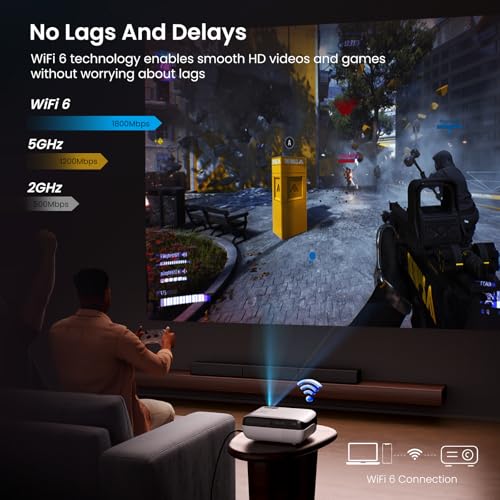
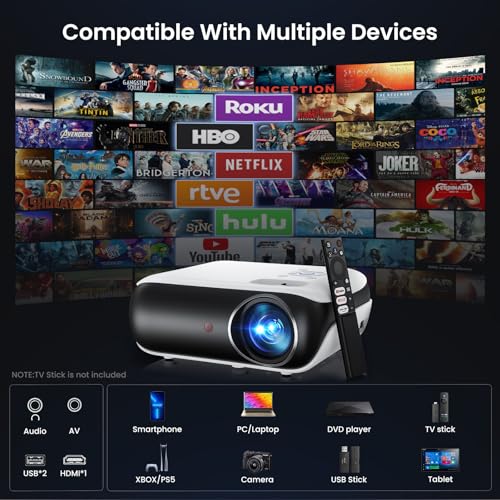
The HAPPRUN offers more comprehensive connectivity with HDMI, AV inputs, dual USB ports, and a headphone jack, plus Wi-Fi 6 and Bluetooth 5.2 support. This versatility makes it suitable for connecting gaming consoles, laptops, legacy devices, and external storage.
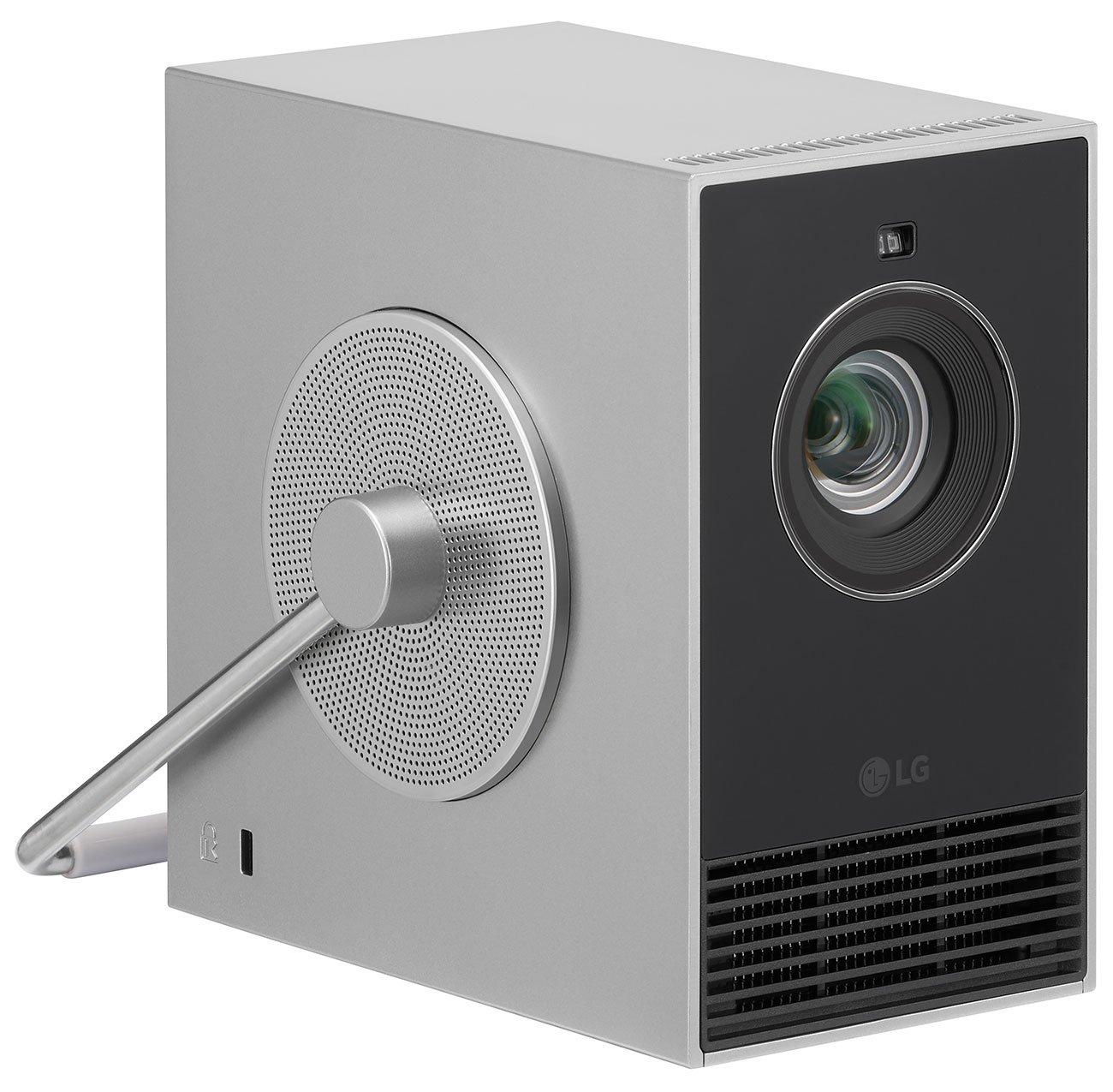
The LG CineBeam Q focuses on modern connectivity with HDMI, USB-C, and wireless options. The USB-C port enables power delivery from battery banks, making it truly portable for outdoor use or travel.
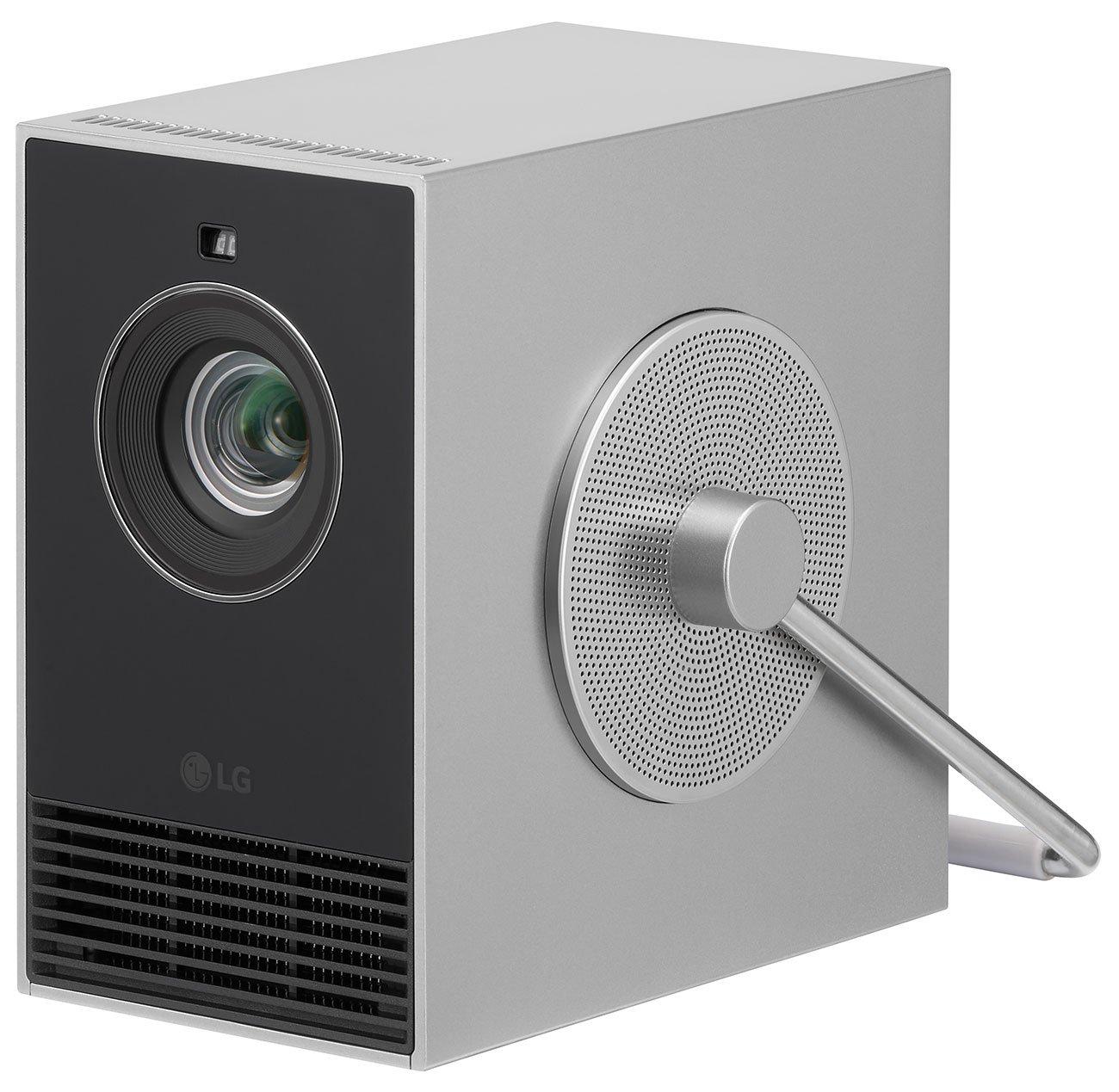
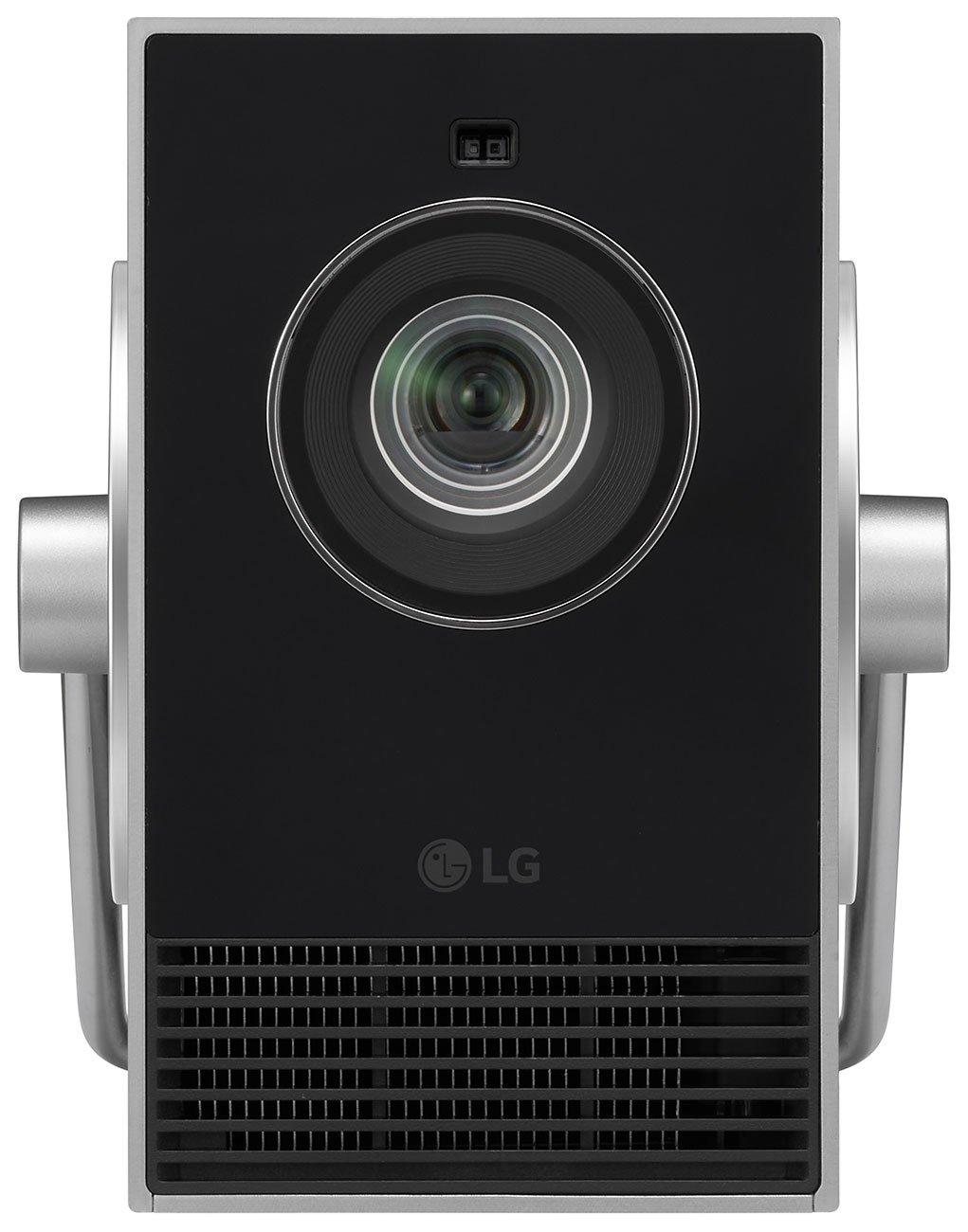
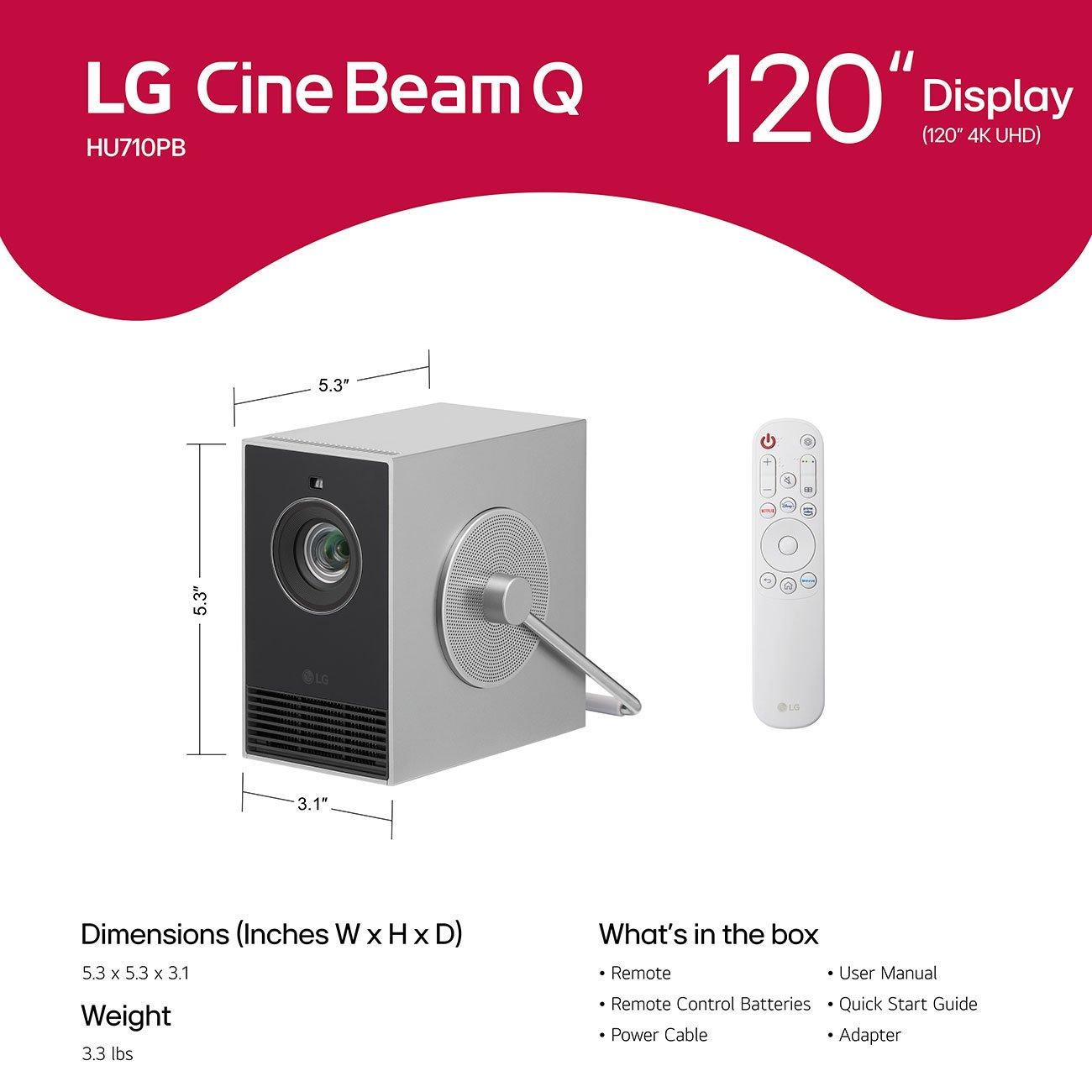
Released in 2024, the LG CineBeam Q represents LG's push into ultra-portable projection with its compact 3.3-pound, cube-shaped design and 360-degree rotating handle that doubles as a stand. It's designed for users who want to move their projector between rooms or take it on trips.
The HAPPRUN, also a recent release, prioritizes affordability and features over portability. While lightweight enough for occasional moves, it's clearly designed as a more stationary solution with standard tripod mounting capabilities.
The laser light source in the LG CineBeam Q offers significant long-term advantages. Rated for 20,000+ hours, it eliminates lamp replacement costs and maintains consistent brightness over time. Traditional lamp-based projectors like the HAPPRUN typically require lamp replacements every 2,000-5,000 hours, adding to total ownership costs.
However, the HAPPRUN's initial affordability means even with eventual lamp replacement, the total cost remains significantly lower than the LG projector's upfront investment.
For dedicated home theater applications, the choice depends on your priorities and budget. The LG CineBeam Q delivers superior image quality with true 4K resolution, accurate colors, and deep contrast ratios that approach dedicated home theater projector performance. Its auto-correction features make installation straightforward, even in challenging room layouts.
The HAPPRUN offers a more affordable entry into large-screen home entertainment. While it can't match the LG's image quality, it provides a satisfying viewing experience for casual users, especially when paired with a quality sound system and proper room darkening.
Choose the HAPPRUN Google TV Smart Projector if you want maximum screen size on a budget, need extensive connectivity options, prefer Google's ecosystem, and primarily watch content in dark rooms where the resolution difference is less noticeable. It's perfect for backyard movie nights, casual TV watching, and users who want the wow factor of enormous screen sizes without premium pricing.
Choose the LG CineBeam Q if image quality takes priority over price, you want true 4K resolution and professional-grade colors, need foolproof setup with auto-correction, frequently move your projector between locations, or integrate heavily with Apple devices. It's ideal for users who view projection as a long-term investment and want performance that approaches dedicated home theater equipment.
The decision ultimately comes down to whether you prioritize screen size and value (HAPPRUN) or image quality and convenience (LG CineBeam Q). Both represent solid choices within their respective categories, but they serve distinctly different user needs and expectations.
| HAPPRUN Google TV Smart Projector | LG CineBeam Q 4K UHD Portable Laser Projector |
|---|---|
| Native Resolution - Determines image sharpness and detail quality | |
| 1080p with 4K decoding (downscales 4K content) | True 4K UHD (3840 x 2160) - 4x sharper |
| Light Source Technology - Affects color accuracy and lifespan | |
| Traditional lamp (2,000-5,000 hour lifespan) | RGB laser (20,000+ hours, no replacement needed) |
| Brightness - Critical for ambient light performance | |
| 350-400 ANSI lumens (dark room essential) | 500 ANSI lumens (slightly better in low ambient light) |
| Maximum Screen Size - How big you can project | |
| Up to 300 inches (optimal at 100-200 inches) | Maximum 120 inches (consistent quality throughout range) |
| Contrast Ratio - Affects black levels and image depth | |
| 20,000:1 (good for the price point) | 450,000:1 (dramatically deeper blacks) |
| Color Gamut - Determines color vibrancy and accuracy | |
| Standard with HDR10+ enhancement | 154% DCI-P3 (professional cinema-grade colors) |
| Setup Features - How easy it is to get perfect alignment | |
| Manual vertical keystone only (requires precise positioning) | Auto keystone, autofocus, 15-point warping correction |
| Smart Platform - Built-in streaming capabilities | |
| Google TV 11.0 with official Netflix, Google Assistant | webOS with streaming apps, AirPlay 2 for Apple users |
| Audio System - Built-in speaker performance | |
| 8W Dolby-enhanced (adequate but hollow sound) | 3W mono (minimal, designed for external audio) |
| Connectivity Options - How many devices you can connect | |
| HDMI, AV, dual USB, headphone jack, Wi-Fi 6, Bluetooth 5.2 | HDMI, USB-C, wireless networking, Bluetooth |
| Portability - Ease of moving between locations | |
| Traditional design with tripod mount (occasional moves) | Ultra-compact 3.3 lbs cube with rotating handle |
| Value Proposition - What you get for your investment | |
| Maximum screen size and features for budget buyers | Premium image quality and convenience at higher cost |
The LG CineBeam Q is superior for dedicated home theater applications due to its true 4K resolution, professional-grade RGB laser technology, and 450,000:1 contrast ratio. It delivers sharper images, more accurate colors, and deeper blacks that create a cinematic experience. The HAPPRUN Google TV Smart Projector works well for casual home theater use on a budget, especially if you want screens larger than 120 inches, but it can't match the image quality of the LG CineBeam Q.
The LG CineBeam Q produces significantly better image quality with native 4K resolution (8.3 million pixels) compared to the HAPPRUN's 1080p resolution. The LG projector also features RGB laser technology covering 154% of the DCI-P3 color space, resulting in more vibrant and accurate colors. While the HAPPRUN Google TV Smart Projector supports 4K input, it downscales the content to 1080p for display.
Both projectors require darkened rooms for optimal viewing. The LG CineBeam Q produces 500 ANSI lumens while the HAPPRUN outputs 350-400 ANSI lumens. Neither is bright enough for comfortable daytime viewing in well-lit rooms. The LG CineBeam Q performs slightly better in low ambient light conditions, but both work best with controlled lighting.
The HAPPRUN Google TV Smart Projector can project images from 40 to 300 inches, making it ideal for users wanting enormous displays. The LG CineBeam Q is limited to 120 inches maximum. However, the HAPPRUN performs best at 100-200 inches, as larger sizes result in dimmer, less sharp images. The LG projector maintains consistent quality throughout its projection range.
The LG CineBeam Q is much easier to set up with automatic keystone correction, autofocus, and 15-point digital warping adjustment. It can be placed almost anywhere and automatically corrects image geometry. The HAPPRUN Google TV Smart Projector only offers manual vertical keystone correction and requires precise positioning, as any keystone adjustment can affect focus quality across the image.
Yes, both are smart projectors with built-in streaming platforms. The HAPPRUN Google TV Smart Projector runs Google TV 11.0 with official Netflix licensing, Google Assistant, and Chromecast support. The LG CineBeam Q uses webOS with similar streaming apps plus AirPlay 2 for Apple device integration. Both eliminate the need for external streaming devices.
Value depends on your priorities. The HAPPRUN Google TV Smart Projector offers exceptional value for budget-conscious buyers, providing large-screen entertainment with smart features at an affordable price. The LG CineBeam Q costs significantly more but justifies it with true 4K resolution, laser technology, and superior image quality. Consider the HAPPRUN for maximum features per dollar, or the LG for long-term image quality investment.
The LG CineBeam Q is designed for portability, weighing just 3.3 pounds with a compact cube design and 360-degree rotating handle. It's perfect for travel or moving between rooms. The HAPPRUN Google TV Smart Projector is lightweight enough for occasional moves but is designed more as a stationary solution with standard mounting options.
The HAPPRUN Google TV Smart Projector provides more comprehensive connectivity with HDMI, AV inputs, dual USB ports, headphone jack, Wi-Fi 6, and Bluetooth 5.2. The LG CineBeam Q focuses on modern connectivity with HDMI, USB-C (enabling battery power), wireless networking, and Bluetooth. The HAPPRUN better supports legacy devices and multiple connection types.
Neither projector excels at audio. The HAPPRUN Google TV Smart Projector has an 8-watt Dolby-enhanced speaker that's loud enough but sounds hollow. The LG CineBeam Q includes a minimal 3-watt mono speaker designed mainly as backup audio. Both support Bluetooth audio output, and external speakers are recommended for either projector for serious viewing.
The LG CineBeam Q offers superior longevity with its laser light source rated for 20,000+ hours without replacement. Traditional lamp-based projectors like the HAPPRUN Google TV Smart Projector typically require lamp replacements every 2,000-5,000 hours. While lamp replacement adds cost over time, the HAPPRUN's lower initial investment still makes it more affordable long-term for budget buyers.
Choose the HAPPRUN Google TV Smart Projector if you want maximum screen size on a budget, need extensive connectivity, prefer Google's ecosystem, and primarily watch in dark rooms. It's perfect for casual viewing and outdoor movie nights. Choose the LG CineBeam Q if image quality is your priority, you want true 4K resolution, need portable convenience with easy setup, or integrate with Apple devices. The LG is ideal for users treating projection as a long-term quality investment.
We've done our best to create useful and informative comparisons to help you decide what product to buy. Our research uses advanced automated methods to create this comparison and perfection is not possible - please contact us for corrections or questions. These are the sites we've researched in the creation of this article: youtube.com - topvisiontec.com - youtube.com - happrunprojector.com - youtube.com - happrunprojector.com - youtube.com - business.walmart.com - youtube.com - walmart.com - cordcuttersnews.com - nexpow.com - projectorcentral.com - lg.com - thefrogpadappliances.com - youtube.com - techradar.com - lg.com - avsforum.com - lg.com - tomsguide.com - jefflynch.com - hometheaterview.com - projectorreviews.com - youtube.com - avsforum.com - projectorcentral.com - pcrichard.com - bhphotovideo.com - youtube.com - lg.com - applerivertvandappliance.com - big-georges.com - queencityonline.com - lg.com - lg.com - lg.com - lgnewsroom.com - heimkino.de

Privacy Policy
Terms and Conditions - Affiliate Policy
Home Security
© Copyright 2008-2026.
11816 Inwood Rd #1211, Dallas, TX 75244