


Remember when portable projectors were dim, low-resolution affairs that could barely produce a watchable image even in pitch darkness? Those days are firmly behind us. Today's portable projectors have undergone a remarkable transformation, delivering impressive performance in increasingly compact and versatile packages.
The portable projector market has expanded dramatically since 2020, when pandemic lockdowns drove interest in home entertainment alternatives. What was once a niche category has flourished into a diverse ecosystem of options ranging from pocket-sized pico projectors to more substantial portable units that rival traditional home theater projectors in performance.
In this comparison, we're examining two standout models that represent different philosophies in portable projection: the rugged, feature-packed Anker Nebula Mars 3 (released in mid-2023) and the ultra-compact, image-quality-focused LG CineBeam Q (released in early 2024). Both deliver impressive technology, but they're engineered for notably different use cases.
The design approaches of these two projectors couldn't be more different, reflecting their intended use cases.
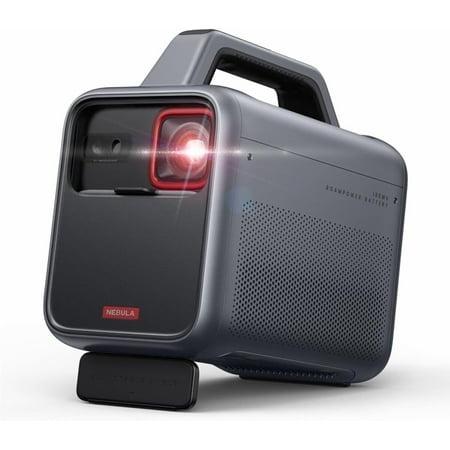
The Anker Nebula Mars 3 embraces a substantial form factor (6.3" x 10.2" x 9.8") that prioritizes durability and functionality over minimalism. At 9.9 pounds, it's not something you'll casually toss in a bag, but its integrated handle makes transport manageable. Think of it as the outdoor adventurer of projectors.
What's particularly impressive is Anker's focus on environmental protection. The Mars 3 features IPX3 water resistance, which means it can withstand water sprays at up to a 60-degree angle. While you wouldn't want to leave it out in heavy rain, it can handle light sprinkles or accidental splashes. The 0.5-meter drop resistance and 0.7mm dust protection further reinforce its outdoor credentials.
Since its release, this level of ruggedization has remained relatively rare in the portable projector space. Most competitors still require careful handling and protection from the elements.
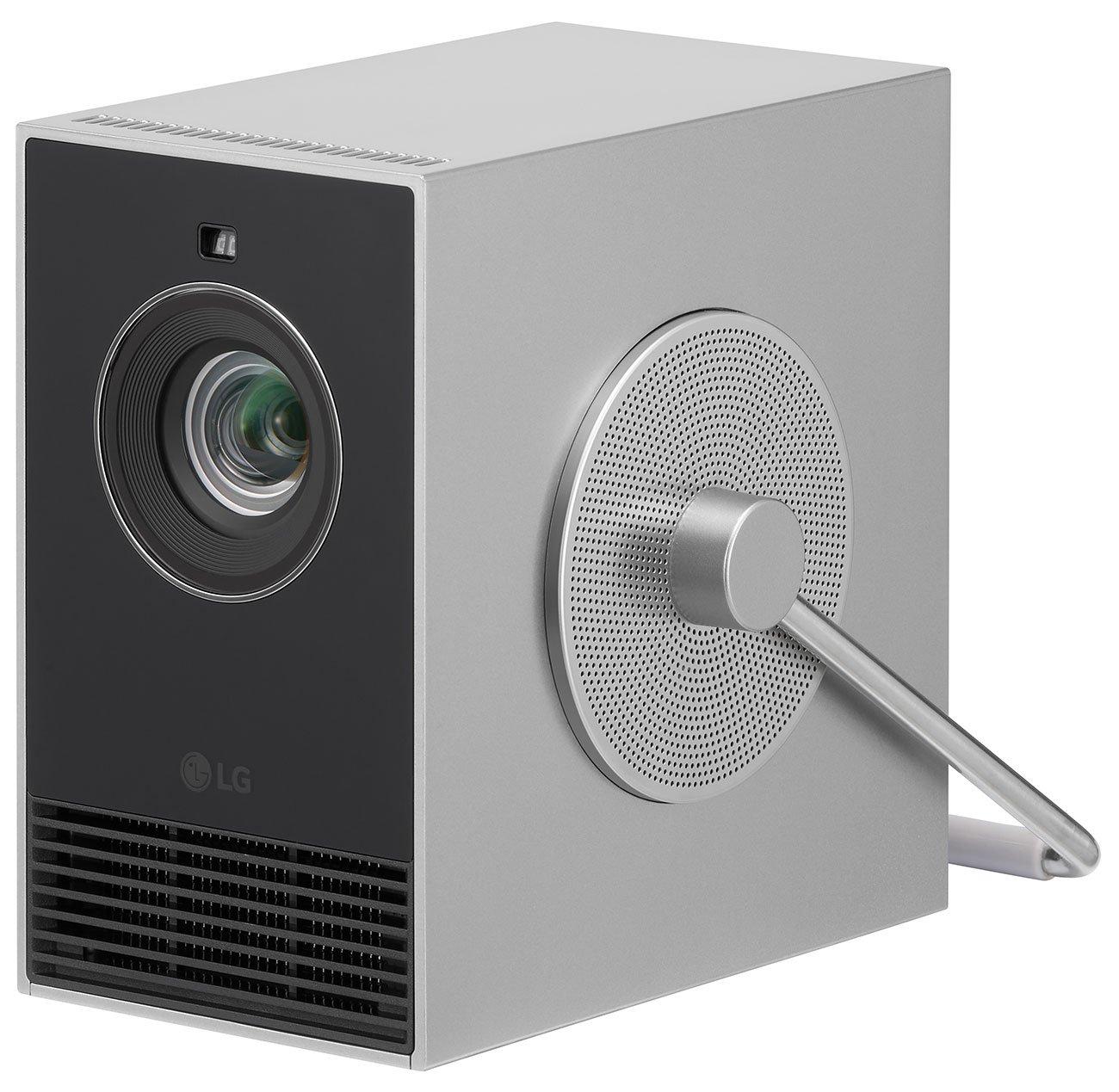
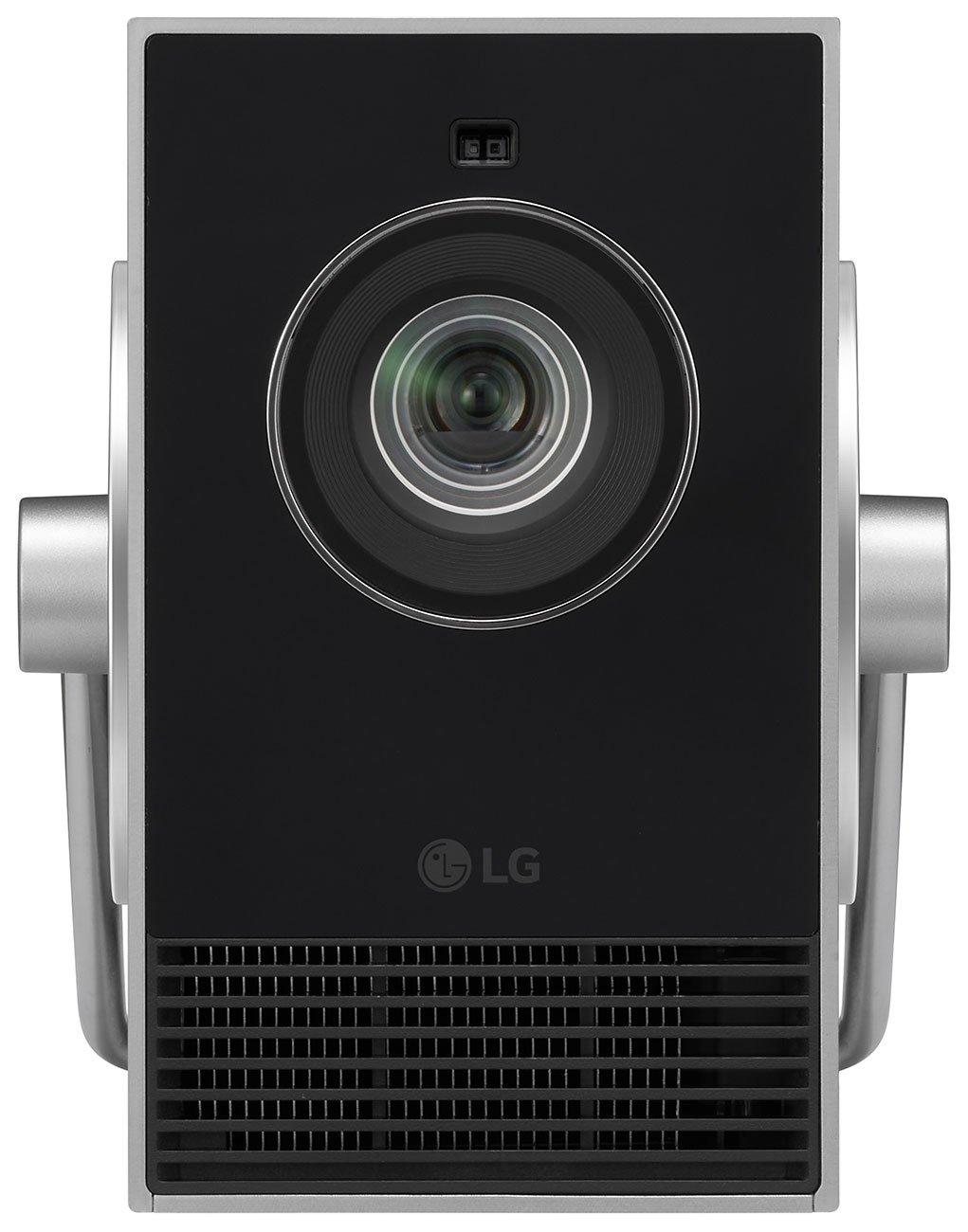
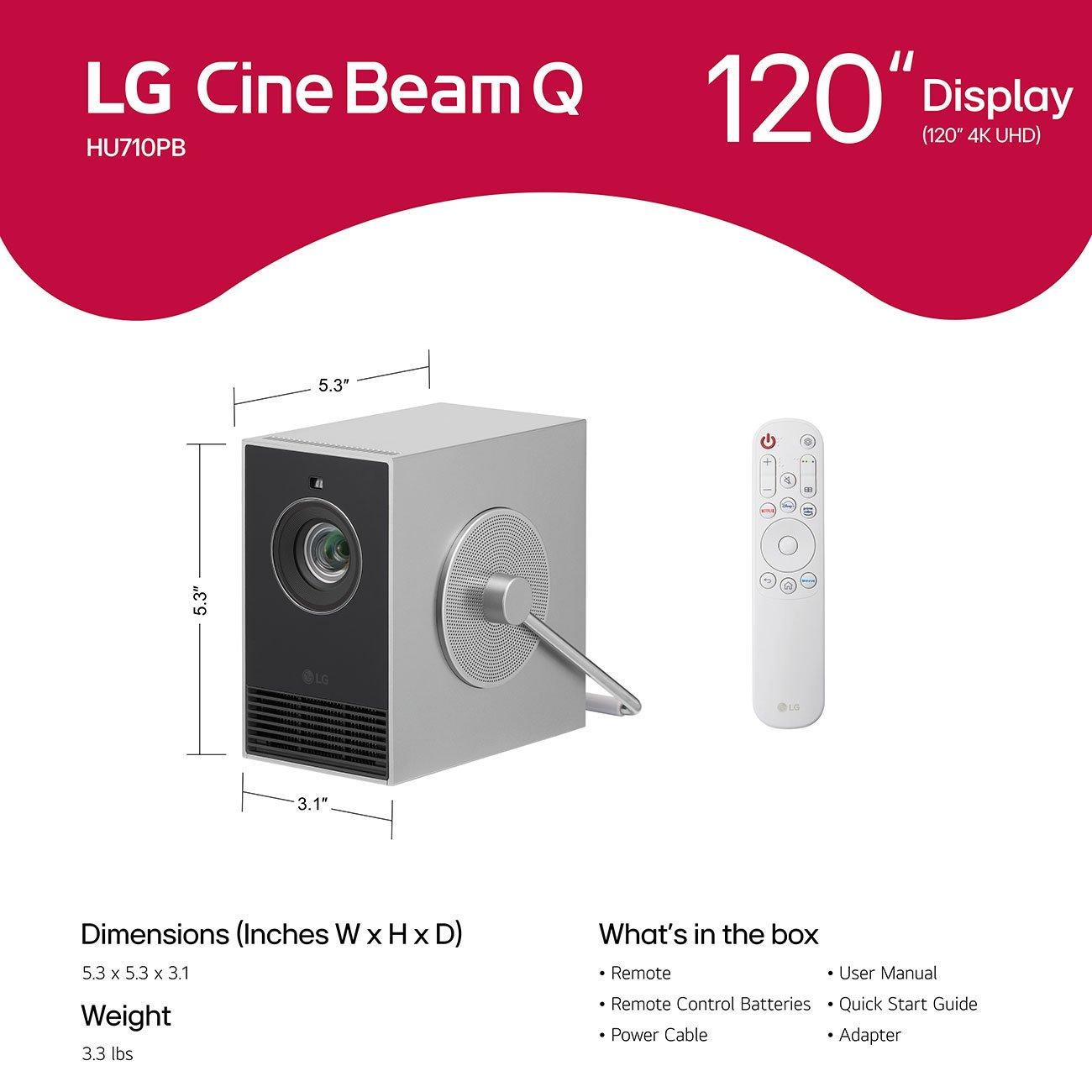
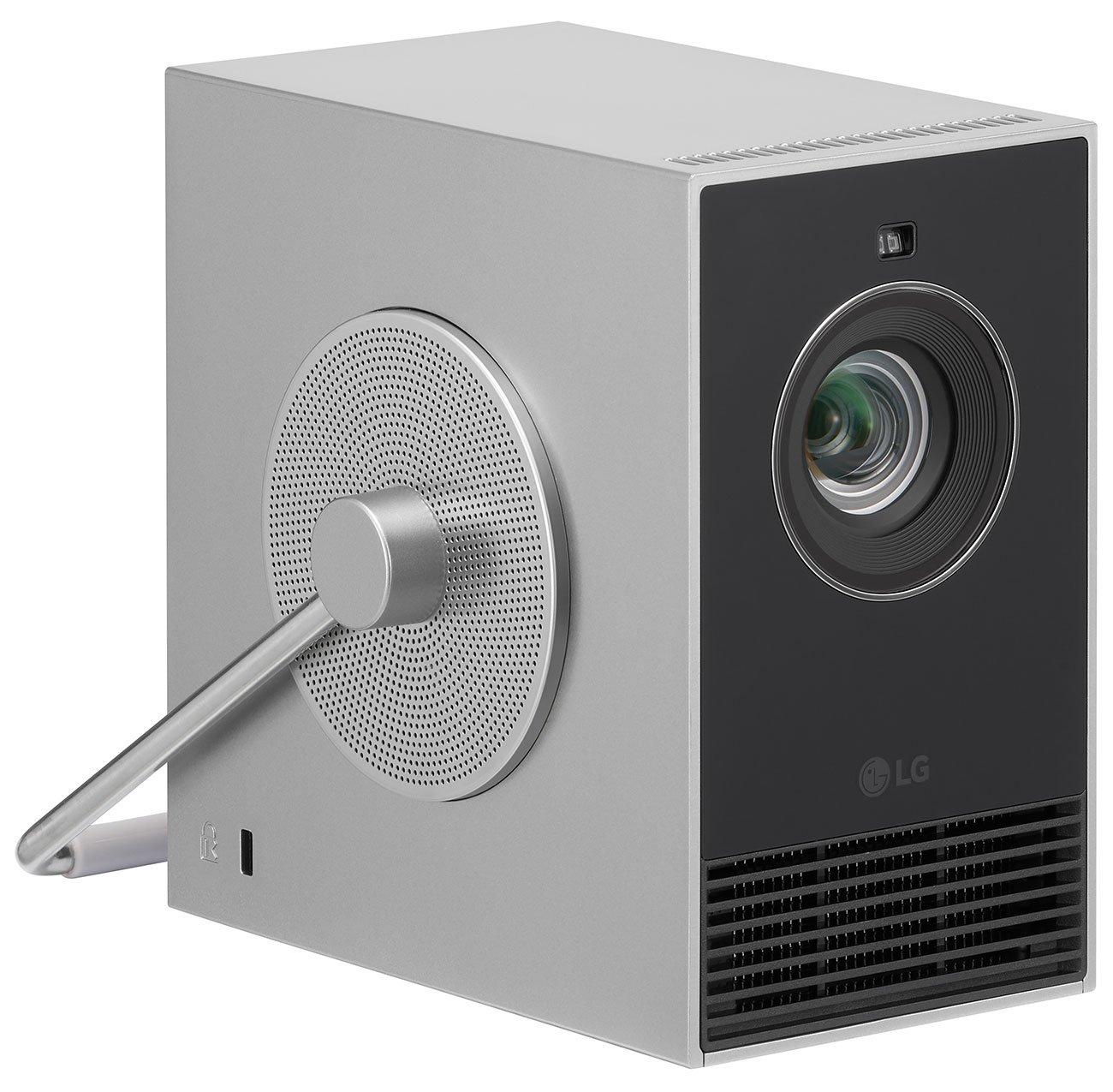
In stark contrast, the LG CineBeam Q epitomizes sleek, minimalist design. Its cube-shaped body measures just 5.3" x 3.1" x 5.3" and weighs a mere 3.3 pounds—less than half the weight of the Mars 3. LG has managed to pack 4K projection technology into a package roughly the size of a high-end Bluetooth speaker.
One of the CineBeam Q's most ingenious features is its 360-degree rotating handle that doubles as an adjustable stand. This allows for precise positioning without additional equipment—simply rotate the handle to the desired angle to achieve the perfect projection height.
While the CineBeam Q lacks the ruggedization of the Mars 3, its premium aluminum construction gives it a sophisticated aesthetic that looks at home in any modern living space. This is clearly a device designed for indoor use, with occasional transport between controlled environments.
When it comes to image quality, these projectors take noticeably different approaches, each with distinct advantages.
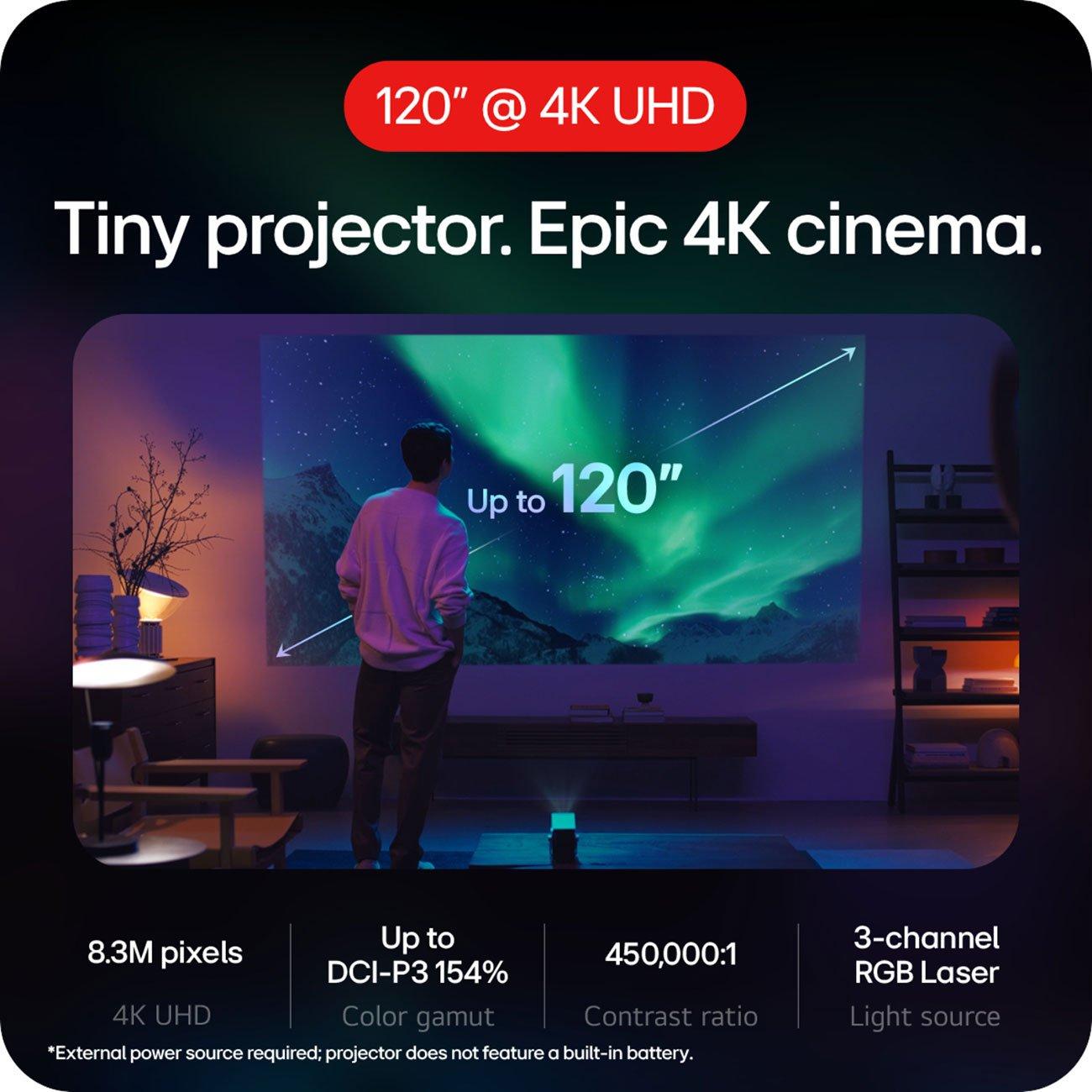
The LG CineBeam Q delivers true 4K UHD resolution (3840 x 2160), using XPR (eXpanded Pixel Resolution) technology on a DLP chip to produce 8.3 million distinct pixels. This is a remarkable technical achievement in such a compact projector. When projecting at 100 inches, the difference between 4K and 1080p is plainly visible—text appears sharper, textures show more detail, and the overall image has a crispness that's immediately apparent even to casual viewers.
The Anker Nebula Mars 3 offers a more conventional 1080p Full HD resolution. While this might seem underwhelming compared to 4K, it's important to consider the practical implications. At typical viewing distances and screen sizes under 100 inches, many viewers won't notice a dramatic difference in regular movie content. Additionally, the lower resolution requires less processing power and contributes to the Mars 3's better battery life.
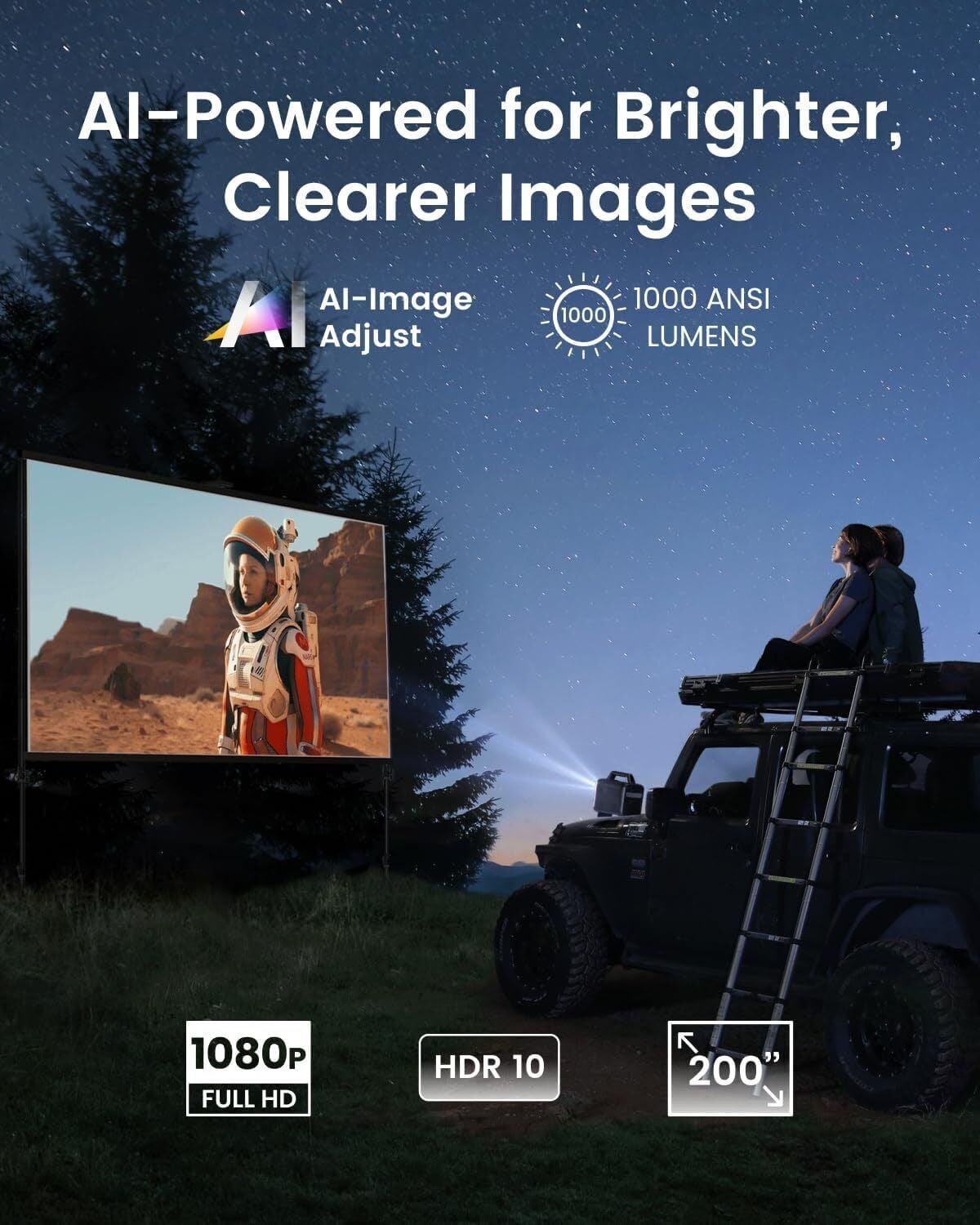
Where the Mars 3 establishes a clear advantage is in brightness—delivering 1000 ANSI lumens compared to the CineBeam Q's 500 ANSI lumens. This isn't just a technical specification; it fundamentally changes where and when you can use these projectors effectively.
ANSI lumens are a standardized measure of brightness that gives us an objective comparison between projectors. Unlike marketing-focused "LED lumens" that some manufacturers use, ANSI lumens provide a consistent benchmark for brightness.
With 1000 ANSI lumens, the Mars 3 can produce a viewable image even with some ambient light present—think twilight outdoor movie screenings or a living room with dimmed lights. By contrast, the CineBeam Q requires near-darkness to showcase its superior resolution and color capabilities. In a room with significant ambient light, much of the CineBeam Q's image quality advantage is negated by simple visibility issues.
This brightness difference represents one of the most critical practical distinctions between these two projectors. The Mars 3 offers flexibility in viewing environments, while the CineBeam Q demands optimal conditions.
The CineBeam Q utilizes a sophisticated 3-channel RGB laser light engine that produces exceptionally vibrant, accurate colors. This technology enables coverage of 154% of the DCI-P3 color space—the standard used in commercial digital cinema. In practice, this means the CineBeam Q can produce richer reds, deeper greens, and more vibrant blues than most projectors or TVs.
The Mars 3 uses a more conventional LED light source. While LED technology has improved dramatically in recent years, it still can't match the color purity and saturation of laser projection. In direct comparisons, the difference is noticeable—the CineBeam Q produces colors with a vibrancy and accuracy that the Mars 3 simply cannot match.
For cinema enthusiasts, this color advantage shouldn't be underestimated. When watching films like "Avatar" or "The Life of Pi" that rely heavily on rich, saturated colors, the CineBeam Q delivers a more immersive visual experience.
Perhaps the most fundamental practical difference between these projectors is their approach to power.
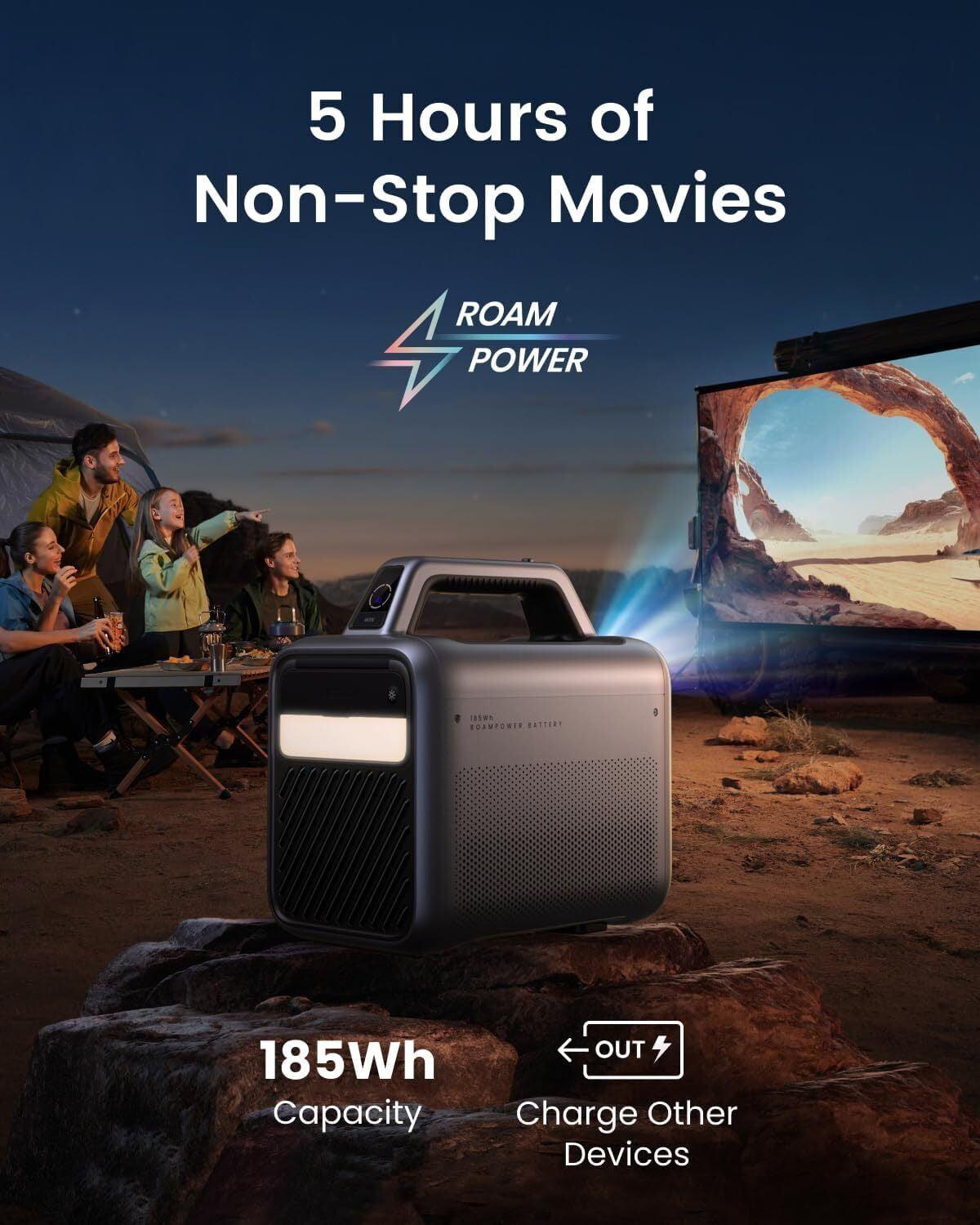
The Anker Nebula Mars 3 includes a substantial built-in battery that provides up to 5 hours of playback in Eco mode or about 2 hours in Standard mode. This true cordless operation is transformative for how you can use the projector. Backyard movie nights, camping trips, or presentations in locations without convenient power outlets all become possible without additional equipment.
The Mars 3 even takes this a step further by functioning as a power bank for other devices—you can charge your phone or tablet through its USB ports while using the projector. This "Swiss Army knife" approach to functionality makes it exceptionally versatile for outdoor adventures.
Since its release, few competitors have matched this combination of brightness and battery life, maintaining the Mars 3's position as one of the most versatile truly portable projectors available.
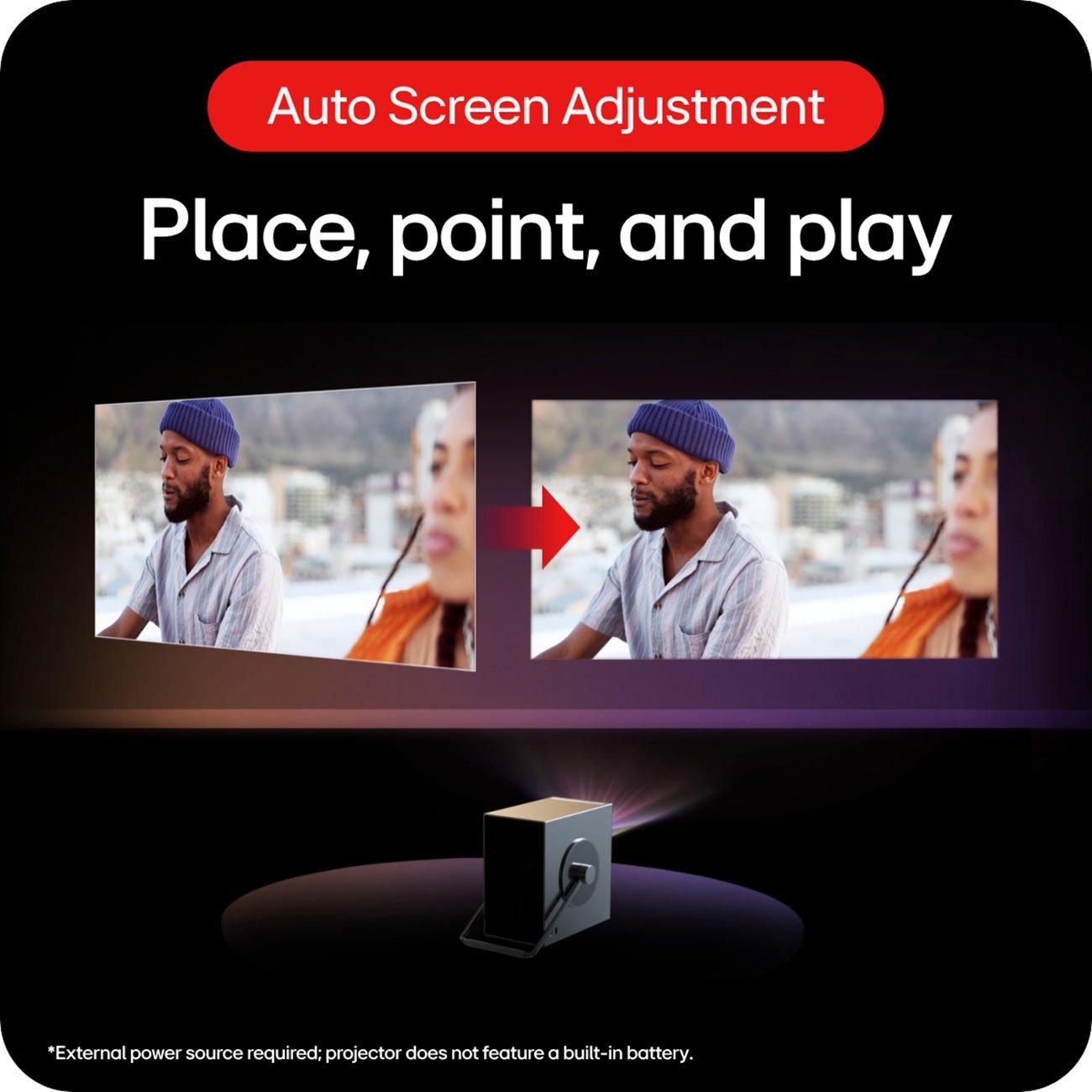
In contrast, the LG CineBeam Q requires constant external power. This design choice allowed LG's engineers to focus on maximizing image quality and minimizing size without compromising on resolution or color performance. The lack of a battery contributes to the CineBeam Q's remarkably compact form factor but restricts its use to environments with available power outlets.
For home theater enthusiasts who primarily use their projector in fixed locations, this limitation may be entirely acceptable. But it fundamentally changes how flexible the device is for impromptu movie nights or travel.
Audio is an often-overlooked aspect of projector performance, but it can make or break the viewing experience—especially in portable scenarios where external sound systems may not be practical.
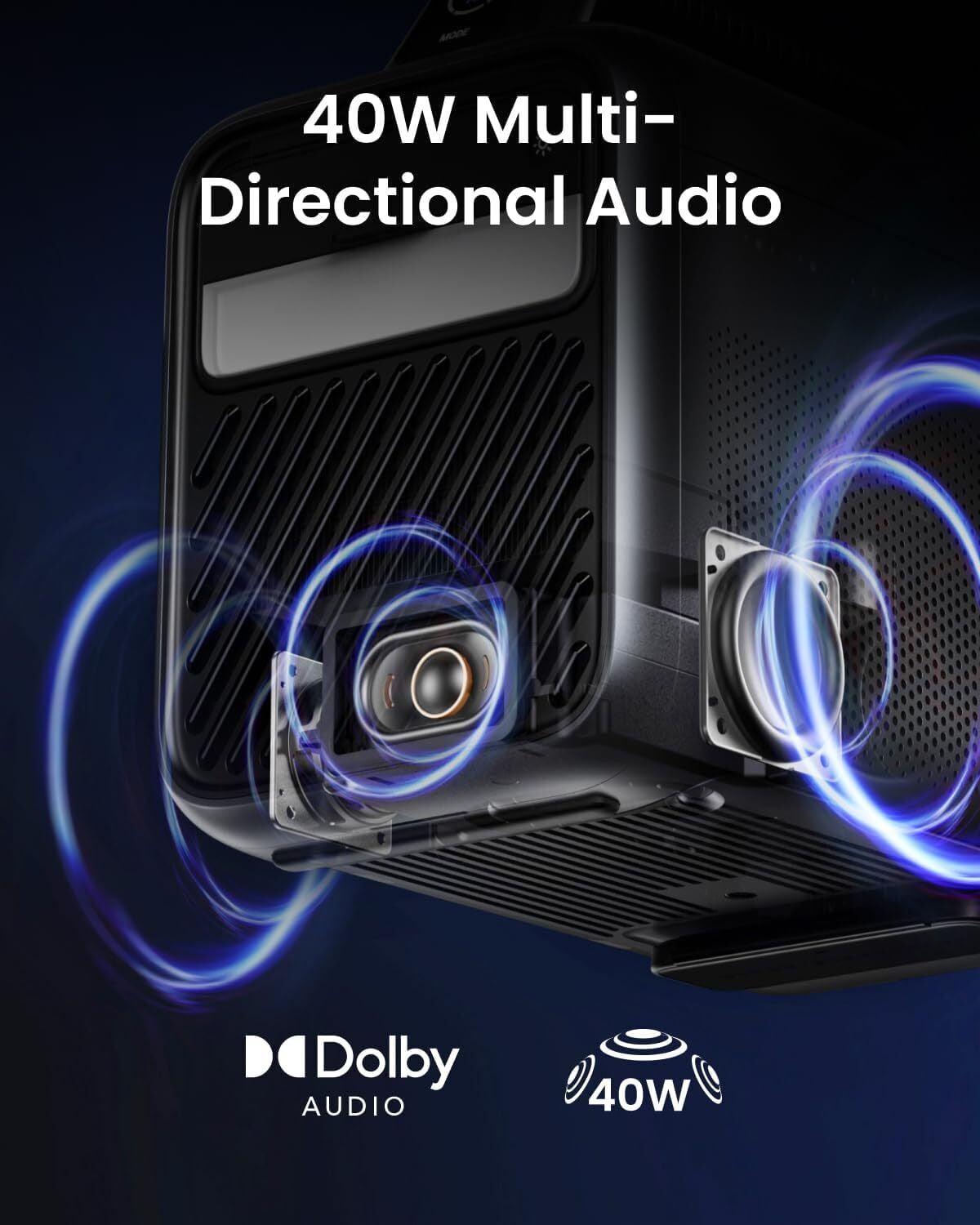
The Mars 3 features an impressive 40W 3-way speaker system with Dolby Audio support. This isn't just good "for a projector"—it produces genuinely room-filling sound with reasonable bass response and clear dialog. During outdoor movie screenings, the Mars 3's built-in speakers eliminate the need for additional audio equipment, truly making it an all-in-one solution.
This robust audio system represents a significant upgrade from previous Nebula models and addresses a common pain point with portable projectors—namely, their typically thin, inadequate sound quality.
The CineBeam Q includes only a basic 3W mono speaker that produces what can charitably be described as functional audio. Dialog is comprehensible, but any sense of immersion or dynamic range is absent. At higher volumes, distortion becomes evident, further limiting usefulness.
LG seems to have acknowledged this limitation by including dual Bluetooth audio output—allowing connection of two external Bluetooth speakers or headphones simultaneously. While this offers flexibility, it effectively means the CineBeam Q requires additional audio equipment for satisfying sound reproduction.
For home theater use, most users would connect the CineBeam Q to a dedicated sound system anyway, making the weak internal speaker less problematic. But it does add another element to consider when transporting the projector for use in different locations.
Both projectors offer sophisticated smart platforms, but with different strengths and limitations.
The Mars 3 runs Android TV 11.0, providing access to thousands of apps through the Google Play Store. This includes major streaming services like Netflix, Disney+, HBO Max, and YouTube. The built-in Chromecast functionality allows easy content sharing from compatible phones and tablets, while Google Assistant support enables voice control.
The Android TV interface has matured significantly since its introduction, becoming more intuitive and responsive. The Mars 3 includes 32GB of storage for app installation, which proves ample for most users' streaming needs.
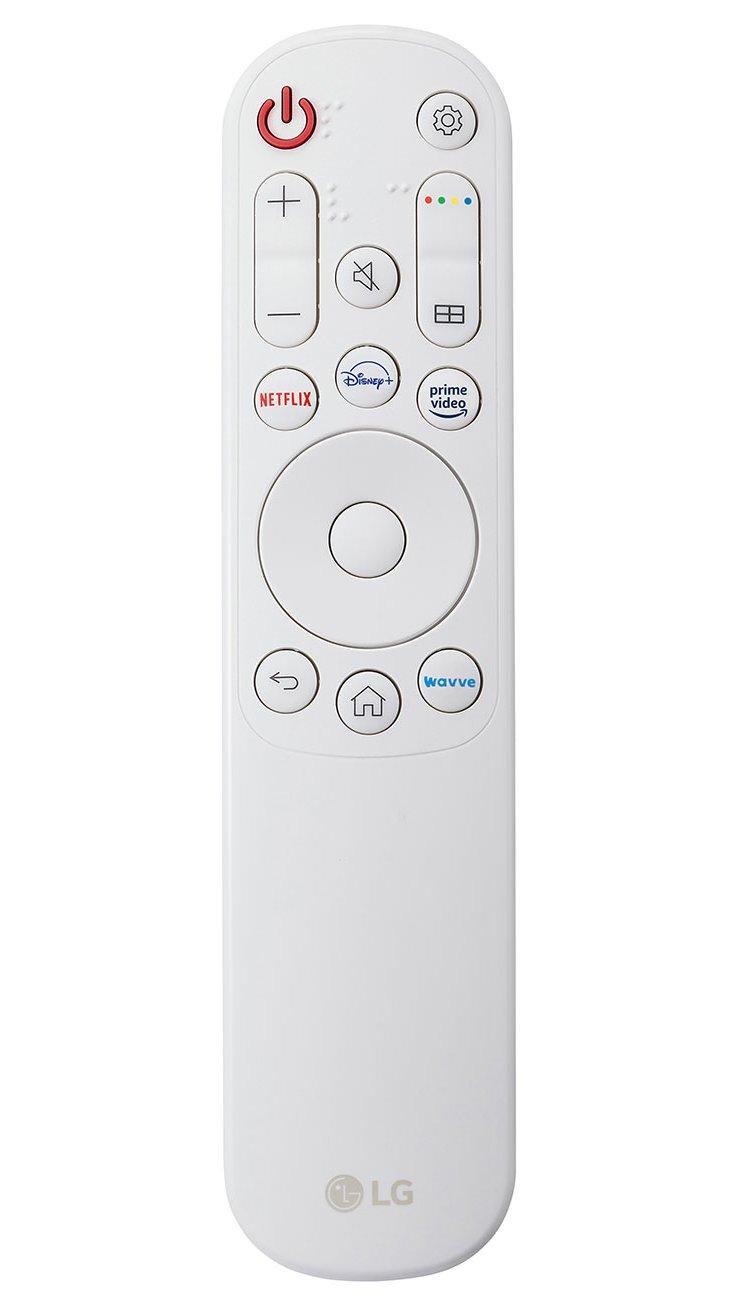
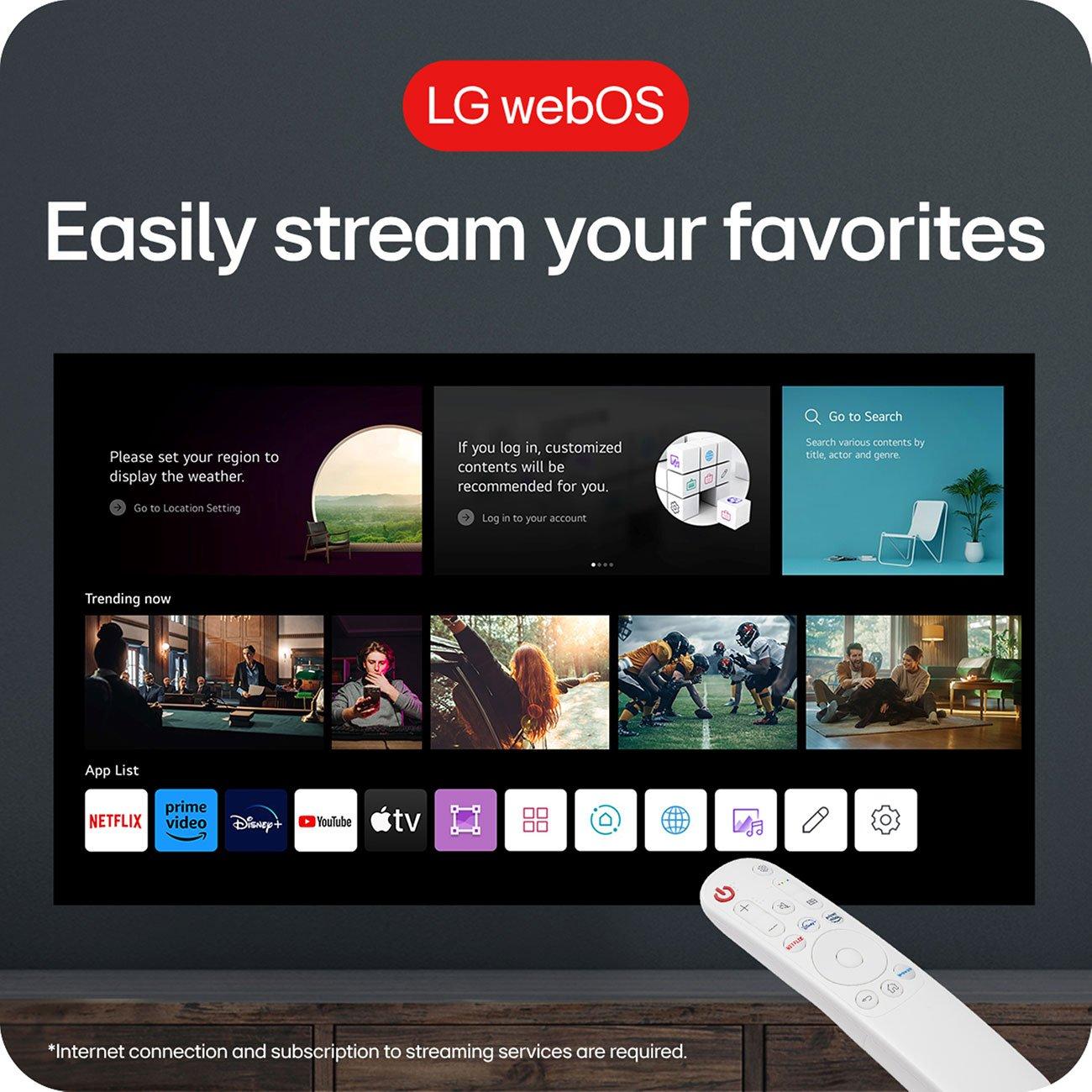
LG employs its proprietary webOS platform on the CineBeam Q—the same system used in its smart TVs. While webOS offers a clean, straightforward interface and supports major streaming services, it provides access to fewer apps overall compared to Android TV.
The CineBeam Q does include AirPlay 2 and Screen Share support, making it particularly friendly for Apple users wanting to mirror content from iPhones, iPads, or Macs. The webOS interface is generally more streamlined and less resource-intensive than Android TV, which contributes to the projector's snappy performance.
Physical connectivity options further highlight the different philosophies behind these projectors.
The Anker Nebula Mars 3 offers comprehensive connectivity with HDMI, USB-A, USB-C, and a 3.5mm audio output. This provides compatibility with virtually any source device—from game consoles to laptops to legacy DVD players. The dual-band Wi-Fi and Bluetooth 5.1 support ensure stable wireless connections.
The LG CineBeam Q takes a more minimalist approach with just HDMI and USB-C ports. While this covers most modern devices, it limits compatibility with older equipment. LG's approach reflects the current trend toward wireless connectivity and streamlined design, but it may require additional adapters for some use cases.
For dedicated home theater use, these projectors serve different niches based on their distinct capabilities.
The CineBeam Q's 4K resolution and superior color performance make it the better choice for cinephiles seeking maximum image quality in controlled environments. When used in a dedicated dark room with proper screen material, the laser projection system produces stunning results that rival more expensive home theater projectors. The compact size also makes it easier to mount discreetly or store when not in use.
The Mars 3 offers more flexibility for mixed-use scenarios. Its higher brightness makes it viable in living rooms where complete darkness isn't always practical, while the superior built-in audio eliminates the need for separate speaker systems in casual viewing situations. The battery power also enables temporary setups without running cables to wall outlets.
At approximately $1,000-$1,100, the Anker Nebula Mars 3 represents a substantial investment but delivers exceptional versatility. Its combination of outdoor durability, true portability with battery power, high brightness, and quality audio creates a complete package that requires no additional accessories.
The LG CineBeam Q costs approximately $1,299, positioning it as a premium option focused primarily on image quality. While it costs roughly 20% more than the Mars 3, it delivers significantly better resolution and color performance—provided you can use it in the right environment and are willing to address its audio limitations.
After thoroughly examining both projectors, the decision largely comes down to your specific use case and priorities:
Choose the Anker Nebula Mars 3 if:
The Mars 3 excels as a go-anywhere entertainment system that delivers good performance in a wide range of conditions. It's the projector equivalent of a high-quality Bluetooth speaker—designed to bring entertainment wherever you go without sacrificing too much quality.
Choose the LG CineBeam Q if:
The CineBeam Q represents the cutting edge of portable projector technology, cramming remarkable image quality into an incredibly compact form factor. For the discerning viewer who prioritizes visual fidelity above all else and can provide optimal viewing conditions, it delivers exceptional results.
Both the Anker Nebula Mars 3 and LG CineBeam Q represent impressive technological achievements, pushing the boundaries of what portable projectors can deliver. Your specific needs and viewing habits should guide your choice between these two excellent but distinctly different approaches to portable projection.
| Anker Nebula Mars 3 Outdoor Portable Projector | LG CineBeam Q 4K UHD Portable Laser Projector |
|---|---|
| Resolution - Determines image clarity and detail | |
| 1080p Full HD (sufficient for most content under 100") | 4K UHD (3840 x 2160) (noticeably sharper, especially at larger sizes) |
| Brightness - Critical for visibility in anything but complete darkness | |
| 1000 ANSI lumens (usable in dim rooms or twilight) | 500 ANSI lumens (requires near-darkness for optimal viewing) |
| Light Source - Affects color accuracy and lifespan | |
| LED with 25,000 hour lifespan | RGB laser with superior color (154% DCI-P3) and 20,000 hour lifespan |
| Portability - Size and weight impact how easily you can transport | |
| 9.9 lbs, 6.3" x 10.2" x 9.8" (bulkier but includes handle) | 3.3 lbs, 5.3" x 3.1" x 5.3" (ultra-compact with rotating handle/stand) |
| Battery - Determines true portability without power source | |
| Built-in battery: 5 hours (Eco mode), 2 hours (Standard) | No battery (requires constant external power) |
| Audio - Quality of built-in sound system | |
| 40W 3-way speaker system with Dolby Audio (robust, room-filling) | 3W mono speaker (inadequate, requires external audio) |
| Durability - Ability to withstand outdoor conditions | |
| IPX3 water resistance, 0.5m drop resistance, dust protection | Standard indoor design with no weather protection |
| Smart Platform - Access to streaming services | |
| Android TV 11.0 with Google Assistant and Chromecast | webOS with AirPlay 2 and Screen Share |
| Connectivity - Options for connecting devices | |
| HDMI, USB-A, USB-C, 3.5mm audio, Wi-Fi, Bluetooth 5.1 | HDMI, USB-C, Wi-Fi, Bluetooth |
| Price - Value proposition relative to features | |
| $1,000-$1,100 (better value for versatility) | $1,299 (premium price for superior image quality) |
| Best For - Primary use case | |
| Versatile indoor/outdoor use, environments with some ambient light | Premium image quality in controlled dark environments |
The Anker Nebula Mars 3 is significantly brighter with 1000 ANSI lumens compared to the LG CineBeam Q's 500 ANSI lumens. This makes the Mars 3 much more suitable for rooms with ambient light or outdoor viewing at dusk, while the CineBeam Q requires near-darkness to show its best image quality.
The LG CineBeam Q offers superior 4K UHD resolution (3840 x 2160), while the Anker Nebula Mars 3 provides 1080p Full HD resolution. The CineBeam Q's higher resolution results in noticeably sharper images and more detail, especially when projecting at larger screen sizes over 100 inches.
Yes, but with important differences. The Anker Nebula Mars 3 is specifically designed for outdoor use with IPX3 water resistance, drop resistance, and dust protection, plus a built-in battery for true portability. The LG CineBeam Q requires constant power and has no weather protection, making it primarily suited for indoor use.
For dedicated home theater use in a controlled dark room, the LG CineBeam Q provides superior image quality with 4K resolution and better color reproduction from its RGB laser light source. However, the Anker Nebula Mars 3 is more versatile for multipurpose rooms where complete darkness isn't always possible, thanks to its higher brightness.
Both have built-in speakers, but with major differences. The Anker Nebula Mars 3 features a powerful 40W 3-way speaker system with Dolby Audio that provides room-filling sound. The LG CineBeam Q has just a basic 3W mono speaker that most users will find inadequate, requiring external speakers for satisfying audio.
The Anker Nebula Mars 3 includes a built-in battery that lasts up to 5 hours in Eco mode or 2 hours in Standard mode, allowing for truly cordless operation. The LG CineBeam Q does not have a built-in battery and requires constant connection to an external power source.
While both are considered portable, the LG CineBeam Q is significantly more compact and lightweight at just 3.3 pounds and measuring 5.3" x 3.1" x 5.3". The Anker Nebula Mars 3 is larger and heavier at 9.9 pounds with dimensions of 6.3" x 10.2" x 9.8", though it offers the advantage of battery power for true portability.
Yes, both projectors feature smart platforms. The Anker Nebula Mars 3 runs Android TV 11.0 with access to thousands of apps including major streaming services, plus Chromecast and Google Assistant support. The LG CineBeam Q uses LG's webOS platform with popular streaming apps and supports AirPlay 2 and Screen Share.
The LG CineBeam Q delivers superior picture quality for movies with its 4K resolution and RGB laser light source that produces more vivid, accurate colors (154% of DCI-P3 color gamut). However, the Anker Nebula Mars 3 performs better in environments with some ambient light due to its higher brightness.
The Anker Nebula Mars 3 typically costs between $1,000-$1,100, while the LG CineBeam Q is priced higher at approximately $1,299. The price difference reflects the CineBeam Q's superior resolution and laser technology versus the Mars 3's greater versatility and battery power.
For gaming, the Anker Nebula Mars 3 offers better brightness which helps maintain visibility in action sequences, while the LG CineBeam Q provides sharper 4K resolution that shows more detail in graphics. Neither projector advertises particularly low input lag, so serious competitive gamers might want to consider dedicated gaming projectors instead.
If you need a versatile projector for both indoor and outdoor use in various lighting conditions, the Anker Nebula Mars 3 is the better choice with its higher brightness, battery power, weather resistance, and better built-in sound. If you prioritize image quality above all else and will use it primarily in controlled dark environments, the LG CineBeam Q offers superior resolution and color performance.
We've done our best to create useful and informative comparisons to help you decide what product to buy. Our research uses advanced automated methods to create this comparison and perfection is not possible - please contact us for corrections or questions. These are the sites we've researched in the creation of this article: techradar.com - seenebula.com - thesmarthomehookup.com - yuenx.com - projectorcentral.com - seenebula.com - youtube.com - youtube.com - youtube.com - cnet.com - projectorreviews.com - youtube.com - youtube.com - projectorcentral.com - seenebula.com - youtube.com - yuenx.com - projectorcentral.com - lg.com - thefrogpadappliances.com - youtube.com - techradar.com - lg.com - avsforum.com - lg.com - tomsguide.com - jefflynch.com - hometheaterview.com - projectorreviews.com - youtube.com - avsforum.com - projectorcentral.com - pcrichard.com - bhphotovideo.com - youtube.com - lg.com - applerivertvandappliance.com - big-georges.com - queencityonline.com - lg.com - lg.com - lg.com - lgnewsroom.com - heimkino.de

Privacy Policy
Terms and Conditions - Affiliate Policy
Home Security
© Copyright 2008-2026.
11816 Inwood Rd #1211, Dallas, TX 75244