


When Netflix changed how we watch movies and streaming became king, projectors suddenly made sense for regular people again. You don't need a dedicated theater room anymore—just a blank wall and the right portable projector can transform any space into your personal cinema. But with options ranging from ultra-budget models to premium laser-powered units, choosing the right one feels overwhelming.
Two projectors that perfectly illustrate this range are the TCL C1 Google TV Portable Projector and the LG CineBeam Q 4K UHD Portable Laser Projector. Released in 2024 and 2025 respectively, they represent completely different philosophies: one prioritizes accessibility and convenience, while the other focuses on premium image quality. Understanding which approach fits your needs will save you from buyer's remorse and help you get the most entertainment value for your money.
Before diving into specifics, let's clarify what makes a projector "portable" and why that matters. Traditional home theater projectors are large, require ceiling mounting, and need dedicated dark rooms to perform well. Portable projectors, by contrast, are designed to be moved around easily, set up quickly, and work in various lighting conditions—though some handle these challenges much better than others.
The key technical specs that determine a projector's performance are brightness (measured in lumens), resolution, contrast ratio, and color accuracy. Brightness determines how well you'll see the image in different lighting conditions. Resolution affects how sharp and detailed your movies will look. Contrast ratio (the difference between the darkest blacks and brightest whites) impacts how dramatic and realistic images appear. Color accuracy determines whether skin tones look natural and whether that sunset scene actually looks like a sunset.
What's changed dramatically since 2020 is that portable projectors now integrate smart TV platforms directly, eliminating the need for external streaming devices. They also feature automatic adjustment technologies that handle focus and image correction without manual tweaking. These improvements have made projectors genuinely user-friendly for the first time.
The TCL C1 represents something genuinely new in the projector world. At roughly a quarter of the price of premium alternatives (at the time of writing), it doesn't just cut costs—it rethinks what a portable projector should do.
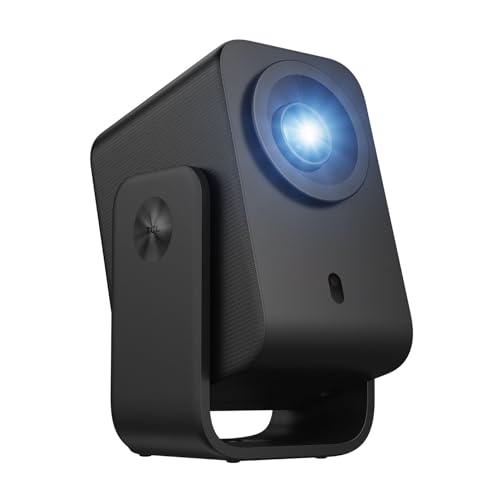
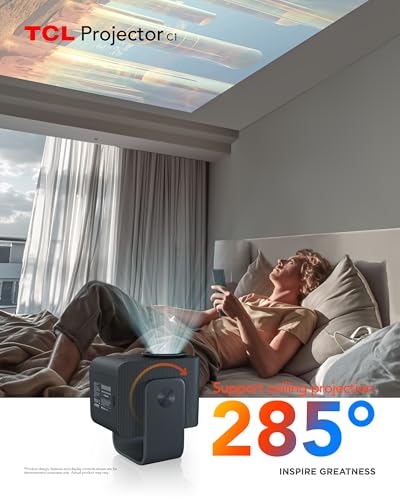
The TCL C1's most distinctive feature is its 285-degree rotating gimbal stand. This isn't just a fancy base; it fundamentally changes how you use the projector. Traditional projectors require you to position them precisely relative to your screen or wall, often requiring tables, shelves, or complex mounting. The gimbal lets you place the TCL C1 anywhere and rotate the projection head to aim at any surface—including the ceiling above your bed.
This flexibility solves real problems. Want to watch Netflix while lying down? Point it at the ceiling. Need to project in a cramped dorm room? The gimbal adjusts to work around furniture and obstacles. Traditional projectors would require you to rearrange your entire room or accept a tilted, distorted image.
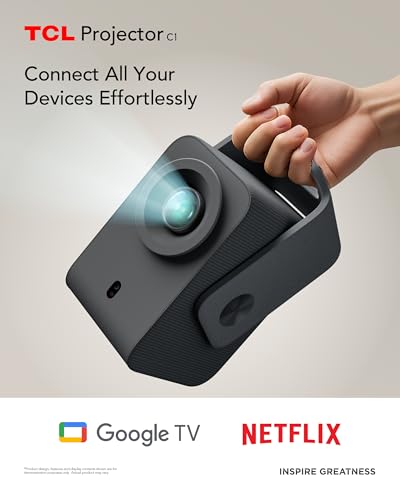
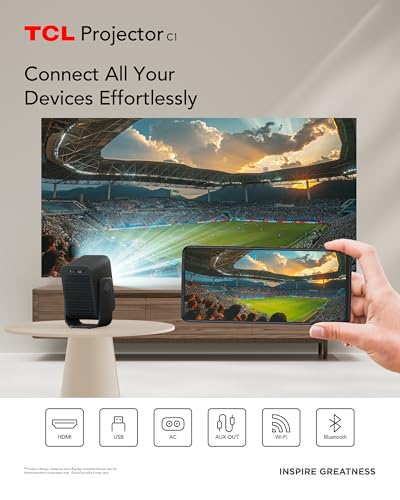
The TCL C1 runs full Google TV, complete with official Netflix certification—something surprisingly rare in budget projectors. This means you get the same interface you'd find on premium smart TVs, with access to thousands of streaming apps, voice control through Google Assistant, and seamless casting from your phone.
The difference between having proper smart TV integration versus relying on external streaming devices is significant. With built-in Google TV, you grab one power cord, plug it in, and you're watching content. No HDMI dongles, no additional remotes, no compatibility issues. For casual users who just want to watch movies without technical hassles, this integration is worth hundreds of dollars in convenience.
The TCL C1's image quality centers around its 1080p LCD panel and LED light source producing 230 ISO lumens. In technical terms, this means it displays full HD resolution (1920×1080 pixels) but with relatively modest brightness. Our research into user experiences consistently shows the projector delivers surprisingly good image quality in its intended environment—completely dark rooms.
The TrueHue technology processes each frame to optimize color and contrast dynamically. While this won't match professional-grade color calibration, it produces smooth, film-like images that look natural rather than oversaturated. Users report that colors appear accurate in Standard mode, though switching to Vivid mode provides more punch for content that benefits from enhanced saturation.
The critical limitation is brightness. At 230 ISO lumens, the TCL C1 requires near-complete darkness to produce a watchable image. Even lamp light from across the room will wash out the picture significantly. This restricts its use to bedrooms, basements, or carefully controlled lighting situations.
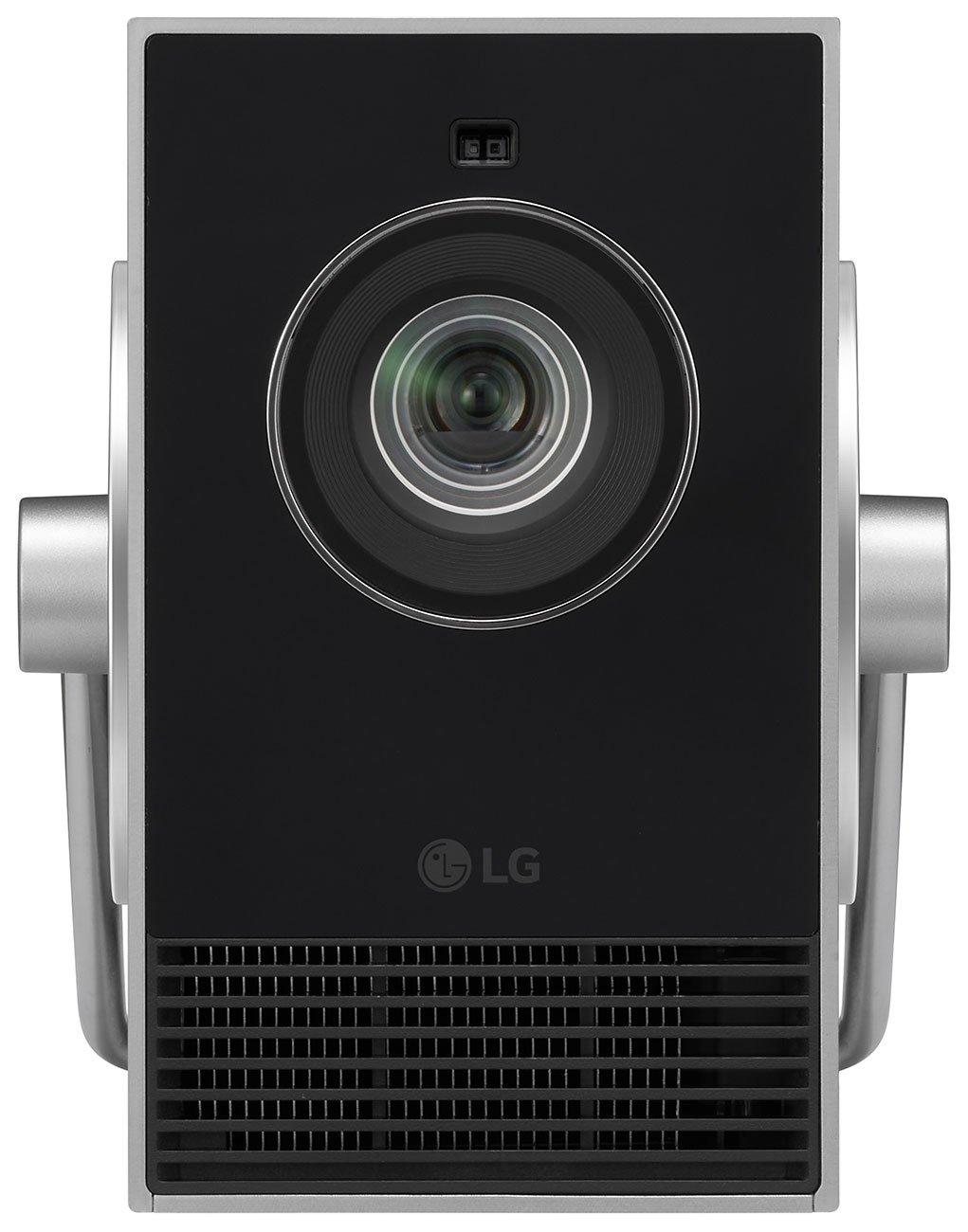
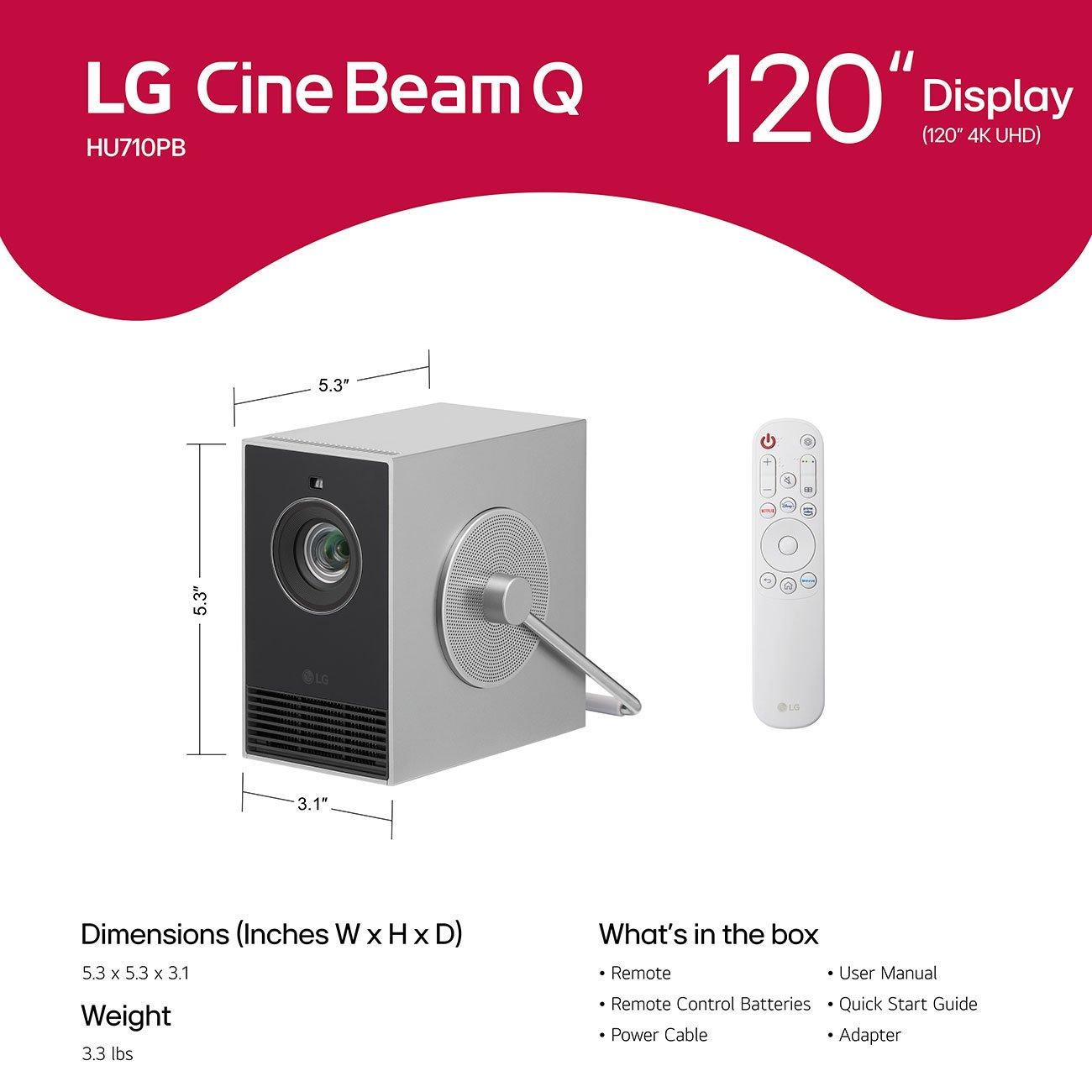
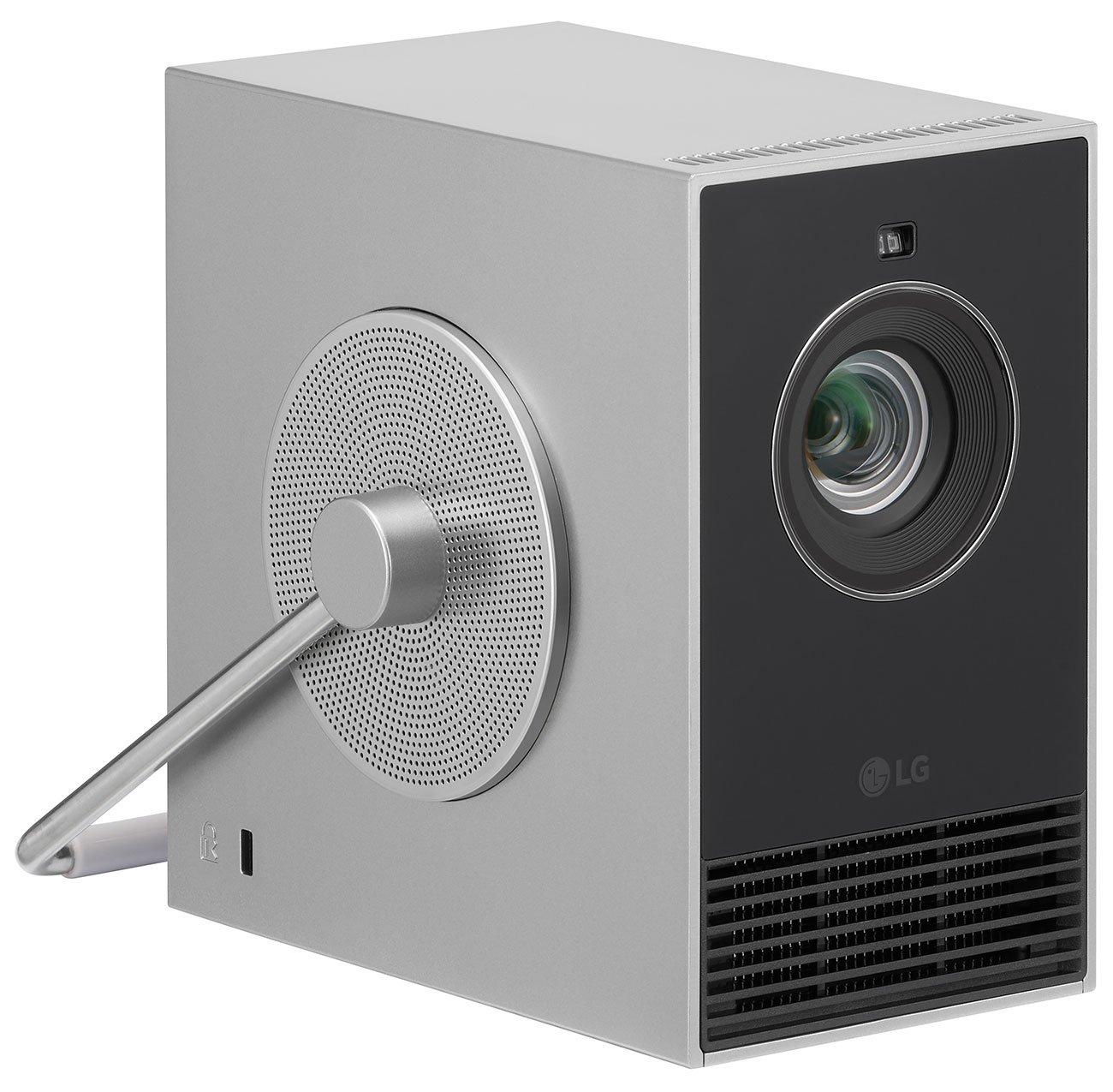
The LG CineBeam Q takes an entirely different approach, prioritizing image quality and versatility over affordability. Released in 2024, it incorporates laser projection technology that was previously limited to commercial or high-end home theater installations.
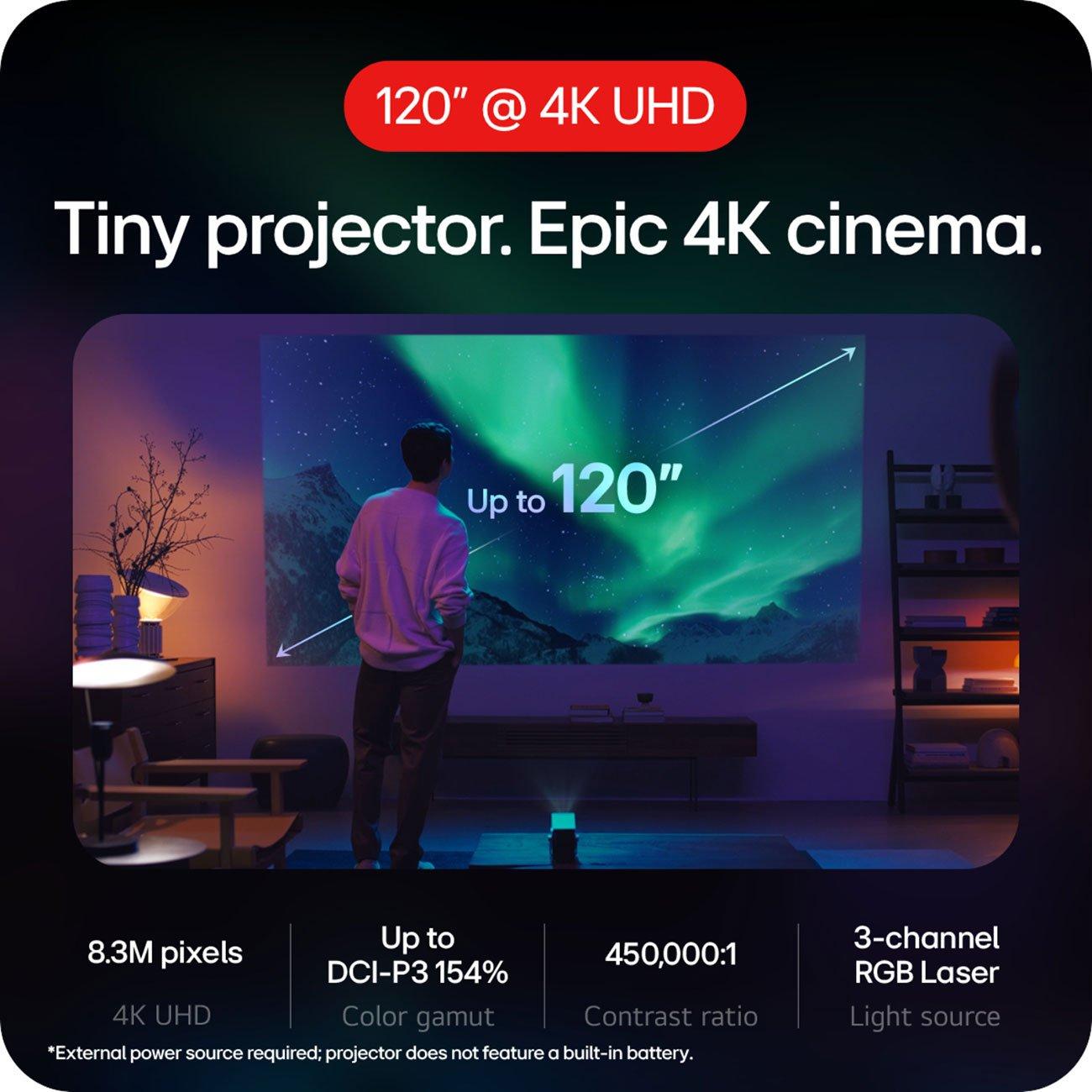
The LG CineBeam Q delivers native 4K UHD resolution (3840×2160), providing four times the pixel density of 1080p projectors like the TCL C1. More importantly, it uses a three-channel RGB laser light source instead of LED technology. This technical difference creates several advantages: lasers produce more accurate colors, maintain brightness over time without degradation, and achieve much higher contrast ratios.
The 450,000:1 dynamic contrast ratio means the LG CineBeam Q can display deeper blacks and brighter whites simultaneously, creating more dramatic and realistic images. The 154% DCI-P3 color gamut coverage ensures colors appear as directors intended, with particular strength in reds and greens that LCD projectors often struggle to reproduce accurately.
With over 500 ANSI lumens of laser brightness, the LG CineBeam Q handles ambient light far better than LED-based competitors. While still not suitable for bright daylight viewing, it works acceptably in rooms with moderate lighting—think evening family rooms with some lamps on, or spaces with light leaking in from adjacent rooms.
This brightness advantage expands the projector's practical use cases significantly. You're not limited to cave-dark environments; you can use it for casual viewing while others in the house have lights on, or for presentations where complete darkness isn't practical.
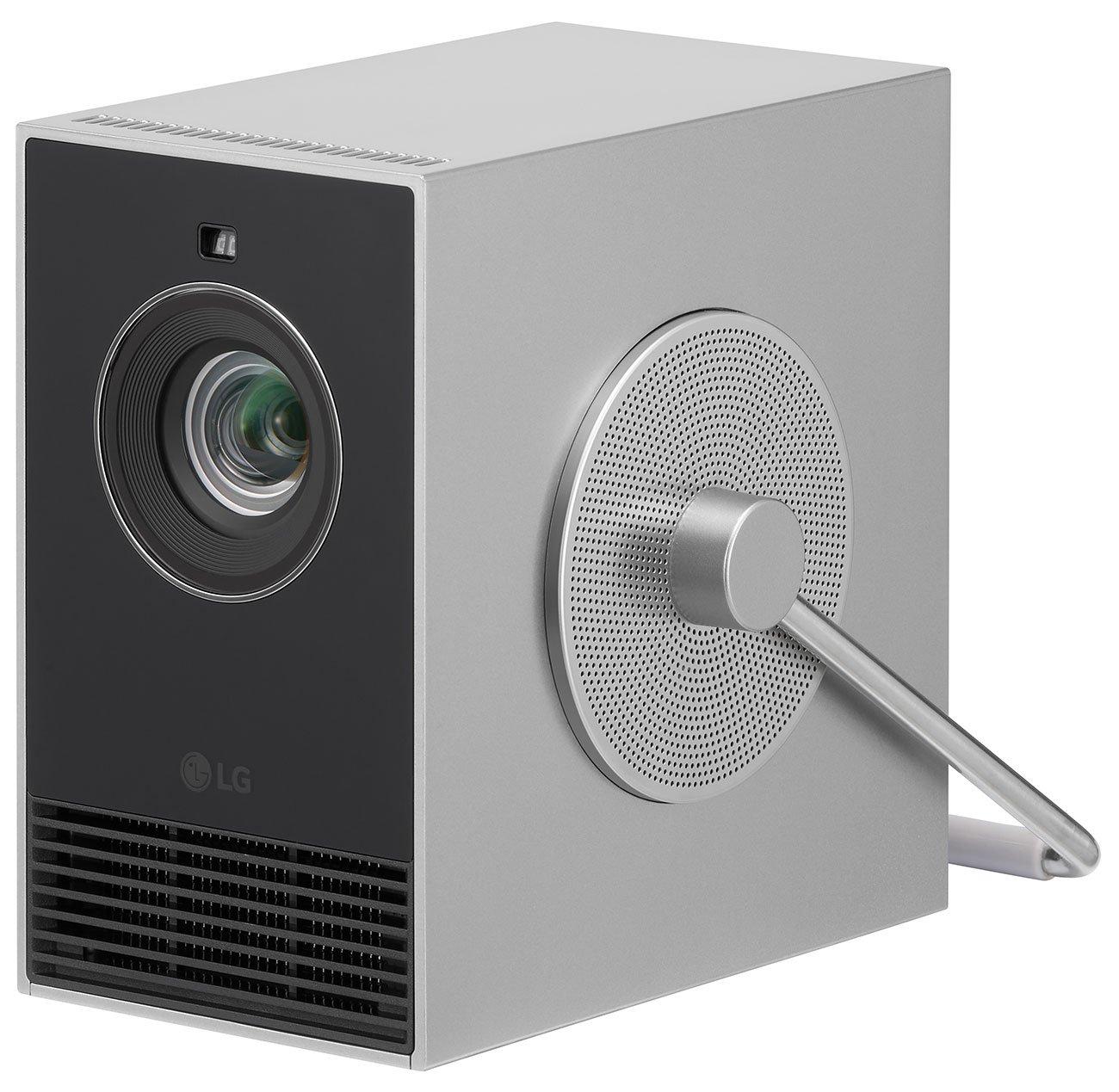
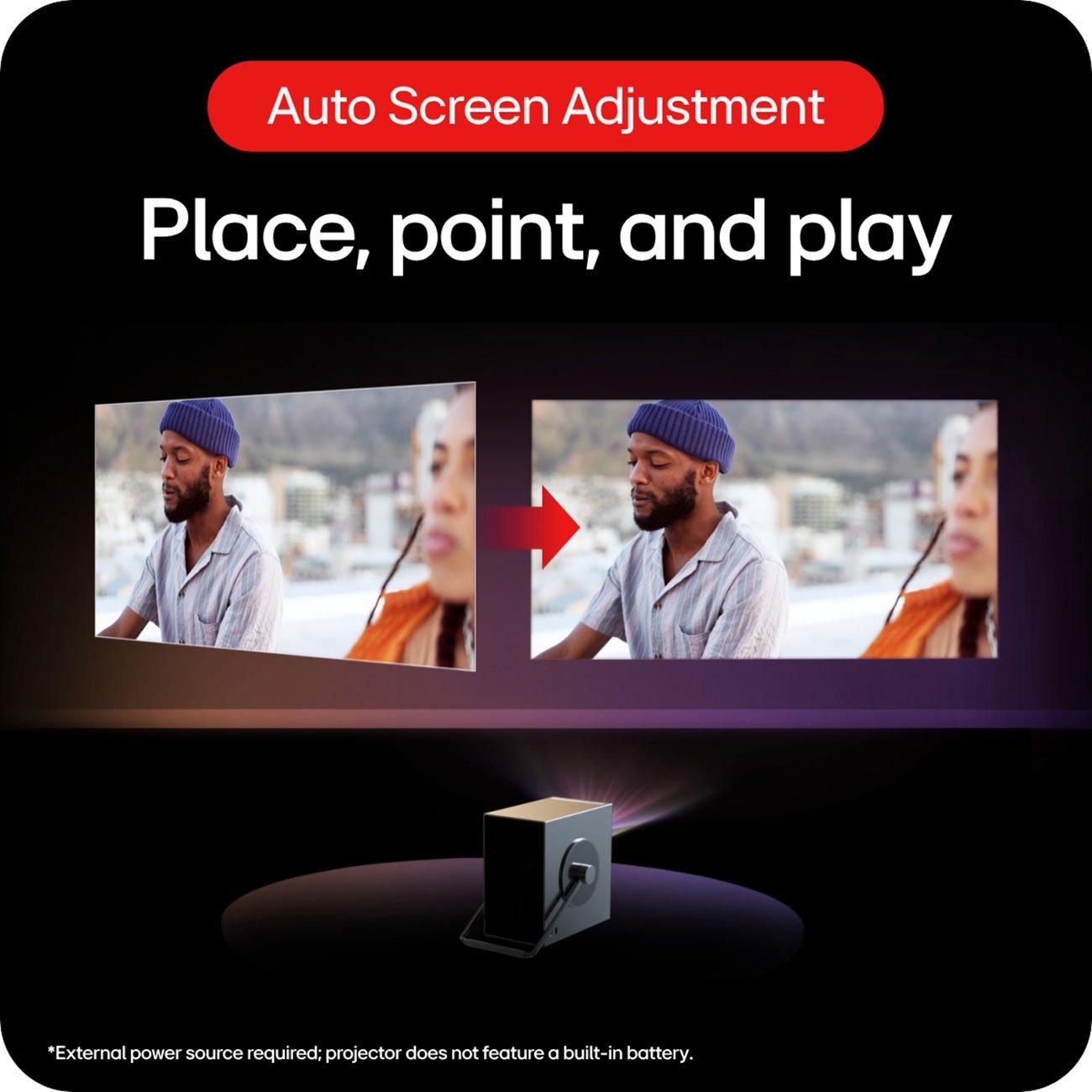
The LG CineBeam Q's cylindrical design prioritizes portability while maintaining premium build quality. The 360-degree rotating handle doubles as an adjustable stand, and the overall construction feels substantial without being bulky. Auto-focus and keystone correction work quickly and accurately, though without the unique positioning flexibility of the TCL C1's gimbal system.
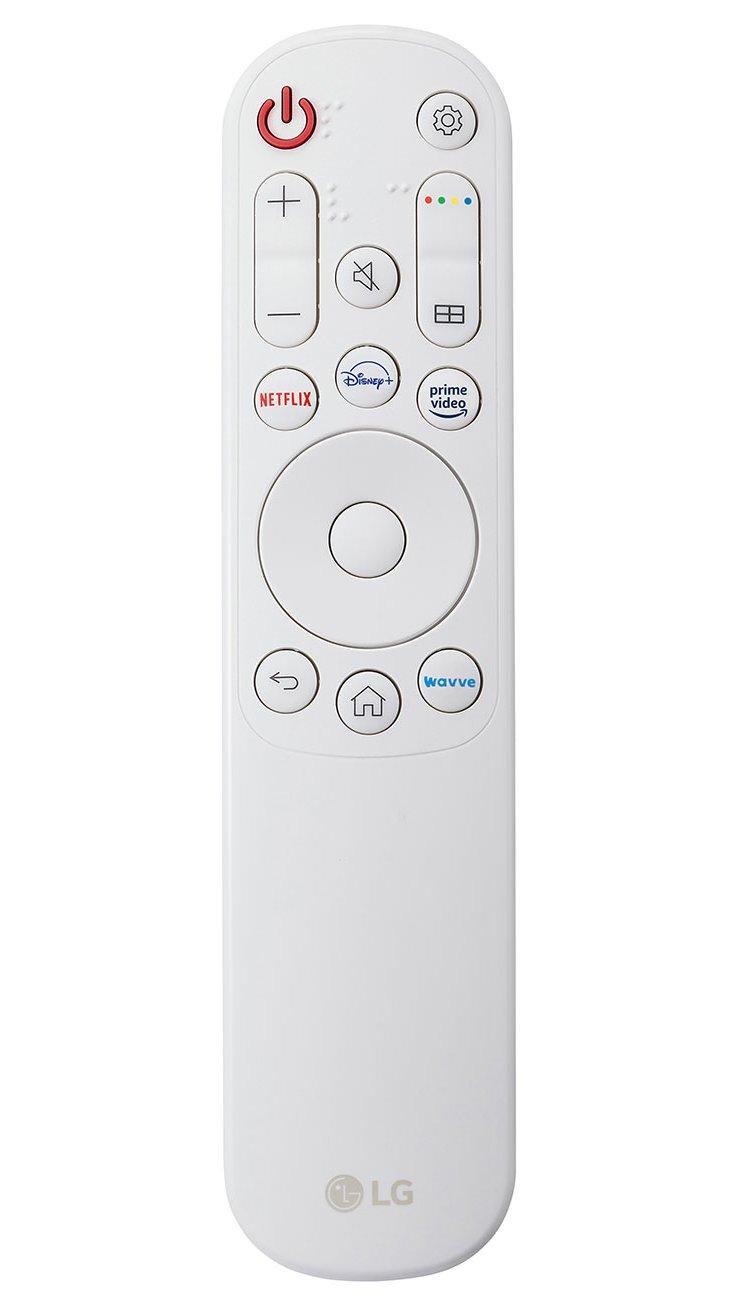
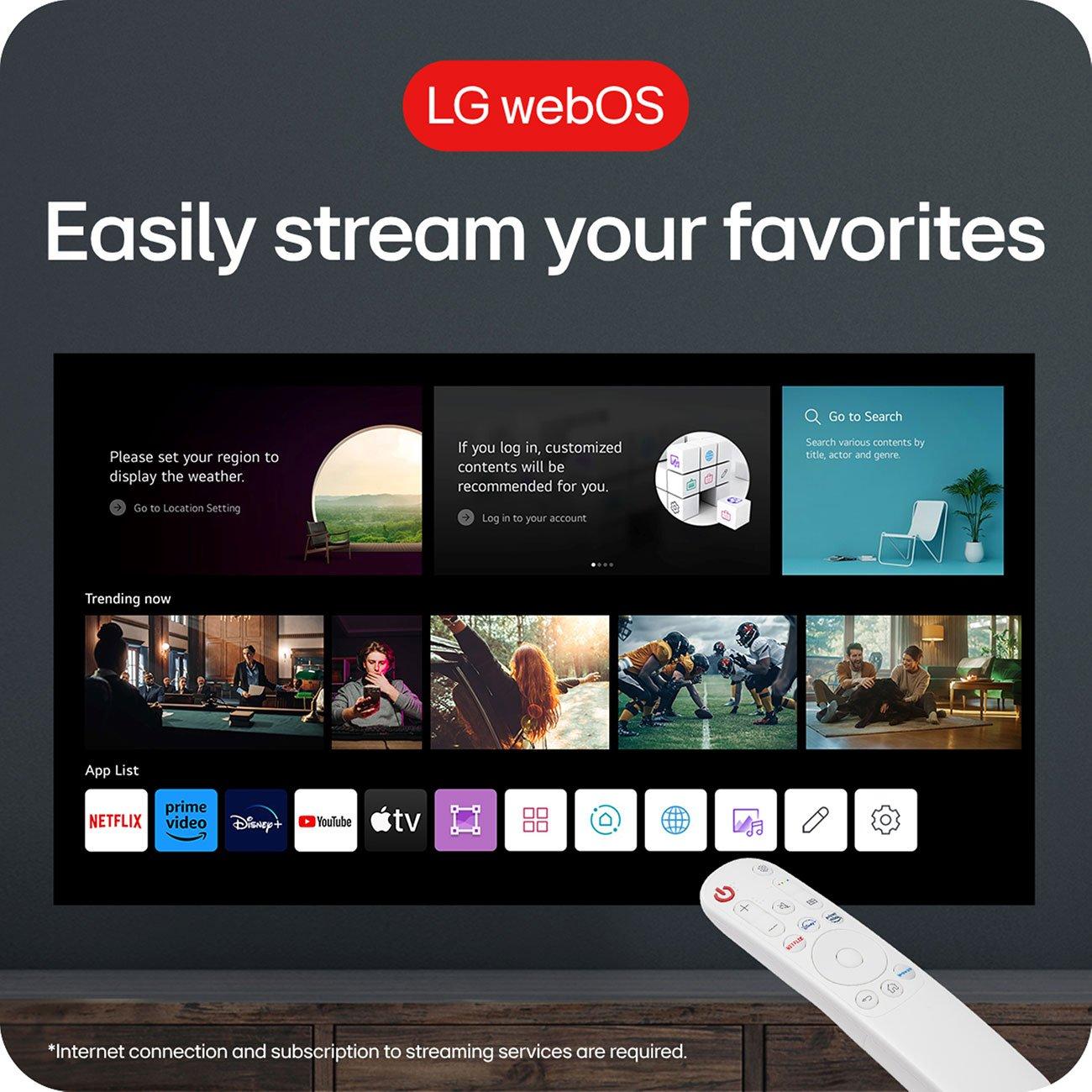
The webOS smart platform provides a polished interface, though with fewer streaming apps than Google TV. This limitation means many users will still need external streaming devices for services like Netflix, somewhat reducing the convenience factor compared to the TCL C1.
The resolution difference between these projectors is immediately apparent when viewing detailed content. The LG CineBeam Q's 4K capability shows its strength with nature documentaries, action movies with fine details, and any content where sharpness matters. Text remains crisp even at large screen sizes, making it suitable for presentation use as well as entertainment.
The TCL C1 produces surprisingly good 1080p images given its price point. While it can accept 4K input signals, it downscales them to its native 1080p resolution. For typical movie viewing at moderate screen sizes (60-80 inches), this resolution proves adequate, especially when viewed from normal seating distances where individual pixels aren't visible.
Color reproduction showcases the fundamental technology differences. The LG CineBeam Q's laser system achieves color accuracy that approaches professional monitors, with natural skin tones and accurate color temperature. The TCL C1's LED system produces pleasant colors but with less precision—reds might appear slightly orange, and blues may lack depth.
Brightness represents the most significant performance gap between these projectors. The TCL C1's 230 ISO lumens restricts it to dark-room use exclusively. Even minor ambient light—a street lamp outside, light leaking from an adjacent room, or a phone screen—noticeably impacts image quality.
The LG CineBeam Q's approximately doubles this brightness output, enabling use in moderately lit environments. This flexibility changes how you integrate the projector into daily life. Instead of requiring everyone to sit in complete darkness, you can leave some ambient lighting for safety and comfort while maintaining a watchable image.
Both projectors benefit from dark environments, but only the LG CineBeam Q offers meaningful flexibility in lighting conditions.
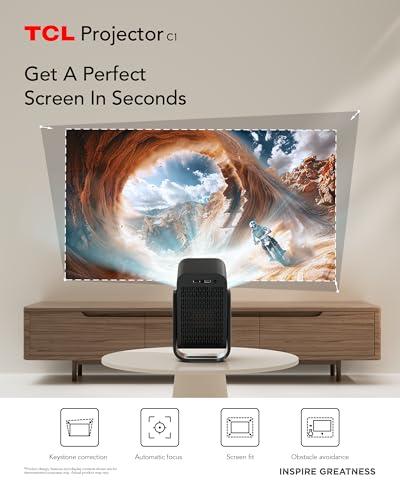
The TCL C1's gimbal design creates setup experiences impossible with traditional projectors. Users consistently report being able to achieve perfect image alignment within seconds, even in challenging spaces. The obstacle avoidance feature detects objects in the projection path and automatically adjusts the image size and position to fit available wall space—a remarkably sophisticated feature for a budget projector.
The LG CineBeam Q offers excellent but more conventional auto-adjustment features. Setup is quick and accurate, but you're still limited by traditional projection geometry. If your desired screen location doesn't align well with available projector placement options, you'll need to compromise or use manual adjustments.
Both projectors include comprehensive automatic focus and keystone correction, eliminating the tedious manual adjustments that plagued older projectors.
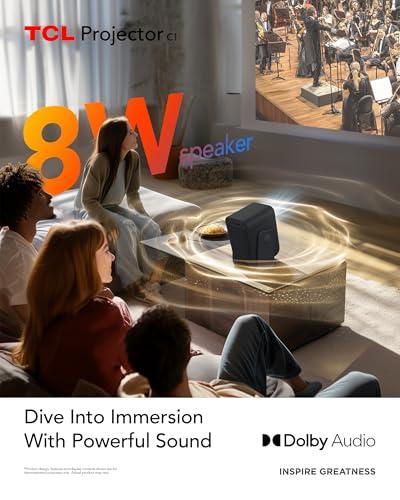
Neither projector will satisfy users seeking high-quality audio, but they differ in their built-in capabilities. The TCL C1's 8-watt Dolby Audio speaker produces clear dialogue and adequate volume for small rooms. It handles speech-heavy content well but lacks the dynamic range for action scenes or music.
The LG CineBeam Q provides noticeably better built-in audio with more refined sound quality and better frequency response. However, both projectors benefit significantly from external audio solutions, whether soundbars, Bluetooth speakers, or home theater systems.
For casual viewing in bedrooms or small spaces, the built-in speakers suffice. For serious movie watching or larger rooms, budget for external audio regardless of which projector you choose.
The smart platform difference significantly impacts daily usability. The TCL C1's Google TV integration provides the complete smart TV experience most users expect in 2024. Official Netflix support, comprehensive app selection, and seamless voice control create a genuinely convenient experience.
The LG CineBeam Q's webOS platform offers a polished interface but with more limited app selection. Many popular streaming services require external devices or workarounds, reducing the "plug and play" convenience factor.
For users who already have streaming devices (Apple TV, Roku, game consoles), the smart platform difference matters less. But for those wanting an all-in-one solution, the TCL C1's Google TV integration provides substantial value.
For dedicated home theater use, the LG CineBeam Q makes more sense despite its higher cost. The 4K resolution and higher brightness enable larger screen sizes (100+ inches) where the image quality difference becomes more apparent. The laser light source also maintains performance over time without the gradual brightness degradation that affects LED projectors.
The TCL C1 works well for casual home theater use in smaller rooms or as a secondary display. Its portability and easy setup make it ideal for flexible entertainment spaces that serve multiple purposes.
Both projectors require careful room design considerations. Dark walls and ceilings help image quality, and neither projector produces enough brightness to overcome poor screen surfaces. A proper projector screen or high-quality white wall makes a substantial difference in image quality for both models.
The TCL C1 delivers exceptional value for casual users who want modern projector convenience without premium costs. At the time of writing, it costs roughly one-quarter the price of the LG CineBeam Q while providing 80% of the functionality most users need. The gimbal design alone justifies much of the cost for users in space-constrained situations.
The LG CineBeam Q justifies its premium pricing for users who prioritize image quality and versatility. The 4K resolution, laser brightness, and superior color accuracy provide tangible benefits for serious viewing, especially on larger screens or in less-than-ideal lighting conditions.
Choose the TCL C1 if you're new to projectors, have budget constraints, need maximum setup flexibility, or primarily watch content in dark bedrooms or small spaces. Its Google TV integration and gimbal design solve real problems that affect daily use more than technical specifications.
Choose the LG CineBeam Q if you can invest in premium performance, want 4K future-proofing, need brightness for moderately lit rooms, or plan to use larger screen sizes regularly. The superior image quality and versatility justify the cost for serious entertainment use.
Both projectors represent the current state of portable projection technology, just aimed at different users and use cases. Your viewing habits, space constraints, and budget priorities should guide your decision more than brand loyalty or technical specifications alone. The portable projector market has matured to the point where both budget and premium options can provide genuinely satisfying experiences—you just need to match your choice to your specific needs and expectations.
| TCL C1 Google TV Portable Projector | LG CineBeam Q 4K UHD Portable Laser Projector |
|---|---|
| Resolution - Determines image sharpness and detail quality | |
| Native 1080p (accepts 4K input, downscales) | Native 4K UHD (3840×2160) - 4x sharper |
| Brightness - Critical for ambient light tolerance | |
| 230 ISO lumens (dark rooms only) | 500+ ANSI lumens (moderate lighting OK) |
| Light Source Technology - Affects color accuracy and lifespan | |
| LED with 30,000-hour lifespan | RGB Laser with superior color and longevity |
| Contrast Ratio - Determines black depth and image drama | |
| 1,500:1 (decent for LCD) | 450,000:1 (exceptional laser performance) |
| Smart Platform - Built-in streaming capabilities | |
| Google TV with Netflix certification | webOS (limited apps, may need external device) |
| Portability Design - Setup flexibility and convenience | |
| 285° gimbal stand (wall/ceiling projection) | Cylindrical with 360° handle (traditional placement) |
| Color Gamut - How vivid and accurate colors appear | |
| Standard LED color reproduction | 154% DCI-P3 coverage (professional-grade) |
| Audio System - Built-in sound quality | |
| 8W Dolby Audio (adequate for small rooms) | Higher-quality speakers with dual Bluetooth |
| Auto-Adjustment Features - Ease of setup | |
| Auto-focus, keystone, obstacle avoidance | Auto-focus and keystone correction |
| HDR Support - Enhanced dynamic range for compatible content | |
| Not specified | HDR10 and HLG support |
| Weight & Size - True portability factor | |
| 3.9 lbs, CD-case footprint | 3.3 lbs, compact cylinder design |
| Target Use Case - Who each projector serves best | |
| Budget-conscious users, dark rooms, maximum convenience | Premium image quality, moderate lighting, 4K content |
Both the TCL C1 Google TV Portable Projector and LG CineBeam Q 4K UHD Portable Laser Projector excel in dark rooms, but the LG CineBeam Q delivers superior image quality with native 4K resolution and deeper blacks from its laser technology. However, the TCL C1 provides excellent 1080p performance at a much lower cost and is specifically optimized for dark room use.
The LG CineBeam Q 4K UHD Portable Laser Projector handles ambient light much better with its 500+ ANSI lumens of laser brightness, making it usable in moderately lit rooms. The TCL C1 Google TV Portable Projector requires near-complete darkness due to its 230 ISO lumens output and is not suitable for rooms with ambient light.
The TCL C1 provides exceptional value for budget-conscious buyers, offering Google TV integration, unique gimbal design, and solid 1080p performance at a fraction of premium projector costs. The LG CineBeam Q justifies its higher price with 4K resolution, laser technology, and superior brightness for users prioritizing image quality.
The LG CineBeam Q delivers significantly sharper images with native 4K resolution (4x more pixels than 1080p), superior color accuracy from its RGB laser system, and a 450,000:1 contrast ratio. The TCL C1 produces good 1080p images with decent color reproduction, but cannot match the detail and color precision of the laser-powered LG CineBeam Q.
The TCL C1 Google TV Portable Projector wins for setup convenience with its revolutionary 285° gimbal design that enables projection onto walls or ceilings from any angle. Both projectors feature auto-focus and keystone correction, but the TCL C1's obstacle avoidance and flexible positioning make it exceptionally user-friendly for beginners.
The TCL C1 includes full Google TV with Netflix certification, eliminating the need for external streaming devices. The LG CineBeam Q 4K UHD Portable Laser Projector runs webOS with limited app selection, so many users will need external streaming devices like Apple TV or Roku for full streaming access.
For dedicated home theater setups, the LG CineBeam Q is superior due to its 4K resolution, higher brightness for larger screens, and professional-grade color accuracy. The TCL C1 works well for casual home theater use in smaller rooms or as a secondary entertainment display, especially given its much lower cost.
Both projectors have adequate built-in speakers for casual viewing, with the LG CineBeam Q offering slightly better audio quality and dual Bluetooth support. The TCL C1 Google TV Portable Projector features 8W Dolby Audio that's sufficient for small rooms. However, both benefit significantly from external speakers or soundbars for serious movie watching.
Both are highly portable, but they serve different travel needs. The TCL C1 excels with its gimbal design for flexible setup in various spaces and integrated Google TV for plug-and-play entertainment. The LG CineBeam Q is slightly lighter and more compact but requires more careful positioning and may need external streaming devices.
The TCL C1 performs best with 40-80 inch screens in dark rooms, where its 1080p resolution remains sharp. The LG CineBeam Q 4K UHD Portable Laser Projector can handle larger screens up to 120 inches effectively, with its 4K resolution maintaining detail clarity even at maximum size.
The LG CineBeam Q uses laser technology that maintains brightness over time without degradation and requires virtually no maintenance. The TCL C1 features a sealed optical engine to prevent dust intrusion and LED technology rated for 30,000 hours, providing good longevity for its price range.
Choose the TCL C1's 1080p if you're budget-conscious, primarily watch in dark rooms, and use screen sizes under 80 inches. Opt for the LG CineBeam Q's 4K if you want future-proof resolution, plan to use larger screens, have 4K content sources, and can invest in premium image quality for long-term satisfaction.
We've done our best to create useful and informative comparisons to help you decide what product to buy. Our research uses advanced automated methods to create this comparison and perfection is not possible - please contact us for corrections or questions. These are the sites we've researched in the creation of this article: youtube.com - thegadgetflow.com - notebookcheck.net - shopabunda.com - youtube.com - youtube.com - youtube.com - youtube.com - tcl.com - androidauthority.com - manuals.plus - westcoast.co.uk - projectorcentral.com - lg.com - thefrogpadappliances.com - youtube.com - techradar.com - lg.com - avsforum.com - lg.com - tomsguide.com - jefflynch.com - hometheaterview.com - projectorreviews.com - youtube.com - avsforum.com - projectorcentral.com - pcrichard.com - bhphotovideo.com - youtube.com - lg.com - applerivertvandappliance.com - big-georges.com - queencityonline.com - lg.com - lg.com - lg.com - lgnewsroom.com - heimkino.de

Privacy Policy
Terms and Conditions - Affiliate Policy
Home Security
© Copyright 2008-2026.
11816 Inwood Rd #1211, Dallas, TX 75244