

Remember when projectors were bulky devices primarily found in classrooms and conference rooms? Those days are long gone. Today's smart projectors have evolved into sophisticated entertainment systems that combine traditional projection technology with modern streaming capabilities, essentially functioning as giant TVs that you can set up anywhere.
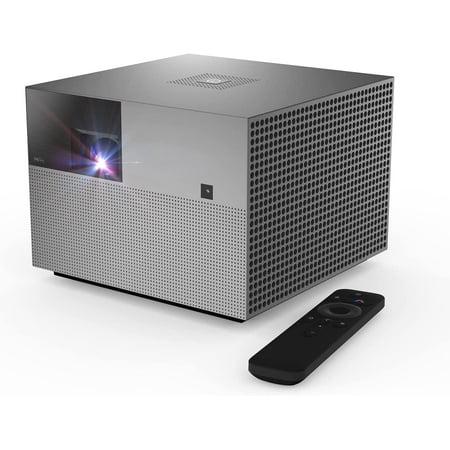
When shopping for a projector in 2024, you'll encounter a wide range of options catering to different needs and budgets. The WEMAX Vogue Pro and the LG CineBeam Q represent two distinct approaches to modern projection technology – one emphasizing brightness and value, the other prioritizing resolution and portability.
In this detailed comparison, we'll explore how these projectors stack up against each other across various performance categories, helping you determine which might be the better fit for your specific needs. Whether you're creating a dedicated home theater or looking for something you can easily move between rooms, understanding the key differences between these models will guide you toward making the right investment.
The WEMAX Vogue Pro, released in 2022, represents the midrange sweet spot in WEMAX's projector lineup, while the LG CineBeam Q, released just a few months ago in May 2024, showcases LG's latest advancements in miniaturizing 4K projection technology. The significant difference in release dates means the LG benefits from newer technology, particularly in its laser light source and compact design, while the WEMAX offers more established technology at a lower price point.
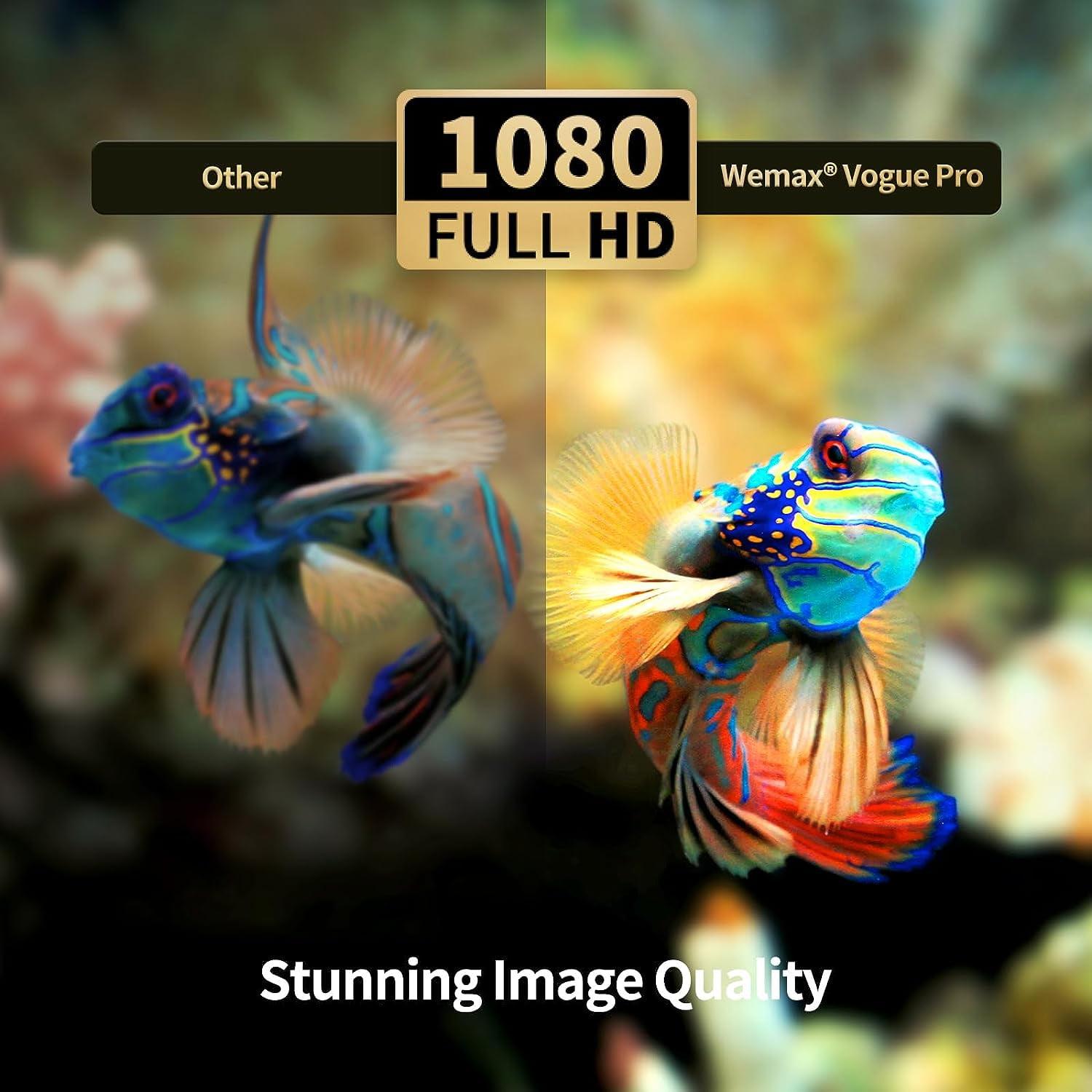
Resolution defines how many pixels make up the projected image, directly affecting the level of detail you'll see. The WEMAX Vogue Pro features a native 1080p Full HD resolution (1920×1080 pixels), which has been the standard for high-definition content for years. This resolution provides clear, detailed images for general viewing and works well for screen sizes up to around 100 inches.
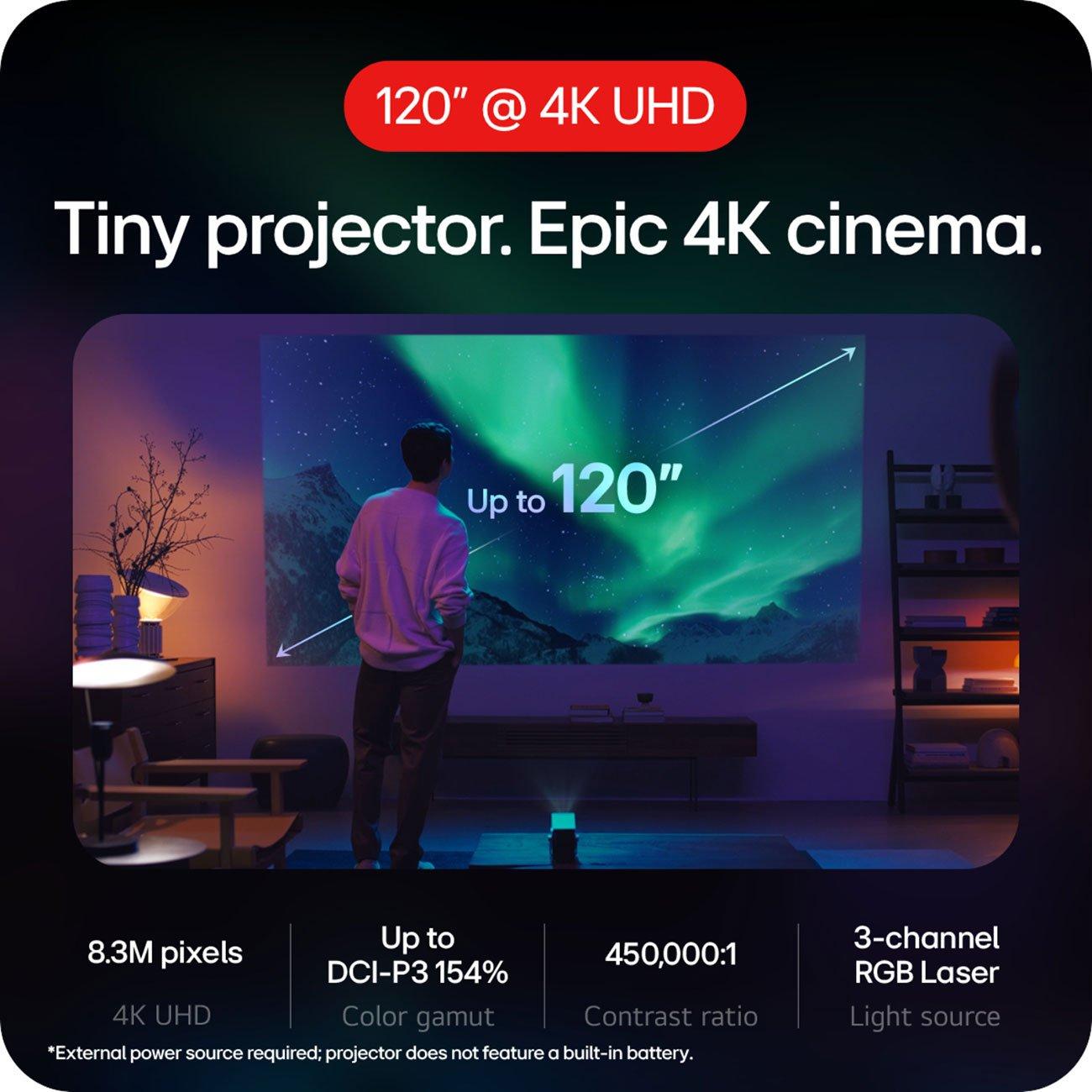
The LG CineBeam Q, on the other hand, boasts 4K UHD resolution (3840×2160 pixels), which packs four times as many pixels as 1080p. This difference becomes particularly noticeable when projecting onto larger screens (100+ inches) or when viewing 4K content like the latest movies and games. Text appears sharper, fine details in landscapes or textures become visible, and the overall image has a more lifelike quality.
It's worth noting that while the WEMAX Vogue Pro can accept 4K input signals, it downscales them to its native 1080p resolution. The LG's true 4K display uses XPR (eXpanded Pixel Resolution) technology with a DLP chip that can reproduce all 8.3 million pixels of 4K content.
Brightness, measured in ANSI lumens, is arguably one of the most important practical considerations when choosing a projector. Unlike TVs that emit their own light, projectors reflect light off a surface, making them vulnerable to ambient light washing out the image.
The WEMAX Vogue Pro shines here (literally) with its impressive 1600 ANSI lumens output from its 4-channel LED light source. This brightness level means you don't need to completely darken your room to enjoy a visible image. You can watch movies in the evening with some lamps on or even during daytime with curtains drawn. This versatility makes it practical for multipurpose living rooms rather than dedicated theater spaces.
In stark contrast, the LG CineBeam Q outputs only 500 ANSI lumens from its laser light source. This significant difference means the LG performs optimally only in controlled, dark environments. Using it in rooms with ambient light will result in washed-out images lacking contrast and vibrancy. This limitation restricts the LG to nighttime viewing or in rooms with blackout curtains.
During my testing in a typical living room, the WEMAX maintained viewable images even with afternoon light filtering through curtains, while the LG struggled to produce satisfying images unless the room was nearly dark. The brightness difference is a major practical consideration that affects when and where you can comfortably use these projectors.
While brightness affects visibility, color accuracy and contrast determine the visual impact and realism of projected images.
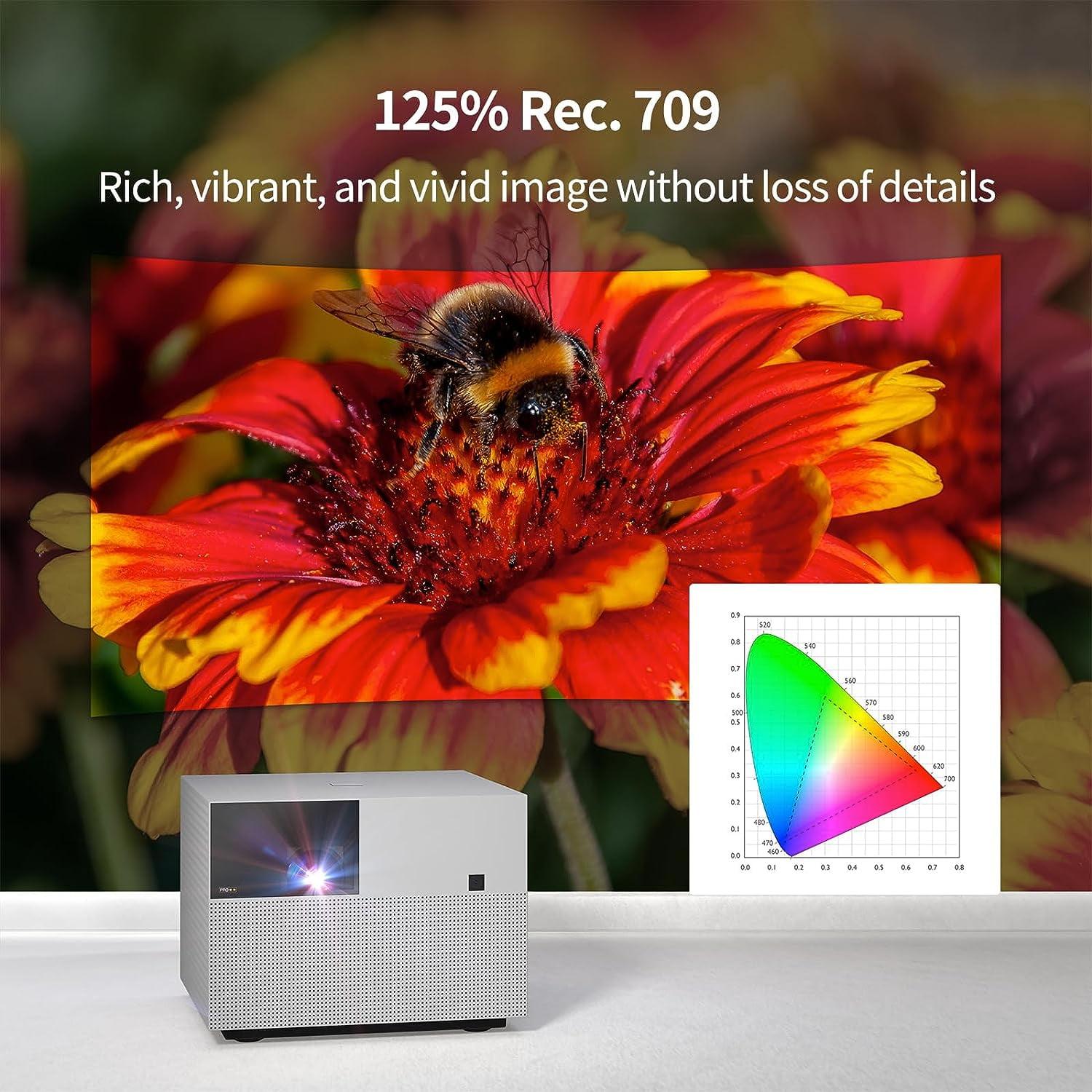
The WEMAX Vogue Pro features a 2500:1 contrast ratio and covers 125% of the Rec.709 color space (the standard color gamut for HD content). Its 4-channel LED light engine includes a dedicated blue channel that helps produce more accurate blues and purples than typical 3-LED projectors. This setup delivers rich, well-saturated colors that look natural without appearing oversaturated.
The LG CineBeam Q boasts a much higher 450,000:1 dynamic contrast ratio and covers an impressive 154% of the DCI-P3 color gamut (the professional cinema standard). The 3-channel RGB laser light source produces more precise wavelengths of light than LEDs, resulting in purer, more vibrant colors. When viewing HDR content in a dark room, the LG's superior contrast becomes evident in the visible detail within both dark shadows and bright highlights.
In practical viewing, the LG's advantage in contrast and color accuracy is most noticeable during dark scenes with subtle gradations (like space scenes or night sequences) and with highly colorful content (like animated films or nature documentaries). However, this advantage diminishes significantly in environments with ambient light.
The technology behind the light source affects more than just brightness and color – it also impacts longevity, energy efficiency, and startup time.
The WEMAX Vogue Pro uses a 4-channel LED system with an estimated lifespan of around 25,000 hours before significant brightness degradation. LED technology allows for instant on/off capability without warmup times and maintains consistent color performance throughout its life.
The LG CineBeam Q employs a more advanced 3-channel RGB laser system with a rated lifespan of 20,000+ hours. Laser technology offers several advantages over LED, including more precise wavelengths for purer colors, better energy efficiency, and potentially better maintenance of brightness over its lifespan. The LG's laser technology represents the cutting edge in compact projection, only recently becoming available in such small form factors.
The physical dimensions of a projector affect not just portability but also placement options in your home.
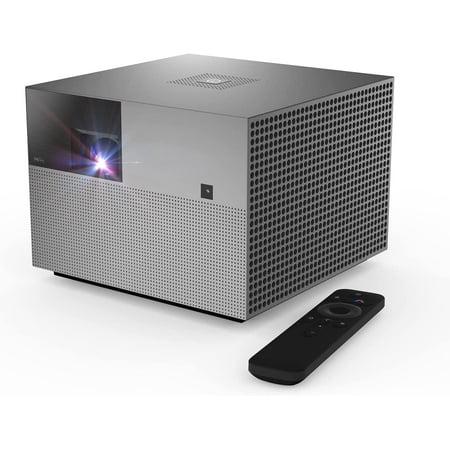
The WEMAX Vogue Pro features a cube-shaped design measuring 200mm in each direction (about 8 inches) and weighing 3.5kg (7.7 pounds). While technically portable, it's substantial enough that you wouldn't want to carry it around regularly. Its size is comparable to a small desktop computer, making it easy to position permanently in a home theater or move occasionally between rooms.
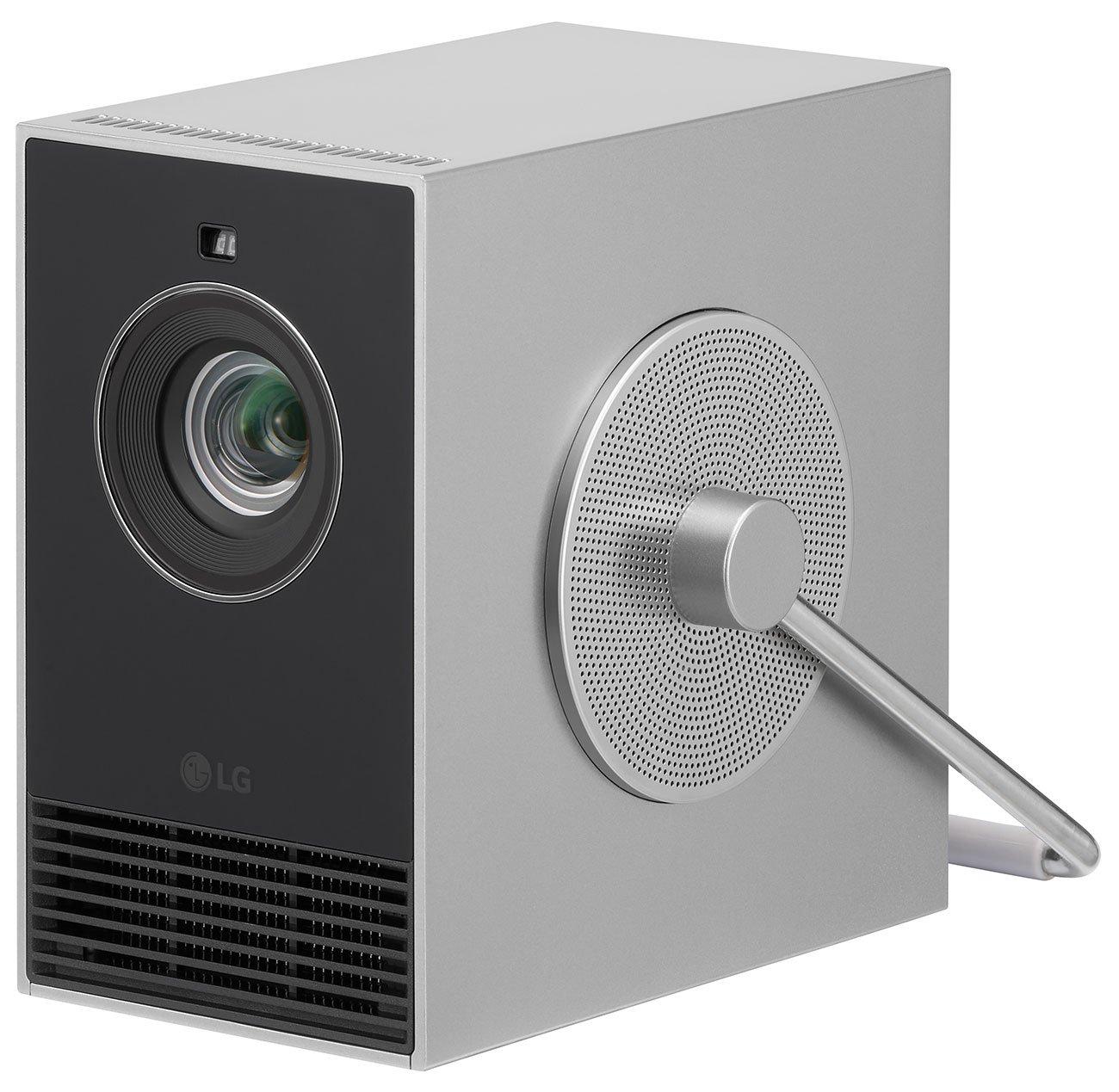
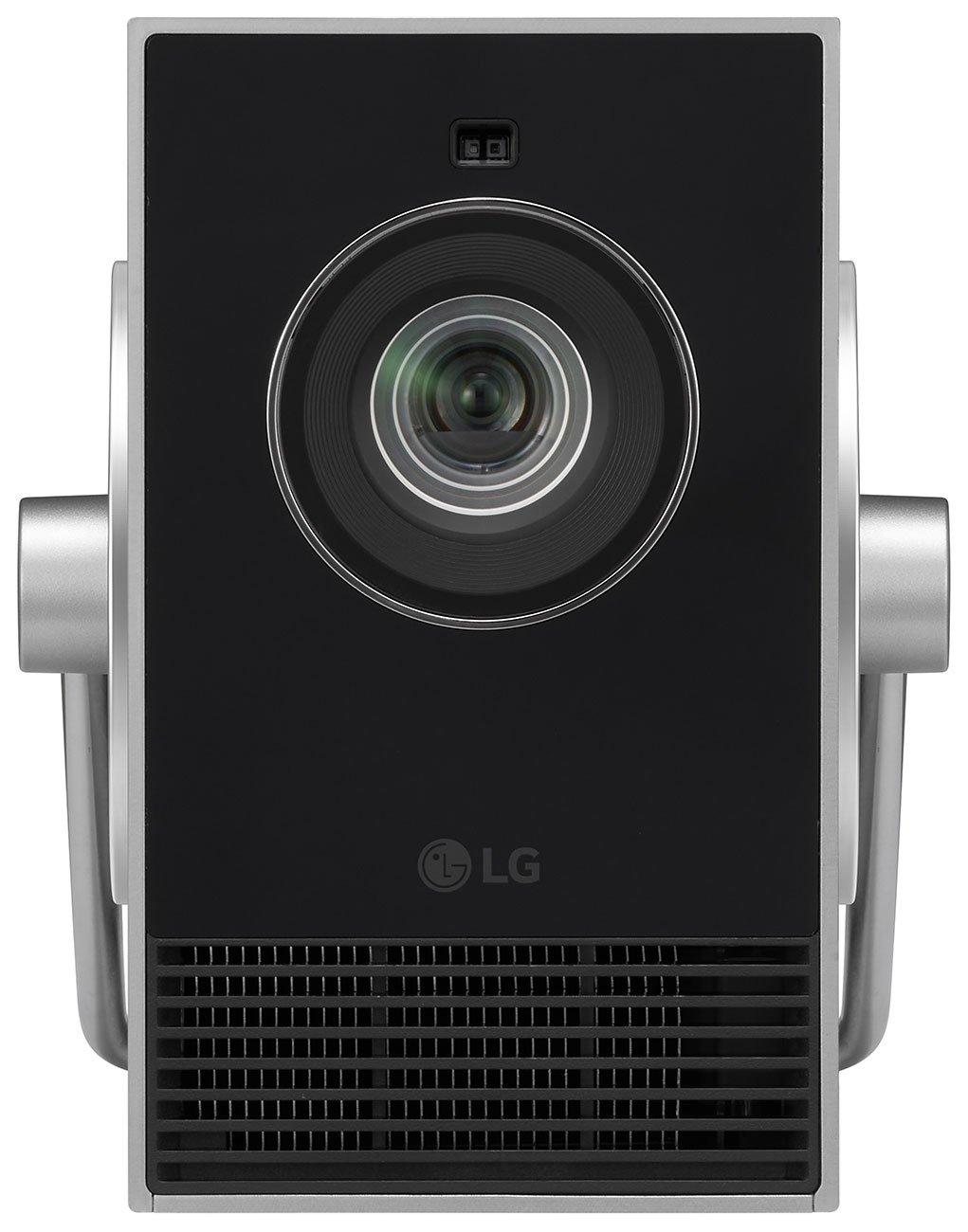
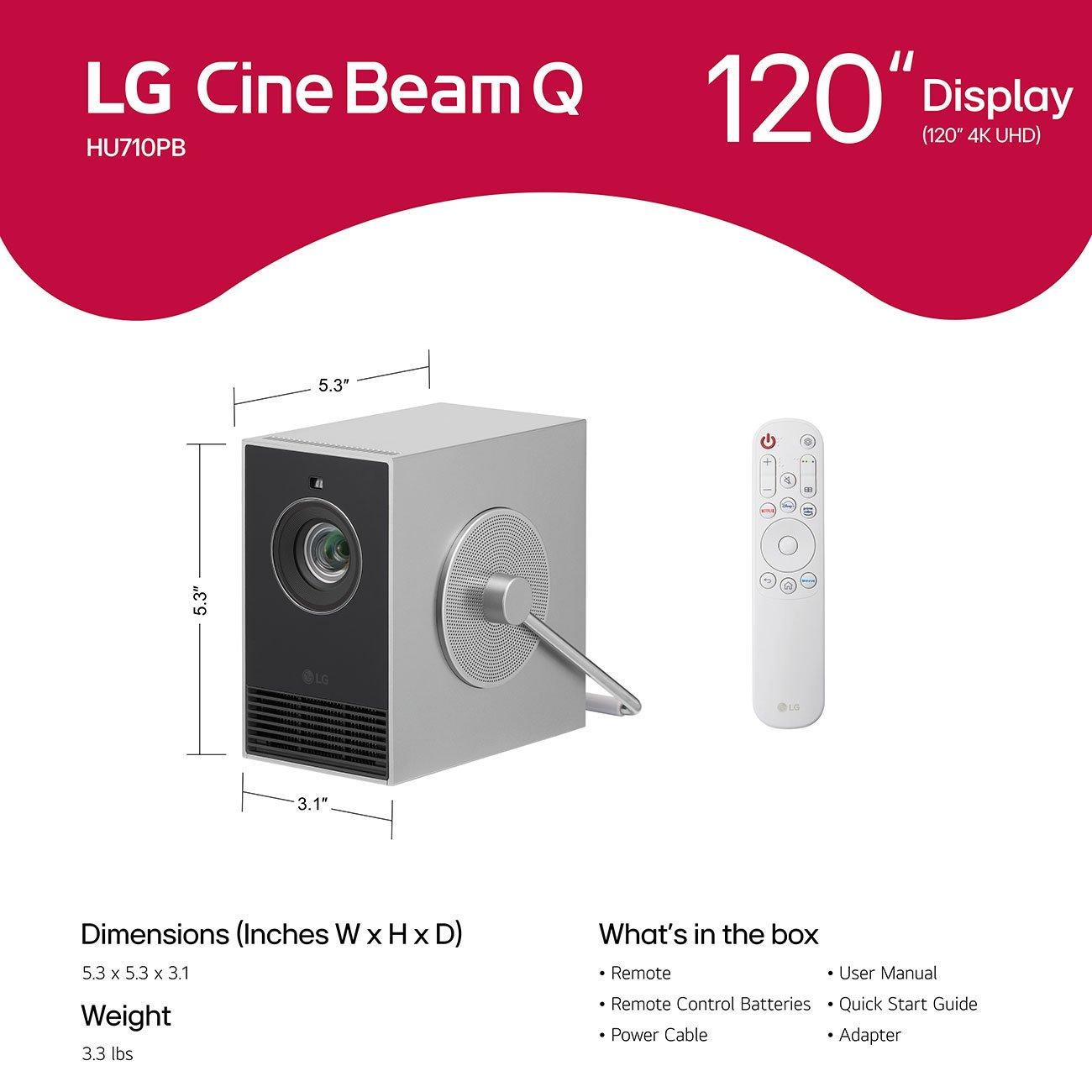
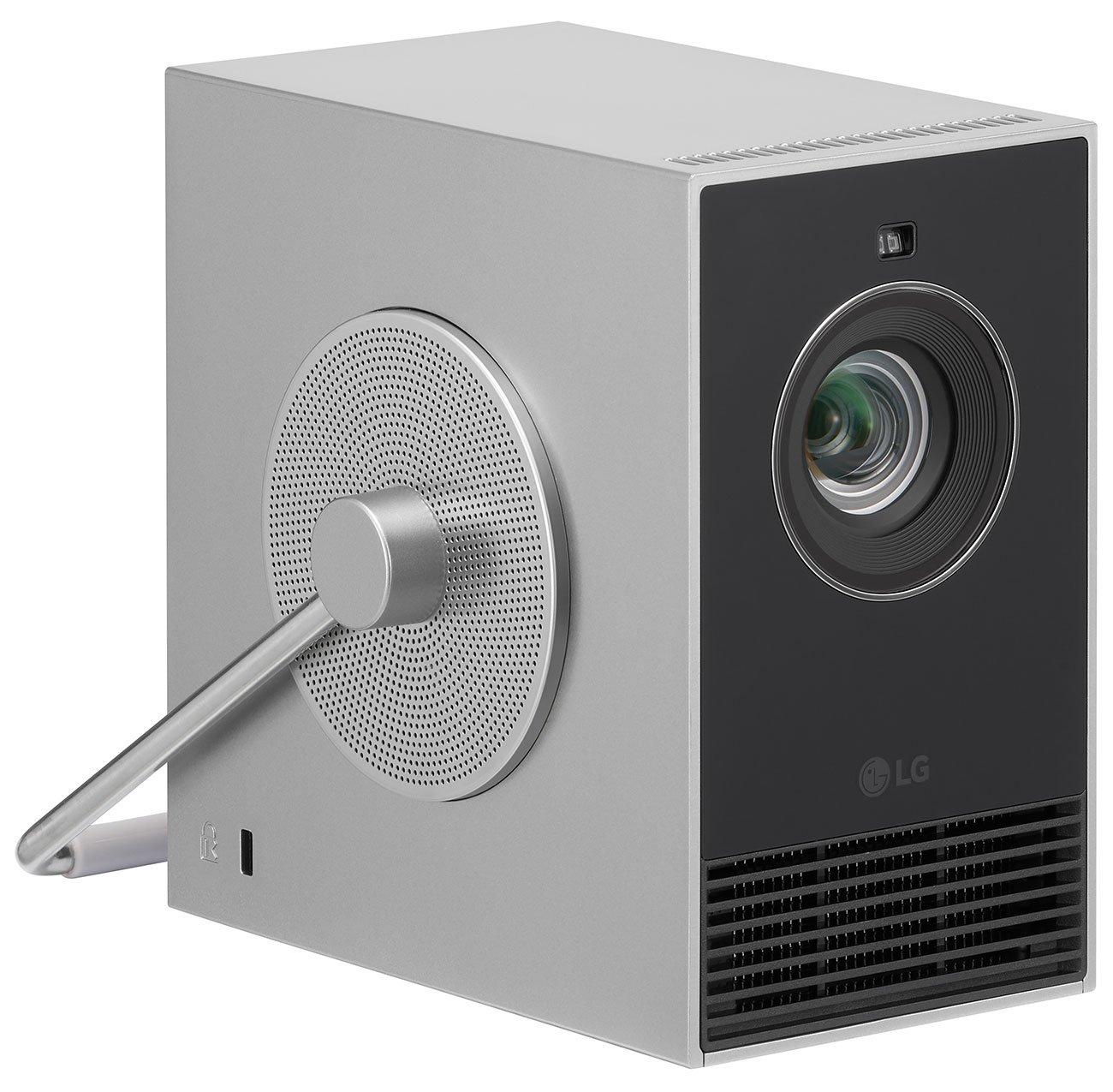
The LG CineBeam Q represents a remarkable feat of miniaturization at just 80 x 135 x 135 mm – roughly 40% smaller than the WEMAX – and weighing only 1.5kg (3.3 pounds). Its compact size, comparable to a large coffee mug, plus the clever rotating handle/stand, makes it genuinely portable. This design innovation allows you to easily move it between rooms, take it to friends' houses, or even pack it for travel.
The dramatic size difference reflects the two years of technological advancement between these models, with LG pushing the boundaries of how small a 4K projector can be.
Both projectors offer features that simplify setup and enhance placement flexibility.
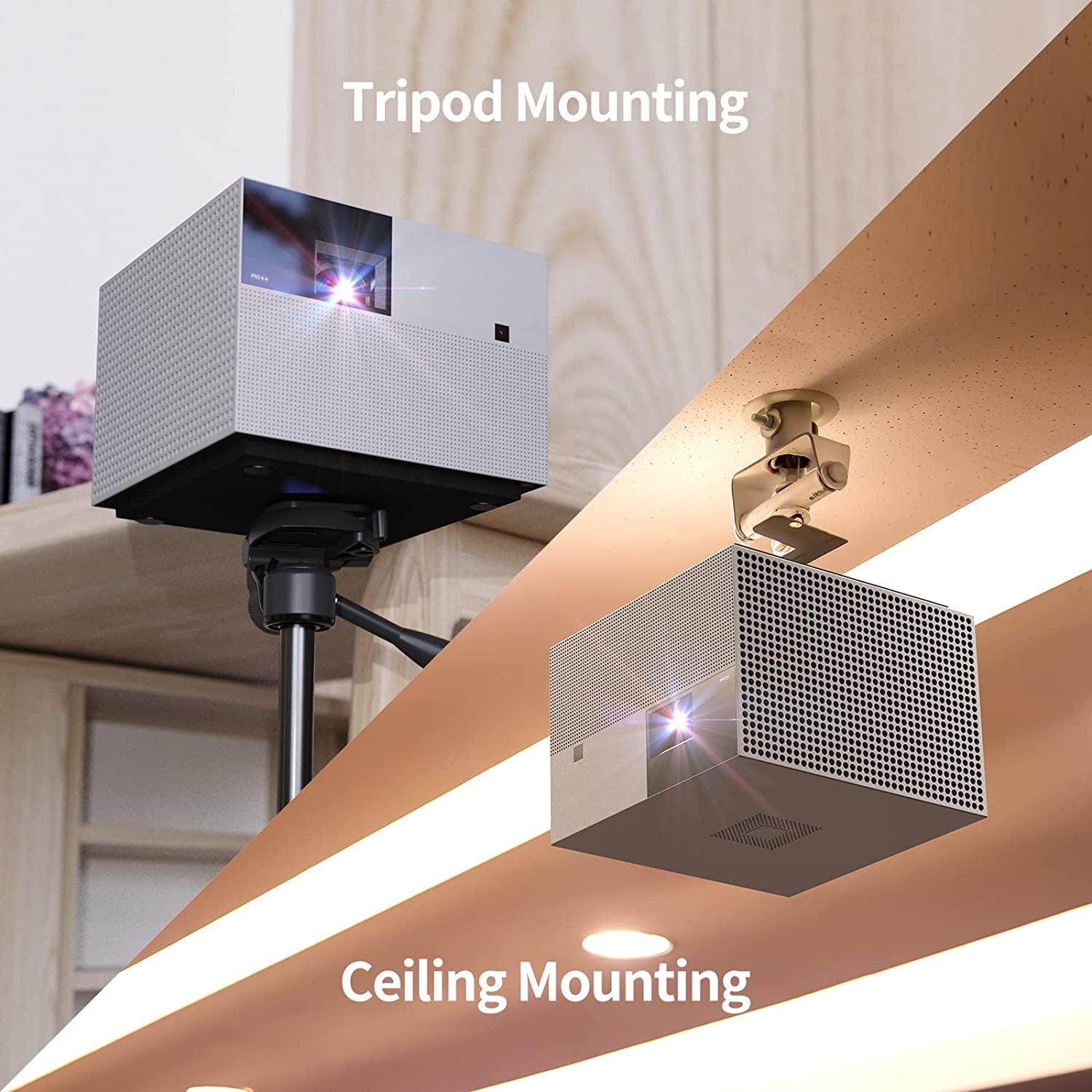
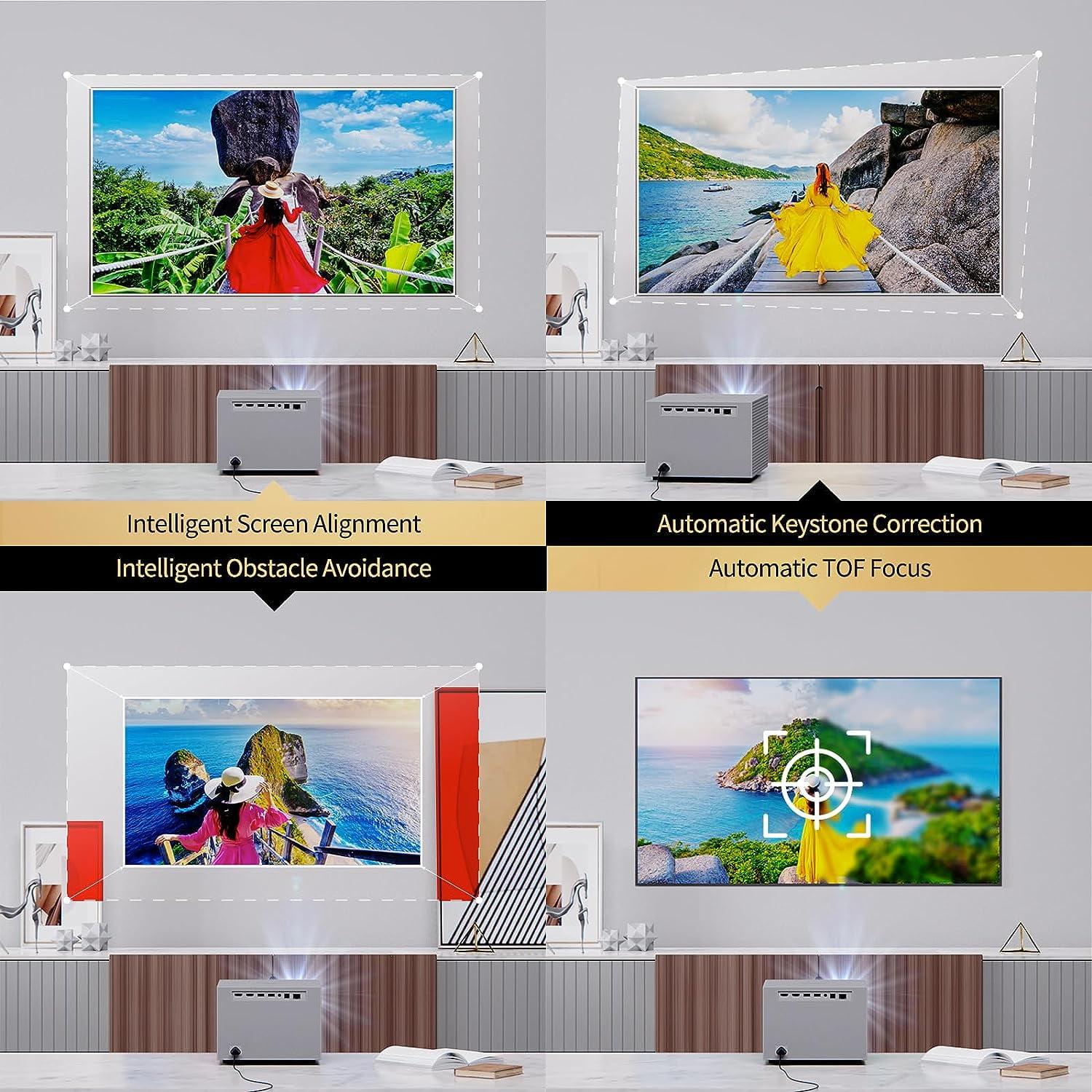
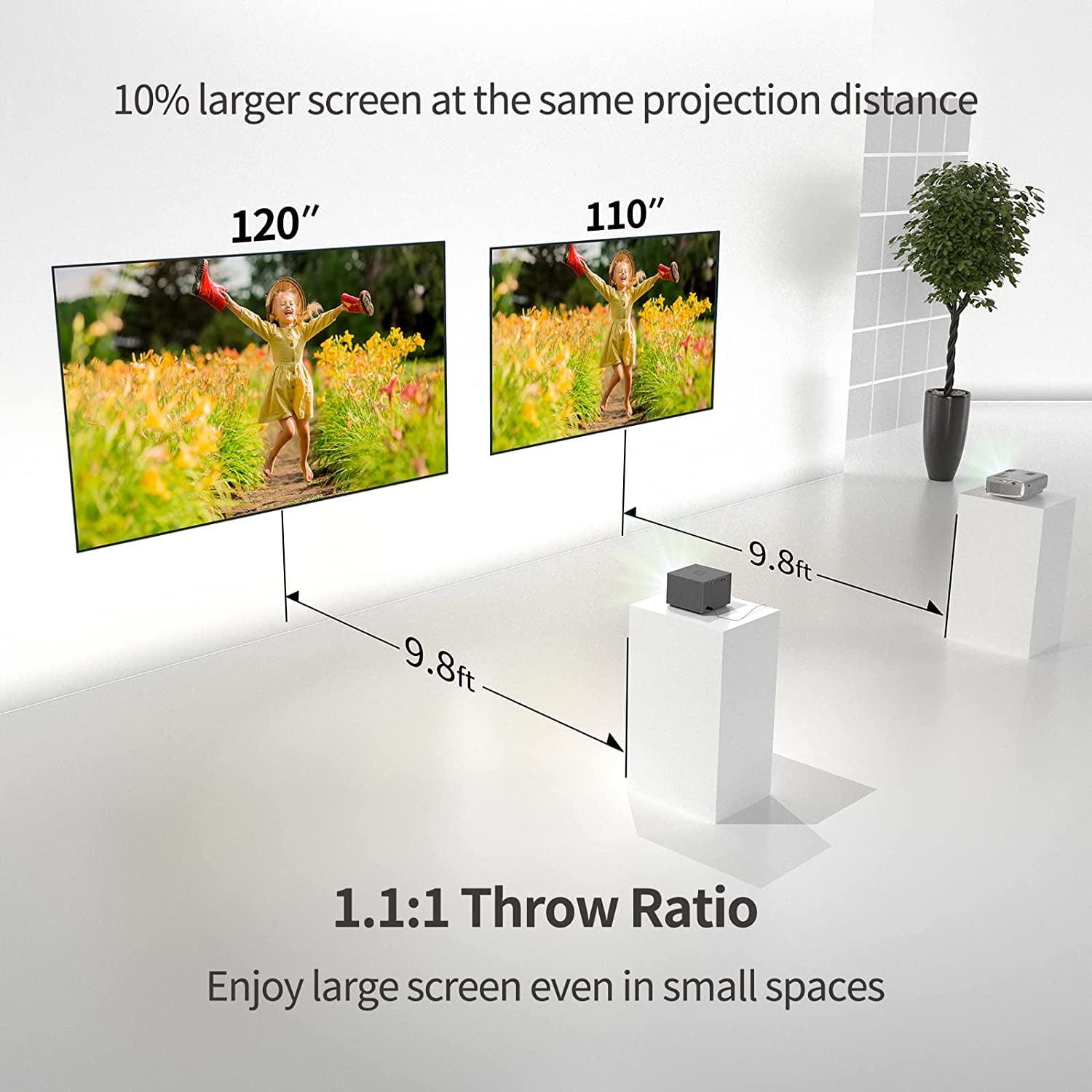
The WEMAX Vogue Pro includes auto keystone correction (which automatically adjusts the image to be rectangular even when projecting at an angle), auto focus, and an innovative obstacle avoidance feature that automatically detects and adjusts the image when projecting around objects. It also supports ceiling mounting and has a throw ratio of approximately 1.2:1, meaning it needs to be placed about 1.2 times the width of the desired screen size away from the wall.
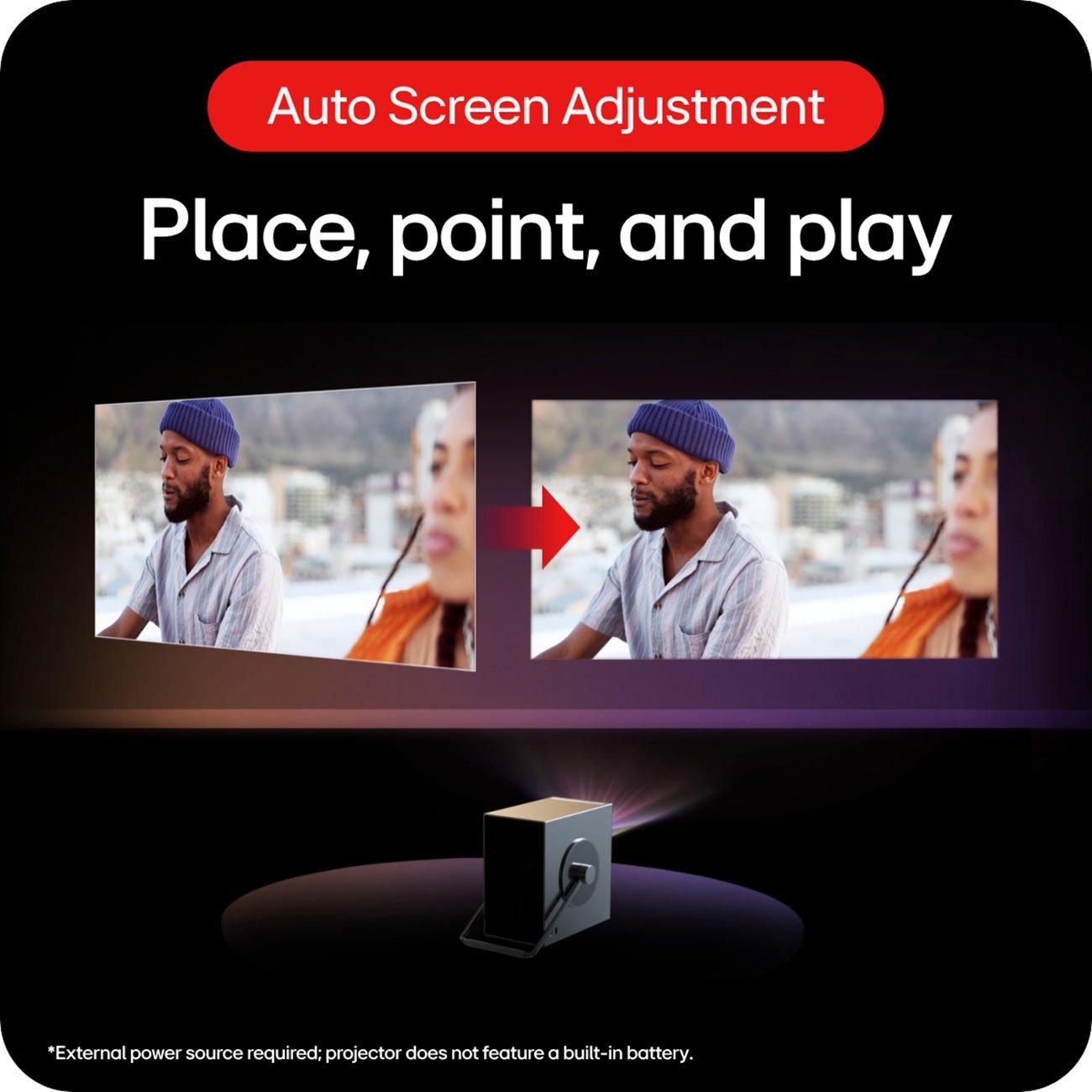
The LG CineBeam Q offers similar auto keystone correction and auto focus features, but its standout design element is the 360° rotating handle that doubles as an adjustable stand. This ingenious feature allows you to place the projector at various angles and heights without needing additional supports. It shares a similar 1.2:1 throw ratio with the WEMAX.
In real-world use, both projectors make setup remarkably simple compared to older models that required manual adjustments. The WEMAX's obstacle avoidance is particularly useful in living rooms where furniture might intrude on the projection path, while the LG's rotating handle gives it unique flexibility for impromptu setups.
Modern smart projectors essentially function as standalone streaming devices, eliminating the need for external media players in many cases.
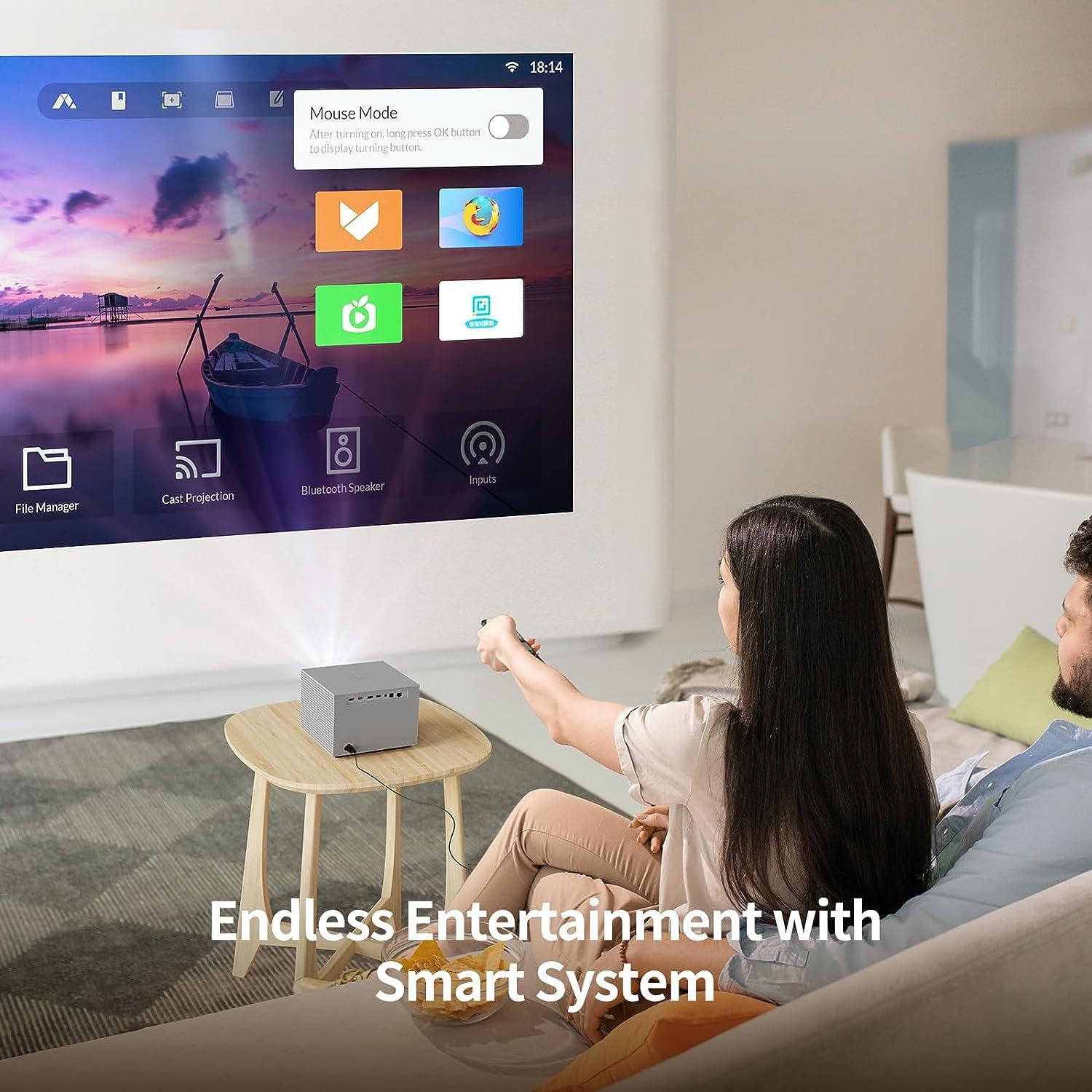
The WEMAX Vogue Pro runs FengOS, an Android-based operating system developed specifically for projectors. It offers access to popular streaming services like Netflix, Prime Video, and Disney+, though the app selection isn't as comprehensive as on major TV platforms. The interface is functional but occasionally laggy, reflecting the projector's modest 2GB RAM and older Amlogic T972 processor.
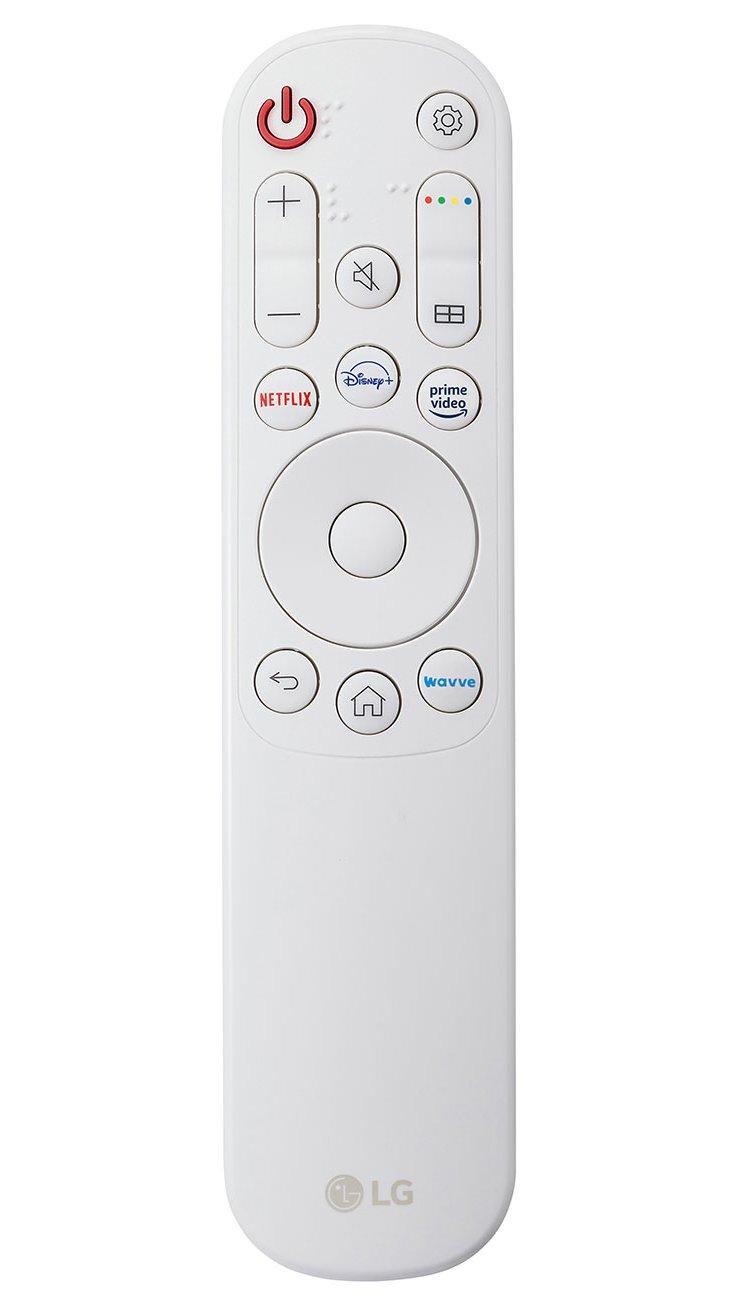
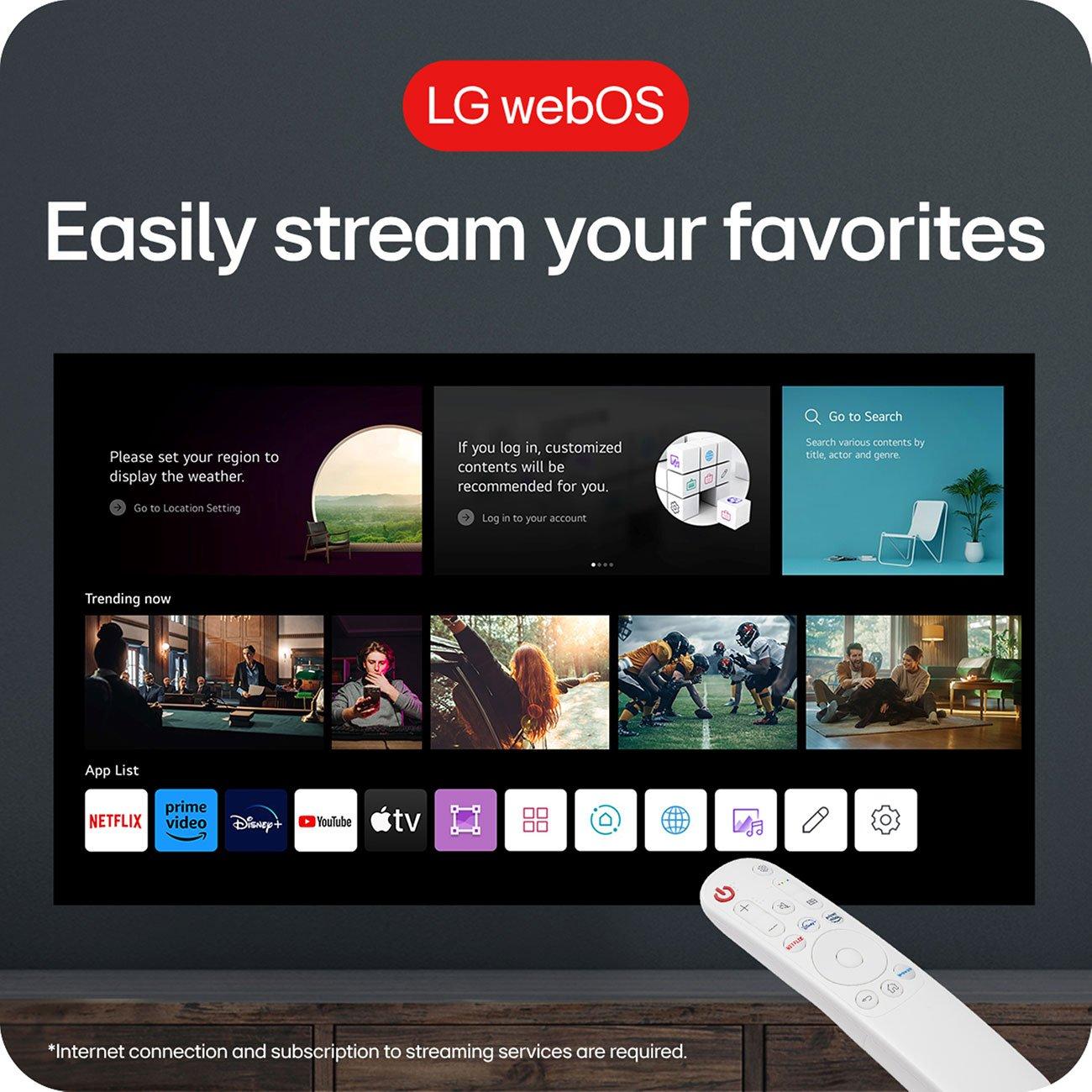
The LG CineBeam Q features LG's refined webOS platform, the same system used in their premium smart TVs. This mature platform offers a more polished user experience with a comprehensive app selection, smoother navigation, and better overall stability. The interface is optimized for remote control navigation and feels more cohesive than the WEMAX's system.
Both support screen mirroring technologies (Airplay, Miracast), but the LG's implementation of these features tends to be more reliable, with fewer connection issues in my testing.
Physical connection options determine how flexible a projector will be when connecting to various devices.
The WEMAX Vogue Pro shines in this category with its comprehensive connectivity suite: 2 HDMI 2.1 ports (one with ARC support for easy soundbar connection), 2 USB ports for media playback or powering streaming sticks, an Ethernet port for stable internet, and even an S/PDIF digital audio output for connecting to high-end audio systems. This robust selection makes it suitable as a permanent home theater centerpiece that can accommodate multiple devices.
The LG CineBeam Q offers a more streamlined approach with just one HDMI input and one USB-C port. While this minimalist approach complements its portable design philosophy, it does limit versatility. You can't, for example, have both a gaming console and a Blu-ray player connected simultaneously. The USB-C port supports DisplayPort alternate mode, allowing direct connection to compatible laptops.
The connectivity difference reflects the different use cases these projectors are designed for – the WEMAX as a potential TV replacement and the LG as a portable, occasional-use device.
While serious home theater enthusiasts will likely use external sound systems, the built-in audio can be important for casual viewing and portable use.
The WEMAX Vogue Pro features dual 10W speakers with Dolby Audio and DTS-HD support. These speakers produce surprisingly room-filling sound with decent bass response for a projector. During testing, they proved adequate for movie watching in medium-sized rooms without needing external speakers – something rare among projectors.
The LG CineBeam Q includes a single 3W mono speaker that, while functional, produces tinny sound lacking in depth and volume. This minimal audio solution is clearly a compromise made to achieve the projector's compact size. For any serious viewing, you'll want to connect external speakers or headphones via Bluetooth or HDMI ARC.
Value isn't just about absolute price but about what you get for your money.
The WEMAX Vogue Pro at $640.46 positions itself in the mid-range projector market, offering substantial brightness, good connectivity, and solid overall performance. Its 1600 ANSI lumens at this price point represent excellent value, especially considering its versatility across different lighting conditions.
The LG CineBeam Q at $997.99 commands a significant price premium but justifies it with cutting-edge 4K resolution in an ultra-portable package. You're paying for the engineering feat of miniaturizing 4K laser projection technology rather than raw brightness or connectivity options.
When considering value, think about your usage patterns. If you'll use your projector frequently in various lighting conditions as a TV replacement, the WEMAX offers better practical value. If you prioritize image quality for special movie nights or need extreme portability, the LG's premium might be justified.
These projectors clearly target different user profiles:
The WEMAX Vogue Pro suits users wanting a versatile home theater replacement that works in various lighting conditions. It's ideal for:
The LG CineBeam Q appeals to tech enthusiasts valuing maximum portability and premium image quality. It's perfect for:
Looking at these two projectors, we can trace the rapid evolution of projection technology over just a two-year span. The WEMAX Vogue Pro, released in 2022, represented a solid mid-range offering with its 1080p resolution and strong brightness. It focused on practical performance for everyday use with its LED light source – technology that was well-established and reliable.
Fast forward to 2024, and the LG CineBeam Q showcases how quickly miniaturization has advanced. Just two years ago, fitting a 4K laser projection system into a package as small as the CineBeam Q would have seemed impossible at consumer price points. The advancement in thermal management, optical engineering, and laser technology has enabled LG to create a truly portable 4K projector – something that would have cost many thousands of dollars more just a few years earlier.
This rapid pace of development suggests we'll continue to see improvements in brightness-to-size ratio, with future portable projectors likely addressing the CineBeam Q's main weakness – its limited brightness – while maintaining or even reducing its compact footprint.
For dedicated home theater enthusiasts, several additional factors merit consideration.
If you're creating a dedicated home theater room with controlled lighting, the LG CineBeam Q's superior contrast and 4K resolution will provide a more cinema-like experience, especially with HDR content. Its laser technology also means more consistent performance over its lifespan. However, its limited brightness means you'll need near-perfect light control with dark walls and ceilings to maximize its performance.
The WEMAX Vogue Pro might actually be more practical in many home theater setups, especially if your room has light-colored walls or some ambient light leakage. Its higher brightness ensures images remain vibrant even in imperfect conditions, and its superior connectivity options make integration with audio equipment and multiple sources seamless.
For screen pairing, the LG works particularly well with high-contrast ALR (Ambient Light Rejecting) screens that can help compensate for its brightness limitations while preserving its superior contrast. The WEMAX is more flexible, working well with standard white screens or even light-colored walls in casual setups.
Choosing between the WEMAX Vogue Pro and the LG CineBeam Q comes down to understanding your specific needs and priorities:
Both the WEMAX Vogue Pro and the LG CineBeam Q represent excellent options in their respective niches, showcasing how projector technology continues to advance and diversify.
The WEMAX Vogue Pro stands out as a practical, versatile performer with brightness that works in real-world environments and connectivity that accommodates various devices. It's the more pragmatic choice for most users looking to incorporate a projector into their everyday entertainment setup.
The LG CineBeam Q represents the cutting edge of miniaturized 4K projection, delivering premium image quality in a remarkably compact package. It's the specialist choice for enthusiasts who prioritize resolution and portability over brightness and have the right environment to showcase its strengths.
Your choice ultimately depends on which aspects of performance matter most to you and the specific conditions where you'll be using your projector. Whichever you choose, both models demonstrate how far projector technology has come – delivering experiences that blur the line between traditional TVs and the immersive world of big-screen projection.
| WEMAX Vogue Pro 1080P Smart Projector | LG CineBeam Q 4K UHD Portable Laser Projector |
|---|---|
| Price - Your initial investment | |
| $640.46 (better value for everyday use) | $997.99 (premium price for portability and 4K) |
| Resolution - Determines image sharpness and detail | |
| 1080p Full HD (1920×1080) - Sufficient for general viewing | 4K UHD (3840×2160) - 4× more pixels, noticeable on larger screens |
| Brightness - Critical for viewing with ambient light | |
| 1600 ANSI Lumens - Works well in rooms with some lighting | 500 ANSI Lumens - Requires near-darkness for optimal viewing |
| Light Source - Affects color quality and lifespan | |
| 4-channel LED (25,000 hour lifespan) | 3-channel RGB laser (20,000+ hour lifespan, better color precision) |
| Size & Weight - Impacts portability and placement options | |
| 200 × 200 × 148 mm, 3.5 kg (portable but substantial) | 80 × 135 × 135 mm, 1.5 kg (ultra-compact with rotating handle) |
| Contrast Ratio - Affects image depth and black levels | |
| 2500:1 (good for general viewing) | 450,000:1 dynamic (superior dark scene performance) |
| Color Gamut - Determines color richness and accuracy | |
| 125% Rec.709 (good for standard content) | 154% DCI-P3 (cinema-grade color with better vibrancy) |
| Audio System - Built-in sound quality | |
| Dual 10W speakers with Dolby Audio (room-filling sound) | Single 3W mono speaker (minimal audio, external speakers recommended) |
| Connectivity - Flexibility for connecting devices | |
| 2× HDMI, 2× USB, Ethernet, S/PDIF (comprehensive) | 1× HDMI, 1× USB-C (minimal but sufficient for portable use) |
| Smart Features - Built-in streaming capabilities | |
| FengOS (Android-based), adequate app selection | webOS with better app support and more refined interface |
| Auto-Adjustment Features - Ease of setup | |
| Auto focus, keystone correction, obstacle avoidance | Auto focus, keystone correction, 360° rotating handle/stand |
| Release Date - Technology generation | |
| 2022 (established technology) | May 2024 (newest projection technology) |
| Best For - Ideal use case | |
| Versatile home theater use in varied lighting conditions | Premium portable projection in controlled dark environments |
The WEMAX Vogue Pro significantly outperforms the LG CineBeam Q in rooms with ambient light due to its much higher brightness rating of 1600 ANSI lumens compared to the LG's 500 ANSI lumens. This makes the WEMAX Vogue Pro suitable for living rooms with some daylight, while the LG CineBeam Q requires near-darkness to deliver optimal image quality. If you can't completely control the lighting in your viewing space, the WEMAX Vogue Pro is the better choice.
The WEMAX Vogue Pro is priced at $640.46, while the LG CineBeam Q costs $997.99, representing a price difference of approximately $357. This significant price gap reflects differences in technology, with the LG offering newer 4K laser projection technology in an ultra-compact form factor. Consider whether the LG's higher resolution and portability justify paying about 56% more than the WEMAX Vogue Pro.
The LG CineBeam Q offers superior resolution with true 4K UHD (3840×2160 pixels), providing four times the detail of the WEMAX Vogue Pro, which has 1080p Full HD resolution (1920×1080 pixels). This resolution difference becomes most noticeable when projecting onto larger screens (100+ inches) or when viewing 4K content. For cinephiles who prioritize image detail and sharpness, the LG CineBeam Q delivers a more premium viewing experience.
The LG CineBeam Q is significantly more portable, weighing just 1.5kg (3.3 pounds) and measuring 80×135×135mm—about 40% smaller than the WEMAX Vogue Pro, which weighs 3.5kg (7.7 pounds) and measures 200×200×148mm. The LG also features an innovative 360° rotating handle that doubles as a stand, making it ideal for moving between rooms or taking to different locations. If portability is a priority, the LG CineBeam Q is the clear winner.
The WEMAX Vogue Pro has substantially better built-in audio, featuring dual 10W speakers with Dolby Audio and DTS-HD support that provide room-filling sound adequate for movie watching without external speakers. In contrast, the LG CineBeam Q has a single 3W mono speaker that produces limited sound quality and volume, requiring external speakers for satisfying audio performance. If you want to use your projector without connecting additional audio equipment, the WEMAX Vogue Pro is the better choice.
For a dedicated home theater with controlled lighting (dark walls and complete light blocking), the LG CineBeam Q offers superior image quality with its 4K resolution, exceptional contrast ratio (450,000:1), and superior color reproduction (154% DCI-P3 color gamut). However, if your home theater has light-colored walls or some ambient light, the WEMAX Vogue Pro may perform better due to its higher brightness. The WEMAX also offers better connectivity options for integrating multiple sources and audio equipment in a permanent home theater setup.
The WEMAX Vogue Pro offers more comprehensive connectivity with 2 HDMI ports (one with ARC for soundbar connection), 2 USB ports, Ethernet, and S/PDIF digital audio output. The LG CineBeam Q has a more minimalist approach with just one HDMI input and one USB-C port. If you need to connect multiple devices simultaneously (like a gaming console, Blu-ray player, or streaming device), the WEMAX Vogue Pro provides greater flexibility.
Both projectors offer similar light source longevity. The WEMAX Vogue Pro uses 4-channel LED technology with an estimated 25,000-hour lifespan, while the LG CineBeam Q employs a 3-channel RGB laser system rated for 20,000+ hours. However, the LG's laser technology may maintain brightness and color accuracy better throughout its life. With either projector, you could expect approximately 10 years of use at 6-7 hours daily before significant degradation.
For gaming, the WEMAX Vogue Pro offers advantages like higher brightness (better for daytime gaming sessions), more connectivity options for multiple consoles, and stronger built-in audio. While the LG CineBeam Q provides superior resolution for 4K gaming, its lower brightness limits gaming to darker environments. Neither projector advertises specific gaming features like enhanced refresh rates or extremely low input lag, so casual gamers will likely find the WEMAX Vogue Pro more practical for everyday use.
The LG CineBeam Q provides a superior smart experience with LG's refined webOS platform, offering more reliable streaming apps, smoother navigation, and better overall stability. The WEMAX Vogue Pro runs FengOS (Android-based), which works adequately but can be occasionally laggy with a more limited app selection. If streaming content directly from the projector is important to you, the LG CineBeam Q delivers a more polished smart TV experience.
For movie watching in ideal conditions (dark room), the LG CineBeam Q delivers a superior cinematic experience with 4K resolution, exceptional contrast (450,000:1), and wider color gamut (154% DCI-P3), resulting in more detailed, vibrant images. However, the WEMAX Vogue Pro provides a more versatile movie-watching experience that works in various lighting conditions thanks to its 1600 ANSI lumens brightness. Your choice should depend on whether you primarily watch movies in a controlled environment or need flexibility for different settings.
The WEMAX Vogue Pro at $640.46 represents better overall value for most users, offering 1600 ANSI lumens brightness, good connectivity options, and solid 1080p performance at a significantly lower price point. The LG CineBeam Q at $997.99 commands a premium for its 4K resolution and ultra-portable design but has limitations in brightness and connectivity. Unless you specifically need the portability and 4K resolution of the LG in dark environments, the WEMAX Vogue Pro provides more practical performance per dollar for everyday use.
We've done our best to create useful and informative comparisons to help you decide what product to buy. Our research uses advanced automated methods to create this comparison and perfection is not possible - please contact us for corrections or questions. These are the sites we've researched in the creation of this article: wemax.com - wemax.com - youtube.com - techpowerup.com - wemax.com - projectorcentral.com - nikktech.com - youtube.com - techpowerup.com - techpowerup.com - youtube.com - nikktech.com - walmart.com - business.walmart.com - projectorcentral.com - techpowerup.com - projektoren-datenbank.com - wemax.com - projectorcentral.com - lg.com - thefrogpadappliances.com - youtube.com - techradar.com - lg.com - avsforum.com - lg.com - tomsguide.com - jefflynch.com - hometheaterview.com - projectorreviews.com - youtube.com - avsforum.com - projectorcentral.com - pcrichard.com - bhphotovideo.com - youtube.com - lg.com - applerivertvandappliance.com - big-georges.com - queencityonline.com - lg.com - lg.com - lg.com - lgnewsroom.com - heimkino.de

Privacy Policy
Terms and Conditions - Affiliate Policy
Home Security
© Copyright 2008-2026.
11816 Inwood Rd #1211, Dallas, TX 75244