

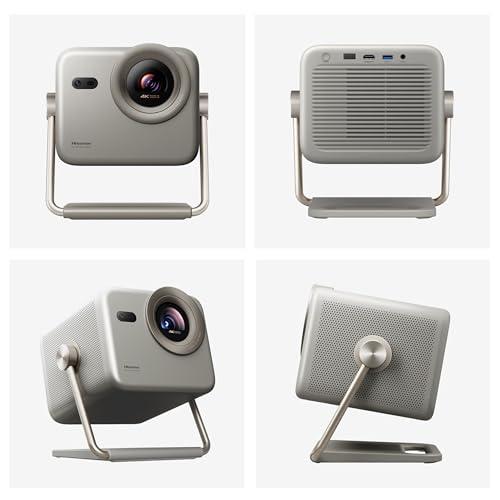
Picture this: you want the cinematic experience of a massive 100+ inch screen, but you don't want to mount a traditional projector to your ceiling or dedicate an entire room to home theater equipment. That's exactly the problem that 4K portable laser projectors solve, and it's why this category has exploded in popularity over the past few years.
These aren't your grandfather's business projectors that required darkened conference rooms and produced washed-out images. Modern 4K portable laser projectors deliver genuine cinema-quality visuals while remaining compact enough to move between rooms or take on camping trips. But with premium options like the Hisense M2 Pro and LG CineBeam Q both commanding similar price points (around $1,300 at the time of writing), choosing between them requires understanding some important technical differences.
Before diving into specifics, it's worth understanding what makes these devices special. Traditional projectors used bulky, hot-running lamp systems that needed frequent replacement and produced inconsistent colors. Laser light sources changed everything by providing precise color control, lasting 20,000+ hours (that's roughly 10 years of regular use), and maintaining consistent brightness throughout their lifespan.
The "4K" designation means these projectors can display 3,840 × 2,160 pixels—four times the detail of standard HD. However, not all 4K projectors are created equal. Some use "pixel shifting" technology to simulate 4K from lower-resolution chips, while others offer true native 4K processing.
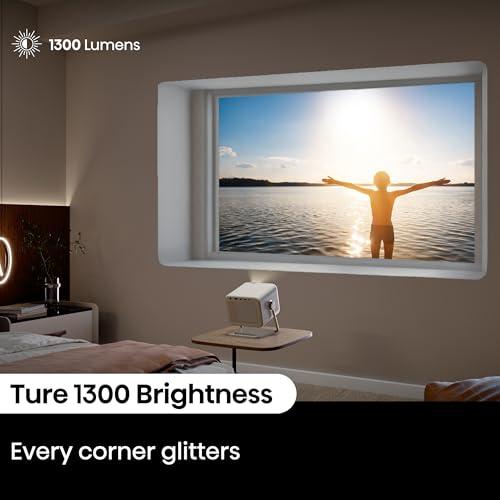
Perhaps the most critical difference between the Hisense M2 Pro and LG CineBeam Q lies in their brightness output, measured in ANSI lumens (a standardized measurement of light output). The Hisense delivers 1,300 ANSI lumens compared to the LG's 500 ANSI lumens—a massive 2.6x difference that fundamentally changes how and where you can use each projector.
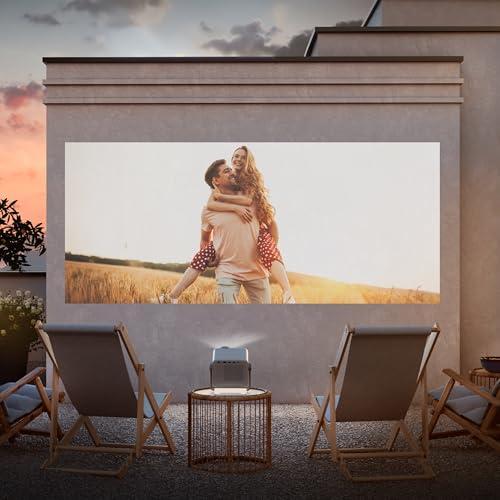
In practical terms, this brightness difference determines your viewing flexibility. The Hisense M2 Pro can produce watchable images in moderately lit rooms, making it suitable for daytime viewing or spaces with some ambient light. You can keep a few lamps on or have light filtering through curtains without completely washing out the image. This makes it genuinely practical for everyday use in living rooms or bedrooms where complete darkness isn't always feasible.
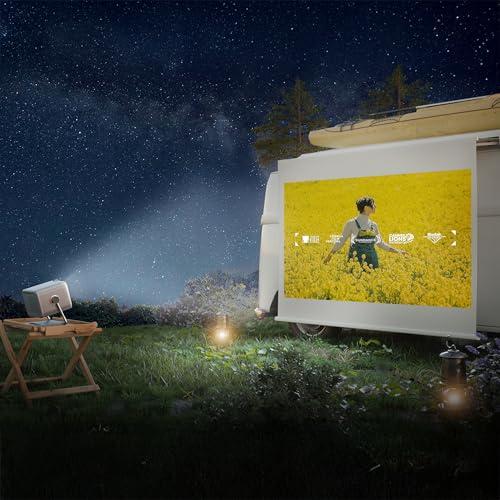
The LG CineBeam Q, while still capable of stunning image quality, really shines (pun intended) in darker environments. Its 500 lumens work best in dedicated dark rooms or outdoor settings after sunset. This isn't necessarily a weakness—many home theater enthusiasts actually prefer controlled lighting environments for the most immersive experience possible.
Both projectors use laser light sources, but they approach color reproduction differently, and this affects the final image quality in meaningful ways.
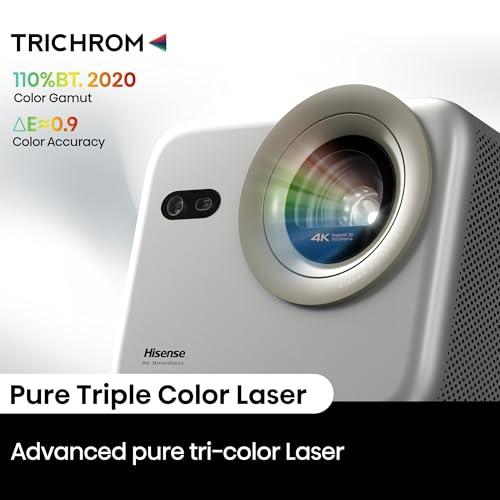
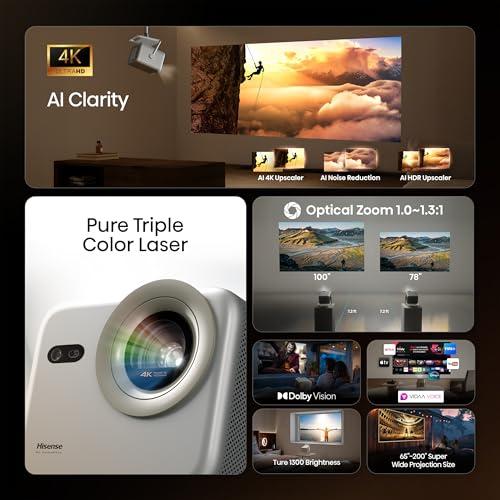
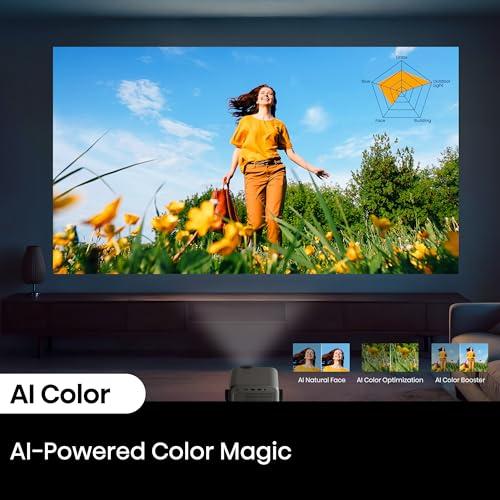
The Hisense M2 Pro employs what's called "triple laser" technology, using separate red, green, and blue laser diodes. Think of it like having three precision paintbrushes instead of one mixed palette. This allows the projector to achieve 110% of the BT.2020 color space—a technical standard that represents the colors you'd see in premium HDR content. The result is exceptionally vibrant, accurate colors that professional reviewers have measured at a Delta-E of around 0.9 (anything under 3 is considered excellent for consumer displays).
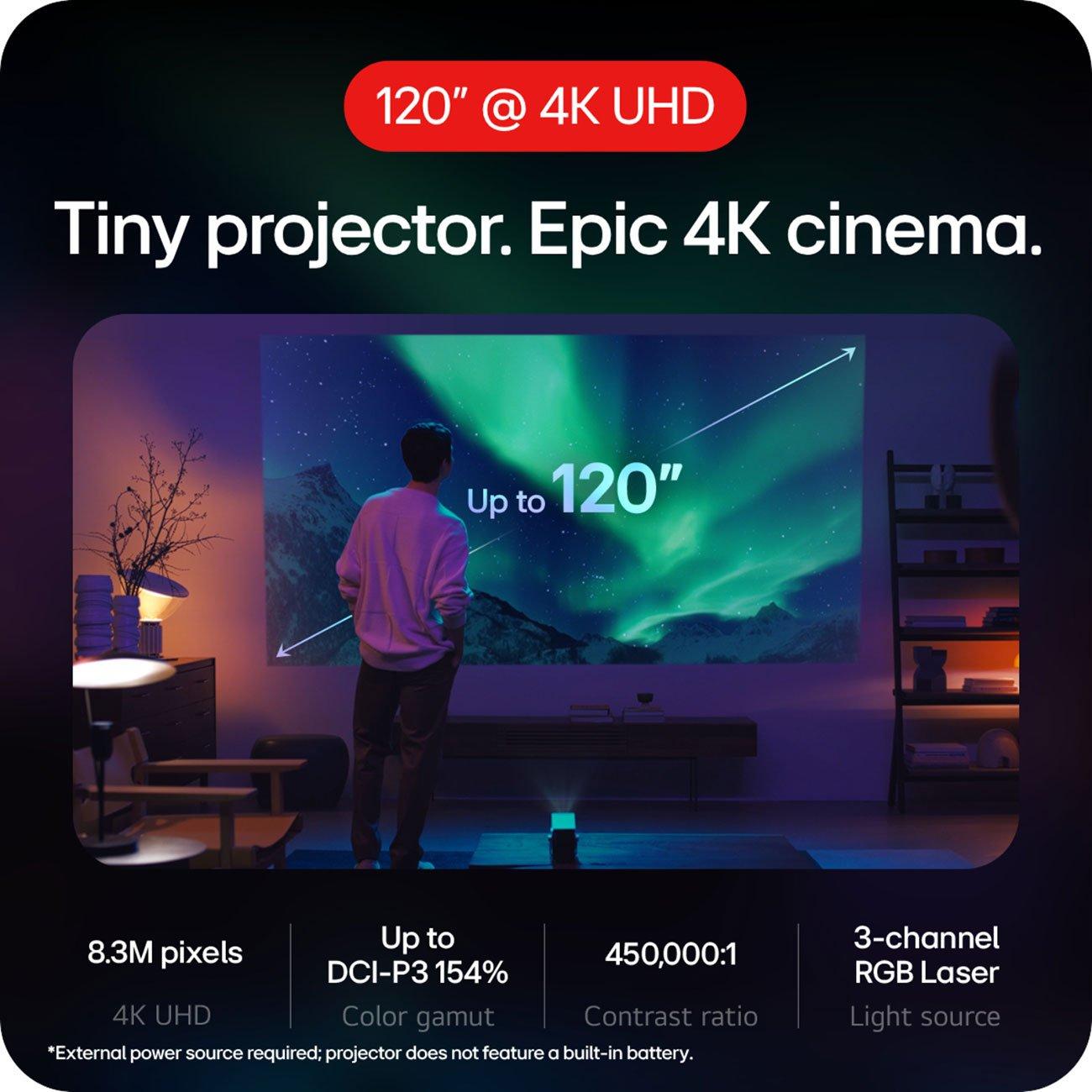
The LG CineBeam Q also uses RGB laser technology but covers 154% of the DCI-P3 color space—the standard used in commercial cinemas. While this sounds like more coverage, DCI-P3 is actually a smaller subset of colors compared to BT.2020, so the real-world difference favors the Hisense for HDR content accuracy.
Both approaches deliver excellent color reproduction, but the Hisense M2 Pro has a slight edge for home theater applications where HDR content is becoming the standard.
Here's where things get interesting from a technical standpoint. The LG CineBeam Q boasts an impressive 450,000:1 dynamic contrast ratio compared to the Hisense M2 Pro's 1,000:1 native contrast ratio. Dynamic contrast ratios can be somewhat misleading—they represent the difference between the brightest white and darkest black the projector can produce, but not necessarily at the same time.
In practice, both projectors struggle with the fundamental limitation of all projection technology: true black levels. Unlike OLED TVs that can turn pixels completely off, projectors create black by not projecting light, which means room ambient light and screen reflection affect black levels significantly.
The LG CineBeam Q's lower brightness actually works in its favor here—in a properly darkened room, its blacks appear deeper and more convincing because there's less light spillage. The Hisense M2 Pro trades some black level performance for the versatility of brighter operation.
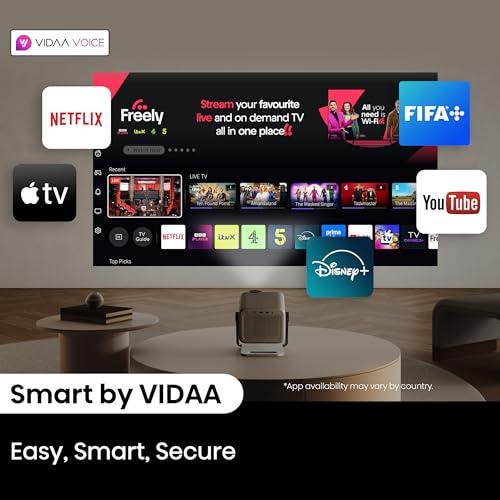
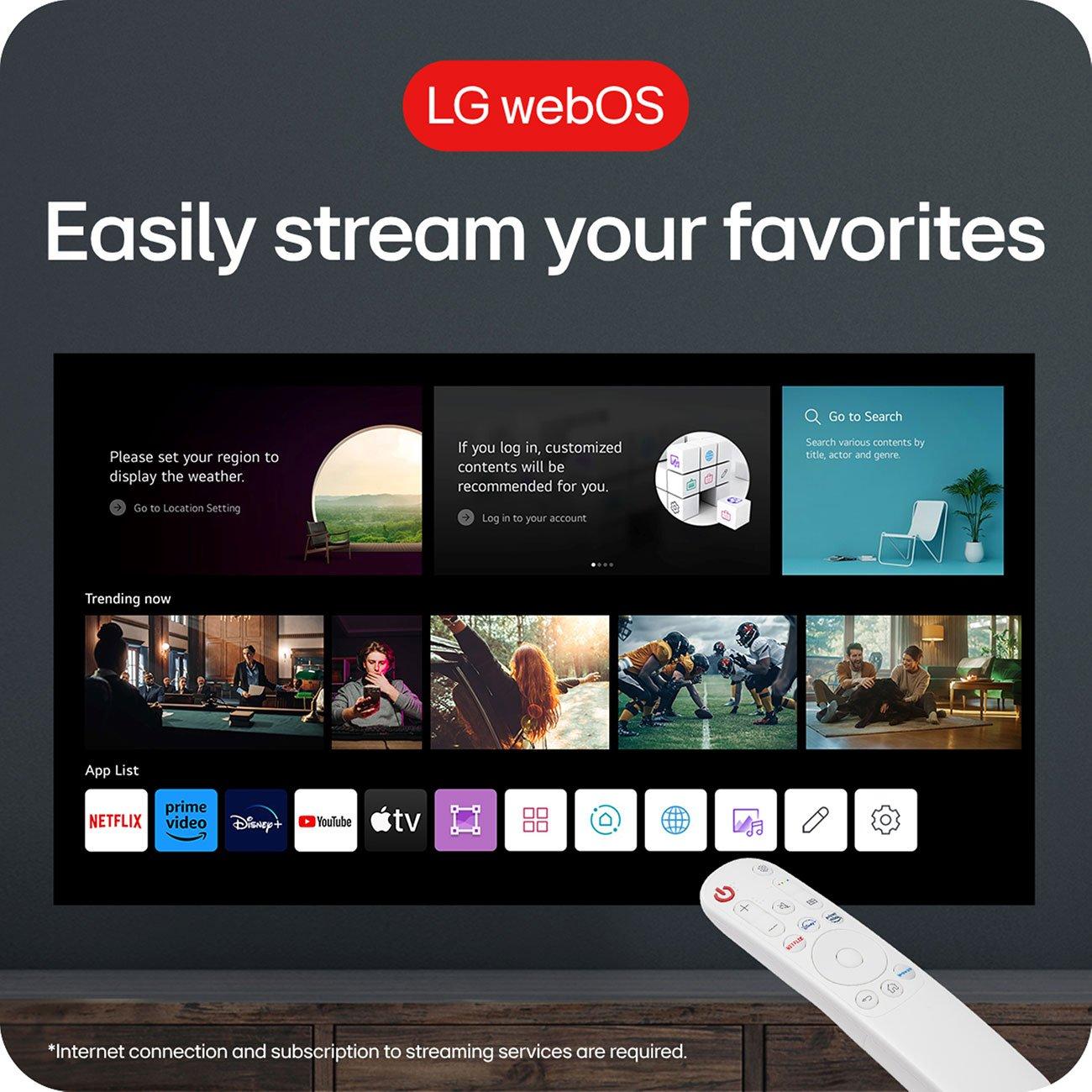
Both projectors include smart TV platforms, but they take different approaches. The Hisense M2 Pro runs VIDAA OS, while the LG CineBeam Q uses webOS—LG's well-regarded smart TV interface.
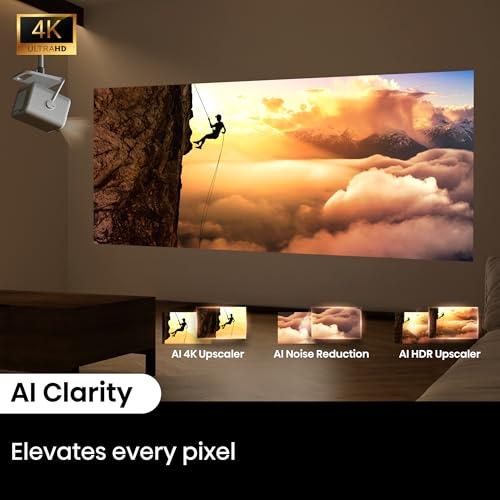
What sets the Hisense M2 Pro apart is its AI 4K Clarity Engine, a suite of processing technologies that actively improve image quality. The AI 4K Upscaler can take lower-resolution content (like 1080p Netflix shows) and intelligently add detail to approach 4K sharpness. The AI Noise Reduction cleans up compression artifacts you might see in streaming content, while the AI HDR Upscaler optimizes contrast and highlights for more dynamic visuals.
These aren't just marketing buzzwords—the processing power makes a real difference when watching varied content. If you're streaming a mix of HD and 4K content from different sources, the Hisense's processing helps normalize the experience.
For serious gamers, the Hisense M2 Pro offers a compelling advantage with its 240Hz refresh rate and 12ms input lag. Input lag is the delay between pressing a controller button and seeing the action on screen—12ms is excellent for any projector and competitive with dedicated gaming monitors.
The 240Hz refresh rate means the projector can display up to 240 frames per second, though you'll need a high-end gaming PC or the latest consoles to take full advantage. For competitive gaming, especially fast-paced shooters or racing games, this responsiveness is crucial.
The LG CineBeam Q doesn't specify gaming-optimized features, suggesting it's designed more for movie watching than gaming. This doesn't mean it can't game, but serious gamers will prefer the Hisense's dedicated gaming capabilities.
Built-in projector audio is usually an afterthought, but both of these premium models make serious attempts at decent sound. The Hisense M2 Pro includes a 20-watt stereo system with Dolby Audio and DTS Virtual:X support. This is genuinely impressive for a portable projector—the 20 watts of power and advanced audio processing create surprisingly room-filling sound.
The LG CineBeam Q includes just a 3-watt mono speaker, which frankly won't cut it for serious viewing. You'll almost certainly need external speakers or a soundbar, which somewhat undermines the plug-and-play convenience that makes portable projectors appealing.
For home theater use, even the Hisense's superior audio might leave you wanting more, but it's certainly adequate for casual viewing and provides a significant advantage for portable use.
The most immediately obvious difference between these projectors is their physical design, which reflects fundamentally different philosophies about portability.
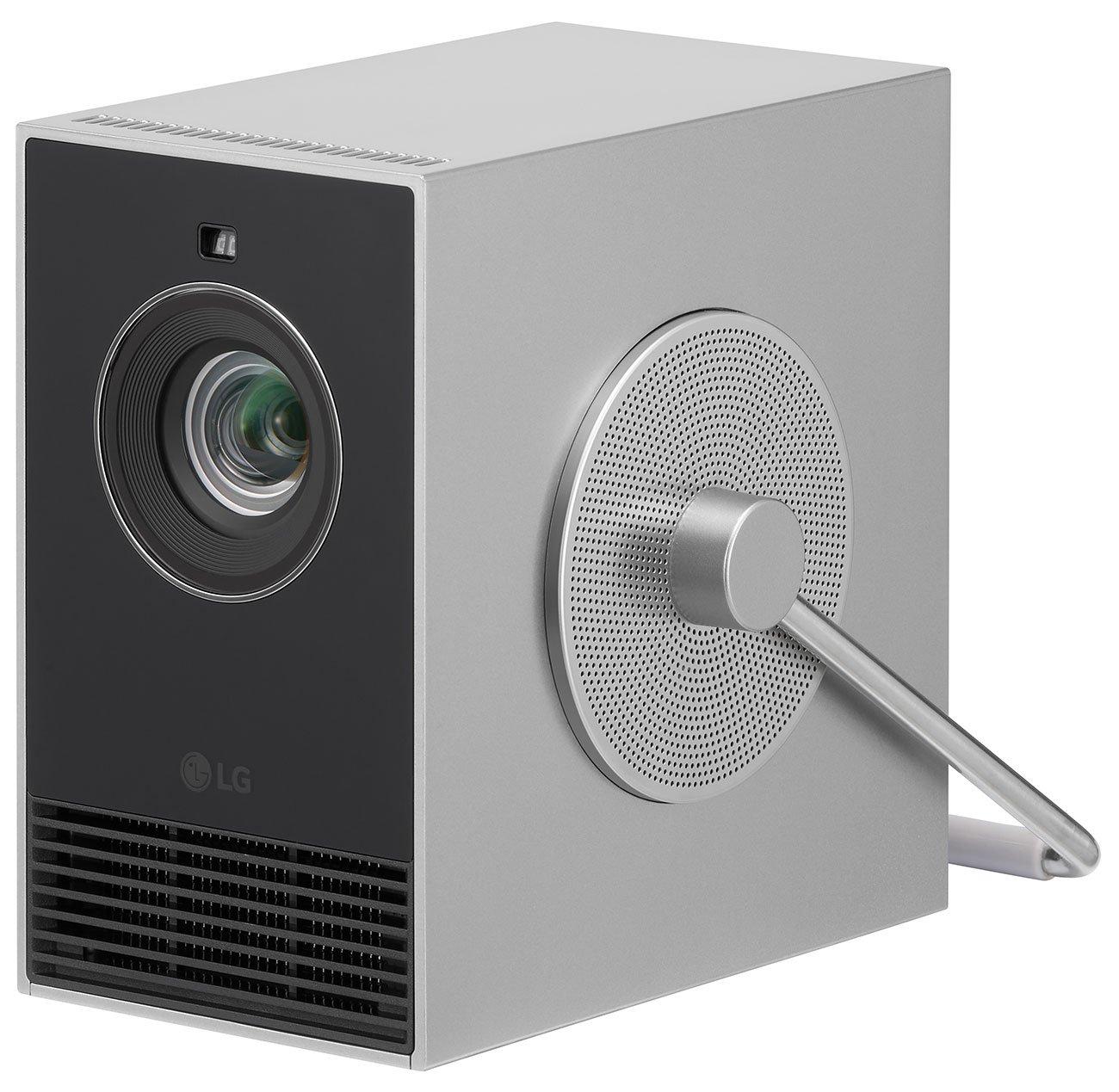
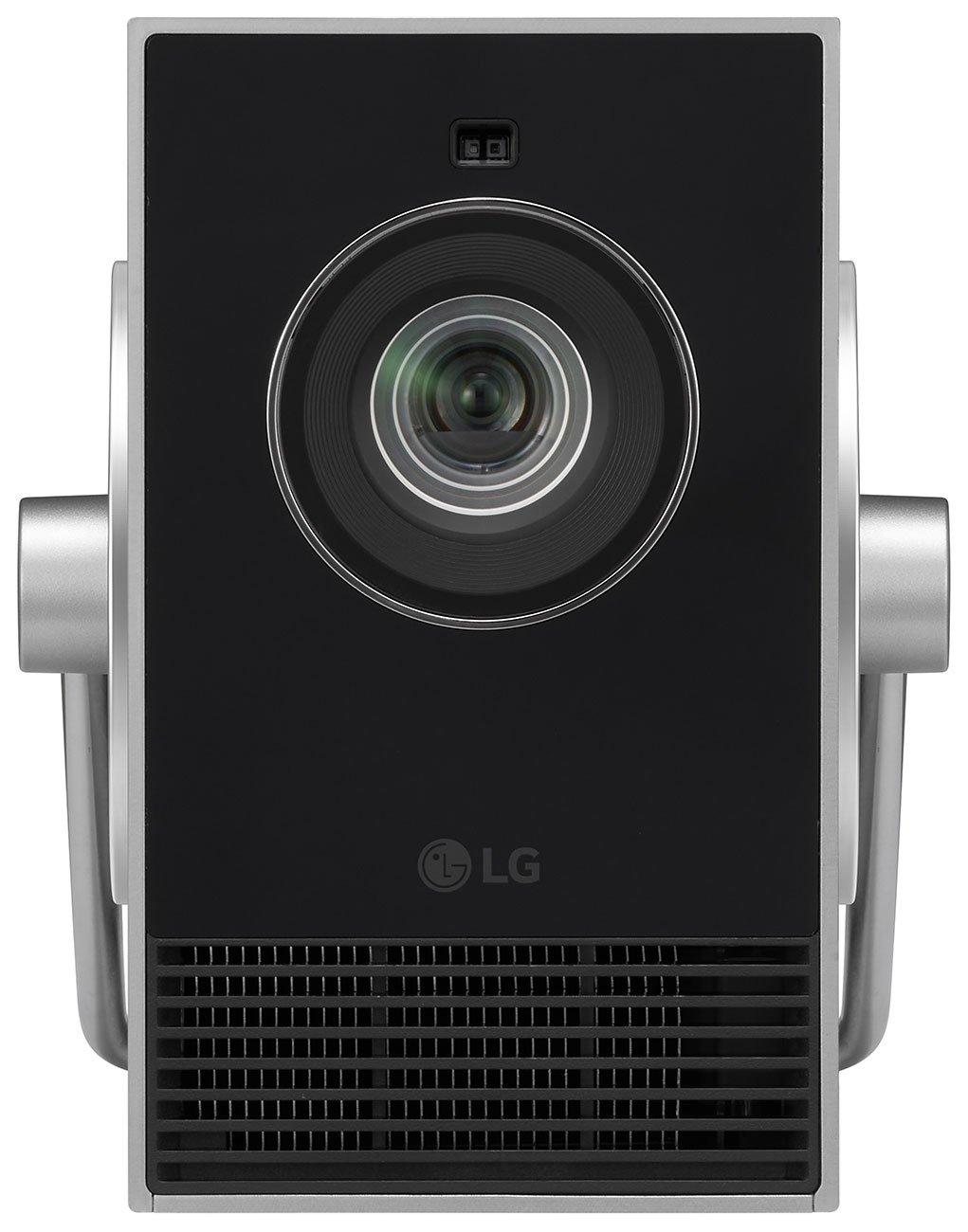
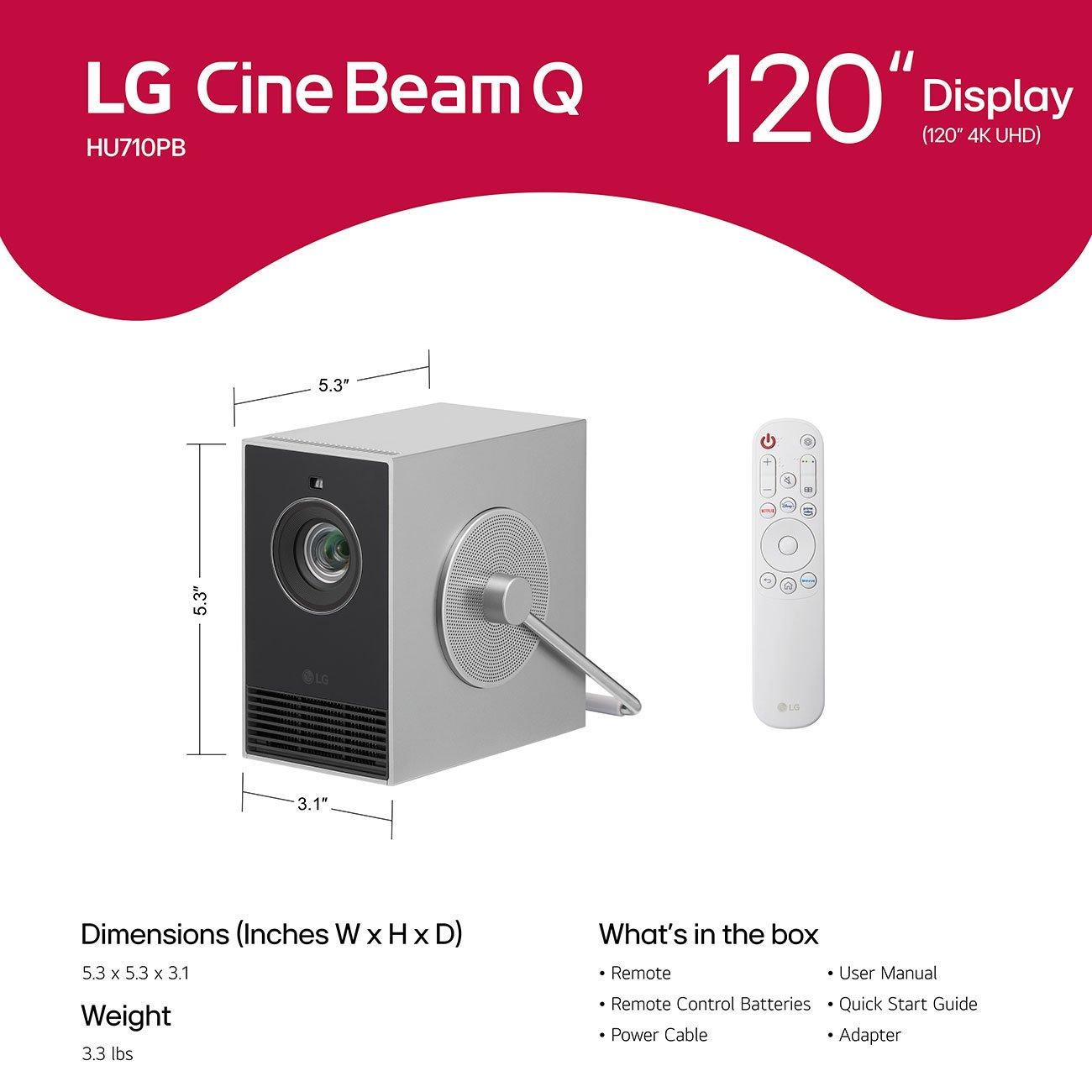
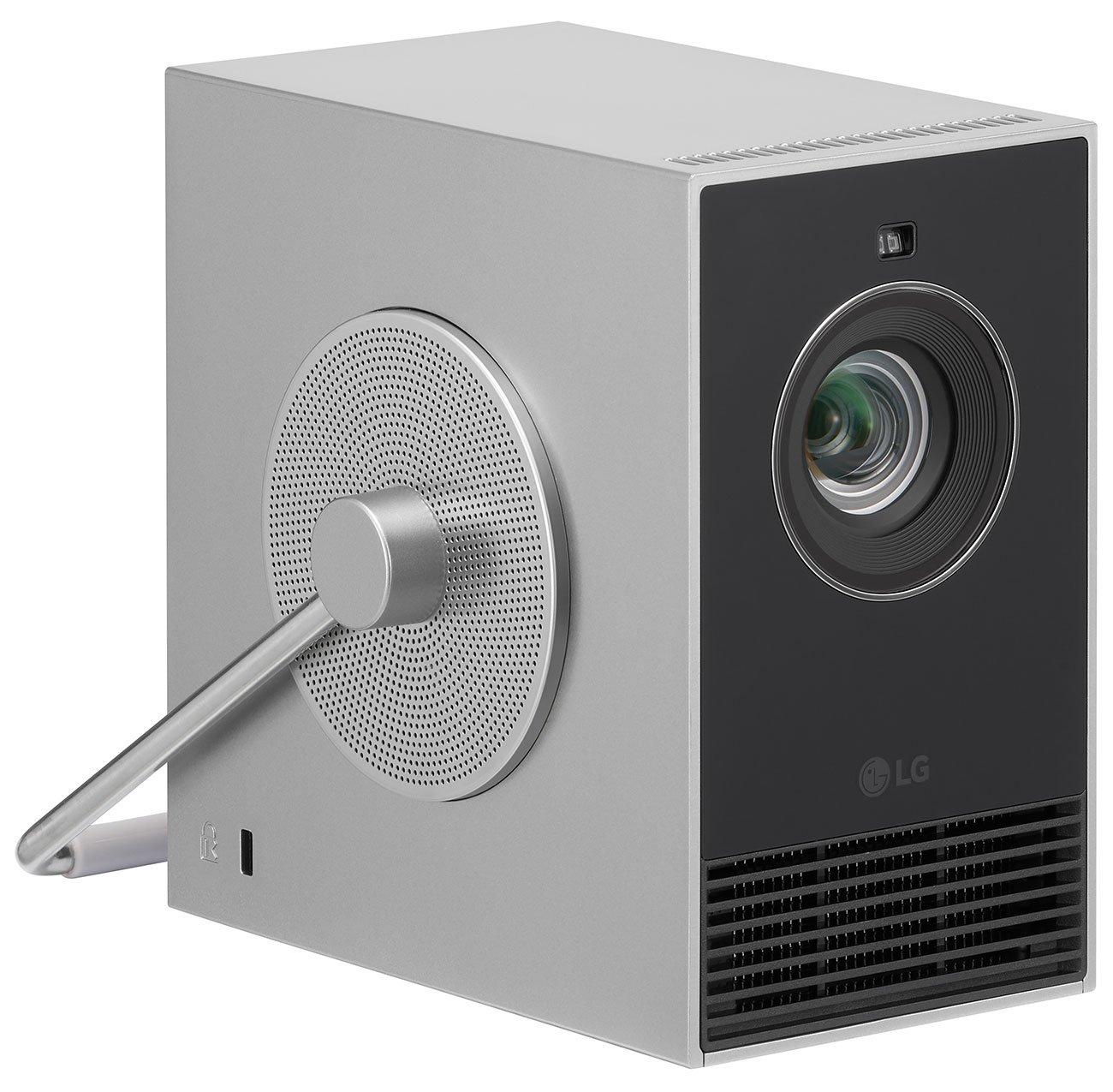
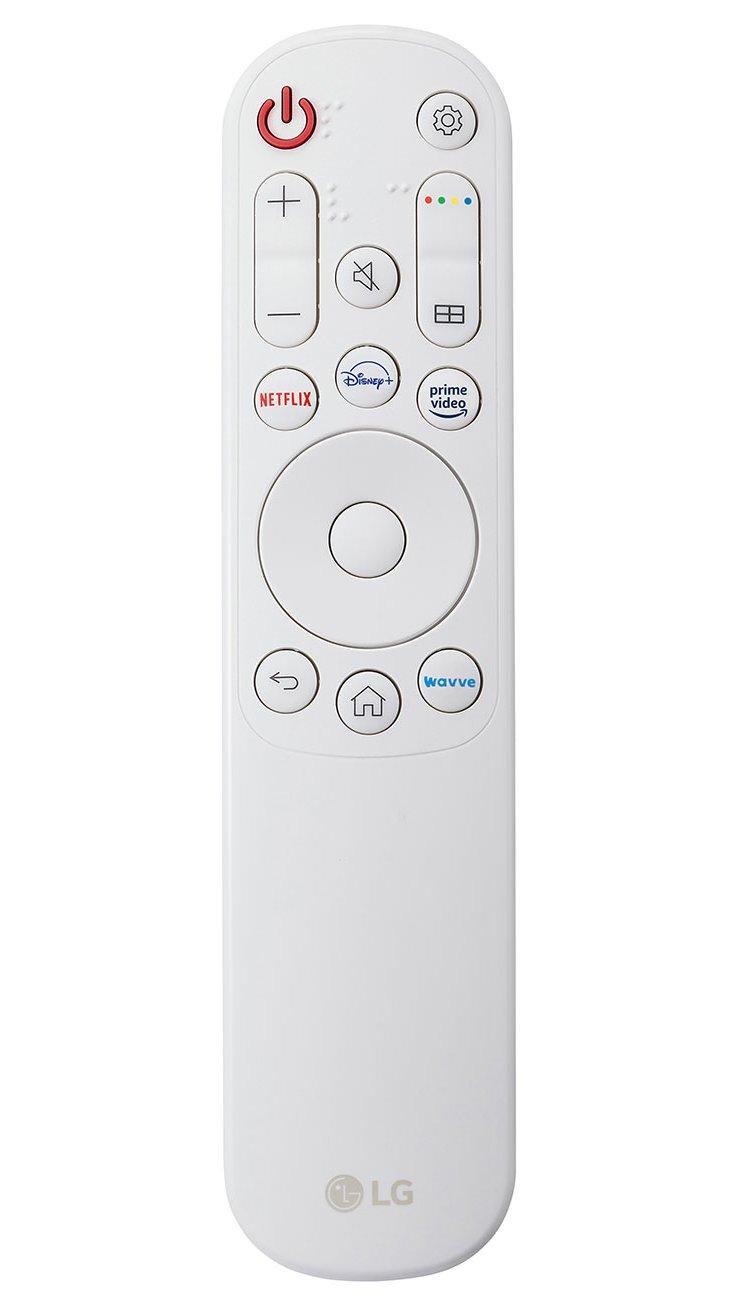
The LG CineBeam Q is genuinely impressive from an engineering standpoint—packing true 4K laser projection into a 3.3-pound cube that measures roughly 5.3 inches on each side. The innovative 360-degree rotating handle doubles as an adjustable stand, making setup incredibly simple. This is maximum portability—you can easily pack it in a backpack for camping trips or business travel.
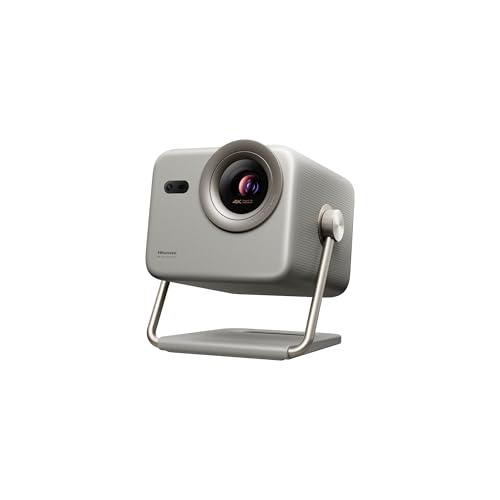
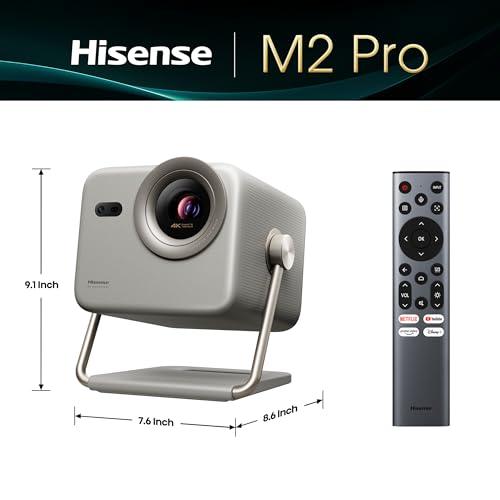
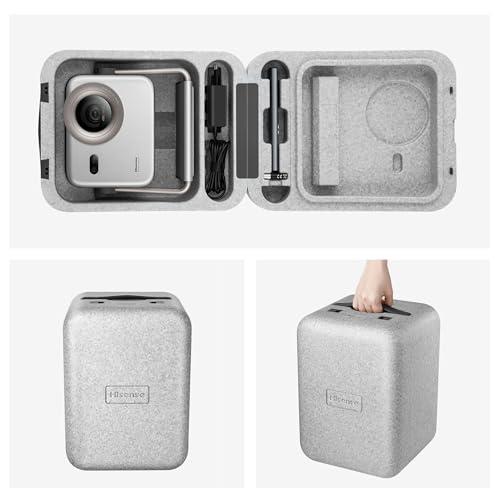
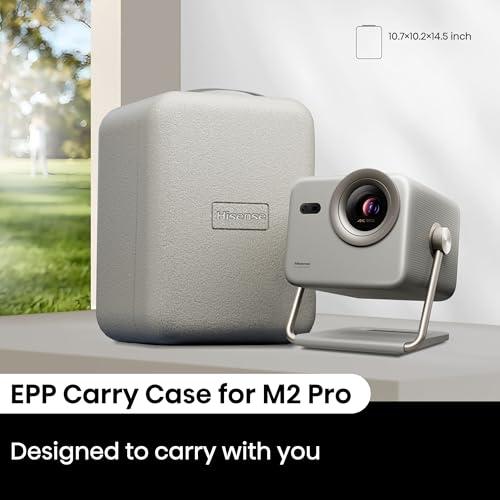
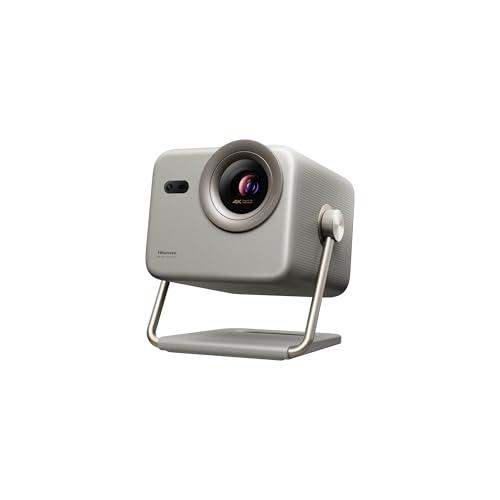
The Hisense M2 Pro, at 8.6 pounds and roughly twice the volume, prioritizes performance over ultimate portability. It's still genuinely portable compared to traditional projectors, but it's more suited to moving between rooms in your house rather than frequent travel.
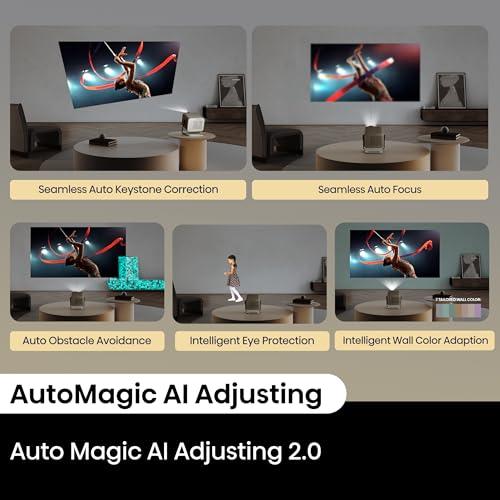
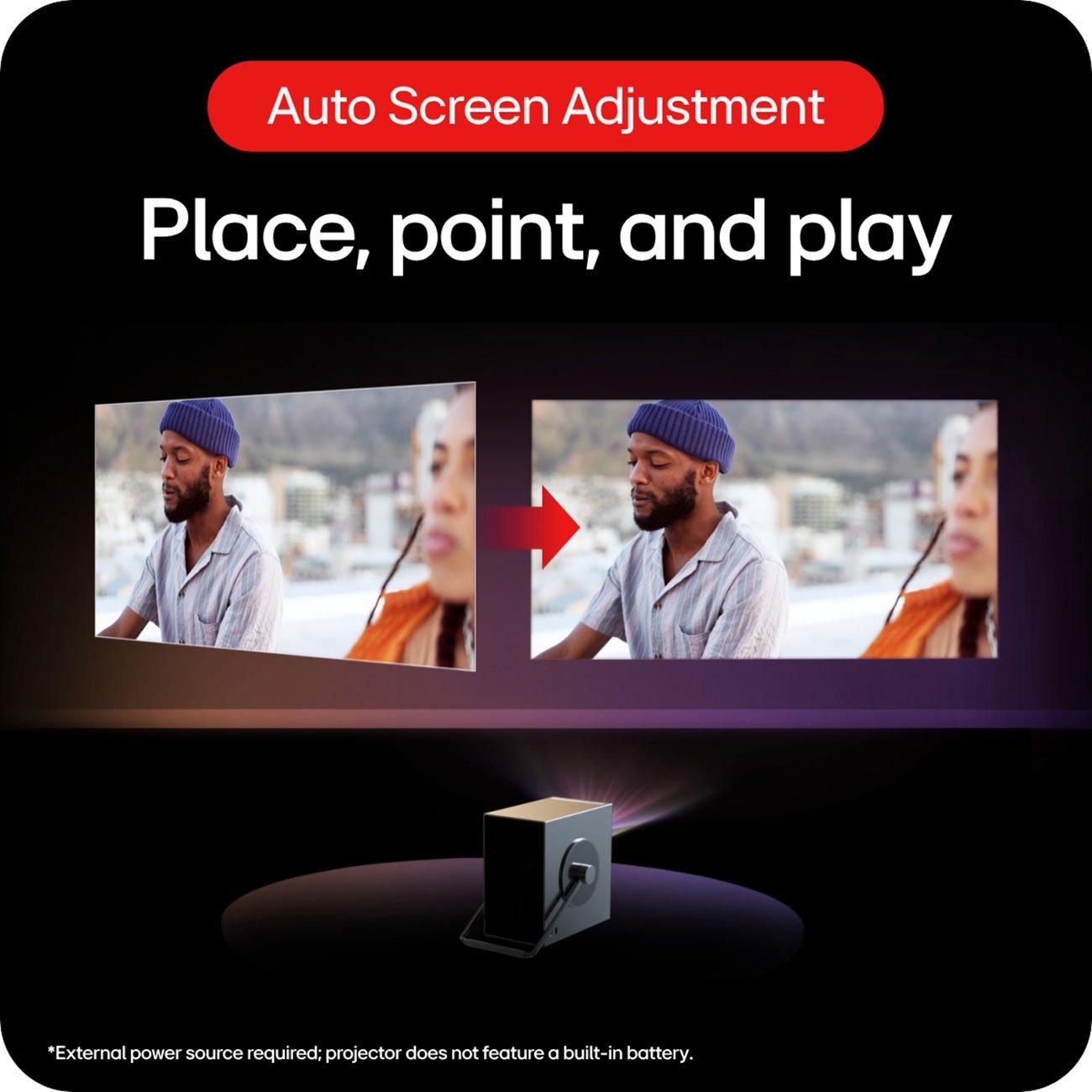
Both projectors include automatic keystone correction and autofocus, but the Hisense M2 Pro goes further with its unique gimbal design that allows 360-degree horizontal and 135-degree vertical adjustment. This means you can project onto ceilings, walls at various angles, or even outdoor surfaces with much more flexibility than traditional projectors.
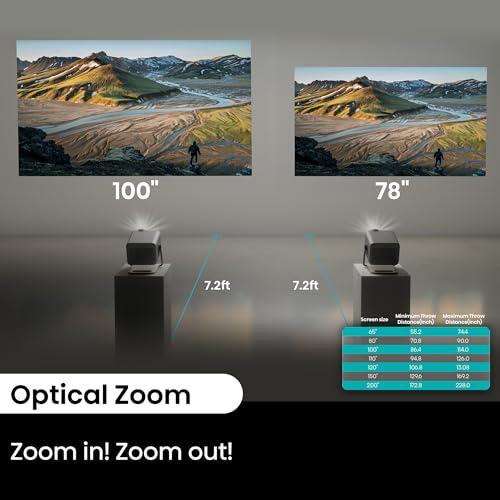
The optical zoom feature (1.0-1.3:1 throw ratio) is particularly valuable because it lets you adjust image size without moving the projector or losing image quality. Digital zoom always degrades the image, but optical zoom maintains full 4K sharpness regardless of size adjustment.
The LG CineBeam Q focuses on simplicity—its compact form factor and integrated handle make it incredibly quick to set up, but with less adjustment flexibility once positioned.
High Dynamic Range (HDR) content is becoming the standard for premium streaming and gaming, and both projectors handle it, but with different capabilities. The Hisense M2 Pro supports Dolby Vision, HDR10, HDR10+, and HLG—essentially every HDR standard currently in use. The LG CineBeam Q supports HDR10 and HLG but lacks Dolby Vision, which is increasingly common on Netflix and other premium streaming services.
For home theater enthusiasts building a long-term setup, Dolby Vision support provides better future-proofing and improved performance with compatible content.
Based on comprehensive review analysis and user feedback, here's what you can realistically expect from each projector:
The Hisense M2 Pro excels in versatility. You can use it in your living room during the day with reasonable results, move it to the bedroom for nighttime viewing with excellent quality, and take it outside for movie nights with friends. The gaming performance makes it suitable for serious players, while the audio quality means you don't necessarily need additional equipment for casual viewing.
The LG CineBeam Q shines as a specialty device for people who prioritize ultimate portability and have consistent access to dark viewing environments. When properly set up in a dark room, the image quality rivals much more expensive fixed-installation projectors. The ultra-compact design makes it practical for uses that would be impossible with larger projectors.
For dedicated home theater use, both projectors offer compelling but different propositions. The Hisense M2 Pro provides more flexibility for imperfect rooms—those with some ambient light or where complete darkness isn't practical. Its gaming capabilities also make it suitable for households where the theater doubles as a gaming room.
The LG CineBeam Q can deliver superior black levels and contrast in properly controlled environments, potentially providing a more cinematic experience for movie purists willing to optimize their room setup.
Choose the Hisense M2 Pro if you want maximum versatility and performance. It's the better choice for people who plan to use their projector in various locations and lighting conditions, serious gamers, or anyone who values comprehensive features and future-proofing over ultimate portability.
Choose the LG CineBeam Q if portability is your primary concern and you have consistent access to dark viewing environments. It's ideal for frequent travelers, people with limited storage space, or those who want the most compact 4K laser projector available and don't mind optimizing their environment around it.
Both projectors represent excellent value at their respective price points (similar costs at the time of writing), but they serve different primary needs. The decision ultimately comes down to whether you prioritize performance versatility or maximum portability—both valid approaches that reflect the maturing 4K portable projector market.
The good news is that either choice will deliver genuinely impressive 4K laser projection that would have been unimaginable at these sizes and prices just a few years ago. The technology has reached a point where the main question isn't whether these projectors are good enough, but which approach better matches your specific needs and viewing environment.
| Hisense M2 Pro 4K Triple Laser Portable Projector | LG CineBeam Q 4K UHD Portable Laser Projector |
|---|---|
| Brightness - Most critical factor determining where you can use the projector | |
| 1,300 ANSI lumens (works in moderately lit rooms) | 500 ANSI lumens (requires dark environments for optimal viewing) |
| Weight & Portability - Determines how often you'll actually move it | |
| 8.6 lbs / 3.9kg (portable but best for semi-permanent setups) | 3.3 lbs / 1.5kg (truly grab-and-go portable for travel) |
| Resolution & Display Technology - Foundation of image quality | |
| Native 4K UHD with 2.07 million micromirrors, AI upscaling | Native 4K UHD with XPR technology, no AI processing |
| Color Performance - Affects vibrancy and accuracy of movies/games | |
| 110% BT.2020 color space with triple RGB lasers | 154% DCI-P3 color space with RGB laser engine |
| Gaming Capabilities - Critical for serious gamers | |
| 240Hz refresh rate, 12ms input lag, dedicated gaming modes | Standard refresh rate, no specialized gaming features |
| Audio System - Determines if you need external speakers | |
| 20W stereo speakers with Dolby Audio & DTS Virtual:X | 3W mono speaker (external audio recommended) |
| Smart Platform - Affects streaming convenience and app selection | |
| VIDAA OS with major streaming apps, voice control | webOS with comprehensive app ecosystem |
| Projection Flexibility - How easily you can set up in different spaces | |
| 1.0-1.3:1 optical zoom, 360° gimbal, wall color adaptation | 1.2:1 throw ratio, 360° handle/stand, compact cube design |
| HDR Support - Important for premium streaming content | |
| Dolby Vision, HDR10, HDR10+, HLG with AI enhancement | HDR10 and HLG with Dynamic Tone Mapping |
| Laser Lifespan - Long-term reliability and replacement costs | |
| 25,000+ hours (roughly 12+ years of regular use) | 20,000 hours (roughly 10 years of regular use) |
| Screen Size Range - Flexibility for different rooms and setups | |
| 65" to 200" diagonal projection | Up to 120" diagonal projection |
| Contrast Ratio - Affects black levels and overall image depth | |
| 1,000:1 native contrast ratio | 450,000:1 dynamic contrast ratio |
The Hisense M2 Pro is significantly brighter at 1,300 ANSI lumens compared to the LG CineBeam Q at 500 ANSI lumens. This means the Hisense can handle moderately lit rooms and some ambient light, while the LG performs best in dark environments. For daytime or well-lit room use, the Hisense M2 Pro is the clear winner.
The Hisense M2 Pro is superior for gaming with its 240Hz refresh rate and 12ms input lag, plus dedicated gaming modes with Auto Low Latency Mode. The LG CineBeam Q lacks specialized gaming features and has standard refresh rates, making it better suited for movies than competitive gaming.
The LG CineBeam Q is much more portable at just 3.3 pounds with a compact cube design that fits in backpacks. The Hisense M2 Pro weighs 8.6 pounds and is larger, making it better for moving between rooms rather than frequent travel. If maximum portability is your priority, choose the LG CineBeam Q.
Both projectors offer excellent color performance but use different standards. The Hisense M2 Pro covers 110% of BT.2020 color space, which is ideal for HDR content, while the LG CineBeam Q covers 154% of DCI-P3 cinema color space. The Hisense M2 Pro has a slight edge for home theater HDR content accuracy.
The Hisense M2 Pro includes impressive 20W stereo speakers with Dolby Audio that work well for most viewing scenarios. The LG CineBeam Q only has a basic 3W mono speaker that requires external audio for good sound quality. If you want built-in audio that actually works, the Hisense M2 Pro is the better choice.
For dedicated home theater use, both work well but serve different needs. The Hisense M2 Pro offers more flexibility with brighter output and comprehensive HDR support including Dolby Vision. The LG CineBeam Q can deliver superior black levels in properly darkened rooms. Choose based on your room's lighting control capabilities.
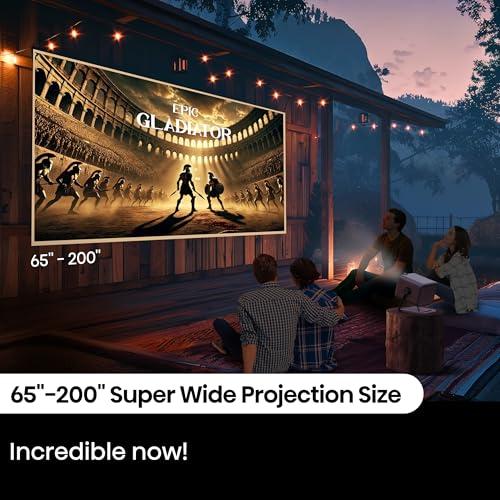
The Hisense M2 Pro can project images from 65" to 200" diagonal, offering more flexibility for different room sizes. The LG CineBeam Q supports up to 120" diagonal projection. For larger screen experiences, the Hisense M2 Pro provides more options.
The LG CineBeam Q uses webOS, which is generally considered one of the best smart TV platforms with excellent app support and interface design. The Hisense M2 Pro uses VIDAA OS, which covers major streaming apps but isn't as polished. However, the Hisense includes AI processing features for better image quality enhancement.
The Hisense M2 Pro offers 25,000+ hour laser life, while the LG CineBeam Q provides 20,000 hours. Both represent roughly 10+ years of regular use, so laser lifespan isn't a major differentiator between these models.
Both offer auto keystone correction and auto focus, but the LG CineBeam Q wins for quick setup due to its compact size and integrated handle/stand design. The Hisense M2 Pro offers more adjustment options with its gimbal design and optical zoom, but takes slightly longer to position optimally.
Yes, both are true 4K projectors that support HDR content. The Hisense M2 Pro supports more HDR formats including Dolby Vision, HDR10, HDR10+, and HLG. The LG CineBeam Q supports HDR10 and HLG but lacks Dolby Vision support, which is increasingly common on streaming services.
Both projectors are similarly priced but offer different value propositions. The Hisense M2 Pro provides better versatility, gaming performance, and brightness for various use cases. The LG CineBeam Q offers premium portability and excellent image quality in dark rooms. Choose based on whether you prioritize performance versatility or maximum portability.
We've done our best to create useful and informative comparisons to help you decide what product to buy. Our research uses advanced automated methods to create this comparison and perfection is not possible - please contact us for corrections or questions. These are the sites we've researched in the creation of this article: thegadgetflow.com - valueelectronics.com - youtube.com - projectorscreenstore.com - whathifi.com - hisense-usa.com - tomsguide.com - content.syndigo.com - youtube.com - shop.hisense-usa.com - avsforum.com - projectorscreen.com - projectorscreen.com - projectorcentral.com - avsforum.com - youtube.com - projector-database.com - projectorcentral.com - lg.com - thefrogpadappliances.com - youtube.com - techradar.com - lg.com - avsforum.com - lg.com - tomsguide.com - jefflynch.com - hometheaterview.com - projectorreviews.com - youtube.com - avsforum.com - projectorcentral.com - pcrichard.com - bhphotovideo.com - youtube.com - lg.com - applerivertvandappliance.com - big-georges.com - queencityonline.com - lg.com - lg.com - lg.com - lgnewsroom.com - heimkino.de

Privacy Policy
Terms and Conditions - Affiliate Policy
Home Security
© Copyright 2008-2026.
11816 Inwood Rd #1211, Dallas, TX 75244