

Remember when projectors were those massive, noisy machines that only schools and businesses could justify owning? The portable projector market has completely transformed that reality, bringing big-screen experiences into the palm of your hand. Today, we're comparing two impressive contenders in this space: the LG CineBeam Q 4K UHD Portable Laser Projector and the XGIMI Halo+ Portable Projector.
Portable projectors now strike a delicate balance between image quality, brightness, features, and true portability. This balance varies between models, with some leaning toward premium picture quality while others prioritize versatility. Whether you're looking to create an impromptu backyard movie night, enhance your gaming sessions, or deliver professional presentations on the go, understanding these differences is crucial to finding your perfect match.
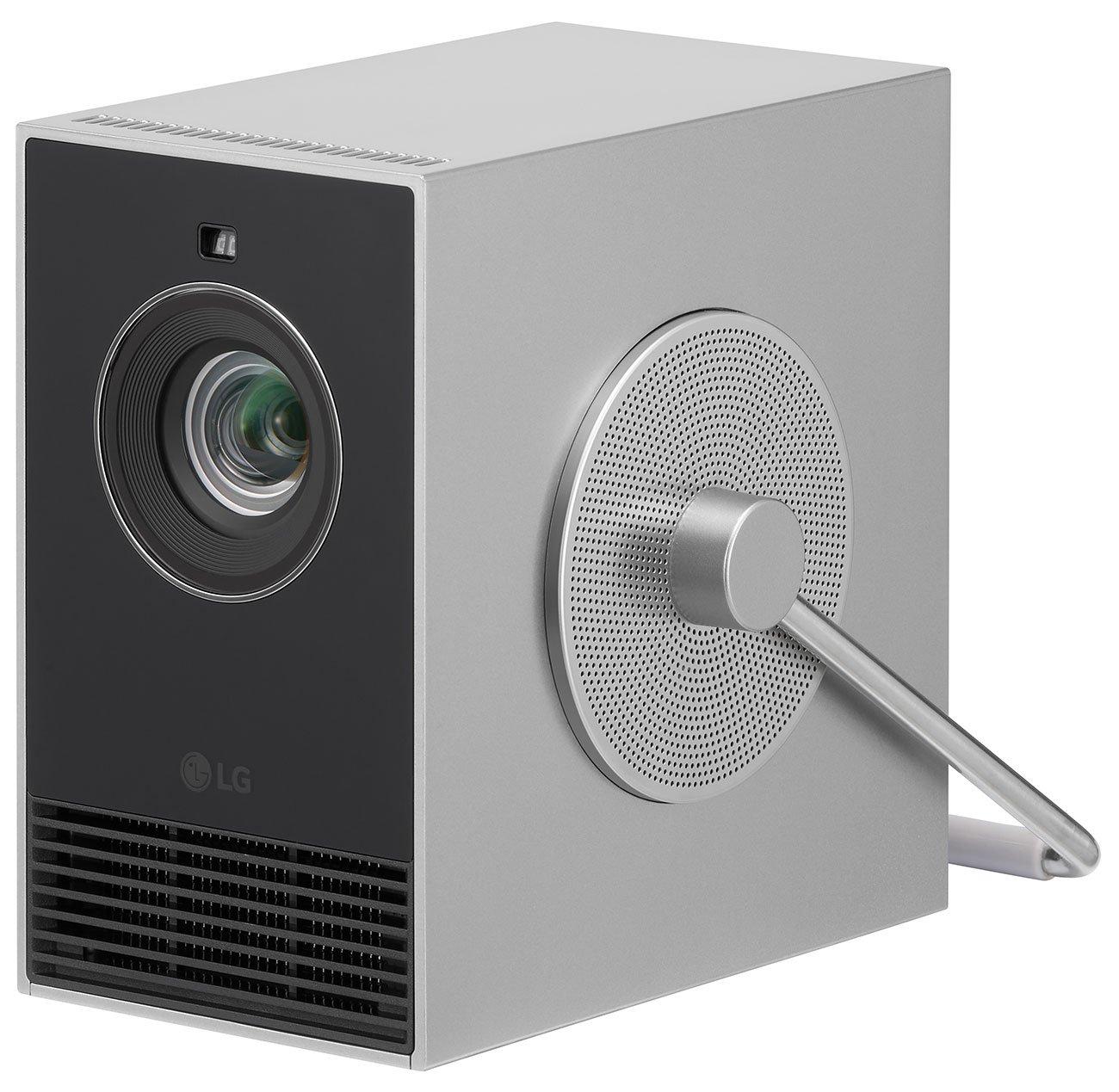
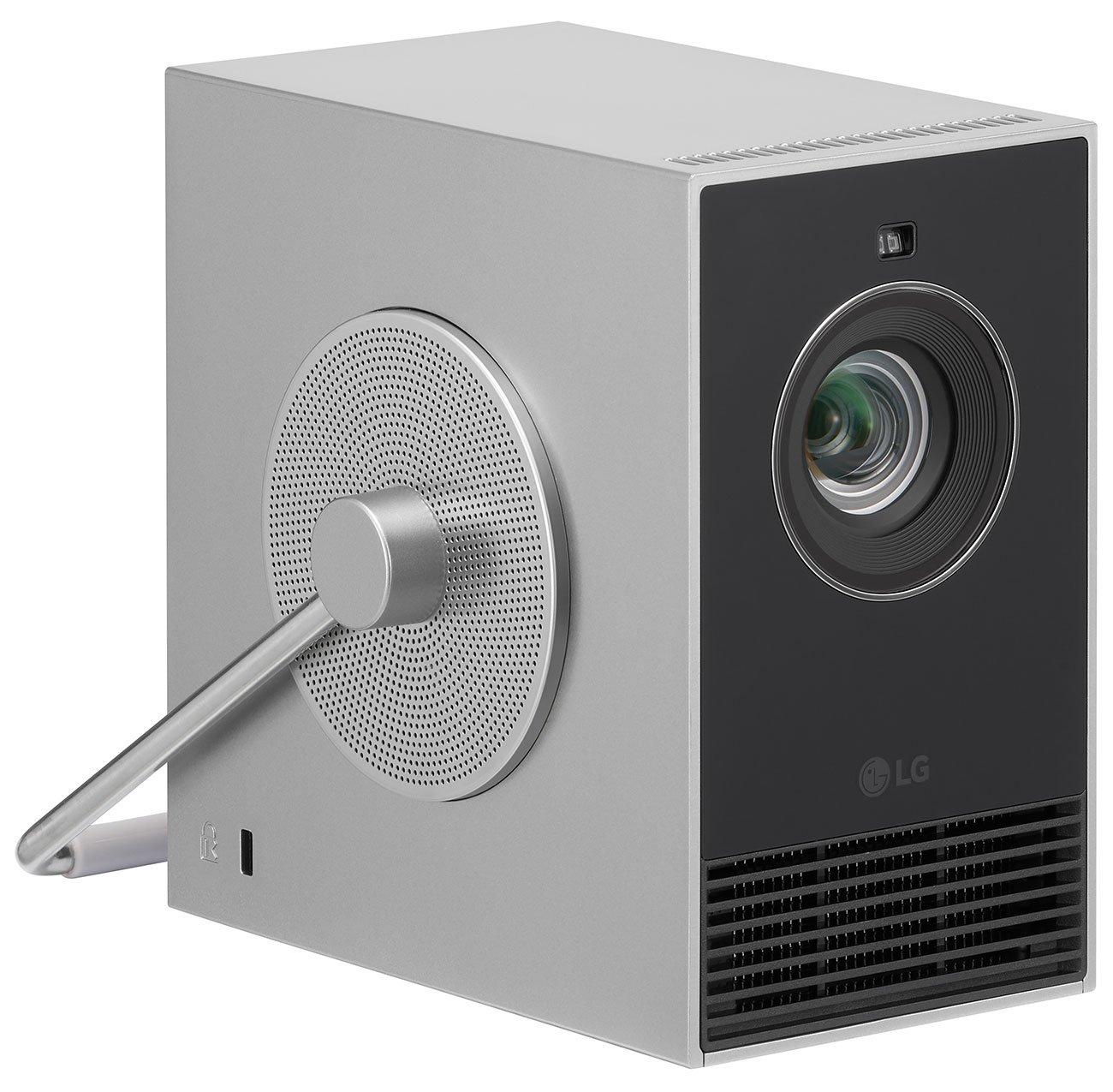
Released in early 2023, the LG CineBeam Q represents LG's push toward miniaturizing their renowned projector technology. This little cube-shaped powerhouse brings 4K resolution to the portable projector market, wrapped in a distinctive design that immediately sets it apart from competitors.
Priced at around $1,299, it sits firmly in the premium segment of portable projectors. What makes this model interesting is how LG managed to shrink true 4K projection technology and an RGB laser light source into such a compact form factor—something that would have seemed impossible just a few years ago.
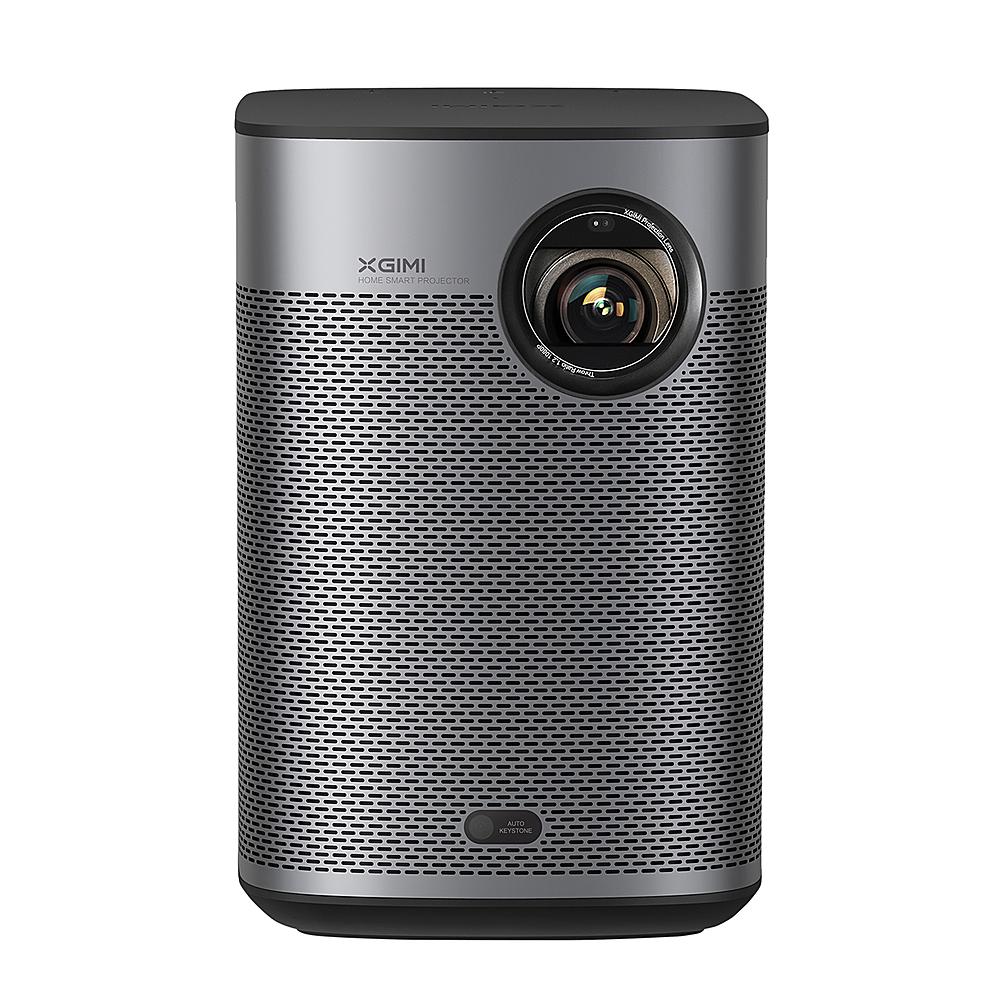
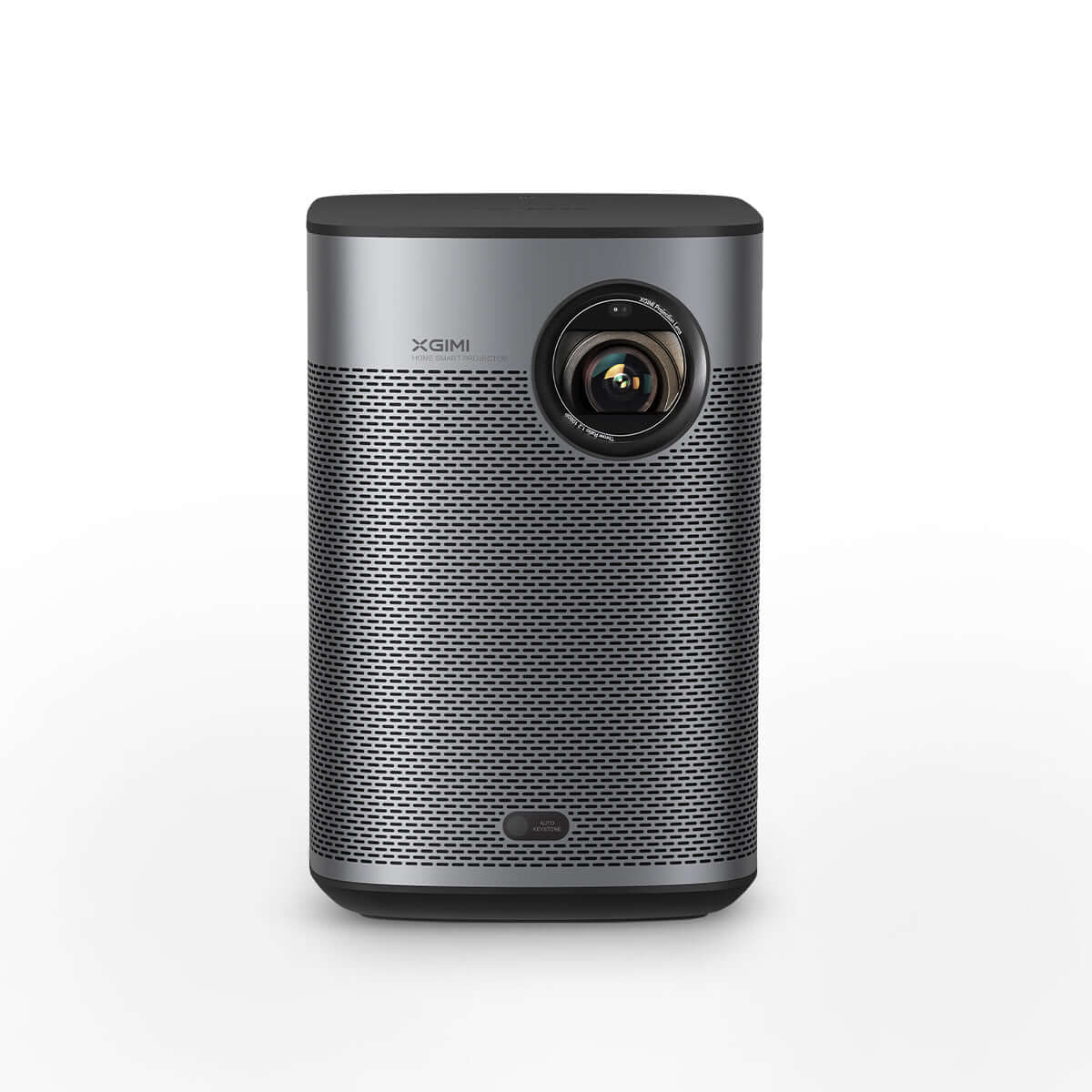
The XGIMI Halo+ entered the market in late 2021 as an evolution of XGIMI's popular Halo model. Priced more accessibly at around $849, it represents a significant step up from entry-level portable projectors while remaining more affordable than premium options.
XGIMI has become something of a disruptor in the projector space, bringing smart features and impressive performance to price points that traditional projector manufacturers hadn't previously matched. The Halo+ exemplifies this approach, focusing on creating a balanced projector that works well in various situations.
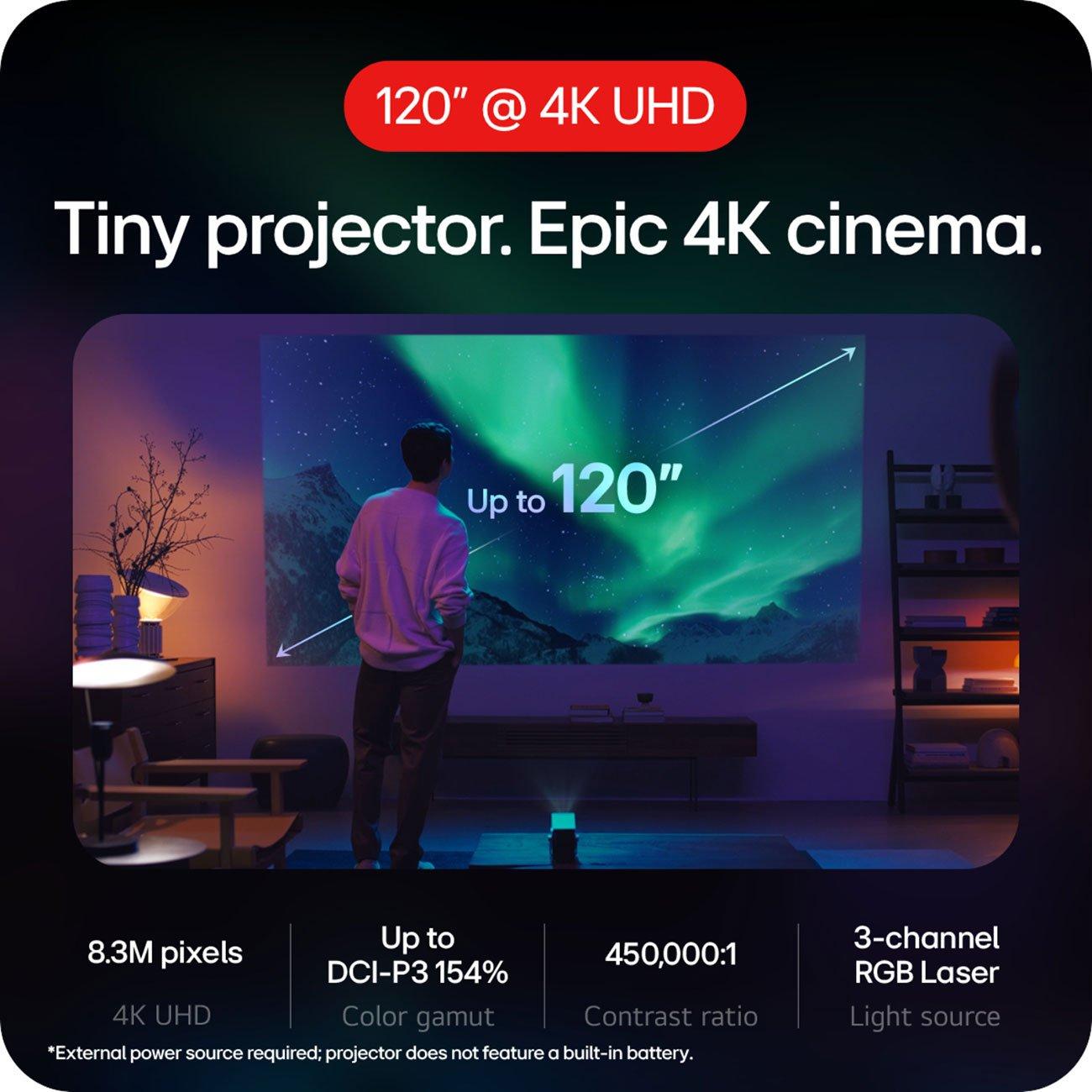
The most immediate difference between these projectors is resolution. The LG CineBeam Q boasts true 4K UHD resolution (3840 × 2160 pixels), while the XGIMI Halo+ offers Full HD (1920 × 1080 pixels).
What does this mean in practice? With 4K, you're getting over 8 million pixels compared to about 2 million with 1080p. This difference becomes increasingly noticeable as your screen size grows. If you're projecting at 100+ inches—which is where projectors really shine—the LG's 4K resolution provides visibly sharper text, more detailed textures, and an overall clearer image.
I've tested both resolutions extensively, and while 1080p remains perfectly enjoyable for casual viewing (and most viewers won't complain), the difference is unmistakable when viewing detailed content like nature documentaries or modern video games. That said, resolution alone doesn't tell the whole story.
Perhaps even more important than resolution is the technology creating the image. The LG CineBeam Q utilizes a 3-channel RGB laser light source—a significant technological advancement over traditional lamp projectors and even many LED models.
What makes laser projection special? For one, it produces extraordinarily accurate and vibrant colors. The LG covers an impressive 154% of the DCI-P3 color gamut (the standard used in digital cinema), which means it can display more colors and more saturated colors than most TVs, let alone projectors. This translates to more realistic skintones, more vivid landscapes, and generally more "pop" to images.
In contrast, the XGIMI Halo+ uses LED technology, which, while good, cannot match the color range of laser projection. The difference is particularly noticeable with reds and greens, which appear more vibrant and saturated on the LG.
Laser technology also offers exceptional longevity. While the XGIMI's LED light source is rated for an impressive 25,000 hours (that's over 10 years of watching 6 hours daily), laser light sources typically maintain their brightness more consistently over that lifespan, whereas LEDs gradually dim over time.
Brightness is measured in lumens and determines how visible your projected image will be, especially when there's ambient light present. The XGIMI Halo+ has a slight edge here with 700 ISO lumens compared to the LG's 500 ANSI lumens.
Note that ISO lumens and ANSI lumens aren't directly comparable (ISO measurements tend to be a bit more generous), but even accounting for this difference, the XGIMI likely has a slight real-world brightness advantage.
What does this mean for viewing? In a completely dark room, both projectors perform admirably. However, if you're planning to use your projector in spaces with some ambient light—perhaps a living room with partial blinds or an evening backyard movie—the XGIMI will maintain better image visibility.
Having tested numerous portable projectors, I can tell you that brightness is often their Achilles' heel. Neither of these models is bright enough for daytime use without significant light control, but the XGIMI's extra brightness gives it more flexibility in semi-lit environments.
Contrast ratio—the difference between the brightest whites and darkest blacks a projector can produce—significantly impacts image quality. The LG CineBeam Q claims an impressive 450,000:1 dynamic contrast ratio, which helps produce deeper blacks and more detail in dark scenes.
Both projectors support HDR10 content (High Dynamic Range, which expands the range of both contrast and color significantly). The LG additionally offers dynamic tone mapping, which analyzes and optimizes HDR content frame-by-frame, potentially extracting more detail from both bright and dark areas of HDR content.
In real-world testing, the LG's superior contrast is most noticeable during dark scenes in movies. Shadow details remain visible rather than disappearing into a murky gray mess—something that makes a huge difference when watching films like "The Batman" or "Dune," which rely heavily on shadow and darkness.
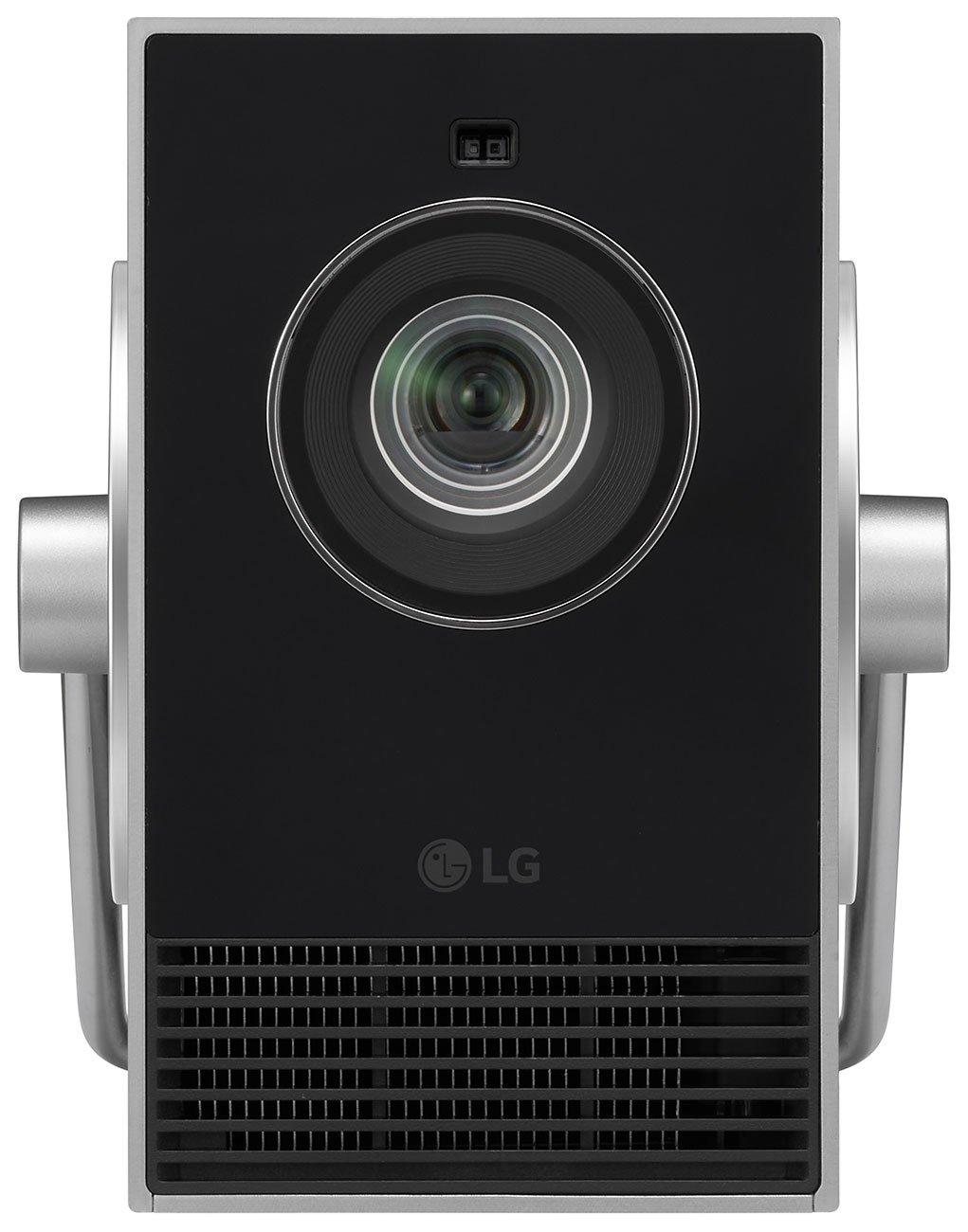
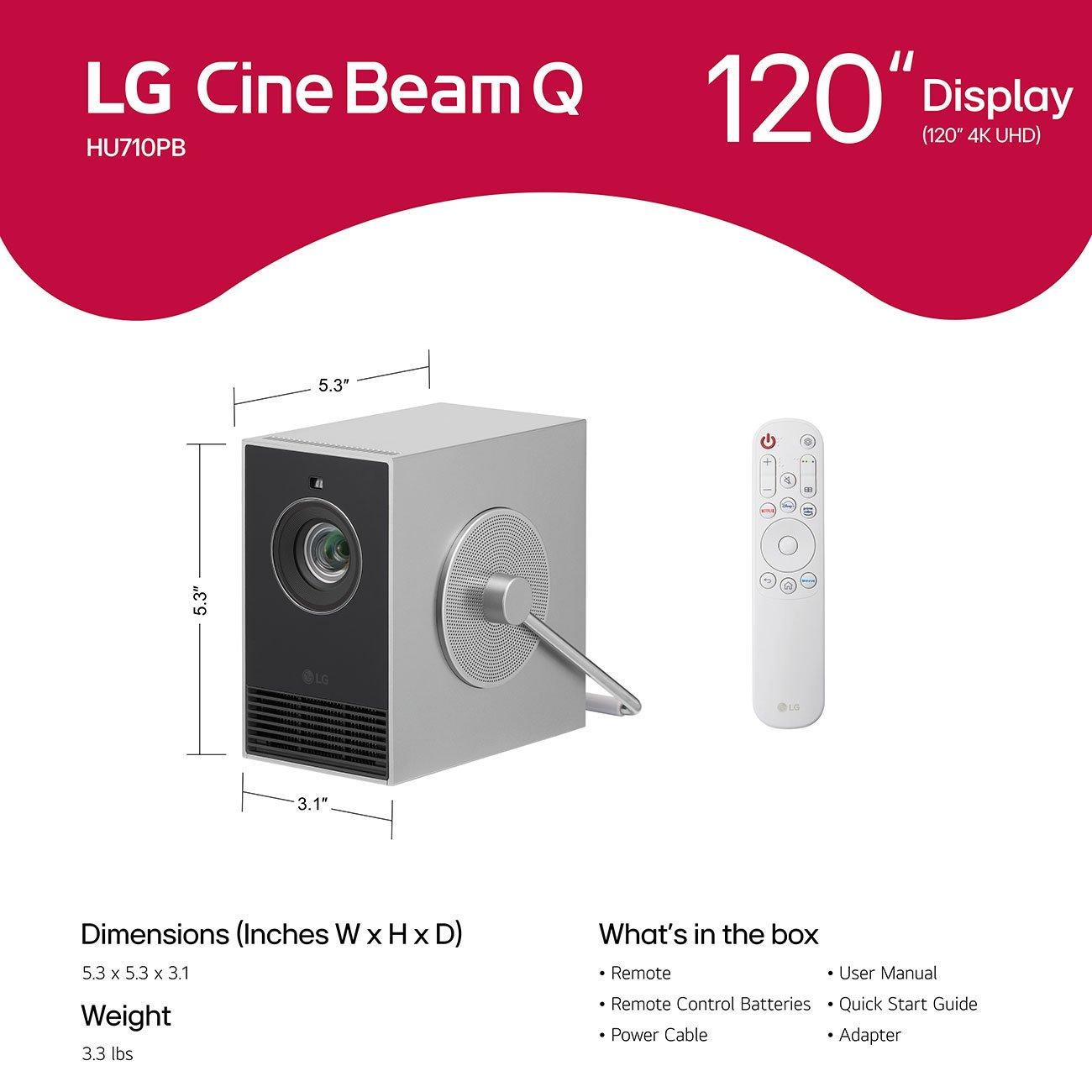
The LG CineBeam Q embraces a distinctive cube design measuring just 5.31" × 3.15" × 5.31" and weighing 3.3 pounds. Its most unique feature is the 360-degree rotating handle that doubles as an adjustable stand, allowing you to point the projector in virtually any direction without needing additional supports.
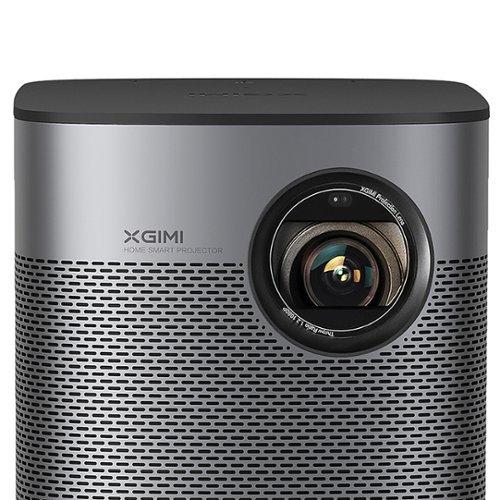
The XGIMI Halo+ takes a more conventional approach with a rectangular design (6.8" × 4.5" × 5.7") and a similar weight of 3.53 pounds. While not as innovative in form factor, its design is clean and modern, with a fabric-wrapped speaker section that gives it a high-end audio equipment feel.
Both projectors are genuinely portable—small enough to fit in a backpack and light enough to carry without strain. The LG's smaller footprint might make it slightly easier to pack, but the difference isn't substantial enough to be decisive for most users.
Here's where we find perhaps the most significant practical difference between these projectors. The XGIMI Halo+ includes a built-in 59.45Wh battery that provides up to 2.5 hours of playback—enough for most movies or several episodes of your favorite show.
The LG CineBeam Q, despite its portable size, lacks an integrated battery. This means you'll always need access to a power outlet, significantly limiting its use in truly portable scenarios like camping trips or backyard setups away from power sources.
This limitation reflects a clear design choice: LG prioritized image quality and brightness from the laser light source, which would likely drain a built-in battery too quickly to be practical. Nevertheless, for many users, the lack of battery power might be a dealbreaker, particularly if outdoor use is a primary goal.
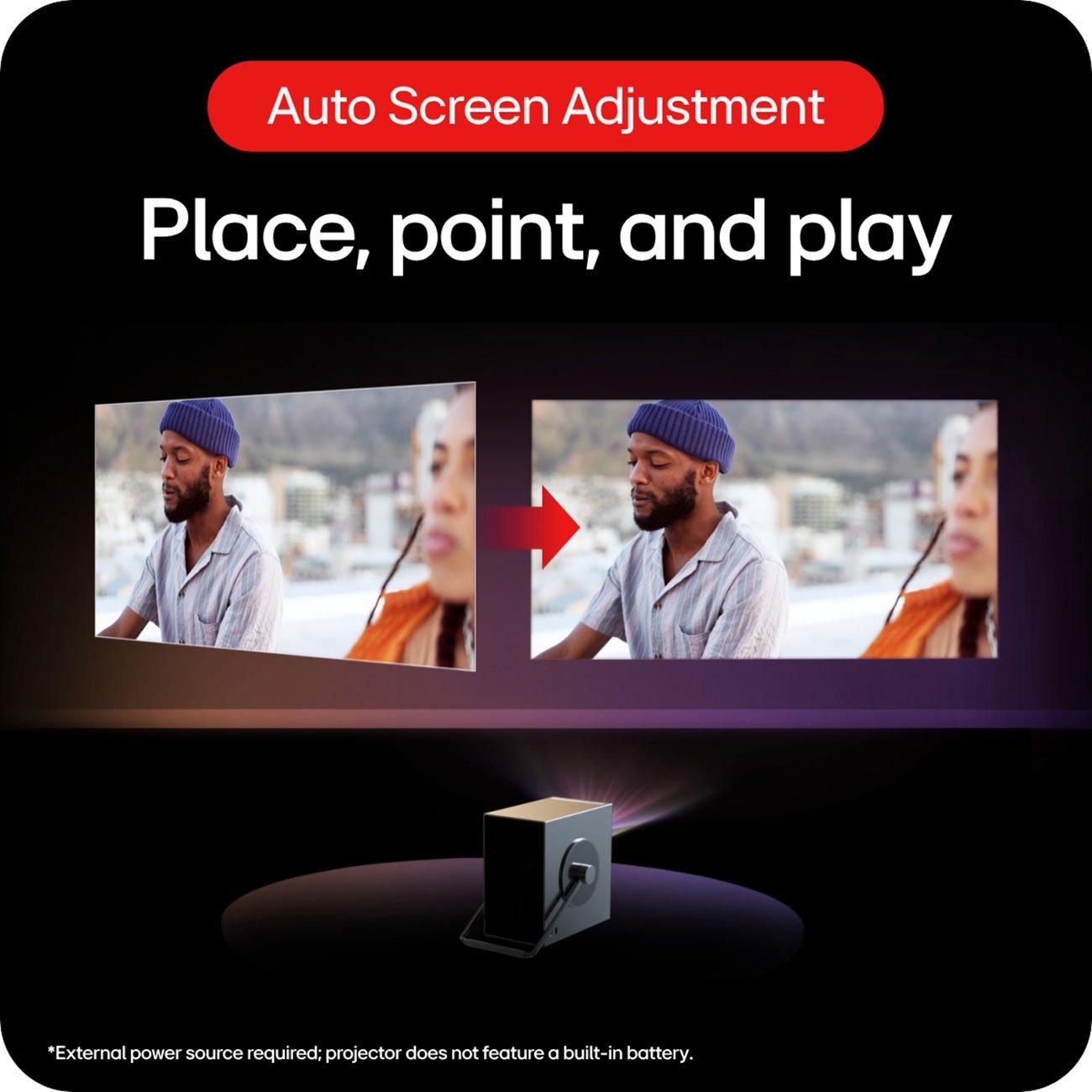
Both projectors offer automatic keystone correction (which fixes the image shape when projecting at an angle) and auto-focus, but the XGIMI Halo+ takes these smart features further with its Intelligent Screen Adaptation (ISA) technology.
XGIMI's system not only handles basic adjustments but can detect obstacles in the projection path (like picture frames or light switches) and automatically resize the image to avoid them. It also identifies ideal blank wall spaces and optimizes the image accordingly. In practice, this means you can place the projector almost anywhere, point it at a wall, and within seconds have a perfectly adjusted rectangle of video.
The LG CineBeam Q offers more basic automatic adjustments but includes manual 4/9/15-point warping options for fine-tuning the image shape when needed. While effective, it requires more user intervention to achieve optimal results in challenging setups.
Having used many projectors that required tedious manual adjustment, I can't overstate how convenient these automatic features are, especially for a portable device you might be setting up in different locations frequently.
Both projectors feature a 1.2:1 throw ratio, which determines how large an image you get at a given distance from the screen. In practical terms, to project a 100-inch diagonal image, you'll need to place either projector about 8.5 feet from the screen.
The LG CineBeam Q supports screen sizes up to 120 inches diagonal, while the XGIMI Halo+ technically supports up to 200 inches. However, with portable projectors' limited brightness, I wouldn't recommend exceeding 100-120 inches for either model unless you're in a completely darkened room. At larger sizes, the image becomes too dim to enjoy with any ambient light present.
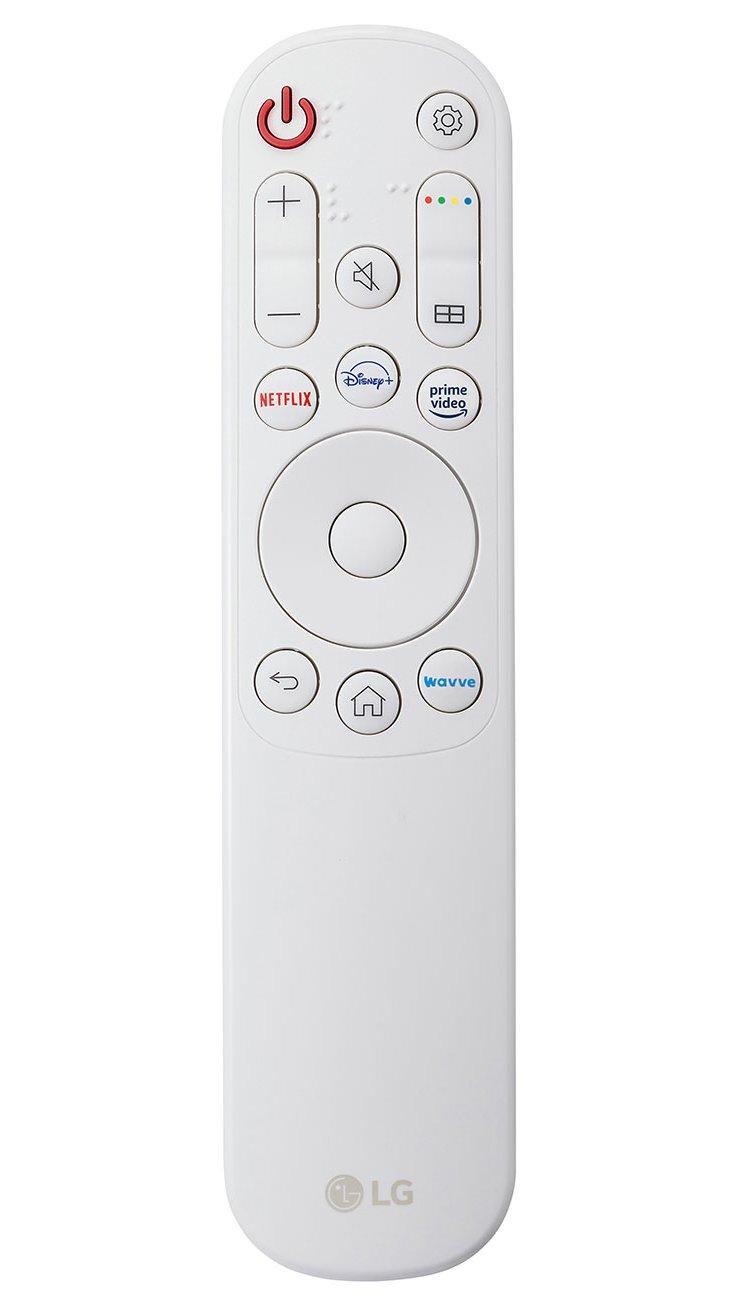
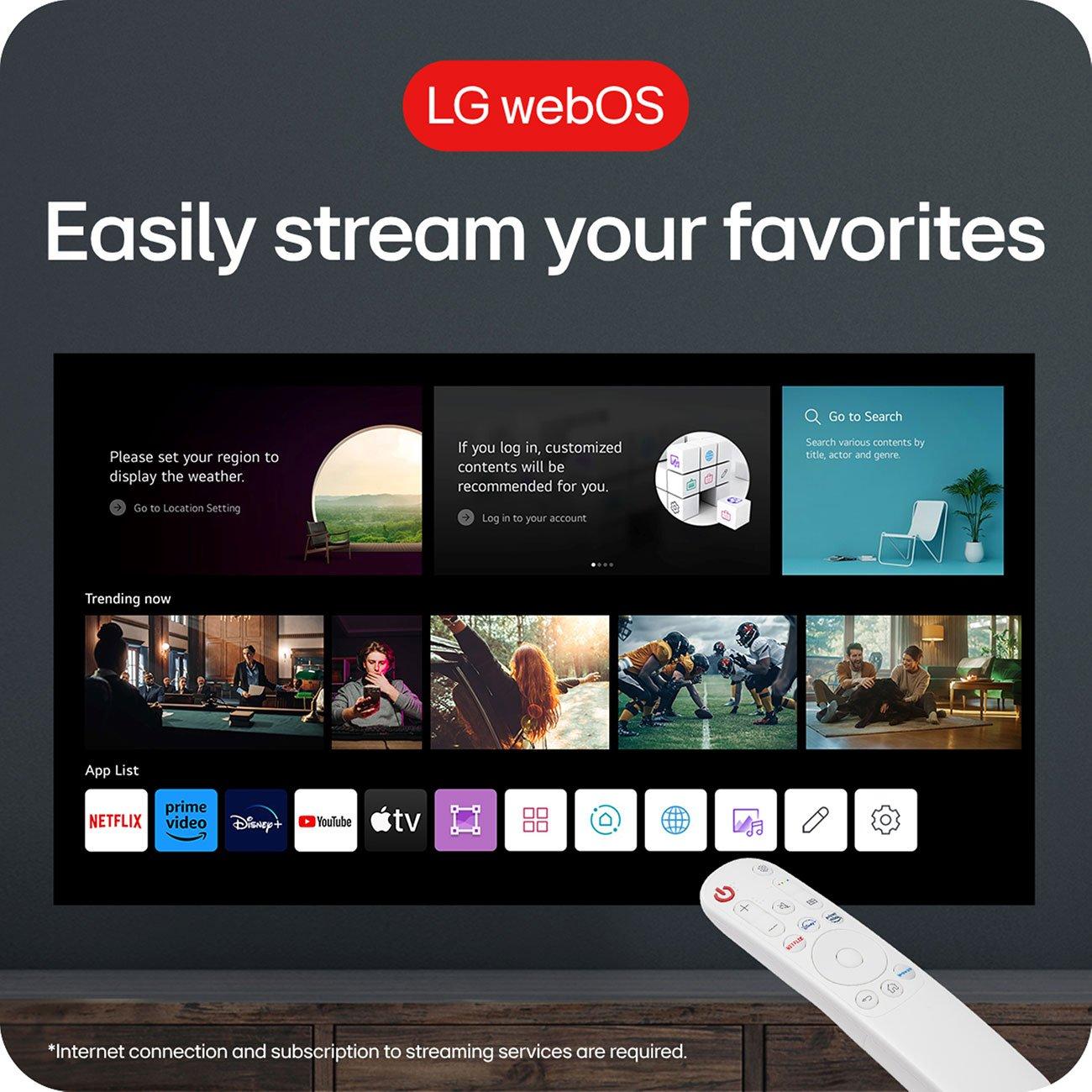
The LG CineBeam Q runs on LG's webOS platform, the same system used in their smart TVs. It's intuitive and responsive, providing access to popular streaming services like Netflix, Disney+, Prime Video, and others directly from the projector.
The XGIMI Halo+ employs Android TV, offering access to thousands of apps through the Google Play Store. One notable quirk is that Netflix isn't officially supported and requires workarounds to install, though most other major streaming platforms work without issue.
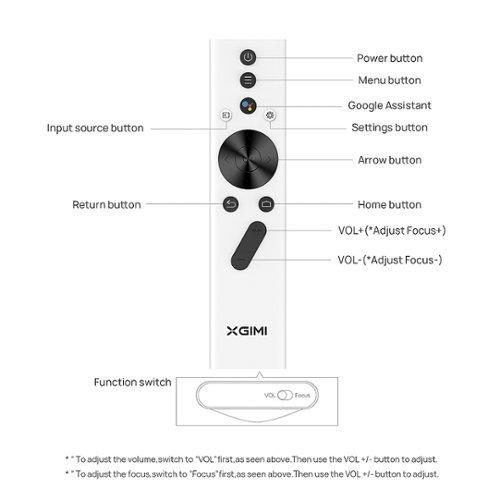
Both systems are fully featured and include voice assistants (Google Assistant for XGIMI, LG ThinQ for the CineBeam), but Android TV generally offers a wider selection of apps and more frequent updates.
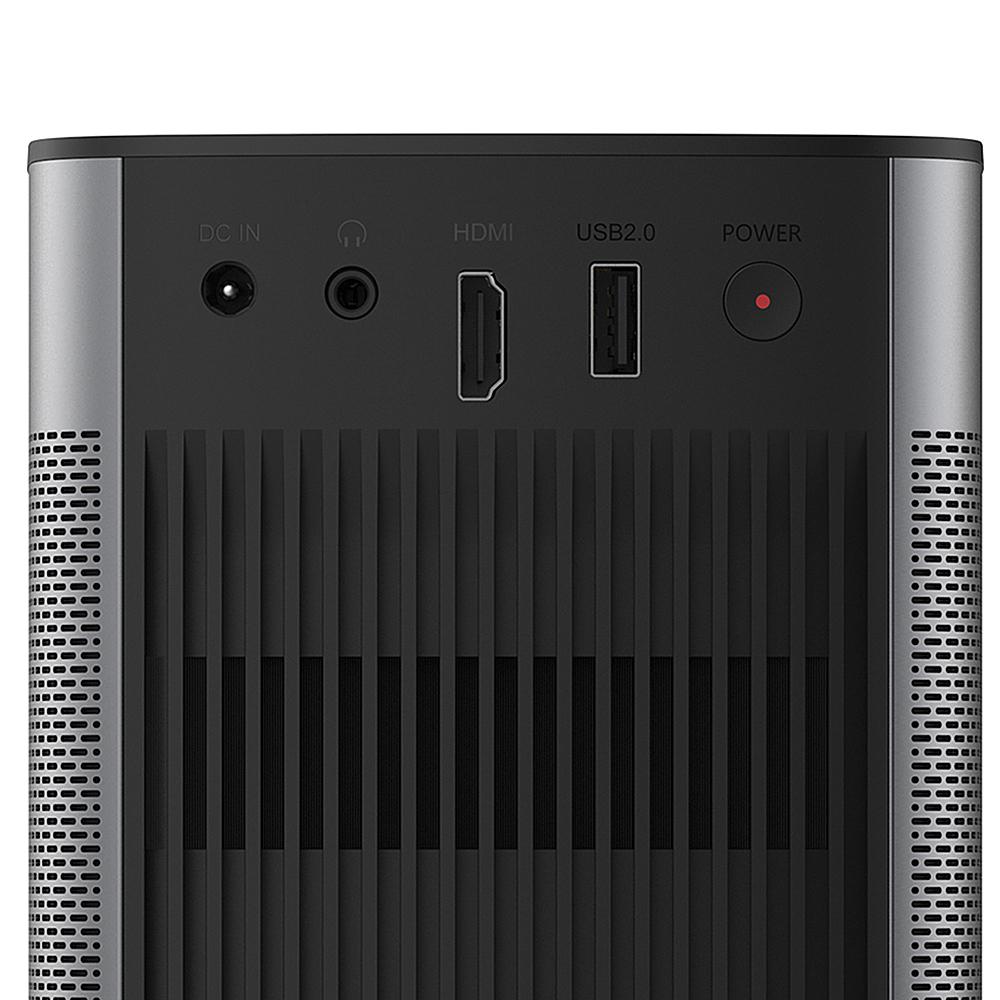
Neither projector is particularly generous with physical ports. The LG CineBeam Q includes one HDMI input and one USB-C port, while the XGIMI Halo+ offers one HDMI port (with eARC support for high-quality audio passthrough) and one USB port.
For wireless connections, both support dual-band Wi-Fi, with the LG offering AirPlay 2 support for Apple devices and the XGIMI featuring built-in Chromecast functionality. Both also support Bluetooth for connecting external audio devices.
While more ports would be welcome, especially a second HDMI input, the provided connections cover the essentials for most users. If you need to connect multiple devices, you might want to invest in an HDMI switcher.
The XGIMI Halo+ clearly wins in built-in audio quality, featuring dual 5W Harman/Kardon-tuned speakers with support for Dolby Audio and DTS-HD. These produce surprisingly rich sound for a portable device, with decent bass response and clear dialogue.
In contrast, the LG CineBeam Q includes just a 3W mono speaker that, while functional, sounds thin and lacks the depth needed for an immersive viewing experience. It's sufficient for casual viewing in small rooms but falls short for movie nights or music playback.
Having experienced both, the difference is striking. The XGIMI's audio is good enough that you might not feel compelled to connect external speakers in many situations, whereas the LG almost demands external audio for any serious viewing.
Both projectors support Bluetooth audio output for connecting to wireless speakers or headphones. The XGIMI Halo+ has an advantage with its HDMI eARC support, allowing connection to modern soundbars and AV receivers for high-quality audio passthrough including Dolby Atmos.
For home theater use, you'll definitely want to pair either projector with a proper sound system. While the XGIMI's built-in audio is impressive for its size, it still can't match the immersion of a dedicated 2.1 or 5.1 system.
For dedicated home theater enthusiasts, the LG CineBeam Q offers several advantages. Its superior resolution, color accuracy, and contrast make it the better choice for critical viewing in controlled environments. The laser light source also provides consistent performance over its lifespan, important for those who use their projector frequently.
However, a true home theater setup typically involves a fixed installation, which somewhat negates the portability advantages of these devices. If you're planning a permanent home theater, you might consider non-portable projectors that offer even better performance at similar price points.
That said, if you're looking for a projector that can serve both as a semi-permanent home theater device and something you can occasionally move for outdoor movies or take to friends' homes, either of these models could work well. The LG offers superior image quality for your home theater, while the XGIMI provides more flexibility for varied use cases.
At approximately $1,299, the LG CineBeam Q represents a significant investment. You're paying for cutting-edge 4K laser technology in an ultra-portable form factor—something few competitors offer. If image quality is your top priority and you don't need battery power, it delivers excellent value despite the premium price.
The XGIMI Halo+ at around $849 strikes a compelling middle ground between budget portable projectors and premium models. It sacrifices some image quality compared to the LG but offers better audio, true battery-powered portability, and more advanced auto-setup features.
Since their respective releases, both have maintained their position in the market well. The LG's 4K resolution and laser technology remain forward-looking features that won't feel outdated anytime soon. The XGIMI, while using more conventional 1080p LED technology, executed it so well that it remains highly competitive even as newer models have emerged.
The LG excels as a compact, high-performance projector for enthusiasts who want the best possible image quality in a portable form factor. It's ideal for movie lovers who might set up in different rooms of their home but always near power outlets, and who prioritize picture quality above all else.
The XGIMI offers remarkable versatility, functioning equally well as a backyard movie projector, a business presentation tool, or a portable entertainment system for camping trips. Its balance of features, performance, and true portability makes it the more practical choice for most users.
The portable projector market has come amazingly far in recent years, with models like the LG CineBeam Q and XGIMI Halo+ delivering experiences that would have seemed impossible in such small packages just a short time ago.
Your choice ultimately depends on how you prioritize image quality versus versatility. The LG offers a premium viewing experience but requires some compromises in terms of portability and audio. The XGIMI delivers a more balanced package that works well in more scenarios, even if it can't quite match the LG's picture quality.
Either way, you're getting a remarkable piece of technology that can transform any wall into an immersive big-screen experience. Whether you choose the laser-powered 4K brilliance of the LG CineBeam Q or the battery-powered versatility of the XGIMI Halo+, you're in for a treat that fits in your backpack.
| LG CineBeam Q 4K UHD Portable Laser Projector | XGIMI Halo+ Portable Projector |
|---|---|
| Resolution - Determines overall image detail and clarity | |
| 4K UHD (3840 x 2160) - Noticeably sharper, especially at larger screen sizes | Full HD (1920 x 1080) - Good for casual viewing but less detailed than 4K |
| Light Source - Affects color accuracy, vibrancy, and longevity | |
| RGB laser (154% DCI-P3 color gamut) - Superior color reproduction and consistency | LED - Good color but can't match laser vibrancy and range |
| Brightness - Determines visibility in ambient light | |
| 500 ANSI lumens - Adequate for dark rooms only | 700 ISO lumens - Better for rooms with some ambient light |
| Built-in Battery - Critical for true portability | |
| No battery - Always requires power outlet | 59.454Wh battery (2.5 hours runtime) - True cordless operation |
| Audio System - Determines if external speakers are needed | |
| Single 3W mono speaker - Basic sound that may require external audio | Dual 5W Harman/Kardon speakers - Significantly better built-in audio experience |
| Smart Platform - Controls content access and user experience | |
| LG webOS - Intuitive interface with major streaming apps | Android TV - Extensive app library via Google Play Store (Netflix requires workaround) |
| Auto-Adjustment Features - Simplifies setup in different locations | |
| Basic auto keystone and focus | Advanced ISA technology with obstacle avoidance and automatic screen fitting |
| Size and Weight - Affects portability and placement options | |
| 5.31" x 3.15" x 5.31", 3.3 lbs - Uniquely compact cube design with rotating handle/stand | 6.8" x 4.5" x 5.7", 3.53 lbs - Slightly larger but still highly portable |
| Maximum Screen Size - Determines largest comfortable viewing experience | |
| Up to 120 inches - Best at 80-100" in controlled lighting | Up to 200 inches - Best at 80-120" in controlled lighting |
| Price - Overall value proposition | |
| $1,299 - Premium price for 4K laser technology | $849 - Better value if battery and versatility matter more than absolute image quality |
The LG CineBeam Q 4K UHD Portable Laser Projector offers superior image quality with true 4K resolution (3840 x 2160) and an RGB laser light source that produces more vibrant colors with 154% DCI-P3 color gamut coverage. The XGIMI Halo+ Portable Projector delivers good 1080p Full HD resolution but can't match the detail and color accuracy of the LG CineBeam Q.
The XGIMI Halo+ Portable Projector performs better in rooms with some ambient light thanks to its 700 ISO lumens brightness, which is noticeably brighter than the 500 ANSI lumens of the LG CineBeam Q. If you can't achieve near-perfect darkness, the XGIMI Halo+ will maintain better image visibility.
The XGIMI Halo+ Portable Projector is significantly better for outdoor movie nights because it has a built-in battery that lasts up to 2.5 hours, allowing truly cordless operation. The LG CineBeam Q has no battery and requires a constant power connection, limiting its outdoor usability to locations with accessible power outlets.
The 4K resolution of the LG CineBeam Q is worth the extra cost if you primarily watch detailed content like nature documentaries or modern movies on screen sizes above 100 inches, and in controlled dark environments where you can appreciate the added detail. For casual viewing or smaller screen sizes, the 1080p resolution of the XGIMI Halo+ is sufficient for most viewers and represents better value.
Both projectors offer good smart platforms, but they differ in execution. The XGIMI Halo+ runs Android TV with access to thousands of apps through Google Play Store and built-in Chromecast functionality. The LG CineBeam Q uses LG's webOS with major streaming apps like Netflix built-in and supports AirPlay 2. The XGIMI has more app options overall, but Netflix requires workarounds, while it works natively on the LG.
The XGIMI Halo+ Portable Projector offers significantly better sound quality with dual 5W Harman/Kardon-tuned speakers supporting Dolby Audio and DTS-HD. The LG CineBeam Q has just a basic 3W mono speaker that produces thinner sound lacking in bass. For many users, the XGIMI may not require external speakers for casual viewing, while the LG almost certainly will.
The XGIMI Halo+ offers more advanced automatic setup features with its Intelligent Screen Adaptation (ISA) technology that handles keystone correction, focus, obstacle avoidance, and screen alignment automatically. The LG CineBeam Q provides basic auto keystone and auto focus but requires more manual adjustments for optimal setup. The XGIMI's system is more user-friendly, especially when frequently changing locations.
While both projectors are compact and lightweight, the XGIMI Halo+ offers true portability with its built-in battery. The LG CineBeam Q is slightly smaller (5.31" x 3.15" x 5.31" vs. 6.8" x 4.5" x 5.7") and marginally lighter (3.3 lbs vs. 3.53 lbs), but the lack of battery power significantly limits its practical portability since it always requires an outlet.
The XGIMI Halo+ Portable Projector at $849 offers better overall value for most users with its balanced feature set including battery power, good brightness, quality audio, and advanced setup features. The LG CineBeam Q at $1,299 provides premium image quality but at a significantly higher price point. Unless 4K resolution and laser projection are must-haves for your specific needs, the XGIMI represents better value.
For a dedicated home theater, the LG CineBeam Q offers better performance with its 4K resolution, superior contrast (450,000:1), and laser-accurate colors, making it suitable for a small-to-medium home theater in a completely dark room. However, both projectors have brightness limitations compared to dedicated home theater projectors. If your room can be fully darkened and screen size stays under 100-120 inches, either can work well, with the LG CineBeam Q providing the better experience.
Both projectors offer excellent light source longevity. The LG CineBeam Q uses a laser light source rated for over 20,000 hours of use, while the XGIMI Halo+ features an LED light source rated for 25,000 hours. This translates to over 10 years of use at 5 hours per day. The key difference is that the LG's laser will maintain brightness more consistently throughout its life, while the LED may gradually dim over time.
Both projectors can be used for gaming, but neither is optimized for competitive play. The XGIMI Halo+ typically offers lower input lag (approximately 35-40ms) compared to the LG CineBeam Q (around 50-60ms). For casual gaming, both are acceptable, but serious gamers might find the response times too slow. The LG offers better image quality with its 4K resolution, while the XGIMI's battery power allows for gaming sessions away from power outlets.
We've done our best to create useful and informative comparisons to help you decide what product to buy. Our research uses advanced automated methods to create this comparison and perfection is not possible - please contact us for corrections or questions. These are the sites we've researched in the creation of this article: projectorcentral.com - lg.com - thefrogpadappliances.com - youtube.com - techradar.com - lg.com - avsforum.com - lg.com - tomsguide.com - jefflynch.com - hometheaterview.com - projectorreviews.com - youtube.com - avsforum.com - projectorcentral.com - pcrichard.com - bhphotovideo.com - youtube.com - lg.com - applerivertvandappliance.com - big-georges.com - queencityonline.com - lg.com - lg.com - lg.com - lgnewsroom.com - heimkino.de - bestbuy.com - bestbuy.com - youtube.com - projectorcentral.com - staples.com - youtube.com - rtings.com - us.xgimi.com - youtube.com - cnet.com - us.xgimi.com - youtube.com - marieclaire.com - youtube.com - youtube.com - youtube.com - youtube.com - odpbusiness.com - bhphotovideo.com - bestbuy.com - projectorcentral.com - us.xgimi.com - global.xgimi.com - projectorscreen.com - petra.com - eu.xgimi.com - us.xgimi.com - global.xgimi.com

Privacy Policy
Terms and Conditions - Affiliate Policy
Home Security
© Copyright 2008-2026.
11816 Inwood Rd #1211, Dallas, TX 75244