





Portable projectors have come a long way from the dim, bulky units of just a few years ago. Today's models pack impressive technology into packages you can actually carry around without breaking your back. I've been testing these devices for several years now, and the improvements in brightness, battery life, and smart features have been remarkable. Two standout models that represent different approaches to portable projection are the Anker Nebula Mars 3 Air and the ASUS ZenBeam L2.
At the time of writing, these projectors sit in different price brackets, with the Mars 3 Air being the more budget-friendly option while the ZenBeam L2 commands a premium. But as we'll explore, the price difference tells only part of the story when it comes to which one might be better for your specific needs.
Before diving into the specifics, it's worth understanding what separates portable projectors from their larger, stationary cousins. Traditional home theater projectors focus almost entirely on image quality—they're designed to be installed in dedicated spaces where you control every aspect of the lighting and setup. Portable projectors, however, make compromises in absolute image quality to deliver something much more valuable: the ability to create a movie experience anywhere.
The key considerations for any portable projector include actual brightness output (measured in ANSI lumens—more on that shortly), battery life for cord-free operation, how easy it is to set up quickly, built-in audio quality, and increasingly, smart platform integration for streaming services. The best portable projectors excel in multiple areas rather than just focusing on one standout feature.
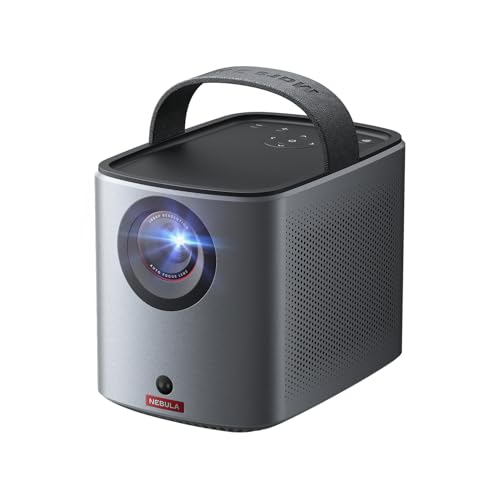
The Anker Nebula Mars 3 Air launched in 2024, representing the latest evolution in Anker's popular Mars series. This newer release incorporates several technological advances that weren't available in earlier portable projectors, most notably native Google TV integration and improved automated setup features.
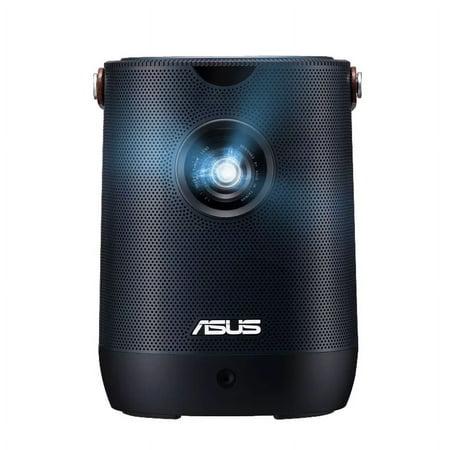
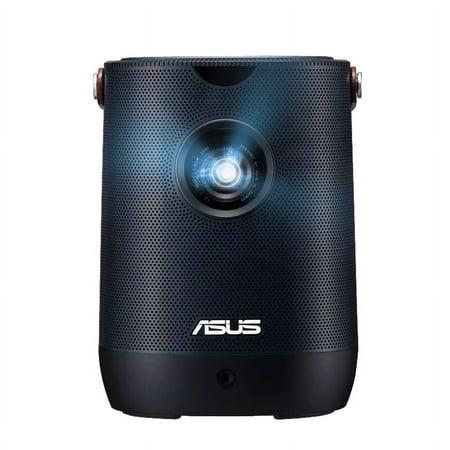
The ASUS ZenBeam L2 arrived somewhat earlier and takes a different approach to solving similar problems. Rather than building everything into the projector itself, ASUS includes a separate Android TV box to handle smart features while focusing the projector's design on core projection performance.
Since 2024, we've seen significant improvements in LED efficiency, allowing these compact projectors to achieve brightness levels that would have required much larger, hotter lamp-based systems just a few years ago. The integration of smart TV platforms has also matured considerably, moving from clunky, slow interfaces to genuinely usable streaming experiences.
One of the most confusing aspects of shopping for projectors is understanding brightness specifications. You'll see numbers thrown around like "960 LED lumens" or "400 ANSI lumens," and it's not always clear which measurement actually tells you how bright your image will be.
ANSI lumens represent the industry standard for measuring actual light output using a standardized testing method. LED lumens, unfortunately, is more of a marketing specification that often inflates the apparent brightness. In my experience testing dozens of projectors, ANSI lumens provide the most reliable indication of real-world performance.
The Mars 3 Air is rated at 400 ANSI lumens, and in testing, it delivers roughly what it promises—around 350-400 lumens depending on the picture mode you select. The ZenBeam L2 creates some confusion by listing both 960 LED lumens and 370 ANSI lumens, but real-world testing shows it can actually exceed its ANSI rating, achieving over 450 lumens in its brightest mode.
This brightness difference matters more than you might think. In a completely dark room, both projectors will deliver satisfying images at reasonable sizes—say, 80 to 100 inches diagonal. But the ZenBeam L2's extra brightness provides more flexibility for viewing in rooms with ambient light or for larger screen sizes where the image gets more spread out.
However, there's a catch with the ASUS projector. Its brightest mode introduces a noticeable green color cast that makes skin tones look unnatural and ghostly. This means while it can go brighter, you might not want to use that extra brightness for movies and TV shows where accurate colors matter. The Mars 3 Air, by contrast, maintains more consistent color balance across its different brightness modes.
This is where the Anker Nebula Mars 3 Air really distinguishes itself. It's actually the world's first portable projector to feature native Google TV with a built-in Netflix app. This might not sound revolutionary, but anyone who has struggled with external streaming devices and their associated cables, power adapters, and setup complications will immediately understand the appeal.
When I say "native Netflix," I mean Netflix specifically optimized for the projector's capabilities, not just a web browser version that might work poorly on a large screen. The Mars 3 Air includes Google Assistant voice control, so you can literally say "Hey Google, play Stranger Things" and it works exactly as you'd expect.
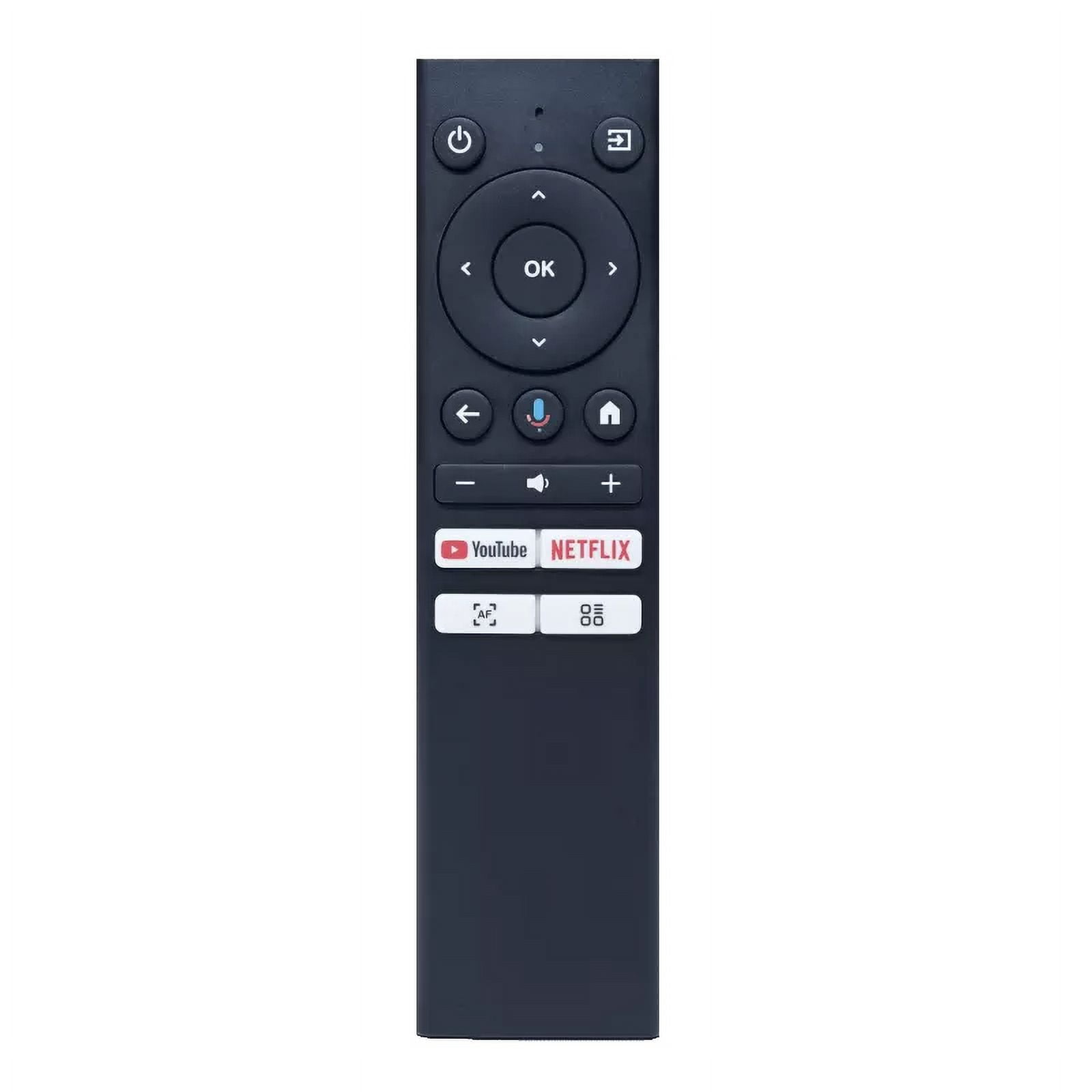
The ZenBeam L2 takes a different approach by including a separate Google Certified Android TV box. While this provides access to the same streaming services, it means managing an additional device, more cables, and separate power requirements. In practice, this makes setup more complex and reduces the "grab and go" convenience that makes portable projectors appealing in the first place.
From a technical standpoint, the Mars 3 Air's approach is more elegant, but there are potential advantages to ASUS's method. If the Android TV box fails or becomes obsolete, you can replace it without losing your entire projector investment. The integrated approach of the Mars 3 Air means if the smart platform becomes outdated, you're stuck with it.
Portable projectors have traditionally suffered from terrible built-in audio—tiny speakers that sound thin and lifeless. Both of these projectors take audio seriously, but in different ways.
The Mars 3 Air features dual 8-watt speakers with Dolby Audio processing, providing a total of 16 watts of power. More importantly, it can function as a standalone Bluetooth speaker when not projecting, offering up to 8 hours of music playback. This dual-purpose design adds genuine utility—I've found myself using it as a speaker during backyard gatherings even when not watching anything.
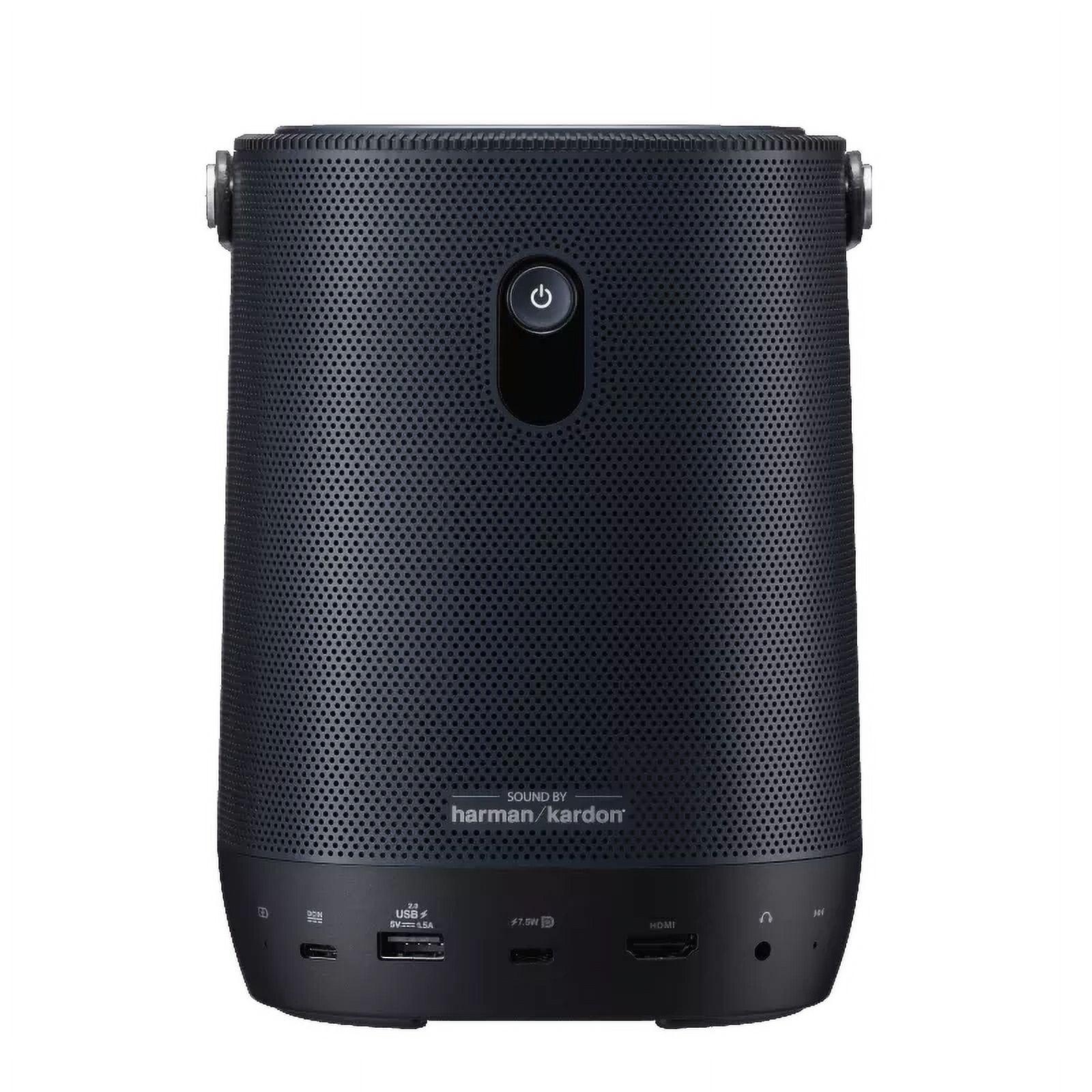
The ZenBeam L2 takes a quality-over-quantity approach with a single 10-watt speaker tuned by Harman Kardon. While it provides less total power, the Harman Kardon engineering focuses on acoustic design and sound quality rather than just volume. In side-by-side listening tests, the ASUS projector produces more refined, balanced sound despite the lower wattage specification.
For casual viewing, both projectors eliminate the need for external speakers in most situations. However, if you're planning serious movie nights or want to fill a large outdoor space with sound, you'll still want to connect external speakers or a soundbar through the available audio outputs.
Battery performance represents one of the most practical differences between these projectors. The ZenBeam L2 provides up to 3.5 hours of operation in low-power mode, while the Mars 3 Air offers 2.5 hours for video content. This 40% difference in battery life can be the difference between finishing a movie and having the projector die during the climax.
However, the Mars 3 Air's Bluetooth speaker mode extends its total utility, providing 8 hours of audio-only operation. This means you could use it for background music during a day-long outdoor event, then switch to projection mode for evening entertainment.
Both projectors weigh around 3.5-3.7 pounds, making them genuinely portable rather than just "transportable." The ZenBeam L2 edges ahead slightly with a more compact form factor and premium leather carrying handle, while the Mars 3 Air includes a practical integrated carry strap.
In my experience, the battery life difference becomes most noticeable during camping trips or outdoor movie nights where access to power isn't guaranteed. The extra hour from the ASUS projector provides important peace of mind for longer content.
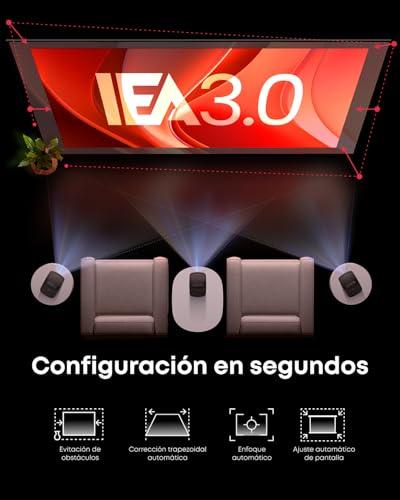
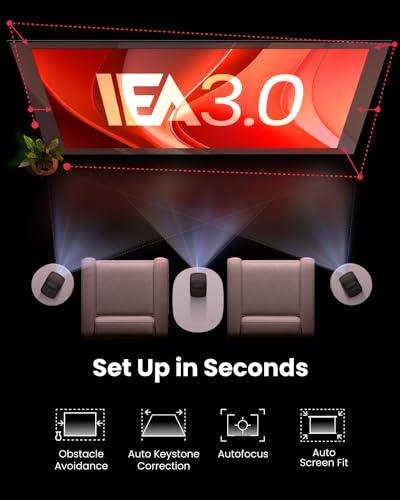
The Mars 3 Air incorporates what Anker calls "Intelligent Environment Adaptation 3.0"—a system that automatically handles focus, keystone correction (fixing the trapezoidal distortion when projecting at an angle), obstacle avoidance, and screen fitting. In practice, this means you can place the projector, turn it on, and have a properly adjusted image within seconds.
The ZenBeam L2 uses a more traditional approach with manual focus adjustment, though it does include a 3-second auto-focusing process using built-in distance sensors. It provides four-corner geometric correction, allowing more precise control over image shape and positioning.
The automated approach of the Mars 3 Air excels for casual users who want minimal setup complexity. However, projection enthusiasts might prefer the ZenBeam L2's manual controls for fine-tuning the image exactly to their preferences.
While these are portable projectors first, both can serve as secondary home theater solutions for smaller spaces or bedrooms. The ZenBeam L2's higher brightness output and 4K input compatibility (downscaled to 1080p) make it more suitable for semi-permanent installation scenarios.
However, the Mars 3 Air's native smart platform integration eliminates the cable management and device complexity that often makes portable projectors impractical for regular home use. You can mount it on a shelf, connect power, and have a complete entertainment system without additional devices.
For dedicated home theater use, both projectors work best with screen sizes between 80-100 inches diagonal. Beyond that range, the image becomes noticeably dim, and you'll start wishing for a brighter, more expensive traditional projector.
When evaluating these projectors, focus on these key performance characteristics:
Actual ANSI lumen output under realistic conditions: Both projectors deliver close to their rated specifications, with the ZenBeam L2 having a meaningful brightness advantage.
Color accuracy across different brightness modes: The Mars 3 Air maintains more consistent colors, while the ZenBeam L2 sacrifices color accuracy for peak brightness.
Battery life under typical usage: The ZenBeam L2 provides significantly longer operation time.
Smart platform responsiveness: The Mars 3 Air's native Google TV implementation is faster and more seamless than external solutions.
Setup time and complexity: The Mars 3 Air wins for automated convenience, while the ZenBeam L2 offers more manual control.
The Anker Nebula Mars 3 Air makes the most sense if you prioritize streaming convenience, value automated setup, and want dual-purpose functionality as both projector and speaker. Its native Google TV integration and competitive price point make it ideal for casual users who want a "just works" experience. The automated setup features particularly benefit people who plan to move the projector frequently or lack technical experience with projection equipment.
The ASUS ZenBeam L2 justifies its premium pricing for users who need maximum brightness for ambient light conditions, longer battery life for extended viewing sessions, and premium build quality. Its 4K input compatibility provides some future-proofing, and the Harman Kardon audio engineering delivers superior sound quality despite lower power specifications.
For most buyers, the Mars 3 Air delivers about 90% of the performance at a significantly lower cost, making it the better value proposition. The convenience of native streaming integration alone eliminates many of the hassles traditionally associated with portable projectors.
However, if you frequently use your projector in challenging lighting conditions, need the longest possible battery life, or simply prefer premium materials and engineering, the ZenBeam L2's advantages can justify its higher price.
Both projectors represent the current state of the art in portable projection, offering genuine improvements over models from just a few years ago. Your choice ultimately depends on whether you prioritize convenience and value (favoring the Mars 3 Air) or maximum performance and premium features (pointing toward the ZenBeam L2).
| Anker Nebula Mars 3 Air | ASUS ZenBeam L2 |
|---|---|
| Brightness - Critical for visibility in ambient light | |
| 400 ANSI lumens (good for dark to dim rooms) | 452 ANSI lumens peak (better ambient light performance, but color cast in brightest mode) |
| Smart Platform Integration - Determines streaming convenience | |
| Native Google TV with built-in Netflix (no external devices needed) | Separate Android TV box included (requires additional setup and cables) |
| Battery Life - How long you can watch without power | |
| 2.5 hours video playback (shorter but includes 8-hour Bluetooth speaker mode) | 3.5 hours video playback (40% longer for extended viewing sessions) |
| Audio System - Built-in sound quality and power | |
| Dual 8W speakers with Dolby Audio (16W total, doubles as Bluetooth speaker) | Single 10W Harman Kardon speaker (premium tuning but less total power) |
| Setup and Focus - How quickly you get a good image | |
| Intelligent Environment Adaptation 3.0 with auto-focus and keystone correction | Manual focus with 3-second auto-focus and four-corner geometric correction |
| Input Compatibility - What devices you can connect | |
| 1080p maximum input resolution with HDR10 and HLG support | 4K input compatibility (downscaled to 1080p) with HDR10 support |
| Weight and Portability - How easy it is to carry around | |
| 3.7 lbs with integrated carry handle | 3.4 lbs with premium leather carrying handle (slightly more compact) |
| Screen Size Range - Projection flexibility | |
| 30" to 150" diagonal (optimal at 80-100") | 40" to 120" diagonal (image quality degrades significantly beyond 80") |
| Color Accuracy - Picture quality across brightness modes | |
| Consistent colors across all brightness settings | Excellent colors in standard mode, green cast in brightest mode |
| Release Year and Value Position - Market positioning | |
| 2024 release at budget-friendly pricing (better value for most users) | Earlier release at premium pricing (justified for specific performance needs) |
The ASUS ZenBeam L2 is brighter, delivering up to 452 ANSI lumens compared to the Anker Nebula Mars 3 Air's 400 ANSI lumens. This 13% brightness advantage makes the ZenBeam L2 better for rooms with ambient light, though both projectors work best in darkened environments for optimal viewing.
Both the Mars 3 Air and ZenBeam L2 can serve as secondary home theater solutions for smaller rooms or bedrooms. The Mars 3 Air excels for home theater use due to its native Google TV integration, eliminating external devices and cable clutter. For dedicated home theater setups, both work best with 80-100 inch screens in controlled lighting.
The ASUS ZenBeam L2 offers superior battery life with 3.5 hours of video playback compared to the Anker Nebula Mars 3 Air's 2.5 hours. However, the Mars 3 Air provides additional value with 8 hours of Bluetooth speaker mode, extending its total utility beyond just projection.
The Anker Nebula Mars 3 Air features the world's first built-in Netflix app for portable projectors, allowing direct streaming without external devices. The ASUS ZenBeam L2 requires its included Android TV box for Netflix access, which adds setup complexity but provides the same streaming capabilities.
For outdoor use, the ZenBeam L2 has advantages with its longer 3.5-hour battery life and higher brightness output. However, the Mars 3 Air's dual-purpose Bluetooth speaker mode and automated setup features make it more convenient for outdoor entertainment where quick setup matters.
The Mars 3 Air features dual 8W speakers (16W total) with Dolby Audio and can function as a standalone Bluetooth speaker. The ZenBeam L2 has a single 10W Harman Kardon-tuned speaker that emphasizes sound quality over total power. Both eliminate the need for external speakers in most casual viewing scenarios.
The Anker Nebula Mars 3 Air is significantly easier to set up, featuring Intelligent Environment Adaptation 3.0 that automatically handles focus, keystone correction, and image optimization. The ASUS ZenBeam L2 requires more manual adjustment but offers greater control for users who prefer fine-tuning their image settings.
The ASUS ZenBeam L2 accepts 4K input signals and downscales them to its native 1080p resolution, providing some future-proofing. The Anker Nebula Mars 3 Air is limited to 1080p input sources but supports both HDR10 and HLG formats for enhanced color and contrast.
The Mars 3 Air typically offers better value, delivering comparable core performance at a lower price point. Its native smart TV integration and dual-purpose speaker functionality provide additional value. The ZenBeam L2 justifies its premium pricing for users prioritizing maximum brightness and battery life.
Both projectors are genuinely portable at around 3.5-3.7 pounds. The ZenBeam L2 is slightly more compact with a premium leather handle, while the Mars 3 Air includes an integrated carry strap. The Mars 3 Air's all-in-one design eliminates additional devices, making it more travel-friendly overall.
The Anker Nebula Mars 3 Air maintains more consistent color accuracy across all brightness modes. The ASUS ZenBeam L2 offers excellent colors in standard mode but introduces a green color cast in its brightest setting, making skin tones appear unnatural at peak brightness levels.
Both the Mars 3 Air and ZenBeam L2 can handle gaming at 60fps with their 1080p native resolution. Input lag is acceptable for casual gaming, though serious gamers might prefer dedicated gaming projectors. The ZenBeam L2's 4K input compatibility provides better future-proofing for next-generation gaming consoles.
We've done our best to create useful and informative comparisons to help you decide what product to buy. Our research uses advanced automated methods to create this comparison and perfection is not possible - please contact us for corrections or questions. These are the sites we've researched in the creation of this article: techradar.com - thesmarthomehookup.com - whathifi.com - thesmarthomehookup.com - cnet.com - whathifi.com - projectorreviews.com - youtube.com - youtube.com - versus.com - projectorcentral.com - practicalmotorhome.com - youtube.com - seenebula.com - us.seenebula.com - harveynorman.ie - projectorcentral.com - youtube.com - mezha.media - asus.com - asus.com - youtube.com - projectorreviews.com - asus.com - digitalcameraworld.com - youtube.com - asus.com - digitalcitizen.life - tweakreviews.com - shop.asus.com - edgeup.asus.com - asus.com - projectorcentral.com - asus.com - uk.store.asus.com - asus.com - thegadgetflow.com - bhphotovideo.com - asus.com - asus.com

Privacy Policy
Terms and Conditions - Affiliate Policy
Home Security
© Copyright 2008-2026.
11816 Inwood Rd #1211, Dallas, TX 75244