


The portable projector market has exploded in recent years, transforming from niche gadgets into legitimate entertainment alternatives. Whether you're setting up a cozy bedroom cinema or need something flexible enough to take anywhere, these compact devices promise big-screen entertainment without the commitment of a traditional home theater setup.
Today, we're comparing two fundamentally different approaches to portable projection: the budget-friendly TCL C1 Google TV Portable Projector and the premium ASUS ZenBeam L2 Smart Portable LED Projector. Both launched in 2022, representing the latest thinking in compact projection technology, but they target very different users and budgets.
Before diving into specifics, it's worth understanding what separates good portable projectors from disappointing ones. The biggest challenge these devices face is physics—cramming meaningful brightness and image quality into a package small enough to carry around isn't easy.
Brightness is absolutely critical and often the make-or-break factor. Measured in lumens (the amount of light output), this determines where and when you can actually use your projector. Traditional home theater projectors often exceed 2000 lumens, but portable models typically range from 200-1000 lumens due to size and power constraints.
Light source technology has evolved dramatically since 2020. LED light sources, used in both our featured projectors, offer major advantages over traditional lamp-based systems. They last 20,000-30,000 hours (versus 3,000-5,000 for traditional lamps), run cooler, and maintain consistent brightness over their lifespan. This means you'll never need to replace a bulb.
Smart features represent another major evolution. Earlier portable projectors required separate streaming devices, but modern units increasingly integrate platforms like Android TV or Google TV directly into the projector itself.
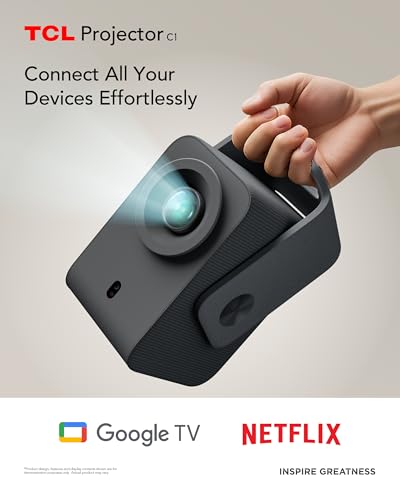
The TCL C1 takes an ambitious approach to affordable projection. At launch in 2022, TCL made a bold decision to integrate Google TV 11 directly into the projector hardware—something typically reserved for much more expensive models.
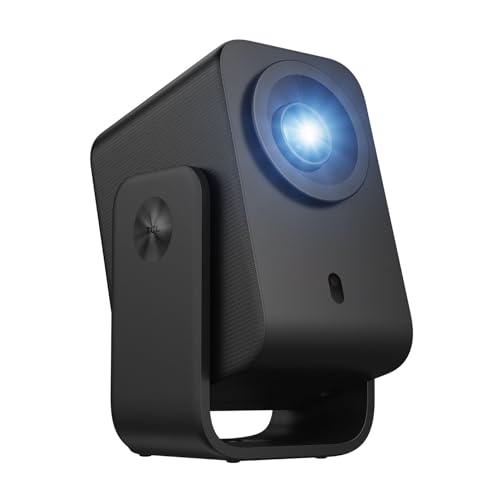
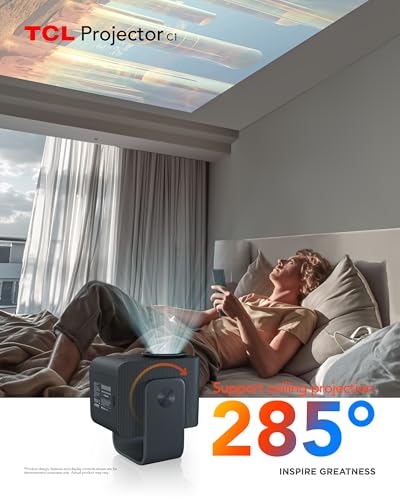
The standout feature isn't immediately obvious from photos: a 285-degree adjustable gimbal stand that fundamentally changes how you think about projector placement. Unlike traditional projectors that must sit level and face forward, the TCL C1 can tilt, rotate, and even project straight up onto your ceiling. This gimbal system, borrowed from camera stabilization technology, means you can literally lie in bed and watch movies projected overhead—something I've found surprisingly comfortable for late-night viewing.
The fully sealed optical engine deserves special mention. Most budget projectors suffer from dust infiltration over time, which creates spots and reduces image clarity. TCL's sealed design prevents this degradation, maintaining performance throughout the LED's 30,000-hour lifespan.
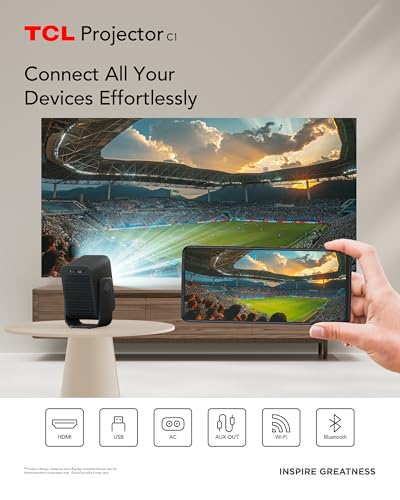
For smart features, the TCL C1 runs full Google TV with official Netflix certification—a rarity in this price category. This isn't just a basic Android system; it's the same platform found on premium smart TVs, complete with Google Assistant voice control and Chromecast integration. You can literally unbox this projector and start streaming Netflix, Disney+, or YouTube without any additional devices.
With 230 ISO lumens of brightness, the TCL C1 requires realistic expectations. This is fundamentally a dark-room projector. In completely dark environments, it delivers surprisingly engaging images with good color accuracy thanks to TCL's TrueHue technology, which optimizes color and contrast frame-by-frame. The native 1080p LCD panel produces sharp text and detailed imagery, while the 1500:1 contrast ratio helps maintain decent black levels.
However, even moderate ambient light quickly overwhelms the image. Forget about daytime viewing unless you have blackout curtains. This brightness limitation is the TCL C1's biggest constraint and something potential buyers must honestly evaluate.
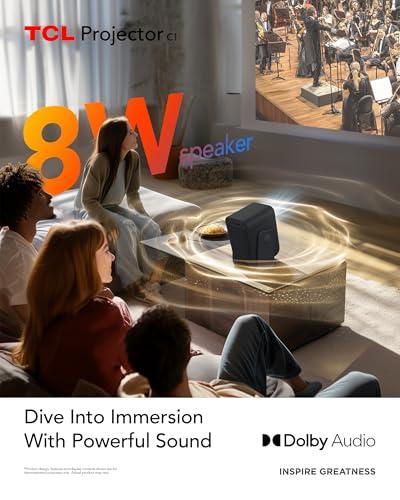
The 8-watt Dolby Audio speaker performs admirably for its size, delivering clear dialogue and sufficient volume for small rooms. It won't replace a proper sound system, but it's perfectly adequate for bedroom viewing or small apartments.
The TCL C1 excels in specific scenarios. It's perfect for renters who want big-screen entertainment without mounting anything permanent, students in dorm rooms, or anyone seeking an affordable secondary entertainment system for bedrooms. The gimbal design particularly shines in tight spaces where traditional mounting isn't practical.
At the time of writing, the TCL C1 typically sells for significantly less than $300, making it exceptional value for what you receive. No other projector in this price range includes full smart TV functionality, automatic setup features, and the unique ceiling projection capability.
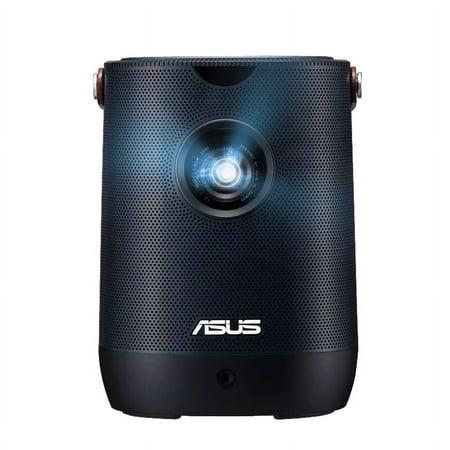
The ASUS ZenBeam L2, also launched in 2022, represents a completely different philosophy. Rather than integrating smart features, ASUS focused on core projection performance and true portability through battery operation.
The 65Wh rechargeable battery providing 3.5 hours of cordless operation transforms how you think about projector placement. No longer tethered to wall outlets, the ZenBeam L2 enables truly spontaneous viewing sessions. Whether it's outdoor movie nights, RV camping, or simply avoiding cable runs across your living room, battery operation provides freedom that's hard to appreciate until you experience it.
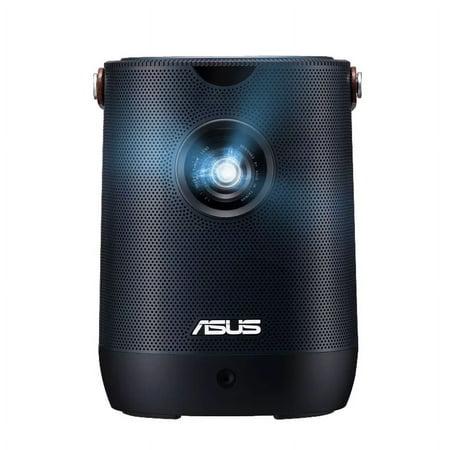
The compact cube design (roughly the size of a large coffee mug) makes it genuinely pocketable for travel, while the 1.57kg weight strikes a good balance between portability and build quality.
At 960 LED lumens (approximately 400 ANSI lumens in real-world measurement), the ZenBeam L2 delivers nearly four times the brightness of the TCL C1. This isn't just a numbers game—it fundamentally expands where and when you can use the projector.
While still not bright enough for direct sunlight viewing, the ZenBeam L2 handles semi-lit rooms reasonably well. Evening outdoor use, rooms with some ambient light, or daytime viewing with curtains drawn all become viable scenarios. This flexibility justifies the higher price point for users who need versatility.
The RGB LED DLP technology produces vibrant colors with 120% sRGB coverage, and ASUS includes multiple color modes optimized for different content types. Theater mode emphasizes accuracy for movies, while Bright mode maximizes visibility in challenging lighting conditions.
Unlike the TCL C1, the ZenBeam L2 doesn't include integrated smart features. Instead, ASUS bundles an Android TV dongle that plugs into the HDMI port. While this adds complexity—you now have two devices to manage and power—it also provides upgrade flexibility. As streaming platforms evolve, you can replace the smart dongle without replacing the entire projector.
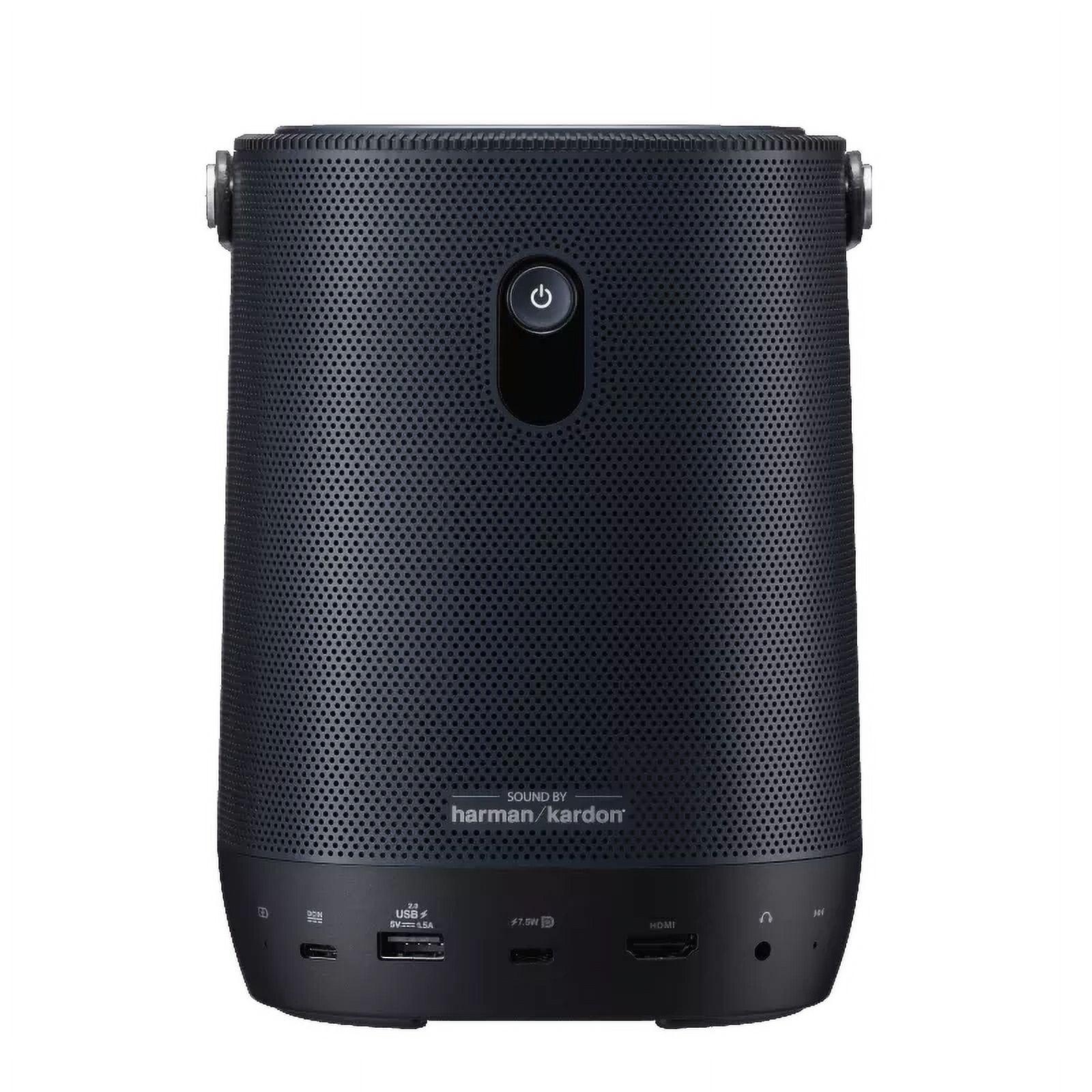
The 10-watt Harman Kardon speaker system delivers notably better audio quality than typical portable projector speakers. It's still not going to replace dedicated speakers for serious listening, but it provides room-filling sound that doesn't embarrass itself with movie soundtracks.
The ZenBeam L2's short 1.2:1 throw ratio means you can project a 40-inch image from just one meter away—perfect for small spaces. The automatic focus and keystone correction work reliably, though they lack the omni-directional flexibility of the TCL C1's gimbal system.
One interesting technical detail: the ZenBeam L2 accepts 4K input signals and downscales them to its native 1080p resolution. While you're not getting true 4K projection, this ensures compatibility with modern 4K sources and can improve detail rendering through supersampling.
The ZenBeam L2 suits users who prioritize flexibility and performance over budget constraints. Business travelers who need presentation capability, camping enthusiasts wanting entertainment anywhere, or homeowners who frequently move their projector between rooms will appreciate the battery freedom and brightness advantage.
At the time of writing, expect to pay more than double the TCL C1's price for the ZenBeam L2. Whether this premium is justified depends entirely on how much you value brightness and battery operation.
Brightness remains the most critical specification for portable projectors, but marketing numbers can be misleading. Manufacturers often quote "LED lumens" or other non-standard measurements that inflate apparent brightness.
The TCL C1's 230 ISO lumens represents honest measurement. In completely dark rooms, this produces watchable images up to about 80 inches diagonally. Beyond that size, the image becomes noticeably dim. Any ambient light—even from a smartphone screen—will wash out darker scenes.
The ZenBeam L2's 960 LED lumens (measured at approximately 400 ANSI lumens) provides significantly more flexibility. You can watch in rooms with table lamps on, handle some daylight bleeding through curtains, and maintain image quality at larger screen sizes up to 120 inches.
These projectors use different display technologies that affect image characteristics. The TCL C1's LCD system with LED backlighting produces naturally smooth images with good color accuracy and no rainbow effect (brief color flashes some people see with DLP projectors).
The ZenBeam L2's DLP chip with RGB LEDs delivers higher contrast in bright scenes and more vibrant colors, but some users may notice rainbow artifacts during fast-moving content. DLP also handles motion better, making it preferable for sports or action movies.
Both achieve similar sharpness with native 1080p resolution, though the ZenBeam L2 has a slight edge in fine detail rendering.
Portable projector speakers have historically been afterthoughts, but both these models take audio seriously. The TCL C1's 8-watt Dolby Audio system provides clear dialogue and surprising bass response for its size. It handles most content well in small rooms but lacks the power for larger spaces.
The ZenBeam L2's 10-watt Harman Kardon speaker delivers noticeably fuller sound with better mid-range presence. It's still not going to satisfy audiophiles, but it eliminates the immediate need for external speakers in medium-sized rooms.
Both projectors support external audio through 3.5mm jacks and Bluetooth, though wireless audio introduces slight delay that can be annoying with video content.
Neither projector replaces a dedicated home theater setup, but they serve different roles in home entertainment ecosystems.
The TCL C1 excels as a secondary entertainment system. Its ceiling projection capability makes it perfect for bedrooms where wall mounting isn't practical. The integrated smart features mean it works independently without additional devices cluttering nightstands or dressers.
The ZenBeam L2 functions better as a flexible primary display for smaller living spaces. Its brightness allows reasonable performance in family rooms with some ambient light, while battery operation enables easy relocation for parties or outdoor events.
For dedicated home theater rooms with controlled lighting, the TCL C1 actually performs comparably to the ZenBeam L2 despite the brightness difference. In completely dark environments, the TCL C1's superior contrast ratio can produce more engaging images with better black levels.
The decision between these projectors ultimately depends on your specific needs and priorities.
Choose the TCL C1 if you want maximum value and don't mind brightness limitations. It's perfect for dark-room viewing, offers unmatched convenience with integrated smart features, and provides unique ceiling projection capability. The budget-friendly price makes it accessible for students, renters, or anyone wanting to experiment with projection without major investment.
The ZenBeam L2 justifies its premium price if brightness and portability are essential. Business travelers, outdoor enthusiasts, or users who need flexibility in various lighting conditions will appreciate the performance advantages. The battery operation alone transforms usage scenarios in ways that aren't obvious until you experience cordless projection.
Both represent solid choices within their respective market segments. The TCL C1 delivers exceptional value by integrating smart features typically reserved for expensive models, while the ZenBeam L2 provides professional-grade brightness and true portability for users willing to pay for performance.
Your choice should align with your primary use case: dark-room entertainment on a budget points toward the TCL C1, while flexible usage across various environments favors the ZenBeam L2. Either way, you're getting modern LED technology that will provide years of reliable service without lamp replacements—a major improvement over portable projectors from just a few years ago.
| TCL C1 Google TV Portable Projector | ASUS ZenBeam L2 Smart Portable LED Projector |
|---|---|
| Brightness - The most critical factor determining where you can use the projector | |
| 230 ISO lumens (requires completely dark rooms) | 960 LED lumens / 400 ANSI lumens (works in semi-lit environments) |
| Price Range - Budget vs premium portable projector positioning | |
| Budget-friendly under $300 | Premium pricing around $700 |
| Power Source - Determines portability and setup flexibility | |
| AC power required (must stay plugged in) | Built-in 65Wh battery (3.5 hours cordless operation) |
| Smart Features - Built-in streaming vs external device approach | |
| Google TV 11 integrated with certified Netflix | Android TV dongle included (requires separate setup) |
| Display Technology - Affects image quality and viewing characteristics | |
| LCD with LED backlight (smooth motion, no rainbow effect) | DLP with RGB LED (vibrant colors, potential rainbow artifacts) |
| Contrast Ratio - Important for dark scene detail in dim rooms | |
| 1500:1 (better black levels in dark viewing) | 400:1 (typical for DLP at this brightness level) |
| Projection Flexibility - Mounting and positioning options | |
| 285° adjustable gimbal stand (ceiling projection capable) | Fixed orientation with auto keystone correction |
| Audio System - Built-in speaker quality for small to medium rooms | |
| 8W Dolby Audio (adequate for bedrooms/small spaces) | 10W Harman Kardon (better sound quality and volume) |
| Size & Weight - Portability and storage considerations | |
| 1.77 kg with integrated handle design | 1.57 kg compact cube form factor |
| Throw Distance - How close you can place it to the wall | |
| Variable throw ratio (1.15m-3.30m for 40-120" screen) | Short 1.2:1 throw (1m for 40" image, space-efficient) |
| Setup Complexity - How easy it is to get a good image | |
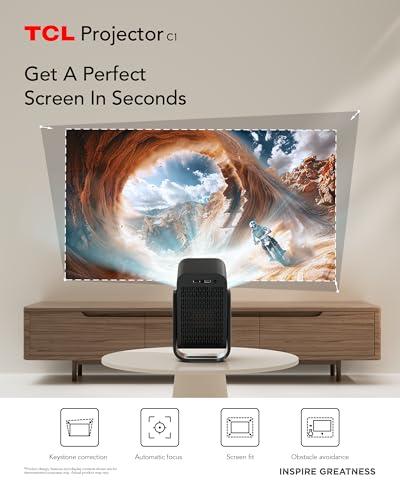
| Fully automatic with omni-directional keystone correction | Auto focus and keystone with manual Android TV setup |
| Connectivity Options - Ports and wireless capabilities | |
| HDMI 2.1, USB-A, Wi-Fi 5, Bluetooth 5.1 | HDMI, USB-C DisplayPort, USB-A, Wi-Fi, Bluetooth |
The ASUS ZenBeam L2 is significantly brighter at 960 LED lumens compared to the TCL C1's 230 ISO lumens. This makes the ZenBeam L2 suitable for semi-lit rooms and some daytime viewing, while the TCL C1 requires completely dark environments for optimal image quality.
Only the ASUS ZenBeam L2 has a built-in rechargeable battery that provides up to 3.5 hours of cordless operation. The TCL C1 Google TV Portable Projector requires AC power and must stay plugged into a wall outlet during use.
The TCL C1 has superior integrated streaming with Google TV 11 built directly into the projector, including certified Netflix, Disney+, and YouTube access. The ASUS ZenBeam L2 includes an Android TV dongle but requires separate setup and doesn't have the same seamless integration.
Both projectors have native 1080p resolution but can accept 4K input signals. The TCL C1 supports 4K 60Hz HDR input through its HDMI 2.1 port, while the ASUS ZenBeam L2 also accepts 4K inputs and downscales them to 1080p for display.
The TCL C1 Google TV Portable Projector excels in tight spaces thanks to its unique 285° gimbal design that allows ceiling projection and flexible positioning. The ASUS ZenBeam L2 has a shorter throw distance but requires traditional forward-facing placement.
The ASUS ZenBeam L2 has a 10W Harman Kardon speaker system that delivers better sound quality and volume than the TCL C1's 8W Dolby Audio speaker. Both are adequate for small to medium rooms but may need external speakers for larger spaces.
The TCL C1 provides exceptional value with integrated Google TV, automatic setup features, and unique gimbal design at a budget-friendly price point. The ASUS ZenBeam L2 costs significantly more but offers battery operation and much higher brightness for versatile usage scenarios.
Both projectors support gaming through HDMI connections. The TCL C1 Google TV Portable Projector features HDMI 2.1 for better compatibility with modern consoles, while the ASUS ZenBeam L2 offers slightly better motion handling due to its DLP technology. Input lag is acceptable for casual gaming on both models.
Both the TCL C1 and ASUS ZenBeam L2 use LED light sources rated for 30,000 hours of operation. This means you'll never need to replace bulbs, and the brightness will remain consistent throughout the projector's lifespan.
The TCL C1 offers simpler setup with fully automatic focus, keystone correction, and obstacle avoidance, plus immediate streaming access without additional devices. The ASUS ZenBeam L2 requires setting up the included Android TV dongle but has straightforward auto-focus and keystone features.
The ASUS ZenBeam L2 is better suited for outdoor use thanks to its battery operation and higher brightness that can handle twilight conditions. The TCL C1 Google TV Portable Projector requires AC power and works best in completely dark outdoor environments.
While both are portable, the ASUS ZenBeam L2 is more travel-friendly due to its compact cube design, lighter weight, and battery operation that eliminates the need for power outlets. The TCL C1 is still portable but requires access to AC power wherever you use it.
We've done our best to create useful and informative comparisons to help you decide what product to buy. Our research uses advanced automated methods to create this comparison and perfection is not possible - please contact us for corrections or questions. These are the sites we've researched in the creation of this article: youtube.com - thegadgetflow.com - notebookcheck.net - shopabunda.com - youtube.com - youtube.com - youtube.com - youtube.com - tcl.com - androidauthority.com - manuals.plus - westcoast.co.uk - projectorcentral.com - youtube.com - mezha.media - asus.com - asus.com - youtube.com - projectorreviews.com - asus.com - digitalcameraworld.com - youtube.com - asus.com - digitalcitizen.life - tweakreviews.com - shop.asus.com - edgeup.asus.com - asus.com - projectorcentral.com - asus.com - uk.store.asus.com - asus.com - thegadgetflow.com - bhphotovideo.com - asus.com - asus.com

Privacy Policy
Terms and Conditions - Affiliate Policy
Home Security
© Copyright 2008-2026.
11816 Inwood Rd #1211, Dallas, TX 75244