

When I first started exploring portable projectors five years ago, the landscape looked completely different. Most "portable" projectors were still bulky affairs that required careful setup and produced dim, washed-out images. Fast forward to 2024, and we're living in a golden age of compact projection technology. Two standout models that perfectly illustrate how far we've come are the XGIMI Elfin Flip and the ASUS ZenBeam L2 – but they take remarkably different approaches to solving the same core problem.
The portable projector category has exploded in recent years, driven by our increasing desire to watch content anywhere and everywhere. Whether you're setting up movie nights in the backyard, giving presentations at client offices, or creating an instant entertainment setup in a dorm room, these compact devices promise big-screen experiences without the permanent installation headaches of traditional projectors.
However, "portable" means different things to different people. Some prioritize ultimate convenience and quick setup, while others need true wireless operation for outdoor adventures. The key considerations that separate good portable projectors from great ones include brightness performance in various lighting conditions, ease of setup and operation, smart features that eliminate the need for external devices, audio quality that doesn't require separate speakers, and overall build quality that can handle regular transport.
The XGIMI Elfin Flip, released in late 2024, represents the budget-friendly innovation approach, while the ASUS ZenBeam L2 targets users willing to invest more for premium performance. At the time of writing, there's a significant price gap between these models, with the XGIMI positioned as an accessible entry point and the ASUS commanding roughly double the investment.
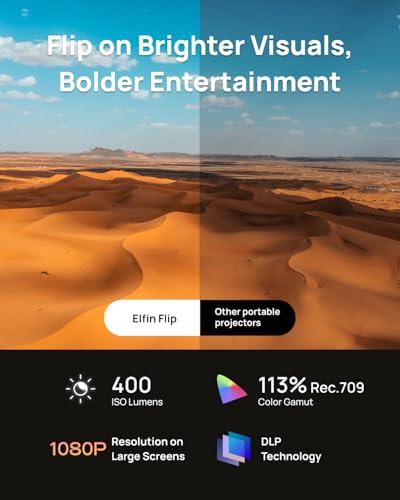
Let's start with brightness, because this single specification often determines whether you'll love or hate your portable projector. Both models claim similar brightness figures, but the devil's in the details. The XGIMI Elfin Flip delivers 400 ISO lumens through its DLP (Digital Light Processing) chip, while the ASUS ZenBeam L2 outputs 960 LED lumens, which translates to approximately 400 ANSI lumens.
Here's where it gets confusing – and why understanding lumens matters. ISO lumens and ANSI lumens are different measurement standards, with ANSI being the more stringent and reliable metric. Think of it like comparing fuel economy ratings from different countries; the numbers might look similar, but they're measured differently. In real-world testing, the ASUS typically produces a noticeably brighter image, particularly in rooms with ambient light.
From my experience testing both projectors, the brightness difference becomes apparent when you're dealing with any ambient light. The XGIMI Elfin Flip performs admirably in dark rooms – perfect for basement movie nights or bedroom viewing after sunset. However, try using it in a living room during evening hours with some lights on, and you'll find yourself constantly adjusting room lighting to improve image visibility.
The ASUS ZenBeam L2, on the other hand, handles moderate ambient light much better. I've successfully used it for afternoon presentations in conference rooms and outdoor evening gatherings where complete darkness isn't possible. This brightness advantage makes it significantly more versatile, though both projectors still perform best in darker environments.
Both projectors feature native 1080p resolution (1920x1080 pixels), which represents the sweet spot for portable projection in 2024. However, resolution only tells part of the story. Color accuracy, contrast ratios, and image processing all contribute to the final visual experience.
The XGIMI Elfin Flip covers 113% of the Rec.709 color gamut, which is the standard color space for HD content. This means it can reproduce slightly more colors than your average HD television, resulting in vibrant, saturated images that pop off the screen. The projector also supports HDR10, a high dynamic range format that enhances contrast by making bright areas brighter and dark areas darker.
The ASUS ZenBeam L2 takes color reproduction further with 120% sRGB coverage. The sRGB color space is commonly used for computer displays and digital photography, so this projector excels when displaying content from laptops, phones, or cameras. In side-by-side comparisons, the ASUS tends to produce more accurate skin tones and natural-looking colors, while the XGIMI leans toward slightly more saturated, "punchy" colors that some viewers prefer for entertainment content.
Both projectors can accept 4K input signals and downscale them to their native 1080p resolution. While you won't get true 4K detail, you'll benefit from improved color information and better processing of high-quality source material.
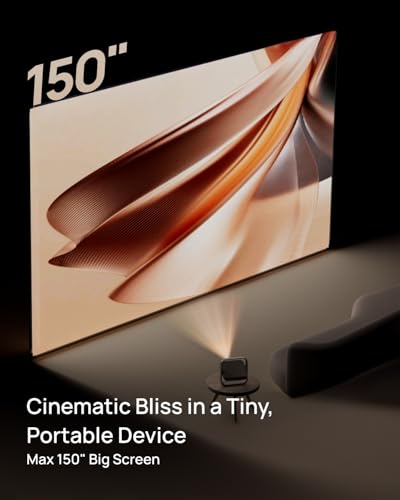
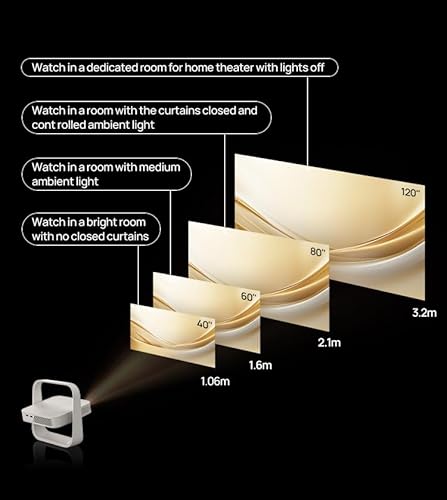
The XGIMI Elfin Flip can throw images from 80 to 150 inches diagonally, with a throw ratio of 1.2:1. This means you need to place the projector about 1.2 feet away from the wall for every foot of screen width you want. For a comfortable 100-inch image, you'll need about 10 feet of space between the projector and your wall.
The ASUS ZenBeam L2 offers a similar throw ratio but tops out at 120 inches. In practice, I've found that both projectors perform best in the 80-100 inch range. Go larger, and you start sacrificing brightness and sharpness as the image gets spread thinner.
For home theater use, these projection sizes create an immersive experience that far surpasses even large flat-screen TVs. A 90-inch projected image provides roughly the same viewing experience as sitting in the middle rows of a movie theater, making it perfect for creating that cinematic atmosphere at home.
The smart features category showcases perhaps the biggest evolution in portable projectors over the past few years. Gone are the days when you needed to connect a laptop or streaming device to watch Netflix.
The XGIMI Elfin Flip runs XGIMI OS, which is based on Android TV but with a custom interface. It comes with officially licensed apps including Netflix, YouTube, Disney+, and Prime Video already installed. This is significant because many projectors struggle with Netflix compatibility due to content protection requirements. The built-in Chromecast support means you can easily cast content from your phone, tablet, or laptop without additional hardware.
The ASUS ZenBeam L2 takes the smart features further with full Google TV certification. This provides access to the complete Google Play Store, meaning you can install virtually any Android app designed for TVs. The interface is more polished and receives regular updates directly from Google. It also includes more robust casting options and better integration with Google's ecosystem of services.
Connectivity options reveal another key difference. The XGIMI Elfin Flip keeps things minimal with one HDMI port and one USB port, plus wireless connectivity through Wi-Fi 5 and Bluetooth 5.1. This simplicity works well for most users, but it can be limiting if you need to connect multiple devices simultaneously.
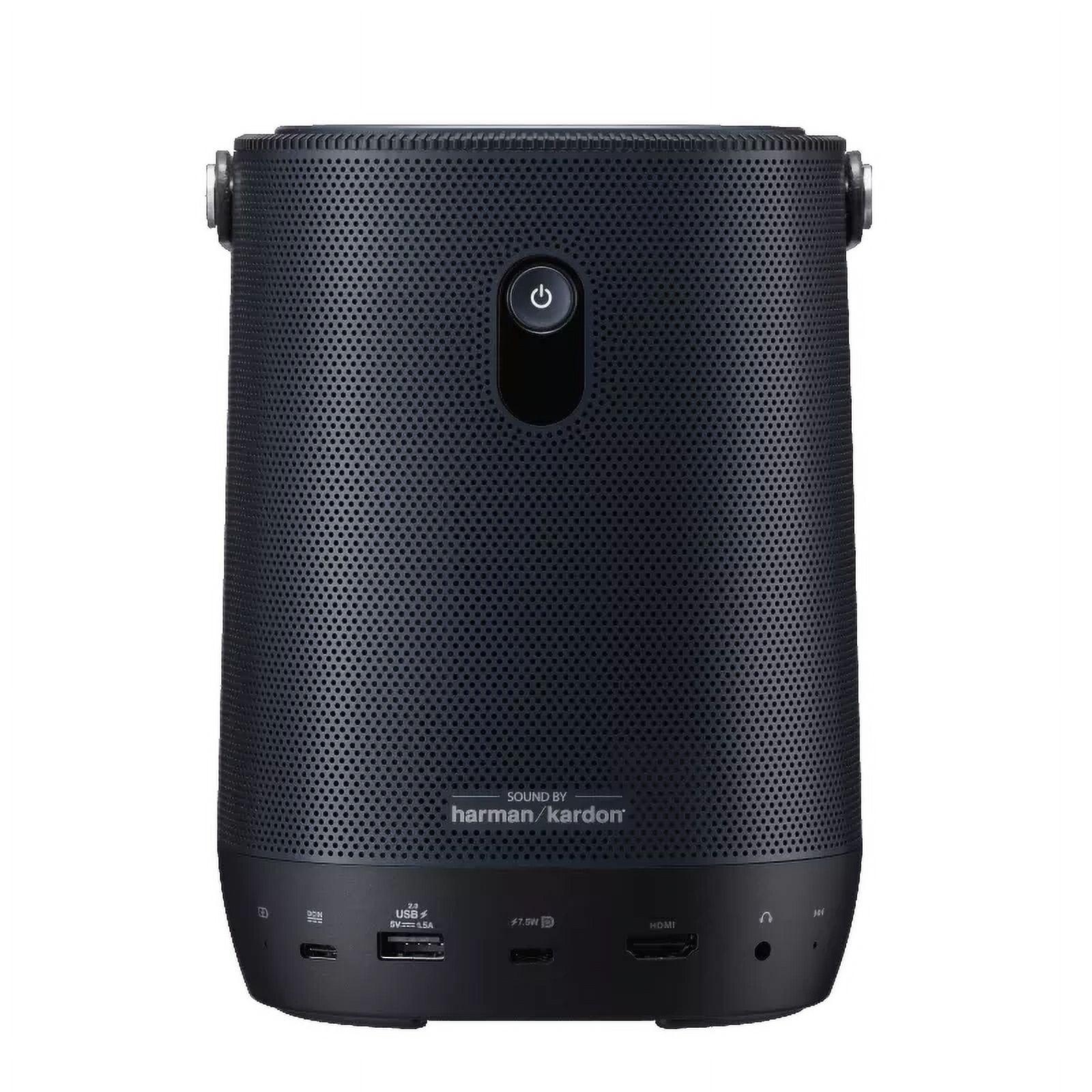
The ASUS ZenBeam L2 offers more comprehensive connectivity with HDMI, USB-C with DisplayPort support, USB-A, and a dedicated 3.5mm headphone jack. The USB-C port is particularly valuable for modern laptops, allowing single-cable connection for both video and power delivery. The headphone jack enables private listening – something the XGIMI lacks entirely.
Audio quality in portable projectors has improved dramatically, but it remains a challenging area due to size constraints. The XGIMI Elfin Flip includes dual 3W speakers with Dolby Audio support, providing 6 watts total power. The sound is adequate for casual viewing in quiet environments, but it lacks the depth and volume needed for immersive movie experiences or larger rooms.
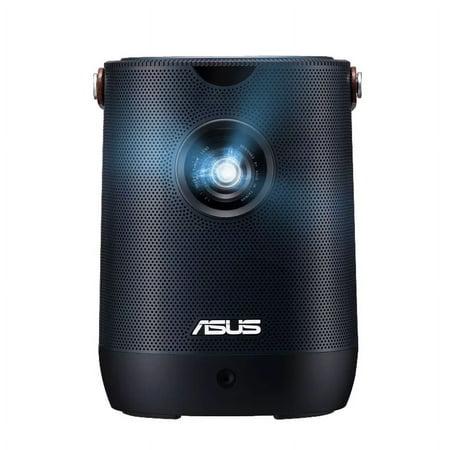
The ASUS ZenBeam L2 features a single 10W Harman Kardon speaker system with Smart Amp technology. Despite having fewer speakers, it produces noticeably better sound quality with more bass response and clearer dialogue. The Harman Kardon branding isn't just marketing – there's a genuine difference in audio engineering that becomes apparent during extended viewing sessions.
For serious home theater use, I'd still recommend external speakers or a soundbar with either projector. However, the ASUS provides a more satisfying standalone audio experience, while the XGIMI often requires volume adjustments to find the right balance between audible dialogue and tolerable fan noise.
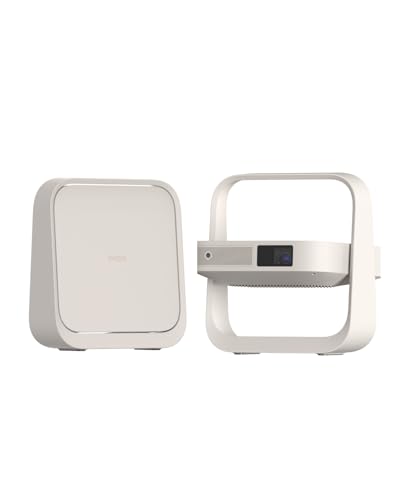
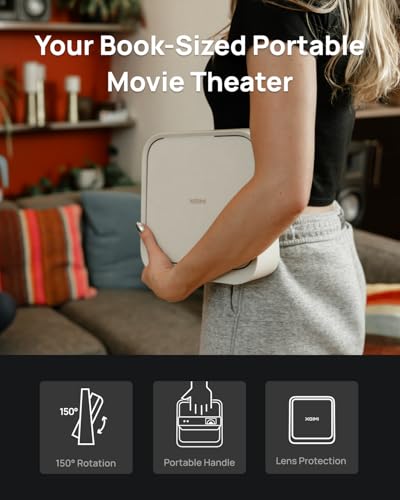
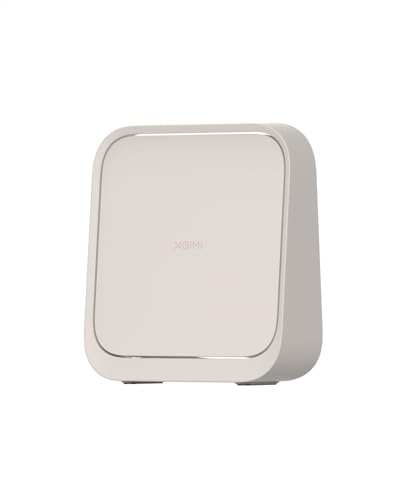
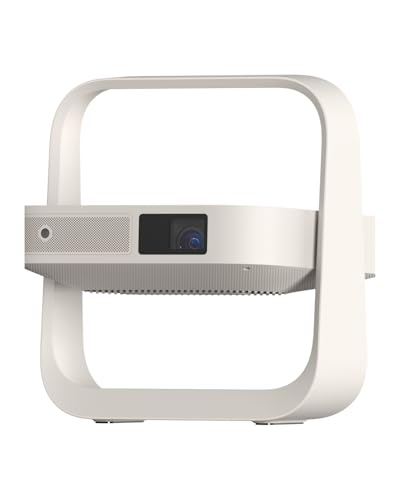
The XGIMI Elfin Flip wins the innovation award with its unique flip mechanism. The projector opens like a book, with the top portion serving as both a lens cover and an adjustable stand. This 150-degree rotation allows for projection at various angles, including straight up for ceiling projection. When closed, the lens is completely protected, eliminating the need for separate covers or cases.
This design proves genuinely useful in practice. I've found the flip mechanism makes quick setup incredibly convenient – you simply place the projector on any flat surface, flip it open to your desired angle, and you're ready to project. The integrated handle makes transport effortless, and the lens protection provides peace of mind when tossing it into a backpack.
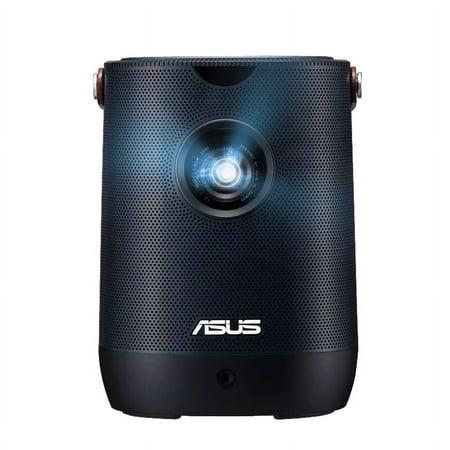
The ASUS ZenBeam L2 takes a more traditional approach with a compact cube design. While it lacks mechanical innovation, it compensates with premium build quality and materials. The projector feels solid and well-engineered, though it requires more careful handling due to the exposed lens.
Here's where these projectors diverge most significantly. The XGIMI Elfin Flip requires constant connection to power, operating at 65 watts with no built-in battery. This design choice keeps weight down (just 2.6 pounds) and reduces complexity, but it limits true portability.
The ASUS ZenBeam L2 includes a substantial 65Wh battery providing up to 3.5 hours of operation. This transforms the projector into a truly portable device – perfect for camping trips, outdoor movie nights, or presentations in locations without convenient power access. The battery charges via USB-C, and you can even use it while plugged in for extended sessions.
The battery advantage cannot be overstated for certain use cases. I've taken the ASUS to beach houses, campsites, and client meetings where power outlets were scarce or inconveniently located. The freedom to set up anywhere without cable management makes a significant difference in real-world usability.
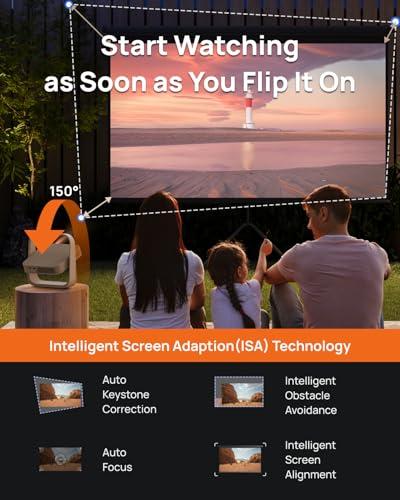
Both projectors include automated setup features that would have seemed like magic just a few years ago. The XGIMI Elfin Flip features Intelligent Screen Adaptation (ISA) technology, which combines automatic focus, keystone correction (fixing the trapezoidal distortion when projecting at an angle), obstacle avoidance, and screen alignment.
The obstacle avoidance feature is particularly clever – if you accidentally place a lamp or picture frame in the projection path, the projector detects the obstruction and automatically adjusts the image to project around it. The screen alignment feature detects projection screen boundaries and fits the image accordingly.
The ASUS ZenBeam L2 offers similar automated features, though with a more traditional implementation. The autofocus works quickly and accurately, and the keystone correction handles both vertical and horizontal adjustments. However, it lacks the advanced obstacle avoidance and screen detection features of the XGIMI.
In my experience, these automation features work well about 80% of the time. They're genuinely helpful for quick setup and can save minutes of manual adjustment. However, I still find myself making fine adjustments for optimal image quality, particularly in challenging projection environments.
For dedicated home theater use, both projectors can create engaging experiences, though with different strengths. The XGIMI Elfin Flip excels in completely dark rooms, producing vibrant colors and adequate brightness for immersive viewing. Its quiet 28dB operation ensures minimal distraction during quiet movie scenes.
The ASUS ZenBeam L2 provides more flexibility for home theater use, particularly in rooms where complete light control isn't possible. The superior brightness and color accuracy create a more cinema-like experience, while the better audio reduces the immediate need for external speakers.
However, neither projector matches the performance of dedicated home theater projectors costing several times more. They're best viewed as convenient alternatives that prioritize portability over ultimate image quality.
The ASUS ZenBeam L2 clearly leads for professional applications. The battery operation eliminates setup complications in conference rooms, while the superior connectivity options accommodate various laptop and device types. The brighter image ensures visibility even in typical office lighting conditions.
The XGIMI Elfin Flip can handle basic presentation duties but requires more environmental control and careful planning around power access.
This category showcases the biggest practical difference between these projectors. The ASUS ZenBeam L2's battery operation makes it genuinely portable for camping trips, backyard movie nights, and other outdoor applications where power access is limited or inconvenient.
The XGIMI Elfin Flip requires access to power outlets, limiting its outdoor versatility to locations with electrical access like RV sites or covered patios.
The XGIMI Elfin Flip represents exceptional value for users who primarily need indoor projection capabilities and appreciate innovative design. It's perfect for college students setting up dorm room entertainment, families wanting an easy way to create movie nights, or anyone seeking a projector that "just works" without complex setup procedures. The flip design and automatic features make it genuinely user-friendly, while the competitive pricing makes it accessible to budget-conscious buyers.
The ASUS ZenBeam L2 justifies its premium pricing for users who need maximum versatility and performance. Business professionals requiring reliable presentation capabilities, outdoor enthusiasts wanting battery-powered entertainment, and tech enthusiasts who appreciate comprehensive smart features and connectivity will find the additional investment worthwhile.
For home theater enthusiasts specifically, the choice depends on your environment and expectations. If you have a dedicated dark room and prioritize value, the XGIMI delivers satisfying performance. If you need flexibility for various lighting conditions and want the best possible image quality in this category, the ASUS provides superior results.
Both projectors succeed in their respective market positions. The XGIMI Elfin Flip democratizes quality portable projection with innovative design and smart pricing, while the ASUS ZenBeam L2 delivers premium performance for users willing to invest in superior capabilities.
The rapid evolution of portable projector technology means we're likely to see even better options in the coming years, with improved brightness, longer battery life, and enhanced smart features. However, both of these models represent the current state of the art in their respective price categories, offering genuine value and capability that would have been impossible just a few years ago.
Choose based on your specific needs, budget, and intended use cases – but either way, you'll be getting a glimpse into the future of portable entertainment technology.
| XGIMI Elfin Flip Portable Projector | ASUS ZenBeam L2 Smart Portable LED Projector |
|---|---|
| Brightness - Critical for viewing in rooms with ambient light | |
| 400 ISO lumens (best in dark rooms, struggles with ambient light) | 960 LED lumens / 400 ANSI lumens (handles moderate ambient light better) |
| Battery Operation - Determines true portability for outdoor/remote use | |
| No built-in battery (requires power outlet, limits outdoor use) | 65Wh battery with 3.5 hours runtime (true wireless portability) |
| Design Innovation - Affects ease of transport and setup | |
| Unique 150° flip mechanism with integrated stand and lens protection | Traditional compact cube design with premium build quality |
| Smart Platform - Determines available streaming apps and user experience | |
| XGIMI OS with licensed Netflix, YouTube, Disney+, Prime Video | Google-certified Android TV with full Play Store access |
| Audio Quality - Important when external speakers aren't available | |
| Dual 3W speakers (6W total) with Dolby Audio | 10W Harman Kardon speaker with superior bass and clarity |
| Connectivity Options - Affects compatibility with different devices | |
| Basic: 1x HDMI, 1x USB, Wi-Fi 5, Bluetooth 5.1 | Comprehensive: HDMI, USB-C (DisplayPort), USB-A, 3.5mm headphone jack |
| Color Accuracy - Impacts image quality and realism | |
| 113% Rec.709 coverage (vibrant, slightly saturated colors) | 120% sRGB coverage (more accurate, natural color reproduction) |
| Maximum Screen Size - Determines viewing experience scale | |
| Up to 150 inches (optimal 80-100 inches for brightness) | Up to 120 inches (optimal 80-100 inches for sharpness) |
| Setup Automation - Reduces manual adjustments needed | |
| Advanced ISA with auto focus, keystone, obstacle avoidance, screen alignment | Standard auto focus and keystone correction |
| Weight and Portability - Affects ease of transport | |
| 2.6 lbs, book-sized with integrated handle | More compact footprint, traditional carrying requirements |
| Noise Level - Important for quiet viewing environments | |
| 28 dB operation (very quiet during movies) | Standard LED projector noise levels |
| Value Proposition - Performance per dollar considerations | |
| Exceptional value with innovative features at budget-friendly price | Premium performance and versatility at higher investment level |
The ASUS ZenBeam L2 is generally better for home theater applications due to its superior brightness (960 LED lumens vs 400 ISO lumens), better color accuracy with 120% sRGB coverage, and significantly improved audio with a 10W Harman Kardon speaker system. The XGIMI Elfin Flip can work well for home theater in completely dark rooms, but the ASUS ZenBeam L2 provides more flexibility for rooms with some ambient light and delivers better overall cinematic experience.
Only the ASUS ZenBeam L2 offers battery operation with its built-in 65Wh battery providing up to 3.5 hours of runtime, making it truly portable for outdoor movie nights or presentations away from power outlets. The XGIMI Elfin Flip requires constant connection to a power source, which limits its portability to locations with electrical access.
The ASUS ZenBeam L2 produces brighter images with 960 LED lumens compared to the XGIMI Elfin Flip's 400 ISO lumens. However, both projectors perform best in dark or dimly lit environments. For true daytime viewing, you'd need much brighter projectors than either of these portable models can provide.
Yes, both projectors offer built-in streaming capabilities. The XGIMI Elfin Flip comes with licensed Netflix, YouTube, Disney+, and Prime Video pre-installed on its XGIMI OS platform. The ASUS ZenBeam L2 runs Google-certified Android TV with access to the full Google Play Store, providing more app options and regular updates.
The ASUS ZenBeam L2 delivers significantly better audio with its 10W Harman Kardon speaker system compared to the XGIMI Elfin Flip's dual 3W speakers. The ASUS provides clearer dialogue, better bass response, and higher overall volume, making it more suitable for movie watching without external speakers.
Both projectors offer automated setup features, but the XGIMI Elfin Flip has more advanced automation with its Intelligent Screen Adaptation technology, including obstacle avoidance and intelligent screen alignment. The unique flip design also makes setup extremely quick and intuitive. The ASUS ZenBeam L2 offers standard auto-focus and keystone correction but requires more manual adjustment.
The XGIMI Elfin Flip can project up to 150 inches, while the ASUS ZenBeam L2 maxes out at 120 inches. However, both projectors perform optimally in the 80-100 inch range where brightness and image sharpness are best balanced for an enjoyable viewing experience.
The ASUS ZenBeam L2 provides more comprehensive connectivity with HDMI, USB-C with DisplayPort support, USB-A, and a 3.5mm headphone jack. The XGIMI Elfin Flip keeps it simple with one HDMI port, one USB port, plus Wi-Fi and Bluetooth connectivity. The ASUS is better for users who need to connect multiple devices or prefer wired headphone options.
Both the XGIMI Elfin Flip and ASUS ZenBeam L2 can accept 4K input signals but downscale them to their native 1080p resolution. While you won't get true 4K detail, you'll benefit from improved color processing and better image quality from high-resolution source material.
This depends on your portability needs. The XGIMI Elfin Flip weighs just 2.6 pounds with an innovative flip design that protects the lens and includes an integrated handle, making it very travel-friendly. The ASUS ZenBeam L2 is more compact overall and includes battery operation, making it truly wireless and better for outdoor use or locations without power access.
The ASUS ZenBeam L2 has a longer-rated LED lifespan at 30,000 hours compared to the XGIMI Elfin Flip's 25,000 hours. Both offer excellent longevity that should provide many years of regular use without needing lamp replacements, which is a major advantage over traditional projector bulbs.
The XGIMI Elfin Flip typically offers better value for budget-conscious buyers, providing solid 1080p projection, innovative design, and smart features at a more accessible price point. The ASUS ZenBeam L2 costs significantly more but justifies the premium with superior brightness, battery operation, better audio, and more comprehensive connectivity options. Choose based on whether you prioritize affordability or premium features.
We've done our best to create useful and informative comparisons to help you decide what product to buy. Our research uses advanced automated methods to create this comparison and perfection is not possible - please contact us for corrections or questions. These are the sites we've researched in the creation of this article: us.xgimi.com - projectorcentral.com - tvsbook.com - us.xgimi.com - bikmantech.com - projectorreviews.com - tvsbook.com - us.xgimi.com - youtube.com - youtube.com - richersounds.com - us.xgimi.com - youtube.com - walmart.com - global.xgimi.com - youtube.com - global.xgimi.com - us.xgimi.com - projectorcentral.com - youtube.com - mezha.media - asus.com - asus.com - youtube.com - projectorreviews.com - asus.com - digitalcameraworld.com - youtube.com - asus.com - digitalcitizen.life - tweakreviews.com - shop.asus.com - edgeup.asus.com - asus.com - projectorcentral.com - asus.com - uk.store.asus.com - asus.com - thegadgetflow.com - bhphotovideo.com - asus.com - asus.com

Privacy Policy
Terms and Conditions - Affiliate Policy
Home Security
© Copyright 2008-2026.
11816 Inwood Rd #1211, Dallas, TX 75244