

Portable projectors have completely transformed how we think about entertainment. Gone are the days when you needed a dedicated room and a massive setup to enjoy big-screen movies. Today's portable projectors can turn any wall into your personal cinema, whether you're camping under the stars or creating a cozy movie night in your bedroom.
I've spent considerable time testing both the JMGO PicoPlay and ASUS ZenBeam L2, and they represent two fascinating approaches to portable projection. One prioritizes ultimate portability with innovative features, while the other focuses on reliable performance with tried-and-true technology. Let me break down everything you need to know to make the right choice.
Before diving into specifics, it's worth understanding what makes portable projectors special. Unlike traditional home theater projectors that require permanent mounting and dedicated rooms, portable projectors are designed for flexibility. They need to balance several competing demands: brightness (measured in lumens - essentially how much light the projector can produce), battery life, image quality, and physical size.
The key challenge is physics itself. Brighter projectors typically need more power, bigger cooling systems, and larger light sources. This creates an inherent tension between portability and performance that every manufacturer must navigate differently.
Lumens explained: When shopping for projectors, you'll see different lumen measurements. ANSI lumens provide the most accurate brightness comparison, while LED lumens (used by some manufacturers) tend to be inflated. ISO lumens fall somewhere between these standards. For context, a dim room needs about 300-500 ANSI lumens for comfortable viewing, while semi-lit rooms require 800+ lumens.
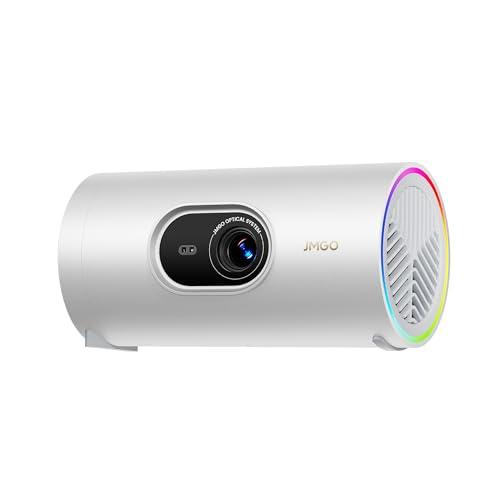
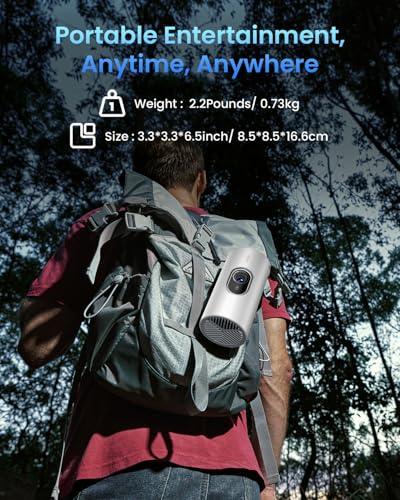
The JMGO PicoPlay, released in 2024, represents perhaps the most innovative approach to portable projection I've encountered. Its cylindrical design looks more like a premium travel mug than a traditional projector, measuring just 3.3 inches in diameter and 6.5 inches tall while weighing only 1.6 pounds.
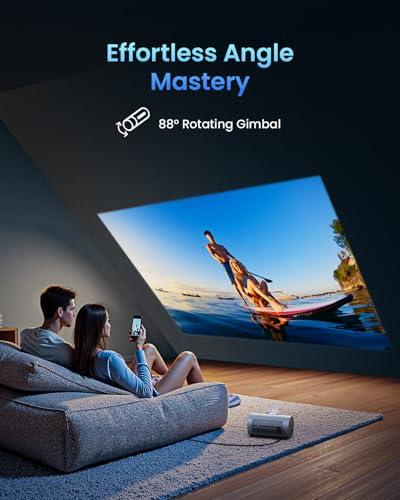
But the real magic happens with its 88-degree rotating gimbal mechanism. This isn't just a marketing gimmick - it fundamentally changes how you use the projector. Want to watch a movie on the ceiling while lying in bed? Simple twist. Need to adjust the angle for a wall projection? Another quick rotation. I found myself constantly amazed at how this simple mechanism eliminated the frustrating setup issues that plague most portable projectors.
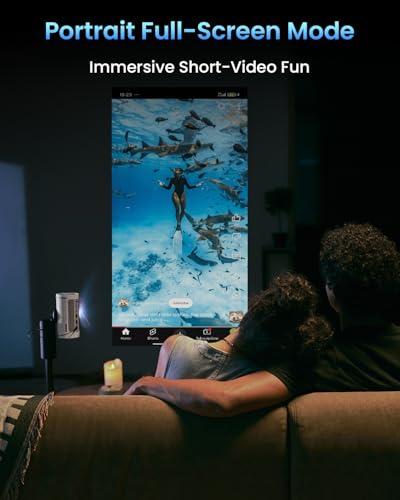
The PicoPlay also introduces what JMGO calls "Vertical Play Mode" - optimization for vertical video content from TikTok, Instagram Reels, and similar platforms. While this might sound niche, it reflects how content consumption has evolved, especially among younger users.
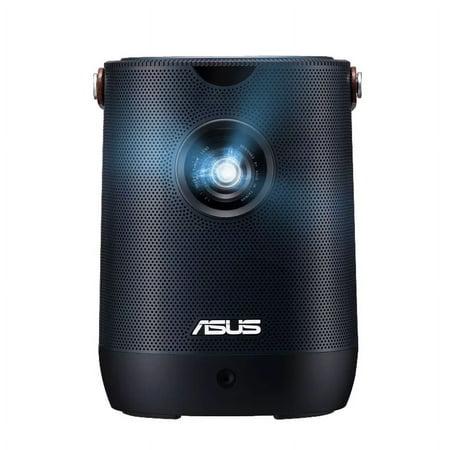
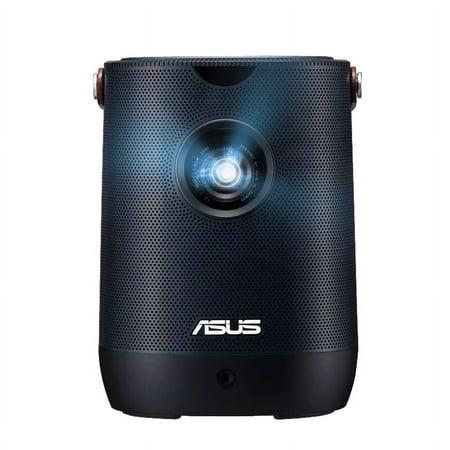
The ASUS ZenBeam L2, released in 2022, takes a more conventional rectangular approach, though "conventional" doesn't mean inferior. At 3.5 pounds and measuring roughly 5.2 × 6.8 × 5.2 inches, it's significantly larger than the PicoPlay, but this size serves a purpose.
ASUS has been refining portable projector technology for years, and the ZenBeam L2 represents their accumulated expertise. The rectangular form factor allows for better heat dissipation, a larger battery compartment, and more robust internal components. It feels like a tool built for regular use rather than occasional novelty.
The design includes thoughtful touches like a built-in carrying handle and a more traditional control layout that many users find intuitive. While it lacks the PicoPlay's innovative rotating mechanism, it compensates with solid engineering and reliable performance.
This is where the two projectors diverge most significantly, and it's probably the most important factor in your decision.
The JMGO PicoPlay doesn't include a built-in battery, instead requiring 65W USB-C Power Delivery. This creates both opportunities and limitations. On the positive side, it keeps the device incredibly light and compact. The absence of a heavy battery contributes significantly to its pocket-sized form factor.
However, this design choice means you need to plan ahead. A 65W power requirement eliminates most standard power banks - you'll need a high-capacity model specifically rated for laptop charging. During my testing, I found this more limiting than JMGO's marketing suggests. While the company provides a 20,000mAh power bank option that delivers about 3 hours of video playback, you're essentially carrying two devices instead of one.
Power Delivery (PD) explained: USB-C PD is a fast-charging standard that can deliver much more power than regular USB. While basic USB might provide 5-10 watts, PD can supply up to 100 watts, enough to power laptops and, in this case, projectors.
The ASUS ZenBeam L2 includes a substantial 65Wh built-in battery providing up to 3.5 hours of continuous playback. This might seem like a small difference from the PicoPlay's external solution, but in practice, it's transformative. Grab the projector and go - no additional planning, no extra cables, no power management stress.
I've used the ZenBeam L2 for backyard movie nights, camping trips, and presentations where power outlets weren't guaranteed. The peace of mind that comes with integrated power cannot be overstated. However, this convenience comes at the cost of weight and bulk - the battery adds significant mass to the overall package.
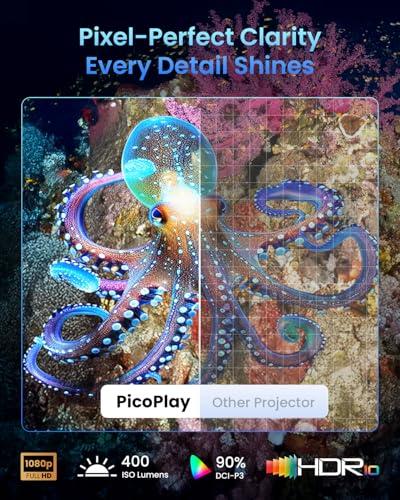
The JMGO PicoPlay produces 400 ISO lumens, while the ASUS ZenBeam L2 delivers 452 ANSI lumens (marketed as 960 LED lumens). The ZenBeam L2 is genuinely brighter, but the difference is less dramatic than the numbers suggest.
In real-world testing, both projectors excel in darkened rooms. The PicoPlay produces surprisingly vibrant images up to about 60 inches diagonally in dark conditions, with acceptable performance up to 80 inches. The ZenBeam L2 maintains image quality slightly better at larger sizes, staying sharp and bright up to about 80-90 inches.
Where the JMGO PicoPlay truly shines is color reproduction. Its coverage of 124% Rec.709 and 90% DCI-P3 color spaces produces remarkably accurate and vibrant colors. Color gamuts define the range of colors a display can reproduce - wider gamuts mean more lifelike images with better color differentiation.
The PicoPlay also supports HDR10, which enhances contrast and color depth in compatible content. While portable projectors rarely match dedicated home theater systems in HDR performance, the PicoPlay handles HDR content better than most in its class.
The ZenBeam L2 covers 120% sRGB, which is excellent for computer content and web media, though not quite as wide as the PicoPlay's cinema-focused color space coverage. Both projectors use LED light sources rated for 25,000-30,000 hours - essentially the lifetime of the device.
For dedicated home theater use, both projectors face the same fundamental limitation: brightness. Neither provides enough light output for rooms with significant ambient light, which limits their use to evening entertainment or rooms with controlled lighting.
The PicoPlay's superior color accuracy and HDR support give it an edge for movie watching, while its rotating gimbal makes ceiling mounting or unusual viewing angles much more practical. I found the PicoPlay particularly appealing for bedroom use, where ceiling projection creates a unique, immersive experience.
The ZenBeam L2's higher brightness and superior audio make it better suited for family movie nights or situations where you can't completely control ambient light. Its traditional form factor also makes it easier to position with standard tripods or projector mounts.
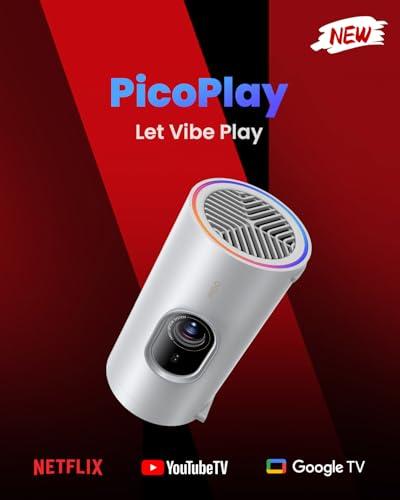
The JMGO PicoPlay runs full Google TV natively, providing direct access to Netflix, YouTube, Amazon Prime Video, Disney+, and other streaming services. This integration eliminates the need for external streaming devices - a significant advantage for true portability.
The interface feels responsive and familiar to anyone who's used Android TV or Chromecast devices. Google Assistant integration allows voice control, and Chromecast support enables easy wireless streaming from phones and tablets. The unique Vertical Play mode automatically optimizes the display for vertical video content, which works surprisingly well for social media content.
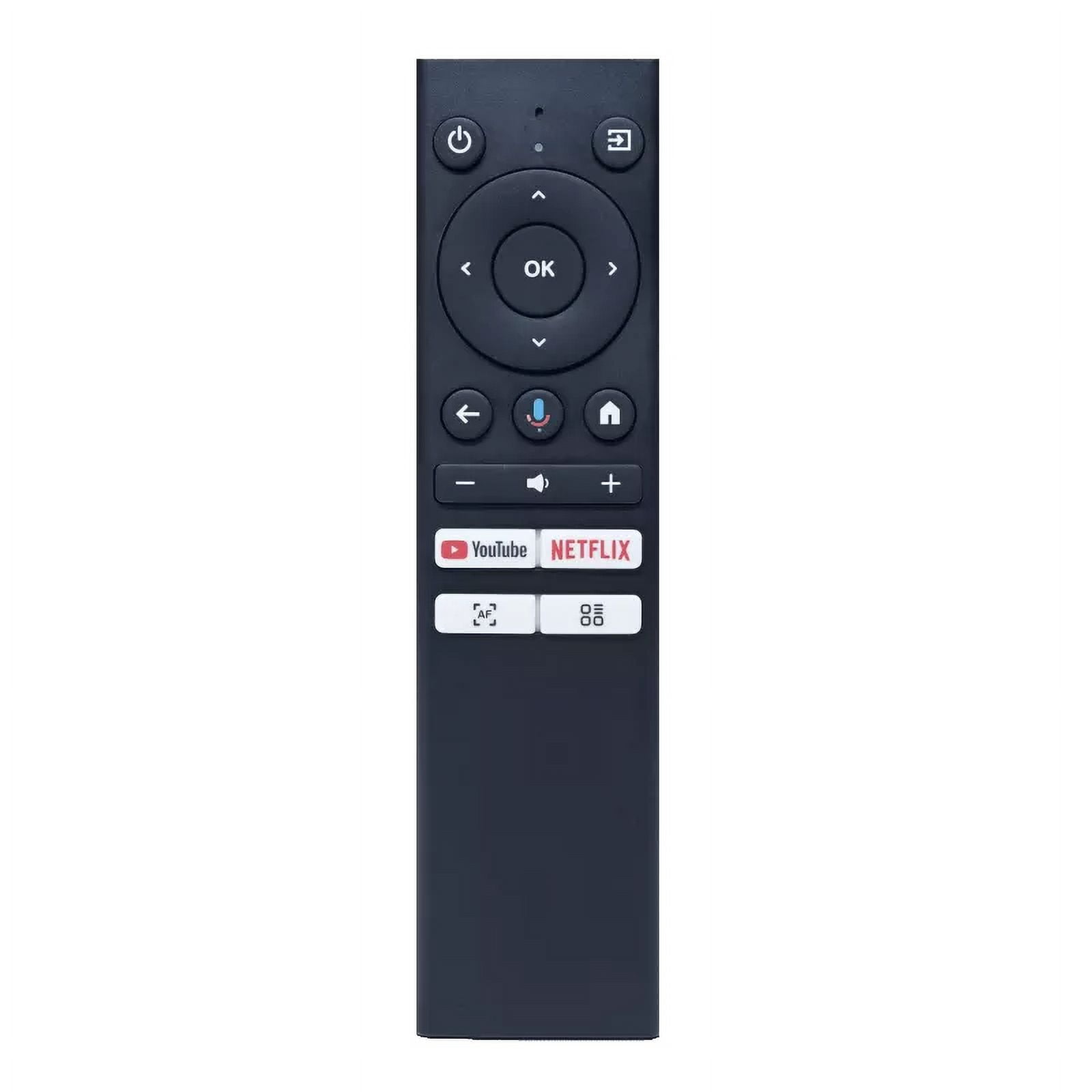
The ASUS ZenBeam L2 bundles an Android TV box rather than integrating smart features directly. This approach has both advantages and disadvantages. The separate box can be upgraded independently, potentially extending the projector's useful life as streaming standards evolve. However, it also means additional cables, setup complexity, and another device to manage.
The bundled Android TV box provides access to the same streaming services, though the experience feels less seamless than the PicoPlay's native integration.
Audio quality often gets overlooked in projector discussions, but it significantly impacts the overall experience. Both projectors include surprisingly capable built-in speakers.
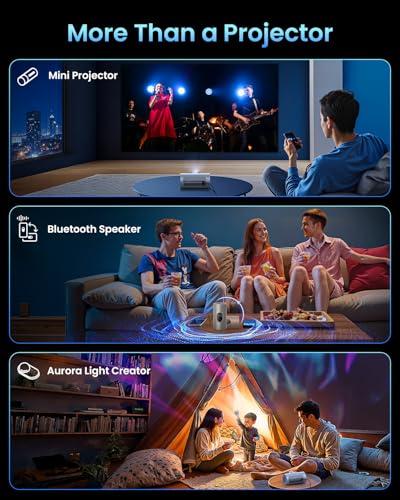
The JMGO PicoPlay includes an 8W speaker that doubles as a Bluetooth speaker when the projector isn't in use. The audio quality exceeds expectations for the device's size, with surprisingly rich bass response. The speaker also integrates with the PicoPlay's ambient lighting feature, creating synchronized light shows that sync with music.
This multi-purpose functionality transforms the PicoPlay into what JMGO calls a "3-in-1 entertainment hub" - projector, Bluetooth speaker, and ambient light system. While this might sound gimmicky, I found the ambient lighting genuinely entertaining for parties or relaxation.
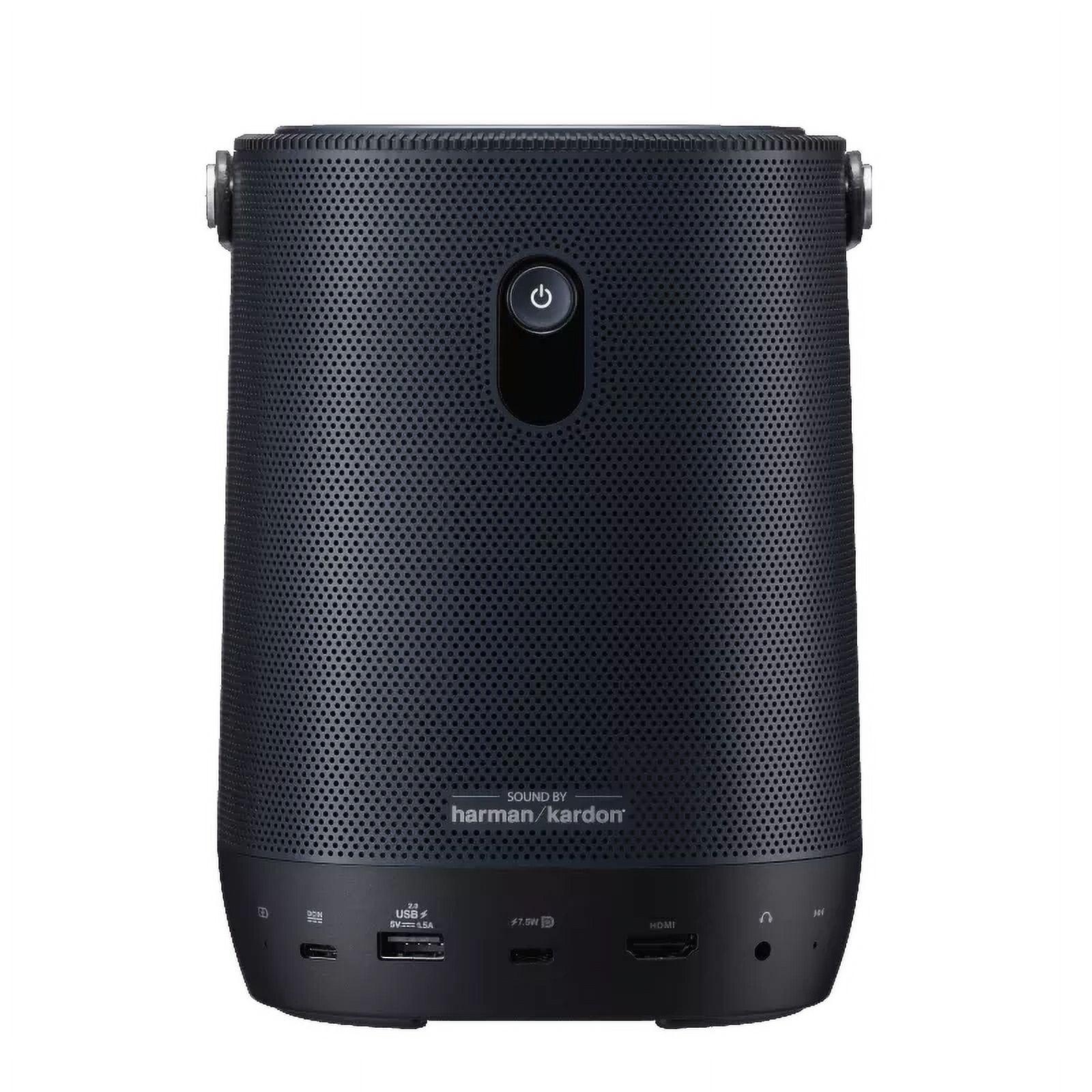
The ASUS ZenBeam L2 features a 10W speaker system developed with Harman Kardon, providing 25% more power and noticeably better audio quality. The larger enclosure allows for better driver design and acoustic tuning, resulting in clearer dialogue and more dynamic range.
For movie watching, the ZenBeam L2's audio advantage becomes apparent. Dialogue sounds clearer, and the overall soundstage feels more expansive. While neither projector eliminates the need for external speakers in serious home theater setups, the ZenBeam L2 comes closer to standalone adequacy.
Modern portable projectors live or die by their ease of setup. Nobody wants to spend 10 minutes adjusting focus and keystone correction every time they want to watch something.
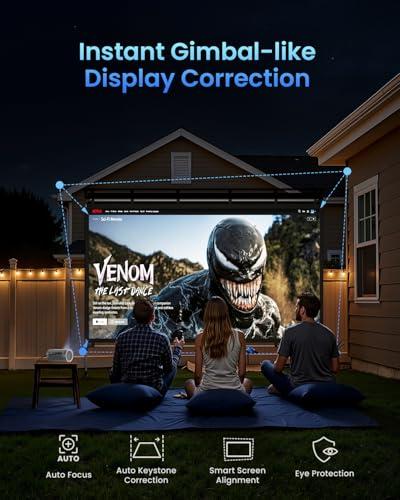
The JMGO PicoPlay includes what the company calls "FlexiSmart" - automated focus, keystone correction, and screen alignment. A Time-of-Flight (ToF) sensor measures distance and automatically adjusts the image, typically completing setup in under 10 seconds.
Time-of-Flight sensors work like miniature radar systems, measuring how long infrared light takes to bounce back from surfaces. This allows precise distance measurement for automatic focus adjustment.
The system also includes eye protection features, automatically dimming or pausing projection if someone walks in front of the lens. Combined with the rotating gimbal, setup becomes almost effortless - position the projector, give it a few seconds to analyze the environment, and start watching.
The ASUS ZenBeam L2 includes automatic keystone correction and obstacle avoidance but requires manual focus adjustment. This isn't necessarily worse - manual focus can sometimes achieve better results than automation - but it does require more user intervention.
The ZenBeam L2 compensates with four-corner geometric correction, allowing precise image adjustment even when the projector isn't perfectly aligned with the screen. This feature proves particularly useful for permanent or semi-permanent installations.
At the time of writing, the JMGO PicoPlay represents exceptional value in the portable projector space. JMGO has positioned it as a premium product with mid-range pricing, making advanced features accessible to a broader audience. The combination of innovative design, comprehensive smart features, and competitive performance creates compelling value.
The ASUS ZenBeam L2 carries a significantly higher price point, reflecting its enterprise-grade build quality and proven reliability. ASUS positions it as a premium solution for users who prioritize consistent performance over cutting-edge features.
Both projectors have seen their prices evolve since launch, with the PicoPlay becoming increasingly attractive as JMGO builds market presence and the ZenBeam L2 maintaining premium positioning through proven performance.
You're looking for the ultimate in portability and don't mind planning power solutions. The PicoPlay excels for travelers, students in dorm rooms, or anyone who values innovative features and compact size above all else. Its Google TV integration makes it perfect for streaming-focused users who want everything built-in.
The rotating gimbal design makes it particularly appealing for bedroom use or situations where you need flexible viewing angles. If you're intrigued by features like vertical video mode or ambient lighting, the PicoPlay offers capabilities you won't find elsewhere.
You prioritize reliability and consistent performance over cutting-edge features. The ZenBeam L2 suits users who need guaranteed 3+ hours of battery life, superior audio quality, or slightly higher brightness for semi-lit rooms.
Its traditional design and proven technology make it ideal for business presentations, family movie nights, or situations where you can't afford technical hiccups. The enterprise-grade build quality also makes it a better choice for frequent handling or travel.
Both projectors succeed in their respective approaches to portable projection. The JMGO PicoPlay pushes boundaries with innovative design and comprehensive smart features, while the ASUS ZenBeam L2 delivers reliable performance with proven technology.
For most users prioritizing value and innovation, the PicoPlay represents the more compelling choice, especially given current pricing dynamics. However, users who need ultimate reliability, longer battery life, or superior audio should seriously consider the ZenBeam L2 despite its higher cost.
The portable projector market continues evolving rapidly, with both companies pushing technological boundaries in different directions. Whichever you choose, you're getting a glimpse into the future of portable entertainment - a future where any space can become your personal cinema.
| JMGO PicoPlay 1080P Smart Portable Projector | ASUS ZenBeam L2 Smart Portable LED Projector |
|---|---|
| Brightness - Critical for viewing in different lighting conditions | |
| 400 ISO lumens (best in dark rooms, acceptable up to 60" screen) | 452 ANSI lumens (2.4× brighter, works in semi-lit rooms up to 80" screen) |
| Design & Portability - Determines true mobility and ease of transport | |
| Cylindrical design with 88° rotating gimbal, 740g (1.6 lbs), travel mug size | Traditional rectangular design, 1.57kg (3.5 lbs), requires dedicated carrying case |
| Power Solution - Affects true portability and usage flexibility | |
| No built-in battery, requires 65W USB-C PD (needs powerful power bank) | Built-in 65Wh battery provides 3.5 hours playback (grab-and-go convenience) |
| Smart Features - Impact on setup complexity and streaming access | |
| Native Google TV with Netflix, YouTube, Prime Video built-in | Bundled Android TV box (separate device, more cables but upgradeable) |
| Resolution & Image Quality - Core visual performance | |
| Native 1080p, 124% Rec.709 color gamut, HDR10 support | Native 1080p, 120% sRGB color gamut, 4K compatibility |
| Audio System - Important for complete entertainment experience | |
| 8W Bluetooth speaker with Dolby Audio, doubles as music speaker | 10W Harman Kardon system (25% more powerful, better movie dialogue) |
| Setup Automation - Affects daily usability and convenience | |
| FlexiSmart system: auto-focus, keystone, screen alignment in seconds | Auto keystone correction, manual focus adjustment required |
| Unique Features - Differentiating capabilities that set each apart | |
| Vertical Play mode for TikTok/Instagram, ambient lighting with music sync | Obstacle avoidance, four-corner geometric correction, enterprise-grade build |
| Projection Range - Flexibility for different room sizes | |
| 40-180" screen size, 1.2:1 throw ratio, ceiling projection via gimbal | 30-120" screen size, 1.2:1 throw ratio, traditional positioning |
| Connectivity Options - Determines device compatibility and flexibility | |
| HDMI 2.1 (ARC), USB-C, USB-A, Google Cast wireless streaming | HDMI, USB-C (DisplayPort), USB-A, 3.5mm audio output |
The ASUS ZenBeam L2 is brighter at 452 ANSI lumens compared to the JMGO PicoPlay's 400 ISO lumens. This makes the ZenBeam L2 better for semi-lit rooms and larger screen sizes up to 80-90 inches. For dedicated home theater setups in dark rooms, both projectors perform well, though the ZenBeam L2 maintains image quality better at larger projection sizes.
The JMGO PicoPlay is significantly more portable, weighing only 740g (1.6 lbs) with a compact cylindrical design that fits in large pockets. The ASUS ZenBeam L2 weighs 1.57kg (3.5 lbs) and requires a carrying case. If ultimate portability is your priority, the PicoPlay is the clear winner.
No, only the ASUS ZenBeam L2 has a built-in 65Wh battery providing 3.5 hours of playback. The JMGO PicoPlay requires external power via 65W USB-C, though you can use a compatible power bank for portability. The ZenBeam L2 offers true grab-and-go convenience without power planning.
The JMGO PicoPlay has superior smart features with native Google TV built-in, providing direct access to Netflix, YouTube, and Prime Video without additional devices. The ASUS ZenBeam L2 includes a separate Android TV box, which works well but requires extra cables and setup. The PicoPlay offers a more streamlined smart TV experience.
Both offer native 1080p resolution, but the JMGO PicoPlay has superior color accuracy with 124% Rec.709 coverage and HDR10 support, making it better for movies. The ASUS ZenBeam L2 covers 120% sRGB and offers 4K compatibility. For home theater use, the PicoPlay's color science and HDR support provide more cinematic visuals.
The ASUS ZenBeam L2 is better for outdoor use due to its built-in battery eliminating power concerns and slightly higher brightness for dusk viewing. While the JMGO PicoPlay can work outdoors with a power bank, the ZenBeam L2's self-contained design makes it more practical for camping or backyard events.
The ASUS ZenBeam L2 has better audio with its 10W Harman Kardon system, providing clearer dialogue and more dynamic range for movies. The JMGO PicoPlay has an 8W speaker that doubles as a Bluetooth speaker with ambient lighting sync. For serious movie watching, the ZenBeam L2 delivers superior audio quality.
The JMGO PicoPlay sets up much faster with its FlexiSmart system providing automatic focus, keystone correction, and screen alignment in under 10 seconds. The rotating gimbal also eliminates manual positioning. The ASUS ZenBeam L2 requires manual focus adjustment, though it includes auto keystone correction. The PicoPlay wins for convenience.
Neither projector works well in bright rooms due to their moderate brightness levels. The ASUS ZenBeam L2 performs slightly better in semi-lit conditions thanks to higher brightness, while the JMGO PicoPlay requires darker environments for optimal viewing. Both are designed for evening entertainment or controlled lighting situations.
The JMGO PicoPlay typically offers better value with premium features like Google TV, HDR10, and innovative design at a competitive price point. The ASUS ZenBeam L2 costs more but provides built-in battery convenience and proven reliability. The PicoPlay appeals to value-conscious buyers wanting cutting-edge features.
The JMGO PicoPlay offers unique features like Vertical Play mode for TikTok content, 88° rotating gimbal, and ambient lighting that syncs with music. The ASUS ZenBeam L2 provides obstacle avoidance, four-corner geometric correction, and enterprise-grade reliability. The PicoPlay focuses on innovation while the ZenBeam L2 emphasizes practical functionality.
For dedicated home theater use, the JMGO PicoPlay edges ahead with superior color accuracy, HDR10 support, and ceiling projection capability via its rotating gimbal. However, the ASUS ZenBeam L2 offers better audio quality and slightly higher brightness for larger screens. Choose the PicoPlay for color quality and convenience, or the ZenBeam L2 for audio performance and brightness.
We've done our best to create useful and informative comparisons to help you decide what product to buy. Our research uses advanced automated methods to create this comparison and perfection is not possible - please contact us for corrections or questions. These are the sites we've researched in the creation of this article: techbuzzireland.com - youtube.com - newatlas.com - projectorcentral.com - youtube.com - thegadgetflow.com - youtube.com - global.jmgo.com - youtube.com - bestbuy.com - projector-database.com - notebookcheck.net - eu.jmgo.com - projectorcentral.com - youtube.com - mezha.media - asus.com - asus.com - youtube.com - projectorreviews.com - asus.com - digitalcameraworld.com - youtube.com - asus.com - digitalcitizen.life - tweakreviews.com - shop.asus.com - edgeup.asus.com - asus.com - projectorcentral.com - asus.com - uk.store.asus.com - asus.com - thegadgetflow.com - bhphotovideo.com - asus.com - asus.com

Privacy Policy
Terms and Conditions - Affiliate Policy
Home Security
© Copyright 2008-2026.
11816 Inwood Rd #1211, Dallas, TX 75244