

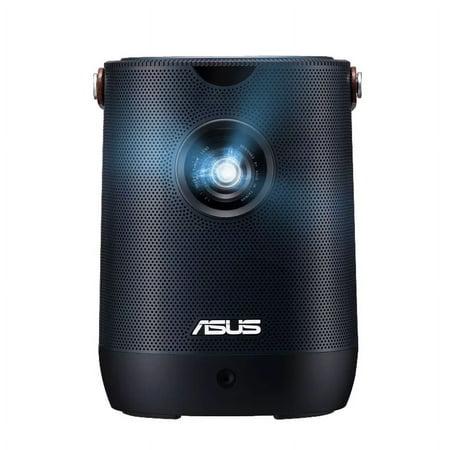
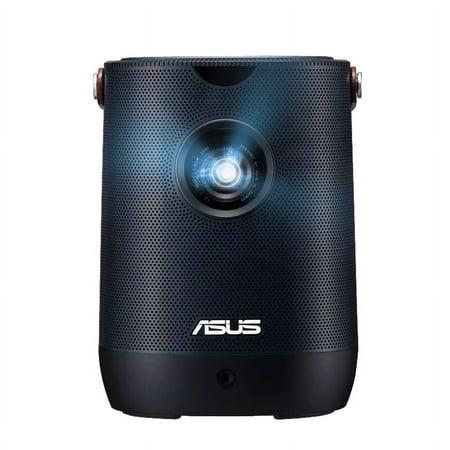
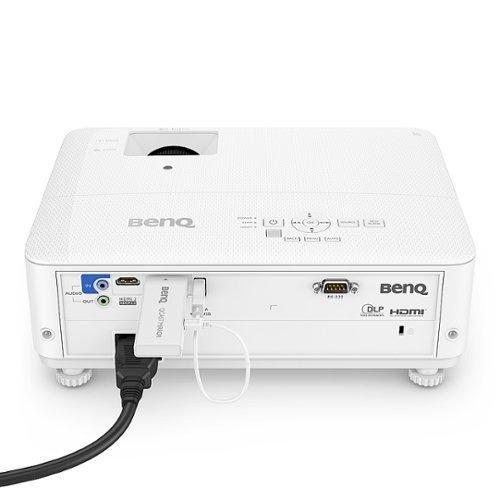
When it comes to transforming your living space into an immersive entertainment hub, projectors offer a compelling alternative to traditional TVs. Two standout options – the ASUS ZenBeam L2 Smart Portable LED Projector and the BenQ TH685P 1080p HDR Gaming Projector – represent distinctly different approaches to projection technology. Released in 2022 and 2021 respectively, these projectors exemplify the evolution of two specialized categories: portable lifestyle projectors and dedicated gaming machines.
But which one deserves your hard-earned money? Let's explore these projectors in depth, breaking down their strengths, weaknesses, and ideal use cases to help you make an informed decision.
Projectors have undergone remarkable transformations in recent years. Traditional bulky projectors with fragile, expensive lamps have given way to more specialized designs targeting specific user needs. This shift has created distinct categories that prioritize different aspects of performance.
The ASUS ZenBeam L2 exemplifies the modern portable projector – compact, battery-powered, and featuring smart capabilities that eliminate the need for additional devices. Meanwhile, the BenQ TH685P represents the specialized gaming projector category, where input lag (the delay between sending a signal and seeing it displayed) and refresh rates take precedence over portability.
When evaluating projectors today, we need to consider more than just resolution and brightness. Key factors include:
Let's examine how our contestants stack up against these critical factors.
The ASUS ZenBeam L2 was designed with versatility and convenience at its core. Released in mid-2022, it exemplifies the latest generation of portable projectors that aim to be complete entertainment systems rather than just display devices.
Physically, the ZenBeam L2 embraces a compact cube-like design measuring just 132 × 172 × 132 mm and weighing a mere 1.57 kg. This makes it approximately the size of a lunch box – easily transportable in a backpack or small bag. Its aesthetic is clean and modern, with a fabric covering that helps it blend into home décor rather than screaming "tech device."
Inside, the ZenBeam L2 utilizes an LED light source rated for a remarkable 30,000 hours of use. This represents a significant evolution from traditional lamp-based projectors. To put this in perspective, you could use this projector for 4 hours every day for over 20 years before the light source would need replacement. This LED technology also enables instant on/off functionality without the warm-up or cool-down periods required by traditional lamp projectors.
Perhaps the most innovative hardware feature is the built-in 65Wh battery, providing up to 3.5 hours of playback without a power connection. This is sufficient for most movies and binge-watching sessions, making it truly portable in a way most projectors simply aren't.
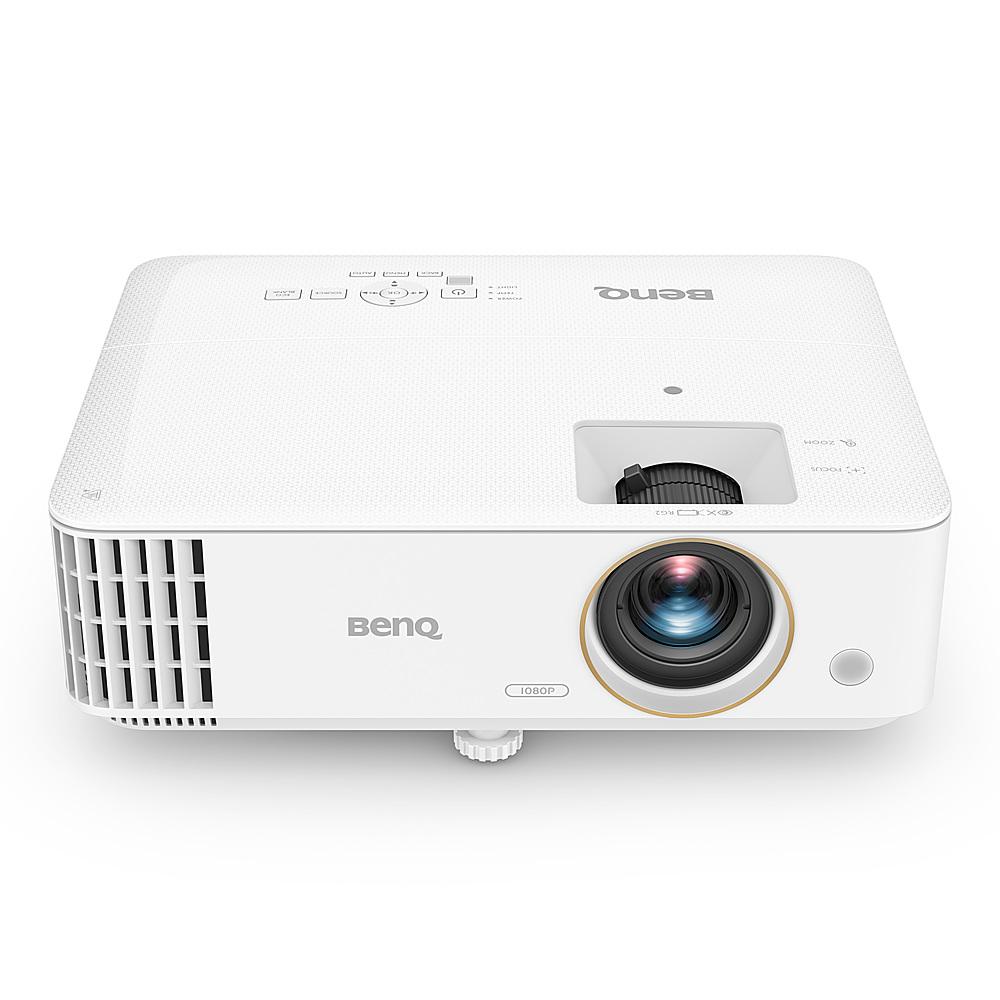
The BenQ TH685P, released in late 2021, takes a dramatically different approach. It's designed for performance above all else, targeting gamers who demand responsive, bright projection for competitive play.
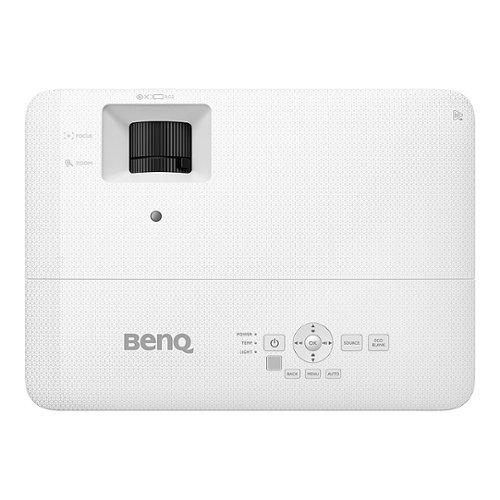
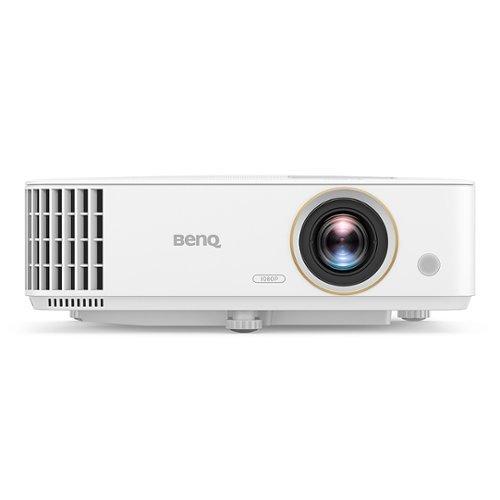
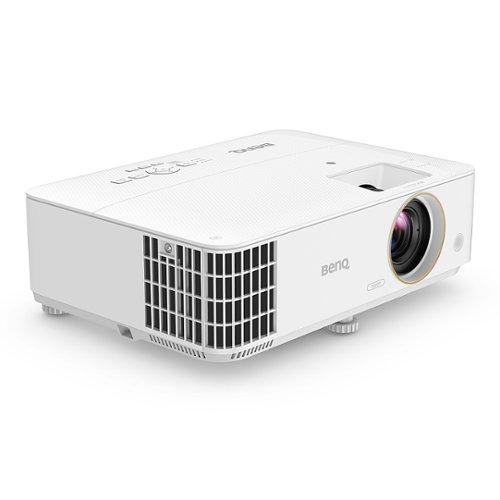
With dimensions of 12.28" × 4.33" × 8.86" and weighing 6.2 lbs, the TH685P is substantially larger than the ZenBeam L2. The design is functional rather than stylish, with cooling vents and controls positioned for practicality in a permanent or semi-permanent installation.
Under the hood, the TH685P uses a traditional UHP (Ultra High Performance) lamp rated for up to 15,000 hours in its most economical mode – half the lifespan of the ZenBeam's LED source. This lamp-based approach allows for significantly higher brightness output but comes with trade-offs in heat production, power consumption, and potential for lamp replacement costs down the line.
Where the TH685P truly shines is in its specialized gaming hardware. The internal processing is optimized for minimal input lag, achieving an impressive 8.3ms at 1080p/120Hz. To understand why this matters: human perception can detect delays as low as 13ms, so the TH685P effectively eliminates perceivable lag between controller input and on-screen action – crucial for competitive gaming.
One of the most dramatic differences between these projectors is their brightness output:
This nearly 9-fold difference in ANSI lumens (the standardized measurement of projector brightness) represents a fundamental distinction in how these projectors can be used.
The BenQ TH685P produces enough light to maintain a vibrant image even with some ambient light present. In practical terms, this means you can use it in a living room during the day with curtains drawn, or with some lights on for social gaming sessions. The image will remain vibrant and colorful.
Conversely, the ASUS ZenBeam L2 requires much more controlled lighting conditions. While its 400 ANSI lumens is impressive for a battery-powered portable projector, it's best used in dimmed rooms or after sunset to achieve optimal image quality. ASUS quotes a figure of 960 "LED lumens," but it's important to understand that LED lumens is a manufacturer-specific measurement that typically yields higher numbers than the standardized ANSI lumen measurement.
Both projectors offer native 1920×1080 (Full HD) resolution, which remains the sweet spot for balancing detail and performance. While 4K projectors exist, they typically command significantly higher prices.
The image processing capabilities reveal interesting differences:
The contrast ratio difference is particularly striking – the TH685P's 10,000:1 ratio versus the ZenBeam's 400:1. Contrast ratio measures the difference between the brightest whites and darkest blacks a projector can produce. Higher contrast creates more depth, detail, and visual impact, especially in dark scenes. This makes the BenQ significantly better for content with dark scenes like horror movies or games with shadowy environments.
Color representation is more nuanced. The ZenBeam L2 offers wider color gamut coverage, but the TH685P's 95% Rec.709 coverage is specifically calibrated for accurate video reproduction. For most users, both will provide pleasing color, though the ZenBeam might produce slightly more vibrant (if less accurate) colors.
If gaming is your priority, the differences become even more pronounced:
The BenQ's performance here is exceptional – professional esports monitors typically aim for input lag under 5ms, so the TH685P's 8.3ms puts it remarkably close to dedicated gaming monitor territory. For context, most TVs have input lag between 15-30ms, and standard projectors often exceed 50ms.
The 120Hz refresh rate support means the BenQ can display up to 120 frames per second, creating smoother motion and more responsive gameplay compared to the standard 60Hz of the ZenBeam. This difference is particularly noticeable in fast-paced games like first-person shooters or racing games.
The ASUS ZenBeam L2 excels in ease of use, incorporating several technologies that automate the setup process:
Setting up the ZenBeam typically takes less than a minute – place it down, power it on, and the projector handles the rest. This "point and play" capability represents a major advance over traditional projectors that require manual adjustment.
The BenQ TH685P offers a more traditional setup experience, with manual zoom, focus, and keystone adjustment. While this requires more effort initially, it provides greater precision for permanent installations. Its 1.3x zoom lens and throw ratio of 1.13:1 to 1.46:1 give more flexibility in terms of placement distance relative to screen size.
For context, the ZenBeam L2 has a fixed throw ratio of 1.2:1, meaning to project a 100-inch image, it needs to be positioned about 2.7 meters from the screen. The BenQ can achieve the same 100-inch image from between 2.5 to 3.2 meters away thanks to its zoom capability.
Modern projectors increasingly incorporate smart features, eliminating the need for external streaming devices:
The ZenBeam's included Android TV functionality represents significant added value, saving the cost of a separate streaming device. The Light Wall feature also deserves mention – it allows the projector to function as ambient lighting when not being used for video content, displaying animated scenes like a fireplace or ocean waves.
The BenQ takes a more specialized approach by focusing on connectivity rather than built-in smarts. Its dual HDMI inputs allow for connecting multiple devices simultaneously (like a gaming console and a streaming device), while the VGA input supports older computers or legacy devices.
Sound quality often gets overlooked in projector reviews, but it's a crucial aspect of the viewing experience:
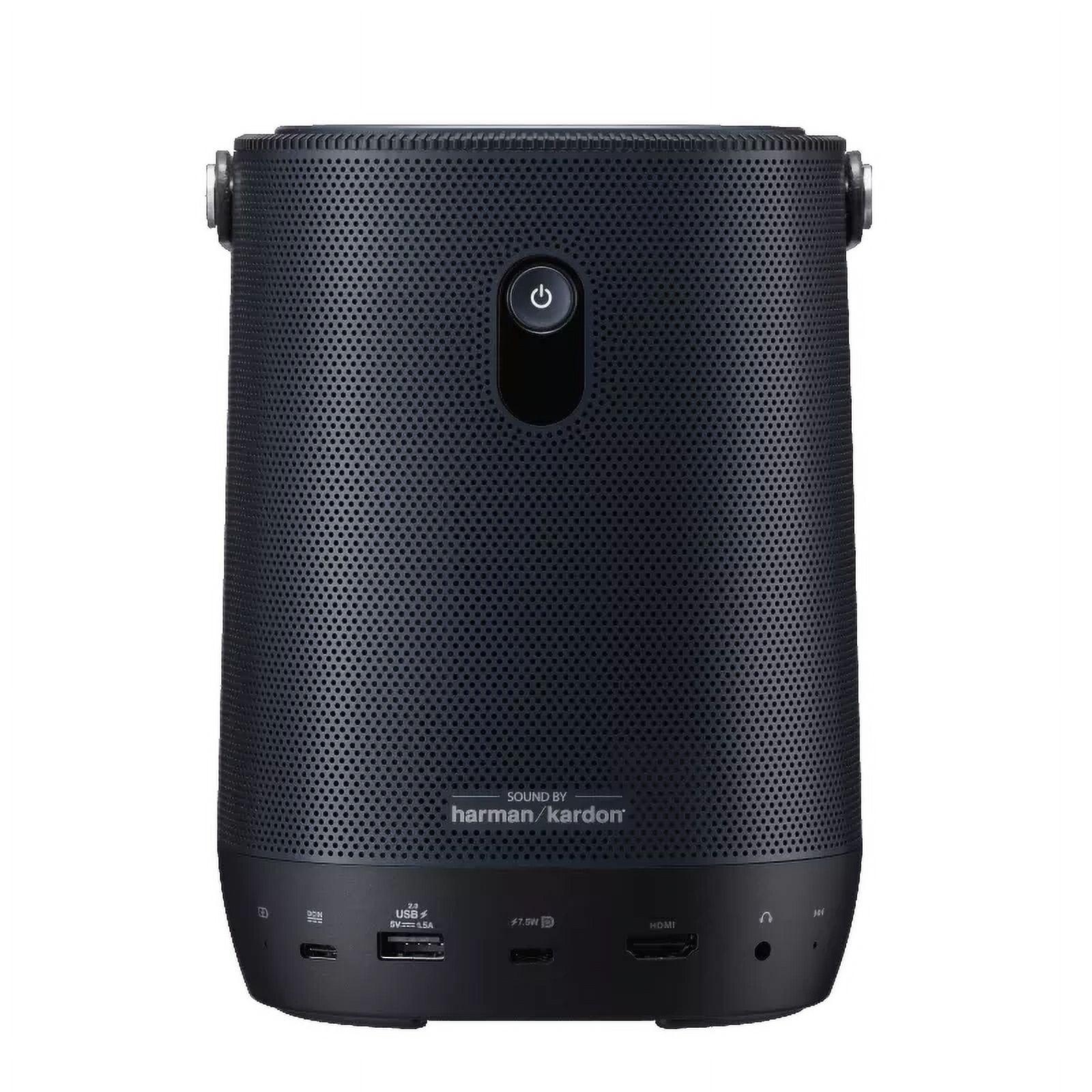
The difference here is substantial. The ZenBeam's Harman Kardon speaker delivers richer, fuller sound with better bass response and clarity. It's capable of filling a small to medium-sized room with decent audio quality that's perfectly adequate for casual viewing.
The BenQ's 5W speaker is functional but limited, providing clear dialogue but lacking depth for music or cinematic sound effects. It includes a Game Sound Mode that emphasizes certain frequencies to make footsteps and action sounds more prominent – useful for competitive gaming but not ideal for movie watching.
For serious home theater use, both would benefit from external speakers or a soundbar, but the ZenBeam is significantly more capable as a standalone audio-visual device.
The fundamental technology difference between these projectors – LED versus lamp – has significant implications for long-term ownership:
For someone using their projector 10 hours weekly, the BenQ's lamp might need replacement in 8-10 years (in eco mode), while the ASUS should continue functioning for 20+ years. This represents a hidden cost of ownership that favors the ASUS ZenBeam L2.
However, it's worth noting that LED brightness does gradually diminish over time. While the light source won't fail outright like a lamp, after many thousands of hours, the ZenBeam will become progressively dimmer – a particular concern given its already modest brightness.
Since these projectors were released in 2021-2022, the technology landscape has evolved somewhat:
For portable projectors like the ZenBeam L2, we've seen incremental improvements in brightness efficiency and battery capacity in newer models from competitors. However, the ZenBeam L2 remains competitive in its category with its combination of features and performance.
In the gaming projector space occupied by the TH685P, the most significant development has been the increasing availability of 4K gaming projectors with low input lag, though typically at substantially higher price points. The TH685P remains one of the most responsive 1080p gaming projectors on the market.
The ASUS ZenBeam L2 and BenQ TH685P target different users with different priorities, making direct value comparisons challenging. Instead, let's evaluate them based on how well they serve their intended purposes:
For the ASUS ZenBeam L2, you're paying a premium for portability, battery power, and convenience features. Its value proposition centers on flexibility of use rather than raw performance metrics. If you'll take advantage of its portability – using it in different rooms, taking it to friends' houses, or enjoying outdoor movie nights – the value is excellent. If it will remain stationary, you might be overpaying for features you won't use.
The BenQ TH685P delivers exceptional value for gamers, offering response times approaching dedicated gaming monitors but with image sizes no monitor can match. Its high brightness also makes it versatile for different lighting conditions. However, if gaming isn't your priority, you're paying for specialized features that won't benefit your viewing experience.
Choose the ASUS ZenBeam L2 if:
Choose the BenQ TH685P if:
For home theater enthusiasts specifically, the decision largely hinges on your viewing environment and content preferences. The BenQ TH685P's superior brightness and contrast make it better for dedicated home theater spaces, especially if ambient light control is imperfect. The ASUS ZenBeam L2 can certainly serve as a home theater projector in properly darkened rooms, but its strengths lie elsewhere.
The ASUS ZenBeam L2 and BenQ TH685P represent two different philosophies in projection technology. Neither is objectively "better" – they simply prioritize different aspects of the viewing experience.
The ZenBeam L2 embraces the future of projectors as flexible, all-in-one entertainment devices that can transform any space into a temporary theater. Its battery power and auto-adjustment features eliminate traditional projector pain points, making projection technology accessible to casual users.
The TH685P holds to a more specialized vision, focusing on optimizing the core projection experience for gamers with class-leading response times and brightness that ensures visibility in various conditions. It sacrifices convenience features to deliver performance where it matters most for its target audience.
Your ideal choice depends entirely on how you plan to use your projector. By understanding the strengths and limitations of each approach, you can select the projector that will best transform your viewing experience for years to come.
| ASUS ZenBeam L2 Smart Portable LED Projector | BenQ TH685P 1080p HDR Gaming Projector |
|---|---|
| Product Category - Defines primary use case and design priorities | |
| Portable lifestyle projector with smart features | Dedicated gaming projector with high brightness |
| Brightness - Critical for visibility in various lighting conditions | |
| 400 ANSI lumens (960 LED lumens) - requires dim lighting | 3,500 ANSI lumens - works well even with ambient light |
| Resolution - Determines image clarity and detail | |
| 1920x1080 (Full HD) with 4K compatibility | 1920x1080 (Full HD) with 4K compatibility |
| Contrast Ratio - Affects image depth and black levels | |
| 400:1 - modest contrast suitable for casual viewing | 10,000:1 - excellent contrast for dynamic content |
| Color Accuracy - Impacts color reproduction quality | |
| 120% sRGB color gamut - vibrant, slightly oversaturated colors | 95% Rec.709 color space - accurate video color reproduction |
| Gaming Performance - Critical for responsive gameplay | |
| Standard input lag (not specified, likely 30-50ms), 60Hz | 8.3ms input lag at 120Hz - exceptional for competitive gaming |
| Portability - Affects where and how you can use it | |
| 1.57kg (3.46lbs), battery-powered (3.5 hours), highly portable | 6.2lbs, requires constant power, semi-portable design |
| Image Size Range - Determines flexibility of viewing distance | |
| 30" - 120" projection size | 30" - 300" projection size |
| Smart Features - Convenience for content access | |
| Included Android TV box with streaming apps | No smart features, requires external devices |
| Audio Quality - Important if not using external speakers | |
| 10W Harman Kardon speaker - good standalone audio | 5W mono speaker - functional but limited |
| Light Source Technology - Affects maintenance and lifespan | |
| LED rated for 30,000 hours - no lamp replacement needed | Lamp rated for up to 15,000 hours - eventual replacement required |
| Auto-Adjustment Features - Simplifies setup process | |
| Auto focus, auto keystone, obstacle avoidance | Manual focus, manual keystone adjustment |
| Connectivity Options - Determines device compatibility | |
| HDMI, USB-C (DisplayPort), USB-A, 3.5mm audio out | Dual HDMI 2.0, VGA input, USB port (power) |
| Special Features - Unique capabilities beyond core functions | |
| ASUS Light Wall ambient lighting modes, battery power | Game Mode, Game Sound Mode, 3D support |
| Best For - Ideal use cases based on strengths | |
| Portable entertainment, multiple locations, ease of use | Gaming, permanent home theater, ambient light environments |
The BenQ TH685P 1080p HDR Gaming Projector is significantly brighter at 3,500 ANSI lumens compared to the ASUS ZenBeam L2 Smart Portable LED Projector at 400 ANSI lumens (960 LED lumens). This makes the BenQ TH685P much better for rooms with ambient light, while the ASUS ZenBeam L2 requires dimmer lighting conditions for optimal viewing.
The BenQ TH685P is specifically designed for gaming with an exceptional 8.3ms input lag at 120Hz and dedicated gaming features. The ASUS ZenBeam L2 doesn't specify gaming performance but likely has standard input lag (30-50ms), making the BenQ TH685P the clear choice for serious gamers who need responsive gameplay.
Both projectors have built-in speakers, but the ASUS ZenBeam L2 offers superior audio with a 10W Harman Kardon speaker compared to the BenQ TH685P's 5W mono speaker. For casual viewing, the ZenBeam L2 provides adequate sound quality on its own, while the TH685P would benefit from external speakers for a better audio experience.
The ASUS ZenBeam L2 is significantly more portable, weighing just 1.57kg with a compact design and built-in battery providing 3.5 hours of playback. The BenQ TH685P weighs 6.2lbs, has no battery, and requires constant power connection, making the ASUS ZenBeam L2 the clear choice for transportable entertainment.
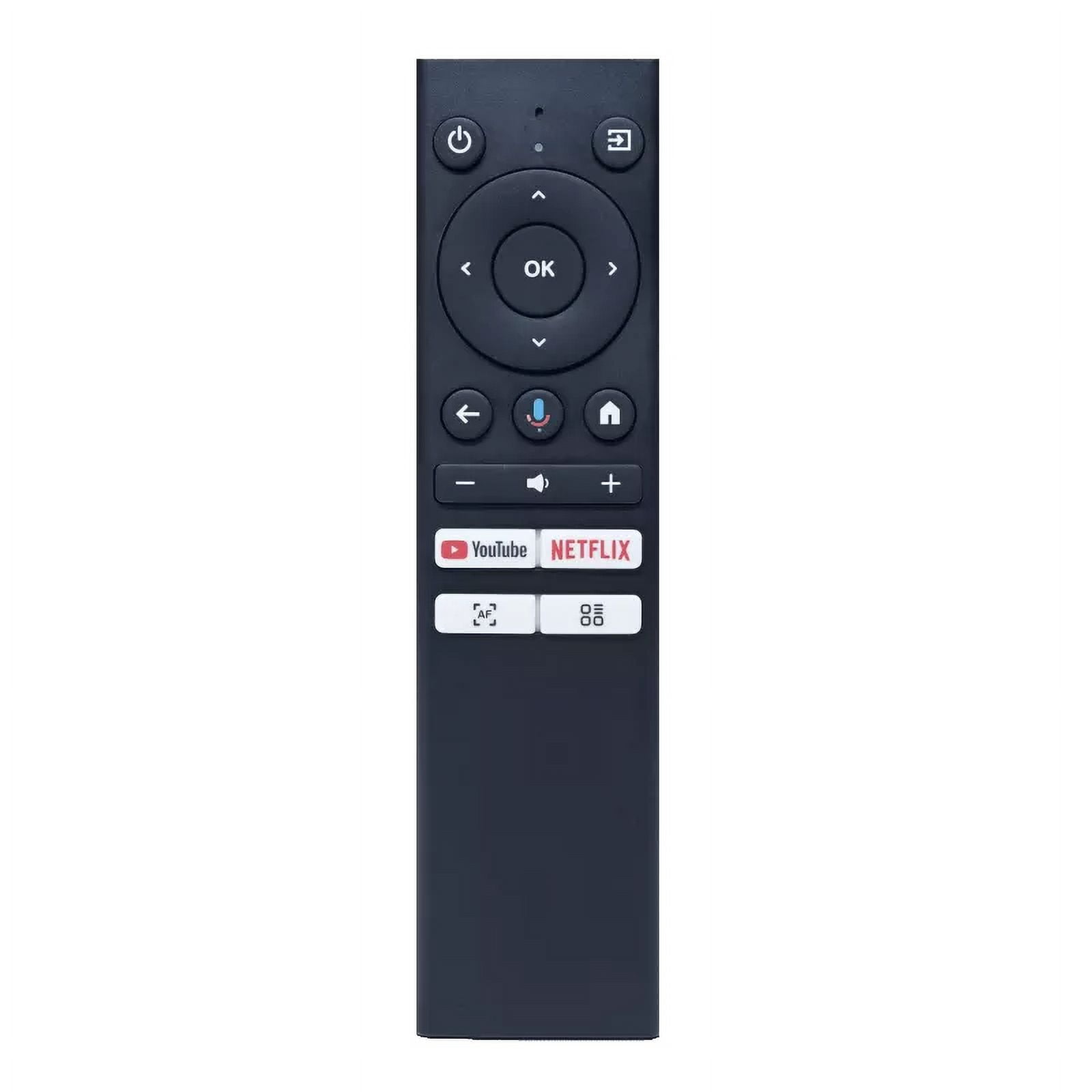
The ASUS ZenBeam L2 comes with an Android TV box featuring pre-loaded streaming apps like Netflix and YouTube. The BenQ TH685P doesn't include any built-in smart features and requires external devices like streaming sticks or game consoles for content. If smart functionality is important, the ZenBeam L2 offers a more complete package.
Both the ASUS ZenBeam L2 and BenQ TH685P offer 1080p Full HD resolution, but the BenQ provides superior contrast (10,000:1 vs 400:1) for better detail in dark scenes. The ASUS has slightly better color coverage (120% sRGB vs 95% Rec.709), but overall, the BenQ delivers better image quality, especially for content with dark scenes.
For a dedicated home theater, the BenQ TH685P is generally better suited with its higher brightness, superior contrast ratio, and larger maximum image size (up to 300"). The ASUS ZenBeam L2 can work in a fully darkened home theater room but is more limited in image size (up to 120") and requires controlled lighting conditions.
The ASUS ZenBeam L2 uses an LED light source rated for 30,000 hours, which means no lamp replacement for the life of the projector for most users. The BenQ TH685P uses a traditional lamp rated for up to 15,000 hours in eco mode, which will eventually require replacement at additional cost, making the ASUS more economical for long-term ownership.
The ASUS ZenBeam L2 features automatic setup with auto focus, auto keystone correction, and obstacle avoidance technology for quick "point and play" operation. The BenQ TH685P requires manual adjustments for focus, zoom, and keystone correction. For convenience and ease of use, the ASUS ZenBeam L2 offers a much simpler setup experience.
The ASUS ZenBeam L2 is better suited for outdoor use with its battery power allowing up to 3.5 hours of playback without requiring an electrical outlet. The BenQ TH685P needs constant power and is much brighter, which could be beneficial after dark but makes it less practical for outdoor setups unless you have power available.
The BenQ TH685P offers dual HDMI 2.0 inputs and VGA for legacy devices, allowing multiple sources to be connected simultaneously. The ASUS ZenBeam L2 provides HDMI, USB-C with DisplayPort, USB-A, and a 3.5mm audio output. If you need to connect multiple devices at once, the BenQ has an advantage, while the ASUS offers more modern connection types.
Value depends on your primary use case. The ASUS ZenBeam L2 offers better value for those prioritizing portability, battery power, smart features, and ease of use. The BenQ TH685P provides superior value for gamers and home theater enthusiasts who need higher brightness, contrast, and gaming performance. Choose based on which features matter most for your specific needs.
We've done our best to create useful and informative comparisons to help you decide what product to buy. Our research uses advanced automated methods to create this comparison and perfection is not possible - please contact us for corrections or questions. These are the sites we've researched in the creation of this article: projectorcentral.com - youtube.com - mezha.media - asus.com - asus.com - youtube.com - projectorreviews.com - asus.com - digitalcameraworld.com - youtube.com - asus.com - digitalcitizen.life - tweakreviews.com - shop.asus.com - edgeup.asus.com - asus.com - projectorcentral.com - asus.com - uk.store.asus.com - asus.com - thegadgetflow.com - bhphotovideo.com - asus.com - asus.com - youtube.com - projectorcentral.com - androidguys.com - bhphotovideo.com - techradar.com - newegg.com - projectorcentral.com - cnet.com - staples.com - cdw.com - youtube.com - shi.com - touchboards.com - projectorcentral.com - youtube.com - iconicmicro.com - adorama.com - publicsector.shidirect.com - adorama.com

Privacy Policy
Terms and Conditions - Affiliate Policy
Home Security
© Copyright 2008-2026.
11816 Inwood Rd #1211, Dallas, TX 75244