

The dream of carrying a movie theater in your backpack has become surprisingly achievable in recent years. Portable projectors have evolved from dim, low-resolution curiosities into legitimate entertainment powerhouses that can transform any wall into a serviceable screen. Unlike their bulkier traditional counterparts that typically weigh 10+ pounds and require permanent installation, modern portable projectors prioritize convenience without completely sacrificing performance.
These compact devices have found their audience among frequent travelers, outdoor entertainment enthusiasts, and business professionals who need presentation capabilities on the go. According to industry reports, the portable projector market has grown steadily since 2020, accelerated by pandemic-era home entertainment needs and continuing with the rising popularity of outdoor gatherings.
What's particularly interesting about this category in 2023 is how manufacturers are approaching the balance between portability and performance. The ASUS ZenBeam L2 and BenQ GS50, both released in 2023, represent two different philosophies in addressing this challenge.
Before diving into our specific contenders, let's establish what matters most when shopping for a portable projector:
Brightness is perhaps the most critical factor, measured in ANSI lumens (a standardized brightness measurement). Higher numbers mean better visibility in ambient light. For context, traditional home theater projectors often offer 2,000+ ANSI lumens, while portable models typically range from 200-600 ANSI lumens.
Resolution determines image sharpness. Full HD (1920×1080) has become the standard minimum for a good viewing experience, though some budget options still use 720p.
Portability factors include physical dimensions, weight, and crucial battery life for truly wireless use.
Durability becomes especially important for outdoor use, with features like water resistance increasingly common.
Smart features have become expected, with integrated streaming capabilities reducing the need for external devices.
Audio quality matters significantly since external speakers often defeat the purpose of portability.
And of course, price-to-performance ratio ultimately determines value.
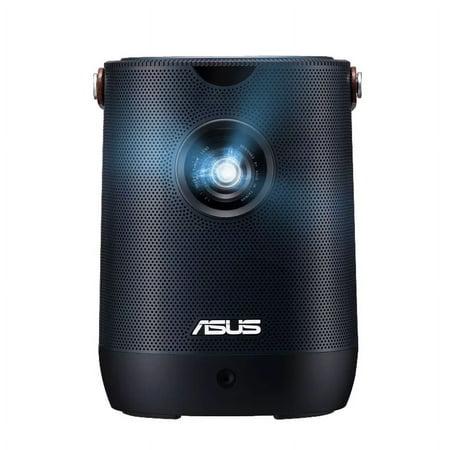
The ASUS ZenBeam L2 (priced around $792) made its debut at CES 2023 and became available to consumers in October 2023. It represents ASUS's premium offering in the portable projector space, focusing on sleek design and integrated smart features.
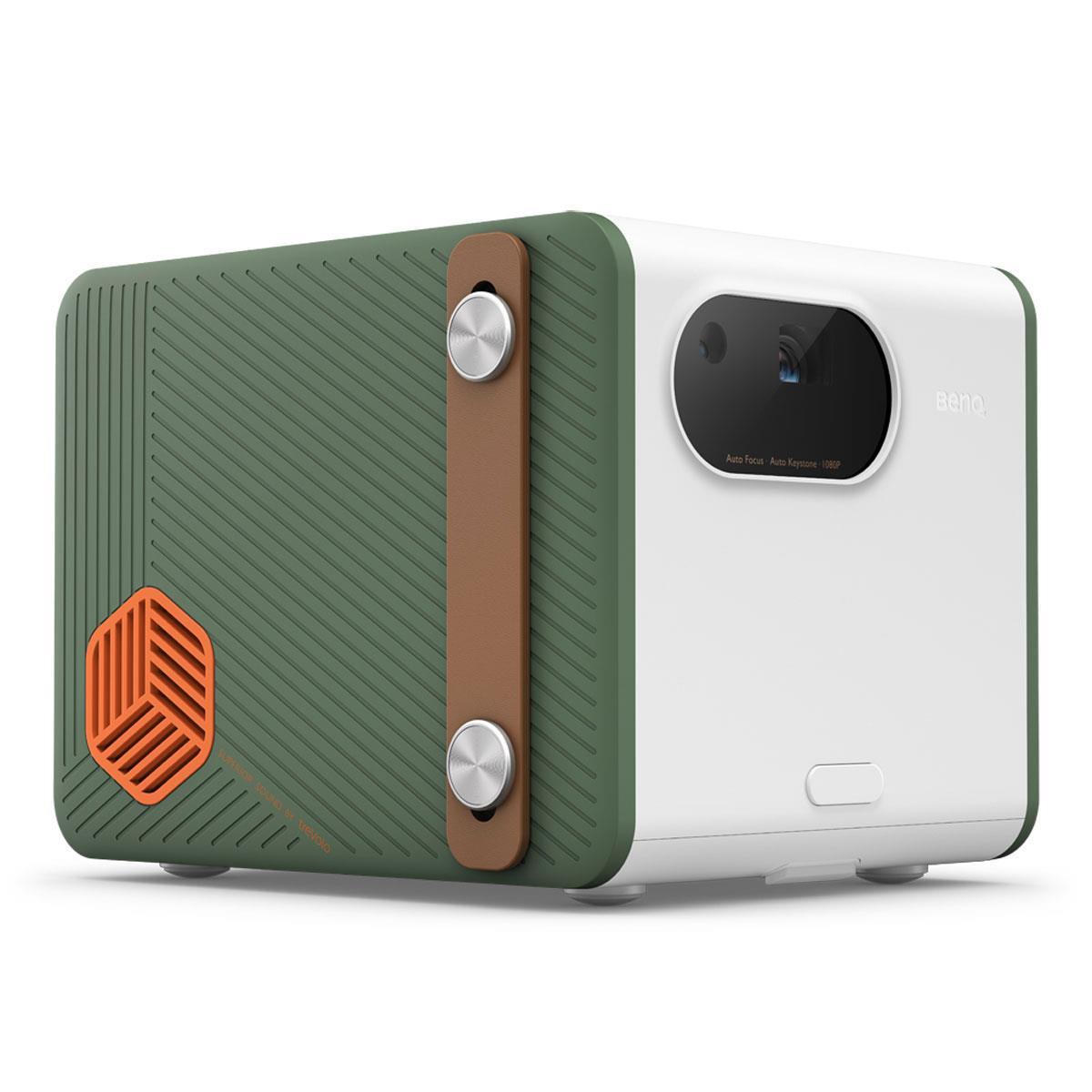
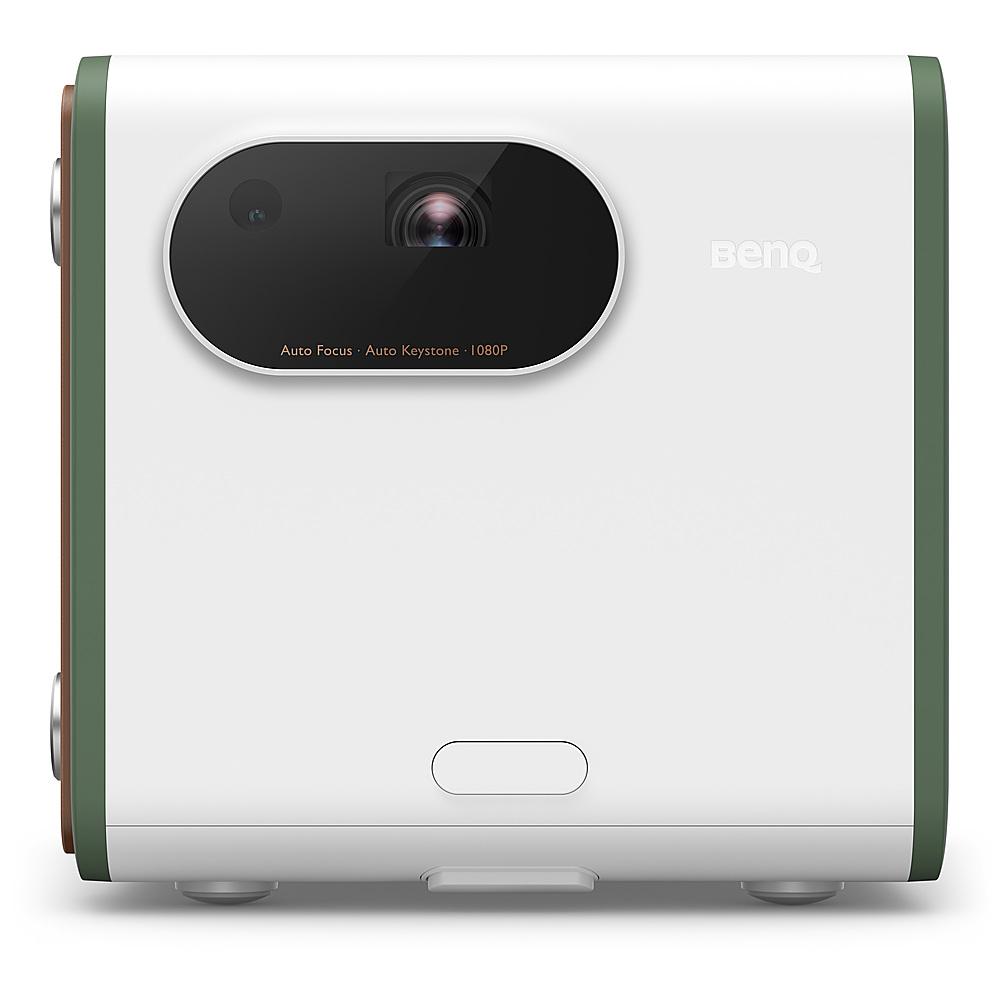
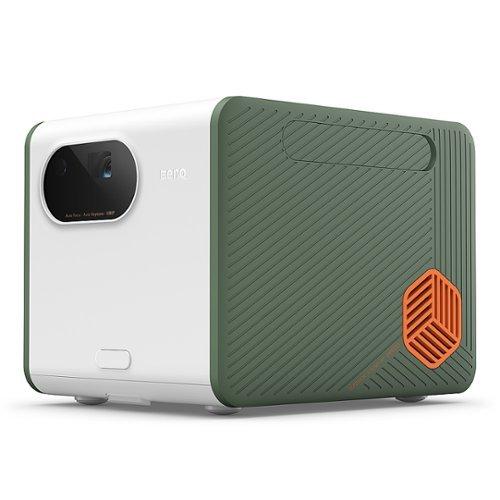
The BenQ GS50 (priced around $795) launched in early 2023 as part of BenQ's outdoor-focused projector lineup. The GS50 emphasizes durability and image quality for outdoor viewing scenarios.
Despite their similar price points, these projectors target slightly different users. The ZenBeam L2 appeals to design-conscious consumers who primarily use their projector indoors with occasional outdoor use, while the GS50 targets adventure-minded users who regularly project in challenging environments.
Both projectors offer Full HD 1920×1080 resolution, which provides adequately sharp images for screen sizes up to about 100 inches. This represents a significant improvement over older portable projectors that often maxed out at 720p.
Brightness is where we see meaningful differences. The ASUS ZenBeam L2 outputs 960 LED lumens, which translates to about 400 ANSI lumens. ANSI lumens is the standardized brightness measurement that allows for fair comparisons, while LED lumens is a marketing term that typically produces higher numbers. The BenQ GS50 delivers 500 ANSI lumens, giving it a 25% brightness advantage that becomes particularly noticeable when viewing in rooms with ambient light.
Contrast ratio, which determines the difference between the brightest whites and darkest blacks, heavily favors the BenQ. The GS50 boasts an impressive 100,000:1 contrast ratio compared to the ZenBeam L2's 400:1. This substantial difference means the GS50 produces noticeably deeper blacks and more vibrant image separation, especially in darker viewing environments.
Color reproduction is strong on both units, with the ZenBeam L2 covering 120% of the sRGB color gamut. The GS50 doesn't specify its exact color gamut coverage, but reviews consistently praise its color accuracy and vibrancy. Both projectors support HDR10 content (High Dynamic Range), which enhances contrast and color depth when playing compatible content.
In practical viewing scenarios, the BenQ's brightness and contrast advantages make it more versatile across different lighting conditions. The ZenBeam performs admirably in controlled environments but struggles more when ambient light is present. Neither projector will match the performance of dedicated home theater projectors that offer 2,000+ ANSI lumens, but they're not designed for that purpose.
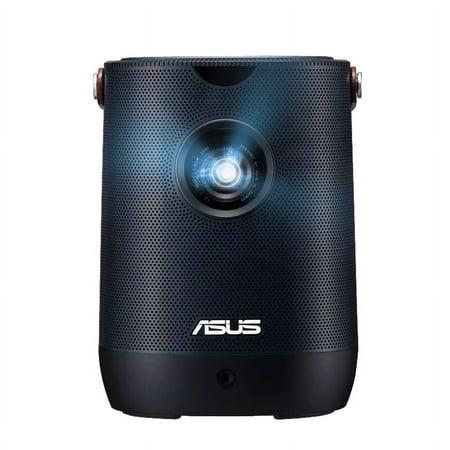
The physical design philosophies of these projectors reflect their intended use cases. The ASUS ZenBeam L2 embraces a modern, living room-friendly aesthetic with a compact cube shape measuring 132 x 172 x 132 mm and weighing just 3.4 pounds. Its sleek design includes a leather handle for easy carrying.
The BenQ GS50 adopts a more rugged approach at 150 x 190 x 150 mm and a heavier 5.07 pounds. The additional weight accommodates its more robust build quality and weather protection features.
Battery life gives the advantage to the ASUS, offering up to 3.5 hours of playback on a single charge compared to the BenQ's 2.5 hours. This difference could be significant for outdoor movie nights, potentially allowing the ZenBeam to complete a full feature film without requiring external power.
Both projectors feature easily accessible controls and quick setup times of under a minute. The GS50 includes a carrying case that protects it during transport, while the ZenBeam's more minimalist approach relies on its integrated handle.
For outdoor enthusiasts, the BenQ GS50 offers significant advantages in durability. It features an IPX2 splash-proof rating, meaning it can withstand light water exposure such as rain sprinkles or accidental drink spills. It's also drop-resistant from heights up to 70cm, which provides peace of mind during transport and setup.
The ASUS ZenBeam L2 lacks specific weatherproofing certifications, making it better suited for controlled indoor environments or fair-weather outdoor use. Its design prioritizes aesthetics over ruggedness, with more exposed ports and less protection against the elements.
Both projectors use LED light sources rated for extended lifespans – 30,000 hours for the ZenBeam and 20,000-30,000 hours for the GS50 depending on brightness mode. This represents about 10 years of typical use before any degradation in image quality, a significant improvement over traditional lamp projectors that often require replacement bulbs after 3,000-5,000 hours.
The integration of smart features represents one of the most significant advances in portable projectors in recent years, eliminating the need for external streaming devices.
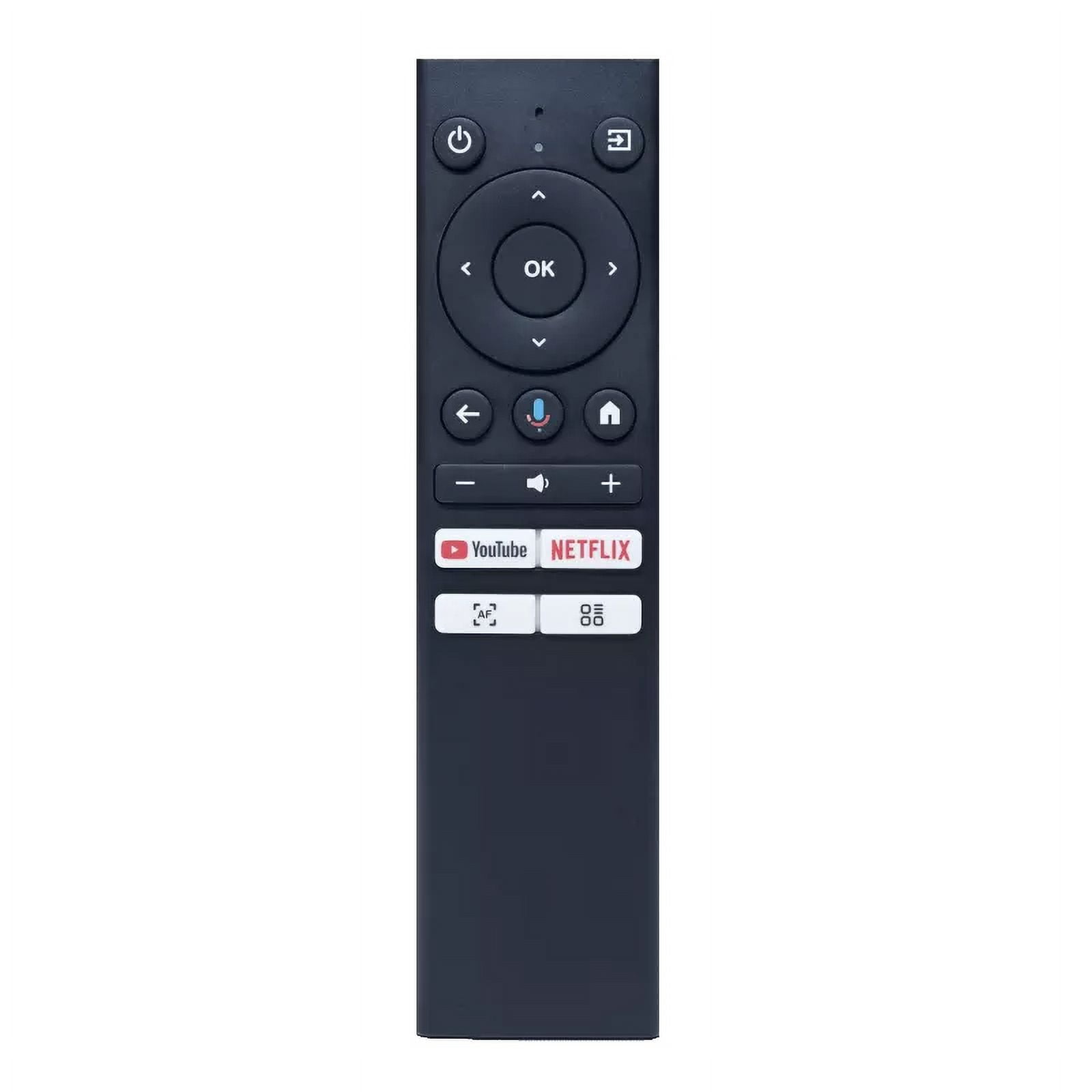
The ASUS ZenBeam L2 takes a fully integrated approach with Android TV 12 built directly into the projector. This provides access to thousands of apps including Netflix, Disney+, and YouTube without requiring additional hardware. The integrated system supports voice commands through Google Assistant and features Chromecast functionality for easy screen mirroring from compatible devices.
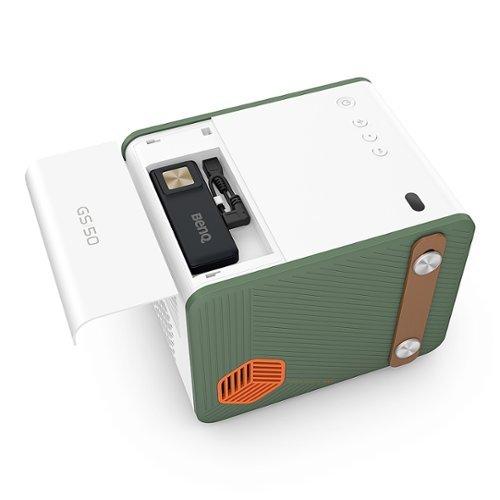
The BenQ GS50 takes a different approach, including a separate QS01 Android TV dongle that plugs into one of its HDMI ports. While this provides similar functionality to the ZenBeam's integrated system, user reviews suggest the dongle occasionally suffers from performance issues and overheating during extended use. The modular approach does have one advantage: it allows users to substitute their preferred streaming device if desired.
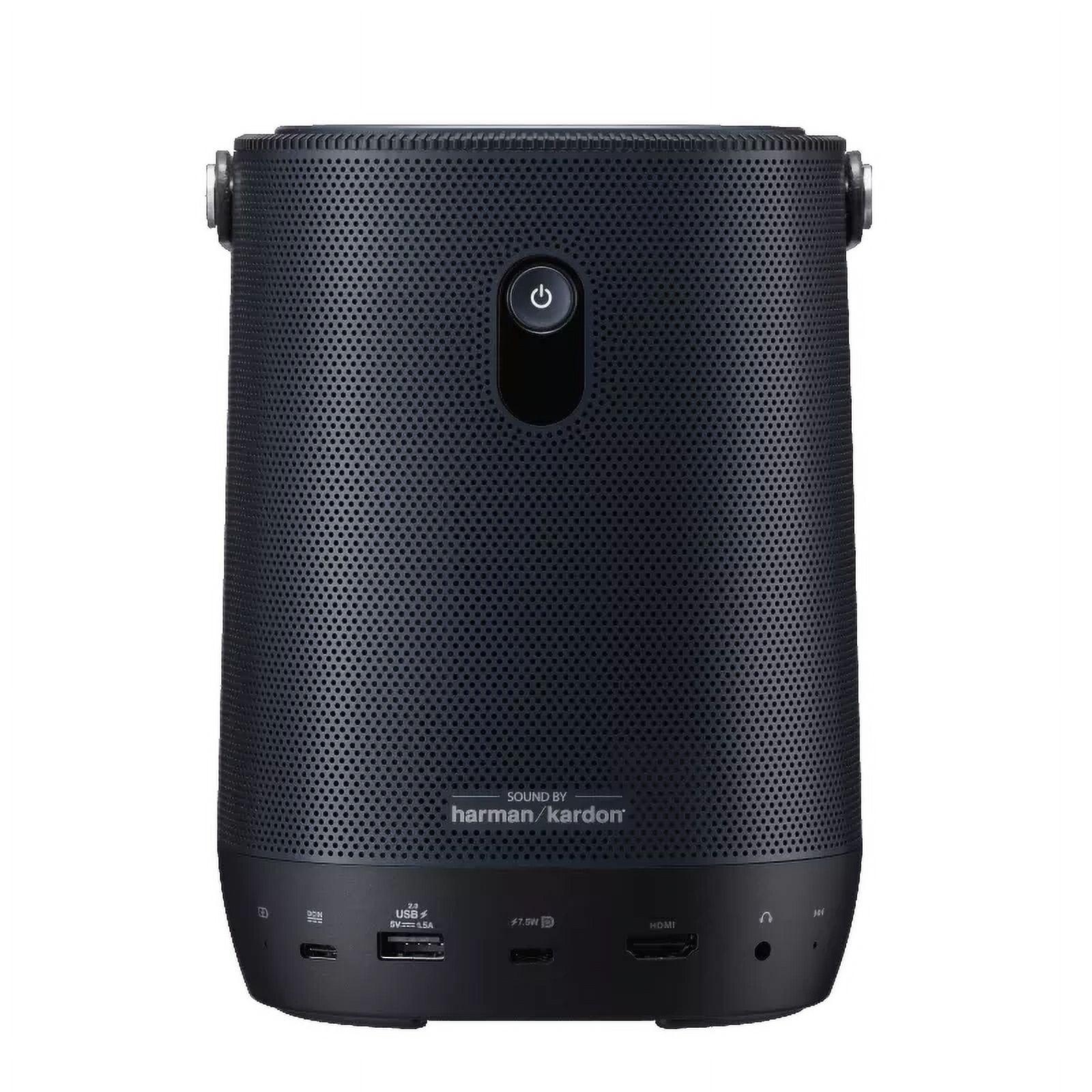
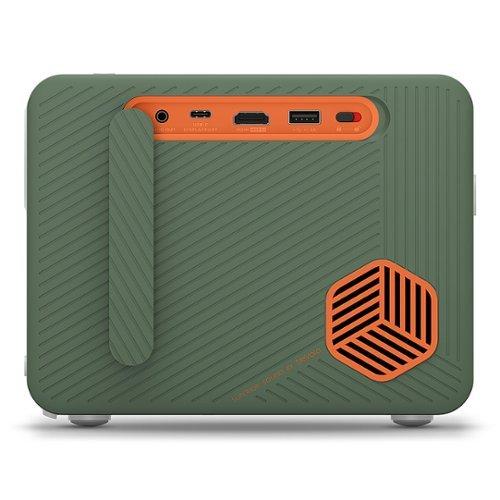
Connectivity options are similar on both units. The ZenBeam L2 includes HDMI, USB-C with DisplayPort Alt mode, USB-A, and a 3.5mm audio output. The GS50 offers HDMI 2.0, USB-A, USB-C, and a 3.5mm audio output. Both support Bluetooth for connecting wireless speakers or headphones.
Wi-Fi capabilities are present on both projectors, with the GS50 supporting both 2.4GHz and 5GHz networks, while the ZenBeam L2 appears limited to 2.4GHz based on available documentation.
Modern portable projectors have significantly improved the setup experience through automation, and both these models excel in this area.
The ASUS ZenBeam L2 features autofocus, auto keystone correction (which adjusts the image shape when projecting at an angle), and an impressive obstacle avoidance system. This last feature automatically resizes and repositions the projected image to fit available wall space, avoiding obstacles like picture frames or light switches. The entire auto-adjustment process takes about 3 seconds after pointing the projector at a new surface.
The BenQ GS50 includes autofocus and auto keystone correction but lacks the obstacle avoidance feature. Its auto-adjustment capabilities work reliably according to reviews, though some users report occasionally needing to trigger the auto-adjustment manually after moving the projector.
These auto-adjustment technologies represent significant advances over older portable projectors that required manual focus rings and keystone adjustments, making setup considerably more user-friendly for casual users.
Audio quality has historically been a weakness for portable projectors, but both these models make impressive strides in this area.
The ASUS ZenBeam L2 features a 10W Harman Kardon speaker that delivers surprisingly robust sound for its size. The audio has good clarity for dialogue and reasonable bass response, though it naturally can't match dedicated external speakers for volume or depth.
The BenQ GS50 takes audio even more seriously with a 2.1 channel system comprised of two 5W midrange tweeters and a 10W woofer. This configuration provides superior bass response and allows for 270-degree sound dispersion, creating a more immersive audio environment. The GS50 can also function as a standalone Bluetooth speaker when the projector function isn't being used, adding versatility.
For outdoor movie nights, the BenQ's more powerful audio system provides a significant advantage, reducing the need for external speakers. For indoor use where space might be limited, both provide satisfactory audio that outperforms most laptop or tablet speakers by a considerable margin.
Beyond the core functionality, both projectors offer some unique features worth highlighting.
The ASUS ZenBeam L2 includes a Light Wall feature with 26 different cinegraph options (moving images with subtle animations) that transform the projector into an ambient lighting device when not watching content. This function effectively gives the projector dual-purpose functionality as a decorative element.
The BenQ GS50 focuses its additional features on outdoor utility, with multiple power modes to extend battery life and specialized color modes for different viewing environments. It also includes a Kids Mode that automatically reduces brightness when someone passes in front of the projector, protecting eyes from the LED light.
For gaming enthusiasts, input lag (the delay between a console sending a signal and the image appearing on screen) becomes important. The GS50 measures approximately 62ms input lag at 60Hz, while the ZenBeam L2 doesn't specify its input lag. Neither projector would satisfy competitive gamers who typically want under 20ms, but casual gaming is certainly possible on both.
At nearly identical price points around $795, these projectors represent premium options in the portable category. Their value proposition depends entirely on which features matter most to you.
The ASUS ZenBeam L2 delivers better value for those who:
The BenQ GS50 provides better value for users who:
Both projectors utilize long-lasting LED light sources that should provide approximately 10 years of typical use before showing degradation, making their long-term value strong compared to lamp-based projectors that require bulb replacements.
Warranty coverage is standard for both models at 2 years for the projector and 1 year for the battery, which is reasonable for this product category.
Professional and consumer reviews of both projectors have been generally positive, with some consistent themes emerging.
The ASUS ZenBeam L2 receives praise for its ease of setup, integrated Android TV experience, and compact design. Users particularly appreciate the obstacle avoidance feature and auto-adjustment capabilities. The most common criticisms involve brightness limitations in well-lit rooms and color accuracy that sometimes appears slightly oversaturated in the brightest modes.
The BenQ GS50 earns high marks for its rugged design, excellent contrast ratio, and impressive audio system. Reviewers consistently mention its superior performance in varied lighting conditions. Criticisms focus on the bulkier form factor, heavier weight, and occasional issues with the external Android TV dongle overheating or performing sluggishly.
Reliability reports appear strong for both units, with few mentions of technical failures or quality control issues in user reviews.
The decision between these two excellent portable projectors ultimately comes down to your specific needs and usage patterns.
Choose the ASUS ZenBeam L2 if:
Choose the BenQ GS50 if:
For home theater enthusiasts, neither projector truly qualifies as a dedicated home theater solution due to brightness limitations. However, the BenQ's superior contrast ratio makes it the better choice for dedicated dark-room movie viewing.
In the end, both the ASUS ZenBeam L2 and BenQ GS50 represent impressive technological achievements in the portable projector space. They each balance the competing demands of portability, image quality, and usability in different ways, allowing consumers to choose the model that best aligns with their specific needs.
The rapid advancement of this product category suggests we'll continue to see improvements in brightness, battery life, and smart features in the coming years. But for now, these two projectors represent some of the best options available for taking your big-screen entertainment anywhere you want it.
| ASUS ZenBeam L2 Smart Portable LED Projector | BenQ GS50 Portable Outdoor Projector |
|---|---|
| Price - Budget consideration for portable projectors | |
| $792 | $795 |
| Brightness - Critical for visibility in ambient light environments | |
| 400 ANSI lumens (960 LED lumens) - adequate for dim rooms | 500 ANSI lumens - 25% brighter, better for outdoor use |
| Resolution - Determines image sharpness and detail | |
| 1920x1080 (Full HD) with 4K compatibility | 1920x1080 (Full HD) with 4K downscaling |
| Contrast Ratio - Affects image depth and black levels | |
| 400:1 - moderate contrast suitable for casual viewing | 100,000:1 - dramatically better blacks and image depth |
| Weight - Important for true portability | |
| 3.4 lbs - lighter and more portable | 5.07 lbs - heavier but includes rugged protection |
| Battery Life - Determines cable-free usage time | |
| Up to 3.5 hours - can handle most full-length movies | Up to 2.5 hours - may require recharging for longer content |
| Durability - Critical for outdoor and travel usage | |
| Standard consumer electronics protection, not weatherproof | IPX2 splash-proof rating and drop-resistant up to 70cm |
| Audio System - Affects need for external speakers | |
| 10W Harman Kardon speaker - good audio clarity | 2.1 channel system (2x 5W tweeters + 10W woofer) - better bass and volume |
| Smart Features - Determines need for external streaming devices | |
| Integrated Android TV 12 - seamless streaming experience | External Android TV dongle (QS01) - occasional performance issues reported |
| Auto-Adjustment Features - Affects ease of setup | |
| Auto focus, auto keystone, obstacle avoidance | Auto focus, auto keystone |
| Special Features - Additional functionality beyond basic projection | |
| Light Wall feature with 26 cinegraph options for ambient lighting | Can function as standalone Bluetooth speaker, includes Kids Eye Protection mode |
| Light Source Lifespan - Long-term value consideration | |
| LED rated for 30,000 hours (10+ years of typical use) | LED rated for 20,000-30,000 hours depending on mode |
| Connectivity - Flexibility for different input devices | |
| HDMI, USB-C (DisplayPort), USB-A, 3.5mm audio out | HDMI 2.0, USB-A, USB-C, 3.5mm audio out |
| Best For - Primary use case recommendation | |
| Indoor users who prioritize portability, battery life, and integrated smart features | Outdoor enthusiasts who need weather resistance, superior contrast, and rugged durability |
The BenQ GS50 Portable Outdoor Projector is brighter with 500 ANSI lumens compared to the ASUS ZenBeam L2 which offers 400 ANSI lumens (960 LED lumens). This 25% brightness advantage makes the BenQ GS50 better for environments with ambient light, especially for outdoor viewing.
The ASUS ZenBeam L2 Smart Portable LED Projector provides superior battery life with up to 3.5 hours of playback on a single charge, while the BenQ GS50 offers about 2.5 hours. This additional hour makes the ASUS ZenBeam L2 better for watching full-length movies without needing to recharge.
Yes, both can be used outdoors, but the BenQ GS50 Portable Outdoor Projector is specifically designed for outdoor use with IPX2 splash-proof rating and drop resistance up to 70cm. The ASUS ZenBeam L2 lacks weatherproofing certification, making it better suited for fair-weather outdoor use or primarily indoor environments.
The ASUS ZenBeam L2 Smart Portable LED Projector is significantly lighter at 3.4 pounds compared to the BenQ GS50 which weighs 5.07 pounds. The ZenBeam L2 also features a compact design with an integrated leather handle, making it more convenient for frequent transport.
Yes, both projectors offer streaming functionality. The ASUS ZenBeam L2 has integrated Android TV 12 built directly into the projector, while the BenQ GS50 comes with a separate QS01 Android TV dongle. Many users prefer the ZenBeam L2's seamless integrated approach over the external dongle solution.
The BenQ GS50 Portable Outdoor Projector offers superior audio with its 2.1 channel system (two 5W tweeters and one 10W woofer) compared to the ASUS ZenBeam L2's single 10W Harman Kardon speaker. For outdoor movie nights, the BenQ GS50's more powerful audio system provides better volume and bass response.
Both the ASUS ZenBeam L2 Smart Portable LED Projector and the BenQ GS50 Portable Outdoor Projector offer Full HD 1920x1080 resolution. Both can also accept 4K input, though they downscale it to their native 1080p resolution, providing similar image sharpness and detail.
For dedicated home theater use, the BenQ GS50 has an advantage with its significantly better contrast ratio (100,000:1 vs 400:1) and slightly higher brightness, providing deeper blacks and better image depth. However, neither projector can match dedicated home theater projectors that offer 2,000+ ANSI lumens for truly cinema-like experiences.
Both projectors feature auto-focus and auto keystone correction for quick setup. The ASUS ZenBeam L2 has an additional obstacle avoidance feature that automatically resizes the image to fit available wall space, making it slightly more convenient for varied environments. Both the ZenBeam L2 and GS50 can be set up in under a minute.
Both projectors support gaming, but neither is ideal for competitive gaming. The BenQ GS50 has a measured input lag of approximately 62ms at 60Hz, while the ASUS ZenBeam L2 doesn't specify its input lag. Both are suitable for casual gaming but may feel slightly sluggish for fast-paced competitive games that require quick reflexes.
Both use long-lasting LED light sources instead of traditional bulbs. The ASUS ZenBeam L2 LED is rated for 30,000 hours, while the BenQ GS50's LED lasts 20,000-30,000 hours depending on the brightness mode. This translates to approximately 10+ years of typical use before any noticeable degradation in either the ZenBeam L2 or GS50.
At nearly identical price points (around $795), the better value depends on your needs. The ASUS ZenBeam L2 offers better value for indoor users who prioritize portability, battery life, and integrated smart features. The BenQ GS50 provides better value for outdoor enthusiasts who need weather resistance, superior contrast, and durability. Consider your primary use case when choosing between the ZenBeam L2 and GS50.
We've done our best to create useful and informative comparisons to help you decide what product to buy. Our research uses advanced automated methods to create this comparison and perfection is not possible - please contact us for corrections or questions. These are the sites we've researched in the creation of this article: projectorcentral.com - youtube.com - mezha.media - asus.com - asus.com - youtube.com - projectorreviews.com - asus.com - digitalcameraworld.com - youtube.com - asus.com - digitalcitizen.life - tweakreviews.com - shop.asus.com - edgeup.asus.com - asus.com - projectorcentral.com - asus.com - uk.store.asus.com - asus.com - thegadgetflow.com - bhphotovideo.com - asus.com - asus.com - cnet.com - hometheaterhifi.com - youtube.com - youtube.com - whathifi.com - youtube.com - bgeek.eu - youtube.com - youtube.com - projectorreviews.com - youtube.com - youtube.com - projectorcentral.com - projectorreviews.com - bestbuy.com - touchboards.com - projectorcentral.com - adorama.com - projectorreviews.com - insight.com - cnet.com

Privacy Policy
Terms and Conditions - Affiliate Policy
Home Security
© Copyright 2008-2026.
11816 Inwood Rd #1211, Dallas, TX 75244