

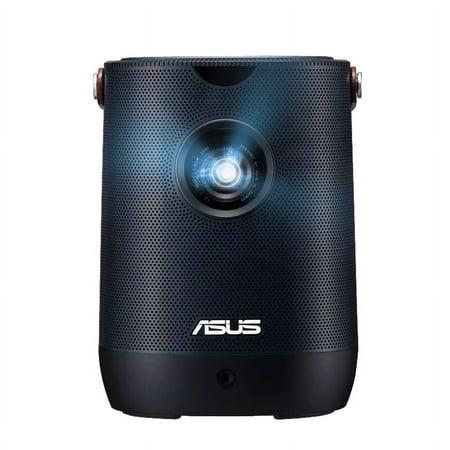
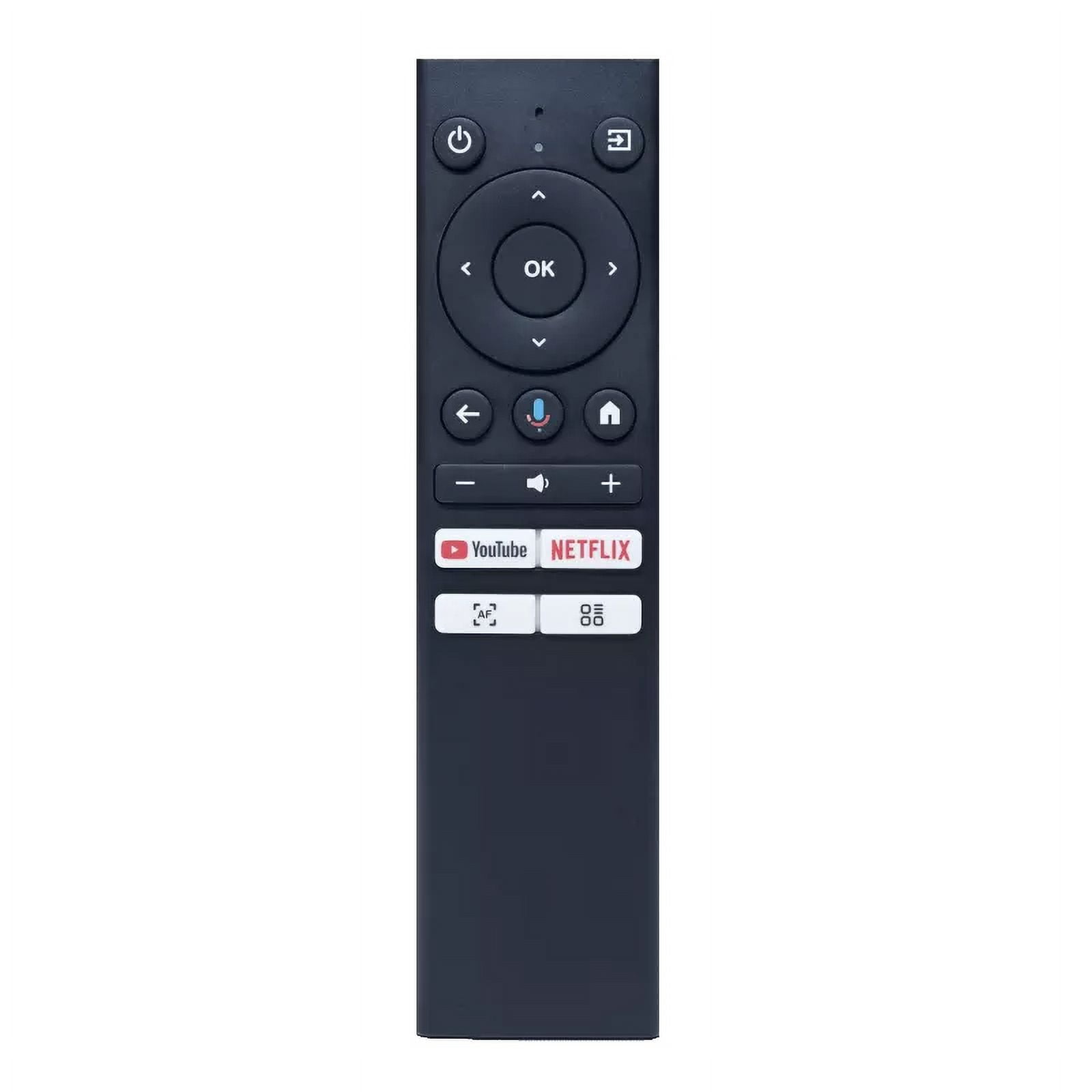
Portable projectors have transformed from niche gadgets into legitimate entertainment devices over the past few years. When Anker released the Nebula Capsule 3 GTV in 2022, it represented a bold vision: what if you could carry a cinema in your pocket? Meanwhile, ASUS took a different approach with the ZenBeam L2, prioritizing image quality while maintaining reasonable portability. At the time of writing, these two projectors sit at different price points, with the Capsule 3 positioned as the more affordable option and the ZenBeam L2 commanding a premium for its enhanced performance.
Both projectors tackle the same fundamental challenge: delivering big-screen entertainment without the bulk of traditional home theater equipment. However, they represent entirely different philosophies, and understanding these differences is crucial for making the right choice.
Before diving into specifics, it's worth understanding what makes or breaks a portable projector experience. The most critical factor is brightness, measured in ANSI lumens – a standardized way to measure how much light a projector actually puts out. Think of lumens like the wattage of a light bulb, but for projectors. More lumens mean you can use the projector in brighter rooms and project larger images that remain visible.
The second major consideration is true portability versus claimed portability. Many "portable" projectors require you to stay plugged into wall power to achieve their advertised brightness. This defeats the purpose if you want to set up in your backyard or take the projector camping.
Image quality involves several factors: native resolution (how many pixels the projector actually creates, not just accepts), color accuracy, and contrast ratio (the difference between the darkest blacks and brightest whites). Finally, smart features have become increasingly important – nobody wants to carry a separate streaming device when your projector can handle Netflix directly.
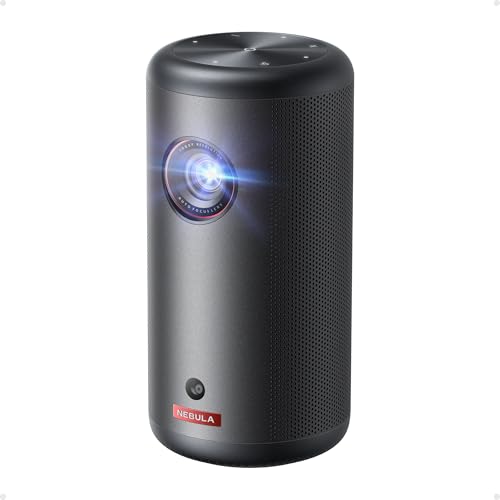
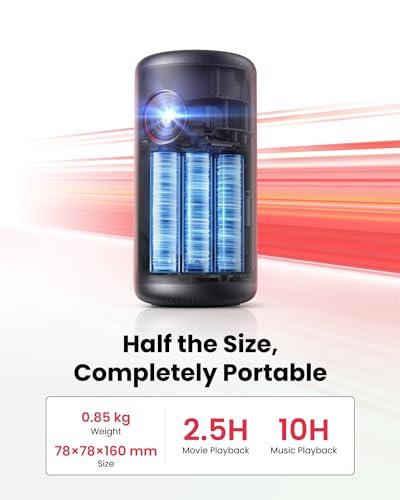
The Nebula Capsule 3 GTV looks like someone shrunk a full-sized projector into a large coffee tumbler. At just 2.1 pounds and roughly the size of a tall water bottle, it's genuinely pocketable in a way most "portable" projectors simply aren't. Anker claims it's 90% smaller than other projectors with similar brightness, and having tested various models over the years, this feels accurate.
What makes the Capsule 3 special isn't just its size – it's the complete package. The projector runs Google TV, which means you get the same interface you'd find on modern smart TVs, complete with personalized recommendations and multiple user profiles. More importantly, it includes official Netflix licensing, which is surprisingly rare in the projector world. Most portable projectors require workarounds or separate devices to stream Netflix due to licensing restrictions.
The Capsule 3 uses laser phosphor technology instead of traditional LEDs. This sounds fancy, but what it means practically is brighter, more efficient light output with better color reproduction. The laser light source is rated for 30,000 hours, which translates to about 17 years if you watch two hours daily – essentially, you'll never need to replace it.
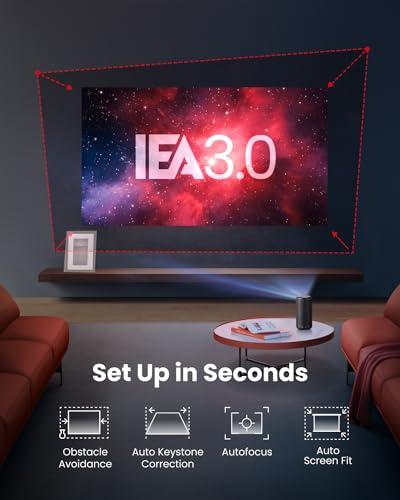
Anker's Intelligent Environment Adaptation (IEA) technology deserves special mention. This system automatically focuses the image, corrects keystone distortion (when the image looks like a trapezoid instead of a rectangle), and even avoids obstacles in your projection path. The whole process takes about three seconds, which removes the frustration of manual adjustments that plague many projectors.
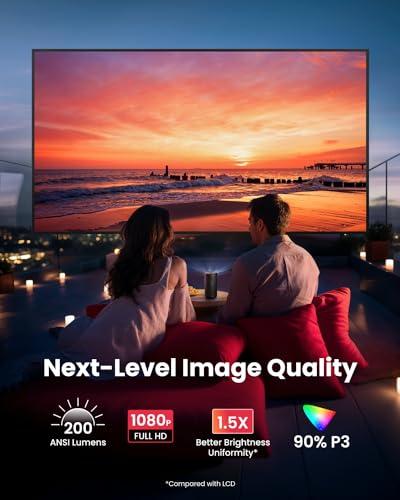
However, the Capsule 3's biggest weakness becomes apparent when you unplug it. While it claims 200 ANSI lumens when plugged in, real-world testing reveals it drops to just 46 lumens on battery power. This is barely bright enough for a 40-inch image in a completely dark room. It's a significant limitation that impacts the projector's utility as a truly portable device.
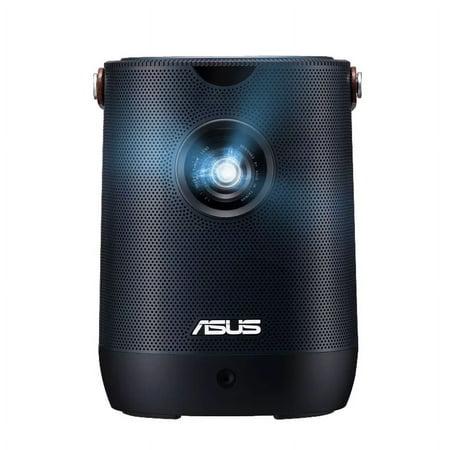
The ASUS ZenBeam L2 takes a different approach entirely. While still portable at 3.46 pounds, it prioritizes image quality and consistent performance over maximum compactness. This philosophy shows in every aspect of its design.
Brightness is where the ZenBeam L2 truly shines. Its 400 ANSI lumens (some testing shows it actually exceeds this spec) makes it usable in moderately lit rooms and capable of producing watchable images up to 100+ inches. More importantly, it maintains this brightness whether plugged in or running on battery power. This consistent performance is crucial for true portability – there's no point in having a battery-powered projector if it becomes unusable when unplugged.
The ZenBeam L2 features a short-throw lens, which means it can project large images from relatively short distances. Specifically, it can create a 40-inch image from just one meter away. This is incredibly useful in small spaces like hotel rooms or apartments where you can't place the projector far from the wall.
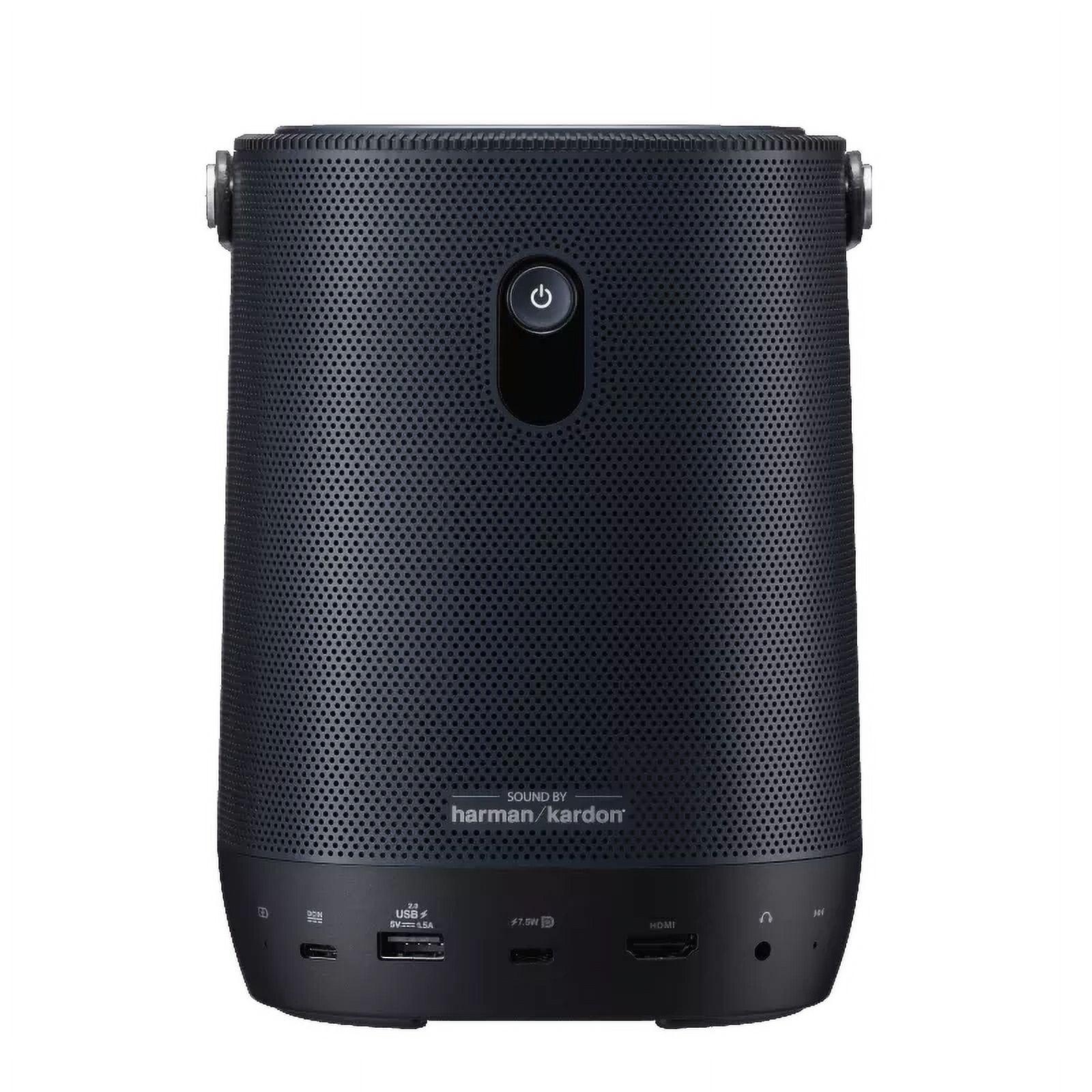
ASUS partnered with Harman Kardon for the audio system, and the difference is noticeable. While both projectors include built-in speakers, the ZenBeam L2's 10-watt system produces clearer, more balanced sound than typical projector speakers. It's still not going to replace a proper sound system, but it's adequate for casual viewing without additional equipment.
The color reproduction on the ZenBeam L2 covers 120% of the sRGB color space, which means more vivid, accurate colors than standard displays. It also supports 4K HDR input, though it downscales this to its native 1080p resolution. While not true 4K projection, the processing improvements still result in better-looking content from 4K sources.
One unique feature is the "Light Wall" functionality – 26 different animated backgrounds that turn any wall into decorative lighting when you're not watching content. It sounds gimmicky, but it's actually quite pleasant for ambient lighting during parties or gatherings.
Brightness determines everything about your projector experience. After testing both devices extensively, the performance gap is substantial. The ZenBeam L2 produces roughly three times more light than the Capsule 3 in optimal conditions, and the gap widens dramatically on battery power.
In practical terms, this means the ZenBeam L2 can produce a watchable 80-inch image in a room with some ambient light, while the Capsule 3 requires complete darkness for the same size image. For outdoor movie nights, the difference is even more pronounced – the ZenBeam L2 remains usable as the sun sets, while the Capsule 3 requires full darkness.
Both projectors offer native 1080p Full HD resolution, which looks crisp at typical viewing distances. However, image quality involves more than just pixel count. The ZenBeam L2 produces more accurate colors, better contrast, and maintains image quality across its entire brightness range.
The Capsule 3 suffers from the common issue of LED projectors: relatively poor black levels. Dark scenes appear gray rather than true black, which impacts contrast and overall image quality. The laser phosphor technology helps somewhat, but it can't overcome the fundamental limitations of its lower light output.
Color accuracy testing reveals interesting differences. The ZenBeam L2 produces more natural skin tones and accurate colors in its Cinema mode, though its brightest mode has a noticeable green tint that makes faces look sickly. The Capsule 3 offers more consistent color across its brightness modes, but the colors lack the vibrancy and accuracy of its competitor.
Built-in audio matters more for portable projectors than home theater models since you're less likely to have external speakers available. The ZenBeam L2's Harman Kardon system produces noticeably clearer dialogue and better bass response. Both projectors can function as Bluetooth speakers, which is useful for music listening, but the ZenBeam L2 sounds significantly better in this mode.
Battery specifications tell only part of the story. While the ZenBeam L2 offers 3.5 hours versus the Capsule 3's 2.5 hours of video playback, the real difference lies in usable brightness throughout that runtime. The ZenBeam L2 maintains consistent performance until the battery dies, while the Capsule 3 becomes progressively dimmer and eventually unusable in anything but perfect darkness.
This performance degradation makes the Capsule 3 frustrating for extended viewing sessions. You might start a movie at reasonable brightness, but by the end, you're squinting at a dim, washed-out image.
Both projectors run Android-based operating systems, but with different approaches. The Capsule 3's Google TV integration feels more polished and responsive, partly because it's optimized for the hardware. The interface loads quickly, and app switching feels smooth.
The ZenBeam L2 runs Android 12 TV with the Google TV interface, which should provide better long-term software support. However, the interface sometimes feels less optimized, with occasional lag during navigation.
Netflix compatibility gives the Capsule 3 a significant advantage. Official Netflix support means no workarounds, no casting requirements, and full access to HD content. Many portable projectors require you to use workarounds that limit video quality or force you to cast from another device.
Connectivity options favor the ZenBeam L2, particularly its USB-C port with DisplayPort Alt Mode support. This means you can connect modern laptops with a single cable for both video and power delivery. The Capsule 3 offers standard connectivity but lacks this convenient single-cable solution.
For dedicated home theater use, neither projector is ideal, but they serve different purposes. The ZenBeam L2 works better as a secondary projector for bedroom or basement use where convenience matters more than ultimate performance. Its consistent brightness and better image quality make it suitable for regular viewing.
The Capsule 3 excels in temporary setups – outdoor movie nights, hotel rooms, or impromptu viewing sessions. Its automatic setup features and compact size make it perfect for situations where convenience trumps performance.
Both projectors lack the brightness and contrast for serious home theater use in larger rooms. If you're considering a primary home theater projector, you'd be better served by larger, more powerful models that offer 1000+ lumens and true 4K resolution.
At the time of writing, these projectors occupy different price tiers, with the Capsule 3 positioned as the more affordable option. The price difference reflects their different target markets and performance capabilities.
The Capsule 3's value proposition centers on convenience and Netflix integration. If you prioritize portability and streaming capability over maximum image quality, it delivers good value. However, the severe brightness limitation on battery power significantly impacts its utility as a portable device.
The ZenBeam L2 commands a premium but delivers substantially better performance across almost every metric. The question becomes whether the performance improvements justify the additional cost. For users who plan regular viewing sessions or need reliable performance in various lighting conditions, the extra investment often makes sense.
The choice between these projectors ultimately depends on your priorities and use cases.
Choose the Nebula Capsule 3 GTV if you value maximum portability above all else, need official Netflix support, and primarily watch in completely dark environments. It's perfect for travelers, students in dorm rooms, or anyone who wants the convenience of carrying a projector anywhere. The automatic setup features and compact size make it incredibly user-friendly for casual use.
However, be realistic about its limitations. The severe brightness reduction on battery power makes it less useful for outdoor viewing or anywhere you can't plug it in. If you plan to use it primarily on battery power, consider whether the limited performance meets your needs.
Select the ASUS ZenBeam L2 if image quality and consistent performance matter more than maximum portability. It's ideal for users who want a projector that works well in various lighting conditions, produces larger viewable images, and delivers reliable performance whether plugged in or on battery power. The superior audio system and connectivity options make it more versatile for different content sources and scenarios.
The ZenBeam L2 represents better long-term value if you plan regular use. While it costs more initially, the superior performance and reliability make it more likely to meet your needs over time without requiring upgrades or compromises.
For most users, I lean toward recommending the ZenBeam L2. The performance benefits, particularly consistent brightness on battery power, address the fundamental requirements of portable projection better than the Capsule 3's ultra-compact design. However, if size and Netflix compatibility are your top priorities, the Capsule 3 delivers on those fronts admirably.
Both projectors represent solid engineering within their respective design philosophies. Your choice should align with whether you value maximum portability or optimal performance in your portable projection experience.
| Nebula Capsule 3 GTV Projector | ASUS ZenBeam L2 Smart Portable LED Projector |
|---|---|
| Brightness - Critical for visibility in various lighting conditions | |
| 200 ANSI lumens (drops to 46 lumens on battery) | 400 ANSI lumens (consistent on battery power) |
| Native Resolution - Determines image sharpness | |
| 1920 x 1080 Full HD | 1920 x 1080 Full HD |
| Portability - Weight and size for travel convenience | |
| 2.1 lbs, cylindrical design fits in bags easily | 3.46 lbs, more traditional shape but still travel-friendly |
| Battery Life - Runtime for unplugged viewing | |
| 2.5 hours video (severely reduced brightness) | 3.5 hours video (maintains full brightness) |
| Audio System - Built-in sound quality | |
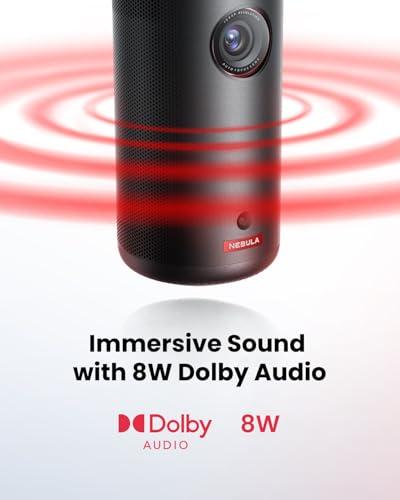
| 8W Dolby Digital speaker | 10W Harman Kardon engineered speaker |
| Smart TV Platform - Streaming and interface experience | |
| Google TV with official Netflix licensing | Google Certified Android 12 TV |
| Projection Distance - Flexibility for small spaces | |
| Standard 1.2:1 throw ratio | Short-throw: 40" image from 1 meter distance |
| Color Accuracy - Visual quality for movies and content | |
| Standard color reproduction | 120% sRGB color gamut coverage |
| Setup Features - Ease of use and adjustment | |
| Auto-focus, keystone correction, obstacle avoidance | Auto-focus, keystone correction, four-corner adjustment |
| Connectivity Options - Device compatibility | |
| HDMI 2.1, USB-C, USB-A, 3.5mm audio out | HDMI, USB-C with DisplayPort Alt mode, USB-A, 3.5mm |
| Light Source Technology - Longevity and efficiency | |
| Laser phosphor, 30,000 hours lifespan | RGB LED arrays, 30,000 hours lifespan |
| Maximum Screen Size - Practical viewing limits | |
| 120" claimed (best under 70" due to brightness) | 120" with better visibility at larger sizes |
| HDR Support - Enhanced contrast and color depth | |
| Accepts HDR signals but limited processing | HDR10 compatibility with 4K input downscaling |
The ASUS ZenBeam L2 is significantly brighter at 400 ANSI lumens compared to the Nebula Capsule 3 GTV's 200 ANSI lumens. More importantly, the ZenBeam L2 maintains consistent brightness on battery power, while the Capsule 3 drops to just 46 lumens when unplugged. This makes the ASUS ZenBeam L2 much more practical for outdoor use or rooms with ambient lighting.
The Nebula Capsule 3 GTV is more portable, weighing just 2.1 pounds with a cylindrical design that fits easily in bags. The ASUS ZenBeam L2 weighs 3.46 pounds and has a more traditional rectangular shape. However, the Capsule 3's severe brightness reduction on battery power limits its practical portability despite being physically smaller.
The Nebula Capsule 3 GTV has official Netflix licensing and runs the app natively without restrictions. The ASUS ZenBeam L2 runs Android TV but may require workarounds or casting for Netflix access. For streaming convenience, the Capsule 3 has a clear advantage with its Google TV platform and official Netflix support.
The ASUS ZenBeam L2 delivers superior image quality with 120% sRGB color coverage, better contrast, and more accurate colors. Both offer 1080p Full HD resolution, but the ZenBeam L2's higher brightness and advanced color processing result in more vibrant, detailed images. The Nebula Capsule 3 GTV produces acceptable quality but lacks the color accuracy and contrast of its competitor.
The ASUS ZenBeam L2 provides 3.5 hours of video playback while maintaining full brightness throughout. The Nebula Capsule 3 GTV offers 2.5 hours of runtime, but brightness degrades significantly as the battery depletes. For practical battery-powered viewing, the ZenBeam L2 is superior despite the shorter claimed runtime difference.
The ASUS ZenBeam L2 is much better for outdoor use due to its higher brightness and consistent battery performance. The Nebula Capsule 3 GTV's ultra-low brightness on battery power makes it nearly unusable outdoors unless you have access to power outlets. The ZenBeam L2 can produce watchable images even as ambient light decreases at sunset.
The ASUS ZenBeam L2 excels in small spaces with its short-throw lens that projects a 40-inch image from just one meter away. This makes it ideal for apartments or hotel rooms where space is limited. The Nebula Capsule 3 GTV requires more distance for the same screen size, making the ZenBeam L2 more versatile for cramped quarters.
The ASUS ZenBeam L2 features a 10-watt speaker system engineered by Harman Kardon, delivering clearer sound and better bass than typical projector speakers. The Nebula Capsule 3 GTV has an 8-watt Dolby Digital speaker that's adequate but not as refined. Both can function as Bluetooth speakers, but the ZenBeam L2 sounds notably better for music and movies.
Neither the Nebula Capsule 3 GTV nor ASUS ZenBeam L2 is ideal for dedicated home theater setups due to limited brightness compared to full-size projectors. However, the ZenBeam L2 works better as a secondary bedroom or basement projector thanks to its superior brightness and image quality. Both are better suited for casual viewing rather than serious home theater applications.
The ASUS ZenBeam L2 provides more versatile connectivity with USB-C DisplayPort Alt mode support, allowing single-cable connections to modern laptops. Both projectors offer HDMI, USB-A, and audio outputs, but the ZenBeam L2's advanced USB-C implementation makes it more convenient for laptop users and business presentations.
Both the Nebula Capsule 3 GTV and ASUS ZenBeam L2 offer automatic focus and keystone correction for easy setup. The Capsule 3 includes Anker's Intelligent Environment Adaptation that completes adjustments in about three seconds. The ZenBeam L2 offers more manual control options and four-corner geometric correction for precise image alignment in challenging setups.
The Nebula Capsule 3 GTV offers better value if maximum portability and Netflix integration are priorities, while the ASUS ZenBeam L2 provides superior value for users who prioritize image quality and consistent performance. The ZenBeam L2 justifies its higher price with significantly better brightness, color accuracy, and reliable battery performance that makes it more practical for regular use.
We've done our best to create useful and informative comparisons to help you decide what product to buy. Our research uses advanced automated methods to create this comparison and perfection is not possible - please contact us for corrections or questions. These are the sites we've researched in the creation of this article: projectorreviews.com - projectorcentral.com - tvsbook.com - gadgetoid.com - newegg.com - thesmarthomehookup.com - whathifi.com - seenebula.com - rtings.com - cnet.com - seenebula.com - youtube.com - youtube.com - walmart.com - support.seenebula.com - projectorcentral.com - youtube.com - mezha.media - asus.com - asus.com - youtube.com - projectorreviews.com - asus.com - digitalcameraworld.com - youtube.com - asus.com - digitalcitizen.life - tweakreviews.com - shop.asus.com - edgeup.asus.com - asus.com - projectorcentral.com - asus.com - uk.store.asus.com - asus.com - thegadgetflow.com - bhphotovideo.com - asus.com - asus.com

Privacy Policy
Terms and Conditions - Affiliate Policy
Home Security
© Copyright 2008-2026.
11816 Inwood Rd #1211, Dallas, TX 75244