

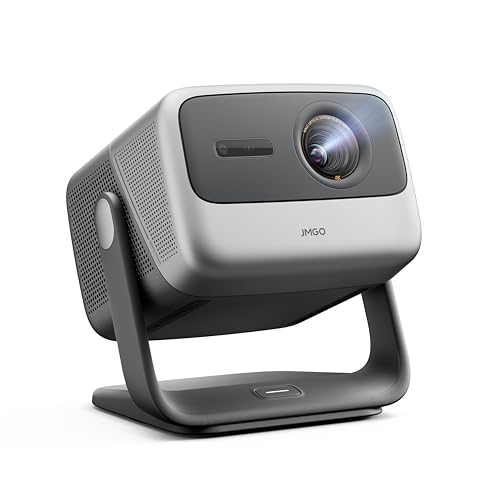
When shopping for a projector today, you're not just choosing between different brands or brightness levels—you're fundamentally deciding between two completely different philosophies of how projection technology should fit into your life. The projector market has evolved dramatically in recent years, splitting into distinct categories that serve vastly different needs. At one end, we have premium home theater projectors designed to replace your TV with cinema-quality visuals. At the other, ultra-portable projectors that prioritize convenience and flexibility over ultimate image quality.
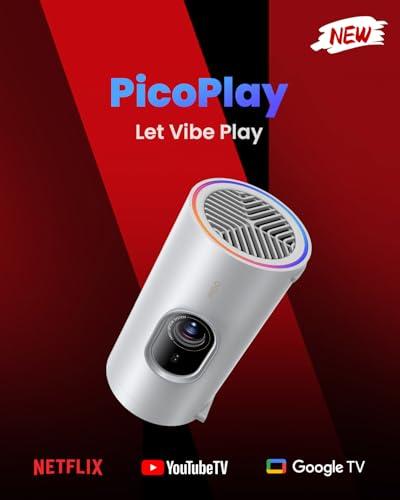
JMGO's lineup perfectly illustrates this divide with two projectors that couldn't be more different in approach. The JMGO N1S Pro 4K, released in 2024, represents the company's push into serious home theater territory with professional-grade laser technology. Meanwhile, the JMGO PicoPlay 1080P embodies the ultra-portable philosophy, cramming respectable projection capabilities into a device roughly the size of a travel coffee mug.
Understanding which approach suits your needs requires diving deep into what makes each projector tick—and more importantly, where you'll actually be using it.
The projector industry has undergone a revolution over the past few years, largely driven by advances in laser technology and the miniaturization of components. Traditional projectors required bulky lamp systems and extensive cooling, making truly portable options either dim or expensive. Today's landscape offers genuine choices between performance and portability that weren't possible even five years ago.
When evaluating any projector, five key factors determine whether it'll meet your needs: brightness and room compatibility, resolution and image sharpness, portability versus performance trade-offs, smart features and connectivity, and long-term value. The challenge is that improving one factor often means compromising another. Brighter projectors need more power and cooling. Higher resolution demands more processing power. Better portability usually means sacrificing brightness or features.
The JMGO N1S Pro 4K and JMGO PicoPlay represent polar opposite solutions to these compromises, making them excellent examples for understanding what matters most for your specific situation.
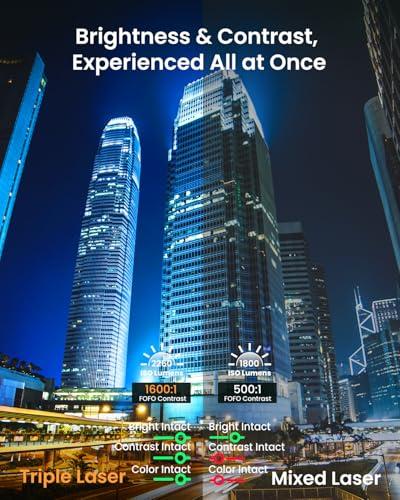
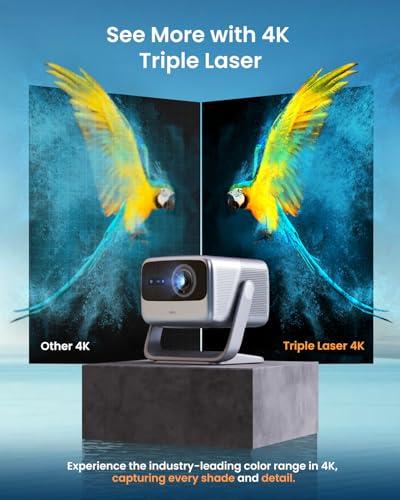
The JMGO N1S Pro 4K launched in 2024 with a clear mission: deliver professional-grade projection technology in a relatively compact package. At its heart lies MALC 2.0 triple laser technology—a sophisticated system using separate red, green, and blue lasers to generate incredibly pure colors. This isn't just marketing speak; triple laser systems genuinely produce more accurate colors than single laser or LED projectors because they can hit specific color points that other technologies simply can't reach.
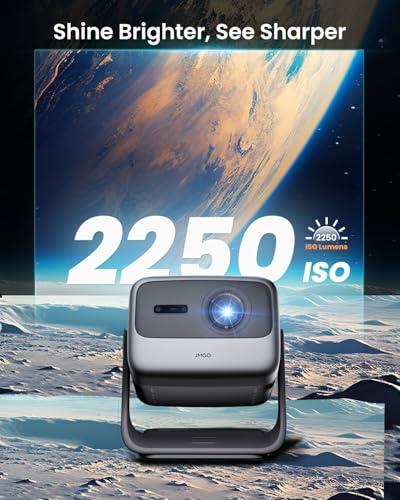
The projector's 2,400 ANSI lumens of brightness puts it firmly in home theater territory. To put this in perspective, most portable projectors struggle to exceed 500 lumens, while dedicated home theater projectors typically range from 1,500 to 4,000 lumens. The N1S Pro 4K sits comfortably in that sweet spot where it's bright enough for living room use without requiring complete darkness.
Perhaps most impressively, the projector maintains its brightness for an estimated 30,000 hours—roughly 15 years of normal use—thanks to its laser light source. Traditional lamp projectors might require $300+ replacement bulbs every 2,000-4,000 hours, making the initial investment in laser technology surprisingly economical over time.
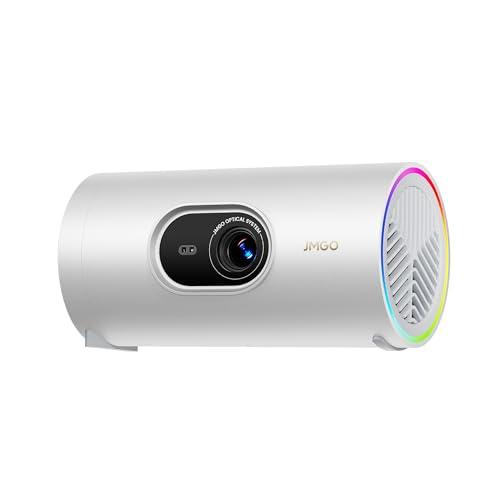
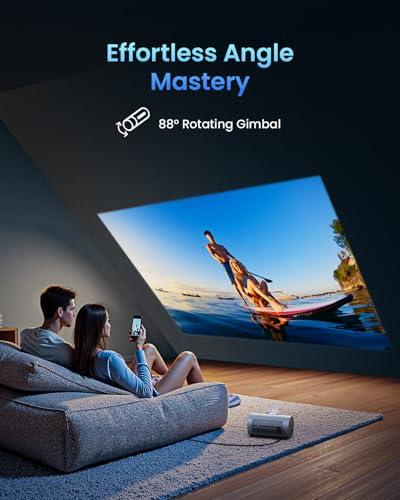
The JMGO PicoPlay takes an entirely different approach, prioritizing portability and versatility above all else. Its cylindrical design isn't just aesthetically pleasing—it's functionally brilliant. The form factor allows for an 88-degree rotating gimbal that can project in virtually any direction without requiring you to physically move the projector. Want to watch a movie on the ceiling? Simply tilt the projector. Moving from wall projection to a makeshift outdoor screen? The gimbal handles it effortlessly.
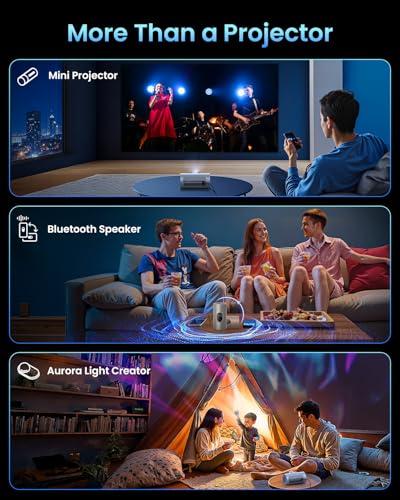
What makes the PicoPlay truly unique is its 3-in-1 design philosophy. Beyond projection, it functions as a surprisingly capable 8-watt Bluetooth speaker and features dynamic ambient lighting that can sync with music. This isn't just feature stuffing—it genuinely reduces the number of devices you need to pack for travel or temporary setups.
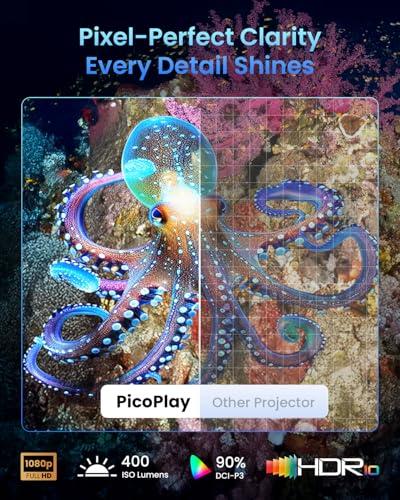
The projector's LED light source produces 400 ISO lumens, which sounds modest compared to the N1S Pro 4K but is actually quite respectable for its size and power consumption. More importantly, it can run entirely off USB-C power, meaning you can operate it for hours using a standard power bank—something impossible with traditional projectors.
The resolution difference between these projectors is stark: the N1S Pro 4K delivers true 4K UHD (3840×2160 pixels) while the PicoPlay outputs 1080p (1920×1080 pixels). That's four times as many pixels, but the practical impact depends entirely on your viewing setup.
For screen sizes below 60 inches, 1080p remains perfectly sharp from normal viewing distances. The human eye simply can't resolve individual pixels at typical living room distances. However, once you start pushing toward 80-100+ inch screens—where projectors truly shine—4K resolution becomes increasingly important. Text becomes more readable, fine details in movies stay crisp, and the overall image simply looks more polished.
The N1S Pro 4K also supports 10-bit color processing compared to the PicoPlay's 8-bit processing. This might sound like technical minutiae, but 10-bit processing eliminates color banding in gradients—those subtle stripes you sometimes see in skies or shadows. For serious movie watching, this difference is noticeable.
Here's where the fundamental difference between these projectors becomes crystal clear. The N1S Pro 4K's 2,400 ANSI lumens versus the PicoPlay's 400 ISO lumens represents roughly a six-fold brightness advantage. This isn't just about numbers—it completely changes where and when you can use each projector.
In our research of user experiences, the N1S Pro 4K consistently performs well in living rooms with normal ambient lighting, curtains drawn but not blackout conditions. Users report satisfying daytime viewing experiences, particularly for sports or casual TV watching. The PicoPlay, conversely, requires genuinely dark environments for optimal viewing. Users consistently note that even moderate ambient lighting—think table lamps or kitchen lighting bleeding into adjacent rooms—significantly degrades the viewing experience.
This brightness difference also affects color saturation and contrast. Brighter projectors maintain color vibrancy even when competing with ambient light, while dimmer projectors quickly look washed out in anything but ideal conditions.
Both projectors excel in color reproduction, but in different ways. The N1S Pro 4K covers 110% of the BT.2020 color space—the standard for HDR content—delivering incredibly vibrant colors that can actually reproduce more of the visible spectrum than most TVs. The triple laser system enables this by generating pure spectral colors rather than the filtered light used by other technologies.
The PicoPlay covers 124% of the Rec.709 color space, which is the standard for conventional HD content. While this sounds impressive, Rec.709 represents a smaller overall color range than BT.2020, so the practical color capabilities are more limited. However, for standard streaming content and casual viewing, the color reproduction is still excellent—particularly impressive for such a compact device.
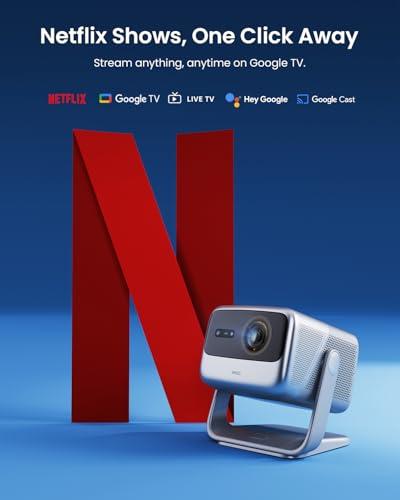
Both projectors run Google TV, representing a significant advantage over many competitors that use proprietary or limited smart platforms. Google TV provides access to virtually all major streaming services, including Netflix, Disney+, Amazon Prime Video, and YouTube, with dedicated remote shortcuts for quick access.
The implementation differs slightly between models, though. The N1S Pro 4K includes 2GB of RAM compared to the PicoPlay's more limited processing power, resulting in noticeably smoother interface navigation and faster app loading. When you're paying premium prices, these performance differences matter for daily usability.
Connectivity options reflect each projector's intended use. The N1S Pro 4K offers dual HDMI 2.1 ports—one supporting eARC for advanced audio systems—plus USB-A, Wi-Fi 6, and Bluetooth 5.2. This comprehensive connectivity suits permanent installations where you might connect gaming consoles, streaming devices, and sound systems simultaneously.
The PicoPlay keeps connectivity minimal but practical: single HDMI (with ARC), USB-A, USB-C for power, plus Wi-Fi and Bluetooth. The USB-C power capability is the killer feature here, enabling true portability without hunting for AC outlets.
Projector audio often gets overlooked, but both JMGO models take sound seriously. The N1S Pro 4K features dual 20-watt speakers with Dolby Digital Plus processing, delivering genuinely impressive audio for a projector. The side-firing design provides decent stereo separation, and the bass response is surprisingly robust for built-in speakers. While dedicated home theater enthusiasts will still want external audio systems, the built-in sound is perfectly adequate for casual viewing.
The PicoPlay's 8-watt mono speaker obviously can't match the N1S Pro's audio output, but it's remarkably good for the projector's size. More importantly, it doubles as a Bluetooth speaker when not projecting, adding genuine utility for music listening or podcast playback. The ambient light feature that syncs with music creates an unexpectedly engaging party atmosphere.
The portability difference between these projectors is dramatic and affects everything from setup to daily use. The N1S Pro 4K weighs nearly 10 pounds and requires AC power, making it realistically a "portable" projector in the sense that you can move it between rooms, not that you'll carry it in a backpack.
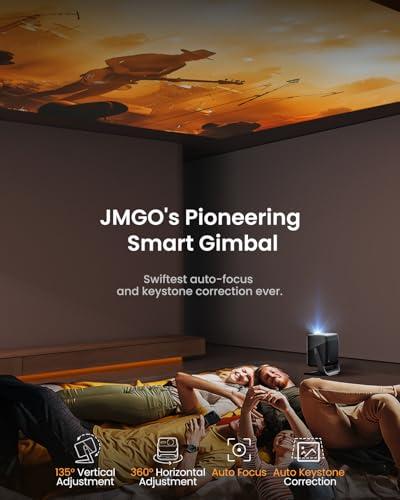
However, the N1S Pro's auto-stabilized gimbal system partially compensates for its bulk. The motorized gimbal can adjust 360 degrees horizontally and 135 degrees vertically, enabling precise image positioning without physically moving the projector. Combined with instant autofocus and auto-keystone correction, setup typically takes under 30 seconds.
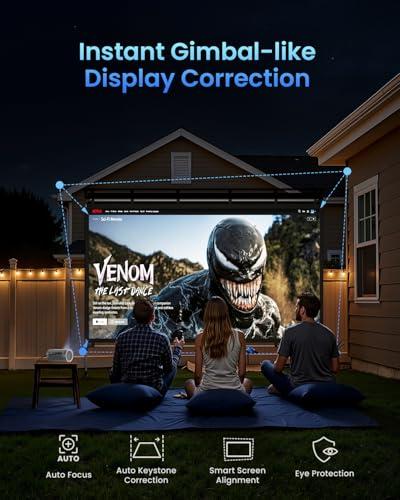
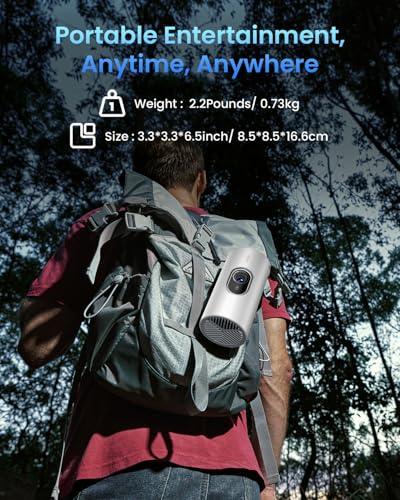
The PicoPlay represents true portability—at 2.2 pounds, it's lighter than many laptops and includes a carrying case designed for travel. The 88-degree manual gimbal provides impressive flexibility, and the USB-C power capability means you can set up anywhere with a power bank. Setup is equally quick thanks to the FlexiSmart system that handles focus and keystone correction automatically.
At the time of writing, these projectors occupy very different price tiers, reflecting their distinct target markets. The N1S Pro 4K commands premium pricing that puts it in competition with high-end home theater projectors, while the PicoPlay is priced competitively within the portable projector segment.
The N1S Pro's value proposition rests on its professional-grade technology. Triple laser projection, true 4K resolution, and 2,400 lumens of brightness typically require spending significantly more on dedicated home theater projectors. When you factor in the 30,000-hour laser life eliminating lamp replacements, the total cost of ownership becomes quite reasonable for serious home theater use.
The PicoPlay offers different value: exceptional convenience and versatility at an accessible price point. Its 3-in-1 functionality means you're getting a projector, Bluetooth speaker, and ambient light system in one device. For college students, frequent travelers, or anyone wanting occasional big-screen entertainment without major investment, it's hard to beat.
The N1S Pro 4K excels in dedicated entertainment spaces where image quality matters most. If you're setting up a media room, finished basement, or living room theater system, the combination of 4K resolution and high brightness creates genuinely cinematic experiences. Gaming enthusiasts particularly appreciate the 4K capability for console gaming, while sports fans benefit from the bright, clear image that works well even with ambient lighting.
The projector's size and power requirements aren't drawbacks if you have a dedicated setup location. The gimbal system actually makes it more flexible than traditional home theater projectors that require ceiling mounting or precise shelf positioning.
The PicoPlay shines in scenarios where flexibility and convenience outweigh ultimate image quality. College dorm rooms, where space is limited and setup needs to be temporary, represent ideal use cases. The ability to project movies on dorm walls or ceilings while doubling as a music speaker makes it incredibly versatile.
Travel scenarios showcase the PicoPlay's unique advantages. Hotel rooms become instant theaters, camping trips can include movie nights with a power bank, and vacation rentals get upgraded entertainment without lugging heavy equipment. The fact that it works entirely off USB-C power means you can use it anywhere—no hunting for outlets or extension cords.
For dedicated home theater use, the N1S Pro 4K offers several advantages beyond just brightness and resolution. The dual HDMI 2.1 ports support the latest gaming consoles and streaming devices, while eARC compatibility enables integration with premium sound systems. The color gamut coverage means HDR content displays as intended, with colors that genuinely pop off the screen.
The projector's gimbal system provides mounting flexibility that traditional home theater projectors can't match. You can place it on a coffee table, shelf, or dedicated stand and still achieve perfect image alignment through motorized adjustment.
The PicoPlay isn't designed for serious home theater use, but it can certainly fill that role in smaller spaces or for casual viewing. The 1080p resolution remains sharp on screens up to 60-70 inches, which might be perfect for apartment living or secondary viewing areas.
Choose the JMGO N1S Pro 4K if you want the best possible image quality and have a dedicated space for serious entertainment. It's ideal for movie enthusiasts who appreciate 4K detail, gamers wanting console-quality visuals, or anyone setting up a primary viewing system. The higher investment pays off through superior performance and longevity.
Choose the JMGO PicoPlay if portability and convenience matter more than ultimate image quality. It's perfect for students, travelers, or anyone wanting flexible entertainment options without major commitment. The ability to pack it anywhere and set up quickly makes it invaluable for spontaneous viewing sessions.
The key insight is that these aren't competing products—they solve completely different problems. The N1S Pro 4K is a home theater investment designed to deliver premium experiences in dedicated spaces. The PicoPlay is a lifestyle device that brings big-screen entertainment wherever you need it.
Consider your primary use case honestly. If you're mainly watching Netflix in your living room and want to replace or supplement a TV, the N1S Pro 4K delivers the performance to justify its premium positioning. If you want the flexibility to watch movies in your dorm, at friends' houses, or during travel, the PicoPlay's convenience and portability are unmatched.
Both projectors represent excellent execution of their respective philosophies. Your choice should depend on whether you value maximum performance or maximum flexibility—because in the projector world, you really can't have both in the same device.
| JMGO N1S Pro 4K | JMGO PicoPlay 1080P |
|---|---|
| Resolution - Determines image sharpness on large screens | |
| True 4K UHD (3840×2160) - Essential for 80"+ screens | 1080p Full HD (1920×1080) - Sharp enough for 40-60" viewing |
| Brightness - Most critical factor for room lighting flexibility | |
| 2,400 ANSI lumens - Works well in lit living rooms | 400 ISO lumens - Requires dark/dimmed environments |
| Light Source Technology - Affects color quality and lifespan | |
| MALC 2.0 Triple RGB Laser - Premium color accuracy, 30,000 hrs | LED - Good colors, 25,000 hrs, no rainbow effect |
| Color Gamut - How vibrant and accurate colors appear | |
| 110% BT.2020 - Exceptional HDR color reproduction | 124% Rec.709 - Excellent for standard HD content |
| Weight & Portability - Determines where you can realistically use it | |
| 9.9 lbs, AC power required - Semi-portable, room-to-room use | 2.2 lbs, USB-C powered - True portability with power banks |
| Audio System - Important since many skip external speakers | |
| 20W stereo speakers with Dolby Digital Plus - Impressive built-in sound | 8W mono + Bluetooth speaker mode - Decent for size, doubles as music speaker |
| Smart Platform - Streaming capabilities and app selection | |
| Google TV with 2GB RAM - Smooth performance, all major apps | Google TV - Full app support, slightly slower interface |
| Connectivity - Matters for gaming consoles and sound systems | |
| Dual HDMI 2.1 (one with eARC), USB-A, Wi-Fi 6, Bluetooth 5.2 | Single HDMI (ARC), USB-A, USB-C power, Wi-Fi, Bluetooth |
| Gimbal System - Affects setup flexibility and positioning | |
| Auto-stabilized motorized gimbal (360°/135°) - Precise remote adjustment | Manual 88° rotating gimbal - Easy tilt adjustment, ceiling projection |
| Setup Features - How quickly you can start watching | |
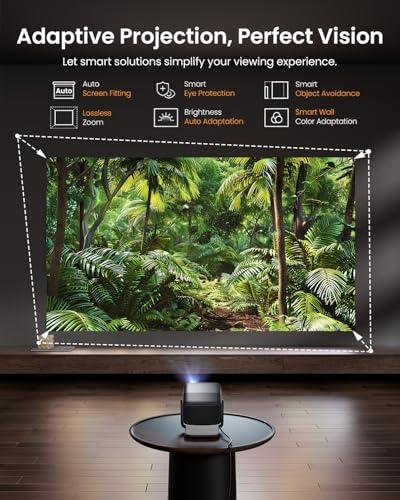
| Instant autofocus, auto keystone, smart object avoidance, eye protection | FlexiSmart system: autofocus, auto keystone, screen alignment |
| Unique Features - What sets each projector apart | |
| Professional laser projection, living room brightness, 4K gaming ready | 3-in-1 design (projector/speaker/ambient light), vertical content mode, travel case |
| Best Use Cases - When each projector makes the most sense | |
| Home theater replacement, media rooms, bright room viewing, permanent setup | Travel entertainment, dorm rooms, camping, temporary setups, space-constrained areas |
The JMGO N1S Pro 4K is significantly better for dedicated home theater setups. Its 2,400 ANSI lumens brightness works well in living rooms with ambient lighting, while the true 4K resolution delivers sharp detail on large 100+ inch screens. The JMGO PicoPlay 1080P is better suited for casual viewing in dark rooms with smaller screen sizes under 60 inches.
The core difference is brightness and portability. The JMGO N1S Pro 4K produces 2,400 ANSI lumens for bright room viewing but weighs 10 pounds and needs AC power. The JMGO PicoPlay 1080P is ultra-portable at 2.2 pounds with USB-C power but only produces 400 ISO lumens, requiring dark environments for optimal viewing.
Only the JMGO N1S Pro 4K works well for daytime viewing thanks to its high brightness output. The JMGO PicoPlay 1080P requires dim or dark conditions, making it unsuitable for daytime use unless you have blackout curtains or can control ambient lighting completely.
The JMGO PicoPlay 1080P is far more portable, weighing just 2.2 pounds and running entirely off USB-C power from a power bank. You can easily pack it for travel or camping. The JMGO N1S Pro 4K weighs nearly 10 pounds and requires wall power, making it more suitable for moving between rooms rather than true portability.
Only the JMGO N1S Pro 4K displays true 4K UHD resolution (3840×2160). The JMGO PicoPlay 1080P maxes out at 1080p Full HD resolution, though it can accept and downscale 4K input signals. For large screens over 80 inches, the 4K resolution difference becomes very noticeable.
The JMGO N1S Pro 4K has superior audio with 20W stereo speakers and Dolby Digital Plus processing, delivering room-filling sound. The JMGO PicoPlay 1080P has an 8W mono speaker that's impressive for its size and can double as a Bluetooth speaker, but can't match the larger projector's audio performance.
Yes, both support gaming consoles through HDMI connections. The JMGO N1S Pro 4K offers dual HDMI 2.1 ports and true 4K gaming capability, making it better for PS5 and Xbox Series X. The JMGO PicoPlay 1080P has one HDMI port and supports 1080p gaming, which is perfectly adequate for casual gaming sessions.
Value depends on your needs. The JMGO N1S Pro 4K offers professional-grade features like triple laser technology and 4K resolution typically found in much more expensive projectors. The JMGO PicoPlay 1080P provides excellent value for portable entertainment with its 3-in-1 design combining projection, speaker, and ambient lighting functions.
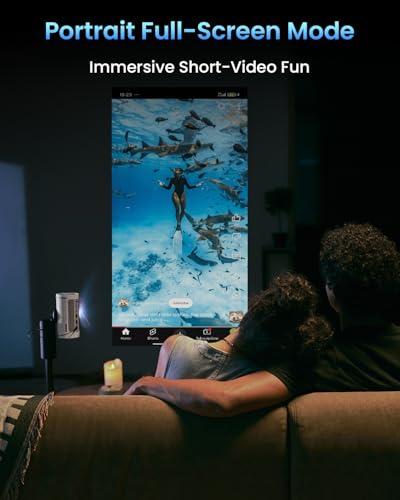
Yes, both run Google TV with access to Netflix, YouTube, Disney+, and other major streaming apps. The JMGO N1S Pro 4K has more RAM for smoother performance, while the JMGO PicoPlay 1080P includes unique features like Vertical Play mode for TikTok and Instagram content viewing.
The JMGO N1S Pro 4K uses triple laser technology rated for 30,000 hours of use with no lamp replacements needed. The JMGO PicoPlay 1080P uses LED technology rated for 25,000 hours. Both offer maintenance-free operation for many years of normal use.
The JMGO PicoPlay 1080P is ideal for outdoor use due to its portability and USB-C power capability - you can run it entirely off a power bank. However, you'll need to wait until dusk or dark for good image quality. The JMGO N1S Pro 4K produces a brighter image but requires AC power, limiting outdoor setup locations.
Choose the JMGO N1S Pro 4K if you plan to use screens larger than 80 inches or want the sharpest possible image quality. The JMGO PicoPlay 1080P is perfectly adequate for screens under 60 inches and casual viewing where convenience matters more than ultimate image quality.
We've done our best to create useful and informative comparisons to help you decide what product to buy. Our research uses advanced automated methods to create this comparison and perfection is not possible - please contact us for corrections or questions. These are the sites we've researched in the creation of this article: techradar.com - projectorcentral.com - gray9.in - projectorreviews.com - howtogeek.com - the-gadgeteer.com - projectorcentral.com - global.jmgo.com - global.jmgo.com - cnet.com - cnet.com - youtube.com - global.jmgo.com - avsforum.com - youtube.com - youtube.com - techbuzzireland.com - youtube.com - newatlas.com - projectorcentral.com - youtube.com - thegadgetflow.com - youtube.com - global.jmgo.com - youtube.com - bestbuy.com - projector-database.com - notebookcheck.net - eu.jmgo.com

Privacy Policy
Terms and Conditions - Affiliate Policy
Home Security
© Copyright 2008-2026.
11816 Inwood Rd #1211, Dallas, TX 75244