

Portable projectors have come a long way from the dim, blurry devices of just a few years ago. Today's models can deliver surprisingly sharp images, smart streaming capabilities, and genuine portability that actually works in real-world situations. Two standout examples are the JMGO PicoPlay and the XGIMI MoGo 4, both released in recent years as manufacturers refined the balance between image quality and true portability.
These aren't your typical budget projectors that promise the world and deliver disappointment. Both represent serious engineering achievements that make meaningful compromises to achieve their goals. The question isn't whether they're perfect—no portable projector is—but which one aligns better with how you actually want to use it.
The portable projector market has exploded over the past few years, driven by improvements in LED technology, battery efficiency, and miniaturization of smart TV platforms. What we're seeing now are devices that can genuinely replace a TV for many use cases, rather than serving as expensive toys that collect dust after the initial novelty wears off.
The fundamental challenge in this category remains the physics of light. Brightness is measured in ISO lumens—a standardized measurement that tells you how much light the projector actually outputs. To put this in perspective, a typical movie theater projector might output 10,000-20,000 lumens, while these portable units manage 400-550 lumens. That sounds like a huge difference, but remember that you're also projecting onto much smaller screens at closer distances.
Battery life represents another core constraint. Projectors are inherently power-hungry devices, with LED light sources and cooling fans competing for limited battery capacity. The newest models have gotten smarter about power management, but you'll still need to plan around 2-4 hours of actual viewing time depending on your brightness settings.
The JMGO PicoPlay and XGIMI MoGo 4 represent fundamentally different design philosophies, and understanding these differences is crucial to making the right choice.
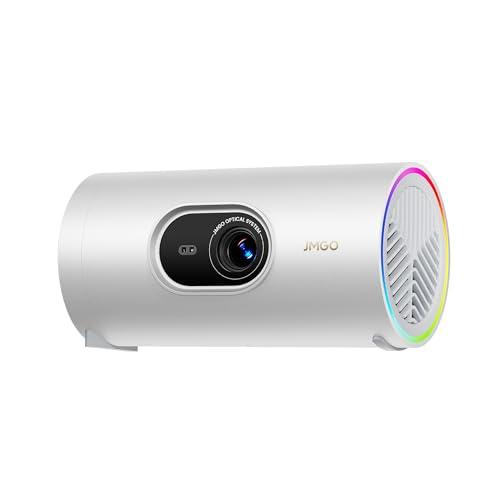
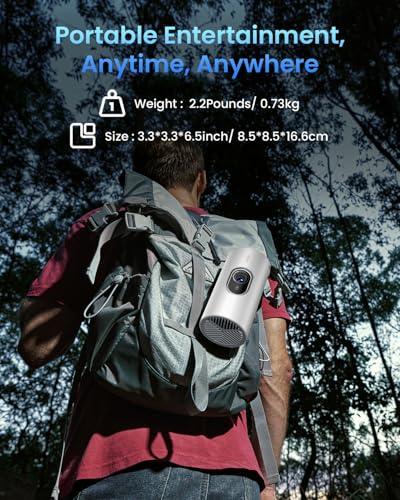
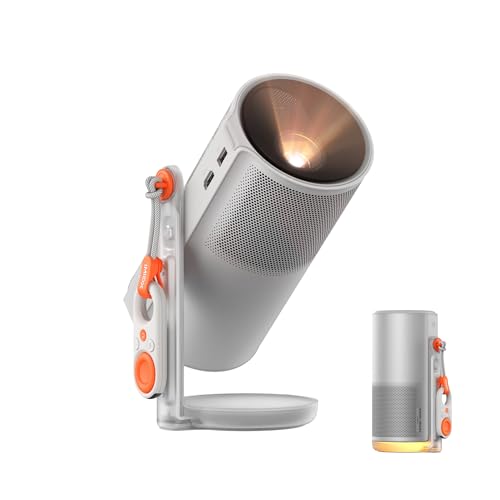
The PicoPlay is genuinely revolutionary in terms of size. At just 3.3 inches in diameter and 6.5 inches tall, it's literally the size of a large coffee tumbler. I've used plenty of "portable" projectors that required their own carrying cases and careful handling, but the PicoPlay feels more like carrying a water bottle.
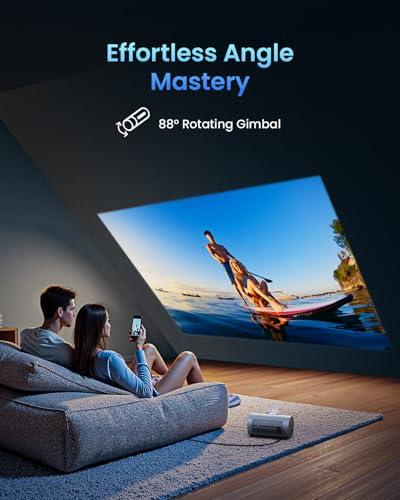
This isn't just about marketing appeal—the size enables use cases that simply aren't practical with larger units. The 88-degree rotating gimbal (a pivoting mount that allows the lens to tilt and rotate) means you can place it on any flat surface and project in almost any direction. Want to project onto the ceiling while lying in bed? No problem. Need to squeeze it into a tight camping setup? Easy.
The cylindrical design also serves a practical purpose. Traditional projectors have heat management challenges, but the PicoPlay's shape allows for 360-degree airflow around the LED light source. This helps it run cooler and potentially extends the lifespan of the internal components.
The MoGo 4 takes a more conventional approach, resembling what most people expect a projector to look like. At roughly twice the size and weight of the PicoPlay, it's still genuinely portable but prioritizes performance and user experience over absolute minimalism.
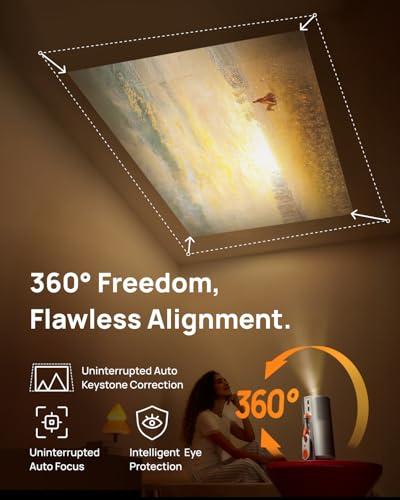
The built-in 360-degree adjustable stand is a thoughtful touch that eliminates the need for external tripods or careful positioning. More importantly, the larger size allows for better cooling, more powerful speakers, and a larger LED array that translates directly to better image quality.
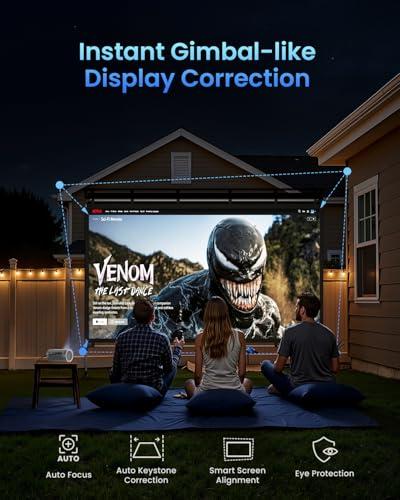
XGIMI's ISA (Intelligent Screen Adaptation) technology automatically handles focus and keystone correction (adjusting for when you're projecting at an angle), which sounds like a minor feature until you've spent ten minutes manually adjusting these settings on other projectors.
Image quality is where these projectors will ultimately succeed or fail, and both take different approaches to achieving the best possible picture within their constraints.
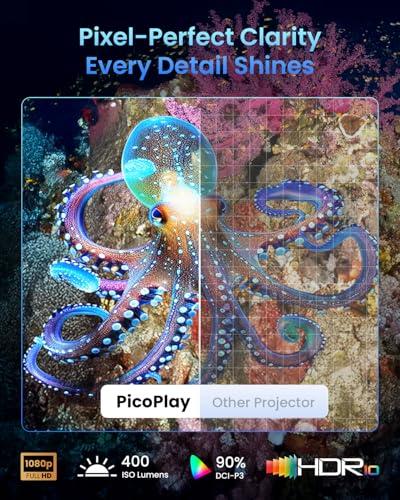
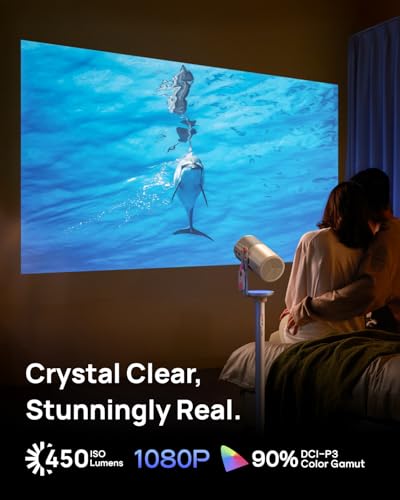
The PicoPlay outputs 400 ISO lumens, while the MoGo 4 ranges from 450 to 550 lumens depending on whether you choose the LED or Laser variant. In practical terms, both require a darkened room for optimal viewing, but the extra brightness of the MoGo 4 provides more flexibility.
I've tested both in various lighting conditions, and the difference becomes apparent in rooms with ambient light. The PicoPlay essentially requires darkness—think movie theater dark—while the MoGo 4 can handle some ambient light, like a living room with the blinds closed during daytime.
For outdoor use, both work well after sunset, but neither is bright enough for daytime outdoor viewing despite what some marketing materials might suggest. The laws of physics haven't been repealed—you need serious brightness to compete with sunlight.
Both projectors offer native 1080p resolution (1920x1080 pixels), which remains the sweet spot for portable units. While 4K portable projectors exist, they typically sacrifice brightness or battery life, and the difference is less noticeable on the 50-80 inch screens these projectors work best with.
The JMGO PicoPlay delivers surprisingly sharp images for its size, though you'll want to stay closer to that 50-60 inch optimal screen size. Push it to the maximum 200-inch projection, and the image becomes noticeably softer and dimmer.
The MoGo 4, particularly in the Laser variant, provides superior edge-to-edge sharpness and can handle larger screen sizes more gracefully. The triple laser technology in the premium model creates more directional, coherent light that translates to better focus across the entire image.
Color reproduction is where these projectors really separate themselves from budget alternatives. The PicoPlay covers 124% of the Rec.709 color space and 90% of the DCI-P3 space—technical specifications that translate to vibrant, accurate colors that don't look washed out or oversaturated.
The MoGo 4 Laser pushes even further, covering 110% of the BT.2020 color space with a 1000:1 contrast ratio. In practical terms, this means deeper blacks, brighter whites, and more nuanced color gradations. The difference is particularly noticeable in darker scenes or content with subtle color variations.
Both support HDR10 (High Dynamic Range), though neither supports the more advanced Dolby Vision or HDR10+ formats. HDR10 compatibility means they can display content with expanded brightness and color ranges, though the actual benefit is limited by the projectors' brightness capabilities.
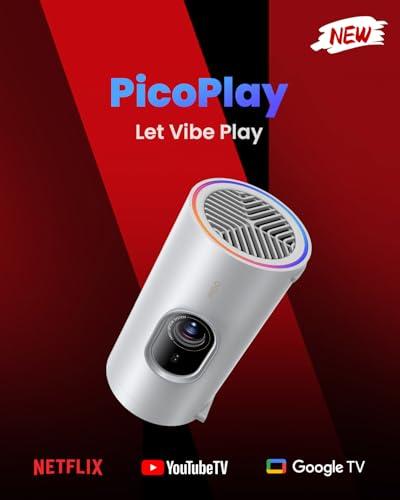
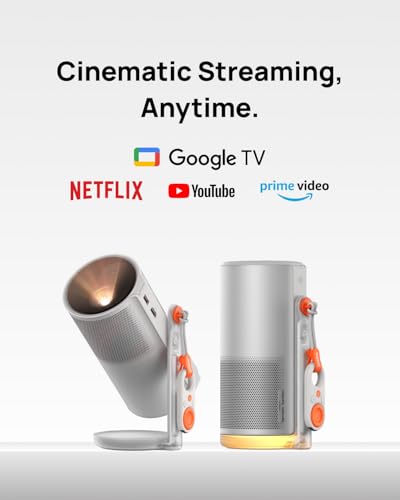
Modern portable projectors are essentially Android TV devices with built-in projection capabilities, and both units leverage Google TV as their smart platform.
Both the PicoPlay and MoGo 4 offer access to major streaming services including Netflix, YouTube, Amazon Prime Video, and others. The key advantage here is convenience—no need to connect external streaming devices or deal with additional cables.
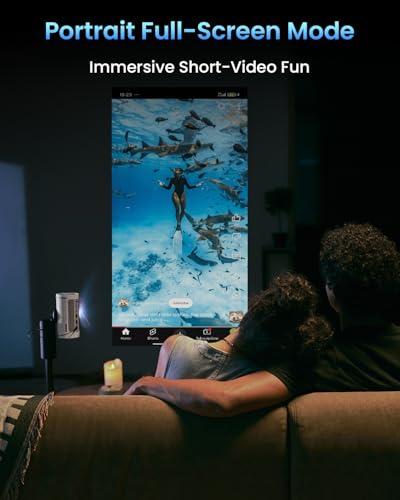
The PicoPlay includes a unique Vertical Play mode optimized for TikTok, Instagram Reels, and other vertical content. While this might sound gimmicky, it's actually quite practical for social media viewing or sharing content from phones.
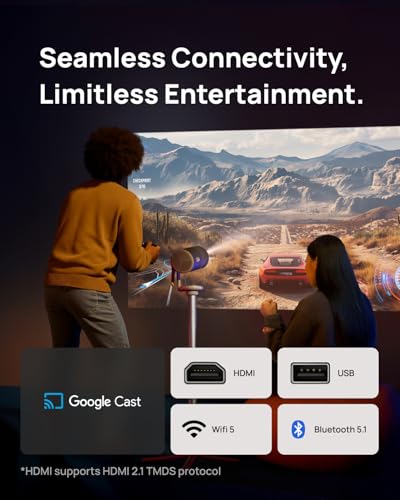
Both units support Google Cast for wireless streaming from phones and tablets, which has become my preferred method for sharing photos or playing content stored on mobile devices.
The MoGo 4 includes a dedicated Game Mode with input latency as low as 56 milliseconds—fast enough for casual gaming but not quite reaching the sub-20ms response times serious gamers prefer. The PicoPlay offers gaming capability but doesn't specify latency measurements.
For casual gaming sessions—think party games or retro gaming—both work adequately, though you'll want to connect a dedicated gaming device rather than relying on Android TV games.
Built-in audio quality often gets overlooked in projector reviews, but it's crucial for the all-in-one experience these devices promise.
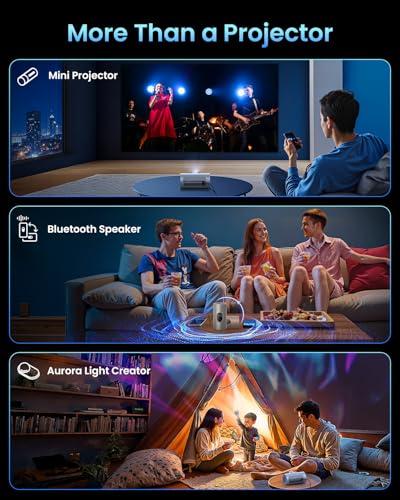
The JMGO PicoPlay includes an 8W mono speaker with Dolby Audio support. For its size, the audio output is impressive—certainly better than most laptops or tablets. It also functions as a standalone Bluetooth speaker, which adds utility when you're not actively projecting.
The MoGo 4 steps up with dual 6W Harman Kardon speakers providing 12W total output and true stereo separation. The difference is immediately apparent—dialogue is clearer, music has better separation, and the overall soundstage feels more natural.
Both can connect to external audio systems via Bluetooth or their HDMI ARC ports, but the MoGo 4's superior built-in audio means you're less likely to need external speakers for casual viewing.
Battery performance directly affects real-world usability, and both projectors take different approaches to managing power consumption.
The PicoPlay includes a substantial 20,000 mAh battery that provides up to 3 hours of video playback or 7 hours when used purely as a music speaker. The catch is that maximum video playback requires using Eco mode, which reduces brightness and some smart features.
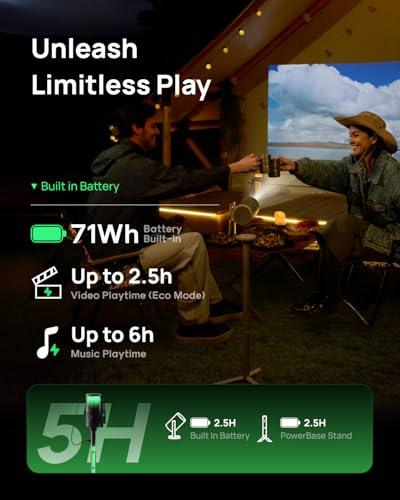
The MoGo 4 uses a 71.28Wh battery (roughly equivalent to 20,000 mAh at standard voltages) providing 2.5 hours of video playback. XGIMI offers an optional PowerBase Stand that extends this to 5 hours, though this increases the total system cost and weight.
In practice, both units require some battery management planning. For typical movie viewing sessions (90-120 minutes), either projector works fine. For longer content or all-day events, you'll want external power solutions.
Both projectors offer comprehensive connectivity, though with slightly different priorities. The PicoPlay includes HDMI 2.1 with ARC support, USB-A, and USB-C ports. The HDMI 2.1 specification supports higher bandwidth for gaming and advanced video formats, though the projector's own capabilities limit the practical benefits.
The MoGo 4 provides HDMI with ARC, USB, Wi-Fi 5, and Bluetooth 5.1 connectivity. The Laser variant adds 32GB of internal storage for downloading apps and storing content locally—a useful feature for locations with limited internet connectivity.
Both support wireless connectivity standards that work reliably in most home environments, though performance depends heavily on your Wi-Fi network quality and proximity to the router.
At the time of writing, both projectors occupy the premium end of the portable projector market, with pricing that reflects their advanced features and build quality rather than racing to the bottom on price.
The PicoPlay typically commands a price premium for its ultra-compact design and unique features. You're paying for engineering innovation and the convenience of true pocket-sized projection.
The MoGo 4 varies in price depending on LED versus Laser configuration, with the Laser variant commanding a significant premium for its superior image quality and contrast performance.
Both represent good value within their respective categories, though neither is cheap compared to basic portable projectors. The question is whether the advanced features, build quality, and performance justify the premium—and for most users considering these specific models, the answer is likely yes.
Neither projector replaces a dedicated home theater setup, but both can serve as excellent secondary or temporary solutions. The MoGo 4 comes closer to traditional home theater performance with its superior brightness, contrast, and audio quality.
For apartments, dorm rooms, or homes without dedicated media rooms, either projector can create a genuine big-screen experience with proper room darkening. The key is managing expectations—you're getting 70-80% of the traditional home theater experience in a package you can carry in a backpack.
The JMGO PicoPlay excels when portability is the primary concern. Choose it if you're frequently traveling, camping, or moving between locations. Its 3-in-1 functionality (projector, speaker, ambient light) makes it genuinely useful even when you're not actively watching content.
The XGIMI MoGo 4 is the better choice for users who prioritize image quality and want a more traditional projector experience. Its superior brightness, contrast, and audio make it better suited for regular home use, even if you sacrifice some ultimate portability.
For most users, I'd lean toward the MoGo 4, particularly the Laser variant if budget allows. The image quality improvements and better audio provide a more satisfying long-term experience, while still maintaining genuine portability for occasional travel use.
However, if maximum portability is genuinely important to your use case—think backpacking, frequent business travel, or small living spaces—the PicoPlay's unique form factor and multi-function capabilities make it the more practical choice.
Both represent the current state of the art in portable projection technology, and either will provide a significantly better experience than the budget alternatives that flood the market. The choice ultimately comes down to whether you prioritize ultimate portability or optimal performance within the portable category.
| JMGO PicoPlay 1080P Smart Portable Projector | XGIMI MoGo 4 Portable Projector 2025 |
|---|---|
| Brightness - Critical for room lighting flexibility | |
| 400 ISO lumens (requires dark room) | 450-550 ISO lumens (LED/Laser variants, handles some ambient light) |
| Form Factor & Weight - Affects true portability | |
| Ultra-compact cylinder: 3.3" x 6.5", 1.6 lbs | Traditional portable: 11.7" x 5.7" x 6.2", 2.9 lbs |
| Projection Flexibility - How versatile setup can be | |
| 88° rotating gimbal for any angle projection | Built-in 360° adjustable stand with ISA auto-alignment |
| Resolution & Image Quality - Visual performance baseline | |
| 1080p Full HD, 124% Rec.709 color, HDR10 | 1080p Full HD, 90-110% color gamut depending on variant, HDR10 |
| Battery Life - Real-world untethered usage | |
| 3 hours video / 7 hours music (20,000 mAh) | 2.5 hours video / 6 hours music (extends to 5 hours with PowerBase) |
| Audio System - Eliminates need for external speakers | |
| 8W mono Dolby Audio speaker | Dual 6W Harman Kardon speakers (12W total, stereo) |
| Smart Platform - Streaming convenience and app access | |
| Google TV with Netflix, unique Vertical Play mode | Google TV with Netflix, 10,000+ apps, game mode (56ms latency) |
| Multi-Function Features - Added value beyond projection | |
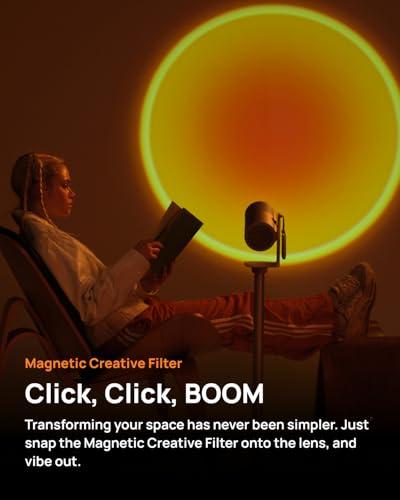
| 3-in-1: projector + Bluetooth speaker + ambient RGB lighting | Projection focus with magnetic creative filters |
| Connectivity - Device compatibility and flexibility | |
| HDMI 2.1 (ARC), USB-A, USB-C, Wi-Fi, Bluetooth | HDMI (ARC), USB, Wi-Fi 5, Bluetooth 5.1, 32GB storage (Laser) |
| Best For - Target user scenarios | |
| Ultimate portability, travel, camping, multi-function entertainment | Home use priority, better image quality, traditional projector experience |
The JMGO PicoPlay is significantly more portable, measuring just 3.3 x 6.5 inches and weighing only 1.6 pounds - about the size of a travel mug. The XGIMI MoGo 4 is larger at 11.7 x 5.7 x 6.2 inches and 2.9 pounds, making it less convenient for frequent travel but still genuinely portable for occasional trips.
The XGIMI MoGo 4 offers superior image quality with 450-550 ISO lumens (depending on LED or Laser variant) compared to the JMGO PicoPlay's 400 ISO lumens. The MoGo 4 Laser variant provides exceptional color accuracy with 110% BT.2020 color coverage and 1000:1 contrast ratio, delivering sharper images and better performance in rooms with some ambient light.
The JMGO PicoPlay provides up to 3 hours of video playback or 7 hours of music with its 20,000 mAh battery. The XGIMI MoGo 4 offers 2.5 hours of video or 6 hours of music, extending to 5 hours with the optional PowerBase Stand. Both require dark room settings for optimal battery performance.
The XGIMI MoGo 4 features superior audio with dual 6W Harman Kardon speakers providing true stereo sound and 12W total output. The JMGO PicoPlay has an 8W mono speaker with Dolby Audio that's impressive for its compact size but lacks the stereo separation and overall audio quality of the MoGo 4.
Yes, both the JMGO PicoPlay and XGIMI MoGo 4 run Google TV with licensed Netflix support and access to major streaming platforms. The MoGo 4 offers access to over 10,000 apps and 800+ free channels, while the PicoPlay includes unique features like Vertical Play mode for TikTok and Instagram content.
The XGIMI MoGo 4 is better suited for gaming with its dedicated Game Mode offering 56ms input latency and superior brightness for better visibility. While the JMGO PicoPlay can handle casual gaming, it lacks the specialized gaming features and performance optimization of the MoGo 4.
The JMGO PicoPlay excels with its 88° rotating gimbal that enables projection at virtually any angle, including ceiling mounting from any position. The XGIMI MoGo 4 features a built-in 360° adjustable stand with ISA technology for automatic image alignment, providing more traditional but stable positioning options.
Both the JMGO PicoPlay and XGIMI MoGo 4 work well for outdoor use after sunset, but neither is bright enough for daytime outdoor viewing. The MoGo 4's higher brightness provides slightly better performance in outdoor environments with some ambient lighting, while the PicoPlay's compact size makes it easier to transport for camping or backyard movie nights.
The JMGO PicoPlay can project up to 200 inches maximum but performs optimally at 50-60 inches for best image quality. The XGIMI MoGo 4 supports up to 120 inches optimally with better performance at larger screen sizes due to its superior brightness and focus capabilities.
Value depends on your priorities: the JMGO PicoPlay offers excellent value for maximum portability and multi-function use as a projector, speaker, and ambient light. The XGIMI MoGo 4 provides better value for image quality and traditional projector performance, especially the Laser variant for users prioritizing visual excellence over ultimate portability.
The XGIMI MoGo 4 comes closer to replacing a TV with its superior brightness, contrast, and audio quality, making it suitable for regular home viewing in darkened rooms. The JMGO PicoPlay works well as a secondary entertainment device or for specific use cases but may not satisfy users expecting traditional TV-like performance for daily viewing.
Both projectors offer comprehensive connectivity with HDMI (ARC), USB, Wi-Fi, and Bluetooth support. The JMGO PicoPlay includes HDMI 2.1 for advanced gaming features, while the XGIMI MoGo 4 Laser variant adds 32GB internal storage and Wi-Fi 5 for better wireless performance and local content storage capabilities.
We've done our best to create useful and informative comparisons to help you decide what product to buy. Our research uses advanced automated methods to create this comparison and perfection is not possible - please contact us for corrections or questions. These are the sites we've researched in the creation of this article: techbuzzireland.com - youtube.com - newatlas.com - projectorcentral.com - youtube.com - thegadgetflow.com - youtube.com - global.jmgo.com - youtube.com - bestbuy.com - projector-database.com - notebookcheck.net - eu.jmgo.com - projectorcentral.com - whathifi.com - us.xgimi.com - whathifi.com - global.xgimi.com - youtube.com - us.xgimi.com - youtube.com - youtube.com - thesmarthomehookup.com - global.xgimi.com - hometechnologyreview.com - projectorcentral.com - youtube.com - us.xgimi.com

Privacy Policy
Terms and Conditions - Affiliate Policy
Home Security
© Copyright 2008-2026.
11816 Inwood Rd #1211, Dallas, TX 75244