

Portable projectors have become surprisingly capable over the past few years, transforming from dim, barely-usable gadgets into legitimate entertainment devices that can actually replace your TV in many situations. But with so many options flooding the market, choosing the right one can feel overwhelming.
Two projectors that perfectly illustrate different approaches to portable projection are the JMGO PicoPlay and the XGIMI Halo+. These devices represent completely different philosophies: one prioritizes revolutionary portability and innovation, while the other focuses on maximum performance and premium build quality. Understanding which approach better fits your needs will save you from buyer's remorse.
Before diving into these specific models, it's worth understanding what separates good portable projectors from mediocre ones. The biggest challenge in this category has always been the physics of light—making a device small enough to carry around while still producing enough brightness to create a watchable image.
Brightness is measured in lumens, and it's the most critical spec for any projector. However, manufacturers love to play games with lumen ratings, using different measurement standards that can make direct comparisons confusing. ANSI lumens and ISO lumens are both legitimate measurements, but they're calculated differently, making it tricky to compare specs across brands.
Battery performance represents another major challenge. Most portable projectors dramatically reduce their brightness when running on battery power to extend runtime. This trade-off means you might buy a projector advertised as 700 lumens, only to discover it drops to 200 lumens when you actually want to use it portably.
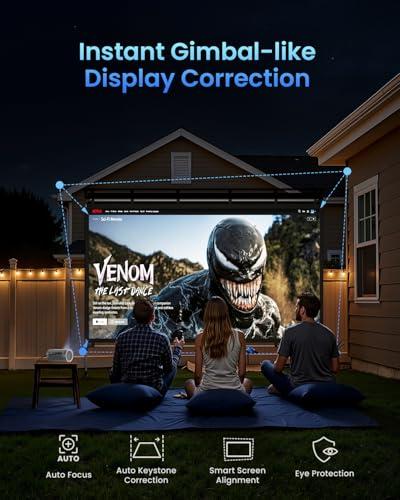
Setup convenience has become increasingly important as these devices mature. Nobody wants to spend 10 minutes adjusting focus, keystone correction (fixing the trapezoidal distortion when projecting at an angle), and screen alignment every time they want to watch something. The best modern projectors handle most of this automatically.
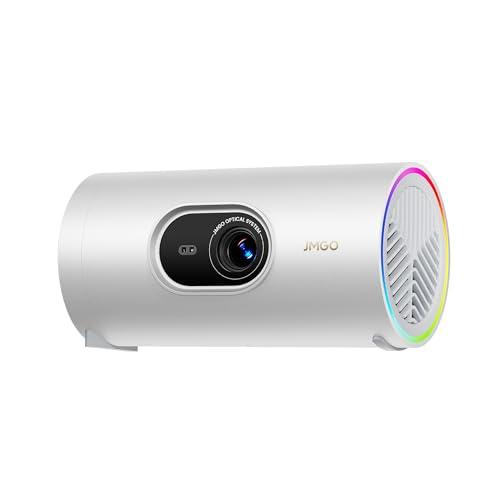
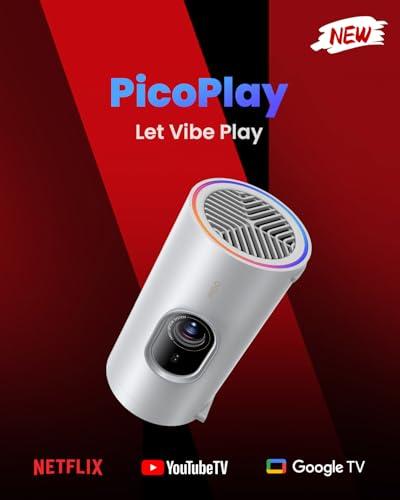
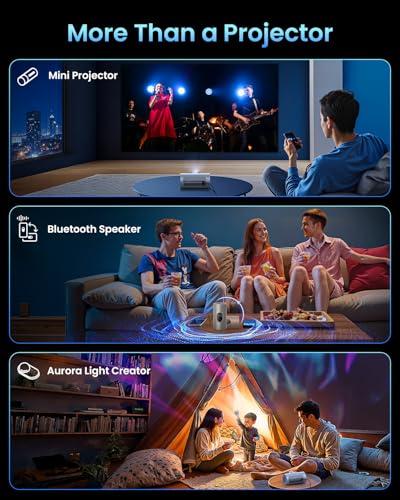
The JMGO PicoPlay, launched in 2025, represents a radical rethinking of what a portable projector should look like. Rather than creating a smaller version of a traditional projector, JMGO designed something that looks more like an oversized coffee mug with a revolutionary rotating gimbal system that lets you project onto walls or ceilings without moving the device itself.
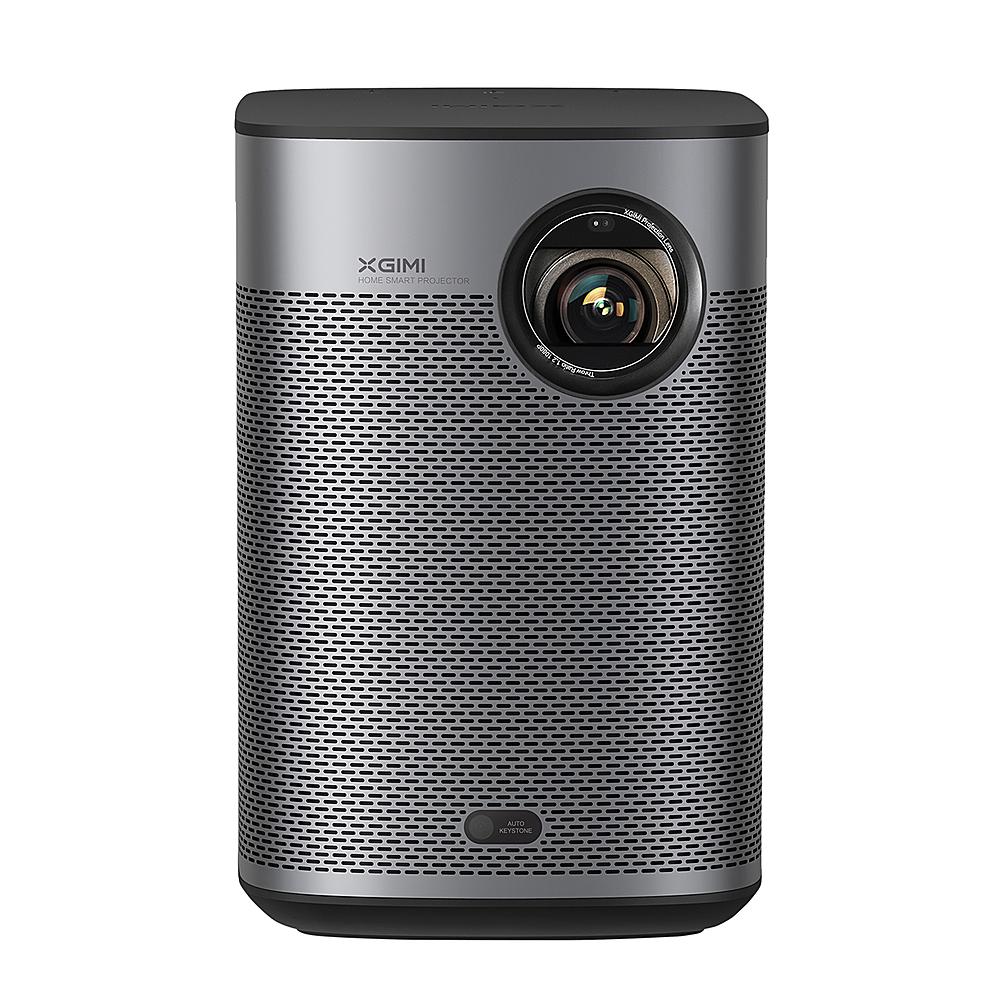
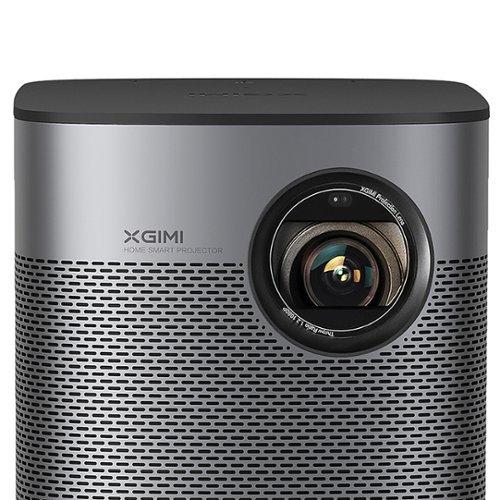
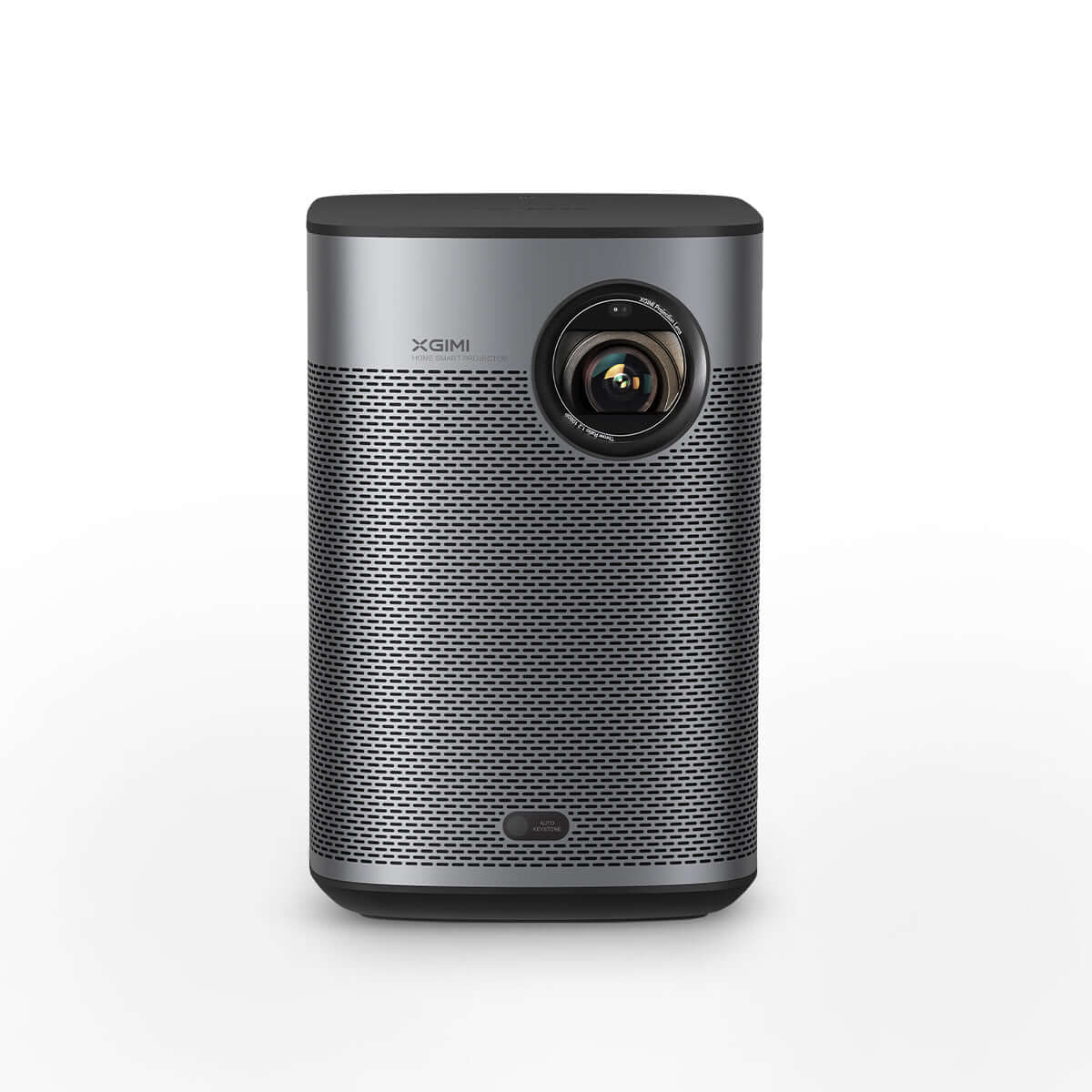
The XGIMI Halo+, which has been available since around 2022-2023, takes the more traditional approach of cramming high-end projector technology into a relatively compact package. It's what you'd get if you shrunk a premium home theater projector while maintaining as much performance as possible.
This is where the fundamental difference between these projectors becomes clear. The XGIMI Halo+ delivers an impressive 652 ANSI lumens when plugged into wall power—that's genuinely bright for a portable projector and makes it usable in rooms with some ambient light. You could watch it during a cloudy afternoon with curtains drawn, or in a living room with a few lights on.
However, here's where things get interesting: when the Halo+ switches to battery power, that brightness plummets to just 107 ANSI lumens. That's a dramatic 84% reduction that fundamentally changes what the projector can do. At 107 lumens, you need essentially complete darkness to get a watchable image.
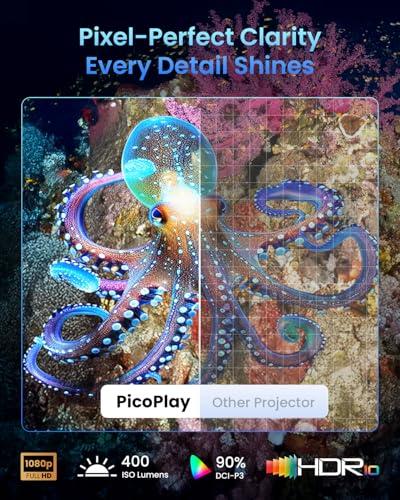
The JMGO PicoPlay, meanwhile, produces 400 ISO lumens consistently whether it's plugged in or running on battery. While that's dimmer than the Halo+'s peak brightness, the consistent performance means you can actually count on that brightness level when using it portably. In practical terms, 400 lumens requires a dark or dimly lit room, but it's definitely watchable—think basement movie night or outdoor viewing after sunset.
Based on our evaluation of user experiences and professional reviews, the PicoPlay's consistent brightness delivery makes it more reliable for truly portable use, while the Halo+ works better as a semi-portable projector that you'll mostly use plugged in.
Both projectors deliver native 1080p Full HD resolution, which looks sharp and detailed at typical viewing sizes of 60-100 inches diagonal. However, they achieve this quality through different approaches.
The JMGO PicoPlay uses what appears to be an LCD-based light engine with impressive color coverage—90% of the DCI-P3 color space and 124% of the older Rec.709 standard. In practical terms, this means colors look vibrant and accurate, particularly noticeable in nature documentaries or animated content where color saturation matters.
The XGIMI Halo+ uses DLP (Digital Light Processing) technology, which typically delivers better contrast ratios—the difference between the darkest blacks and brightest whites. DLP also tends to produce sharper text and fewer rainbow artifacts (brief color flashes some people notice with DLP projectors).
For home theater use, both approaches have merit. The PicoPlay's superior color accuracy makes movies and shows look more lifelike, while the Halo+'s better contrast helps with dark scenes in movies where shadow detail matters.
Interestingly, the PicoPlay includes 3D support, which has become rare in portable projectors. If you have a collection of 3D Blu-rays, this could be a deciding factor.
Since portable projectors are often used in situations where connecting external speakers isn't practical, built-in audio quality becomes crucial. The XGIMI Halo+ clearly wins here with dual 5-watt Harman/Kardon speakers that produce surprisingly rich, full sound for such a compact device. The stereo separation and overall audio quality rival many small Bluetooth speakers.
The JMGO PicoPlay takes a different approach with a single 8-watt speaker. While it doesn't match the Halo+'s stereo imaging, it's louder and includes some clever features like Bluetooth speaker mode and dynamic ambient lighting that syncs with music. For casual viewing, it's perfectly adequate, though audiophiles will prefer the Halo+'s setup.
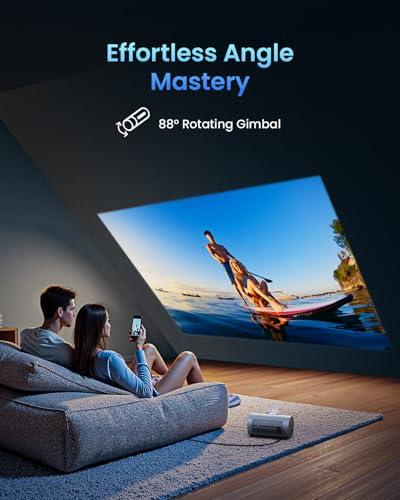
Here's where the JMGO PicoPlay truly differentiates itself. The 88-degree rotating gimbal system is genuinely revolutionary in the portable projector space. Instead of having to physically move and reposition the entire projector to change from wall projection to ceiling projection, you simply rotate the projection lens within the device.
This might sound like a minor convenience, but it's transformative in practice. Ceiling projection has always been one of the most appealing uses for portable projectors—lying in bed watching a movie projected overhead—but it typically requires either a complex mount or awkward positioning of the projector itself. The PicoPlay makes this effortless.
The gimbal system also enables more flexible placement in tight spaces. If you're in a small dorm room or hotel room where the only flat surface isn't perfectly aligned with your viewing position, you can adjust the projection angle without moving the projector.
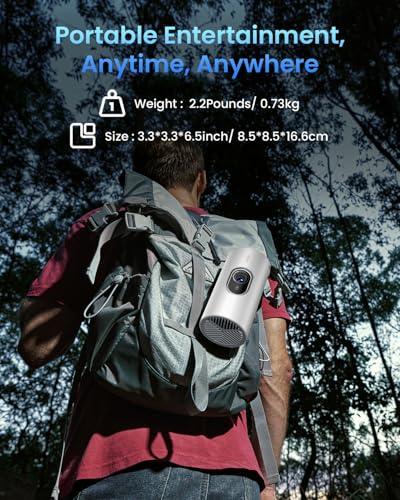
The size difference between these projectors is substantial. The PicoPlay measures roughly 3.3 x 3.3 x 6.5 inches and weighs just 2.2 pounds—it literally fits in a large coffee mug and weighs less than most laptops. The Halo+, at 3.7 pounds and significantly larger dimensions, feels more like carrying a small electronics device rather than something that disappears into your bag.
This size difference matters most for true travel scenarios. The PicoPlay can easily fit in a carry-on bag without taking up significant space, while the Halo+ requires more deliberate packing decisions.
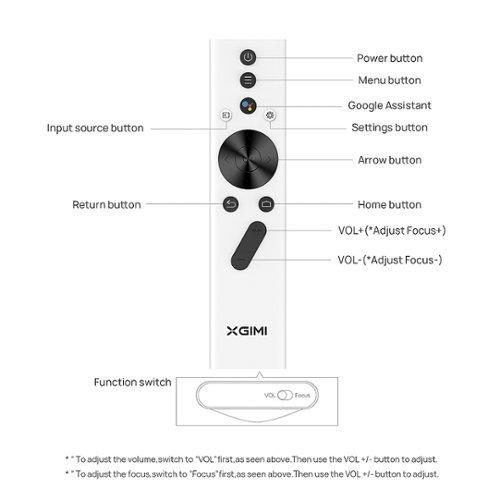
Both projectors include built-in smart TV platforms, but they're from different generations of technology. The JMGO PicoPlay runs the latest Google TV platform with native access to Netflix, YouTube, Amazon Prime Video, and thousands of other apps. It also includes voice control through Google Assistant and wireless casting from phones and tablets.
The XGIMI Halo+ uses Android TV 10.0, which was current when it launched but now feels dated compared to Google TV. It has most major apps but lacks some of the polish and integration of newer platforms.
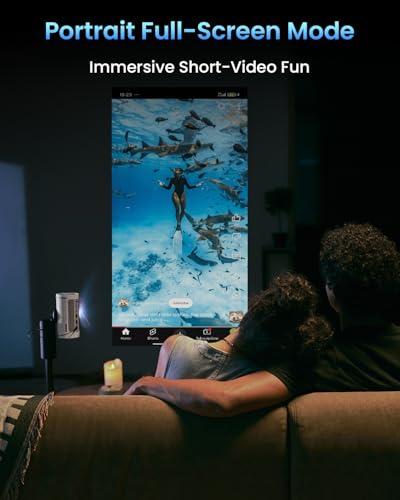
One unique feature on the PicoPlay is Vertical Play mode, which optimizes the projector for vertical video content from TikTok, Instagram Reels, and YouTube Shorts. This might seem gimmicky, but it reflects how content consumption has evolved, especially for younger users.
Both devices include automatic setup features, but they work differently. The XGIMI Halo+ uses what XGIMI calls Intelligent Screen Adaptation, which automatically handles focus, keystone correction, and can even detect and avoid obstacles in the projection path.
The PicoPlay includes what JMGO calls the FlexiSmart system, which provides autofocus, auto keystone correction, and screen alignment. It also includes eye protection that dims the projector if someone walks in front of it.
Based on user feedback we've reviewed, both systems work well, though the Halo+'s obstacle avoidance is particularly impressive when projecting in cluttered spaces.
The PicoPlay includes an integrated 20,000 mAh battery that provides up to 3 hours of video playback or 7 hours of audio-only use. Crucially, it maintains full brightness throughout this runtime.
The XGIMI Halo+ has a smaller 59.45 watt-hour battery, and as mentioned earlier, it severely reduces brightness when running on battery power to extend runtime.
For truly portable use—camping, backyard movie nights, or anywhere without power—the PicoPlay's approach is far more practical. The Halo+ works better as a projector you can move between rooms but will mostly use plugged in.
At the time of writing, the JMGO PicoPlay offers exceptional value, particularly during promotional periods where it's priced significantly below the XGIMI Halo+. Even at full retail price, it typically costs substantially less than the Halo+ while offering several unique features.
The XGIMI Halo+ commands a premium price that reflects its superior brightness when plugged in and premium build quality. Whether that premium is justified depends largely on how you plan to use the projector.
For dedicated home theater use, both projectors have limitations compared to larger, more expensive models, but they can definitely serve as secondary displays or primary projectors for smaller spaces.
The XGIMI Halo+'s superior brightness when plugged in makes it more versatile for family rooms or living rooms where you can't achieve complete darkness. Its better contrast ratio and premium audio also work in its favor for serious movie watching.
The PicoPlay's color accuracy and HDR10 support help it punch above its weight class for image quality, and the ceiling projection capability opens up new possibilities for bedroom theaters or media rooms where traditional projector placement is challenging.
For most home theater applications, you'd want to pair either projector with a proper screen rather than projecting onto a white wall, and consider external audio for the best experience.
The JMGO PicoPlay makes the most sense for people who prioritize true portability and innovative features. If you're a frequent traveler, live in a small space, or want a projector that can easily move from room to room, its combination of compact size, consistent battery performance, and unique gimbal design make it compelling. The aggressive pricing also makes it attractive for budget-conscious buyers who still want modern features.
The XGIMI Halo+ is better suited for users who want maximum performance and are willing to pay for it. If you primarily use your projector in fixed locations with power access, need the brightest possible image for varied lighting conditions, or prioritize premium build quality and audio, it's worth the extra cost.
These projectors represent fundamentally different approaches to portable projection. The JMGO PicoPlay prioritizes innovation, true portability, and value, while the XGIMI Halo+ focuses on maximum performance and premium quality.
For most people, the PicoPlay's combination of innovative design, consistent performance, and strong value proposition makes it the better choice. The gimbal system alone solves several common portable projector frustrations, and the consistent brightness on battery power makes it more reliable for truly portable use.
However, if you need maximum brightness for ambient light situations, prioritize premium audio quality, or want the peace of mind that comes with a more established, premium product, the XGIMI Halo+ justifies its higher price.
The portable projector market continues to evolve rapidly, but these two models showcase how different manufacturers are solving the fundamental challenges of creating truly useful portable projection devices. Whether you choose innovation or proven performance, both represent significant improvements over the dim, frustrating portable projectors of just a few years ago.
| JMGO PicoPlay 1080P Smart Portable Projector | XGIMI Halo+ Portable Projector |
|---|---|
| Brightness - Critical for ambient light performance and image visibility | |
| 400 ISO lumens (consistent on battery and AC power) | 652 ANSI lumens plugged in / 107 ANSI lumens on battery |
| Weight & Size - Determines true portability for travel and storage | |
| 2.2 lbs, coffee mug size (3.3" x 6.5") | 3.7 lbs, traditional compact projector form |
| Design Innovation - Unique features that solve common projector problems | |
| 88° rotating gimbal for ceiling/wall projection flexibility | Fixed orientation, premium metal construction |
| Battery Performance - Essential for truly portable, untethered use | |
| 20,000 mAh battery, 3 hours video at full brightness | 59.45Wh battery, severe brightness reduction on battery |
| Smart Platform - Access to streaming apps and modern features | |
| Latest Google TV with Netflix, YouTube, voice control | Android TV 10.0 (older platform, limited app access) |
| Resolution & Image Quality - Core viewing experience | |
| 1080p Full HD, 90% DCI-P3 color, HDR10, 3D support | 1080p Full HD, DLP technology, better contrast |
| Audio System - Important when external speakers aren't practical | |
| 8W mono speaker, Bluetooth speaker mode, ambient lighting | Dual 5W Harman/Kardon speakers, superior stereo sound |
| Setup Convenience - Time from power-on to watching content | |
| FlexiSmart auto-focus, keystone, alignment, eye protection | Intelligent Screen Adaptation with obstacle avoidance |
| Connectivity Options - Flexibility for different content sources | |
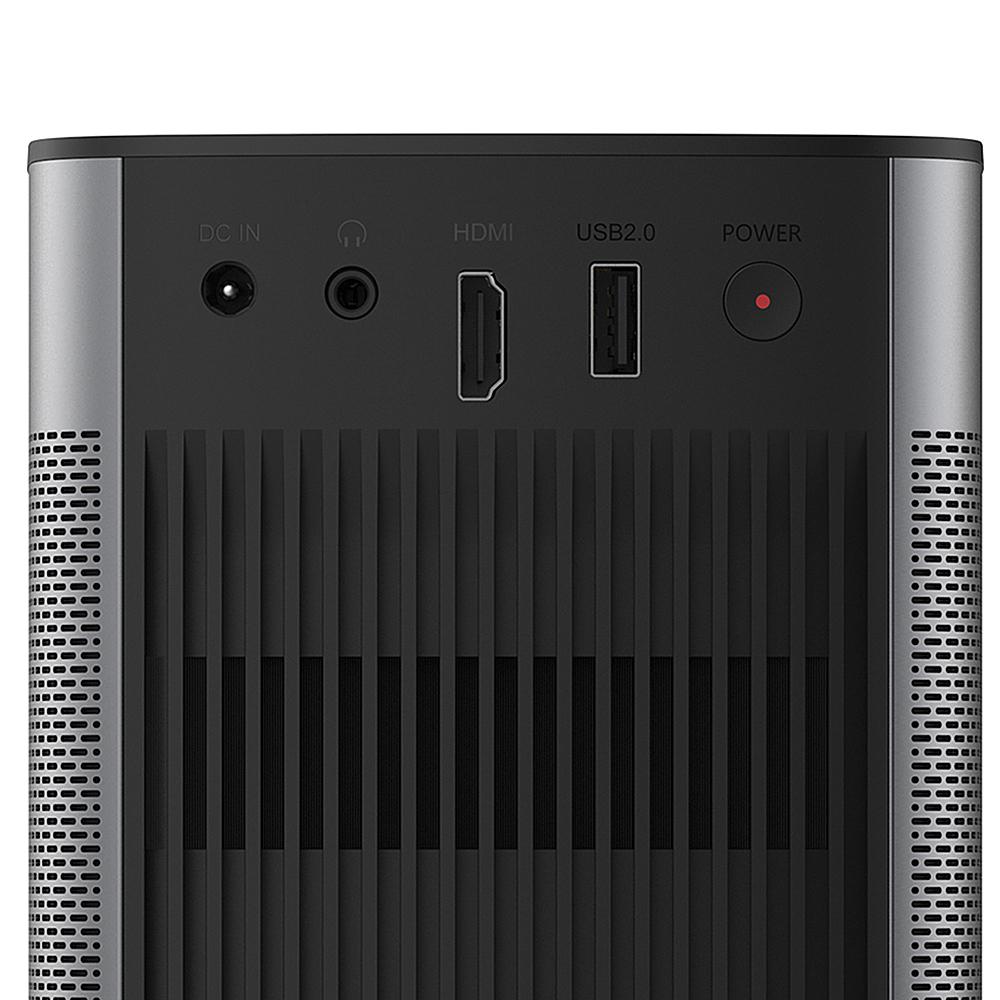
| HDMI 2.1 (ARC), USB-A, USB-C, Wi-Fi, Bluetooth casting | HDMI (eARC), USB, Wi-Fi, Bluetooth 5.0, Chromecast |
| Best Use Cases - When each projector excels | |
| Travel, dorms, outdoor use, ceiling projection, budget-conscious buyers | Home theater, bright rooms, premium audio needs, plugged-in use |
The XGIMI Halo+ Portable Projector is significantly brighter when plugged in, delivering 652 ANSI lumens compared to the JMGO PicoPlay 1080P Smart Portable Projector's 400 ISO lumens. However, the Halo+ drops dramatically to only 107 lumens on battery power, while the PicoPlay maintains consistent brightness whether plugged in or running on battery.
The JMGO PicoPlay 1080P Smart Portable Projector is superior for travel, weighing just 2.2 pounds compared to the XGIMI Halo+'s 3.7 pounds. The PicoPlay also features a unique coffee-mug size design and maintains full brightness on battery power, making it ideal for camping, hotel rooms, and outdoor use.
Yes, but with different platforms. The JMGO PicoPlay runs the latest Google TV with native Netflix, YouTube, and Amazon Prime Video access. The XGIMI Halo+ Portable Projector uses the older Android TV 10.0 platform, which has most major apps but lacks some modern features and integration found in the PicoPlay's newer system.
The XGIMI Halo+ Portable Projector has superior audio with dual 5W Harman/Kardon speakers providing stereo sound and premium audio tuning. The JMGO PicoPlay features an 8W mono speaker that's louder but lacks stereo separation, though it includes unique features like Bluetooth speaker mode and music-synced ambient lighting.
The JMGO PicoPlay 1080P Smart Portable Projector excels here with its revolutionary 88° rotating gimbal that allows effortless ceiling projection without moving the device. The XGIMI Halo+ requires physical repositioning or mounting accessories for ceiling projection, making the PicoPlay much more convenient for bedroom movie nights.
The JMGO PicoPlay typically offers exceptional value with innovative features like the rotating gimbal, consistent battery performance, and modern Google TV platform at a significantly lower price point than the premium-positioned XGIMI Halo+ Portable Projector.
The JMGO PicoPlay 1080P Smart Portable Projector provides up to 3 hours of video playback with its 20,000 mAh battery while maintaining full brightness. The XGIMI Halo+ has a smaller battery capacity and significantly reduces brightness when running on battery power to extend runtime, making it less practical for truly portable use.
For dedicated home theater use, the XGIMI Halo+ Portable Projector has advantages with its higher peak brightness (652 lumens when plugged in), better contrast ratio from DLP technology, and superior Harman/Kardon stereo speakers. However, the PicoPlay's better color accuracy and HDR10 support also deliver excellent image quality for the price.
Both projectors feature automatic setup systems. The JMGO PicoPlay includes FlexiSmart technology with auto-focus, keystone correction, and screen alignment. The XGIMI Halo+ Portable Projector offers Intelligent Screen Adaptation with advanced obstacle avoidance. Both eliminate the tedious manual adjustments common in older projectors.
Only the JMGO PicoPlay 1080P Smart Portable Projector supports 3D playback, making it the better choice if you have a collection of 3D Blu-rays or want access to 3D content. The XGIMI Halo+ does not include 3D support.
The XGIMI Halo+ Portable Projector performs better in ambient light conditions when plugged in due to its 652-lumen output. The JMGO PicoPlay requires darker environments for optimal viewing with its 400-lumen output, though it maintains this brightness consistently on battery power unlike the Halo+.
The JMGO PicoPlay 1080P Smart Portable Projector is superior for outdoor use due to its compact size, consistent battery brightness, integrated 20,000 mAh battery providing 3 hours of runtime, and weather-resistant design with included travel pouch. The XGIMI Halo+ is less suitable for camping due to its larger size and poor battery brightness performance.
We've done our best to create useful and informative comparisons to help you decide what product to buy. Our research uses advanced automated methods to create this comparison and perfection is not possible - please contact us for corrections or questions. These are the sites we've researched in the creation of this article: techbuzzireland.com - youtube.com - newatlas.com - projectorcentral.com - youtube.com - thegadgetflow.com - youtube.com - global.jmgo.com - youtube.com - bestbuy.com - projector-database.com - notebookcheck.net - eu.jmgo.com - bestbuy.com - bestbuy.com - youtube.com - projectorcentral.com - staples.com - youtube.com - rtings.com - us.xgimi.com - youtube.com - cnet.com - us.xgimi.com - youtube.com - marieclaire.com - youtube.com - youtube.com - youtube.com - youtube.com - odpbusiness.com - bhphotovideo.com - bestbuy.com - projectorcentral.com - us.xgimi.com - global.xgimi.com - projectorscreen.com - petra.com - eu.xgimi.com - us.xgimi.com - global.xgimi.com

Privacy Policy
Terms and Conditions - Affiliate Policy
Home Security
© Copyright 2008-2026.
11816 Inwood Rd #1211, Dallas, TX 75244