

The world of portable projectors has exploded in recent years, transforming from bulky, expensive business tools into sleek entertainment devices that fit in your backpack. But with so many options flooding the market, choosing the right one can feel overwhelming. Today, we're diving deep into two very different approaches to portable projection: the innovative JMGO PicoPlay and the more traditional Aurzen BOOM 3.
Both projectors launched in 2024, representing the latest thinking in portable display technology. However, they couldn't be more different in their design philosophy and target audience. Understanding these differences is crucial to making the right choice for your needs.
Before we jump into the specifics, let's talk about what makes modern portable projectors so appealing. Unlike the projectors your teachers wheeled into classrooms on squeaky carts, today's models are smart devices that can stream Netflix, connect to your phone wirelessly, and automatically adjust their picture without you touching a single button.
The key innovation here is the integration of smart TV operating systems directly into the projector. This means you don't need a separate streaming device, laptop, or complex cable setup. You literally plug it in (or in some cases, don't even need to do that), and you're watching content within minutes.
The main trade-offs in this category come down to portability versus performance. The smaller and lighter a projector gets, the dimmer its image becomes and the smaller its speakers get. It's basic physics – there's only so much brightness and sound you can pack into a device the size of a coffee cup.
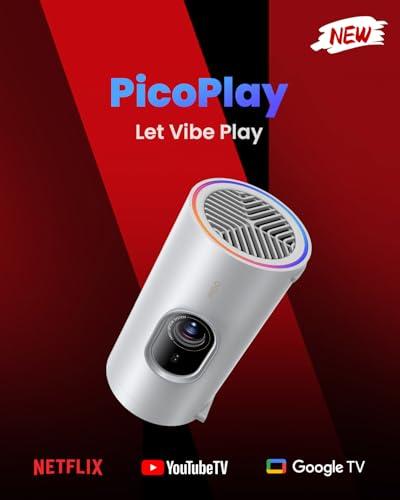
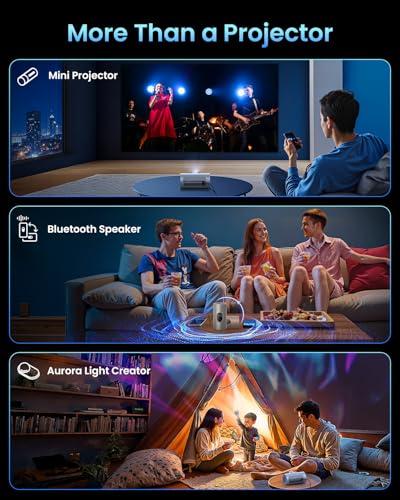
The JMGO PicoPlay represents perhaps the most radical rethinking of projector design in recent years. When JMGO first released this model internationally in 2024 (it debuted in China slightly earlier), they weren't just making another portable projector – they were creating what they call a "3-in-1 entertainment hub."
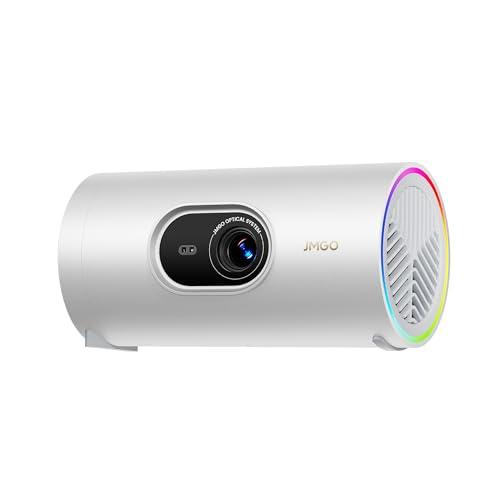
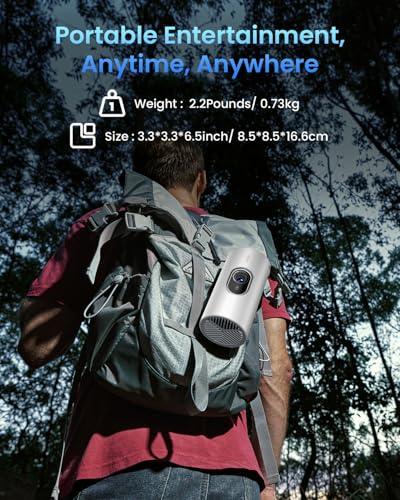
The first thing you notice about the PicoPlay is its shape. Forget everything you think you know about what projectors look like. This thing looks like a premium travel mug or a high-end Bluetooth speaker. It's cylindrical, stands just 6.5 inches tall, and weighs about as much as a thick hardcover book.
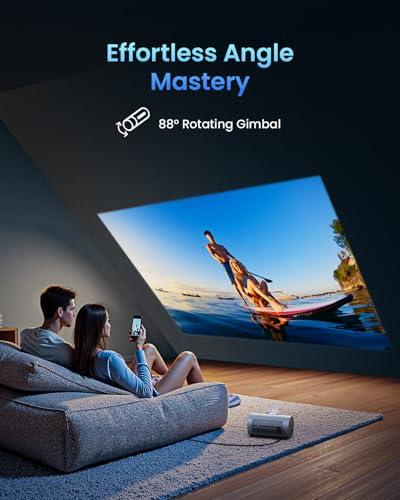
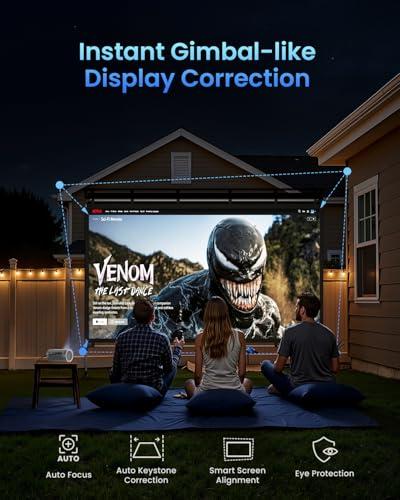
But the real magic happens with what JMGO calls its "88-degree rotating gimbal." This isn't marketing fluff – it's a genuine game-changer. The entire projection system sits on a motorized rotating mount that can tilt the image up to 88 degrees. This means you can easily project onto your ceiling for bedtime movies, onto a wall for regular viewing, or at any angle in between without moving the projector itself or fiddling with complicated adjustments.
I've used quite a few portable projectors over the years, and the setup process usually involves a lot of manual tweaking – adjusting the angle, correcting keystone distortion (that trapezoid effect when you project at an angle), and trying to get everything lined up properly. The PicoPlay eliminates almost all of that hassle.
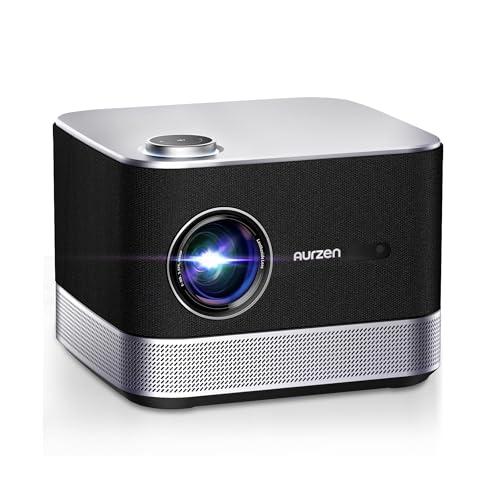
The Aurzen BOOM 3, released in 2024, takes a more conventional approach. It looks like what you'd expect a compact projector to look like – a rectangular box with a lens on the front. At 5.5 pounds and roughly the size of a large toaster, it's still portable, but it's clearly designed with different priorities in mind.
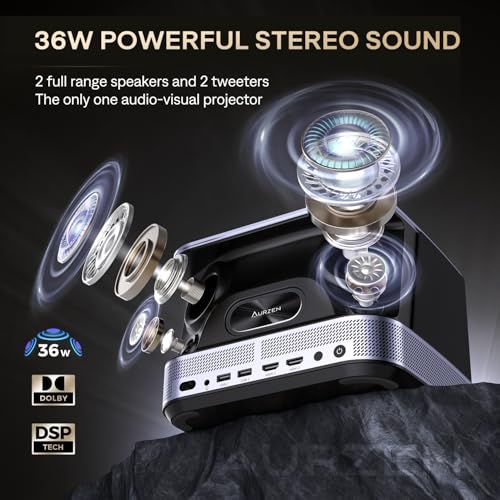
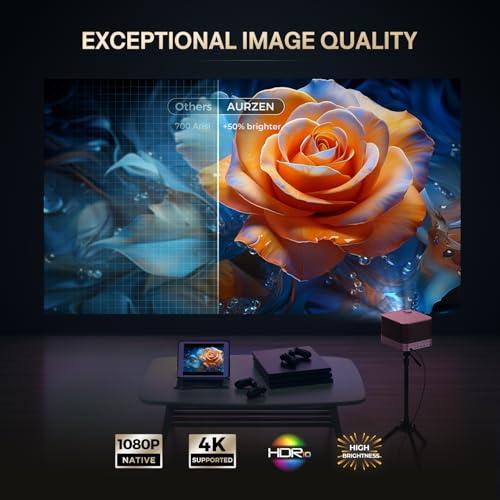
Where the BOOM 3 really focuses its energy is on two key areas: brightness output and audio power. With 500 ANSI lumens of brightness compared to the PicoPlay's 400 ISO lumens, it can handle slightly brighter environments. More dramatically, it packs a 36-watt, 2.2-channel speaker system with four separate drivers – that's genuinely impressive audio power for a portable projector.
The Aurzen BOOM 3 represents the "bigger is better" philosophy applied to portable projection. It sacrifices some of the PicoPlay's convenience features in favor of more traditional strengths like brightness and sound quality.
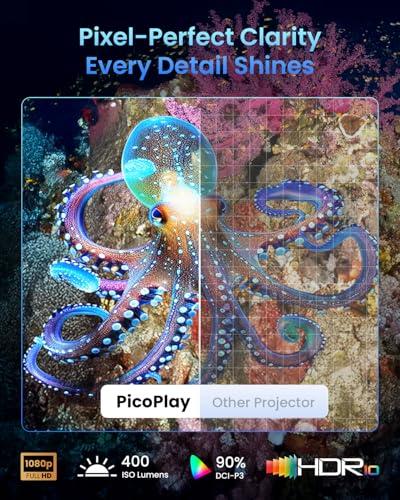
When comparing projectors, most people immediately look at brightness numbers, but the story is more complex than that. Both the JMGO PicoPlay and Aurzen BOOM 3 deliver native 1080p Full HD resolution, which means they're actually displaying 1,920 by 1,080 individual pixels rather than upscaling from a lower resolution.
However, their approach to color reproduction reveals important differences. The PicoPlay covers 90% of the DCI-P3 color space and 124% of the Rec.709 standard. These technical terms essentially mean it can display a wider range of colors more accurately than most budget projectors. DCI-P3 is the color standard used in digital movie theaters, while Rec.709 is the standard for HD television. When a projector exceeds 100% of Rec.709, it means it can display more vibrant colors than standard HD content requires.
The BOOM 3 doesn't publish specific color gamut specifications, which typically indicates more standard color reproduction. In practical terms, this means the PicoPlay will likely display more accurate skin tones, richer blues and greens, and better overall color fidelity.
Both projectors support HDR10, which enhances the contrast between dark and light areas of the image. However, HDR really shines (pun intended) when you have sufficient brightness to take advantage of it. With moderate brightness levels on both devices, the HDR improvement is noticeable but not dramatically transformative.
Here's where we need to have an honest conversation about expectations. The BOOM 3's 500 ANSI lumens versus the PicoPlay's 400 ISO lumens both sound impressive, but neither projector will work well in a bright living room during the day. ANSI lumens and ISO lumens are slightly different measurement standards, but they're close enough for comparison purposes.
For context, most dedicated home theater projectors start around 1,500 lumens, and even those work best in darkened rooms. These portable projectors are designed for dim to dark environments – think movie nights with the lights off, not afternoon presentations in bright conference rooms.
In practical use, both projectors perform best with screen sizes between 60 and 100 inches in darkened rooms. Push beyond that, and the image becomes noticeably dimmer and less impactful.
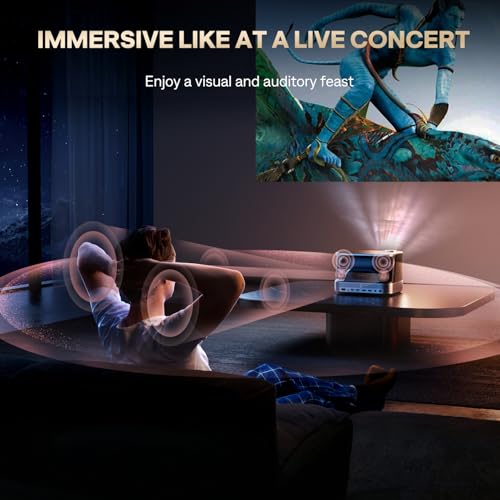
This is where the Aurzen BOOM 3 truly distinguishes itself. Its 36-watt, 2.2-channel speaker system with four drivers and two additional diaphragms delivers genuinely impressive sound for a portable projector. We're talking about audio that can easily fill a medium-sized room without external speakers.
The PicoPlay takes a different approach with its 8-watt mono speaker. While it won't compete with the BOOM 3 in terms of raw power, it's optimized for its unique use cases. Since the PicoPlay can function as a standalone Bluetooth speaker and includes ambient lighting effects that sync with music, it's designed more as a versatile entertainment device than a pure audio powerhouse.
For dedicated movie watching in a home theater setup, the BOOM 3's superior audio is a significant advantage. However, for casual viewing or when you need true portability, the PicoPlay's audio is perfectly adequate and comes with more versatility.
The JMGO PicoPlay runs Google TV, which is essentially Android TV with Google's interface and services built in. This means you get the full Google Play Store, Google Assistant voice commands, and seamless integration with other Google services. You can cast content from your phone, control the projector with voice commands, and access the same apps you'd find on a modern smart TV.
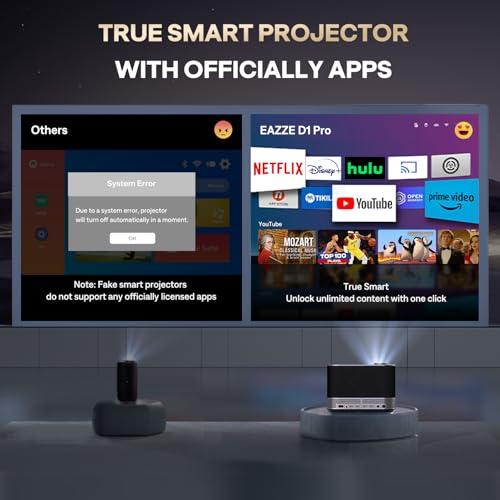
The Aurzen BOOM 3 uses its own proprietary Smart TV OS. While it includes officially licensed versions of major streaming apps like Netflix, Prime Video, and YouTube, you're more limited in terms of additional app installation. You can't sideload Android apps or customize the interface as extensively.
From a long-term perspective, Google TV typically receives more frequent updates and has broader app support. However, if you primarily stick to the major streaming services, the BOOM 3's interface might actually feel simpler and less cluttered.
This is where the PicoPlay's FlexiSmart system really shines. Using a ToF (Time-of-Flight) sensor – the same technology used in smartphone cameras for portrait mode – the projector can instantly measure distances and automatically focus the lens. Combined with gyroscopic sensors that detect the projector's orientation, it can automatically correct keystone distortion and align the image properly.
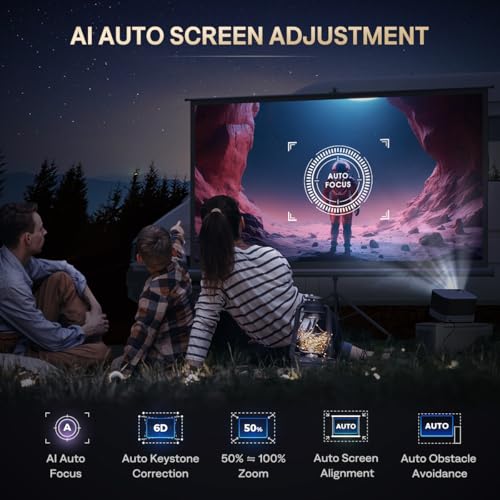
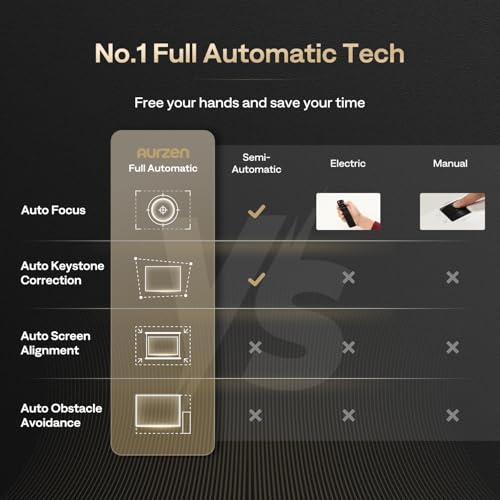
The BOOM 3 includes similar auto-focus and keystone correction features, but user reports suggest they're less reliable, particularly around the edges of the image. Some users experience edge blur when keystone correction is applied, which defeats the purpose of the automatic adjustment.
The JMGO PicoPlay includes a massive 20,000 mAh battery that provides up to three hours of video playback or seven hours of music. This is genuine wireless portability – you can take it camping, use it in hotel rooms, or move it between rooms without worrying about power outlets.
The Aurzen BOOM 3 requires AC power, which significantly limits its portability despite its compact size. You're tied to wall outlets, which means no outdoor movie nights unless you have access to power.
This fundamental difference shapes how you'll actually use these projectors. The PicoPlay becomes a grab-and-go entertainment device, while the BOOM 3 is more of a semi-portable home theater component.
The PicoPlay really comes into its own in scenarios where traditional projectors would be impractical. I've found the ceiling projection feature particularly compelling for bedtime entertainment – there's something magical about lying in bed watching movies projected overhead without neck strain.
For frequent travelers, the PicoPlay's combination of small size, built-in battery, and automatic setup makes it incredibly practical. Hotel rooms often have challenging layouts for projection, and the gimbal design lets you adapt to almost any space.
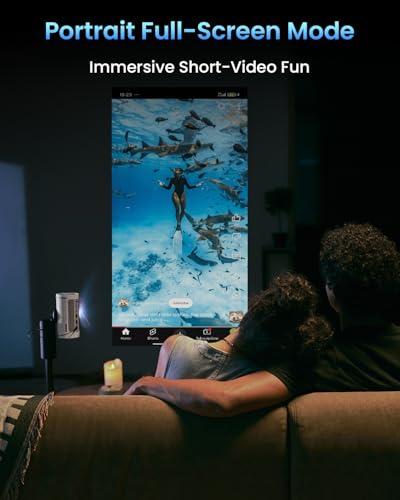
Content creators will appreciate the unique Vertical Play mode, which optimizes the projection for TikTok, Instagram Reels, and other vertical content. It's a niche feature, but it demonstrates the forward-thinking design philosophy behind this projector.
The BOOM 3 is ideal for users who want a dedicated home theater setup in a small space. If you have a basement, spare room, or living room that you can darken effectively, its superior brightness and powerful audio create a more cinematic experience than the PicoPlay can match.
For budget-conscious buyers who prioritize traditional projector strengths – brightness and sound – over convenience features, the BOOM 3 offers better performance per dollar in controlled environments.
At the time of writing, both projectors fall into the premium portable projector category, with the PicoPlay commanding a modest price premium over the BOOM 3. The question becomes whether the PicoPlay's innovative features and superior versatility justify the additional cost.
For most users, I believe they do. The PicoPlay's unique capabilities – the gimbal design, true wireless operation, and superior smart platform – create usage scenarios that simply aren't possible with traditional portable projectors. It's not just a better projector; it's a different category of device altogether.
The BOOM 3 makes sense for users with specific requirements: maximum audio quality in a portable package, strict budget constraints, or dedication to a single viewing location where its limitations won't matter.
Choose the JMGO PicoPlay if you value versatility, innovation, and true portability over raw performance specifications. It's the better choice for travelers, renters, small space dwellers, and anyone who wants a projector that can adapt to different environments and use cases.
Go with the Aurzen BOOM 3 if you have a dedicated viewing space, prioritize audio quality, and want maximum performance within budget constraints. It's the choice for traditional home theater applications where its limitations won't impact your experience.
Both projectors represent significant advances in portable projection technology, but they serve fundamentally different needs. The PicoPlay reimagines what a projector can be, while the BOOM 3 optimizes the traditional projector formula for portability. Your choice should depend on which philosophy better matches your viewing habits and lifestyle.
| JMGO PicoPlay 1080P Smart Portable Projector | Aurzen BOOM 3 Smart Projector |
|---|---|
| Brightness - Critical for determining room lighting requirements | |
| 400 ISO lumens (requires dim to dark rooms) | 500 ANSI lumens (25% brighter but still needs darkened space) |
| Resolution - Image sharpness and detail quality | |
| Native 1080p Full HD with 90% DCI-P3 color space | Native 1080p Full HD with standard color reproduction |
| Design Philosophy - Fundamentally different approaches to portability | |
| Cylindrical with 88° rotating gimbal for ceiling/wall projection | Traditional rectangular projector design optimized for table/mount use |
| Size & Weight - True portability vs semi-portable performance | |
| 740g (2.2 lbs), 3.3 x 3.3 x 6.5 inches - ultra-compact | 5.5 lbs, 6.10" x 8.90" x 8.30" - 2.5x heavier but more powerful |
| Power Source - Battery freedom vs consistent AC performance | |
| 20,000 mAh battery (3hr video, 7hr music) + USB-C charging | AC power only - no battery operation |
| Audio System - Sound quality affects need for external speakers | |
| 8W mono with Dolby Audio (adequate for personal use) | 36W 2.2-channel system with 4 speakers (eliminates need for external audio) |
| Smart Platform - App ecosystem and future-proofing | |
| Google TV with full Play Store access and voice control | Proprietary Smart TV OS with major streaming apps only |
| Setup Technology - Ease of use and image quality consistency | |
| FlexiSmart system with ToF sensor for instant auto-focus/keystone | AI-powered adjustments but reported edge blur issues with correction |
| Unique Features - Capabilities that set each apart | |
| Vertical Play mode, ambient lighting, Bluetooth speaker mode, gimbal rotation | Auto obstacle avoidance, digital zoom, powerful integrated audio |
| Best Use Cases - Where each projector excels | |
| Travel, flexible home use, ceiling projection, true wireless portability | Dedicated dark room setups, powerful audio needs, fixed installations |
| Value Proposition - Performance per dollar considerations | |
| Premium price for innovative features and versatility | Better brightness and audio power at lower cost but with usage limitations |
The Aurzen BOOM 3 Smart Projector is better suited for dedicated home theater setups due to its higher brightness (500 ANSI lumens vs 400 ISO lumens) and significantly more powerful 36W 2.2-channel audio system. However, the JMGO PicoPlay 1080P Smart Portable Projector offers superior color accuracy with 90% DCI-P3 coverage and more flexible placement options with its rotating gimbal design.
The biggest difference is their design philosophy: the JMGO PicoPlay features a revolutionary cylindrical design with an 88° rotating gimbal for versatile projection angles, while the Aurzen BOOM 3 follows a traditional rectangular projector design focused on maximum brightness and audio power in a semi-portable package.
The Aurzen BOOM 3 Smart Projector has significantly better audio with its 36W 2.2-channel system featuring four speakers and Dolby Audio technology. The JMGO PicoPlay has an 8W mono speaker that's adequate for personal viewing but can't match the BOOM 3's room-filling sound quality.
Neither projector performs well in bright rooms. The BOOM 3 has slightly better performance with 500 ANSI lumens compared to the PicoPlay's 400 ISO lumens, but both require dim to dark environments for optimal viewing. For bright room use, you'd need a much more expensive projector with 2000+ lumens.
The JMGO PicoPlay 1080P Smart Portable Projector is far more portable, weighing only 2.2 lbs with a built-in 20,000 mAh battery providing 3 hours of video playback. The Aurzen BOOM 3 weighs 5.5 lbs and requires AC power, making it semi-portable rather than truly mobile.
Yes, both support major streaming services but differently. The JMGO PicoPlay runs Google TV with full app store access, while the Aurzen BOOM 3 Smart Projector uses a proprietary OS with official Netflix, YouTube, and Prime Video apps but limited expandability.
Both offer native 1080p resolution, but the JMGO PicoPlay has superior color reproduction with 90% DCI-P3 color space coverage and HDR10 support. The Aurzen BOOM 3 provides slightly higher brightness but standard color accuracy and has reported edge blur issues when keystone correction is applied.
The JMGO PicoPlay 1080P Smart Portable Projector offers superior setup convenience with its FlexiSmart system providing instant auto-focus, keystone correction, and the unique rotating gimbal eliminating manual positioning. The Aurzen BOOM 3 has auto-adjustment features but requires more manual fine-tuning for optimal results.
Value depends on your priorities. The Aurzen BOOM 3 Smart Projector offers more brightness and powerful audio at a lower price point, making it better value for fixed home theater use. The JMGO PicoPlay commands a premium but delivers unique features like true portability and versatile positioning that justify the cost for mobile users.
The Aurzen BOOM 3 can better replace a TV in a dedicated dark room due to its superior audio and slightly higher brightness. The JMGO PicoPlay 1080P Smart Portable Projector works well as a secondary display or for flexible viewing scenarios but may not satisfy users wanting a primary TV replacement due to its lower brightness.
Both handle gaming adequately at 1080p resolution, but the JMGO PicoPlay has an advantage with its Google TV platform offering better gaming app support and lower input lag optimization. The Aurzen BOOM 3 Smart Projector is limited to 60Hz refresh rates, which may disappoint serious gamers expecting higher frame rates.
The JMGO PicoPlay's main limitations are moderate brightness and mono audio that may require external speakers for larger rooms. The Aurzen BOOM 3's biggest drawbacks are the lack of battery power, reported edge blur issues with auto-correction, and limited smart platform expandability compared to the PicoPlay's Google TV ecosystem.
We've done our best to create useful and informative comparisons to help you decide what product to buy. Our research uses advanced automated methods to create this comparison and perfection is not possible - please contact us for corrections or questions. These are the sites we've researched in the creation of this article: techbuzzireland.com - youtube.com - newatlas.com - projectorcentral.com - youtube.com - thegadgetflow.com - youtube.com - global.jmgo.com - youtube.com - bestbuy.com - projector-database.com - notebookcheck.net - eu.jmgo.com - youtube.com - projectorcentral.com - aurzen.com - aurzen.com - newegg.com - youtube.com - bestbuy.com - aurzen.com - youtube.com - aurzen.com - projectorcentral.com - youtube.com - youtube.com - criticalpopcorn.com - aurzen.com - bestbuy.com - aurzen.com - manuals.plus - youtube.com

Privacy Policy
Terms and Conditions - Affiliate Policy
Home Security
© Copyright 2008-2026.
11816 Inwood Rd #1211, Dallas, TX 75244