

Portable projectors have transformed how we think about entertainment. Gone are the days when enjoying a big-screen experience meant being tethered to a living room setup. Today's portable smart projectors pack cinema-quality visuals, built-in streaming platforms, and impressive audio into devices you can literally carry in a backpack.
The rise of these ultra-portable devices reflects our increasingly mobile lifestyles. Whether you're a college student wanting to turn your dorm into a movie theater, a family planning backyard movie nights, or a traveler seeking entertainment on the road, portable projectors offer unprecedented flexibility. But with this convenience comes trade-offs—particularly around brightness, battery life, and image quality that you need to understand before making a purchase.
Today we're comparing two standout options: the innovative JMGO PicoPlay and the established Nebula Capsule 3. These devices represent different philosophies in portable projection, and understanding their strengths will help you make the right choice for your needs.
Before diving into specifics, it's crucial to understand what makes portable projectors different from traditional home theater units. Traditional projectors prioritize maximum brightness and image quality, often requiring permanent installation and complex calibration. Portable projectors flip this priority, emphasizing ease of use, battery operation, and compact form factors while accepting some compromises in raw performance.
The key challenges in this category revolve around physics and engineering constraints. Brighter projection requires more power, which means larger components and shorter battery life. Higher image quality demands more sophisticated processing, adding cost and complexity. The best portable projectors find clever ways to balance these competing demands.
When evaluating portable projectors, focus on these critical factors: brightness performance in real-world lighting conditions, image quality at typical viewing distances, ease of setup and positioning, streaming platform integration, battery life for untethered use, and additional features that justify the premium over basic models.
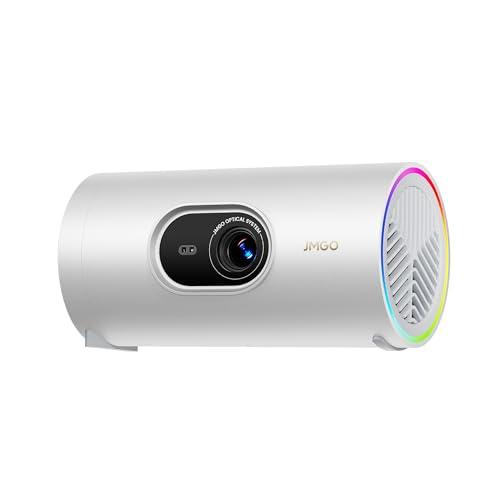
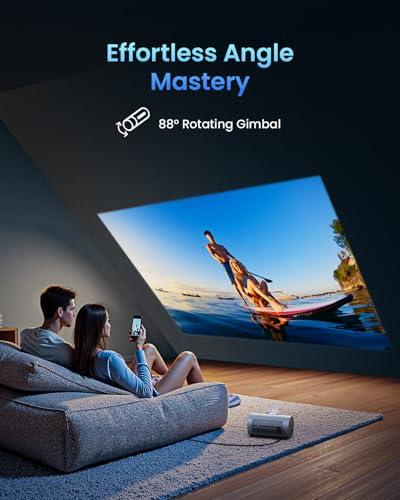
The most striking difference between these projectors lies in their fundamental design approaches. The JMGO PicoPlay, released in 2024 as the international version of JMGO's successful P5X model from China, represents a radical rethinking of portable projector design. Its signature feature is an 88-degree rotating gimbal that allows the entire projection assembly to pivot within its cylindrical housing.
This isn't just a gimmick—the rotating gimbal solves real problems. Traditional portable projectors require careful positioning or tripod adjustments to project onto different surfaces. With the PicoPlay, you can set it on a nightstand and project onto the ceiling for bed viewing, then rotate it to project onto a wall for a living room setup, all without moving the base unit. This flexibility becomes invaluable in small spaces like dorm rooms or hotel rooms where optimal projector placement isn't always possible.
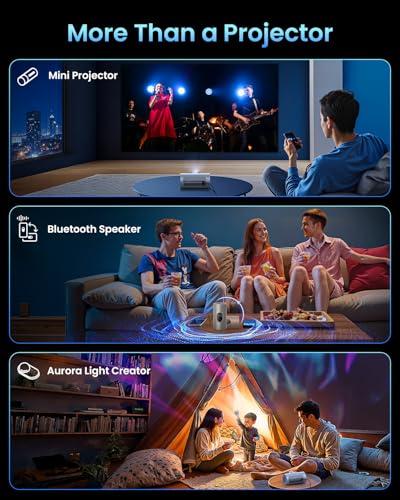
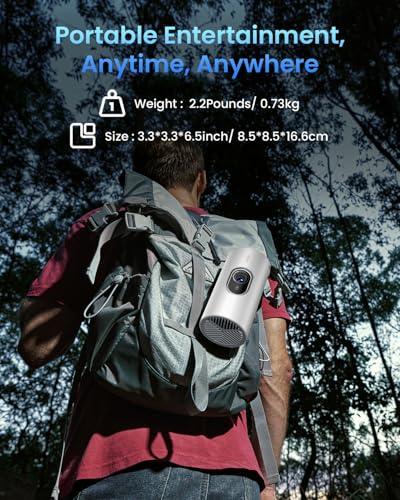
The PicoPlay's "travel mug" aesthetic—measuring roughly 3.3 by 6.5 inches and weighing 2.2 pounds—makes it genuinely portable while housing sophisticated technology. Beyond projection, it functions as an 8-watt Bluetooth speaker with Dolby Audio support and features dynamic RGB lighting that can sync with music. This 3-in-1 approach transforms it from a single-purpose device into a complete portable entertainment hub.
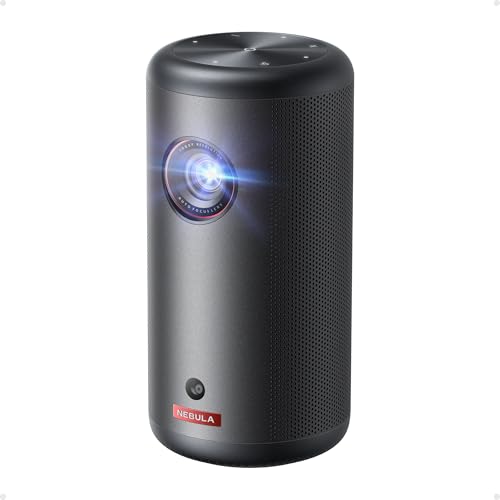
In contrast, the Nebula Capsule 3, launched in 2023, follows Anker's proven cylindrical design philosophy that has made the Capsule series popular since its original 2018 release. At 3.3 inches in diameter and 6.6 inches tall, weighing 1.8 pounds, it's slightly more compact than the PicoPlay but lacks the rotating gimbal innovation.
The Capsule 3's design prioritizes simplicity and reliability. Its straightforward cylindrical form factor includes standard tripod mounting and focuses purely on projection functionality. While this approach lacks the PicoPlay's flexibility, it offers time-tested reliability and familiar operation that some users prefer.
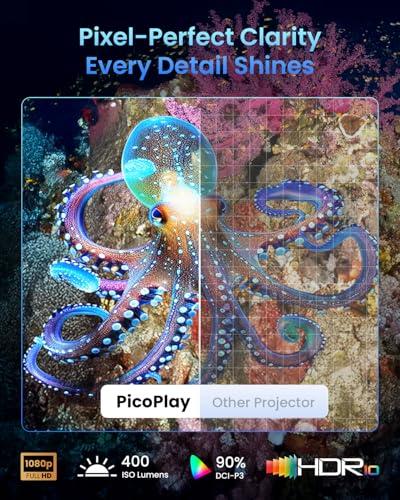
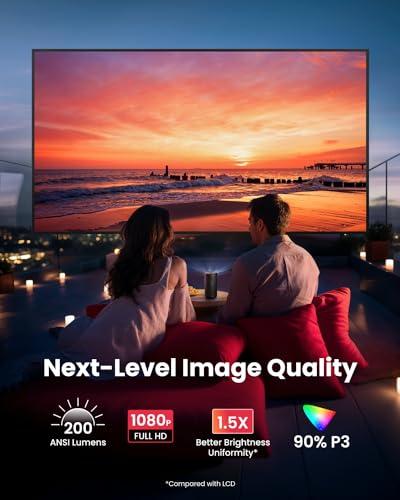
Display performance represents the most critical differentiator between these projectors, and the differences are substantial. The JMGO PicoPlay delivers 400 ISO lumens of brightness, while independent testing reveals the Nebula Capsule 3 produces only 161 ANSI lumens despite manufacturer claims of 200.
This brightness difference isn't just numbers on a spec sheet—it fundamentally affects where and how you can use these projectors. Lumens measure the total amount of visible light a projector produces, and brightness directly impacts image visibility in ambient light conditions. The PicoPlay's superior brightness means it can handle moderate ambient light and larger screen sizes effectively, while the Capsule 3 requires near-darkness for acceptable viewing.
In practical terms, the PicoPlay maintains good image quality at 50-60 inch screen sizes in dim living room conditions, while the Capsule 3 performs best at 40-50 inches maximum in very dark environments. This difference becomes crucial for family movie nights or casual viewing when you don't want to completely darken the room.
Both projectors offer native 1920x1080 (Full HD) resolution, but their color performance varies significantly. The PicoPlay covers 124% of the Rec.709 color space and 90% of the DCI-P3 color gamut—technical specifications that translate to more vibrant, accurate colors. Rec.709 is the standard color space for HDTV content, while DCI-P3 is used for digital cinema, so broader coverage means colors appear closer to the filmmaker's intent.
The PicoPlay also supports HDR10 (High Dynamic Range), which provides greater contrast between dark and bright areas of the image for more realistic visuals. Professional testing confirms meaningful HDR enhancement on the PicoPlay, while the Capsule 3 accepts HDR input but shows negligible visual improvement—the HDR support is essentially cosmetic rather than functional.
Contrast ratio, which measures the difference between the darkest and brightest parts of an image, stands at 400:1 for the PicoPlay versus 357:1 for the Capsule 3. While neither achieves the deep blacks of premium home theater projectors, the PicoPlay's superior contrast contributes to more engaging visuals.
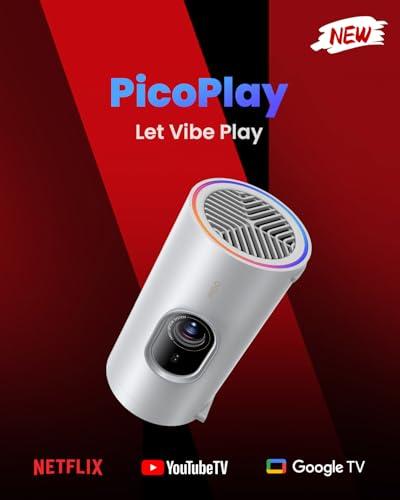
Both projectors run Google TV, providing access to major streaming platforms including Netflix, YouTube, Amazon Prime Video, and Disney+. However, their implementations differ in meaningful ways that affect daily use.
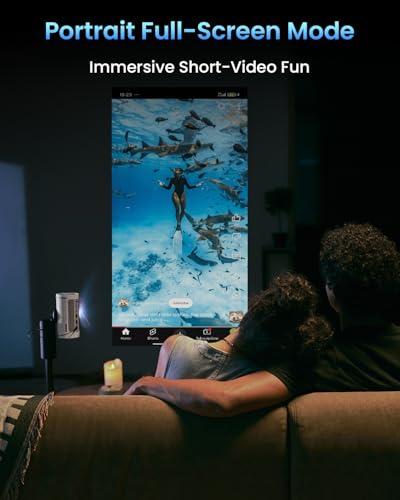
The JMGO PicoPlay introduces Vertical Play mode, optimized for TikTok, Instagram Reels, and other vertical content that's increasingly popular. This feature recognizes how content consumption has evolved, particularly among younger users who regularly view portrait-oriented videos. Traditional projectors poorly display vertical content, creating black bars and wasting screen real estate, but Vertical Play mode maximizes the image size for this content type.
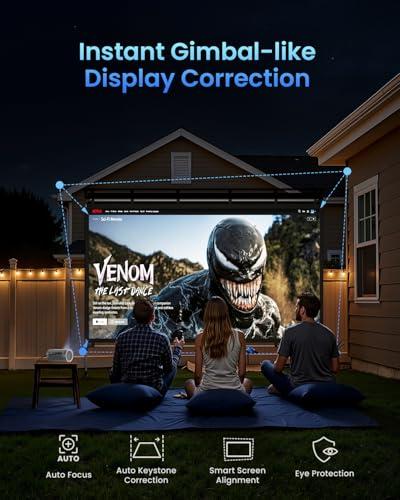
The PicoPlay's FlexiSmart system automates setup through real-time autofocus, auto keystone correction (which fixes image distortion when projecting at angles), and intelligent eye protection that dims or pauses projection when someone approaches the lens. These features work together to create genuinely plug-and-play operation.
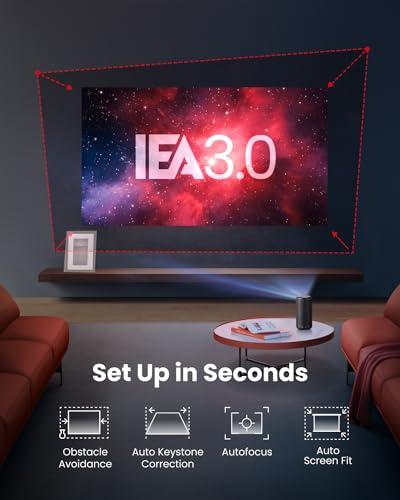
The Nebula Capsule 3 offers Intelligent Environment Adaptation (IEA 3.0), which performs autofocus, keystone correction, and obstacle avoidance in approximately three seconds. While effective, this system lacks the PicoPlay's continuous real-time adjustment and vertical content optimization.
Both projectors support voice control through Google Assistant and offer wireless casting via Google Cast or Chromecast built-in. The streaming experience feels natural and responsive on both devices, though Netflix's official licensing on both projectors is noteworthy—many portable projectors lack native Netflix support due to licensing restrictions.
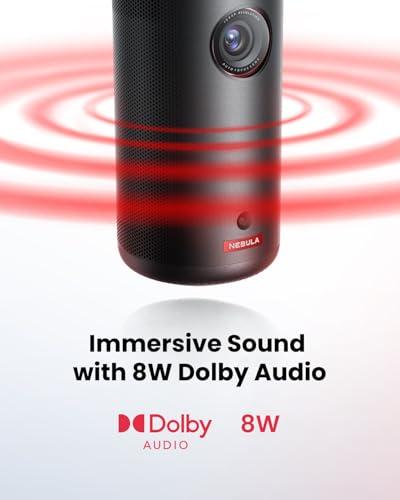
Audio often gets overlooked in projector discussions, but it's crucial for creating immersive experiences. Both projectors feature 8-watt mono speakers with Dolby Audio support, providing adequate sound for casual viewing but falling short of dedicated audio systems.
The key differentiator lies in extended functionality. The PicoPlay functions as a standalone Bluetooth speaker with up to seven hours of music playback, extending its utility beyond projection sessions. Its dynamic RGB ambient lighting can sync with music, creating an atmospheric experience for parties or relaxation. This transforms the device from a projector that happens to have speakers into a legitimate portable entertainment system.
The Capsule 3 offers basic Bluetooth speaker functionality with 8-10 hours of music playback but lacks the ambient lighting features that make the PicoPlay more versatile for social gatherings.
For serious home theater use, both projectors include audio output options—the PicoPlay supports HDMI ARC (Audio Return Channel) for seamless integration with soundbars or home theater systems, while the Capsule 3 provides a 3.5mm audio output for connecting external speakers.
Battery performance determines whether these projectors deliver true portability or merely compact size. The PicoPlay claims an integrated 20,000 mAh battery providing up to three hours of video playback or seven hours of music, though some sources indicate it may require external 65-watt USB-C power banks for optimal operation—a point worth clarifying before purchase.
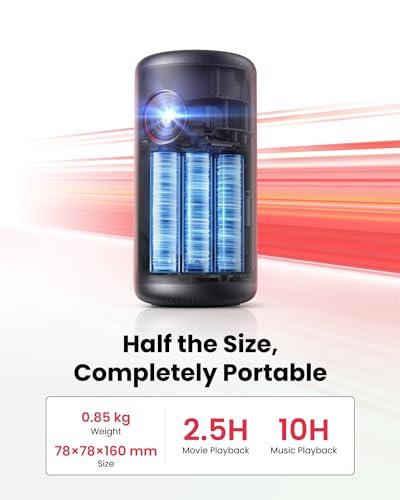
The Nebula Capsule 3 features a confirmed built-in 52Wh battery delivering 2.5 hours of video playback or 8-10 hours of music. Importantly, it operates on battery power but automatically reduces brightness to 112 lumens in eco mode to extend runtime, significantly impacting image quality.
This brightness reduction highlights a critical trade-off in portable projectors: battery life versus performance. Higher brightness requires more power, so extending battery life necessarily means dimmer images. The Capsule 3's eco mode essentially halves its already-limited brightness, making it suitable only for very small screens in completely dark environments when running on battery.
Both projectors support USB-C Power Delivery, allowing charging from power banks for extended use. This flexibility proves valuable for outdoor events or travel situations where wall power isn't available.
Modern portable projectors must balance comprehensive connectivity with compact design. The JMGO PicoPlay includes HDMI 2.1 with ARC support, USB-A and USB-C ports, plus Wi-Fi and Bluetooth connectivity. The HDMI ARC support enables two-way audio communication with compatible TVs or sound systems, simplifying home theater integration.
The Nebula Capsule 3 offers HDMI 2.1, USB-A, USB-C for power, and a 3.5mm audio output, along with dual-band Wi-Fi 802.11a/b/g/n/ac and Bluetooth connectivity. Both projectors support Chromecast built-in for wireless streaming from smartphones, tablets, or computers.
The practical difference lies in use cases. The PicoPlay's ARC support makes it better suited for integration with existing home theater systems, while the Capsule 3's 3.5mm output provides broader compatibility with various audio devices.
At the time of writing, the JMGO PicoPlay typically costs significantly less than the Nebula Capsule 3 while delivering superior performance across most metrics. This pricing reflects JMGO's strategy of entering established markets with competitive feature sets at disruptive price points.
The PicoPlay delivers nearly 2.5 times the measured brightness of the Capsule 3, along with better color accuracy, meaningful HDR support, innovative design features, and multi-function capability. From a pure performance-per-dollar perspective, it represents exceptional value.
However, value encompasses more than specifications. The Capsule 3 offers Anker's established brand reliability, proven customer support, and a mature ecosystem of accessories. For some users, these intangible benefits justify the premium pricing.
Neither projector serves as a primary home theater solution, but both can supplement traditional setups effectively. The PicoPlay's superior brightness and color accuracy make it more suitable for casual family viewing in partially lit rooms. Its rotating gimbal design proves invaluable in homes where optimal projector placement isn't possible due to furniture arrangements or architectural constraints.
For dedicated home theater use, consider that both projectors' modest contrast ratios and limited brightness restrict their effectiveness in large rooms or with screens larger than 70-80 inches. They excel as secondary viewing devices—perhaps for bedroom use, outdoor entertainment, or basement game rooms where traditional projector installation isn't practical.
The PicoPlay's HDMI ARC support integrates more seamlessly with existing home theater audio systems, while its ambient lighting features can enhance the viewing atmosphere beyond pure projection.
The JMGO PicoPlay emerges as the clear winner for most users, offering superior brightness, innovative design, better color accuracy, and exceptional value. Its rotating gimbal design solves real-world positioning challenges, while its 3-in-1 functionality justifies space in equipment-constrained environments.
Choose the PicoPlay if you need maximum brightness and image quality, value innovative design features, want multi-function capability, regularly consume vertical content, prioritize value, or need flexible positioning options.
The Nebula Capsule 3 suits users who prefer established brand reliability, confirmed internal battery operation, traditional projector functionality, or plan to use exclusively in very dark environments with smaller screens.
Unless you specifically need Anker's support ecosystem or have concerns about JMGO's newer market presence, the PicoPlay delivers more capability and better value for most portable projection needs. Its combination of performance, innovation, and competitive pricing makes it the standout choice in this comparison.
However, remember that portable projectors represent compromises compared to dedicated home theater systems. Both devices excel at bringing big-screen entertainment to previously impossible locations, transforming any space into a potential cinema. Your choice should align with your specific use cases, budget constraints, and tolerance for cutting-edge features versus proven reliability.
| JMGO PicoPlay 1080P Smart Portable Projector | Nebula Capsule 3 GTV Projector |
|---|---|
| Brightness - Most critical spec for usable screen sizes and ambient light tolerance | |
| 400 ISO lumens (suitable for 50-60" screens in dim rooms) | 161 ANSI lumens measured (limited to 40-50" screens in dark rooms only) |
| Design Innovation - Affects setup flexibility and positioning options | |
| 88° rotating gimbal allows wall/ceiling projection from same position | Traditional cylindrical design requires repositioning for different angles |
| Native Resolution - Determines image sharpness and detail | |
| 1920 x 1080 Full HD with 124% Rec.709 color coverage | 1920 x 1080 Full HD with standard color processing |
| Multi-Function Capability - Adds value beyond basic projection | |
| 3-in-1: Projector + 8W Bluetooth speaker + RGB ambient lighting | Basic projector with 8W speaker mode |
| Smart Features - Modern streaming and content optimization | |
| Google TV with unique Vertical Play mode for TikTok/Instagram content | Standard Google TV implementation |
| Battery Life - Determines true portability for untethered use | |
| Up to 3 hours video (requires external power bank for some models) | 2.5 hours video with confirmed internal battery |
| HDR Support - Enhances contrast and color in compatible content | |
| HDR10 with meaningful visual improvement | HDR input accepted but negligible enhancement |
| Setup Automation - Reduces time from unboxing to watching | |
| FlexiSmart system with real-time autofocus and keystone correction | IEA 3.0 with 3-second auto-setup |
| Connectivity Options - Affects integration with existing equipment | |
| HDMI 2.1 (ARC), USB-A, USB-C, Wi-Fi, Bluetooth | HDMI 2.1, USB-A, USB-C, 3.5mm audio out, Wi-Fi, Bluetooth |
| Weight and Portability - Important for travel and frequent moving | |
| 2.2 lbs, travel mug form factor | 1.8 lbs, compact cylinder design |
| Brand and Support Ecosystem - Affects long-term reliability and service | |
| Newer brand with innovative features, limited track record | Established Anker brand with proven support network |
The JMGO PicoPlay delivers significantly better brightness at 400 ISO lumens compared to the Nebula Capsule 3 at only 161 measured ANSI lumens. This means the PicoPlay can handle moderate ambient light and larger screen sizes, while the Capsule 3 requires very dark rooms for acceptable viewing.
Yes, both the JMGO PicoPlay and Nebula Capsule 3 run Google TV with native Netflix, YouTube, Amazon Prime Video, and Disney+ support. The PicoPlay adds a unique Vertical Play mode for TikTok and Instagram content that the Capsule 3 lacks.
The Nebula Capsule 3 is slightly lighter at 1.8 pounds versus the JMGO PicoPlay's 2.2 pounds. However, the PicoPlay offers better versatility with its rotating gimbal design that eliminates positioning challenges in cramped spaces like hotel rooms.
The JMGO PicoPlay provides up to 3 hours of video playback, while the Nebula Capsule 3 offers 2.5 hours. Both can extend to 7-8 hours for music playback. The Capsule 3 has a confirmed internal battery, while some PicoPlay models may require external power banks.
The JMGO PicoPlay excels for ceiling projection thanks to its 88-degree rotating gimbal that lets you project upward without moving the base unit. The Nebula Capsule 3 requires careful positioning or tripod adjustment to achieve proper ceiling projection angles.
Both projectors work better as secondary or casual viewing devices rather than primary home theater solutions. The JMGO PicoPlay integrates better with existing systems through HDMI ARC support and delivers superior brightness for family movie nights in partially lit rooms.
The JMGO PicoPlay offers superior color accuracy with 124% Rec.709 coverage and meaningful HDR10 support. Professional testing shows the Nebula Capsule 3 produces flatter, less vibrant colors despite accepting HDR input with minimal visual improvement.
Yes, both the JMGO PicoPlay and Nebula Capsule 3 function as 8-watt Bluetooth speakers. The PicoPlay adds dynamic RGB ambient lighting that syncs with music, creating a more immersive audio experience for parties or relaxation.
Both offer automated setup, but the JMGO PicoPlay provides more comprehensive automation with its FlexiSmart system offering real-time adjustments. The Nebula Capsule 3 uses IEA 3.0 for quick 3-second setup, though it's limited to traditional horizontal projection.
The JMGO PicoPlay can project up to 200 inches but performs optimally at 50-60 inches in dim conditions. The Nebula Capsule 3 is best limited to 40-50 inches maximum due to its lower brightness, requiring very dark environments for larger screens.
The JMGO PicoPlay typically offers superior value with nearly 2.5x the brightness, innovative features, and multi-function capability compared to the Nebula Capsule 3. However, the Capsule 3 provides Anker's established brand reliability and proven customer support.
The JMGO PicoPlay works better for outdoor use thanks to its higher brightness and flexible positioning via the rotating gimbal. Both the PicoPlay and Nebula Capsule 3 require dark conditions for outdoor viewing, but the PicoPlay maintains better image quality as ambient light increases during dusk hours.
We've done our best to create useful and informative comparisons to help you decide what product to buy. Our research uses advanced automated methods to create this comparison and perfection is not possible - please contact us for corrections or questions. These are the sites we've researched in the creation of this article: techbuzzireland.com - youtube.com - newatlas.com - projectorcentral.com - youtube.com - thegadgetflow.com - youtube.com - global.jmgo.com - youtube.com - bestbuy.com - projector-database.com - notebookcheck.net - eu.jmgo.com - projectorreviews.com - projectorcentral.com - tvsbook.com - gadgetoid.com - newegg.com - thesmarthomehookup.com - whathifi.com - seenebula.com - rtings.com - cnet.com - seenebula.com - youtube.com - youtube.com - walmart.com - support.seenebula.com

Privacy Policy
Terms and Conditions - Affiliate Policy
Home Security
© Copyright 2008-2026.
11816 Inwood Rd #1211, Dallas, TX 75244