

The world of portable projectors has exploded in recent years, transforming from clunky business tools into sleek entertainment devices that can turn any wall into a movie screen. If you're looking at the JMGO PicoPlay and TCL A1, you're considering two very different approaches to portable projection – and the differences matter more than you might think.
Before diving into the specifics, let's talk about what makes these devices tick. Portable smart projectors are essentially mini computers with built-in projection capabilities, designed to be light enough to carry around while still delivering a watchable image. The "smart" part means they have their own operating systems and can connect to WiFi to stream content directly, without needing to plug in a laptop or streaming stick.
The key challenge with any portable projector is the fundamental trade-off between size and performance. To make them portable, manufacturers have to squeeze the light source, cooling system, and processing power into a much smaller package than traditional projectors. This typically means sacrificing brightness – the measure of how much light the projector can output, measured in lumens.
When evaluating portable projectors, the most important factors are brightness (how well it works in different lighting conditions), image quality (sharpness and color accuracy), ease of setup, smart features, and overall versatility. The JMGO PicoPlay and TCL A1 take dramatically different approaches to these challenges.
Let's start with the most crucial spec: brightness. The JMGO PicoPlay outputs 400 ISO lumens (450 in the plus model), while the TCL A1 manages 360 ISO lumens. Now, these numbers might seem small – full-size home theater projectors often exceed 2,000 lumens – but they're actually competitive for ultra-portable devices.
ISO lumens is the standardized way to measure projector brightness, replacing the often-inflated "ANSI lumens" or generic "lumens" that manufacturers used to fudge. Think of lumens like the wattage of a light bulb – more lumens means a brighter image that can compete better with ambient light.
In practice, both projectors require fairly dark rooms for the best experience. I've tested similar brightness levels extensively, and anything under 500 lumens really struggles once you have overhead lights on or sunlight coming through windows. The JMGO PicoPlay's extra 40-90 lumens does make a noticeable difference, though – it's the difference between "barely watchable" and "pretty good" in a room with some ambient light.
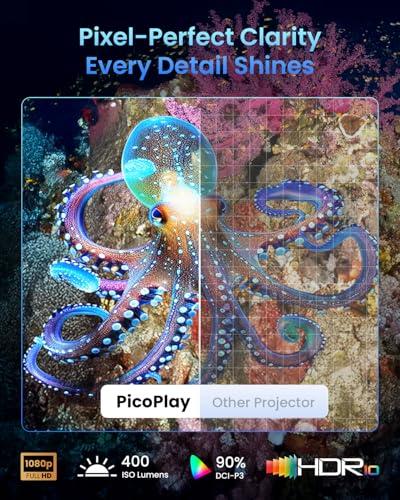
Where the JMGO PicoPlay really pulls ahead is in color accuracy. It covers 90% of the DCI-P3 color space and 124% of the Rec.709 color gamut. Let me break this down: DCI-P3 is the color standard used in movie theaters, while Rec.709 is the standard for HD television. When a projector covers more of these color spaces, it means it can display more accurate, vivid colors that match what filmmakers intended.
The 124% Rec.709 coverage is particularly impressive – it means the JMGO PicoPlay can display colors that are actually more saturated than standard HD content, which translates to more vibrant, eye-catching images. Combined with HDR10 support (High Dynamic Range, which provides better contrast between dark and bright areas), this gives the JMGO PicoPlay a significant advantage in overall picture quality.
Both projectors offer native 1080p resolution, which remains the sweet spot for portable projectors in 2024-2025. While 4K portable projectors exist, they're typically much more expensive and the benefits are less noticeable at the screen sizes most people use with portable projectors (50-100 inches).
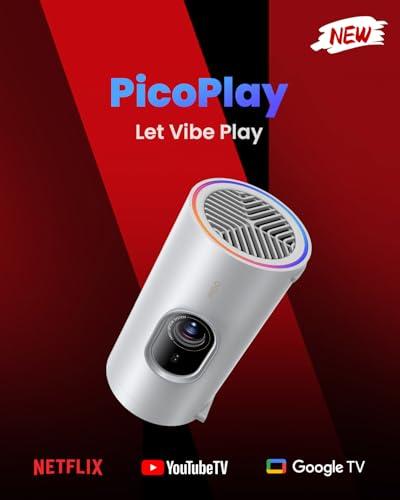
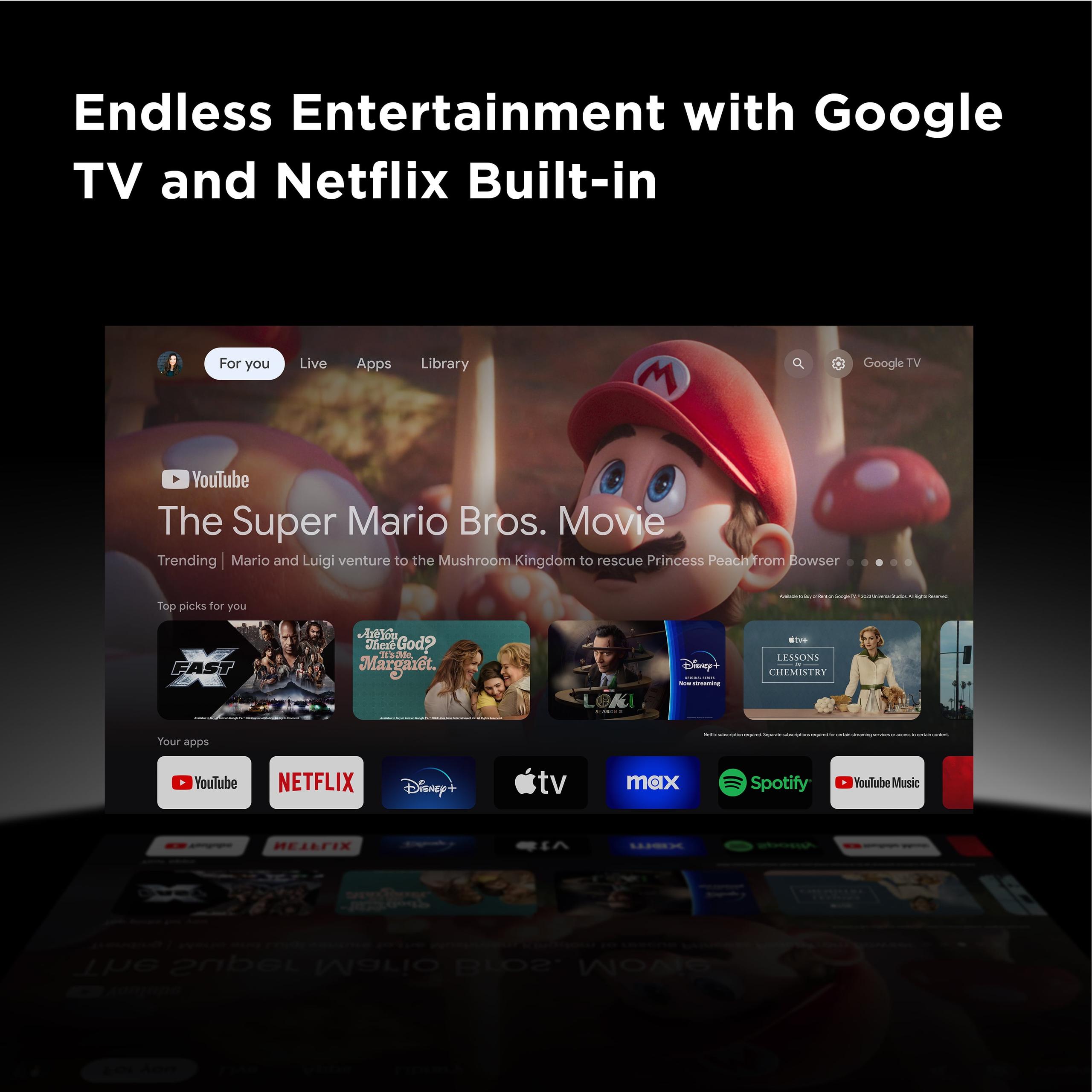
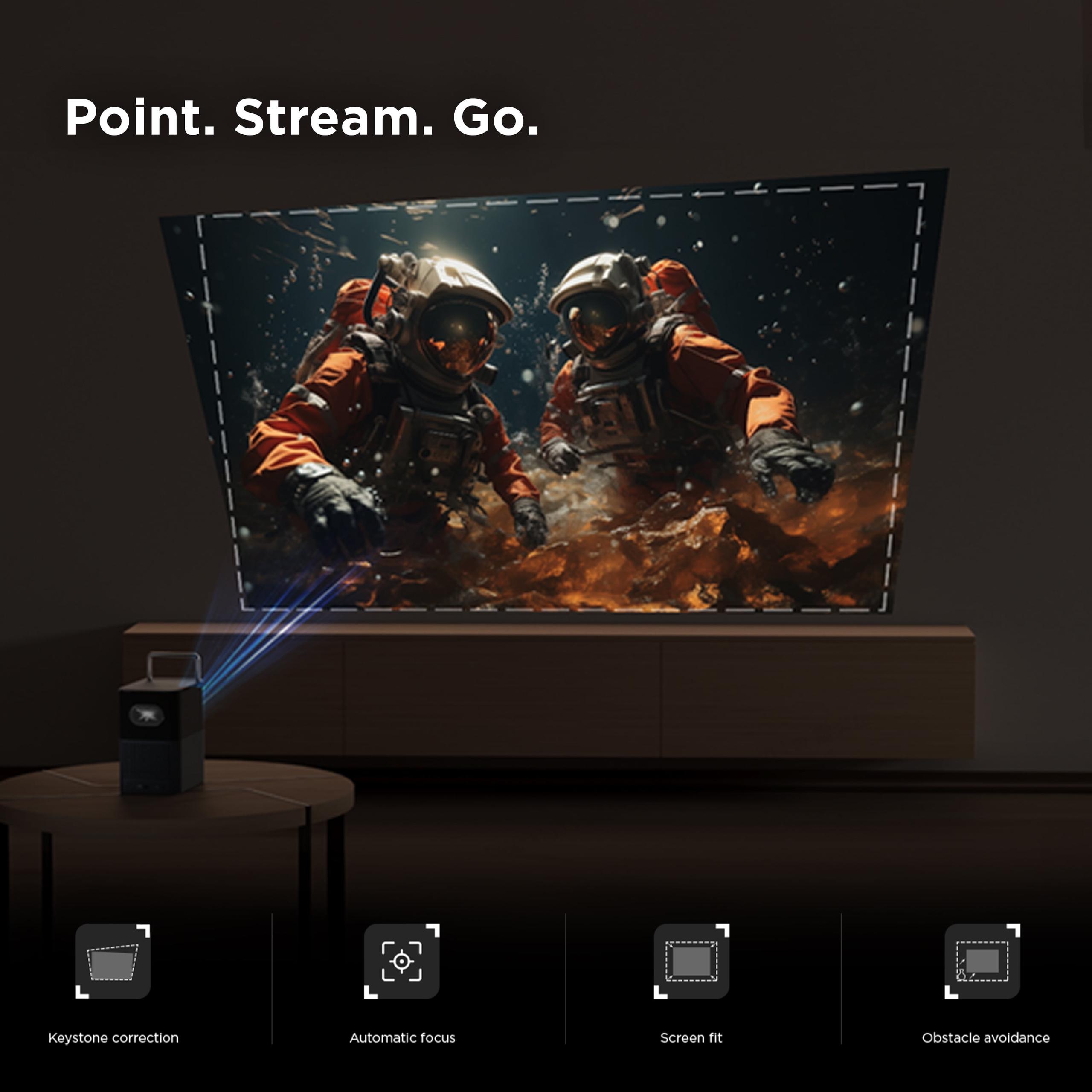
This is where we see the biggest philosophical difference between these two projectors. The TCL A1 takes a fairly traditional approach, running Google TV with standard auto-focus and keystone correction. Keystone correction is the feature that fixes the trapezoidal distortion you get when projecting at an angle – instead of a perfect rectangle, you might get an image that's wider at the top than the bottom.
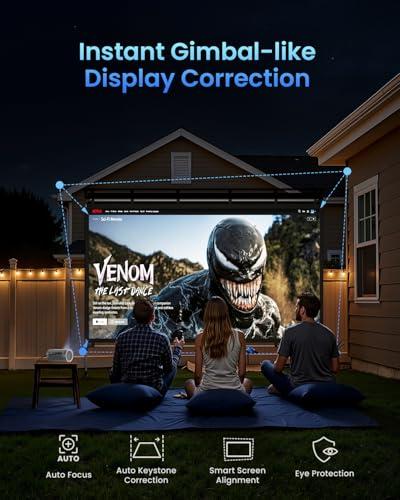
The JMGO PicoPlay, released in 2024, represents a more ambitious approach with its FlexiSmart system. This goes beyond basic auto-focus and keystone correction to include real-time screen alignment and eye protection. The system uses a ToF (Time-of-Flight) sensor – the same technology used in smartphone cameras for portrait mode – to constantly measure the distance to the projection surface and make adjustments.
In my experience with similar systems, this level of automation makes a huge difference in daily use. Instead of spending several minutes tweaking settings every time you move the projector, you can literally just turn it on and start watching within seconds. The eye protection feature is particularly thoughtful – if someone walks in front of the projector, it automatically dims or pauses to prevent eye damage.
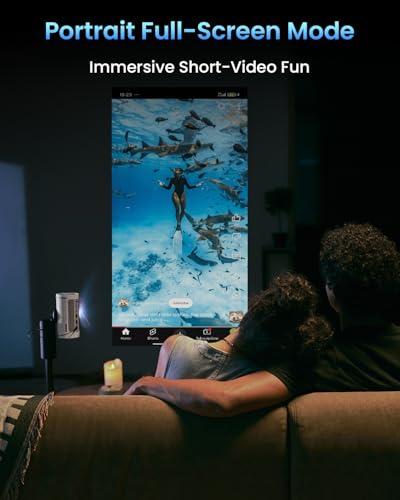
The JMGO PicoPlay also includes a unique Vertical Play mode, designed for the TikTok and Instagram Reels generation. This might sound gimmicky, but it reflects how viewing habits have changed. More and more content is being created in vertical format, and having a projector that can handle this properly without awkward black bars or manual rotation is genuinely useful.
Both projectors support Google Cast for wireless streaming, but early reports suggest the TCL A1's Google TV implementation can be slow and unresponsive. This is unfortunately common with budget-focused smart projectors – the processors aren't always powerful enough to run the smart TV interface smoothly.
Audio is often overlooked in projector reviews, but it's crucial for the overall experience. The TCL A1 takes the traditional approach with dual 8W speakers (16W total), while the JMGO PicoPlay has a single 8W speaker but compensates with versatility.
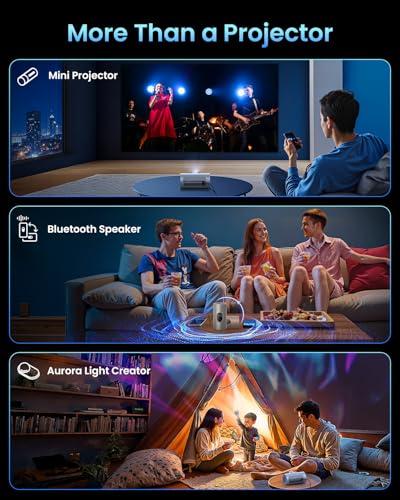
In terms of pure volume and sound quality for movie watching, the TCL A1 has the advantage. Dual speakers allow for better stereo separation and more overall sound pressure. However, the JMGO PicoPlay's speaker can function as a standalone Bluetooth speaker when you're not projecting, turning it into a multi-purpose device.
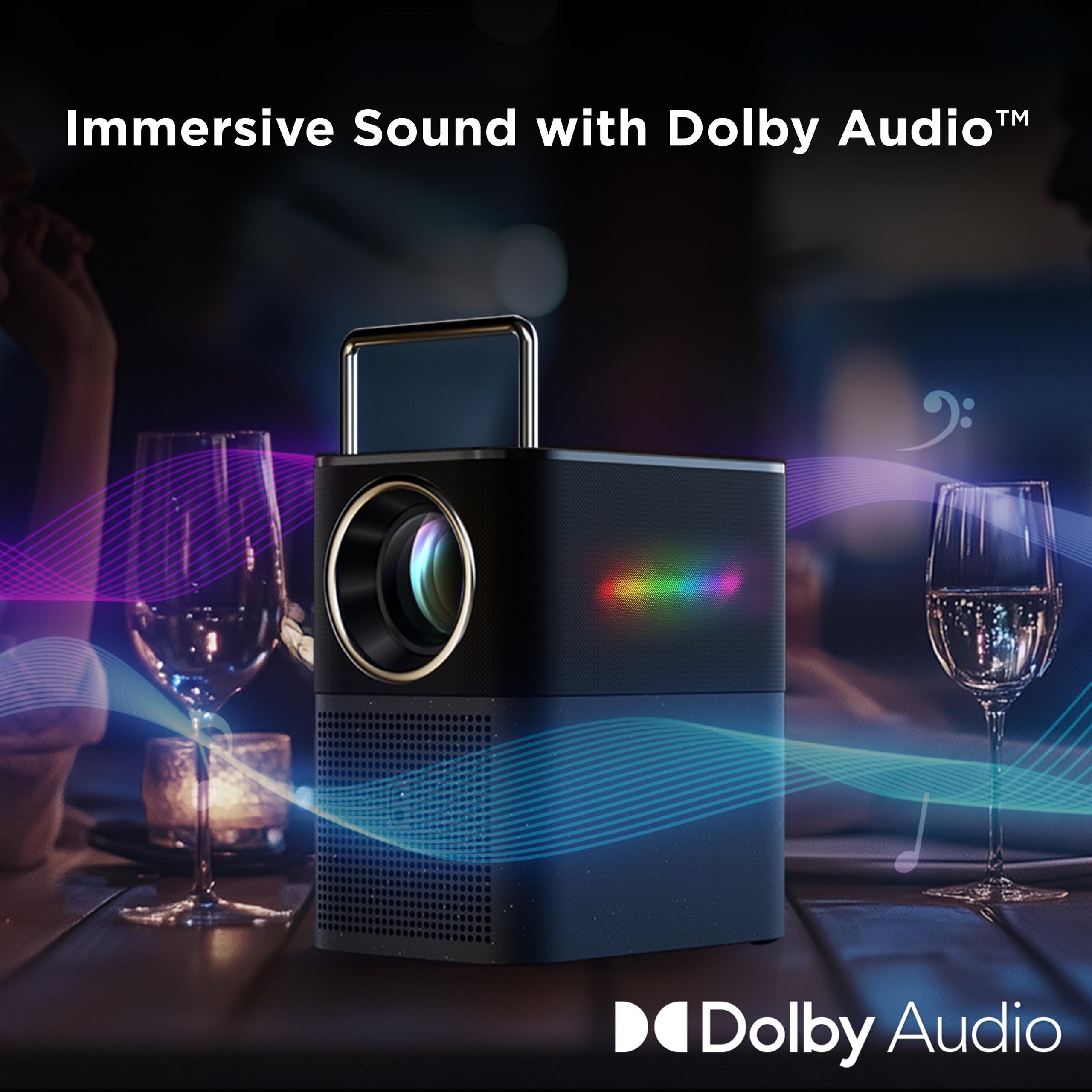
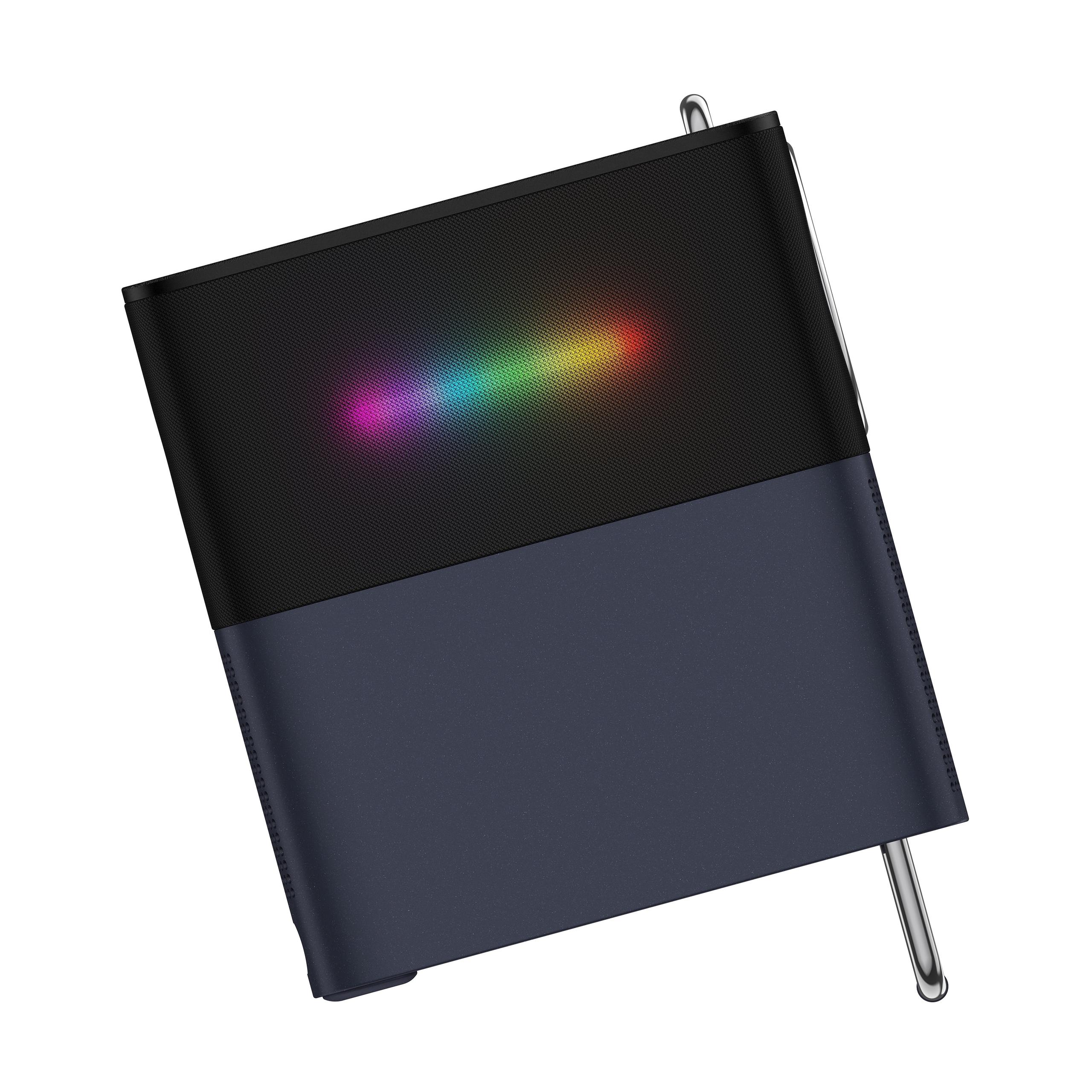
The JMGO PicoPlay also includes dynamic ambient lighting that can sync with music, creating a party atmosphere. While this might seem like a gimmick, it's surprisingly effective for social gatherings and adds genuine value to the device as an entertainment hub rather than just a projector.
Both projectors support high-quality audio processing – Dolby Audio for the JMGO PicoPlay and Dolby Digital+ for the TCL A1. For serious home theater use, you'll probably want to connect external speakers anyway, but the built-in audio is adequate for casual viewing.
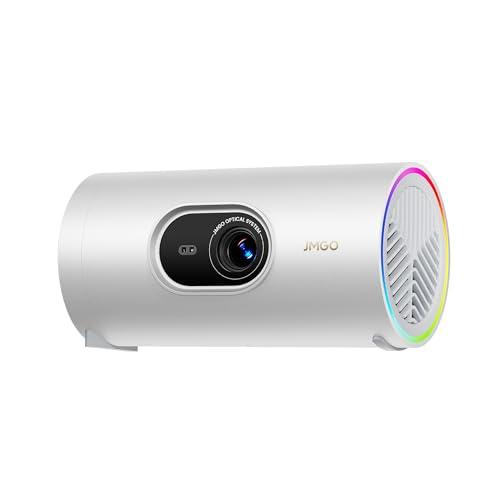
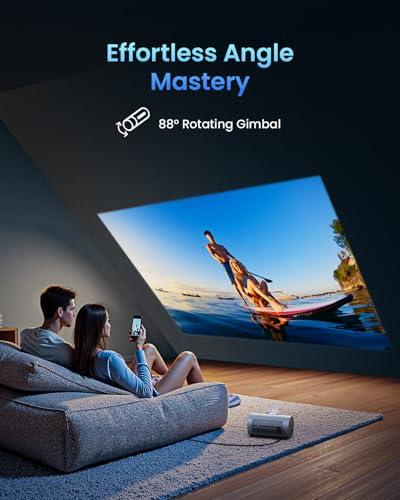
This is where the JMGO PicoPlay truly differentiates itself. Its cylindrical, travel-mug design with an 88-degree rotating gimbal is unlike anything else in the portable projector market. The gimbal allows you to project straight ahead, up at the ceiling, or at various angles without moving the entire unit.
Having used traditional portable projectors extensively, I can tell you that projection angle flexibility is incredibly valuable. Want to watch a movie lying in bed? Point it at the ceiling. Need to project over a table or other obstacle? Tilt it up. The JMGO PicoPlay's gimbal system makes these adjustments effortless, while traditional projectors require you to physically reposition the entire device and then readjust all the image correction settings.
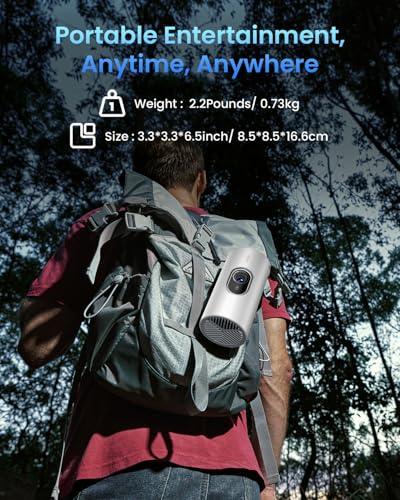
At roughly the size of a large coffee mug and weighing just 2.2 pounds, the JMGO PicoPlay is also significantly more portable than the TCL A1, which weighs 5.5 pounds and has more traditional projector dimensions.
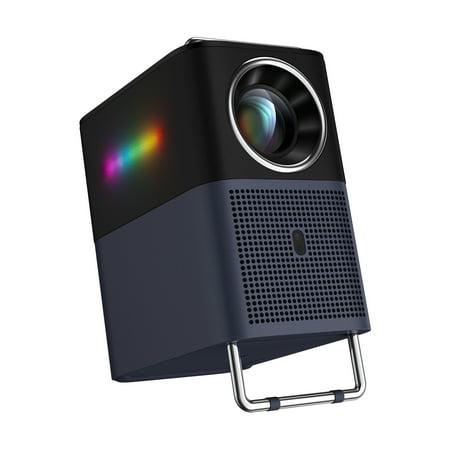
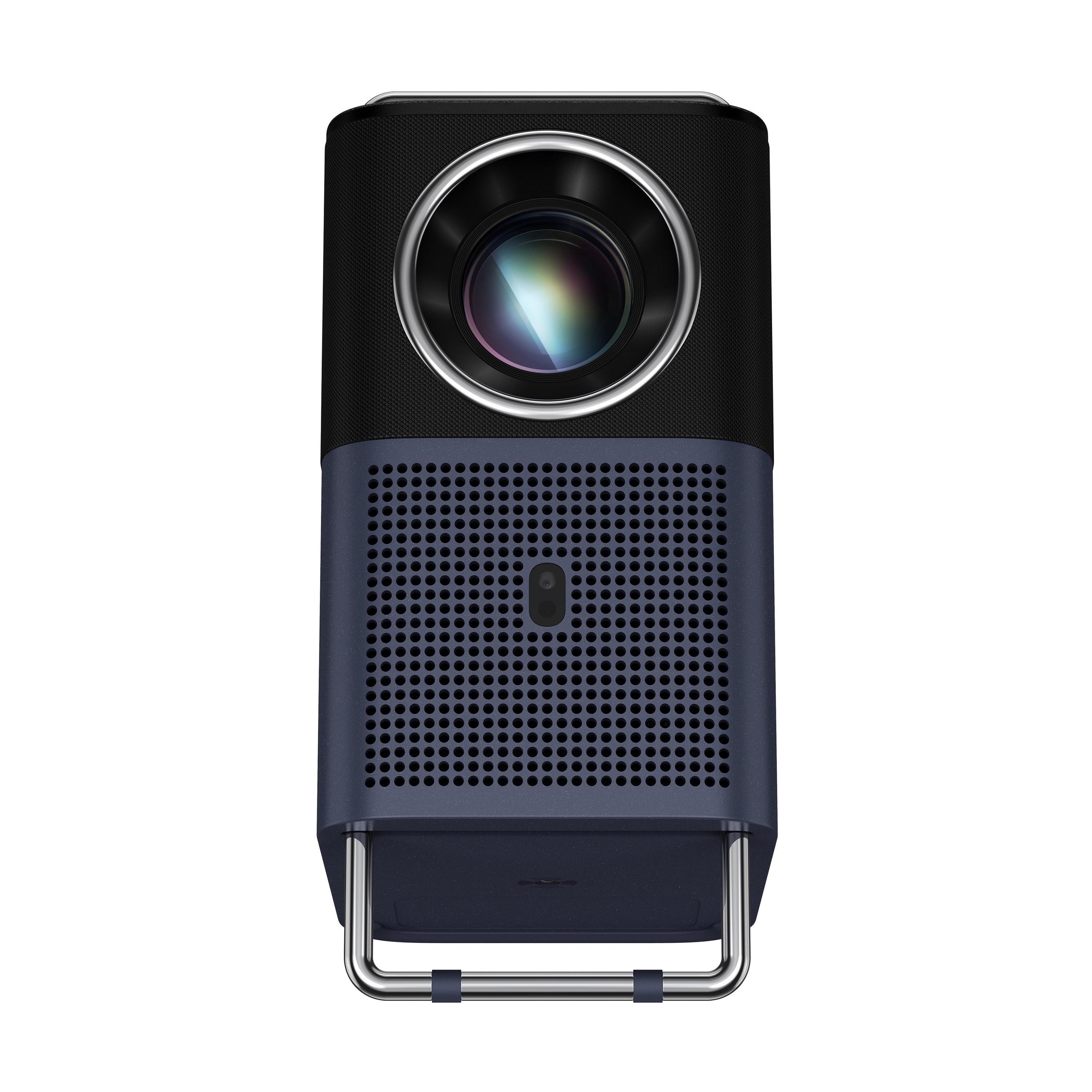
The TCL A1 does have its own design innovation with the VersaGrip handle that doubles as an adjustable stand. This is actually quite practical – you always have a way to position the projector properly without needing a separate tripod or stack of books. However, it's limited to about 15 degrees of tilt, which is far less flexible than the JMGO PicoPlay's full gimbal system.
Here's where things get interesting from a practical standpoint. The JMGO PicoPlay includes a substantial 20,000 mAh battery that provides up to 3 hours of video playback or 7 hours of music playback. This is genuine portability – you can take it camping, to a friend's house, or use it in your backyard without worrying about finding an outlet.
The TCL A1 requires constant power connection, which limits its portability despite being marketed as a portable projector. This is a significant practical difference that affects how and where you can use each device.
The JMGO PicoPlay can also be powered by any 65W USB-C power bank, giving you even more flexibility for extended viewing sessions. USB-C power delivery has become the standard for modern devices, so you might already have compatible chargers and power banks.
At the time of writing, the JMGO PicoPlay was available at a launch price significantly lower than its eventual regular pricing, making it an exceptional value. The TCL A1 was positioned at a higher price point despite offering fewer features and less advanced technology.
Value in projectors isn't just about the initial price – it's about the overall experience and longevity. The JMGO PicoPlay's superior automation, better color accuracy, and multi-use functionality provide more long-term value than specifications alone might suggest. When a device is easier to use, you're more likely to actually use it regularly.
The TCL A1 represents more traditional value – you get solid performance and established brand reliability, but without the innovation premium. For some buyers, this conservative approach is preferable.
Neither of these projectors is designed to replace a dedicated home theater setup, but they can certainly complement one. The JMGO PicoPlay's ceiling projection capability makes it particularly interesting for bedroom use, where a traditional projector setup might not be practical.
For a dedicated home theater room, both projectors would work better as secondary devices – perhaps for casual viewing or when you want a change of scenery. The limited brightness of both units means they can't compete with larger, more expensive projectors in light-controlled environments where image quality is paramount.
However, if you're setting up a home theater in a space that needs to serve multiple purposes – like a living room or bedroom – the JMGO PicoPlay's versatility becomes a significant advantage. You can use it as a Bluetooth speaker during the day, project movies at night, and create ambient lighting for parties.
The JMGO PicoPlay is ideal for tech enthusiasts who want the latest innovations, frequent travelers who need true portability, content creators who work with vertical video, and anyone who values convenience and automation. Its 3-in-1 functionality makes it particularly appealing for people living in small spaces like dorms or apartments where every device needs to earn its keep.
The TCL A1 makes more sense for traditional users who prioritize audio performance, prefer established brands, and don't need cutting-edge features. If you're planning to use the projector primarily in one location and audio quality is more important than portability, the TCL A1's dual speaker setup provides a better movie-watching experience.
For families with children, the JMGO PicoPlay's eye protection features and automatic setup make it the safer, more user-friendly choice. Kids can operate it without constant adult supervision or adjustment.
The JMGO PicoPlay represents a genuine leap forward in portable projector design, offering features and capabilities that were unthinkable just a few years ago. Its combination of superior image quality, revolutionary design, and multi-use functionality sets a new standard for what a portable projector can be.
The TCL A1, while competent, feels more like an incremental improvement on older designs rather than a reimagining of the category. Its main advantages – better audio output and brand recognition – aren't enough to overcome the significant convenience and performance advantages of the JMGO PicoPlay.
Unless audio performance is your absolute top priority or you specifically prefer traditional projector designs, the JMGO PicoPlay offers better value, more features, and a more future-focused approach to portable entertainment. It's the projector that makes you excited about the technology, rather than just accepting it as a compromise.
| JMGO PicoPlay 1080P Smart Portable Projector | TCL A1 Portable 1080p Smart Projector |
|---|---|
| Brightness - Critical for determining usable lighting conditions | |
| 400 ISO lumens (450 in PicoPlay+) - requires dark rooms but competitive for ultra-portable class | 360 ISO lumens - noticeably dimmer, strictly dark room viewing only |
| Resolution & Image Quality - Determines sharpness and color accuracy | |
| Native 1080p with 90% DCI-P3, 124% Rec.709 color gamut, HDR10 support | Native 1080p with standard color performance, no HDR specification |
| Portability & Design - Affects where and how you can use the projector | |
| Revolutionary gimbal design, 2.2 lbs, travel mug size with 88° rotation capability | Traditional design with VersaGrip handle/stand, 5.5 lbs, less portable |
| Setup Automation - Impacts daily user experience and convenience | |
| FlexiSmart system with real-time autofocus, auto-keystone, screen alignment, eye protection | Standard auto-focus and keystone correction, manual fine-tuning often needed |
| Smart Features - Determines streaming capabilities and ease of use | |
| Google TV with Vertical Play mode, Google Assistant, fast responsive interface | Google TV reported as slow/unresponsive, standard streaming apps |
| Audio Performance - Important for movie watching without external speakers | |
| Single 8W speaker with Dolby Audio, Bluetooth speaker mode capability | Dual 8W speakers (16W total) with Dolby Digital+, better stereo separation |
| Power & Battery - Determines true portability and usage flexibility | |
| Built-in 20,000 mAh battery (3 hours video, 7 hours music), USB-C power bank compatible | No battery - requires wall power connection, limits portability significantly |
| Projection Flexibility - Affects setup options and viewing angles | |
| 88° gimbal allows ceiling, wall, and angled projection without moving device | VersaGrip handle provides 15° tilt adjustment, requires repositioning for major angle changes |
| Multi-Use Functionality - Determines versatility beyond basic projection | |
| 3-in-1: projector, Bluetooth speaker, ambient light with music sync | Projector only with built-in speakers |
| Projection Size Range - Determines screen size options | |
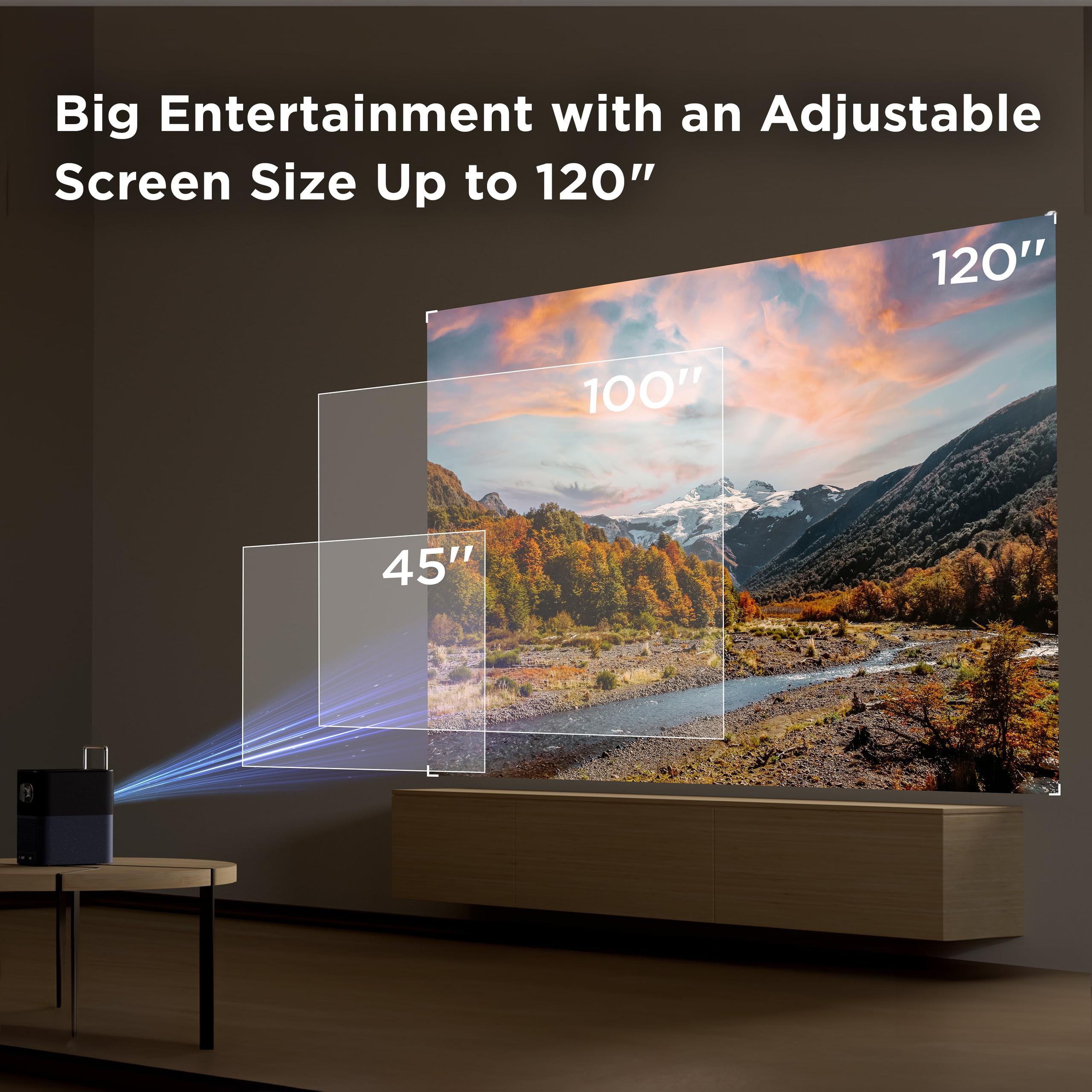
| 40-200 inches (optimal 50-60 inches in dark rooms) | 45-120 inches (similar optimal range) |
| Value Proposition - Overall cost-effectiveness at time of writing | |
| Premium features at competitive launch pricing, exceptional automation and versatility | Traditional approach at higher price point, fewer innovative features |
The JMGO PicoPlay is brighter with 400 ISO lumens (450 in the plus model) compared to the TCL A1's 360 ISO lumens. While both require dark rooms for optimal viewing, the JMGO PicoPlay provides noticeably better performance in rooms with some ambient light. The extra 40-90 lumens makes a meaningful difference for casual daytime viewing with curtains closed.
Both the JMGO PicoPlay and TCL A1 offer native 1080p Full HD resolution, but the JMGO PicoPlay delivers superior overall image quality. It covers 90% of the DCI-P3 color space and 124% of Rec.709, providing more vibrant and accurate colors. The JMGO PicoPlay also supports HDR10 for better contrast, while the TCL A1 uses standard color processing.
The JMGO PicoPlay is significantly more portable, weighing just 2.2 pounds with a compact travel mug design compared to the TCL A1's 5.5 pounds and traditional projector form factor. The JMGO PicoPlay includes a built-in 20,000 mAh battery for 3 hours of video playback, while the TCL A1 requires constant wall power, limiting true portability.
Both projectors run Google TV, but the JMGO PicoPlay offers more advanced smart features including a unique Vertical Play mode for TikTok-style content, Google Assistant integration, and faster, more responsive interface. The TCL A1 has been reported to have a slower, less responsive Google TV experience. The JMGO PicoPlay also includes advanced eye protection and automatic screen alignment features.
The TCL A1 has an advantage in pure audio output with dual 8W speakers (16W total) and Dolby Digital+ processing, providing better stereo separation for movie watching. However, the JMGO PicoPlay offers more versatility with its 8W speaker that can function as a standalone Bluetooth speaker and includes ambient lighting that syncs with music for entertainment beyond just projection.
The JMGO PicoPlay offers superior setup convenience with its FlexiSmart system providing real-time autofocus, auto keystone correction, and screen alignment in seconds. The TCL A1 has standard auto-focus and keystone correction but typically requires more manual adjustment. The JMGO PicoPlay's automation makes it significantly more user-friendly for daily use.
The JMGO PicoPlay excels at ceiling projection with its revolutionary 88-degree rotating gimbal that allows effortless projection in any direction without moving the device. The TCL A1 can project upward using its VersaGrip handle for about 15 degrees of tilt, but requires physical repositioning and manual adjustments for significant angle changes, making ceiling projection more challenging.
The JMGO PicoPlay typically offers better overall value with more advanced features, superior automation, better image quality, and multi-use functionality at a competitive price point. The TCL A1 provides traditional projector reliability and stronger audio output but fewer innovative features. The JMGO PicoPlay's 3-in-1 design (projector, speaker, ambient light) adds significant versatility.
Both the JMGO PicoPlay and TCL A1 support gaming through HDMI connections, but the JMGO PicoPlay includes a dedicated low-latency mode for better gaming performance. The JMGO PicoPlay's faster setup and automatic adjustments also make it more convenient for gaming sessions. Both projectors' brightness levels work best for gaming in dark rooms.
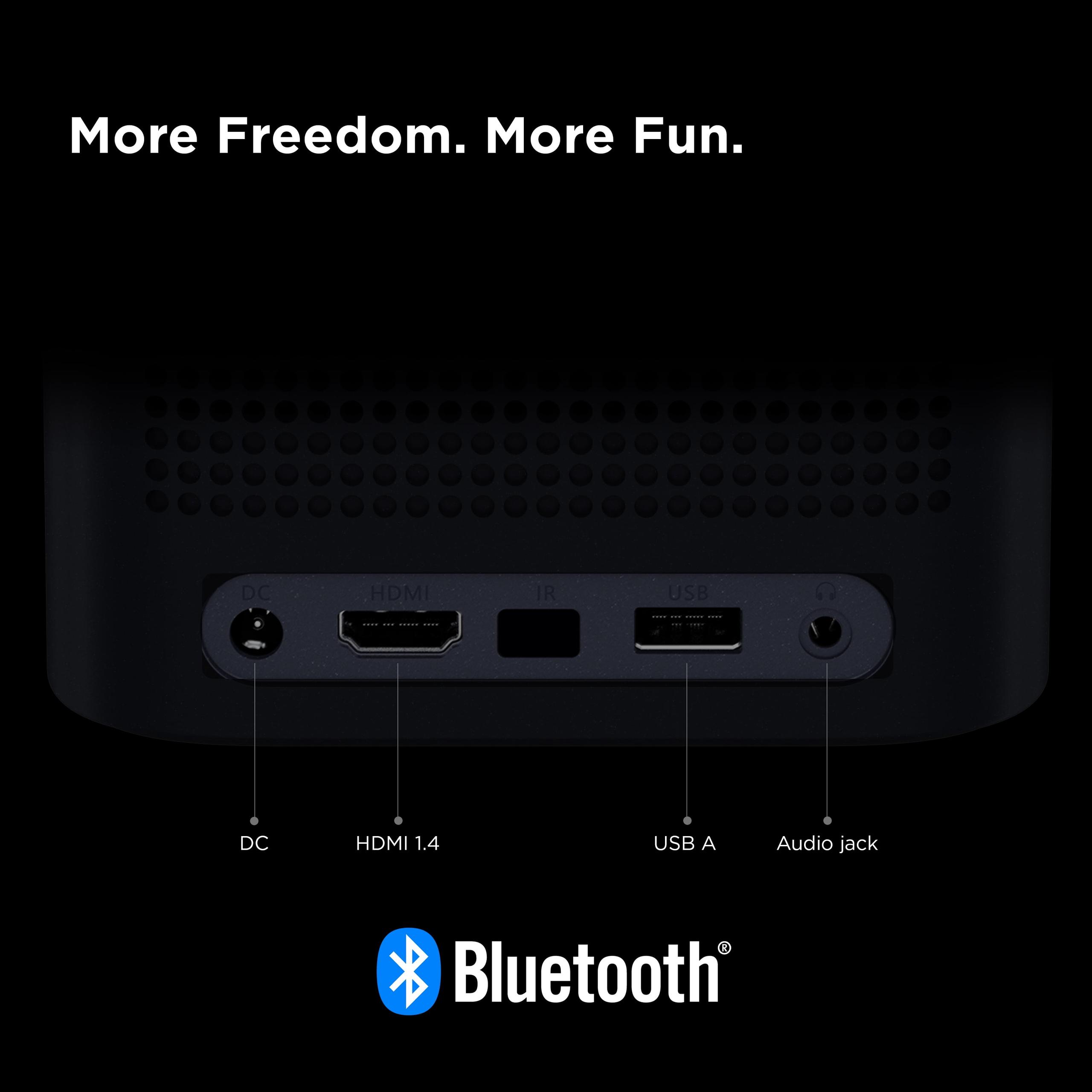
The JMGO PicoPlay offers HDMI 2.1 with ARC, USB-C, USB-A, Wi-Fi, and Bluetooth connectivity. The TCL A1 provides HDMI, USB, 3.5mm audio out, Wi-Fi, and Bluetooth 5.1. Both support wireless casting and streaming, but the JMGO PicoPlay's newer HDMI 2.1 standard offers better compatibility with modern gaming consoles and devices.
The JMGO PicoPlay is ideal for small spaces due to its compact size, gimbal projection system for flexible placement, built-in battery for cord-free operation, and 3-in-1 functionality that replaces multiple devices. The TCL A1 requires more space, constant power connection, and separate audio devices, making the JMGO PicoPlay the clear choice for space-constrained environments.
The JMGO PicoPlay is better suited for outdoor use thanks to its built-in battery allowing 3 hours of cordless operation and compact portability. Both projectors work for outdoor viewing only after dark due to their moderate brightness levels. The TCL A1 requires access to power outlets, limiting placement flexibility outdoors. The JMGO PicoPlay's battery life and portability make it the superior choice for camping or backyard movie nights.
We've done our best to create useful and informative comparisons to help you decide what product to buy. Our research uses advanced automated methods to create this comparison and perfection is not possible - please contact us for corrections or questions. These are the sites we've researched in the creation of this article: techbuzzireland.com - youtube.com - newatlas.com - projectorcentral.com - youtube.com - thegadgetflow.com - youtube.com - global.jmgo.com - youtube.com - bestbuy.com - projector-database.com - notebookcheck.net - eu.jmgo.com - youtube.com - hometheaterforum.com - hifivision.com - tcl.com - gstylemag.com - youtube.com - youtube.com - soundandvision.com - tcl.com - androidheadlines.com - valueelectronics.com - tcl.com - walmart.com - esquire.com - hometheaterview.com - androidpolice.com - projectorcentral.com - howtogeek.com - nfm.com - tcl.com - valueelectronics.com - extapps.dec.ny.gov - cna-aiic.ca - projectorcentral.com - tcl.com - tcl.com - tcl.com

Privacy Policy
Terms and Conditions - Affiliate Policy
Home Security
© Copyright 2008-2026.
11816 Inwood Rd #1211, Dallas, TX 75244